कैलासगमनं कुबेरसख्यं च — Śiva’s Journey to Kailāsa and His Friendship with Kubera
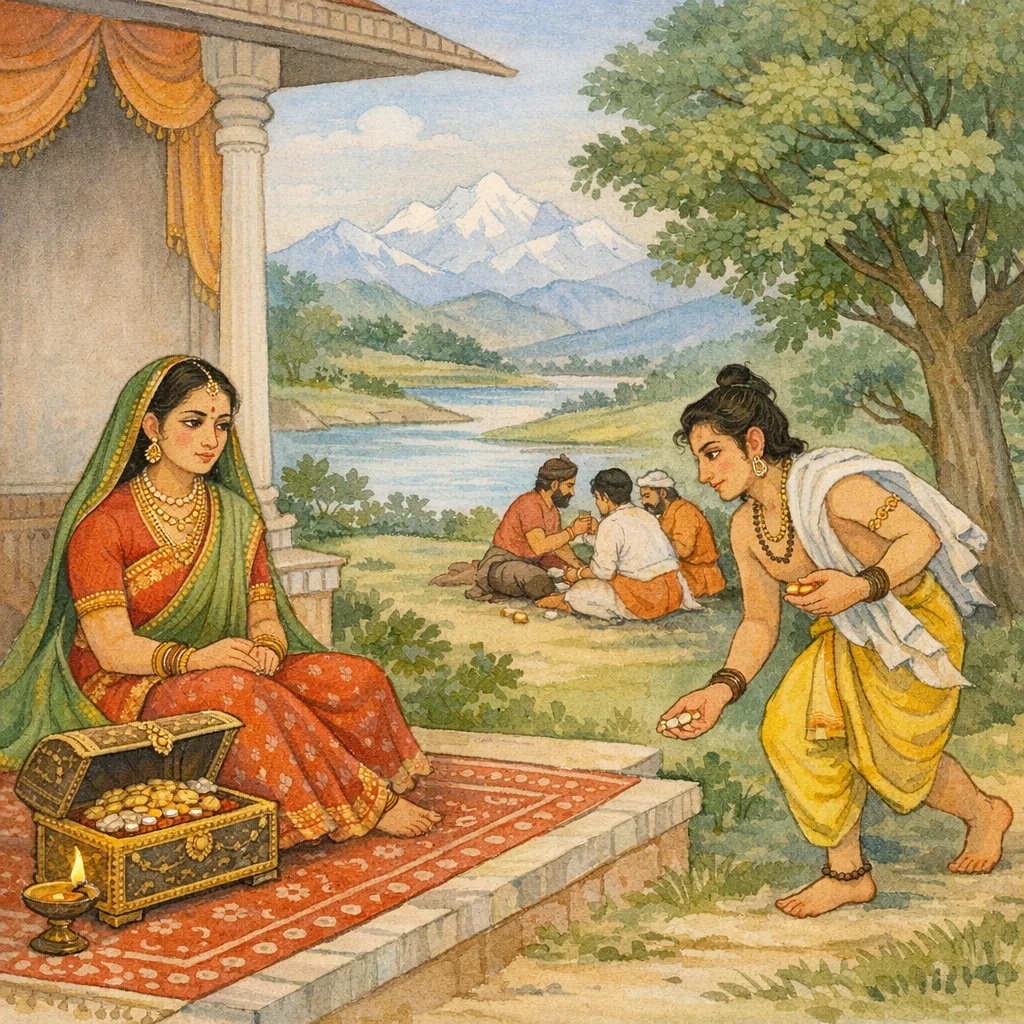
Adhyāya 17 is cast as a dialogic report: Sūta relates how Nārada, after hearing Brahmā’s earlier words, respectfully questions him again. Nārada asks about Śaṅkara’s arrival at Kailāsa, the circumstances of His friendship with Kubera (Dhanada), and what Śiva did there in His complete, auspicious form (śivākṛti). Brahmā agrees to recount the episode and begins with a preparatory backstory that sets a human scene and moral causality: in Kāṃpilya lived the learned dīkṣita Yajñadatta, expert in Vedic rites and the Vedāṅgas, famed for generosity and prestige. His son Guṇanidhi, though educated (upanayana performed and studies gained), secretly falls into gambling (dyūta), repeatedly taking wealth from his mother and keeping company with gamblers. The chapter’s opening thus establishes a didactic arc—virtue and learning contrasted with vice and secrecy—preparing for the later explanation of wealth, downfall, and eventual divine association (Kubera/Śiva) through the logic of karma and devotion.
Shlokas
Verse 1
प्रत्यहं तस्य जननी सुतं गुणनिधिं मृदु । शास्ति स्नेहार्द्रहृदया ह्युपवेश्य स्म नारद
O Nārada, every day his mother—tender, with a heart softened by affection—would seat her son, that gentle treasury of virtues, and lovingly instruct and discipline him.
Verse 2
नारद उवाच । कदागतो हि कैलासं शंकरो भक्तवत्सलः । क्व वा सखित्वं तस्यासीत्कुबेरेण महात्मना
Nārada said: “When did Śaṅkara—so tender toward His devotees—come to Kailāsa? And where, and in what manner, did His friendship arise with the great-souled Kubera?”
Verse 3
किं चकार हरस्तत्र परिपूर्णः शिवाकृतिः । एतत्सर्वं समाचक्ष्व परं कौतूहलं मम
“What did Hara do there, being complete and manifest in the very form of Śiva? Tell me all of this in full, for my curiosity is exceedingly great.”
Verse 4
ब्रह्मोवाच । शृणु नारद वक्ष्यामि चरितं शशिमौलिनः । यथा जगाम कैलासं सखित्वं धनदस्य च
Brahmā said: “Listen, Nārada. I shall narrate the sacred deeds of the Moon-crested Lord (Śiva)—how He went to Kailāsa, and how friendship with Dhanada (Kubera) also came to be.”
Verse 5
असीत्कांपिल्यनगरे सोमयाजिकुलोद्भवः । दीक्षितो यज्ञदत्ताख्यो यज्ञविद्याविशारदः
In the city of Kāṃpilya there lived a consecrated Brahmin named Yajñadatta, born in a lineage of Soma-sacrificers, and well-versed in the sacred science of Vedic rites.
Verse 6
वेदवेदांगवित्प्राज्ञो वेदान्तादिषु दक्षिणः । राजमान्योऽथ बहुधा वदान्यः कीर्तिभाजनः
He was a wise knower of the Vedas and their auxiliary sciences, adept in Vedānta and related disciplines. Honoured by kings, he was generous in many ways and became a vessel of good repute.
Verse 7
अग्निशुश्रूषणरतो वेदाध्ययनतत्परः । सुन्दरो रमणीयांगश्चन्द्रबिंबसमाकृतिः
He was devoted to the reverent tending of the sacred fire and was intent on the study of the Vedas. Handsome and pleasing-limbed, his form was like the radiant disc of the moon.
Verse 8
आसीद्गुणनिधिर्नाम दीक्षितस्यास्य वै सुतः । कृतोपनयनस्सोष्टौ विद्या जग्राह भूरिशः । अथ पित्रानभिज्ञातो यूतकर्मरतोऽभवत्
There was a son of that Dīkṣita, named Guṇanidhi. Having undergone the rite of upanayana, he diligently learned many branches of knowledge. Yet later—without his father’s knowledge—he became devoted to gambling and such pursuits.
Verse 9
आदायादाय बहुशो धनं मातुस्सकाशतः । समदाद्यूतकारेभ्यो मैत्रीं तैश्च चकार सः
Again and again he took money from his mother; and he gave it away to gamblers, forming friendships with them as well.
Verse 10
संत्यक्तब्राह्मणाचारः संध्यास्नानपराङ्मुखः । निंदको वेदशास्त्राणां देवब्राह्मणनिंदकः
He abandoned the conduct enjoined for a brāhmaṇa, turned away from the daily sandhyā prayers and purificatory bathing, and reviled the Vedas and śāstras—indeed, he maligned both the Devas and the brāhmaṇas.
Verse 11
स्मृत्याचारविहीनस्तु गीतवाद्यविनोदभाक् । नटपाखंडभाण्डैस्तु बद्धप्रेमपरंपरः
Devoid of the discipline taught in the Smṛtis and of right conduct, he delights in entertainment—songs and instruments—and, through actors, hypocritical charlatans, and buffoons, becomes bound in an ever-growing chain of worldly attachments.
Verse 12
प्रेरितोऽपि जनन्या स न ययौ पितुरंतिकम् । गृहकार्यांतरव्याप्तो दीक्षितो दीक्षितायिनीम्
Though urged by his mother, he did not go to his father’s presence. Absorbed in other household duties, the initiated one attended upon the woman who was performing the initiation-rite.
Verse 13
यदा यदैव तां पृच्छेदये गुणनिधिस्सुतः । न दृश्यते मया गेहे कल्याणि विदधाति किम्
Whenever Guṇanidhi’s son questioned her, he would say: “O auspicious lady, I see nothing at all in the house—what, then, are you arranging or accomplishing here?”
Verse 14
तदा तदेति सा ब्रूयादिदानीं स बहिर्गतः । स्नात्वा समर्च्य वै देवानेतावंतमनेहसम्
Then she should reply, “So be it, so be it.” “Now he has gone outside; having bathed, he is indeed worshipping the gods”—and thus she should pass that long, unbroken time without haste.
Verse 15
अधीत्याध्ययनार्थं स द्विजैर्मित्रैस्समं ययौ । एकपुत्रेति तन्माता प्रतारयति दीक्षितम्
Having completed his studies, he set out for further learning, accompanied by his Brahmin friends. But his mother, thinking, “He is my only son,” tried to dissuade the initiated one from departing.
Verse 16
न तत्कर्म च तद्वृत्तं किंचिद्वेत्ति स दीक्षितः । सर्वं केशांतकर्मास्य चक्रे वर्षेऽथ षोडशे
That initiated one knew nothing at all of his former actions or earlier course of life. Then, in his sixteenth year, all the rites up to the keśānta-saṁskāra—the hair-cutting rite marking the threshold of youth—were performed for him.
Verse 17
अथो स दीक्षितो यज्ञदत्तः पुत्रस्य तस्य च । गृह्योक्तेन विधानेन पाणिग्राहमकारयम्
Then Yajñadatta, duly consecrated for the rite, arranged the pāṇigraha—the hand-taking marriage ceremony—for his son, following the procedure prescribed in the Gṛhya traditions.
Verse 19
क्रोधनस्तेऽस्ति तनय स महात्मा पितेत्यलम् । यदि ज्ञास्यति ते वृत्तं त्वां च मां ताडयिष्यति
Son, your father—that great-souled one—is fierce in anger; enough of this. If he comes to know of your conduct, he will strike both you and me.
Verse 20
आच्छादयामि ते नित्यं पितुरग्रे कुचेष्टितम् । लोकमान्योऽस्ति ते तातस्सदाचारैर्न वै धनैः
“I shall always conceal your improper conduct in the presence of your father. Your father, dear one, is honored by the world because of righteous conduct—certainly not because of wealth.”
Verse 21
ब्राह्मणानां धनं तात सद्विद्या साधुसंगमः । किमर्थं न करोषि त्वं सुरुचिं प्रीतमानसः
O dear one, the true wealth of brāhmaṇas is right knowledge and the company of the holy. Why, then, do you not cultivate noble taste and sincere inclination, with a mind made glad and devoted?
Verse 22
सच्छ्रोत्रियास्तेऽनूचाना दीक्षितास्सोमयाजिनः । इति रूढिमिह प्राप्तास्तव पूर्वपितामहाः
Your forefathers here were established as true Vedic brāhmaṇas—learned in sacred recitation, duly initiated, and performers of Soma-sacrifices; thus they attained this honoured standing and accepted custom in this world.
Verse 23
त्यक्त्वा दुर्वृत्तसंसर्गं साधुसंगरतो भव । सद्विद्यासु मनो धेहि ब्राह्मणाचारमाचर
Abandon the company of the wicked and rejoice in the fellowship of the holy. Set your mind upon true spiritual knowledge, and practice the righteous discipline and conduct taught by the Brahmanas.
Verse 24
तातानुरूपो रूपेण यशसा कुलशीलतः । ततो न त्रपसे किन्नस्त्यज दुर्वृत्ततां स्वकाम्
“You are in every way worthy of your father—by your appearance, your fame, your lineage, and your conduct. Why, then, do you not feel ashamed? What is lacking? Abandon this self-chosen wicked behavior.”
Verse 25
ऊनविंशतिकोऽसि त्वमेषा षोडशवार्षिकी । एतां संवृणु सद्वृत्तां पितृभक्तियुतो भव
You are not yet nineteen years of age, and she is sixteen. Marry this virtuous, well-conducted maiden, and be endowed with devotion and dutiful reverence toward your father.
Verse 26
श्वशुरोऽपि हि ते मान्यस्सर्वत्र गुणशीलतः । ततो न त्रपसे किन्नस्त्यज दुर्वृत्ततां सुत
Your father-in-law too is worthy of honor, renowned everywhere for virtue and good conduct. Why, then, do you feel no shame? Therefore, my son, abandon this wicked behavior.
Verse 27
मातुलास्तेऽतुलाः पुत्र विद्याशीलकुलादिभिः । तेभ्योऽपि न बिभेषि त्वं शुद्धोऽस्युभयवंशतः
O son, your maternal uncles are incomparable in learning, conduct, and noble lineage. Yet you do not fear even them, for you are pure—of unsullied standing in both paternal and maternal lines.
Verse 28
पश्यैतान्प्रति वेश्मस्थान्ब्राह्मणानां कुमारकान् । गृहेऽपि शिष्यान्पश्यैतान्पितुस्ते विनयोचितान्
Look at these young Brahmin boys staying in the nearby house. Even within your own home, see these disciples of your father—properly trained in humility and good conduct.
Verse 29
राजापि श्रोष्यति यदा तव दुश्चेष्टितं सुत । श्रद्धां विहाय ते ताते वृत्तिलोपं करिष्यति
O son, when the king comes to hear of your evil conduct, he will abandon his trust in your father and will cut off his livelihood.
Verse 30
बालचेष्टितमेवैतद्वदंत्यद्यापि ते जनाः । अनंतरं हरिष्यंति युक्तां दीक्षिततामिह
Even today people still call this nothing but a childish prank. Yet soon afterwards they will acknowledge here the fitting state of dīkṣā—sacred consecration—that has rightly come to him.
Verse 31
सर्वेप्याक्षारयिष्यंति तव तातं च मामपि । मातुश्चरित्रं तनयो धत्ते दुर्भाषणैरिति
“Everyone will reproach both your father and me as well, saying, ‘The son maligns his own mother’s conduct with harsh speech.’”
Verse 32
पितापि ते न पापीयाञ्छ्रुतिस्मृतिपथानुगः । तदंघ्रिलीनमनसो मम साक्षी महेश्वरः
Even your father is not sinful, for he follows the path laid down in the Śruti and Smṛti. As for me—my mind is absorbed at His feet; Mahādeva (Maheśvara) Himself is my witness.
Verse 33
न चर्तुस्नातययापीह मुखं दुष्टस्य वीक्षितम् । अहो बलीयान्स विधिर्येन जातो भवानिति
“Even after performing the fourfold purificatory bath, I have not looked here upon the face of this wicked one. Alas—how overpowering is destiny, by which you have come to be born!”
Verse 34
प्रतिक्षणं जनन्येति शिक्ष्यमाणोतिदुर्मतिः । न तत्याज च तद्धर्मं दुर्बोधो व्यसनी यतः
Though he was instructed at every moment, again and again, he remained utterly perverse in mind. Hard to correct and addicted to vice, he did not abandon that very course of conduct.
Verse 35
मृगयामद्यपैशुन्यानृतचौर्यदुरोदरैः । स वारदारैर्व्यसनैरेभिः कोऽत्र न खंडितः
By addictions such as hunting, intoxication, slander, falsehood, theft, and ruinous gambling—and by these calamities that strike again and again—who in this world is not broken down? Therefore one should seek refuge in Śiva, the Pati, who alone cuts the bonds of pāśa.
Verse 36
यद्यन्मध्यगृहे पश्येत्तत्तन्नीत्वा सुदुर्मतिः । अर्पयेद्द्यूतकाराणां सकुप्यं वसनादिकम्
Whatever he saw within the house, that ill-minded man carried off and handed over to gamblers—household goods, clothing, and the like—thus bringing ruin upon the home.
Verse 37
न्यस्तां रत्नमयीं गेहे करस्य पितुरूर्मिकाम् । चोरयित्वैकदादाय दुरोदरकरेऽर्पयत्
Once, having stolen from the house his father’s jewel-studded finger-ring that had been set aside, he took it and placed it into the hand of a gambler—an act born of a ruinous vice.
Verse 38
दीक्षितेन परिज्ञातो दैवाद्द्यूतकृतः करे । उवाच दीक्षितस्तं च कुतो लब्धा त्वयोर्मिका
By divine chance, the Dīkṣita recognized the ring in his hand as one obtained through gambling. The Dīkṣita then said to him: “From where did you obtain this ring?”
Verse 39
पृष्टस्तेनाथ निर्बंधादसकृत्तमुवाच सः । मामाक्षिपसि विप्रोच्चैः किं मया चौर्यकर्मणा
Questioned by him again and again with insistent persistence, he replied: “O brāhmaṇa, why do you loudly accuse me? What have I to do with the act of theft?”
Verse 40
लब्धा मुद्रा त्वदीयेन पुत्रेणैव समर्पिता । मम मातुर्हि पूर्वेद्युर्जित्वा नीतो हि शाटकः
“The sealed token (mudrā) that was obtained has indeed been handed over by your son himself. For only yesterday, having won it, he carried away my mother’s garment (śāṭaka).”
Verse 41
न केवलं ममैवैतदंगुलीयं समर्पितम् । अन्येषां द्यूतकर्तॄणां भूरि तेनार्पितं वसु
“This ring was not offered by me alone. By him, abundant wealth was also staked and handed over by many other gamblers.”
Verse 42
रत्नकुप्यदुकूलानि शृंगारप्रभृतीनि च । भाजनानि विचित्राणि कांस्यताम्रमयानि च
“Jeweled caskets and fine garments, and various articles of adornment as well; and also many kinds of exquisite vessels made of bell-metal and copper.”
Verse 43
नग्नीकृत्य प्रतिदिनं बध्यते द्यूतकारिभिः । न तेन सदृशः कश्चिदाक्षिको भूमिमंडले
Stripped naked and bound day after day by gamblers, the dice-addict is disgraced; on the whole earth there is none comparable to him in misery and degradation.
Verse 44
अद्यावधि त्वया विप्र दुरोदर शिरोमणिः । कथं नाज्ञायि तनयोऽविनयानयकोविदः
O brāhmaṇa, up to this very day you have been the crown-jewel among gamblers. How, then, did you fail to recognize your own son—one so skilled in leading others into misconduct and ruin?
Verse 45
इति श्रुत्वा त्रपाभारविनम्रतरकंधरः । प्रावृत्य वाससा मौलिं प्राविशन्निजमन्दिरम्
Hearing these words, he bowed his neck even more, weighed down by modest shame; and, covering his head with his garment, he entered his own dwelling.
Verse 46
महापतिव्रतामस्य पत्नी प्रोवाच तामथ । स दीक्षितो यज्ञदत्तः श्रौतकर्मपरायणः
Then his wife—herself a great pativratā, an exemplar of sacred wifely fidelity—spoke to her. That man, Yajñadatta, had already received dīkṣā in due form and was wholly devoted to the Vedic Śrauta sacrificial rites.
Verse 47
यज्ञदत्त उवाच । दीक्षितायनि कुत्रास्ति धूर्ते गुणनिधिस्सुतः । अथ तिष्ठतु किं तेन क्व सा मम शुभोर्मिका
Yajñadatta said: “O Dīkṣitāyanī, where is that rogue—the son of Guṇanidhi? Let him be; what use is he to me? Where is my auspicious ring?”
Verse 48
अंगोद्वर्तनकाले या त्वया मेऽङ्गुलितो हृता । सा त्वं रत्नमयी शीघ्रं तामानीय प्रयच्छ मे
When you were rubbing and cleansing my limbs, the ring you took from my finger— that jewel-studded ornament—bring it quickly and give it back to me.
Verse 49
इति श्रुत्वाथ तद्वाक्यं भीता सा दीक्षितायनी । प्रोवाच स्नानमध्याह्नीं क्रियां निष्पादयत्यथ
Having thus heard those words, Dīkṣitāyanī became afraid. Then she spoke, and thereafter proceeded to perform the midday bath and the prescribed rite.
Verse 50
व्यग्रास्मि देवपूजार्थमुपहारादिकर्मणि । समयोऽयमतिक्रामेदतिथीनां प्रियातिथे
I am occupied with the duties of worshipping the Deity and with preparing offerings and the like. Let not this time slip away—O beloved guest, dear to all guests.
Verse 51
इदानीमेव पक्वान्नकारणव्यग्रया मया । स्थापिता भाजने क्वापि विस्मृतेति न वेद्म्यहम्
Just now, being preoccupied with preparing the cooked food, I placed it somewhere in a vessel; but whether I have forgotten where it is, I truly do not know.
Verse 52
दीक्षित उवाच । हं हेऽसत्पुत्रजननि नित्यं सत्यप्रभाषिणि । यदा यदा त्वां संपृछे तनयः क्व गतस्त्विति
Dīkṣita said: “O mother of an unworthy son, O you who ever speak the truth—whenever I ask you, ‘Where has the child gone?’, tell me truthfully.”
Verse 53
तदातदेति त्वं ब्रूयान्नथेदानीं स निर्गतः । अधीत्याध्ययनार्थं च द्वित्रैर्मित्रैस्सयुग्बहिः
Then you should say, ‘He is coming just now.’ Otherwise, say, ‘At present he has gone out,’ for, having studied, he has stepped outside along with two or three friends for the sake of further recitation and study.
Verse 54
कुतस्ते शाटकः पत्नि मांजिष्ठो यो मयार्पितः । लभते योऽनिशं धाम्नि तथ्यं ब्रूहि भयं त्यज
“O wife, from where have you obtained that mañjiṣṭhā-dyed garment which I myself had given you? It is seen again and again in this abode. Tell me the truth—cast off your fear.”
Verse 55
सांप्रतं नेक्ष्यते सोऽपि भृंगारो मणिमंडितः । पट्टसूत्रमयी सापि त्रिपटी या मयार्पिता
“At present that jeweled bhṛṅgāra (decorated vessel) is no longer to be seen; and that threefold band of silk threads (tripatī) which I had offered is also not seen.”
Verse 56
क्व दाक्षिणात्यं तत्कांस्यं गौडी ताम्रघटी क्व सा । नागदंतमयी सा क्व सुखकौतुक मंचिका
Where now is that fine southern bronze vessel? Where is that Gauḍa-made copper pot? Where is that ivory-crafted little couch, once meant for comfort and delight?
Verse 57
क्व सा पर्वतदेशीया चन्द्रकांतिरिवाद्भुता । दीपकव्यग्रहस्ताग्रालंकृता शालभञ्जिका
Where is that wondrous śālabhañjikā—born of the mountain-land—whose beauty is astonishing, like the radiance of the moonstone, and whose outstretched hands are adorned as though intent on holding a lamp?
Verse 58
किं बहूक्तेन कुलजे तुभ्यं कुप्याम्यहं वृथा । तदाभ्यवहारिष्येहमुपयंस्याम्यहं यदा
“What is the use of saying much, O noble-born one? I am angry with you for no real reason. When that time comes, I shall accept food, and then I shall also take you as my wife.”
Verse 59
अनपत्योऽस्मि तेनाहं दुष्टेन कुलदूषिणा । उत्तिष्ठानय पाथस्त्वं तस्मै दद्यास्तिलांजलिम्
“I am without offspring because of that wicked one who has brought disgrace upon the lineage. Therefore, O Pātha, rise up and lead me onward; and to him you should offer a handful of sesame-water (tilāñjali) as the ritual oblation.”
Verse 60
अपुत्रत्वं वरं नॄणां कुपुत्रात्कुलपांसनात् । त्यजेदेकं कुलस्यार्थे नीतिरेषा सनातनी
For men, childlessness is preferable to having an evil son who becomes the disgrace of the lineage. For the welfare of the whole family, one may renounce a single corrupt member—this is the eternal principle of right conduct.
Verse 61
स्नात्वा नित्यविधिं कृत्वा तस्मिन्नेवाह्नि कस्यचित् । श्रोत्रियस्य सुतां प्राप्य पाणिं जग्राह दीक्षितः
Having bathed and performed the prescribed daily rites, on that very day Dīkṣita obtained the daughter of a Veda-knowing brāhmaṇa and, in due form, took her hand in marriage.
Frequently Asked Questions
Nārada asks for the account of Śiva’s arrival at Kailāsa and the origin-context of His friendship with Kubera (Dhanada), which Brahmā begins to narrate.
It frames later divine and economic outcomes through ethical causality: learning and ritual pedigree do not prevent downfall if discipline fails; prosperity and status are interpreted through karma and alignment with dharma/Śiva’s grace.
Śiva is described as ‘paripūrṇaḥ śivākṛtiḥ’—fully complete in an auspicious Śiva-form—signaling that the narrative is not merely historical but theologically oriented toward Śiva’s sovereign presence.