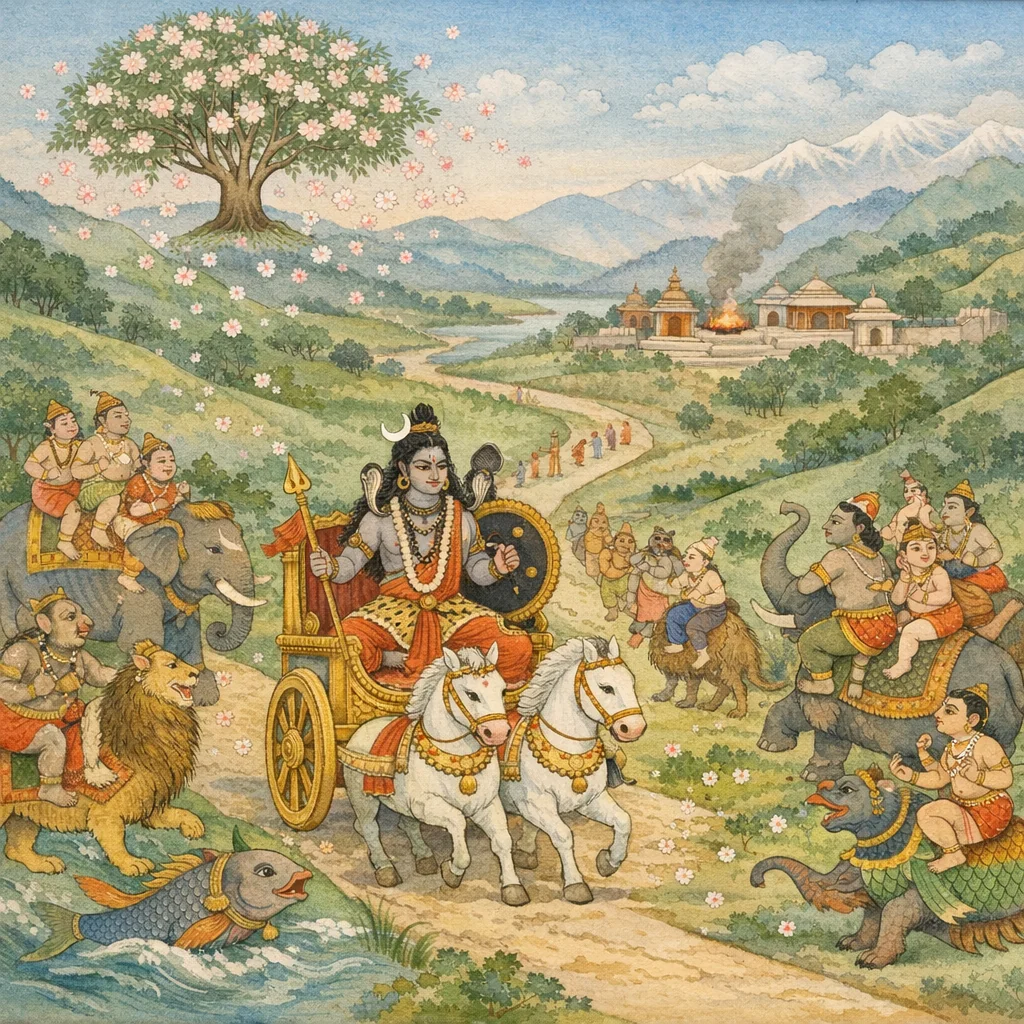
वीरभद्रस्य गमनप्रस्थानम् — Vīrabhadra’s Departure for Dakṣa’s Sacrifice
Adhyāya 33 continues the Dakṣa-yajña account by portraying the instant mobilization of Śiva’s hosts upon receiving His command. Brahmā relates that Vīrabhadra, pleased and obedient, bows to Maheśvara and swiftly departs for Dakṣa’s sacrificial arena (makha). Śiva sends innumerable gaṇas as an escort “for splendor,” evoking a royal procession and the inevitability of cosmic decree. The gaṇas array themselves before and behind Vīrabhadra, Rudra-like in nature, while Vīrabhadra’s martial form appears terrifyingly magnificent—adorned in Śiva’s guise, with mighty arms, serpentine ornaments, and a chariot. The imagery expands into a catalogue of mounts and guardians—lions, other formidable creatures, elephants, aquatic and hybrid beings—forming a mythic war-procession. Auspicious signs attend the march: flowers rain from wish-fulfilling trees, and the gaṇas advance with praise and festive exhilaration. The chapter serves as a hinge from divine order to the impending confrontation at the yajña, highlighting Śiva’s authority, the collective śakti of the gaṇas, and the ritual consequences of affronting Śiva.
Shlokas
Verse 1
ब्रह्मोवाच । इत्युक्तं श्रीमहेशस्य श्रुत्वा वचनमादरात् । वीरभद्रोतिसंतुष्टः प्रणनाम महेश्वरम
Brahmā said: Having respectfully heard these words of Śrī Maheśa, Vīrabhadra—exceedingly pleased—bowed down in reverence to Maheśvara (Lord Śiva).
Verse 2
शासनं शिरसा धृत्वा देवदेवस्य शूलिनः । प्रचचाल ततः शीघ्रं वीरभद्रो मखं प्रति
Bearing upon his head the command of the Trident-bearing Lord—Śiva, God of gods—Vīrabhadra set forth at once, swiftly, toward Dakṣa’s sacrificial rite.
Verse 3
शिवोथ प्रेषयामास शोभार्थं कोटिशो गणान् । तेन सार्द्धं महावीरान्मलयानलसन्निभान्
Then Lord Śiva, for the sake of splendor and auspicious magnificence, dispatched gaṇas in crores—together with them mighty heroes, blazing like fire fanned by the Malaya winds.
Verse 4
अथ ते वीरभद्रस्य पुरतः प्रबला गणाः । पश्चादपि ययुर्वीराः कुतूहलकरा गणाः
Then those mighty Gaṇas went before Vīrabhadra; and behind him too marched heroic Gaṇas—hosts whose very presence stirred awe and wonder.
Verse 5
वीरभद्रसमेता येगणाश्शतसहस्रशः । पार्षदाः कालकालस्य सर्वे रुद्रस्वरूपिणः
Along with Vīrabhadra, the Gaṇas—numbering in hundreds of thousands—stood forth: all of them attendants of the Slayer of Time (Śiva), each bearing the very form and power of Rudra.
Verse 6
गणैस्समेतः किलतैर्महात्मा स वीरभद्रो हरवेषभूषणः । सहस्रबाहुर्भुजगाधिपाढ्यो ययौ रथस्थः प्रबलोतिभीकरः
Accompanied by the Gaṇas, that great-souled Vīrabhadra—adorned with Hara’s own attire and ornaments—set forth upon his chariot. Thousand-armed, richly decked with the lords of serpents, mighty and exceedingly terrifying, he advanced toward Dakṣa’s sacrifice.
Verse 7
नल्वानं च सहस्रे द्वे प्रमाणं स्यंदनस्य हि । अयुतेनैव सिंहानां वाहनानां प्रयत्नतः
Indeed, the measured extent of the chariot was two thousand nalvas; and, with due effort, there were also ten thousand lions serving as mounts in that retinue.
Verse 8
तथैव प्रबलाः सिंहा बहवः पार्श्वरक्षकाः । शार्दूला मकरा मत्स्या गजास्तत्र सहस्रशः
Likewise, many mighty lions stood as guards on the flanks; and there, in their thousands, were tigers, crocodiles, fishes, and elephants.
Verse 9
वीरभद्रे प्रचलिते दक्षनाशाय सत्वरम् । कल्पवृक्षसमुत्सृष्टा पुष्पवृष्टिरभूत्तदा
When Vīrabhadra set forth swiftly to bring about Dakṣa’s destruction, then a shower of flowers arose—sent forth as if from the wish-fulfilling celestial tree, the Kalpavṛkṣa.
Verse 10
तुष्टुवुश्च गणा वीर शिपिविष्टे प्रचेष्टितम् । चक्रुः कुतूहलं सर्वे तस्मिंश्च गमनोत्सवैः
O valiant one, the gaṇas praised the deeds and movements of Śipiviṣṭa; all were filled with eager curiosity, and they made their going there a festive occasion.
Verse 11
काली कात्यायिनीशानी चामुंडा मुंडमर्दिनी । भद्रकाली तथा भद्रा त्वरिता वैष्णवी तथा
She is Kālī; Kātyāyanī; Īśānī (the sovereign Goddess); Cāmuṇḍā, the slayer of the demons; Muṇḍamardinī, who crushes Muṇḍa; Bhadrakālī; Bhadrā, the auspicious one; Tvaritā, swift to grant protection; and also Vaiṣṇavī.
Verse 12
एताभिर्नवदुर्गाभिर्महाकाली समन्विता । ययौ दक्षविनाशाय सर्वभूतगणैस्सह
Accompanied by these nine Durgās, Mahākālī set forth—together with all the hosts of beings—to bring about Dakṣa’s destruction.
Verse 13
डाकिनी शाकिनी चैव भूतप्रमथगुह्यकाः । कूष्मांडाः पर्पटा श्चैव चटका ब्रह्मराक्षसाः
Dākinīs and Śākinīs were there, and likewise the hosts of spirits—Pramathas and Guhyakas—together with Kūṣmāṇḍas, Parpaṭas, Caṭakas, and Brahma-rākṣasas (Brahmin-ghosts), forming that fierce retinue.
Verse 14
भैरवाः क्षेत्रपालाश्च दक्षयज्ञविनाशकाः । निर्ययुस्त्वरितं वीराश्शिवाज्ञाप्रतिपालकाः
The Bhairavas and the Kṣetrapālas—heroic destroyers of Dakṣa’s sacrifice—set out at once, swiftly, as steadfast executors of Lord Śiva’s command.
Verse 15
तथैव योगिनीचक्रं चतुःषष्टिगणान्वितम् । निर्ययौ सहसा क्रुद्धं दक्षयज्ञं विनाशितुम्
Likewise, the circle of Yoginīs—accompanied by the sixty-four gaṇas—suddenly rushed forth in wrath, intent on destroying Dakṣa’s sacrifice.
Verse 16
तेषां गणानां सर्वेषां संख्यानं शृणु नारद । महाबलवतां संघोमुख्यानां धैर्यशालिनाम्
O Nārada, hear the count of all those Gaṇas—those foremost leaders of the hosts, endowed with great strength and steadfast courage.
Verse 17
अभ्ययाच्छंकुकर्णश्च दशकोट्या गणेश्वरः । दशभिः केकराक्षश्च विकृतो ष्टाभिरेव
Then the Gaṇa-lord Śaṅkukarṇa advanced, attended by ten koṭis (crores). Kekarākṣa came with ten koṭis, and Vikṛta came alone with eight koṭis.
Verse 18
चतुःषष्ट्या विशाखश्च नवभिः पारियात्रिकः । षड्भिस्सर्वाङ्गको वीरस्तथैव विकृताननः
Viśākha came with sixty-four attendants; Pāriyātrika with nine. Likewise the heroic Sarvāṅgaka came with six, and so too did Vikṛtānana with six.
Verse 19
ज्वालकेशो द्वादशभिः कोटिभिर्गणपुंगवः । सप्तभिः समदज्जीमान् दुद्रभोष्टाभिरेव च
Jvālakeśa, the foremost leader among Śiva’s gaṇas, came accompanied by twelve koṭis (crores). With him came Samadajjīmān with seven koṭis, and Dudrabhoṣṭa also with eight koṭis.
Verse 20
पंचभिश्च कपालीशः षड्भिस्संदारको गणः । कोटिकोटिभिरेवेह कोटिकुण्डस्तथैव च
Here, Kapālīśa is attended by five hosts, and the gaṇa called Saṃdāraka by six. Likewise, Koṭikuṇḍa is present here with retinues numbering koṭis upon koṭis—immeasurable—proclaiming the boundless majesty of Lord Śiva’s gaṇas.
Verse 21
विष्टंभोऽष्टाभिर्वीरैः कोटिभिर्गणसप्तमः । सहस्रकोटिभिस्तात संनादः पिप्पलस्तथा
O dear one, the seventh host of Śiva’s Gaṇas is called Viṣṭambha, numbering eight koṭis of heroic attendants. Saṃnāda and Pippala too each command a thousand koṭis of Gaṇas.
Verse 22
आवेशनस्तथाष्टाभिरष्टाभिश्चंद्रतापनः । महावेशः सहस्रेण कोटिना गणपो वृतः
Āveśana came with eight attendant hosts, and Candratāpana with another eight; and Mahāveśa, leader of the Gaṇas, was encircled by a thousand koṭis. Thus is revealed the immeasurable, awe-inspiring majesty of Śiva’s Gaṇa-retinue that serves the Lord’s saguna sovereignty.
Verse 23
कुण्डी द्वादशकोटीभिस्तथा पर्वतको मुने । विनाशितुं दक्षयज्ञं निर्ययौ गणसत्तम
O sage, Kuṇḍī—together with twelve koṭis of Gaṇas—and Parvataka, foremost among Śiva’s attendants, marched forth to annihilate Dakṣa’s sacrifice.
Verse 24
कालश्च कालकश्चैव महाकालस्तथैव च । कोटीनां शतकेनैव दक्षयज्ञं ययौ प्रति
Kāla, Kālaka, and Mahākāla as well—Rudra’s terrific attendants—along with a hundred koṭis, set forth toward Dakṣa’s sacrifice. Their march signifies Śiva’s irresistible governance over time and cosmic order, moving through the Gaṇas to restore dharma when divine dignity is violated.
Verse 25
अग्निकृच्छतकोट्या च कोट्याग्निमुख एव च । आदित्यमूर्द्धा कोट्या च तथा चैव घनावहः
Rudra is called Agnikṛcchata-koṭya; and also Koṭy-agnimukha, “whose face is a myriad fires.” He is Koṭy-āditya-mūrdhā, “whose head is a myriad suns,” and likewise Ghanāvaha, “the bearer of dense clouds.”
Verse 26
सन्नाहश्शतकोट्या च कोट्या च कुमुदो गणः । अमोघः कोकिलश्चैव कोटिकोट्या गणाधिपः
Sannāha came with a hundred crores, and the gaṇa Kumuda with one crore. Amogha and Kokila also arrived—each a lord of gaṇas—accompanied by crores upon crores of attendants.
Verse 27
काष्ठागूढश्चतुःषष्ट्या सुकेशी वृषभस्तथा । सुमन्त्रको गणाधीशस्तथा तात सुनिर्ययौ
Then Kāṣṭhāgūḍha set out with the sixty-four attendants, and Sukeśī and Vṛṣabha as well. Likewise Sumantraka, leader of the gaṇas—O dear one—departed, and all went forth together.
Verse 28
काकपादोदरः षष्टिकोटिभिर्गणसत्तमः । तथा सन्तानकः षष्टिकोटिभिर्गणपुंगवः
Kākapādodara, the finest among Śiva’s gaṇas, was attended by sixty crores of gaṇas. Likewise Santānaka, foremost of the gaṇas, was attended by sixty crores of gaṇas.
Verse 29
महाबलश्च नवभिः कोटिभिः पुंगवस्तथा
Mahābala too was present, together with nine crores of mighty leaders—heroes bull-like in strength.
Verse 30
मधुपिंगस्तथा तात गणाधीशो हि निर्ययौ । नीलो नवत्या कोटीनां पूर्णभद्रस्तथैव च
Then, O dear one, Madhupiṅga also set forth; and Gaṇādhiśa, the Lord of the gaṇas, likewise went out. Nīla too—along with ninety crores of attendants—and Pūrṇabhadra as well, departed.
Verse 31
निर्ययौ शतकोटीभिश्चतुर्वक्त्रो गणाधिपः । काष्ठागूढेश्चतुष्षष्ट्या सुकेशो वृषभस्तथा
Then the Gaṇādhipa set forth—Caturvaktra with a hundred crores of attendants; and with sixty-four others hidden in the directions, Sukeśa and Vṛṣabha also went forth.
Verse 32
विरूपाक्षश्च कोटीनां चतुःषष्ट्या गणेश्वरः । तालकेतुः षडास्यश्च पंचास्यश्च गणाधिपः
Among the gaṇas, Virūpākṣa is the lord of crores of attendants; and the Gaṇeśvara of sixty-four groups is also praised. Tālaketu, Ṣaḍāsya (“six-faced”), and Pañcāsya (“five-faced”) are likewise commanders—lords of the gaṇas.
Verse 33
संवर्तकस्तथा चैव कुलीशश्च स्वयं प्रभुः । लोकांतकश्च दीप्तात्मा तथा दैत्यान्तको मुने
“He is Saṃvartaka, and also Kulīśa—the Lord Himself; Lokāntaka, of radiant essence; and likewise Daityāntaka, O sage.”
Verse 34
गणो भृंगीरिटिः श्रीमान् देवदेवप्रियस्तथा । अशनिर्भालकश्चैव चतुःषष्ट्या सह्स्रकः
Among the gaṇas was the illustrious Bhṛṅgīriṭi, beloved of the Lord of gods; and also Aśani and Bhālaka—together with sixty-four thousand attendant gaṇas.
Verse 35
कोटिकोटिसहस्राणां शतैर्विंश तिभिर्वृतः । वीरेशो ह्यभ्ययाद्वीरः वीरभद्र शिवाज्ञया
Surrounded by hundreds and twenties of hosts numbering in crores upon crores and thousands upon thousands, the heroic lord of warriors—Vīrabhadra—advanced forth in valor, acting under Śiva’s command.
Verse 36
भूतकोटिसहस्रैस्तु प्रययौ कोटिभिस्त्रिभिः । रोमजैः श्वगणै श्चैव तथा वीरो ययौ द्रुतम्
Accompanied by thousands of crores of elemental spirits, and by three crores more—together with the hair-born hosts and packs of hounds—that mighty one set forth swiftly.
Verse 37
तदा भेरीमहानादः शंखाश्च विविधस्वनाः । जटाहरोमुखाश्चैव शृंगाणि विविधानि च
Then there arose the mighty booming of kettle-drums; conches too sounded in many different tones, and likewise the jhaṭā-hara and romukha instruments, along with various kinds of horns.
Verse 38
ते तानि विततान्येव बंधनानि सुखानि च । वादित्राणि विनेदुश्च विविधानि महोत्सवे
In that great festival, those very auspicious festoons and hangings were spread out, and various musical instruments resounded joyfully.
Verse 39
वीरभद्रस्य यात्रायां सबलस्य महामुने । शकुनान्यभवंस्तत्र भूरीणि सुखदानि च
O great sage, as Vīrabhadra set forth on his march with his forces, many auspicious omens appeared there, bestowing happiness and favorable success.
Frequently Asked Questions
It depicts Vīrabhadra receiving Śiva’s command and departing rapidly—accompanied by countless gaṇas—toward Dakṣa’s sacrificial arena (makha), establishing the immediate prelude to the yajña confrontation.
The martial-cosmic procession symbolizes Śiva’s sovereign intervention: gaṇas function as extensions of Rudra-power, indicating that cosmic order responds when ritual authority is exercised without devotion or reverence to Śiva.
Vīrabhadra’s terrifying theophany (Śiva-like adornment, immense strength, serpentine ornaments), the Rudra-nature of the gaṇas, and auspicious portents (flower-rain from kalpavṛkṣas) that mark divine sanction and inevitability.