Adhyaya 281
सावित्री-यमसंवादः (Sāvitrī’s Dialogue with Yama and the Restoration of Satyavān)
Upa-parva: Sāvitrī-Upākhyāna (Narrative of Sāvitrī and Satyavān)
Mārkaṇḍeya describes Satyavān’s exertion in gathering fruits and splitting wood, followed by sweating, head pain, and collapse. Sāvitrī supports him and, mindful of prior counsel, watches the time. Yama appears with a noose, identifies Sāvitrī’s vow-power, and declares his intent to take Satyavān. Yama extracts the subtle person ‘thumb-sized’ from Satyavān’s body, leaving the corporeal form inert. Sāvitrī follows Yama southward and argues that accompanying one’s husband is a ‘sanātana dharma.’ Through successive, ethically framed praises and reflections on dharma, friendship, compassion, and trust among the virtuous, she elicits four boons: restoration of her father-in-law’s sight, return of his kingdom, sons for her father, and sons for herself and Satyavān. Having granted these, Yama offers a final boon; Sāvitrī requests Satyavān’s life, noting the logical necessity for the previously granted progeny. Yama releases the noose and restores Satyavān, promising long life and future fame. Sāvitrī returns to the body; Satyavān awakens as from sleep, recounts a dark vision, and the couple navigates the night forest toward the āśrama, with Satyavān anxious for his blind parents’ distress.
Chapter Arc: मार्कण्डेय युधिष्ठिर को बताते हैं कि सीताहरण के बाद राम शोक से व्याकुल होकर पम्पासरोवर के निकट वन में पहुँचते हैं—जहाँ शीतल पवन और कमलों के बीच भी उनका मन केवल प्रियाविहीनता में डूबा है। → राम कामबाणों से दग्ध-से सीता का स्मरण कर विलाप करते हैं; लक्ष्मण उन्हें संभालता है। उधर राम-सुग्रीव का संकल्प-बंधन दृढ़ होता है—सीता-प्राप्ति और वाली-वध की प्रतिज्ञा के साथ संघर्ष का मार्ग निश्चित हो जाता है। समानान्तर रूप से लंका में रावण सीता की रखवाली हेतु भयंकर राक्षसियों को नियुक्त करता है, जो उसे निरन्तर तर्जना देकर भय और अकेलेपन में धकेलती हैं। → अशोकवाटिका में त्रिजटा सीता को स्वप्न-संकेत सुनाती है—राम-लक्ष्मण को विजय-दीप्त रूप में देखना और रावण के विनाश का आभास; यह वाणी सीता के भीतर टूटती आशा को फिर से जगा देती है, ठीक उसी समय जब क्रूर पिशाचिनियाँ लौटकर उसे घेर लेती हैं। → त्रिजटा के आश्वासन से सीता का मन पुनः पति-समागम की आशा में स्थिर होता है; भय के बीच भी वह धैर्य और पतिव्रत-धर्म को थामे रहती है। → राक्षसियाँ त्रिजटा के साथ बैठी सीता को वैसे ही देख लेती हैं—अब उनके क्रोध और अगली यातना का संकट निकट है।
Shlokas
Verse 1
मार्कण्डेयजी कहते हैं--युधिष्ठिर! तदनन्तर सीताहरणके दुःखसे पीड़ित हो श्रीरामचन्द्रजी पम्पासरोवर-पर गये, जो वहाँसे थोड़ी ही दूरपर था। उसमें बहुत-से कमल और उत्पल लिखे हुए थे
Mārkaṇḍeya said: “Yudhiṣṭhira, thereafter Śrī Rāmacandra—tormented by the sorrow of Sītā’s abduction—went to Lake Pampā, which lay not far from that place. The lake was filled with many lotuses and blue water-lilies.”
Verse 2
मारुतेन सुशीतेन सुखेनामृतगन्धिना । सेव्यमानो वने तस्मिन् जगाम मनसा प्रियाम्,उस वनमें अमृतकी-सी सुगन्ध लिये मन्द गतिसे प्रवाहित होनेवाली सुखद शीतल वायुका स्पर्श पाकर श्रीरामचन्द्रजी मन-ही-मन अपनी प्रिया सीताका चिन्तन करने लगे
In that forest, as he was gently attended by the pleasant, cool breeze—fragrant as nectar—Rāma’s mind turned inward to his beloved, and he began to dwell upon Sītā.
Verse 3
विललाप स राजेन्द्रस्तत्र कान्तामनुस्मरन् | कामबाणाभिसंतप्त: सौमित्रिस्तमथाब्रवीत्,अपनी प्राणवल्लभाका बारंबार स्मरण करके कामबाणसे संतप्त हुए-से महाराज श्रीराम विलाप करने लगे। उस समय सुमित्रानन्दन लक्ष्मणने उनसे कहा--
There the king, remembering again and again his beloved, began to lament, as though scorched by the arrows of desire. Then Saumitrī (Lakṣmaṇa), the son of Sumitrā, addressed him—setting the stage for counsel meant to steady a grief-stricken mind and recall the demands of right conduct amid separation.
Verse 4
न त्वामेवंविधो भाव: स्प्रष्टमहति मानद । आत्मवन्तमिव व्याधि: पुरुष वृद्धशीलिनम्,“मानद! मनपर काबू रखनेवाले तथा वृद्धोंक समान संयम-नियमसे रहनेवाले पुरुषको जैसे कोई रोग नहीं छू सकता, उसी प्रकार आपको ऐसे दैन्यभावका स्पर्श होना उचित नहीं जान पड़ता है!
Mārkaṇḍeya said: “O bestower of honor, a dejection such as this is not fit to touch you. Just as disease cannot afflict a self-controlled man who lives by the disciplined conduct of the elders, so too it is not proper that such despondency should come upon you.”
Verse 5
प्रवृत्तिर्पलब्धा ते वैदेह्दा रावणस्य च । तां त्वं पुरुषकारेण बुद्धया चैवोपपादय,“आपको सीता तथा उनका अपहरण करनेवाले रावणका समाचार मिल ही गया है। अब आप अपने पुरुषार्थ और बुद्धिबलसे जानकीको प्राप्त कीजिये
Mārkaṇḍeya said: “You have now learned the full account concerning Vaidehī and also of Rāvaṇa. Therefore, by your own human effort and with clear intelligence, strive to recover her.”
Verse 6
अभिगच्छाव सुग्रीवं शैलस्थं हरिपुड्रवम् । मयि शिष्ये च भृत्ये च सहाये च समाश्वस,“हम दोनों यहाँसे वानरराज सुग्रीवके पास चलें, जो ऋष्यमूक पर्वतके शिखरपर रहते हैं। मैं आपका शिष्य, सेवक और सहायक हूँ। मेरे रहते आपको धैर्य रखना चाहिये”
Mārkaṇḍeya said: “Let us go to Sugrīva, the foremost of the monkeys, who dwells upon the mountain peak. Take heart: in me you have a disciple, a servant, and a helper. So long as I am with you, you should remain steady and unshaken.”
Verse 7
एवं बहुविधैर्वाक्यैर्लक्ष्मणेन स राघव: । उक्त: प्रकृतिमापेदे कार्ये चानन्तरो5भवत्,इस प्रकार लक्ष्मणद्वारा अनेक प्रकारके वचनोंसे धैर्य दिलाये जानेपर श्रीरामचन्द्रजी स्वस्थ हुए और आवश्यक कार्यमें लग गये
Thus, encouraged and steadied by Lakṣmaṇa through many kinds of words, that scion of the Raghus (Rāma) regained his natural composure and at once applied himself to the necessary task.
Verse 8
निषेव्य वारि पम्पायास्तर्पयित्वा पितृनपि । प्रतस्थतुरुभौ वीरौ भ्रातरौ रामलक्ष्मणौ,उन्होंने पम्पासरोवरके जलमें स्नान करके पितरोंका तर्पण किया। फिर उन दोनों वीर भ्राता श्रीराम और लक्ष्मणने वहाँसे प्रस्थान किया
Having bathed in the waters of Lake Pampā and having also offered libations to the ancestors, the two heroic brothers—Rāma and Lakṣmaṇa—set out from that place.
Verse 9
तावृष्यमूकमभ्येत्य बहुमूलफलद्रुमम् । गिर्यग्रे वानरान् पजच वीरौ ददृशतुस्तदा,प्रचुर फल, मूल और वृक्षोंसे भरे हुए ऋष्यमूक पर्वतपर पहुँचकर उन दोनों वीरोंने देखा, पर्वतके शिखरपर पाँच वानर बैठे हुए हैं
Mārkaṇḍeya said: Reaching Ṛṣyamūka mountain, rich with many trees laden with roots and fruits, the two heroic men then saw five monkeys seated upon the mountain’s summit.
Verse 10
सुग्रीव: प्रेषयामास सचिवं वानरं तयो: । बुद्धिमन्तं हनूमन्तं हिमवनतमिव स्थितम्,सुग्रीवने हिमालयके समान गम्भीर भावसे बैठे हुए अपने बुद्धिमान् सचिव हनुमान्को उन दोनोंके पास भेजा
Mārkaṇḍeya said: Sugrīva dispatched his minister—Hanūmān, the wise among the Vānaras—to those two. Steady and imposing like the Himālaya itself, Hanūmān was sent as a discerning envoy.
Verse 11
तेन सम्भाष्य पूर्व तौ सुग्रीवमभिजग्मतु: । सख्यं वानरराजेन चक्रे रामस्तदा नूप,उनके साथ पहले बातचीत हो जानेपर वे दोनों भाई सुग्रीवके पास गये। राजन्! उस समय श्रीरामचन्द्रजीने वानरराज सुग्रीवके साथ मैत्री की
After first speaking with him, the two brothers went to Sugrīva. O king, at that time Rāma entered into a bond of friendship with Sugrīva, the lord of the monkeys.
Verse 12
तद् वासो दर्शयामासुस्तस्य कार्य निवेदिते । वानराणां तु यत् सीता द्वियमाणा व्यपासृजत्,रामने सुग्रीवके समक्ष जब अपना कार्य निवेदन किया, तब उन्होंने श्रीरामको वह वस्त्र दिखाया, जिसे अपहरणकालनमें सीताने वानरोंके बीचमें डाल दिया था
When Rāma had presented his purpose, they showed him that garment—the cloth which Sītā, being carried off, had let fall among the monkeys.
Verse 13
तत् प्रत्ययकरं लब्ध्वा सुग्रीवं प्लवगाधिपम् । पृथिव्यां वानरैश्वर्ये स्वयं रामो5भ्यषेचयत्,रावणद्वारा सीताके अपहृत होनेका यह विश्वासजनक प्रमाण पाकर श्रीरामने स्वयं ही वानरराज सुग्रीवको अखिल भूमण्डलके वानरोंके सम्राट्पदपर अभिषिक्त कर दिया
Having obtained that convincing proof, Rāma himself consecrated Sugrīva, the lord of the monkeys, installing him as sovereign over the monkey-hosts upon the earth.
Verse 14
प्रतिजज्ञे च काकुत्स्थ: समरे वालिनो वधम् । सुग्रीवश्चापि वैदेह्ठा: पुनरानयनं नृप,साथ ही उन्होंने युद्धमें वालीके वधकी भी प्रतिज्ञा की। राजन! तब सुग्रीवने भी विदेहनन्दिनी सीताको पुनः ढूँढ़ लानेकी प्रतिज्ञा की
Mārkaṇḍeya said: “Rāma, the scion of Kakutstha, vowed in battle to slay Vālin. And Sugrīva too, O king, pledged to bring back Vaidehī (Sītā) again.”
Verse 15
इत्युक्त्वा समयं कृत्वा विश्वास्य च परस्परम् | अभ्येत्य सर्वे किष्किन्धां तस्थुर्युद्धाभिकाड्क्षिण:,इस प्रकार प्रतिज्ञापूर्वक एक-दूसरेको विश्वास दिलाकर वे सब-के-सब किष्किन्धापुरीमें आये और युद्धकी अभिलाषासे डटकर खड़े हो गये
Having spoken thus, they made a mutual compact and, reassuring one another in trust, all of them came to Kiṣkindhā. There they stood firm, eager for battle.
Verse 16
सुग्रीव: प्राप्प किष्किन्धां ननादौघधनिभस्वन: । नास्य तन्ममृषे वाली तारा त॑ प्रत्यषेधयत्,सुग्रीवने किष्किन्धामें जाकर बड़े जोरसे सिंहनाद किया, मानो बहुत बड़े जनसमूहका शब्द गूँज उठा हो। वालीको यह सहन नहीं हो सका। जब वह युद्धके लिये निकलने लगा, तब उसकी स्त्री ताराने उसे मना करते हुए कहा--
Mārkaṇḍeya said: Having reached Kiṣkindhā, Sugrīva let out a mighty lion-roar, resounding like the tumult of a vast multitude. Vālī could not endure it; as he set out for battle, his wife Tārā tried to restrain him.
Verse 17
यथा नदति सुग्रीवो बलवानेष वानर: । मन्ये चाश्रयवान् प्राप्तो न त्वं निष्क्रान्तुमहीसि,“नाथ! आज सुग्रीव जिस प्रकार गर्जना कर रहा है, उससे मालूम होता है, इस समय उसका बल बढ़ा हुआ है। मेरी समझमें उसे कोई बलवान् सहायक मिल गया है, तभी वह यहाँतक आ सका है। अत: आप घरसे न निकलें”
Mārkaṇḍeya said: “From the way Sugrīva, that mighty monkey, is roaring, it seems his strength has risen greatly today. I judge that he has come here supported by some powerful ally; otherwise he could not have reached this far. Therefore, my lord, do not step out of the house.”
Verse 18
हेममाली ततो वाली तारां ताराधिपाननाम् | प्रोवाच वचन॑ वाग्मी तां वानरपति: पति:,तब सुवर्णमालासे विभूषित तारापति वानरराज वाली, जो बातचीत करनेमें कुशल था, अपनी चन्द्रमुखी पत्नी तारासे इस प्रकार बोला--
Then Vāli, adorned with a golden garland, the eloquent lord of the monkeys, addressed his wife Tārā—renowned like the moon among women—and spoke to her in measured words.
Verse 19
सर्वभूतरुतज्ञा त्वं पश्य बुद्धया समन्विता । केन चाश्रयवान् प्राप्तो ममैष भ्रातृगन्धिक:,'प्रिये! तुम समस्त प्राणियोंकी बोली समझती हो, साथ ही बुद्धिमती भी हो। अतः सोचो तो सही, यह मेरा नाममात्रका भाई किसका सहारा लेकर यहाँ आया है?”
Mārkaṇḍeya said: “Beloved, you understand the cries and speech of all creatures, and you are endowed with discernment. Therefore, reflect carefully: by taking refuge in whom has this one—my brother only in name—managed to arrive here?”
Verse 20
चिन्तयित्वा मुहूर्त तु तारा ताराधिपप्रभा । पतिमित्यब्रवीत् प्राज्ञा शृणु सर्व कपीश्चर,तारा अपनी अंगकान्तिसे चन्द्रमाकी ज्योत्स्नाके समान उद्दीप्त हो रही थी। उस विदुषीने दो घड़ीतक विचार करके अपने पतिसे कहा--“कपीश्वर! मैं सब बातें बताती हूँ, सुनिये
Tārā, radiant as the moon’s own light, pondered for a moment; then the wise one said to her husband: “O lord of the monkeys, I shall tell you everything—listen.”
Verse 21
ह्ृतदारो महासत्त्वो रामो दशरथात्मज: । तुल्यारिमित्रतां प्राप्त: सुग्रीवेण धनुर्धर:,“दशरथनन्दन श्रीराम महान् शक्तिशाली वीर हैं। उनकी पत्नीका किसीने अपहरण कर लिया है। उसकी खोजके लिये उन्होंने सुग्रीवसे मित्रता की है और दोनोंने एक-दूसरेके शत्रुको शत्रु तथा मित्रको मित्र मान लिया है। श्रीरामचन्द्रजी बड़े धनुर्धर हैं
Mārkaṇḍeya said: “Rāma, the son of Daśaratha—great-souled and mighty—has had his wife abducted. Seeking to find her, that master archer has entered into friendship with Sugrīva, and the two have come to share the same stance toward allies and enemies, treating each other’s friends as friends and each other’s foes as foes.”
Verse 22
भ्राता चास्य महाबाहु: सौमित्रिरपराजित: । लक्ष्मणो नाम मेधावी स्थित: कार्यार्थसिद्धये,“उनके भाई महाबाहु सुमित्रानन्दन लक्ष्मणजी भी किसीसे परास्त होनेवाले नहीं हैं। उनकी बुद्धि बड़ी प्रखर है। वे श्रीरामके प्रत्येक कार्यकी सिद्धिके लिये उनके साथ रहते हैं
Markandeya said: “And his brother—mighty-armed, the son of Sumitrā, unconquered—named Lakṣmaṇa, keen in intellect, stands by him so that every purpose and undertaking may be brought to fulfillment.”
Verse 23
मैन्दश्न द्विविदश्चापि हनूमांश्वानिलात्मज: । जाम्बवानृक्षराजश्च सुग्रीवसचिवा: स्थिता:,“इनके सिवा, मैन्द, द्विविद, वायुपुत्र हनुमान् तथा ऋक्षराज जाम्बवानू--ये सुग्रीवके चार मन्त्री हैं
Mārkaṇḍeya said: “Mainda and Dvivida, Hanūmān—the son of the Wind-god—and Jāmbavān, the king of bears: these stand as Sugrīva’s trusted ministers.”
Verse 24
सर्व एते महात्मानो बुद्धिमन्तो महाबला: । अलं तव विनाशाय रामवीर्यबलाश्रयात्,“ये सब-के-सब महामनस्वी, बुद्धिमान् और महाबली हैं। श्रीरामचन्द्रजीके बल- पराक्रमका सहारा मिल जानेसे ये लोग आपको मार डालनेमें समर्थ हैं!
Mārkaṇḍeya said: “All these are great-souled men—wise and mighty. With the support of Rāma’s heroism and strength, they are fully capable of bringing about your destruction.”
Verse 25
तस्यास्तदाक्षिप्य वचो हितमुक्त कपी श्वर: । पर्यशड्कत तामीर्षु: सुग्रीवगतमानसाम्,यद्यपि ताराने वालीके हितकी बात कही थी, तो भी वानरराज वालीने उसके कथनपर आक्षेप किया और ईर्ष्यावश उसके मनमें यह शंका हो गयी कि तारा मन-ही-मन सुग्रीवको चाहती है
Mārkaṇḍeya said: Although Tārā had spoken words meant for his welfare, the lord of monkeys (Vālī) took offence at her counsel. Driven by jealousy, he began to suspect her, imagining that her heart was set upon Sugrīva.
Verse 26
तारां परुषमुक्त्वा तु निर्जगाम गुहामुखात् । स्थितं माल्यवतो<भ्याशे सुग्रीव॑ सो5भ्यभाषत,ताराको कठोर बातें सुनाकर वाली किष्किन्धाकी गुफाके द्वारसे बाहर निकला और माल्यवान् पर्वतके निकट खड़े हुए सुग्रीवसे इस प्रकार बोला--
After addressing Tārā with harsh words, he came out from the mouth of the cave. Then, approaching Sugrīva who was standing near Mount Mālyavat, he spoke to him in this manner—
Verse 27
असकृत् त्वं मया पूर्व निर्जितो जीवितप्रिय: । मुक्तो ज्ञातिरिति ज्ञात्वा का त्वरा मरणे पुन:
Markandeya said: “Many times before, you—so fond of life—have been overcome by me. Yet I released you, knowing you to be a kinsman. Why, then, this haste to meet death again?”
Verse 28
“अरे! तू तो पहले अनेक बार युद्धमें मेरेद्वारा परास्त हो चुका है और जीवनका अधिक लोभ होनेके कारण भागकर जान बचाता फिरा है। मैंने भी अपना भाई समझकर तुझे जीवित छोड़ दिया है। फिर आज तुझे मरनेके लिये इतनी उतावली क्यों हो गयी है?” ।। इत्युक्त: प्राह सुग्रीवो भ्रातरं हेतुमद् वच: । प्राप्तकालममित्रघ्नो रामं सम्बोधयन्निव
“Hey! Many times before you have been defeated by me in battle, and out of excessive greed for life you fled about to save yourself. I too, taking you as a brother, spared your life. So why today have you become so eager to die?” Thus addressed, Sugrīva spoke to his brother with reasoned words—like one who, at the decisive moment, is rousing Rāma, the slayer of foes.
Verse 29
वालीके ऐसा कहनेपर शत्रुहन्ता सुग्रीव श्रीरामचन्द्रजीको परिस्थितिका ज्ञान कराते हुए-से अपने उस भाईसे अवसरके अनुरूप युक्तियुक्त वचन बोले-- ।। ह्ृतराज्यस्य मे राजन् हृतदारस्य च त्वया । कि मे जीवितसामर्थ्यमिति विद्धि समागतम्,“राजन! तुमने मेरा राज्य हर लिया है, मेरी स्त्रीको भी अपने अधिकारमें कर लिया है, ऐसी दशामें मुझमें जीवित रहनेकी शक्ति ही कहाँ है? यही सोचकर मरनेके लिये चला आया हूँ। आप मेरे आगमनका यही उद्देश्य समझ लें”
O king, you have taken away my kingdom and even seized my wife. In such a condition, what strength is left in me to go on living? Know this: I have come here with death in mind—understand that this is the purpose of my arrival.
Verse 30
एवमुक््त्वा बहुविध॑ ततस्तौ संनिपेततु: । समरे वालिसुग्रीवी शालतालशिलायुथौ,इस प्रकार बहुत-सी बातें करके वाली और सुग्रीव दोनों एक-दूसरेसे गुँथ गये। उस युद्धमें साखू और ताड़के वृक्ष तथा पत्थरकी चट्टानें--ये ही उनके अस्त्र-शस्त्र थे
Mārkaṇḍeya said: Having spoken thus in many ways, the two then closed upon each other. In that battle, Vāli and Sugrīva fought hand to hand, using as their weapons only clusters of śāla and tāla trees and masses of rock—strength and fury replacing crafted arms, and kinship giving way to the harsh ethics of combat.
Verse 31
उभौ जघ्नतुरन्योन्यमुभौ भूमौ निपेततु: । उभौ ववल्गतुश्षित्रं मुष्टिभिश्व निजघ्नतु:,दोनों दोनोंपर प्रहार करते, दोनों जमीनपर गिर जाते, फिर दोनों ही उछल-कूदकर विचित्र ढंगसे पैंतरे बदलते तथा मुक्कों और घूसोंसे एक-दूसरेको मारते थे
Markandeya said: Both struck each other; both fell to the ground. Then both sprang up again, shifting their stances in strange, agile maneuvers, and battered one another with clenched fists.
Verse 32
उभौ रुधिरसंसिक्तौ नखदन्तपरिक्षतौ । शुशुभाते तदा वीरौ पुष्पिताविव किंशुकौ,दोनों नख और दाँतोंके आघातसे क्षत-विक्षत हो रक्तसे लथपथ हो रहे थे। उस समय वे दोनों वीर खिले हुए पलासके दो वृक्षोंकी भाँति शोभा पाते थे
Both warriors, torn by the blows of nails and teeth and drenched in blood, still shone at that moment—like two kiṃśuka (palāśa) trees in full bloom.
Verse 33
न विशेषस्तयोर्युद्धे यदा कश्चन दृश्यते । सुग्रीवस्य तदा मालां हनुमान् कण्ठ आसजत्,जब युद्धमें उन दोनोंमें कोई अन्तर नहीं दिखायी दिया, तब हनुमानजीने सुग्रीवकी पहचानके लिये उनके गलेमें एक माला डाल दी
Mārkaṇḍeya said: When, in the midst of their combat, no distinguishing mark could be seen between the two, Hanumān then placed a garland upon Sugrīva’s neck, so that he might be recognized.
Verse 34
स मालया तदा वीर: शुशुभे कण्ठसक्तया । श्रीमानिव महाशैलो मलयो मेघमालया,कण्ठमें पड़ी हुई उस मालासे वीर सुग्रीव उस समय मेघपंक्तिसे सुशोभित महापर्वत मलयकी भाँति शोभा पा रहे थे
Mārkaṇḍeya said: At that time the heroic Sugrīva shone with the garland resting upon his neck, just as the splendid great mountain Malaya appears beautiful when adorned with a garland-like line of clouds.
Verse 35
कृतचिह्न तु सुग्रीवं रामो दृष्टवा महाधनु: । विचकर्ष धनु: श्रेष्ठ वालिमुद्दिश्य लक्ष्यवत्,महाधनुर्धर श्रीरामचन्द्रजीने सुग्रीवको चिह्न धारण किये देख वालीको लक्ष्य बनाकर अपना महान् धनुष खींचा। उस धनुषकी टंकार मशीनकी भयंकर आवाजके समान जान पड़ती थी। उसे सुनकर वाली भयभीत हो उठा। इतनेमें ही श्रीरामके बाणने उसकी छातीपर भारी चोट की
Mārkaṇḍeya said: Seeing Sugrīva bearing the agreed identifying mark, Rāma—mighty wielder of the great bow—drew back his excellent bow, taking Vāli as his target, as one who aims unerringly.
Verse 36
विस्फारस्तस्य धनुषो यन्त्रस्येव तदा बभौ । वितत्रास तदा वाली शरेणाभिहतोरसि,महाधनुर्धर श्रीरामचन्द्रजीने सुग्रीवको चिह्न धारण किये देख वालीको लक्ष्य बनाकर अपना महान् धनुष खींचा। उस धनुषकी टंकार मशीनकी भयंकर आवाजके समान जान पड़ती थी। उसे सुनकर वाली भयभीत हो उठा। इतनेमें ही श्रीरामके बाणने उसकी छातीपर भारी चोट की
Mārkaṇḍeya said: “Then the twang of his bow resounded like the harsh roar of a machine. Hearing it, Vālī was struck with fear; and in that very moment, pierced in the chest by the arrow, he reeled under the heavy blow.”
Verse 37
स भिन्नहृदयो वाली वक्राच्छोणितमुद्धमन् । ददर्शावस्थितं रामं तत: सौमित्रिणा सह,इससे वालीका वक्ष:स्थल विदीर्ण हो गया और वह अपने मुँहसे रक्त वमन करने लगा। सामने ही उसे लक्ष्मणके साथ खड़े हुए श्रीराम दिखायी दिये
With his heart pierced, Vālī began to vomit blood from his mouth. Then he saw Śrī Rāma standing before him, together with Saumitri (Lakṣmaṇa).
Verse 38
गर्हयित्वा स काकुत्स्थं पपात भुवि मूर्च्छित: । तारा ददर्श त॑ भूमी तारापतिसमौजसम्
After censuring Kakutstha (Rāma), he collapsed upon the ground, fainting. Tārā then saw him lying there on the earth—her husband—endowed with strength equal to the lord of the stars (the Moon).
Verse 39
तब वह (छिपकर आघात करनेके कारण) श्रीरामचन्द्रजीकी निनन््दा करके पृथ्वीपर गिर पड़ा और मूर्च्छिंत हो गया। ताराने चन्द्रमाके समान तेजस्वी अपने वीर पति वालीको प्राणहीन होकर पृथ्वीपर पड़ा देखा ।। हते वालिनि सुग्रीव: किष्किन्धां प्रत्यपद्यत । तां च तारापतिमुखी तारां निपतितेश्वराम्,वालीके मारे जानेपर अनाथ हुई किष्किन्धापुरी तथा चन्द्रमुखी तारा सुग्रीवको प्राप्त हुई
Then, censuring Śrī Rāmacandra for the concealed blow, he fell upon the earth and lost consciousness. Tārā—radiant as the moon—beheld her heroic husband Vālin lying on the ground, bereft of life. When Vālin had been slain, Sugrīva took possession of Kiṣkindhā; and Tārā too—moon-faced, now without her lord—came under Sugrīva’s protection and authority.
Verse 40
रामस्तु चतुरो मासान् पृष्ठे माल्यवतः शुभे । निवासमकरोदू धीमान् सुग्रीवेणाभ्युपस्थित:,परम बुद्धिमान् श्रीरामचन्द्रजीने माल्यवान् पर्वतकी सुन्दर घाटीमें वर्षकि चार महीनोंतक निवास किया। समय-समयपर सुग्रीव भी उनकी सेवामें उपस्थित होते रहते थे
Mārkaṇḍeya said: The wise Rāma made his dwelling for four months upon the auspicious slopes of Mount Mālyavat. During that time Sugrīva would repeatedly come and attend upon him in service.
Verse 41
रावणो<पि पुरी गत्वा लड़कां कामबलात्कृत: । सीतां निवेशयामास भवने नन्दनोपमे,इधर कामके वशीभूत हुए रावणने भी लंकापुरीमें पहुँचकर सीताको अशोकवाटिकाके निकट तपस्वी मुनियोंके आश्रमकी भाँति शान्तिपूर्ण तथा नन््दनवनके समान रमणीय भवनमें ठहराया। पतिका निरन्तर चिन्तन करते-करते सीताका शरीर दुर्बल हो गया था। वे तपस्विनीवेषमें वहाँ रहती थीं
Mārkaṇḍeya said: “Rāvaṇa too, having reached the city of Laṅkā—driven by the force of his desire—caused Sītā to be lodged in a mansion like Nandana (Indra’s pleasure-grove).”
Verse 42
अशोकवनिकाशभ्याशे तापसाश्रमसंनिभे | भर्त॒स्मरणतन्वड्री तापसीवेषधारिणी,इधर कामके वशीभूत हुए रावणने भी लंकापुरीमें पहुँचकर सीताको अशोकवाटिकाके निकट तपस्वी मुनियोंके आश्रमकी भाँति शान्तिपूर्ण तथा नन््दनवनके समान रमणीय भवनमें ठहराया। पतिका निरन्तर चिन्तन करते-करते सीताका शरीर दुर्बल हो गया था। वे तपस्विनीवेषमें वहाँ रहती थीं
Mārkaṇḍeya said: Near the Aśoka grove, in a place resembling the tranquil hermitages of ascetics, she—worn thin by constant remembrance of her husband—remained there in the guise of a female ascetic.
Verse 43
उपवासतपः:शीला तत्रास पृथुलेक्षणा । उवास दुःखवसतिं फलमूलकृताशना,उपवास और तपस्या करनेका उनका स्वभाव-सा बन गया था। विशाल नेत्रोंवाली जानकी वहाँ फल-मूल खाकर बड़े दुःखसे दिन बिताती थीं
Mārkaṇḍeya said: There, the large-eyed lady—accustomed as if by nature to fasting and austerity—lived on in a dwelling of sorrow, sustaining herself only on fruits and roots.
Verse 44
दिदेश राक्षसीस्तत्र रक्षणे राक्षसाधिप: । प्रासासिशूलपरशुमुद्गरालातधारिणी:,राक्षसराज रावणने सीताकी रक्षाके लिये कुछ राक्षसियोंको नियुक्त कर दिया था, जो भाला, तलवार, त्रिशूल, फरसा, मुदू्गर और जलती हुई लुआठी लिये वहाँ पहरा देती थीं
Mārkaṇḍeya said: There the lord of the Rākṣasas stationed Rākṣasī women as guards. Bearing spears, swords, tridents, axes, maces, and flaming brands, they kept watch—an image of coercive power set against the vulnerability of the captive, underscoring how adharma relies on intimidation and force rather than righteousness.
Verse 45
द्यक्षीं त्र्यक्षीं ललाटाक्षीं दीर्घजिल्वामजिद्विकाम् । त्रिस्तनीमेकपादां च त्रिजटामेकलोचनाम्,उनमेंसे किसीके दो आँखें थीं, किसीके तीन। किसीके ललाटमें ही आँखें थीं, किसीके बहुत बड़ी जिह्ला थी, तो किसीके जीभ थी ही नहीं। किसीके तीन स्तन थे तो किसीका एक पैर। कोई अपने सिरपर तीन जटाएँ रखती थी तो किसीके एक ही आँख थी
Mārkaṇḍeya said: “Among them, some had two eyes, some three; some bore an eye upon the forehead. Some had an exceedingly long tongue, while others were tongueless. Some had three breasts, some only a single foot; some wore three matted locks upon the head, and some had but one eye.”
Verse 46
एताश्षान्याश्च दीप्ताक्ष्य: करभोत्कटमूर्द्धजा: । परिवायसिते सीतां दिवारात्रमतन्द्रिता:,ये तथा दूसरी बहुत-सी राक्षसियाँ निद्रा और आलस्यको छोड़कर दिन-रात सीताको घेरे रहती थीं। उनकी आँखें आगकी तरह प्रज्वलित होती थीं और सिरके बाल ऊँटोंके समान रूखे तथा भूरे थे
Verse 47
तास्तु तामायतापाजुं पिशाच्यो दारुणस्वरा: । तर्जयन्ति सदा रौद्रा: परुषव्यज्जनस्वरा:,वे पिशाची स्त्रियाँ देखनेमें बड़ी भयंकर थीं। उनका स्वर अत्यन्त दारुण था। उनके मुखसे जो स्वर और व्यंजन निकलते थे, वे बड़े कठोर होते थे। वे राक्षसियाँ निम्नांकित बातें कहकर विशाल नेत्रोंवाली सीताको सदा डाँटती-फटकारती रहती थीं--
But those piśācī-women, dreadful to behold and harsh-voiced, continually threatened her. Fierce and cruel, the very sounds and syllables that issued from their mouths were hard and cutting—so they kept scolding and intimidating the wide-eyed lady without respite.
Verse 48
खादाम पाटयामैनां तिलश: प्रविभज्य ताम् | येयं भर्तारमस्माकमवमन्येह जीवति,“अरी! यह हमारे स्वामीकी अवहेलना करके अबतक यहाँ जीवित कैसे है? हम इसे चीर डालें। इसे तिल-तिल काटकर खा जाया
Mārkaṇḍeya said: “Let us eat her. Tear her apart, divide her into tiny pieces. How is this woman still alive here after showing contempt for our lord? Come—split her open; cut her bit by bit and devour her.”
Verse 49
इत्येवं परिभर्त्सन्तीस्त्रास्यमाना पुन: पुनः । भर्तशोकसमाविष्टा नि:श्वस्येदमुवाच ता:
Thus, while they kept reproaching her and repeatedly trying to frighten her, she—overwhelmed by grief for her husband—heaved a sigh and spoke these words to them.
Verse 50
इस तरह कठोर वचनोंद्वारा डराने-धमकानेवाली उन राक्षसियोंसे बार-बार डरायी जाती हुई सीता पतिवियोगके शोकसे संतप्त हो लंबी साँसें खींचती हुई बोलीं-- ।। आर्या: खादत मां शीघ्रं न मे लोभो5स्ति जीविते । विना तं पुण्डरीकाक्षं नीलकुज्चितमूर्थधजम्
Markandeya said: Thus, repeatedly terrified by those rākṣasī women who tried to cow her with harsh threats, Sītā—burning with grief at separation from her husband—drew long sighs and spoke: “Noble ladies, devour me at once; I have no desire to live. For without him, the lotus-eyed one with dark, curling hair, life holds no attraction for me.”
Verse 51
अप्येवाहं निराहारा जीवितप्रियवर्जिता । शोषयिष्यामि गात्राणि व्याली तालगता यथा
“Even so, I too—without food, and having renounced all attachment to life—will wither my limbs away, like a female serpent that has entered the hollow of a palmyra tree.”
Verse 52
न त्वन्यमभिगच्छेयं पुमांसं राघवादृते । इति जानीत सत्य मे क्रियतां यदनन्तरम्
“But I would not approach any other man except Rāghava. Know this to be my truth; now do whatever must be done next.”
Verse 53
“बहिनो! तुमलोग शीघ्र मुझे मारकर खा जाओ। अब इस जीवनके लिये मुझे तनिक भी लोभ नहीं है। मैं काले घुँधघराले केश-कलापसे सुशोभित अपने स्वामी कमलनयन भगवान् श्रीरामके बिना जीना ही नहीं चाहती। प्राणवल्लभ रघुनाथजीके दर्शनसे वंचित होनेके कारण निराहार ही रहकर ताड़के पेड़पर रहनेवाली नागिनकी तरह मैं अपने शरीरको सुखा डालूँगी; परंतु श्रीरामके सिवा दूसरे किसी पुरुषका सेवन कदापि नहीं करूँगी। मेरी इस बातको सत्य समझो और इसके बाद जो कुछ करना हो, करो” || ५०-- ५२ || तस्यास्तदू वचन श्रुत्वा राक्षस्यस्ता: खरस्वना: । आखखुयातु राक्षसेन्द्राय जग्मुस्तत् सर्वमादृता:,सीताकी यह बात सुनकर कठोर बोली बोलनेवाली वे राक्षसियाँ राक्षलराज रावणको आदरपूर्वक वह सब समाचार निवेदन करनेके लिये चली गयीं
“Sisters! Kill me quickly and eat me. I have not the slightest desire to cling to this life anymore. Without my lord—Lord Śrī Rāma, lotus-eyed and adorned with dark, curling locks—I do not wish to live at all. Deprived of the sight of my beloved Raghunātha, I will remain without food and wither this body away, like a she-serpent dwelling on a palmyra tree; but I will never, ever yield myself to any man other than Śrī Rāma. Know my words to be true; then do whatever you must.” Hearing Sītā’s statement, those harsh-voiced rākṣasīs went respectfully to report everything to the lord of the rākṣasas, Rāvaṇa.
Verse 54
गतासु तासु सर्वासु त्रिजटा नाम राक्षसी । सान्त्वयामास वैदेहीं धर्मज्ञा प्रियवादिनी,वहाँ केवल धर्मको जाननेवाली प्रियवादिनी त्रिजटा नामकी राक्षसी रह गयी। अन्य सब राक्षसियोंके चले जानेपर उसने सीताको सान्त्वना देते हुए कहा--
When all the other rākṣasīs had departed, only the rākṣasī named Trijaṭā remained. Knowing dharma and speaking gently, she consoled Vaidehī (Sītā), offering reassurance amid fear and isolation.
Verse 55
सीते वक्ष्यामि ते किंचिद् विश्वासं कुरु मे सखि । भयं त्वं त्यज वामोरु शृणु चेदं वचो मम,“सखी सीते! मैं तुमसे एक बात कहूँगी। तुम मुझपर विश्वास करो। वामोरु! तुम भय छोड़ो और मेरी यह बात सुनो
Mārkaṇḍeya said: “Sītā, I shall tell you something—place your trust in me, my friend. O fair-thighed one, cast off fear and listen to these words of mine.”
Verse 56
अविन्ध्यो नाम मेधावी वृद्धो राक्षसपुड़व: । स रामस्य हितान्वेषी त्वदर्थे हि स मावदत्,'यहाँ अविन्ध्य नामसे प्रसिद्ध एक बुद्धिमान, वृद्ध और श्रेष्ठ राक्षस रहते हैं जो सदा श्रीरामचन्द्रजीके हितका चिन्तन करते रहते हैं। उन्होंने तुमसे कहनेके लिये मेरेद्वारा यह संदेश भेजा है
Mārkaṇḍeya said: “There is a wise, aged, and foremost of the Rākṣasas named Avindhya. Ever intent on seeking Rāma’s welfare, he has spoken to me on your behalf—sending this message to be conveyed to you.”
Verse 57
सीता मद्वचनाद् वाच्या समाश्चास्य प्रसाद्य च । भर्ता ते कुशली रामो लक्ष्मणानुगतो बली,“उनका कहना है कि त्रिजटे! तुम मेरी ओरसे सीताको समझा-बुझाकर संतुष्ट करके यह कहना कि--ततुम्हारे स्वामी महाबली श्रीराम लक्ष्मणसहित सकुशल हैं। श्रीमान् रघुनाथजीने इन्द्रतुल्य तेजस्वी वानरराज सुग्रीवके साथ मैत्री की है और तुम्हें यहाँसे छुड़ानेके लिये उद्योग आस्मभ कर दिया है; अतः भीरु! अब तुम्हें लोकनिन्दित रावणसे तनिक भी भय नहीं करना चाहिये। नन्दिनी! नलकूबरने रावणको जो शाप दे रखा है, उसीसे तुम सदा सुरक्षित रहोगी। कुछ समय पहलेकी बात है, इस पापी रावणने नलकूबरकी पत्नी एवं अपनी पुत्रवधूके तुल्य रम्भाका स्पर्श किया था, इसीसे उसको शाप प्राप्त हुआ है। यद्यपि यह रावण जितेन्द्रिय नहीं है, तो भी किसी अवशा--स्वतन्त्रतापूर्वक उसे न चाहनेवाली नारीके पास नहीं जा सकता है। सुग्रीवद्वारा सुरक्षित तुम्हारे स्वामी बुद्धिमान् भगवान् श्रीराम अपने भाई लक्ष्मणके साथ शीघ्र ही यहाँ आयेंगे और तुम्हें यहाँसे छुड़ा ले जायँगे”
Mārkaṇḍeya said: “On my behalf, speak to Sītā; console her and win her calm. Tell her: ‘Your husband Rāma—the mighty one—together with Lakṣmaṇa is safe and well.’”
Verse 58
सख्यं वानरराजेन शक्रप्रतिमतेजसा । कृतवान् राघव: श्रीमांस्त्वदर्थे च समुद्यत:,“उनका कहना है कि त्रिजटे! तुम मेरी ओरसे सीताको समझा-बुझाकर संतुष्ट करके यह कहना कि--ततुम्हारे स्वामी महाबली श्रीराम लक्ष्मणसहित सकुशल हैं। श्रीमान् रघुनाथजीने इन्द्रतुल्य तेजस्वी वानरराज सुग्रीवके साथ मैत्री की है और तुम्हें यहाँसे छुड़ानेके लिये उद्योग आस्मभ कर दिया है; अतः भीरु! अब तुम्हें लोकनिन्दित रावणसे तनिक भी भय नहीं करना चाहिये। नन्दिनी! नलकूबरने रावणको जो शाप दे रखा है, उसीसे तुम सदा सुरक्षित रहोगी। कुछ समय पहलेकी बात है, इस पापी रावणने नलकूबरकी पत्नी एवं अपनी पुत्रवधूके तुल्य रम्भाका स्पर्श किया था, इसीसे उसको शाप प्राप्त हुआ है। यद्यपि यह रावण जितेन्द्रिय नहीं है, तो भी किसी अवशा--स्वतन्त्रतापूर्वक उसे न चाहनेवाली नारीके पास नहीं जा सकता है। सुग्रीवद्वारा सुरक्षित तुम्हारे स्वामी बुद्धिमान् भगवान् श्रीराम अपने भाई लक्ष्मणके साथ शीघ्र ही यहाँ आयेंगे और तुम्हें यहाँसे छुड़ा ले जायँगे”
Mārkaṇḍeya said: “The illustrious Rāghava has formed an alliance with the king of the Vānaras, whose splendor is comparable to Indra’s; and he has also risen in determined effort for your sake.”
Verse 59
मा च ते3स्तु भयं भीरु रावणाल्लोकगर्लहितात् । नलकूबरशापेन रक्षिता हासि नन्दिनि,“उनका कहना है कि त्रिजटे! तुम मेरी ओरसे सीताको समझा-बुझाकर संतुष्ट करके यह कहना कि--ततुम्हारे स्वामी महाबली श्रीराम लक्ष्मणसहित सकुशल हैं। श्रीमान् रघुनाथजीने इन्द्रतुल्य तेजस्वी वानरराज सुग्रीवके साथ मैत्री की है और तुम्हें यहाँसे छुड़ानेके लिये उद्योग आस्मभ कर दिया है; अतः भीरु! अब तुम्हें लोकनिन्दित रावणसे तनिक भी भय नहीं करना चाहिये। नन्दिनी! नलकूबरने रावणको जो शाप दे रखा है, उसीसे तुम सदा सुरक्षित रहोगी। कुछ समय पहलेकी बात है, इस पापी रावणने नलकूबरकी पत्नी एवं अपनी पुत्रवधूके तुल्य रम्भाका स्पर्श किया था, इसीसे उसको शाप प्राप्त हुआ है। यद्यपि यह रावण जितेन्द्रिय नहीं है, तो भी किसी अवशा--स्वतन्त्रतापूर्वक उसे न चाहनेवाली नारीके पास नहीं जा सकता है। सुग्रीवद्वारा सुरक्षित तुम्हारे स्वामी बुद्धिमान् भगवान् श्रीराम अपने भाई लक्ष्मणके साथ शीघ्र ही यहाँ आयेंगे और तुम्हें यहाँसे छुड़ा ले जायँगे”
Mārkaṇḍeya said: “Do not fear, timid one, Rāvaṇa—reviled by the world. By Nalakūbara’s curse you are protected, dear one.”
Verse 60
शप्तो होष पुरा पापो वधू रम्भां परामृशन् । न शव्नोत्यवशां नारीमुपैतुमजितेन्द्रिय:,“उनका कहना है कि त्रिजटे! तुम मेरी ओरसे सीताको समझा-बुझाकर संतुष्ट करके यह कहना कि--ततुम्हारे स्वामी महाबली श्रीराम लक्ष्मणसहित सकुशल हैं। श्रीमान् रघुनाथजीने इन्द्रतुल्य तेजस्वी वानरराज सुग्रीवके साथ मैत्री की है और तुम्हें यहाँसे छुड़ानेके लिये उद्योग आस्मभ कर दिया है; अतः भीरु! अब तुम्हें लोकनिन्दित रावणसे तनिक भी भय नहीं करना चाहिये। नन्दिनी! नलकूबरने रावणको जो शाप दे रखा है, उसीसे तुम सदा सुरक्षित रहोगी। कुछ समय पहलेकी बात है, इस पापी रावणने नलकूबरकी पत्नी एवं अपनी पुत्रवधूके तुल्य रम्भाका स्पर्श किया था, इसीसे उसको शाप प्राप्त हुआ है। यद्यपि यह रावण जितेन्द्रिय नहीं है, तो भी किसी अवशा--स्वतन्त्रतापूर्वक उसे न चाहनेवाली नारीके पास नहीं जा सकता है। सुग्रीवद्वारा सुरक्षित तुम्हारे स्वामी बुद्धिमान् भगवान् श्रीराम अपने भाई लक्ष्मणके साथ शीघ्र ही यहाँ आयेंगे और तुम्हें यहाँसे छुड़ा ले जायँगे”
Mārkaṇḍeya said: “That sinful one was cursed long ago for violating Rambhā, who was like a daughter-in-law to him. Though he lacks self-control, he cannot approach a woman who is unwilling and not acting of her own accord.”
Verse 61
क्षिप्रमेष्यति ते भर्ता सुग्रीवेणाभिरक्षित: । सौमित्रिसहितो धीमांस्त्वां चेतो मोक्षयिष्यति,“उनका कहना है कि त्रिजटे! तुम मेरी ओरसे सीताको समझा-बुझाकर संतुष्ट करके यह कहना कि--ततुम्हारे स्वामी महाबली श्रीराम लक्ष्मणसहित सकुशल हैं। श्रीमान् रघुनाथजीने इन्द्रतुल्य तेजस्वी वानरराज सुग्रीवके साथ मैत्री की है और तुम्हें यहाँसे छुड़ानेके लिये उद्योग आस्मभ कर दिया है; अतः भीरु! अब तुम्हें लोकनिन्दित रावणसे तनिक भी भय नहीं करना चाहिये। नन्दिनी! नलकूबरने रावणको जो शाप दे रखा है, उसीसे तुम सदा सुरक्षित रहोगी। कुछ समय पहलेकी बात है, इस पापी रावणने नलकूबरकी पत्नी एवं अपनी पुत्रवधूके तुल्य रम्भाका स्पर्श किया था, इसीसे उसको शाप प्राप्त हुआ है। यद्यपि यह रावण जितेन्द्रिय नहीं है, तो भी किसी अवशा--स्वतन्त्रतापूर्वक उसे न चाहनेवाली नारीके पास नहीं जा सकता है। सुग्रीवद्वारा सुरक्षित तुम्हारे स्वामी बुद्धिमान् भगवान् श्रीराम अपने भाई लक्ष्मणके साथ शीघ्र ही यहाँ आयेंगे और तुम्हें यहाँसे छुड़ा ले जायँगे”
Mārkaṇḍeya said: “Your husband will come to you soon, protected by Sugrīva. The wise one, accompanied by Saumitri (Lakṣmaṇa), will free you—bringing release to your heart and delivering you from captivity.”
Verse 62
स्वप्ना हि सुमहाघोरा दृष्टा मेडनिष्टदर्शना: । विनाशायास्य दुर्बुद्धे: पौलस्त्यकुलघातिन:,(अविन्ध्यका संदेश सुनाकर फिर त्रिजटाने अपनी ओरसे कहा--) 'सखी! मैंने भी रातमें बड़े भयंकर स्वप्न देखे हैं, जो इस पुलस्त्यकुल-घातक दुर्बुद्धि रावणके विनाश एवं अनिष्टकी सूचना देनेवाले हैं
“Indeed, I have seen exceedingly dreadful dreams—visions of dire omen—foretelling the destruction of that evil-minded one, the slayer of the line of Pulastya.”
Verse 63
दारुणो होष दुष्टात्मा क्षुद्रकर्मा निशाचर: । स्वभावाच्छीलदोषेण सर्वेषां भयवर्धन:,“यह दारुण दुष्टात्मा तथा क्षुद्रकर्म करनेवाला निशाचर अपने स्वभाव और शीलदोषसे सब लोगोंका भय बढ़ा रहा है
Mārkaṇḍeya said: “This cruel night-roaming being—vile in spirit and petty in deeds—by his very nature and by the flaw in his character, keeps increasing fear in everyone.”
Verse 64
स्पर्धते सर्वदेवैर्य: कालोपहतचेतन: । मया विनाशलिड्जनि स्वप्रे दृष्टानि तस्य वै,“कालसे इसकी बुद्धि मारी गयी है; अतः यह समस्त देवताओंसे ईर्ष्या रखता है। मैंने स्वप्नमें जो कुछ देखा है, वह सब इसके विनाशकी सूचना दे रहा है
Mārkaṇḍeya said: “He whose mind has been struck down by Time grows hostile even toward all the gods. As for him, the signs of his ruin have been shown to me in a dream—indeed, they unmistakably foretell his destruction.”
Verse 65
तैलाभिषिक्तो विकचो मज्जन् पड़के दशानन: । असकृत् खययुक्ते तु रथे नृत्यन्निव स्थित:,'सपनेमें मैंने देखा है कि रावण तेलसे नहाये, मूँड़ मुँड़ाये, कीचड़में डूब रहा है। फिर कई बार देखनेमें आया कि वह गदहोंसे जुते हुए रथपर खड़ा होकर नृत्य-सा कर रहा है
Mārkaṇḍeya said: “In a dream I saw Daśānana (Rāvaṇa) anointed with oil, his head shaven, sinking into mire. Again and again I beheld him standing upon a chariot yoked to donkeys, as though dancing.”
Verse 66
कुम्भकर्णादयश्नेमे नग्ना: पतितमूर्धजा: । गच्छन्ति दक्षिणामाशां रक्तमाल्यानुलेपना:,“उसके साथ ही ये कुम्भकर्ण आदि राक्षस भी मूँड़ मुड़ाये, लाल चन्दन लगाये, लाल फूलोंकी माला पहने, नंगे होकर दक्षिण दिशाकी ओर जा रहे हैं
Mārkaṇḍeya said: “These rākṣasas—beginning with Kumbhakarṇa—are going southward, naked, their heads shaven, smeared with red unguents and wearing garlands of red flowers.”
Verse 67
श्वेतातपत्र: सोष्णीष: शुक्लमाल्यानुलेपन: । श्वेतपर्वतमारूढ एक एव विभीषण:,“केवल विभीषण ही श्वेत छत्र धारण किये, सफेद पगड़ी पहने एवं श्वेत पुष्पोंकी मालासे अलंकृत हो श्वेत चन्दन लगाये श्वेतपर्वतपर आरूढ दिखायी दिये
Mārkaṇḍeya said: “Vibhīṣaṇa alone was seen—bearing a white parasol, wearing a white turban, adorned with white garlands and anointed with white sandal paste—mounted upon a white mountain.”
Verse 68
सचिवाश्नलास्य चत्वार: शुक्लमाल्यानुलेपना: । श्वेतपर्वतमारूढा मोक्ष्यन्तेडस्मान्महाभयात्,“इनके चारों मन्त्री भी श्वेत पुष्पमाला और चन्दनसे चर्चित हो श्वेतपर्वतके शिखरपर बैठे थे; अतः विभीषणके साथ वे भी आनेवाले महान् भयसे मुक्त हो जायँगे'
Mārkaṇḍeya said: “And his four ministers as well—adorned with white garlands and anointed with sandal-paste—seated upon the summit of the White Mountain, will also be delivered from this great impending terror. Thus, along with Vibhīṣaṇa, they too will be freed from the looming calamity.”
Verse 69
रामस्यास्त्रेण पृथिवी परिक्षिप्ता ससागरा | यशसा पृथिवीं कृत्स्नां पूरयिष्यति ते पति:,'स्वप्नमें मुझे यह भी दिखायी दिया है कि भगवान् श्रीरामके बाणोंसे समुद्रसहित सारी पृथ्वी आच्छादित हो गयी है; अतः यह निश्चित है कि तुम्हारे पतिदेव अपने सुयशसे समस्त भूमण्डलको परिपूर्ण कर देंगे
Mārkaṇḍeya said: “In my vision I saw the whole earth—together with the encircling ocean—covered by Rāma’s missile. Therefore it is certain: your husband will fill the entire world with his fame.”
Verse 70
अस्थिसंचयमारूढो भुञ्जानो मधुपायसम् | लक्ष्मणश्न मया दृष्टो दिधक्षु: सर्वतोी दिशम्,“इसी तरह मैंने लक्ष्मणको भी देखा है। वे हड्डियोंके ढेरपर बैठे हुए मधुमिश्रित खीर खा रहे थे और ऐसा जान पड़ता था मानो वे समस्त दिशाओंको दग्ध कर देना चाहते हैं
Mārkaṇḍeya said: “In the same manner I also beheld Lakṣmaṇa—seated upon a heap of bones, eating rice-milk sweetened with honey—appearing as though he wished to set all the quarters ablaze.”
Verse 71
रुदती रुधिरार्द्राज़ी व्याप्रेण परिरक्षिता । असकृत् त्वं मया दृष्टा गच्छन्ती दिशमुत्तराम्,'सपनेमें मैंने तुमको भी कई बार देखा। तुम्हारे सारे अंग खूनसे तर हो रहे थे। तुम रोती हुई उत्तर दिशाकी ओर जा रही थीं और एक व्याघ्र तुम्हारी रक्षा कर रहा था
Mārkaṇḍeya said: “In dreams I have seen you again and again—your limbs drenched with blood, weeping as you moved toward the northern quarter, while a tiger stood as your protector.”
Verse 72
हर्षमेष्यसि वैदेहि क्षिप्रं भरत्रां समन्विता । राघवेण सह भ्रात्रा सीते त्वमचिरादिव,“विदेहनन्दिनी सीते! इस सपनेसे यही प्रतीत होता है कि तुम शीघ्र ही अपने स्वामीसे मिलकर हर्षका अनुभव करोगी। भाई लक्ष्मणसहित श्रीरामचन्द्रजीसे तुम्हारी अवश्य भेंट होगी; इसमें अब अधिक विलम्ब नहीं है”
Mārkaṇḍeya said: “O Vaidehī (daughter of Videha), you will soon attain joy, reunited with your husband. O Sītā, before long you will surely meet Rāghava (Rāma), and his brother as well.”
Verse 73
इत्येतन्मृगशावाक्षी तच्छुत्वा त्रिजटावच: । बभूवाशावती बाला पुनर्भतृसमागमे,त्रिजटाकी यह बात सुनकर मृगशावक-से नेत्रोंवाली सीताको पुनः पतिदेवसे मिलनेकी आशा बँध गयी
Hearing these words spoken by Trijaṭā, the young Sītā—whose eyes were like those of a fawn—became filled with renewed hope that she would once again be reunited with her husband.
Verse 74
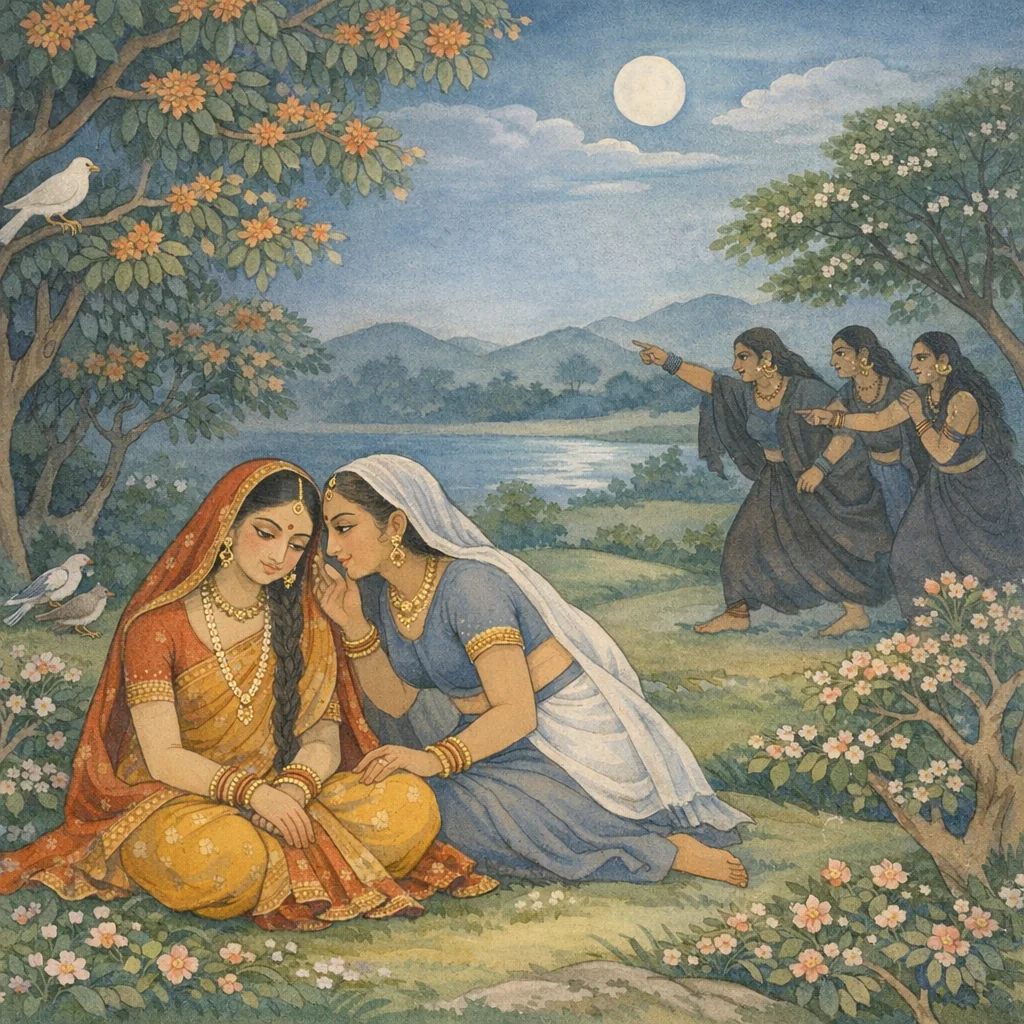
यावदशभ्यागता रौद्रा: पिशाच्यस्ता: सुदारुणा: । ददृशुस्तां त्रिजटया सहासीनां यथा पुरा,इतनेमें ही अत्यन्त क्रूर स््वभाववाली वे भयंकर पिशाचिनियाँ रावणके दरबारसे वहाँ लौटकर आयीं। आकर उन्होंने देखा, सीता त्रिजटाके साथ पूर्ववत् अपने स्थानपर बैठी है
Just then those frightful, exceedingly cruel rākṣasī-women returned from Rāvaṇa’s court. On arriving, they saw Sītā seated in her place as before, with Trijaṭā beside her—steadfast and unshaken despite intimidation, upheld by the protection of a sympathetic companion.
Verse 280
इति श्रीमहाभारते वनपर्वणि रामोपाख्यानपर्वणि त्रिजटाकृतसीतासान्त्वने अशीत्यधिकद्वधिशततमो<ध्याय:
Thus, in the Śrī Mahābhārata, within the Vana Parva, in the section narrating the story of Rāma, in the episode where Trijaṭā consoles Sītā, ends the two-hundred-and-eightieth chapter. This concluding colophon marks the close of a narrative unit that emphasizes steadfastness in adversity and the sustaining power of righteous counsel.
Frequently Asked Questions
Sāvitrī faces the conflict between compliance with Yama’s command to return and her articulated duty to accompany her husband; the chapter tests whether dharma is passive obedience or principled constancy grounded in vow and truth.
The episode models dharma as reasoned, truthful, and compassionate speech-act: steadfastness coupled with ethical rhetoric can transform outcomes without coercion, aligning personal devotion with broader social goods (elders’ welfare, just rule, lineage continuity).
A formal phalaśruti is not stated here; instead, the narrative embeds its meta-commentary through Yama’s repeated commendation of Sāvitrī’s well-formed, meaningful speech and the tangible restoration it achieves, positioning the chapter as an exemplum of dharma’s efficacy.