Adhyaya 34
Udyoga-parva Adhyāya 34 — Vidura’s Counsel on Deliberation, Speech-Discipline, and Dharmic Kingship
Upa-parva: Vidura-nīti (Counsel of Vidura) — Dhṛtarāṣṭra–Vidura Saṃvāda
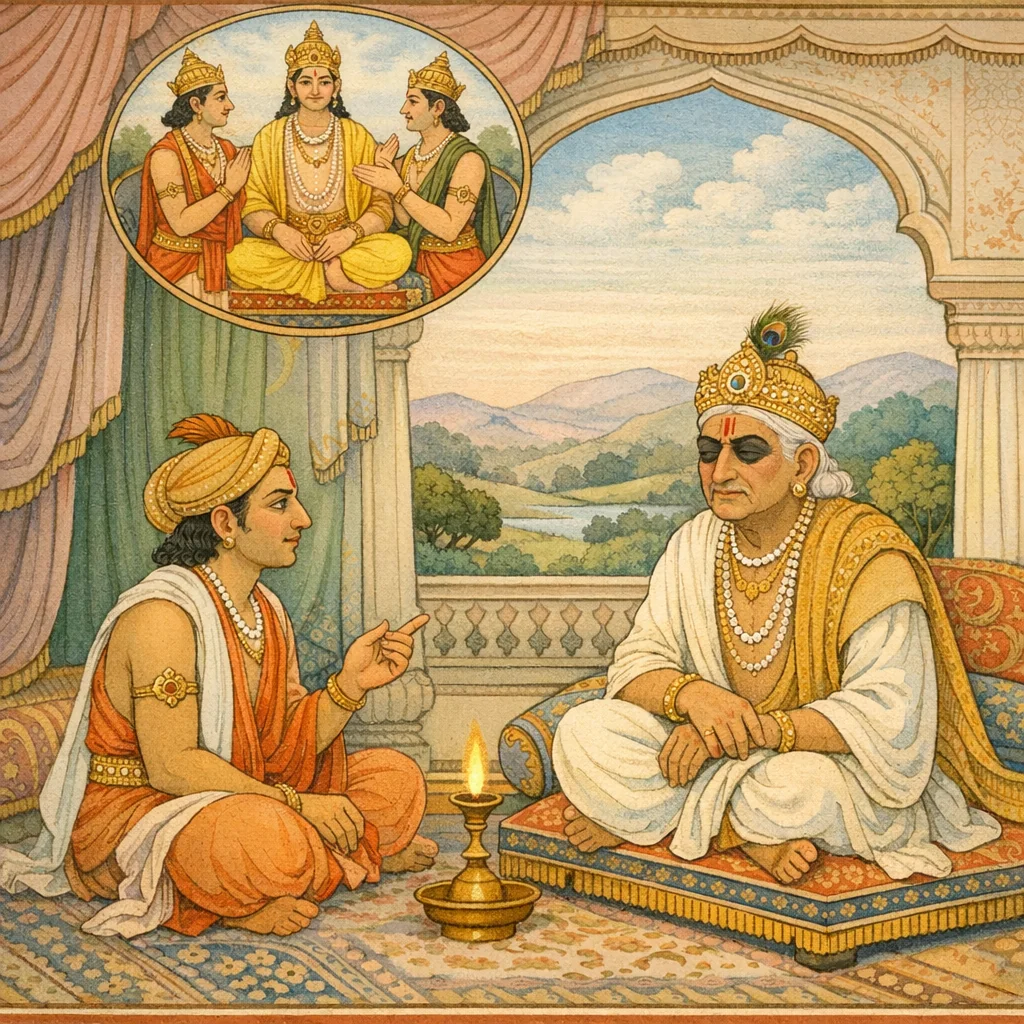
Dhṛtarāṣṭra opens with an anxious request: he is “burning while awake” and asks Vidura—skilled in dharma and artha—to prescribe what should be done for the Kurus and for Ajātaśatru (Yudhiṣṭhira). Vidura frames counsel as benevolent truth-telling that prevents defeat, then develops a layered nīti manual. Key instructions include: avoid projects built on false premises or lacking proper means; do not act by impulse but by analyzing downstream consequences (anubandha) and ripening outcomes (vipāka). Governance requires measurement in revenue, territory, punishment, and public welfare; arrogance after attaining power destroys prosperity. Vidura uses analogies (fish and hook; unripe vs ripe fruit; bee collecting honey without harming flowers) to teach sustainable acquisition and non-destructive policy. He stresses self-control: the body as chariot, senses as horses, and the need to master internal enemies (kāma, krodha, etc.) before external rivals. He warns about harmful speech—verbal wounds that do not heal—and praises restraint and courteous language. The chapter culminates in explicit political counsel: Dhṛtarāṣṭra should accept Yudhiṣṭhira as a qualified ruler; opposition to the Pāṇḍavas reflects distorted judgment and invites decline.
Chapter Arc: धृतराष्ट्र, विदुर के वचनों से तृप्त न होकर फिर आग्रह करता है—“महाबुद्धे! धर्म और अर्थ से युक्त बातें पुनः कहो; इन्हें सुनकर भी मेरी तृष्णा नहीं मिटती।” → विदुर धृतराष्ट्र को निष्पक्षता का कठोर उपदेश देता है—कौरव और पाण्डव दोनों पुत्रों के प्रति समान आर्जव रखो; इसी से इस लोक में कीर्ति और परलोक में स्वर्ग मिलेगा। फिर वह एक दृष्टान्त की ओर ले जाता है—विरोचन और सुधन्वा का प्रह्लाद के पास विवाद, जो सत्य-धर्म की कसौटी बनेगा। → विरोचन-सुधन्वा का ‘प्राणों की बाज़ी’ वाला विवाद प्रह्लाद के सामने पहुँचता है; विरोचन कहता है कि वह असत्य नहीं बोलेगा और तत्त्व-निर्णय पिता से पूछता है—यहाँ सत्य, न्याय और पुत्र-हित के बीच प्रह्लाद की परीक्षा चरम पर आती है। → दृष्टान्त के सहारे विदुर धृतराष्ट्र को नीति-सूत्रों में बाँधता है: दुष्ट-लक्षणों (अगारदाही, गरद, मित्रध्रुक्, पारदारिक आदि) से सावधान रहो; समय रहते कल्याणकारी कर्म करो; बुद्धि-प्रधान कर्म श्रेष्ठ हैं। अंततः वह धृतराष्ट्र को चेताता है कि दुर्योधन-शकुनि-दुःशासन-कर्ण पर राज्य-भार रखकर समृद्धि नहीं मिल सकती, जबकि पाण्डव देवगणों-से समर्थ होकर भी तुम्हें पिता-वत् मानते हैं—तुम उन्हें पुत्र-वत् मानो। → धृतराष्ट्र के सामने निर्णायक मोड़ खड़ा है—क्या वह विदुर की निष्पक्ष नीति अपनाकर पाण्डवों से मेल करेगा, या दुर्योधन-पक्षपात में फँसकर विनाश की ओर बढ़ेगा?
Shlokas
Verse 1
ऑपन-मा_ज बक। डे पजञ्चत्रिशो<ड्ध्याय: विदुरके द्वारा केशिनीके लिये सुधन््वाके साथ विरोचनके विवादका वर्णन करते हुए धृतराष्ट्रको धर्मोपदेश ध्ृतराष्टर उवाच ब्रूहि भूयो महाबुद्धे धर्मार्थसहितं वच: । शृण्वतो नास्ति मे तृप्तिविचित्राणीह भाषसे
Dhṛtarāṣṭra said: “Speak again, O great-minded one, words that unite dharma and practical good. As I listen, I find no satiety—so varied and instructive are the things you speak here.”
Verse 2
धृतराष्ट्रने कहा--महाबुद्धे! तुम पुनः धर्म और अर्थसे युक्त बातें कहो। इन्हें सुनकर मुझे तृप्ति नहीं होती। इस विषयमें तुम विलक्षण बातें कह रहे हो ।। विदुर उवाच सर्वतीर्थेषु वा स्नानं॑ सर्वभूतेषु चार्जवम् । उभे त्वेते समे स्यातामार्जवं वा विशिष्यते,विदुरजी बोले--राजन्! सब तीथर्थोमें स्नान और सब प्राणियोंके साथ कोमलताका बर्ताव--ये दोनों एक समान हैं; अथवा कोमलताके बर्तावका विशेष महत्त्व है
Vidura said: “O King, bathing at all sacred fords and practicing straightforward, gentle integrity toward all living beings—these two may be regarded as equal; yet, in truth, integrity and upright conduct toward all creatures is the higher good.”
Verse 3
आर्ज॑वं प्रतिपद्यस्व पुत्रेषु सततं विभो । इह कीर्ति परां प्राप्य प्रेत्य स्वर्गमवाप्स्यसि,विभो! आप अपने पुत्र कौरव, पाण्डव दोनोंके साथ (समानरूपसे) कोमलताका बर्ताव कीजिये। ऐसा करनेसे इस लोकमें महान् सुयश प्राप्त करके मरनेके पश्चात् लोकमें आप स्वर्गलोकमें जायँगे
Vidura urges the king to adopt straightforwardness and impartial fairness toward all his sons—both the Kauravas and the Pāṇḍavas. If he consistently acts with such integrity, he will gain great renown in this world and, after death, attain heaven—showing that ethical governance and equal regard within the family are themselves a path to lasting honor and spiritual merit.
Verse 4
यावत् कीर्तिर्मिनुष्यस्य पुण्या लोके प्रगीयते । तावत् स पुरुषव्याप्र स्वर्गलोके महीयते,पुरुषश्रेष्ठ] इस लोकमें जबतक मनुष्यकी पावन कीर्तिका गान किया जाता है, तबतक वह स्वर्गलोकमें प्रतिष्ठित होता है
Vidura said: As long as a person’s holy fame is sung in this world, for so long is he honored and exalted in heaven. The endurance of one’s good name among people becomes the measure of one’s lasting reward beyond this life, urging rulers and warriors alike to choose dharma over short-lived gain.
Verse 5
अत्राप्युदाहरन्तीममितिहासं पुरातनम् । विरोचनस्य संवाद केशिन्यर्थे सुधन््वना,इस विषयमें उस प्राचीन इतिहासका उदाहरण दिया करते हैं, जिसमें “केशिनी” के लिये सुधन्वाके साथ विरोचनके विवादका वर्णन है
Here too, people cite an ancient historical example: the dispute-dialogue of Virocana with Sudhanvan, undertaken on account of Keśinī. (Vidura introduces an old precedent to illuminate the ethical issue at hand.)
Verse 6
स्वयंवरे स्थिता कन्या केशिनी नाम नामतः । रूपेणाप्रतिमा राजन् विशिष्टपतिकाम्यया,राजन्! एक समयकी बात है, केशिनी नामवाली एक अनुपम सुन्दरी कन्या सर्वश्रेष्ठ पतिको वरण करनेकी इच्छासे स्वयंवर-सभामें उपस्थित हुई
Vidura said: “O King, there was a maiden present at a svayaṃvara, named Keśinī. In beauty she was without equal, and she had come with the wish to choose an exceptionally worthy husband.”
Verse 7
विरोचनो<थ दैतेयस्तदा तत्राजगाम ह । प्राप्तुमिच्छंस्ततस्तत्र दैत्येन्द्रं प्राह केशिनी,उसी समय दैत्यकुमार विरोचन उसे प्राप्त करनेकी इच्छासे वहाँ आया। तब केशिनीने वहाँ दैत्यराजसे इस प्रकार बातचीत की
Then Virocana, the Daitya prince, came to that place, desiring to obtain her. Thereupon Keśinī addressed the lord of the Daityas, speaking to him in this manner—setting the stage for a dialogue shaped by intention, restraint, and the moral consequences of desire.
Verse 8
केशिन्युवाच किं ब्राह्मणा: स्विच्छेयांसो दितिजा: स्विद् विरोचन । अथ केन सम पर्यड्कं सुधन््वा नाधिरोहति,केशिनी बोली--विरोचन! ब्राह्मण श्रेष्ठ होते हैं या दैत्य? यदि ब्राह्मण श्रेष्ठ होते हैं तो सुधन्वा ब्राह्मण ही मेरी शय्यापर क्यों न बैठे? अर्थात् मैं सुधन्वासे ही विवाह क्यों न करूँ?
Keśinī said: “Virocana, who are truly superior—Brahmins or the Diti-born Daityas? If Brahmins are superior, then why is the Brahmin Sudhanvā not allowed to ascend the same couch as you? In other words, why should I not choose Sudhanvā as my husband?”
Verse 9
विरोचन उवाच प्राजापत्यास्तु वै श्रेष्ठा वयं केशिनि सत्तमा: । अस्माकं खल्विमे लोका: के देवा: के द्विजातय:,विरोचनने कहा--केशिनी! हम प्रजापतिकी श्रेष्ठ संतानें हैं, अतः सबसे उत्तम हैं। यह सारा संसार हमलोगोंका ही है। हमारे सामने देवता क्या हैं? और ब्राह्मण कौन चीज हैं?
Virocana said: “O Keśinī, we are the finest offspring of Prajāpati, and therefore the most excellent. These worlds are truly ours. What are the gods before us? And what are the twice-born—what are brahmins?”
Verse 10
केशिन्युवाच इहैवावां प्रतीक्षाव उपस्थाने विरोचन । सुधन्वा प्रातरागन्ता पश्येयं वां समागतौ,केशिनी बोली--विरोचन! इसी जगह हम दोनों प्रतीक्षा करें; कल प्रातः:काल सुधन्वा यहाँ आवेगा। फिर मैं तुम दोनोंको एकत्र उपस्थित देखूँगी
Keśinī said: “Virocana, let us wait here, at this very place of meeting. Sudhanvā will come in the morning; then I shall see you both present together.”
Verse 11
विरोचन उवाच तथा भद्रे करिष्यामि यथा त्वं भीरु भाषसे । सुधन्वानं च मां चैव प्रातर्द्रष्टासि संगतो,विरोचन बोला--कल्याणी! तुम जैसा कहती हो, वही करूँगा। भीरु! प्रातःकाल तुम मुझे और सुधन्वाको एक साथ उपस्थित देखोगी
Virocana said: “So be it, auspicious lady; I shall do exactly as you, timid one, propose. At dawn you will see Sudhanvā and me together, having met.”
Verse 12
विदुर उवाच अतीतायां च शर्वर्यामुदिते सूर्यमण्डले । अथाजगाम त॑ देशं सुधन्वा राजसत्तम । विरोचनो यत्र विभो केशिन्या सहित: स्थित:,विदुरजी कहते हैं--राजाओंमें श्रेष्ठ धृतराष्ट्! इसके बाद जब रात बीती और सूर्यमण्डलका उदय हुआ, उस समय सुधन्वा उस स्थानपर आया, जहाँ विरोचन केशिनीके साथ उपस्थित था
Vidura said: “When the night had passed and the orb of the sun had risen, Sudhanvā came to that place, O best of kings, where the mighty Virocana was staying together with Keśinī.”
Verse 13
सुधन्वा च समागच्छत् प्राह्मदिं केशिनीं तथा । समागतं द्विजं दृष्टवा केशिनी भरतर्षभ । प्रत्युत्थायासनं तस्मै पाद्यमर्घ्य ददौ पुन:,भरतमश्रेष्ठ! सुधन्वा प्रह्मादकुमार विरोचन और केशिनीके पास आया। ब्राह्मगको आया देख केशिनी उठ खड़ी हुई और उसने उसे आसन, पाद्य और अर्घ्य निवेदन किया
Sudhanvā came to Keśinī, the daughter of Prāhrmada, O bull among the Bharatas. Seeing the brahmin arrive, Keśinī rose to greet him and again offered him a seat, water for washing the feet, and the respectful arghya-offering—thus observing the proper duties of hospitality.
Verse 14
युधन्वोवाच अन्वालभे हिरण्मयं प्राह्मदे ते वरासनम् | एकत्वमुपसम्पन्नो न त्वासे5हं त्वया सह,सुधन्वा बोला--प्रह्लादनन्दन! मैं तुम्हारे इस सुवर्णमय सुन्दर सिंहासनको केवल छू लेता हूँ, तुम्हारे साथ इसपर बैठ नहीं सकता; क्योंकि ऐसा होनेसे हम दोनों एक समान हो जायूँगे
Yudhanvā said: “O Brahmin, I only touch your splendid golden throne; I cannot sit upon it together with you. For if I did, we two would become equals.”
Verse 15
विरोचन उवाच तवा्हते तु फलकं कूर्च वाप्यथवा बृसी । सुधन्वन् न त्वमहोंडसि मया सह समासनम्,विरोचनने कहा--सुधन्वन्! तुम्हारे लिये तो पीढ़ा, चटाई या कुशका आसन उचित है; तुम मेरे साथ बराबरके आसनपर बैठनेयोग्य हो ही नहीं
Virocana said: “For you, a low stool, a mat, or even a seat of kuśa-grass is what is fitting. O Sudhanvan, you are not—indeed not at all—worthy to sit on the same seat with me.”
Verse 16
युधन्वोवाच पितापुत्रौ सहासीतां द्वौ विप्रौ क्षत्रियावपि । वृद्धौ वैश्यौ च शूद्रौ च न त्वन्यावितरेतरम्,सुधन्वाने कहा--विरोचन! पिता और पुत्र एक साथ एक आसनपर बैठ सकते हैं; दो ब्राह्मण, दो क्षत्रिय, दो वृद्ध, दो वैश्य और दो शूद्र भी एक साथ बैठ सकते हैं; किंतु दूसरे कोई दो व्यक्ति परस्पर एक साथ नहीं बैठ सकते
Sudhanvan said: “O Virocana, a father and son may sit together on the same seat. Likewise, two Brahmins, two Kshatriyas, two elders, two Vaishyas, and two Shudras may sit together. But apart from these, no other two persons should sit together in mutual equality.”
Verse 17
पिता हि ते समासीनमुपासीतैव मामधथ: । बाल: सुखैधितो गेहे न त्वं किंचन बुध्यसे,तुम्हारे पिता प्रह्नाद नीचे बैठकर ही उच्चासनपर आसीन हुए मुझ सुधन्वाकी सेवा किया करते हैं। तुम अभी बालक हो, घरमें सुखसे पले हो; अतः तुम्हें इन बातोंका कुछ भी ज्ञान नहीं है
“Your father, Prahlāda, would sit below and attend upon me even while you remained seated above. You are still a child, reared in comfort at home; therefore you understand nothing of these matters.”
Verse 18
विरेचन उवाच हिरण्यं च गवाश्चृं च यद् वित्तमसुरेषु न: । सुधन्वन् विपणे तेन प्रश्न॑ पृच्छाव ये विदु:,विरोचन बोला--सुधन्वन्! हम असुरोंके पास जो कुछ भी सोना, गौ, घोड़ा आदि धन है, उसकी मैं बाजी लगाता हूँ; हम-तुम दोनों चलकर जो इस विषयके जानकार हों, उनसे पूछें कि हम दोनोंमें कौन श्रेष्ठ है?
Virocana said: “Sudhanvan, whatever wealth we Asuras possess—gold, cattle, horses, and the like—I stake it as the wager. Come, let us both go and ask those who truly know, and have them decide this question: which of us two is the superior.”
Verse 19
युधन्वोवाच हिरण्यं च गवाश्चं च तवैवास्तु विरोचन । प्राणयोस्तु पणं कृत्वा प्रश्न॑ पृच्छाव ये विदु:,सुधन्वा बोला--विरोचन! सुवर्ण, गाय और घोड़ा तुम्हारे ही पास रहें। हम दोनों प्राणोंकी बाजी लगाकर जो जानकार हों, उनसे पूछें
Sudhanvā said: “Let the gold and the cattle remain with you, O Virocana. But let us stake our very lives and put the question to those who truly know.”
Verse 20
विरोचन उवाच आवां कुत्र गमिष्याव: प्राणयोर्विपणे कृते | नतु देवेष्वहं स्थाता न मनुष्येषु कहिचित्,विरोचनने कहा--अच्छा, प्राणोंकी बाजी लगानेके पश्चात् हम दोनों कहाँ चलेंगे? मैं तो न देवताओंके पास जा सकता हूँ और न कभी मनुष्योंसे ही निर्णण करा सकता हूँ
Virocana said: “After we have staked our very lives in this wager, where shall the two of us go? I have no standing among the gods, nor can I find any secure place among human beings.”
Verse 21
युधन्वोवाच पितरं ते गमिष्याव: प्राणयोर्विपणे कृते । पुत्रस्यापि स हेतोहिं प्रह्ादो नानृतं वदेत्,सुधन्वा बोला--प्राणोंकी बाजी लग जानेपर हम दोनों तुम्हारे पिताके पास चलेंगे। [मुझे विश्वास है कि] प्रह्नाद अपने बेटेके (जीवनके) लिये भी झूठ नहीं बोल सकते हैं
Sudhanvan said: “When the stake has been set as our very lives, we shall both go to your father. For Prahlāda, even for the sake of his own son, would not speak an untruth.”
Verse 22
विदुर उवाच एवं कृतपणोौ क्रुद्धौ तत्राभिजग्मतुस्तदा । विरोचनसुधन्वानौ प्रह्वादो यत्र तिषठति,विदुरजी कहते हैं--राजन्! इस तरह बाजी लगाकर परस्पर क़ुद्ध हो विरोचन और सुधन्वा दोनों उस समय वहाँ गये, जहाँ प्रह्नमाद थे
Vidura said: “O King, after staking their wager in this way and becoming angry with one another, Virocana and Sudhanvan then went to the place where Prahrāda was staying.”
Verse 23
प्रह्माद उवाच इमौ तौ सम्प्रदृश्येते याभ्यां न चरितं सह । आशीविषाविव क्रुद्धावेकमार्गाविहागतौ,प्रह्नादने (मन-ही-मन) कहा--जो कभी भी एक साथ नहीं चले थे, वे ही दोनों ये सुधन्वा और विरोचन आज साँपकी तरह क़ुद्ध होकर एक ही राहसे आते दिखायी देते हैं
Prahrāda said: “These two are now seen approaching—those who have never walked together before. Like enraged venomous serpents, they have come here along the same path.”
Verse 24
कि वै सहैवं चरथो न पुरा चरथ: सह । विरोचनैतत् पृच्छामि कि ते सख्यं सुधन्वना,[फिर प्रकटरूपमें विरोचनसे कहा--] विरोचन! मैं तुमसे पूछता हूँ, क्या सुधन्वाके साथ तुम्हारी मित्रता हो गयी है? फिर कैसे एक साथ आ रहे हो? पहले तो तुम दोनों कभी एक साथ नहीं चलते थे
Prahlāda said: “Why are you two walking together like this? Earlier you never used to move about in one another’s company. Virocana, I ask you plainly—have you formed a friendship with Sudhanvan? If so, how has this companionship come about?”
Verse 25
वियेचन उवाच न मे सुधन्वना सख्यं प्राणयोर्विपणावहे । प्रह्माद तत्त्वं पृच्छामि मा प्रश्नमनृतं वदे:,विरोचन बोला--पिताजी! सुधन्वाके साथ मेरी मित्रता नहीं हुई है। हम दोनों प्राणोंकी बाजी लगाये आ रहे हैं। मैं आपसे यथार्थ बात पूछता हूँ। मेरे प्रश्नका झूठा उत्तर न दीजियेगा
Virocana said: “Father, I have no friendship with Sudhanvan; we are staking our very lives against each other. I ask you for the truth as it has been taught from Brahmā onward—do not answer my question with falsehood.”
Verse 26
प्रह्माद उवाच उदकं मधुपर्क वाप्यानयन्तु सुधन्वने । ब्रह्मन्न भ्यर्चनीयो 5सि श्वेता गौ: पीवरी कृता,प्रह्नमादने कहा--सेवको! सुधन्वाके लिये जल और मधुपर्क भी लाओ। [फिर सुधन्वासे कहा--] ब्रह्मन! तुम मेरे पूजनीय अतिथि हो, मैंने तुम्हें दान करनेके लिये खूब मोटी-ताजी सफेद गौ रख रखी है
Prahlāda said: “Bring water and the honey-mixture (madhuparka) as well for Sudhanvan. O Brāhmaṇa, you are worthy of honor as my guest; I have kept ready a well-fed, robust white cow to be given in hospitality.”
Verse 27
युधन्वोवाच उदकं मधुपर्क च पथिष्वेवार्पितं मम । प्रह्मद त्वं तु मे तथ्यं प्रश्न॑ प्रत्रूहि पृष्छत: । कि ब्राह्मणा: स्विच्छेयांस उताहो स्विद् विरोचन:,सुधन्वा बोला--प्रह्नाद! जल और मधुपर्क तो मुझे मार्गमें ही मिल गया है। तुम तो जो मैं पूछ रहा हूँ, उस प्रश्नचका ठीक-ठीक उत्तर दो-ब्राह्मण श्रेष्ठ हैं अथवा विरोचन?
Sudhanvā said: “The water and the honey-mixture offering have already been presented to me on the road. But you, Prahlāda, tell me truthfully the answer to the question I am asking: who is superior—Brahmins, or Virocana?”
Verse 28
प्रह्माद उवाच पुत्र एको मम ब्रह्म॑ंस्त्वं च साक्षादिहास्थित: । तयोर्विवदतो: प्रश्न कथमस्मद्विधो वदेत्
Prahmāda said: “My son, on one side stands my own son, and on the other you yourself, O Brāhmaṇa, are present here in person. When these two dispute and a question is raised between them, how could someone like me presume to give an answer?”
Verse 29
प्रह्नाद बोले--ब्रह्मन्! मेरे एक ही पुत्र है और इधर तुम स्वयं उपस्थित हो; भला, तुम दोनोंके विवादमें मेरे-जैसा मनुष्य कैसे निर्णय दे सकता है? ।। युधन्वोवाच गां प्रदद्यास्त्वौरसाय यद्धान्यत् स्यात् प्रियं धनम् । द्वयोविवदतोस्तथ्यं वाच्यं च मतिमंस्त्वया,सुधन्वा बोला--मतिमन्! तुम्हारे पास गौ तथा दूसरा जो कुछ भी प्रिय धन हो, वह सब अपने औरस पुत्र विरोचनको दे दो; परंतु हम दोनोंके विवादमें तो तुम्हें ठीक-ठीक उत्तर देना ही चाहिये
Prahrāda said: “O Brahmin, I have but one son, and you yourself stand here before me. In a dispute between the two of you, how could a man like me render a decision?” Sudhanvā replied: “Give the cow—and whatever other dear wealth you possess—to your own legitimate son, Virocana. But as for the dispute between us two, you, being wise, must speak the truth and give a precise answer.”
Verse 30
प्रह्माद उवाच अथ यो नैव प्रब्रूयात् सत्यं वा यदि वानृतम् । एतत् सुधन्वन् पृच्छामि दुर्विवक्ता सम कि वसेत्,प्रह्नमादने कहा--सुधन्वन्! अब मैं तुमसे यह बात पूछता हूँ--जो सत्य न बोले अथवा अस॒त्य निर्णय करे, ऐसे दुष्ट वक्ताकी क्या स्थिति होती है?
Prahlāda said: “Now, Sudhanvan, I ask you this: what becomes of a wicked speaker—one who does not speak the truth, or who, when called upon to decide, delivers a false judgment?”
Verse 31
युधन्वोवाच यां रात्रिमधिविन्ना स्त्री यां चैवाक्षपराजित: । यां च भाराभिततप्ताड़्े दुर्विवक्ता सम तां वसेत्,सुधन्वा बोला--सौतवाली स्त्री, जूएमें हारे हुए जुआरी और भार ढोनेसे व्यथित शरीरवाले मनुष्यकी रातमें जो स्थिति होती है, वही स्थिति उलटा न्याय देनेवाले वक्ताकी भी होती है
Sudhanvan said: “The night that a woman endures when she has been wronged and cast aside; the night that a gambler endures after being defeated at dice; and the night that a man endures when his body is scorched by the strain of carrying heavy loads—such is the night endured by one who speaks unjustly and delivers perverted judgment.”
Verse 32
नगरे प्रतिरुद्ध: सन् बहिद्वरि बुभुक्षित: । अमित्रान् भूयस: पश्येद् यः साक्ष्यमनृतं वदेत्,जो झूठा निर्णय देता है, वह राजा नगरमें कैद होकर बाहरी दरवाजेपर भूखका कष्ट उठाता हुआ बहुत-से शत्रुओंको देखता है
He who gives false testimony will, as a consequence, be confined within the city and, tormented by hunger at the outer gate, be forced to behold many enemies.
Verse 33
पज्च पश्चनृते हन्ति दश हन्ति गवानृते । शतमश्चानृते हन्ति सहस्न॑ पुरुषानृते,(अपने स्वार्थके वशीभूत हो) पशुके लिये झूठ बोलनेसे पाँच, गौके लिये झूठ बोलनेपर दस, घोड़ेके लिये असत्य-भाषण करनेपर सौ पीढ़ियोंको और मनुष्यके लिये झूठ बोलनेपर एक हजार पीढ़ियोंको मनुष्य नरकमें गिराता है
Prahlāda said: “A lie told for the sake of an animal destroys five (generations/lines); a lie told for the sake of a cow destroys ten; a lie told for the sake of a horse destroys a hundred; and a lie told for the sake of a human being destroys a thousand—casting a man down into hell.”
Verse 34
हन्ति जातानजातांश्व हिरण्यार्थेडनृतं वदन् । सर्व भूम्यनृते हन्ति मा सम भूम्यनृतं वदे:,सुवर्णके लिये झूठ बोलनेवाला अपनी भूत और भविष्य सभी पीढ़ियोंको नरकमें गिराता है। पृथ्वी तथा स्त्रीके लिये झूठ कहनेवाला तो अपना सर्वनाश ही कर लेता है; इसलिये तुम भूमि या स्त्रीके लिये कभी झूठ न बोलना
He who speaks falsehood for the sake of gold destroys both those already born and those yet to be born—his present and future line. Falsehood concerning land (property) brings total ruin. Therefore, never speak a lie regarding land (or a woman), for such deceit leads to one’s complete downfall.
Verse 35
प्रह्माद उवाच मत्त: श्रेयानड्रिरा वै सुधन्वा त्वद्वधिरोचन | मातास्य श्रेयसी मातुस्तस्मात् त्वं तेन वै जित:,भरतश्रेष्ठ) पाण्डव तो सभी उत्तम गुणोंसे सम्पन्न हैं और आपमें पिताका-सा भाव रखकर बर्ताव करते हैं; आप भी उनपर पुत्रभाव रखकर उचित बर्ताव कीजिये ।। इति श्रीमहाभारते उद्योगपर्वणि प्रजागरपर्वणि विदुरनीतिवाक्ये पउठ्चत्रिंशो 5ध्याय: [
Prahlāda said: “Sudhanvā is superior to you; he is firm and unshakable, and his resolve is directed toward your downfall. His mother is nobler than your mother; therefore, you have already been overcome by him.” In ethical terms, the verse frames ‘victory’ not merely as physical dominance but as the advantage gained through superior character, steadiness, and the moral strength inherited and cultivated through one’s upbringing.
Verse 36
प्रह्नमादने कहा--विरोचन! सुधन्वाके पिता अंगिरा मुझसे श्रेष्ठ हैं, सुधन्वा तुमसे श्रेष्ठ है, इसकी माता तुम्हारी मातासे श्रेष्ठ है; अतः तुम आज सुधन्वाके द्वारा जीते गये ।। विरोचन सुधन्वायं प्राणानामी श्वरस्तव । सुधन्वन् पुनरिच्छामि त्वया दत्तं विरोचनम्,विरोचन! अब सुधन्वा तुम्हारे प्राणोंका स्वामी है। सुधन्वन्! अब यदि तुम दे दो तो मैं विरोचनको पाना चाहता हूँ
Prahlāda said: “Virocana, Sudhanvan’s father, Aṅgiras, is superior to me; Sudhanvan is superior to you; and his mother is superior even to your mother. Therefore, today you have been defeated by Sudhanvan. Virocana, Sudhanvan is now the master over your very life-breaths. Sudhanvan, if you will grant him back, I wish to regain Virocana—whom you have been given (as a forfeit).”
Verse 37
युधन्वोवाच यद् धर्ममवृणीथास्त्वं न कामादनृतं वदी: । पुनर्ददामि ते पुत्र॑ तस्मात् प्रह्मद दुर्लभम्,7 कि लक हा ५ खा 4 अर प 90-5० सुधन्वा बोला--प्रह्नाद! तुमने धर्मको ही स्वीकार किया है, स्वार्थवश झूठ नहीं कहा है; इसलिये अब तुम्हारे इस दुर्लभ पुत्रको फिर तुम्हें दे रहा हूँ
Sudhanvan said: “Since you chose dharma, and did not speak falsehood out of self-interest, I now give your son back to you—O Prahlāda—though such a son is hard to obtain.”
Verse 38
एष प्रह्माद पुत्रस्ते मया दत्तो विरोचन: । पादप्रक्षालनं कुर्यात् कुमार्या: संनिधौ मम,प्रह्माद! तुम्हारे इस पुत्र विरोचनको मैंने पुनः तुम्हें दे दिया; किंतु अब यह कुमारी केशिनीके निकट चलकर मेरे पैर धोवे
Sudhanvan said: “Here is Virocana, your son, whom I now return to you. Yet, in my presence, let him go near the maiden Keśinī and wash my feet.”
Verse 39
विदुर उवाच तस्माद् राजेन्द्र भूम्यर्थे नानृतं वक्तुमहसि । मा गम: ससुतामात्यो नाशं पुत्रार्थमब्रुवन्,विदुरजी कहते हैं--इसलिये राजेन्द्र! आप पृथ्वीके लिये झूठ न बोलें। बेटेके स्वार्थथश सच्ची बात न कहकर पुत्र और मन्त्रियोंके साथ विनाशके मुखमें न जायेँ
Vidura said: “Therefore, O best of kings, you should not speak falsehood for the sake of land and dominion. Do not, for the sake of your son, refuse to speak the truth and thereby go—together with your son and ministers—toward ruin.”
Verse 40
न देवा दण्डमादाय रक्षन्ति पशुपालवत् | यं तु रक्षितुमिच्छन्ति बुद्धया संविभजन्ति तम्,देवतालोग चरवाहोंकी तरह डंडा लेकर किसीका पहरा नहीं देते। वे जिसकी रक्षा करना चाहते हैं, उसे उत्तम बुद्धिसे युक्त कर देते हैं
The gods do not stand guard over anyone with a staff like cattle-herdsmen. Rather, whom they wish to protect, they endow with discerning intelligence—so that by right judgment he safeguards himself and chooses the proper course.
Verse 41
यथा यथा हि पुरुष: कल्याणे कुरुते मन: । तथा तथास्यथ सर्वार्था: सिद्धयन्ते नात्र संशय:,मनुष्य जैसे-जैसे कल्याणमें मन लगाता है, वैसे-ही-वैसे उसके सारे अभीष्ट सिद्ध होते हैं--इसमें तनिक भी संदेह नहीं है
As a person steadily turns the mind toward what is truly wholesome and virtuous, so too do all the person’s rightful aims come to fulfillment—of this there is no doubt.
Verse 42
प्रह्नमादजीका न्याय आत्रेय मुनि और साध्यगण नैनं छनन््दांसि वृजिनात् तारयन्ति मायाविनं मायया वर्तमानम् | नीडं शकुन्ता इव जातपक्षा- श्छन्दांस्थेनं प्रजहत्यन्तकाले,कपट॒पूर्ण व्यवहार करनेवाले मायावीको वेद पापोंसे मुक्त नहीं करते; किंतु जैसे पंख निकल आनेपर चिड़ियोंके बच्चे घोंसला छोड़ देते हैं, उसी प्रकार वेद भी अन्तकालमें उस (मायावी)-को त्याग देते हैं
Vidura said: The Vedic hymns do not rescue from sin a deceitful man who lives by deception. Rather, at the end of his life, the Vedas abandon him—just as fledgling birds, once their wings have grown, leave the nest behind.
Verse 43
मद्यपानं कलहूं, पूगवैरं भार्यपत्योरन्तरं ज्ञातिभेदम् । राजद्विष्ट॑ स्त्रीपुंसयोविवादं वर्ज्यान्याहुर्यश्व॒ पन्था: प्रदुष्ट:,शराब पीना, कलह, समूहके साथ वैर, पति-पत्नीमें भेद पैदा करना, कुटुम्बवालोंमें भेदबुद्धि उत्पन्न करना, राजाके साथ द्वेष, स्त्री और पुरुषमें विवाद और बुरे रास्ते--ये सब त्याग देनेयोग्य बताये गये हैं
Vidura declares that certain habits and actions are to be renounced because they corrode harmony and dharma: drinking intoxicants, fomenting quarrels, nurturing enmity with one’s own group, creating estrangement between husband and wife, and sowing division among relatives. He adds that hostility toward the king, disputes between women and men, and any path of conduct that is morally tainted are likewise to be avoided.
Verse 44
सामुद्रिकं वणिजं चोरपूर्व शलाकधूर्त॑ च चिकित्सकं च | अरिं च मित्र च कुशीलवं च नैतान् साक्ष्ये त्वधिकुर्वीत सप्त,हस्तरेखा देखनेवाला, चोरी करके व्यापार करनेवाला, जुआरी, वैद्य, शत्रु, मित्र और नर्तक--इन सातोंको कभी भी गवाह न बनावे
Vidura advises that, in matters requiring testimony, one should not appoint as witnesses seven kinds of persons: a physiognomist or palm-reader, a trader with a history of theft, a gambler skilled in deceit, a physician, an enemy, a friend, and a professional performer.
Verse 45
मानाग्निहोत्रमुत मानमौनं मानेनाधीतमुत मानयज्ञ: । एतानि चत्वार्यभयंकराणि भयं प्रयच्छन्त्ययथाकृतानि,आदरके साथ अमन्निहोत्र, आदरपूर्वक मौनका पालन, आदरपूर्वक स्वाध्याय और आदरके साथ यज्ञका अनुष्ठान--ये चार कर्म भयको दूर करनेवाले हैं; किंतु वे ही यदि ठीक तरहसे सम्पादित न हों तो भय प्रदान करनेवाले होते हैं
Vidura says: When performed with due reverence, four disciplines dispel fear—maintaining the agnihotra (fire-offering), observing mauna (silence), pursuing svādhyāya (sacred study), and conducting yajña (sacrifice). Yet if done improperly or without the right inner spirit, those very practices become causes of fear.
Verse 46
अगारदाही गरद: कुण्डाशी सोमविक्रयी । पर्वकारश्न सूची च मित्रध्रुक् पारदारिक:,घरमें आग लगानेवाला, विष देनेवाला, जारज संतानकी कमाई खानेवाला, सोमरस बेचनेवाला, शस्त्र बनानेवाला, चुगली करनेवाला, मित्रद्रोही, परस्त्रीलम्पट, गर्भकी हत्या करनेवाला, गुरुस्त्रीगामी, ब्राह्मण होकर शराब पीनेवाला, अधिक तीखे स्वभाववाला, कौएकी तरह कार्ये-कार्यँ करनेवाला, नास्तिक, वेदकी निन्दा करनेवाला, ग्रामपुरोहित, व्रात्य-, क्रूर तथा शक्तिमान् होते हुए भी “मेरी रक्षा करो", इस प्रकार कहनेवाले शरणागतका जो वध करता है--ये सब-के-सब ब्रह्म-हत्यारोंके समान हैं
Vidura said: “One who sets fire to another’s house, one who administers poison, one who lives by consuming the earnings of a child begotten in adultery, one who sells soma, one who forges weapons, one who is a tale-bearer, one who betrays friends, and one who lusts after another’s wife—such persons are counted among the gravest offenders.”
Verse 47
भ्रूणहा गुरुतल्पी च यश्न स्यात् पानपो द्विज: । अतितीक्षणश्न॒ काकश्न नास्तिको वेदनिन्दक:,घरमें आग लगानेवाला, विष देनेवाला, जारज संतानकी कमाई खानेवाला, सोमरस बेचनेवाला, शस्त्र बनानेवाला, चुगली करनेवाला, मित्रद्रोही, परस्त्रीलम्पट, गर्भकी हत्या करनेवाला, गुरुस्त्रीगामी, ब्राह्मण होकर शराब पीनेवाला, अधिक तीखे स्वभाववाला, कौएकी तरह कार्ये-कार्यँ करनेवाला, नास्तिक, वेदकी निन्दा करनेवाला, ग्रामपुरोहित, व्रात्य-, क्रूर तथा शक्तिमान् होते हुए भी “मेरी रक्षा करो", इस प्रकार कहनेवाले शरणागतका जो वध करता है--ये सब-के-सब ब्रह्म-हत्यारोंके समान हैं
Vidura declares that certain grievous offenders are to be regarded as equal to a slayer of a brāhmaṇa (brahmahatyā: the sin of killing a brāhmaṇa): one who kills an embryo, one who violates the teacher’s bed (adultery with the guru’s wife), a brāhmaṇa who drinks intoxicants, one of excessively harsh temperament, one who behaves like a crow—without discernment of what should and should not be done—an atheist (nāstika), and a reviler of the Veda.
Verse 48
ख्रुवप्रग्रहणो व्रात्य: कीनाशश्नात्मवानपि । रक्षेत्युक्तश्न यो हिंस्यात् सर्वे ब्रह्मृहभि: समा:,घरमें आग लगानेवाला, विष देनेवाला, जारज संतानकी कमाई खानेवाला, सोमरस बेचनेवाला, शस्त्र बनानेवाला, चुगली करनेवाला, मित्रद्रोही, परस्त्रीलम्पट, गर्भकी हत्या करनेवाला, गुरुस्त्रीगामी, ब्राह्मण होकर शराब पीनेवाला, अधिक तीखे स्वभाववाला, कौएकी तरह कार्ये-कार्यँ करनेवाला, नास्तिक, वेदकी निन्दा करनेवाला, ग्रामपुरोहित, व्रात्य-, क्रूर तथा शक्तिमान् होते हुए भी “मेरी रक्षा करो", इस प्रकार कहनेवाले शरणागतका जो वध करता है--ये सब-के-सब ब्रह्म-हत्यारोंके समान हैं
Vidura declares that even an outcaste, a peasant, or a powerful man—if he comes seeking refuge and says, “Protect me”—must not be harmed. Whoever injures or kills such a supplicant is to be regarded as equal to a slayer of a brāhmaṇa.
Verse 49
तृणोल्कया ज्ञायते जातरूप॑ं वृत्तेन भद्रो व्यवहारेण साधु: । शूरो भयेष्वर्थकृच्छेषु धीर: कृच्छेष्वापत्सु सुहृदश्चारयश्च,जलती हुई आगसे सुवर्णकी पहचान होती है, सदाचारसे सत्पुरुषकी, व्यवहारसे श्रेष्ठ पुरुषकी, भय प्राप्त होनेपर शूरकी, आर्थिक कठिनाईमें धीरकी और कठिन आपपत्तिमें शत्रु एवं मित्रकी परीक्षा होती है
Vidura teaches that true worth is revealed only under testing: gold is known when tried by fire; a good man by his conduct; a truly noble person by his dealings with others. A hero is known when fear arises, a steadfast man when wealth is strained, and in severe calamity one discovers who is genuinely a friend and who is an enemy.
Verse 50
जरा रूप॑ हरति हि धैर्यमाशा मृत्यु: प्राणान् धर्मचर्यामसूया । क्रोध: श्रियं शीलमनार्यसेवा हियं काम: सर्वमेवाभिमान:,बुढ़ापा (सुन्दर) रूपको, आशा धीरताको, मृत्यु प्राणोंको, असूया (गुणोंमें दोष देखनेका स्वभाव) धर्माचरणको, क्रोध लक्ष्मीको, नीच पुरुषोंकी सेवा सत्स्वभभावको, काम लज्जाको और अभिमान सर्वस्वको नष्ट कर देता है
Vidura teaches that inner and outer decline comes from specific forces: old age steals beauty; hope, when it becomes clinging expectation, erodes steadiness; death takes away life-breath; and fault-finding jealousy undermines the practice of dharma. Anger destroys prosperity; serving ignoble company ruins good character; lust destroys modesty; and pride can consume everything.
Verse 51
श्रीमड्नलात् प्रभवति प्रागल्भ्यात् सम्प्रवर्धते । दाक्ष्यात् तु कुरुते मूलं संयमात् प्रतितिष्ठति,शुभ कर्मोसे लक्ष्मीकी उत्पत्ति होती है, प्रगल्भतासे वह बढ़ती है, चतुरतासे जड़ जमा लेती है और संयमसे सुरक्षित रहती है
Vidura teaches that prosperity (Lakṣmī) is born from strength and dignity, grows through bold initiative, takes firm root through skillful competence, and remains secure through self-restraint.
Verse 52
अष्टौ गुणा: पुरुषं दीपयन्ति प्रज्ञा च कौल्यं च दम: श्रुतं च । पराक्रमश्चाबहुभाषिता च दानं यथाशक्ति कृतज्ञता च,आठ गुण पुरुषकी शोभा बढ़ाते हैं--बुद्धि, कुलीनता, दम, शास्त्रज्ञान, पराक्रम, बहुत न बोलना, यथाशक्ति दान देना और कृतज्ञ होना
Vidura said: Eight qualities make a person shine: discernment, noble lineage and conduct, self-restraint, learning from sacred and authoritative teachings, valor, speaking little, giving according to one’s capacity, and gratitude.
Verse 53
एतान् गुणांस्तात महानुभावा- नेको गुण: संश्रयते प्रसहा । राजा यदा सत्कुरुते मनुष्यं सर्वान् गुणानेष गुणो विभाति,तात! एक गुण ऐसा है, जो इन सभी महत्त्वपूर्ण गुणोंपर हठात् अधिकार जमा लेता है। जिस समय राजा किसी मनुष्यका सत्कार करता है, उस समय यह एक ही गुण (राजसम्मान) सभी गुणोंसे बढ़कर शोभा पाता है
Vidura said: “Dear one, among these noble qualities, there is a single quality that forcefully takes them all under its shelter. When a king honors a person, that one factor—royal recognition—outshines all other virtues and makes them appear foremost.”
Verse 54
अष्टी नृपेमानि मनुष्यलोके स्वर्गस्थ लोकस्य निदर्शनानि । चत्वार्येषामन्ववेतानि सद्धि- श्वृत्वारि चैषामनुयान्ति सन््तः,राजन! मनुष्यलोकमें ये आठ गुण स्वर्गलोकका दर्शन करानेवाले हैं; इनमेंसे चार तो संतोंके साथ नित्य सम्बद्ध हैं--उनमें सदा विद्यमान रहते हैं और चारका सज्जन पुरुष अनुसरण करते हैं
Vidura said: “O King, in the human world there are eight qualities that serve as clear signs pointing toward the heavenly state. Of these, four are inseparably present in the company of the good—ever abiding with them—and four others are those which virtuous people consciously follow and practice.”
Verse 55
यज्ञों दानमध्ययनं तपश्न चत्वार्येतान्यन्ववेतानि सद्धिः | दम: सत्यमार्जवमानृशंस्यं चत्वार्येतान्यनुयान्ति सन्त:,यज्ञ, दान, शास्त्रोंका अध्ययन और तप--ये चार सज्जनोंके साथ नित्य सम्बद्ध हैं और इन्द्रियनिग्रह, सत्य, सरलता तथा कोमलता--इन चारोंका संतलोग अनुसरण करते हैं
Sacrifice, charity, study of sacred lore, and austerity—these four are ever bound up with the good; and self-restraint of the senses, truth, straightforwardness, and gentleness—these four are what the righteous follow.
Verse 56
इज्याध्ययनदानानि तप: सत्य॑ क्षमा घृणा । अलोभ इति मार्गो<यं धर्मस्याष्टविध: स्मृत:,यज्ञ, अध्ययन, दान, तप, सत्य, क्षमा, दया और निर्लेभता--ये धर्मके आठ प्रकारके मार्ग बताये गये हैं
Sacrificial worship, study, giving, austerity, truth, forgiveness, compassionate non-cruelty, and freedom from greed—this is remembered as the eightfold path of dharma.
Verse 57
तत्र पूर्वचतुर्वर्गो दम्भार्थमपि सेव्यते । उत्तरश्न चतुर्वर्गो नामहात्मसु तिष्तति,इनमेंसे पहले चारोंका तो कोई (दम्भी पुरुष भी) दम्भके लिये सेवन कर सकता है, परंतु अन्तिम चार तो जो महात्मा नहीं हैं, उनमें रह ही नहीं सकते
Here, the first set of four may be practiced even for the sake of mere display; but the latter set of four cannot truly abide in those who are not great-souled.
Verse 58
न सा सभा यत्र न सन्ति वृद्धा नते वृद्धा ये न वदन्ति धर्मम् नासौ धर्मों यत्र न सत्यमस्ति न तत् सत्यं यच्छलेना भ्युपेतम्,जिस सभामें बड़े-बूढ़े नहीं, वह सभा नहीं; जो धर्मकी बात न कहें, वे बूढ़े नहीं; जिसमें सत्य नहीं, वह धर्म नहीं और जो कपटसे पूर्ण हो, वह सत्य नहीं है
That is no assembly where elders are not present; and they are no elders who do not speak of dharma. There is no dharma where truth is absent; and that which is upheld by deceit is not truth.
Verse 59
सत्यं रूप॑ श्रुतं विद्या कौल्यं शीलं बलं धनम् | शौर्य च चित्रभाष्यं च दशेमे स्वर्गयोनय:,सत्य, विनयकी मुद्रा, शास्त्रज्ञान, विद्या, कुलीनता, शील, बल, धन, शूरता और चमत्कारपूर्ण बात कहना--ये दस स्वर्गके हेतु हैं
Vidura said: Truthfulness, a pleasing and dignified presence, learning gained through hearing (scriptural and traditional knowledge), true education, noble lineage, good conduct, strength, wealth, valor, and the ability to speak with graceful brilliance—these ten are said to be the sources that lead one toward heaven.
Verse 60
पाप॑ं कुर्वन् पापकीर्ति: पापमेवा श्ुते फलम् | पुण्य॑ कुर्वन् पुण्यकीर्ति: पुण्यमत्यन्तमश्चुते,पापकीर्तिवाला निन्दित मनुष्य पापाचरण करता हुआ पापके फलको ही प्राप्त करता है और पुण्य कीर्तिवाला (प्रशंसित) मनुष्य पुण्य करता हुआ अत्यन्त पुण्यफलका ही उपभोग करता है
He who commits sin earns a sinful repute and reaps only the fruit of sin; he who performs merit gains a virtuous repute and enjoys the fruit of merit in fullest measure.
Verse 61
तस्मात् पापं न कुर्वीत पुरुष: शंसितव्रत: । पापं प्रज्ञां नाशयति क्रियमाणं पुन: पुन:,इसलिये प्रशंसित व्रतका आचरण करनेवाले पुरुषको पाप नहीं करना चाहिये; क्योंकि बारंबार किया हुआ पाप बुद्धिको नष्ट कर देता है
Therefore, a man who follows vows worthy of praise should not commit sin; for sin, when done again and again, destroys one’s discernment.
Verse 62
नष्टप्रज्ञ: पापमेव नित्यमारभते नर: । पुण्यं प्रज्ञां वर्धयति क्रियमाणं पुन: पुन:,जिसकी बुद्धि नष्ट हो जाती है, वह मनुष्य सदा पाप ही करता रहता है। इसी प्रकार बारंबार किया हुआ पुण्य बुद्धिको बढ़ाता है
Vidura says: When a man’s discernment is ruined, he continually sets himself to sinful acts alone. In the same way, merit repeatedly performed increases one’s wisdom again and again.
Verse 63
वृद्धप्रज्ञ: पुण्यमेव नित्यमारभते नर: । पुण्यं कुर्वन् पुण्यकीर्ति: पुण्यं स्थानं सम गच्छति । तस्मात् पुण्यं निषेवेत पुरुष: सुसमाहितः,जिसकी बुद्धि बढ़ जाती है, वह मनुष्य सदा पुण्य ही करता है। इस प्रकार पुण्यकर्मा मनुष्य पुण्य करता हुआ पुण्यलोकको ही जाता है। इसलिये मनुष्यको चाहिये कि वह सदा एकाग्रचित्त होकर पुण्यका ही सेवन करे
Vidura says: A man whose understanding has matured continually undertakes only what is meritorious. Performing meritorious deeds, he gains a reputation for virtue and reaches a virtuous state and destination. Therefore, a person should, with a well-collected and steady mind, devote himself to merit alone.
Verse 64
असूयको दन्दशूको निष्ठछरो वैरकूच्छठ: । स कृच्छूं महदाप्रोति न चिरात् पापमाचरन्,गुणोंमें दोष देखनेवाला, मर्मपर आघात करने-वाला, निर्दयी, शत्रुता करनेवाला और शठ मनुष्य पापका आचरण करता हुआ शीघ्र ही महान् कष्टको प्राप्त होता है
Vidura says: A person who is envious, who strikes with biting words, who is hard-hearted, who nurses hostility, and who is deceitful—such a man, persisting in sinful conduct, quickly falls into great distress. The teaching warns that fault-finding and cruelty are not merely social vices; they ripen into suffering for the doer and corrode the path of dharma.
Verse 65
अनसूयु: कृतप्रज्ञ: शोभनान्याचरन् सदा । न कृच्छूं महदाप्रोति सर्वत्र च विरोचते,दोषदृष्टिसे रहित शुद्ध बुद्धिवाला पुरुष सदा शुभकर्मोका अनुष्ठान करता हुआ महान् सुखको प्राप्त होता है और सर्वत्र उसका सम्मान होता है
Vidura says: A person free from envy, steady in understanding, and always practicing noble conduct does not fall into great distress. Such a person shines everywhere—winning regard and honor through a mind purified of fault-finding and a life devoted to auspicious deeds.
Verse 66
प्रज्ञामेवागमयति य: प्राज्ञेभ्य:ः स पण्डित: । प्राज्ञो हवाप्य धर्मार्थी शक््नोति सुखमेधितुम्,जो बुद्धिमान् पुरुषोंसे सदबुद्धि प्राप्त करता है, वही पण्डित है; क्योंकि बुद्धिमान् पुरुष ही धर्म और अर्थको प्राप्तककर अनायास ही अपनी उन्नति करनेमें समर्थ होता है
He who gains wisdom from the wise is truly called a pandita. For the wise man, seeking dharma and artha, is able to foster his own prosperity and grow in happiness without undue strain.
Verse 67
दिवसेनैव तत् कुर्याद् येन रात्रौ सुखं वसेत् अष्टमासेन तत् कुर्याद् येन वर्षा: सुखं वसेत्,दिनभरमें ही वह कार्य कर ले, जिससे रातमें सुखसे रह सके और आठ महीनोंमें वह कार्य कर ले, जिससे वर्षाके चार महीने सुखसे व्यतीत कर सके
Vidura advises prudent foresight: one should finish during the day whatever will allow one to rest comfortably at night; likewise, one should complete within the eight fair months whatever will enable one to pass the four months of the rainy season in comfort. The ethical thrust is disciplined planning—timely effort that prevents later hardship and supports a stable, well-ordered life.
Verse 68
पूर्वे वयसि तत् कुर्याद् येन वृद्ध: सुखं वसेत् । यावज्जीवेन तत् कुर्याद् येन प्रेत्य सुखं वसेत्,पहली अवस्थामें वह काम करे, जिससे वृद्धावस्थामें सुखपूर्वक रह सके और जीवनभर वह कार्य करे, जिससे मरनेके बाद भी (परलोकमें) सुखसे रह सके
Vidura advises that one should act early in life in ways that will allow a peaceful and comfortable old age; and throughout one’s lifetime one should keep doing those deeds by which, after death, one may dwell happily in the next world. The counsel urges foresight, disciplined conduct, and merit-bearing action rather than short-sighted indulgence.
Verse 69
जीर्णमन्नं प्रशंसन्ति भार्या च गतयौवनाम् । शूरं विजितसंग्रामं गतपारं तपस्विनम्,सज्जन पुरुष पच जानेपर अन्नकी, (निष्कलंक) यौवन बीत जानेपर स्त्रीकी, संग्राम जीत लेनेपर शूरकी और संसारसागरको पार कर लेनेपर तपस्वीकी प्रशंसा करते हैं
Vidura observes a worldly pattern of praise: people commend food only when it has grown stale, a wife only after her youth has passed, a hero only after he has already won his battles, and an ascetic only after he has crossed to the far shore—having completed the arduous passage of life and discipline. The ethical sting is that society often withholds honor until usefulness, beauty, or struggle is already behind someone; praise arrives late, when it costs nothing, rather than as timely recognition that supports dharma in the present.
Verse 70
धनेनाधर्मलब्धेन यच्छिद्रमपिधीयते । असंवृतं तद् भवति ततो<न्यदवदीर्यते,अधर्मसे प्राप्त हुए धनके द्वारा जो दोष छिपाया जाता है, वह तो छिपता नहीं; (परंतु दोष छिपानेके कारण) उससे भिन्न और नया दोष प्रकट हो जाता है
Vidura teaches that if one tries to cover a fault with wealth gained through unrighteous means, the fault is not truly concealed. Rather, the very act of concealment leaves it exposed and gives rise to a fresh wrongdoing—so one sin becomes the seed of another.
Verse 71
गुरुरात्मवतां शास्ता शास्ता राजा दुरात्मनाम् | अथ प्रच्छन्नपापानां शास्ता वैवस्चतो यम:,अपने मन और इन्द्रियोंको वशमें करनेवाले शिष्योंके शासक गुरु हैं, दुष्टोंके शासक राजा हैं और छिपे-छिपे पाप करनेवालोंके शासक सूर्यपुत्र यमराज हैं
Vidura teaches that correction works at different levels: for disciplined students who have mastered mind and senses, the guru is the rightful guide and regulator; for the wicked, the king is the external authority who restrains wrongdoing; and for those who sin in secret, Yama—son of Vivasvat, the Sun—is the ultimate judge who cannot be evaded. The point is that accountability is inescapable: if not checked by inner discipline or social law, one still answers to cosmic justice.
Verse 72
ऋषीणां च नदीनां च कुलानां च महात्मनाम् | प्रभवो नाधिगन्तव्यः स्त्रीणां दुश्नरितस्थ च,ऋषि, नदी, वंश एवं महात्माओंका तथा स्त्रियोंके दुश्चरित्रका उत्पत्तिस्थान नहीं जाना जा सकता
Vidura says: the true origin cannot be traced—whether of sages, of rivers, of noble lineages, or of great-souled persons; likewise, the source of a woman’s misconduct cannot be definitively known. The ethical thrust is a warning against obsessive inquiry into beginnings and blame, urging restraint in judgment and speech, and attention instead to present conduct and dharma.
Verse 73
द्विजातिपूजाभिरतो दाता ज्ञातिषु चार्जवी । क्षत्रिय: शीलभागू राजंश्विरं पालयते महीम्,राजन! ब्राह्मणोंकी सेवा-पूजामें संलग्न रहनेवाला, दाता, कुट॒म्बीजनोंके प्रति कोमलताका बर्ताव करने-वाला और शीलवान् राजा चिरकालतक पृथ्वीका पालन करता है
Vidura says: O King, a kṣatriya ruler who delights in honoring the twice-born (brāhmaṇas), who is generous, who deals with his own kinsmen with straightforward kindness, and who is endowed with good conduct—such a king protects the earth for a long time. The verse frames stable kingship as the fruit of reverence for spiritual authority, liberality, integrity in family relations, and personal virtue.
Verse 74
सुवर्णपुष्पां पृथिवीं चिन्वन्ति पुरुषास्त्रय: । शूरश्न कृतविद्यश्न यश्व जानाति सेवितुम्,शूर, विद्वान् और सेवाधर्मको जाननेवाले--ये तीन प्रकारके मनुष्य पृथ्वीरूप लतासे सुवर्णरूपी पुष्पका संचय करते हैं
Vidura said: This earth is like a creeper bearing golden flowers. Only three kinds of men gather those golden blossoms—the brave who act with courage, the learned whose training and knowledge are accomplished, and the one who understands how to serve, knowing the discipline and proper art of attendance.
Verse 75
बुद्धिश्रेष्ठानि कर्माणि बाहुमध्यानि भारत । तानि जड्घाजघन्यानि भारप्रत्यवराणि च,भारत! बुद्धिसे विचारकर किये हुए कर्म श्रेष्ठ होते हैं, बाहुबलसे किये जानेवाले कर्म मध्यम श्रेणीके हैं, जंघासे किये जानेवाले कार्य अधम हैं और भार ढोनेका काम महान् अधम है
Vidura said: “O Bhārata, actions guided by intelligence are the highest. Actions done by the strength of the arms are middling. Those done ‘by the legs’ are base; and the work of merely carrying burdens is the most degraded of all.”
Verse 76
दुर्योधनेड5थ शकुनौ मूढे दुःशासने तथा । कर्णे चैश्वर्यमाधाय कथं त्वं भूतिमिच्छसि,राजन! अब आप दुर्योधन, शकुनि, मूर्ख दुःशासन तथा कर्णपर राज्यका भार रखकर उन्नति कैसे चाहते हैं?
Vidura said: “O King, having entrusted royal power and prosperity to Duryodhana, to Shakuni, to the foolish Duhshasana, and to Karna—how can you hope for true welfare and advancement? When authority rests with the unrighteous and the deluded, the kingdom cannot rise; decline follows as a moral consequence.”
Verse 77
सर्वर्गणैरुपेतास्तु पाण्डवा भरतर्षभ | पितृवत् त्वयि वर्तन्ते तेषु वर्तस्व पुत्रवत्
O bull among the Bharatas, the Pāṇḍavas—accompanied by all their supporters—conduct themselves toward you as toward a father. Therefore, you should conduct yourself toward them as toward sons.
Frequently Asked Questions
How a ruler should choose policy under anxiety and factional pressure: Vidura argues for dharma-grounded decisions that weigh consequences, restrain impulse, and prevent self-inflicted decline.
Sovereignty is stabilized by pramāṇa (proper measure), sustainable acquisition without harm, disciplined speech, and mastery over internal enemies; without self-control, external victory efforts become counterproductive.
No formal phalaśruti is stated in the provided passage; instead, the chapter embeds pragmatic “results” logic—prosperity follows dharmic conduct and measured policy, while arrogance, uncontrolled senses, and harsh speech produce political deterioration.