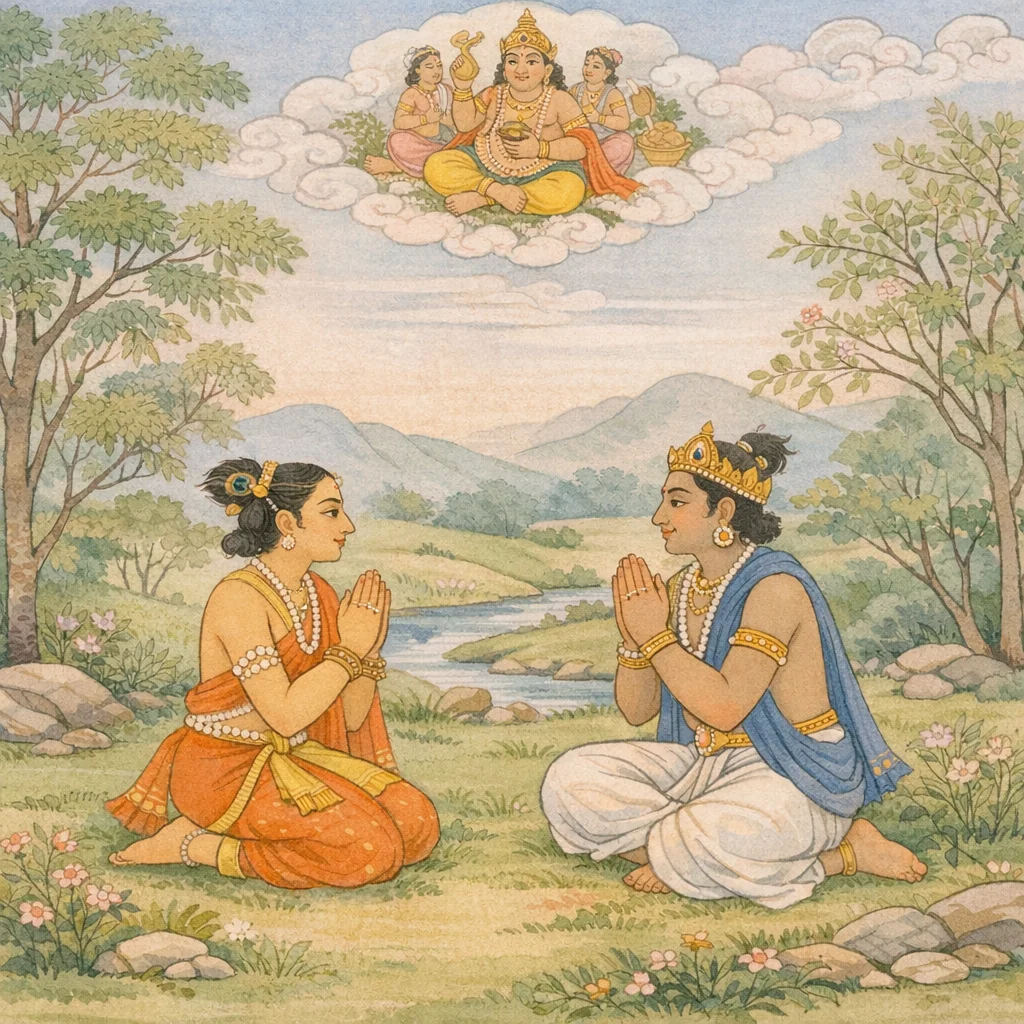
Adhyaya 191
Drupada’s Alarm and Inquiry Regarding Śikhaṇḍinī (द्रुपदस्य भय-विमर्शः)
Upa-parva: Śikhaṇḍinī–Hiraṇyavarmā Conflict Episode (Udyoga Parva, contextual sub-episode)
Bhīṣma narrates that after Drupada’s messenger speaks, Drupada’s speech falters “like a thief caught,” indicating immediate reputational shock. Hiraṇyavarmā attempts intense reassurance through relations and sweet-speaking envoys while simultaneously denying the allegation, but then verifies the matter more concretely and hastens forward. Acting on reports from the nurses, he informs powerful allies, assembles forces, and deliberates an expedition against Drupada. The allied kings decide: if Śikhaṇḍinī is truly a girl, they will seize Drupada and bring him home; they also contemplate installing another ruler in Pāñcāla and killing Drupada along with Śikhaṇḍinī. A messenger is again dispatched with a threat. Drupada—described as fearful and burdened by fault—dismisses the envoy and, grief-stricken, speaks privately with his wife, the mother of Śikhaṇḍinī. He anticipates Hiraṇyavarmā’s armed approach, confesses confusion about whether he has acted wrongly regarding the “daughter/son” status, and asks for a factual account so he can plan a remedy that secures release from peril and protects Śikhaṇḍinī from fear. The queen, prompted to speak openly for disclosure, begins her reply.
Chapter Arc: अम्बोपाख्यान की धारा में शिखण्डी के जीवन का निर्णायक मोड़ आता है—जिस देह-परिवर्तन की कथा भविष्य के भीष्म-वध की छाया बनकर खड़ी है, वही यहाँ ‘भवितव्य’ के रूप में उद्घोषित होती है। → शिखण्डी अपने दुःख और अपमान को ‘भवितव्य’ मानकर भी उपाय खोजता है। यक्ष/स्थूणाकर्ण के साथ समय-बंध (समय-प्रतिज्ञा) बनता है—पुंस्त्व का आदान-प्रदान, और निश्चित काल पर लौटाने की शर्त। उधर द्रुपद के दरबार में यथावृत्त निवेदन होता है; द्रुपद हर्षित होता है, पर राजनीतिक-सामाजिक संकट की आहट भी साथ चलती है। दशार्ण-नरेश हिरण्यवर्मा की ओर से पुरोहित के माध्यम से कटु उपालम्भयुक्त संदेश आता है, जो पंचाल की प्रतिष्ठा और संबंधों को चुनौती देता है। → यक्ष/स्थूणाकर्ण का निर्णायक वचन—‘स्वं ते पुंस्त्वं प्रदास्यामि… किंचित् कालान्तरे दास्ये’—शिखण्डी के भाग्य का ताला खोल देता है। इसी के साथ कुबेर का प्रसंग उभरता है: स्थूणाकर्ण पर कुबेर का शाप/नियम-बंधन स्थापित होता है, जिससे यह परिवर्तन स्थायी दिशा लेता है। समानांतर रूप से दशार्ण की ओर से आया अपमानजनक संदेश पंचाल के लिए तीव्र राजनीतिक दबाव बनकर चरम पर पहुँचता है। → शिखण्डी को पुरुषत्व की प्राप्ति सुनिश्चित होती है; द्रुपद को यथावृत्त सुनकर परम हर्ष मिलता है और वह स्थिति को स्वीकार कर आगे की नीति के लिए तैयार होता है। कुबेर-शाप का विधान कथा को ‘टाला नहीं जा सकता’ वाली अनिवार्यता देता है—घटना अब केवल व्यक्तिगत नहीं, दैवी-नियति से बँधी हुई है। → दशार्णपति हिरण्यवर्मा का उपालम्भयुक्त संदेश पंचाल-दरबार में गूँजता है—अब द्रुपद क्या उत्तर देगा, और यह अपमान शिखण्डी के नव-परिचय को किस प्रकार सार्वजनिक संघर्ष में बदल देगा?
Shlokas
Verse 1
अप ह< बक। है २ 2 द्विनवत्याधिकशततमो< ध्याय: शिखण्डीको पुरुषत्वकी प्राप्ति, द्रपद और हिरण्यवर्माकी प्रसन्नता, स्थूणाकर्णको कुबेरका शाप तथा भीष्मका शिखण्डीको न मारनेका निश्चय भीष्म उवाच शिखण्डिवाक्यं श्रुत्वाथ स यक्षो भरतर्षभ | प्रोवाच मनसा चिन्त्य दैवेनोपनिपीडित:
Bhīṣma said: Having heard Shikhaṇḍī’s words, that Yakṣa—O bull among the Bharatas—reflected within his mind and then spoke, constrained and pressed on by the force of destiny (daiva).
Verse 2
भवितव्यं तथा तद्धि मम दुःखाय कौरव । भद्रे काम॑ करिष्यामि समयं तु निबोध मे
“So it must be—indeed, it is destined thus, to my sorrow, O Kaurava. Yet, dear one, I shall do as you wish; but first, understand the condition I lay down.”
Verse 3
(स्वं ते पुंस्त्व॑ प्रदास्यामि स्त्रीत्वं धारयितास्मि ते ।) किंचित् कालान्तरे दास्ये पुँल्लिड्गं स्वमिदं तव । आगन्तव्यं त्वया काले सत्यं चैव वदस्व मे
Bhīṣma said: “After some time has passed, I will restore to you your own male form. You must return at the appointed time; and tell me the truth as well.”
Verse 4
भीष्म कहते हैं--भरतश्रेष्ठ कौरव! शिखण्डिनीकी यह बात सुनकर दैवपीड़ित यक्षने मन-ही-मन कुछ सोचकर कहा--'भद्रे! तुम जैसा कहती हो वैसा हो तो जायगा; परंतु वह मेरे दु:खका कारण होगा, तथापि मैं तुम्हारी इच्छा पूर्ण करूँगा। इस विषयमें जो मेरी शर्त है, उसे सुनो। मैं तुम्हें अपना पुरुषत्व दूँगा और तुम्हारा स्त्रीत्व स्वयं धारण करूँगा; किंतु कुछ ही कालके लिये अपना यह पुरुषत्व तुम्हें दूँगा। उस निश्चित समयके भीतर ही तुम्हें मेरा पुरुषत्व लौटानेके लिये यहाँ आ जाना चाहिये। इसके लिये मुझे सच्चा वचन दो ।। १ रे ।। प्रभु: संकल्पसिद्धो 5स्मि कामचारी विहड्भम: । मत्प्रसादात् पुरं चैव त्राहि बन्धूंश्व केवलम्,“मैं सिद्धसंकल्प, सामर्थ्यशाली, इच्छानुसार सर्वत्र विचरनेवाला तथा आकाशमें भी चलनेकी शक्ति रखनेवाला हूँ। तुम मेरी कृपासे केवल अपने नगर और बन्धु-बान्धवोंकी रक्षा करो
Bhishma said: “O best of the Bharatas, O Kaurava! When the yaksha—afflicted by fate—heard Shikhandini’s request, he reflected inwardly and replied: ‘Lady, it shall be as you say; yet it will become a cause of sorrow for me. Still, I will fulfill your wish. Hear my condition: I will give you my manhood and myself assume your womanhood, but only for a short time. Within the fixed period you must return here and restore my manhood to me. Give me your truthful pledge for this.’ He added: ‘I am a powerful being whose resolve never fails; I can roam at will and move through the sky like a bird. By my favor, protect only your city and your kinsmen.’”
Verse 5
स्त्रीलिड्रं धारयिष्यामि तदेवं पार्थिवात्मजे । सत्यं मे प्रतिजानीहि करिष्यामि प्रियं तव,“राजकुमारी! इस प्रकार मैं तुम्हारा स्त्रीत्व धारण करूँगा, कार्य पूर्ण हो जानेपर तुम मेरा पुरुषत्व लौटा देनेकी मुझसे सच्ची प्रतिज्ञा करो; तब मैं तुम्हारा प्रिय कार्य करूँगा”
Bhīṣma said: “O princess, in this manner I shall assume a woman’s form. But promise me truthfully that, once the task is accomplished, you will restore my manhood to me; then I will carry out what is dear to you.”
Verse 6
शिखण्डिन्युवाच प्रतिदास्यामि भगवन् पुल्लिज्7ं तव सुब्रत । किज्वचित्कालान्तरं स्त्रीत्वं धारयस्व निशाचर,शिखण्डिनी बोली--भगवन्! तुम्हारा यह पुरुषत्व मैं समयपर लौटा दूँगी। निशाचर! तुम कुछ ही समयके लिये मेरा स्त्रीत्व धारण कर लो
Shikhaṇḍinī said: “O venerable one, O steadfast in vows—at the proper time I shall restore to you your manhood. O night-roaming being, for only a short interval, assume my womanhood.”
Verse 7
प्रतियाते दशार्णे तु पार्थिवे हेमवर्मणि । कन्यैव हि भविष्यामि पुरुषस्त्वं भविष्यसि,दशार्णदेशके स्वामी राजा हिरण्यवर्मके लौट जानेपर मैं फिर कन्या ही हो जाऊँगी और तुम पूर्ववत् पुरुष हो जाओगे
Bhīṣma said: “When King Hemavarman has returned to Daśārṇa, I shall again be a maiden, and you will become a man once more.”
Verse 8
भीष्म उवाच इत्युक्त्वा समयं तत्र चक्राते तावुभौ नृप । अन्यो<न्यस्याभिसंदेहे तौ संक्रामयतां ततः,भीष्मजी कहते हैं--नरेश्वर! इस प्रकार बात करके उन्होंने परस्पर प्रतिज्ञा कर ली तथा उन दोनोंने एक-दूसरेके शरीरमें अपने-अपने पुरुषत्व और स्त्रीत्वका संक्रमण करा दिया। भारत! स्थूणाकर्ण यक्षने उस शिखण्डिनीके स्त्रीत्वको धारण कर लिया और शिखण्डिनीने यक्षका प्रकाशमान पुरुषत्व प्राप्त कर लिया
Bhishma said: “O king, having spoken thus, the two of them thereupon made a mutual compact. Then, intending to exchange with one another, they caused a transference to take place—each passing on their own sexual nature to the other.”
Verse 9
स्त्रीलिडूं धारयामास स्थूणायक्षो5थ भारत । यक्षरूपं च तद् दीप्तं शिखण्डी प्रत्यपद्यत,भीष्मजी कहते हैं--नरेश्वर! इस प्रकार बात करके उन्होंने परस्पर प्रतिज्ञा कर ली तथा उन दोनोंने एक-दूसरेके शरीरमें अपने-अपने पुरुषत्व और स्त्रीत्वका संक्रमण करा दिया। भारत! स्थूणाकर्ण यक्षने उस शिखण्डिनीके स्त्रीत्वको धारण कर लिया और शिखण्डिनीने यक्षका प्रकाशमान पुरुषत्व प्राप्त कर लिया
Bhīṣma said: “O Bhārata, thereafter the Yakṣa named Sthūṇa assumed the female sex; and Śikhaṇḍī, in turn, obtained that radiant Yakṣa-form—i.e., the male nature. Thus, by mutual pledge, each took on the other’s bodily identity.”
Verse 10
ततः शिखण्डी पाज्चाल्य: पुंस्त्वमासाद्य पार्थिव । विवेश नगरं हृष्ट: पितरं च समासदत्,राजन! इस प्रकार पुरुषत्व पाकर पांचालराजकुमार शिखण्डी बड़े हर्षके साथ नगरमें आया और अपने पितासे मिला
Then Śikhaṇḍī, the Pāñcāla prince, having attained manhood, joyfully entered the city and met his father, O king.
Verse 11
यथावृत्तं तु तत् सर्वमाचख्यौ द्रुपदस्य तत् । द्रुपदस्तस्य तच्छुत्वा हर्षमाहारयत् परम्,उसने जैसे जो वृत्तान्त हुआ था, वह सब राजा ट्रपदसे कह सुनाया। उसकी यह बात सुनकर राजा द्रुपदको अपार हर्ष हुआ
Bhīṣma said: “He then related to King Drupada, exactly as it had occurred, the entire account. Hearing those words, Drupada was filled with boundless joy.”
Verse 12
सभार्यस्तच्च सस्मार महेश्व॒रवचस्तदा । ततः सम्प्रेषयामास दशार्णाधिपतेरनप:
Then he, together with his wife, recalled the words once spoken by Maheśvara (Śiva). Thereafter he dispatched a messenger to the lord of Daśārṇa, acting without delay.
Verse 13
अथ दाशार्णको राजा सहसाभ्यागमत् तदा
Then, at that very moment, the king of Daśārṇa suddenly arrived.
Verse 14
पज्चालराजं ट्रपर्दं द:ःखशोकसमन्वित: । इधर दुःख और शोकमें डूबे हुए दशार्णराजने सहसा पांचालराज द्रुपदपर आक्रमण किया ।। १३ ह || ततः काम्पिल्यमासाद्य दशार्णाधिपतिस्तत:
Bhīṣma said: Overwhelmed by grief and sorrow, the king of Daśārṇa suddenly attacked Drupada, the king of the Pāñcālas. Then the lord of Daśārṇa advanced upon Kāmpilya.
Verse 15
प्रेषयामास सत्कृत्य दूत॑ ब्रह्म॒विदां वरम् । काम्पिल्य नगरके निकट पहुँचकर दशार्णराजने वेद-वेत्ताओंमें श्रेष्ठ एक ब्राह्मणको सत्कारपूर्वक दूत बनाकर भेजा || १४ इ || ब्रूहि मद्गबचनाद् दूत पाञ्चाल्यं तं नृपाधमम्,और कहा--'दूत! मेरे कथनानुसार राजाओंमें अधम उस पांचालनरेशसे कहिये। दुर्मते! तुमने जो अपनी कन्याके लिये मेरी कनन््याका वरण किया था, उस घमंडका फल तुम्हें आज देखना पड़ेगा, इसमें संशय नहीं है”
Bhīṣma said: Having honoured him duly, he dispatched as envoy an excellent brāhmaṇa, foremost among the knowers of the Veda. “O messenger, speak—on my authority—to that Pāñcāla king, the basest among rulers.”
Verse 16
यन्मे कन्यां स्वकन्यार्थे वृतवानसि दुर्मते । फलं तस्यावलेपस्य द्रक्ष्यस्यद्य न संशय:,और कहा--'दूत! मेरे कथनानुसार राजाओंमें अधम उस पांचालनरेशसे कहिये। दुर्मते! तुमने जो अपनी कन्याके लिये मेरी कनन््याका वरण किया था, उस घमंडका फल तुम्हें आज देखना पड़ेगा, इसमें संशय नहीं है”
Bhīṣma said: “O wicked-minded one, since you chose my maiden for the sake of your own daughter, you shall today behold the consequence of that arrogance—of this there is no doubt.”
Verse 17
एवमुक्तश्न तेनासौ ब्राह्मणो राजसत्तम | दूत: प्रयातो नगरं दाशार्णनृूपचोदित:,नृपश्रेष्ठट दशार्णागजजका यह संदेश पाकर और उन्हींकी प्रेरणासे दूत बनकर वे ब्राह्मणदेवता काम्पिल्य नगरमें आये
Thus addressed, that eminent brāhmaṇa—urged on by the king of Daśārṇa—set out as an envoy and proceeded to the city.
Verse 18
तत आसादयामास पुरोधा द्रुपदं पुरे तस्मै पाउचालको राजा गामर्घ्य च सुसत्कृतम्,नगरमें आकर वे पुरोहित ब्राह्मण महाराज ट्रुपदसे मिले। पांचालराजने सत्कारपूर्वक उन्हें अर्घ्य तथा गौ अर्पण की। उनके साथ राजकुमार शिखण्डी भी थे। राजेन्द्र! पुरोहितने वह पूजा ग्रहण नहीं की और इस प्रकार कहा--
Bhishma said: Then the royal priest went and met King Drupada in his city. The Panchala king, honoring him with due courtesy, offered him the arghya (ceremonial welcome) and a cow as a respectful gift. Shikhandi, the prince, was also present with him. O best of kings, the priest did not accept that worship and offering, and spoke in this manner—
Verse 19
प्रापयामास राजेन्द्र सह तेन शिखण्डिना । तां पूजां नाभ्यनन्दत् स वाक््यं चेदमुवाच ह,नगरमें आकर वे पुरोहित ब्राह्मण महाराज ट्रुपदसे मिले। पांचालराजने सत्कारपूर्वक उन्हें अर्घ्य तथा गौ अर्पण की। उनके साथ राजकुमार शिखण्डी भी थे। राजेन्द्र! पुरोहितने वह पूजा ग्रहण नहीं की और इस प्रकार कहा--
Bhishma said: “O king, he was brought there together with Shikhandin. Yet the priest did not approve of that honor shown to him, and then he spoke these words.”
Verse 20
यदुक्त तेन वीरेण राज्ञा काउ्चनवर्मणा । यत् तेडहमधमाचार दुह्ित्रास्म्यभिवज्चित:,उद्धरिष्यामि ते सद्यः: सामात्यसुतबान्धवम् | “राजन! वीरवर राजा हिरण्यवर्माने जो संदेश दिया है, उसे सुनिये। पापाचारी दुर्बृद्धि नरेश! तुम्हारी पुत्रीके द्वारा मैं ठगा गया हूँ। वह पाप तुमने ही किया है; अतः उसका फल भोगो। नरेश्वर! युद्धके मैदानमें आकर मुझे युद्धका अवसर दो। मैं मन्त्री, पुत्र और बान्धवोंसहित तुम्हारे समस्त कुलको उखाड़ फेंकूँगा'
Bhishma said: “Listen to the message delivered by that heroic king Kāñcanavarman. ‘O king, base in conduct! I have been deceived through your daughter. That sin is yours; therefore bear its consequence. Come onto the battlefield and grant me the chance to fight. This very day I will uproot your entire line—together with your ministers, sons, and kinsmen.’”
Verse 21
तस्य पापस्य करणात् फल प्राप्रुहि दुर्मते । देहि युद्ध नरपते ममाद्य रणमूर्धनि
“For committing that wrongdoing, reap its fruit, O evil-minded one. Grant me battle, O lord of men—today, on the very forefront of the battlefield.”
Verse 22
तदुपालम्भसंयुक्त श्रावितः किल पार्थिव:
Bhishma said: “That king, it is said, was made to hear words laden with reproach and sharp censure.”
Verse 23
अभवद्ू भरतश्रेष्ठ द्रपद: प्रणयानतः,भरतश्रेष्ठ! तब राजा ट्रुपद प्रेमसे विनीत हो गये और इस प्रकार बोले--'ब्रह्मन्! आपने मेरे सम्बन्धीके कथनानुसार जो बात मुझे सुनायी है, इसका उत्तर मेरा दूत स्वयं जाकर राजाको देगा”
Bhishma said: “O best of the Bharatas, Drupada, softened by affection, became humble. Then, with respectful warmth, he spoke: ‘O Brahmin, what you have conveyed to me in accordance with my kinsman’s message—my own envoy will go in person and deliver my reply to the king.’”
Verse 24
यदाह मां भवान् ब्रह्मन् सम्बन्धिवचनाद् वच: । अस्योत्तरं प्रतिवचो दूतो राज्ञे वदिष्यति,भरतश्रेष्ठ! तब राजा ट्रुपद प्रेमसे विनीत हो गये और इस प्रकार बोले--'ब्रह्मन्! आपने मेरे सम्बन्धीके कथनानुसार जो बात मुझे सुनायी है, इसका उत्तर मेरा दूत स्वयं जाकर राजाको देगा”
“O Brahmin, the words you spoke to me in accordance with my kinsman’s message—my answer, my reply to them, will be delivered to the king by my envoy.”
Verse 25
ततः सम्प्रेषयामास टद्रुपदो5पि महात्मने । हिरण्यवर्मणे दूत॑ ब्राह्मणं वेदपारगम्,तदनन्तर द्रपदने भी महामना हिरण्यवर्माके पास वेदोंके पारंगत विद्वान् ब्राह्मणको दूत बनाकर भेजा
Then King Drupada too dispatched, as an envoy to the noble Hiraṇyavarman, a learned Brahmin who had mastered the Vedas.
Verse 26
तमागम्य तु राजानं दशार्णाधिपतिं तदा । तद् वाक्यमाददे राजन यदुक्तं द्रुपदेन ह,राजन! उन्होंने दशार्णनरेशके पास आकर द्रुपदने जो कुछ कहा था, वह सब दुहरा दिया
Having approached the king, the ruler of Daśārṇa, he repeated—O King—those very words that had been spoken by Drupada.
Verse 27
आगम: क्रियतां व्यक्त: कुमारोडयं सुतो मम । मिथ्यैतदुक्तं केनापि तदश्रद्धेयमित्युत,“राजन! आप आकर स्पष्टरूपसे परीक्षा कर लें। मेरा यह कुमार पुत्र है (कन्या नहीं)। आपसे किसीने झूठे ही उसके कन्या होनेकी बात कह दी है, जो विश्वास करनेके योग्य नहीं है!
Bhīṣma said: “Come and verify it plainly for yourself, O King. This is my son, a young man—not a maiden. Someone has spoken falsely, claiming he is a girl; such a report is not worthy of belief.”
Verse 28
ततः स राजा द्रुपदस्य श्रुत्वा विमर्षयुक्तो युवतीर्वरिष्ठा: । सम्प्रेषयामास सुचारुरूपा: शिखण्डिनं स्त्री पुमान् वेति वेत्तुम्,राजा द्रुपदका यह उत्तर सुनकर हिरण्यवर्माने कुछ विचार किया और अत्यन्त मनोहर रूपवाली कुछ श्रेष्ठ युवतियोंको यह जाननेके लिये भेजा कि शिखण्डी स्त्री है या पुरुष
Then that king, having heard Drupada’s words and reflecting carefully, dispatched some of the finest young women—beautiful in form—to ascertain the truth: whether Śikhaṇḍin was in fact a woman or a man.
Verse 29
ताः प्रेषितास्तत्त्वभावं विदित्वा प्रीत्या राज्ञे तच्छशंसुर्हि सर्वम् । शिखण्डिनं पुरुष कौरवेन्द्र दाशार्णराजाय महानुभावम्,कौरवराज! उन भेजी हुई युवतियोंने वास्तविक बात जानकर राजा हिरण्यवर्माको बड़ी प्रसन्नताके साथ सब कुछ बता दिया। उन्होंने दशार्णगजको यह विश्वास दिला दिया कि शिखण्डी महान् प्रभावशाली पुरुष है
Those maidens who had been sent, having ascertained the true state of affairs, reported everything to the king with delight. They convinced the king of Daśārṇa that Śikhaṇḍin was indeed a mighty and influential man.
Verse 30
ततः कृत्वा तु राजा स आगमं प्रीतिमानथ । सम्बन्धिना समागम्य हृष्टो वासमुवास ह,इस प्रकार परीक्षा करके राजा हिरण्यवर्मा बड़े प्रसन्न हुए। फिर उन्होंने सम्बन्धीसे मिलकर बड़े हर्ष और उलल्लासके साथ वहाँ निवास किया
Then that king, having duly made the customary inquiry and being pleased, met with his kinsman; delighted at the reunion, he stayed there, dwelling with joy and contentment.
Verse 31
शिखण्डिने च मुदित: प्रादाद् वित्तं जनेश्वर: । हस्तिनो<श्चांश्व गाश्वैव दास्यो5थ बहुलास्तथा,राजाने अत्यन्त प्रसन्न होकर अपने जामाता शिखण्डीको भी बहुत धन, हाथी, घोड़े, गाय, बैल और दासियाँ दीं
The lord of the people, delighted at heart, bestowed abundant wealth upon Śikhaṇḍī as well—along with elephants, horses, cattle, and many maidservants.
Verse 32
पूजितश्च प्रतिययौ निर्भ्त्स्य तनयां किल | विनीतकिल्विषे प्रीते हेमवर्मणि पार्थिवे । प्रतियाते दशार्णे तु हृष्टरूपा शिखण्डिनी,इतना ही नहीं, उन्होंने झूठी खबर भेजनेके कारण अपनी पुत्रीको भी झिड़कियाँ दीं। फिर वे राजा द्रुपदसे सम्मानित होकर लौट गये। मनोमालिन्य दूर करके दशार्णराज हिरण्यवर्माके प्रसन्नतापूर्वक लौट जानेपर शिखण्डिनीको भी बड़ा हर्ष हुआ
Having been duly honoured, he set out to return, after (it is said) reproaching his own daughter for having sent a false report. When the king Hemavarman of Daśārṇa—his offence removed and his mind appeased—departed in a pleased state, Śikhaṇḍinī too became greatly delighted.
Verse 33
कस्यचित् त्वथ कालस्य कुबेरो नरवाहनः । लोकयात्रां प्रकुर्वाण: स्थूणस्यागान्निवेशनम्
After some time had passed, Kubera—the lord of wealth, riding in a man-borne conveyance—set out on his customary circuit of the worlds. In the course of that journey he came to the dwelling of Sthūṇa.
Verse 34
उधर कुछ कालके पश्चात् नरवाहन कुबेर लोकमें भ्रमण करते हुए स्थूणाकर्णके घरपर आये |। स तदगृहस्योपरि वर्तमान आलोकयामास धनाधिगोप्ता | स्थूणस्य यक्षस्य विवेश वेश्म स्वलंकृतं माल्यगुणैर्विचित्रै:,उसके घरके ऊपर आकाशमें स्थित हो धनाध्यक्ष कुबेरने उसका अच्छी तरह अवलोकन किया। स्थूणाकर्ण यक्षका वह भवन विचित्र हारोंसे सजाया गया था। खशकी और अन्य पदार्थोकी सुगन्धसे भी अर्चित तथा चँदोवोंसे सुशोभित था। उसमें सब ओर धूपकी सुगन्ध फैली हुई थी। अनेकानेक ध्वज और पताकाएँ उसकी शोभा बढ़ा रही थीं। वहाँ भक्ष्य, भोज्य, पेय आदि सभी वस्तुएँ, जिनका दन्त और जिद्लाद्वारा उदराग्निमें हवन किया जाता है, प्रस्तुत थीं। तत्पश्चात् कुबेरने उस भवनमें प्रवेश किया
After some time had passed, Kubera—the lord and guardian of wealth, famed for his man-drawn chariot—was roaming through his realms when he came to the house of Sthūṇākarṇa. Hovering above that dwelling, he surveyed it carefully. Then Kubera entered the mansion of the Yakṣa Sthūṇa: it was exquisitely adorned, splendid with many garlands and varied decorations.
Verse 35
लाज्यैश्न गन्धैश्व तथा वितानै- रभ्यर्चितं धूपनधूपितं च । ध्वजै: पताकाभिरलंकृतं च भक्ष्यान्नपेयामिषदन्तहोमम्,उसके घरके ऊपर आकाशमें स्थित हो धनाध्यक्ष कुबेरने उसका अच्छी तरह अवलोकन किया। स्थूणाकर्ण यक्षका वह भवन विचित्र हारोंसे सजाया गया था। खशकी और अन्य पदार्थोकी सुगन्धसे भी अर्चित तथा चँदोवोंसे सुशोभित था। उसमें सब ओर धूपकी सुगन्ध फैली हुई थी। अनेकानेक ध्वज और पताकाएँ उसकी शोभा बढ़ा रही थीं। वहाँ भक्ष्य, भोज्य, पेय आदि सभी वस्तुएँ, जिनका दन्त और जिद्लाद्वारा उदराग्निमें हवन किया जाता है, प्रस्तुत थीं। तत्पश्चात् कुबेरने उस भवनमें प्रवेश किया
Bhīṣma said: “That mansion was duly honoured with offerings of parched grain and fragrant substances, and beautified with canopies. It was perfumed with incense and further adorned with banners and streamers. There, foods, meals, drinks, and meats were all set out—like offerings to the ‘fire’ of the belly, consumed by the teeth and tongue.”
Verse 36
तत् स्थान तस्य दृष्टवा तु सर्वतः समलंकृतम् । मणिरत्नसुवर्णानां मालाभि: परिपूरितम्
Bhīṣma said: “Then, seeing that place, he found it adorned on every side—completely filled with garlands made of jewels, precious gems, and gold.”
Verse 37
नानाकुसुमगन्धाढ्यं सिक्तसम्मृष्टशोभितम् | अथाब्रवीद् यक्षपतिस्तान् यक्षाननुगांस्तदा
Rich with the fragrance of many kinds of flowers, and made splendid by being sprinkled and carefully cleansed, the lord of the Yakṣas then addressed those attendant Yakṣas.
Verse 38
स्वलंकृतमिदं वेश्म स्थूणस्यामितविक्रमा: । नोपसर्पति मां चैव कस्मादद्य स मन्दधी:
Bhishma said: “This palace is well adorned, and the mighty heroes stand like pillars within it. Yet why does that dull-witted man not come near me today as well?”
Verse 39
कुबेरने उसके निवासस्थानको सब ओरसे सुसज्जित, मणि, रत्न तथा सुवर्णकी मालाओंसे परिपूर्ण, भाँति-भाँतिके पुष्पोंकी सुगन्धसे व्याप्त तथा झाड़-बुहार और धो-पोंछ देनेके कारण शोभासम्पन्न देखकर यक्षराजने स्थूणाकर्णके सेवकोंसे पूछा--“अमित पराक्रमी यक्षो! स्थूणाकर्णका यह भवन तो सब प्रकारसे सजाया हुआ दिखायी देता है (इससे सिद्ध है कि वह घरमें ही है), तथापि वह मूर्ख मेरे पास आता क्यों नहीं है? ।। यस्माज्जानन् स मन्दात्मा मामसौ नोपसर्पति । तस्मात् तस्मै महादण्डो धार्य: स्यादिति मे मति:,“वह मन्दबुद्धि यक्ष मुझे आया हुआ जानकर भी मेरे निकट नहीं आ रहा है; इसलिये उसे महान् दण्ड देना चाहिये, ऐसा मेरा विचार है”
Bhishma said: “Since, though he knows that I have arrived, that dull-witted one does not come near me, therefore my judgment is that a severe punishment should be imposed upon him.” In context, Kubera reads the outward signs of a well-kept household as proof of presence and treats the failure to offer due reception as a culpable breach of respect and duty.
Verse 40
यक्षा ऊचु. ट्रुपदस्य सुता राजन् राज्ञो जाता शिखण्डिनी । तस्या निमित्ते कर््मिंश्चित् प्रादात् पुरुषलक्षणम्
The Yakṣas said: “O King, Drupada’s child was born as Śikhaṇḍinī, a princess. But for her sake, someone performed an act by which the marks and attributes of a man were bestowed.”
Verse 41
अग्रहील्लक्षणं स्त्रीणां स्त्रीभूतो तिछ्ठते गृहे । नोपसर्पति तेनासौ सव्रीड: स्त्रीसरूपवान्
Bhīṣma said: “He has taken on the marks and manner of women; having become as it were a woman, he remains within the household. Therefore he does not approach (the public arena of action); he stays ashamed, bearing a womanlike appearance.”
Verse 42
यक्षोंने कहा--राजन्! राजा ट्रुपदके यहाँ एक शिखण्डिनी नामकी कन्या उत्पन्न हुई है। उसीको किसी विशेष कारणवश इन्होंने अपना पुरुषत्व दे दिया है और उसका स्त्रीत्व स्वयं ग्रहण कर लिया है। तबसे वे स्त्रीरूप होकर घरमें ही रहते हैं। स्त्रीरूपमें होनेके कारण ही वे लज्जावश आपके पास नहीं आ रहे हैं ।। एतस्मात् कारणाद् राजन् स्थूणो न त्वाद्य सर्पति । श्रुत्वा कुरु यथान्यायं विमानमिह तिष्ठताम्
The Yakṣas said: “O King! In King Drupada’s house a daughter named Śikhaṇḍinī was born. For a particular reason, this Sthūṇa has given her his own manhood and has taken her womanhood upon himself. Since then he has remained at home in a woman’s form. Precisely because he is now in a woman’s form, he does not come before you out of shame. For this reason, O King, Sthūṇa does not come to you today. Having heard this, decide the matter according to justice; let the celestial car remain here.”
Verse 43
महाराज! इसी कारणसे स्थूणाकर्ण आज आपके सामने नहीं उपस्थित हो रहे हैं। यह सुनकर आप जैसा उचित समझें, करें। आज आपका विमान यहीं रहना चाहिये ।। आनीयतां स्थूण इति ततो यक्षाधिपोडब्रवीत् । कर्तास्मि निग्रहं तस्य प्रत्युवाच पुन: पुन:,तब यक्षराजने कहा--'स्थूणाकर्णको यहाँ बुला ले आओ। मैं उसे दण्ड दूँगा'। यह बात उन्होंने बार-बार दुहरायी
O great king! For this reason Sthūṇākarṇa does not appear before you today. Having heard this, do what you deem proper. Let your vimāna remain here today. Then the lord of the Yakṣas said, “Bring Sthūṇa (Sthūṇākarṇa) here.” Again and again he declared, “I shall restrain and punish him.”
Verse 44
सो<भ्यगच्छत यक्षेन्द्रमाहृत: पृथिवीपते । स्त्रीसरूपो महाराज तस्थौ व्रीडासमन्वित:,राजन! इस प्रकार बुलानेपर वह यक्ष कुबेरकी सेवामें गया। महाराज! वह स्त्रीस्वरूप धारण करनेके कारण लज्जामें डूबा हुआ उनके सामने खड़ा हो गया
Summoned by the lord of the earth, he went to the king of the Yakṣas, Kubera. O great king, having assumed a woman’s form, he stood before him, overwhelmed with shame.
Verse 45
त॑ शशापाथ संक्रुद्धो धनद: कुरुनन्दन । एवमेव भवत्वद्य स्त्रीत्वं पापस्य गुह्ुका:
Bhīṣma said: Enraged, Dhanada (Kubera), O delight of the Kurus, pronounced a curse upon him: “So be it! From this very day, as the consequence of your wrongdoing—O Guhūka—become a woman.”
Verse 46
कुरुनन्दन! उसे इस रूपमें देखकर कुबेर अत्यन्त कुपित हो उठे और शाप देते हुए बोले--'गुह्मको! इस पापी स्थूणाकर्णका यह स्त्रीत्व अब ऐसा ही बना रहे' ।। ततोडब्रवीद् यक्षपतिर्महात्मा यस्माददास्त्ववमन्येह यक्षान् शिखण्डिने लक्षण पापबुद्धे स्त्रीलक्षणं चाग्रही: पापकर्मन्,तदनन्तर महात्मा यक्षराजने उस यक्षसे कहा--'पापबुद्धि और पापाचारी यक्ष! तूने यक्षोंका तिरस्कार करके यहाँ शिखण्डीको अपना पुरुषत्व दे दिया और उसका स्त्रीत्व ग्रहण कर लिया है। दुर्बुद्धे! तूने जो यह अव्यावहारिक कार्य कर डाला है, इसके कारण आजसे तू स्त्री ही बना रहे और शिखण्डी पुरुषरूपमें ही रह जाय”
O delight of the Kurus! Seeing him in that form, Kubera was exceedingly wrathful and, cursing him, said: “O Guhūka! Let this womanhood of the sinful Sthūṇākarṇa remain as it is.” Then the great lord of the Yakṣas spoke to that Yakṣa: “Because, scorning the Yakṣas, you have here given your manhood to Śikhaṇḍin and taken on the marks of womanhood—sinful-minded, evil-doing one—since you have committed this improper act, from this day you shall remain a woman, and Śikhaṇḍin shall remain in the form of a man.”
Verse 47
अप्रवृत्तं सुदुर्बुद्धे यस्मादेतत् त्वया कृतम् तस्मादद्य प्रभृत्येव स्त्री त्वं सा पुरुषस्तथा,तदनन्तर महात्मा यक्षराजने उस यक्षसे कहा--'पापबुद्धि और पापाचारी यक्ष! तूने यक्षोंका तिरस्कार करके यहाँ शिखण्डीको अपना पुरुषत्व दे दिया और उसका स्त्रीत्व ग्रहण कर लिया है। दुर्बुद्धे! तूने जो यह अव्यावहारिक कार्य कर डाला है, इसके कारण आजसे तू स्त्री ही बना रहे और शिखण्डी पुरुषरूपमें ही रह जाय”
Bhīṣma said: “O wicked-minded one, since you have done this improper act, from this very day onward you shall remain a woman, and that one shall remain a man.”
Verse 48
ततः प्रसादयामासुर्यक्षा वैश्रवणं किल । स्थूणस्यार्थ कुरुष्वान्तं शापस्येति पुन: पुन:,तब यक्षोंने अनुनय-विनय करके स्थूणाकर्णके लिये कुबेरको प्रसन्न किया और बारंबार आग्रहपूर्वक कहा--“भगवन्! इस शापका अन्त कर दीजिये'
Then the Yakṣas, it is said, sought to win over Vaiśravaṇa (Kubera). Pleading again and again for the sake of Sthūṇākarṇa, they urged: “O Lord, please bring this curse to an end.”
Verse 49
ततो महात्मा यक्षेन्द्र: प्रत्युवाचानुगामिन: । सर्वान् यक्षगणांस्तात शापस्यान्तचिकीर्षया,तात! तब महात्मा यक्षराजने स्थूणाकर्णका अनुगमन करनेवाले उन समस्त यक्षोंसे उस शापका अन्त कर देनेकी इच्छासे इस प्रकार कहा--
Then the great-souled lord of the Yakṣas replied to those who were following him. Addressing all the companies of Yakṣas as “dear ones,” and wishing to bring that curse to an end, he spoke as follows—
Verse 50
शिखण्डिनि हते यक्षा: स्वं रूप॑ प्रतिपत्स्यते । स्थूणो यक्षो निरुद्वेगो भवत्विति महामना:,'यक्षो! शिखण्डीके मारे जानेपर यह स्थूणाकर्ण यक्ष अपना पूर्वरूप फिर प्राप्त कर लेगा। अतः अब इसे निर्भय हो जाना चाहिये।” ऐसा कहकर महामना भगवान् यक्षराज कुबेर उन यक्षोंद्वारा अत्यन्त पूजित हो निमेषमात्रमें ही अभीष्ट स्थानपर पहुँच जानेवाले अपने समस्त सेवकोंके साथ वहाँसे चले गये
Bhīṣma said: “When Śikhaṇḍin is slain, the Yakṣa will regain his own original form. Therefore let the Yakṣa Sthūṇa be free from fear and anxiety.” Having spoken thus, the great-souled lord of the Yakṣas, Kubera—highly honored by those Yakṣas—departed from there along with all his attendants, who could reach their desired destination in but a moment.
Verse 51
इत्युक्त्वा भगवान् देवो यक्षराज: सुपूजित: । प्रययौं सहित: सर्वर्निमेषान्तरचारिभि:,'यक्षो! शिखण्डीके मारे जानेपर यह स्थूणाकर्ण यक्ष अपना पूर्वरूप फिर प्राप्त कर लेगा। अतः अब इसे निर्भय हो जाना चाहिये।” ऐसा कहकर महामना भगवान् यक्षराज कुबेर उन यक्षोंद्वारा अत्यन्त पूजित हो निमेषमात्रमें ही अभीष्ट स्थानपर पहुँच जानेवाले अपने समस्त सेवकोंके साथ वहाँसे चले गये
Having spoken thus, the revered divine Lord—the Yakṣa-king, highly honored—departed from that place, accompanied by all his attendants who could move in the blink of an eye.
Verse 52
स्थूणस्तु शापं सम्प्राप्य तत्रैव न््यवसत् तदा । समये चागमत् तूर्ण शिखण्डी तं क्षपाचरम्,उस समय कुबेरका शाप पाकर स्थूणाकर्ण वहीं रहने लगा। शिखण्डी पूर्वनिश्चित समयपर उस निशाचर स्थूणाकर्णके पास तुरंत आ गया
Having incurred the curse, Sthūṇākarṇa remained there at that very place. Then, at the appointed time, Śikhaṇḍī swiftly came to that night-roaming being.
Verse 53
सो5भिगम्याब्रवीद् वाक्यं प्राप्तोडस्मि भगवन्निति । तमब्रवीत् ततः स्थूण: प्रीतो5स्मीति पुनः पुन:
Approaching him, he spoke: “O Blessed Lord, I have arrived.” Then Sthūṇa replied again and again, pleased at heart: “I am satisfied with you.”
Verse 54
उसके निकट जाकर शिखण्डीने कहा--“भगवन्! मैं आपकी सेवामें उपस्थित हूँ।” तब स्थूणाकर्णने उससे बारंबार कहा--'मैं तुमपर बहुत प्रसन्न हूँ, बहुत प्रसन्न हूँ ।। आर्जवेनागतं दृष्टवा राजपुत्रं शिखण्डिनम् । सर्वमेव यथावृत्तमाचचक्षे शिखण्डिने,राजकुमार शिखण्डीको सरलतापूर्वक आया हुआ देख उससे यक्षने अपना सारा वृत्तान्त ठीक-ठीक कह सुनाया
Approaching him, Śikhaṇḍī said, “Revered one, I am here to serve you.” Then Sthūṇākarṇa repeatedly told him, “I am greatly pleased with you—greatly pleased.” Seeing the prince Śikhaṇḍī come with straightforward sincerity, the Yakṣa related to him the entire account exactly as it had occurred.
Verse 55
यक्ष उवाच शप्तो वैश्रवणेनाहं त्वत्कृते पार्थिवात्मज । गच्छेदानीं यथाकामं चर लोकान् यथासुखम्,यक्षने कहा--राजकुमार! तुम्हारे लिये ही यक्षराजने मुझे शाप दे दिया है; अत: अब जाओ, इच्छानुसार सारे जगतमें सुखपूर्वक विचरो
The Yakṣa said: “O prince, it was on your account that Vaiśravaṇa (Kubera) cursed me. Therefore go now as you wish; move through the worlds at your pleasure, living in ease.”
Verse 56
दिष्टमेतत् पुरा मन््ये न शक््यमतिवर्तितुम् । गमनं तव चेतो हि पौलस्त्यस्य च दर्शनम्
“This, I think, was ordained long ago and cannot be overstepped. For your going forth—and even your very intention—are indeed directed toward seeing the descendant of Pulastya.”
Verse 57
मैं इसे अपना पुरातन प्रारब्ध ही मानता हूँ, जो कि तुम्हारा यहाँसे जाना और उसी समय यक्षराज कुबेरका यहाँ आकर दर्शन देना हुआ। अब इसे टाला नहीं जा सकता ।। भीष्म उवाच एवमुक्त: शिखण्डी तु स्थृूणयक्षेण भारत | प्रत्याजगाम नगरं हर्षेण महता वृत:,भीष्म कहते हैं--भरतनन्दन! स्थूणाकर्ण यक्षके ऐसा कहनेपर शिखण्डी बड़े हर्षके साथ अपने नगरको लौट आया
Bhishma said: “O descendant of Bharata, when the yakṣa Sthūṇa spoke thus, Śikhaṇḍī—overwhelmed with great joy—returned to his city.”
Verse 58
पूजयामास विविधैर्गन्धमाल्यैर्महा धनै: । द्विजातीन् देवताश्वैव चैत्यानथ चतुष्पथान्
Bhīṣma said: He performed worship and acts of honor with many kinds of perfumes and garlands, and with abundant gifts of wealth—reverencing the twice-born (brāhmaṇas), the deities, sacred shrines, and also the crossroads.
Verse 59
द्रुपद: सह पुत्रेण सिद्धार्थन शिखण्डिना । मुर्दे च परमां लेभे पाज्चाल्य: सह बान्धवै:
Bhīṣma said: Drupada, together with his son Śikhaṇḍin—whose purpose had been fulfilled—attained the highest end; and the king of the Pāñcālas too, along with his kinsmen, reached that supreme state.
Verse 60
पूर्ण मनोरथ होकर लौटे हुए अपने पुत्र शिखण्डीके साथ पांचालराज ट्रुपदने गन्ध- माल्य आदि नाना प्रकारके बहुमूल्य उपचारोंद्वारा देवताओं, ब्राह्मणों, चैत्य (पीपल आदि धार्मिक)-वृक्षों तथा चौराहोंका पूजन किया तथा बन्धु-बान्धवोंसहित उन्हें महान् हर्ष प्राप्त हुआ ।। शिष्यार्थ प्रददौ चाथ द्रोणाय कुरुपुड्भगव । शिखण्डिनं महाराज पुत्र स्त्रीपूर्विणं तथा,महाराज! कुरुश्रेष्ठ! ट्रपदने अपने पुत्र शिखण्डीको जो पहले कन्यारूपमें उत्पन्न हुआ था, द्रोणाचार्यकी सेवामें धनुर्वेदकी शिक्षाके लिये सौंप दिया
Bhīṣma said: Having returned with his son Śikhaṇḍin and his wishes fulfilled, King Drupada of Pāñcāla performed worship with many costly offerings—fragrances, garlands, and the like—honouring the gods, the brāhmaṇas, sacred trees (such as the holy fig), and the crossroads. Surrounded by kinsmen and friends, he felt great joy. Then, O best of the Kurus, Drupada entrusted Śikhaṇḍin—his child who had earlier been born in a female form—to Droṇa, so that he might be trained as a disciple in the science of archery.
Verse 61
प्रतिपेदे चतुष्पादं धनुर्वेद॑ नृपात्मज: । शिखण्डी सह युष्माभिर्धष्द्युम्नश्व॒ पार्षत:,इस प्रकार द्रुपदपुत्र शिखण्डी तथा धृष्टद्युम्नने तुम सब भाइयोंके साथ ही ग्रहण, धारण, प्रयोग और प्रतीकार--इन चार पादोंसे युक्त धनुर्वेदका अध्ययन किया
Bhīṣma said: The prince mastered the fourfold discipline of archery—acquisition, retention, application, and counter-measures. Thus Śikhaṇḍin, and Dhṛṣṭadyumna the son of Drupada, studied the science of the bow together with you brothers.
Verse 62
मम त्वेतच्चरास्तात यथावत् प्रत्यवेदयन् । जडान्धबधिराकारा ये मुक्ता द्रपदे मया,मैंने द्रपदके नगरमें कुछ गुप्तचर नियुक्त कर दिये थे, जो गूँगे, अंधे और बहरे बनकर वहाँ रहते थे। वे ही यह सब समाचार मुझे ठीक-ठीक बताया करते थे
Bhīṣma said: “Dear one, my spies reported this to me exactly as it happened. I had stationed them in Drupada’s city, and they lived there disguised as mute, blind, and deaf persons; it is they who kept conveying to me these tidings accurately.”
Verse 63
एवमेष महाराज स्त्रीपुमान् द्रपदात्मज: । स सम्भूत: कुरुश्रेष्ठ शिखण्डी रथसत्तम:,महाराज! कुरुश्रेष्ठ! इस प्रकार यह रथियोंमें उत्तम ट्रपदकुमार शिखण्डी पहले स्त्रीरूपमें उत्पन्न होकर पीछे पुरुष हुआ था
Bhishma said: “Thus, O great king—O best of the Kurus—this child of Drupada became both woman and man. That foremost of chariot-warriors, Shikhandi, was born first in a female form and later became male.”
Verse 64
ज्येष्ठा काशिपते: कन्या अम्बानामेति विश्रुता । द्रुपदस्य कुले जाता शिखण्डी भरतर्षभ,भरतश्रेष्ठी काशिराजकी ज्येष्ठ कन्या, जो अम्बा नामसे विख्यात थी, वही द्रुपदके कुलमें शिखण्डीके रूपमें उत्पन्न हुई है
Bhishma said: “The eldest daughter of the king of Kashi, famed by the name Amba, has been born again in the lineage of Drupada as Shikhandi, O bull among the Bharatas.”
Verse 65
नाहमेनं धनुष्पा्िं युयुत्सुं समुपस्थितम् । मुहूर्तमपि पश्येय॑ प्रहरेयं न चाप्युत,जब यह हाथमें धनुष लेकर युद्ध करनेकी इच्छासे मेरे सामने उपस्थित होगा, उस समय मुहूर्तभर भी न तो इसकी ओर देखूँगा और न इसपर प्रहार ही करूँगा
Bhishma said: “I will not even look at him for a moment, nor will I strike him, when he comes before me with bow in hand, eager to fight.”
Verse 66
व्रतमेतन््मम सदा पृथिव्यामपि विश्रुतम् । स्त्रियां स्त्रीपूर्वके चैव स्त्रीनाम्नि स्त्रीसरूपिणि,न मुज्चेयमहं बाणमिति कौरवनन्दन । कौरवनन्दन! इस भूमण्डलमें भी मेरा यह व्रत प्रसिद्ध है कि जो स्त्री हो, जो पहले स्त्री रहकर पुरुष हुआ हो, जिसका नाम स्त्रीके समान हो तथा जिसका रूप एवं वेष-भूषा स्त्रियोंके समान हो, इन सबपर मैं बाण नहीं छोड़ सकता
Bhishma said: “This vow of mine is well known throughout the earth: I will not release an arrow against one who is a woman, or one who was formerly a woman and later became a man, or one whose very name is feminine, or one whose form and attire resemble a woman’s. Such is my restraint, O joy of the Kurus.”
Verse 67
|| न हन्यामहमेतेन कारणेन शिखण्डिनम्,तात! इसी कारणसे मैं शिखण्डीको नहीं मार सकता। शिखण्डीके जन्मका वास्तविक वृत्तान्त मैं जानता हूँ। अतः समरभूमिमें वह आततायी होकर आवे तो भी मैं इसे नहीं मारूँगा
Bhishma said: “For this reason, dear one, I will not strike down Shikhandin. I know the true account of Shikhandin’s birth; therefore, even if he comes onto the battlefield as an aggressor, I will not kill him.”
Verse 68
एतत् तत्त्वमहं वेद जन्म तात शिखण्डिन: । ततो नैनं हनिष्यामि समरेष्वाततायिनम्,तात! इसी कारणसे मैं शिखण्डीको नहीं मार सकता। शिखण्डीके जन्मका वास्तविक वृत्तान्त मैं जानता हूँ। अतः समरभूमिमें वह आततायी होकर आवे तो भी मैं इसे नहीं मारूँगा
Bhishma said: “Dear one, I know the true reality of Shikhandin’s birth. Therefore I will not kill him in battle—even if he comes onto the battlefield as an aggressor. Knowing his origin, I cannot bring myself to strike him.”
Verse 69
यदि भीष्म: स्त्रियं हन्यात् सन्त: कुर्युविगर्हणम् । नैनं तस्माद्धनिष्यामि दृष्टवापि समरे स्थितम्,यदि भीष्म स्त्रीका वध करे तो साधु पुरुष इसकी निन्दा करेंगे, अत: शिखण्डीको समरभूमिमें खड़ा देखकर भी मैं इसे नहीं मारूँगा
Bhishma said: “If I, Bhishma, were to strike down a woman, the righteous would condemn such an act. Therefore I will not kill him—even when I see him standing on the battlefield.”
Verse 70
वैशम्पायन उवाच हम त्वा तु कौरव्यो राजा दुर्योधनस्तदा । स ध्यात्वा भीष्मे युक्तममन्यत,वैशम्पायनजी कहते हैं--जनमेजय! यह सब सुनकर कुरुवंशी राजा दुर्योधनने दो घड़ीतक कुछ सोच-विचारकर भीष्मके लिये शिखण्डीका वध न करना उचित ही मान लिया
Vaiśampāyana said: “O Janamejaya, having heard all this, the Kuru king Duryodhana at that time reflected for a while and concluded that, with regard to Bhīṣma, it was indeed proper not to slay Śikhaṇḍin.”
Verse 126
पुरुषो5यं मम सुतः श्रद्धत्तां मे भवानिति । पत्नीसहित राजाको भगवान् महेश्वरके दिये हुए वरका स्मरण हो आया। तदनन्तर राजा ट्रुपदने दशार्णराजके पास दूत भेजा और यह कहलाया कि मेरा पुत्र पुरुष है। आप मेरी इस बातपर विश्वास करें
“This is my son, a male—please place your trust in my word.” At that moment, the king, together with his queen, recalled the boon granted by the blessed Lord Maheshvara. Thereafter King Drupada sent an envoy to the king of Daśārṇa, having it proclaimed: “My child is a son, a man. You should believe this statement of mine.”
Verse 192
इति श्रीमहाभारते उद्योगपर्वणि अम्बोपाख्यानपर्वणि शिखण्डिपुंस्त्वप्राप्तौ द्विनवत्यधिकशततमो< ध्याय:,इस प्रकार श्रीमह्ाभारत उद्योगपर्वके अन्तर्गत अम्बोपाख्यानपर्वरमें शिखण्डीको पुरुषत्व- प्राप्तिविषयक एक सौ बानबेवाँ अध्याय पूरा हुआ
Thus, in the Śrī Mahābhārata, within the Udyoga Parva, in the section known as the Amba-Upākhyāna, the one hundred and ninety-second chapter—concerning Śikhaṇḍī’s attainment of manhood—comes to an end.
Verse 216
उद्धरिष्यामि ते सद्यः: सामात्यसुतबान्धवम् | “राजन! वीरवर राजा हिरण्यवर्माने जो संदेश दिया है, उसे सुनिये। पापाचारी दुर्बृद्धि नरेश! तुम्हारी पुत्रीके द्वारा मैं ठगा गया हूँ। वह पाप तुमने ही किया है; अतः उसका फल भोगो। नरेश्वर! युद्धके मैदानमें आकर मुझे युद्धका अवसर दो। मैं मन्त्री, पुत्र और बान्धवोंसहित तुम्हारे समस्त कुलको उखाड़ फेंकूँगा'
“I will overthrow you at once—together with your ministers, your sons, and your kinsmen!” he proclaimed. “O King, hear the message sent by King Hiraṇyavarman. O sinful ruler, of perverted counsel! I have been deceived through your daughter. That sin is yours; therefore bear its fruit. O lord of men, come to the battlefield and grant me the chance to fight. I will tear up your entire house by the roots—ministers, children, and kin alike!”
Verse 226
दशार्णपतिना चोक्तो मन्त्रिमध्ये पुरोधसा । इस प्रकार पुरोहितने मन्सत्रियोंके बीचमें बैठे हुए राजा ट्रपदसे दशार्णऱजका कहा हुआ उपालम्भयुक्त संदेश सुनाया
Then the royal chaplain, seated among the ministers, delivered in the courtly assembly to King Drupada the message spoken by the lord of Daśārṇa—barbed with taunt and reproach, meant to sting and humble him before all.
Frequently Asked Questions
The dilemma concerns truthful representation in a marriage alliance and the ethical responsibility to clarify contested identity claims when public trust and interstate peace depend upon them.
Political stability depends on disciplined speech and verification: when claims threaten legitimacy, leaders must seek tattva (facts) promptly and choose remedies that reduce harm while respecting relational obligations.
No explicit phalaśruti appears in this passage; its function is causal and instructional, showing how uncertainty and reputational panic can accelerate escalation unless addressed through truthful disclosure and prudent counsel.