Adhyaya 23
Chapter 23: Śakuni Reports, Kaurava Advance, and Arjuna’s Penetration of the Host
Upa-parva: Duryodhana-Rathānīka-Praveśa (Śakuni’s Return and Arjuna’s Assault) — Episodic Unit within Śalya-parva
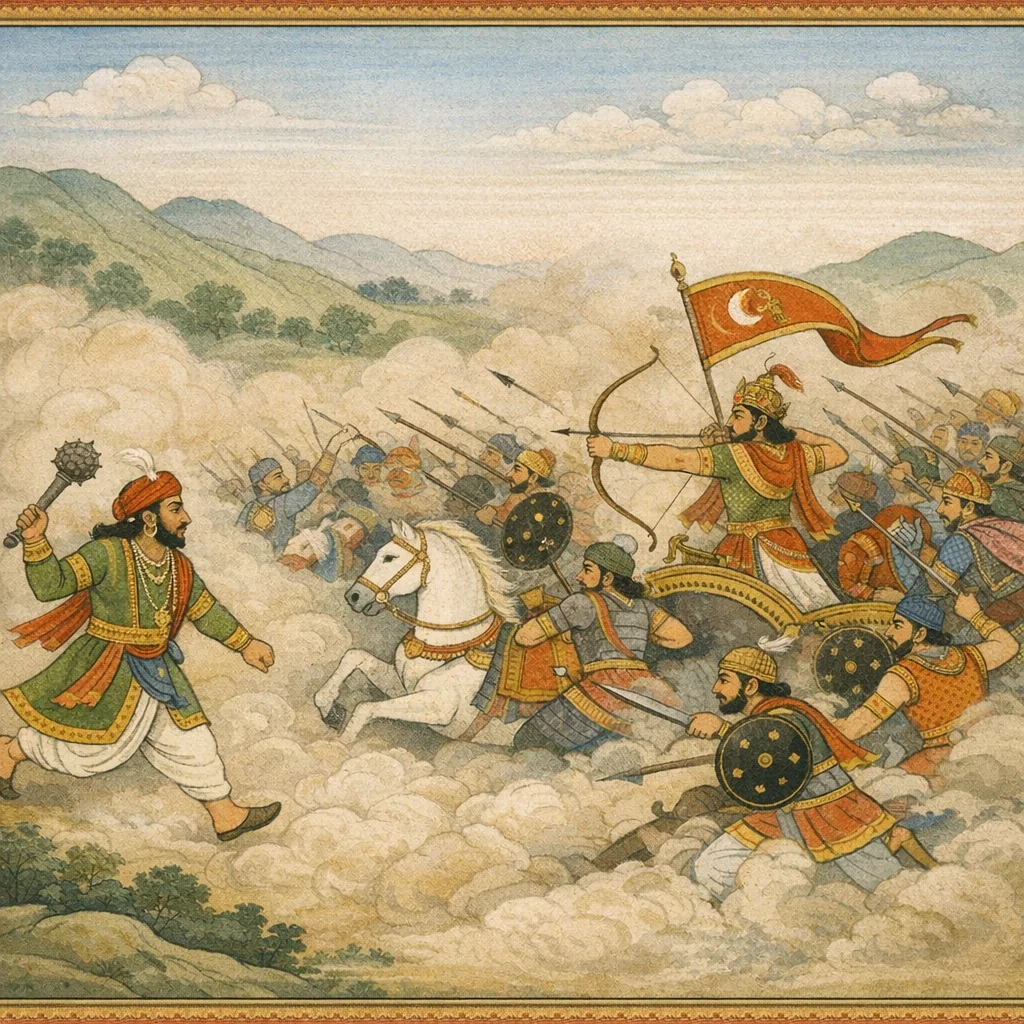
Saṃjaya reports that after a subdued sound follows the Pandava success, Śakuni Saubala returns with the remaining horses and urges the Kauravas to renew the fight, asking where Duryodhana stands amid the tumult. He is directed to the central din where the royal umbrella and armored chariots mark the king’s position. Śakuni reaches Duryodhana, expresses confidence, and recommends striking the Pandava chariot-division, asserting that Yudhiṣṭhira cannot be overcome without extreme commitment. The Kaurava forces surge forward with raised bows and battle-cries; the soundscape of bowstrings and released arrows intensifies. Seeing the enemy approach, Arjuna instructs Kṛṣṇa to drive into the ‘ocean’ of the opposing army, framing the eighteenth day as the culmination of accumulated destruction and as evidence of daiva’s operation. Arjuna then offers a sustained ethical-political critique: after Bhīṣma’s fall and subsequent deaths of major leaders and allied kings, hostilities did not abate because Duryodhana repeatedly rejected beneficial counsel from Bhīṣma, Droṇa, Vidura, and even parents. Arjuna concludes that Duryodhana’s conduct is structurally ruinous to the lineage and that decisive engagement is now unavoidable. Kṛṣṇa, holding the reins, fearlessly enters the hostile formation; Arjuna releases dense, expertly crafted volleys that obscure directions, cut down men, horses, and elephants, and are likened to consuming fire and Indra’s thunderbolt, depicting a single-hero tactical dominance over the Kaurava host.
Chapter Arc: संकुल-युद्ध की धूल में कौरव-पक्ष के महारथी पीछे हटते-से दिखते हैं—पर दुर्योधन का पुत्र उन्हें महान प्रयत्न से रोककर फिर पाण्डव-सेना पर धकेल देता है। → पुत्र-विजय की आकांक्षा से कौरव योद्धा सहसा लौट पड़ते हैं; रथ, अश्व, पत्ति और गज चारों अंगों से चारों दिशाओं में धावा होता है। धरती पर्वत-वन सहित काँपती-सी प्रतीत होती है; दण्डों और उल्मुकों (अग्नि-शस्त्र/प्रज्वलित अस्त्र) की वर्षा चारों ओर फैलती है। → रुधिर से भीगे रणक्षेत्र में घायल सारथियों के हाथों से छूटे अश्व शत-शत, सहस्र-सहस्र गिरते-पड़ते हैं; ‘विजयैषिण’ शूरमानि पुरुष जगह-जगह भूमि पर ढेर होते हैं। इसी उन्मत्त घमासान में शकुनि पार्श्व से क्रुद्ध होकर धृष्टद्युम्न की वाहिनी पर प्रहार कर उसे विचलित करता है। → दोनों पक्ष प्राणों का मोह छोड़ परस्पर-वध की इच्छा से भिड़ते रहते हैं; युद्ध का रूप ‘सुदारुण’ बनकर स्थिर हो जाता है—कोई निर्णायक विराम नहीं, केवल बढ़ती हुई क्षति और थकान। → शकुनि के पार्श्व-आक्रमण से धृष्टद्युम्न की पंक्तियाँ डगमगाती हैं—अगला क्षण यह तय करेगा कि पाण्डव-व्यवस्था संभलेगी या कौरवों को अवसर मिलेगा।
Shlokas
Verse 1
इस प्रकार श्रीमह्याभारत शल्यपर्वमें संकुलयुद्धाविषयक बाईसवाँ अध्याय पूरा हुआ ॥/ २२ ॥। पम्प बछ। सं: त्रयोविशो<् ध्याय: कौरवपक्षके सात सौ रथियोंका वध, उभयपक्षकी सेनाओंका मर्यादाशून्य घोर संग्राम तथा शकुनिका कूट युद्ध और उसकी पराजय संजय उवाच वर्तमाने तदा युद्धे घोररूपे भयानके । अभज्यत बल तत्र तव पुत्रस्य पाण्डवै:,संजय कहते हैं--राजन्! जब वह भयानक घोर युद्ध होने लगा, उस समय पाण्डवोंने आपके पुत्रकी सेनाके पाँव उखाड़ दिये
Sanjaya said: O King, when that dreadful, terrifying battle was underway, the Pandavas there shattered the strength of your son’s forces—uprooting their footing and resolve in the fight.
Verse 2
तांस्तु यत्नेन महता संनिवार्य महारथान् | पुत्रस्ते योधयामास पाण्डवानामनीकिनीम्,उन भागते हुए महारथियोंको महान् प्रयत्नसे रोककर आपका पुत्र पाण्डवोंकी सेनाके साथ युद्ध करने लगा
But after restraining those fleeing great chariot-warriors with strenuous effort, your son set about engaging the Pāṇḍavas’ army in battle—pressing the fight forward and reasserting command amid the chaos of retreat.
Verse 3
निवृत्ता: सहसा योधास्तव पुत्रजयैषिण: । संनिवृत्तेषु तेष्वेवं युद्धभासीत् सुदारुणम्,यह देख आपके पुत्रकी विजय चाहनेवाले योद्धा सहसा लौट पड़े। इस प्रकार उनके लौटनेपर उन सबमें अत्यन्त भयंकर युद्ध होने लगा
Sanjaya said: Your warriors, driven by the desire for your son’s victory, suddenly turned back. When they had thus regrouped and returned, the fighting among them flared up into a most dreadful battle—fierce, chaotic, and propelled more by partisan zeal than by calm discernment.
Verse 4
तावकानां परेषां च देवासुररणोपमम् । परेषां तव सैन्ये वा नासीत् कश्चित् पराड्मुख:
Sañjaya said: In that battle—like the legendary war between gods and demons—there was not a single man who turned his face away in flight, whether among your own troops or among the enemy. The fighting was met with steadfast resolve on both sides, revealing a grim equality of courage amid a conflict driven by rivalry and duty.
Verse 5
आपके और शत्रुओंके योद्धाओंका वह युद्ध देवासुर-संग्रामके समान भयंकर था। उस समय शत्रुओंकी अथवा आपकी सेनामें भी कोई युद्धसे विमुख नहीं होता था ।। अनुमानेन युध्यन्ते संज्ञाभिश्व परस्परम् | तेषां क्षयो महानासीद् युध्यतामितरेतरम्
Sañjaya said: Fighting one another by signs and by inference, they pressed on in that dreadful battle—like the clash of gods and demons. None in either army, yours or the enemy’s, turned away from combat; and as they struck each other without pause, the destruction among them became immense.
Verse 6
सब लोग अनुमानसे और नाम बतानेसे शत्रु तथा मित्रकी पहचान करके परस्पर युद्ध करते थे। परस्पर जूझते हुए उन वीरोंका वहाँ बड़ा भारी विनाश हो रहा था ।। ततो युधिष्छिरो राजा क्रोधेन महता युतः । जिगीषमाण: संग्रामे धार्तराष्ट्रानू सराजकान्,उस समय राजा युधिष्ठिर महान् क्रोधसे युक्त हो संग्राममें राजा दुर्योधनसहित आपके पुत्रोंकोी जीतना चाहते थे
Sañjaya said: There, by signs and by calling out names, they recognized one another as foe or friend and fought at close quarters. As those heroes grappled in combat, a great destruction was taking place on that field. Then King Yudhiṣṭhira, seized by mighty wrath, entered the battle intent on overcoming the Dhārtarāṣṭras together with their king.
Verse 7
त्रिभि: शारद्वतं विद्धवा रुक्मपुड्खै: शिलाशितै: । चतुर्भिनिजघानाश्वान् नाराचै: कृतवर्मण:,उन्होंने शिलापर तेज किये हुए सुवर्णमय पंखवाले तीन बाणोंसे कृपाचार्यको घायल करके चार नाराचोंसे कृतवर्माके घोड़ोंको मार डाला
Sañjaya said: Having pierced Śāradvata (Kṛpa) with three arrows—golden-feathered and whetted on stone—he then, with four nārāca shafts, struck down the horses of Kṛtavarman.
Verse 8
अश्वत्थामा तु हार्दिक्यमपोवाह यशस्विनम् । अथ शारद्वतोइश् शभि: प्रत्यविद्धयद् युधिष्ठिरम्,तब अभश्व॒त्थामा यशस्वी कृतवर्माकों अपने रथपर बिठाकर अन्यत्र हटा ले गया। तदनन्तर कृपाचार्यने आठ बाणोंसे राजा युधिष्ठिरको बींध डाला
Sañjaya said: Aśvatthāmā then carried away the illustrious Kṛtavarmā, son of Hṛdīka, placing him upon his chariot and withdrawing to another spot. Thereafter Kṛpa, the son of Śaradvat, struck King Yudhiṣṭhira with eight arrows.
Verse 9
ततो दुर्योधनो राजा रथान् सप्तशतान् रणे | प्रैषयद् यत्र राजासौ धर्मपुत्रो युधिष्ठिर:
Sañjaya said: Then King Duryodhana dispatched seven hundred chariots into the battle, to the place where that king—Yudhiṣṭhira, the son of Dharma—was positioned.
Verse 10
इसके बाद राजा दुर्योधनने रणभूमिमें सात सौ रथियोंको वहाँ भेजा, जहाँ धर्मपुत्र युधिष्ठिर खड़े थे ।। ते रथा रथिभिय्युक्ता मनोमारुतरंहस: । अभ्यद्रवन्त संग्रामे कौन्तेयस्य रथं प्रति,रथियोंसे युक्त और मन तथा वायुके समान वेगशाली वे रथ रणभूमिमें कुन्तीपुत्र युधिष्ठिरके रथकी ओर दौड़े
Then King Duryodhana dispatched seven hundred chariot-warriors to the place where Dharmaputra Yudhiṣṭhira stood. Those chariots, manned by skilled fighters and swift as thought and wind, charged through the press of battle straight toward the chariot of Kuntī’s son.
Verse 11
ते समन्तान्महाराज परिवार्य युधिष्ठिरम् । अदृश्यं सायकैश्षक्रुमेंघा इव दिवाकरम्,महाराज! जैसे बादल सूर्यको ढक देते हैं, उसी प्रकार उन रथियोंने युधिष्ठिरको चारों ओरसे घेरकर अपने बाणोंद्वारा उन्हें अदृश्य कर दिया
Sañjaya said: O King, those warriors surrounded Yudhiṣṭhira on every side and, with a dense shower of arrows, made him vanish from sight—just as thunderclouds veil the sun.
Verse 12
ते दृष्टवा धर्मराजानं कौरवेयैस्तथा कृतम् । नामृष्यन्त सुसंरब्धा: शिखण्डिप्रमुखा रथा:,धर्मराज युधिष्ठिरको कौरवोंद्वारा वैसी दशामें पहुँचाया गया देख अत्यन्त क्रोधमें भरे हुए शिखण्डी आदि रथी सहन न कर सके
Sañjaya said: Seeing King Yudhiṣṭhira—the upholder of dharma—brought to such a plight by the sons of Kuru, the chariot-warriors led by Śikhaṇḍin, inflamed with fierce anger, could not endure it.
Verse 13
रथैरश्ववरैर्युक्ता: किड॒किणीजालसंवृतै: । आज म्मुरथ रक्षन्त: कुन्तीपुत्रं युधिष्ठिरम्,वे छोटी-छोटी घंटियोंकी जालीसे ढके और श्रेष्ठ अश्वोंसे जुते हुए रथोंद्वारा कुन्तीपुत्र राजा युधिष्ठिरकी रक्षाके लिये वहाँ आ पहुँचे
Sañjaya said: Equipped with excellent horses and with their chariots covered by a net of small tinkling bells, they arrived there to guard Kuntī’s son, King Yudhiṣṭhira.
Verse 14
ततः प्रववृते रौद्र: संग्राम: शोणितोदक: । पाण्डवानां कुरूणां च यमराष्ट्रविवर्धन:,तदनन्तर कौरवों और पाण्डवोंका अत्यन्त भयंकर संग्राम आरम्भ हो गया, जिसमें पानीकी तरह खून बहाया जाता था। वह युद्ध यमराजके राज्यकी वृद्धि करनेवाला था
Sañjaya said: Then there began a fierce and dreadful battle, whose waters were blood itself. Between the Pāṇḍavas and the Kurus it raged on—an encounter that only swelled the dominion of Yama, for it drove countless warriors toward death.
Verse 15
रथान् सप्तशतान् हत्वा कुरूणामाततायिनाम् | पाण्डवा: सह पज्चालै: पुनरेवाभ्यवारयन्,उस समय पांचालोंसहित पाण्डवोंने आततायी कौरवोंके उन सात सौ रथियोंको मारकर पुन: अन्य योद्धाओंको आगे बढ़नेसे रोका
Sañjaya said: Having slain seven hundred chariot-warriors of the Kurus who had taken to murderous aggression, the Pāṇḍavas—together with the Pāñcālas—once again checked the enemy’s advance, preventing other fighters from pressing forward.
Verse 16
तत्र युद्ध महच्चासीत् तव पुत्रस्य पाण्डवै: । न च तत् तादृशं दृष्टं नैव चापि परिश्रुतम्,वहाँ आपके पुत्रका पाण्डवोंके साथ बड़ा भारी युद्ध हुआ। वैसा युद्ध मैंने न तो कभी देखा था और न मेरे सुननेमें ही आया था
Sañjaya said: “There, a truly great battle took place between your son and the Pāṇḍavas. Such a battle I have neither ever witnessed before, nor even heard of from others.”
Verse 17
वर्तमाने तदा युद्धे निर्म्यादे समनन््ततः । वध्यमानेषु योधेषु तावकेष्वितरेषु च,माननीय नरेश! जब सब ओरसे वह मर्यादाशून्य युद्ध होने लगा, आपके और शत्रुपक्षके योद्धा मारे जाने लगे, युद्धपरायण वीरोंकी गर्जना और श्रेष्ठ शंखोंकी ध्वनि होने लगी, धनुर्धरोंकी ललकार, सिंहनाद और गर्जनाओंके साथ जब वह युद्ध औचित्यकी सीमाको पार कर गया, योद्धाओंके मर्मस्थल विदीर्ण किये जाने लगे, विजयाभिलाषी योद्धा इधर-उधर दौड़ने लगे, रणभूमिमें सब ओर शोकजनक संहार होने लगा, बहुत-सी सुन्दरी स्त्रियोंके सीमन्तके सिन्दूर मिटाये जाने लगे तथा सारी मर्यादाओंको तोड़कर अत्यन्त भयंकर महायुद्ध चलने लगा, उस समय विनाशकी सूचना देनेवाले अति दारुण उत्पात प्रकट होने लगे
Sañjaya said: As the battle then raged on, becoming utterly without restraint on every side, warriors were being cut down—both yours and those of the opposing host.
Verse 18
विनदत्सु च योधेषु शड्खवर्य श्व पूरितै: । उत्क्ुष्टे: सिंहनादैश्व गर्जितिश्वव धन्विनाम्,माननीय नरेश! जब सब ओरसे वह मर्यादाशून्य युद्ध होने लगा, आपके और शत्रुपक्षके योद्धा मारे जाने लगे, युद्धपरायण वीरोंकी गर्जना और श्रेष्ठ शंखोंकी ध्वनि होने लगी, धनुर्धरोंकी ललकार, सिंहनाद और गर्जनाओंके साथ जब वह युद्ध औचित्यकी सीमाको पार कर गया, योद्धाओंके मर्मस्थल विदीर्ण किये जाने लगे, विजयाभिलाषी योद्धा इधर-उधर दौड़ने लगे, रणभूमिमें सब ओर शोकजनक संहार होने लगा, बहुत-सी सुन्दरी स्त्रियोंके सीमन्तके सिन्दूर मिटाये जाने लगे तथा सारी मर्यादाओंको तोड़कर अत्यन्त भयंकर महायुद्ध चलने लगा, उस समय विनाशकी सूचना देनेवाले अति दारुण उत्पात प्रकट होने लगे
Sañjaya said: As the warriors cried out, and as excellent conches—blown with full force—resounded, the battlefield swelled with triumphant shouts, lion-roars, and the thunderous clamour of bowmen. In that moment the fighting broke beyond the bounds of propriety, turning into a heedless, boundary-shattering slaughter—an ethical collapse in which the signs of impending ruin began to appear.
Verse 19
अतिप्रवृत्ते युद्धे च छिद्यमानेषु मर्मसु । धावमानेषु योधेषु जयगृद्धिषु मारिष,माननीय नरेश! जब सब ओरसे वह मर्यादाशून्य युद्ध होने लगा, आपके और शत्रुपक्षके योद्धा मारे जाने लगे, युद्धपरायण वीरोंकी गर्जना और श्रेष्ठ शंखोंकी ध्वनि होने लगी, धनुर्धरोंकी ललकार, सिंहनाद और गर्जनाओंके साथ जब वह युद्ध औचित्यकी सीमाको पार कर गया, योद्धाओंके मर्मस्थल विदीर्ण किये जाने लगे, विजयाभिलाषी योद्धा इधर-उधर दौड़ने लगे, रणभूमिमें सब ओर शोकजनक संहार होने लगा, बहुत-सी सुन्दरी स्त्रियोंके सीमन्तके सिन्दूर मिटाये जाने लगे तथा सारी मर्यादाओंको तोड़कर अत्यन्त भयंकर महायुद्ध चलने लगा, उस समय विनाशकी सूचना देनेवाले अति दारुण उत्पात प्रकट होने लगे
Sañjaya said: “O revered one, when the battle had become excessively unrestrained—when vital points were being cut and pierced, and when warriors, hungry for victory, were rushing about—then the fighting crossed the bounds of propriety and turned into a ruthless slaughter.”
Verse 20
संहारे सर्वतो जाते पृथिव्यां शोकसम्भवे । बद्दीनामुत्तमस्त्रीणां सीमन्तोद्धरणे तथा,माननीय नरेश! जब सब ओरसे वह मर्यादाशून्य युद्ध होने लगा, आपके और शत्रुपक्षके योद्धा मारे जाने लगे, युद्धपरायण वीरोंकी गर्जना और श्रेष्ठ शंखोंकी ध्वनि होने लगी, धनुर्धरोंकी ललकार, सिंहनाद और गर्जनाओंके साथ जब वह युद्ध औचित्यकी सीमाको पार कर गया, योद्धाओंके मर्मस्थल विदीर्ण किये जाने लगे, विजयाभिलाषी योद्धा इधर-उधर दौड़ने लगे, रणभूमिमें सब ओर शोकजनक संहार होने लगा, बहुत-सी सुन्दरी स्त्रियोंके सीमन्तके सिन्दूर मिटाये जाने लगे तथा सारी मर्यादाओंको तोड़कर अत्यन्त भयंकर महायुद्ध चलने लगा, उस समय विनाशकी सूचना देनेवाले अति दारुण उत्पात प्रकट होने लगे
Sañjaya said: When slaughter arose on every side upon the earth, bringing grief in its wake—when the auspicious parting-mark of many noble women was wiped away (as their husbands fell)—then, as the battle broke all bounds of propriety and restraint, dreadful portents appeared, foretelling destruction.
Verse 21
निर्मयदि महायुद्धे वर्तमाने सुदारुणे । प्रादुरासन् विनाशाय तदोत्पाता: सुदारुणा:,माननीय नरेश! जब सब ओरसे वह मर्यादाशून्य युद्ध होने लगा, आपके और शत्रुपक्षके योद्धा मारे जाने लगे, युद्धपरायण वीरोंकी गर्जना और श्रेष्ठ शंखोंकी ध्वनि होने लगी, धनुर्धरोंकी ललकार, सिंहनाद और गर्जनाओंके साथ जब वह युद्ध औचित्यकी सीमाको पार कर गया, योद्धाओंके मर्मस्थल विदीर्ण किये जाने लगे, विजयाभिलाषी योद्धा इधर-उधर दौड़ने लगे, रणभूमिमें सब ओर शोकजनक संहार होने लगा, बहुत-सी सुन्दरी स्त्रियोंके सीमन्तके सिन्दूर मिटाये जाने लगे तथा सारी मर्यादाओंको तोड़कर अत्यन्त भयंकर महायुद्ध चलने लगा, उस समय विनाशकी सूचना देनेवाले अति दारुण उत्पात प्रकट होने लगे
Sañjaya said: When that great battle, stripped of all restraint, was raging in dreadful intensity, then exceedingly terrible portents appeared—omens foretelling destruction.
Verse 22
चचाल शब्दं कुर्वाणा सपर्वतवना मही । सदण्डा: सोल्मुका राजन् कीर्यमाणा: समन्तत:
Sañjaya said: O King, as clubs and blazing firebrands were hurled in every direction, the earth—together with its mountains and forests—seemed to tremble, resounding with a great din.
Verse 23
विष्वग्वाता: प्रादुरासन् नीचै: शर्करवर्षिण:,इति श्रीमहाभारते शल्यपर्वणि संकुलयुद्धे त्रयोविंशो5ध्याय:
Sañjaya said: “Winds rose up from every direction, and from low in the sky there fell a shower of gravel.” Thus, in the Śrī Mahābhārata, in the Śalya Parva, in the account of the confused and densely entangled battle, ends the twenty-third chapter.
Verse 24
अश्रूणि मुमुचुर्नागा वेपथुं चास्पृशन् भृशम् । चारों ओर नीचे बालू और कंकड़ बरसानेवाली हवाएँ चलने लगीं। हाथी आँसू बहाने और थर-थर काँपने लगे || २३ ह || एतान् घोराननादृत्य समुत्पातान् सुदारुणान्,इन घोर एवं दारुण उत्पातोंकी अवहेलना करके क्षत्रियवीर मनमें व्यथासे रहित हो पुनः युद्धके लिये तैयार हो गये और स्वर्गमें जानेकी अभिलाषा ले रमणीय एवं पुण्यमय कुरक्षेत्रमें उत्साहपूर्वक डट गये
Sañjaya said: The elephants shed tears and were seized by violent trembling. Yet, disregarding these dreadful and most ominous portents, the warrior-kṣatriyas—free from inner wavering—again readied themselves for battle, longing for heaven, and stood with ardor on the fair and meritorious field of Kurukṣetra.
Verse 25
पुनर्युद्धाय संयत्ता: क्षत्रियास्तस्थुरव्य था: । रमणीये कुरुक्षेत्रे पुण्ये स्वर्ग यियासव:,इन घोर एवं दारुण उत्पातोंकी अवहेलना करके क्षत्रियवीर मनमें व्यथासे रहित हो पुनः युद्धके लिये तैयार हो गये और स्वर्गमें जानेकी अभिलाषा ले रमणीय एवं पुण्यमय कुरक्षेत्रमें उत्साहपूर्वक डट गये
Sañjaya said: Disregarding those dreadful and cruel portents, the kṣatriya warriors once again readied themselves for battle. Free from inner agitation, they stood firm on the lovely and sacred field of Kurukṣetra, driven by the wish to attain heaven—embracing the warrior’s code even amid ominous signs.
Verse 26
ततो गान्धारराजस्य पुत्र: शकुनिरब्रवीत् । युद्धयध्वमग्रतो यावत् पृष्ठतो हन्मि पाण्डवान्,तत्पश्चात् गान्धारराजके पुत्र शकुनिने कौरव-योद्धाओंसे कहा--“वीरो! तुमलोग सामनेसे युद्ध करो और मैं पीछेसे पाण्डवोंका संहार करता हूँ”
Sañjaya said: Then Shakuni, the son of the king of Gandhāra, spoke: “Fight from the front as long as you can; I will strike down the Pāṇḍavas from behind.”
Verse 27
ततो नः सम्प्रयातानां मद्रयोधास्तरस्विन: । हृष्टा: किलकिलाशब्दमकुर्वन्तापरे तथा,इस सलाहके अनुसार जब हमलोग चले तो मद्रदेशके वेगशाली योद्धा तथा अन्य सैनिक हर्षसे उललसित हो किलकारियाँ भरने लगे
Sañjaya said: “Then, as we set out, the swift warriors of Madra—and other troops as well—became exhilarated and raised loud cries of jubilation.”
Verse 28
अस्मांस्तु पुनरासाद्य लब्धलक्ष्या दुरासदा: | शरासनानि धुन्वन्त: शरवर्षरवाकिरन्,इतनेहीमें दुर्धर्ष पाण्डव पुन: हमारे पास आ पहुँचे और हमें अपने लक्ष्यके रूपमें पाकर धनुष हिलाते हुए हम लोगोंपर बाणोंकी वर्षा करने लगे
Sañjaya said: “But then, closing in on us again—unyielding and now having found their mark—the Pāṇḍavas, shaking their bows, began to pour upon our ranks a roaring rain of arrows.”
Verse 29
ततो हतं परैस्तत्र मद्रराजबलं तदा । दुर्योधनबलं दृष्टवा पुनरासीत् पराड्मुखम्,थोड़ी ही देरमें शत्रुओंने वहाँ मद्रराजकी सेनाका संहार कर डाला। यह देख दुर्योधनकी सेना पुनः पीठ दिखाकर भागने लगी
Sañjaya said: Then, right there, the enemy forces slew the army of the king of Madra. Seeing that, Duryodhana’s troops once again turned their backs and fled.
Verse 30
गान्धारराजस्तु पुनर्वाक्यमाह ततो बली । निवर्तध्वमधर्मज्ञा युध्यध्वं कि सृतेन व:,तब बलवान गान्धारराज शकुनिने पुनः इस प्रकार कहा--“अपने धर्मको न जाननेवाले पापियो! इस तरह तुम्हारे भागनेसे क्या होगा? लौटो और युद्ध करो”
Sañjaya said: Then the mighty king of Gandhāra again spoke these words: “You who do not understand dharma—what will you gain by fleeing like this? Turn back and fight. What use is this retreat to you?”
Verse 31
अनीकं दशसाहस्रमश्चानां भरतर्षभ । आसीद् गान्धारराजस्य विशालप्रासयोधिनाम्,भरतश्रेष्ठी] उस समय गान्धारराज शकुनिके पास विशाल प्रास लेकर युद्ध करनेवाले घुड़सवारोंकी दस हजार सेना मौजूद थी। उसीको साथ लेकर वह उस जन-संहारकारी युद्धमें पाण्डव-सेनाके पिछले भागकी ओर गया और वे सब मिलकर पैने बाणोंसे उस सेनापर चोट करने लगे
Sañjaya said: “O bull among the Bharatas, the king of Gandhāra had a force of ten thousand horsemen—fighters who wielded long, massive lances. Taking that contingent with him, he moved toward the rear of the Pāṇḍava army in that man-destroying battle, and together they began to strike that force with sharp arrows.”
Verse 32
बलेन तेन विक्रम्य वर्तमाने जनक्षये । पृष्ठत: पाण्डवानीकम भ्यध्नन्निशितै: शरै:,भरतश्रेष्ठी] उस समय गान्धारराज शकुनिके पास विशाल प्रास लेकर युद्ध करनेवाले घुड़सवारोंकी दस हजार सेना मौजूद थी। उसीको साथ लेकर वह उस जन-संहारकारी युद्धमें पाण्डव-सेनाके पिछले भागकी ओर गया और वे सब मिलकर पैने बाणोंसे उस सेनापर चोट करने लगे
Sañjaya said: Mustering his strength and pressing forward while the slaughter of men was raging, he struck the Pāṇḍava host from the rear with sharp arrows—turning the battle into a ruthless assault on those attacked from behind.
Verse 33
तदभ्रमिव वातेन क्षिप्पमाणं समन्ततः । अभज्यत महाराज पाण्डूनां सुमहद् बलम्,महाराज! जैसे वायुके वेगसे मेघोंका दल सब ओरसे छिल्न-भिन्न हो जाता है, उसी प्रकार इस आक्रमणसे पाण्डवोंकी विशाल सेनाका व्यूह भंग हो गया
Sañjaya said: “O King, just as a mass of clouds, driven and battered by the force of the wind, is torn apart on every side, so too, under this assault, the vast army of the Pāṇḍavas had its battle-formation shattered.”
Verse 34
ततो युधिष्छिर: प्रेक्ष्य भग्नं स््वबलमन्तिकात् । अभ्यनादयदव्यग्र: सहदेव॑ महाबलम्,तब युधिष्ठिरने पास ही अपनी सेनामें भगदड़ मची देख शान्तभावसे महाबली सहदेवको पुकारा
Sañjaya said: Then Yudhiṣṭhira, seeing his own army broken and in rout close at hand, remained unagitated and called out to the mighty Sahadeva.
Verse 35
असोौ सुबलपुत्रो नो जघन॑ पीड्य दंशित: । सैन्यानि सूदयत्येष पश्य पाण्डव दुर्मतिम्,और कहा--'पाण्डुनन्दन! कवच धारण करके आया हुआ वह सुबलपुत्र शकुनि हमारी सेनाके पिछले भागको पीड़ा देकर सारे सैनिकोंका संहार कर रहा है; इस दुर्बुद्धिको देखो तो सही
Sañjaya said: “Look, O son of Pāṇḍu! That Śakuni, the son of Subala, having armed himself and striking at the rear of our host, is harassing it and slaughtering the troops. Behold this evil-minded man!”
Verse 36
गच्छ त्व॑ द्रौपदेयैश्न शकुनिं सौबलं जहि । रथानीकमहं धक्ष्ये पाज्चालसहितो5नघ,“निष्पाप वीर! तुम द्रौपदीके पुत्रोंकी साथ लेकर जाओ और सुबलपुत्र शकुनिको मार डालो। मैं पांचाल योद्धाओंके साथ यहीं रहकर शत्रुकी इस रथसेनाको भस्म कर डालूँगा
Sañjaya said: “Go, together with Draupadī’s sons, and strike down Śakuni, the son of Subala. I, accompanied by the Pāñcāla warriors, will remain here and burn this enemy chariot-host to ashes.”
Verse 37
गच्छन्तु कुञ्जरा: सर्वे वाजिनश्व सह त्वया । पादाताश्न त्रिसाहस्रा: शकुनिं तैर्व॒तो जहि,“तुम्हारे साथ सभी हाथीसवार, घुड़सवार और तीन हजार पैदल सैनिक भी जायाँ तथा उन सबसे घिरे रहकर तुम शकुनिका नाश करो”
Sañjaya said: “Let all the elephant-corps and the cavalry go with you, along with three thousand foot-soldiers. Surrounded and supported by them, strike down Śakuni.”
Verse 38
ततो गजा: सप्तशताक्षापपाणिभिरास्थिता: । पज्च चाश्वसहस्राणि सहदेवश्व वीर्यवान्,तदनन्तर धर्मराजकी आज्ञाके अनुसार हाथमें धनुष लिये बैठे हुए सवारोंसे युक्त सात सौ हाथी, पाँच हजार घुड़सवार, पराक्रमी सहदेव, तीन हजार पैदल योद्धा और द्रौपदीके सभी पुत्र--इन सबने रणभूमिमें युद्ध-दुर्मद शकुनिपर धावा किया
Sañjaya said: Then seven hundred elephants, each mounted by archers with bows in hand, and five thousand horsemen advanced—along with the valiant Sahadeva, three thousand foot-soldiers, and all the sons of Draupadī. Acting in accordance with Dharmarāja’s command, they charged across the battlefield against Śakuni, who had grown arrogant with the frenzy of war.
Verse 39
पादाताशक्ष त्रिसाहस्रा द्रौपदेयाश्व॒ सर्वश: । रणे हाभ्यद्रवंस्ते तु शकुनिं युद्धदुर्मदम्,तदनन्तर धर्मराजकी आज्ञाके अनुसार हाथमें धनुष लिये बैठे हुए सवारोंसे युक्त सात सौ हाथी, पाँच हजार घुड़सवार, पराक्रमी सहदेव, तीन हजार पैदल योद्धा और द्रौपदीके सभी पुत्र--इन सबने रणभूमिमें युद्ध-दुर्मद शकुनिपर धावा किया
Sañjaya said: Then, in the battle, three thousand foot-soldiers and all the sons of Draupadī charged forward against Śakuni, who had grown arrogant with the frenzy of war. Thereafter, acting under Dharmarāja’s command, a force of seven hundred elephants with mounted warriors bearing bows, five thousand cavalry, the valiant Sahadeva, three thousand infantry, and all of Draupadī’s sons together surged across the battlefield to strike at Śakuni.
Verse 40
ततस्तु सौबलो राजन्नभ्यतिक्रम्य पाण्डवान् | जघान पृष्ठतः सेनां जयगृद्धः प्रतापवान्,राजन! उधर विजयाभिलाषी प्रतापी सुबलपुत्र शकुनि पाण्डवोंका उल्लंघन करके पीछेकी ओरसे उनकी सेनाका संहार कर रहा था
Sañjaya said: Then, O King, Śakuni—the son of Subala—overstepping the Pāṇḍavas’ line, struck down their army from the rear. Fierce in prowess and hungry for victory, he wrought destruction by attacking from behind.
Verse 41
अश्वारोहास्तु संरब्धा: पाण्डवानां तरस्विनाम् । प्राविशन् सौबलानीकमभ्यतिक्रम्य तान् रथान्,वेगशाली पाण्डवोंके घुड़सवारोंने अत्यन्त कुपित होकर उन कौरव रथियोंका उल्लंघन करके सुबलपुत्रकी सेनामें प्रवेश किया
Sañjaya said: The swift and valiant horsemen of the Pāṇḍavas, inflamed with fury, overleapt those chariot-warriors and drove straight into the army of Saubala.
Verse 42
ते तत्र सादिन: शूरा: सौबलस्य महद् बलम् | रणमध्ये व्यतिष्ठन्त शरवर्षैरवाकिरन्,वे शूरवीर घुड़सवार वहाँ जाकर रणभूमिके मध्यभागमें खड़े हो गये और शकुनिकी उस विशाल सेनापर बाणोंकी वर्षा करने लगे
Sañjaya said: There, those heroic horsemen advanced and took their stand in the very midst of the battlefield, and they showered arrows upon the great force of Saubala (Śakuni).
Verse 43
तदुद्यतगदाप्रासमकापुरुषसेवितम् | प्रावर्तत महद् युद्ध राजन दुर्मन्त्रिते तव,राजन्! फिर तो आपकी कुमन्त्रणाके फलस्वरूप वह महान् युद्ध आरम्भ हो गया, जो कायरोंसे नहीं, वीर पुरुषोंसे सेवित था। उस समय सभी योद्धाओंके हाथोंमें गदा अथवा प्रास उठे रहते थे
Sañjaya said: “Then, O King, because of your ill counsel, that great battle commenced—one attended not by cowards but by heroic men—while the warriors stood with clubs and spears raised, ready for combat.”
Verse 44
उपारमन्त ज्याशब्दा: प्रेक्षका रथिनो5भवन् | न हि स्वेषां परेषां वा विशेष: प्रत्यदृश्यत,धनुषकी प्रत्यंचाके शब्द बंद हो गये। रथी योद्धा दर्शक बनकर तमाशा देखने लगे। उस समय अपने या शत्रुपक्षके योद्धाओंमें पराक्रमकी दृष्टिसे कोई अन्तर नहीं दिखायी देता था
Sañjaya said: The twang of bowstrings fell silent, and the chariot-warriors became mere spectators. In that moment, no distinction could be perceived—neither among their own nor among the enemy—as to who excelled in prowess; the battle paused in a tense equality.
Verse 45
शूरबाहुविसृष्टानां शक्तीनां भरतर्षभ । ज्योतिषामिव सम्पातमपश्यन् कुरुपाण्डवा:
Sañjaya said: O bull among the Bharatas, the Kuru and Pāṇḍava warriors beheld the onrush of spears hurled by mighty-armed heroes—like the sudden, converging fall of blazing lights in the sky.
Verse 46
भरतश्रेष्ठ! शूरवीरोंकी भुजाओंसे छूटी हुई शक्तियाँ शत्रुओंपर इस प्रकार गिरती थीं, मानो आकाशशसे तारे टूटकर पड़ रहे हों। कौरव-पाण्डवयोद्धाओंने इसे प्रत्यक्ष देखा था ।। ऋष्टिभिविमलाभि कक्ष तत्र तत्र विशाम्पते । सम्पतन्तीभिराकाशमावृतं बह्बशोभत,प्रजानाथ! वहाँ गिरती हुई निर्मल ऋष्टियोंसे व्याप्त हुए आकाशकी बड़ी शोभा हो रही थी
Sañjaya said: O lord of men, in many places the sky looked splendid as it became covered with spotless spears hurtling down. The warriors of both the Kauravas and the Pāṇḍavas witnessed these weapons, cast from mighty arms, falling upon their foes like stars breaking loose from the heavens—an awe-inspiring vision that revealed the terrible grandeur of war even as it consumed human life.
Verse 47
प्रासानां पततां राजन् रूपमासीत् समन्ततः । शलभानामिवाकाशे तदा भरतसत्तम,भरतकुलभूषण नरेश! उस समय सब ओर गिरते हुए प्रासोंका स्वरूप आकाशमें छाये हुए टिड्डीदलोंके समान जान पड़ता था
Sañjaya said: O King, on every side the appearance of the spears as they fell was like swarms of locusts filling the sky—so dense and overwhelming did they seem, O best of the Bharatas.
Verse 48
रुधिरोक्षितसर्वाड़ा विप्रविद्धैर्नियन्तृभि: । हया: परिपतन्ति सम शतशो5थ सहसत्रश:
Sañjaya said: With their whole bodies drenched in blood, and their drivers struck down and thrown into confusion, the horses kept collapsing—by the hundreds, and then by the thousands.
Verse 49
सैकड़ों और हजारों घोड़े अपने घायल सवारोंके साथ सारे अंगोंमें लहूलुहान होकर धरतीपर गिर रहे थे ।। अन्योन्यं परिपिष्टाश्न॒ समासाद्य परस्परम् | आविक्षता: सम दृश्यन्ते वमनन््तो रुधिरं मुखै:,बहुत-से सैनिक परस्पर टकराकर एक-दूसरेसे पिस जाते और क्षत-विक्षत हो मुखोंसे रक्त वमन करते हुए दिखायी देते थे
Sañjaya reports the battlefield’s crushing press: many warriors, colliding and closing upon one another, were ground down in the mêlée. Mangled and torn, they were seen vomiting blood from their mouths—an image that shows how, when rage and confusion overrun restraint, war reduces human bodies and intentions alike to ruin.
Verse 50
ततो<5भवत्तमो घोर सैन्येन रजसा वृते । तानपाक्रमतोडद्राक्ष॑ं तस्माद् देशादरिंदम,शत्रुदमन नरेश! तत्पश्चात् जब सेनाद्वारा उठी हुई धूलसे सब ओर घोर अन्धकार छा गया, उस समय हमने देखा कि बहुत-से योद्धा वहाँसे भागे जा रहे हैं
Sañjaya said: Then a dreadful darkness arose, as the army was enveloped in dust. O king, crusher of foes and subduer of enemies, we saw many warriors fleeing away from that place.
Verse 51
अश्वान् राजन मनुष्यांश्न॒ रजसा संवृते सति । भूमौ निपतिताश्चान्ये वमनन््तो रुधिरं बहु,राजन! धूलसे सारा रणक्षेत्र भर जानेके कारण अँधेरेमें बहुत-से घोड़ों और मनुष्योंको भी हमने भागते देखा था। कितने ही योद्धा पृथ्वीपर गिरकर मुँहसे बहुत-सा रक्त वमन कर रहे थे
Sañjaya said: “O King, when the battlefield was shrouded in dust, we saw many horses and men fleeing in the darkness. Others had fallen upon the earth, vomiting copious blood.”
Verse 52
केशाकेशि समालग्ना न शेकुश्रैष्टितुं नरा: । अन्योन्यमश्चपृष्ठे भ्यो विकर्षन्तो महाबला:,बहुत-से मनुष्य परस्पर केश पकड़कर इतने सट गये थे कि कोई चेष्टा नहीं कर पाते थे। कितने ही महाबली योद्धा एक-दूसरेको घोड़ोंकी पीठोंसे खींच रहे थे
Sañjaya said: Many men became locked together, hair grasping hair, so tightly that they were unable even to move. And many mighty warriors, grappling with one another, dragged their opponents down from the backs of their horses—showing how the battle had sunk into brutal, close-quarters struggle where strength and rage overpowered restraint.
Verse 53
मल्ला इव समासाद्य निजषघ्नुरितरेतरम् । अश्वैश्व व्यपकृष्यन्त बहवो5त्र गतासव:,बहुत-से सैनिक पहलवानोंकी भाँति परस्पर भिड़कर एक-दूसरेपर चोट करते थे। कितने ही प्राणशून्य होकर अश्रोंद्वारा इधर-उधर घसीटे जा रहे थे
Sañjaya said: Like wrestlers closing in upon one another, they struck each other down at close quarters. And many there, their lives already gone, were dragged this way and that by horses—an image of war’s brutal momentum, where valor and rage reduce bodies to burdens and the field to a spectacle of heedless destruction.
Verse 54
भूमौ निपतिताश्चान्ये बहवो विजयैषिण: । तत्र तत्र व्यदृश्यन्त पुरुषा: शूरमानिन:
Sañjaya said: Many others too, driven by the desire for victory, had fallen upon the ground. Here and there they were seen—men who had prided themselves on being heroes—now strewn across the battlefield, their boastful valor brought to a grim end.
Verse 55
बहुतेरे विजयाभिलाषी तथा अपनेको शूरवीर माननेवाले पुरुष जहाँ-तहाँ पृथ्वीपर पड़े दिखायी देते थे ।। रक्तोक्षितैश्छिन्नभुजैरवकृष्टशिरोरुहै: । व्यदृश्यत मही कीर्णा शतशशो5थ सहस्रशः,कटी हुई बाँहों और खींचे गये केशोंवाले सैकड़ों और हजारों रक्तरंजित शरीरोंसे रणभूमि आच्छादित दिखायी देती थी
Sañjaya said: The earth appeared strewn everywhere with blood-soaked bodies—hundreds and then thousands—men whose arms had been severed and whose hair had been dragged out. The battlefield, once a ground for heroic ambition, now stood as a stark witness to the ruin that war brings upon those who sought victory and called themselves valiant.
Verse 56
दूरं न शक्यं तत्रासीद् गन्तुमश्वेन केनचित् । साथ्चारोहैर्हतैरश्वैरावते वसुधातले,सवारोंसहित घोड़ोंकी लाशोंसे पटे हुए भूतलपर किसीके लिये भी घोड़ेद्वारा दूरतक जाना असम्भव हो गया था
Sañjaya said: There, it became impossible for anyone to go far on horseback, for the surface of the earth was covered over with slain horses and their riders. The battlefield’s congestion and carnage turned movement itself into a hardship, showing how war destroys not only warriors but also the very means of order, passage, and control.
Verse 57
रुधिरोक्षितसन्नाहैरात्तशस्त्रैरुदायुधै: । नानाप्रहरणैघोरै: परस्परवधैषिभि:
Sañjaya said: They stood with their armor drenched in blood, weapons seized and held aloft—armed with many kinds of dreadful missiles and implements of war—each intent on the other’s destruction. The scene shows that when dharma is eclipsed by wrath and rivalry, warriors become instruments of mutual slaughter rather than guardians of order.
Verse 58
सुसंनिकृष्टे: संग्रामे हतभूयिष्ठसैनिकै: । योद्धाओंके कवच रक्तसे भीग गये थे। वे सब हाथोंमें अस्त्र-शस्त्र लिये धनुष उठाये नाना प्रकारके भयंकर आयुधोंद्वारा एक-दूसरेके वधकी इच्छा रखते थे। उस संग्राममें सभी योद्धा अत्यन्त निकट होकर युद्ध करते थे और उनमेंसे अधिकांश सैनिक मार डाले गये थे।। स मुहूर्त ततो युद्धवा सौबलो5थ विशाम्पते
Sañjaya said: In that battle, the warriors fought at extremely close quarters, and most of the soldiers had already been slain. Their armor was soaked with blood. All of them, gripping weapons in their hands and raising their bows, strove with many dreadful arms, each intent on the other’s death. After fighting for a short while, O lord of men, the son of Subala continued the combat.
Verse 59
षट्साहसैह्यै: शिष्टेरपायाच्छकुनिस्तत: । प्रजानाथ! शकुनि वहाँ दो घड़ी युद्ध करके शेष बचे हुए छः: हजार घुड़सवारोंके साथ भाग निकला ।। तथैव पाण्डवानीकं रुधिरेण समुक्षितम्
Sañjaya said: Then Śakuni withdrew and fled with the remaining six thousand horsemen. O lord of men, after fighting there for a short while, he escaped with what was left of his cavalry. In the same way, the Pāṇḍava host too was drenched with blood.
Verse 60
अश्वारोहाश्व पाण्डूनामब्रुवन् रुधिरोक्षिता:
Sañjaya said: The horsemen of the Pāṇḍavas, spattered with blood, spoke out—reporting the grim realities of the battlefield and conveying urgent tidings amid the chaos of war.
Verse 61
सुसंनिकृष्टे संग्रामे भूयिष्ठे त्यक्तजीविता: । उस समय उस निकटवर्ती महायुद्धमें प्राणोंका मोह छोड़कर जूझनेवाले पाण्डवसेनाके रक्तरंजित घुड़सवार इस प्रकार बोले-- ।। ६० ई ।। नहि शक्यं रथैर्योद्धुं कुत एवं महागजै:
Sañjaya said: When the battle closed to point-blank range and the fighting grew most intense, those warriors—having cast aside attachment to life—declared: “It is not possible to fight here with chariots; how much less with great elephants!”
Verse 62
रथानेव रथा यान्तु कुञ्जरा: कुड्जरानपि | प्रतियातो हि शकुनि: स्वमनीकमवस्थित:
Sañjaya said: “Let chariots advance against chariots, and elephants against elephants as well. For Śakuni, the son of Subala, has already turned back and now stands with his own division drawn up in formation.”
Verse 63
न पुनः सौबलो राजा युद्धमभ्यागमिष्यति । 'यहाँ रथोंद्वारा भी युद्ध नहीं किया जा सकता। फिर बड़े-बड़े हाथियोंकी तो बात ही क्या है? रथ रथोंका सामना करनेके लिये जायँ और हाथी हाथियोंका। शकुनि भागकर अपनी सेनामें चला गया। अब फिर राजा शकुनि युद्धमें नहीं आयेगा” | ६१-६२ ह ।। ततस्तु द्रौपदेयाश्न॒ ते च मत्ता महाद्विपा:
Sañjaya said: “The Saubala king (Śakuni) will not come forward to battle again.” In the ethical atmosphere of the war, this line underscores a collapse of resolve and responsibility: having withdrawn from direct engagement, Śakuni is portrayed as unlikely to return to face the consequences of the conflict he helped intensify.
Verse 64
सहदेवो5पि कौरव्य रजोमेघे समुत्थिते
Sañjaya said: “O descendant of Kuru, Sahadeva too—when a cloud of dust had risen—(entered the fray amid the obscuring turmoil).”
Verse 65
एकाकी प्रययौ तत्र यत्र राजा युधिष्ठिर: । कुरुनन्दन! वहाँ धूलका बादल-सा घिर आया था। उस समय सहदेव भी अकेले ही, जहाँ राजा युधिष्ठिर थे, वहीं चले गये || ६४ $ ।। ततस्तेषु प्रयातेषु शकुनि: सौबल: पुन:
Sañjaya said: “Alone he went to the place where King Yudhiṣṭhira was. And when they had thus departed, Śakuni, the son of Subala, again (set his course in motion).” The scene underscores the isolation and urgency that follow calamity in war: individuals move without escort, seeking rightful leadership and counsel, while adversarial strategists remain poised to exploit disorder.
Verse 66
तत् पुनस्तुमुलं युद्ध प्राणांस्त्यक्त्वाभ्यवर्तत
Sañjaya said: Then, once again, the battle swelled into a dreadful tumult, as warriors—having cast away all regard for their very lives—rushed back into the fray.
Verse 67
ते चान्योन्यमवैक्षन्त तस्मिन् वीरसमागमे
Sañjaya said: In that gathering of heroes, they looked upon one another—measuring strength and resolve in the charged moment before action.
Verse 68
असिभिश्किद्यमानानां शिरसां लोकसंक्षये
Sañjaya said: “As heads were being severed by swords, the world itself seemed to be rushing toward destruction.”
Verse 69
प्रादुरासीन्महान् शब्दस्तालानां पततामिव । उस लोकसंहारकारी संग्राममें तलवारोंसे काटे जाते हुए मस्तक जब पृथ्वीपर गिरते थे, तब उनसे ताड़के फलोंके गिरनेकी-सी धमाकेकी आवाज होती थी ।। ६८ $ ।। विमुक्तानां शरीराणां छिन्नानां पततां भुवि,प्रजानाथ! छिन्न-भिन्न होकर धरतीपर गिरनेवाले कवचशून्य शरीरों, आयुधोंसहित भुजाओं और जाँघोंका अत्यन्त भयंकर एवं रोमांचकारी कट-कट शब्द सुनायी पड़ता था
Sañjaya said: A great roar arose, like the thud of palm-fruits dropping. O lord of men, as armorless bodies—hacked apart—fell upon the earth, along with weapon-bearing arms and thighs, there was heard an exceedingly dreadful, hair-raising clatter, a harsh ‘kat-kat’ sound.
Verse 70
सायुधानां च बाहूनामूरूणां च विशाम्पते | आसीत् कटकटाशब्द: सुमहॉल्लोमहर्षण:,प्रजानाथ! छिन्न-भिन्न होकर धरतीपर गिरनेवाले कवचशून्य शरीरों, आयुधोंसहित भुजाओं और जाँघोंका अत्यन्त भयंकर एवं रोमांचकारी कट-कट शब्द सुनायी पड़ता था
Sañjaya said: O lord of the people, there arose a tremendous, hair-raising clatter—‘kaṭa-kaṭa’—as weapon-bearing arms and thighs, and armor-stripped bodies, severed and shattered, fell upon the earth.
Verse 71
निध्नन्तो निशितैःशस्त्रै 20 20० पुत्रान सखीनपि | योधा: परिपतन्ति सम य खगा:,जैसे पक्षी मांसके लिये एक-दूसरेपर झपटते हैं, उसी प्रकार वहाँ योद्धा अपने तीखे शस्त्रोंद्वारा भाइयों, मित्रों और पुत्रोंका भी संहार करते हुए एक-दूसरेपर टूटे पड़ते थे
Sañjaya said: With keen weapons the warriors struck down even their own sons and friends, rushing upon one another like birds swooping for flesh. In that slaughter, kinship and friendship were drowned by the frenzy of battle, and the field became a place where the bonds of dharma were eclipsed by the compulsion to kill.
Verse 72
अन्योन्यं प्रतिसंरब्धा: समासाद्य परस्परम् । अहं पूर्वमहं पूर्वमिति न्यघ्नन् सहस्रश:,दोनों पक्षोंके योद्धा एक-दूसरेसे भिड़कर परस्पर अत्यन्त कुपित हो “पहले मैं, पहले मैं' ऐसा कहते हुए सहस्रों सैनिकोंका वध करने लगे
Sañjaya said: Rushing at one another in mutual fury and closing in face to face, they began to strike down men by the thousands, each crying, “I first—no, I first!” In the blindness of rivalry, the battle became a contest of precedence, where anger and ego drove slaughter beyond restraint.
Verse 73
संघातेनासन भ्रष्टैर श्वारोहैर्गतासुभि: । हया: परिपतन्ति सम शतशो5थ सहसत्रश:,शत्रुओंके आघातसे प्राणशून्य होकर आसनसे भ्रष्ट हुए अश्वारोहियोंके साथ सैकड़ों और हजारों घोड़े धराशायी होने लगे
Sañjaya said: Struck down in dense masses, the horsemen—lifeless and fallen from their seats—went down; and with them the horses too collapsed, by the hundreds and then by the thousands. The scene showed the pitiless momentum of battle, where skill and valor were swallowed by sheer violence, and the cost of war was measured in lives extinguished in an instant.
Verse 74
स्फुरतां प्रतिपिष्टानामश्वानां शीघ्रगामिनाम् । स्तनतां च मनुष्याणां सन्नद्धानां विशाम्पते,प्रजापालक नरेश! आपकी खोटी सलाहके अनुसार बहुत-से शीघ्रगामी अश्व गिरकर छटपटा रहे थे। कितने ही पिस गये थे और बहुत-से कवचधारी मनुष्य गर्जना करते हुए शत्रुओंके मर्म विदीर्ण कर रहे थे। उन सबके शक्ति, ऋष्टि और प्रासोंका भयंकर शब्द वहाँ गूँजने लगा था
Sañjaya said: “O lord of the people, many swift horses—some crushed in the press—lay fallen and still convulsed. Armoured men roared as they drove into the enemy’s vulnerable points. The dreadful clamor of spears, javelins, and lances echoed across the field.”
Verse 75
शव्त्यूष्टिप्रासशब्दश्न॒ तुमुल: समपद्यत । भिन्दतां परमर्माणि राजन दुर्मन्त्रिते तव,प्रजापालक नरेश! आपकी खोटी सलाहके अनुसार बहुत-से शीघ्रगामी अश्व गिरकर छटपटा रहे थे। कितने ही पिस गये थे और बहुत-से कवचधारी मनुष्य गर्जना करते हुए शत्रुओंके मर्म विदीर्ण कर रहे थे। उन सबके शक्ति, ऋष्टि और प्रासोंका भयंकर शब्द वहाँ गूँजने लगा था
Sañjaya said: “The battlefield swelled with a dreadful din—the clash and whir of spears, javelins, and lances. Warriors were rending the enemy’s vital points, O King; and this calamity has arisen from your ill counsel. The uproar of weapons echoed everywhere as armored men roared and struck, while swift horses fell and writhed amid the crush.”
Verse 76
श्रमाभिभूता: संरब्धा: श्रान्तवाहा: पिपासव: । विक्षताश्न शितै: शस्त्रैरभ्यवर्तन्त तावका:,आपके सैनिक परिश्रमसे थक गये थे, क्रोधमें भरे हुए थे, उनके वाहन भी थकावटसे चूर-चूर हो रहे थे और वे सब-के-सब प्याससे पीड़ित थे। उनके सारे अंग तीक्ष्ण शस्त्रोंसे क्षत-विक्षत हो गये थे
Your soldiers were overcome by toil and inflamed with wrath; their mounts and chariots were worn out, and all were tormented by thirst. Their limbs were torn and mangled by keen weapons, yet they still pressed forward into the fight.
Verse 77
मत्ता रुधिरगन्धेन बहवो<त्र विचेतस: । जघ्नु: परान् स्वकांश्वैव प्राप्तान् प्राप्ताननन्तरान्,वहाँ बहते हुए रक्तकी गन्धसे मतवाले हो बहुत-से सैनिक विवेकशक्ति खो बैठे थे और बारी-बारीसे अपने पास आये हुए शत्रुपक्षेके तथा अपने पक्षके सैनिकोंका भी वध कर डालते थे
There, intoxicated by the stench of flowing blood, many soldiers lost all discernment. One after another they slew whoever came near—foes of the enemy host, and even men of their own side.
Verse 78
बहवश्च गतप्राणा: क्षत्रिया जयगृद्धिन: । भूमावभ्यपतन् राजन् शरवृष्टिभिरावृता:,राजन! बहुत-से विजयाभिलाषी क्षत्रिय बाणोंकी वर्षासे आच्छादित हो प्राणोंका परित्याग करके पृथ्वीपर पड़े थे
O King, many kshatriya warriors, greedy for victory, were covered by a rain of arrows; having given up their lives, they fell upon the earth.
Verse 79
वृकगृध्रशृगालानां तुमुले मोदने5हनि । आसीद्ू बलक्षयो घोरस्तव पुत्रस्य पश्यत:,भेड़ियों, गीधों और सियारोंका आनन्द बढ़ानेवाले उस भयंकर दिनमें आपके पुत्रकी आँखोंके सामने कौरव-सेनाका घोर संहार हुआ
On that dreadful day, which brought tumultuous delight to wolves, vultures, and jackals, a terrible slaughter of your host took place before your son’s very eyes.
Verse 80
नराश्वकायै: संछन्ना भूमिरासीद् विशाम्पते । रुधिरोदकचित्रा च भीरूणां भयवर्धिनी,प्रजानाथ! वह रणभूमि मनुष्यों और घोड़ोंकी लाशोंसे पट गयी थी तथा पानीकी तरह बहाये जाते हुए रक्तसे विचित्र शोभा धारण करके कायरोंका भय बढ़ा रही थी
O lord of the people, the earth of that battlefield was covered with heaps of human and horse corpses. Splashed and patterned with blood flowing like water, it assumed a dreadful aspect, increasing the fear of the faint-hearted.
Verse 81
असिशभ्रि: पट्टिशै: शूलैस्तक्षमाणा: पुन: पुनः । तावका: पाण्डवेयाश्व न न्यवर्तन्त भारत,भारत! खड़गों, पट्टिशों और शूलोंसे एक-दूसरेको बारंबार घायल करते हुए आपके और पाण्डवोंके योद्धा युद्धसे पीछे नहीं हटते थे
Sañjaya said: “Hewing and wounding one another again and again with swords, battle-axes, and spears, both your warriors and the sons of Pāṇḍu did not turn back from the fight, O Bhārata.”
Verse 82
प्रहरन्तो यथाशक्ति यावत् प्राणस्य धारणम् | योधा: परिपतन्ति सम वमन्तो रुधिरं व्रणै:,जबतक प्राण रहते, तबतक यथाशक्ति प्रहार करते हुए योद्धा अन्ततोगत्वा अपने घावोंसे रक्त बहाते हुए धराशायी हो जाते थे
Sañjaya said: “Striking with all the strength they could muster, so long as life still held within them, the warriors fought on; and at last they fell to the ground, blood pouring out from their wounds.”
Verse 83
शिरो गृहीत्वा केशेषु कबन्ध: सम प्रदृश्यते । उद्यम्य च शितं खड््गं रुधिरेण परिप्लुतम्,वहाँ कोई-कोई कबन्ध (धड़) ऐसा दिखायी दिया, जो एक हाथमें शत्रुके कटे हुए मस्तकको केशसहित पकड़े हुए और दूसरे हाथमें खूनसे रँगी हुई तीखी तलवार उठाये खड़ा था
Sañjaya said: “In that dreadful battlefield, one could see here and there a headless trunk, as if still alive—standing with one hand gripping an enemy’s severed head by its hair, and with the other raising a sharp sword drenched in blood.”
Verse 84
तथोत्थितेषु बहुषु कबन्धेषु नराधिप | तथा रुधिरगन्धेन योधा: कश्मलमाविशन्,नरेश्वर! फिर उस तरहके बहुत-से कबन्ध उठे दिखायी देने लगे तथा रुधिरकी गन्धसे प्राय: सभी योद्धाओंपर मोह छा गया था
Sañjaya said: “O king, when many headless trunks were seen rising and moving about in that dreadful manner, the very smell of blood spread through the field; and under that stench the warriors were seized by confusion and faint-hearted bewilderment.”
Verse 85
मन्दीभूते तत: शब्दे पाण्डवानां महद् बलम् | अल्पावशिष्टैस्तुरगैरभ्यवर्तत सौबल:,तत्पश्चात् जब उस युद्धका कोलाहल कुछ कम हुआ, तब सुबलपुत्र शकुनि थोड़े-से बचे हुए घुड़सवारोंके साथ पुन: पाण्डवोंकी विशाल सेनापर टूट पड़ा
When the tumult of battle had somewhat subsided, Śakuni—the son of Subala—charged again at the mighty host of the Pāṇḍavas, accompanied only by the few horsemen who still remained to him.
Verse 86
ततो<भ्यधावंस्त्वरिता: पाण्डवा जयगृद्धिनः । पदातयश्न नागाश्न सादिनश्लोद्यतायुधा:,तब विजयाभिलाषी पाण्डवोंने भी तुरंत उसपर धावा कर दिया। पाण्डव युद्धसे पार होना चाहते थे; अतः उनके पैदल, हाथीसवार और घुड़सवार सभी हथियार उठाये आगे बढ़े तथा शकुनिको सब ओरसे घेरकर उसे कोष्ठबद्ध करके नाना प्रकारके शत्त्रोंद्वारा घायल करने लगे
Then the Pāṇḍavas, swift to act and hungry for victory, rushed forward. Their foot-soldiers, elephant-warriors, and horsemen—all with weapons raised—advanced together, pressing the attack in a coordinated surge, driven by the duty of the battlefield and the pursuit of triumph.
Verse 87
कोष्ठकीकृत्य चाप्येनं परिक्षिप्य च सर्वश: । शस्त्रैर्ननाविधैर्जष्नुर्युद्धपारं तितीर्षव:,तब विजयाभिलाषी पाण्डवोंने भी तुरंत उसपर धावा कर दिया। पाण्डव युद्धसे पार होना चाहते थे; अतः उनके पैदल, हाथीसवार और घुड़सवार सभी हथियार उठाये आगे बढ़े तथा शकुनिको सब ओरसे घेरकर उसे कोष्ठबद्ध करके नाना प्रकारके शत्त्रोंद्वारा घायल करने लगे
Sañjaya said: Having hemmed him in as though within a closed enclosure, and surrounding him on every side, they struck him with weapons of many kinds—those warriors intent on crossing beyond the perilous tide of battle.
Verse 88
त्वदीयास्तांस्तु सम्प्रेक्ष्य सर्वत: समभिद्रुतान् । रथाश्वपत्तिद्विरदा: पाण्डवानभिदुद्रुवु:,पाण्डव-सैनिकोंको सब ओरसे आक्रमण करते देख आपके रथी, घुड़सवार, पैदल और हाथीसवार भी पाण्डवोंपर टूट पड़े
Sañjaya said: Seeing your forces rushing in from every side, the warriors of your host—those in chariots, on horses, on foot, and upon elephants—also charged straight at the Pāṇḍavas. The battle swelled into a many-formed assault, where disciplined ranks and martial duty drove men and beasts alike into the press of war.
Verse 89
केचित् पदातय: पद्धिर्मुष्टिभिश्व परस्परम् । निजघ्नु: समरे शूरा: क्षीणशस्त्रास्ततो5पतन्,कुछ शूरवीर पैदल योद्धा समरांगणमें पैदलोंके साथ भिड़ गये और अस्त्र-शस्त्रोंके क्षीण हो जानेपर एक-दूसरेको मुक्कोंसे मारने लगे। इस प्रकार लड़ते-लड़ते वे पृथ्वीपर गिर पड़े
Some heroic foot-soldiers closed with other infantry in the thick of battle; when their weapons were spent or broken, they struck one another with their fists. Fighting on in that manner, they at last fell upon the earth.
Verse 90
रथेभ्यो रथिन: पेतुर्द्धिपे भ्यो हस्तिसादिन: । विमानेभ्यो दिवो भ्रष्टा: सिद्धा: पुण्यक्षयादिव,जैसे सिद्ध पुरुष पुण्यक्षय होनेपर स्वर्गलोकके विमानोंसे नीचे गिर जाते हैं, उसी प्रकार वहाँ रथी रथोंसे और हाथीसवार हाथियोंसे पृथ्वीपर गिर पड़े
Sañjaya said: The chariot-warriors fell from their chariots, and the elephant-riders fell from their elephants. It was as though perfected beings, their store of merit exhausted, were dropping from the heavenly world and its aerial cars—so, on that battlefield, the mighty were cast down to the earth.
Verse 91
एवमन्योन्यमायत्ता योधा जष्नुर्महाहवे । पितृन् भ्रातृन् वयस्यांश्व पुत्रानपि तथा परे,इस प्रकार उस महायुद्धमें दूसरे-दूसरे योद्धा परस्पर विजयके लिये प्रयत्नशील हो पिता, भाई, मित्र और पुत्रोंका भी वध करने लगे
Sanjaya said: Thus, in that great battle, warriors—each intent on overcoming the other—fell upon one another, and even slew fathers, brothers, friends of their own age, and sons as well, as the opposing sides pressed on.
Verse 92
एवमासीदमर्याद युद्ध भरतसत्तम । प्रासासिबाणकलिले वर्तमाने सुदारुणे,भरतश्रेष्ठ! प्रास, खड्ग और बाणोंसे व्याप्त हुए उस अत्यन्त भयंकर रफक्षेत्रमें इस प्रकार मर्यादाशून्य युद्ध हो रहा था
Sañjaya said: “O best of the Bharatas, thus the battle became one without restraint or accepted limits. In that exceedingly dreadful field, choked and confused with spears, swords, and arrows, the fighting went on in this lawless manner.”
Verse 223
उल्का पेतुर्दिवो भूमावाहत्य रविमण्डलम् । राजन! पर्वत और वनोंसहित पृथ्वी भयानक शब्द करती हुई डोलने लगी और आकाशसे दण्ड तथा चलते हुए काष्ठोंसहित बहुत-सी उल्काएँ सूर्यमण्डलसे टकराकर सम्पूर्ण दिशाओंमें बिखरी पड़ती थीं
Sanjaya said: “Meteors fell from the sky to the earth, striking against the orb of the sun. O King, the earth—together with mountains and forests—began to tremble, making a dreadful roar; and from the heavens many blazing meteors, accompanied by rod-like streaks and moving, log-like masses, collided with the sun’s disk and scattered, falling in all directions.”
Verse 593
षट्साहसेहयै: शिष्टेरपायाच्छान्तवाहनम् | इसी प्रकार खूनसे नहायी हुई पाण्डव-सेना भी शेष छः: हजार घुड़सवारोंके साथ युद्धसे निवृत्त हो गयी। उसके सारे वाहन थक गये थे
Sañjaya said: With only six thousand horsemen remaining, the force withdrew from the battle; its conveyances had grown weary. In the same way, the Pāṇḍava army too—bathed in blood—retired from the fighting along with the remaining six thousand cavalry, as exhaustion overtook men and mounts alike.
Verse 633
प्रययुर्यत्र पाउचाल्यो धृष्टद्युम्नो महारथ: । उनकी यह बात सुनकर द्रौपदीके पाँचों पुत्र और वे मतवाले हाथी वहीं चले गये, जहाँ पांचालराजकुमार महारथी धृष्टद्युम्न थे
Sañjaya said: Hearing those words, Draupadī’s five sons, along with the intoxicated elephants, set out at once and went to the place where the Pāñcāla prince, the great chariot-warrior Dhṛṣṭadyumna, was stationed.
Verse 653
पार्श्वतो5भ्यहनत् क्रुद्धो धृष्टद्युम्नस्प वाहिनीम् । उन सबके चले जानेपर सुबलपुत्र शकुनि पुनः कुपित हो पार्श्रभागसे आकर धृष्टद्यम्मकी सेनाका संहार करने लगा
Sañjaya said: Enraged, Dhṛṣṭadyumna struck the opposing host from the flank, cutting into the army in a sweeping side-attack. In the brutal momentum of war, tactical fury replaces restraint, and the battlefield becomes a test of command, courage, and the limits of righteous conduct amid slaughter.
Verse 663
तावकानां परेषां च परस्परवधैषिणाम् | फिर तो परस्पर वधकी इच्छावाले आपके और शत्रुपक्षके सैनिकोंमें प्राणोंका मोह छोड़कर भयंकर युद्ध होने लगा
Sañjaya said: Among your warriors and those of the opposing side—each intent on the other’s destruction—attachment to life fell away, and a dreadful, mutual slaughter in battle commenced.
Verse 676
योधा: पर्यपतन् राजन् शतशो5थ सहसख्रश: | राजन! शूरवीरोंके उस संघर्षमें सब ओरसे सैकड़ों-हजारों योद्धा टूट पड़े और वे एक- दूसरेकी और देखने लगे
Sañjaya said: O King, in that clash of heroes, warriors surged in from every side—by the hundreds and by the thousands—closing in upon one another and fixing their gaze on their opponents as the battle tightened into direct confrontation.
Frequently Asked Questions
The chapter presents the dilemma of continued warfare after repeated warnings and opportunities for de-escalation: whether leadership may persist in high-cost conflict when credible elders and ministers have advised conciliation as the welfare-oriented course.
Competence and power are insufficient without receptivity to ethical counsel; the text frames ignored guidance as a predictable pathway to collective loss, while also acknowledging that once thresholds of harm are crossed, duty-driven action can become the only remaining instrument to restore order.
No explicit phalaśruti is stated here; the meta-commentary operates implicitly through Arjuna’s retrospective evaluation of counsel and causality, positioning the episode as an interpretive lesson on governance failure and the war’s moral accounting.