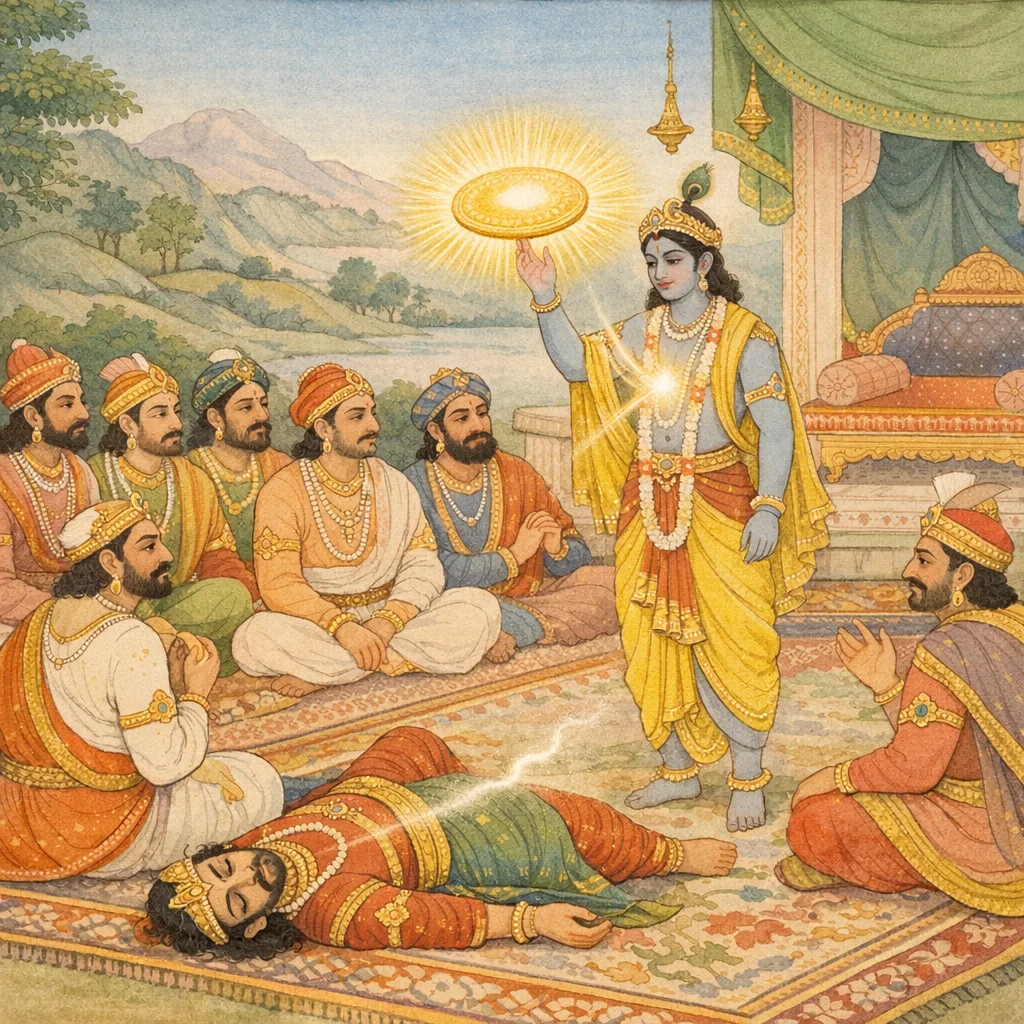
Adhyaya 45
Adhyāya 45 — Duryodhana’s Distress, Śakuni’s Counsel, and the Summons for Dyūta
Upa-parva: Dyūta-prastāva (Prelude to the Dice-Game) — Śakuni–Duryodhana Counsel
Vaiśaṃpāyana narrates the post-rājasūya aftermath in which Duryodhana’s visible deterioration is interpreted by Śakuni as the psychosocial effect of witnessing Yudhiṣṭhira’s prosperity. Dhṛtarāṣṭra questions the basis of his son’s grief, listing the privileges and comforts already granted to him. Duryodhana responds with an explicit theory of ambition: contentment and compassion impede attainment, and the sight of a rival’s flourishing produces continuous agitation. He details the scale of Yudhiṣṭhira’s resources—numbers of householders supported, quantities of daily provisions, luxury textiles, animals, and the influx of diverse tribute—culminating in a confession that this abundance prevents him from finding peace. Śakuni then proposes a method to ‘acquire’ that prosperity through a dice match, stressing Yudhiṣṭhira’s fondness for gaming and lack of expertise. Duryodhana requests Dhṛtarāṣṭra’s authorization; Dhṛtarāṣṭra initially invokes Vidura’s advisory role but yields under Duryodhana’s emotional pressure. Orders are issued to prepare a grand hall and gaming arrangements, and Vidura is dispatched to bring Yudhiṣṭhira from Khāṇḍavaprastha, while Vidura internally recognizes the approach of a destructive turning point.
Chapter Arc: राजसूय-यज्ञ की दिव्य सभा में, जहाँ युधिष्ठिर का यश शिखर पर है, वहीं शिशुपाल की कटु वाणी धर्म-सभा को रण-सभा बनाने को उद्यत होती है। → शिशुपाल श्रीकृष्ण को ललकारता है—‘जनार्दन! मेरे साथ युद्ध करो; आज मैं तुम्हें और पाण्डवों को मार दूँगा’—और यह भी कहता है कि पाण्डवों ने अन्य राजाओं को लाँघकर कृष्ण का पूजन कर अपमान किया है। सभा में राजाओं के मन में क्रोध, आश्चर्य और भय एक साथ उठते हैं; कृष्ण की मर्यादा-धारण और सहनशीलता की सीमा पर सबकी दृष्टि टिक जाती है। → शिशुपाल की निरन्तर निन्दा के बाद, क्रुद्ध होकर श्रीकृष्ण सुदर्शन चक्र से उसी क्षण उसका शिरच्छेद कर देते हैं; और सब देखते हैं कि शिशुपाल का तेज/प्राण-तत्त्व पुरुषोत्तम में विलीन हो जाता है—यह दृश्य राजाओं को विस्मित कर देता है। → सभा में ऋषि, ब्राह्मण और नरेश कृष्ण के पराक्रम और न्याय-स्थापन की प्रशंसा करते हैं; राजसूय-यज्ञ की समाप्ति होती है। तत्पश्चात् ब्राह्मणों, राजाओं का सत्कार-विदा होता है और श्रीकृष्ण द्वारका के लिए प्रस्थान करते हैं; पीछे दिव्य सभा में दुर्योधन और शकुनि ठहरते हैं। → कृष्ण के प्रस्थान के बाद दुर्योधन-शकुनि का सभा में ठहरना भविष्य के षड्यन्त्र का बीज बो देता है।
Shlokas
Verse 1
ऑपन--रा_ज छा लॉस: पजञज्चचत्वारिशो< ध्याय: श्रीकृष्णके द्वारा शिशुपालका वध, राजसूययज्ञकी समाप्ति तथा सभी ब्राह्मणों, राजाओं और श्रीकृष्णका स्वदेशगमन वैशम्पायन उवाच ततः श्रुत्वैव भीष्मस्य चेदिराडुरुविक्रम: । युयुत्सुर्वासुदेवेन वासुदेवमुवाच ह,वैशम्पायनजी कहते हैं--जनमेजय! भीष्मकी यह बात सुनते ही महापराक्रमी चेदिराज शिशुपाल भगवान् वासुदेवके साथ युद्धके लिये उत्सुक हो उनसे इस प्रकार बोला --
Vaiśampāyana said: Then, as soon as he heard Bhīṣma’s words, the Cedi king Śiśupāla—of mighty prowess—eager to fight with Vāsudeva, addressed Vāsudeva in this manner.
Verse 2
आह्वये त्वां रणं गच्छ मया सार्ध जनार्दन । यावदद्य निहन्मि त्वां सहितं सर्वपाण्डवै:,“'जनार्दन! मैं तुम्हें बुला रहा हूँ आओ, मेरे साथ युद्ध करो, जिससे आज मैं समस्त पाण्डवोंसहित तुम्हें मार डालूँ
Vaiśampāyana said: “Janārdana, I challenge you—come to battle with me. Before this day ends, I will strike you down, even with all the Pāṇḍavas at your side.”
Verse 3
सह त्वया हि मे वध्या: सर्वथा कृष्ण पाण्डवा: | नृपतीन् समतिक्रम्य यैरराजा त्वमर्चित:,“कृष्ण! तुम्हारे साथ ये पाण्डव भी सर्वथा मेरे वध्य हैं; क्योंकि इन्होंने सब राजाओंकी अवहेलना करके राजा न होनेपर भी तुम्हारी पूजा की
“With you, O Kṛṣṇa, the Pāṇḍavas too are, in every way, fit to be slain by me; for it was they who, disregarding the assembled kings, honored you with worship even though you held no kingship.”
Verse 4
ये त्वां दासमराजानं बाल्यादर्चन्ति दुर्मतिम् अनर्हमर्हवत् कृष्ण वध्यास्त इति मे मति:,“तुम कंसके दास थे तथा राजा भी नहीं हो, इसीलिये राजोचित पूजाके अनधिकारी हो। तो भी कृष्ण! जो लोग मूर्खतावश तुम-जैसे दुर्बुद्धिकी पूजनीय पुरुषकी भाँति पूजा करते हैं, वे अवश्य ही मेरे वध्य हैं, मैं तो ऐसा ही मानता हूँ”
Vaiśampāyana said: “Those who, from your boyhood, have treated you—once a servant and no king—as though you were worthy of royal honor, despite your being unfit for it, are in my judgment fit to be slain, O Kṛṣṇa. Such is my conviction.”
Verse 5
एवमुक्तस्तत: कृष्णो मृदुपूर्वमिदं वच: । उवाच पार्थिवान् सर्वान् स समक्ष च वीर्यवान्,शिशुपालके ऐसा कहनेपर अनन्तपराक्रमी भगवान् श्रीकृष्णने उसके सामने समस्त राजाओंसे मधुर वाणीमें कहा--
Thus addressed, Krishna—the mighty hero—then spoke, beginning with gentleness. In Shishupala’s very presence, he addressed all the assembled kings in a sweet and measured tone.
Verse 6
एष न: शत्रुसत्यन्तं पार्थिवा: सात्वतीसुत: । सात्वतानां नृशंसात्मा न हितोडनपकारिणाम्,'भूमिपालो! यह है तो यदुकुलकी कन्याका पुत्र, परंतु हमलोगोंसे अत्यन्त शत्रुता रखता है। यद्यपि यादवोंने इसका कभी कोई अपराध नहीं किया है, तो भी यह क्रूरात्मा उनके अहितमें ही लगा रहता है
Vaiśampāyana said: “O kings, this man—the son of a Sātvati woman—has become our bitter enemy. Though the Sātvatas (the Yādavas) have done him no wrong, his cruel nature drives him to work against their welfare.”
Verse 7
प्राग्ज्योतिषपुरं यातानस्मान् ज्ञात्वा नृशंसकृत् अदहद् द्वारकामेष स्वस्रीय: सन् नराधिपा:,“नरेश्वरो! हम प्राग्ज्योतिषपुरमें गये थे, यह बात जब इसे मालूम हुई, तब इस क्रूरकर्माने मेरे पिताजीका भानजा होकर भी द्वारकामें आग लगवा दी
Vaiśampāyana said: When that ruthless king learned that we had gone to Prāgjyotiṣapura, he—though related to my father as a sister’s son—caused Dvārakā to be set on fire.
Verse 8
क्रीडतो भोजराजस्य एष रैवतके गिरौ | हत्वा बद्ध्वा च तान् सर्वानुपायात् स्वपुरं पुरा,“एक बार भोजराज (उग्रसेन) रैवतक पर्वतपर क्रीड़ा कर रहे थे। उस समय यह वहीं जा पहुँचा और उनके सेवकोंको मारकर तथा शेष व्यक्तियोंको कैद करके उन सबको अपने नगरमें ले गया
Vaiśampāyana said: While the Bhoja king was sporting on Mount Raivataka, this man came there; killing some of his attendants and binding the rest, he carried them all away to his own city.
Verse 9
अश्रमेधे हयं मेध्यमुत्सूष्टं रक्षिभि्वृतम् । पितुर्मे यज्ञविघ्नार्थमहरत् पापनिश्चय:,“मेरे पिताजी अश्वमेधयज्ञकी दीक्षा ले चुके थे। उसमें रक्षकोंसे घिरा हुआ पवित्र अश्व छोड़ा गया था। इस पापपूर्ण विचारवाले दुष्टात्माने पिताजीके यज्ञमें विघ्न डालनेके लिये उस अश्वको भी चुरा लिया था
Vaiśampāyana said: “When my father had undertaken the Aśvamedha sacrifice, a consecrated horse had been released, surrounded by guards. Yet a wicked man, resolved upon sin, carried it off in order to obstruct my father’s sacrifice.”
Verse 10
सौवीरान् प्रति यातां च बभ्रोरेष तपस्विन: । भार्यामभ्यहरन्मोहादकामां तामितो गताम्,“इतना ही नहीं, इसने तपस्वी बभ्रुकी पत्नीका, जो यहाँसे द्वारका जाते समय सौवीरदेश पहुँची थी और इसके प्रति जिसके मनमें तनिक भी अनुराग नहीं था, मोहवश अपहरण कर लिया
Vaiśampāyana said: “Moreover, this man, deluded by infatuation, abducted the wife of the ascetic Babhru—though she felt no desire for him at all—when she was traveling from here toward Dvārakā and had reached the land of Sauvīra.”
Verse 11
एष मायाप्रतिच्छन्न: करूषार्थ तपस्विनीम् । जहार भद्रां वैशालीं मातुलस्य नृशंसकृत्,“इस क्रूरकर्माने मायासे अपने असली रूपको छिपाकर करूषराजकी प्राप्तिके लिये तपस्या करनेवाली अपने मामा विशालानरेशकी कन्या भद्राका (करूषराजके ही वेषमें उपस्थित हो उसे धोखा देकर) अपहरण कर लिया
Vaiśampāyana said: Disguising his true form under deception, this man—intent on securing the king of Karūṣa’s advantage—abducted Bhadrā of Vaiśālī, a woman devoted to austerities, the daughter of his maternal uncle. By this cruel deed he violated kinship and righteousness, using fraud to seize her.
Verse 12
पितृष्वसु: कृते दुःखं सुमहन्मर्षयाम्यहम् । दिष्ट्या हीदं सर्वराज्ञां संनिधावद्य वर्तते,“मैं अपनी बुआके संतोषके लिये ही इसके बड़े दुःखद अपराधोंको सहन कर रहा हूँ; सौभाग्यकी बात है कि आज यह समस्त राजाओंके समीप मौजूद है
Vaiśampāyana said: “For the sake of my paternal aunt, I endure this very great pain and the grievous offense. It is indeed fortunate that today this matter stands in the presence of all the kings.”
Verse 13
पश्यन्ति हि भवन्तोउद्य मय्यतीव व्यतिक्रमम् । कृतानि तु परोक्ष मे यानि तानि निबोधत,“आप सब लोग देख ही रहे हैं कि इस समय यह मेरे प्रति कैसा अभद्र बर्ताव कर रहा है। इसने परोक्षमें मेरे प्रति जो अपराध किये हैं, उन्हें भी आप अच्छी तरह जान लें
Vaiśampāyana said: “You all can plainly see how, even now, he is behaving with gross impropriety toward me. Now hear as well—understand clearly—the offenses he has committed against me in secret, out of my sight.”
Verse 14
इमं॑ त्वस्य न शक्ष्यामि क्षन्तुमद्य व्यतिक्रमम् । अवलेपाद् वधाहईस्य समग्रे राजमण्डले,“परंतु आज इसने अहंकारवश समस्त राजाओंके सामने मेरे साथ जो दुर्व्यवहार किया है, उसे मैं कभी क्षमा न कर सकूँगा
Vaiśampāyana said: “Today I cannot forgive this transgression of his. Out of sheer arrogance, in the full assembly of kings, he has behaved toward me with such insolence that he deserves death.”
Verse 15
रुक्मिण्यामस्य मूढस्य प्रार्थना55सीन्मुमूर्षत: । नचतां प्राप्तवान् मूढ:ः शूद्रो वेदश्रुतीमिव,“अब यह मरना ही चाहता है। इस मूर्खने पहले रुक्मिणीके लिये उसके बन्धु- बान्धवोंसे याचना की थी, परंतु जैसे शूद्र वेदकी ऋचाओंको श्रवण नहीं कर सकता, उसी प्रकार इस अज्ञानीको वह प्राप्त न हो सकी'
Vaiśampāyana said: “As this deluded man was longing for death, he had earlier made petitions concerning Rukmiṇī to her kinsmen. Yet the fool did not obtain her—just as a Śūdra is (traditionally) barred from hearing the Vedic recitations.”
Verse 16
वैशम्पायन उवाच एवमादि तत: सर्वे सहितास्ते नराधिपा: । वासुदेववच: श्रुत्वा चेदिराज॑ व्यगर्हयन्,वैशम्पायनजी कहते हैं--जनमेजय! भगवान् श्रीकृष्णकी ये सब बातें सुनकर उन समस्त राजाओंने एक स्वरसे चेदिराज शिशुपालको धिक्कारा और उसकी निन््दा की
Vaiśampāyana said: After these words and the like were spoken, all those kings, assembled together, having heard Vāsudeva’s statement, censured the king of Cedi, Śiśupāla.
Verse 17
तस्य तद् वचन श्रुत्वा शिशुपाल: प्रतापवान् | जहास स्वनवद्धासं वाक््यं चेदमुवाच ह,श्रीकृष्णका उपर्युक्त वचन सुनकर प्रतापी शिशुपाल खिलखिलाकर हँसने लगा और इस प्रकार बोला--
Hearing those words, the mighty Śiśupāla burst into loud, scornful laughter, and then spoke as follows—openly showing contempt for the counsel just given.
Verse 18
मत्पूर्वा रुक्मिणीं कृष्ण संसत्सु परिकीर्तयन् | विशेषत: पार्थिवेषु व्रीडां न कुरुषे कथम्,“कृष्ण! तुम इस भरी सभामें, विशेषतः सभी राजाओंके सामने रुक्मिणीको मेरी पहलेकी मनोनीत पत्नी बताते हुए लज्जाका अनुभव कैसे नहीं करते?
Vaiśampāyana said: “O Kṛṣṇa, as you proclaim in this full assembly—especially before the gathered kings—that Rukmiṇī was first chosen by me, how is it that you feel no shame?”
Verse 19
मन्यमानो हि कः सत्सु पुरुष: परिकीर्तयेत् । अन्यपूर्वा स्त्रियं जातु त्ववन्यो मधुसूदन,“मधुसूदन! तुम्हारे सिवा दूसरा कौन ऐसा पुरुष होगा, जो अपनी स्त्रीको पहले दूसरेकी वाग्दत्ता पत्नी स्वीकार करते हुए सत्पुरुषोंकी सभामें इसका वर्णन करेगा?
Vaiśampāyana said: “Indeed, what man of honor, in the presence of the virtuous, would publicly proclaim such a thing—that he has accepted as his wife a woman who had previously been pledged to another? O Madhusūdana, who else but you could do this?”
Verse 20
क्षम वा यदि ते श्रद्धा मा वा कृष्ण मम क्षम | क्रुद्धाद् वापि प्रसन्नाद् वा किं मे त्वत्तो भविष्यति,“कृष्ण! यदि अपनी बुआकी बातोंपर तुम्हें श्रद्धा हो तो मेरे अपराध क्षमा करो या न भी करो, तुम्हारे कुपित होने या प्रसन्न होनेसे मेरा क्या बनने-बिगड़ने-वाला है?”
“O Kṛṣṇa! If you put faith in your aunt’s words, then forgive my offense—or do not; whether you are angered or pleased, what gain or loss can that bring to me from you?”
Verse 21
तथा ब्रुवत एवास्य भगवान् मधुसूदन: । मनसाचिन्तयच्चक्रं दैत्यवर्गनिष्दनम्,शिशुपाल इस तरहकी बातें कर ही रहा था कि भगवान् मधुसूदनने मन-ही-मन दैत्यवर्गविनाशक सुदर्शन चक्रका स्मरण किया
Vaiśampāyana said: While he was still speaking in that manner, the Blessed Lord Madhusūdana, reflecting inwardly, summoned to mind the Sudarśana discus—the destroyer of the hosts of demons.
Verse 22
एतस्मिन्नेव काले तु चक्रे हस्तगते सति । उवाच भगवानुच्चैर्वाक्यं वाक्यविशारद:,चिन्तन करते ही तत्काल चक्र हाथमें आ गया। तब बोलनेमें कुशल भगवान् श्रीकृष्णने उच्च स्वरसे यह वचन कहा--
At that very moment, when the discus had come into his hand, the Blessed Lord—skilled in apt and discerning speech—spoke aloud.
Verse 23
शृण्वन्तु मे महीपाला येनैतत् क्षमितं मया । अपराधशकतं क्षाम्यं मातुरस्यैव याचने,“यहाँ बैठे हुए सब महीपाल यह सुन लें कि मैंने क्यों अबतक इसके अपराध क्षमा किये हैं? इसीकी माताके याचना करनेपर मैंने उसे यह प्रार्थित वर दिया था कि शिशुपालके सौ अपराध क्षमा कर दूँगा। राजाओ! वे सब अपराध अब पूरे हो गये हैं; अतः आप सभी भूमिपतियोंके देखते-देखते मैं अभी इसका वध किये देता हूँ”
Vaiśampāyana said: “Let all the kings listen to me and understand why I have tolerated and forgiven this man until now. At the request of his own mother, I had granted the boon that I would pardon Śiśupāla’s hundred offenses. O rulers, those offenses have now been completed; therefore, in full view of you all, I shall at once put him to death.”
Verse 24
दत्तं मया याचितं च तानि पूर्णानि पार्थिवा: । अधुना वधयिष्यामि पश्यतां वो महीक्षिताम्,“यहाँ बैठे हुए सब महीपाल यह सुन लें कि मैंने क्यों अबतक इसके अपराध क्षमा किये हैं? इसीकी माताके याचना करनेपर मैंने उसे यह प्रार्थित वर दिया था कि शिशुपालके सौ अपराध क्षमा कर दूँगा। राजाओ! वे सब अपराध अब पूरे हो गये हैं; अतः आप सभी भूमिपतियोंके देखते-देखते मैं अभी इसका वध किये देता हूँ”
Vaiśampāyana said: “O kings, the boon I granted at another’s request has now been fully exhausted. Now, in the sight of you rulers of the earth, I shall put him to death.”
Verse 25
एवमुक्त्वा यदुश्रेष्ठेक्षेदिराजस्य तत्क्षणात् । व्यपाहरच्छिर: क्रुद्धश्षक्रेणामित्रकर्षण:,ऐसा कहकर कुपित हुए शत्रुहन्ता यदुकुलतिलक भगवान् श्रीकृष्णने चक्रसे उसी क्षण चेदिराज शिशुपालका सिर उड़ा दिया
Having spoken thus, the foremost of the Yadus—Krishna, the subduer of foes—at that very moment, in wrath, struck off the head of the king of Cedi with his discus.
Verse 26
स पपात महाबाहुर्वजाहत इवाचल: । ततश्वेदिपते्देहात् तेजो5ग्रयं ददृशुर्न॒पा:,महाबाहु शिशुपाल वज्रके मारे हुए पर्वत-शिखरकी भाँति धराशायी हो गया। महाराज! तदनन्तर सभी नरेशोंने देखा; चेदिराजके शरीरसे एक उत्कृष्ट तेज निकलकर ऊपर उठ रहा है; मानो आकाशसे सूर्य उदित हुआ हो। नरेश्वर! उस तेजने विश्ववन्दित कमलदललोचन श्रीकृष्णको नमस्कार किया और उसी समय उनके भीतर प्रविष्ट हो गया
Vaiśampāyana said: The mighty-armed Śiśupāla fell to the ground like a mountain peak struck by Indra’s thunderbolt. Then the assembled kings beheld a supreme radiance rise up from the body of the lord of Cedi. That radiance bowed in reverence to lotus-eyed Śrī Kṛṣṇa—praised by the world—and at once entered into Him.
Verse 27
उत्पतन्तं महाराज गगनादिव भास्करम् | ततः कमलपत्राक्ष॑ं कृष्ण लोकनमस्कृतम् । ववन्दे तत् तदा तेजो विवेश च नराधिप,महाबाहु शिशुपाल वज्रके मारे हुए पर्वत-शिखरकी भाँति धराशायी हो गया। महाराज! तदनन्तर सभी नरेशोंने देखा; चेदिराजके शरीरसे एक उत्कृष्ट तेज निकलकर ऊपर उठ रहा है; मानो आकाशसे सूर्य उदित हुआ हो। नरेश्वर! उस तेजने विश्ववन्दित कमलदललोचन श्रीकृष्णको नमस्कार किया और उसी समय उनके भीतर प्रविष्ट हो गया
Vaiśampāyana said: “O great king, a radiant splendor rose upward, like the sun appearing in the sky. Then that very brilliance bowed in reverence to Kṛṣṇa—lotus-eyed and worshipped by the world—and at once entered into him. The scene proclaims that even when a hostile ruler falls, the highest divine essence is not destroyed; it returns to its true source, affirming Kṛṣṇa’s supreme status and the moral order that pride and aggression culminate in downfall while the divine remains sovereign.”
Verse 28
तदद्धुतममन्यन्त दृष्ट्वा सर्वे महीक्षित: । यद् विवेश महाबाहुं तत् तेज: पुरुषोत्तमम्,यह देखकर सभी राजाओंको बड़ा आश्चर्य हुआ, क्योंकि उसका तेज महाबाहु पुरुषोत्तममें प्रविष्ट हो गया
Vaiśampāyana said: Seeing this, all the kings were struck with wonder—because that radiant splendor entered the mighty-armed Puruṣottama. The scene signals a divinely sanctioned transfer of power and presence, prompting awe in the assembled rulers and underscoring that true sovereignty is grounded in a higher, sacred potency rather than mere human force.
Verse 29
अनश्रे प्रववर्ष द्यौ: पपात ज्वलिताशनि: । कृष्णेन निहते चैद्ये चचाल च वसुंधरा,श्रीकृष्णके द्वारा शिशुपालके मारे जानेपर सारी पृथ्वी हिलने लगी, बिना बादलोंके ही आकाशसे वर्षा होने लगी और प्रज्वलित बिजली टूट-टूटकर गिरने लगी
Vaiśampāyana said: When Śiśupāla of Cedi was slain by Kṛṣṇa, ominous portents arose at once: the sky poured rain without clouds, blazing thunderbolts fell, and the very earth trembled. The narrative marks the moral gravity of the act—divine retribution executed by Kṛṣṇa against persistent adharma—signaled by cosmic disturbance rather than ordinary human reaction.
Verse 30
ततः केचिन्महीपाला नाब्रुवंस्तत्र किंचन । अतीतवाक्पथे काले प्रेक्षमाणा जनार्दनम्,वह समय वाणीकी पहुँचके परे था। उसका वर्णन करना कठिन था। उस समय कोई भूपाल वहाँ इस विषयमें कुछ भी न बोल सके--मौन रह गये। वे बार-बार केवल श्रीकृष्णके मुखकी ओर देखते रहे
Then some of the kings present spoke nothing at all. The moment had passed beyond the reach of speech; words could not adequately capture it. Silent and restrained, they repeatedly fixed their gaze upon Janārdana (Śrī Kṛṣṇa), as if seeking in his face the only fitting response to what had occurred.
Verse 31
हस्तैर्हस्ताग्रमपरे प्रत्यपिंषन्नमर्षिता: । अपरे दशनैरोष्ठानदशन् क्रोधमूर्च्छिता:,कुछ अन्य नरेश अत्यन्त अमर्षमें भरकर हाथोंसे हाथ मसलने लगे तथा दूसरे लोग क्रोधसे मूर्च्छित होकर दाँतोंसे ओठ चबाने लगे
Vaiśampāyana said: Some kings, seething with resentment, rubbed their hands together in agitation; others, overcome and almost faint with anger, bit their lips with their teeth—outward signs of the inner storm of envy and wounded pride that was gathering force in the royal assembly.
Verse 32
रहश्न केचिद् वार्ष्णेयं प्रशशंसुर्नराधिपा: । केचिदेव सुसंरब्धा मध्यस्थास्त्वपरेडभवन्,कुछ राजा एकान्तमें भगवान् श्रीकृष्णकी प्रशंसा करने लगे। कुछ ही भूपाल अत्यन्त क्रोधके वशीभूत हो रहे थे तथा कुछ लोग तटस्थ थे
Vaiśampāyana said: Some kings, speaking in private, began to praise Vārṣṇeya (Śrī Kṛṣṇa). Others, however, became intensely agitated and anger-driven, while some remained neutral and noncommittal. The scene revealed a court divided—between admiration for Kṛṣṇa’s stature and policy, resentment born of pride and rivalry, and cautious detachment amid rising tension.
Verse 33
शिशुपालके वधके लिये भगवान्का हाथमें चक्र ग्रहण करना दुर्योधनका स्थलके भ्रमसे जलमें गिरना प्रह्श: केशवं जग्मु: संस्तुवन्तो महर्षय: । ब्राह्मणाश्न महात्मान: पार्थिवाश्न महाबला:
Rejoicing, the great seers went to Keśava, praising him; and so too did the Brahmins of lofty spirit and the mighty kings. The scene underscores a moral consensus: when arrogance and violence threaten the order of the assembly, the righteous—across spiritual and royal ranks—affirm the protector of dharma through reverent praise and allegiance.
Verse 34
पाण्डव्स्त्वब्रवीद् भ्रातून् सत्कारेण महीपतिम्,पाण्डुनन्दन युधिष्ठिरने अपने भाइयोंसे कहा--“दमघोष-पुत्र वीर राजा शिशुपालका अन्त्येष्टि संस्कार बड़े सत्कारके साथ करो, इसमें देर न लगाओ।” पाण्डवोंने भाईकी उस आज्ञाका यथार्थरूपसे पालन किया
Vaiśampāyana said: Then Yudhiṣṭhira, the son of Pāṇḍu, addressed his brothers with due courtesy, instructing them: “Perform without delay, and with full honor, the funeral rites of the heroic king Śiśupāla, son of Damaghoṣa.” The Pāṇḍavas carried out their brother’s command exactly as given—upholding the ethic that even a fallen adversary is owed proper rites and royal respect.
Verse 35
दमघोषात्मजं वीरं संस्कारयत मा चिरम् | तथा च कृतवन्तस्ते भ्रातुर्व शासनं तदा,पाण्डुनन्दन युधिष्ठिरने अपने भाइयोंसे कहा--“दमघोष-पुत्र वीर राजा शिशुपालका अन्त्येष्टि संस्कार बड़े सत्कारके साथ करो, इसमें देर न लगाओ।” पाण्डवोंने भाईकी उस आज्ञाका यथार्थरूपसे पालन किया
Vaiśampāyana said: “Perform without delay the final rites for the heroic Śiśupāla, son of Damaghoṣa, and do so with due honor.” Then the Pāṇḍavas carried out their brother’s command exactly. The episode underscores that even toward a fallen adversary, dharma requires timely and respectful funerary rites, and that righteous leadership is shown through compassion, propriety, and obedience to rightful instruction.
Verse 36
चेदीनामाधिपत्ये च पुत्रमस्य महीपते: । अभ्यषिज्चत् तदा पार्थ: सह तैर्वसुधाधिपै:,उस समय कुन्तीनन्दन राजा युधिष्छिरने वहाँ आये हुए सभी भूमिपालोंके साथ चेदिदेशके राजसिंहासनपर शिशुपालके पुत्रको अभिषिक्त कर दिया
Vaiśampāyana said: Then Pārtha (Yudhiṣṭhira), together with the assembled rulers of the earth, consecrated the son of that king (Śiśupāla) to the sovereignty of the Cedi realm—an act that restores political order after the fall of a ruler and affirms the dharmic duty of installing a rightful successor rather than leaving a kingdom leaderless.
Verse 37
ततः स कुरुराजस्य क्रतुः सर्वसमृद्धिमान् । यूनां प्रीतिकरो राजन् स बभौ विपुलौजस:,तदनन्तर महातेजस्वी कुरुराज युधिष्ठिरका वह सम्पूर्ण समृद्धियोंसे भरा-पूरा राजसूययज्ञ तरुण राजाओंकी प्रसन्नताको बढ़ाता हुआ अनुपम शोभा पाने लगा
Vaiśampāyana said: Thereafter, that sacrifice of the Kuru king—abounding in every kind of prosperity—grew radiant with great splendour. It delighted the young rulers, and, O King, it shone forth with exceptional majesty, presenting the Rajasuya as an ideal of royal order, generosity, and public harmony.
Verse 38
शान्तविध्न: सुखारम्भ: प्रभूतधनधान्यवान् । अन्नवान् बहुभक्ष्यश्व केशवेन सुरक्षित:,उस यज्ञका विघ्न शान्त हो गया था; अतः उसका सुखपूर्वक आरम्भ हुआ। उसमें अपरिमित धन-धान्यका संग्रह एवं सदुपयोग किया गया था। भगवान् श्रीकृष्णसे सुरक्षित होनेके कारण उस यज्ञमें कभी अन्नकी कमी नहीं होने पायी। उसमें सदा पर्याप्तमात्रामें भक्ष्य-भोज्य आदिकी सामग्री प्रस्तुत रहती थी
Vaiśampāyana said: The sacrifice became free of obstacles and thus commenced smoothly. It was endowed with abundant wealth and grain, and—being protected by Keśava—there was never any shortage of food. At all times, ample provisions of eatables and delicacies were kept ready there.
Verse 39
(ददृशुस्तं नृपतयो यज्ञस्य विधिमुत्तमम् । उपेन्द्रबुद्धया विहितं सहदेवेन भारत ।। भरतनन्दन! राजाओंने सहदेवके द्वारा विष्णु-बुद्धिसे भगवान् श्रीकृष्णकी प्रसन्नताके लिये किये जानेवाले उस यज्ञका उत्तम विधि-विधान देखा। ददृशुस्तोरणान्यत्र हेमतालमयानि च । दीप्तभास्करतुल्यानि प्रदीप्तानीव तेजसा । स यज्ञस्तोरणैस्तैश्ष ग्रहैद्यौरिव सम्बभौ ।। उस यज्ञमण्डपमें सुवर्णमय तालके बने हुए फाटक दिखायी देते थे, जो अपनी प्रभासे तेजस्वी सूर्यके समान देदीप्यमान हो रहे थे। उन तेजस्वी द्वारोंसे वह विशाल यज्ञमण्डप ग्रहोंसे आकाशकी भाँति प्रकाशित हो रहा था। शय्यासनविहारां श्व सुबहून् वित्तसम्भूतान् । घटान् पात्री: कटाहानि कलशानि समन्ततः: । न ते किज्चिदसौवर्णमपश्यंस्तत्र पार्थिवा: ।। वहाँ शय्या, आसन और क्रीडाभवनोंकी संख्या बहुत थी। उनके निर्माणमें प्रचुर धन लगा था। चारों ओर घड़े, भाँति भाँतिके पात्र, कड़ाहे और कलश आदि सुवर्णनिर्मित सामान दृष्टिगोचर हो रहे थे। वहाँ राजाओंने कोई ऐसी वस्तु नहीं देखी, जो सोनेकी बनी हुई नहो। ओदनानां विकाराणि स्वादूनि विविधानि च । सुबहूनि च भक्ष्याणि पेयानि मधुराणि च । ददुर्द्धिजानां सततं राजप्रेष्या महाध्वरे ।। उस महान् यज्ञमें राजसेवकगण ब्राह्मणोंके आगे सदा नाना प्रकारके स्वादिष्ट भात तथा चावलकी बनी हुई बहुत-सी दूसरी भोज्य वस्तुएँ परोसते रहते थे। वे उनके लिये मधुर पेय पदार्थ भी अर्पण करते थे। पूर्णे शतसहस्रे तु विप्राणां भुड्जतां तदा । स्थापिता तत्र संज्ञाभूच्छड्खो 5 ध्मायत नित्यश: ।। भोजन करनेवाले ब्राह्मणोंकी संख्या जब एक लाख पूरी हो जाती थी, तब वहाँ प्रतिदिन शंख बजाया जाता था। मुहुर्मुहु: प्रणादस्तु तस्य शड्खस्य भारत । उत्तमं शड्खशब्दं तं श्रुव्वा विस्मपमागता: ।। जनमेजय! दिनमें कई बार इस तरहकी शंख-ध्वनि होती थी। वह उत्तम शंखनाद सुनकर लोगोंको बड़ा विस्मय होता था। एवं प्रवृत्ते यज्ञे तु तुष्टपुष्टजनायुते । अन्नस्य बहवो राजन्नुत्सेधा: पर्वतोपमा: । दधिकुल्याश्न ददृशु: सर्पिषां च हृदाउ्जना: ।। इस प्रकार सहसों हृष्ट-पुष्ट मनुष्योंसे भरे हुए उस यज्ञका कार्य चलने लगा। राजन! उसमें अन्नके बहुत-से ऊँचे ढेर लगाये गये थे, जो पर्वतोंके समान जान पड़ते थे। लोगोंने देखा, वहाँ दहीकी नहरें बह रही थीं तथा घीके कितने ही कुण्ड भरे हुए थे। जम्बूद्वीपो हि सकलो नानाजनपदायुत: । राजन्नदृश्यतैकस्थो राज्ञस्तस्मिन् महाक्रतौ ।। राजन! महाराज युधिष्ठिरके उस महान् यज्ञमें नाना जनपदोंसे युक्त सारा जम्बूद्वीप ही एकत्र हुआ-सा दिखायी देता था। राजानः स्रग्विणस्तत्र सुमृष्टमणिकुण्डला: । विविधान्यन्नपानानि लेह्यानि विविधानि च । तेषां नृपोपभोग्यानि ब्राह्माणे भ्यो ददुः सम ते ।। वहाँ विशुद्ध मणिमय कुण्डल तथा हार धारण किये नरेश ब्राह्मणोंको राजाओंके उपभोगमें आनेयोग्य नाना प्रकारके अन्न-पान और भाँति-भाँतिकी चटनी परोसते थे। एतानि सततं भुक््त्वा तस्मिन् यज्ञे द्विजातय: । परां प्रीतिं ययु: सर्वे मोदमानास्तदा भृशम् ।। उस यज्ञमें निरन्तर उपर्युक्त पदार्थ भोजन करके सब ब्राह्मण आनन्दमग्न हो बड़ी तृप्ति और प्रसन्नताका अनुभव करते थे। एवं समुदितं सर्व बहुगोधनधान्यवत् | यज्ञवार्ट नृपा दृष्टवा विस्मयं परमं ययु: ।। इस प्रकार बहुत-सी गायों तथा धन-धान्यसे सम्पन्न उस समृद्धिशाली यज्ञमण्डपको देखकर सब राजाओंको बड़ा आश्चर्य होता था। ऋत्विजश्न यथाशास्त्रं राजसूयं महाक्रतुम् । पाण्डवस्य यथाकालं जुहुवु: सर्ववाजका: ।। ऋत्विजूलोग शास्त्रीय विधिके अनुसार राजा युधिष्ठिरके उस राजसूय नामक महायज्ञका अनुष्ठान करते थे और समस्त याजक ठीक समयपर अग्निमें आहुतियाँ देते थे। व्यासधौम्यादय: सर्वे विधिवत् षोडशर्त्विज: । स्वस्वकर्माणि चक्कुस्ते पाण्डवस्य महाक्रतौ ।। व्यास और धौम्य आदि जो सोलह ऋत्विज् थे, वे युधिष्ठिरके उस महायज्ञमें विधिपूर्वक अपने-अपने निश्चित कार्योंका सम्पादन करते थे। नाषडड्डविदत्रासीत् सदस्यो नाबहुश्रुतः । नाव्रतो नानुपाध्यायो नपापो नाक्षमो द्विज: ।। उस यज्ञमण्डपमें कोई भी सदस्य ऐसा नहीं था, जो वेदके छहों अंगोंका ज्ञाता, बहुश्रुत, व्रतशील, अध्यापक, पापरहित, क्षमाशील एवं सामर्थ्यशील न हो। न तत्र कृपण: कश्िद् दरिद्रो न बभूव ह । क्षुधितो दुःखितो वापि प्राकृतो वापि मानुष: ।। उस यज्ञमें कोई भी मनुष्य दीन, दरिद्र, दुःखी, भूखा-प्यासा अथवा मूढ़ नहीं था। भोजन भोजनार्थिभ्यो दापयामास सर्वदा | सहदेवो महातेजा: सततं राजशासनात् ।। महातेजस्वी सहदेव महाराज युधिष्ठिरकी आज्ञासे भोजनार्थियोंको सदा भोजन दिलाया करते थे। सस्तरे कुशलाश्चापि सर्वकर्माणि याजका: । दिवसे दिवसे चक्रुर्यथाशास्त्रार्थचक्षुष: ।। शास्त्रोक्त अर्थपर दृष्टि रखनेवाले यज्ञकुशल याजक प्रतिदिन सब कार्योंको विधिवत् सम्पन्न करते थे। ब्राह्मणा वेदशास्त्रज्ञा: कथाश्षक्रुश्न सर्वदा । रेमिरे च कथान्ते तु सर्वे तस्मिन् महाक्रतौ ।। वेद-शास्त्रोंके ज्ञाता ब्राह्मण वहाँ सदा कथा-प्रवचन किया करते थे। उस महायज्ञमें सब लोग कथाके अन्तमें बड़े सुखका अनुभव करते थे। देवैरन्यैश्न यक्षेश्ष उरगैर्दिव्यमानुषै: । विद्याधरगणै: कीर्ण: पाण्डवस्य महात्मन: ।। स राजसूय: शुशुभे धर्मराजस्य धीमत: । देवता, असुर, यक्ष, नाग, दिव्य मानव तथा विद्याधरगणोंसे भरा हुआ बुद्धिमान् पाण्डुनन्दन महात्मा धर्मराजका वह राजसूययज्ञ बड़ी शोभा पाता था। गन्धर्वगणसंकीर्ण: शोभितो<प्सरसां गणै: ।। देवैर्मुनिगणैर्यक्षै्देवलोक इवापर: । स किम्पुरुषगीतैश्न किन्नरैरुपशोभित: ।। वह यज्ञमण्डप गन्धर्वों, अप्सरा-समूहों, देवताओं, मुनिगणों तथा यक्षोंसे सुशोभित हो दूसरे देवलोकके समान जान पड़ता था। किम्पुरुषोंके गीत तथा किन्नरगण उस स्थानकी शोभा बढ़ा रहे थे। नारदश्न जगौ तत्र तुम्बुरुश्न महाद्युति: । विश्वावसुश्रित्रसेनस्तथान्ये गीतकोविदा: । रमयन्ति सम तान् सर्वान् यज्ञकर्मान्तरेष्वथ ।। नारद, महातेजस्वी तुम्बुरु, विश्वावसु, चित्रसेन तथा दूसरे गीतकुशल गन्धर्व वहाँ गीत गाकर यज्ञकार्योंके बीच-बीचमें अवकाश मिलनेपर सब लोगोंका मनोरंजन करते थे। इतिहासपुराणानि आख्यानानि च सर्वश: । ऊचुर्व शब्दशास्त्रज्ञा नित्यं कर्मान्तरेष्वथ ।। यज्ञसम्बन्धी कर्मोंके बीचमें अवसर मिलनेपर व्याकरणशास्त्रके ज्ञाता विद्वान् पुरुष इतिहास, पुराण तथा सब प्रकारके उपाख्यान सुनाया करते थे। भेयश्व मुरजाश्वैव मड्डुका गोमुखाश्न ये । शृज्भवंशाम्बुजाश्वैव श्रूयन्ते सम सहस्रश: ।। वहाँ सहस्रों भेरी, मृदंग, मड्डुक, गोमुख, शृंग, वंशी और शंखोंके शब्द सुनायी पड़ते थे। लोके<स्मिन् सर्वविप्राश्च वैश्या: शूद्राश्न॒ सर्वश: । सर्वे म्लेच्छा: सर्ववर्णा: सादिमध्यान्तजास्तथा ।। नानादेशसमुद्धूतीननाजातिभिरागतै: । पर्याप्त इव लोको<यं युधिष्ठिरनिवेशने ।। इस जगत्में रहनेवाले समस्त ब्राह्मण, (क्षत्रिय,) वैश्य, शूद्र, सब प्रकारके म्लेच्छ तथा अग्रज, मध्यज और अन्त्यज आदि सभी वर्णोंके लोग उस यज्ञमें उपस्थित हुए थे। अनेक देशोंमें उत्पन्न विभिन्न जातिके लोगोंके शुभागमनसे युधिष्ठिरके उस राजभवनमें ऐसा जान पड़ता था कि यह समस्त लोक वहाँ उपस्थित हो गया है। भीष्मद्रोणादय: सर्वे कुरव: ससुयोधना: । वृष्णयश्व समग्राश्न पज्चालाश्चापि सर्वशः । यथाहँं सर्वकर्माणि चक्रुर्दासा इव क्रतौ ।। उस राजसूययज्ञमें भीष्म, ट्रोण और दुर्योधन आदि समस्त कौरव, सारे वृष्णिवंशी तथा सम्पूर्ण पांचाल भी सेवकोंकी भाँति यथायोग्य सभी कार्य अपने हाथों करते थे। एवं प्रवृत्तो यज्ञ: स धर्मराजस्य धीमत: । शुशुभे च महाबाहो सोमस्येव क्रतुर्यथा ।। महाबाहु जनमेजय! इस प्रकार बुद्धिमान् युधिष्ठिरका वह यज्ञ चन्द्रमाके राजसूययज्ञकी भाँति शोभा पाता था। वस्त्राणि कम्बलांश्रैव प्रावारांश्नैव सर्वदा | निष्कहेमजभाण्डानि भूषणानि च सर्वश: । प्रददौ तत्र सततं धर्मराजो युधिष्िर: ।। धर्मराज युधिष्ठिर उस यज्ञमें हर समय वस्त्र, कम्बल, चादर, स्वर्णपदक, सोनेके बर्तन और सब प्रकारके आभूषणोंका दान करते रहते थे। यानि तत्र महीपेभ्यो लब्धं वा धनमुत्तमम् । तानि रत्नानि सर्वाणि विप्राणां प्रददौ तदा ।। वहाँ राजाओंसे जो-जो रत्न अथवा उत्तम धन भेंटके रूपमें प्राप्त हुए, उन सबको युधिष्ठिरने ब्राह्मणोंकी सेवामें समर्पित कर दिया। कोटीसहसरं प्रददौ ब्राह्मणानां महात्मनाम् | उन्होंने महात्मा ब्राह्मणोंको दक्षिणाके रूपमें सहस्नर कोटि स्वर्णमुद्राएँ प्रदान कीं। न करिष्यति त॑ लोके कक्षिदन्यो महीपति: ।। याजका: सर्वकामैश्न सततं ततृपुर्धने: । उन्होंने संसारमें वह कार्य किया जिसे दूसरा कोई राजा नहीं कर सकेगा। यज्ञ करानेवाले ब्राह्मण सम्पूर्ण मनोवांछित वस्तुएँ और प्रचुर धन पाकर सदाके लिये तृप्त हो गये। व्यासं धौम्यं च प्रयतो नारदं च महामतिम् ।। सुमन्तुं जैमिनिं पैलं वैशम्पायनमेव च । याज्ञवल्क्यं कठं चैव कलापं च महौजसम् । सर्वाश्च विप्रप्रवरान् पूजयामास सत्कृतान् ।। फिर राजा युधिष्ठिरने व्यास, धौम्य, महामति नारद, सुमन्तु, जैमिनि, पैल, वैशम्पायन, याज्ञवल्क्य, कठ तथा महातेजस्वी कलाप--इन सब श्रेष्ठ ब्राह्मणोंका पूर्ण मनोयोगके साथ सत्कार एवं पूजन किया। युधिछिर उवाच युष्मत्प्रभावात् प्राप्तोड्यं राजसूयो महाक्रतुः । जनार्दनप्रभावाच्च सम्पूर्णो मे मनोरथ: ।। युधिष्ठिर उनसे बोले--महर्षियो! आपलोगोंके प्रभावसे यह राजसूय महायज्ञ सांगोपांग सम्पन्न हुआ। भगवान् श्रीकृष्णके प्रतापसे मेरा सारा मनोरथ पूर्ण हो गया। वैशम्पायन उवाच अथ यज्ञ समाप्यान्ते पूजयामास माधवम् | बलदेवं च देवेशं भीष्माद्यांश्व॒ कुरूत्तमान् ।।) वैशम्पायनजी कहते हैं--जनमेजय! इस प्रकार यज्ञसमाप्तिके समय राजा युधिष्छिरने अन्तमें लक्ष्मीपति भगवान् श्रीकृष्ण, देवेश्वर बलदेव तथा कुरुश्रेष्ठ भीष्म आदिका पूजन किया। समापयामास च त॑ राजसूयं महाक्रतुम् | तं तु यज्ञ महाबाहुरासमाप्तेर्जनार्दन: । ररक्ष भगवाउ्छौरि: शारज्नचक्रगदाधर:,तदनन्तर उस राजसूय महायज्ञको विधिपूर्वक समाप्त किया। शंख, चक्र और गदा धारण करनेवाले महाबाहु भगवान् श्रीकृष्णने आरम्भसे लेकर अन्ततक उस यज्ञकी रक्षा की
Vaiśampāyana said: O Bhārata, the assembled kings beheld the excellent and proper procedure of the sacrifice—arranged by Sahadeva with the reverent understanding that Kṛṣṇa was Upendra (Viṣṇu himself), and performed for the satisfaction of the Lord. The scene underscores that royal power and public ritual attain legitimacy when guided by dharmic order, competent stewardship, and devotion directed toward the divine rather than toward mere display.
Verse 40
ततस्त्ववभृथस्नातं धर्मात्मानं युधिष्ठिरम् । समस्त॑ पार्थिवं क्षत्रमुपगम्येदमब्रवीत्,तदनन्तर धर्मात्मा युधिष्टरिर जब अवभृथस्नान कर चुके, उस समय समस्त क्षत्रिययजाओंका समुदाय उनके पास जाकर बोला--
Then, when the righteous-souled Yudhiṣṭhira had completed the avabhṛtha bath (the concluding purification of the sacrifice), the assembled body of kings and warriors approached him and spoke these words—marking a public moment in which royal duty and moral authority converge after ritual completion.
Verse 41
दिष्ट्या वर्धसि धर्मज्ञ साम्राज्यं प्राप्तवानसि । आजमीढाजमीढानां यश: संवर्धितं त्वया,“धर्मज्ञ! आपका अभ्युदय हो रहा है, यह बड़े सौभाग्यकी बात है। आपने सम्राट्का पद प्राप्त कर लिया। अजमीढकुलनन्दन राजाधिराज! आपने इस कर्मद्वारा अजमीढवंशी क्षत्रियोंक यशका विस्तार तो किया ही है, महान् धर्मका भी सम्पादन किया है। नरव्याप्र! आपने हमारे लिये सब प्रकारके अभीष्ट पदार्थ सुलभ करके हमारा बड़ा सम्मान किया है। अब हम आपसे जानेकी अनुमति लेना चाहते हैं
Vaiśampāyana said: “By good fortune you are prospering, O knower of dharma; you have attained imperial sovereignty. Through you the fame of the descendants of Ājamīḍha has been increased.”
Verse 42
कर्मणैतेन राजेन्द्र धर्मश्न सुमहान् कृत: । आपूृच्छामो नरव्यात्र सर्वकामै: सुपूजिता:,“धर्मज्ञ! आपका अभ्युदय हो रहा है, यह बड़े सौभाग्यकी बात है। आपने सम्राट्का पद प्राप्त कर लिया। अजमीढकुलनन्दन राजाधिराज! आपने इस कर्मद्वारा अजमीढवंशी क्षत्रियोंक यशका विस्तार तो किया ही है, महान् धर्मका भी सम्पादन किया है। नरव्याप्र! आपने हमारे लिये सब प्रकारके अभीष्ट पदार्थ सुलभ करके हमारा बड़ा सम्मान किया है। अब हम आपसे जानेकी अनुमति लेना चाहते हैं
Vaiśampāyana said: “O best of kings, O knower of dharma, by this very deed you have achieved something truly great. O tiger among men, having honored us with every desired provision and shown us exceptional respect, we now seek your leave to depart.”
Verse 43
इत्युक्त्वा राजशार्टूलस्तस्थौ गर्जन्ञमर्षण: । ऐसा कहकर क्रोधमें भरा हुआ राजसिंह शिशुपाल दहाड़ता हुआ युद्धके लिये डट गया,स्वराष्ट्राणि गमिष्यामस्तदनुज्ञातुमरहसि । श्रुत्वा तु वचन राज्ञां धर्मराजो युधिछिर: “हम अपने-अपने राष्ट्रको जायँगे, आप हमें आज्ञा दें।। राजाओंका यह वचन सुनकर धर्मराज युधिष्ठिरने उन पूजनीय नरेशोंका यथायोग्य सत्कार करके सब भाइयोंसे कहा--*ये सभी राजा प्रेमसे ही हमारे यहाँ पधारे थे। ये परंतप भूपाल अब मुझसे पूछकर अपने राष्ट्रको जानेके लिये उद्यत हैं। तुमलोगोंका भला हो। तुमलोग अपने राज्यकी सीमातक आदरपूर्वक इन श्रेष्ठ नरपतियोंको पहुँचा आओ'
Having spoken thus, the tiger among kings stood his ground, roaring in unrestrained wrath, ready for battle. Then the assembled kings said, “We shall depart to our own realms; you ought to grant us leave.” Hearing the words of those rulers, Dharma-king Yudhiṣṭhira duly honored those venerable monarchs and addressed his brothers: “These kings came to us in goodwill. Now, those mighty lords, having asked my permission, are prepared to return to their kingdoms. May it be well with you—escort these excellent rulers respectfully up to the borders of your realm.”
Verse 44
इस प्रकार श्रीमहाभारत सभापववके अन्तर्गत शिशुपालवधपर्वरमें भीष्मवाक्यविषयक चौवालीसवाँ अध्याय पूरा हुआ,यथाहईं पूज्य नृपतीन् भ्रातृन् सर्वानुवाच ह । राजान: सर्व एवैते प्रीत्यास्मानू समुपागता: “हम अपने-अपने राष्ट्रको जायँगे, आप हमें आज्ञा दें।। राजाओंका यह वचन सुनकर धर्मराज युधिष्ठिरने उन पूजनीय नरेशोंका यथायोग्य सत्कार करके सब भाइयोंसे कहा--*ये सभी राजा प्रेमसे ही हमारे यहाँ पधारे थे। ये परंतप भूपाल अब मुझसे पूछकर अपने राष्ट्रको जानेके लिये उद्यत हैं। तुमलोगोंका भला हो। तुमलोग अपने राज्यकी सीमातक आदरपूर्वक इन श्रेष्ठ नरपतियोंको पहुँचा आओ'
Vaiśampāyana said: Then (Yudhiṣṭhira) addressed all his brothers regarding the honored kings. All those rulers, having come to them out of goodwill, said, “We shall each return to our own kingdoms; grant us leave today.” Hearing the kings’ request, Dharma-rāja Yudhiṣṭhira duly honored those venerable monarchs and said to his brothers: “These kings have come here solely out of affection. Those mighty rulers, after seeking my permission, are now ready to depart for their realms. May it be well with you. Escort these foremost kings respectfully up to the boundary of your kingdom.”
Verse 45
प्रस्थिता: स्वानि राष्ट्राणि मामापृच्छय परंतपा: । अनुव्रजत भद्ठरें वो विषयान्तं नृपोत्तमान्,“हम अपने-अपने राष्ट्रको जायँगे, आप हमें आज्ञा दें।। राजाओंका यह वचन सुनकर धर्मराज युधिष्ठिरने उन पूजनीय नरेशोंका यथायोग्य सत्कार करके सब भाइयोंसे कहा--*ये सभी राजा प्रेमसे ही हमारे यहाँ पधारे थे। ये परंतप भूपाल अब मुझसे पूछकर अपने राष्ट्रको जानेके लिये उद्यत हैं। तुमलोगोंका भला हो। तुमलोग अपने राज्यकी सीमातक आदरपूर्वक इन श्रेष्ठ नरपतियोंको पहुँचा आओ' इति श्रीमहाभारते सभापर्वणि शिशुपालवधपर्वणि शिशुपालवधे पज्चचत्वारिंशो5 ध्याय: इस प्रकार श्रीमहाभारत सभापरवके अन्तर्गत शिशुपालवधपर्वमें शिशुपालवधविषयक पैंतालीसवाँ अध्याय पूरा हुआ
Vaiśampāyana said: “Having resolved to depart to their own kingdoms, those scorcher-of-foes kings took leave of me. ‘May good befall you—escort these best of rulers as far as the boundary of your realm.’ Hearing the kings’ request to depart, Dharmarāja Yudhiṣṭhira duly honored those venerable monarchs and then instructed his brothers to accompany them respectfully to the frontier—acknowledging that they had come in goodwill and should be sent off with fitting courtesy.”
Verse 46
भ्रातुर्वचनमाज्ञाय पाण्डवा धर्मचारिण: । यथाहँ नृपतीन् स्वनिकैकं॑ समनुव्रजन्,भाईकी बात मानकर वे धर्मात्मा पाण्डव एक-एक करके यथायोग्य सभी राजाओंके साथ गये
Having understood and accepted their brother’s instruction, the dharma-abiding Pāṇḍavas proceeded accordingly—each of them, accompanied by his own attendants, went in due order along with the kings.
Verse 47
विराटमन्वयात् तूर्ण धृष्टद्युम्न: प्रतापवान् । धनंजयो यज्ञसेनं महात्मानं महारथम्,प्रतापी धृष्टद्युम्न तुरंत ही राजा विराटके साथ गया। धनंजयने महारथी महात्मा द्रपदका अनुसरण किया
Vaiśampāyana said: The valiant Dhṛṣṭadyumna swiftly followed King Virāṭa; and Dhanaṃjaya (Arjuna) followed Yajñasena (Drupada), the great-souled, mighty chariot-warrior.
Verse 48
भीष्म च धृतराष्ट्रंच भीमसेनो महाबल: । द्रोणं च ससुतं वीर॑ सहदेवो युधाम्पति:,महाबली भीमसेन भीष्म और धुृतराष्ट्रके साथ गये। योद्धाओंमें श्रेष्ठ सहदेवने द्रोणाचार्य तथा उनके वीर पुत्र अश्वत्थामाको पहुँचाया
Vaiśampāyana said: Mighty Bhīmasena went together with Bhīṣma and Dhṛtarāṣṭra; and the war-lord Sahadeva escorted Droṇa as well, along with his heroic son.
Verse 49
नकुल: सुबलं राजन् सहपुत्रं समन्वयात् | द्रौपदेया: ससौभद्रा: पर्वतीयान् महारथान्,राजन! सुबल और उनके पुत्रके साथ नकुल गये। द्रौपदीके पाँच पुत्रों तथा अभिमन्युने पर्वतीय महारथियोंको अपने राज्यकी सीमातक पहुँचाया
Vaiśampāyana said: O King, Nakula escorted Subala together with his son. Draupadī’s five sons, along with Saubhadra (Abhimanyu), escorted the mountain-region great chariot-warriors up to the boundary of their realm.
Verse 50
अन्वगच्छंस्तथैवान्यान क्षत्रियान् क्षत्रियर्षभा: । एवं सुपूजिता: सर्वे जम्मुर्विप्रा: सहस्रश:,इसी प्रकार अन्य क्षत्रियशिरोमणियोंने दूसरे-दूसरे क्षत्रिय राजाओंका अनुगमन किया। इसी तरह सभी ब्राह्मण भी अत्यन्त पूजित हो सहस्रोंकी संख्यामें वहाँसे विदा हुए। राजाओं तथा ब्राह्मणोंके चले जानेपर प्रतापी भगवान् श्रीकृष्णने युधिषप्ठिससे कहा--
Vaiśampāyana said: In the same manner, those bull-like leaders among the Kṣatriyas followed after the other Kṣatriya kings. Likewise, the Brāhmaṇas too—honoured with the highest reverence—departed from there in their thousands. When the kings and the Brāhmaṇas had gone, the mighty Lord Śrī Kṛṣṇa then addressed Yudhiṣṭhira.
Verse 51
गतेषु पार्थिवेन्द्रेषु सर्वेषु ब्राह्मणेषु च । युधिष्ठटिरमुवाचेदं॑ वासुदेव: प्रतापवान्,इसी प्रकार अन्य क्षत्रियशिरोमणियोंने दूसरे-दूसरे क्षत्रिय राजाओंका अनुगमन किया। इसी तरह सभी ब्राह्मण भी अत्यन्त पूजित हो सहस्रोंकी संख्यामें वहाँसे विदा हुए। राजाओं तथा ब्राह्मणोंके चले जानेपर प्रतापी भगवान् श्रीकृष्णने युधिषप्ठिससे कहा--
Vaiśampāyana said: When all the lordly kings had departed, and the Brahmins too had taken their leave, the mighty Vāsudeva (Kṛṣṇa) addressed Yudhiṣṭhira.
Verse 52
आपूृच्छे त्वां गमिष्यामि द्वारकां कुरुनन्दन । राजसूयं क्रतुश्रेष्ठं दिष्ट्या त्वं प्राप्तानसि,“कुरुनन्दन! मैं आपकी आज्ञा चाहता हूँ, अब मैं द्वारकापुरीको जाऊँगा। सौभाग्यसे आपने सब यज्ञोंमें उत्तम राजसूयका सम्पादन कर लिया”
Vaiśampāyana said: “O delight of the Kurus, I take my leave of you; I shall now depart for Dvārakā. By good fortune you have attained and completed the Rājasūya, the finest among sacrifices.”
Verse 53
तमुवाचैवमुक्तस्तु धर्मराजो जनार्दनम् तव प्रसादाद् गोविन्द प्राप्त: क्रतुवरो मया,उनके ऐसा कहनेपर धर्मराज युधिष्छिर जनार्दनसे बोले--“गोविन्द! आपकी ही कृपासे मैंने यह श्रेष्ठ यज्ञ सम्पन्न किया है
When this had been said, Dharmarāja Yudhiṣṭhira addressed Janārdana: “Govinda, by your grace alone I have obtained and completed this excellent sacrifice.”
Verse 54
क्षत्रं समग्रमपि च त्वत्प्रसादाद् वशे स्थितम् | उपादाय बलिं मुख्यं मामेव समुपस्थितम्,“तथा सारा क्षत्रियमण्डल भी आपके ही प्रसादसे मेरे अधीन हुआ और उत्तमोत्तम रत्नोंकी भेंट ले मेरे पास आया
Vaiśampāyana said: “By your favor, the entire body of kṣatriya power has come under my control. Taking up the foremost tribute, it has presented itself before me.”
Verse 55
कथं त्वद्गमनार्थ मे वाणी वितरतेडनघ । न हाहं त्वामृते वीर रतिं प्राप्नोमि कर्हिचित्,“अनघ! आपको जानेके लिये मेरी वाणी कैसे कह सकती है? वीर! मैं आपके बिना कभी प्रसन्न नहीं रह सकूँगा
Vaiśampāyana said: “O blameless one, how can my speech even bring itself to speak of your departure? O hero, without you I can never attain joy at any time.”
Verse 56
अवश्यं चैव गन्तव्या भवता द्वारकापुरी । एवमुक्त: स धर्मात्मा युधिष्ठिससहायवान्,'परंतु आपका द्वारकापुरी जाना भी आवश्यक ही है।' उनके ऐसा कहनेपर महायशस्वी धर्मात्मा श्रीहरि युधिष्ठिरको साथ ले बुआ कुन्तीके पास गये और प्रसन्नतापूर्वक बोले--“बुआजी! तुम्हारे पुत्रोंने अब साम्राज्य प्राप्त कर लिया, उनका मनोरथ पूर्ण हो गया। वे सब-के-सब धन तथा रत्नोंसे सम्पन्न हैं। अब तुम इनके साथ प्रसन्नतापूर्वक रहो। यदि तुम्हारी आज्ञा हो तो मैं द्वारका जाना चाहता हूँ!
Vaiśampāyana said: “You must certainly go to the city of Dvārakā.” Thus addressed, that righteous-souled Lord (Śrī Hari), accompanied by Yudhiṣṭhira, went to Kuntī and, with a glad heart, spoke: “Aunt, your sons have now obtained sovereignty; their long-cherished aim is fulfilled. All of them are endowed with wealth and jewels. Now dwell happily with them. If you permit, I wish to depart for Dvārakā.”
Verse 57
अभिगम्याब्रवीत् प्रीतः पृथां पृथुयशा हरि: । साम्राज्यं समनुप्राप्ता: पुत्रास्तेडद्य पितृष्वस:,'परंतु आपका द्वारकापुरी जाना भी आवश्यक ही है।' उनके ऐसा कहनेपर महायशस्वी धर्मात्मा श्रीहरि युधिष्ठिरको साथ ले बुआ कुन्तीके पास गये और प्रसन्नतापूर्वक बोले--“बुआजी! तुम्हारे पुत्रोंने अब साम्राज्य प्राप्त कर लिया, उनका मनोरथ पूर्ण हो गया। वे सब-के-सब धन तथा रत्नोंसे सम्पन्न हैं। अब तुम इनके साथ प्रसन्नतापूर्वक रहो। यदि तुम्हारी आज्ञा हो तो मैं द्वारका जाना चाहता हूँ!
Vaiśaṃpāyana said: Then the wide-famed Hari (Kṛṣṇa), approaching Pṛthā (Kuntī) with joy, spoke: “O aunt, today your sons have attained sovereignty; their long-cherished aim is fulfilled. They are all endowed with wealth and jewels. Now dwell happily with them. If you permit, I wish to depart for Dvārakā.”
Verse 58
सिद्धार्था वसुमन्तश्न सा त्वं प्रीतिमवाप्रुहि । अनुज्ञातस्त्वया चाहं द्वारकां गन्तुमुत्सहे,'परंतु आपका द्वारकापुरी जाना भी आवश्यक ही है।' उनके ऐसा कहनेपर महायशस्वी धर्मात्मा श्रीहरि युधिष्ठिरको साथ ले बुआ कुन्तीके पास गये और प्रसन्नतापूर्वक बोले--“बुआजी! तुम्हारे पुत्रोंने अब साम्राज्य प्राप्त कर लिया, उनका मनोरथ पूर्ण हो गया। वे सब-के-सब धन तथा रत्नोंसे सम्पन्न हैं। अब तुम इनके साथ प्रसन्नतापूर्वक रहो। यदि तुम्हारी आज्ञा हो तो मैं द्वारका जाना चाहता हूँ!
Vaiśaṃpāyana said: “Your aims have been fulfilled and you are now endowed with wealth; therefore, attain peace and gladness. And if you grant me leave, I too am ready to depart for Dvārakā.” With these words, the righteous and greatly renowned Śrī Hari, taking Yudhiṣṭhira with him, went to Kuntī and spoke to her with affectionate satisfaction: “Aunt, your sons have now obtained sovereignty; their desire is accomplished. They are all prosperous in riches and jewels. Now live joyfully with them. If you permit, I wish to go to Dvārakā.”
Verse 59
सुभद्रां द्रोपदीं चैव सभाजयत केशव: । निष्क्रम्यान्त:पुरात् तस्माद् युधिष्ठिरसहायवान्,कुन्तीकी आज्ञा ले श्रीकृष्ण सुभद्रा और द्रौपदीसे भी मिले और मीठे वचनोंसे उन दोनोंको प्रसन्न किया। तत्पश्चात् वे युधिष्ठिरके साथ अन्तःपुरसे बाहर निकले
Vaiśampāyana said: Keśava (Kṛṣṇa) courteously greeted Subhadrā and Draupadī as well, pleasing them with gracious words. Then, accompanied by Yudhiṣṭhira, he came out from the inner apartments.
Verse 60
स््नातश्न कृतजप्यश्ष ब्राह्मणान् स्वस्ति वाच्य च । ततो मेघवपु: प्रख्यं स्यन्दनं च सुकल्पितम् । योजयित्वा महाबाहुर्दारुक: समुपस्थित:,फिर स्नान और जप करके उन्होंने ब्राह्मणोंसे स्वस्तिवाचन कराया। इसके बाद महाबाहु दारुक मेघके समान नीले रंगका सुन्दर रथ जोतकर उनकी सेवामें उपस्थित हुआ। गरुडध्वजसे सुशोभित उस सुन्दर रथको उपस्थित देख महामना कमलनयन श्रीकृष्णने उसकी दक्षिणावर्त प्रदक्षिणा की और उसपर आखरूढ़ हो वे द्वारकापुरीकी ओर चल पड़े
Having bathed and completed his recitations, he had the Brahmins pronounce auspicious blessings. Then Dāruka, the mighty-armed charioteer, came forward in attendance after yoking a finely prepared chariot, dark and lustrous like a rain-cloud.
Verse 61
उपस्थितं रथं दृष्टवा ताक्ष्यप्रवरकेतनम् । प्रदक्षिणमुपावृत्य समारुह्मू महामना:,फिर स्नान और जप करके उन्होंने ब्राह्मणोंसे स्वस्तिवाचन कराया। इसके बाद महाबाहु दारुक मेघके समान नीले रंगका सुन्दर रथ जोतकर उनकी सेवामें उपस्थित हुआ। गरुडध्वजसे सुशोभित उस सुन्दर रथको उपस्थित देख महामना कमलनयन श्रीकृष्णने उसकी दक्षिणावर्त प्रदक्षिणा की और उसपर आखरूढ़ हो वे द्वारकापुरीकी ओर चल पड़े
Vaiśampāyana said: Seeing the chariot standing ready, adorned with the foremost emblem of Tākṣya (Garuḍa), the great-souled one first circumambulated it in the auspicious rightward manner and then mounted it. Thus, after honoring what is sacred and orderly, he set out.
Verse 62
प्रययौ पुण्डरीकाक्षस्ततो द्वारवतीं पुरीम्,फिर स्नान और जप करके उन्होंने ब्राह्मणोंसे स्वस्तिवाचन कराया। इसके बाद महाबाहु दारुक मेघके समान नीले रंगका सुन्दर रथ जोतकर उनकी सेवामें उपस्थित हुआ। गरुडध्वजसे सुशोभित उस सुन्दर रथको उपस्थित देख महामना कमलनयन श्रीकृष्णने उसकी दक्षिणावर्त प्रदक्षिणा की और उसपर आखरूढ़ हो वे द्वारकापुरीकी ओर चल पड़े
Vaiśampāyana said: Then the lotus-eyed Lord set out for the city of Dvāravatī. After bathing and performing japa, he had the brāhmaṇas pronounce auspicious benedictions. Thereupon the mighty-armed Dāruka, having yoked a beautiful chariot dark-blue like a rain-cloud and adorned with the banner of Garuḍa, stood ready in attendance. Seeing that splendid chariot, the high-minded, lotus-eyed Śrī Kṛṣṇa circumambulated it in the auspicious rightward manner, mounted it, and proceeded toward the city of Dvārakā.
Verse 63
(सात्यकि: कृतवर्मा च रथमारुह[ सत्वरौ । वीजयामासतुस्तत्र चामराभ्यां हरिं तथा ।। बलदेवश्न देवेशो यादवाश्ष॒ सहस्रश: । प्रययू राजवत् सर्वे धर्मपुत्रेण पूजिता: । ततः स सम्मतं राजा हित्वा सौवर्णमासनम् ।।) त॑ पद्धयामनुवव्राज धर्मराजो युधिष्ठिर: । भ्रातृभि: सहित: श्रीमान् वासुदेवं महाबलम्,सात्यकि और कृतवर्मा शीघ्रतापूर्वक उस रथपर आरूढ़ हो श्रीहरिकी सेवाके लिये चँवर डुलाने लगे। देवेश्वर बलदेवजी तथा सहस्रों यदुवंशी धर्मपुत्र युधिष्ठिससे पूजित हो राजाकी भाँति वहाँसे विदा हुए। तदनन्तर सोनेके श्रेष्ठ सिंहासनको छोड़कर भाइयोंसहित श्रीमान् धर्मराज युधिष्ठिर पैदल ही महाबली भगवान् वासुदेवके पीछे-पीछे चलने लगे
Then Sātyaki and Kṛtavarmā quickly mounted the chariot and, in service to Hari, fanned him with chāmaras. Baladeva, lord of the gods, and thousands of Yādavas—honored by Dharmaputra Yudhiṣṭhira—took their leave from that place like kings. Thereafter the illustrious Dharmarāja Yudhiṣṭhira, abandoning his honored golden throne and accompanied by his brothers, followed on foot behind the mighty Vāsudeva.
Verse 64
ततो मुहूर्त संगृहा स्यन्दनप्रवरं हरि: । अब्रवीत् पुण्डरीकाक्ष: कुन्तीपुत्रं युधिष्ठिरम्,तब कमललोचन भगवान् श्रीहरिने दो घड़ीतक अपने श्रेष्ठ रथको रोककर कुन्तीकुमार युधिष्ठिससे कहा--
Then Hari, the lotus-eyed one, halted his excellent chariot for a brief while and addressed Yudhiṣṭhira, the son of Kuntī.
Verse 65
अप्रमत्त: स्थितो नित्यं प्रजा: पाहि विशाम्पते । पर्जन्यमिव भूतानि महाद्रुममिव द्विजा:,अन्योन्यं समनुज्ञाप्य जग्मतुः स्वगृहान् प्रति । “राजन! आप सदा सावधान रहकर प्रजाजनोंके पालनमें लगे रहें। जैसे सब प्राणी मेघको, पक्षी महान् वृक्षको और सम्पूर्ण देवता इन्द्रको अपने जीवनका आधार मानकर उनका आश्रय लेते हैं, उसी प्रकार सभी बन्धु-बान्धव जीवन-निर्वाहके लिये आपका आश्रय लें।” श्रीकृष्ण और युधिष्ठिर आपसमें इस प्रकार बातें करके एक दूसरेकी आज्ञा ले अपने- अपने स्थानको चल दिये
Vaiśampāyana said: “O lord of the people, remain ever vigilant and steadfast, and protect your subjects. Just as living beings depend on the rain-cloud, as birds depend on a great tree, and as the gods depend on Indra as their support, so too do all kinsmen and dependents look to you for their livelihood and security.” Having thus spoken with one another, Kṛṣṇa and Yudhiṣṭhira took mutual leave and departed to their respective dwellings.
Verse 66
बान्धवास्त्वोपजीवन्तु सहस्राक्षमिवामरा: | कृत्वा परस्परेणैवं संविदं कृष्णपाण्डवी
Vaiśampāyana said: “May his kinsmen live by his support, as the gods live by Sahasrākṣa (Indra).” Having thus made a mutual compact, Kṛṣṇā (Draupadī) and the Pāṇḍavas proceeded in accordance with that understanding.
Verse 67
गते द्वारवतीं कृष्णे सात्वतप्रवरे नूप,राजन! यदुवंशशिरोमणि श्रीकृष्णके द्वारका चले जानेपर भी राजा दुर्योधन तथा सुबलपुत्र शकुनि--ये दोनों नरश्रेष्ठ उस दिव्य सभाभवनमें ही रहे
Vaiśampāyana said: When Kṛṣṇa—the foremost of the Sātvatas, the crest-jewel of the Yadu line—had departed for Dvāravatī, O king, even after Śrī Kṛṣṇa set out for Dvārakā, King Duryodhana and Śakuni, the son of Subala—those two best of men—remained there in that very divine hall of assembly.
Verse 68
एको दुर्योधनो राजा शकुनिश्चापि सौबल: । तस्यां सभायां दिव्यायामूषतुस्तो नरर्षभौ,राजन! यदुवंशशिरोमणि श्रीकृष्णके द्वारका चले जानेपर भी राजा दुर्योधन तथा सुबलपुत्र शकुनि--ये दोनों नरश्रेष्ठ उस दिव्य सभाभवनमें ही रहे
Vaiśampāyana said: O king, King Duryodhana alone, and Śakuni too—the son of Subala—those two bull-like men remained in that wondrous royal assembly hall, even as Śrī Kṛṣṇa, the crest-jewel of the Yadu line, departed for Dvārakā.
Verse 336
शशंसुर्निर्वता: सर्वे दृष्टवा कृष्णस्य विक्रमम् । बड़े-बड़े ऋषि, महात्मा ब्राह्मणों तथा महाबली भूमिपालोंने भगवान् श्रीकृष्णका वह पराक्रम देखकर अत्यन्त प्रसन्न हो उनकी स्तुति करते हुए उन्हींकी शरण ली
Vaiśampāyana said: All of them, filled with joy on witnessing Kṛṣṇa’s mighty prowess, broke into praise; the great ṛṣis, saintly brāhmaṇas, and powerful kings, delighted by what they had seen, extolled him and sought refuge in him.
Verse 666
अन्योन्यं समनुज्ञाप्य जग्मतुः स्वगृहान् प्रति । “राजन! आप सदा सावधान रहकर प्रजाजनोंके पालनमें लगे रहें। जैसे सब प्राणी मेघको, पक्षी महान् वृक्षको और सम्पूर्ण देवता इन्द्रको अपने जीवनका आधार मानकर उनका आश्रय लेते हैं, उसी प्रकार सभी बन्धु-बान्धव जीवन-निर्वाहके लिये आपका आश्रय लें।” श्रीकृष्ण और युधिष्ठिर आपसमें इस प्रकार बातें करके एक दूसरेकी आज्ञा ले अपने- अपने स्थानको चल दिये
Vaiśampāyana said: Having mutually taken leave of one another, they departed for their respective homes. “O King, remain ever vigilant and devoted to the protection of your subjects. Just as all creatures depend upon the rain-cloud, birds take refuge in a great tree, and the gods rely upon Indra as the support of their life, so too should all your kinsmen and allies find their livelihood and security by taking refuge in you.” Thus, after speaking in this manner, Śrī Kṛṣṇa and Yudhiṣṭhira exchanged permission and went each to his own place.
Frequently Asked Questions
Dhṛtarāṣṭra faces a governance dilemma: whether to restrain a harmful initiative despite filial pressure and foreknowledge of gambling’s risks, or to authorize it under the guise of formal propriety and fatalistic reasoning—thereby converting private resentment into state policy.
The chapter illustrates how unchecked envy and the rejection of contentment distort judgment; it also models the institutional danger when rulers substitute ‘destiny’ for accountability and sideline prudent counsel in favor of emotionally charged demands.
No explicit phalaśruti is stated here; instead, the narrative functions as meta-commentary by marking the dice-game as a recognizable ‘gateway to ruin,’ underscoring the interpretive lesson that early policy choices can irreversibly shape later outcomes.