Adhyaya 21
Jarāsandha–Bhīma Niyuddha-prastāvaḥ (Commencement of the Regulated Duel)
Upa-parva: Jarāsandha-vadha (The Magadha Episode within Sabhā-parva)
Vaiśaṃpāyana narrates how Kṛṣṇa addresses Jarāsandha, inviting him to choose a single opponent from among three (Kṛṣṇa, Bhīma, Arjuna) for a duel. Jarāsandha elects Bhīma, and preparations follow in accordance with royal custom: the purohita approaches with ritual supports, auspicious rites (svastyayana) are completed, and Jarāsandha readies himself as a kṣatriya committed to martial duty. The combat begins as a close-quarters niyuddha (wrestling/hand-to-hand engagement): the two powerful fighters grapple, strike, and attempt leverage through pulls, pushes, knee blows, and heavy impacts, compared to collisions of mountains or mythic adversaries. The duel extends continuously across days and nights, with temporal markers in the month of Kārttika. Observing Jarāsandha’s fatigue, Kṛṣṇa advises Bhīma not to press a weakened opponent in a manner that could be read as improper; instead, he instructs Bhīma to fight on equal terms. Bhīma, understanding Jarāsandha’s vulnerability (randhra), forms an intention toward decisive resolution.
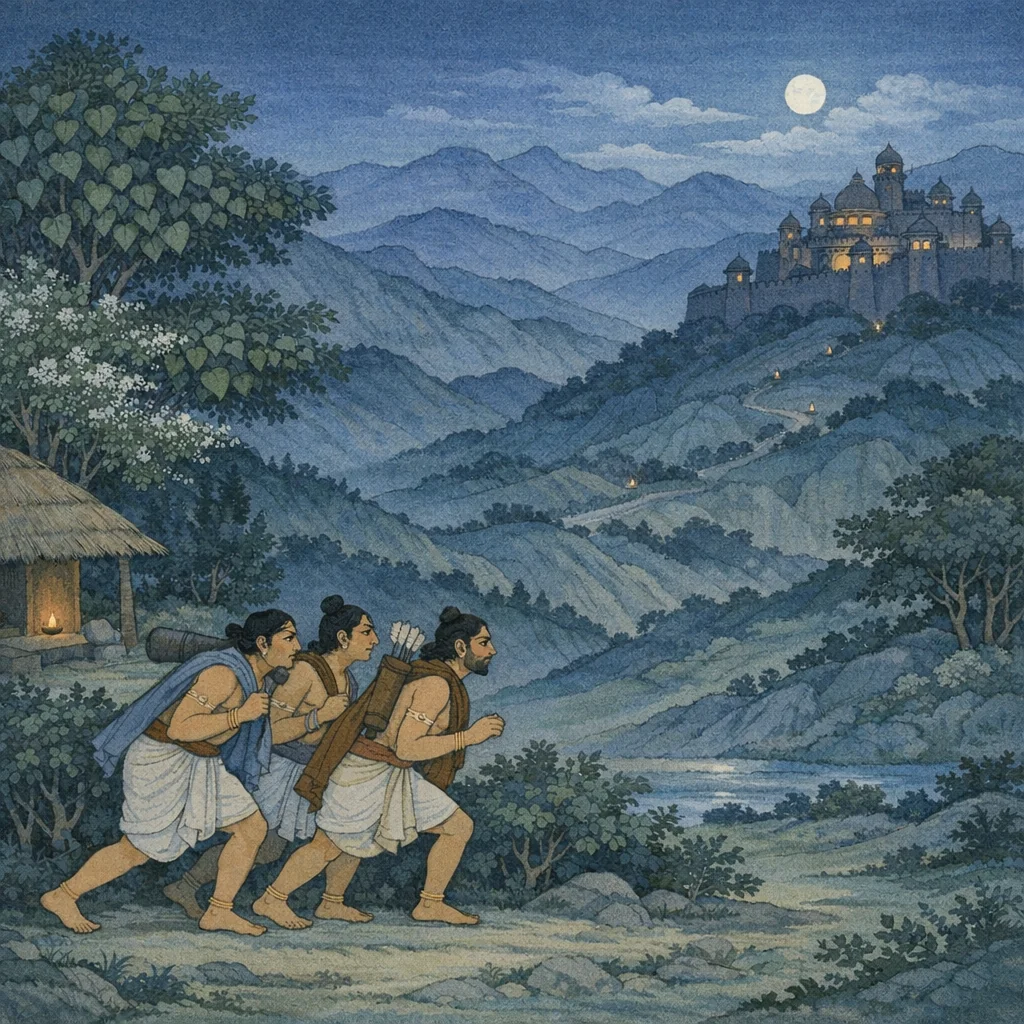
Chapter Arc: श्रीकृष्ण पाण्डवों को मगध की राजधानी गिरिव्रज की अद्भुत प्रशंसा सुनाते हैं—पाँच महाशृंग पर्वतों से घिरी, शीतल वृक्षों से शोभित, उत्सवों से स्फीत और अजेय-सी प्रतीत होती नगरी। → कृष्ण, भीम और अर्जुन नगर-परिसर के पर्वत-शिखरों, चैत्यक-प्रदेश और वनराजियों को देखते हुए आगे बढ़ते हैं; गिरिव्रज की दुर्गमता और जरासंध की प्रतिष्ठा उनके उद्देश्य को और भी जोखिमपूर्ण बनाती जाती है। → तीनों वीर रात्रि के समय नगर एवं राजभवन में प्रवेश करते हैं—द्वार-रक्षा, पर्वतीय अवरोध और नगर-व्यवस्था को भेदते हुए सिंहों की भाँति भीतर जा पहुँचते हैं, और जरासंध के अहंकार को उसके ही घर पर हर लेने का संकल्प मुखर होता है। → वे यज्ञ-परिसर/ब्राह्मण-वेष की मर्यादा के सहारे राजभवन तक पहुँचकर जरासंध के सामने उपस्थित होने की स्थिति बना लेते हैं—अब संवाद और चुनौती का क्षण निकट है। → जरासंध के सम्मुख पहुँचते ही वे क्या मांगेंगे—अतिथि-धर्म की शरण में दान, या सीधे युद्ध-आह्वान?
Shlokas
Verse 1
अत---#क्र+ एकविशो< ध्याय: श्रीकृष्णद्वारा मगधकी राजधानीकी प्रशंसा, चैत्यक पर्वतशिखर और नगाडोंको तोड़-फोड़-कर तीनोंका नगर एवं राजभवनमें प्रवेश तथा श्रीकृष्ण और जरासंधका संवाद वायुदेव उवाच एष पार्थ महान् भाति पशुमान् नित्यमम्बुमान् | निरामय: सुवेश्माढ्यो निवेशो मागध: शुभ:,श्रीकृष्ण बोले--कुन्तीनन्दन! देखो, यह मगध-देशकी सुन्दर एवं विशाल राजधानी कैसी शोभा पा रही है। यहाँ पशुओंकी अधिकता है। जलकी भी सदा पूर्ण सुविधा रहती है। यहाँ रोग-व्याधिका प्रकोप नहीं होता। सुन्दर महलोंसे भरा-पूरा यह नगर बड़ा मनोहर प्रतीत होता है
Vāyu said: “O Pārtha, behold how this great city of Magadha shines—prosperous in cattle, always well supplied with water, free from disease, and filled with fine mansions. This settlement is auspicious and pleasing to the eye.”
Verse 2
वैहारो विपुल: शैलो वराहो वृषभस्तथा । तथा ऋषिगिरिस्तात शुभाश्वैव्यकपञ्चमा:,तात! यहाँ विहारोपयोगी विपुल, वराह, वृषभ (ऋषभ), ऋषिगिरि (मातंग) तथा पाँचवाँ चैत्यक नामक पर्वत है। बड़े-बड़े शिखरोंवाले ये पाँचों सुन्दर पर्वत शीतल छायावाले वृक्षोंसे सुशोभित हैं और एक साथ मिलकर एक-दूसरेके शरीरका स्पर्श करते हुए मानो गिरिव्रज नगरकी रक्षा कर रहे हैं
Vāyu said: “Dear one, there is the broad mountain Vihāra, and also Varāha and Vṛṣabha; likewise Ṛṣigiri—these, with Śubhāśva and Aivyaka as the fifth, form a set of five.”
Verse 3
एते पञ्च महाशज्भा: पर्वता: शीतलद्रुमा: । रक्षन्तीवाभिसंहत्य संहताड़ा गिरिव्रजम्,तात! यहाँ विहारोपयोगी विपुल, वराह, वृषभ (ऋषभ), ऋषिगिरि (मातंग) तथा पाँचवाँ चैत्यक नामक पर्वत है। बड़े-बड़े शिखरोंवाले ये पाँचों सुन्दर पर्वत शीतल छायावाले वृक्षोंसे सुशोभित हैं और एक साथ मिलकर एक-दूसरेके शरीरका स्पर्श करते हुए मानो गिरिव्रज नगरकी रक्षा कर रहे हैं
“Here are five mountains with lofty peaks, shaded by cool, sheltering trees. Standing close together, their masses touching as if in mutual embrace, they seem—dear one—to be guarding the city of Girivraja.”
Verse 4
पुष्पवेष्टितशाखाग्रैर्गन्धवद्धिर्मनोहरै: । निगूढा इव लोध्राणां वनै: कामिजनप्रियै:,वहाँ लोध नामक वृक्षोंके कई मनोहर वन हैं, जिनसे वे पाँचों पर्वत ढके हुए-से जान पड़ते हैं। उनकी शाखाओंके अग्रभागमें फ़ूल-ही-फूल दिखायी देते हैं। लोधोंके ये सुगन्धित वन कामीजनोंको बहुत प्रिय हैं
Vāyu said: “Those mountains appear as though concealed beneath charming, fragrant lodhra-groves. The very tips of their branches are wreathed in blossoms, and these sweet-smelling forests are especially dear to pleasure-seekers.”
Verse 5
शूद्रायां गौतमो यत्र महात्मा संशितव्रत:ः । औशीनर्यामजनयत् काक्षीवाद्यान् सुतान् मुनि:,यहीं अत्यन्त कठोर व्रतका पालन करनेवाले महामना गौतमने उशीनरदेशकी शूद्रजातीय कन्याके गर्भसे काक्षीवान् आदि पुत्रोंको उत्पन्न किया था
Vāyu said: “In that place, the great-souled sage Gautama, steadfast in severe vows, begot sons—beginning with Kakṣīvān—upon a Śūdra maiden of the Auśīnara country.”
Verse 6
गौतम: प्रणयात् तस्माद् यथासौ तत्र सझनि । भजते मागधं वंशं स नृपाणामनुग्रहात्,इसी कारण वह गौतम मुनि राजाओंके प्रेमसे वहाँ आश्रममें रहता तथा मगधदेशीय राजवंशकी सेवा करता है
Therefore, out of affection and loyal attachment, the sage Gautama resides there in that hermitage as he has long been accustomed to do; and, through the favor and patronage of kings, he serves the royal line of Magadha.
Verse 7
अड़वज्भादयश्चैव राजान: सुमहाबला: । गौतमक्षयमभ्येत्य रमन्ते सम पुरार्जुन,अर्जुन! पूर्वकालमें अंग-वंग आदि महाबली राजा भी गौतमके घरमें आकर आनन्दपूर्वक रहते थे
Vāyu said: “In former times, O Arjuna, mighty kings such as those of Aṅga and Vaṅga would come to Gautama’s inexhaustible abode and dwell there in contentment.”
Verse 8
वनराजीस्तु पश्येमा: पिप्पलानां मनोरमा: । लोध्राणां च शुभा: पार्थ गौतमौक: समीपजा:,पार्थ! गौतमके आश्रमके निकट लहलहाती हुई पीपल और लोधोंकी इन सुन्दर एवं मनोरम वन-पंक्तियोंको तो देखो
Vāyu said: “O Pārtha, look at these delightful forest-rows of pippala trees, and these auspicious lodhra trees as well—growing close to the hermitage-dwelling of Gautama.”
Verse 9
अर्बुदः शक्रवापी च पन्नगौ शत्रुतापनौ । स्वस्तिकस्यालयश्नात्र मणिनागस्य चोत्तम:,यहाँ अर्बुद और शक्रवापी नामवाले दो नाग रहते हैं, जो अपने शत्रुओंको संतप्त करनेवाले हैं। यहीं स्वस्तिक नाग और मणि नागके भी उत्तम भवन हैं
Vāyu said: “Here dwell the two serpent-lords Arbuda and Śakravāpī, fierce in tormenting their enemies. Here too are the excellent abodes of the nāgas Svastika and Maṇināga.”
Verse 10
अपरिहार्या मेघानां मागधा मनुना कृता: । कौशिको मणिमांश्वैव चक्राते चाप्यनुग्रहम्,मनुने मगधदेशके निवासियोंको मेघोंके लिये अपरिहार्य (अनुग्राह्म) कर दिया है; (अत: वहाँ सदा ही बादल समयपर यशथेष्ट वर्षा करते हैं।) चण्डकौशिक मुनि और मणिमान् नाग भी मगधदेशपर अनुग्रह कर चुके हैं
Vāyu-deva said: “By Manu, the people of Magadha were made indispensable—specially favored—by the clouds; therefore in that land the clouds regularly yield rain in due season as desired. The sage Caṇḍa-Kauśika and the Nāga Maṇimān, too, have bestowed their grace upon the country of Magadha.”
Verse 11
(पाण्डरे विपुले चैव तथा वाराहकेडपि च । चैत्यके च गिरिश्रेष्ठे मातड़े च शिलोच्चये ।। एतेषु पर्वतेन्द्रेषु सर्वसिद्धमहालया: । यतीनामाश्रमाच्चैव मुनीनां च महात्मनाम् ।। श्वैतवर्णके वृषभ, विपुल, वाराह, गिरिश्रेष्ठ चैत्यक तथा मातंग गिरि--इन सभी श्रेष्ठ पर्वतोंपर सम्पूर्ण सिद्धोंक विशाल भवन हैं तथा यतियों, मुनियों और महात्माओंके बहुत-से आश्रम हैं। वृषभस्य तमालस्य महावीर्यस्य वै तथा । गन्धर्वरक्षसां चैव नागानां च तथा5डलया: ।।) वृषभ, महापराक्रमी तमाल, गन्धर्वों, राक्षमों तथा नागोंके भी निवासस्थान उन पर्वतोंकी शोभा बढ़ाते हैं। एवं प्राप्य पुरं रम्यं दुराधर्ष समन्तत: । अर्थसिद्धि त्वनुपमां जरासंधोडभिमन्यते,इस प्रकार चारों ओरसे दुर्धर्ष उस रमणीय नगरको पाकर जरासंधको यह अभिमान बना रहता है कि मुझे अनुपम अर्थसिद्धि प्राप्त होगी
Vāyu said: “On the mountains Pāṇḍara and Vipula, and likewise on Vārāhaka; on Caityaka, on the excellent peak called Giriśreṣṭha, and on Mātaṅga, the lofty crag—on these lordly mountains stand vast abodes of perfected beings, and many hermitages of ascetics, sages, and great-souled seers. There too are the dwelling-places of Vṛṣabha, of the mighty Tamāla, and of Gandharvas, Rākṣasas, and Nāgas, which add to the splendour of those ranges. Having thus obtained that delightful city, impregnable on every side, Jarāsandha imagines that he will attain an incomparable fulfilment of wealth and power.”
Verse 12
वैशम्पायन उवाच एवमुक्क्त्वा तत: सर्वे भ्रातरो विपुलीजस:,वैशम्पायनजी कहते हैं--जनमेजय! ऐसी बातें करते हुए वे सभी महातेजस्वी भाई श्रीकृष्ण, अर्जुन और भीमसेन मगधकी राजधानीमें प्रवेश करनेके लिये चल पड़े। वह नगर चारों वर्णोके लोगोंसे भरा-पूरा था। उसमें रहनेवाले सभी लोग हृष्ट-पुष्ट दिखायी देते थे
Vaiśampāyana said: Having spoken thus, all those brothers, endowed with great vigor, set out to enter the capital of Magadha. The city was thronged with people of all four social orders, and its inhabitants appeared cheerful and well-nourished.
Verse 13
वार्ष्णेय: पाण्डवौ चैव प्रतस्थुर्मागधं पुरम् । हृष्टपुष्टजनोपेतं चातुर्वर्ण्यसमाकुलम्,वैशम्पायनजी कहते हैं--जनमेजय! ऐसी बातें करते हुए वे सभी महातेजस्वी भाई श्रीकृष्ण, अर्जुन और भीमसेन मगधकी राजधानीमें प्रवेश करनेके लिये चल पड़े। वह नगर चारों वर्णोके लोगोंसे भरा-पूरा था। उसमें रहनेवाले सभी लोग हृष्ट-पुष्ट दिखायी देते थे
Vaiśampāyana said: “The Vārṣṇeya (Śrī Kṛṣṇa) and the two Pāṇḍavas set out for the city of Magadha. That capital was filled with cheerful, well-nourished people and thronged with all four social orders.”
Verse 14
स्फीतोत्सवमनाधुष्यमासेदुश्न गिरिव्रजम् । ततो द्वारमनासाद्य पुरस्य गिरिमुच्छितम्,वहाँ अधिकाधिक उत्सव होते रहते थे। कोई भी उसको जीत नहीं सकता था। ऐसे गिरिव्रजके निकट वे तीनों जा पहुँचे। वे मुख्य फाटकपर न जाकर नगरके चैत्यक नामक ऊँचे पर्वतपर चले गये। उस नगरमें निवास करनेवाले मनुष्य तथा बृहद्रथ-परिवारके लोग उस पर्वतकी पूजा किया करते थे। मगधदेशकी प्रजाको यह चैत्यक पर्वत बहुत ही प्रिय था
Vaiśampāyana said: The three arrived at Girivraja, a city flourishing with continual festivities and regarded as unassailable. Instead of approaching the main gate, they went toward the lofty hill rising by the city—known as Caityaka—revered by the townspeople and by the family of Bṛhadratha, and especially dear to the people of Magadha.
Verse 15
बाद्रथै: पूज्यमानं तथा नगरवासिभि: | मगधानां सुरुचिरं चैत्यकान्तं समाद्रवन्,वहाँ अधिकाधिक उत्सव होते रहते थे। कोई भी उसको जीत नहीं सकता था। ऐसे गिरिव्रजके निकट वे तीनों जा पहुँचे। वे मुख्य फाटकपर न जाकर नगरके चैत्यक नामक ऊँचे पर्वतपर चले गये। उस नगरमें निवास करनेवाले मनुष्य तथा बृहद्रथ-परिवारके लोग उस पर्वतकी पूजा किया करते थे। मगधदेशकी प्रजाको यह चैत्यक पर्वत बहुत ही प्रिय था
Vaiśampāyana said: Honoured by the descendants of Bṛhadratha and likewise by the city-dwellers, the splendid Caityaka hill—dear to the people of Magadha—was approached with reverence.
Verse 16
यत्र मांसादमृषभमाससाद बृहद्रथ: । तं॑ हत्वा मासतालाभिस्तिस्रो भेरीरकारयत्,उस स्थानपर राजा बृहद्रथने (वृषभरूपधारी) ऋषभ नामक एक मांसभक्षी राक्षससे युद्ध किया और उसे मारकर उसकी खालसे तीन बड़े-बड़े नगाड़े तैयार कराये, जिनपर चोट करनेसे महीनेभरतक आवाज होती रहती थी
There, King Bṛhadratha encountered the flesh-eating rākṣasa named Ṛṣabha, who bore the form of a bull. Having slain him, the king had three great kettledrums made from his hide—so that when struck, their sound would resound for a full month.
Verse 17
स्वपुरे स्थापयामास तेन चानहा चर्मणा । यत्र ता: प्राणदन् भेयों दिव्यपुष्पावचूर्णिता:,राजाने उन नगाड़ोंको उस राक्षसके चमड़ेसे मढ़ाकर अपने नगरमें रखवा दिया। जहाँ वे नगाड़े बजते थे, वहाँ दिव्य फूलोंकी वर्षा होने लगती थी
Vaiśampāyana said: The king had those kettledrums installed in his own city, their frames covered with the hide of that rākṣasa. Wherever those drums resounded, a shower of divine flowers would fall.
Verse 18
भड्व्त्वा भेरीत्रयं तेडपि चैत्यप्राकारमाद्रवन् । द्वारतोडभिमुखा: सर्वे ययुर्नाना55युधास्तदा,इन तीनों वीरोंने उपर्युक्त तीनों नगाड़ोंको फोड़कर चैत्यक पर्वतके परकोटेपर आक्रमण किया। उन सबने अनेक प्रकारके आयुध लेकर द्वारके सामने मगध-निवासियोंके परम प्रिय उस चैत्यक पर्वतपर धावा किया था। जरासंधको मारनेकी इच्छा रखकर मानो वे उसके मस्तकपर आघात कर रहे थे
Vaiśampāyana said: Having smashed the three kettledrums, those heroes rushed upon the ramparts of Caitya. All of them, facing the gate and bearing weapons of many kinds, surged forward in assault upon that Caityaka hill—dear to the people of Magadha—as if, intent on slaying Jarāsandha, they were striking at his very head.
Verse 19
मागधानां सुरुचिरं चैत्यकं त॑ समाद्रवन् । शिरसीव समाध्नन्तो जरासंधं जिघांसव:,इन तीनों वीरोंने उपर्युक्त तीनों नगाड़ोंको फोड़कर चैत्यक पर्वतके परकोटेपर आक्रमण किया। उन सबने अनेक प्रकारके आयुध लेकर द्वारके सामने मगध-निवासियोंके परम प्रिय उस चैत्यक पर्वतपर धावा किया था। जरासंधको मारनेकी इच्छा रखकर मानो वे उसके मस्तकपर आघात कर रहे थे
Vaiśampāyana said: Desiring to slay Jarāsandha, they rushed upon that splendid Caityaka—dear to the people of Magadha—assaulting it as though striking Jarāsandha upon the head itself.
Verse 20
इस प्रकार श्रीमह्याभारत सभापव॑के अन्तर्गत जरासंधवधपर्वमें कृष्ण, अर्जुन एवं भीमसेनकी मगधयात्राविषयक बीसवाँ अध्याय पूरा हुआ,स्थिरं सुविपुलं शृज़ं सुमहत् तत् पुरातनम् । अर्चितं गन्धमाल्यैश्न सततं सुप्रतिष्ठितम् उस चैत्यकका विशाल शिखर बहुत पुराना, किंतु सुदृढ़ था। मगधदेशमें उसकी बड़ी प्रतिष्ठा थी। गन्ध और पुष्पकी मालाओंसे उसकी सदा पूजा की जाती थी। श्रीकृष्ण आदि तीनों वीरोंने अपनी विशाल भुजाओंसे टक्कर मारकर उस चैत्यक पर्वतके शिखरको गिरा दिया। तदनन्तर वे अत्यन्त प्रसन्न होकर मगधकी राजधानी गिरिव्रजके भीतर घुसे
Vaiśaṃpāyana said: The peak of that sacred shrine (caitya) was firm, very broad, exceedingly great, and ancient. It was continually honoured with perfumes and garlands, and it stood in high repute. Then Kṛṣṇa, Arjuna, and Bhīmasena—exultant in their strength—struck it with their mighty arms and brought down the summit; thereafter, delighted, they entered Girivraja, the capital of Magadha.
Verse 21
विपुलैर्बाहुभिवीरास्ते5भिहत्याभ्यपातयन् । ततस्ते मागध॑ हृष्टा: पुरं प्रविविशुस्तदा,उस चैत्यकका विशाल शिखर बहुत पुराना, किंतु सुदृढ़ था। मगधदेशमें उसकी बड़ी प्रतिष्ठा थी। गन्ध और पुष्पकी मालाओंसे उसकी सदा पूजा की जाती थी। श्रीकृष्ण आदि तीनों वीरोंने अपनी विशाल भुजाओंसे टक्कर मारकर उस चैत्यक पर्वतके शिखरको गिरा दिया। तदनन्तर वे अत्यन्त प्रसन्न होकर मगधकी राजधानी गिरिव्रजके भीतर घुसे
Vaiśampāyana said: With their mighty arms those heroes struck and brought it crashing down. Then the Magadhans, delighted, entered the city at that time.
Verse 22
एतस्मिन्नेव काले तु ब्राह्मणा वेदपारगा: । दृष्टवा तु दुर्निमित्तानि जरासंधमदर्शयन्,इसी समय वेदोंके पारगामी दिद्वान् ब्राह्मणोंने अनेक अपशकुन देखकर राजा जरासंधको उनके विषयमें सूचित किया
Vaiśampāyana said: Just at that time, Brahmins who had mastered the Vedas, having observed ominous portents, went and informed King Jarāsandha about those ill signs.
Verse 23
पर्यग्न्यकुर्वश्च नृपं द्विरदस्थं पुरोहिता: । ततस्तच्छान्तये राजा जरासंध: प्रतापवान् | दीक्षितो नियमस्थोडसावुपवासपरो5भवत्,पुरोहितोंने राजाको हाथीपर बिठाकर उसके चारों ओर प्रज्वलित आग घुमायी। प्रतापी राजा जरासंधने अनिष्टकी शान्तिके लिये व्रतकी दीक्षा ले नियमोंका पालन करते हुए उपवास किया
Vaiśampāyana said: The priests performed a rite of circumambulating the king—seated upon an elephant—with consecrated fire. Then, to pacify that ominous influence, the mighty king Jarāsandha undertook a vow-initiation; abiding by prescribed restraints, he devoted himself to fasting.
Verse 24
स्नातकव्रतिनस्ते तु बाहुशस्त्रा निरायुधा: । युयुत्सव: प्रविविशुर्जरासंधेन भारत,भारत! इधर भगवान् श्रीकृष्ण, भीमसेन और अर्जुन स्नातक-व्रतका पालन करनेवाले ब्राह्मणोंके वेषमें अस्त्र-शस्त्रोंका परित्याग करके अपनी भुजाओंसे ही आयुधोंका काम लेते हुए जरासंधके साथ युद्ध करनेकी इच्छा रखकर नगरमें प्रविष्ट हुए
Vaiśampāyana said: Those men, observing the snātaka vow, entered the city unarmed—yet with their own arms as weapons—intent on fighting Jarāsandha, O Bhārata. The episode reveals disciplined self-restraint and strategic disguise: outwardly they bear a Brahminical vow and the semblance of nonviolence, while inwardly they commit to a righteous contest meant to remove a tyrant’s threat.
Verse 25
भक्ष्यमाल्यापणानां च ददृशु: श्रियमुत्तमाम् । स्फीतां सर्वगुणोपेतां सर्वकामसमृद्धिनीम्,उन्होंने खाने-पीनेकी वस्तुओं, फ़ूल-मालाओं तथा अन्य आवश्यक पदार्थोंकी दूकानोंसे सजे हुए हाट-बाटकी अपूर्व शोभा और सम्पदा देखी। नगरका वह वैभव बहुत बढ़ा-चढ़ा, सर्वगुणसम्पन्न तथा समस्त कामनाओंकी पूर्ति करनेवाला था। उस गलीकी अद्भुत समृद्धिको देखकर वे महाबली नरश्रेष्ठ श्रीकृष्ण, भीम और अर्जुन एक मालीसे बलपूर्वक बहुत-सी मालाएँ लेकर नगरकी प्रधान सड़कसे चलने लगे
Vaiśampāyana said: They beheld the finest splendor—markets filled with foodstuffs and garland-stalls—prosperous, endowed with every excellence, and able to fulfill all desires. The scene shows how worldly abundance can dazzle the eye, even as the epic’s moral horizon asks whether such prosperity is governed by restraint and dharma.
Verse 26
तां तु दृष्टवा समृद्धि ते वीथ्यां तस्यां नरोत्तमा: । राजमार्गेण गच्छन्त: कृष्णभीमधनंजया: । बलादू गृहीत्वा माल्यानि मालाकारान्महाबला:,उन्होंने खाने-पीनेकी वस्तुओं, फ़ूल-मालाओं तथा अन्य आवश्यक पदार्थोंकी दूकानोंसे सजे हुए हाट-बाटकी अपूर्व शोभा और सम्पदा देखी। नगरका वह वैभव बहुत बढ़ा-चढ़ा, सर्वगुणसम्पन्न तथा समस्त कामनाओंकी पूर्ति करनेवाला था। उस गलीकी अद्भुत समृद्धिको देखकर वे महाबली नरश्रेष्ठ श्रीकृष्ण, भीम और अर्जुन एक मालीसे बलपूर्वक बहुत-सी मालाएँ लेकर नगरकी प्रधान सड़कसे चलने लगे
Seeing the extraordinary prosperity of that street, those best of men—Kṛṣṇa, Bhīma, and Dhanaṃjaya (Arjuna)—proceeded along the royal road. In their great strength, they forcibly took many garlands from the garland-makers. The scene displays the city’s lavish abundance while hinting at a moral tension: power and urgency can lead even eminent figures to act coercively toward ordinary townspeople.
Verse 27
विरागवसना: सर्वे स्रग्विणो मृष्टकुण्डला: । निवेशनमथाजम्मुर्जरासंधस्य धीमत:,उन सबके वस्त्र अनेक रंगके थे। उन्होंने गलेमें हार और कानोंमें चमकीले कुण्डल पहन रखे थे। वे क्रमश: बुद्धिमान् राजा जरासंधके महलके समीप जा पहुँचे
Vaiśampāyana said: All of them were clad in garments of varied hues, wearing garlands and polished, gleaming earrings. Proceeding in due order, they arrived near the residence of the wise king Jarāsandha—outwardly adorned and composed, as they advanced into a politically charged encounter where appearance and protocol serve the aims of strategy and dharma.
Verse 28
गोवासमिव वीक्षन्त: सिंहा हैमवता यथा । शालस्तम्भनिभास्तेषां चन्दनागुरुरूषिता:
Vaiśampāyana said: They looked on as Himalayan lions might gaze upon a cattle-pen—unyielding and predatory in their intent. Their bodies, tall and firm like śāla-wood pillars, were anointed and fragrant with sandal and aloe, projecting both royal refinement and formidable power in the charged atmosphere of the assembly.
Verse 29
तान् दृष्टवा द्विरदप्रख्याज्शालस्कन्धानिवोदगतान् । व्यूढोरस्कान् मागधानां विस्मय: समपद्यत,शालवृक्षके तनेके समान ऊँचे डील और चौड़ी छातीवाले गजराजसदृश उन बलवान वीरोंको देखकर मगधनिवासियोंको बड़ा आश्वर्य हुआ
Seeing those heroes—elephant-like in stature, rising like the lofty trunks of śāla trees, with broad, well-set chests—the people of Magadha were struck with astonishment.
Verse 30
ते त्वतीत्य जनाकीर्णा: कक्षास्तिस््रो नरर्षभा: । अहंकारेण राजानमुपतस्थुर्गतव्यथा:,वे नरश्रेष्ठ लोगोंसे भरी हुई तीन ड्योढ़ियोंको पार करके निर्भय एवं निश्चिन्त हो बड़े अभिमानके साथ राजा जरासंधके निकट गये
Having passed beyond the three antechambers crowded with people, those bull-like men, free from fear and anxiety, approached King Jarāsandha with proud confidence.
Verse 31
तान् पाद्यमधुपकाह्िन् गवार्हान् सत्कृतिं गतान् | प्रत्युत्थाय जरासंध उपतस्थे यथाविधि,वे पाद्य, मधुपर्क और गोदान पानेके योग्य थे। उनका सर्वत्र सत्कार होता था। उन्हें आया देख जरासंध उठकर खड़ा हो गया और उसने विधिपूर्वक उनका आतिथ्य-सत्कार किया
They were worthy of the traditional honors of hospitality—water for washing the feet, the madhuparka offering, and the gift of a cow—and were received with respect everywhere. Seeing them arrive, Jarāsandha rose to greet them and, in due form, attended to them with proper rites of welcome.
Verse 32
उवाच चैतान् राजासौ स्वागतं वो<स्त्विति प्रभु: । मौनमासीत् तदा पार्थभीमयोर्जनमेजय
The king, that lord of men, addressed them, saying, “Welcome—may it be well with you.” Yet at that moment, O Janamejaya, Pārtha (Arjuna) and Bhīma remained silent.
Verse 33
तेषां मध्ये महाबुद्धि: कृष्णो वचनमत्रवीत् । वक्तुं नायाति राजेन्द्र एतयोर्नियमस्थयो:
In the midst of them, Krishna, the great-minded one, spoke: “O best of kings, speech does not come forth from these two, for they stand firmly established in their respective vows and discipline.”
Verse 34
अर्वाड्निशीथात् परतस्त्वया सार्ध वदिष्यत: । तदनन्तर शक्तिशाली राजाने इन तीनों अतिथियोंसे कहा--“आपलोगोंका स्वागत है।' जनमेजय! उस समय अर्जुन और भीमसेन तो मौन थे। उनमेंसे महाबुद्धिमान् श्रीकृष्णने यह बात कही--'राजेन्द्र! ये दोनों एक नियम ले चुके हैं; अतः आधी रातसे पहले नहीं बोलते। आधी रातके बाद ये दोनों आपसे बात करेंगे” || ३२-३३ $ || यज्ञागारे स्थापयित्वा राजा राजगृहं गत:,तब राजा उन्हें यज्ञशालामें ठहराकर स्वयं राजभवनमें चला गया। फिर आधी रात होनेपर जहाँ वे ब्राह्मण ठहरे थे, वहाँ वह गया। राजन! उसका यह नियम भूमण्डलमें विख्यात था
Vaiśampāyana said: “After midnight they will speak with you.” Then the powerful king addressed the three guests: “Welcome to you.” O Janamejaya, at that time Arjuna and Bhīmasena remained silent. Among them, the very wise Śrī Kṛṣṇa said: “O best of kings, these two have undertaken a vow; therefore they do not speak before midnight. After midnight they will converse with you.” Having lodged them in the sacrificial hall, the king went to his palace. When midnight arrived, he went again to the place where those brāhmaṇas were staying. O king, this observance of his was renowned throughout the earth.
Verse 35
ततोअर्धरात्रे सम्प्राप्ते यातो यत्र स्थिता द्विजा: । तस्य होतद् व्रतं राजन् बभूव भुवि विश्रुतम्,तब राजा उन्हें यज्ञशालामें ठहराकर स्वयं राजभवनमें चला गया। फिर आधी रात होनेपर जहाँ वे ब्राह्मण ठहरे थे, वहाँ वह गया। राजन! उसका यह नियम भूमण्डलमें विख्यात था
When midnight arrived, he went to the place where the dvijas (brāhmaṇas) were staying. O king, this vow of his was renowned upon the earth.
Verse 36
सस््नातकान ब्राह्मणान् प्राप्ताछछुत्वा स समितिंजय: । अत्यर्धीत्रे नृपति: प्रत्युदूग॒च्छति भारत,भारत! युद्धविजयी राजा जरासंध स्नातक ब्राह्मणोंका आगमन सुनकर आधी रातके समय भी उनकी आवभगतके लिये उनके पास चला जाता था
Vaiśaṃpāyana said: Hearing that snātaka Brahmins had arrived, that king—Samitiṃjaya (Jarasandha), victor in battle—would go out to receive them even at the very middle of the night, O Bhārata.
Verse 37
तांस्त्वपूर्वेण वेषेण दृष्टवा स नृपसत्तम: । उपतस्थे जरासंधो विस्मितश्चाभवत् तदा,उन तीनोंको अपूर्व वेषमें देखकर नृपश्रेष्ठ जरासंधको बड़ा विस्मय हुआ। वह उनके पास गया
Seeing those three in an unfamiliar disguise, Jarāsandha—the foremost of kings—was struck with astonishment. He then approached them and stood before them, still amazed.
Verse 38
ते तु दृष्टवैव राजानं जरासंध॑ नर्षभा: । इदमूचुरमित्रघ्ना: सर्वे भरतसत्तम,भरतवंशशिरोमणे! शत्रुओंका नाश करनेवाले वे सभी नरश्रेष्ठ राजा जरासंधको देखते ही इस प्रकार बोले--“महाराज! आपका कल्याण हो।” जनमेजय! ऐसा कहकर वे तीनों खड़े हो गये तथा कभी राजा जरासंधको और कभी आपसमें एक दूसरेको देखने लगे
But as soon as those bull-like men beheld King Jarāsandha, all of them—foe-destroyers—addressed him thus: “O best of the Bharatas, crest-jewel of the Bharata line, may good befall you, O great king.” O Janamejaya, having spoken so, the three rose and stood, now looking at King Jarāsandha and now glancing at one another among themselves.
Verse 39
स्वस्त्यस्तु कुशलं राजन्निति तत्र व्यवस्थिता: । त॑ नृप॑ नृपशार्दूल प्रेक्षमाणा: परस्परम्,भरतवंशशिरोमणे! शत्रुओंका नाश करनेवाले वे सभी नरश्रेष्ठ राजा जरासंधको देखते ही इस प्रकार बोले--“महाराज! आपका कल्याण हो।” जनमेजय! ऐसा कहकर वे तीनों खड़े हो गये तथा कभी राजा जरासंधको और कभी आपसमें एक दूसरेको देखने लगे
Vaiśampāyana said: Standing there, they addressed the king with the courteous benediction, “May there be well-being; O King!” Then those eminent men, intent on their purpose, rose and—O tiger among kings, crest-jewel of the Bharata line—looked now at King Jarāsandha and now at one another, as if silently weighing the next step in a tense moral and political encounter.
Verse 40
तानब्रवीज्जरासंधस्तथा पाण्डवयादवान् | आस्यतामिति राजेन्द्र ब्राह्मणच्छग्मसंवृतान्,राजेन्द्र! ब्राह्मणोंके छद्मवेषमें छिपे हुए उन पाण्डव तथा यादव वीरोंको लक्ष्य करके जरासंधने कहा--“आपलोग बैठ जायाँ'
Vaiśaṃpāyana said: Then Jarāsandha addressed those Pāṇḍavas and Yādavas—who were concealed under the disguise of brāhmaṇas—saying, “Be seated, O king.” The moment underscores how outward marks of sanctity can mask hidden intent, and how a ruler’s etiquette may be extended even amid uncertainty.
Verse 41
अथोपविविशु: सर्वे त्रयस्ते पुरुषर्षभा: । सम्प्रदीप्तास्त्रयो लक्ष्म्या महाध्वर इवाग्नय:,फिर वे सभी बैठ गये। वे तीनों पुरुषसिंह महान् यज्ञमें प्रजज्लित तीन अग्नियोंकी भाँति अपनी अपूर्व शोभासे उद्धासित हो रहे थे
Then all three—those bull-like men among men—sat down. Ablaze with splendor, the three shone like three fires kindled in a great sacrificial rite, their radiance suggesting dignity, power, and the public weight of the moment.
Verse 42
तानुवाच जरासंध: सत्यसंधो नराधिप: । विगर्हमाण: कौरव्य वेषग्रहणवैकृतान् । न स्नातकव्रता विप्रा बहिर्मालल््यानुलेपना:,कुरुनन्दन! उस समय सत्यप्रतिज्ञ राजा जरासंधने वेषग्रहणके विपरीत आचरणवाले उन तीनोंकी निन््दा करते हुए कहा--“ब्राह्मणो! इस मानव-जगतमें सर्वत्र प्रसिद्ध है कि स्नातक-व्रतका पालन करनेवाले ब्राह्मण समावर्तन आदि विशेष निमित्तके बिना माला और चन्दन नहीं धारण करते। मुझे भी यह अच्छी तरह मालूम है। आपलोग कौन हैं? आपके गलेमें फ़ूलोंकी माला है और भुजाओंमें धनुषकी प्रत्यंचाकी रगड़का चिह्न स्पष्ट दिखायी देता है
Vaiśampāyana said: Then Jarāsandha, the king of men, steadfast in truth, addressed them. O Kauravya, censuring those three whose conduct was at odds with the guise they had assumed, he said: “Brahmins who keep the snātaka discipline do not, without a special occasion such as the completion-rite, go about wearing garlands and sandal-paste. This is well known throughout the world, and I know it too. Who, then, are you—garlanded as you are, and bearing on your arms the clear marks of bowstring friction?”
Verse 43
भवन्तीति नृलोके5स्मिन् विदितं मम सर्वश: । के यूयं पुष्पवन्तश्न भुजैज्याकृतलक्षणै:,कुरुनन्दन! उस समय सत्यप्रतिज्ञ राजा जरासंधने वेषग्रहणके विपरीत आचरणवाले उन तीनोंकी निन््दा करते हुए कहा--“ब्राह्मणो! इस मानव-जगतमें सर्वत्र प्रसिद्ध है कि स्नातक-व्रतका पालन करनेवाले ब्राह्मण समावर्तन आदि विशेष निमित्तके बिना माला और चन्दन नहीं धारण करते। मुझे भी यह अच्छी तरह मालूम है। आपलोग कौन हैं? आपके गलेमें फ़ूलोंकी माला है और भुजाओंमें धनुषकी प्रत्यंचाकी रगड़का चिह्न स्पष्ट दिखायी देता है
Vaiśampāyana said: “It is well known to me, and indeed widely known in this human world, how such people conduct themselves. Who are you, O delight of the Kurus? You wear garlands of flowers, and on your arms the marks made by the bowstring’s rubbing are clearly visible.” (Thus Jarāsandha, true to his vow, censures the three for behavior contrary to the guise they have assumed, implying that their outward appearance and bodily signs betray a warrior’s life rather than a brahmin’s discipline.)
Verse 44
महाभारत-- जरासंधके भवनमें श्रीकृष्ण, भीमसेन और अर्जुन भीमसेन और जरासंधका युद्ध बिश्रत: क्षात्रमोज श्ष ब्राह्मण्यं प्रतिजानथ । एवं विरागवसना बहि्माल्यानुलेपना: । सत्यं वदत के यूयं सत्यं राजसु शोभते,“आपलोग क्षत्रियोचित तेज धारण करते हैं, परंतु ब्राह्मण होनेका परिचय दे रहे हैं। इस प्रकार भाँति-भाँतिके रंगीन कपड़े पहने और अकारण माला तथा चन्दन लगाये हुए आप कौन हैं? सच बताइये। राजाओंमें सत्यकी ही शोभा होती है
Vaiśampāyana said: “Your martial vigor appears to have slipped, yet you claim the status of brahmins. Wearing such oddly colored garments and outwardly adorned with garlands and sandal-paste without clear cause—who are you? Speak the truth. Among kings, truthfulness alone is what truly shines.”
Verse 45
चैत्यकस्य गिरे: शृज्ूं भित्ता किमिह छद्मना । अद्वारेण प्रविष्टा: स्थ निर्भया राजकिल्बिषात्,'चैत्यक पर्वतके शिखरको तोड़कर राजाका अपराध करके भी उससे भयभीत न हो छटद्गावेष धारण किये द्वारके बिना ही इस नगरमें जो आपलोग घुस आये हैं, इसका क्या कारण है?
Vaiśampāyana said: “Having broken open the peak of Mount Caitayaka, why have you come here in disguise? And having entered this city without using any gate, how is it that you stand unafraid, even though you have incurred an offence against the king?”
Verse 46
वदध्वं वाचि वीर्य च ब्राह्मणस्य विशेषत: । कर्म चैतद् विलिड्रस्थं कि वोउ्द्य प्रसमीक्षितम्,“बताइये, ब्राह्मणके तो प्रायः वचनमें ही वीरता होती है, उसकी क्रियामें नहीं। आपलोगोंने जो यह पर्वतशिखर तोड़नेका काम किया है, यह आपके वर्ण तथा वेषके सर्वथा विपरीत है, बताइये आपने आज क्या सोच रखा है?
Vaiśaṃpāyana said: “Speak out. A brāhmaṇa’s valor, especially, is chiefly in speech and counsel, not in physical action. Yet this deed you have done—breaking off a mountain-peak—stands wholly at odds with your caste and outward guise. Tell me: what have you resolved upon today?”
Verse 47
एवं च मामुपास्थाय कस्माच्च विधिनाहणाम् | प्रतीतां नानुगृह्नीत कार्य कि वास्मदागमे,“इस प्रकार मेरे यहाँ उपस्थित हो मेरे द्वारा विधिपूर्वक अर्पित की हुई इस पूजाको आपलोग ग्रहण क्यों नहीं करते हैं? फिर मेरे यहाँ आनेका प्रयोजन ही क्या है?”
Vaiśaṃpāyana said: “After coming and standing before me in this manner, why do you not accept the worship that I have duly offered according to proper rite? If you will not receive it, then what purpose is served by your coming to my house at all?”
Verse 48
एवमुक्ते ततः कृष्ण: प्रत्युवाच महामना: । स्निग्धगम्भीरया वाचा वाक्यं वाक्यविशारद:,जरासंधके ऐसा कहनेपर बोलनेमें चतुर महामना श्रीकृष्ण स्निग्ध एवं गम्भीर वाणीमें इस प्रकार बोले
When this had been said, the noble-minded Kṛṣṇa—skilled in apt and discerning speech—replied in a voice that was both affectionate and grave.
Verse 49
श्रीकृष्ण उवाच स्नातकान ब्राह्मणान् राजन् विद्धयस्मांस्त्वं नराधिप । स्नातकव्रतिनो राजन ब्राह्मुणा: क्षत्रिया विश:,श्रीकृष्णने कहा--राजन्! तुम हमें (वेषके अनुसार) स्नातक ब्राह्मण समझ सकते हो। वैसे तो स्नातक व्रतका पालन करनेवाले ब्राह्मण, क्षत्रिय और वैश्य तीनों वर्णोके लोग होते हैं
Śrī Kṛṣṇa said: “O King, lord of men, you may regard us as snātaka brāhmaṇas by our outward marks and discipline. Yet, O King, those who observe the snātaka vow are found among all three twice-born orders—brāhmaṇas, kṣatriyas, and vaiśyas.”
Verse 50
विशेषनियमाश्रैषामविशेषाश्च सन्त्युत । विशेषवांश्व सतत क्षत्रिय: श्रियमृच्छति,इन स्नातकोंमें कुछ विशेष नियमका पालन करनेवाले होते हैं और कुछ साधारण। विशेष नियमका पालन करनेवाला क्षत्रिय सदा लक्ष्मीको प्राप्त करता है
Among these snātakas, some observe special disciplines while others follow only the general rule. A kṣatriya who consistently upholds the special disciplines steadily attains prosperity and royal fortune.
Verse 51
पुष्पवत्सु ध्रुवा श्रीक्ष पुष्पवन्तस्ततो वयम् । क्षत्रियो बाहुवीर्यस्तु न तथा वाक्यवीर्यवान् | अप्रगल्भं वचस्तस्य तस्माद् बार्हद्रथेरितम्,जो पुष्प धारण करनेवाले हैं, उनमें लक्ष्मीका निवास ध्रुव है, इसीलिये हमलोग पुष्पमालाधारी हैं। क्षत्रियका बल और पराक्रम उसकी भुजाओंमें होता है, वह बोलनेमें वैसा वीर नहीं होता। बृहद्रथनन्दन! इसीलिये क्षत्रियका वचन धृष्टतारहित (विनययुक्त) बताया गया है
Śrī Kṛṣṇa said: “Where there are flowers, prosperity (Śrī/Lakṣmī) is said to dwell steadily; therefore we wear garlands. A kṣatriya’s strength lies in the power of his arms, not in the bravado of speech. Hence, O son of Bṛhadratha, a kṣatriya’s words are described as unpresumptuous—spoken with restraint and courtesy.”
Verse 52
स्ववीर्य क्षत्रियाणां तु बाह्वोर्धाता न्यवेशयत् । तद् दिदृक्षसि चेद् राजन द्रष्टास्यद्य न संशय:,विधाताने क्षत्रियोंका अपना बल उनकी भुजाओंमें ही भर दिया है। राजन! यदि आज उसे देखना चाहते हो तो निश्चय ही देख लोगे
Kṛṣṇa said: “The Creator has lodged the Kṣatriyas’ own valor in their very arms. O King, if you wish to behold that power, you will surely see it today—there is no doubt.”
Verse 53
अद्वारेण रिपोर्गेह द्वारेण सुहृदो गुहान् । प्रविशन्ति नरा धीरा द्वाराण्येतानि धर्मत:,धीर मनुष्य शत्रुके घरमें बिना दरवाजेके और मित्रके घरमें दरवाजेसे जाते हैं। शत्रु और मित्रके लिये ये धर्मत: द्वार बतलाये गये हैं
The wise enter an enemy’s house by a way that is not the door, but they enter a friend’s dwelling by the proper door. Such are the rightful ‘doors’ laid down by dharma in dealing with foe and friend—caution and secrecy toward the hostile, openness and propriety toward the well-disposed.
Verse 54
कार्यवन्तो गृहानेत्य शत्रुतो नारहणां वयम् । प्रतिगृहल्लीम तद् विद्धि एतन्न: शाश्व॒तं व्रतम्,हम अपने कार्यसे तुम्हारे घर आये हैं; अतः शत्रुसे पूजा नहीं ग्रहण कर सकते। इस बातको तुम अच्छी तरह समझ लो। यह हमारा सनातन व्रत है
Kṛṣṇa said: “We have come to your house on a mission; therefore, we cannot accept honors or hospitality from an enemy. Know this well: it is our enduring vow.”
Verse 113
आज हमलोग उसके घरपर ही चलकर उसका सारा घमंड हर लेंगे
Vāyu said: “Today we shall go straight to his very house and strip away all his arrogance.”
Verse 231
इति श्रीमहाभारते सभापर्वणि जरासंधवधपर्वणि कृष्णजरासंधसंवादे एकविंशो5ध्याय:
Thus ends the twenty-first chapter in the Sabhā Parva of the Śrī Mahābhārata, within the section on the slaying of Jarāsandha, in the dialogue between Kṛṣṇa and Jarāsandha.
Verse 283
अशोभन्त महाराज बाहवो युद्धशालिनाम् | जैसे हिमालयकी गुफाओंमें रहनेवाले सिंह गौओंका स्थान ढूँढ़ते हुए आगे बढ़ते हों, उसी प्रकार वे तीनों वीर राजभवनकी तलाश करते हुए वहाँ पहुँचे थे। महाराज! युद्धमें विशेष शोभा पानेवाले उन तीनों वीरोंकी भुजाएँ साखूके लट्ठे-जैसी सुशोभित हो रही थीं। उनपर चन्दन और अगुरुका लेप किया गया था
Vaiśampāyana said: O King, the arms of those warriors—men who shone in battle—appeared splendid. Like lions dwelling in the caves of the Himālaya, moving forward in search of the cattle’s abode, so those three heroes advanced, seeking out the royal residence and arriving there. Their powerful arms, famed for their prowess in war, looked like stout sāla-wood logs, and were anointed with sandal and aguru paste—signs of royal bearing and martial confidence as they pressed on toward their objective.
Frequently Asked Questions
The episode raises a dharmic question about how to treat an exhausted opponent: whether advantage-taking is permissible, or whether kṣatra-dharma requires maintaining parity and avoiding conduct that could be judged as improper coercion.
Strength is framed as accountable to norms: strategic success should remain aligned with regulated conduct, and counsel (nīti) functions to keep power within ethical boundaries even in high-stakes contests.
No explicit phalaśruti appears in this chapter’s cited verses; its significance is primarily narrative-ethical, establishing the duel’s normative frame and preparing for a later decisive outcome within the episode.