Adhyaya 89
Pitṛ-Stuti, Tarpaṇa, and the Ritual Power of Recitation in Śrāddha
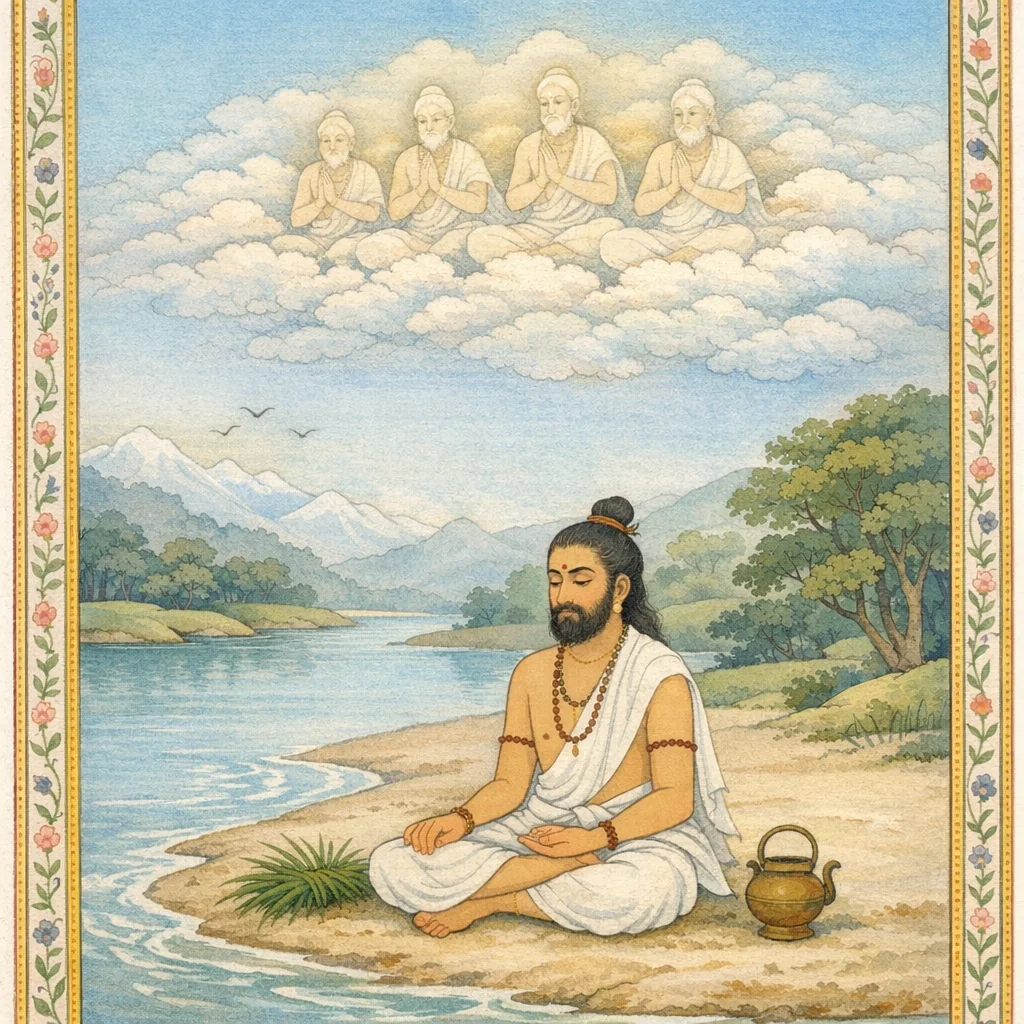
Continuing the didactic narrative, Mārkaṇḍeya tells of Ruci’s sorrow at remaining unmarried and his wish to uplift his Pitṛs (ancestors). After severe tapas, Brahmā directs him to household life and declares that success rests on Pitṛ-pūjā. Ruci performs tarpaṇa on a secluded river sandbank and recites a wide-ranging Pitṛ-stuti honoring the Pitṛs across heaven, earth, and nether realms, and through social orders and ritual modes (svadhā, piṇḍa, homa). The Pitṛs appear as vast radiance, grant him a wife and the future renown of “Raucya” (Raucya Manvantara), and promise progeny and prosperity. The chapter then turns to ritual instruction: reciting this hymn in Śrāddha—especially before brāhmaṇas while they eat—makes the rite inexhaustible, extends ancestral satisfaction for specified year-counts by season, and ensures Pitṛ-presence wherever the text is preserved. It also warns against impure wealth, improper time and place, and unfit recipients, linking devotional praise with the procedural ethics of Śrāddha and preparing for further dharma guidance.
Shlokas
Verse 1
ऽध्यायः सूत उवाच / पृष्टः क्रैञ्चुकिनोवाच मार्कण्डेयः पुनश्च तम् / स तेन पितृवाक्यने भृशमुद्वग्नमानसः
Sūta said: When questioned, Mārkaṇḍeya again spoke to that Kraiñcukī. Hearing his father’s words, he became greatly distressed at heart.
Verse 2
कन्याभिलाषी विप्रर्षिः परिबभ्राम मेदिनीम् / कन्यामलभमानो ऽसौ पितृवाक्येन दीपितः / चिन्तामवाप महीतमतीवोद्वग्नमानसः
A Brahmin sage, longing for a maiden, wandered over the earth. Failing to obtain a maiden, and urged on by his father’s words, he fell into anxiety—his mind greatly troubled.
Verse 3
किं करोमि क्र गच्छामि कथं मे दारसंग्रहः / क्षिप्रं भवेन्मत्पितॄणां ममाभ्युदयकारकः
“What should I do, where should I go, and how may I obtain a wife? And what can quickly bring prosperity to me and become a cause of upliftment for my Pitṛs (ancestors)?”
Verse 4
तपसाराधयाम्येनं ब्रह्माणं कमलोद्भवम्
By austerity (tapas), I worship Brahmā—the lotus-born one.
Verse 5
ततो वर्षशतं दिव्यं तपस्तेपे महामनाः / तत्र स्थितश्चिरं कालं वनेषु नियमस्थितः / आराधनाय स तदा परं नियममास्थितः
Then that great-souled one performed austerities for a hundred divine years. Remaining there long in the forests, steadfast in vows and disciplined observances, he then undertook the highest rule of restraint for the sake of worship.
Verse 6
ततः प्रदर्शयामास ब्रह्मा लोकपितामहः / उवाचाथ प्रसन्नो ऽस्मीत्युच्यतामभिवाञ्छितम्
Then Brahmā—the grandsire of the worlds—revealed himself to him. Pleased, he said: “I am satisfied; speak now what you desire.”
Verse 7
ततो ऽसौ प्रणिपत्याह ब्रह्माणं जगतो गतिम् / पितॄणां वचनात्तेन यत्कर्तुमभिवाञ्छितम्
Then he bowed down and addressed Brahmā, the guide of the worlds; and, acting on the command of the Pitṛs, he spoke of what he wished to accomplish.
Verse 8
ब्रह्मोवाच / प्रजापतिस्त्वं भविता स्रष्टव्या भवता प्रजाः / सृष्ट्वा प्रजाः सुतान्विप्र समुत्पाद्य क्रियास्तथा
Brahmā said: “You shall become Prajāpati; by you the creatures are to be created. Having created the beings and then sons, O sage, you must also duly establish the prescribed rites and duties.”
Verse 9
कृत्वा कृताधिकारस्त्वं ततः सिद्धिमवाप्यसि / सत्वं यथोक्तं पितृभिः कुरु दारपरिग्रहम्
Having performed the prescribed duties, you will be one who has fulfilled rightful obligations; then you will attain accomplishment. Therefore, as instructed by the Pitṛs (ancestors), accept a wife and enter the household life.
Verse 10
कामं चेममभिध्याय क्रियतां पितृपूजनम् / त एव तुष्टाः पितरः प्रदास्यन्ति तवेप्सितम् / पत्नीं सुतांश्च सन्तुष्टाः किं न दद्युः पितामहाः
Therefore, keeping this in mind, one should perform the worship of the Pitṛs (ancestors). When the Pitṛs are pleased, they will grant you what you desire. If the forefathers are satisfied, what would they not bestow—even a wife and sons?
Verse 11
मार्कण्डेय उवाच / इत्यृषिर्वचनं श्रुत्वा ब्रह्मणो ऽव्यक्तजन्मनः / नद्या विविक्ते पुलिने चकार पितृतर्पणम्
Mārkaṇḍeya said: Having heard the words of the sage—Brahmā, whose origin is unmanifest—he performed tarpaṇa, the water-offering to the Pitṛs, on a secluded sandbank by the river.
Verse 12
तुष्टाव च पितॄन्विप्रः स्तवैरेभिरथादृतः / एकाग्रप्रयतो भूत्वा भक्तिनम्रात्मकन्धरः
Then the brāhmaṇa reverently praised the Pitṛs with these hymns; becoming single-pointed and composed, he bowed his head in devotion.
Verse 13
रुचिरुवाच / नमस्ये ऽहं पितॄन् भक्त्या ये वसन्त्यधिदेवतम् / देवैरपि हि तर्प्यन्ते ये श्राद्धेषु स्वधोत्तरैः
Ruciru said: With devotion I bow to the Pitṛs who dwell in their divine presiding state; indeed, even the Devas are satisfied through those Pitṛs who are gratified by Śrāddha rites accompanied by the utterance of “svadhā”.
Verse 14
नमस्ये ऽहं पितॄन् स्वर्गे ये तर्प्यन्ते महर्षिभिः / श्राद्धैर्मनोमयैर्भक्त्या भुक्तिमुक्तिमभीप्सुभिः
I bow to the Pitṛs in heaven, whom the great sages satisfy through mind-offered śrāddha rites performed with devotion—by those who seek both worldly enjoyment and final liberation.
Verse 15
नमस्ये ऽहं पितॄन्स्वर्गे सिद्धाः सन्तर्पयन्ति यान् / श्राद्धेषु दिव्यैः सकलैरुपहारैरनुत्तमैः
I bow to those Pitṛs in heaven whom the Siddhas gratify through śrāddha rites with all divine offerings, complete and of unsurpassed excellence.
Verse 16
नमस्ये ऽहं पितॄन् भक्त्या येर्ऽच्यन्ते गुह्यकैर्दिवि / तन्मयत्वेन वाधद्भिः ऋद्धिमात्यन्तिकीं पराम्
With devotion I bow to the Pitṛs, who are worshipped in heaven by the Guhyakas; and the worshippers, becoming one with them, attain the supreme, unsurpassed prosperity.
Verse 17
नमस्ये ऽहं पितॄन्मर्त्यैरर्च्यन्ते भुवि ये सदा / श्राद्धेषु श्रद्धयाभीष्टलोकपुष्टिप्रदायिनः
I bow to the Pitṛs who are ever worshipped on earth by mortals; when honored in śrāddha rites with faith, they bestow the nourishment and well-being of the desired realms.
Verse 18
नमस्ये ऽहं पितॄन्विप्रैरर्च्यन्ते भुवि ये सदा / वाञ्छिताभीष्टलाभाय प्राजापत्यप्रदायिनः
I bow to the Pitṛs who are ever worshipped on earth by the vipras, the Brahmin sages; they grant the attainment of desired and cherished aims, and bestow prājāpatya—progeny and prosperity under Prajāpati’s ordinance.
Verse 19
नमस्ये ऽहं पितॄन्ये वै तर्प्यन्ते ऽरण्यवासिभिः / वन्यैः श्राद्धैर्यताहारैस्तपोनिर्धूतकल्मषैः
I bow to the Pitṛs (ancestral Manes) who are truly satisfied by forest-dwellers—through śrāddha offerings made with wild foods, through disciplined and measured diet, and through ascetics whose tapas has washed away all impurity.
Verse 20
नमस्ये ऽहं पितॄन्विप्रैर्नैष्ठिकैर्धर्मचारिभिः / ये संयतात्मभिर्नित्यं सन्तर्प्यन्ते समाधिभिः
I bow to the Pitṛs (ancestral spirits), ever satisfied by disciplined, self-controlled Brahmin sages—steadfast in their vows and established in dharma—through their constant absorptions in samādhi.
Verse 21
नमस्ये ऽहं पितॄञ्छ्राद्धै राजन्यास्तर्पयन्ति यान् / कव्यैरशेषैविधिवल्लोकद्वयफलप्रदान्
I bow to those Pitṛs (ancestors) whom the royal lineage satisfies through śrāddha rites—duly performed with all prescribed kavya offerings—for they bestow the fruits of both worlds, this life and the next.
Verse 22
नमस्ये ऽहं पितॄन्वैश्यैरर्च्यन्ते भुवि ये सदा / स्वकर्माभिरतैर्न्नित्यं पुष्पधूपान्नवारिभिः
I bow to the Pitṛs (ancestral fathers) who are always worshipped on earth by the Vaiśyas—ever devoted to their own duties—through offerings of flowers, incense, food, and water.
Verse 23
नमस्ये ऽहं पितॄञ्छ्राद्धे शूद्रैरपि च भक्तितः / सन्तर्प्यते जगत्कृत्स्नं नाम्ना ख्याताः सुकालिनः
I bow to the Pitṛs in the śrāddha; even when Śūdras perform it with devotion, the whole world is satisfied. Those Pitṛs are renowned by the name “Sukālina.”
Verse 24
नमस्ये ऽहं पितॄञ्छ्राद्धे पाताले ये महासुरैः / सन्तर्प्यन्ते सुधाहारास्त्यक्तदम्भमदैः सदा
I bow to the Pitṛs, who—during the śrāddha rites—are satisfied in Pātāla by the great Asuras, who ever partake of ambrosial food, having abandoned pride and arrogance.
Verse 25
नमस्ये ऽहं पितॄञ्छ्राद्धैरर्च्यन्ते ये रसातले / भोगैरशेषैर्विधिवन्नागैः कामानभीप्सुभिः
I bow to those Pitṛs who are worshipped through śrāddha rites, who dwell in Rasātala, and who are properly honored by the Nāgas—desirous of boons—with complete offerings of enjoyments.
Verse 26
नमस्ये ऽहं पितॄञ्छ्राद्धैः सर्पैः सन्तर्पितान्सदा / तत्रैव विधिवन्मन्त्रभोगसम्पत्समन्वितैः
I bow to the Pitṛs, who are ever satisfied by śrāddha offerings and by the nourishing rites connected with serpents; in that very rite they are duly endowed with mantras, oblations for enjoyment, and the requisite ritual provisions.
Verse 27
पितॄन्नमस्ये निवसन्ति साक्षाद्ये देवलोके ऽथ महीतले वा / तथान्तरिक्षे च सुरारिपूज्यास्ते वै प्रतीच्छन्तु मयोपनीतम्
I bow to the Pitṛs—those who truly dwell, whether in the world of the gods, or upon the earth, or in the mid-region; revered even by the foes of the gods—may they indeed accept what has been offered by me.
Verse 28
पितॄन्नमस्ये परमार्थभूता ये वै विमाने निवसन्त्यमूर्ताः / यजन्ति यानस्तमलैर्मनोभिर्योगीश्वराः क्लेशविमुक्तिहेतून्
I bow to the Pitṛs—beings established in the highest truth—who dwell in the celestial car, bodiless; those lordly yogins worship with minds free from impurity, becoming causes of liberation from affliction.
Verse 29
पितॄन्नमस्ये दिवि ये च मूर्ताः स्वधाभुजः काम्यफलाभिसन्धौ / प्रदानशक्ताः सकलेप्सितानां विमुक्तिदा ये ऽनभिसंहितेषु
I bow to the Pitṛs (ancestors) who are embodied in the heavenly realm, partakers of the svadhā offerings; when desired fruits are sought, they have the power to grant every wished-for attainment, and when no particular desire is intended, they bestow liberation itself.
Verse 30
तृप्यन्तु ते ऽस्मिन्पितरः समस्ता इच्छावतां ये प्रदिशन्ति कामान् / सुरत्वमिन्द्रत्वमितो ऽधिकं वा गजाश्वरत्नानि महागृहाणि
May all those Pitṛs be satisfied by this offering/rite—the wish-fulfilling ancestors who grant desired enjoyments—bestowing godhood, Indra-hood, or even higher status than these, along with elephants, horses, precious gems, and great mansions.
Verse 31
सोमस्य ये रश्मिषु येर्ऽकबिम्बे शुक्ले विमाने च सदा वसन्ति / तृप्यन्तु ते ऽस्मिन्पितरो ऽन्नतोयैर्गन्धादिना पुष्टिमितो व्रजन्तु
May those Pitṛs who dwell in the rays of Soma (the Moon), in the orb of the Sun, and always in the bright celestial car be satisfied here by offerings of food and water; and, nourished by fragrance and the like, may they depart strengthened.
Verse 32
येषां हुते ऽग्नौ हविषा च तृप्तिर्ये भुञ्जते विप्रशरीरसंस्थाः / ये पिण्डदानेन मुदं प्रयान्ति तृप्यन्तु ते ऽस्मिन्पितरो ऽन्नतोयैः
May those Pitṛs—who are satisfied when oblations of havis are offered into the fire, who partake of offerings while abiding in the bodies of brāhmaṇas, and who rejoice through the gift of piṇḍas—be satisfied here with food and water.
Verse 33
ये खड्गमांसेन सुरैरभीष्टैः कृष्णैस्तिलैर्दिव्य मनोहरैश्च / कालेन शाकेन महर्षिवर्यैः संप्रीणितास्ते मुदमत्र यान्तु
May those ancestors who have been well satisfied—by offerings of khaḍga-meat, by black sesame dear to the gods, by divine and pleasing oblations, and by the kāla leafy vegetable praised by the foremost sages—attain joy here, in the realm of the Pitṛs.
Verse 34
कव्यान्यशेषाणि च यान्यभीष्टान्यतीव तेषां मम पूजितानाम् / तेषाञ्च सान्निध्यमिहास्तु पुष्पगन्धाम्बुभोज्येषु मया कृतेषु
May all ancestral offerings (kavya) and every dearly desired fulfillment of those Pitṛs whom I have worshipped be fully accomplished; and may their presence be here, in these offerings I have prepared—flowers, fragrances, water, and food.
Verse 35
दिनेदिने ये प्रतिगृह्णतेर्ऽचां मासान्तपूज्या भुवि ये ऽष्टकासु / ये वत्सरान्ते ऽभ्युदये च पूज्याः प्रयान्तु ते मे पितरो ऽत्र तुष्टिम्
May those Pitṛs who receive daily worship, who are worshipped at the month’s end on earth, who are honoured during the Aṣṭakā rites, and who are worshipped at the year’s end and on auspicious occasions—may they come here and be satisfied with me.
Verse 36
पूज्या द्विजानां कुमुदेन्दुभासो ये क्षत्त्रियाणां ज्वलनार्कवर्णाः / तथा विशां ये कनकावदाता नीलीप्रभाः शूद्रजनस्य ये च
Those worthy of honour among the twice-born shine with the radiance of the moon and the white lotus; those among kṣatriyas are of the colour of fire and the sun; among vaiśyas they are bright like purified gold; and among śūdras they are of a deep blue lustre.
Verse 37
ते ऽस्मिन्समस्ता मम पुष्पगन्धधूपाम्बुभोज्यादिनिवेदनेन / तथाग्निहोमेन च यान्ति तृप्तिं सदा पितृभ्यः प्रणतो ऽस्मि तेभ्यः
By these offerings of mine—flowers, fragrances, incense, water, food and the like—and also by oblations into the sacred fire (homa), all of them attain satisfaction here. Ever bowing to the Pitṛs, I offer my reverence to them.
Verse 38
ये देवपूर्वाण्यभितृप्तिहेतोर श्रन्ति कव्यानि शुभाहृतानि / तृप्ताश्च ये भूतिसृजो भवन्ति तृप्यन्तु ते ऽस्मिन्प्रणतो ऽस्मि तेभ्यः
May those divine beings who—being satisfied—receive these auspiciously offered ritual portions (kavya), first presented to the Devas for the sake of their gratification, be pleased here; I bow to them.
Verse 39
रक्षांसि भूतान्यसुरांस्तथोग्रात्रिर्णाशयन्तु त्वशिवं प्रजानाम् / आद्याः सुराणाममरेशपूज्यास्तृप्यन्तु ते ऽस्मिन्प्रणतो ऽस्मितेभ्यः
May the fierce rākṣasas, bhūtas, and asuras destroy threefold whatever is inauspicious for people. May those primordial deities—worthy of worship even by the lords of the immortals—be satisfied here; to them I bow in reverence.
Verse 40
अग्निष्वात्ता बर्हिषद आज्यपाः सोमपास्तथा / व्रजन्तु तृप्तिं श्राद्धे ऽस्मिन्पितरस्तर्पिता मया
May the Agniṣvātta and Barhiṣad Pitṛs, and likewise the Ājyapā and Somapā Pitṛs—being satisfied by me through this śrāddha—attain full contentment.
Verse 41
अग्निष्वात्ताः पितृगणाः प्राचीं रक्षन्तु मे दिशम् / तथा बर्हिषदः पान्तु याम्यां मे पितरः सदा / प्रतीचीमाज्यपास्तद्वदुदीचीमपि सोमपाः
May the Agniṣvātta hosts of Pitṛs protect my eastern direction. Likewise, may the Barhiṣad Pitṛs always guard my southern quarter. In the same way, may the Ājyapā Pitṛs protect the western direction, and may the Somapā Pitṛs also protect the northern direction.
Verse 42
रक्षोभूतपिशाचेभ्यस्तथैवासुरदोषतः / सर्वतः पितरो रक्षां कुर्वन्तु मम नित्यशः
From rākṣasas, bhūtas, and piśācas, and likewise from the afflictions caused by asuric forces—may the Pitṛs on all sides continually grant me protection.
Verse 43
विश्वो विश्वभुगाराध्यो धर्मो धन्यः शुभाननः / भूतिदो भूतिकृद् भूतिः पितॄणां ये गणा नव
Viśva, Viśvabhuk, the Adorable One, Dharma, the Blessed One, the Auspicious-faced; the Giver of prosperity, the Maker of prosperity, Prosperity itself—these are the nine hosts of the Pitṛs (ancestors).
Verse 44
कल्याणः कल्यदः कर्ता कल्यः कल्यतराश्रयः / कल्यताहेतुरन्घः षडिमे ते गणाः स्मृताः
Kalyāṇa, the Auspicious One; Kalyada, the Giver of auspiciousness; Kartā, the Doer and Creator; Kalya, the Beneficent One; Kalyatarāśraya, the Refuge of what is yet more auspicious; and Anagha, the Sinless One, the very cause of auspiciousness—these six epithets are remembered as yours.
Verse 45
वरो वरेण्यो वरदस्तुष्टिदः पुष्टिदस्तथा / विश्वपाता तथा धाता सप्तैते च गणाः स्मृताः
Vara, Vareṇya, Varada, Tuṣṭida, Puṣṭida, Viśvapātā, and Dhātā—these seven are remembered together as a single gaṇa (group).
Verse 46
महान्महात्मा महितो महिमावान्महाबलः / गणाः पञ्च तथैवैते पितॄणां पापनाशनाः
Great, high-souled, honored, glorious, and mighty—these five groups are indeed the destroyers of the sins of the Pitṛs (ancestors).
Verse 47
सुखदो धनदश्चान्यो धर्मदो ऽन्यश्च भूतिदः / पितॄणां कथ्यते चैव तथा गणचतुष्टयम्
One bestows happiness, another bestows wealth; one grants dharma, and another grants bhūti—prosperity. Thus, for the Pitṛs, a fourfold group is spoken of.
Verse 48
एकत्रिंशत्पितृगणा यैर्व्याप्तमखिलं जगत् / त एवात्र पितृगणास्तुष्यन्तु च मदाहितात्
May those thirty-one classes of Pitṛs—by whom this entire universe is pervaded—be satisfied here, through this offering made by me.
Verse 49
माक्रण्डेय उवाच / एवं तु स्तुवतस्तस्य तेजसोराशिरुच्छ्रितः / प्रादुर्बभूव सहसा गगनव्याप्तिकारकः
Mārkaṇḍeya said: As he thus praised Him, a lofty mass of radiance suddenly manifested—an effulgence that spread and filled the sky.
Verse 50
तद्दृष्ट्वा सुमहत्तेजः समाच्छाद्य स्थितं जगत् / जानुभ्यामवनीं गत्वा रुचिः स्तोत्रमिदञ्जगौ
Seeing that exceedingly great radiance, which stood enveloping the world, Ruci went down to the earth upon his knees and then sang this hymn.
Verse 51
रुचिरुवाच / अर्चितानाममूर्तानां पितॄणां दीप्ततेजसाम् / नमस्यामि सदा तेषां ध्यानिनां दिव्यचक्षुषाम्
Ruci said: I always bow to those radiant Pitṛs—formless yet worthy of worship—who are contemplatives endowed with divine sight.
Verse 52
इन्द्रादीनां च नेतारो दक्षमारीचयोस्तथा / सप्तर्षोणां तथान्येषां तान्नमस्यामि कामदान्
I bow to those bestowers of desired boons—the leaders among Indra and the other gods, as well as Dakṣa and Mārīci, and likewise the Seven Sages and other revered beings.
Verse 53
मन्वादीनां च नेतारः सूर्याचन्द्रमसोस्तथा / तान्नमस्याम्यहं सर्वान्पितॄनप्युदधावपि
I bow to all the leaders beginning with the Manus, and likewise to the Sun and the Moon; I also bow to all the Pitṛs, even those abiding in the ocean.
Verse 54
नक्षत्राणां ग्रहाणां च वाय्वग्न्योर्नभसस्तथा / द्यावापृथिव्योश्च तथा नमस्यामि कृताञ्जलिः
With hands folded in añjali, I bow in reverence to the constellations and the planets, to Vāyu and Agni, to the sky, and likewise to Heaven and Earth.
Verse 55
प्रजापतेः कश्यपाय सोमाय वरुणाय च / योगेश्वरेभ्यश्च सदा नमस्यामि कृताञ्जलिः
With hands folded in reverence, I ever bow to Prajāpati, to Kaśyapa, to Soma, to Varuṇa, and also to the great Yogīśvaras, the Lords of Yoga.
Verse 56
नमो गणेभ्यः सप्तभ्यस्तथा लोकेषु सप्तसु / स्वायम्भुवे नमस्यामि ब्रह्मणे योगचक्षुषे
Salutations to the seven Gaṇas, and likewise to the seven worlds. I bow to Brahmā Svāyambhuva, the Self-born, who beholds through the eye of yoga—inner vision.
Verse 57
सोमाधारान्पितृगणान्योगमूर्तिधरांस्तथा / नमस्यामि तथा सोमं पितरं जगतामहम्
I bow to the hosts of the Pitṛs sustained by Soma, and likewise to those who bear the form of Yoga. I also bow to Soma, the Father of the worlds.
Verse 58
अग्निरूपांस्तथैवान्यान्नमस्यामि पितॄनहम् / अग्निसोममयं विश्वं यत एतदशेषतः
I bow to the Pitṛs who are of the form of Agni, and also to the others. For this entire universe, without remainder, is constituted of Agni and Soma.
Verse 59
ये च तेजसि ये चैते सोमसूर्याग्निमूर्तयः / जगत्स्वरूपिणश्चैव तथा ब्रह्मस्वरूपिणः
And those who abide in divine radiance—these very ones who bear the forms of Soma, the Sun, and Agni—are truly of the nature of the universe, and likewise of the very nature of Brahman.
Verse 60
तेभ्यो ऽखिलेभ्यो योगिभ्यः पितृभ्यो यतमानसः / नमोनमो नमस्ते ऽस्तु प्रसीदन्तु स्वधाभुजः
With a mind intent on devotion, I bow again and again to all those Yogins and to the Pitṛs, the ancestral spirits. Namo, namo—reverence to you; may the partakers of svadhā be gracious and pleased.
Verse 61
माक्रण्डेय उवाच / एवं स्तुतास्ततस्तेन तजसो मुनिसत्तमाः / निश्चक्रमुस्ते पितरो भासयन्तो दिशादश
Mārkaṇḍeya said: Thus praised by him, those radiant, foremost sages—the Pitṛs—then came forth, illuminating the ten directions.
Verse 62
निवेदनञ्च यत्तेन पुष्पगन्धानुलेपनम् / तद्भूषितानथ स तान्ददृशे पुरतः स्थितान्
And the offerings he had made—flowers, fragrances, and unguents—adorned them; then he saw those beings standing before him.
Verse 63
प्रणिपत्य रुचिर्भक्त्या पुनरेव कृताञ्जलिः / नमस्तुभ्यं नमस्तुभ्यमित्याह पृथगादृतः
Bowing down, Ruci—filled with devotion—again folded his hands, and with distinct reverence said, “Salutations to you, salutations to you.”
Verse 64
ततः प्रसन्नाः पितरस्तमूचुर्मुनिसत्तमम् / वरं वृणीष्वेति स तानुवाचानतकन्धरः
Then the Pitṛs, well pleased, said to that best of sages, “Choose a boon.” And he replied to them with his neck bowed in humility.
Verse 65
रुचिरुवाच / प्रजानां सर्गकर्तृत्वमादिष्टं ब्रह्मणा मम / सो ऽहं पत्नीमभीप्सामि धन्यां दिव्यां प्रजावतीम्
Ruciru said: “Brahmā has ordained for me the duty of creating progeny. Therefore I desire a wife—virtuous, divine, and blessed with offspring.”
Verse 66
पितर ऊचुः / अत्रैव सद्यः पत्नी ते भवत्वतिमनोरमा / तस्याञ्च पुत्रो भविता भवतो मुनिसत्तम !
The Pitṛs said: “Right here, at once, let this most charming woman become your wife; and from her a son will be born to you, O best of sages.”
Verse 67
मन्वन्तराधिपो धीमांस्त्वन्नाम्नैवोपलक्षितः / रुचे ! रौच्य इति ख्यातिं प्रयास्यति जगत्त्रये
O Ruci! The wise ruler of the Manvantara—distinguished precisely by your name—will attain renown in all the three worlds as ‘Raucya’.
Verse 68
तस्यापि बहवः पुत्रा महाबलपराक्रमाः / भविष्यन्ति महात्मानः पृथिवीपरिपालकाः
He too will have many sons—mighty and heroic—who will become great-souled guardians and rulers of the earth.
Verse 69
त्वं च प्रिजापतिर्भूत्वा प्रजाः सृष्ट्वा चतुर्विधाः / क्षीणाधिकारो धर्मज्ञस्ततः सिद्धिमवाप्स्यसि
You too, becoming a Prajāpati, will create beings of four kinds; then, when your appointed authority is exhausted, and you are a knower of dharma, you will attain siddhi—final spiritual fulfillment.
Verse 70
स्तोत्रेणानेन च नरो यो ऽस्मांस्तोष्यति भक्तितः / तस्य तुष्टा वयं भोगानात्मजं ध्यानमुत्तमम्
Whoever, with devotion, pleases us by this hymn—being satisfied with him, we grant enjoyments, a worthy son, and the supreme practice of meditation (dhyāna).
Verse 71
आयुरारोग्यमर्थं च पुत्रपौत्रादिकं तथा / वाञ्छद्भिः सततं स्तव्याः स्तोत्रेणानेन वै यतः
Therefore, those who desire long life, good health, prosperity, and offspring such as sons and grandsons should continually offer praise through this very hymn.
Verse 72
श्राद्धेषु य इमं भक्त्या त्वस्मत्प्रीतिकरं स्तवम् / पठिष्यति द्विजाग्र्याणां भुञ्जतां पुरतः स्थितः
Whoever, during śrāddha rites, stands before the foremost of the twice-born as they partake of the meal, and recites with devotion this hymn that is pleasing to you and to me—
Verse 73
स्तोत्रश्रवणसंप्रीत्या सन्निधाने परे कृते / अस्माभिरक्षयं श्राद्धं तद्भविष्यत्यसंशयम्
Through the joy born of hearing the hymn, and because the Supreme Presence has been established here, the śrāddha performed by us will become inexhaustible—of this there is no doubt.
Verse 74
यद्यप्यश्रोत्रियं श्राद्धं यद्यप्युपहतं भवेत् / अन्यायोपात्तवित्तेन यदि वा कृतमन्यथा
Even if a Śrāddha is performed for one who is not a qualified Vedic recipient, even if it is marred by defects, or even if it is done with wealth gained through injustice—or carried out in some improper manner—it becomes blameworthy, and its intended fruit is obstructed.
Verse 75
अश्राद्धार्हैरुपतैरुपहारैस्तथा कृतैः / अकाले ऽप्यथ वा देशे विधिहीनमथापि वा
Offerings made with gifts unfit for Śrāddha—whether already presented or merely arranged—are likewise defective; and so too are rites performed at an improper time, in an improper place, or without the prescribed procedure.
Verse 76
अश्रद्धया वा पुरुषैर्दम्भमाश्रित्य यत्कृतम् / अस्माकं तृप्तये श्राद्धन्तथाप्येतदुदीरणात्
Even if men perform a Śrāddha without faith, or do it while resorting to hypocrisy, it still becomes a rite for our satisfaction—by the very utterance/recitation of the prescribed words.
Verse 77
यत्रैतत्पठ्यते श्राद्धे स्तोत्रमस्तत्सुखावहम् / अस्माकं जायते तृप्तिस्तत्र द्वादशावर्षिकी
Wherever, during a Śrāddha rite, this hymn is recited—bringing well-being to the ancestors—there satisfaction arises for us, lasting for twelve years.
Verse 78
हेमन्ते द्वादशाब्दानि तृप्तिमेतत्प्रयच्छति / शिशिरे द्विगुणाब्दानि तृप्तिं स्तोत्रमिदं शुभम्
When recited in the season of Hemanta (early winter), this auspicious hymn grants satisfaction to the departed for twelve years; when recited in the season of Śiśira (late winter), it grants satisfaction for twice that duration.
Verse 79
वसन्ते षोडश समास्तृप्तये श्राद्धकर्मणि / ग्रीष्मे च षोडशैवैतत्पठितं तृप्तिकारकम्
In spring, within the Śrāddha rite, sixteen recitations are ordained to bring satisfaction to the Pitṛs (ancestors); and in summer as well, this very text, when recited sixteen times, becomes a cause of their contentment.
Verse 80
विकले ऽपि कृते श्राद्धे स्तोत्रेणानेन साधिते / वर्षासु तृप्तिरस्माकमक्षय्या जायते रुचे
Even if a Śrāddha is performed at an improper or incomplete time, if it is rightly accomplished through this hymn, then, O radiant one, our satisfaction in the rainy season becomes unfailing and inexhaustible (akṣayya).
Verse 81
शरत्काले ऽपि पठितं श्राद्धकाले प्रयच्छति / अस्माकमेतत्पुरुषैस्तृप्तिं पञ्चदशाब्दिकीम्
Even if it is recited in the autumn season, it bestows its fruit at the time of Śrāddha; through this, our ancestors attain satisfaction for fifteen years.
Verse 82
यस्मिन् गेहे च लिखितमेतत्तिष्ठति नित्यदा / सन्निधानं कृते श्राद्धे तत्रास्माकं भविष्यति
In whatever house this teaching is written down and kept always, when Śrāddha is performed there, our close presence (sannidhāna) will surely be there.
Verse 83
तस्मादेतत्त्वया श्राद्धे विप्राणां भुञ्जतां पुरः / श्रावणीयं महाभाग अस्माकं पुष्टिकारकम्
Therefore, at the time of Śrāddha, you should recite this before the brāhmaṇas (vipras) as they partake of the meal. O greatly fortunate one, it is to be heard, and it becomes for us a source of nourishment and strengthening.
Frequently Asked Questions
The chapter presents brāhmaṇas as ritual embodiments through whom the Pitṛs partake of offerings; hence recitation at that moment aligns sound (stuti), offering (anna/udaka/piṇḍa), and recipient-presence, producing ‘akṣaya’ fruit and establishing Pitṛ-sannidhi (ancestral presence) in the rite.
The stuti repeatedly states that Pitṛs grant desired attainments when sought (wife, sons, prosperity, status) and grant mokṣa when no specific desire is intended—casting Pitṛ-upāsanā as a dharma-practice that can be oriented either toward kāmya results or niṣkāma spiritual release.
It cautions against unqualified recipients (apātra), improper procedure, wrong time/place, and offerings sourced from injustice, stating these obstruct the intended fruit. Yet it also asserts the hymn’s strong efficacy: wherever it is recited during Śrāddha, Pitṛ-satisfaction arises for long durations, and the rite can become stabilized and ‘inexhaustible’ through the established presence invoked by the recitation.