Adhyaya 123
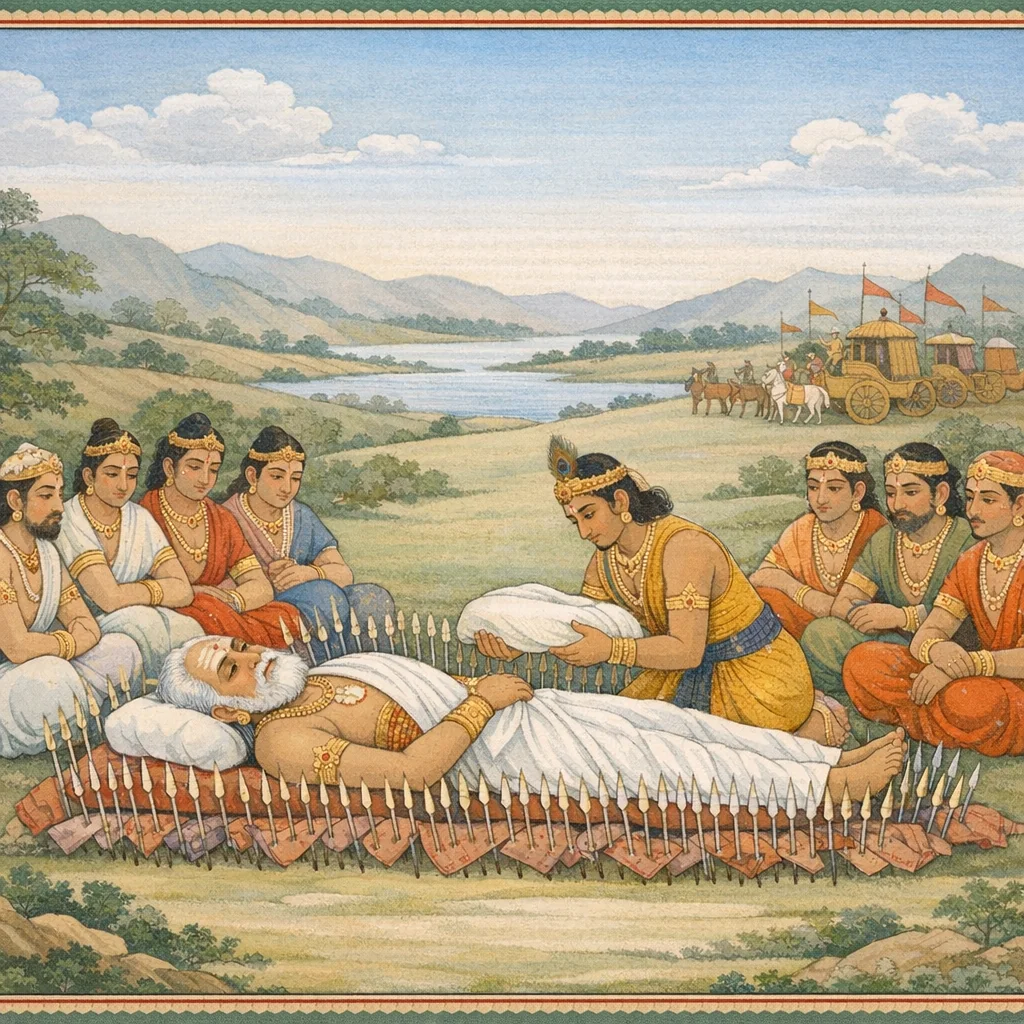
Chapter Arc: भीष्म के रथ से गिरकर शर-शय्या पर पड़ते ही रणभूमि का कोलाहल थम-सा जाता है; संजय धृतराष्ट्र को संकेत देता है कि अब युद्ध के बीच एक महात्मा का धर्म-आसन खुलने वाला है। → धृतराष्ट्र के मन में यह पीड़ा उभरती है कि यदि भीष्म ने शिखण्डी पर करुणा करके प्रहार न रोका होता तो पाण्डवों का विनाश हो चुका होता; अब वही करुणा कौरव-पक्ष के लिए सबसे बड़ा शोक बनकर खड़ी है। उधर विभिन्न जनपदों के नरेश, पाण्डव और कौरव महारथी शर-शय्या पर पड़े पितृतुल्य भीष्म के पास आते हैं—युद्ध का केंद्र क्षण भर को उपदेश-भूमि बन जाता है। → भीष्म, क्षत्रधर्म के वेत्ता और धर्मार्थ-तत्त्वज्ञ, अर्जुन से शय्या के अनुरूप तकिया (उपधान) देने को कहते हैं; सव्यसाची उनके अभिप्राय को समझकर ठीक प्रकार से सहारा लगाता है और भीष्म संतुष्ट होते हैं—यह क्षण बताता है कि शत्रुता के पार भी गुरु-शिष्य और पितृ-वत्सल संबंध जीवित हैं। → भीष्म की धर्मनिष्ठा देखकर उपस्थित राजागण विस्मित होते हैं; उनकी सेवा के लिए कुशल वैद्य और उपचरक समस्त उपकरणों सहित आते हैं। अध्याय का स्वर युद्ध-वृत्तांत से हटकर ‘महापुरुष की शय्या पर सेवा, मर्यादा और धर्म’ की स्थापना करता है। → भीष्म के संतुष्ट होने के बाद भी प्रश्न शेष रहता है—वे इस शर-शय्या से कौन-सा धर्मोपदेश देंगे, और कौरव-पाण्डव उस वाणी को कैसे ग्रहण करेंगे?
Shlokas
Verse 1
[दाक्षिणात्य अधिक पाठके ३ श्लोक मिलाकर कुल १२५ श्लोक हैं।] #स्न्ैमा+ () अिमनने विशर्त्याधिकशततमो< ध्याय: भीष्मजीकी महत्ता तथा अर्जुनके द्वारा भीष्मको तकिया देना एवं उभय पक्षकी सेनाओंका अपने शिबिरमें जाना और श्रीकृष्ण-युधिषिर-संवाद धृतराष्ट उवाच कथमासंस्तदा योधा हीना भीष्मेण संजय । बलिना देवकल्पेन गुर्वर्थे ब्रह्मचारिणा,धृतराष्ट्रने पूछा--संजय! भीष्मजी बलवान् और देवताके समान थे। उन्होंने अपने पिताके लिये आजीवन ब्रह्मचर्यका पालन किया था। उस दिन उनके रथसे गिर जानेके कारण उनके सहयोगसे वंचित हुए मेरे पक्षके योद्धाओंकी क्या दशा हुई?
Dhṛtarāṣṭra said: “Sañjaya, what was the condition of the warriors at that time, when they were deprived of Bhīṣma—mighty, godlike, and a lifelong celibate who had embraced brahmacarya for the sake of his father—after he had fallen from his chariot?”
Verse 2
तदैव निहतान् मन्ये कुरूनन्यांश्व॒ पाण्डवै: | न प्राहरद् यदा भीष्मो घृणित्वाद् द्रपदात्मजम्,भीष्मजीने अपनी दयालुताके कारण जब ट्रुपदकुमार शिखण्डीपर प्रहार करनेसे हाथ खींच लिया, तभी मैंने यह समझ लिया था कि अब पाण्डवोंके हाथसे अन्य कौरव भी अवश्य मारे जायँगे
Verse 3
ततो दुःखतरं मन्ये किमन्यत् प्रभविष्यति । अद्याहं पितरं श्र॒ुत्वा निहतं सम सुदुर्मति:,मेरी समझमें इससे बढ़कर महान् दुःखकी बात और क्या होगी कि आज अपने ताऊ भीष्मके मारे जानेका समाचार सुनकर भी जीवित हूँ। मेरी बुद्धि बहुत ही खोटी है
Dhṛtarāṣṭra said: “From this, I think, what greater sorrow could possibly arise? Even after hearing today that my elder (Bhīṣma), a father-figure to me, has been struck down, I still remain alive—alas, my mind is grievously misguided.”
Verse 4
अश्मसारमयं नूनं॑ हृदयं मम संजय । श्रुत्वा विनिहतं भीष्मं शतधा यजन्न दीर्यते,संजय! निश्चय ही मेरा हृदय लोहेका बना हुआ है; क्योंकि आज भीष्मजीके मारे जानेका समाचार सुनकर भी यह सैकड़ों टुकड़ोंमें विदीर्ण नहीं हो रहा है
Dhṛtarāṣṭra said: “Surely my heart is made of stone and iron, O Sañjaya; for even after hearing that Bhīṣma has been struck down, it does not split into a hundred pieces. Such is the hardening of my inner sense—where grief should break me, attachment and delusion keep me unshattered.”
Verse 5
यदन्यबन्निहतेनाजी भीष्मेण जयमिच्छता । चेष्टितं कुरुसिंहेन तन्मे कथय सुव्रत,उत्तम व्रतका पालन करनेवाले संजय! विजयकी अभिलाषा रखनेवाले कुरुकुलसिंह भीष्म जब युद्धमें मारे गये, उस समय उन्होंने दूसरी कौन-कौन-सी चेष्टाएँ की थीं? वह सब मुझसे कहो
Dhṛtarāṣṭra said: “O Sañjaya, steadfast in excellent vows, tell me in full what other deeds were performed by Bhīṣma—the lion among the Kurus—who sought victory, when he was struck down in battle.”
Verse 6
पुन:पुनर्न मृष्यामि हतं देवव्रतं रणे । न हतो जामदग्न्येन दिव्यैरस्त्रैरयं पुरा
Dhṛtarāṣṭra said: “Again and again I cannot bear it—that Devavrata (Bhīṣma) has been slain in battle. In former times he was not slain even by Jāmadagnya (Paraśurāma) with celestial weapons; how then has he now fallen?”
Verse 7
स हतो द्रौपदेयेन पाउ्चाल्येन शिखण्डिना । रणभूमिमें देवव्रत भीष्मका मारा जाना मुझे बारंबार असह् हो उठता है। जो भीष्म पूर्वकालमें जमदग्निनन्दन परशुरामके दिव्यास्त्रोंद्रार भी नहीं मारे जा सके, वे ही द्रपदकुमार पांचालदेशीय शिखण्डीके हाथसे मारे गये; यह कितने दुःखकी बात है ।। ६६ || संजय उवाच सायाह्वे निहतो भूमौ धार्तराष्ट्रानू विषादयन्
Sanjaya said: “He—Devavrata Bhishma—was struck down on the battlefield by the son of Draupada, the Panchala prince Shikhandin. Again and again I find it unbearable that Bhishma has been slain: the very Bhishma whom, in former times, even the divine weapons of Parashurama, son of Jamadagni, could not kill—he has now fallen by the hand of Shikhandin. What a cause of grief this is. In the late afternoon he lay fallen on the ground, casting the sons of Dhritarashtra into despair.”
Verse 8
स शेते शरतल्पस्थो मेदिनीमस्पृशंस्तदा,वे पृथ्वीका स्पर्श किये बिना ही उस समय बाणशय्यापर सो रहे थे। भीष्मके रथसे गिरकर धरतीपर पड़ जानेपर समस्त प्राणियोंमें भयंकर हाहाकार मच गया
Sañjaya said: At that time Bhīṣma lay upon a bed of arrows, not touching the earth. When Bhīṣma fell from his chariot onto the ground, a dreadful cry of lamentation arose among all beings. The scene underscores both the terrible cost of war and the extraordinary, vow-bound endurance of Bhīṣma, whose life is sustained amid suffering by steadfast resolve and dharma.
Verse 9
भीष्मे रथात् प्रपतिते प्रच्युते धरणीतले । हाहेति तुमुलः शब्दो भूतानां समपद्यत,वे पृथ्वीका स्पर्श किये बिना ही उस समय बाणशय्यापर सो रहे थे। भीष्मके रथसे गिरकर धरतीपर पड़ जानेपर समस्त प्राणियोंमें भयंकर हाहाकार मच गया
Sañjaya said: When Bhīṣma fell down from his chariot and slipped onto the surface of the earth, a thunderous cry of “Alas! Alas!” arose among all beings. The moment marks the moral shock of the battlefield: the collapse of a revered elder and guardian of dharma becomes a collective lament, revealing how war wounds not only bodies but the conscience of the world.
Verse 10
सीमावृक्षे निपतिते कुरूणां समितिंजये । सेनयोरुभयो राजन क्षत्रियानू भयमाविशत्,राजन! कुरुकुलके युद्धविजयी वीर भीष्म दोनों दलोंके लिये सीमावर्ती वृक्षके समान थे। उनके गिर जानेसे उभय पक्षकी सेनाओंमें जो क्षत्रिय थे, उनके मनमें भारी भय समा गया
Sañjaya said: O King, when Bhīṣma—the conqueror in battle and the Kurus’ very boundary-tree, as it were—fell, fear entered the hearts of the kṣatriyas in both armies. His presence had stood like a protective frontier for each side; with his collapse, the warriors on both fronts felt the sudden exposure and uncertainty of the war’s course.
Verse 11
भीष्मं शान्तनवं दृष्टवा विशीर्णकवचध्वजम् । कुरव: पर्यवर्तन्त पाण्डवाश्न विशाम्पते,प्रजानाथ! जिनके कवच और ध्वज छिजन्न-भिन्न हो गये थे, उन शान्तनुनन्दन भीष्मजीको उस अवस्थामें देखकर कौरव और पाण्डव दोनों ही उन्हें घेरकर खड़े हो गये
Sañjaya said: Seeing Bhīṣma, the son of Śāntanu, with his armor shattered and his banner torn, the Kurus and the Pāṇḍavas—O lord of the people, O protector of subjects—both turned back and stood surrounding him. The scene underscores how even amid relentless battle, the fall or weakening of a revered elder momentarily arrests hostility and draws both sides into a shared recognition of stature, duty, and the tragic cost of war.
Verse 12
खं तम:संवृतमभूदासीद् भानुर्गतप्रभ: । ररास पृथिवी चैव भीष्मे शान्तनवे हते,उस समय आकाशमें अन्धकार छा गया। सूर्यकी प्रभा फीकी पड़ गयी। शान्तनुनन्दन भीष्मके मारे जानेपर यह सारी पृथ्वी भयानक शब्द करने लगी
Sañjaya said: The sky became veiled in darkness, and the sun’s radiance seemed to fade away. When Bhīṣma, the son of Śāntanu, was struck down, the very earth resounded with a dreadful roar—signaling that a pillar of dharma on the battlefield had fallen and that the war’s moral gravity had deepened.
Verse 13
अयं ब्रद्मविदां श्रेष्ठो हायं ब्रह्मविदां वर: | इत्यभाषन्त भूतानि शयानं पुरुषर्षभम्,वहाँ सोये हुए पुरुषप्रवर भीष्मको देखकर कुछ दिव्य प्राणी कहने लगे, “ये ब्रह्मज्ञानियोंके शिरोमणि हैं, ये ब्रह्मवेत्ताओंमें श्रेष्ठ हैं
Sañjaya said: Seeing Bhīṣma—the bull among men—lying on his bed, certain celestial beings spoke: “This one is the foremost among knowers of Brahman; indeed, he is the best of those who possess Brahma-knowledge.” The scene frames Bhīṣma’s fall not as mere defeat in war, but as the honoring of a life of disciplined vows, truthfulness, and steadfast dharma, recognized even by higher beings.
Verse 14
अयं पितरमाज्ञाय कामार्त शान्तनुं पुरा । ऊर्ध्वरेतसमात्मानं चकार पुरुषर्षभ:,“इन्हीं पुरुषसिंहने पूर्वकालमें अपने पिता शान्तनुको कामासक्त जानकर अपने- आपको ऊउर्ध्वरेता (नैष्ठिक ब्रह्मचारी) बना लिया”
Sanjaya said: Long ago, realizing that his father Śāntanu was tormented by desire, that bull among men made himself one of steadfast continence—choosing lifelong celibacy. In doing so, he subordinated personal pleasure to filial duty and the larger demands of dharma.
Verse 15
इति सम शरतल्पस्थं भरतानां महत्तमम् | ऋषयस्त्वभ्यभाषन्त सहिता: सिद्धचारणै:,इस प्रकार सिद्धों और चारणोंसहित ऋषिगण भरतकुलके महापुरुष भीष्मको बाणशगय्यापर स्थित देख पूर्वोक्त बातें कहते थे
Sañjaya said: “Thus, seeing Bhīṣma—the greatest of the Bharatas—lying upon his bed of arrows, the sages, accompanied by Siddhas and Cāraṇas, addressed him with the words just described.”
Verse 16
हते शान्तनवे भीष्मे भरतानां पितामहे । न किंचित् प्रत्यपद्यन्त पुत्रास्तव हि मारिष,आर्य! भरतवंशियोंके पितामह शान्तनुनन्दन भीष्मके मारे जानेपर आपके पुत्रोंको कुछ भी नहीं सूझता था
Sañjaya said: When Bhīṣma—the son of Śāntanu, the grandsire of the Bharatas—had been struck down, your sons, O venerable one, could not regain their composure or arrive at any clear course of action. The fall of the elder who embodied their lineage’s authority and martial order left them inwardly unmoored amid the moral shock of war.
Verse 17
विषण्णवदनाश्नासन् हतश्रीकाश्न भारत । अतिष् न व्रीडिताश्वैव ह्िया युक्ता हधोमुखा:,भारत! उनके मुखपर विषाद छा गया था। वे श्रीहीन और लज्जित हो नीचेकी ओर मुँह लटकाये खड़े थे
Sañjaya said: “O Bhārata, their faces were clouded with dejection. Their splendour had faded; overwhelmed by shame and modesty, they stood with their heads bowed down.”
Verse 18
पाण्डवाश्न जयं लब्ध्वा संग्रामशिरसि स्थिता: । सर्वे दध्मुर्महाशड्खान् हेमजालपरिष्कृतान्,पाण्डव विजय पाकर युद्धके मुहानेपर खड़े थे और सब-के-सब सोनेकी जालियोंसे विभूषित बड़े-बड़े शंखोंको बजा रहे थे
Sañjaya said: Having secured victory, the Pāṇḍavas stood firm at the very forefront of the battle. All of them blew their great conches, adorned with golden net-like ornamentation—an act that proclaims righteous resolve, rallies their forces, and signals confidence in the justice of their cause amid the moral gravity of war.
Verse 19
हर्षात् तूर्यससहस्रेषु वाद्यमानेषु चानघ । अपश्याम महाराज भीमसेनं महाबलम्,निष्पाप महाराज! जब हर्षातिरेकसे सहस्रों बाजे बज रहे थे, उस समय हमने कुन्तीकुमार महाबली भीमसेनको देखा। वे महान् बल और पराक्रमसे सम्पन्न शत्रुको वेगपूर्वक मार देनेके कारण अत्यन्त हर्षके साथ नाच रहे थे
Sañjaya said: “O sinless one, when thousands of trumpets and other instruments were being sounded in a surge of exhilaration, then, O great king, we beheld Bhīmasena of mighty strength.”
Verse 20
विक्रीडमानं कौन्तेयं हर्षण महता युतम् । निहत्य तरसा शत्रुं महाबलसमन्वितम्,निष्पाप महाराज! जब हर्षातिरेकसे सहस्रों बाजे बज रहे थे, उस समय हमने कुन्तीकुमार महाबली भीमसेनको देखा। वे महान् बल और पराक्रमसे सम्पन्न शत्रुको वेगपूर्वक मार देनेके कारण अत्यन्त हर्षके साथ नाच रहे थे
Sanjaya said: O sinless great king, we saw Bhima, the son of Kunti, exulting in mighty joy—sporting as it were—after swiftly striking down a foe endowed with great strength. In the surge of victory on the battlefield, his triumphant energy overflowed into celebratory movement, revealing how war’s harsh duty can also kindle fierce exhilaration in the warrior’s heart.
Verse 21
सम्मोहश्नापि तुमुल: कुरूणाम भवत् ततः । कर्णदुर्योधनौ चापि नि:श्वसेतां मुहुर्मुहु:
Sañjaya said: Then a fierce bewilderment seized the Kurus. Karṇa and Duryodhana too kept heaving deep sighs again and again—an outward sign of their shaken resolve amid the moral and strategic shock of the moment.
Verse 22
उस समय कौरवोंपर भयंकर मोह छा गया था। कर्ण और दुर्योधन भी बारंबार लंबी साँसें खींच रहे थे ।। तथा निपतिते भीष्मे कौरवाणां पितामहे । हाहाभूतमभूत् सर्व निर्मर्यादमवर्तत,कौरवपितामह भीष्मके इस प्रकार रथसे गिर जानेपर सर्वत्र हाहाकार मच गया। कहीं कोई मर्यादा नहीं रह गयी
Verse 23
दृष्टवा च पतितं भीष्म॑ पुत्रो दःशासनस्तव । उत्तमं जवमास्थाय द्रोणानीकमुपाद्रवत्,भीष्मजीको रणभूमिमें गिरा देख आपका वीर पुत्र पुरुषसिंह दुःशासन अपने भाईके भेजनेपर अपनी ही सेनासे घिरा हुआ बड़े वेगसे द्रोणाचार्यकी सेनाकी ओर दौड़ा गया। उस समय वह कौरव-सेनाको विषादमें डाल रहा था
Sañjaya said: Seeing Bhīṣma fallen, your son Duḥśāsana, gathering his utmost speed, rushed toward Droṇa’s battle-division. The sight and the sudden movement of this warrior, amid the confusion of the Kaurava host, deepened the army’s despondency as the struggle pressed on.
Verse 24
भ्रात्रा प्रस्थापितो वीर: स्वेनानीकेन दंशित: । प्रययौ पुरुषव्याप्र: स्वसैन्यं स विषादयन्,भीष्मजीको रणभूमिमें गिरा देख आपका वीर पुत्र पुरुषसिंह दुःशासन अपने भाईके भेजनेपर अपनी ही सेनासे घिरा हुआ बड़े वेगसे द्रोणाचार्यकी सेनाकी ओर दौड़ा गया। उस समय वह कौरव-सेनाको विषादमें डाल रहा था
Sañjaya said: Urged on and dispatched by his brother, that hero—hemmed in and pressed hard by his own battle-array—charged forward with great force. Like a tiger among men, he rushed toward Droṇa’s division, and in doing so he cast the Kaurava host into dejection, for the sight of their champion fallen on the field had shaken their resolve.
Verse 25
तमायान्तमभिप्रेक्ष्य कुरव: पर्यवारयन् । दुःशासनं महाराज किमयं वक्ष्यतीति च,महाराज! दुःशासनको आते देख समस्त कौरव-सैनिक उसे चारों ओरसे घेरकर खड़े हो गये कि देखें, यह क्या कहता है
Sañjaya said: Seeing Duḥśāsana approaching, the Kurus surrounded him on all sides, O King, eager to learn what he was about to say. The scene reflects the tense moral atmosphere of the war-council, where words can inflame violence or restrain it, and where the Kauravas’ curiosity signals both anxiety and anticipation about the next course of action.
Verse 26
ततो द्रोणाय निहतं भीष्ममाचष्ट कौरव: । द्रोणस्तत्राप्रियं श्रुत्वा मुमोह भरतर्षभ,भरतश्रेष्ठ! दुःशासनने द्रोणाचार्यसे भीष्मके मारे जानेका समाचार बताया। वह अप्रिय बात सुनते ही द्रोणाचार्य मूर्च्छित हो गये
Sanjaya said: Then a Kaurava reported to Droṇa that Bhīṣma had been slain. Hearing that unwelcome news on the battlefield, Droṇa was overcome and fainted—so grievous was the fall of the grandsire, a pillar of duty and martial order, even amid a war driven by adharma.
Verse 27
स संज्ञामुपलभ्याशु भारद्वाज: प्रतापवान् | निवारयामास तदा स्वान्यनीकानि मारिष,आर्य! सचेत होनेपर प्रतापी द्रोणाचार्यने शीघ्र ही अपनी सेनाओंको युद्धसे रोक दिया
Sañjaya said: Regaining consciousness at once, the valiant Bhāradvāja (Droṇa) promptly restrained his own battle-formations, checking his troops from continuing the fight. The verse underscores the ethical weight of self-control in war: even amid fury and confusion, a commander’s return to clarity can halt further harm.
Verse 28
विनिवृत्तान् कुरून् दृष्टवा पाण्डवा5पि स्वसैनिकान् । दूतैः शीघ्राश्वसंयुक्तै:ः समन््तात् पर्यवारयन्,कौरवोंको युद्धसे लौटते देख पाण्डवोंने भी शीघ्रगामी अश्वोंपर चढ़े हुए दूतोंद्वारा सब ओर आदेश भेजकर अपने सैनिकोंका भी युद्ध बंद करा दिया
Sañjaya said: Seeing the Kuru warriors withdraw from the fight, the Pāṇḍavas too, by dispatching messengers mounted on swift horses in every direction, ordered their own troops to cease the battle. The moment underscores a restraint in warfare: when one side disengages, the other recognizes the ethical boundary and halts, preventing needless slaughter.
Verse 29
निवृत्तेषु च सैन्येषु पारम्पर्येण सर्वश: । निर्मुक्तकवचा: सर्वे भीष्ममीयुर्नराधिपा:,बारी-बारीसे सब सेनाओंके युद्धसे निवृत्त हो जाने-पर सब राजा कवच खोलकर भीष्मके पास आये
Sañjaya said: When the armies had, in due succession, all withdrawn from the fighting, the kings—having removed their armor—went to Bhīṣma. The scene marks a pause in violence: the warriors step out of battle’s immediacy to seek counsel and direction from the elder whose authority rests on experience, duty, and the moral weight of command.
Verse 30
व्युपरम्य ततो युद्धाद् योधा: शतसहस्रश: । उपतस्थुर्महात्मानं प्रजापतिमिवामरा:,तदनन्तर लाखों योद्धा युद्धसे विरत होकर जैसे देवता प्रजापतिकी सेवामें उपस्थित होते हैं, उसी प्रकार महात्मा भीष्मके पास आये
Sanjaya said: Then, ceasing from the battle, warriors by the hundreds of thousands approached the great-souled Bhishma, just as the gods attend upon Prajapati. The verse underscores a momentary suspension of violence and a shift from combat to reverent attendance upon a revered elder, highlighting the moral weight of Bhishma’s stature even amid war.
Verse 31
ते तु भीष्म॑ समासाद्य शयानं भरतर्षभम् | अभिवाद्यावतिष्ठन्त पाण्डवा: कुरुभि: सह,वे पाण्डव तथा कौरव बाणशय्यापर सोये हुए भरतश्रेष्ठ भीष्मकी सेवामें पहुँचकर उन्हें प्रणाम करके खड़े हो गये
Sañjaya said: Then the Pāṇḍavas, together with the Kurus, approached Bhīṣma—the bull among the Bharatas—lying on his bed of arrows. Having bowed to him in reverence, they stood before him in attendance. The scene underscores that even amid the aftermath of war, dharma requires honoring elders and the righteous, and seeking counsel from one who embodies duty and sacrifice.
Verse 32
अथ पाण्डून् कुरूंश्वैव प्रणिपत्याग्रत: स्थितान् अभ्यभाषत धर्मात्मा भीष्म: शान्तनवस्तदा,पाण्डव तथा कौरव जब प्रणाम करके उनके सामने खड़े हुए, तब शान्तनुनन्दन धर्मात्मा भीष्मने उनसे इस प्रकार कहा--
Then Bhīṣma, the righteous son of Śāntanu, having bowed down to the Pāṇḍavas and the Kurus who stood before him, addressed them from the front. The moment frames the ethical gravity of the coming battle: even at the threshold of war, reverence and proper conduct are observed before speech and command.
Verse 33
स्वागतं वो महाभागा: स्वागतं वो महारथा: । तुष्यामि दर्शनाच्चाहं युष्माकममरोपमा:,“महाभाग नरेशगण! आपलोगोंका स्वागत है। देवोपम महारथियो! आपका स्वागत है। मैं आपलोगोंके दर्शनसे बहुत संतुष्ट हूँ
Sañjaya said: “Welcome to you, noble and fortunate ones; welcome to you, great chariot-warriors. The very sight of you fills me with deep satisfaction, for you are like the gods in prowess.”
Verse 34
अभिमन्त्रयाथ तानेवं शिरसा लम्बताब्रवीत् | शिरो मे लम्बते>त्यर्थमुपधानं प्रदीयताम्,इस प्रकार उन सब लोगोंसे स्वागत-भाषण करके अपने लटकते हुए सिरके द्वारा ही वे बोले--'राजाओ! मेरा सिर बहुत लटक रहा है। इसके लिये आपलोग मुझे तकिया दें!
Sañjaya said: Having thus greeted them with words of welcome, he spoke with his head hanging down, as it were: “Kings, my head droops heavily; therefore, give me a pillow.” The moment underscores the strain of the situation and the need for support—both literal and symbolic—amid the pressures of the war setting.
Verse 35
ततो नृपा: समाजहुस्तनूनि च मृदूनि च । उपधानानि मुख्यानि नैच्छत् तानि पितामह:,तब राजालोग तत्काल बढ़िया, कोमल और महीन वस्त्रके बने हुए बहुत-से तकिये ले आये; परंतु पितामह भीष्मने उन्हें लेनेकी इच्छा नहीं की
Then the kings brought many excellent pillows, made of fine and soft materials; but the grandsire Bhīṣma did not wish to accept them. The scene underscores his austere resolve and steadfast adherence to a warrior’s discipline even amid suffering.
Verse 36
अथाब्रवीन्नरव्याप्र: प्रहसन्निव तान् नृपान् नैतानि वीरशय्यासु युक्तरूपाणि पार्थिवा:,तदनन्तर पुरुषसिंह भीष्मने हँसते हुए-से उन राजाओंसे कहा--'भूमिपालो! ये तकिये वीरशय्याके अनुरूप नहीं हैं!
Sañjaya said: Then the tiger among men spoke, as if with a faint smile, to those kings: “O rulers of the earth, these cushions are not fitting for a hero’s bed.”
Verse 37
ततो वीक्ष्य नरश्रेष्ठम भ्यभाषत पाण्डवम् | धनंजयं दीर्घबाहुं सर्वलोकमहारथम्,इसके बाद वे सम्पूर्ण लोकोंके विख्यात महारथी नरश्रेष्ठ महाबाहु पाण्डुपुत्र धनंजयकी ओर देखकर इस प्रकार बोले--
Then, looking at that best of men—the Pāṇḍava—Dhanañjaya of long arms, renowned as a great chariot-warrior throughout all the worlds, he addressed him in these words, setting the stage for counsel amid the moral strain of impending battle.
Verse 38
धनंजय महाबाहो शिरो मे तात लम्बते । दीयतामुपधान वै यद् युक्तमिह मन्यसे,“महाबाहु धनंजय! मेरा सिर लटक रहा है। बेटा! यहाँ इसके अनुरूप जो तकिया तुम्हें ठीक जान पड़े, वह ला दो”
Sañjaya said: “O Dhanañjaya, mighty-armed one—my head, dear child, is drooping. Please give me a pillow here, whatever you judge to be fitting.” The line conveys a moment of physical exhaustion and dependence, framed by affectionate address and the ethical tone of seeking what is ‘proper’ (yukta) even in distress.
Verse 39
संजय उवाच समारोप्य महच्चापमभिवाद्य पितामहम् | नेत्राभ्यामश्रुपूर्णाभ्यामिदं वचनमब्रवीत्,संजय कहते हैं--राजन्! तब अर्जुनने पितामह भीष्मको प्रणाम करके अपना विशाल धनुष चढ़ा लिया और आँसूभरे नेत्रोंसे देखकर इस प्रकार कहा--
Sañjaya said: Having strung his great bow and bowing in reverence to the grandsire Bhīṣma, Arjuna—his eyes brimming with tears—spoke these words. The scene frames the moral strain of battle: even as he prepares to fight, he honors the elder he must oppose, revealing the conflict between duty in war and filial devotion.
Verse 40
आज्ञापय कुरुश्रेष्ठ सर्वशस्त्रभृतां वर । प्रेष्यो5हं तव दुर्धर्ष क्रियतां किं पितामह,“समस्त शणस्त्रधारियोंमें अग्रगण्य कुरुश्रेष्ठ! दुर्जय वीर पितामह! मैं आपका सेवक हूँ; आज्ञा दीजिये; क्या सेवा करूँ?”
Sanjaya said: “Command me, O best of the Kurus, foremost among all who bear weapons. O invincible grandsire, I am your attendant—tell me what I should do in your service.”
Verse 41
तमब्रवीच्छान्तनव: शिरो मे तात लम्बते । उपधान कुरुश्रेष्ठ फाल्गुनोपदधत्स्व मे,तब शान्तनुनन्दनने उनसे कहा--“तात! मेरा सिर लटक रहा है। कुरुश्रेष्ठ फाल्गुन! तुम मेरे लिये तकिया लगा दो
Sañjaya said: Then the son of Śāntanu spoke: “Dear one, my head is drooping. O best of the Kurus, Phālguna—place a pillow beneath me.” In the midst of the battlefield’s harshness, the scene underscores a moment of humane care and disciplined duty even toward a fallen elder.
Verse 42
शयनस्यानुरूपं वै शीघ्र वीर प्रयच्छ मे । त्वं हि पार्थ समर्थो वै श्रेष्ठ: सर्वधनुष्मताम्
Sañjaya said: “Quickly, O hero, grant me a resting place befitting my condition. For you, O Pārtha, are truly capable—indeed the foremost among all who bear the bow.”
Verse 43
फाल्गुनो5पि तथेत्युक्त्वा व्यवसायमरोचयत्
Sañjaya said: Arjuna too, replying “So be it,” affirmed his resolve—signaling a firm, deliberate commitment to the course of action at this critical moment in the war narrative.
Verse 44
गृह्यानुमन्त्रय गाण्डीवं शरान् संनतपर्वण: । अनुमान्य महात्मानं भरतानां महारथम्
Sañjaya said: “Taking up the Gāṇḍīva bow and the arrows whose joints were well-fitted, and having duly sought and received the assent of that great-souled mighty chariot-warrior among the Bharatas, …”
Verse 45
त्रिभिस्ती&णैर्महावेगैरन्वगृह्नाच्छिर: शरै: | अर्जुनने “जो आज्ञा” कहकर इस कार्यके लिये प्रयत्न करना स्वीकार किया और गाण्डीव धनुष ले उसे अभिमन्त्रित करके झुकी हुई गाँठवाले तीन बाणोंको धनुषपर रखा। तत्पश्चात् भरतकुलके महात्मा महारथी भीष्मकी अनुमति ले उन अत्यन्त वेगशाली तीन तीखे बाणोंद्वारा उनके मस्तकको अनुगृहीत किया (कुछ ऊँचा करके स्थिर कर दिया) ।। ४३-४४ $ ।। अभिप्राये तु विदिते धर्मात्मा सव्यसाचिना
Sañjaya said: With three arrows—each of tremendous speed—Arjuna carefully supported and steadied Bhīṣma’s head, lifting it and fixing it in place. The act is presented not as triumph over a fallen foe, but as a dutiful, compassionate service rendered on the battlefield to a venerable elder, in keeping with kṣatriya honor and dharma even amid war.
Verse 46
उपधानेन दत्तेन प्रत्यनन्दद् धनंजयम्,उन्होंने वह तकिया देनेसे अर्जुनकी प्रशंसा करके उन्हें प्रसन्न किया और समस्त भरतवंशियोंकी ओर देखकर योद्धाओंमें श्रेष्ठ, सुहदोंका आनन्द बढ़ानेवाले, भरतकुलभूषण, कुन्तीपुत्र अर्जुनसे इस प्रकार कहा--
Sañjaya said: Having offered him a cushion, he delighted Dhanañjaya (Arjuna) with words of appreciation. Then, casting his gaze over all the Bharatas, he addressed Kuntī’s son Arjuna—best among warriors, increaser of his friends’ joy, and an ornament of the Bharata lineage—speaking as follows. The scene underscores the ethic of honoring merit and strengthening morale through respectful conduct even amid the pressures of war.
Verse 47
प्राह सर्वान् समुद्वीक्ष्य भरतान् भारतं प्रति । कुन्तीपुत्र युधां श्रेष्ठ सुह्ृदां प्रीतिवर्धनम्,उन्होंने वह तकिया देनेसे अर्जुनकी प्रशंसा करके उन्हें प्रसन्न किया और समस्त भरतवंशियोंकी ओर देखकर योद्धाओंमें श्रेष्ठ, सुहदोंका आनन्द बढ़ानेवाले, भरतकुलभूषण, कुन्तीपुत्र अर्जुनसे इस प्रकार कहा--
Sanjaya said: Having looked over all the Bharatas, he addressed the descendant of Bharata. Praising Kunti’s son Arjuna—best among warriors, one who increases the joy of friends—he spoke to him in this manner, seeking to hearten him and set the tone for what was to be said amid the gathering of kinsmen on the brink of war.
Verse 48
शयनस्यानुरूपं मे पाण्डवोपहितं त्वया । यद्यन्यथा प्रपद्येथा: शपेयं त्वामहं रुषा,'पाण्डुनन्दन! तुमने मेरी शय्याके अनुरूप मुझे तकिया प्रदान किया है। यदि इसके विपरीत तुमने और कोई तकिया दिया होता तो मैं कुपित होकर तुम्हें शाप दे देता
Sañjaya said: “You have provided me a pillow suited to my bed, O son of Pāṇḍu. Had you offered anything contrary to what was fitting, I would have cursed you in anger.” The line underscores the ethical weight attributed to attentive service and propriety: even small acts, when done in harmony with need and context, are treated as dharmic conduct, while negligence is portrayed as blameworthy and potentially provoking.
Verse 49
एवमेव महाबाहो धर्मेषु परितिष्ठता । स्वप्तव्यं क्षत्रियेणाजी शरतल्पगतेन वै
Sañjaya said: “Just so, O mighty-armed one—standing firm in the ways of dharma—a kṣatriya must accept sleep even on the battlefield, indeed even when lying upon a bed of arrows.”
Verse 50
“महाबाहो! अपने धर्ममें स्थित रहनेवाले क्षत्रियको युद्धस्थलमें इसी प्रकार बाणशय्यापर शयन करना चाहिये! ।। एवमुकक््त्वा तु बीभत्सुं सर्वास्तानब्रवीद् वच: । राज्ञश्न राजपुत्रांश् पाण्डवानभिसंस्थितान्,अर्जुनसे ऐसा कहकर भीष्मने पाण्डवोंके पास खड़े हुए उन समस्त राजाओं और राजपुत्रोंसे कहा--
Sanjaya said: “O mighty-armed one! A kshatriya who stands firm in his own duty should, on the battlefield, lie even upon a bed of arrows in this very manner.” Having spoken thus to Arjuna, Bhishma then addressed all those kings and princes who were standing near the Pandavas—framing his own suffering as a testimony to kshatriya-dharma and the uncompromising demands of righteous warfare.
Verse 51
पश्यध्वमुपधानं मे पाण्डवेनाभिसंधितम् । शिश्येडहमस्यां शय्यायां यावदावर्तनं रवे:,'पाण्डुनन्दन अर्जुनने मेरे सिरमें यह तकिया लगाया है, उसे आपलोग देखें। मैं इस शय्यापर तबतक शयन करूँगा, जबतक कि सूर्य उत्तरायणमें नहीं लौट आते हैं
Sañjaya said: “Look at this pillow placed for my head by the Pāṇḍava. I shall lie upon this bed until the sun turns back—until the time of Uttarāyaṇa arrives.” In the midst of war’s devastation, the scene underscores disciplined resolve and fidelity to a chosen vow, even while receiving humane care from an opponent’s side.
Verse 52
ये तदा मां गमिष्यन्ति ते च प्रेक्ष्यन्ति मां नृपा: । दिशं वैश्रवणाक्रान्तां यदा55गन्ता दिवाकर:,'सात घोड़ोंसे जुते हुए उत्तम तेजस्वी रथके द्वारा जब सूर्य कुबेरकी निवासभूत उत्तरदिशाके पथपर आ जायाँगे, उस समय जो राजा मेरे पास आयेंगे, वे मेरी ऊर्ध्व गतिको देख सकेंगे। निश्चय ही उसी समय मैं अत्यन्त प्रियतम सुहृदोंकी भाँति अपने प्यारे प्राणोंका त्याग करूँगा
Sañjaya said: “Those kings who come to me at that time will be able to behold me. For when the Sun, mounted on his splendid, radiant chariot yoked with seven horses, reaches the northern course—the direction presided over by Vaiśravaṇa (Kubera)—then those rulers who approach me will witness my upward departure. Indeed, at that very time I shall relinquish my beloved life-breath, as one would part from dearest friends.”
Verse 53
नूनं सप्ताश्वयुक्तेन रथेनोत्तमतेजसा । विमोक्ष्येडहं तदा प्राणान् सुहृदः सुप्रियानिव,'सात घोड़ोंसे जुते हुए उत्तम तेजस्वी रथके द्वारा जब सूर्य कुबेरकी निवासभूत उत्तरदिशाके पथपर आ जायाँगे, उस समय जो राजा मेरे पास आयेंगे, वे मेरी ऊर्ध्व गतिको देख सकेंगे। निश्चय ही उसी समय मैं अत्यन्त प्रियतम सुहृदोंकी भाँति अपने प्यारे प्राणोंका त्याग करूँगा
Sañjaya said: “Surely, at that time I shall release my life-breaths—parting with them as one parts from dearly loved friends—when the Sun, riding his supremely radiant chariot yoked with seven horses, turns upon the northern course. The sense is of a deliberate, timely renunciation: death is not seized in despair but accepted in accordance with a cosmic order, with the calm dignity of one who lets go of what is most beloved.”
Verse 54
परिखा खन््यतामत्र ममावसदने नृपा: । उपासिष्ये विवस्वन्तमेवं शरशताचित:,“राजाओ! मेरे इस स्थानके चारों ओर खाई खोद दो। मैं यहीं इसी प्रकार सैकड़ों बाणोंसे व्याप्त शरीरके द्वारा भगवान् सूर्यकी उपासना करूँगा
Sanjaya said: “O kings, dig a trench here around the place where I lie. Remaining here, my body pierced and heaped with hundreds of arrows, I shall worship Vivasvat, the Sun.” The statement highlights Bhishma’s disciplined endurance on the battlefield and his resolve to turn suffering into a vow of devotion and self-mastery rather than complaint or fear.
Verse 55
उपारमध्वं संग्रामाद् वैरमुत्सूज्य पार्थिवा: । 'भूपालगण! अब आपलोग आपसका वैरभाव छोड़कर युद्धसे विरत हो जायँ ।। ५४ - संजय उवाच उपातिष्ठ न्नथो वैद्या: शल्योद्धरणकोविदा:
Sañjaya said: “O kings, cease from this battle; abandoning your enmity, withdraw.” In the midst of ruinous conflict, the call urges rulers to restrain wrath and let dharma—self-control and regard for life—override the momentum of vengeance.
Verse 56
तान् दृष्टवा जाह्ववीपुत्र: प्रोवाच तनयं तव,उन्हें देखकर गंगानन्दन भीष्मने आपके पुत्र दुर्योधनसे कहा--'वत्स! इन चिकित्सकोंको धन देकर सम्मानपूर्वक विदा कर दो। मुझे यहाँ इस अवस्थामें अब इन वैद्योंसे क्या काम है?
Sañjaya said: Seeing them, Bhīṣma—the son of the Jāhnavī (Gaṅgā)—spoke to your son: “My child, honor these physicians with gifts and send them away respectfully. In my present condition, what use have I now for these doctors here?”
Verse 57
धनं दत्त्वा विसृज्यन्तां पूजयित्वा चिकित्सका: । एवंगते मयेदानीं वैद्ये: कार्यमिहास्ति किम्,उन्हें देखकर गंगानन्दन भीष्मने आपके पुत्र दुर्योधनसे कहा--'वत्स! इन चिकित्सकोंको धन देकर सम्मानपूर्वक विदा कर दो। मुझे यहाँ इस अवस्थामें अब इन वैद्योंसे क्या काम है?
Verse 58
क्षत्रधर्मे प्रशस्तां हि प्राप्तोडस्मि परमां गतिम् । नैष धर्मो महीपाला: शरतल्पगतस्य मे
Sañjaya said: “By the praised duty of a kṣatriya I have attained the highest course. O kings, this is not the proper rule of conduct for me now, lying upon the bed of arrows.”
Verse 59
एभिरेव शरैश्षाहं दग्धव्यो5स्मि नराधिपा: । 'क्षत्रियधर्ममें जिसकी प्रशंसा की गयी है, उस उत्तम गतिको मैं प्राप्त हुआ हूँ। भूपालो! मैं बाणशय्यापर सोया हुआ हूँ। अब मेरा यह धर्म नहीं है कि इन बाणोंको निकालकर चिकित्सा कराऊँ। नरेश्वरो! मेरे इस शरीरको इन बाणोंके साथ ही दग्ध कर देना चाहिये || ५८ ह || तच्छुत्वा वचन तस्य पुत्रो दुर्योधनस्तव
Sanjaya said: “O kings, I am to be cremated with these very arrows still in my body. I have attained that highest course of destiny which is praised in the dharma of kshatriyas. O rulers, I lie upon a bed of arrows; it is no longer my duty to have these arrows removed and seek treatment. O lords of men, this body of mine should be burned together with these arrows.”
Verse 60
वैद्यान् विसर्जयामास पूजयित्वा यथा्हत: । भीष्मकी यह बात सुनकर आपके पुत्र दुर्योधनने यथायोग्य सम्मान करके वैद्योंको विदा किया || ५९ ह || ततस्ते विस्मयं जम्मुर्नानाजनपदेश्वरा:
Sañjaya said: Duryodhana, your son, duly honored the physicians as was fitting and then dismissed them. Thereafter, the various kings—lords of many realms—were struck with astonishment (at what they had witnessed around Bhīṣma’s condition and the unfolding events on the battlefield).
Verse 61
स्थितिं धर्मे परां दृष्टवा भीष्मस्यामिततेजस: । तदनन्तर विभिन्न जनपदोंके स्वामी नरेशगण अमिततेजस्वी भीष्मकी यह धर्मविषयक उत्तम निष्ठा देखकर बड़े विस्मित हुए || ६० है ।। उपधान ततो दत्त्वा पितुस्ते मनुजेश्वरा:,राजन्! आपके पितृतुल्य भीष्मको उपर्युक्त तकिया देकर उन नरेश, पाण्डव तथा महारथी कौरव सभीने एक साथ सुन्दर बाणशय्यापर सोये हुए महात्मा भीष्मके पास जाकर उन्हें प्रणाम करके उनकी तीन बार प्रदक्षिणा की और सब ओरसे भीष्मकी रक्षाकी व्यवस्था करके सभी वीर अपने शिविरको ही चल दिये। वे अत्यन्त आतुर होकर भीष्मका ही चिन्तन कर रहे थे। सायंकालमें खूनसे लथपथ हुए वे सब लोग अपने निवासस्थानपर गये
Sanjaya said: Seeing the supreme steadfastness of the mighty Bhishma in dharma, the kings—lords of many realms—were filled with wonder at that noble, dharma-centered resolve. Then, O King, after placing a pillow for your father-like Bhishma, those rulers, together with the Pandavas and the great chariot-warriors of the Kauravas, all approached the great-souled Bhishma as he lay upon his beautiful bed of arrows. They bowed to him, circumambulated him three times, and arranged protection for him on all sides. Thereafter all the heroes returned to their own camps—though deeply distressed, their minds remained fixed on Bhishma alone. In the evening, stained with blood, they all went back to their quarters.
Verse 62
सहिता: पाण्डवा: सर्वे कुरवश्च महारथा: । उपगम्य महात्मानं शयानं शयने शुभे,राजन्! आपके पितृतुल्य भीष्मको उपर्युक्त तकिया देकर उन नरेश, पाण्डव तथा महारथी कौरव सभीने एक साथ सुन्दर बाणशय्यापर सोये हुए महात्मा भीष्मके पास जाकर उन्हें प्रणाम करके उनकी तीन बार प्रदक्षिणा की और सब ओरसे भीष्मकी रक्षाकी व्यवस्था करके सभी वीर अपने शिविरको ही चल दिये। वे अत्यन्त आतुर होकर भीष्मका ही चिन्तन कर रहे थे। सायंकालमें खूनसे लथपथ हुए वे सब लोग अपने निवासस्थानपर गये
Sañjaya said: All the Pāṇḍavas together, and the Kauravas—those great chariot-warriors—approached the noble Bhīṣma as he lay upon his auspicious bed. O King, they went near him in a spirit of reverence, honoring the elder who stood as a father to them, and attended to his protection even amid the harsh demands of war.
Verse 63
तेडभिवाद्य ततो भीष्म॑ कृत्वा च त्रि: प्रदक्षिणम् । विधाय रक्षां भीष्मस्य सर्व एव समन्ततः,राजन्! आपके पितृतुल्य भीष्मको उपर्युक्त तकिया देकर उन नरेश, पाण्डव तथा महारथी कौरव सभीने एक साथ सुन्दर बाणशय्यापर सोये हुए महात्मा भीष्मके पास जाकर उन्हें प्रणाम करके उनकी तीन बार प्रदक्षिणा की और सब ओरसे भीष्मकी रक्षाकी व्यवस्था करके सभी वीर अपने शिविरको ही चल दिये। वे अत्यन्त आतुर होकर भीष्मका ही चिन्तन कर रहे थे। सायंकालमें खूनसे लथपथ हुए वे सब लोग अपने निवासस्थानपर गये
Sañjaya said: Having then paid homage to Bhīṣma and having circumambulated him three times, all of them arranged protection for Bhīṣma on every side. Thus, after honoring the grandsire lying on his bed of arrows, the warriors withdrew to their own camps—though inwardly anxious and absorbed in thoughts of him. The scene underscores a moment of reverence and duty amid war: even enemies and allies alike acknowledge the moral authority of the elder and ensure his safety when he is helpless.
Verse 64
वीरा: स्वशिबिराण्येव ध्यायन्त: परमातुरा: । निवेशायाभ्युपागच्छन् सायाह्ले रुधिरोक्षिता:,राजन्! आपके पितृतुल्य भीष्मको उपर्युक्त तकिया देकर उन नरेश, पाण्डव तथा महारथी कौरव सभीने एक साथ सुन्दर बाणशय्यापर सोये हुए महात्मा भीष्मके पास जाकर उन्हें प्रणाम करके उनकी तीन बार प्रदक्षिणा की और सब ओरसे भीष्मकी रक्षाकी व्यवस्था करके सभी वीर अपने शिविरको ही चल दिये। वे अत्यन्त आतुर होकर भीष्मका ही चिन्तन कर रहे थे। सायंकालमें खूनसे लथपथ हुए वे सब लोग अपने निवासस्थानपर गये
Sanjaya said: The warriors, deeply distressed and thinking only of their own camps (and the situation there), went back to their quarters in the late afternoon. Spattered with blood, they returned to their resting places—still inwardly agitated, their minds fixed on the fallen leader and the grim duties of war.
Verse 65
निविष्टान् पाण्डवांश्वैव प्रीयमाणान् महारथान् । भीष्मस्य पतने हृष्टानुपगम्य महाबल:,पाण्डव महारथी भीष्मके गिर जानेसे बहुत प्रसन्न थे और हर्षमें भरकर विश्राम कर रहे थे। उस समय महाबली भगवान् श्रीकृष्ण यथासमय उनके पास पहुँचकर धर्मपुत्र युधिष्ठिरसे इस प्रकार बोले--“कुरुनन्दन! सौभाग्यकी बात है कि तुम जीत रहे हो। यह भी भाग्यकी ही बात है कि भीष्म रथसे गिरा दिये गये
Sañjaya said: Seeing the Pāṇḍava great chariot-warriors seated at ease, pleased and rejoicing at Bhīṣma’s fall, the mighty one approached them at the proper time. The scene underscores how even in a righteous war, victory brings complex emotions—relief and joy at a decisive turn, yet shadowed by the gravity of an elder’s downfall and the continuing demands of dharma in conduct and restraint.
Verse 66
उवाच माधव: काले धर्मपुत्र॑ युधिष्ठिरम् । दिष्ट्या जयसि कौरव्य दिष्ट्या भीष्मो निपातित:,पाण्डव महारथी भीष्मके गिर जानेसे बहुत प्रसन्न थे और हर्षमें भरकर विश्राम कर रहे थे। उस समय महाबली भगवान् श्रीकृष्ण यथासमय उनके पास पहुँचकर धर्मपुत्र युधिष्ठिरसे इस प्रकार बोले--“कुरुनन्दन! सौभाग्यकी बात है कि तुम जीत रहे हो। यह भी भाग्यकी ही बात है कि भीष्म रथसे गिरा दिये गये
Sañjaya said: At the fitting moment, Mādhava (Śrī Kṛṣṇa) addressed Dharmaputra Yudhiṣṭhira: “Fortune favors you, O scion of the Kurus—you are prevailing. And it is likewise by good fortune that Bhīṣma has been brought down.” The utterance frames the battlefield event not merely as tactical success but as a turning point permitted by destiny, carrying heavy ethical weight because the fallen is the revered elder and guardian of Kuru dharma.
Verse 67
अवध्यो मानुषैरेव सत्यसंधो महारथ: । अथवा दैवतै: सार्ध सर्वशास्त्रस्य पारग:
Sañjaya said: “He is invincible to mere human beings—steadfast in truth and a great chariot-warrior. Indeed, even together with the gods, he is one who has crossed to the far shore of all the sciences.”
Verse 68
त्वां तु चक्षुर्णं प्राप्प दग्धो घोरेण चक्षुषा । 'ये सत्यप्रतिज्ञ महारथी भीष्म सम्पूर्ण शास्त्रोंके पारंगत विद्वान् थे। इन्हें मनुष्य तथा सम्पूर्ण देवता मिलकर भी मार नहीं सकते थे। आप दृष्टिपातमात्रसे ही दूसरोंको भस्म करनेमें समर्थ हैं। आपके पास पहुँचकर भीष्म आपकी घोर दृष्टिसे ही नष्ट हो गये हैं' | ६७ £ न् एवमुक्तो धर्मराज: प्रत्युवाच जनार्दनम्,उनके ऐसा कहनेपर धर्मराज युधिष्ठिरने भगवान् श्रीकृष्णको इस प्रकार उत्तर दिया --'श्रीकृष्ण! आप हमारे आश्रय हैं तथा आप ही भक्तोंको अभय दान करनेवाले हैं। आपके ही कृपा-प्रसादसे विजय होती है और आपके ही रोषसे पराजय प्राप्त होती है
Sañjaya said: “But on coming within the range of your gaze, he was scorched—consumed by the terror of your eye.” The line underscores a moral contrast: Bhīṣma, though famed as an invincible, vow-bound master of arms and scripture, is portrayed as undone not merely by weapons but by the overwhelming, righteous force embodied in Kṛṣṇa’s presence—suggesting that dharma-backed power can eclipse even the greatest martial prowess.
Verse 69
तव प्रसादाद् विजय: क्रोधात् तव पराजय: । त्वं हि न: शरणं कृष्ण भक्तानामभयंकर:,उनके ऐसा कहनेपर धर्मराज युधिष्ठिरने भगवान् श्रीकृष्णको इस प्रकार उत्तर दिया --'श्रीकृष्ण! आप हमारे आश्रय हैं तथा आप ही भक्तोंको अभय दान करनेवाले हैं। आपके ही कृपा-प्रसादसे विजय होती है और आपके ही रोषसे पराजय प्राप्त होती है
Victory comes by your gracious favor, and defeat follows from your displeasure. O Kṛṣṇa, you are truly our refuge; you are the one who grants fearlessness to your devotees. The line underscores an ethical vision of war in which outcomes are not merely products of force, but are ultimately governed by divine support aligned with righteousness and devotion.
Verse 70
अनाशक्षर्यों जयस्तेषां येषां त्वमसि केशव । रक्षिता समरे नित्यं नित्यं चापि हिते रत:
Sañjaya said: Victory is assured for those to whom you, O Keśava, are the constant protector in battle—ever steadfast, and ever devoted to their true welfare. The verse underscores that success in war is not merely a matter of force, but of righteous guidance and protective leadership aligned with the good of one’s side.
Verse 71
सर्वथा त्वां समासाद्य नाक्ष॒र्यमिति मे मतिः । “केशव! आप समरभूमिमें सदा जिनकी रक्षा करते हैं और नित्यप्रति जिनके हितमें तत्पर रहते हैं, उनकी विजय हो तो यह कोई आश्वर्यकी बात नहीं है। आपकी शरण लेनेपर सर्वथा विजयकी प्राप्ति कोई आश्रलर्यकी बात नहीं है, ऐसा मेरा निश्चय है” ।। एवमुक्त: प्रत्युवाच स्मयमानो जनार्दन: | तवैवैतद् युक्तरूपं वचन पार्थिवोत्तम,युधिष्ठिरके ऐसा कहनेपर जनार्दन श्रीकृष्णने मुसकराते हुए कहा--“नृपश्रेष्ठी] आपका कथन सर्वथा युक्तिसंगत है”
Sanjaya said: “Having taken refuge in you in every way, it is no wonder at all—such is my conviction. When you, O Keshava, constantly protect someone on the battlefield and remain ever intent on their welfare, their victory cannot be surprising. For one who has fully sought your shelter, success is not astonishing.” When this was said, Janardana Krishna, smiling, replied: “O best of kings, your statement is entirely fitting and reasonable.”
Verse 76
पज्चालानां ददौ हर्ष भीष्म: कुरुपितामह: । संजयने कहा--महाराज! कुरुकुलवृद्ध पितामह भीष्म सायंकालमें जब रणभूमिमें गिरे, उस समय उन्होंने आपके पुत्रोंको बड़े विषादमें डाल दिया और पांचालोंको हर्ष मनानेका अवसर दे दिया
Sañjaya said: The grandsire of the Kurus, Bhīṣma, became the cause of joy for the Pāñcālas. (In the narrative context, this points to the moment when Bhīṣma fell on the battlefield, which plunged the Kauravas into grief while giving the Pāñcālas and their allies reason to rejoice—an ethically complex turn where victory and sorrow arise from the same event.)
Verse 119
इस प्रकार श्रीमहाभारत भीष्मपर्वके अन्तर्गत भीष्मवधपर्वमें भीष्मजीके रथसे गिरनेसे सम्बन्ध रखनेवाला एक सौ उन्नीसवाँ अध्याय पूरा हुआ
Sanjaya said: Thus ends the one hundred and nineteenth chapter of the Bhīṣma Parva of the Śrī Mahābhārata, within the section concerning Bhīṣma’s fall—connected with the event of Bhīṣma descending from his chariot. The narrative marks a decisive turning point in the war, where the fall of a venerable elder underscores the tragic cost of conflict and the complex demands of duty (dharma) amid violence.
Verse 120
इति श्रीमहाभारते भीष्मपर्वणि भीष्मवधपर्वणि भीष्मोपधानदाने विंशत्यधिकशततमो<ध्याय:
Thus ends, in the Śrī Mahābhārata, within the Bhīṣma Parva—specifically in the section concerning Bhīṣma’s fall—this one-hundred-and-twentieth chapter, describing the offering of a supportive provision to Bhīṣma. The colophon marks the close of the chapter and frames the episode as an act of duty and compassion amid the violence of war.
Verse 426
क्षत्रधर्मस्य वेत्ता च बुद्धिसत्त्वगुणान्वित: । “वीर कुन्तीकुमार! इस शय्याके अनुरूप शीघ्र मुझे तकिया दो। तुम्हीं उसे देनेमें समर्थ हो; क्योंकि सम्पूर्ण धनुर्धरोंमें तुम्हारा बहुत ऊँचा स्थान है। तुम क्षत्रियधर्मके ज्ञाता तथा बुद्धि और सत्त्व आदि सदगुणोंसे सम्पन्न हो”
Sañjaya said: “You are a knower of the kṣatriya’s duty, endowed with intelligence and the noble quality of sattva.” The line frames the addressed hero as ethically qualified for swift, fitting action in the midst of war—praising not only martial rank but also inner discipline and discernment that should guide conduct on the battlefield.
Verse 456
अतुष्यद् भरतश्रेष्ठो भीष्मो धर्मार्थतत्त्ववित् | सव्यसाची अर्जुनने उनके अभिप्रायको समझकर जब ठीक तकिया लगा दिया, तब धर्म और अर्थके तत्त्वको जाननेवाले धर्मात्मा भरतश्रेष्ठ भीष्म बहुत संतुष्ट हुए
Sañjaya said: Bhīṣma, the foremost of the Bharatas—one who knew the true principles of dharma and artha—became deeply satisfied. (In context, this satisfaction arises when Arjuna, understanding Bhīṣma’s intention, properly arranged the support/pillow for him, reflecting attentive service to a righteous elder even amid the harsh ethics of war.)
Verse 556
सर्वोपकरणैर्युक्ता: कुशलै: साधु शिक्षिता: । संजय कहते हैं--महाराज! तदनन्तर शरीरसे बाणको निकाल फेंकनेकी कलामें कुशल वैद्य भीष्मजीकी सेवामें उपस्थित हुए। वे समस्त आवश्यक उपकरणोंसे युक्त और कुशल पुरुषोंद्वारा भलीभाँति शिक्षा पाये हुए थे
Sañjaya said: O King, thereafter skilled physicians arrived to attend Bhīṣma—experts in the art of extracting arrows from the body. They came fully equipped with all necessary instruments and had been thoroughly trained by competent masters. The scene underscores that even amid the harshness of war, disciplined care and learned skill are summoned to preserve life and honor the fallen.