Adhyaya 6
नरक-निर्णयः, पाप-कर्म-फल-व्यवस्था, प्रायश्चित्त-क्रमः, तथा हरि-स्मरण-परमत्वम्
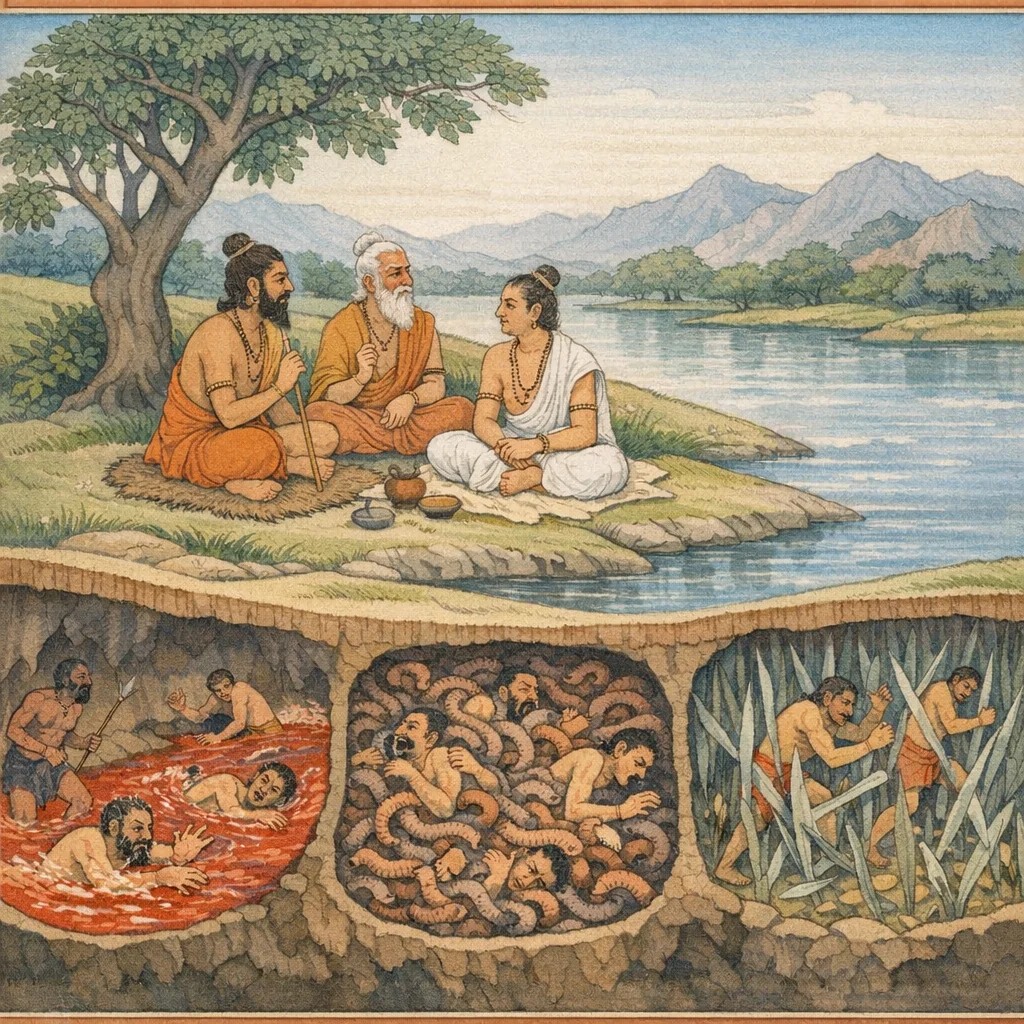
Parāśara tells Maitreya that beneath earth and the waters lie many Narakas within Yama’s realm, where karmic results ripen. He names major hell-realms and assigns particular sins to particular Narakas: false testimony; grave violence such as bhrūṇahatyā, guru-hatyā, and go-hatyā; surā-drinking; brahma-hatyā; gold-theft; sexual transgressions; insulting or abusing gurus; defiling, selling, or trading the Veda; destroying forests; deceitful livelihoods; and other breaches of dharma and maryādā. After noting innumerable Narakas and the graded movement of beings, he turns to prāyaścitta: expiations match the sin, yet the supreme expiation is Hari/Kṛṣṇa-smaraṇa—remembering Nārāyaṇa at the junctions of time swiftly destroys sin. He warns that even svarga and Indra-hood can hinder liberation for the Vāsudeva-centered devotee. The chapter closes by treating heaven and hell as names for the experience of puṇya and pāpa, and by affirming a knowledge-centered metaphysic in Viṣṇu’s order, where jñāna is both bondage and Brahman, integrating ethics, mind, and mokṣa.
Shlokas
Verse 1
ततश् च नरकान् विप्र भुवो ऽधः सलिलस्य च पापिनो येषु पात्यन्ते ताञ् छृणुष्व महामुने
Now, O Brahmin, O great sage, hear from me of the hell-realms that lie beneath the earth and beneath the waters, into which sinners are cast to reap the consequences of their deeds.
Verse 2
रौरवः सूकरो रोधस् तालो विशसनस् तथा महाज्वालस् तप्तकुम्भो लवणो ऽथ विलोहितः
Raurava, Sūkara, Rodhas, Tāla, and Viśasana; likewise Mahājvāla, Taptakumbha, Lavaṇa, and then Vilohita—these are named among the hell-realms, grim stations where embodied beings, bound by karma, meet the fruits of their deeds.
Verse 3
रुधिराम्भो वैतरणी कृमिशः कृमिभोजनः असिपत्रवनं कृष्णो लालाभक्षश् च दारुणः
Parāśara said: “There is Vaitaraṇī, whose waters are blood; there are Kṛmiśa and Kṛmibhojana, where worms become the food; there is Asipatravana, the forest of sword-like leaves; and there are the dreadful realms called Kṛṣṇa and Lālābhakṣa—grim abodes shaped by the soul’s own deeds.”
Verse 4
तथा पूयवहः पापो वह्निज्वालो ह्य् अधःशिराः संदंशः कृष्णसूत्रश् च तमश् चावीचिर् एव च
So too are other hell-realms: Pūyavaha, Pāpa, Vahnijvāla, and Adhaḥśiras; likewise Saṃdaṃśa and Kṛṣṇasūtra—along with Tamaḥ and Avīci as well—each a domain where the fruits of wrongful acts ripen into suffering under the unerring moral order within Lord Viṣṇu’s sovereign cosmos.
Verse 5
श्वभोजनो ऽथाप्रतिष्ठो अवीचिश् च तथापरः इत्य् एवमादयश् चान्ये नरका भृशदारुणाः
There is the hell called Śvabhojana; then Apratiṣṭha, Avīci, and others besides. Thus—beginning with these—there are many more hells, exceedingly dreadful, where the fruits of grievous actions are met.
Verse 6
यमस्य विषये घोराः शस्त्राग्निभयदायिनः पतन्ति येषु पुरुषाः पापकर्मरतास् तु ये
In the dread dominion of Yama are terrifying regions that bring the fear of weapons and fire; into them fall those men who are devoted to sinful deeds.
Verse 7
कूटसाक्षी तथासम्यक् पक्षपातेन यो वदेत् यश् चान्यद् अनृतं वक्ति स नरो याति रौरवम्
Whoever stands as a false witness, or speaks wrongly out of partisanship, and whoever utters any other untruth—such a person falls into Raurava, the hell of torment.
Verse 8
भ्रूणहा गुरुहन्ता च गोघ्नश् च मुनिसत्तम यान्ति ते नरकं रोधं यश् चोच्छ्वासनिरोधकः
O best of sages, the slayer of an embryo, the killer of one’s teacher, and the killer of a cow—all go to the hell called Rodha; and so too does the one who cruelly cuts off another’s breath.
Verse 9
सुरापो ब्रह्महा हर्ता सुवर्णस्य च सूकरे प्रयाति नरके यश् च तैः संसर्गम् उपैति वै
The drinker of intoxicants, the slayer of a brāhmaṇa, and the thief of gold go to hell; and so too does one who knowingly keeps intimate company with such offenders.
Verse 10
राजन्यवैश्यहा ताले तथैव गुरुतल्पगः तप्तकुम्भे स्वसागामी हन्ति राजभटांश् च यः
The slayer of a Kṣatriya or a Vaiśya is confined to the hell called Tāla; likewise is he who violates the bed of his teacher. He who approaches his own sister is tormented in Tapta-kumbha, the heated cauldron; and so too is he who kills the king’s servants.
Verse 11
साध्वीविक्रयकृद् बन्धपालः केसरिविक्रयी तप्तलोहे पतन्त्य् एते यश् च भक्तं परित्यजेत्
He who traffics in a virtuous woman, the keeper of prisoners, the seller of lions, and he who abandons a devoted dependent—all fall into molten iron, scorched by the fruit of their own cruelty.
Verse 12
स्नुषां सुतां चापि गत्वा महाज्वाले निपात्यते अवमन्ता गुरूणां यो यश् चाक्रोष्टा नराधमः
He who, driven by depravity, violates even his daughter-in-law or his own daughter—who scorns elders and preceptors and hurls abuse at them—that lowest of men is cast into the great blazing fire of hell.
Verse 13
वेददूषयिता यश् च वेदविक्रयकश् च यः अगम्यगामी यश् च स्यात् ते यान्ति लवणं द्विज
O twice-born one, those who defile the Veda, those who trade the Veda for gain, and those who go to the forbidden—these fall into the Salt Hell called Lavana.
Verse 14
चौरो विमोहे पतति मर्यादादूषकस् तथा
A thief falls into delusion; and so too does one who corrupts the bounds of right conduct (maryādā).
Verse 15
देवद्विजपितृद्वेष्टा रत्नदूषयिता च यः स याति कृमिभक्षे वै कृमिशे च दुरिष्टकृत्
Whoever bears hatred toward the gods, the twice-born, and the ancestral spirits (Pitṛs), and whoever defiles precious gems—such a doer of grievous wrongs falls into Kṛmibhakṣa, and then into Kṛmiśa, where worms become his devourers.
Verse 16
पितृदेवातिथीन् यस् तु पर्यश्नाति नराधमः लालाभक्षे स यात्य् उग्रे शरकर्ता च वेधके
But that vilest of men who eats while neglecting the Pitṛs, the Devas, and the guest—who consumes without first offering the due portions—falls into the fierce hell called Lālābhakṣa, and thereafter into the dreadful realms known as Śarakartā and Vedhaka.
Verse 17
करोति कर्णिनो यश् च यश् च खड्गादिकृन् नरः प्रयान्त्य् एते विशसने नरके भृशदारुणे
Whoever mutilates living beings or manufactures swords and weapons departs to the exceedingly terrible hell known as Viśasana, the realm of slaughter.
Verse 18
असत्प्रतिग्रहीता तु नरके यात्य् अधोमुखे अयाज्ययाजकस् तत्र तथा नक्षत्रसूचकः
But the one who accepts gifts from the unworthy descends to Adhomukha hell, as does the improper priest and the commercial astrologer.
Verse 19
वेगी पूयवहं चैको याति मिष्टान्नभुङ् नरः
One who eats delicacies alone without sharing swiftly goes to Pūyavaha, the foul-flowing hell, for denying the sacred share to others.
Verse 20
लाक्षामांसरसानां च तिलानां लवणस्य च विक्रेता ब्राह्मणो याति तम् एव नरकं द्विज
O twice-born, a Brahmin who sells lac, meat juices, sesame, or salt falls into that very same hell for violating his sacred duty.
Verse 21
मार्जारकुक्कुटच्छागश्ववराहविहंगमान् पोषयन् नरकं याति तम् एव द्विजसत्तम
O best of the twice-born, one who maintains cats, roosters, goats, dogs, boars, and birds for harm or trade goes to that very hell.
Verse 22
रङ्गोपजीवी कैवर्तः कुण्डाशी गरदस् तथा सूची माहिषिकश् चैव पर्वगामी च यो द्विजः
A twice-born who lives by stage entertainments, follows the fisherfolk’s calling, eats from a common cooking-pot, trades in poisons, lives by the needle, deals in buffalo, or wanders from hill to hill—such a one is censured by the measure of Dharma taught here.
Verse 23
अगारदाही मित्रघ्नः शाकुनिर् ग्रामयाजकः रुधिरान्धे पतन्त्य् एते सोमं विक्रीणते च ये
The arsonist who burns homes, the slayer of a friend, the omen-monger who lives by bird-portents, the village-priest who performs rites for hire without right conduct—and those who sell the sacred Soma—such men fall into the hell called Rudhirāndha, “Blindness of Blood.”
Verse 24
मधुहा ग्रामहन्ता च याति वैतरणीं नरः
He who destroys honey (and its sources), and he who devastates a village—such a person is made to pass into the Vaitaraṇī.
Verse 25
धनयौवनमत्तास् तु मर्यादाभेदिनो हि ये ते कृष्णे यान्त्य् अशौचाश् च कुहकाजीविनश् च ये
Those intoxicated by wealth and youth, who break the bounds of rightful conduct, go to Kṛṣṇa—the dark fate; and so too do the impure, and those who make their living by deceit and trickery.
Verse 26
असिपत्रवनं याति वनच्छेदी वृथैव यः औरभ्रिको मृगव्याधो वह्निज्वाले पतन्ति वै
He who pointlessly fells forests is driven to Asipatravana, the “forest of sword-like leaves.” And the trapper who lives by snares, the hunter who kills game—such men are indeed cast into blazing tongues of fire.
Verse 27
यान्त्य् एते द्विज तत्रैव यश् चापाकेषु वह्निदः
O twice-born, these men go to that very same realm; and so too does he who kindles the sacred fire among the outcastes, the cāṇḍālas.
Verse 28
व्रतेषु लोपको यश् च स्वाश्रमाद् विच्युतश् च यः संदंशयातनामध्ये पततस् ताव् उभाव् अपि
He who grows negligent in sacred vows, and he who falls away from the discipline of his own āśrama—both, slipping from the world-sustaining order, descend into Saṃdaṃśa, the hell of biting anguish.
Verse 29
दिवा स्वप्नेषु स्कन्दन्ते ये नरा ब्रह्मचारिणः पुत्रैर् अध्यापिता ये च ते पतन्ति श्वभोजने
Those who, though living as brahmacārins, let their seed fall even in dreams by day—and those who accept instruction from their own sons—such persons fall into the degraded state called Śvabhojana.
Verse 30
एते चान्ये च नरकाः शतशो ऽथ सहस्रशः येषु दुष्कृतकर्माणः पच्यन्ते यातनागताः
These—and many other hells besides—exist in their hundreds and even thousands; within them, those of evil deeds are ‘cooked’ in torment, having fallen into the state of punishment.
Verse 31
तथैव पापान्य् एतानि तथान्यानि सहस्रशः भुज्यन्ते यानि पुरुषैर् नरकान्तरगोचरैः
In the same way, these sins—and countless others—are endured and paid for by human beings as they pass through the various hells, each suited to the particular wrongdoing.
Verse 32
वर्णाश्रमविरुद्धं च कर्म कुर्वन्ति ये नराः कर्मणा मनसा वाचा निरयेषु पतन्ति ते
Those who perform deeds opposed to the order of varṇa and āśrama—by action, by mind, and by speech—fall into the hell-realms, for they become devoted to adharma rather than dharma.
Verse 33
अधःशिरोभिर् दृश्यन्ते नारकैर् दिवि देवताः देवाश् चाधोमुखान् सर्वान् अधः पश्यन्ति नारकान्
With their heads hanging downward, the denizens of hell behold the gods in heaven above; and the gods, in turn, look down and see all those hell-bound beings, face-downward, beneath them.
Verse 34
स्थावराः कृमयो ऽब्जाश् च पक्षिणः पशवो नराः धार्मिकास् त्रिदशास् तद्वन् मोक्षिणश् च यथाक्रमम्
In due succession arise the immobile beings, then worms and those born of water; then birds, beasts, and human beings. Beyond these come the righteous, then the gods; and likewise, in that very order, the liberated—each state ascending by its proper gradation.
Verse 35
सहस्रभागप्रथमा द्वितीयानुक्रमास् तथा सर्वे ह्य् एते महाभाग यावन् मुक्तिसमाश्रयाः
The first is as a thousandfold portion, and the second follows it in due sequence. Thus, O greatly fortunate one, all these graded measures endure only so long as they rest upon liberation as their final refuge.
Verse 36
यावन्तो जन्तवः स्वर्गे तावन्तो नरकौकसः पापकृद् याति नरकं प्रायश्चित्तपराङ्मुखः
As many as there are living beings in heaven, so many are there who dwell in hell. The doer of sin goes to the hell-realms when he turns away from expiation and refuses atonement (prāyaścitta).
Verse 37
पापानाम् अनुरूपाणि प्रायश्चित्तानि यद् यथा तथा तथैव संस्मृत्य प्रोक्तानि परमर्षिभिः
Expiations, precisely proportioned to the nature of each sin—just as they apply in every case—have been recalled and taught in that very manner by the supreme seers.
Verse 38
पापे गुरूणि गुरुणि स्वल्पान्य् अल्पे च तद्विदः प्रायश्चित्तानि मैत्रेय जगुः स्वायंभुवादयः
For grave sins, the wise prescribe grave expiations; and for minor faults, minor ones. Thus, O Maitreya, the knowers of dharma—beginning with Svāyambhuva (Manu) and others—have declared it.
Verse 39
प्रायश्चित्तान्य् अशेषाणि तपःकर्मात्मकानि वै यानि तेषाम् अशेषाणां कृष्णानुस्मरणं परम्
Whatever acts of expiation there are—whether as austere discipline or prescribed ritual action—among them all the highest is continual remembrance of Śrī Kṛṣṇa.
Verse 40
कृते पापे ऽनुतापो वै यस्य पुंसः प्रजायते प्रायश्चित्तं तु तस्यैकं हरिसंस्मरणं परम्
When a person, having committed a sin, truly feels remorse, then for him there is one supreme expiation: the highest remembrance of Hari.
Verse 41
प्रातर् निशि तथा संध्यामध्याह्नादिषु संस्मरन् नारायणम् अवाप्नोति सद्यः पापक्षयं नरः
Whoever remembers Nārāyaṇa at dawn and at night, and again at twilight, midday, and the other junctions of time—such a person swiftly attains the destruction of sin and draws near to Nārāyaṇa Himself.
Verse 42
विष्णुसंस्मरणात् क्षीणसमस्तक्लेशसंचयः मुक्तिं प्रयाति स्वर्गाप्तिस् तस्य विघ्नो ऽनुमीयते
By constant remembrance of Vishnu, the whole accumulated mass of afflictions is worn away. Such a devotee attains liberation; whereas the attainment of heaven is understood to be an obstacle on that path.
Verse 43
वासुदेवे मनो यस्य जपहोमार्चनादिषु तस्यान्तरायो मैत्रेय देवेन्द्रत्वादिकं फलम्
Maitreya, for one whose mind is fixed on Vāsudeva through japa, fire-offerings, worship, and the like, even rewards such as Indra-hood become obstacles on that path.
Verse 44
क्व नाकपृष्ठगमनं पुनरावृत्तिलक्षणम् क्व जपो वासुदेवेति मुक्तिबीजम् अनुत्तमम्
What comparison is there between going to heaven—whose very nature ends in return—and repeating the name “Vāsudeva”, the unsurpassed seed of liberation?
Verse 45
तस्माद् अहर्निशं विष्णुं संस्मरन् पुरुषो मुने न याति नरकं शुद्धः संक्षीणाखिलपातकः
Therefore, O sage, one who remembers Vishnu unceasingly—day and night—does not go to hell. Purified, with every sin entirely worn away, he remains free from downfall.
Verse 46
मनःप्रीतिकरः स्वर्गो नरकस् तद्विपर्ययः नरकस्वर्गसंज्ञे वै पापपुण्ये द्विजोत्तम
Heaven is what brings delight to the mind; hell is its very opposite. O best of the twice-born, what are called “hell” and “heaven” are in truth demerit and merit themselves, named according to the experience they produce.
Verse 47
वस्त्व् एकम् एव दुःखाय सुखायेर्ष्योद्भवाय च कोपाय च यतस् तस्माद् वस्तु वस्त्वात्मकं कुतः
If one and the same thing becomes a cause of sorrow and also of happiness, of envy and of anger, how can that object have any fixed nature of its own? Its effects shift according to the mind that apprehends it; reality itself does not change.
Verse 48
तद् एव प्रीतये भूत्वा पुनर् दुःखाय जायते तद् एव कोपाय यतः प्रसादाय च जायते
That very same thing which once becomes a cause of delight later arises again as a cause of sorrow; for from the same source are born both anger and also appeasement.
Verse 49
तस्माद् दुःखात्मकं नास्ति न च किंचित् सुखात्मकम् मनसः परिणामो ऽयं सुखदुःखादिलक्षणः
Therefore nothing is, in itself, made of sorrow; nor is anything, in itself, made of happiness. What is known as happiness, sorrow, and the like is only a transformation of the mind.
Verse 50
ज्ञानम् एव परं ब्रह्म ज्ञानं बन्धाय चेष्यते ज्ञानात्मकम् इदं विश्वं न ज्ञानाद् विद्यते परम्
Knowledge alone is the Supreme Brahman; and it is knowledge, too, that is held to be the cause of bondage. This entire universe is of the nature of knowledge, and beyond knowledge nothing higher is found.
Verse 51
विद्याविद्येति मैत्रेय ज्ञानम् एवोपधारय
“As for what is called ‘vidyā’ and ‘avidyā,’ O Maitreya—understand that both are, in truth, nothing but modes of knowledge itself.”
Verse 52
एवम् एतन् मयाख्यातं भवतो मण्डलं भुवः पातालानि च सर्वाणि तथैव नरका द्विज
Thus have I declared to you the full circuit of the earth—Bhū-maṇḍala—as well as all the Pātālas, and likewise the realms of hell, O twice-born one.
Verse 53
समुद्राः पर्वताश् चैव द्वीपा वर्षाणि निम्नगाः संक्षेपात् सर्वम् आख्यातं किं भूयः श्रोतुम् इच्छसि
“O Maitreya, the oceans and the mountains, the dvīpas, the varṣas, and the rivers have all been described—briefly, yet in essence. What more do you wish to hear?”
Frequently Asked Questions
Parāśara declares that among all expiations—tapas or ritual acts—the supreme is continual remembrance of Kṛṣṇa/Hari (Hari-smaraṇa), especially remembering Nārāyaṇa at the daily junctions of time.
It explicitly states that actions contrary to varṇa–āśrama order—by deed, thought, or speech—lead to falling into hell-realms, framing social-spiritual discipline as part of the cosmic moral law.
Because svarga and even Indra-hood are finite, return-bound rewards; for one intent on mokṣa through Vāsudeva-bhakti, such attainments become distractions and “antarāyas” from the liberation-aim.