Adhyaya 112
Vyāghra–Gomāyu Saṃvāda (व्याघ्रगोमायु संवाद) — Testing Character Beneath Appearances
Upa-parva: Rājadharmānuśāsana (राजधर्मानुशासन) — Discourses on Kingship and Discernment
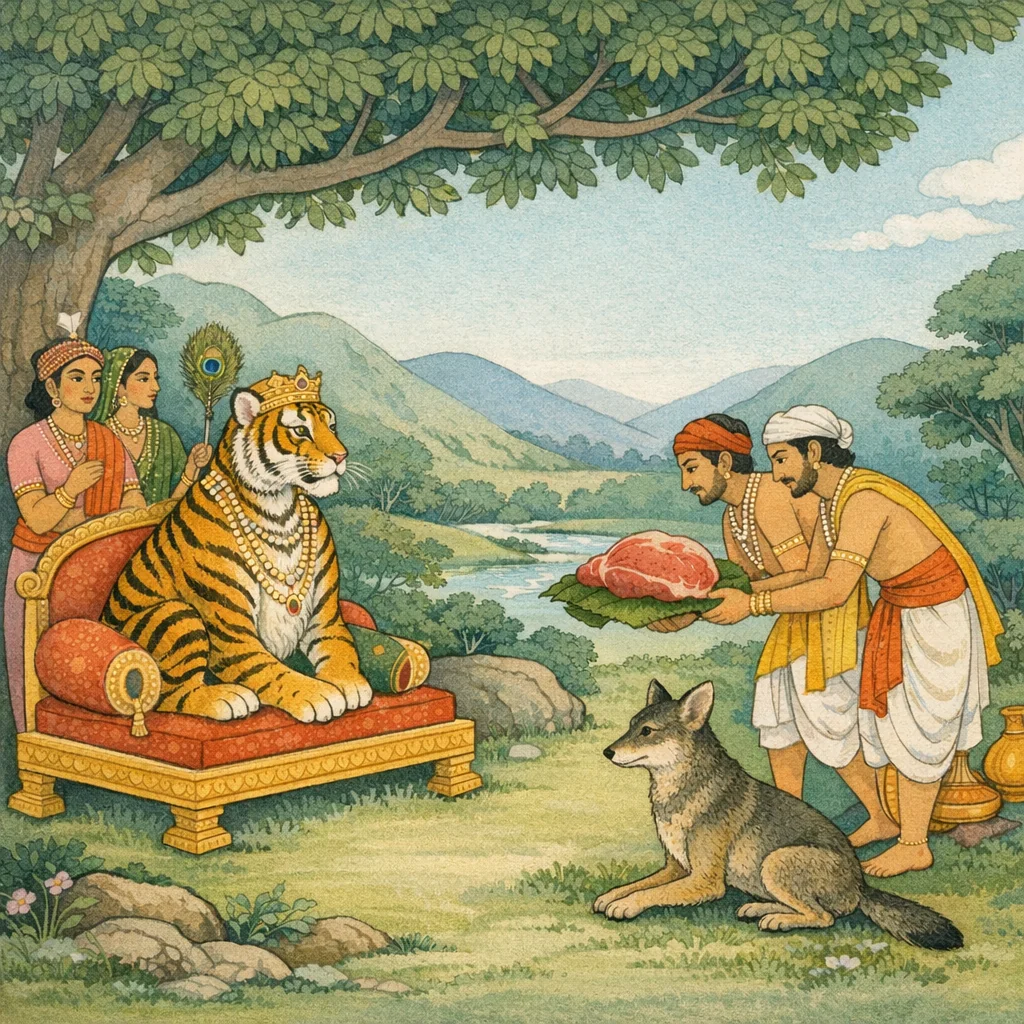
Yudhiṣṭhira asks Bhīṣma how to recognize individuals whose outward demeanor contradicts their inner disposition—those harsh yet appearing gentle, and those gentle yet perceived as harsh. Bhīṣma responds with an ancient exemplum: a cruel king, through prior actions, is reborn as a gomāyu (jackal). Remembering his past, he adopts restraint, truthfulness, and non-harm, living austerely. Other jackals mock this discipline and attempt to destabilize him. A powerful vyāghra (tiger), perceiving the jackal’s cleanliness and intelligence, elevates him to advisory service. The jackal cautions about the risks of court life and proposes ethical conditions for counsel and interaction. Rival retainers, threatened by his influence, fabricate suspicion by planting and manipulating an incident involving meat, prompting the tiger to order punitive action. The tiger’s mother intervenes, arguing for careful verification and the virtue of forbearance; investigation reveals the deception, and the jackal is honored and released. Yet the jackal, wounded by loss of trust and reputational injury, declines continued service, articulating the difficulty of restoring confidence once broken; he withdraws, choosing ascetic resolve and ultimately dies in a voluntary fast. The chapter’s instructional core is a rājadharma lesson on evidence-based judgment, factional risk, and the irreversibility of mistrust once authority acts on untested accusations.
Chapter Arc: भीष्म युधिष्ठिर से कहते हैं कि मनुष्य-स्वभाव की पहचान के लिए एक प्राचीन दृष्टान्त सुनो—बाघ और सियार का संवाद, जहाँ राज्य-नीति और दरबारी चातुरी की परीक्षा होती है। → पुरिका नगरी का क्रूर राजा (परहिंसारति) शासन चलाता है; कथा का केंद्र धीरे-धीरे ‘राजा अकेला नहीं चला सकता’ और ‘दुष्ट/स्वार्थी अमात्य राज्य के शरीर-परिपन्थी हैं’ जैसी चेतावनियों पर आता है। बाघ-राजा के दरबार में सियार अपनी वाणी-चपलता से स्थान बनाता है, पर भीतर-भीतर छल, चोरी और स्वार्थ का जाल बुनता है; पुराने सचिवों/सेवकों पर दण्ड की आशंका भी उठती है—“मुझसे सलाह लेकर ही दण्ड देना” जैसी नीति-सूक्ति के साथ। → सियार की कृतक-चालें और मांस-अपहरण/छल का भेद खुलता है; मृगराज (बाघ) क्रोध से भर उठता है और उसके वध का निश्चय करता है—दरबार में ‘शीलवान’ कहकर प्रतिष्ठित किए गए व्यक्ति की वास्तविकता सामने आकर प्रतिज्ञा, प्रतिष्ठा और न्याय का टकराव तीव्र हो जाता है। → बाघ आदेश देता है—“गोमायु वध्यताम्”; सियार की चपलता का अंत दण्ड में होता है और कथा का निष्कर्ष राजधर्म की ओर लौटता है: राजा को योग्य, निष्ठावान मंत्री चाहिए; कपटी सलाहकार राज्य को भीतर से खोखला करते हैं; दण्ड विवेकपूर्वक, पर अपराध सिद्ध होने पर दृढ़ होना चाहिए।
Shlokas
Verse 1
(दाक्षिणात्य अधिक पाठके ३ ६ श्लोक मिलाकर कुल ३३३ “लोक हैं) #<०3८६>- हज अल _ीि<स एकादर्शाधिकशततमोड< ध्याय: मनुष्यके स्वभावकी पहचान बतानेवाली बाघ और सियारकी कथा युधिछिर उवाच असौम्या: सौम्यरूपेण सौम्याश्षासौम्यदर्शना: । ईदृशान् पुरुषांस्तात कथं विद्यामहे वयम्,युधिष्ठिरने पूछा--तात! बहुत-से कठोर स्वभाववाले मनुष्य ऊपरसे कोमल और शान्त बने रहते हैं तथा कोमल स्वभावके लोग कठोर दिखायी देते हैं, ऐसे मनुष्योंकी मुझे ठीक-ठीक पहचान कैसे हो?
Yudhiṣṭhira said: “Dear one, many who are harsh by nature appear outwardly gentle, and some who are truly gentle seem harsh in their manner. How are we to recognize such people correctly?”
Verse 2
भीष्म उवाच अत्राप्युदाहरन्तीममितिहासं पुरातनम् । व्याप्रगोमायुसंवादं त॑ निबोध युधिछिर,भीष्मजी बोले--युधिष्ठि! इस विषयमें जानकार लोग एक बाघ और सियारके संवादरूप प्राचीन आख्यानका उदाहरण दिया करते हैं, उसे ध्यान देकर सुनो
Bhishma said: “Here too, the wise cite an ancient tale as an illustration—the dialogue between a tiger and a jackal. Listen to that account attentively, O Yudhishthira.”
Verse 3
पुरिकायां पुरि पुरा श्रीमत्यां पौरिको नृप: । परहिंसारति: क्रूरो बभूव पुरुषाधम:,पूर्वकालकी बात है, प्रचुर धन-धान्यसे सम्पन्न पुरिका नामकी नगरीमें पौरिक नामसे प्रसिद्ध एक राजा राज्य करता था। वह बड़ा ही क्रूर और नराधम था, दूसरे प्राणियोंकी हिंसामें ही उसका मन लगता था
Bhishma continued: “In ancient times, in the prosperous city called Purikā, abundant in wealth and grain, there ruled a king known as Paurika. He was exceedingly cruel—the lowest of men—and his mind delighted only in violence toward other living beings.”
Verse 4
स त्वायुषि परिक्षीणे जगामानीप्सितां गतिम् । गोमायुत्वं च सम्प्रातो दूषित: पूर्वकर्मणा,धीरे-धीरे उसकी आयु समाप्त हो गयी और वह ऐसी गतिको प्राप्त हुआ, जो किसी भी प्राणीको अभीष्ट नहीं है। वह अपने पूर्वकर्मसे दूषित होकर दूसरे जन्ममें गीदड़ हो गया
Bhīṣma said: When his span of life was exhausted, he went to a fate that no creature would desire. Tainted by his former deeds, he attained another birth as a jackal.
Verse 5
संस्मृत्य पूर्व भूतिं च निर्वेदं परमं गत: । न भक्षयति मांसानि परैरुपहृतान्यपि,उस समय अपने पूर्व जन्मके वैभवका स्मरण करके उस सियारको बड़ा खेद और वैराग्य हुआ। अतः वह दूसरोंके द्वारा दिये हुए मांसको भी नहीं खाता था
Bhishma said: Remembering his former prosperity, the jackal was seized by the highest dispassion and remorse. Therefore he would not eat meat, even when it was brought and offered by others.
Verse 6
अहिंख्र: सर्वभूतेषु सत्यवाक् सुदृढव्रत: । स चकार यथाकालमाहारं पतितै: फलै:,अब उसने जीवोंकी हिंसा करनी छोड़ दी, सत्य बोलनेका नियम ले लिया और दृढ़तापूर्वक अपने व्रतका पालन करने लगा। वह नियत समयपर वृक्षोंसे अपने आप गिरे हुए फलोंका आहार करता था
Bhishma said: He became non-violent toward all beings, adopted the discipline of speaking truth, and steadfastly maintained his vow. At the proper times he took his food only from fruits that had fallen of themselves.
Verse 7
(पर्णाहार: कदाचिच्च नियमव्रतवानपि । कदाचिदुदकेनापि वर्तयन्ननुयन्त्रित: ।।) व्रत और नियमोंके पालनमें तत्पर हो कभी पत्ता चबा लेता और कभी पानी पीकर ही रह जाता था। उसका जीवन संयममें बँध गया था ।। श्मशाने तस्य चावासो गोमायो: सम्मतो5भवत् | जन्मभूम्यनुरोधाच्च नान्यवासमरोचयत्,वह श्मशानभूमिमें ही रहता था। वहीं उसका जन्म हुआ था, इसलिये वही स्थान उसे पंसद था। उसे और कहीं जाकर रहनेकी रुचि नहीं होती थी
Bhishma said: Though steadfast in vows and disciplines, he would at times live on leaves, and at other times sustain himself only on water, his life held firmly under self-restraint. His dwelling came to be in the cremation-ground; and because it was the place of his birth, he preferred that very spot, finding no taste for living anywhere else.
Verse 8
तस्य शौचममृष्यन्तस्ते सर्वे सहजातय: । चालयन्ति स्म तां बुद्धि वचनै: प्रश्नयोत्तरै:,सियारका इस तरह पवित्र आचार-विचारसे रहना उसके सभी जाति-भाइयोंको अच्छा न लगा। यह सब उनके लिये असह्ा हो उठा; इसलिये वे प्रेम और विनयभरी बातें कहकर उसकी बुद्धिको विचलित करने लगे
Bhīṣma said: Unable to tolerate his purity of conduct, all those of his own group grew resentful. Finding it unbearable, they tried to unsettle his resolve—pressing him with persuasive words and with questions and counter-answers—so that his mind might be shaken from its steadfast, clean way of life.
Verse 9
वसन् पितृवने रौद्रे शौचे वर्तितुमिच्छसि । इयं विप्रतिपत्तिस्ते यदा त्वं पिशिताशन:,उन्होंने कहा “भाई सियार! तू तो मांसाहारी जीव है और भयंकर श्मशानभूमिमें निवास करता है, फिर भी पवित्र आचार-विचारसे रहना चाहता है--यह विपरीत निश्चय है
Bhishma said: “Living in the dreadful cremation-ground of the ancestors, you still wish to conduct yourself with purity. This is a contradiction in your resolve, since you are a flesh-eater.”
Verse 10
तत्समानो भवास्माभिभर्भोज्यं दास्यामहे वयम् | भुड्क्ष्व शौचं परित्यज्य यद्धि भुक्त सदास्तु ते,'भैया! अतः तू हमारे ही समान होकर रह। तेरे लिये भोजन तो हमलोग ला दिया करेंगे। तू इस शौचाचारका नियम छोड़कर चुपचाप खा लिया करना। तेरी जातिका जो सदासे भोजन रहा है, वही तेरा भी होना चाहिये”
Bhishma said: “Therefore, live as one equal to us. We will provide your food. Set aside this rule of ritual scruple about purity and simply eat. What has always been the customary food of your community—let that be yours as well.”
Verse 11
इति तेषां वच: श्रुत्वा प्रत्युवाच समाहित: । मधुरै: प्रसृतैर्वाक्यै्हेतुमद्धिरनिष्ठरै:,उनकी ऐसी बात सुनकर सियार एकाग्रचित्त हो मधुर, विस्तृत, युक्तियुक्त तथा कोमल वचनोंद्वारा इस प्रकार बोला--
Hearing their words, the jackal—composed and attentive—replied in return, speaking with sweet, well-expanded sentences that were reasoned and persuasive, yet gentle and unharsh in tone.
Verse 12
अप्रमाणा प्रसूतिर्मे शीलत: क्रियते कुलम् । प्रार्थयामि च तत्कर्म येन विस्तीर्यते यश:,“बन्धुओ! अपने बुरे आचरणोंसे ही हमारी जातिका कोई विश्वास नहीं करता। अच्छे स्वभाव और आचरणसे ही कुलकी प्रतिष्ठा होती है; अतः मैं भी वही कर्म करना चाहता हूँ, जिससे अपने वंशका यश बढ़े
“Kinsmen! Because of our own bad conduct, none places trust in our kind. A lineage’s standing is made by good nature and right behavior; therefore I seek to do that deed by which our family’s fame is spread abroad.”
Verse 13
श्मशाने यदि मे वास: समाधियमें निशम्यताम् | आत्मा फलति कर्माणि नाश्रमो धर्मकारणम्,“यदि मेरा निवास श्मशानभूमिमें है तो इसके लिये मैं जो समाधान देता हूँ, उसको सुनो। आत्मा ही शुभ कर्मोंके लिये प्रेरणा करता है। कोई आश्रम ही धर्मका कारण नहीं हुआ करता
“Even if my dwelling were in a cremation-ground, listen to this resolution of the matter. It is the inner self that brings actions to fruition and impels one toward the good; an external ‘āśrama’ or social-religious station is not, by itself, the cause of dharma.”
Verse 14
आश्रमे यो द्विजं हन्याद् गां वा दद्यादनाश्रमे । कि तु तत्पातकं न स्यात् तद्वा दत्तं वृथा भवेत्,“क्या यदि कोई आश्रममें रहकर ब्राह्मणकी हत्या करे तो उसे उसका पातक नहीं लगेगा और यदि कोई बिना आश्रमके स्थानमें गोदान करे तो क्या वह व्यर्थ हो जायेगा?
Bhīṣma said: “If a man, while dwelling in an āśrama, were to slay a brāhmaṇa, would that sin somehow fail to cling to him? And if one were to gift a cow in charity in a place that is not an āśrama, would that gift become futile?”
Verse 15
भवन्तः स्वार्थलोभेन केवलं भक्षणे रता: । अनुबन्धे त्रयो दोषास्तान् न पश्यन्ति मोहिता:,“तुमलोग केवल स्वार्थके लोभसे मांसभक्षणमें रचे-पचे रहते हो। उसके परिणामस्वरूप जो तीन दोष प्राप्त होते हैं, उनकी ओर मोहवश तुम्हारी दृष्टि नहीं जाती
Bhīṣma said: “Driven by greed for your own advantage, you are absorbed only in eating flesh. Deluded, you fail to notice the three faults that inevitably follow as its consequences.”
Verse 16
अप्रत्ययकृतां गह्र[मिर्थापनयदूषिताम् । इह चामुत्र चानिष्टां तस्माद् वृत्ति न रोचये,“तुमलोगोंकी जीविका असंतोषसे पूर्ण, निन्दनीय, धर्मकी हानिके कारण दूषित तथा इहलोक और परलोकमें भी अनिष्ट फल देनेवाली है; इसलिये मैं उसे पसंद नहीं करता हूँ
Bhīṣma said: “A livelihood pursued without trustworthiness—harsh, blameworthy, and tainted by actions that undermine dharma—brings undesirable results both in this world and the next. Therefore, I do not approve of such a way of living.”
Verse 17
तं शुचिं पण्डितं मत्वा शार्दूल: ख्यातविक्रम: । कृत्वा55त्मसदृशीं पूजां साचिव्येडवरयत् स्वयम्,सियारके इस पवित्र आचार-विचारकी चर्चा चारों ओर फैल जानेके कारण एक प्रख्यातपराक्रमी व्याप्रने उसे विद्वान् और विशुद्ध स्वभावका मानकर उसके निकट पदार्पण किया और उसकी अपने अनुरूप पूजा करके स्वयं ही मन्त्री बनानेके लिये उसका वरण किया
Bhīṣma said: “Considering him pure in conduct and truly learned, a tiger-like man renowned for his valor approached him. After honoring him with a reception befitting his own rank, he personally chose him for the office of minister—recognizing that such a man’s clean character and wisdom were fit to guide governance.”
Verse 18
शार्टूल उवाच सौम्य विज्ञातरूपस्त्वं गच्छ यात्रां मया सह । व्रियन्तामीप्सिता भोगा: परिहार्याश्व पुष्कला:,व्याप्र बोला--सौम्य! मैं तुम्हारे स्वरूपसे परिचित हूँ। तुम मेरे साथ चलो और अपनी रुचिके अनुसार अधिक-से-अधिक भोगोंका उपभोग करो। जो वस्तुएँ प्रिय न हों, उन्हें त्याग देना
Śārṭūla said: “Gentle one, I recognize who you are. Come—travel with me. Let the enjoyments you desire be provided; and whatever is not pleasing should be set aside, in abundance.”
Verse 19
तीक्ष्णा इति वयं ख्याता भवन्तं ज्ञापयामहे । मृदुपूर्व हितं चैव श्रेयश्चवाधिगमिष्यसि,परंतु एक बात मैं तुम्हें सूचित कर देता हूँ। सारे संसारमें यह बात प्रसिद्ध है कि हमारी जातिका स्वभाव कठोर होता है; अतः यदि तुम कोमलतापूर्वक व्यवहार करते हुए मेरे हित- साधनमें लगे रहोगे तो अवश्य ही कल्याणके भागी होओगे
Śārṭūla said: “We are known as ‘sharp’—harsh by nature; I inform you of this. If you proceed with gentleness and apply yourself to what is truly for my good, you will surely attain what is beneficial and auspicious.”
Verse 20
अथ सम्पूज्य तद् वाक्यं मृगेन्द्रस्य महात्मन: । गोमायु: संश्रितं वाक्यं बभाषे किंचिदानत:,महामनस्वी मृगराजके उस कथनकी भूरि-भूरि प्रशंसा करके सियारने कुछ नतमस्तक होकर विनययुक्त वाणीमें कहा
Then, having respectfully praised those words of the great-souled lord of beasts (the lion), the jackal—bowing slightly—spoke in a humble, deferential tone.
Verse 21
गोमायुरुवाच सदृशं मृगराजैतत् तव वाक््यं मदन्तरे । यत् सहायान् मृगयसे धर्मार्थकुशलान् शुचीन्,सियार बोला--मृगराज! आपने मेरे लिये जो बात कही है, वह सर्वथा आपके योग्य ही है तथा आप जो धर्म और अर्थसाधनमें कुशल एवं शुद्ध स्वभाववाले सहायकों (मन्त्रियों) की खोज कर रहे हैं, यह भी उचित ही है
The jackal said: “O king of beasts, this statement of yours is entirely fitting—especially as it concerns me. That you are seeking companions (ministers) who are pure in conduct and skilled in dharma and artha is indeed proper.”
Verse 22
न शक््यं हानमात्येन महत्त्वमनुशासितुम् । दुष्टामात्येन वा वीर शरीरपरिपन्थिना,वीर! मन्त्रीके बिना एकाकी राजा विशाल राज्यका शासन नहीं कर सकता। यदि शरीरको सुखा देनेवाला कोई दुष्ट मन्त्री मिल गया तो उसके द्वारा भी शासन नहीं चलाया जा सकता
Śārṭūla said: “A king’s greatness cannot be properly governed or sustained with a deficient minister. Nor can it be governed with a wicked minister—one who is an enemy to the king’s very person. O hero, without a trustworthy counsellor a ruler cannot administer a vast realm alone; and if the minister is corrupt, governance itself becomes impossible, for such a man turns royal power into a danger to the king and the kingdom.”
Verse 23
सहायाननुरक्तांश्व॒ नयज्ञानुपसंहितान् । परस्परमसंसृष्टान् विजिगीषूनलोलुपान्,महाभाग! इसके लिये आपको चाहिये कि जिनका आपके प्रति अनुराग हो, जो नीतिके जानकार, सद्धाव-सम्पन्न, परस्पर गुटबंदीसे रहित, विजयकी अभिलाषासे युक्त, लोभरहित, कपटनीतिमें कुशल, बुद्धिमान, स्वामीके हितसाधनमें तत्पर और मनस्वी हों, ऐसे व्यक्तियोंको सहायक या सचिव बनाकर आप पिता और गुरुके समान उनका सम्मान करें
Śārṭūla said: “Appoint as your aides those who are devoted to you, grounded in political and ethical prudence, not entangled in factional alliances with one another, eager for rightful victory, and free from greed. Such ministers—wise, loyal, and intent on their lord’s welfare—should be honored by you as you would honor a father or a teacher.”
Verse 24
अनतीतोपधानू प्राज्ञान् हिते युक्तान् मनस्विन: । पूजयेथा महाभाग यथा<<चार्यान् यथा पितृन्,महाभाग! इसके लिये आपको चाहिये कि जिनका आपके प्रति अनुराग हो, जो नीतिके जानकार, सद्धाव-सम्पन्न, परस्पर गुटबंदीसे रहित, विजयकी अभिलाषासे युक्त, लोभरहित, कपटनीतिमें कुशल, बुद्धिमान, स्वामीके हितसाधनमें तत्पर और मनस्वी हों, ऐसे व्यक्तियोंको सहायक या सचिव बनाकर आप पिता और गुरुके समान उनका सम्मान करें
Śārṭūla said: “O fortunate one, honor—just as you honor your teachers and your fathers—those wise and high-minded men who are free from deceitful stratagems, devoted to your welfare, and steadfast in purpose. Make such persons your helpers or ministers, and revere them with the same respect you would show to elders and preceptors, so that your rule is guided by loyal counsel and ethical intelligence.”
Verse 25
न त्वेव मम संतोषाद् रोचते<न्यन्मृगाधिप । न कामये सुखान् भोगानैश्वर्य च तदाश्रयम्,मृगराज! मुझे तो संतोषके सिवा और कोई वस्तु रुचती ही नहीं है। मैं सुख, भोग और उनके आधारभूत ऐश्वर्यको नहीं चाहता
Śārṭūla said: “But apart from contentment, nothing else truly appeals to me, O lord of beasts. I do not desire pleasures and enjoyments, nor the power and prosperity on which they depend.”
Verse 26
नयोक्ष्यति हि मे शीलं तव भृत्यै: पुरातनै: । ते त्वां विभेदयिष्यन्ति दुःशीलाश्न मदन्तरे,आपके पुराने सेवकोंके साथ मेरे शीलस्वभावका मेल नहीं खायेगा। वे दुष्ट स्वभावके जीव हैं। अतः मेरे निमित्त वे लोग आपके कान भरते रहेंगे
Śārṭūla said: “My disposition will not harmonize with your long-standing servants. They are of corrupt character, and for my sake they will keep trying to set you against me—whispering into your ear and sowing division.”
Verse 27
संश्रयः श्लाघनीयस्त्वमन्येषामपि भास्वताम् | कृतात्मा सुमहाभाग: पापकेष्वप्यदारुण:,आप अन्यान्य तेजस्वी प्राणियोंके भी स्पृहणीय आश्रय हैं। आपकी बुद्धि सुशिक्षित है। आप महान् भाग्यशाली तथा अपराधियोंके प्रति भी दयालु हैं
Śārṭūla said: “You are a refuge worthy of praise—even for other radiant and powerful beings. Your inner self is disciplined and well-formed; you are exceedingly fortunate, and you remain gentle and compassionate even toward those who have done wrong.”
Verse 28
दीर्घदर्शी महोत्साह: स्थूललक्ष्यो महाबल: । कृती चामोघकर्तासि भाग्यैश्व समलंकृत:,आप दूरदर्शी, महान् उत्साही, स्थूललक्ष्य (जिसका उद्देश्य बहुत स्पष्ट हो वह), महाबली, कृतार्थ, सफलतापूर्वक कार्य करनेवाले तथा भाग्यसे अलंकृत हैं
Śārṭūla said: “You are far-sighted and of great enterprise; your aim is broad and clearly fixed. You are mighty in strength, accomplished in action, and one whose efforts do not go in vain—moreover, you are adorned with good fortune.”
Verse 29
किं तु स्वेनास्मि संतुष्टो दुःखवृत्तिरनुछ्िता । सेवायां चापि नाभिज्ञ: स्वच्छन्देन वनेचर:,इधर मैं अपने आपमें ही संतुष्ट रहनेवाला हूँ। मैंने ऐसी जीविका अपनायी है, जो अत्यन्त दुःखमयी है। मैं राजसेवाके कार्यसे अनभिज्ञ और वनमें स्वच्छन्दतापूर्वक घूमनेवाला हूँ
Yet I am content within myself. I have taken up a livelihood steeped in hardship. I know nothing of service at a king’s court, and I roam the forest freely, as I please.
Verse 30
राजोपक्रोशदोषाश्न सर्वे संश्रयवासिनाम् । व्रतचर्या तु नि:संगा निर्भया वनवासिनाम्,जो राजाके आश्रयमें रहते हैं, उन्हें राजाकी निन्दासे सम्बन्ध रखनेवाले सभी दोष प्राप्त होते हैं। इधर मेरे जैसे वनवासियोंकी व्रतचर्या सर्वयधा असंग और भयसे रहित होती है
All who live under a king’s protection come to share in every fault that springs from the king’s censure and blame. But the disciplined observances of forest-dwellers like me are lived in complete non-attachment and without fear.
Verse 31
नृपेणाहूयमानस्य यत् तिष्ठति भयं हृदि । न तत् तिष्ठति तुष्टानां वने मूलफलाशिनाम्,राजा जिसे अपने सामने बुलाता है, उसके हृदयमें जो भय खड़ा होता है, वह वनमें फल-मूल खाकर संतुष्ट रहनेवाले लोगोंके मनमें नहीं होता
When a man is summoned into the presence of a king, a fear rises and stands within his heart. That same fear does not dwell in those who are content, living in the forest and sustaining themselves on roots and fruits.
Verse 32
पानीयं वा निरायासं स्वाद्धन्नं वा भयोत्तरम् | विचार्य खलु पश्यामि तत्सुखं यत्र निर्वति:,एक जगह बिना किसी भयके केवल जल मिलता है और दूसरी जगह अन्तमें भय देनेवाला स्वादिष्ट अन्न प्राप्त होता है--इन दोनोंको यदि विचार करके मैं देखता हूँ तो मुझे वहाँ ही सुख जान पड़ता है, जहाँ कोई भय नहीं है
On one side there is effortless water to drink, without fear; on the other, delicious food that ends in fear. Reflecting on the two, I see true happiness where there is no fear—where quiet contentment abides.
Verse 33
अपराधीर्न तावन्तो भृत्या: शिष्टा नराधिपै: । उपघातैर्यथा भृत्या दूषिता निधनं गता:,राजाओंने किन्हीं वास्तविक अपराधोंके कारण उतने सेवकोंको दण्ड नहीं दिया होगा, जितने कि लोगोंके झूठे लगाये गये दोषोंसे कलंकित होकर राजाके हाथसे मारे गये हैं
Kings have not punished so many servants for genuine offences as those servants who, stained by false accusations, have been struck down by the ruler’s violence and brought to ruin.
Verse 34
यदि त्वेतन्मया कार्य मृगेन्द्र यदि मन्यसे । समयं कृतमिच्छामि वर्तितव्यं यथा मयि,मृगराज! यदि आप मुझसे मन्त्रित्वका कार्य लेना ही ठीक समझते हैं तो मैं आपसे एक शर्त कराना चाहता हूँ, उसीके अनुसार आपको मेरे साथ बर्ताव करना उचित होगा
Śārṭūla said: “If you, O lord of beasts, truly judge it right to entrust me with the work of counsel, then I ask that a clear agreement be made. Let your conduct toward me be in accordance with that covenant, O king of animals.”
Verse 35
मदीया माननीयास्ते श्रोतव्यं च हितं वच: । कल्पिता या च मे वृत्ति: सा भवेत् त्वयि सुस्थिरा,मेरे आत्मीयजनोंका आपको सम्मान करना होगा। मेरी कही हुई हितकर बातें आपको सुननी होंगी। मेरे लिये जो जीविकाकी व्यवस्था आपने की है, वह आपहीके पास सुस्थिर एवं सुरक्षित रहे
“You must honor my own kinsmen. You must listen to the beneficial words I speak. And the provision you have arranged for my livelihood should remain steady and secure under your protection.”
Verse 36
न मन्त्रयेयमन्यैस्ते सचिवै: सह कर्हिचित् । नीतिमन्त:ः परीप्सन्तो वृथा ब्रूयु: परे मयि,मैं आपके दूसरे मन्त्रियोंक साथ बैठकर कभी कोई परामर्श नहीं करूँगा; क्योंकि दूसरे नीतिज्ञ मन्त्री मुझसे ईर्ष्या करते हुए मेरे प्रति व्यर्थकी बातें कहने लगेंगे
Śārṭūla said: “I will never take counsel together with your other ministers. For those ministers, though skilled in policy, would be driven by jealousy and would speak pointless, disparaging things about me to others.”
Verse 37
एक एकेन संगम्य रहो ब्रूयां हितं वच: । नच ते ज्ञातिकार्येषु प्रष्टव्यो5हं हिताहिते,मैं अकेला एकान्तमें अकेले आपसे मिलकर आपको हितकी बातें बताया करूँगा। आप भी अपने जाति-भाइयोंके कार्योंमें मुझसे हिताहितकी बात न पूछियेगा
Śārṭūla said: “Meeting you privately, one on one, I will speak words that are for your welfare. But in matters concerning your kinsmen’s affairs, you should not question me about what is beneficial or harmful.”
Verse 38
मया सम्मन्त्र्य पश्चाच्च न हिंस्या: सचिवास्त्वया । मदीयानां च कुपितो मा त्वं दण्डं निपातये:,मुझसे सलाह लेनेके बाद यदि आपके पहलेके मन्त्रियोंकी भूल प्रमाणित हो तो भी उन्हें प्राणदण्ड न दीजियेगा तथा कभी क्रोधमें आकर मेरे आत्मीयजनोंपर भी प्रहार न कीजियेगा
“After taking counsel with me, even if your former ministers’ mistakes are proven, you should not sentence them to death. And in anger, do not inflict punishment or strike at my own kinsmen.”
Verse 39
एवमस्त्विति तेनासौ मृगेन्द्रेणाभिपूजित: । प्राप्तवान् मतिसाचिव्यं गोमायुर्व्याप्रयोनित:,“अच्छा, ऐसा ही होगा” यह कहकर शेरने उसका बड़ा सम्मान किया। सियार बाघराजाके बुद्धिदायक सचिवके पदपर प्रतिष्ठित हो गया
“So be it,” said the lion; and thus honored by the king of beasts, that jackal—born of a lowly stock—obtained the post of “counsellor for policy and intelligence.” The episode shows how royal favor and flattery can raise the unworthy, warning that appointments made without discernment imperil righteous rule.
Verse 40
तं॑ तथा सुकृतं दृष्टवा पूज्यमानं स्वकर्मसु । प्राद्धिषन् कृतसंघाता: पूर्वभृत्या मुहुर्मुहु:,सियार बहुत अच्छा कार्य करने लगा और उसको अपने सभी कार्योमें बड़ी प्रशंसा प्राप्त होने लगी। इस प्रकार उसे सम्मानित होता देख पहलेके राजसेवक संगठित हो बारंबार उससे द्वेष करने लगे
Seeing him act with excellence and be honored for his own duties, the former servants, forming themselves into a faction, repeatedly grew hostile toward him. The verse shows how public recognition earned through good conduct can provoke envy and organized resentment among those attached to prior status and privilege.
Verse 41
मित्रबुद्धया च गोमायुं सान्त्वयित्वा प्रसाद्य च । दोषैस्तु समता नेतुमैच्छन्नशुभबुद्धय:
Śārṭūla said: “Treating the jackal as a friend, he soothed him and won him over; but with an impure intent he wished to bring him down to his own level by pointing out faults—seeking equality not through virtue, but through blame.”
Verse 42
उनके मनमें दुष्टता भरी थी। वे सियारके पास मित्रभावसे आते और उसे समझा- बुझाकर प्रसन्न करके अपने ही समान दोषके पथपर चलानेकी चेष्टा करते थे ।। अन्यथा शक पूर्व परद्रव्याभिहारिण: । अशक्ता: किजि | द्रव्यं गोमायुयन्त्रिता:,उसके आनेके पहले वे और ही प्रकारसे रहा करते थे। दूसरोंका धन हड़प लिया करते थे, परंतु अब वैसा नहीं कर सकते थे। सियारने उन सबपर ऐसी कड़ी पाबंदी लगा दी थी कि वे किसीकी कोई भी वस्तु लेनेमें असमर्थ हो गये थे
Their hearts were filled with malice. Approaching the jackal with a show of friendship, they tried to win him over—cajoling and pleasing him—so that he might be led onto the same path of wrongdoing as themselves. Formerly they used to seize other people’s property, but now they were unable to do so. The jackal had imposed such strict restraint upon them that they became incapable of taking even the smallest thing belonging to anyone.
Verse 43
व्युत्थानं च विकांक्षद्धिः कथाभि: प्रतिलोभ्यते । धनेन महता चैव बुद्धिरस्य विलोभ्यते,उनकी यही इच्छा थी कि सियार भी डिग जाय; इसलिये वे तरह-तरहकी बातोंमें उसे फुसलाते और बहुत-सा धन देनेका लोभ देकर उसकी बुद्धिको प्रलोभनमें फँसाना चाहते थे
Desiring that he should abandon his firm stand and yield, they tried to entice him with persuasive talk; and by holding out the lure of great wealth, they sought to seduce and ensnare his judgment. The verse shows how moral resolve is often targeted not by force but by flattery, rhetoric, and material temptation.
Verse 44
न चापि स महाप्राज्ञस्तस्माद् धैर्याच्चचाल ह । अथास्य समयं कृत्वा विनाशाय तथा परे,पंरतु सियार बड़ा बुद्धिमान था। अतः वह उनके प्रलोभनमें आकर धैर्यसे विचलित नहीं हुआ। तब दूसरे-दूसरे सभी सेवकोंने मिलकर उसके विनाशके लिये प्रतिज्ञा की और तदनुसार प्रयत्न आरम्भ कर दिया
Yet that man of great intelligence did not waver from his steadfastness, nor was he shaken by their inducements. Then the others, having formed a pact among themselves for his destruction, began to act in accordance with that resolve.
Verse 45
ईप्सितं तु मृगेन्द्रस्य मांसं यत् यत्र संस्कृतम् । अपनीय स्वयं तद्।ि तैन्यस्तं तस्य वेश्मनि,एक दिन उन सेवकोंने शेरके खानेके लिये जो मांस तैयार करके रखा गया था, उसके स्थानसे हटाकर सियारके घरमें रख दिया
Śārṭūla said: “The meat that had been prepared in the proper place for the lion—the king of beasts—was taken away by them and, of their own accord, placed in the jackal’s dwelling.”
Verse 46
यदर्थ चाप्यपह्तं येन तच्चैव मन्त्रितम् तस्य तद् विदितं सर्व कारणार्थ च मर्षितम्,जिसने जिस उद्देश्यसे उस मांसको चुराया और जिसने ऐसा करनेकी सलाह दी, वह सब कुछ सियारको मालूम हो गया तो भी किसी कारणवश उसने चुपचाप सह लिया
Śārṭūla said: “For whatever purpose the meat was stolen, and by whom that act was advised and planned—everything became known to the jackal. Yet, for some reason, he silently endured it.”
Verse 47
समयोथ<यं कृतस्तेन साचिव्यमुपगच्छता । नोपघातत्त्वया कार्यो राजन् मैत्रीमिहेच्छता
Śārṭūla said: “When he approached you to serve as your minister, an agreement was made by him. Therefore, O King, since you seek friendship here, you must not act in a way that harms him.”
Verse 48
मन्त्रीपदपर आते समय सियारने यह शर्त करा ली थी कि राजन! यदि आप मुझसे मैत्री चाहते हैं तो किसीके बहकावेमें आकर मेरा विनाश न कर डालियेगा ।। भीष्म उवाच क्षुधितस्य मृगेन्द्रस्य भोक्तुमभ्युत्थितस्य च । भोजनायोपहर्तव्यं तन्मांसं नोपदृश्यते,भीष्मजी कहते हैं--राजन्! उधर शेरको जब भूख लगी और वह भोजनके लिये उठा, तब उसके खानेके लिये जो परोसा जानेवाला था, वह मांस उसे नहीं दिखायी दिया
Bhishma said: “O King, when the lion, driven by hunger, rose to feed, the meat that ought to have been set before him as his meal was nowhere to be seen.”
Verse 49
मृगराजेन चाज्ञप्तं दृश्यतां चोर इत्युत । कृतकैश्चापि तन्मांसं मृगेन्द्रायोपवर्णितम्
Bhīṣma said: “The king of beasts commanded, ‘Let the thief be found and brought forth!’ Yet the conspirators kept describing that very flesh to the noble lord of the deer as though it had been meant for him.”
Verse 50
सचिवेनापनीतं ते विदुषा प्राज्ञमानिना । तब मृगराजने सेवकोंको आज्ञा दी कि चोरका पता लगाओ। तब जिनकी यह करतूत थी, उन्हीं लोगोंने उस मांसके बारेमें शेरको बताया--“महाराज! अपनेको अत्यन्त बुद्धिमान् और पण्डित माननेवाले आपके मन्त्री महोदयने ही इस मांसका अपहरण किया है” || ४९ कल सरोषस्त्वथ शार्टूल: श्रुत्वा गोमायुचापलम्
Bhīṣma said: “That meat of yours was carried off by a minister—learned, yet proud in his own supposed wisdom. Then the lion-king commanded his attendants to seek out the thief. But those who had done the deed themselves went and told the lion: ‘O King! It was your minister—who deems himself exceedingly intelligent and scholarly—who stole this meat.’ Hearing such jackal-like impudence, the lion blazed with wrath.”
Verse 51
छिद्रं तु तस्य तद् दृष्ट्वा प्रोचुस्ते पूर्वमन्त्रिण:
But when his former counsellors noticed that flaw—that vulnerable opening—they spoke up, pointing out the weakness they had perceived.
Verse 52
सर्वेषामेव सो<स्माकं वृत्तिभड़े प्रवर्तते । निश्चित्यैव पुनस्तस्य ते कर्माण्यपि वर्णयन्
Bhīṣma said: “That very man is engaged in the livelihood and service of all of us. And having first ascertained his true standing, you then proceed to describe even his deeds.”
Verse 53
उसका यह छिद्र देखकर पहलेके मन्त्री आपसमें कहने लगे, वह हम सब लोगोंकी जीविका नष्ट करनेपर तुला हुआ है; अतः हम भी उससे बदला लें, ऐसा निश्चय करके वे उसके अपराधोंका वर्णन करने लगे-- ।। इदं तस्येदृशं कर्म कि तेन न कृतं भवेत् । श्रुतश्न स्वामिना पूर्व यादृशो नैव तादूश:
Seeing that opening, the former ministers first said among themselves: “He is bent on destroying the livelihood of us all; therefore we too must take vengeance upon him.” Having so resolved, they began to recount his offences: “Such are his deeds—what is there that he has not done? Our lord once heard of him as being of one kind, but now he is no longer so.”
Verse 54
“महाराज! जब उसके द्वारा ऐसा कर्म किया जा सकता है, तब वह और क्या नहीं कर सकता? स्वामीने पहले उसके बारेमें जैसा सुन रक््खा है, वह वैसा नहीं है ।। वाड्मात्रेणैव धर्मिष्ठ: स्वभावेन तु दारुण: । धर्मच्छद्मा हायं पापो वृथाचारपरिग्रह:,“वह बातोंसे ही धर्मात्मा बना हुआ है। स्वभावसे तो बड़ा क्रूर है। भीतरसे यह बड़ा पापी है; परंतु ऊपरसे धर्मात्मापनका ढोंग बनाये हुए है। उसका सारा आचार-विचार व्यर्थ दिखावेके लिये है
Bhishma said: “O King, if he can commit such a deed, what is there that he cannot do? He is not as your majesty has previously heard him to be. With words alone he appears most righteous, but by nature he is harsh and cruel. This man is a sinner who wears dharma as a disguise; his conduct and observances are adopted in vain—mere outward show.”
Verse 55
कार्यार्थ भोजनार्थेषु व्रतेषु कृतवान् श्रमम् । यदि विप्रत्ययो होष तदिदं दर्शयाम ते,“उसने तो अपना काम बनाने और पेट भरनेके लिये ही व्रत करनेमें परिश्रम किया है। यदि आपको विश्वास न हो तो यह लीजिये, हम अभी उसके यहाँ से मांस ले आकर दिखाते हैं
Bhishma said: “He exerted himself in observing vows only to get his work done and to fill his belly. If you still doubt it, then look—right now we will prove it to you by bringing meat from his very house.”
Verse 56
तन्मांसं चैव गोमायोस्तै: क्षणादाशु ढौकितम् । मांसापनयन ज्ञात्वा व्याप्र: श्रुत्वा च तद्गबच:
Then, in an instant, those jackals quickly dragged away that flesh. Hearing the cowherd’s outcry and realizing that the meat had been carried off, the tiger understood what had happened.
Verse 57
शार्टूलस्य वच:ः श्रुत्वा शार्ट्लजननी ततः
Bhishma said: Having heard Śārṭūla’s words, then Śārṭūla’s mother responded—marking the moment when counsel received within the family becomes the basis for the next ethical choice and action.
Verse 58
मृगराजं हितैर्वाक्यै: सम्बोधयितुमागमत् | पुत्र नैतत् त्वया ग्राह्मूं कपटारम्भसंयुतम्
He approached the lord of beasts (the lion) to address him with well-meaning words: “My son, you should not accept this, for it is bound up with a deceitful beginning and a treacherous design.”
Verse 59
शेरकी यह बात सुनकर उसकी माता हितकर वचनोंद्वारा उसे समझानेके लिये वहाँ आयी और बोली--'बेटा! इसमें कुछ कपटपूर्ण षड्यन्त्र हुआ मालूम पड़ता है; अतः तुम्हें इसपर विश्वास नहीं करना चाहिये ।। कर्मसंघर्षजैदरषिर्दुष्पेताशुचिभि: शुचि: । नोच्छितं सहते कश्रित् प्रक्रिया वैरकारिका,“काममें लाग-डाँट हो जानेसे जिनके मनमें शुद्धभाव नहीं है, वे लोग निर्दोषपर ही दोषारोपण करते हैं। किसीको अपनेसे ऊँची अवस्थामें देख कर कोई-कोई ईर्ष्यावश सहन नहीं कर पाते। यही वैरभाव उत्पन्न करनेवाली प्रक्रिया है
Bhīṣma said: Hearing this, his mother came there to counsel him with words meant for his welfare and said, “My son, it seems some deceitful plot is at work here; therefore you should not place trust in it. When people are tainted by faults born of rivalry and conflict, and their minds are impure, they often impute blame to the blameless. Some cannot endure seeing another in a higher position and, out of jealousy, they turn it into hostility—this is the very process by which enmity is manufactured.”
Verse 60
शुचेरपि हि युक्तस्य दोष एव निपात्यते । मुनेरपि वनस्थस्य स्वानि कर्माणि कुर्वत:
Bhīṣma said: Even in the case of a pure and disciplined person, fault alone can still befall him. Even a sage dwelling in the forest, faithfully performing his own prescribed duties, is not entirely beyond the reach of blame or mishap.
Verse 61
उत्पाद्यन्ते त्रयः पक्षा मित्रोदासीनशत्रव: । “कोई कितना ही शुद्ध और उद्योगी क्यों न हो, लोग उसपर दोषारोपण कर ही देते हैं। अपने धार्मिक कर्मोमें लगे हुए वनवासी मुनिके भी शत्रु, मित्र और उदासीन--ये तीन पक्ष पैदा हो जाते हैं ।। ६० ई ।। लुब्धानां शुचयो द्वेष्या: कातराणां तरस्विन:,“'लोभी लोग निर्लोभीसे, कायर बलवानोंसे, मूर्ख विद्वानोंसे, दरिद्र बड़े-बड़े धनियोंसे, पापाचारी धर्मात्माओंसे और कुरूप सुन्दर रूपवालोंसे द्वेष करते हैं
Bhīṣma said: Even when a person is pure and diligently engaged in right conduct, people still find faults in him. Thus, even for a forest-dwelling sage absorbed in religious duties, three parties inevitably arise—friends, neutrals, and enemies. Moreover, those driven by greed resent the ungreedy, and the timid resent the courageous; by the same pattern, the ignorant resent the learned, the poor resent the wealthy, the sinful resent the righteous, and the ugly resent the beautiful.
Verse 62
मूर्खाणां पण्डिता द्वेष्या दरिद्राणां महाधना: । अधार्मिकाणां धर्मिष्ठा विरूपाणां सुरूपिण:,“'लोभी लोग निर्लोभीसे, कायर बलवानोंसे, मूर्ख विद्वानोंसे, दरिद्र बड़े-बड़े धनियोंसे, पापाचारी धर्मात्माओंसे और कुरूप सुन्दर रूपवालोंसे द्वेष करते हैं
Bhishma teaches that resentment often arises not from injury but from contrast: fools come to hate the wise, the poor resent the very wealthy, the unrighteous dislike the steadfastly righteous, and the ugly envy the beautiful. The verse exposes a moral weakness—envy and aversion toward excellence—and implies that one should guard against such hostility within oneself and also recognize it in society without being shaken from dharma.
Verse 63
बहव: पण्डिता मूर्खा लुब्धा मायोपजीविन: । कुर्युदोषमदोषस्य बृहस्पतिमतेरपि,“विद्वानोंमें भी बहुत-से ऐसे अविवेकी, लोभी और कपटी होते हैं, जो बृहस्पतिके समान बुद्धि रखनेवाले निर्दोष व्यक्तिमें भी दोष ढूँढ निकालते हैं
Bhīṣma said: “Even among those regarded as learned, many are in truth foolish—greedy and living by deceit. Such people will manufacture faults even in a blameless person, even one endowed with an intellect like Bṛhaspati’s.”
Verse 64
शून्यात् तच्च गृहान्मांसं यद्यप्यपहतं तव । नेच्छते दीयमानं च साधु तावद् विमृश्यताम्,एक ओर तो तुम्हारे सूने घरसे मांसकी चोरी हुई है और दूसरी ओर एक व्यक्ति ऐसा है, जो देनेपर भी मांस लेना नहीं चाहता--इन दोनों बातोंपर पहले अच्छी तरह विचार करो
Bhīṣma said: “Even if meat has indeed been stolen from your empty house, there is also this other fact: a certain man refuses to accept the meat even when it is offered to him. Therefore, first reflect carefully on both these points before reaching a conclusion.”
Verse 65
असभ्या: सभ्यसंकाशा: सभ्याक्षासभ्यदर्शना: । दृश्यन्ते विविधा भावास्तेषु युक्त परीक्षणम्,'संसारमें बहुतसे असभ्य प्राणी सभ्यकी तरह और सभ्यलोग असभ्यके समान देखे जाते हैं। इस तरह अनेक प्रकारके भाव दृष्टिगोचर होते हैं; अतः उनकी परीक्षा कर लेनी उचित है
Bhishma said: “In the world, many who are uncultured appear outwardly refined, and many who are truly refined may be seen as if uncultured. Thus, diverse dispositions and appearances are observed; therefore it is right to examine people carefully (and not judge by mere outward show).”
Verse 66
तलवद्ू दृश्यते व्योम खद्योतो हव्यवाडिव । न चैवास्ति तल॑ व्योम्नि खद्योते न हुताशन:,“आकाश ऑऔँंधी की हुई कड़ाहीके तले (भीतरी भागों) के समान दिखायी देता है और जुगनू अग्निके सदृश दृष्टिगोचर होता है; परंतु न तो आकाशमें तल है और न जुगनूमें अग्नि ही है
Bhīṣma said: “The sky appears like the inner surface of an overturned pan, and a firefly is seen as though it were fire. Yet in truth there is no ‘pan-bottom’ in the sky, and in the firefly there is no real fire.”
Verse 67
तस्मात् प्रत्यक्षदृष्टो 5पि युक्तो हार्थ: परीक्षितुम् । परीक्ष्य ज्ञापयन्नर्थान्न पश्चात् परितप्यते,“इसलिये प्रत्यक्ष दिखायी देनवाली वस्तुकी भी परीक्षा करनी उचित है। जो परीक्षा लेकर भले-बुरेकी जाँच करके किसी कार्यके लिये आज्ञा देता है, उसे पीछे पछताना नहीं पड़ता
Therefore, even what is directly seen should be examined with discernment. One who first tests and verifies matters—ascertaining what is good or harmful—and then issues instructions for action, does not later fall into regret.
Verse 68
न दुष्करमिदं पुत्र यत् प्रभुर्घातयेत् परम् । श्लाघनीया यशस्या च लोके प्रभवतां क्षमा,“बेटा! यदि शक्तिशाली राजा दूसरेको मरवा डाले तो यह उसके लिये कोई कठिन काम नहीं है; परंतु शक्तिशाली पुरुषोंमें यदि क्षमाका भाव हो तो संसारमें उसीकी बड़ाई की जाती है और उसीसे राजाओंका यश बढ़ता है
Bhishma said: “My son, it is not a difficult feat for a powerful ruler to have another slain. But when those who possess power choose forgiveness, that restraint is what the world truly praises—and it is by such forbearance that a king’s fame is increased.”
Verse 69
स्थापितो<यं त्वया पुत्र सामन्तेष्वपि विश्रुत: । दुःखेनासाद्यते पात्र धार्यतामेष ते सुहत्,“बेटा! तुमने ही इस सियारको मन्त्रीके पदपर बिठाया है, और तुम्हारे सामन्तोंमें भी इसकी ख्याति बढ़ गयी है। कोई सुपात्र व्यक्ति बड़ी कठिनाईसे प्राप्त होता है। यह सियार तुम्हारा हितैषी सुहृद् है; इसलिये तुम इसकी रक्षा करो
Bhishma said: “My son, it is you who have installed this one in the office of minister, and his reputation has spread even among your feudatories. A truly worthy person is obtained only with difficulty. This ‘jackal’ is your well-wishing friend; therefore, protect and uphold him.”
Verse 70
दूषितं परदोषै्हिं गृह्नीते योडन्यथा शुचिम् । स्वयं संदूषितामात्य: क्षिप्रमेव विनश्यति,'जो दूसरोंके मिथ्या कलंक लगानेपर किसी निर्दोषको भी दण्ड देता है, वह दुष्ट मन्त्रियोंवाला राजा शीघ्र ही नष्ट हो जाता है”
Bhishma says: A ruler who, misled by accusations and faults imputed by others, punishes a person who is in fact innocent and pure acts under the stain of slander. Such a king—whose ministers are themselves corrupt—quickly comes to ruin, for injustice in judgment destroys the very foundation of royal dharma.
Verse 71
तस्मादप्यरिसंघाताद गोमायो: कश्षिदागत:ः । धर्मात्मा तेन चाख्यातं यथैतत् कपटं कृतम्,तदनन्तर उन्हीं शत्रुओंके समूहमेंसे किसी धर्मात्मा सियारने (जो शेरका गुप्तचर बना था,) आकर गीदड़के साथ जो यह छल-कपट किया गया था, वह सब सिंहको कह सुनाया
Bhishma said: Therefore, from that very band of enemies, a certain jackal—righteous in disposition—came forward. He then reported to the lion exactly how this act of deceit and trickery had been carried out, thereby exposing the hidden stratagem used against him.
Verse 72
ततो विज्ञातचरित: सत्कृत्य स विमोक्षित: । परिष्वक्तश्न सस्नेहं मृगेन्द्रेण पुनः: पुन:,इससे शेरको सियारकी सच्चरित्रताका पता चल गया और उसने उसका सत्कार करके उसे इस अभियोगसे मुक्त कर दिया। इतना ही नहीं, मृगराजने स्नेहपूर्वक बारंबार अपने सचिवको गलेसे लगाया
Thus the lion came to know the jackal’s true character; he honored him and released him from the charge. Not only that—the lord of beasts embraced his secretary with affection again and again.
Verse 73
अनुज्ञाप्य मृगेन्द्रं तु गोमायुर्नीतिशास्त्रवित् । तेनामर्षेण संतप्त: प्रायमासितुमैच्छत,तत्पश्चात् नीतिशास्त्रके ज्ञाता सियारने मृगरगाजकी आज्ञा लेकर अमर्षसे संतप्त हो उपवास करके प्राण त्याग देनेका विचार किया
Bhishma said: Having obtained leave from the lord of beasts (the lion), the jackal—skilled in the science of polity—was scorched by resentment. Overcome by that indignation, he wished to undertake prāya (a fast unto death), thinking of giving up his life.
Verse 74
शार्दूलस्तं तु गोमायुं स्नेहात् प्रोत्फुल्ललोचन: । अवारयत् स धर्मिष्ठ पूजया प्रतिपूजयन्,शेरने धर्मात्मा गीदडड़का भलीभाँति आदर-सत्कार करके उसे उपवाससे रोक दिया। उस समय उसके नेत्र स्नेहसे खिल उठे थे
Bhīṣma said: The tiger, his eyes bright with affection, courteously returned the jackal’s respect with honor and hospitality, and—being most righteous—restrained him from undertaking the fast. The episode shows that true dharma is not austerity for its own sake, but discerning, compassionate care that protects life and answers devotion with fitting conduct.
Verse 75
त॑ स गोमायुरालोक्य स्नेहादागतसम्भ्रमम् । उवाच प्रणतो वाक््यं बाष्पगद्गदया गिरा,सियारने देखा, मालिकका हृदय स्नेहसे आकुल हो रहा है, तब उसने उसे प्रणाम करके अश्रुगद्वद वाणीसे इस प्रकार कहना आरम्भ किया--
Bhīṣma said: Seeing that jackal, whose agitation had arisen from affection, he bowed down and began to speak—his words choked and trembling, his voice broken by tears. The scene shows how deep attachment can overwhelm composure and make speech falter even in a respectful address.
Verse 76
पूजितोऊहं त्वया पूर्व पश्चाच्चैव विमानितः । परेषामास्पदं नीतो वस्तुं नाहम्यहं त्वयि,“महाराज! पहले तो आपने मुझे सम्मान दिया और पीछे अपमानित कर दिया, शत्रुओंकी-सी अवस्थामें डाल दिया; अत: अब मैं आपके पास रहनेके योग्य नहीं हूँ
Bhīṣma said: “You once honored me, but later you humiliated me and reduced me to a condition fit for enemies. Therefore I am no longer fit to remain with you, O king.”
Verse 77
असंतुष्टाक्ष्युता: स्थानान्मानात् प्रत्यवरोपिता: । स्वयं चोपह्ता भृत्या ये चाप्युपहिता: परै:,“जो अपने पदसे गिरा दिये जानेके कारण असंतुष्ट हों, अपमानित किये गये हों, जो स्वयं राजासे पुरस्कृत होकर दूसरोंके द्वारा कलंक लगाये जानेके कारण उस आदरसे वंचित कर दिये गये हों, जो क्षीण, लोभी, क्रोधी, भयभीत और धोखेमें डाले गये हों, जिनका सर्वस्व छीन लिया गया हो, जो मानी हों, जिनकी आय छिन गयी हो, जो महत्त्वपूर्ण पद पाना चाहते हों, जिन्हें सताया गया हो, जो किसी राजापर आनेवाले संकटसमूहकी प्रतीक्षा कर रहे हों, छिपे रहते हों और मनमें कपटभाव रखते हों, वे सभी सेवक शत्रुओंका काम बनानेवाले होते हैं
Bhīṣma said: Servants who are discontent because they have been removed from their posts, brought down from honor and insulted, and those who, though once favored by the king, are later deprived of that respect because others have slandered them—such retainers tend to become instruments of the enemy. The warning is clear: resentment, humiliation, and wounded pride within one’s own household create openings through which hostile forces can work.
Verse 78
परिक्षीणाश्न लुब्धाश्न क्रुद्धा भीता: प्रतारिता: । हृतस्वा मानिनो ये च त्यक्तादाना महेप्सव:,“जो अपने पदसे गिरा दिये जानेके कारण असंतुष्ट हों, अपमानित किये गये हों, जो स्वयं राजासे पुरस्कृत होकर दूसरोंके द्वारा कलंक लगाये जानेके कारण उस आदरसे वंचित कर दिये गये हों, जो क्षीण, लोभी, क्रोधी, भयभीत और धोखेमें डाले गये हों, जिनका सर्वस्व छीन लिया गया हो, जो मानी हों, जिनकी आय छिन गयी हो, जो महत्त्वपूर्ण पद पाना चाहते हों, जिन्हें सताया गया हो, जो किसी राजापर आनेवाले संकटसमूहकी प्रतीक्षा कर रहे हों, छिपे रहते हों और मनमें कपटभाव रखते हों, वे सभी सेवक शत्रुओंका काम बनानेवाले होते हैं
Bhīṣma said: Those servants who are worn down, greedy, angry, fearful, and deceived; those whose entire means have been taken away; those who are proud; those who have been deprived of their due rewards; and those who crave high office—such men, when retained in service, tend to become instruments of the enemy. A ruler must discern resentment and unmet ambition in dependents, for these become seeds of betrayal and political ruin.
Verse 79
संतापिताश्न ये केचिद् व्यसनौघप्रतीक्षिण: । अन्तर्तहिता: सोपदहितास्ते सर्वे परसाधना:,“जो अपने पदसे गिरा दिये जानेके कारण असंतुष्ट हों, अपमानित किये गये हों, जो स्वयं राजासे पुरस्कृत होकर दूसरोंके द्वारा कलंक लगाये जानेके कारण उस आदरसे वंचित कर दिये गये हों, जो क्षीण, लोभी, क्रोधी, भयभीत और धोखेमें डाले गये हों, जिनका सर्वस्व छीन लिया गया हो, जो मानी हों, जिनकी आय छिन गयी हो, जो महत्त्वपूर्ण पद पाना चाहते हों, जिन्हें सताया गया हो, जो किसी राजापर आनेवाले संकटसमूहकी प्रतीक्षा कर रहे हों, छिपे रहते हों और मनमें कपटभाव रखते हों, वे सभी सेवक शत्रुओंका काम बनानेवाले होते हैं
Bhishma said: Those attendants who are embittered and distressed—who wait for a flood of calamities to befall their king; who remain hidden, nursing resentment; who are deceitful and secretly set on harm—all such men become instruments for the enemy.
Verse 80
अवमानेन युक्तस्य स्थानभ्रष्टस्य वा पुन: । कथं यास्यसि विश्वासमहं तिष्ठामि वा कथम्
Bhishma said: “If a person is burdened with humiliation, or has again been displaced from his rightful station, how can he ever come to trust? And how, in such a situation, can I remain steady and secure?”
Verse 81
जब मैं एक बार अपने पदसे भ्रष्ट और अपमानित हो गया, तब पुनः: आप मुझपर कैसे विश्वास कर सकेंगे? अथवा मैं ही कैसे आपके पास रह सकूँगा? ।। समर्थ इति संगृहा स्थापयित्वा परीक्षित: । कृतं च समयं भित्त्वा त्वयाहमवमानितः,“आपने योग्य समझकर मुझे अपनाया और मन्त्रीके पदपर बिठाकर मेरी परीक्षा ली। इसके बाद अपनी की हुई प्रतिज्ञाको तोड़कर मेरा अपमान किया
Bhishma said: “When once I was removed from my post and publicly humiliated, how could you ever trust me again? And how could I myself remain in your presence? You accepted me as ‘competent,’ installed me in the office, and tested me; yet after that you broke the very agreement you had made and dishonoured me.”
Verse 82
प्रथमं यः समाख्यात: शीलवानिति संसदि । न वाच्यं तस्य वैगुण्यं प्रतिज्ञां परिरक्षता,“पहले भरी सभामें शीलवान् कहकर जिसका परिचय दिया गया हो, प्रतिज्ञाकी रक्षा करनेवाले पुरुषको उसका दोष नहीं बताना चाहिये
Bhishma said: “If a man has first been introduced in the assembly as ‘of good conduct,’ then one who is intent on safeguarding his pledge should not speak of that man’s faults.”
Verse 83
एवं चावमतस्येह विश्वासं मे न यास्यसि । त्वयि चापेतविश्वास ममोद्वेगो भविष्यति,“जब मैं इस प्रकार यहाँ अपमानित हो गया तो अब आपपर मेरा विश्वास न होगा और आप भी मुझपर विश्वास नहीं कर सकेंगे। ऐसी दशामें आपसे मुझे सदा भय बना रहेगा
Bhishma said: “Since I have been treated with contempt here in this way, my trust in you will no longer remain. And once trust has departed between us, I will live in constant apprehension of you.”
Verse 84
शंकितस्त्वमहं भीत: परच्छिद्रानुदर्शिन: । अस्निग्धाश्वैव दुस्तोषा: कर्म चैतद् बहुच्छलम्,“आप मुझपर संदेह करेंगे और मैं आपसे डरता रहूँगा, इधर पराये दोष दूँढनेवाले आपके भूत्यलोग मौजूद ही हैं। इनका मुझपर तनिक भी स्नेह नहीं है तथा इन्हें संतुष्ट रखना भी मेरे लिये अत्यन्त कठिन है। साथ ही यह मन्त्रीका कर्म भी अनेक प्रकारके छल- कपटसे भरा हुआ है
Bhishma said: “I am anxious and afraid that you will suspect me. Moreover, your attendants are ever on the lookout for others’ faults; they bear me no affection, and it is exceedingly difficult for me to keep them satisfied. And this work of a minister, too, is full of many kinds of deceit and stratagem.”
Verse 85
दुःखेन श्लिष्यते भिन्न श्लिष्टं दुःखेन भिद्यते । भिन्ना श्लिष्टा तु या प्रीतिर्न सा स्नेहेन वर्तते,'प्रेमका बन्धन बड़ी कठिनाईसे टूटता है, पर जब वह एक बार टूट जाता है, तब बड़ी कठिनाईसे जुट पाता है। जो प्रेम बारंबार टूटता और जुड़ता रहता है, उसमें स्नेह नहीं होता
“The bond of love is broken only with great pain; yet once broken, it is rejoined only with great pain. An affection that keeps breaking and being mended again and again does not rest upon true tenderness.”
Verse 86
कश्रिदेव हिते भर्तुर्दिश्यते न परात्मनो: । कार्यपिक्षा हि वर्तन्ते भावस्निग्धा: सुदुर्लभा:,'ऐसा मनुष्य कोई एक ही होता है, जो अपने या दूसरेके हितमें रत न रहकर स्वामीके ही हितमें संलग्न दिखायी देता हो; क्योंकि अपने कार्यकी अपेक्षा रखकर स्वार्थलाधनका उद्देश्य लेकर प्रेम करनेवाले तो बहुत होते हैं, परंतु शुद्धभावसे स्नेह रखनेवाले मनुष्य अत्यन्त दुर्लभ हैं
Bhishma said: “Rare indeed is the person who is seen to be devoted solely to the welfare of his master, not to his own advantage or another’s. For many act with affection while keeping an eye on their own ends and expected gains; but those who cherish pure, selfless goodwill are exceedingly hard to find.”
Verse 87
सुदुःखं पुरुषज्ञानं चित्त होषां चलाचलम् । समर्थों वाप्पशड्को वा शतेष्वेकोडधिगम्यते,“योग्य मनुष्यको पहचानना राजाओंके लिये अत्यन्त दुष्कर है; क्योंकि उनका चित्त चंचल होता है, सैकड़ोंमेंसे कोई एक ही ऐसा मिलता है, जो सब प्रकारसे सुयोग्य होता हुआ भी संदेहसे परे हो
“For kings, discerning the right man is exceedingly difficult, for the human mind is fickle and unsteady. Among hundreds, only one may be found who is competent in every way and yet beyond suspicion.”
Verse 88
अकस्मात् प्रक्रिया नृगामकस्माच्चापकर्षणम् । शुभाशुभे महत्त्वं च प्रकार्तु बुद्धिलाघवम्,“मनुष्यके उत्कर्ष और अपकर्ष (उन्नति और अवनति) अकस्मात् होते हैं, किसीका भला करके बुरा करना और उसे महत्त्व देकर नीचे गिराना, यह सब ओछी बुद्धिका परिणाम है”
Bhishma said: “Human advancement and decline can occur suddenly. To repay good with harm, and then to magnify that harm so as to pull someone down, is the mark of a petty, shallow intellect.”
Verse 89
एवंविध॑ सान्त्वमुक्त्वा धर्मकामार्थहेतुमत् । प्रसादयित्वा राजानं गोमायुर्वनमभ्यगात्,इस प्रकार धर्म, अर्थ, काम और मुक्तियोंसे युक्त सान्त्वनापूर्ण वचन कहकर सियारने बाघराजाको प्रसन्न कर लिया और उसकी अनुमति लेकर वह वनमें चला गया
Having spoken such consoling words—grounded in the aims of dharma, artha, and kāma—and thereby winning the king’s goodwill, the jackal (Gomāyu) pleased the tiger-king. With his permission, he then departed and went into the forest.
Verse 90
अगृह्ानुनयं तस्य मृगेन्द्रस्य च बुद्धिमान् । गोमायु: प्रायमास्थाय त्यक्त्वा देहं दिवं ययौ,वह बड़ा बुद्धिमान् था; अतः शेरकी अनुनय-विनय न मानकर मृत्युपर्यन्त निराहार रहनेका व्रत ले एक स्थानपर बैठ गया और अन्तमें शरीर त्यागकर स्वर्गधाममें जा पहुँचा
He was exceedingly wise; therefore, refusing the lion’s entreaties and conciliatory overtures, Gomāyu undertook prāya—fasting unto death—sitting in one place. In the end he cast off his body and went to the heavenly realm.
Verse 110
इस प्रकार श्रीमह्याभारत शान्तिपर्वके अन्तर्गत राजधमनुशासनपर्वमें दुर्गीतितरण नामक एक सौ दसवाँ अध्याय पूरा हआ
Thus ends the one hundred and tenth chapter, titled “Crossing Over Evil Conduct,” within the Rājadharmānuśāsana section of the Śānti Parva of the Śrī Mahābhārata.
Verse 111
इति श्रीमहा भारते शान्तिपर्वणि राजधर्मानुशासनपर्वणि व्याप्रगोमायुसंवादे एकादशाधिकशततमो<ध्याय:
Thus, in the revered Mahābhārata, within the Śānti Parva—specifically in the Rājadharmānuśāsana section—ends the one-hundred-and-eleventh chapter, presented as the dialogue between Vyāpra and the jackal (Gomāyu).
Verse 506
बभूवामर्षितो राजा वध॑ चास्य व्यरोचयत् । सियारकी यह चपलता सुनकर शेर गुस्सेसे भर गया। उससे यह बात सही नहीं गयी; अतः मृगराजने उसका वध करनेका ही विचार कर लिया
Bhīṣma said: The king was inflamed with indignation, and the thought of killing him appealed to his mind. Hearing that fickle, improper conduct, the lion became filled with anger; he could not tolerate it, and therefore the lord of beasts resolved to put him to death.
Verse 5636
आज्ञापयामास तदा गोमायुर्वध्यतामिति । ऐसा कहकर वे क्षणभरमें ही सियारके घरसे उस मांसको उठा लाये। मांसके अपहरणकी बात जानकर और उन सेवकोंकी बातें सुनकर शेरने उस समय यह आज्ञा दे दी कि सियारको प्राणदण्ड दे दिया जाय
Bhīṣma said: Then the lion commanded, “Let the jackal be put to death.” Having spoken thus, the servants at once went to the jackal’s dwelling and brought back that piece of meat. When the lion learned of the theft and heard the servants’ report, he issued the order that the jackal should receive capital punishment. The episode underscores a king’s duty to safeguard what is entrusted and to punish theft, while also raising the ethical question of whether the penalty is proportionate.
Frequently Asked Questions
The dilemma concerns governance under uncertainty: whether to act swiftly on plausible suspicion or to delay action for verification, recognizing that premature punishment can irreparably damage trust and destroy a valuable, ethical adviser.
Appearances are epistemically unstable; therefore, prudent authority requires parīkṣā—reasoned examination of claims, incentives, and consequences—combined with kṣamā (restraint) to prevent factional manipulation from directing policy.
There is no formal phalaśruti formula; the meta-commentary is functional and rājadharmic: the text frames the story as a methodological lesson that accurate assessment before action prevents later regret and preserves both justice and administrative stability.