Adhyaya 19
Śālva’s Elephant Assault and the Counterstroke (शाल्वस्य नागारूढाभ्यवहारः)
Upa-parva: Śālva–Gaja-yuddha (Strategic Engagement with Śālva and the War Elephant)
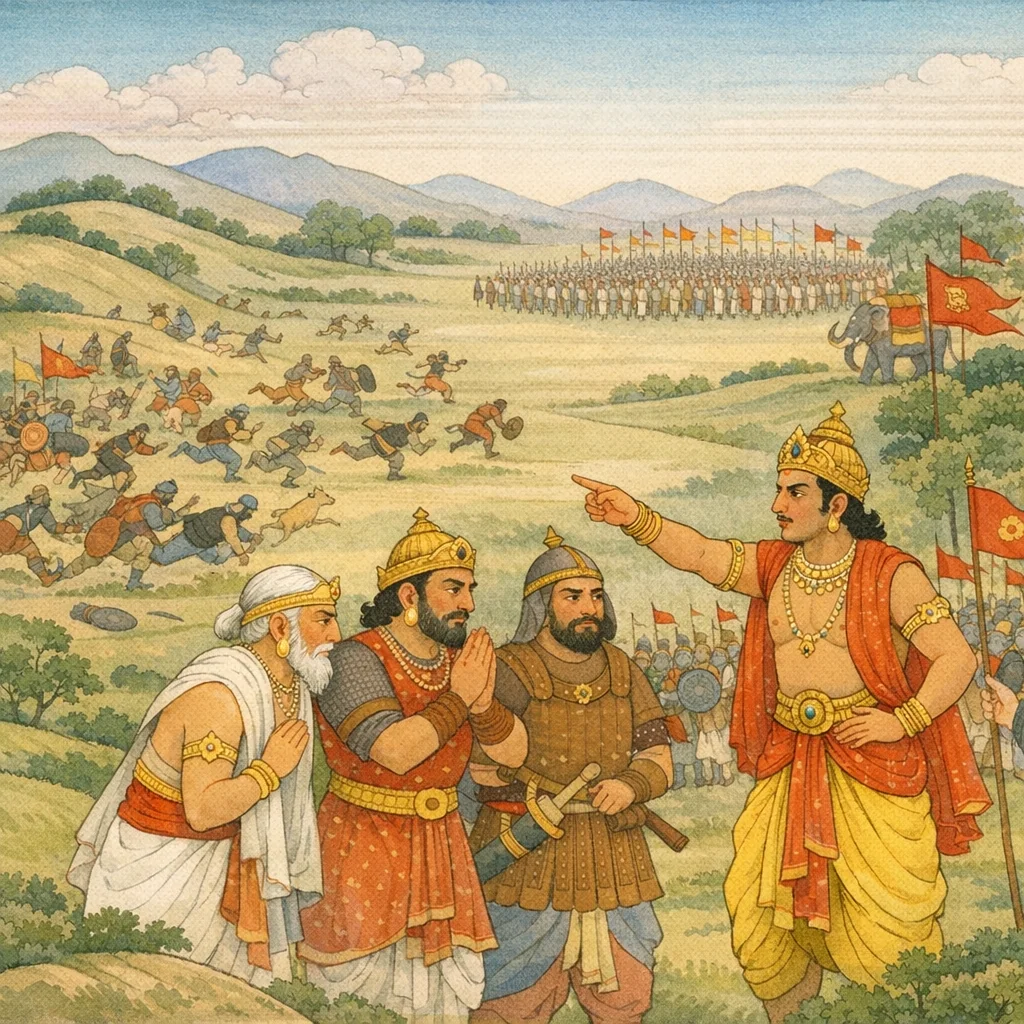
Saṃjaya reports that Śālva, leading a mleccha contingent, returns to the field in anger and advances upon the Pāṇḍava forces mounted on an exceptional elephant likened to Airāvata and a mountain. The elephant-led charge creates immediate disruption, scattering formations and prompting Kaurava-side acclaim through conch blasts. Dhṛṣṭadyumna, commander of the Pāṇḍava–Sṛñjaya host, moves to intercept; Śālva directs the elephant toward him. Dhṛṣṭadyumna strikes the elephant with concentrated, blazing arrows, temporarily forcing it to recoil, but Śālva drives it again with goad and prod toward Dhṛṣṭadyumna’s chariot. Dhṛṣṭadyumna dismounts swiftly with mace in hand as the elephant crushes and overturns the chariot. Bhīma, Śikhaṇḍin, and Śini’s grandson converge; rathins restrain the elephant’s momentum with arrows, while Śālva showers missiles like sunrays. The Pāñcāla prince (Dhṛṣṭadyumna) pursues and delivers a decisive mace blow that breaks the elephant’s temples; the animal collapses. In the ensuing collapse of morale, a Sātvata warrior severs Śālva’s head with a sharp bhalla, and Śālva falls with the elephant, marking a complete reversal from initial shock to decisive containment and elimination.
Chapter Arc: शल्य के वध के बाद कौरव-सेना में नाव-भंग जैसी अफरातफरी फैलती है—योद्धा एक-दूसरे से बिखरी हुई बातों में अपनी हार का कारण खोजते, धृतराष्ट्र की निन्दा करते और अपने भाग्य को कोसते हैं। → पराजय-भय से ग्रस्त सैनिक ‘अनाथ’ होकर इधर-उधर भागते हैं—जैसे सिंह से आहत मृग। दोपहर के समय पलायन का स्मरण, संगठन-शक्ति का टूटना, और नेतृत्व-विहीनता कौरव पक्ष को भीतर से खोखला कर देती है; फिर भी दुर्योधन उन्हें लज्जा और क्षात्रधर्म की दुहाई देकर लौटने को उकसाता है। → दुर्योधन के कठोर वचनों और ‘युद्ध में मरकर भी फल’ की घोषणा से राजागण पुनः साहस बटोरते हैं; उधर विजय-लालसा और क्रोध से भरे पाण्डव व्यूह बाँधकर तीव्र आक्रमण के लिए निकल पड़ते हैं—दोनों सेनाएँ फिर आमने-सामने आ खड़ी होती हैं। → कौरवों का पलायन क्षणिक सिद्ध होता है: दुर्योधन के सम्मान-आह्वान पर वे लौट आते हैं, और पाण्डव भी तत्पर होकर प्रत्युद्यय करते हैं—अगला संकुल युद्ध निश्चित हो जाता है। → दोनों पक्षों के व्यूह सजते ही रणभूमि फिर गरज उठती है—अब किसका धैर्य टूटेगा और किसके हाथ निर्णायक प्रहार लगेगा?
Shlokas
Verse 1
2: छा अकाल एकोनविशो< ध्याय: पाण्डवसैनिकोंका आपसमें बातचीत करते 5 68883 प्रशंसा और धृतराष्ट्रकी निन्दा करना तथा -सेनाका पलायन, भीमद्वारा इक्कीस हजार पैदलोंका संहार और दुर्योधनका अपनी सेनाको उत्साहित करना संजय उवाच पातिते युधि दुर्थर्षे मद्रराजे महारथे । तावकास्तव पुत्राश्च प्रायशो विमुखाभवन्,संजय कहते हैं--राजन्! दुर्जय महारथी मद्रराज शल्यके मारे जानेपर आपके सैनिक और पुत्र प्राय: संग्रामसे विमुख हो गये
Sañjaya said: O King, when the Madra ruler Śalya—an unconquerable great chariot-warrior—was struck down in battle, your troops and your sons, for the most part, turned away from the fight. The fall of a foremost champion shattered morale, revealing how an army’s resolve often depends on its leaders’ steadiness and the perceived righteousness and momentum of its cause.
Verse 2
वणिजो नावि भिन्नायां यथागाधेडप्लवे<र्णवे । अपारे पतिमच्छन्तो हते शूरे महात्मना
Sañjaya said: “Just as merchants, when their ship is shattered in the deep and shoreless ocean, helplessly seek a protector, so too, when that heroic, great-souled champion was slain, the warriors—bereft of support—looked about for a leader to save and steady them.”
Verse 3
अनाथा नाथमिच्छन्तो मृगा: सिंहार्दिता इव
Sañjaya said: Like deer mauled by a lion, left helpless and without refuge, they longed for a protector—seeking a lord to shelter and lead them amid the terror of battle.
Verse 4
मध्यद्ले प्रत्यपायाम निर्जिताजातशत्रुणा
Sañjaya said: “In the midst of the battle-array, we were driven back—overpowered by Ajātaśatru, who had gained the upper hand.”
Verse 5
न संधातुमनीकानि न च राजन् पराक्रमे । आसीदू् बुद्धि्हते शल्ये भूयो योधस्य कस्यचित्
Sañjaya said: O King, no warrior’s judgment was more shattered than Śalya’s—whether in arranging the battle-formations or in the very exertion of valor. His capacity to coordinate the troops and to act with clear martial purpose was eclipsed beyond that of any other fighter, suggesting how inner confusion can undo even renowned strength in the midst of war.
Verse 6
राजन्! अजातशत्रु युधिष्ठिस्से पराजित हो दोपहरके समय हमलोग युद्धसे भाग चले थे। शल्यके मारे जानेसे किसी भी योद्धाके मनमें सेनाओंको संगठित करने तथा पराक्रम दिखानेका उत्साह नहीं होता था ।। भीष्मे द्रोणे च निहते सूतपुत्रे च भारत । यद् दुःखं तव योधानां भयं चासीद् विशाम्पते
Sañjaya said: “O King! When Yudhiṣṭhira, the foe-unconquered, had been defeated, we fled from the battle at midday. After Śalya was slain, no warrior felt the zeal to rally the troops or to display valor. When Bhīṣma and Droṇa had fallen, and when the charioteer’s son too was slain, O Bhārata, what grief and fear possessed your warriors, O lord of the people?”
Verse 7
निराशाश्न जये तस्मिन् हते शल्ये महारथे
Sañjaya said: When Śalya, that great chariot-warrior, was slain in that battle, they were bereft of hope for victory.
Verse 8
मद्रराजे हते राजन् योधास्ते प्राद्रवन्ू भयात्
Sañjaya said: O King, when the ruler of Madra was slain, your warriors, seized by fear, broke ranks and fled.
Verse 9
अश्वानन्ये गजानन्ये रथानन्ये महारथा: । आरुहा[ जवसम्पन्ना: पादाता: प्राद्रवंस्तथा
Sañjaya said: Some mounted horses, others mounted elephants, and others climbed into chariots. The great warriors, and likewise the swift-footed infantry, then surged forward—each taking up his proper means of battle.
Verse 10
राजन! मद्रराजकी मृत्यु हो जानेपर आपके वे सभी योद्धा भयके मारे भागने लगे। कुछ सैनिक घोड़ोंपर, कुछ हाथियोंपर और दूसरे महारथी रथोंपर आरूढ़ हो बड़े वेगसे भागे। पैदल सैनिक भी वहाँसे भाग खड़े हुए ।। द्विसाहस्राक्ष मातड्रा गिरिरूपा: प्रहारिण: । सम्प्राद्रवन् हते शल्ये अड्कुशाड्गुष्ठनोदिता:,दो हजार प्रहारकुशल पर्वताकार मतवाले हाथी शल्यके मारे जानेपर अंकुशों और पैरके अँगूठोंसे प्रेरित हो तीव्र गतिसे पलायन करने लगे
Sañjaya said: “O King, when the lord of Madra, Śalya, was slain, all your warriors began to flee in fear. Some escaped on horses, some on elephants, and other great chariot-fighters sped away in their cars; even the foot-soldiers ran from the field. Then, two thousand rut-maddened, mountain-like, hard-striking elephants—driven on by goads and by the pressure of their riders’ toes—also rushed off in headlong flight after Śalya’s fall.”
Verse 11
ते रणाद् भरतश्रेष्ठ तावका: प्राद्रवन् दिश: । धावतकश्चाप्यपश्याम श्वसमानान् शराहतान्,भरतश्रेष्ठ] आपके वे सैनिक रणभूमिसे सम्पूर्ण दिशाओंकी ओर भागे थे। हमने देखा, वे बाणोंसे क्षत-विक्षत हो हाँफते हुए दौड़े जा रहे हैं
Sañjaya said: O best of the Bharatas, your troops fled from the battlefield in every direction. We saw them running—gasping for breath, pierced and torn by arrows.
Verse 12
तान् प्रभग्नान् द्रुतान् दृष्टवा हतोत्साहान् पराजितान् | अभ्यवर्तन्त पज्चाला: पाण्डवाश्ष जयैषिण:,उन्हें हतोत्साह, पराजित एवं हताश होकर भागते देख विजयकी अभिलाषा रखनेवाले पांचाल और पाण्डव उनका पीछा करने लगे
Sañjaya said: Seeing them shattered and fleeing—bereft of spirit and defeated—the Pañcālas and the Pāṇḍavas, intent on victory, turned back upon them and began to pursue.
Verse 13
बाणशब्दरवाश्नापि सिंहनादाश्न पुष्कला: । शड्खशब्दश्न शूराणां दारुण: समपद्यत,बाणोंकी सनसनाहट, शूरवीरोंका सिंहनाद और शंखध्वनि--इन सबकी मिली-जुली आवाज बड़ी भयानक जान पड़ती थी
Sañjaya said: The battlefield resounded with a terrifying, blended roar—the whirring hiss of arrows, the lion-like shouts of the warriors, and the blare of conches.
Verse 14
दृष्टवा तु कौरवं सैन्यं भयत्रस्तं प्रविद्रुतम् । अन्योन्यं समभाषन्त पज्चाला: पाण्डवैः सह,कौरव-सेनाको भयसे संत्रस्त होकर भागती देख पाण्डवोंसहित पांचालयोद्धा आपसमें इस प्रकार वार्तालाप करने लगे---
Sañjaya said: Seeing the Kaurava army panic-stricken and fleeing in fear, the Pāñcāla warriors, together with the Pāṇḍavas, began to speak among themselves.
Verse 15
अद्य राजा सत्यधृति्तामित्रो युधिष्ठिर: । अद्य दुर्योधनो हीनो दीप्ताया नृपतिश्रिय:
Sañjaya said: “Today King Yudhiṣṭhira stands firm in truth and steadfast resolve, a formidable foe to his enemies. Today Duryodhana is bereft of the blazing royal splendor that once surrounded him.”
Verse 16
“आज सत्यपरायण राजा युधिष्छिर शत्रुहीन हो गये और आज दुर्योधन अपनी देदीप्यमान राजलक्ष्मीसे भ्रष्ट हो गया ।। अद्य श्रुत्वा हत॑ पुत्र धृतराष्ट्रो जनेश्वर: । विह्वल: पतितो भूमौ किल्बिषं प्रतिपद्यताम्
Sañjaya said: “Today King Yudhiṣṭhira, steadfast in truth, has become free of enemies; and today Duryodhana has fallen from his blazing royal fortune. Today, on hearing that his son has been slain, Dhṛtarāṣṭra—the lord of men—overwhelmed and distraught, collapses to the ground, as though being driven to the consequences of his own wrongdoing.”
Verse 17
“आज राजा धूृतराष्ट्र अपने पुत्रको मारा गया सुनकर व्याकुल हो पृथ्वीपर पछाड़ खाकर गिरें और दु:ख भोगें ।। अद्य जानातु कौन्तेयं समर्थ सर्वधन्विनाम् । अद्यात्मानं च दुर्मेधा ग्हयिष्यति पापकृत्
Sañjaya said: “Today, let Kuntī’s son know who is the mightiest among all archers. Today, that evil-doer of perverted understanding will be forced to face his own true measure.”
Verse 18
इस प्रकार श्रीमह्याभारत शल्यपर्वमें संकुलयुद्धाविषयक अठारहवाँ अध्याय पूरा हुआ,अद्य क्षत्तुर्वच: सत्यं स्मरतां ब्रुवतो हितम् । “आज वे समझ लें कि दुन्तीपुत्र अर्जुन सम्पूर्ण धनुर्धरोंमें श्रेष्ठ एवं सामर्थ्यशाली हैं। आज पापाचारी दुर्बुद्धि धृतराष्ट्र अपनी भरपेट निन्दा करें और विदुरजीने जो सत्य एवं हितकर वचन कहे थे, उन्हें याद करें ।। अद्यप्रभृति पार्थ च प्रेष्पभूत इवाचरन्
Sañjaya said: “Today, let them remember the truthful and beneficial words spoken by the chamberlain Vidura. Today, let them finally understand that Arjuna, Kuntī’s son, is the foremost and most powerful among all archers. Today, let the sinful and misguided Dhritarashtra take his fill of self-reproach and recall the true, welfare-bearing counsel that Vidura had spoken. And from this day onward, let them conduct themselves toward Pārtha (Arjuna) as though he were their master.”
Verse 19
अद्य कृष्णस्य माहात्म्यं विजानातु महीपति:,“आज राजा धृतराष्ट्र अनुभव करें कि भगवान् श्रीकृष्णका कैसा माहात्म्य है और आज वे यह भी जान लें कि युद्धस्थलमें अर्जुनके गाण्डीव धनुषकी टंकार कितनी भयंकर है? उनके अस्त्र-शस्त्रोंकी सारी शक्ति कैसी है तथा रणभूमिमें उनकी दोनों भुजाओंका बल कितना अद्भुत है? इति श्रीमहा भारते शल्यपर्वणि संकुलयुद्धे एकोनविंशो5ध्याय:
Sañjaya said: “Let the king today truly recognize the greatness of Krishna. Let him also understand today how fearsome is the thunderous twang of Arjuna’s Gāṇḍīva on the battlefield—how potent are his weapons, and how astonishing is the strength of his two arms in war.”
Verse 20
अद्यार्जुनभनुर्घोषं घोरं जानातु संयुगे । अस्त्राणां च बलं॑ सर्व बाद्दोश्चन बलमाहवे,“आज राजा धृतराष्ट्र अनुभव करें कि भगवान् श्रीकृष्णका कैसा माहात्म्य है और आज वे यह भी जान लें कि युद्धस्थलमें अर्जुनके गाण्डीव धनुषकी टंकार कितनी भयंकर है? उनके अस्त्र-शस्त्रोंकी सारी शक्ति कैसी है तथा रणभूमिमें उनकी दोनों भुजाओंका बल कितना अद्भुत है?
Sañjaya said: “Let the king know today, in the midst of battle, how dreadful is the thunderous twang of Arjuna’s bow; and let him also understand the full might of Arjuna’s weapons and the strength of his arms upon the field of war.”
Verse 21
अद्य ज्ञास्यति भीमस्य बल॑ घोर महात्मन: । हते दुर्योधने युद्धे शक्रेणेवासुरे बले,'जैसे इन्द्रने असुरोंकी सेनाका संहार किया था, उसी प्रकार युद्धमें भीमसेनके हाथसे दुर्योधनके मारे जानेपर आज धृतराष्ट्रको यह ज्ञात हो जायगा कि “महामनस्वी भीमका बल कैसा भयंकर है!”
Sañjaya said: “Today, Dhritarashtra will learn how dreadful is the strength of Bhīma, that great-souled hero. When Duryodhana is slain in battle by Bhīmasena’s hand, it will be as when Indra destroyed the host of the asuras.”
Verse 22
यत् कृतं भीमसेनेन दुःशासनवधे तदा । नान्य: कर्तास्ति लोके5स्मिनृते भीमान्महाबलात्,“दुःशासनके वधके समय भीमसेनने जो कुछ किया था, उसे महाबली भीमसेनके सिवा इस संसारमें दूसरा कोई नहीं कर सकता
Sañjaya said: “What Bhīmasena did at that time, in the slaying of Duḥśāsana—there is no other in this world who could have done it, except that mighty-armed, supremely powerful Bhīma.”
Verse 23
मद्रराजे महाराज वित्रस्ता: शरविक्षता: । महाराज! जैसे अगाध महासागरमें नाव टूट जानेपर उस नौकारहित अपार समुद्रसे पार जानेकी इच्छावाले व्यापारी व्याकुल हो उठते हैं, उसी प्रकार महात्मा युधिष्ठिरके द्वारा शूरवीर मद्रराज शल्यके मारे जानेपर आपके सैनिक बाणोंसे क्षत-विक्षत एवं भयभीत हो बड़ी घबराहटमें पड़ गये,अद्य श्रेष्ठस्य जानीतां पाण्डवस्य पराक्रमम् । मद्रराजं हत॑ श्रुत्वा देवेरपि सुदुःसहम् “देवताओंके लिये भी दुःसह मद्रराज शल्यके वधका वृत्तान्त सुनकर आज धूतराष्ट्र ज्येष्ठ पाण्डव युधिष्ठिरके पराक्रमको भी अच्छी तरह जान लें
Sanjaya said: O great king, when the king of Madra was struck down, your troops—pierced and torn by arrows—were seized by fear and fell into utter confusion. Just as merchants, longing to cross a vast and shoreless ocean, become frantic when their boat breaks and they are left without any vessel, so too did your army, on hearing that the heroic Shalya, lord of Madra, had been slain by the high-souled Yudhishthira. Today, O Dhritarashtra, know well the prowess of the foremost of the Pandavas; for the very report that Shalya has been killed is something unbearable even for the gods.
Verse 24
अद्य ज्ञास्यति संग्रामे माद्रीपुत्रौ सुदु:ःसहौ । निहते सौबले वीरे प्रवीरेषु च सर्वश:
Sañjaya said: “Today, in the battle, the two sons of Mādrī—those fiercely unendurable warriors—will truly be known for what they are, now that the heroic Saubala has been slain and the foremost champions have been struck down on every side.”
Verse 25
“आज संग्राममें सुबलपुत्र वीर शकुनि तथा दूसरे समस्त प्रमुख वीरोंके मारे जानेपर उन्हें शत्रुके लिये अत्यन्त दुःसह माद्रीकुमार नकुल-सहदेवकी शक्तिका भी ज्ञान हो जायगा ।। कथं जयो न तेषां स्याद् येषां योद्धा धनंजय: । सात्यकिर्भीमसेनश्व धृष्टय्युम्नश्व॒ पार्षत:,“जिनकी ओरसे युद्ध करनेवाले धनंजय, सात्यकि, भीमसेन, ट्रुपदकुमार धृष्टद्युम्न, द्रौपदीके पाँचों पुत्र, माद्रीकुमार पाण्डुनन्दन नकुल-सहदेव, महाधनुर्धर शिखण्डी तथा स्वयं राजा युधिष्ठिर-जैसे वीर हैं, उनकी विजय कैसे न हो?
Sañjaya said: “When the valiant Śakuni, son of Subala, and the other foremost warriors have been slain in today’s battle, the enemy will also come to know the irresistible prowess of Mādrī’s sons, Nakula and Sahadeva. How could victory not belong to those whose champions are Dhanañjaya (Arjuna), Sātyaki, Bhīmasena, and Dhṛṣṭadyumna, the son of Pṛṣata?”
Verse 26
द्रौपद्यास्तनया: पञ्च माद्रीपुत्रोी च पाण्डवौ । शिखण्डी च महेष्वासो राजा चैव युधिछिर:,“जिनकी ओरसे युद्ध करनेवाले धनंजय, सात्यकि, भीमसेन, ट्रुपदकुमार धृष्टद्युम्न, द्रौपदीके पाँचों पुत्र, माद्रीकुमार पाण्डुनन्दन नकुल-सहदेव, महाधनुर्धर शिखण्डी तथा स्वयं राजा युधिष्ठिर-जैसे वीर हैं, उनकी विजय कैसे न हो?
Sañjaya said: “There are Draupadī’s five sons, and the two Pāṇḍavas born of Mādrī; there is also Śikhaṇḍī, the great archer, and King Yudhiṣṭhira himself. With such heroes fighting on their side, how could victory not be theirs?”
Verse 27
येषां च जगतीनाथो नाथ: कृष्णो जनार्दन: । कथं तेषां जयो न स्याद् येषां धर्मो व्यपाश्रय:,“सम्पूर्ण जगतके स्वामी जनार्दन श्रीकृष्ण जिनके रक्षक हैं और जिन्हें धर्मका आश्रय प्राप्त है, उनकी विजय क्यों न हो?
Sañjaya said: For those whose protector is Kṛṣṇa Janārdana—the Lord of the whole world—and who stand supported by Dharma, how could victory not be theirs? Where divine guardianship and righteous grounding unite, defeat has no rightful place.
Verse 28
(लाभस्तेषां जयस्तेषां कुतस्तेषां पराभव: । येषां नाथो हृषीकेश: सर्वलोकवि भुर्हरिः ।।) “अखिल विश्वके प्रभु और सबकी इन्द्रियोंके नियन्ता भगवान् श्रीहरि जिनके स्वामी और संरक्षक हैं, उन्हींको लाभ प्राप्त होता है और उन्हींकी विजय होती है। भला उनकी पराजय कैसे हो सकती है?। भीष्म द्रोणं च कर्ण च मद्रराजानमेव च । तथान्यान् नृपतीन् वीरान् शतशो5थ सहस्रशः
Sañjaya said: “Gain is theirs, victory is theirs—how could defeat ever be theirs? For their lord and protector is Hṛṣīkeśa, Hari, the sovereign pervader of all worlds. Where such a master stands, success follows and downfall cannot take root.”
Verse 29
को<न्य: शक्तो रणे जेतुमृते पार्थाद् युधिष्ठिरात् । यस्य नाथो हृषीकेश: सदा सत्ययशोनिधि:
Sañjaya said: Who else could be capable of winning in battle—except Arjuna and Yudhiṣṭhira—when their lord and protector is Hṛṣīkeśa (Kṛṣṇa), ever a treasury of truth and noble fame?
Verse 30
“दुन्तीपुत्र युधिष्ठिरके सिवा दूसरा कौन ऐसा राजा है जो रणभूमिमें भीष्म, द्रोण, कर्ण, मद्रराज शल्य तथा अन्य सैकड़ों-हजारों नरपतियोंपर विजय प्राप्त कर सके। सदा सत्य और यशके सागर भगवान् श्रीकृष्ण जिनके स्वामी एवं रक्षक हैं, उन्हींको यह सफलता प्राप्त हो सकती है” ।। इत्येवं वदमानास्ते हर्षेण महता युता: । प्रभग्नांस्तावकान् योधान् सृञ्जया: पृष्ठतो5न्वयु:
Sañjaya said: “Who, other than Yudhishthira, the son of Kunti, could be such a king as to win victory on the battlefield over Bhishma, Drona, Karna, the king of Madra—Shalya—and hundreds and thousands of other rulers? Such success can belong only to him whose lord and protector is Bhagavan Shri Krishna, an ocean of truth and fame.” As they spoke in this way, filled with great joy, the Sṛñjayas pursued from behind your routed warriors.
Verse 31
इस तरहकी बातें करते हुए सूंजयवीर अत्यन्त हर्षमें भरकर आपके भागते हुए योद्धाओंका पीछा करने लगे ।। धनंजयो रथानीकमभ्यवर्तत वीर्यवान् | माद्रीपुत्री च शकुनिं सात्यकिश्न महारथ:,इसी समय पराक्रमी अर्जुनने आपकी रथसेनापर धावा किया। साथ ही नकुल-सहदेव और महारथी सात्यकिने शकुनिपर चढ़ाई की
Sañjaya said: As the Sṛñjayas spoke thus, filled with great joy, they began to pursue from behind your fleeing warriors. At that moment the mighty Dhanañjaya (Arjuna) charged straight into your chariot-host. Along with him, Mādrī’s two sons (Nakula and Sahadeva) and the great chariot-warrior Sātyaki advanced to attack Śakuni.
Verse 32
तान् प्रेक्ष्य द्रवत: सर्वान् भीमसेनभयार्दितान् | दुर्योधनस्तदा सूतमब्रवीद् विजयाय च,भीमसेनके भयसे पीड़ित हुए अपने उन समस्त योद्धाओंको भागते देख दुर्योधनने विजयकी इच्छासे अपने सारथिसे कहा--
Sañjaya said: Seeing all those warriors fleeing in panic, stricken by fear of Bhīmasena, Duryodhana then addressed his charioteer, driven by the desire for victory—seeking to rally and redirect the battle’s course despite the heavy burden of fear and collapse within his ranks.
Verse 33
मामतिक्रमते पार्थो धनुष्पाणिमवस्थितम् । जघने सर्वसैन्यानां ममाश्चान् प्रतिपादय,'सूत! मैं यहाँ हाथमें धनुष लिये खड़ा हूँ और अर्जुन मुझे लाँध जानेकी चेष्टा कर रहे हैं। अतः तुम मेरे घोड़ोंको सारी सेनाके पिछले भागमें पहुँचा दो
Sañjaya said: “Arjuna is trying to pass beyond me as I stand here with bow in hand. Therefore, charioteer, drive my horses to the rear of the entire army.”
Verse 34
जघने युध्यमानं हि कौन्तेयो मां समन्ततः । नोत्सहेदभ्यतिक्रान्तुं वेलामिव महोदधि:
Sañjaya said: “As the son of Kuntī fought on, he pressed me from every side; and I could not bring myself to overstep him—just as the great ocean cannot transgress its shoreline.”
Verse 35
'पृष्ठभागमें रहकर युद्ध करते समय मुझे अर्जुन किसी ओरसे भी लाँघनेका साहस नहीं कर सकते। ठीक वैसे ही, जैसे महासागर अपने तटप्रान्तको नहीं लाँघ पाता है ।। पश्य सैन्यं महत् सूत पाण्डवै: समभिद्रुतम् । सैन्यरेणुं समुद्धूतं पश्यस्वैनं समन््तत:,'सारथे! देखो, पाण्डव मेरी विशाल सेनाको खदेड़ रहे हैं और सैनिकोंके दौड़नेसे उठी हुई धूल जो सब ओर छा गयी है उसपर भी दृष्टिपात करो
Sañjaya said: “While I remain in the rear and fight, Arjuna cannot dare to overstep me from any side—just as the great ocean cannot cross beyond its own shoreline. Look, charioteer: the Pandavas are pressing hard upon the vast army, and see also the dust raised by the rushing troops, spreading everywhere.”
Verse 36
वृषा यथा भग्नशुज्जा: शीर्णदन्ता यथा गजा: । वे अपनेको अनाथ समझते हुए किसी नाथ (सहायक) की इच्छा रखते थे और सिंहके सताये हुए मृगों, टूटे सींगवाले साँड़ों तथा जीर्ण-शीर्ण दाँतोंवाले हाथियोंके समान असमर्थ हो गये थे,सिंहनादांश्व बहुश: शूणु घोरान् भयावहान् | तस्माद् याहि शनै: सूत जघनं परिपालय 'सूत! वह सुनो, बारंबार भय उत्पन्न करनेवाले घोर सिंहनाद हो रहे हैं। इसलिये तुम धीरे-धीरे चलो और सेनाके पृष्ठभागकी रक्षा करो
Sañjaya said: “They became helpless—like bulls with broken horns and elephants with worn-out teeth—like deer harried by a lion, thinking themselves without a protector and longing for some lordly support. Hear, O charioteer, those dreadful lion-roars again and again, bringing fear. Therefore drive slowly, and guard the rear of the army.”
Verse 37
मयि स्थिते च समरे निरुद्धेषु च पाण्डुषु पुनरावर्तते तूर्ण मापकं बलमोजसा,“जब मैं समरांगणमें खड़ा होऊँगा और पाण्डवोंका बढ़ाव रुक जायगा, तब मेरी सेना पुनः शीघ्र ही लौट आयेगी और सारी शक्ति लगाकर युद्ध करेगी”
Sañjaya said: “When I stand firm on the battlefield and the advance of the Pāṇḍavas is checked, then our own army will quickly turn back again and, gathering its full vigor, will resume the fight with renewed force.”
Verse 38
तच्छुत्वा तव पुत्रस्य शूरार्यसदृशं वच: । सारथिहेंमसंछन्नान् शनैरश्वानचोदयत्,राजन! आपके पुत्रका यह श्रेष्ठ वीरोचित वचन सुनकर सारथिने सोनेके साज-बाजसे सजे हुए घोड़ोंको धीरे-धीरे आगे बढ़ाया
Sañjaya said: Hearing those noble, warrior-like words spoken by your son, O King, the charioteer gently urged forward the horses, which were adorned and covered with golden trappings, advancing with measured restraint.
Verse 39
गजाश्वरथिभिहीनास्त्यक्तात्मान: पदातय: । एकविंशतिसाहस्रा: संयुगायावतस्थिरे,उस समय वहाँ हाथीसवार, घुड़सवार तथा रथियोंसे रहित इक्कीस हजार केवल पैदल योद्धा अपने जीवनका मोह छोड़कर युद्धके लिये डट गये
Sañjaya said: Deprived of elephant-riders, horsemen, and chariot-warriors, twenty-one thousand foot-soldiers—having cast aside attachment to their own lives—stood firm, resolved for battle.
Verse 40
नानादेशसमुद्धूता नानानगरवासिनः | अवस्थितास्तदा योधा: प्रार्थयन्तो महद् यश:,वे अनेक देशोंमें उत्पन्न और अनेक नगरोंके निवासी वीर सैनिक महान् यशकी अभिलाषा रखते हुए वहाँ युद्ध करनेके लिये खड़े हुए थे
Sañjaya said: Warriors drawn from many different regions and dwelling in many cities stood arrayed there for battle, driven by the desire for great renown.
Verse 41
तेषामापततां तत्र संहृष्टानां परस्परम् । सम्मर्द: सुमहान् जज्ञे घोररूपो भयानक:,परस्पर हर्षमें भरकर एक-दूसरेपर आक्रमण करनेवाले उभयपक्षके सैनिकोंका वह घोर एवं महान् संघर्ष बड़ा भयंकर हुआ
Sañjaya said: As those warriors, exhilarated, rushed upon one another there, a vast crush of battle arose—terrible in form and truly fearsome.
Verse 42
भीमसेनस्तदा राजन धृष्टद्युम्नश्न पार्षत: । बलेन चतुरज्गजेण नानादेश्यानवारयत्,राजन! उस समय भीमसेन और ट्रुपदकुमार धृष्टद्युम्न चतुरंगिणी सेना साथ लेकर उन अनेकदेशीय सैनिकोंको रोकने लगे
Sañjaya said: O King, at that time Bhīmasena and Dhṛṣṭadyumna, the son of Pārṣata (Drupada), supported by a full fourfold army, held back the warriors drawn from many lands. In the press of battle, their stand was a disciplined defense—restraining the enemy’s advance and protecting their own side through coordinated strength rather than reckless fury.
Verse 43
भीममेवाभ्यवर्तन्त रणे<न्ये तु पदातय: । प्रक्षेड्यास्फोट्य संहृष्टा वीरलोक॑ यियासव:,तब रणभूमिमें अन्य पैदल योद्धा हर्ष और उत्साहमें भरकर भुजाओंपर ताल ठोंकते और सिंहनाद करते हुए वीरलोकमें जानेकी इच्छासे भीमसेनके ही सामने आ पहुँचे
Sañjaya said: In that battle, the other foot-soldiers too advanced straight toward Bhīma alone. Exultant and thrilled, slapping their arms and raising loud martial cries, they came before him, eager to depart to the heroes’ world—driven by reckless ardor and the fatal resolve of war.
Verse 44
आसाद्य भीमसेन तु संरब्धा युद्धदुर्मदा: । धार्रराष्ट्रा विनेदुर्हि नान्यामकथयन् कथाम्,भीमसेनके पास पहुँचकर वे रोषभरे रणदुर्मद कौरवयोद्धा केवल गर्जना करने लगे, मुँहसे दूसरी कोई बात नहीं कहते थे
Sañjaya said: Having closed in on Bhīmasena, the Dhṛtarāṣṭra warriors—fierce with anger and intoxicated by the arrogance of battle—burst into loud roars; they spoke no other words at all. The scene underscores how wrath and martial pride can eclipse reason and restraint, reducing speech to mere aggression.
Verse 45
परिवार्य रणे भीम॑ निजध्नुस्ते समन््ततः । स वध्यमान: समरे पदातिगणसंवृत:
Sañjaya said: In the thick of battle, they surrounded Bhīma on every side and struck at him. Yet, even as he was being assailed in the fight, he stood encircled by companies of foot-soldiers—pressed hard on all fronts amid the chaos of war.
Verse 46
ते तु क्ुद्धा महाराज पाण्डवस्य महारथम्
Sañjaya said: But they, enraged, O great king, turned their attention toward the great chariot-warrior of the Pāṇḍavas—anger now driving their resolve amid the moral collapse of battle.
Verse 47
निग्रहीतु प्रवृत्ता हि योधांश्षञान्यानवारयन् । महाराज! वे सभी सैनिक कुपित हो पाण्डव महारथी भीमसेनको पकड़नेकी चेट्टामें संलग्न हो गये और दूसरे योद्धाओंको भी आगे बढ़नेसे रोकने लगे ।। अक्रुध्यत रणे भीमस्तैस्तदा पर्यवस्थितै:
Sañjaya said: O King, those warriors, intent on restraining him, began to block the advance of the others as well. All the soldiers, enraged, hurled themselves into the attempt to seize Bhīmasena, the great chariot-warrior of the Pāṇḍavas, and they checked other fighters from pressing forward. Then, in the midst of battle, Bhīma blazed with anger at those who had surrounded and confronted him.
Verse 48
सो<वतीर्य रथात् तूर्ण पदाति: समवस्थित: । जातरूपप्रतिच्छन्नां प्रगृह्ा महतीं गदाम्
Sañjaya said: Swiftly descending from his chariot, he took his stand on foot; and, grasping a massive mace sheathed in gold, he prepared himself for the next phase of combat.
Verse 49
अवधीत् तावकान् योधान् दण्डपाणिरिवान्तक: । उनके इस प्रकार सब ओर खड़े होनेपर उस समय रणभूमिमें भीमसेनको बड़ा क्रोध हुआ। वे तुरंत अपने रथसे उतरकर पैदल खड़े हो गये और सोनेसे जड़ी हुई विशाल गदा हाथमें लेकर दण्डधारी यमराजके समान आपके उन योद्धाओंका संहार करने लगे || ४७-४८ $ ।। विप्रहीणरथाश्चांस्तानवधीत् पुरुषर्षभ:
Sañjaya said: Like Yama, the wielder of the staff of punishment, he slew your warriors. That bull among men also struck down those whose chariots had been deprived of their drivers.
Verse 50
हत्वा तत् पुरुषानीक॑ भीम: सत्यपराक्रम:
Sañjaya said: Having slain that massed host of warriors, Bhīma—whose valor never proves false—stood forth as the embodiment of unwavering might amid the moral gravity of war.
Verse 51
धृष्टद्युम्नं पुरस्कृत्य नचिरात् प्रत्यदृश्यत । सत्यपराक्रमी भीमसेन उस पैदल सेनाका संहार करके थोड़ी ही देरमें धृष्टद्युम्मको आगे किये दिखायी दिये ।। पादाता निहता भूमौ शिशियरे रुधिरोक्षिता:
Sañjaya said: With Dhṛṣṭadyumna placed in the forefront, Bhīmasena soon came into view again. True to his famed valor, he had cut down the foot-soldiers, and in a short while appeared with Dhṛṣṭadyumna leading. The infantry lay slain upon the ground, their bodies strewn about and drenched in blood.
Verse 52
नानाशस्त्रसमायुक्ता नानाकुण्डलधारिण:
Sañjaya said: They were armed with many kinds of weapons and wore earrings of many different designs—warriors fully adorned for battle, whose outward splendor and martial readiness stood in stark contrast to the inner cost of violence.
Verse 53
पताकाध्वजसंछन्नं पदातीनां महद् बलम्
Sañjaya said: “A vast force of infantry, covered over with banners and standards, came into view.” The line evokes the overwhelming scale and pageantry of war—where outward signs of glory (flags and emblems) conceal the human mass beneath, hinting at the moral weight and impending suffering carried by such armies.
Verse 54
निकृत्तं विबभौ रौद्रं घोररूपं भयावहम् | ध्वज और पताकाओंसे आच्छादित पैदलोंकी वह विशाल सेना छिन्न-भिन्न होकर रौद्र, घोर एवं भयानक प्रतीत होती थी ।। ५३ ई ।। युधिष्ठिरपुरोगाश्व॒ सहसैन्या महारथा:
Sañjaya said: The host, shattered and hewn apart, appeared dreadful—fierce in aspect, grim in form, and terrifying to behold. And the great chariot-warriors, with Yudhiṣṭhira at their head and supported by a vast army, advanced—an image of war’s moral collapse where pride and banners cannot conceal the ruin wrought by violence.
Verse 55
ते सर्व तावकान् दृष्टवा महेष्वासा: पराड्मुखान्
Sañjaya said: Seeing all your warriors turning away—those famed as great archers—the moment revealed a collapse of resolve in the Kaurava host, when prowess without steadiness of purpose falters amid the moral and psychological pressures of war.
Verse 56
तदद्भुतमपश्याम तव पुत्रस्य पौरुषम्
Sañjaya said: “We beheld that wondrous display of your son’s manly prowess.”
Verse 57
नातिदूरापयातं तु कृतबुद्धि पलायने
Sañjaya said: He had not gone very far, for in his mind he had already resolved to flee—his purpose fixed on escape rather than steadfastness.
Verse 58
दुर्योधन: स्वकं सैन्यमब्रवीद् भृशविक्षतम् | जब दुर्योधनने देखा कि मेरी सेना भागनेका निश्चय करके अभी अधिक दूर नहीं गयी है, तब उसने उन अत्यन्त घायल हुए सैनिकोंको पुकारकर कहा-- ।। नतं देशं प्रपश्यामि पृथिव्यां पर्वतेषु च
Sañjaya said: Duryodhana addressed his own army, grievously wounded. Seeing that his troops, resolved to flee, had not yet gone far, he called out to those badly injured warriors and declared: “I do not see that place—either on the earth or among the mountains—where you should turn in flight.”
Verse 59
अल्पं च बलमेतेषां कृष्ण च भृशविक्षतौ,यदि सर्वेजत्र तिष्ठामो ध्रुवं नो विजयो भवेत् | “अब तो इनके पास बहुत थोड़ी सेना शेष रह गयी है और श्रीकृष्ण तथा अर्जुन भी अत्यन्त घायल हो चुके हैं, ऐसी दशामें यदि हम सब लोग साहस करके डटे रहें तो हमारी विजय अवश्य होगी
Sañjaya said: “Their forces are now only a little, and Kṛṣṇa and Arjuna too are grievously wounded. If all of us stand firm right here and hold our ground with resolve, our victory will surely be certain.”
Verse 60
।। विप्रयातांस्तु वो भिन्नान् पाण्डवा: कृतविप्रिया:
Sañjaya said: “Those of your men who had turned away and become scattered, the Pāṇḍavas pursued and—having brought them back into submission—dealt with them as the battlefield demanded.”
Verse 61
अनुसृत्य हनिष्यन्ति श्रेयान्न: समरे वध: । “तुम पाण्डवोंके अपराध तो कर ही चुके हो। यदि अलग-अलग होकर भागोगे तो पाण्डव पीछा करके तुम्हें अवश्य मार डालेंगे। ऐसी दशामें हमारे लिये संग्राममें मारा जाना ही श्रेयस्कर है || ६० इ || शृण्वन्तु क्षत्रिया: सर्वे यावन््तो5त्र समागता:,“जितने क्षत्रिय यहाँ एकत्र हुए हैं, वे सब कान खोलकर सुन लें--जब शूरवीर और कायर सभीको सदा ही मौत मार डालती है, तब ऐसा कौन मूर्ख मनुष्य है, जो क्षत्रिय कहलाकर भी निश्चितरूपसे युद्ध नहीं करेगा
Sañjaya said: “If we scatter and flee, the Pāṇḍavas will pursue and surely kill us. In such a plight, it is better for us to die in battle. Let all the kṣatriyas gathered here listen: when death strikes down both the brave and the coward alike, what fool—calling himself a kṣatriya—would still refuse to fight with resolve?”
Verse 62
यदा शूरं च भीरुं च मारयत्यन्तक: सदा | को नु मूढो न युध्येत पुरुष: क्षत्रियो ध्रुवम्,“जितने क्षत्रिय यहाँ एकत्र हुए हैं, वे सब कान खोलकर सुन लें--जब शूरवीर और कायर सभीको सदा ही मौत मार डालती है, तब ऐसा कौन मूर्ख मनुष्य है, जो क्षत्रिय कहलाकर भी निश्चितरूपसे युद्ध नहीं करेगा
When Antaka—Death—ever slays alike the brave and the fearful, who would be so foolish a man, a kṣatriya for certain, as to refuse to fight?
Verse 63
श्रेयो नो भीमसेनस्य क्रुद्धस्याभिमुखे स्थितम् । सुख: सांग्रामिको मृत्यु: क्षत्रधर्मेण युध्यताम्,“अतः क्रोधमें भरे हुए भीमसेनके सामने डटे रहना ही हमारे लिये कल्याणकारी होगा। क्षत्रियधर्मके अनुसार युद्ध करनेवाले वीर पुरुषोंके लिये संग्राममें होनेवाली मृत्यु ही सुखद है
Therefore, for us the better course is to stand firm facing Bhīmasena when he is enraged. For warriors who fight in accordance with kṣatriya-dharma, death on the battlefield is itself a blessed end.
Verse 64
मर्त्येनावश्यमर्तव्यं गृहेष्वपि कदाचन । युध्यत: क्षत्रधर्मेण मृत्युरेष सनातन:,“मरणधर्मा मनुष्यको कभी-न-कभी अवश्य मरना पड़ेगा। घरमें भी उससे छुटकारा नहीं है। अतः क्षत्रिय-धर्मके अनुसार युद्ध करते हुए ही जो मृत्यु होती है, यही क्षत्रियके लिये सनातन मृत्यु है
A mortal, bound to die, must surely die one day; even at home there is no escape from it. Therefore, the death that comes while fighting in accordance with kṣatriya-dharma—this is the timeless death appointed for a kṣatriya.
Verse 65
हत्वेह सुखमाप्रोति हतः प्रेत्य महत् फलम् । न युद्धधर्माच्छेयान् वै पन्था: स्वर्गस्थ कौरवा:
By slaying the foe here, one attains happiness in this world; and if one is slain, then after death one gains a great reward. For you Kauravas who seek heaven, there is truly no path superior to the dharma of battle.
Verse 66
तद् भयं स च न: शोको भय एवाभ्यवर्तत । भारत! प्रजानाथ! भीष्म, द्रोण और सूतपुत्र कर्णके मारे जानेपर आपके योद्धाओंको जो दुःख और भय प्राप्त हुआ था, वही भय और वही शोक पुनः (शल्यके मारे जानेपर) हमारे सामने उपस्थित हुआ,श्रुत्वा तद् वचनं तस्य पूजयित्वा च पार्थिवा:
Sañjaya said: That very fear—and that grief of ours—returned upon us as sheer terror. O Bhārata, O lord of the people: just as your warriors were seized by sorrow and fear when Bhīṣma, Droṇa, and Karṇa the charioteer’s son were slain, so the same fear and the same grief rose again before us now upon the fall of Śalya. Hearing his words, the kings paid him due honor.
Verse 67
तानापतत एवाशु व्यूढानीका: प्रहारिण:
Sañjaya said: Those fierce warriors, their battle-formations already arrayed, rushed in at once and swiftly fell upon the enemy, intent on striking.
Verse 68
धनंजयो रथेनाजावभ्यवर्तत वीर्यवान्
Sañjaya said: The mighty Dhanañjaya (Arjuna), mounted on his chariot, advanced into the battle—pressing forward with valor and resolve amid the clash of arms.
Verse 69
विश्रुतं त्रिषु लोकेषु व्याक्षिपन् गाण्डिवं धनु: । पराक्रमी अर्जुन अपने त्रिलोकविख्यात गाण्डीव धनुषकी टंकार करते हुए रथके द्वारा युद्धके लिये वहाँ आ पहुँचे ।। ६८ ई ।। माद्रीपुत्रो च शकुनिं सात्यकिश्न महाबल:,माद्रीपुत्र नकुल-सहदेव और महाबली सात्यकिने शकुनिपर धावा किया। ये सब लोग हर्ष और उत्साहमें भरकर बड़ी सावधानीके साथ आपकी सेनापर वेगपूर्वक टूट पड़े
Sañjaya said: Arjuna, famed across the three worlds, brandished the bow Gāṇḍīva and, making its renowned twang resound, arrived there in his chariot ready for battle. Then Mādrī’s sons—Nakula and Sahadeva—together with the mighty Sātyaki, charged at Śakuni. All of them, filled with joy and ardor yet acting with careful alertness, rushed upon your army with great speed.
Verse 70
जवेनाभ्यपतन् ह्ृष्टा यत्ता वै तावकं बलम्,माद्रीपुत्र नकुल-सहदेव और महाबली सात्यकिने शकुनिपर धावा किया। ये सब लोग हर्ष और उत्साहमें भरकर बड़ी सावधानीके साथ आपकी सेनापर वेगपूर्वक टूट पड़े
Sañjaya said: With swift momentum, exultant yet disciplined, they surged upon your army. Mādrī’s sons Nakula and Sahadeva, and the mighty Sātyaki, charged toward Śakuni; all of them, filled with joy and martial ardor, carefully coordinated their assault and fell upon your forces with great speed.
Verse 76
हतप्रवीरा विध्वस्ता निकृत्ताश्न शितै: शरै: । जिनके प्रमुख वीर मारे गये थे, वे कौरवसैनिक महारथी शल्यका वध हो जानेपर पैने बाणोंसे क्षत-विक्षत और विध्वस्त हो विजयकी ओरसे निराश हो गये थे
Sañjaya said: With their foremost heroes slain, the Kaurava troops were shattered and cut down by sharp arrows. After Śalya’s fall, those warriors—wounded, broken, and leaderless—lost hope of victory.
Verse 186
विजानातु नृपो दु:खं यत् प्राप्तं पाण्डुनन्दनै: । “आजसे वे स्वयं ही दासतुल्य होकर कुन्तीपुत्र युधिष्ठिरकी परिचर्या करते हुए अच्छी तरह समझ लें कि “पाण्डवोंने पहले कितना कष्ट उठाया था?”
Sañjaya said: “Let the king truly understand the suffering that befell the sons of Pāṇḍu.” The remark points to a moral reckoning: only by acknowledging what the Pāṇḍavas endured can one judge their deeds—and the war’s tragic necessity—with fairness.
Verse 456
न चचाल ततः स्थानान्मैनाक इव पर्वत: । उन्होंने रणभूमिमें भीमसेनको चारों ओरसे घेरकर उनपर प्रहार आरम्भ कर दिया। समरांगणमें पैदल सैनिकोंसे घिरे हुए भीमसेन उनके अस्त्र-शस्त्रोंकी चोट सहते हुए भी मैनाक पर्वतके समान अपने स्थानसे विचिलित नहीं हुए
Sañjaya said: He did not stir from his position—steadfast like Mount Maināka. Though surrounded on all sides on the battlefield and struck again and again, Bhīmasena endured the blows of weapons without yielding, embodying unshaken resolve amid war’s violence.
Verse 493
एकविंशतिसाहस्रान् पदातीन् समपोथयत् । रथ और घोड़ोंसे रहित उन इकक््कीसों हजार पैदल सैनिकोंको पुरुषप्रवर भीमने गदासे मारकर धराशायी कर दिया
Sañjaya said: Bhīma, foremost among men, struck down and crushed twenty-one thousand foot-soldiers—left without chariots and horses—bringing them to the ground with his mace. The scene underscores the brutal momentum of battle, where strength and resolve can overwhelm vast numbers, sharpening the ethical tension between martial duty and the human cost of war.
Verse 513
सम्भग्ना इव वातेन कर्णिकारा: सुपुष्पिता: । मारे गये पैदल सैनिक खूनसे लथपथ हो पृथ्वीपर सदाके लिये सो गये, मानो हवाके उखाड़े हुए सुन्दर लाल फूलोंसे भरे कनेरके वृक्ष पड़े हों
Sañjaya said: The foot-soldiers, struck down in battle, lay on the earth drenched in blood, as if they had fallen forever into sleep—like karṇikāra trees in full bloom, snapped and uprooted by the wind, their beautiful red flowers scattered. The image underscores the terrible cost of war: lives cut down abruptly, beauty and vitality turned into stillness, and the battlefield becoming a grim testimony to human violence and impermanence.
Verse 526
नानाजात्या हतास्तत्र नानादेशसमागता: । वहाँ नाना देशोंसे आये हुए, नाना जातिके, नाना शस्त्र धारण किये और नाना प्रकारके कुण्डलधारी योद्धा मारे गये थे
Sañjaya said: There, warriors of many different peoples—having come from many lands—were slain. The scene underscores the vast, indiscriminate cost of war: men of diverse origins and identities, drawn into a single conflict, meet the same end on the battlefield.
Verse 546
अभ्यधावन् महात्मानं पुत्र दुर्योधनं तव । तत्पश्चात् सेनासहित युधिष्ठचिर आदि महारथी आपके महामनस्वी पुत्र दुर्योधनकी ओर दौड़े
Sañjaya said: Then the great warriors rushed toward your high-souled son Duryodhana. After that, Yudhiṣṭhira and the other foremost chariot-fighters, accompanied by their forces, advanced against him—pressing the battle forward in the decisive struggle where duty, loyalty, and the harsh demands of war collide.
Verse 553
नात्यवर्तन्त ते पुत्रं वेलेव मकरालयम् । आपके योद्धाओंको युद्धसे विमुख हो भागते देख वे सब महाधनुर्धर पाण्डव-महारथी आपके पुत्रको लाँधकर आगे नहीं बढ़ सके। जैसे तटभूमि समुद्रको आगे नहीं बढ़ने देती है (उसी प्रकार दुर्योधनने उन्हें अग्रसर नहीं होने दिया)
They could not pass beyond your son, as the shore holds back the ocean, the abode of the makaras. Though they saw your warriors turning from the fight and fleeing, those Pāṇḍava maharathas—mighty bowmen—still could not overleap your son and press forward. As the coastline restrains the sea, so Duryodhana kept them from advancing.
Verse 563
यदेक॑ सहिता: पार्था न शेकुरतिवर्तितुम् । उस समय हमलोगोंने आपके पुत्रका अद्भुत पराक्रम देखा कि कुन्तीके सभी पुत्र एक साथ प्रयत्न करनेपर भी उसे लाँधकर आगे न जा सके
Sañjaya said: Even when the sons of Pṛthā (the Pāṇḍavas) acted together as one, they were unable to pass beyond him. At that moment we witnessed the astonishing prowess of your son: though all of Kuntī’s sons strove at once, they could not overleap him and press forward.
Verse 586
यत्र यातान्न वा हन्यु: पाण्डवा: कि सृतेन व: । “अरे! इस तरह भागनेसे क्या लाभ है? मैं पृथ्वीमें या पर्वतोंपर ऐसा कोई स्थान नहीं देखता, जहाँ जानेपर तुम्हें पाण्डव मार न सकें
Sañjaya said: “Where could you go that the Pāṇḍavas would not strike you down? What use is this frantic flight? I see no place on earth—nor even among the mountains—where, once you have gone, you could escape being slain by the Pāṇḍavas.”
Verse 656
अचिरेणैव तॉल्लोकान् हतो युद्धे समश्चुते । “कौरवो! वीर पुरुष शत्रुको मारकर इह लोकमें सुख भोगता है और यदि मारा गया तो वह परलोकमें जाकर महान् फलका भागी होता है; अतः युद्धधर्मसे बढ़कर स्वर्गकी प्राप्तिके लिये दूसरा कोई कल्याणकारी मार्ग नहीं है। युद्धमें मारा गया वीर पुरुष थोड़ी ही देरमें उन प्रसिद्ध पुण्यलोकोंमें जाकर सुख भोगता है”
Sañjaya said: “Very soon, the warrior who falls in battle attains those renowned worlds of merit. O Kaurava, a heroic man who slays his enemies enjoys happiness here in this world; and if he is slain, he goes to the next world and becomes a sharer in great reward. Therefore, for gaining heaven there is no more beneficial path than the dharma of battle. A hero killed in war quickly reaches those celebrated blessed realms and enjoys happiness there.”
Verse 663
पुनरेवाभ्यवर्तन्त पाण्डवानाततायिन: । दुर्योधनकी यह बात सुनकर सब राजा उसका आदर करते हुए पुनः आततायी पाण्डवोंका सामना करनेके लिये लौट आये
Sañjaya said: Once again they turned back to confront the Pāṇḍavas, branding them as aggressors. Hearing Duryodhana’s words, the kings—showing him deference—returned to face the Pāṇḍavas in battle.
Verse 673
प्रत्युद्ययुस्तदा पार्था जयगृद्धा: प्रमन््यव: । उनके आक्रमण करते ही अपनी सेनाका व्यूह बनाकर प्रहारकुशल, विजयाभिलाषी तथा बढ़े हुए क्रोधवाले पाण्डव शीघ्र ही उनका सामना करनेके लिये आगे बढ़े
Sañjaya said: Then the sons of Pṛthā surged forward to meet the attack—eager for victory and inflamed with righteous wrath. Forming their battle array and striking with practiced skill, the Pāṇḍavas quickly advanced to confront the oncoming enemy.
Frequently Asked Questions
The pressure point is command duty under destabilizing shock: leaders must choose between direct confrontation, controlled retreat, and coordinated response to protect the larger formation while maintaining operational integrity.
The episode privileges composure and coordination: rapid adaptation (dismounting, regrouping, focused targeting) is presented as the practical wisdom that converts panic into a reversible tactical situation.
No explicit phalaśruti is stated in these verses; the chapter’s significance is primarily narrative-functional, illustrating late-war volatility and the karmic narrowing of outcomes through concrete battlefield causality.