Adhyaya 101
द्रोणेन केकय-चेदि-वीरवधः (Droṇa’s engagements with the Kekayas and Cedis)
Upa-parva: Droṇa–Kekaya–Cedi Saṅgrāma (Battle Episode: Bṛhatkṣatra, Dhṛṣṭaketu, and allied assaults)
Sañjaya reports that the afternoon battle resumes with thunder-like intensity. A Kekaya commander, Bṛhatkṣatra (eldest among five brothers), challenges Droṇa and demonstrates notable agility by intercepting Droṇa’s arrows with counter-volley precision. Droṇa responds by producing a divya brāhma-astra; the Kekaya leader counters with a brāhma-astra of his own, then wounds Droṇa with a large volley. Droṇa answers with a decisive nārāca that pierces armor and fatally strikes Bṛhatkṣatra. Subsequent assaults follow: Śaiśupāli (a Cedi leader) is brought to Droṇa by swift horses, attacks, loses bow and chariot-team, and then throws a heavy mace which Droṇa neutralizes with a dense arrow-shower. Dhṛṣṭaketu then launches additional weapons (tomara and śakti), which Droṇa cuts down mid-flight before killing him with a precise, heart-piercing arrow. A Jarāsandhi-descended warrior charges and briefly obscures Droṇa with arrows; Droṇa retaliates with massed volleys and kills him in full view of archers. The text generalizes Droṇa’s lethality—those who approach are taken like beings by Time—and describes the wider coalition’s fear, confusion, and calls for response. A fighter identified as Kṣatradharmā cuts Droṇa’s bow, but Droṇa immediately takes another, releases a heavy, purified arrow, and kills him. Cekitāna attacks next; Droṇa wounds him, kills his charioteer, and causes his driverless chariot to bolt, spreading panic among Pāñcālas and Pāṇḍavas. The chapter closes with Drupada’s condemnation of the carnage and his decision to advance against Droṇa, foregrounding the ethical rhetoric that accompanies tactical escalation.
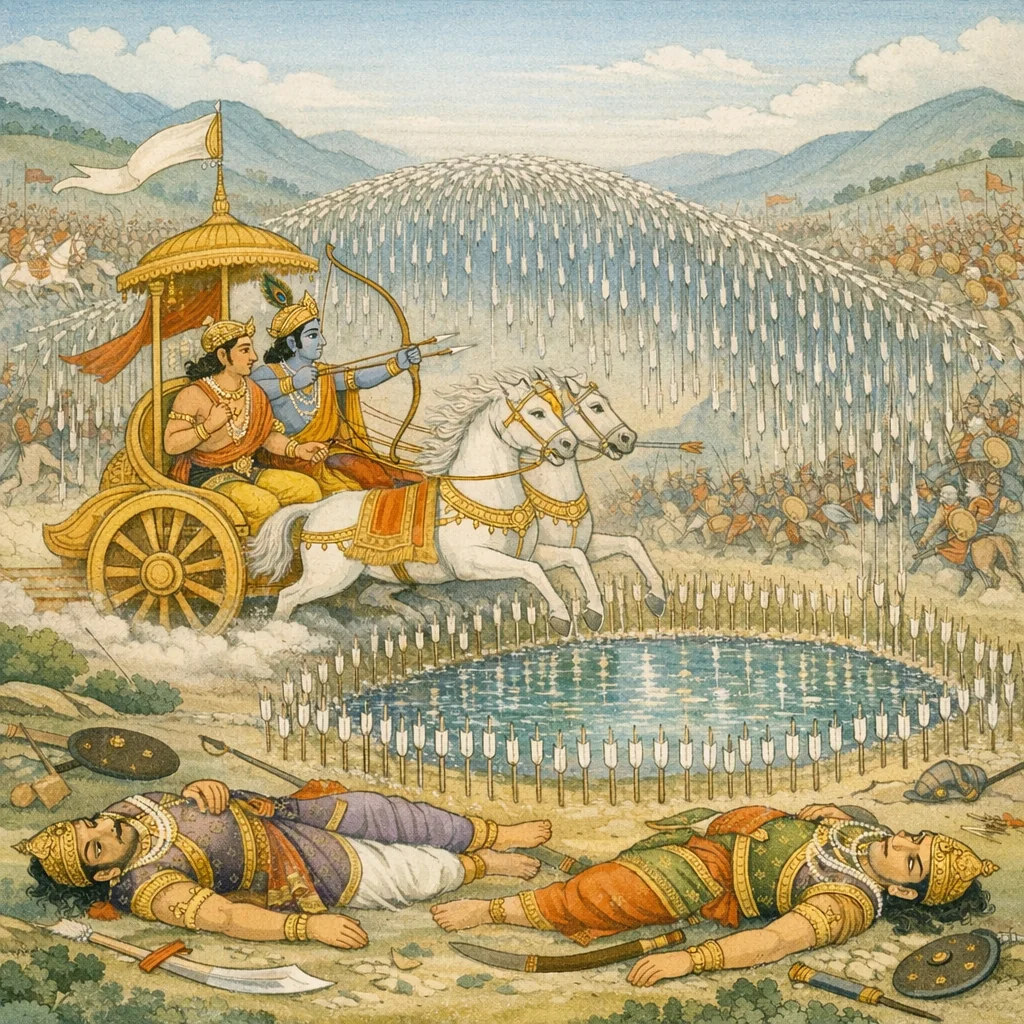
Chapter Arc: संजय धृतराष्ट्र से कहते हैं—द्रोण के भीषण संग्राम के बीच वह दिन धीरे-धीरे सरक रहा है, पर युद्ध की आग मंद नहीं पड़ती; तभी अर्जुन और वासुदेव का रथ सैन्धव (जयद्रथ) की ओर बिजली-सा मुड़ता है। → विजय-लोलुप सेनाएँ उलटती-पलटती, टूटती-जुड़ती हैं; अर्जुन रथ से आगे-आगे एक कोस तक मार करने वाले नामांकित, जल-चढ़े, कालाग्नि-सदृश बाणों की वर्षा करता हुआ कौरव-सेना में गहरी पैठ बनाता है। मार्ग रोकने को विन्द और अनुविन्द (अवन्ती के वीर) सामने आते हैं; उनके गिरते ही उनके अनुचर क्रोध से शतशः शर बरसाते हुए टूट पड़ते हैं। → अर्जुन रण-समुद्र का रूपक साकार कर देता है—ध्वज-भँवर, शर-तरंगें, शंख-दुन्दुभि-निनाद, पदाति-मछलियों की कलिलता—और उसी उफनते समुद्र के बीच वह अद्भुत कर्म करता है: बाणों से ही बाँस, खम्भे और छाजन वाला ‘बाण-गृह’ रचकर एक आश्चर्यजनक जलाशय/सरोवर का निर्माण, मानो युद्धभूमि पर ही सृष्टि-शक्ति का प्रदर्शन। → विन्द-अनुविन्द का वध हो चुका है; उनके दल तितर-बितर हैं। अर्जुन का रथ, हृषीकेश के संचालन में, तीव्र वेगवान अश्वों के साथ आगे बढ़ता है और समस्त जगत को विस्मित करता हुआ जयद्रथ-वध के लक्ष्य की ओर मार्ग साफ करता जाता है। → मार्ग तोड़कर आगे बढ़ चुका अर्जुन अब सीधे सैन्धव की ओर बढ़ रहा है—पर कौरवों की अगली रोक-रेखा कौन-सी होगी, और क्या सूर्यास्त से पहले प्रतिज्ञा पूरी होगी?
Shlokas
Verse 1
न२््च्स्स््तारिस्सि ह्य ;््जाभ्प्ट्ज एकोनशततमो<ध्याय: अर्जुनके द्वारा तीव्र गतिसे कौरव-सेनामें प्रवेश, विन्द और अनुविन्दका वध तथा अद्भुत जलाशयका निर्माण संजय उवाच (वर्तमाने तदा युद्धे द्रोणस्प सह पाण्डुभि: ।।) विवर्तमाने त्वादित्ये तत्रास्तशिखरं प्रति । रजसा कीर्यमाणे च मन्दी भूते दिवाकरे,संजय कहते हैं--राजन्! जब द्रोणाचार्यका पाण्डवोंके साथ युद्ध हो रहा था और सूर्य अस्ताचलके शिखरकी ओर ढल चुके थे, उस समय धूलसे आवृत होनेके कारण दिवाकरकी रश्मियाँ मन्द दिखायी देने लगी थीं। योद्धाओंमेंसे कोई तो खड़े थे, कोई युद्ध करते थे, कोई भागकर पुन: पीछे लौटते थे और कोई विजयी हो रहे थे। इस प्रकार उन सब लोगोंका वह दिन धीरे-धीरे बीतता चला जा रहा था
Sanjaya said: O King, while the battle between Droṇa and the Pāṇḍavas was in progress, the sun began to turn toward the crest of the western horizon. As dust rose and spread across the field, the daylight grew dim and the sun’s brilliance seemed muted. In that fading light, the warriors stood, fought, fled and returned, or gained the upper hand—so the day of slaughter and striving slowly wore away, driven by fate and human resolve alike.
Verse 2
तिष्ठतां युध्यमानानां पुनरावर्ततामपि । भज्यतां जयतां चैव जगाम तदह: शनै:,संजय कहते हैं--राजन्! जब द्रोणाचार्यका पाण्डवोंके साथ युद्ध हो रहा था और सूर्य अस्ताचलके शिखरकी ओर ढल चुके थे, उस समय धूलसे आवृत होनेके कारण दिवाकरकी रश्मियाँ मन्द दिखायी देने लगी थीं। योद्धाओंमेंसे कोई तो खड़े थे, कोई युद्ध करते थे, कोई भागकर पुन: पीछे लौटते थे और कोई विजयी हो रहे थे। इस प्रकार उन सब लोगोंका वह दिन धीरे-धीरे बीतता चला जा रहा था
Sañjaya said: “O King, as some warriors stood their ground, others fought on, some broke and then turned back again, while others prevailed, that day passed on—slowly—amid the shifting fortunes of battle.”
Verse 3
तथा तेषु विषक्तेषु सैन्येषु जयगृद्धिषु । अर्जुनो वासुदेवश्च सैन्धवायैव जग्मतु:,विजयकी अभिलाषा रखनेवाली वे समस्त सेनाएँ जब युद्धमें इस प्रकार अनुरक्त हो रही थीं, तब अर्जुन और श्रीकृष्ण सिन्धुराज जयद्रथको प्राप्त करनेके लिये ही आगे बढ़ते चले गये
Sañjaya said: While those armies, intent on victory, were thus fully engaged in the fighting, Arjuna and Vāsudeva pressed forward with a single aim—to reach Saindhava (Jayadratha).
Verse 4
रथमार्गप्रमाणं तु कौन्तेयो निशितै: शरै: । चकार यत्र पन्थानं ययौ येन जनार्दन:,कुन्तीकुमार अर्जुन अपने तीखे बाणोंद्वारा वहाँ रथके जानेयोग्य रास्ता बना लेते थे, जिससे श्रीकृष्ण रथ लिये आगे बढ़ जाते थे
Sañjaya said: There, the son of Kuntī (Arjuna), with his razor-sharp arrows, carved out a passage wide enough for a chariot—clearing the very road by force of skill—so that Janārdana (Kṛṣṇa) could drive the chariot forward.
Verse 5
यत्र यत्र रथो याति पाण्डवस्य महात्मन: । तत्र तत्रैव दीर्यन्ते सेनासतव विशाम्पते,प्रजानाथ! महामना पाण्डुनन्दन अर्जुनका रथ जहाँ-जहाँ जाता था, वहीं-वहीं आपकी सेनामें दरार पड़ जाती थी
Sañjaya said: “Wherever the chariot of the great-souled Pāṇḍava moved, O lord of the people, O ruler of men, there—at that very place—your battle-formations were being torn apart.”
Verse 6
रथशिक्षां तु दाशाहों दर्शयामास वीर्यवान् | उत्तमाधममध्यानि मण्डलानि विदर्शयन्,दशाह्वंशी परम पराक्रमी भगवान् श्रीकृष्ण उत्तम, मध्यम और अधम तीनों प्रकारके मण्डल दिखाते हुए अपनी उत्तम रथ शिक्षाका प्रदर्शन करते थे
Sañjaya said: The mighty Dāśārha (Śrī Kṛṣṇa) demonstrated his mastery of chariot-craft, displaying the full range of chariot-circles and maneuvers—superior, middling, and inferior. In the midst of war, this is not mere skill for its own sake: it is disciplined control of speed, direction, and risk, exercised to protect one’s side and to meet violence with measured, responsible action.
Verse 7
ते तु नामाड़किता: पीता: कालज्वलनसंनिभा: । स्नायुनद्धा: सुपर्वाण: पृथवो दीर्घगामिन:,अर्जुनके बाणोंपर उनका नाम अंकित था। उनपर पानी चढ़ाया गया था। वे कालाग्निके समान भयंकर, ताँतमें बँधे हुए, सुन्दर पंखवाले, मोटे तथा दूरतक जानेवाले थे। उनमेंसे कुछ तो बाँसके बने हुए थे और कुछ लोहेके। वे सभी भयंकर थे और नाना प्रकारके शत्रुओंका संहार करते हुए पक्षियोंके साथ उड़कर युद्धस्थलमें प्राणियोंका रक्त पीते थे
Sañjaya said: “Those arrows, bearing their maker’s marks and anointed, looked like the blaze of Time’s consuming fire. Bound fast with sinew, well-jointed and well-feathered, thick and far-flying, they were fashioned for relentless killing—an image of war’s engineered cruelty, where skill and craft are turned toward the taking of life.”
Verse 8
वैणवाश्नायसाश्षोग्रा ग्रसन्तौ विविधानरीन् | रुधिरं पतगै: सार्ध प्राणिनां पपुराहवे,अर्जुनके बाणोंपर उनका नाम अंकित था। उनपर पानी चढ़ाया गया था। वे कालाग्निके समान भयंकर, ताँतमें बँधे हुए, सुन्दर पंखवाले, मोटे तथा दूरतक जानेवाले थे। उनमेंसे कुछ तो बाँसके बने हुए थे और कुछ लोहेके। वे सभी भयंकर थे और नाना प्रकारके शत्रुओंका संहार करते हुए पक्षियोंके साथ उड़कर युद्धस्थलमें प्राणियोंका रक्त पीते थे
Sañjaya said: “Those arrows—some of bamboo and some of iron—were fierce and dreadful. As they sped forth, they seemed to ‘devour’ enemies of many kinds; and on the battlefield, as if in company with birds, they drank the blood of living beings. The scene underscores the war’s dehumanizing violence, where weapons are portrayed as predatory forces consuming life.”
Verse 9
रथस्थितोडग्रत: क्रोशं यानस्यत्यर्जुन: शरान् । रथे क्रोशमतिक्रान्ते तस्य ते घ्नन्ति शात्रवान्,रथपर बैठे हुए अर्जुन अपने आगे एक कोसकी दूरीतक जिन बाणोंको फेंकते थे, वे बाण उनके शत्रुओंका जबतक संहार करते, तबतक उनका रथ एक कोस और आगे निकल जाता था
Sañjaya said: Seated upon his chariot, Arjuna would discharge arrows to a distance of a krośa straight ahead. And by the time his chariot had advanced another krośa, those very arrows were still striking down his foes—showing the relentless momentum of his martial skill as the battle surged forward.
Verse 10
उस समय भगवान् हृषीकेश अच्छी प्रकारसे रथका भार वहन करनेवाले गरुड़ एवं वायुके समान वेगशाली घोड़ोंद्वारा सम्पूर्ण जगत्को आश्वर्यचकित करते हुए आगे बढ़ रहे थे
Sañjaya said: At that moment the Blessed Hṛṣīkeśa advanced, his chariot borne steadily by horses that carried its weight with perfect control—swift as Garuḍa and as the wind—so that the whole world seemed struck with wonder at the sight. The verse underscores disciplined mastery and divine composure amid the violence of war.
Verse 11
न तथा गच्छति रथस्तपनस्य विशाम्पते । नेन्द्रस्य न तु रुद्रस्य नापि वैश्रवणस्य च,प्रजानाथ! सूर्य, इन्द्र, रुद्र तथा कुबेरका भी रथ वैसी तीव्र गतिसे नहीं चलता था, जैसे अर्जुनका चलता था
Sañjaya said: O lord of the people, O ruler among men—neither the chariot of the Sun, nor that of Indra, nor of Rudra, nor even of Vaiśravaṇa (Kubera) moved with such swift force as Arjuna’s chariot did.
Verse 12
नान्यस्य समरे राजन् गतपूर्वस्तथा रथ: । यथा ययावर्जुनस्य मनो$भिप्रायशीघ्रग:,राजन! समरभूमिमें दूसरे किसीका रथ पहले कभी उस प्रकार तीव्र गतिसे नहीं चला था, जैसे अर्जुनका रथ मनकी अभिलाषाके अनुरूप शीघ्र गतिसे चलता था
Sañjaya said: O King, in battle no other warrior’s chariot had ever moved with such speed as Arjuna’s—rushing forward swiftly in exact accord with his mind’s intent.
Verse 13
प्रविश्य तु रणे राजन् केशव: परवीरहा । सेनामध्ये हयांस्तूर्ण चोदयामास भारत,महाराज! भरतनन्दन! शत्रुवीरोंका संहार करनेवाले भगवान् श्रीकृष्णने रणभूमिमें सेनाके भीतर प्रवेश करके अपने घोड़ोंको तीव्र वेगसे हाँका
Sañjaya said: O King, Keśava—slayer of hostile heroes—entered the thick of the battlefield and, in the very midst of the army, urged on his horses at great speed.
Verse 14
ततस्तस्य रथौघस्य मध्यं प्राप्प हयोत्तमा: । कृच्छेण रथमूहुस्तं क्षुत्पिपासासमन्विता:,तदनन्तर रथियोंके समूहके मध्यभागमें पहुँचकर भूख और प्याससे पीड़ित हुए वे उत्तम घोड़े बड़ी कठिनाईसे उस रथका भार वहन कर पाते थे
Sañjaya said: Then, having reached the very middle of that dense mass of chariots, the finest horses—tormented by hunger and thirst—could scarcely bear the burden of that chariot.
Verse 15
क्षताश्व बहुभि: शस्त्रैर्युद्धशौण्डैरनेकश: । मण्डलानि विचित्राणि विचेरुस्ते मुहुर्मुहु:
Sañjaya said: Their horses, wounded by many weapons in countless ways by warriors eager for battle, kept wheeling again and again in varied circles.
Verse 16
युद्धकुशल योद्धाओंने बहुत-से शस्त्रोंद्वारा उन्हें अनेक बार घायल कर दिया और वे क्षत-विक्षत हो बारंबार विचित्र मण्डलाकार गतिसे विचरण करते रहे ।। हतानां वाजिनागानां रथानां च नरै: सह । उपरिष्टादतिक्रान्ता: शैलाभानां सहस्रश:,रणभूमिमें सहस्रों पर्वताकार हाथी, घोड़े, रथ और पैदल मनुष्य मरे पड़े थे। उन सबको अर्जुनके घोड़े ऊपर-ही-ऊपर लाँघ जाते थे
Sañjaya said: Skilled warriors struck him again and again with many weapons, wounding him repeatedly. Torn and mangled, he kept moving through the battlefield in strange, circling patterns. All around lay thousands of slain—horses, elephants like mountains, chariots, and foot-soldiers with their men. Over those heaps Arjuna’s horses leapt, passing above them as the fight raged on.
Verse 17
(श्रमेण महता युक्तासस््ते हया वातरंहस: । मन्दवेगगता राजन संवृत्तास्तत्र संयुगे ।।) राजन! वे वायुके समान वेगशाली अश्व उस युद्धस्थलमें अधिक परिश्रमसे थक जानेके कारण मन्दगतिसे चलने लगे। एतस्मिन्नन्तरे वीरावावन्त्यौ भ्रातरौ नूप । सहसेनौ समारच्छेतां पाण्डवं क्लान्तवाहनम्,नरेश्वर! इसी बीचमें अवन्तीके वीर राजकुमार दोनों भाई विन्द और अनुविन्द थके हुए घोड़ोंवाले पाण्डुनन्दन अर्जुनका सामना करनेके लिये अपनी सेनाके साथ आये
Sañjaya said: O King, those horses—swift as the wind—having been subjected to great exertion, became slow-moving there in the thick of battle. Meanwhile, O ruler, the two heroic brothers of Avanti, Vindā and Anuvindā, came up with their forces to confront the Pāṇḍava Arjuna, whose steeds were weary.
Verse 18
तावर्जुनं चतुःषष्ट्या सप्तत्या च जनार्दनम् | शराणां च शतैरश्वानविध्येतां मुदान्वितो,उन दोनोंने अर्जुनको चौंसठ और श्रीकृष्णको सत्तर बाण मारे तथा उनके घोड़ोंको सौ बाणोंसे घायल कर दिया। ऐसा करके उन्हें बड़ी प्रसन्नता हुई
Sañjaya said: Those two, exultant with delight, struck Arjuna with sixty-four arrows and Janārdana (Kṛṣṇa) with seventy; and with a hundred shafts they wounded the horses as well—taking pleasure in the harm they had inflicted amid the press of battle.
Verse 19
तावर्जुनो महाराज नवभिर्नतपर्वभि: । आजलचघान रणे क्रुद्धो मर्मज्ञो मर्मभेदिभि:,महाराज! मर्मको जाननेवाले अर्जुनने रणक्षेत्रमें कुपित होकर झुकी हुई गाँठवाले नौ मर्मभेदी बाणोंद्वारा उन दोनोंको चोट पहुँचायी
Sañjaya said: O King, Arjuna—skilled in discerning vital points—became wrathful on the battlefield and struck those two with nine armor-piercing arrows whose joints were bent, aiming to break through their vulnerable spots.
Verse 20
ततस्तौ तु शरौघेण बीभत्सुं सहकेशवम् । आच्छादयेतां संरब्धौ सिंहनादं च चक्रतु:,तब उन दोनों भाइयोंने कुपित हो श्रीकृष्णसहित अर्जुनको अपने बाणसमूहोंसे आच्छादित कर दिया और बड़े जोरसे सिंहनाद किया
Sañjaya said: Then those two, inflamed with anger, covered Arjuna—Bhībhatsu—together with Keśava (Kṛṣṇa) under a dense shower of arrows, and they let out a mighty lion-roar.
Verse 21
तयोस्तु धनुषी चित्रे भल्लाभ्यां श्वेतवाहन: । चिच्छेद समरे तूर्ण ध्वजी च कनकोज्ज्वलौ,तदनन्तर श्वेत घोड़ोंवाले अर्जुनने समराड्णमें दो बाणोंद्वारा उनके दोनों विचित्र धनुषों और सुवर्णके समान प्रकाशित होनेवाले दोनों ध्वजोंको भी तुरंत ही काट डाला
Sañjaya said: Then Śvetavāhana (Arjuna), swift in the press of battle, with two sharp bhalla-arrows severed both of their ornate bows; and he also cut down their two standards, shining like gold.
Verse 22
अथान्ये धनुषी राजन् प्रगृह्म समरे तदा । पाण्डवं भृशसंक्रुद्धावर्दयामासतु: शरै:,राजन! फिर वे दोनों भाई अत्यन्त कुपित हो उठे और उस समय समरांगणमें दूसरे धनुष लेकर उन्होंने बाणोंद्वारा पाण्डुकुमार अर्जुनको गहरी पीड़ा दी
Sañjaya said: O King, then those two brothers, seizing other bows on that battlefield and burning with fierce rage, tormented the Pāṇḍava Arjuna with volleys of arrows.
Verse 23
तयोस्तु भृशसंक्रुद्ध: शराभ्यां पाण्डुनन्दन: । धनुषी चिच्छिदे तूर्ण भूय एव धनंजय:,यह देख पाण्डुनन्दन धनंजय अत्यन्त क्रोधसे जल उठे और दो बाण मारकर तुरंत ही उन्होंने उन दोनोंके धनुष पुन: काट डाले
Sañjaya said: Then the son of Pāṇḍu, Dhanañjaya (Arjuna), inflamed with fierce anger, swiftly severed both their bows with two arrows—once again.
Verse 24
तथान्यैर्विशिखैस्तूर्ण रुक्मपुड्खै: शिलाशितै: । जघानाश्रचांस्तथा सूतौ पार्ष्णी च सपदानुगौ,फिर सुवर्णमय पंखोंवाले और शानपर चढ़ाकर तेज किये हुए दूसरे बाणोंद्वारा उनके घोड़ोंको एवं दोनों सारथियों, पार्श्वरक्षकों तथा पदानुगामी सेवकोंको भी शीघ्र ही मार डाला
Then, with other arrows—swift, gold-feathered, and honed upon stone—he quickly slew their horses; and he struck down as well the two charioteers, the flank-guards, and the foot-attendants who followed behind.
Verse 25
ज्येष्ठस्य च शिर: कायात् क्षुरप्रेण न्न्यकृन्तत । स पपात हतः पृथ्व्यां वातरुग्ण इव द्रुम:,इसके बाद एक क्षुरप्रद्वारा बड़े भाई विन्दका मस्तक धड़से काट दिया। विन्द आँधीके उखाड़े हुए वृक्षके समान मरकर पृथ्वीपर गिर पड़ा
Sañjaya said: With a razor-edged weapon he severed the elder brother’s head from his body. Struck down, the warrior fell upon the earth like a tree broken by a violent wind.
Verse 26
विन्दं तु निहतं दृष्टवा हानुविन्द: प्रतापवान् | हताश्व॑ रथमुत्सृज्य गदां गृह्दु महाबल:
Sañjaya said: Seeing Vinda slain, the valiant and mighty Hānuvinda—his chariot’s horses killed—abandoned the chariot and seized his mace, driven by grief yet resolved to fight on.
Verse 27
अभ्यवर्तत संग्रामे भ्रातुर्वधमनुस्मरन् । विन्दको मारा गया देख महाबली और प्रतापी अनुविन्द अपने भाईके वधका बारंबार चिन्तन करता हुआ अश्वहीन रथको त्यागकर हाथमें गदा ले संग्राम-भूमिमें डटा रहा || २६ *॥ गदया रथियनां श्रेष्ठो नृत्यन्निव महारथ:,रथियोंमें श्रेष्ठ महारथी अनुविन्दने कुपित हो नृत्य-सा करते हुए गदाद्वारा मधुसूदन भगवान् श्रीकृष्णके ललाटमें आघात किया; परंतु मैनाकपर्वतके समान श्रीकृष्णको कम्पित न कर सका
Sañjaya said: Remembering again and again the slaying of his brother, the mighty and valiant Anuvinda pressed back into the battle. Abandoning his chariot when it was without horses, he stood firm on the field with a mace in hand. Then that foremost of chariot-warriors, as if dancing in fury, struck Madhusūdana (Śrī Kṛṣṇa) on the forehead with his mace; yet he could not make Kṛṣṇa—steady like Mount Maināka—so much as tremble.
Verse 28
अनुविन्दस्तु गदया ललाटे मधुसूदनम् | स्पृष्टवा नाकम्पयत् क्रुद्धो मैनाकमिव पर्वतम्,रथियोंमें श्रेष्ठ महारथी अनुविन्दने कुपित हो नृत्य-सा करते हुए गदाद्वारा मधुसूदन भगवान् श्रीकृष्णके ललाटमें आघात किया; परंतु मैनाकपर्वतके समान श्रीकृष्णको कम्पित न कर सका
Sañjaya said: Enraged, Anuvinda, foremost among chariot-warriors, struck Madhusūdana (Śrī Kṛṣṇa) on the forehead with his mace. Yet though he made contact, he could not make Kṛṣṇa even tremble—like trying to shake Mount Maināka.
Verse 29
तस्यार्जुन: शरै: षड्भिग्रीवां पादौ भुजी शिर: । निचकर्त स संछिज्ञ: पपाताद्रिचयो यथा,तब अर्जुनने छः: बाणोंद्वारा उसकी गर्दन, दोनों पैरों, दोनों भुजाओं तथा मस्तकको भी काट डाला। इस प्रकार छिजन्न-भिन्न होकर वह पर्वतसमूहके समान धराशायी हो गया
Sañjaya said: Arjuna, with six arrows, severed his neck, both feet, both arms, and his head. Cut into pieces, he collapsed to the ground like a mass of mountains.
Verse 30
ततस्तौ निहतौ दृष्टवा तयो राजन् पदानुगा: । अभ्यद्रवन्त संक्रुद्धा: किरन्त: शतश: शरान्,राजन्! तब उन दोनों भाइयोंको मारा गया देख उनके सेवकगण अत्यन्त कुपित हो अर्जुनपर सैकड़ों बाणोंकी वर्षा करते हुए टूट पड़े
Sañjaya said: “Then, O King, seeing those two slain, their followers—tracking their steps—rushed forward in fury, showering hundreds of arrows as they charged against Arjuna.”
Verse 31
तानर्जुन: शरैस्तूर्ण निहत्य भरतर्षभ । व्यरोचत यथा बवल्निदावं दग्ध्वा हिमात्यये,भरतश्रेष्ठ! अर्जुन बाणोंद्वारा तुरंत ही उन सबका संहार करके ग्रीष्म-ऋतुमें वनको जलाकर प्रकाशित होनेवाले अग्निदेवके समान सुशोभित हुए
Sañjaya said: O bull among the Bharatas, Arjuna swiftly struck them down with his arrows, and then shone forth—like fire blazing bright after consuming a forest-conflagration at the end of winter.
Verse 32
तयो: सेनामतिक्राम्य कृच्छादिव धनंजय: । विबभौ जलवदं हित्वा दिवाकर इवोदित:,उन दोनोंकी सेनाका बड़ी कठिनाईसे उल्लंघन करके अर्जुन मेघोंका आवरण भेदकर उदित हुए सूर्यके समान प्रकाशित होने लगे
Sañjaya said: Having with great difficulty broken through the armies of those two sides, Dhanañjaya (Arjuna) shone forth—like the sun newly risen after casting off the covering of rain-clouds.
Verse 33
त॑ दृष्टवा कुरवस्त्रस्ता: प्रह्ष्टा श्षाभवन् पुन: । अभ्यवर्तन्त पार्थ च समन्ताद् भरचर्षभ,भरतश्रेष्ठ! उन्हें देखकर कौरव-सैनिक पहले तो भयभीत हुए। फिर प्रसन्न भी हो गये। वे चारों ओरसे कुन्तीकुमारका सामना करनेके लिये डट गये
Sañjaya said: Seeing him, the Kauravas were at first struck with fear; then, regaining confidence and exhilaration, they surged back and closed in on Pārtha from every side, O bull among the Bharatas.
Verse 34
भ्रान्तं चैनं समालक्ष्य ज्ञात्वा दूरे च सैन्धवम् । सिंहनादेन महता सर्वत: पर्यवारयन्,अर्जुनको थका हुआ देख और सिन्धुराज जयद्रथको उनसे बहुत दूर जानकर आपके सैनिकोंने महान् सिंहनाद करते हुए उन्हें सब ओरसे घेर लिया
Sañjaya said: Seeing Arjuna exhausted and disoriented, and knowing that the Sindhu king Jayadratha was still far away from him, your warriors raised a great lion-roar and surrounded Arjuna on all sides.
Verse 35
तांस्तु दृष्टवा सुसंरब्धानुत्स्मयन् पुरुषर्षभ: । शनकैरिव दाशार्हमर्जुनो वाक्यमब्रवीत्,उन सबको क्रोधमें भरा देख पुरुषशिरोमणि अर्जुनने मुसकराते हुए धीरे-धीरे भगवान् श्रीकृष्णसे कहा--
Sañjaya said: Seeing them all inflamed with anger, Arjuna—the foremost among men—smiled, and then, as if gently and unhurriedly, spoke words to Dāśārha (Śrī Kṛṣṇa).
Verse 36
शरार्दिताश्च ग्लानाश्न हया दूरे च सैन्धव: । किमिहानन्तरं कार्य ज्यायिष्ठं तव रोचते,'मेरे घोड़े बाणोंसे पीड़ित हो बहुत थक गये हैं और सिन्धुराज जयद्रथ अभी बहुत दूर है। अतः इस समय यहाँ कौन-सा कार्य आपको श्रेष्ठ जान पड़ता है
Sanjaya said: “The horses, struck by arrows, are exhausted, and Jayadratha of Sindhu is still far away. In these circumstances, what course of action seems best to you now?”
Verse 37
ब्रूहि कृष्ण यथाततच्त्व॑ त्वं हि प्राज्ञतम: सदा । भवन्नेत्रा रणे शत्रून् विजेष्यन्तीह पाण्डवा:,“श्रीकृष्ण! आप ही सदा सर्वश्रेष्ठ ज्ञानी हैं। अतः मुझे यथार्थ बात बताइये। आपको नायक बनाकर ही पाण्डव इस रणक्षेत्रमें शत्रुओंपर विजयी होंगे
Sanjaya said: “Tell me, O Krishna, the truth exactly as it is, for you are ever the wisest. With you as their guide and leader in this battle, the Pandavas will surely conquer the enemies here.”
Verse 38
मम त्वनन्तरं कृत्यं यद् वै तत् त्वं निबोध मे । हयान् विमुच्य हि सुखं विशल्यान् कुरु माधव,“माधव! मेरी दृष्टिमें इस समय जो कर्तव्य है, वह बताता हूँ, आप मुझसे सुनिये। घोड़ोंको खोलकर इन्हें सुख पहुँचानेके लिये इनके शरीरसे बाण निकाल दीजिये”
Sanjaya said: “Now learn from me what should be done immediately. O Madhava, unharness the horses, and for their comfort remove the arrows from their bodies.”
Verse 39
एवमुक्तस्तु पार्थेन केशव: प्रत्युवाच तम् । ममाप्येतन्मतं पार्थ यदिदं ते प्रभाषितम्,अर्जुनके ऐसा कहनेपर भगवान् श्रीकृष्णने उन्हें इस प्रकार उत्तर दिया--'पार्थ! तुमने इस समय जो बात कही है, यही मुझे भी अभीष्ट है”
Sanjaya said: Thus addressed by Partha, Keshava replied to him, “Partha, this very view is also mine—what you have just spoken.”
Verse 40
अर्जुन उवाच अहमावारयिष्यामि सर्वसैन्यानि केशव । त्वमप्यत्र यथान्यायं कुरु कार्यमनन्तरम्,अर्जुन बोले--केशव! मैं इन समस्त सेनाओंको रोक रखूँगा। आप भी यहाँ इस समय करनेयोग्य यथोचित कार्य सम्पन्न करें
Arjuna said: “O Keshava, I will hold back all these armies. You too, here and now, carry out—according to what is right and proper—the task that must be done without delay.”
Verse 41
संजय उवाच सो<वतीर्य रथोपस्थादसम्भ्रान्तो धनंजय: । गाण्डीवं धनुरादाय तस्थौ गिरिरिवाचल:,संजय कहते हैं--राजन्! अर्जुन बिना किसी घबराहटके रथकी बैठकसे उतर पड़े और गाण्डीव धनुष हाथमें लेकर पर्वतके समान अविचल भावसे खड़े हो गये
Sañjaya said: O King, Dhanañjaya (Arjuna), unshaken and without agitation, descended from the chariot-seat. Taking up the Gāṇḍīva bow in his hand, he stood firm—immovable like a mountain—showing steady resolve and disciplined courage amid the turmoil of war.
Verse 42
तमभ्यधावन् क्रोशन्त: क्षत्रिया जयकाड्ृक्षिण: । इदं छिद्रमिति ज्ञात्वा धरणीस्थं धनंजयम्,धनंजयको धरतीपर खड़ा जान “यही अवसर है” ऐसा कहते हुए विजयाभिलाषी क्षत्रिय हल्ला मचाते हुए उनकी ओर दौड़े
Sañjaya said: Shouting aloud, the kṣatriya warriors—eager for victory—rushed toward Dhanañjaya (Arjuna). Seeing him standing on the ground, they recognized it as an opening and cried, “This is the gap (the chance)!” and surged forward to exploit it.
Verse 43
तमेकं॑ रथवंशेन महता पर्यवारयन् । विकर्षन्तश्न॒ चापानि विसृजन्तश्न॒ सायकान्,उन सबने महान् रथसमूहके द्वारा एकमात्र अर्जुनको चारों ओर घेर लिया। वे सब-के- सब धनुष खींचते और उनके ऊपर बाणोंकी वर्षा करते थे
Sañjaya said: Then all of them, with a great mass of chariots, surrounded Arjuna—alone—on every side. Drawing their bows to the full, they kept releasing volleys of arrows against him, pressing him with collective force in the ruthless momentum of battle.
Verse 44
शस्त्राणि च विचित्राणि क्रुद्धास्तत्र व्यदर्शयन् । छादयन्त: शरै: पार्थ मेघा इव दिवाकरम्,जैसे बादल सूर्यको ढक लेते हैं, उसी प्रकार बाणोंद्वारा कुन्तीकुमार अर्जुनको आच्छादित करते हुए कुपित कौरव-सैनिक वहाँ विचित्र अस्त्र-शस्त्रोंका प्रदर्शन करने लगे
Sañjaya said: There, the enraged Kaurava warriors began to display their varied weapons and missiles, covering Pārtha (Arjuna) with volleys of arrows—just as clouds veil the sun. The image shows how wrath in battle seeks not merely to strike but to overwhelm and obscure the opponent’s power.
Verse 45
अभ्यद्रवन्त वेगेन क्षत्रिया: क्षत्रियर्ष भम् । नरसिंहं रथोदारा: सिंहं मत्ता इव द्विपा:,जैसे मतवाले हाथी सिंहपर धावा करते हों, उसी प्रकार वे श्रेष्ठ रथी क्षत्रिय क्षत्रियशिरोमणि नरसिंह अर्जुनपर बड़े वेगसे टूट पड़े थे
Sañjaya said: Then the kṣatriya warriors—noble chariot-fighters—charged at great speed against Arjuna, the lion among men and the foremost among kṣatriyas, just as intoxicated elephants rush upon a lion.
Verse 46
तत्र पार्थस्य भुजयोर्महद्धलमदृश्यत । यत् क्रुद्धो बहुला: सेना: सर्वतः समवारयत्,उस समय वहाँ अर्जुनकी दोनों भुजाओंका महान् बल देखनेमें आया। उन्होंने कुपित होकर उन विशाल सेनाओंको सब ओर जहाँ-की-तहाँ रोक दिया
There, the mighty strength of Pārtha’s two arms became manifest: in wrath he checked the many great armies on every side, holding them back wherever they advanced.
Verse 47
अस्त्रैरस्त्राणि संवार्य द्विषतां सर्वतो विभु: । इषुभिरबहुभिस्तूर्ण सर्वानेव समावृणोत्,शक्तिशाली अर्जुनने अपने अस्त्रोंद्वारा शत्रुओंके सम्पूर्ण अस्त्रोंका सब ओरसे निवारण करके अपने बहुसंख्यक बाणोंद्वारा तुरंत उन सबको ही आच्छादित कर दिया
Sañjaya said: The mighty Arjuna, countering the enemies’ missiles with his own weapons on every side, swiftly covered them all with a dense shower of arrows.
Verse 48
तत्रान्तरिक्षे बाणानां प्रगाढानां विशाम्पते | संघर्षण महार्चिष्मानू पावक: समजायत,प्रजानाथ! वहाँ अन्तरिक्षमें ठसाठस भरे हुए बाणोंकी रगड़से भारी लपटोंसे युक्त आग प्रकट हो गयी
Sañjaya said: O lord of the people, there in the sky—so densely packed were the arrows—that from their mutual friction a fire arose, blazing with great tongues of flame.
Verse 49
तत्र तत्र महेष्वासै: श्वसद्धिः शोणितोक्षितै: । हयैनगिश्न सम्भिन्नैर्नदद्धिश्चवारिकर्षणै:,तदनन्तर जहाँ-तहाँ हाँफते और खूनसे लथपथ हुए महाथधनुर्थर योद्धाओं, अर्जुनके शत्रुनाशक बाणोंद्वारा विदीर्ण हो चीत्कार करते हुए हाथियों और घोड़ों तथा युद्धमें विजयकी अभिलाषा लिये रोषावेशमें भरकर एक जगह कुपित खड़े हुए बहुतेरे वीर शत्रुओंके जमघटसे उस स्थानपर गर्मी-सी होने लगी
Sañjaya said: Here and there on that battlefield stood great bowmen, panting and drenched in blood. Horses and elephants, torn apart by Arjuna’s enemy-destroying arrows, cried out in agony; and many hostile warriors—burning with the desire for victory and inflamed with wrath—clustered together, standing in furious ranks. From the press of bodies, blood, and heat of rage, that place seemed to blaze with oppressive heat.
Verse 50
संरब्धैश्वारिभिवीरि: प्रार्थयद्धिर्जयं मृथे । एकस्थै॑हुभि: क्रुद्धरूष्मेव समजायत,तदनन्तर जहाँ-तहाँ हाँफते और खूनसे लथपथ हुए महाथधनुर्थर योद्धाओं, अर्जुनके शत्रुनाशक बाणोंद्वारा विदीर्ण हो चीत्कार करते हुए हाथियों और घोड़ों तथा युद्धमें विजयकी अभिलाषा लिये रोषावेशमें भरकर एक जगह कुपित खड़े हुए बहुतेरे वीर शत्रुओंके जमघटसे उस स्थानपर गर्मी-सी होने लगी
Sañjaya said: Many valiant warriors, fiercely enraged and longing for victory in battle, gathered together in one place. In the wake of that, as elephants and horses—torn by Arjuna’s enemy-destroying arrows—cried out, and as great bowmen, panting and drenched in blood, reeled about here and there, the very spot seemed to grow hot, as if heated by the concentrated fury of the assembled foes.
Verse 51
शरोर्मिणं ध्वजावर्त नागनक्रं दुरत्ययम् । पदातिमत्स्यकलिलं शड्खदुन्दुभिनि:स्वनम्,उस समय अर्जुनने उस असंख्य, अपार, दुर्लड्घ्य एवं अक्षोभ्य रण-समुद्रको सीमावर्ती तटप्रान्तके समान होकर अपने बाणोंद्वारा रोक दिया। उस रणसागरमें बाणोंकी तरंगें उठ रही थीं, फहराते हुए ध्वज भौंरोंके समान जान पड़ते थे, हाथी ग्राह थे, पैदल सैनिक मत्स्य और कीचड़के समान प्रतीत होते थे, शंखों और दुन्दुभियोंकी ध्वनि ही उस रणसिन्धुकी गम्भीर गर्जना थी, रथ ऊँची-ऊँची लहरोंके समान जान पड़ते थे, योद्धाओंकी पगड़ी और टोप कछुओंके समान थे, छत्र और पताकाएँ फेनराशि-सी प्रतीत होती थीं तथा मतवाले हाथियोंकी लाशें ऊँचे-ऊँचे शिलाखण्डोंके समान उस सैन्यसागरको व्याप्त किये हुए थीं
Sañjaya said: “That battlefield, hard to cross, was like a vast sea—its waves were arrows, its whirlpools the swirling banners, and its crocodiles the elephants. The foot-soldiers were like fish thronging in muddy waters, and the blare of conches and kettledrums became its deep, resounding roar.”
Verse 52
असंख्येयमपारं च रथोर्मिणमतीव च । उष्णीषकमठं छत्रपताकाफेनमालिनम्,उस समय अर्जुनने उस असंख्य, अपार, दुर्लड्घ्य एवं अक्षोभ्य रण-समुद्रको सीमावर्ती तटप्रान्तके समान होकर अपने बाणोंद्वारा रोक दिया। उस रणसागरमें बाणोंकी तरंगें उठ रही थीं, फहराते हुए ध्वज भौंरोंके समान जान पड़ते थे, हाथी ग्राह थे, पैदल सैनिक मत्स्य और कीचड़के समान प्रतीत होते थे, शंखों और दुन्दुभियोंकी ध्वनि ही उस रणसिन्धुकी गम्भीर गर्जना थी, रथ ऊँची-ऊँची लहरोंके समान जान पड़ते थे, योद्धाओंकी पगड़ी और टोप कछुओंके समान थे, छत्र और पताकाएँ फेनराशि-सी प्रतीत होती थीं तथा मतवाले हाथियोंकी लाशें ऊँचे-ऊँचे शिलाखण्डोंके समान उस सैन्यसागरको व्याप्त किये हुए थीं
Sañjaya said: “It was an immeasurable, shoreless battle-ocean, with chariots rising like mighty waves—its surface strewn with helmets and turbans like turtles, and crowned with parasols and banners like foaming crests. In this vision of war, the multitude becomes a turbulent sea: power and pride surge like waves, yet all are subject to being checked and contained by disciplined valor and purpose.”
Verse 53
रणसागरमक्षोभ्यं मातज्राड़्शिलाचितम् । वेलाभूतस्तदा पार्थ: पत्रिभि: समवारयत्,उस समय अर्जुनने उस असंख्य, अपार, दुर्लड्घ्य एवं अक्षोभ्य रण-समुद्रको सीमावर्ती तटप्रान्तके समान होकर अपने बाणोंद्वारा रोक दिया। उस रणसागरमें बाणोंकी तरंगें उठ रही थीं, फहराते हुए ध्वज भौंरोंके समान जान पड़ते थे, हाथी ग्राह थे, पैदल सैनिक मत्स्य और कीचड़के समान प्रतीत होते थे, शंखों और दुन्दुभियोंकी ध्वनि ही उस रणसिन्धुकी गम्भीर गर्जना थी, रथ ऊँची-ऊँची लहरोंके समान जान पड़ते थे, योद्धाओंकी पगड़ी और टोप कछुओंके समान थे, छत्र और पताकाएँ फेनराशि-सी प्रतीत होती थीं तथा मतवाले हाथियोंकी लाशें ऊँचे-ऊँचे शिलाखण्डोंके समान उस सैन्यसागरको व्याप्त किये हुए थीं
Sañjaya said: Then Pārtha (Arjuna), becoming like the shoreline, checked that vast and unshakable ocean of battle—strewn with elephant-like boulders—by means of his arrows. The image underscores a moral contrast: amid the chaos and momentum of war, disciplined mastery and restraint can set a boundary, preventing violence from surging unchecked.
Verse 54
धृतराष्ट्र रवाच अर्जुने धरणीं प्राप्ते हपहस्ते च केशवे । एतदन्तरमासाद्य कथं पार्थो न घातित:,धृतराष्ट्रने पूछा--संजय! जब अर्जुन धरतीपर उतर आये और भगवान् श्रीकृष्णने घोड़ोंकी चिकित्सामें हाथ लगाया, तब यह अवसर पाकर मेरे सैनिकोंने कुन्तीकुमारका वध क्यों नहीं कर डाला?
Dhṛtarāṣṭra asked: “Sañjaya! When Arjuna had come down to the ground and Keśava (Śrī Kṛṣṇa) set his hands to tending the horses, why did my soldiers not seize that opening and slay Kuntī’s son?”
Verse 55
संजय उवाच सद्यः पार्थिव पार्थेन निरुद्धा: सर्वपार्थिवा: । रथस्था धरणीस्थेन वाक्यमच्छान्दसं यथा,संजयने कहा--महाराज! उस समय पार्थने पृथ्वीपर खड़े होकर रथपर बैठे हुए समस्त भूपालोंको सहसा उसी प्रकार रोक दिया, जैसे वेदविरुद्ध वाक्य अग्राह्म कर दिया जाता है
Sañjaya said: O King, at that very moment all the rulers, though stationed on their chariots, were abruptly checked by Pārtha (Arjuna) who stood upon the ground—just as a statement that runs contrary to the Veda is rejected as unacceptable.
Verse 56
स पार्थ: पार्थिवान् सर्वान् भूमिस्थो5पि रथस्थितान् । एको निवारयामास लोभ: सर्वगुणानिव,अर्जुनने अकेले ही पृथ्वीपर खड़े रहकर भी रथपर बैठे हुए समस्त पृथ्वीपतियोंको उसी प्रकार रोक दिया, जैसे लोभ सम्पूर्ण गुणोंका निवारण कर देता है
Sañjaya said: Though standing on the ground, that son of Pṛthā (Arjuna) single-handedly checked all the kings seated in their chariots—just as greed obstructs and suppresses every virtue.
Verse 57
ततो जनार्दन: संख्ये प्रियं पुरुषसत्तमम् । असम्भ्रान्तो महाबाहुरर्जुनं वाक्यमब्रवीत्,तदनन्तर सम्भ्रमरहित महाबाहु भगवान् श्रीकृष्णने युद्धस्थलमें अपने प्रिय सखा पुरुषप्रवर अर्जुनसे यह बात कही--
Then Janārdana (Kṛṣṇa), steady and unshaken amid the clash of battle, spoke to Arjuna—the mighty-armed hero, his beloved companion and the foremost among men.
Verse 58
उदपानमिहाश्वानां नालमस्ति रणे<र्जुन । परीप्सन्ते जल॑ चेमे पेयं न त्ववगाहनम्,“अर्जुन! यहाँ घोड़ोंके पीनेके लिये पर्याप्त जल नहीं है। ये पीनेयोग्य जल चाहते हैं। इन्हें स्नानकी इच्छा नहीं है”
Sañjaya said: “O Arjuna, in this battlefield there is not enough water at the well for the horses. They seek water fit for drinking; they do not desire to bathe.”
Verse 59
इदमस्तीत्यसम्भ्रान्तो ब्रुवन्नस्त्रेण मेदिनीम् । अभिटहत्यार्जुनक्षक्रे वाजिपानं सर: शुभम्,“यह रहा इनके पीनेके लिये जल” ऐसा कहकर अर्जुनने बिना किसी घबराहटके अस्त्रद्वारा पृथ्वीपर आघात करके घोड़ोंके पीनेयोग्य जलसे भरा हुआ सुन्दर सरोवर उत्पन्न कर दिया
Arjuna, unshaken, said, “Here it is,” and with his weapon struck the earth, bringing forth a fair lake filled with water fit for the horses to drink.
Verse 60
हंसकारण्डवाकीर्ण चक्रवाकोपशोभितम् । सुविस्तीर्ण प्रसन्नाम्भ: प्रफल्लवरपड्कजम्,उसमें हंस और कारण्डव आदि जलपक्षी भरे हुए थे, चक्रवाक उसकी शोभा बढ़ा रहे थे। स्वच्छ जलसे युक्त उस विशाल सरोवरमें सुन्दर कमल खिले हुए थे
Sañjaya said: The lake was filled with swans and kāraṇḍava waterfowl, and its beauty was enhanced by cakravāka birds. Broad and expansive, it held clear, tranquil waters, and was adorned with excellent lotuses in full bloom.
Verse 61
कूर्ममत्स्यगणाकीर्णमगाधमृषिसेवितम् । आगच्छन्नारदमुनिर्दर्शनार्थ कृतं क्षणात्,वह अगाध जलाशय कछुओं और मछलियोंसे भरा था। ऋषिगण उसका सेवन करते थे। तत्काल प्रकट किये हुए ऐसी योग्यतावाले उस सरोवरका दर्शन करनेके लिये देवर्षि नारदजी वहाँ आये
Sañjaya said: “That deep lake, crowded with groups of turtles and fish and frequented by sages, had been brought into being in an instant. Wishing to behold this marvel, the divine seer Nārada came there.”
Verse 62
शरवंशं शरस्थूणं शराच्छादनमद्भुतम् । शरवेश्माकरोत् पार्थस्त्वष्टेवाद्भुतकर्मकृत्
Sañjaya said: Arjuna, performing wondrous deeds like Tvaṣṭṛ the divine craftsman, fashioned an astonishing structure entirely of arrows—its framework, its pillars, and even its covering—turning the very instruments of war into a marvel of skill.
Verse 63
विश्वकमकि समान अद्भुत कर्म करनेवाले अर्जुनने वहाँ बाणोंका एक अद्भुत घर बना दिया था, जिनमें बाणोंके ही बाँस, बाणोंके ही खम्भे और बाणोंकी ही छाजन थी ।। ततः प्रहस्य गोविन्द: साधु साधथ्वित्यथाब्रवीत् । शरवेश्मनि पार्थेन कृते तस्मिन् महात्मना,महामना अर्जुनके द्वारा वह बाणमय गृह निर्मित हो जानेपर भगवान् श्रीकृष्णने हँसकर कहा--'शाबास अर्जुन, शाबास'
Then Govinda smiled and exclaimed, “Well done, well done!”—for the great-souled Pārtha (Arjuna) had fashioned there a wondrous ‘house’ made entirely of arrows.
Verse 99
इति श्रीमहाभारते द्रोणपर्वणि जयद्रथवधपर्वणि विन्दानुविन्दवधे अर्जुनसरोनिर्माणे च एकोनशततमो<ध्याय:
Thus, in the Śrī Mahābhārata, within the Droṇa Parva—specifically in the section concerning the slaying of Jayadratha—this concludes the one-hundred-and-first chapter, which also includes the killing of Vinda and Anuvinda and the creation of the lake of arrows by Arjuna.
Verse 310
ताक्ष्यमारुतरंहोभिवाजिभि: साधुवाहिभि: । तदागच्छद्धृषीकेश: कृत्स्नं विस्मापयन् जगत्
Sañjaya said: Then Hṛṣīkeśa (Kṛṣṇa) came, drawn by excellent horses swift as Garuḍa and as the wind in their impetuous speed, astonishing the whole world.
Frequently Asked Questions
The chapter frames a dharma-sankat around disproportionate capability: when astric mastery enables near-unstoppable lethality, the ethical question becomes whether battlefield excellence alone justifies outcomes that resemble indiscriminate attrition and morale-collapse.
Power (bala) combined with disciplined knowledge (vidyā) reshapes the moral landscape of action: tactical success can generate collective fear and disorder, implying that responsibility scales with capability, not merely with formal duty.
No explicit phalaśruti appears; the meta-commentary is embedded in evaluative similes and reflections on tapas/vidyā, presenting Droṇa’s conduct as a case study in how extraordinary competence can ‘burn’ opponents and destabilize normative expectations.