Adhyaya 9
अध्याय ९ — धृतराष्ट्रस्य युधिष्ठिरं प्रति राजनित्युपदेशः (Dhṛtarāṣṭra’s Counsel on Royal Policy to Yudhiṣṭhira)
Upa-parva: Rājadharma–Nīti Upadeśa (Dhṛtarāṣṭra’s Counsel to Yudhiṣṭhira)
Vaiśaṃpāyana reports Dhṛtarāṣṭra’s return to his residence, accompanied by Gāndhārī; the elderly king moves with difficulty, likened to an aged lord of elephants. Vidura, Saṃjaya, and Kṛpa follow. After completing morning rites and honoring eminent brāhmaṇas, the household takes food; Gāndhārī and Kuntī are respectfully served by the daughters-in-law. The Pāṇḍavas and attendants then wait upon Dhṛtarāṣṭra. In a private moment, Dhṛtarāṣṭra places his hand on Yudhiṣṭhira and delivers a structured rājadharma injunction: remain vigilant in an eight-limbed polity oriented to dharma; continually attend learned elders and act on their guidance; rise early and consult them at the proper time; guard the senses as one protects wealth; appoint proven, pure, disciplined hereditary officials to key tasks; maintain continuous intelligence through discreet agents; fortify and secure the city with adequate gates and devices; ensure personal security especially regarding food; protect women of the household under trustworthy elder supervision; choose ministers who are learned, well-bred, disciplined, straightforward, and skilled in dharma-artha; deliberate with them in controlled settings, not publicly or at night; exclude mimicking animals, birds, and unreliable persons from the council space; repeatedly warn about the irreparable harms of leaked counsel; and keep informed of the populace’s conditions and sentiments to govern effectively.
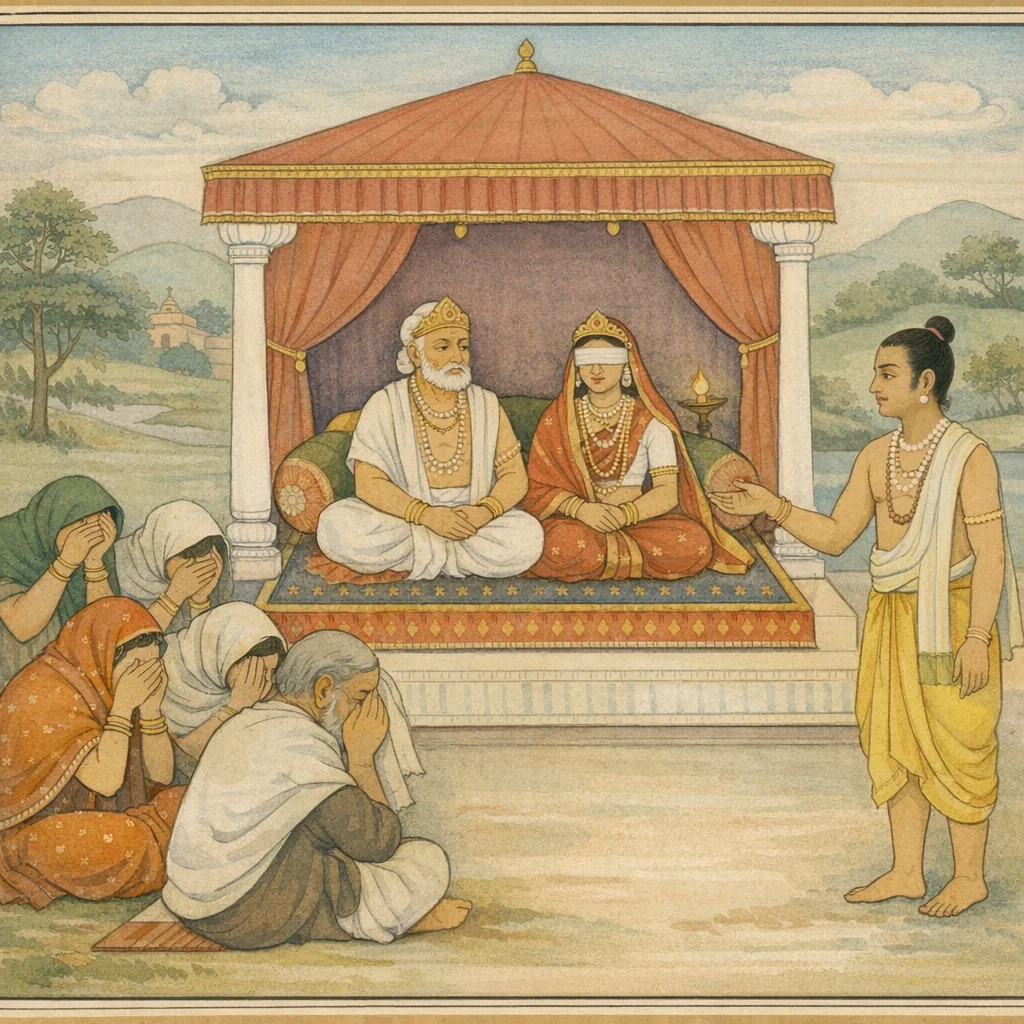
Chapter Arc: हस्तिनापुर की प्रजा और जनपदवासी वृद्ध धृतराष्ट्र के करुण वचनों को सुनकर शोक से स्तब्ध हो जाते हैं—मानो नगर का हृदय ही रो पड़ा हो। → धृतराष्ट्र अपने बुढ़ापे, पुत्र-नाश और गांधारी सहित वनवास की अनुमति का स्मरण कर अनेक प्रकार से विलाप करते हैं; जनसमुदाय मुख ढाँपकर पितृ-मातृवत् रोता है और यह भय उभरता है कि अब राज्य-जीवन का सहारा भी छिन जाएगा। → ब्राह्मण साम्ब आगे बढ़कर धृतराष्ट्र को सान्त्वना देता है—राजाओं के वध में आप कारण नहीं; युधिष्ठिर के संसर्ग से भीम-अर्जुन आदि प्रजा का अप्रिय नहीं करेंगे; अतः मन का शोक त्यागकर धर्म्य कार्यों में प्रवृत्त हों। → साम्ब के धर्मानुकूल, गुणयुक्त वचनों को समस्त प्रजा ‘साधु-साधु’ कहकर स्वीकार करती है; शोक का उफान कुछ थमता है और धृतराष्ट्र के लिए धर्म-आधारित आश्वासन बनता है। → वनगमन की अनिवार्यता और कुरुवंश के बचे हुए जनों पर उसके प्रभाव की छाया बनी रहती है।
Shlokas
Verse 1
अफ--रू- दशमो< ध्याय: प्रजाकी ओरसे साम्ब नामक ब्राह्मणका धृतराष्ट्रको सान्त्वनापूर्ण उत्तर देना वैशम्पायन उवाच एवमुक्तास्तु ते तेन पौरजानपदा जना: । वृद्धेन राज्ञा कौरव्य नष्टसंज्ञा इवाभवन्
Vaiśampāyana said: Thus addressed by him, the townsmen and the people of the countryside, O descendant of the Kurus, were struck as if senseless by the words of the aged king.
Verse 2
वैशम्पायनजी कहते हैं--जनमेजय! बूढ़े राजा धृतराष्ट्रके ऐसे करुणामय वचन कहनेपर नगर और जनपदके निवासी सभी लोग दुःखसे अचेत-से हो गये ।। तृष्णीम्भूतांस्ततस्तांस्तु बाष्पकण्ठान् महीपति: । धृतराष्ट्री महीपाल: पुनरेवाभ्यभाषत,उन सबके कण्ठ आँसुओंसे अवरुद्ध हो गये थे; अतः वे कुछ बोल नहीं पाते थे। उन्हें मौन देख महाराज धृतराष्ट्रने फिर कहा--
Vaiśampāyana said: “O Janamejaya, when the aged king Dhṛtarāṣṭra spoke such deeply compassionate words, all the inhabitants of the city and the countryside were overwhelmed by grief, as if stunned. Their throats were choked with tears and they could not speak; seeing them silent, King Dhṛtarāṣṭra addressed them once again.”
Verse 3
वृद्ध च हतपुत्रं च धर्मपत्न्या सहानया । विलपन्तं बहुविधं कृपणं चैव सत्तमा:,“सज्जनो! मैं बूढ़ा हूँ। मेरे सभी पुत्र मार डाले गये हैं। मैं अपनी इस धर्मपत्नीके साथ बारंबार दीनतापूर्वक विलाप कर रहा हूँ। मेरे पिता स्वयं महर्षि व्यासने मुझे वनमें जानेकी आज्ञा दे दी है। धर्मज्ञ पुरुषो! धर्मके ज्ञाता राजा युधिष्ठिरने भी वनवासके लिये अनुमति दे दी है। वही मैं अब पुनः बारंबार आपके सामने मस्तक झुकाकर प्रणाम करता हूँ। पुण्यात्मा प्रजाजन! आपलोग गान्धारीसहित मुझे वनमें जानेकी आज्ञा दे दें!
Vaiśampāyana said: “Aged and bereft of his sons, and together with this faithful wife, he lamented in many ways—pitiably, O best of men.”
Verse 4
पित्रा स्वयमनुज्ञातं कृष्णद्वैपायनेन वै । वनवासाय धर्मज्ञा धर्मज्ञेन नूपेण ह,“सज्जनो! मैं बूढ़ा हूँ। मेरे सभी पुत्र मार डाले गये हैं। मैं अपनी इस धर्मपत्नीके साथ बारंबार दीनतापूर्वक विलाप कर रहा हूँ। मेरे पिता स्वयं महर्षि व्यासने मुझे वनमें जानेकी आज्ञा दे दी है। धर्मज्ञ पुरुषो! धर्मके ज्ञाता राजा युधिष्ठिरने भी वनवासके लिये अनुमति दे दी है। वही मैं अब पुनः बारंबार आपके सामने मस्तक झुकाकर प्रणाम करता हूँ। पुण्यात्मा प्रजाजन! आपलोग गान्धारीसहित मुझे वनमें जानेकी आज्ञा दे दें!
Vaiśampāyana said: Having been personally granted permission by his father, Kṛṣṇa Dvaipāyana (Vyāsa), and likewise permitted by the dharma-knowing king, he—himself a knower of dharma—set his mind on departing for forest-dwelling.
Verse 5
सो<हं पुनः पुनश्चैव शिरसावनतो5नघा: । गान्धार्या सहितं तन््मां समनुज्ञातुमरहथ,“सज्जनो! मैं बूढ़ा हूँ। मेरे सभी पुत्र मार डाले गये हैं। मैं अपनी इस धर्मपत्नीके साथ बारंबार दीनतापूर्वक विलाप कर रहा हूँ। मेरे पिता स्वयं महर्षि व्यासने मुझे वनमें जानेकी आज्ञा दे दी है। धर्मज्ञ पुरुषो! धर्मके ज्ञाता राजा युधिष्ठिरने भी वनवासके लिये अनुमति दे दी है। वही मैं अब पुनः बारंबार आपके सामने मस्तक झुकाकर प्रणाम करता हूँ। पुण्यात्मा प्रजाजन! आपलोग गान्धारीसहित मुझे वनमें जानेकी आज्ञा दे दें!
Vaiśampāyana said: “Thus I, again and again, bow my head in reverence, O blameless people. Please deem it right to grant me leave—together with Gāndhārī—to depart.”
Verse 6
वैशम्पायन उवाच तच्छुत्वा कुरुराजस्य वाक्यानि करुणानि ते । रुरुदु: सर्वशो राजन् समेता: कुरुजाजला:,वैशम्पायनजी कहते हैं--जनमेजय! कुरुराजकी ये करुणाभरी बातें सुनकर वहाँ एकत्र हुए कुरुजांगलदेशके सब लोग दुपट्टों और हाथोंसे अपना-अपना मुँह ढँककर रोने लगे। अपनी संतानको विदा करते समय दुःखसे कातर हुए पिता-माताकी भाँति वे दो घड़ीतक शोकसे संतप्त होकर रोते रहे
Vaiśampāyana said: O King (Janamejaya), hearing those compassion-laden words of the Kuru king, all the people of the Kuru-Jāṅgala region who had gathered there began to weep openly.
Verse 7
उत्तरीयै: करैश्नापि संच्छाद्य वदनानि ते । रुरुदु: शोकसंतप्ता मुहूर्त पितृमातृवत्,वैशम्पायनजी कहते हैं--जनमेजय! कुरुराजकी ये करुणाभरी बातें सुनकर वहाँ एकत्र हुए कुरुजांगलदेशके सब लोग दुपट्टों और हाथोंसे अपना-अपना मुँह ढँककर रोने लगे। अपनी संतानको विदा करते समय दुःखसे कातर हुए पिता-माताकी भाँति वे दो घड़ीतक शोकसे संतप्त होकर रोते रहे
Vaiśampāyana said: Hearing those heart-rending words of the Kuru king, all the people gathered there in the Kuru-jāṅgala region covered their faces with their upper garments and with their hands, and began to weep. Burnt by grief, they cried for a while, like parents anguished at the moment of parting from their own child.
Verse 8
हृदयै: शून्यभूतैस्ते धृतराष्ट्प्रवासजम् । दुःखं संधारयन्तो हि नष्टसंज्ञा इवाभवन्,उनका हृदय शून्य-सा हो गया था। वे उस सूने हृदयसे धृतराष्ट्रके प्रवासजनित दु:ःखको धारण करके अचेत-से हो गये
Vaiśampāyana said: Their hearts had become as though emptied. Bearing the sorrow born of Dhṛtarāṣṭra’s departure into exile, they became like people who had lost consciousness—stunned and inwardly undone by grief.
Verse 9
इस प्रकार श्रीमह्याभारत आश्रमवासिकपवके अन्तर्गत आश्रमवासपर्वमें धृतराष्ट्रकी प्रार्थगाविषयक नवाँ अध्याय पूरा हुआ,ते विनीय तमायासं धृतराष्ट्रवियोगजम् । शनै: शनैस्तदान्योन्यमन्रुवन् सम्मतान्युत फिर धीरे-धीरे उनके वियोगजनित दुःखको दूर करके उन सबने आपसमें वार्तालाप किया और अपनी सम्मति प्रकट की
Having thus soothed and set aside the distress born of separation from Dhṛtarāṣṭra, they then, little by little, began to speak with one another, exchanging words of agreement and expressing their considered views. The moment marks a shift from raw grief to composed counsel and communal resolve.
Verse 10
ततः संधाय ते सर्वे वाक्यान्यथ समासत: । एकस्मिन् ब्राह्मणे राजन् निवेश्योचुर्नराधिपम्,राजन्! तदनन्तर एकमत होकर उन सब लोगोंने थोड़ेमें अपनी सारी बातें कहनेका भार एक ब्राह्मणपर रखा। उन ब्राह्मणके द्वारा ही उन्होंने राजासे अपनी बात कही इति श्रीमहाभारते आश्रमवासिके पर्वणि आश्रमवासपर्वणि प्रकृतिसान्त्वने दशमो<ध्याय:
Vaiśaṃpāyana said: Then all of them, having conferred together, condensed their words; and, O King, placing the responsibility of speaking upon a single brāhmaṇa, they addressed the lord of men (the king) through him. The scene underscores a deliberate, orderly approach to counsel—entrusting speech to a qualified spokesman so that the message is conveyed with restraint and propriety.
Verse 11
ततः स्वाचरणो विप्र: सम्मतो<र्थविशारद: । साम्बाख्यो बहूवृचो राजन् वक्तुं समुपचक्रमे,वे ब्राह्मण देवता सदाचारी, सबके माननीय और अर्थज्ञानमें निपुण थे, उनका नाम था साम्ब। वे वेदके विद्वान, निर्भय होकर बोलनेवाले और बुद्धिमान थे। वे महाराजको सम्मान देकर सारी सभाको प्रसन्न करके बोलनेको उद्यत हुए। उन्होंने राजासे इस प्रकार कहा --
Then a Brahmin of exemplary conduct, respected by all and well-versed in the meaning and application of sacred teaching, named Sāmba—a learned reciter of the Ṛgveda—began to speak, O King. Having duly honored the king and gladdened the entire assembly, he prepared to address him and spoke as follows.
Verse 12
अनुमान्य महाराजं तत् सद: सम्प्रसाद्य च । विप्र: प्रगल्भो मेधावी स राजानमुवाच ह,वे ब्राह्मण देवता सदाचारी, सबके माननीय और अर्थज्ञानमें निपुण थे, उनका नाम था साम्ब। वे वेदके विद्वान, निर्भय होकर बोलनेवाले और बुद्धिमान थे। वे महाराजको सम्मान देकर सारी सभाको प्रसन्न करके बोलनेको उद्यत हुए। उन्होंने राजासे इस प्रकार कहा --
Vaiśampāyana said: Having duly honored the great king and gladdened that entire assembly, a bold and discerning brāhmaṇa then addressed the ruler. The scene underscores the ethical decorum of counsel: respect for authority, goodwill toward the gathered elders, and fearless speech grounded in learning.
Verse 13
राजन् वाक््यं जनस्यास्य मयि सर्व समर्पितम् । वक्ष्यामि तदहं वीर तज्जुषस्व नराधिप,“राजन! वीर नरेश्वर! यहाँ उपस्थित हुए समस्त जनसमुदायने अपना मन्तव्य प्रकट करनेका सारा भार मुझे सौंप दिया है; अतः मैं ही इनकी बातें आपकी सेवामें निवेदन करूँगा। आप सुननेकी कृपा करें
Vaiśampāyana said: “O King, this entire message of the people gathered here has been entrusted to me. Therefore, O hero, I shall present it to you—O ruler of men, be pleased to hear and accept it.”
Verse 14
यथा वदसि राजेन्द्र सर्वमेतत् तथा विभो । नात्र मिथ्या वच: किंचित् सुद्वत्त्वं न: परस्परम्,'राजेन्द्र! प्रभो! आप जो कुछ कहते हैं, वह सब ठीक है। उसमें असत्यका लेश भी नहीं है। वास्तवमें इस राजवंशमें और हमलोगोंमें परस्पर दृढ़ सौहार्द स्थापित हो चुका है
Vaiśampāyana said: “O best of kings, O mighty lord, everything you say is exactly so. In this there is not the slightest trace of falsehood. Indeed, between your royal line and us, a firm and mutual bond of goodwill has been established.”
Verse 15
न जात्वस्य च वंशस्य राज्ञां कश्चित् कदाचन । राजा55सीद् यः प्रजापाल: प्रजानामप्रियो5भवत्,“इस राजवंशमें कभी कोई भी ऐसा राजा नहीं हुआ, जो प्रजापालन करते समय समस्त प्रजाओंको प्रिय न रहा हो
Vaiśampāyana said: “In this royal lineage, there was never—at any time—any king who, while protecting and governing the people, became disliked by his subjects.”
Verse 16
पितृवद् भ्रातृवच्चैव भवन्त: पालयन्ति नः । न च दुर्योधन: किंचिदयुक्तं कृतवान् नृप:,“आपलोग पिता और बड़े भाईके समान हमारा पालन करते आये हैं। राजा दुर्योधनने भी हमारे साथ कोई अनुचित बर्ताव नहीं किया है
“You have cared for us as a father and as elder brothers. And King Duryodhana, too, has done nothing improper toward us.”
Verse 17
यथा ब्रवीति धर्मात्मा मुनि: सत्यवतीसुत: । तथा कुरु महाराज स हि नः परमो गुरु:,“महाराज! परम धर्मात्मा सत्यवतीनन्दन महर्षि व्यासजी आपको जैसी सलाह देते हैं, वैसा ही कीजिये; क्योंकि वे हम सब लोगोंके परम गुरु हैं
Vaiśampāyana said: “O King, act exactly as the righteous sage, Satyavatī’s son, instructs you. He is indeed the highest teacher for all of us.”
Verse 18
त्यक्ता वयं तु भवता दुःखशोकपरायणा: । भविष्यामश्रिरं राजन् भवद््गुणशतैर्युता:
Abandoned by you, we have become wholly given over to sorrow and grief. Yet, O King, we shall continue to live on—sustained and upheld by the hundreds of virtues that belong to you.
Verse 19
“राजन! आप जब हमें त्याग देंगे, हमें छोड़कर चले जायँगे, तब हम बहुत दिनोंतक दुःख और शोकमें डूबे रहेंगे। आपके सैकड़ों गुणोंकी याद सदा हमें घेरे रहेगी ।। यथा शान्तनुना गुप्ता राज्ञा चित्राज्देन च । भीष्मवीर्योपगूढेन पित्रा तव च पार्थिव,'पृथ्वीनाथ! महाराज शान्तनु तथा राजा चित्रांगदने जिस प्रकार हमारी रक्षा की है, भीष्मके पराक्रमसे सुरक्षित आपके पिता विचित्रवीर्यने जिस तरह हमलोगोंका पालन किया है तथा आपकी देख-रेखमें रहकर पृथ्वीपति पाण्डुने जिस प्रकार प्रजाजनोंकी रक्षा की है, उसी प्रकार राजा दुर्योधनने भी हमलोगोंका यथावत् पालन किया है
Vaiśampāyana said: “O King! When you abandon us and depart, we shall remain for a long time submerged in grief and sorrow. The remembrance of your countless virtues will continually surround us. Just as King Śāntanu and King Citrāṅgada protected us; just as your father Vicitravīrya, safeguarded by Bhīṣma’s prowess, maintained us; and just as Pāṇḍu, the lord of the earth, protected the people while living under your care—so too did King Duryodhana, in due measure, sustain and look after us.”
Verse 20
भवद॒द्वीक्षणाच्चैव पाण्डुना पृथिवीक्षिता । तथा दुर्योधनेनापि राज्ञा सुपरिपालिता:,'पृथ्वीनाथ! महाराज शान्तनु तथा राजा चित्रांगदने जिस प्रकार हमारी रक्षा की है, भीष्मके पराक्रमसे सुरक्षित आपके पिता विचित्रवीर्यने जिस तरह हमलोगोंका पालन किया है तथा आपकी देख-रेखमें रहकर पृथ्वीपति पाण्डुने जिस प्रकार प्रजाजनोंकी रक्षा की है, उसी प्रकार राजा दुर्योधनने भी हमलोगोंका यथावत् पालन किया है
Vaiśampāyana said: “Under your vigilant oversight, King Pāṇḍu protected the earth; and in the same way, King Duryodhana too duly safeguarded us.”
Verse 21
न स्वल्पमपि पुत्रस्ते व्यलीकं॑ कृतवान् नृप । पितरीव सुविदश्वस्तास्तस्मिन्नपि नराधिपे
Vaiśampāyana said: “O king, your son did not commit even the slightest deceit. In that lord of men, they placed their trust as one does in a father—fully reassured and without suspicion.”
Verse 22
तथा वर्षसहस्राणि कुन्तीपुत्रेण धीमता
Thus, for thousands of years, the wise son of Kuntī endured and continued on—emphasizing steadfastness and disciplined perseverance over time.
Verse 23
राजर्षीणां पुराणानां भवतां पुण्यकर्मणाम्,'यज्ञोंमें बड़ी-बड़ी दक्षिणा प्रदान करनेवाले ये धर्मात्मा राजा युधिष्ठिर प्राचीन कालके पुण्यात्मा राजर्षि कुरु और संवरण आदिके तथा बुद्धिमान् राजा भरतके बर्तावका अनुसरण करते हैं
Vaiśaṃpāyana said: This righteous King Yudhiṣṭhira—renowned for granting great sacrificial gifts—follows the conduct of the ancient, meritorious royal seers such as Kuru and Saṃvaraṇa, and also that of the wise King Bharata. In doing so, he aligns his kingship with the older standards of dharma, where generosity, restraint, and exemplary royal behavior are treated as the true measure of virtue.
Verse 24
कुरुसंवरणादीनां भरतस्य च धीमत: । वृत्तं समनुयात्येष धर्मात्मा भूरिदक्षिण:,'यज्ञोंमें बड़ी-बड़ी दक्षिणा प्रदान करनेवाले ये धर्मात्मा राजा युधिष्ठिर प्राचीन कालके पुण्यात्मा राजर्षि कुरु और संवरण आदिके तथा बुद्धिमान् राजा भरतके बर्तावका अनुसरण करते हैं
Vaiśampāyana said: This dharma-minded Yudhiṣṭhira, lavish in sacrificial gifts, follows the way of Kuru, Saṃvaraṇa, and other royal seers of old, and likewise the example of the wise King Bharata.
Verse 25
नात्र वाच्यं महाराज सुसूक्ष्ममपि विद्यते । उषिता: सम सुखं नित्यं भवता परिपालिता:,“महाराज! इनमें कोई छोटे-से-छोटा दोष भी नहीं है। इनके राज्यमें आपके द्वारा सुरक्षित होकर हमलोग सदा सुखसे रहते आये हैं
Vaiśampāyana said: “O great king, there is not even the slightest fault here that could be spoken of. Protected by you in your realm, we have dwelt continually in comfort and well-being.”
Verse 26
सुसूक्ष्मं च व्यलीकं ते सपुत्रस्य न विद्यते । यत् तु ज्ञातिविमर्देडस्मिन्नात्थ दुर्योधन प्रति
Vaiśampāyana said: “In you and in your son there is not even the slightest trace of deceit or falsehood. Yet, in this bitter clash among kinsmen, the words you spoke against Duryodhana have come to bear upon the moral tension of the moment.”
Verse 27
न तद् दुर्योधनकृतं न च तद् भवता कृतम्
“That deed was not done by Duryodhana, nor was it done by you.” Thus Vaiśampāyana frames the event as not merely the product of personal agency, but as something arising from forces beyond individual blame—inviting a reflective, ethical pause on responsibility, fate, and the aftermath of the great war.
Verse 28
दैवं तत् तु विजानीमो यन्न शक््यं प्रबाधितुम्
We recognize as daiva—destiny, the divine ordinance—that which cannot be checked or thwarted.
Verse 29
अक्षौहिण्यो महाराज दशाष्टौ च समागता:,“महाराज! उस युद्धमें अठारह अक्षौहिणी सेनाएँ एकत्र हुई थीं; किंतु कौरवपक्षके प्रधान योद्धा भीष्म, द्रोण, कृपाचार्य आदि तथा महामना कर्णने एवं पाण्डवदलके प्रमुख वीर सात्यकि, धृष्टद्युम्न, भीमसेन, अर्जुन, नकुल और सहदेव आदिने अठारह दिनोंमें ही सबका संहार कर डाला”
Vaiśaṃpāyana said: “O King, eighteen akṣauhiṇīs—full battle-divisions—had assembled for that war. Yet within only eighteen days the foremost champions of the Kauravas—Bhīṣma, Droṇa, Kṛpa and others—and the high-souled Karṇa, together with the leading heroes of the Pāṇḍava host—Sātyaki, Dhṛṣṭadyumna, Bhīmasena, Arjuna, Nakula and Sahadeva—brought about the destruction of them all.”
Verse 30
अष्टादशाहेन हता: कुरुभिर्यों धपुड़वै: । भीष्मद्रोणकृपाद्यैश्न कर्णेन च महात्मना,“महाराज! उस युद्धमें अठारह अक्षौहिणी सेनाएँ एकत्र हुई थीं; किंतु कौरवपक्षके प्रधान योद्धा भीष्म, द्रोण, कृपाचार्य आदि तथा महामना कर्णने एवं पाण्डवदलके प्रमुख वीर सात्यकि, धृष्टद्युम्न, भीमसेन, अर्जुन, नकुल और सहदेव आदिने अठारह दिनोंमें ही सबका संहार कर डाला”
Vaiśaṃpāyana said: “In the span of eighteen days, the warriors of the Kurus—led by Bhīṣma, Droṇa, Kṛpa and others, and also by the great-souled Karṇa—were slain.”
Verse 31
युयुधानेन वीरेण धृष्टद्युम्नेन चैव ह । चतुर्भि: पाण्डुपुत्रैश्न भीमार्जुनयमैस्तथा,“महाराज! उस युद्धमें अठारह अक्षौहिणी सेनाएँ एकत्र हुई थीं; किंतु कौरवपक्षके प्रधान योद्धा भीष्म, द्रोण, कृपाचार्य आदि तथा महामना कर्णने एवं पाण्डवदलके प्रमुख वीर सात्यकि, धृष्टद्युम्न, भीमसेन, अर्जुन, नकुल और सहदेव आदिने अठारह दिनोंमें ही सबका संहार कर डाला”
Vaiśaṃpāyana said: “By the valiant Yuyudhāna (Sātyaki) and by Dhṛṣṭadyumna indeed, and likewise by the four sons of Pāṇḍu—Bhīma, Arjuna, and the twins (Nakula and Sahadeva)—the great slaughter of that war was brought about.”
Verse 32
न च क्षयो<यं नृपते ऋते दैवबलादभूत् | अवश्यमेव संग्रामे क्षत्रियेण विशेषत:
Vaiśaṃpāyana said: “O king, this destruction did not occur without the force of destiny. In battle, destruction is indeed inevitable—especially for one who is a kṣatriya.”
Verse 33
तैरियं पुरुषव्याघ्रैविद्याबाहुबलान्वितै:
Vaiśampāyana said: By those tiger-like men—endowed with learning, mighty arms, and strength—this undertaking was accomplished, showing how ability, when joined to discipline and knowledge, becomes an instrument of righteous action.
Verse 34
नसराज्ञां वधे सूनु: कारणं ते महात्मनाम्
Vaiśampāyana said: “That son was not the cause of the slaying of kings; rather, the responsibility lay with those great-souled men themselves.”
Verse 35
यद् विशस्ता: कुरुश्रेष्ठ राजानश्न॒ सहस्रश:
O best of the Kurus, those kings—celebrated and renowned—were present in their thousands, as the tale recalls the vast assembly of rulers whose fame and worldly power nevertheless remained subject to time, duty (dharma), and the moral consequences of their deeds.
Verse 36
गुरुर्मतो भवानस्य कृत्स्नस्य जगत: प्रभु:
Vaiśampāyana said: “You are regarded as the guru—indeed the sovereign lord—of this entire world.”
Verse 37
लभतां वीरलोक॑ स ससहायो नराधिप:
Vaiśampāyana said: “May that king, together with his companions, attain the world of heroes.” The line stands as a solemn benediction, affirming that steadfastness, loyalty, and kingly duty—borne through hardship—lead to an honored posthumous destiny rather than mere worldly reward.
Verse 38
प्राप्स्यते च भवान् पुण्यं धर्मे च परमां स्थितिम्
And you will attain merit, and in dharma you will reach the highest steadfast state—an assurance that righteous conduct culminates not only in spiritual reward but in firm establishment in the supreme path of duty.
Verse 39
वेद धर्म च कृत्स्नेन सम्यक् त्वं भव सुब्रत: । “आप भी पुण्य एवं धर्ममें ऊँची स्थिति प्राप्त करें। आप सम्पूर्ण धर्मोको ठीक-ठीक जानते हैं, इसलिये उत्तम व्रतोंके अनुष्ठानमें लग जाइये || ३८ ई ।। दृष्टिप्रदानमपि ते पाण्डवान् प्रति नो वृथा
Vaiśampāyana said: “You know the Vedas and the whole of dharma in their entirety; therefore, O man of excellent vows, be firmly established in right conduct. And the granting of your audience—your very act of showing yourself—to the Pāṇḍavas will not be in vain.”
Verse 40
अनुवर्त्स्यन्ति वा धीमन् समेषु विषमेषु च
Vaiśampāyana said: “O wise one, will they continue to follow (him), both in times of ease and in times of hardship?”
Verse 41
प्रजा: कुरुकुलश्रेष्ठ पाण्डवान् शीलभूषणान् । “बुद्धिमान् कुरुकुलश्रेष्ठी समस्त पाण्डव शीलरूपी सदगुणसे विभूषित हैं; अतः भले- बुरे सभी समयोंमें सारी प्रजा निश्चय ही उनका अनुसरण करेगी || ४० $ ।। ब्रह्मादेयाग्रहारांश्ष पारिबर्हाश्व पार्थिव:
Vaiśampāyana said: “O best of the Kuru line, the Pāṇḍavas are adorned with noble conduct and good character. Being wise and richly endowed with virtues that take the form of exemplary behavior, they become a standard for others. Therefore, in times both favorable and adverse, the whole populace will surely follow their lead.”
Verse 42
दीर्घदर्शी मृदुर्दान्त: सदा वैश्रवणो यथा
Vaiśampāyana said: “He was far-sighted, gentle, and self-controlled—ever like Vaiśravaṇa (Kubera) in his steady, composed nature.”
Verse 43
अक्षुद्रसचिवश्चायं कुन्तीपुत्रो महामना: । 'ये कुन्तीकुमार सदा कुबेरके समान दीर्घदर्शी, कोमल स्वभाववाले और जितेन्द्रिय हैं। इनके मन्त्री भी उच्च विचारके हैं। इनका हृदय बड़ा ही विशाल है ।। अप्यमित्रे दयावांश्व शुचिश्न॒ भरतर्षभ:
Vaiśampāyana said: “This son of Kuntī is great-souled, attended by ministers of no petty mind. Like Kubera in steadfast prosperity, he is far-sighted, gentle by nature, and self-controlled. His counsellors too are men of elevated judgment, and his heart is truly expansive. Even toward an enemy, O bull among the Bharatas, he is compassionate and pure.”
Verse 44
विप्रियं च जनस्यास्य संसर्गाद् धर्मजस्य वै
And, due to his association with Dharmarāja (Yudhiṣṭhira), this too became displeasing to the people.
Verse 45
न करिष्यन्ति राजर्षे तथा भीमार्जुनादय: । 'राजर्षे! इन धर्मपुत्र युधिष्ठिरके संसर्गसे भीमसेन और अर्जुन आदि भी इस जनसमुदाय (प्रजावर्ग)-का कभी अप्रिय नहीं करेंगे || ४४ $ ।। मन्दा मृदुषु कौरव्य तीक्ष्णेष्वाशीविषोपमा:
Vaiśampāyana said: “O royal sage, Bhīma, Arjuna, and the others will likewise never act in a way that is displeasing to the people, so long as they remain in the company and guidance of Dharmaputra Yudhiṣṭhira. Gentle among the gentle, O Kauravya, yet among the harsh they are like venomous serpents.”
Verse 46
न कुन्ती न च पाउ्चाली न चोलूपी न सात्वती
Vaiśampāyana said: “Neither Kuntī, nor Pāñcālī, nor Colūpī, nor the Sātvata lady (Satyavatī) …”
Verse 47
भवत्कृतमिमं स्नेहं युधिष्ठिरविवर्धितम्
Vaiśampāyana said: “This affection, first shown by you and then fostered and strengthened by Yudhiṣṭhira, has grown into a binding bond of care and responsibility.”
Verse 48
न पृष्ठत: करिष्यन्ति पौरा जानपदा जना: । “आपका प्रजाके साथ जो स्नेह था, उसे युधिष्ठिरने और भी बढ़ा दिया है। नगर और जनपदके लोग आपलोगोंके इस प्रजा-प्रेमकी कभी अवहेलना नहीं करेंगे ।। अधर्मिष्ठानपि सतः कुन्तीपुत्रा महारथा:
Vaiśampāyana said: “The citizens of the city and the people of the countryside will never turn their backs on you. The affection you bore toward the subjects—Yudhiṣṭhira has only increased it further. The townsfolk and the people of the provinces will never disregard this love of yours for the people.” Even those who might be thought ‘least righteous’ are, in truth, the great chariot-warriors—the sons of Kuntī—steadfast in their essential goodness.
Verse 49
स राजन् मानसं दुःखमपनीय युधिषछ्िरात्
Vaiśampāyana said: O King, having removed the mental sorrow from Yudhiṣṭhira, (he proceeded further in the course of events). The line highlights the ethical work of consoling a righteous ruler whose grief must be steadied so that dharma may be upheld even in old age and renunciation.
Verse 50
वैशम्पायन उवाच तस्य तद् वचन धर्म्यमनुमान्य गुणोत्तरम्
Vaiśampāyana said: Approving those words of his as righteous and marked by superior virtue, (they accepted and proceeded accordingly).
Verse 51
धृतराष्ट्रश्न तद्वाक्यमभिपूज्य पुन: पुन:,धृतराष्ट्रने भी बारंबार साम्बके वचनोंकी सराहना की और सब लोगोंसे सम्मानित होकर धीरे-धीरे सबको विदा कर दिया। उस समय सबने उन्हें शुभ दृष्टिसे ही देखा
Vaiśampāyana said: Dhṛtarāṣṭra, repeatedly honoring those words, praised them again and again. Then, having shown due respect to everyone, he gradually took leave of all. At that moment, all present looked upon him only with auspicious regard—an outward sign of reconciliation and the ethical restraint befitting elders at the close of life.
Verse 52
विसर्जयामास तदा प्रकृतीस्तु शनै: शनै: । स तै: सम्पूजितो राजा शिवेनावेक्षितस्तथा,धृतराष्ट्रने भी बारंबार साम्बके वचनोंकी सराहना की और सब लोगोंसे सम्मानित होकर धीरे-धीरे सबको विदा कर दिया। उस समय सबने उन्हें शुभ दृष्टिसे ही देखा
Vaiśampāyana said: Then the king gradually dismissed his attendants and the assembled people. Having been duly honored by them, and being regarded with auspicious, benevolent looks—as one under Śiva’s gracious protection—Dhṛtarāṣṭra took leave of all in a calm and orderly manner, with mutual respect and goodwill prevailing.
Verse 53
प्राजजलि: पूजयामास त॑ जन॑ भरतर्षभ । ततो विवेश भवन गान्धार्या सहितो निजम् | व्युष्टायां चैव शर्वर्या यच्चकार निबोध तत्,भरतमश्रेष्ठ! तत्पश्चात् धृतराष्ट्रने हाथ जोड़कर उन ब्राह्मण देवताका सत्कार किया और गान्धारीके साथ फिर अपने महलमें चले गये। जब रात बीती और सबेरा हुआ, तब उन्होंने जो कुछ किया, उसे बता रहा हूँ, सुनो
Vaiśampāyana said: With hands joined in reverence, he honored those people, O bull among the Bharatas. Then, accompanied by Gāndhārī, he entered his own residence. And when the night had passed and dawn had come, listen, O best of the Bharatas, to what he then proceeded to do.
Verse 213
वयमास्म यथा सम्यग् भवतो विदितं तथा । “नरेश्वर! आपके पुत्रने कभी थोड़ा-सा भी अन्याय हमलोगोंके साथ नहीं किया। हमलोग उन राजा दुर्योधनपर भी पिताके समान विश्वास करते थे और उनके राज्यमें बड़े सुखसे जीवन व्यतीत करते थे। यह बात आपको भी विदित ही है"
Vaiśampāyana said: “As you know well, O lord of men, your son never committed even the slightest injustice toward us. We trusted King Duryodhana as one would trust a father, and we lived in his realm with great ease and contentment. This, too, is already known to you.”
Verse 223
पाल्यमाना धृतिमता सुखं विन्दामहे नूप । “नरेश्वर! भगवान् करें कि बुद्धिमान् कुन्तीकुमार राजा युधिष्छिर धैर्यपूर्वक सहस्रों वर्षतक हमारा पालन करें और हम इनके राज्यमें सुखसे रहें
Vaiśampāyana said: “Protected by the steadfast king, O ruler, we live in comfort. May the Lord so ordain, O king of men, that the wise Kuntī’s son, King Yudhiṣṭhira, may with patience and fortitude sustain us for thousands of years, and that we may dwell happily within his realm.”
Verse 263
भवन्न्तमनुनेष्यामि तत्रापि कुरुनन्दन | “कुरुनन्दन! पुत्रसहित आपका कोई सूक्ष्म-से-सूक्ष्म अपराध भी हमारे देखनेमें नहीं आया है। महाभारत-युद्धमें जो जाति-भाइयोंका संहार हुआ है, उसके विषयमें आपने जो दुर्योधनके अपराधकी चर्चा की है, इसके सम्बन्धमें भी मैं आपसे कुछ निवेदन करूँगा
Vaiśampāyana said: “O Kuru’s delight, I shall further conciliate you even on that matter as well.”
Verse 273
न कर्णसौबलाभ्यां च कुरवो यत् क्षयं गता: । “कौरवोंका जो संहार हुआ है, उसमें न दुर्योधनका हाथ है, न आपका। कर्ण और शकुनिने भी इसमें कुछ नहीं किया है
Vaiśampāyana said: “The Kurus’ destruction did not come about through Karṇa and Śakuni; their going to ruin was not truly the work of those two.”
Verse 283
देवं पुरुषकारेण न शक््यमपि बाधितुम् । “हमारी समझमें तो यह दैवका विधान था। इसे कोई टाल नहीं सकता था। दैवको पुरुषार्थसे मिटा देना असम्भव है
Vaiśampāyana said: Even by human effort, the divine decree cannot be obstructed. In our understanding, this was the ordinance of fate; none could avert it—human striving cannot erase what is ordained by the divine.
Verse 323
कर्तव्यं निधन काले मर्तव्यं क्षत्रबन्धुना । “नरेश्वर! ऐसा विकट संहार दैवीशक्तिके बिना कदापि नहीं हो सकता था। अवश्य ही संग्राममें मनुष्यको विशेषत: क्षत्रियको समयानुसार शत्रुओंका संहार एवं प्राणोत्सर्ग करना चाहिये
Vaiśampāyana said: “At the time of death, a kṣatriya must do what is to be done; even one who is but a ‘kinsman of kṣatriyas’ must be ready to die. Such a dreadful slaughter could never have occurred without divine power. Therefore, in battle, a man—especially a warrior—should, according to the proper time and circumstance, destroy his enemies and, if required, surrender his own life.”
Verse 343
न भवान् न च ते भृत्या न कर्णो न च सौबल: । “आपका पुत्र उन महात्मा नरेशोंके वधमें कारण नहीं हुआ है। इसी प्रकारन आप, न आपके सेवक, न कर्ण और न शकुनि ही इसमें कारण हैं
Vaiśampāyana said: “Neither you nor your attendants, nor Karṇa, nor Saubala (Śakuni) were the true cause of the slaughter of those great-souled kings.” The statement shifts moral responsibility away from particular individuals, implying that the catastrophe of war arose from a larger convergence of fate, accumulated wrongdoing, and the collapse of dharma rather than from a single agent’s will alone.
Verse 356
सर्व दैवकृतं विद्धि कोअत्र कि वक्तुमर्हति । “कुरुश्रेष्ठी उस युद्धमें जो सहस्रों राजा काट डाले गये हैं, वह सब दैवकी ही करतूत समझिये। इस विषयमें दूसरा कोई क्या कह सकता है
Know that everything here is wrought by destiny; who, in this matter, is fit to say anything else? O best of the Kurus, in that war where thousands of kings were cut down, understand it all as the working of fate alone—what further can anyone add?
Verse 366
धर्मात्मानमतस्तुभ्यमनुजानीमहे सुतम् । “आप इस सम्पूर्ण जगतके स्वामी हैं; इसलिये हम आपको अपना गुरु मानते हैं और आप धर्मात्मा नरेशको वनमें जानेकी अनुमति देते हैं तथा आपके पुत्र दुर्योधनके लिये हमारा यह कथन है--
Vaiśampāyana said: “Therefore, we seek your consent regarding this righteous son. ‘You are the lord of this entire world; hence we regard you as our teacher. You grant permission for the virtuous king to depart for the forest; and as for your son Duryodhana, this is what we have to say—’”
Verse 373
द्विजाग्र्यै: समनुज्ञातस्त्रिदिवे मोदतां सुखम् । “अपने सहायकोंसहित राजा दुर्योधन इन श्रेष्ठ द्विजोंके आशीर्वादसे वीरलोक प्राप्त करे और स्वर्गमें सुख एवं आनन्द भोगे
Vaiśampāyana said: Having received the assent and blessing of the foremost Brahmins, he is to rejoice happily in the heavenly world. The sense is that King Duryodhana—together with his attendants—attains the realm of heroes by the benediction of these eminent twice-born, and there enjoys joy and well-being in heaven.
Verse 393
समर्थास्त्रिदिवस्यापि पालने किं पुन: क्षिते: । “आप जो हमारी देख-रेख करनेके लिये हमें पाण्डवोंको सौंप रहे हैं, वह सब व्यर्थ है। ये पाण्डव तो स्वर्गका भी पालन करनेमें समर्थ हैं; फिर इस भूमण्डलकी तो बात ही क्या है
Vaiśampāyana said: “They are capable of governing even the realm of the gods—what need, then, to speak of ruling the earth? Therefore, the idea that they must be ‘handed over’ to someone for supervision is pointless.”
Verse 413
पूर्वराजाभिपन्नांश्व॒ पालयत्येव पाण्डव: । 'ये पृथ्वीनाथ पाण्डुपुत्र युधिष्ठिर अपने दिये हुए तथा पहलेके राजाओंद्वारा अर्पित किये गये ब्राह्मणोंके लिये दातव्य अग्रहारों (दानमें दिये गये ग्रामों) तथा पारिबहाँ (पुरस्कारमें दिये गये ग्रामों)-की भी रक्षा करते ही हैं
Vaiśampāyana said: The Pāṇḍava (Yudhiṣṭhira) indeed continues to safeguard those grants and endowments that had been assigned earlier by former kings—protecting the promised holdings given for the support of Brāhmaṇas, and ensuring that prior royal gifts remain secure and honored. The passage underscores the ethical duty of a righteous ruler to uphold earlier donations and maintain continuity of dharma in governance.
Verse 433
ऋजुं पश्यति मेधावी पुत्रवत् पाति न: सदा । 'ये भरतकुलभूषण युधिष्छिर शत्रुओंपर भी दया करनेवाले और परम पवित्र हैं। बुद्धिमान होनेके साथ ही ये सबको सरलभावसे देखनेवाले हैं और हमलोगोंका सदा पुत्रवत् पालन करते हैं
Vaiśampāyana said: “He is wise and looks upon things with straightforwardness; and he always protects us as a son would.”
Verse 456
वीर्यवन्तो महात्मान: पौराणां च हिते रता: । “कुरुनन्दन! ये पाँचों भाई पाण्डव बड़े पराक्रमी, महामनस्वी और पुरवासियोंके हितसाधनमें लगे रहनेवाले हैं। ये कोमल स्वभाववाले सत्पुरुषोंके प्रति मृदुतापूर्ण बर्ताव करते हैं, किंतु तीखे स्वभाववाले दुष्टोंके लिये ये विषधर सर्पोके समान भयंकर बन जाते हैं
Vaiśampāyana said: “They are men of valor and great spirit, devoted to the welfare of the citizens. The five Pāṇḍava brothers—O scion of the Kurus—are gentle and considerate toward the virtuous and the soft-hearted; but toward the harsh and wicked they become terrifying, like venomous serpents.”
Verse 463
अस्मिन् जने करिष्यन्ति प्रतिकूलानि कहिचित् । “कुन्ती, द्रौपदी, उलूपी और सुभद्रा भी कभी प्रजाजनोंके प्रति प्रतिकूल बर्ताव नहीं करेंगी
Vaiśampāyana said: “Among these people, they will not, at any time, act in ways that are hostile or adverse.”
Verse 483
मानवान् पालयिष्यन्ति भूत्वा धर्मपरायणा: । 'कुन्तीके महारथी पुत्र स्वयं धर्मपरायण रहकर अधर्मी मनुष्योंका भी पालन करेंगे
Vaiśampāyana said: “Having become steadfastly devoted to dharma, they will protect the people.”
Verse 496
कुरु कार्याणि धर्म्याणि नमस्ते पुरुषर्षभ । “अत: पुरुषप्रवर महाराज! आप युधिष्ठिरकी ओरसे अपने मानसिक दुःखको हटाकर धार्मिक कार्योंके अनुष्ठानममें लग जाइये। आपको समस्त प्रजाका नमस्कार है”
Vaiśampāyana said: “Perform deeds that are in harmony with dharma. Salutations to you, O bull among men.”
Verse 503
साधु साध्विति सर्व: स जन: प्रतिगृहीतवान् । वैशम्पायनजी कहते हैं--जनमेजय! साम्बके धर्मानुकूल और उत्तम गुणयुक्त वचन सुनकर समस्त प्रजा उन्हें सादर साधुवाद देने लगी तथा सबने उनकी बातका अनुमोदन किया
Vaiśampāyana said: Hearing those words—aligned with dharma and marked by noble qualities—the entire assembly of people responded with respectful acclaim, saying “Well said, well said,” and accepted and endorsed what had been spoken.
Verse 3336
पृथिवी निहता सर्वा सहया सरथद्विपा । “उन विद्या और बाहुबलसे सम्पन्न पुरुषसिंहोंने रथ, घोड़े और हाथियोंसहित इस सारी पृथ्वीका नाश कर डाला
Vaiśampāyana said: The whole earth was laid waste—together with its horses, chariots, and elephants—destroyed by those lion-like men endowed with learning and the strength of their arms.
Frequently Asked Questions
The dilemma is how a newly established ruler governs ethically after catastrophic conflict: Yudhiṣṭhira must balance openness with necessary secrecy, compassion with security, and personal restraint with the coercive instruments of state protection.
Effective rājadharma requires disciplined self-governance: control of senses, deference to qualified wisdom, and institutional safeguards (vetted ministers, secure deliberation, and measured intelligence) so that power remains subordinate to dharma.
No explicit phalaśruti appears in this chapter; its function is normative instruction, framing governance as a practice of restraint and confidentiality whose benefits are implied as stability and avoidance of irreparable political harm.