Adhyaya 88
Hari’s Special Mercy, Śiva’s Quick Boons, and the Deliverance from Vṛkāsura
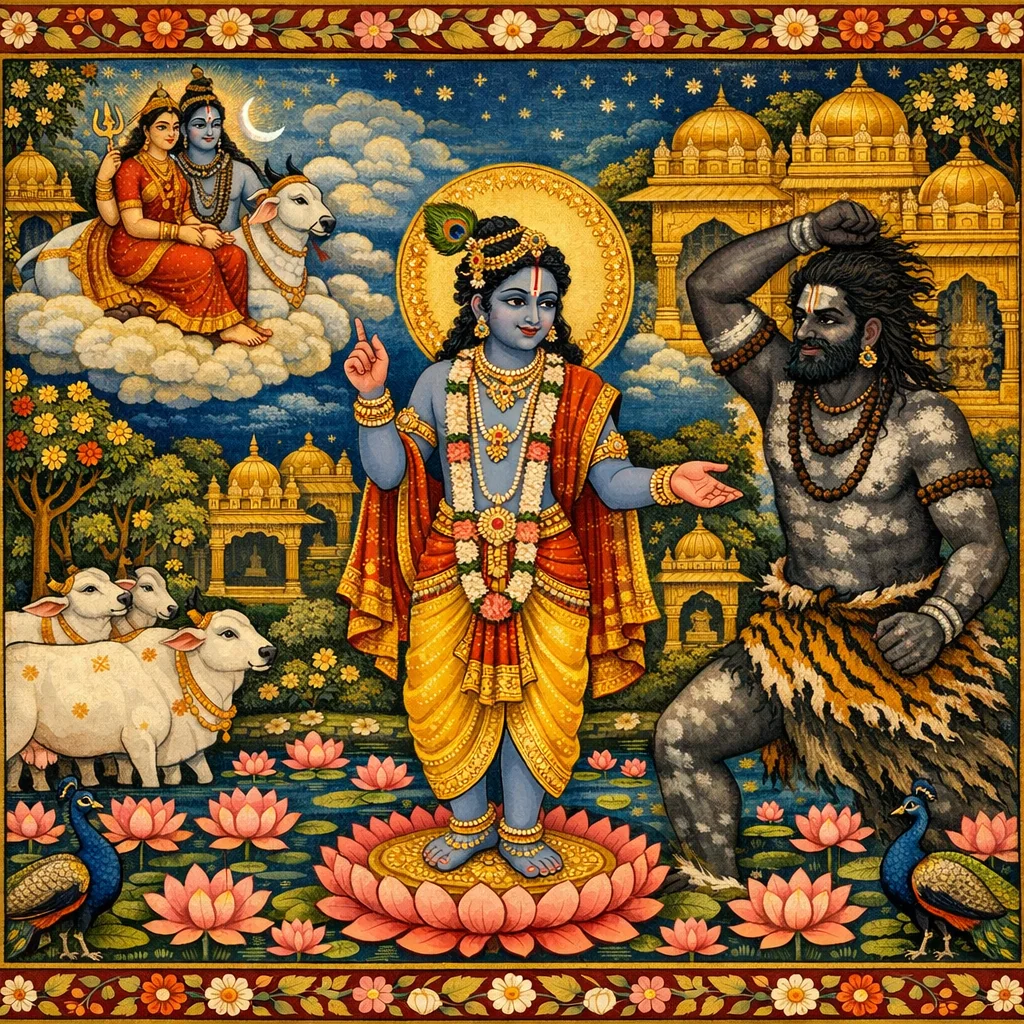
Continuing the Tenth Skandha’s stress on the supremacy of bhakti and the Lord’s unique dealings with His devotees, Parīkṣit asks why worshipers of Śiva often gain quick wealth and enjoyment while worshipers of Hari seem materially deprived. Śukadeva explains that Śiva is connected with prakṛti and the guṇas, so his worship can yield guṇa-based opulences, whereas Hari is nirguṇa, the eternal Witness, who grants freedom from the modes. He then recalls Yudhiṣṭhira’s similar question and Kṛṣṇa’s defining principle of poṣaṇa: when the Lord especially favors someone, He may gradually remove wealth so the devotee turns from failing material supports to saintly association and realization of the Absolute. The danger of swift boons is shown in the Vṛkāsura episode: on Nārada’s advice the asura performs extreme worship at Kedāranātha; Śiva, easily pleased, grants a terrifying boon (death by head-touch). Vṛka turns on Śiva, who flees until reaching Vaikuṇṭha’s shelter. Hari, by Yoga-māyā, appears as a brahmacārī and cleverly induces Vṛka to test the boon on himself; the demon dies instantly and Śiva is saved. The chapter ends by praising Hari’s protective līlā and the fruit of hearing it—freedom from enemies and from saṁsāra—linking to further teachings on the Lord’s supremacy and the true aim of worship.
Shlokas
Verse 1
श्रीराजोवाच देवासुरमनुष्येषु ये भजन्त्यशिवं शिवम् । प्रायस्ते धनिनो भोजा न तु लक्ष्म्या: पतिं हरिम् ॥ १ ॥
King Parīkṣit said: Among demigods, demons, and humans, those who worship Śiva, the austere renunciant, generally gain wealth and enjoyment, whereas the worshipers of Lord Hari, the husband of Lakṣmī, generally do not.
Verse 2
एतद् वेदितुमिच्छाम: सन्देहोऽत्र महान् हि न: । विरुद्धशीलयो: प्रभ्वोर्विरुद्धा भजतां गति: ॥ २ ॥
We wish to understand this matter properly, for our doubt here is great. Indeed, the destination and results attained by the worshipers of these two lords of opposite natures appear contrary to expectation.
Verse 3
श्रीशुक उवाच शिव: शक्तियुत: शश्वत् त्रिलिङ्गो गुणसंवृत: । वैकारिकस्तैजसश्च तामसश्चेत्यहं त्रिधा ॥ ३ ॥
Śrī Śukadeva said: Lord Śiva is always united with his own śakti, material nature. Covered by the three guṇas, he manifests in three aspects—vaikārika, taijasa and tāmasa—thus embodying the threefold principle of material ego in goodness, passion and ignorance.
Verse 4
ततो विकारा अभवन् षोडशामीषु कञ्चन । उपधावन् विभूतीनां सर्वासामश्नुते गतिम् ॥ ४ ॥
From that false ego the sixteen elements evolved as its transformations. When a devotee of Lord Śiva worships his manifestation in any one of these elements, the devotee gains all kinds of corresponding enjoyable opulences.
Verse 5
हरिर्हि निर्गुण: साक्षात् पुरुष: प्रकृते: पर: । स सर्वदृगुपद्रष्टा तं भजन् निर्गुणो भवेत् ॥ ५ ॥
Lord Hari, however, is directly nirguṇa—transcendental to the modes. He is the Supreme Personality beyond prakṛti, the all-seeing eternal witness. One who worships Him likewise becomes free from the guṇas.
Verse 6
निवृत्तेष्वश्वमेधेषु राजा युष्मत्पितामह: । शृण्वन् भगवतो धर्मानपृच्छदिदमच्युतम् ॥ ६ ॥
After completing the Aśvamedha sacrifices, your grandfather King Yudhiṣṭhira, while hearing the Lord explain the principles of dharma, asked Lord Acyuta this very same question.
Verse 7
स आह भगवांस्तस्मै प्रीत: शुश्रूषवे प्रभु: । नृणां नि:श्रेयसार्थाय योऽवतीर्णो यदो: कुले ॥ ७ ॥
The King’s question pleased Śrī Kṛṣṇa, the Supreme Lord who had descended in the Yadu dynasty for the highest welfare of all people; and as the King listened with eager devotion, the Lord replied as follows.
Verse 8
श्रीभगवानुवाच यस्याहमनुगृह्णामि हरिष्ये तद्धनं शनै: । ततोऽधनं त्यजन्त्यस्य स्वजना दु:खदु:खितम् ॥ ८ ॥
The Supreme Lord said: When I especially favor someone, I gradually take away his wealth. Then his relatives and friends abandon him in his poverty and grief, and thus he suffers distress after distress.
Verse 9
स यदा वितथोद्योगो निर्विण्ण: स्याद् धनेहया । मत्परै: कृतमैत्रस्य करिष्ये मदनुग्रहम् ॥ ९ ॥
When his efforts to gain wealth prove futile and he becomes weary of greed, and when he befriends My devotees, then I bestow upon him My special mercy.
Verse 10
तद् ब्रह्म परमं सूक्ष्मं चिन्मात्रं सदनन्तकम् । विज्ञायात्मतया धीर: संसारात्परिमुच्यते ॥ १० ॥
Thus becoming sober, one fully realizes the Supreme Brahman—most subtle, pure consciousness, and endless transcendental being; knowing the Supreme Truth as the very foundation of one’s own existence, one is freed from the cycle of material life.
Verse 11
अतो मां सुदुराराध्यं हित्वान्यान् भजते जन: । ततस्त आशुतोषेभ्यो लब्धराज्यश्रियोद्धता: । मत्ता: प्रमत्ता वरदान् विस्मयन्त्यवजानते ॥ ११ ॥
Because I am difficult to worship, people commonly abandon Me and instead adore other deities who are quickly satisfied. Receiving royal opulence from them, they grow arrogant and intoxicated with pride, become negligent of duty, and even dare to offend the very demigods who granted them boons.
Verse 12
श्रीशुक उवाच शापप्रसादयोरीशा ब्रह्मविष्णुशिवादय: । सद्य:शापप्रसादोऽङ्ग शिवो ब्रह्मा न चाच्युत: ॥ १२ ॥
Śukadeva Gosvāmī said: Brahmā, Viṣṇu, Śiva and others can bestow curses or blessings. O King, Śiva and Brahmā grant them swiftly, but the infallible Supreme Lord, Acyuta, does not act so hastily.
Verse 13
अत्र चोदाहरन्तीममितिहासं पुरातनम् । वृकासुराय गिरिशो वरं दत्त्वाप सङ्कटम् ॥ १३ ॥
In this regard, an ancient account is told: Girīśa, the lord of Mount Kailāsa (Śiva), after granting a boon to the demon Vṛkāsura, fell into great peril.
Verse 14
वृको नामासुर: पुत्र: शकुने: पथि नारदम् । दृष्ट्वाशुतोषं पप्रच्छ देवेषु त्रिषु दुर्मति: ॥ १४ ॥
The demon Vṛka, son of Śakuni, once met Nārada on the road. That wicked-minded one asked: among the three chief gods, who is pleased most quickly?
Verse 15
स आह देवं गिरिशमुपाधावाशु सिद्ध्यसि । योऽल्पाभ्यां गुणदोषाभ्यामाशु तुष्यति कुप्यति ॥ १५ ॥
Nārada replied: Worship Girīśa (Śiva) and you will soon attain success. He is quickly pleased by the slightest virtue, and quickly angered by the slightest fault.
Verse 16
दशास्यबाणयोस्तुष्ट: स्तुवतोर्वन्दिनोरिव । ऐश्वर्यमतुलं दत्त्वा तत आप सुसङ्कटम् ॥ १६ ॥
Śiva became pleased with ten-headed Rāvaṇa and also with Bāṇa when they praised him like bards in a royal court. He granted them unparalleled power, yet afterward he found himself in great distress.
Verse 17
इत्यादिष्टस्तमसुर उपाधावत् स्वगात्रत: । केदार आत्मक्रव्येण जुह्वानोऽग्निमुखं हरम् ॥ १७ ॥
Thus advised, the demon proceeded to worship Lord Shiva at Kedaranatha by taking pieces of flesh from his own body and offering them as oblations into the sacred fire, which is Lord Shiva’s mouth.
Verse 18
देवोपलब्धिमप्राप्य निर्वेदात् सप्तमेऽहनि । शिरोऽवृश्चत् सुधितिना तत्तीर्थक्लिन्नमूर्धजम् ॥ १८ ॥ तदा महाकारुणिको स धूर्जटि- र्यथा वयं चाग्निरिवोत्थितोऽनलात् । निगृह्य दोर्भ्यां भुजयोर्न्यवारयत् तत्स्पर्शनाद् भूय उपस्कृताकृति: ॥ १९ ॥
Vrikasura became frustrated after failing to obtain a vision of the Lord. Finally, on the seventh day, after dipping his hair into the holy waters and leaving it wet, he took up a hatchet to cut off his head.
Verse 19
देवोपलब्धिमप्राप्य निर्वेदात् सप्तमेऽहनि । शिरोऽवृश्चत् सुधितिना तत्तीर्थक्लिन्नमूर्धजम् ॥ १८ ॥ तदा महाकारुणिको स धूर्जटि- र्यथा वयं चाग्निरिवोत्थितोऽनलात् । निगृह्य दोर्भ्यां भुजयोर्न्यवारयत् तत्स्पर्शनाद् भूय उपस्कृताकृति: ॥ १९ ॥
But at that very moment the supremely merciful Lord Shiva rose up out of the sacrificial fire, looking like the god of fire himself, and grabbed both arms of the demon. By Lord Shiva’s touch, Vrikasura once again became whole.
Verse 20
तमाह चाङ्गालमलं वृणीष्व मे यथाभिकामं वितरामि ते वरम् । प्रीयेय तोयेन नृणां प्रपद्यता- महो त्वयात्मा भृशमर्द्यते वृथा ॥ २० ॥
Lord Shiva said to him: My friend, please stop, stop! Ask from me whatever you want, and I will bestow that boon upon you. Alas, you have subjected your body to great torment for no reason, since I am pleased with a simple offering of water from those who approach me for shelter.
Verse 21
देवं स वव्रे पापीयान् वरं भूतभयावहम् । यस्य यस्य करं शीर्ष्णि धास्ये स म्रियतामिति ॥ २१ ॥
The benediction sinful Vrika chose from the Lord would terrify all living beings. Vrika said, “May death come to whomever I touch upon the head with my hand.”
Verse 22
तच्छ्रुत्वा भगवान् रुद्रो दुर्मना इव भारत । ॐ इति प्रहसंस्तस्मै ददेऽहेरमृतं यथा ॥ २२ ॥
Hearing this, Lord Rudra seemed somewhat disturbed, O descendant of Bharata. Yet he uttered “Om” to signify assent and, with an ironic smile, granted Vṛka the boon—as if offering milk to a poisonous serpent.
Verse 23
स तद्वरपरीक्षार्थं शम्भोर्मूर्ध्नि किलासुर: । स्वहस्तं धातुमारेभे सोऽबिभ्यत् स्वकृताच्छिव: ॥ २३ ॥
To test that boon, the demon tried to place his hand upon Śambhu’s head. Thus Śiva became afraid because of what he himself had done.
Verse 24
तेनोपसृष्ट: सन्त्रस्त: पराधावन् सवेपथु: । यावदन्तं दिवो भूमे: कष्ठानामुदगादुदक् ॥ २४ ॥
Pursued by the demon, Śiva fled swiftly from his northern abode, trembling with fear. He ran as far as the limits of the earth, the sky, and the far corners of the universe.
Verse 25
अजानन्त: प्रतिविधिं तूष्णीमासन् सुरेश्वरा: । ततो वैकुण्ठमगमद् भास्वरं तमस: परम् ॥ २५ ॥ यत्र नारायण: साक्षान्न्यासिनां परमो गति: । शान्तानां न्यस्तदण्डानां यतो नावर्तते गत: ॥ २६ ॥
Not knowing how to counteract that benediction, the great demigods remained silent. Then Śiva reached luminous Vaikuṇṭha, beyond all darkness, where the Supreme Lord Nārāyaṇa is directly manifest. That realm is the highest destination of peaceful renunciants who have abandoned all violence; one who goes there never returns.
Verse 26
अजानन्त: प्रतिविधिं तूष्णीमासन् सुरेश्वरा: । ततो वैकुण्ठमगमद् भास्वरं तमस: परम् ॥ २५ ॥ यत्र नारायण: साक्षान्न्यासिनां परमो गति: । शान्तानां न्यस्तदण्डानां यतो नावर्तते गत: ॥ २६ ॥
Not knowing how to counteract that benediction, the great demigods remained silent. Then Śiva reached luminous Vaikuṇṭha, beyond all darkness, where the Supreme Lord Nārāyaṇa is directly manifest. That realm is the highest destination of peaceful renunciants who have abandoned all violence; one who goes there never returns.
Verse 27
तं तथाव्यसनं दृष्ट्वा भगवान् वृजिनार्दन: । दूरात् प्रत्युदियाद् भूत्वा बटुको योगमायया ॥ २७ ॥ मेखलाजिनदण्डाक्षैस्तेजसाग्निरिव ज्वलन् । अभिवादयामास च तं कुशपाणिर्विनीतवत् ॥ २८ ॥
Seeing from afar that Lord Śiva was in peril, the Supreme Lord Vṛjinārdana, remover of His devotees’ distress, by His Yoga-māyā assumed the form of a young brahmacārī, adorned with belt, deerskin, staff, and japa beads, and came before Vṛkāsura. His effulgence blazed like fire, and holding kuśa grass in His hand, He humbly offered greetings to the demon.
Verse 28
तं तथाव्यसनं दृष्ट्वा भगवान् वृजिनार्दन: । दूरात् प्रत्युदियाद् भूत्वा बटुको योगमायया ॥ २७ ॥ मेखलाजिनदण्डाक्षैस्तेजसाग्निरिव ज्वलन् । अभिवादयामास च तं कुशपाणिर्विनीतवत् ॥ २८ ॥
In that bāṭuka guise, adorned with belt, deerskin, staff, and japa beads, the Lord blazed with firelike splendor; holding kuśa grass in His hand, He humbly greeted Vṛkāsura.
Verse 29
श्रीभगवानुवाच शाकुनेय भवान् व्यक्तं श्रान्त: किं दूरमागत: । क्षणं विश्रम्यतां पुंस आत्मायं सर्वकामधुक् ॥ २९ ॥
The Supreme Lord said: “O son of Śakuni, you are plainly weary. Why have you come from so far away? Rest for a moment. After all, this body is the instrument by which a person fulfills all desires.”
Verse 30
यदि न: श्रवणायालं युष्मद्व्यवसितं विभो । भण्यतां प्रायश: पुम्भिर्धृतै: स्वार्थान् समीहते ॥ ३० ॥
O mighty one, if We are fit to hear it, then tell Us your intention. For generally a man accomplishes his aims by taking the help of others.
Verse 31
श्रीशुक उवाच एवं भगवता पृष्टो वचसामृतवर्षिणा । गतक्लमोऽब्रवीत्तस्मै यथापूर्वमनुष्ठितम् ॥ ३१ ॥
Śukadeva Gosvāmī said: Thus questioned by the Personality of Godhead in words that rained down like sweet nectar, Vṛka’s fatigue was relieved. He then told the Lord, exactly as it had happened, everything he had done before.
Verse 32
श्रीभगवानुवाच एवं चेत्तर्हि तद्वाक्यं न वयं श्रद्दधीमहि । यो दक्षशापात् पैशाच्यं प्राप्त: प्रेतपिशाचराट् ॥ ३२ ॥
The Supreme Lord said: If this is the case, We cannot believe what Śiva says. Śiva is the same lord of the Pretas and Piśācas whom Dakṣa cursed to become like a carnivorous hobgoblin.
Verse 33
यदि वस्तत्र विश्रम्भो दानवेन्द्र जगद्गुरौ । तर्ह्यङ्गाशु स्वशिरसि हस्तं न्यस्य प्रतीयताम् ॥ ३३ ॥
O best of the demons, if you have any faith in him because he is the spiritual master of the universe, then without delay put your hand on your head and see what happens.
Verse 34
यद्यसत्यं वच: शम्भो: कथञ्चिद् दानवर्षभ । तदैनं जह्यसद्वाचं न यद वक्तानृतं पुन: ॥ ३४ ॥
If the words of Lord Śambhu prove untrue in any way, O best of the demons, then kill the liar so he may never lie again.
Verse 35
इत्थं भगवतश्चित्रैर्वचोभि: स सुपेशलै: । भिन्नधीर्विस्मृत: शीर्ष्णि स्वहस्तं कुमतिर्न्यधात् ॥ ३५ ॥
Thus bewildered by the Personality of Godhead’s enchanting, artful words, foolish Vṛka, without realizing what he was doing, placed his hand on his head.
Verse 36
अथापतद् भिन्नशिरा: वज्राहत इव क्षणात् । जयशब्दो नम:शब्द: साधुशब्दोऽभवद् दिवि ॥ ३६ ॥
Instantly his head shattered as if struck by a lightning bolt, and the demon fell down dead. From the sky were heard cries of “Victory!” “Obeisances!” and “Well done!”
Verse 37
मुमुचु: पुष्पवर्षाणि हते पापे वृकासुरे । देवर्षिपितृगन्धर्वा मोचित: सङ्कटाच्छिव: ॥ ३७ ॥
When the sinful Vṛkāsura was slain, the celestial sages, the Pitās and the Gandharvas showered flowers in celebration, and Lord Śiva was freed from danger.
Verse 38
मुक्तं गिरिशमभ्याह भगवान् पुरुषोत्तम: । अहो देव महादेव पापोऽयं स्वेन पाप्मना ॥ ३८ ॥ हत: को नु महत्स्वीश जन्तुर्वै कृतकिल्बिष: । क्षेमी स्यात् किमु विश्वेशे कृतागस्को जगद्गुरौ ॥ ३९ ॥
The Supreme Lord, Purusottama, then spoke to Giriśa, now safe: “O Deva, Mahādeva, behold—this wicked man has been slain by the very fruit of his own sins. What living being can attain welfare after offending great saints—what then of one who offends the Lord of the universe, the Jagad-guru?”
Verse 39
मुक्तं गिरिशमभ्याह भगवान् पुरुषोत्तम: । अहो देव महादेव पापोऽयं स्वेन पाप्मना ॥ ३८ ॥ हत: को नु महत्स्वीश जन्तुर्वै कृतकिल्बिष: । क्षेमी स्यात् किमु विश्वेशे कृतागस्को जगद्गुरौ ॥ ३९ ॥
The Supreme Lord, Purusottama, then spoke to Giriśa, now safe: “O Deva, Mahādeva, behold—this wicked man has been slain by the very fruit of his own sins. What living being can attain welfare after offending great saints—what then of one who offends the Lord of the universe, the Jagad-guru?”
Verse 40
य एवमव्याकृतशक्त्युदन्वत: परस्य साक्षात् परमात्मनो हरे: । गिरित्रमोक्षं कथयेच्छृणोति वा विमुच्यते संसृतिभिस्तथारिभि: ॥ ४० ॥
Hari is the directly manifest Absolute Truth, the Supreme Soul, an endless ocean of inconceivable potencies. Whoever recites or hears this pastime of His saving Giritra (Lord Śiva) is freed from all enemies and from the cycle of birth and death.
Frequently Asked Questions
Śiva is described as closely connected with material nature and responding through the guṇas; thus, worship directed to his manifestations within the material elements can yield corresponding enjoyments and powers. These results are within prakṛti and therefore do not necessarily purify the heart or free one from bondage.
Kṛṣṇa states that when He especially favors someone, He may gradually remove wealth so the devotee’s dependence on temporary supports collapses. Abandoned by fair-weather associates and frustrated in material striving, the person turns toward devotees, develops sobriety (vairāgya), and realizes the Absolute—achieving the lasting good that prosperity often delays.
Vṛkāsura, a demon described as a son of Śakuni’s, performed severe worship of Śiva at Kedāranātha and asked for a fearful benediction: that anyone he touched on the head with his hand would die instantly.
After receiving the boon, Vṛkāsura attempted to test it by placing his hand on Śiva’s head. Because the boon was irrevocable and immediately effective, Śiva had to flee, demonstrating the peril of granting power to the impure-minded and the limits of quick-pleasure religiosity.
Hari used Yoga-māyā to appear as a brahmacārī student and, through artful reasoning, induced Vṛkāsura to ‘test’ the boon by placing his own hand on his head. The demon’s head shattered instantly, and Śiva was delivered—showing Hari as the ultimate protector even of the devas.
The chapter states that one who recites or hears this līlā becomes freed from enemies and from the repetition of birth and death, indicating both immediate protection (poṣaṇa) and the ultimate fruit of devotion—release from saṁsāra.