Adhyaya 33
Adhyāya 33: Rauhiṇeya (Balarāma) is welcomed and takes his seat to witness the gadā-engagement
Upa-parva: Gadāyuddha-darśana (Balarāma’s return to witness the mace duel)
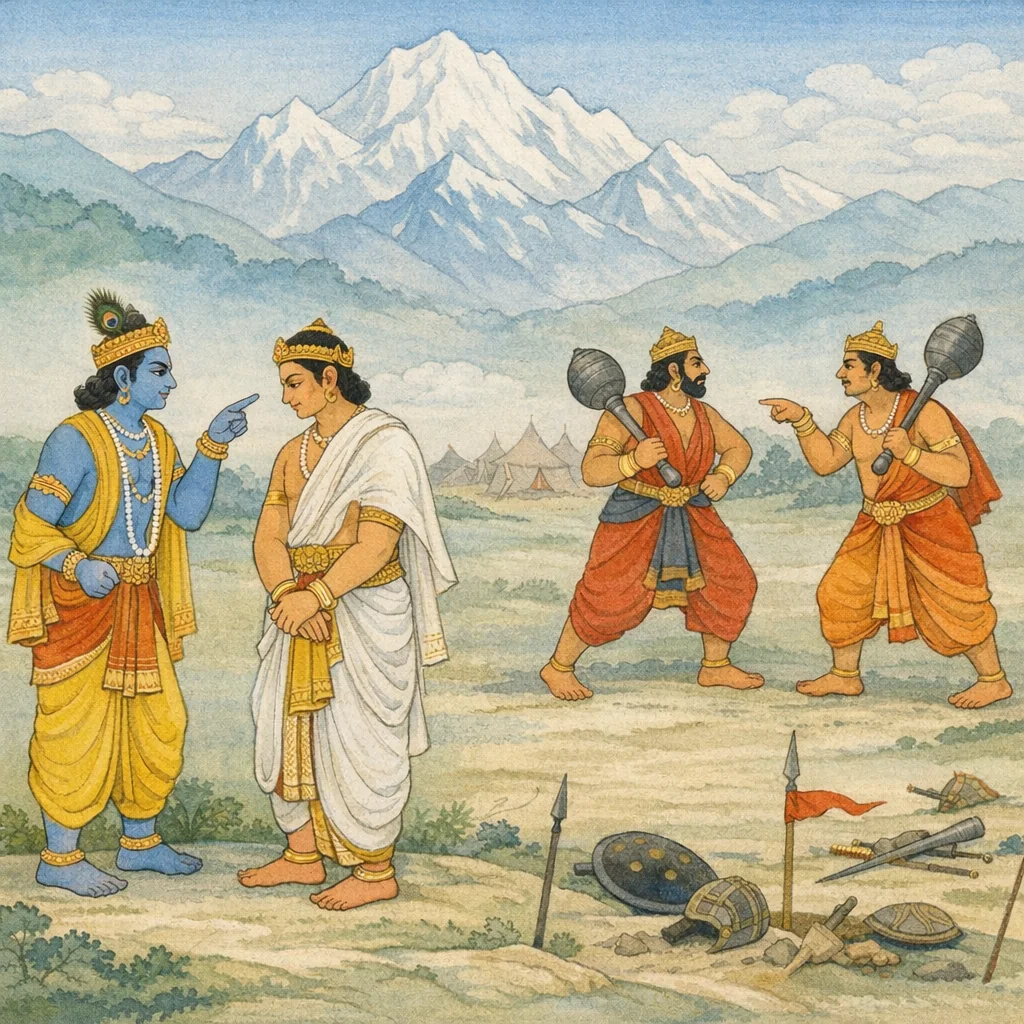
Saṃjaya reports that, amid a severe ongoing confrontation, the principal Pāṇḍava leaders are seated as observers. Balarāma (Tāladhvaja, Halāyudha, Rauhiṇeya), hearing that his two disciples’ confrontation is at hand, arrives to witness their gadā-competition. The assembled rulers greet him with honor and invite him to observe the display of skill. Balarāma states he had departed on pilgrimage forty-two days earlier under Puṣya and has returned under Śravaṇa, explicitly desiring to see the disciples’ mace duel. Yudhiṣṭhira embraces him and inquires after his welfare; Kṛṣṇa Vāsudeva and Arjuna (both addressed as ‘Kṛṣṇa’ in the verse tradition) greet him with formal respect, as do the Mādrī-sons, Draupadī’s five sons, and Bhīma. Balarāma reciprocates courtesies, embraces Janārdana (Kṛṣṇa) and Sātyaki affectionately, and is honored by them as a guru. At Yudhiṣṭhira’s request, he sits prominently among the chiefs, described with luminous imagery, as the duel’s tumultuous onset becomes imminent.
Chapter Arc: संजय धृतराष्ट्र को रणभूमि का वृत्त सुनाते हैं—गदाहस्त दुर्योधन युद्ध के लिए उपस्थित है, और पाण्डव उसे कैलास-शिखर-सा अडिग देखते हैं। → युधिष्ठिर के मुख से एक असावधान, दुःसाहसपूर्ण वचन निकलता है—मानो दुर्योधन ‘हममें से किसी एक’ को मारकर राजा बन जाए। श्रीकृष्ण तुरंत उसे फटकारते हैं और बताते हैं कि ऐसे वचन से सेना का मनोबल टूटता है। साथ ही वे भीमसेन की सामर्थ्य का स्मरण कराते हैं—गदा-युद्ध में दुर्योधन को जीत पाना असाधारण है, पर भीम ही वह पुरुष है जो उसे परास्त कर सकता है। → भीम और दुर्योधन के बीच वाग्युद्ध तीखा हो उठता है—प्रतिज्ञा, अपमान और प्रतिशोध की ज्वाला के बीच श्रीकृष्ण भीम को लक्ष्य-स्मरण कराते हैं: दुर्योधन का अंत निश्चित है, और उसकी जंघाएँ तोड़ने की प्रतिज्ञा पूरी होगी। → पाण्डव पक्ष का संकल्प स्थिर होता है—युधिष्ठिर का विचलन शान्त होता है, भीम को प्रशंसा और निर्देश दोनों मिलते हैं, और दुर्योधन की निर्भय, सिंह-सी स्थिति के बावजूद उसे ‘पापी’ कहकर उसके विनाश का विधान घोषित किया जाता है। → गदायुद्ध का निर्णायक क्षण निकट है—दुर्योधन अडोल खड़ा है और भीम प्रतिज्ञा-पूर्ति के लिए उद्यत; अब रणभूमि अगले प्रहार की प्रतीक्षा करती है।
Shlokas
Verse 1
#5-.2/+5 >> धन #* त्रयस्त्रिंशो5 ध्याय: श्रीकृष्णका युधिष्ठिरको फटकारना, भीमसेनकी प्रशंसा तथा भीम और दुर्योधनमें वाग्युद्ध संजय उवाच एवं दुर्योधने राजन् गर्जमाने मुहुर्मुहु: । युधिष्ठिरस्य संक्रुद्धों वासुदेवो5ब्रवीदिदम्,संजय कहते हैं--राजन्! जब यों कहकर दुर्योधन बारंबार गर्जना करने लगा, उस समय भगवान् श्रीकृष्ण अत्यन्त कुपित होकर युधिष्ठिरसे बोले--
Sañjaya said: O King, when Duryodhana, having spoken thus, kept roaring again and again, Vāsudeva (Śrī Kṛṣṇa), deeply angered on Yudhiṣṭhira’s behalf, addressed him with these words. The scene frames Kṛṣṇa’s ethical impatience with boastful aggression and his resolve to steady dharma amid the chaos of war.
Verse 2
यदि नाम हायं युद्धे वरयेत् त्वां युधिष्ठिर । अर्जुन नकुलं चैव सहदेवमथापि वा,'युधिष्ठिर! यदि यह दुर्योधन युद्धमें तुमको, अर्जुनको अथवा नकुल या सहदेवको ही युद्धके लिये वरण कर ले, तब क्या होगा?
Sañjaya said: “If, in this battle, Duryodhana were to choose you, O Yudhiṣṭhira—or Arjuna, or Nakula, or even Sahadeva—as his selected opponent for combat, what would follow then?”
Verse 3
किमिदं साहसं राजंस्त्वया व्याहृतमीदृशम् । एकमेव निहत्याजौ भव राजा कुरुष्विति,“राजन! आपने क्यों ऐसी दुःसाहस पूर्ण बात कह डाली कि “तुम हममेंसे एकको ही मारकर कौरवोंका राजा हो जाओ'
Sañjaya said: “O King, what is this rash and reckless utterance you have made? ‘Slay just one of us in battle and become king of the Kurus’—why would you speak such a daring, morally perilous proposal?”
Verse 4
न समर्थानहं मन्ये गदाहस्तस्य संयुगे | एतेन हि कृता योग्या वर्षाणीह त्रयोदश
Sañjaya said: “I do not consider anyone capable, in battle, of matching this mace‑wielder. For by him, here, deeds worthy of thirteen years have indeed been accomplished.”
Verse 5
कथं नाम भवेत् कार्यमस्माभिर्भरतर्षभ
Sañjaya said: “O bull among the Bharatas, how indeed should we proceed—what course of action ought to be undertaken by us?”
Verse 6
नान्यमस्यानुपश्यामि प्रतियोद्धारमाहवे
Sañjaya said: “I do not see anyone else for him—on this battlefield—who can truly stand as a counter-champion in combat.”
Verse 7
तदिदं द्यूतमारब्धं पुनरेव यथा पुरा
Sañjaya said: “This very game of dice has been set in motion once again, just as it was before.” The line recalls the earlier, fateful gambling that shattered dharma and kinship, suggesting that the same destructive pattern—greed, deception, and moral blindness—is being repeated with renewed force.
Verse 8
बली भीम: समर्थश्न कृती राजा सुयोधन:
Sañjaya said: Mighty Bhīma was powerful and capable; and King Suyodhana (Duryodhana) was also a man of resolve and resource. In the war’s moral tension, the line underscores how strength and competence exist on both sides, even when their causes and choices differ.
Verse 9
बलवान् वा कृती वेति कृती राजन् विशिष्यते । “राजन! माना कि भीमसेन बलवान् और समर्थ हैं, परंतु राजा दुर्योधनने अभ्यास अधिक किया है। एक ओर बलवान हो और दूसरी ओर युद्धका अभ्यासी, तो उनमें युद्धका अभ्यास करनेवाला ही बड़ा माना जाता है ॥ ८ $ ।। सो<यं राजंस्त्वया शत्रु: समे पथि निवेशित:
Sañjaya said: “Whether one is merely strong or truly skilled, O King, it is the skilled who is regarded as superior. Thus, O King, the enemy has been placed by you on equal footing—on the same path—(as it were), by your own doing.”
Verse 10
को नु सर्वान् विनिर्जित्य शत्रूनेकेन वैरिणा,“भला कौन ऐसा होगा, जो सब शत्रुओंको जीत लेनेके बाद जब एक ही बाकी रह जाय और वह भी संकटमें पड़ा हो तो उसके साथ अपने हाथमें आये हुए राज्यको दाँवपर लगाकर हार जाय और इस प्रकार एकके साथ युद्ध करनेकी शर्त रखकर लड़ना पसंद करे?
Sañjaya said: “Who, after conquering all enemies, would then stake the kingdom already won and choose to fight on a wager with just one remaining foe—especially when that lone adversary is already in distress?”
Verse 11
कृच्छुप्राप्तेन च तथा हारयेद् राज्यमागतम् | पणित्वा चैकपाणेन रोचयेदेवमाहवम्,“भला कौन ऐसा होगा, जो सब शत्रुओंको जीत लेनेके बाद जब एक ही बाकी रह जाय और वह भी संकटमें पड़ा हो तो उसके साथ अपने हाथमें आये हुए राज्यको दाँवपर लगाकर हार जाय और इस प्रकार एकके साथ युद्ध करनेकी शर्त रखकर लड़ना पसंद करे?
Sañjaya said: “Who indeed would be so foolish as to stake and lose a kingdom already won, merely because a lone remaining enemy has fallen into distress? Who would choose to make such a wager—binding himself to fight on those terms against a single opponent—after having conquered all the rest?”
Verse 12
न हि पश्यामि तं लोके योछ्द्य दुर्योधन रणे । गदाहस्तं विजेतुं वै शक्त: स्यादमरो5पि हि,“मैं संसारमें किसी भी शूरवीरको, वह देवता ही क्यों न हो, ऐसा नहीं देखता, जो आज रणभूमिमें गदाधारी दुर्योधनको परास्त करनेमें समर्थ हो
Sanjaya said: “Indeed, I see no one in this world—no, not even an immortal—who could be capable of defeating Duryodhana in battle today, when he stands armed with his mace.”
Verse 13
न त्वं भीमो न नकुल: सहदेवो5थ फाल्गुन: । जेतुं न्यायेन शक्तो वै कृती राजा सुयोधन:,“आप, भीमसेन, नकुल, सहदेव अथवा अर्जुन-कोई भी न्यायपूर्वक युद्ध करके दुर्योधनपर विजय नहीं पा सकते; क्योंकि राजा सुयोधनने गदायुद्धका अधिक अभ्यास किया है
Sañjaya said: “Not you, Bhīma—nor Nakula, nor Sahadeva, nor even Phālguna (Arjuna)—is able to defeat King Suyodhana by fair and lawful combat; for Suyodhana is a master, having practiced the mace-fight more.”
Verse 14
स कथं वदसे शत्रुं युध्यस्व गदयेति हि । एकं च नो निहत्याजौ भव राजेति भारत,“भारत! जब ऐसी अवस्था है, तब आपने अपने शत्रुसे कैसे यह कह दिया कि “तुम गदाद्वारा युद्ध करो और हममेंसे किसी एकको मारकर राजा हो जाओ”
Sañjaya said: “O Bhārata, in such a situation, how could you say to your enemy, ‘Fight with the mace indeed; and after slaying one of us in battle, become king’?” The remark underscores the moral tension of war: even amid rightful combat, words that appear to invite or legitimize an enemy’s victory can seem to compromise prudence, loyalty, and the ethical boundaries of counsel.
Verse 15
वृकोदरं समासाद्य संशयो वै जये हि नः । न्यायतो युध्यमानानां कृती होष महाबल:,'भीमसेनपर युद्धका भार रखा जाय तो भी हमें विजय मिलनेमें संदेह है; क्योंकि न्यायपूर्वक युद्ध करनेवाले योद्धाओंमें महाबली सुयोधनका अभ्यास सबसे अधिक है
Sañjaya said: “If Vṛkodara (Bhīma) is confronted, our victory becomes doubtful indeed. For among warriors who fight according to justice and proper rules, the mighty (Duryodhana) is the most practiced and skilled.”
Verse 16
एकं वास्मान् निहत्य त्वं भव राजेति वै पुनः । नूनं न राज्यभागेषा पाण्डो: कुन्त्याश्व॒ संतति:
Sañjaya said: “Kill just one of us, and then become king again. Surely the lineage of Pāṇḍu and Kuntī is not destined to have any share in the kingdom.” The words carry the harsh ethic of battlefield politics: kingship is treated as a prize secured by eliminating rivals, while the Pāṇḍavas’ rightful claim is dismissed as though it were fated to be null.
Verse 17
भीमसेन उवाच मधुसूदन मा कार्षीविषादं यदुनन्दन
Bhīmasena said: “O slayer of Madhu, O joy of the Yadus—do not give way to despair.” In the midst of war’s strain, he urges Kṛṣṇa to remain steady, implying that righteous resolve and clear judgment must not be eclipsed by grief or dejection.
Verse 18
अहं सुयोधनं संख्ये हनिष्यामि न संशय:
Bhīmasena declares with unwavering resolve that on the battlefield he will kill Suyodhana (Duryodhana), leaving no room for doubt. The line conveys a warrior’s vow in the climactic moral reckoning of the war, where personal enmity and the demand for justice converge into a decisive commitment to end the conflict’s chief instigator.
Verse 19
अध्यर्धेन गुणेनेयं गदा गुरुतरी मम,मेरी यह गदा दुर्योधनकी डेढ़गुनी भारी है। ऐसी दुर्योधनकी गदा नहीं है, अतः माधव! आप व्यथित न हों। मैं समरांगणमें इस गदाद्वारा इससे भिड़नेका उत्साह रखता हूं
Bhima said: “By a measure of one-and-a-half in weight, this mace of mine is heavier. Duryodhana does not possess a mace like this; therefore, O Madhava, do not be distressed. On the battlefield I am resolved, with this mace, to engage him in combat.”
Verse 20
न तथा धार्तराष्ट्रस्य मा कार्षीमाधव व्यथाम् | अहमेनं हि गदया संयुगे 80 किक मुत्सहे,मेरी यह गदा दुर्योधनकी डेढ़गुनी भारी है। ऐसी दुर्योधनकी गदा नहीं है, अतः माधव! आप व्यथित न हों। मैं समरांगणमें इस गदाद्वारा इससे भिड़नेका उत्साह रखता हूं
Bhīmasena said: “Do not grieve so for Dhṛtarāṣṭra’s son, O Mādhava. For I have the resolve to meet him in battle with my mace.”
Verse 21
भवन्त: प्रेक्षका: सर्वे मम सन्तु जनार्दन । सामरानपि लोकांस्त्रीन् नानाशस्त्रधरान् युधि
Bhīmasena said: “O Janārdana, let all of you be my witnesses. Even if, in this battle, the three worlds together with the gods—armed with weapons of every kind—stand against me, (I shall not shrink from my resolve).”
Verse 22
योधयेयं रणे कृष्ण किमुताद्य सुयोधनम् । जनार्दन! आप सब लोग दर्शक बनकर मेरा युद्ध देखते रहें। श्रीकृष्ण! मैं रणक्षेत्रमें नाना प्रकारके अस्त्र-शस्त्र धारण करनेवाले देवताओंसहित तीनों लोकोंके साथ युद्ध कर सकता हूँ; फिर इस सुयोधनकी तो बात ही क्या है? ।। संजय उवाच तथा सम्भाषमाणं तु वासुदेवो वृकोदरम्
Sanjaya said: “O Krishna, I can fight in battle—what then of fighting Suyodhana today? O Janardana, you all may stand as witnesses and watch my combat. O Shri Krishna, I am capable of waging war even against the three worlds together with the gods who wield diverse weapons; how much more, then, against this Suyodhana?” Sanjaya continued: As Bhima spoke in this manner, Vasudeva (Krishna) …
Verse 23
त्वामाश्रित्य महाबाहो धर्मराजो युधिषछिर:
Sañjaya said: “Relying upon you, O mighty-armed one, King Yudhiṣṭhira—the upholder of dharma—(acts and stands firm).”
Verse 24
निहतारि: स्वकां दीप्तां श्रियं प्राप्तो न संशय: । त्वया विनिहता: सर्वे धृतराष्ट्रसुता रणे
Sañjaya said: “Having slain his foes, he has surely attained his own blazing glory—there is no doubt of it. For by you, in battle, all the sons of Dhṛtarāṣṭra have been brought down.”
Verse 25
“महाबाहो! इसमें संदेह नहीं कि धर्मराज युधिष्ठिरने तुम्हारा आश्रय लेकर ही शत्रुओंका संहार करके पुनः अपनी उज्ज्वल राज्यलक्ष्मीको प्राप्त कर लिया है। धृतराष्ट्रके सभी पुत्र तुम्हारे ही हाथसे युद्धमें मारे गये हैं ।। राजानो राजतपूुत्राश्न नागाश्न विनिपातितः । कलिज्जा मागधा: प्राच्या गान्धारा: कुरवस्तथा
Sañjaya said: “O mighty-armed one, there is no doubt of this: King Yudhiṣṭhira, taking refuge in you, has destroyed his enemies and regained the radiant fortune of his kingdom. All the sons of Dhṛtarāṣṭra have been slain in battle by your very hand. Kings and royal princes, and even the Nāga warriors, were struck down—so too the Kaliṅgas, the Māgadhas, the men of the eastern lands, the Gāndhāras, and the Kurus.”
Verse 26
हत्वा दुर्योधनं चापि प्रयच्छोर्वीं ससागराम्
Sañjaya said: “Having slain Duryodhana as well, (he) would then bestow the earth—together with its encircling seas.” The line frames victory not merely as personal triumph but as the power to dispose of sovereignty itself, raising the ethical question of whether kingship is to be seized for oneself or granted in accordance with rightful order.
Verse 27
त्वां च प्राप्प रणे पापो धार्तराष्ट्रो विनड्क्ष्यति
Sañjaya said: “And when he meets you in battle, that sinful son of Dhṛtarāṣṭra will be destroyed.”
Verse 28
यत्नेन तु सदा पार्थ योद्धव्यो धृतराष्ट्रज:
Sañjaya said: “O Pārtha, the son of Dhṛtarāṣṭra must always be fought with sustained effort and vigilance.”
Verse 29
ततस्तु सात्यकी राजन् पूजयामास पाण्डवम्,राजन्! तदनन्तर सात्यकिने पाण्डुपुत्र भीमसेनकी भूरि-भूरि प्रशंसा की। धर्मराज आदि पाण्डव तथा पांचाल सभीने भीमसेनके उस वचनका बड़ा आदर किया
Sañjaya said: Then, O King, Sātyaki honored the Pāṇḍava. After that, Sātyaki repeatedly praised Bhīmasena, the son of Pāṇḍu. Dharmarāja and the other Pāṇḍavas, along with all the Pāñcālas, received Bhīmasena’s words with great respect—affirming the value of courageous speech that upholds the cause of righteousness amid war.
Verse 30
पज्चाला: पाण्डवेयाश्व धर्मराजपुरोगमा: । तद् वचो भीमसेनस्य सर्व एवाभ्यपूजयन्,राजन्! तदनन्तर सात्यकिने पाण्डुपुत्र भीमसेनकी भूरि-भूरि प्रशंसा की। धर्मराज आदि पाण्डव तथा पांचाल सभीने भीमसेनके उस वचनका बड़ा आदर किया
Sañjaya said: The Pāñcālas and the sons of Pāṇḍu, led by King Yudhiṣṭhira, all honored and approved the words spoken by Bhīmasena, O King. In the midst of war-counsel, Bhīma’s speech is received as ethically weighty—affirmed by allies and elders alike—signaling unity of purpose under dharma-guided leadership.
Verse 31
ततो भीमबलो भीमो युधिष्ठिरमथाब्रवीत् । सृञ्जयै: सह तिष्ठन्तं तपनन््तमिव भास्करम्,तदनन्तर भयंकर बलशाली भीमसेनने सूंजयोंके साथ खड़े हुए तपते सूर्यके समान तेजस्वी युधिष्ठिस्से कहा--
Sañjaya said: Then Bhīma, mighty in strength, addressed Yudhiṣṭhira, who stood there with the Sṛñjayas, blazing like the scorching sun. The scene underscores how, amid the moral strain of war, Bhīma’s forceful resolve turns toward Yudhiṣṭhira—the dharmic center of the Pāṇḍava cause—for direction and affirmation.
Verse 32
अहमेतेन संगम्य संयुगे योद्धुमुत्सहे । न हि शक्तो रणे जेतुं मामेष पुरुषाधम:,'भैया! मैं रणभूमिमें इस दुर्योधनके साथ भिड़कर लड़नेका उत्साह रखता हूँ। यह नराधम मुझे युद्धमें परास्त नहीं कर सकता
Sañjaya said: “Having closed with him, I am eager to fight in the thick of battle. For this basest of men is not capable of defeating me in war.”
Verse 33
अद्य क्रोधं विमोक्ष्यामि निहितं हृदये भशम् । सुयोधने धार्तराष्ट्रे खाण्डवेडग्निमिवार्जुन:,“मेरे हृदयमें दीर्घकालसे जो अत्यन्त क्रोध संचित है, उसे आज मैं धृतराष्ट्रपुत्र दुर्योधनपर उसी प्रकार छोड़ूँगा, जैसे अर्जुनने खाण्डव वनमें अग्निदेवको छोड़ा था इति श्रीमहाभारते शल्यपर्वणि गदापर्वणि भीमसेनदुर्योधनसंवादे त्रयस्त्रिंशो 5 ध्याय: इस प्रकार श्रीमह्याभारत शल्यपर्वके अन्तर्गत गदापव॑रमें भीमसेन और दुर्योधनका संवादविषयक तैंतीसवाँ अध्याय पूरा हुआ
Sanjaya said: “Today I shall unleash the fierce anger, long stored like smouldering embers within my heart, upon Suyodhana, the son of Dhritarashtra—just as Arjuna once let loose the Fire-god in the Khāṇḍava forest.” In ethical tone, the verse frames wrath as something accumulated and restrained over time, now released in a decisive act of retribution within the war’s moral crisis—invoking the Khāṇḍava episode as a precedent for an overwhelming, consuming force being deliberately set free.
Verse 34
शल्यमपद्योद्धरिष्यामि तव पाण्डव हृच्छयम् | निहत्य गदया पापमद्य राजन् सुखी भव,'पाण्डुनन्दन! नरेश! आज मैं गदाद्वारा पापी दुर्योधनका वध करके आपके हृदयका काँटा निकाल दूँगा; अत: आप सुखी होइये
Sañjaya said: “O Pāṇḍava, I shall remove the thorn lodged in your heart. Having slain the sinful Duryodhana today with the mace, O king, be at peace and find relief.”
Verse 35
अद्य कीर्तिमयीं मालां प्रतिमोक्ष्ये तवानघ । प्राणाम् श्रियं च राज्यं च मोक्ष्यतेडद्य सुयोधन:,“अनघ! आज आपके गलेमें मैं कीर्तिमयी माला पहनाऊँगा तथा आज यह दुर्योधन अपने राज्यलक्ष्मी और प्राणोंका परित्याग करेगा
Sañjaya said: “O sinless one, today I shall place upon your neck a garland made of fame. For today Suyodhana (Duryodhana) will relinquish his life-breath, his royal fortune, and his kingdom.” The line frames the day’s combat as a decisive moral turning-point: outward victory is recast as lasting renown, while unjust power is shown to end in inevitable forfeiture.
Verse 36
राजा च धृतराष्ट्रोड्द्य श्रुत्वा पुत्र मया हतम् | स्मरिष्यत्यशुभं कर्म यत् तच्छकुनिबुद्धिजम्,“आज मेरे हाथसे पुत्रको मारा गया सुनकर राजा धृतराष्ट्र शकुनिकी सलाहसे किये हुए अपने अशुभ कर्मोको याद करेंगे”
Sanjaya said: “When King Dhritarashtra hears today that his son has been slain by me, he will recall the inauspicious deeds he committed—deeds born of Shakuni’s counsel.”
Verse 37
इत्युक्त्वा भरतश्रेष्ठो गदामुद्यम्य वीर्यवान् । उदतिष्ठत युद्धाय शक्रो वृत्रमिवाह्दयन्,ऐसा कहकर भरतवंशी वीरोंमें श्रेष्ठ पराक्रमी भीमसेन गदा उठाकर युद्धके लिये उठ खड़े हुए और जैसे इन्द्रने वृत्रासुरको ललकारा था, उसी प्रकार उन्होंने दुर्योधनका आह्वान किया
Sañjaya said: Having spoken thus, the mighty Bhīmasena—foremost among the Bharatas—lifted up his mace and rose to fight. He challenged Duryodhana, just as Indra once called out Vṛtra, signaling that the contest would be decided by valor and resolve on the battlefield.
Verse 38
तदाह्वानममृष्यन् वै तव पुत्रो$तिवीर्यवान् । प्रत्युपस्थित एवाशु मत्तो मत्तमिव द्विपम्,महाराज! उस समय आपका अत्यन्त पराक्रमी पुत्र दुर्योधन भीमसेनकी उस ललकारको न सह सका। वह तुरंत ही उनका सामना करनेके लिये उपस्थित हो गया, मानो एक मतवाला हाथी दूसरे मदोन्मत्त गजराजसे भिड़नेको उद्यत हो गया हो
Sañjaya said: Unable to endure that challenge, your son—of extraordinary prowess—quickly came forward to confront it, O King, like an intoxicated elephant rushing to meet another maddened lord of elephants. The verse underscores how wounded pride and the heat of battle can drive a warrior into immediate, forceful engagement, intensifying the cycle of violence.
Verse 39
गदाहस्तं तव सुतं युद्धाय समुपस्थितम् । ददृशु: पाण्डवा: सर्वे कैलासमिव शृज्धिणम्,हाथमें गदा लेकर युद्धके लिये उपस्थित हुए आपके पुत्रको समस्त पाण्डवोंने शृंगधारी कैलासपर्वतके समान देखा
Sañjaya said: All the Pāṇḍavas beheld your son standing ready for battle, mace in hand—looming like Mount Kailāsa crowned with peaks. The image underscores how martial power and resolve can appear awe-inspiring, even as it drives the conflict toward its fated, ethically weighty end.
Verse 40
तमेकाकिनमासाद्य धार्तराष्ट्र महाबलम् । वियूथमिव मातज्ूुं समहृष्यन्त पाण्डवा:,जैसे कोई मतवाला हाथी अपने यूथसे बिछुड़ गया हो, उसी प्रकार अकेले आये हुए आपके महाबली पुत्र दुर्योधनको पाकर समस्त पाण्डव हर्षसे खिल उठे
Sañjaya said: When the Pāṇḍavas came upon the mighty son of Dhṛtarāṣṭra standing alone, they were filled with joy—like hunters who, spotting a great elephant separated from its herd, feel sudden elation. In the moral atmosphere of the war, their gladness reflects the tactical advantage of isolating a formidable adversary, even as it underscores how the conflict has reduced kin to targets on a battlefield.
Verse 41
न सम्भ्रमो न च भयं न च ग्लानिर्न च व्यथा । आसीद् दुर्योधनस्यापि स्थित: सिंह इवाहवे,उस समय दुर्योधनके मनमें न घबराहट थी, न भय। न ग्लानि थी, न व्यथा। वह युद्धस्थलमें सिंहके समान निर्भय खड़ा था
Sañjaya said: In that moment, even Duryodhana felt neither agitation nor fear—neither remorse nor distress. Standing firm on the battlefield, he appeared like a lion, unshaken amid the clash of war.
Verse 42
समुद्यतगदं दृष्टवा कैलासमिव शृद्.िणम् । भीमसेनस्तदा राजन् दुर्योधनमथाब्रवीत्,राजन! शृंगंधारी कैलासपर्वतके समान गदा उठाये दुर्योधनको देखकर भीमसेनने उससे कहा--
Sañjaya said: O King, seeing Duryodhana with his mace raised—towering like Mount Kailāsa with its lofty peaks—Bhīmasena then addressed him. The moment frames the moral tension of the duel: strength and pride stand face to face, and the coming words and actions will test the bounds of righteous conduct amid war.
Verse 43
आयसे पुरुषे राजन् भीमसेनजिघांसया । “मैं नहीं मानता कि आपलोग युद्धमें गदाधारी दुर्योधनका सामना करनेमें समर्थ हैं। राजन्! इसने भीमसेनका वध करनेकी इच्छासे उनकी लोहेकी मूर्तिके साथ तेरह वर्षोतक गदायुद्धका अभ्यास किया है,राज्ञापि धृतराष्ट्रेण त्वया चास्मासु यत् कृतम् । समर तद् दुष्कृतं कर्म यद् भूतं वारणावते “दुर्योधन! तूने तथा राजा धृतराष्ट्रने भी हमलोगोंपर जो-जो अत्याचार किया था और वारणावत नगरमें जो कुछ हुआ था, उन सारे पापकर्मोंको याद कर ले
Sanjaya said: “O King, with the intent to slay Bhimasena, Duryodhana has practiced mace-fighting for thirteen years against an iron effigy. And, O Duryodhana, remember also the wrongs that were done to us—by King Dhritarashtra and by you—those cruel deeds committed in the past, including what happened at Varanavata. In this battle, those sins now stand before you as the consequences of your own actions.”
Verse 44
द्रौपदी च परिक्लिष्टा सभामध्ये रजस्वला । द्यूते यद् विजितो राजा शकुनेरबुद्धिनिश्चयात्,“दुरात्मन्! तूने भरी सभामें रजस्वला द्रौपदीको क्लेश पहुँचाया, शकुनिकी सलाह लेकर राजा युधिष्ठिरको कपटपूर्वक जूएमें हराया तथा निरपराध दुन्तीपुत्रोंपर दूसरे-दूसरे जो पाप एवं अत्याचार किये थे, उन सबका महान् अशुभ फल आज तू अपनी आँखों देख ले
Sañjaya said: “And Draupadī, afflicted and in her season, was tormented in the midst of the royal assembly; and the king (Yudhiṣṭhira) was defeated at dice through Śakuni’s wickedly calculated resolve. Behold today, with your own eyes, the grievous and inauspicious fruit of those wrongs—how you caused suffering to Draupadī in the full court, how you deceitfully overcame the king by Śakuni’s counsel, and how you committed further sins and outrages against the blameless sons of Pāṇḍu.”
Verse 45
यानि चान्यानि दुष्टात्मन् पापानि कृतवानसि । अनाग:सु च पार्थेषु तस्य पश्य महत् फलम्,“दुरात्मन्! तूने भरी सभामें रजस्वला द्रौपदीको क्लेश पहुँचाया, शकुनिकी सलाह लेकर राजा युधिष्ठिरको कपटपूर्वक जूएमें हराया तथा निरपराध दुन्तीपुत्रोंपर दूसरे-दूसरे जो पाप एवं अत्याचार किये थे, उन सबका महान् अशुभ फल आज तू अपनी आँखों देख ले
Sañjaya said: “O wicked-souled one, behold the great consequence of that—of the many other sins you have committed, and of the wrongs you inflicted upon the blameless sons of Pṛthā. See now, with your own eyes, the vast and bitter fruit of those deeds.”
Verse 46
त्वत्कृते निहत: शेते शरतल्पे महायशा: । गाज्नेयो भरतश्रेष्ठ: सर्वेषां न: पितामह:,“तेरे ही कारण हम सब लोगोंके पितामह महायशस्वी गंगानन्दन भरतश्रेष्ठ भीष्मजी आज शरशय्यापर पड़े हुए हैं
Sañjaya said: “Because of you, our illustrious grandsire Bhīṣma—the son of the Gaṅgā, the foremost of the Bharatas—lies slain upon a bed of arrows. He is the patriarch of us all.”
Verse 47
हतो द्रोणश्न॒ कर्णश्ष॒ हतः शल्य: प्रतापवान् । वैरस्य चादिकर्तासौ शकुनिर्निहतो रणे,“तेरी ही करतूतोंसे आचार्य द्रोण, कर्ण, प्रतापी शल्य तथा वैरका आदिस्रष्टा वह शकुनि >-ये सभी रणभूमिमें मारे गये हैं
Sañjaya said: Droṇa has been slain, and Karṇa too; the valiant Śalya has also fallen. And Śakuni—who was the prime instigator of this enmity—has been killed in battle. The report underscores the moral arc of the war: those who sustained adharma through deceit, pride, and partisan violence meet their end amid the very conflict they helped unleash.
Verse 48
भ्रातरस्ते हता: शूरा: पुत्राश्न सहसैनिका: । राजानश्व हता: शूरा: समरेष्वनिवर्तिन:,'तेरे भाई, शूरवीर पुत्र, सैनिक तथा युद्धमें पीठ न दिखानेवाले अन्य बहुत-से शौर्यसम्पन्न नरेश भी मृत्युके अधीन हो गये हैं
Sañjaya said: Your brothers have been slain—valiant men; and your sons too, along with their armies. Many warrior-kings as well, steadfast in battle and never turning back from the fight, have fallen under the power of death. The report underscores the moral gravity of war: courage and royal duty do not exempt anyone from mortality, and the fruits of violent conflict are irrevocable loss and grief.
Verse 49
एते चान्ये च निहता बहव: क्षत्रियर्षभा: । प्रातिकामी तथा पापो द्रौपद्या: क्लेशकृद्धतः,'ये तथा दूसरे बहुसंख्यक क्षत्रियशिरोमणि वीर मार डाले गये हैं। द्रौपदीको क्लेश पहुँचानेवाले पापी प्रातिकामीका भी वध हो चुका है
Sañjaya said: “These, and many other bull-like heroes among the Kṣatriyas, have been slain. And Prātikāmī too—sinful and notorious for causing suffering to Draupadī—has been killed.”
Verse 50
अवशिष्टस्त्वमेवैक: कुलघ्नो5धमपूरुष: । त्वामप्यद्य हनिष्यामि गदया नात्र संशय:,“अब इस वंशका नाश करनेवाला नराधम एकमात्र तू ही बच गया है। आज इस गदासे तुझे भी मार डालूगा; इसमें संशय नहीं है
Sanjaya said: “You alone remain—an ignoble man, a destroyer of your own lineage. Today I will strike you down as well with this mace; of that there is no doubt.” The line conveys the moral outrage of a survivor’s reckoning: the speaker frames the opponent not merely as an enemy in battle, but as one who has violated kinship and social order, making his death appear as a grim act of retributive justice within the war’s ethical collapse.
Verse 51
अद्य तेडहं रणे दर्प सर्व नाशयिता नृप । राज्याशां विपुलां राजन् पाण्डवेषु च दुष्कृतम्,“नरेश्वर! आज रणभूमिमें मैं तेरा सारा घमंड चूर्ण कर दूँगा। राजन! तेरे मनमें राज्य पानेकी जो बड़ी भारी लालसा है, उसका तथा पाण्डवोंपर तेरे द्वारा किये जानेवाले अत्याचारोंका भी अन्त कर डालूँगा'
Sañjaya said: “Today, O king, on the battlefield I shall crush all your pride. And, O ruler, I shall bring to an end your vast craving for sovereignty, as well as the wrongdoing you have committed against the Pāṇḍavas.”
Verse 52
दुर्योधन उवाच कि कत्थितेन बहुना युद्धयस्वाद्य मया सह । अद्य तेडहं विनेष्यामि युद्धश्रद्धां वकोदर,दुर्योधन बोला--वृकोदर! बहुत बढ़-बढ़कर बातें बनानेसे क्या लाभ? आज मेरे साथ भिड़ तो सही। मैं युद्धका तेरा सारा हौसला मिटा दूँगा
Duryodhana said: “What is the use of so much boasting? Fight with me today. Today, O Vṛkodara, I will destroy your confidence in battle.” In the heat of the duel, Duryodhana frames courage as mere bravado and seeks to break Bhīma’s resolve, revealing the ethical tension of war-speech: words used not for truth or reconciliation, but to provoke and unnerve an opponent.
Verse 53
साहसं कृतवांस्त्वं तु हानुक्रोशान्नपोत्तम । 'भरतभूषण! अब हमलोग अपना कार्य कैसे सिद्ध कर सकते हैं? नृपश्रेष्ठी आपने दयावश यह दु:साहसपूर्ण कार्य कर डाला है,कि न पश्यसि मां पाप गदायुद्धे व्यवस्थितम् । हिमवच्छिखराकारां प्रगृह् महतीं गदाम् पापी! क्या तू देखता नहीं कि मैं हिमालयके शिखरकी भाँति विशाल गदा हाथमें लेकर युद्धके लिये खड़ा हूँ
Sanjaya said: “O best of kings, you have acted rashly, out of misplaced pity. How are we now to accomplish our purpose? Do you not see me, you sinner, standing ready for the mace-fight—holding a massive mace, towering like a peak of the Himalaya?”
Verse 54
गदिनं कोड्द्य मां पाप हन्तुमुत्सहते रिपु: । न्यायतो युद्धयमानश्न देवेष्वपि पुरन्दर:,ओ पापी! आज कौन ऐसा शत्रु है, जो मेरे हाथमें गदा रहते हुए भी मुझे मार सके। न्यायपूर्वक युद्ध करते हुए देवताओंके राजा इन्द्र भी मुझे परास्त नहीं कर सकते
Duryodhana said: “O wretch! Who among my enemies today would dare to kill me while I hold the mace? Fighting in a ‘proper’ and rule-bound manner, even Purandara (Indra), king of the gods, could not defeat me.”
Verse 55
मा वृथा गर्ज कौन्तेय शारदा भ्रमिवाजलम् | दर्शयस्व बल॑ युद्धे यावत् तत् तेडद्य विद्यते,कुन्तीपुत्र! शरद-ऋतुके निर्जल मेघकी भाँति व्यर्थ गर्जना न कर। आज तेरे पास जितना बल हो, वह सब युद्धमें दिखा
Duryodhana said: “Do not roar in vain, O son of Kuntī—like a cloud in the autumn season that thunders while carrying no rain. Display in battle today whatever strength still remains in you.”
Verse 56
तस्य तदू वचन श्रुत्वा पाण्डवा: सहसृज्जया: । सर्वे सम्पूजयामासुस्तद्वव्ो विजिगीषव:,दुर्योधनका यह वचन सुनकर विजयकी इच्छा रखनेवाले समस्त पाण्डवों और सूंजयोंने भी उसकी बड़ी सराहना की
Hearing those words of his, the Pāṇḍavas together with the Sṛñjayas—all intent on victory—unanimously honored and praised that statement, acknowledging its force and purpose within the moral tension of the war.
Verse 57
उन्मत्तमिव मातज्ुं तलशब्देन मानवा: । भूय: संहर्षयामासू राजन् दुर्योधनं नृपम्,राजन! जैसे मतवाले हाथीको मनुष्य ताली बजाकर कुपित कर देते हैं, उसी प्रकार उन्होंने बारंबार ताल ठोककर राजा दुर्योधनके युद्धविषयक हर्ष और उत्साहको बढ़ाया
O King, just as people provoke a musth elephant by clapping loudly, so they repeatedly struck their palms and, by that din, further inflamed King Duryodhana’s martial exhilaration and eagerness for battle—an image that underscores how public acclaim can feed reckless pride at the edge of dharma’s limits.
Verse 58
बृंहन्ति कुञ्जरास्तत्र हया ह्रेषन्ति चासकृत् । शस्त्राणि सम्प्रदीप्यन्ते पाण्डवानां जयैषिणाम्,उस समय वहाँ विजयाभिलाषी पाण्डवोंके हाथी बारंबार चिग्घाड़ने और घोड़े हिनहिनाने लगे। साथ ही उनके अस्त्र-शस्त्र दीप्तिसे प्रकाशित हो उठे
Duryodhana said: “There, the elephants of the victory-seeking Pāṇḍavas began to trumpet loudly, and their horses neighed again and again. At the same time, their weapons flared with brilliance—an ominous sign of renewed martial resolve as the battle’s moral and strategic stakes tightened.”
Verse 63
ऋते वृकोदरात् पार्थात् स च नातिकृतश्रम: । “मैं कुन्तीपुत्र भीमसेनके सिवा, दूसरे किसीको ऐसा नहीं देखता, जो गदायुद्धमें दुर्योधनका सामना कर सके, परंतु भीमसेनने भी अधिक परिश्रम नहीं किया है
Sañjaya said: “Except for Vṛkodara Bhīmasena, the son of Pṛthā (Kuntī), I see no one who can truly stand against Duryodhana in a mace-duel. And even Bhīma has not yet been greatly taxed by exertion.”
Verse 73
विषमं शकुनेश्वैव तव चैव विशाम्पते । “इस समय आपने पहलेके समान ही पुनः यह जूएका खेल आरम्भ कर दिया है। प्रजानाथ! आपका यह जूआ शकुनिके जूएसे कहीं अधिक भयंकर है
Sañjaya said: “O lord of the people, the game you are playing now is perilous—more ruinous even than Śakuni’s gambling. As before, you have begun again the same destructive ‘dice-play,’ inviting disaster upon your realm and your own house.”
Verse 96
न्यस्तश्नात्मा सुविषमे कृच्छमापादिता वयम् । “अतः महाराज! आपने अपने शत्रुको समान मार्गपर ला दिया है। अपने-आपको तो भारी संकटमें फँसाया ही है, हमलोगोंको भी भारी कठिनाईमें डाल दिया है
Sanjaya said: “With our strength and composure laid down, we have been driven into a most perilous distress. Therefore, O great king, you have brought your enemy onto an equal footing. You have not only plunged yourself into a grave crisis, but have also cast all of us into severe difficulty.”
Verse 163
अत्यन्तवनवासाय सृष्टा भैक्ष्याय वा पुन: । 'फिर भी आपने बारंबार कहा है कि “तुम हमलोगोंमेंसे एकको भी मारकर राजा हो जाओ।/ निश्चय ही राजा पाण्डु और कुन्तीदेवीकी संतान राज्य भोगनेकी अधिकारिणी नहीं है। विधाताने इसे अनन्त कालतक वनवास करने अथवा भीख माँगनेके लिये ही पैदा किया है!
Sañjaya said: “They were created only for perpetual life in the forest—or else again for living by alms.” The line conveys a harsh, contemptuous claim used to deny the Pāṇḍavas any rightful share in kingship, framing their destiny as exile and deprivation rather than sovereignty.
Verse 176
अद्य पारं गमिष्यामि वैरस्य भृशदुर्गमम् । यह सुनकर भीमसेन बोले--मधुसूदन! आप विषाद न करें। यदुनन्दन! मैं आज वैरकी उस अन्तिम सीमापर पहुँच जाऊँगा, जहाँ जाना दूसरोंके लिये अत्यन्त कठिन है
Bhīmasena declares that today he will cross the fiercely difficult far shore of enmity—meaning he will bring the long-standing feud to its decisive end, undertaking what others would find nearly impossible. In the ethical frame of the war, his vow signals unwavering resolve to complete a duty-bound task and to end a destructive hostility through final action.
Verse 183
विजयो वै ध्रुव: कृष्ण धर्मराजस्य दृश्यते । श्रीकृष्ण! इसमें तनिक भी संशय नहीं है कि मैं युद्धमें सुयोधनको मार डालूँगा। मुझे तो धर्मराजकी निश्चय ही विजय दिखायी देती है
Bhīma said: “O Kṛṣṇa, the victory of Dharmarāja appears certain. There is not the slightest doubt in me that, in this war, I shall strike down Suyodhana. To me, Dharmarāja’s triumph is clearly assured.”
Verse 223
हृष्ट: सम्पूजयामास वचन चेदमब्रवीत् | संजय कहते हैं--महाराज! भीमसेनने जब ऐसी बात कही, तब भगवान् श्रीकृष्ण बहुत प्रसन्न होकर उनकी प्रशंसा करने लगे और इस प्रकार बोले--
Sanjaya said: Delighted, he warmly honored Bhimasena and then spoke these words. The scene underscores how righteous resolve and courageous speech, offered in the service of a just cause, is acknowledged and encouraged by Krishna, who strengthens the moral spirit of the warriors amid the harsh demands of war.
Verse 256
त्वामासाद्य महायुद्धे निहता: पाण्डुनन्दन । “तुमने कितने ही राजाओं, राजकुमारों और गजराजोंको मार गिराया है। पाण्डुनन्दन! कलिंग, मगध, प्राच्य, गान्धार और कुरुदेशके योद्धा भी इस महायुद्धमें तुम्हारे सामने आकर कालके गालमें चले गये हैं
Sañjaya said: “O son of Pāṇḍu, in this great war, many met their death upon coming face to face with you. You have struck down numerous kings, princes, and lordly elephants; and warriors of Kaliṅga, Magadha, the Prācyas, Gāndhāra, and the Kuru land too, confronting you in battle, have gone into the very jaws of Death.”
Verse 283
कृती च बलवांश्वैव युद्धशौण्डश्न नित्यदा । 'किंतु पार्थ! तुम्हें दुर्योधनके साथ सदा प्रयत्नपूर्वक युद्ध करना चाहिये; क्योंकि वह अभ्यासकुशल, बलवान् और युद्धकी कलामें निरन्तर चतुर है'
Sanjaya said: “He is capable and strong, and ever a seasoned devotee of battle. Therefore, O Partha, you must always fight Duryodhana with sustained effort; for he is trained by practice, powerful, and continually skilled in the arts of war.”
Verse 2636
धर्मराजाय कौन्तेय यथा विष्णु: शचीपते: । “कुन्तीकुमार! जैसे भगवान् विष्णुने शचीपति इन्द्रको त्रिलोकीका राज्य प्रदान किया था, उसी प्रकार तुम भी दुर्योधनका वध करके समुद्रोंसहित यह सारी पृथ्वी धर्मराज युधिष्ठिरको समर्पित कर दो
Sañjaya said: “O son of Kuntī, just as Lord Viṣṇu once granted Śacī’s lord, Indra, sovereignty over the three worlds, so you too—having slain Duryodhana—should hand over this entire earth, together with its encircling seas, to Dharmarāja Yudhiṣṭhira.”
Verse 2736
त्वमस्य सक्थिनी भड्वक्त्वा प्रतिज्ञां पालयिष्यसि । “अवश्य ही रणभूमिमें तुमसे टक्कर लेकर पापी दुर्योधन नष्ट हो जायगा और तुम उसकी दोनों जाँघें तोड़कर अपनी प्रतिज्ञाका पालन करोगे
Sañjaya said: “You will surely fulfill your vow by breaking his thighs. For on the battlefield the sinful Duryodhana, once he engages you in combat, will certainly be destroyed; and you, by shattering both his thighs, will keep your solemn promise.”
Frequently Asked Questions
A guru arrives to witness disciples in a terminal confrontation: the tension lies between impartial evaluation of technique/propriety and the emotional weight of mentorship when pupils stand on opposing sides.
Even under extreme political stress, orderly conduct—greeting elders, reciprocating honor, and observing protocol—functions as a form of governance that preserves legitimacy and collective restraint.
No explicit phalaśruti appears in the provided verses; the meta-significance is conveyed narratively through framing (Saṃjaya’s report) and symbolic imagery of Balarāma’s central, luminous seating before the engagement.