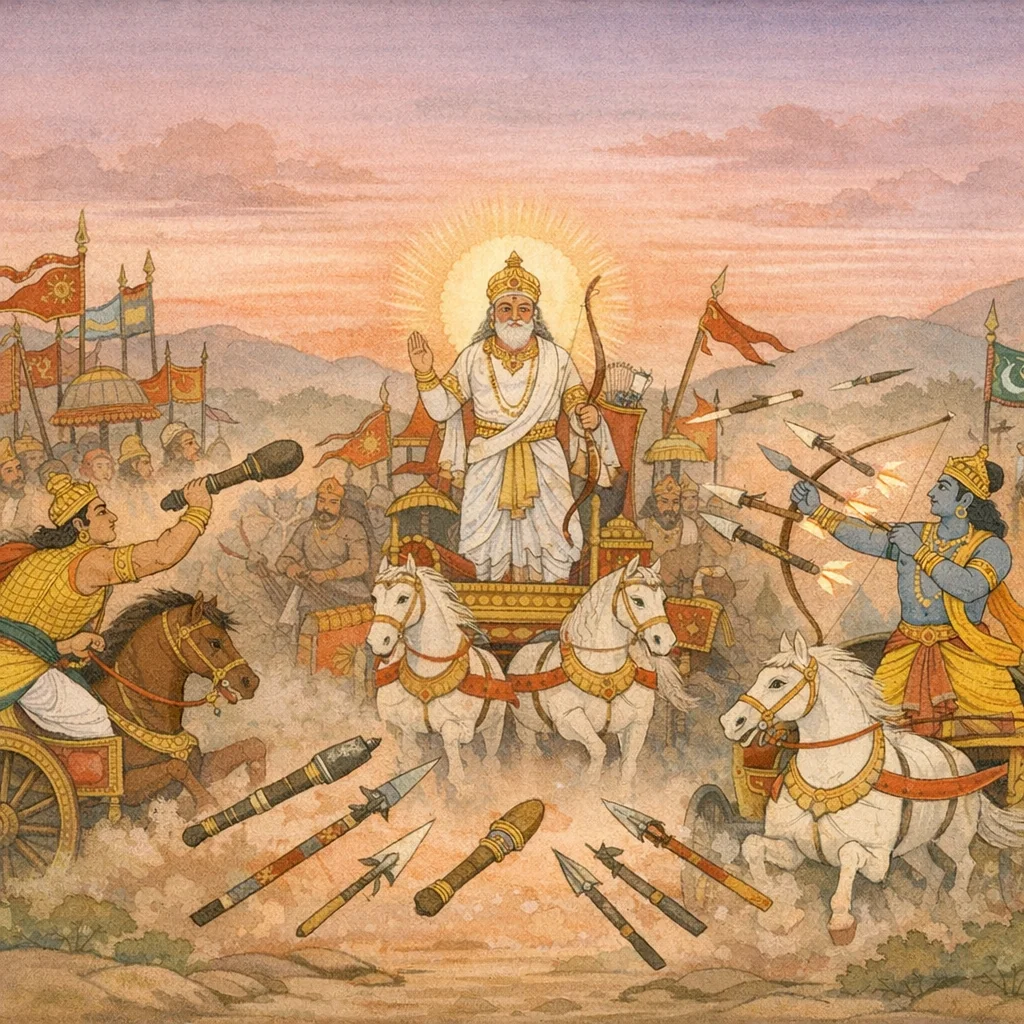
Adhyaya 188
Chapter Arc: अरुणोदय के रक्तिम प्रकाश में रणभूमि जागती है; उसी प्रभात में पाण्डव-पक्ष के वीर द्रोणाचार्य पर टूट पड़ने का संकल्प करते हैं। → द्रोण की दीप्ति और अस्त्र-प्रभुत्व देखकर शत्रुसेना थर्राती है, फिर भी विराट, द्रुपद, केकय, चेदि, मत्स्य और पांचाल के रथी एकत्र होकर आक्रमण करते हैं। द्रोण की क्रूर गति और युद्ध-कौशल देखकर धृष्टद्युम्न क्रोध-दुःख से भर उठता है और रथियों के बीच द्रोण के प्रति शाप/प्रतिज्ञा-सा कठोर वचन करता है। → अस्त्रों की घनघोर वर्षा में अर्जुन श्रेष्ठ अस्त्रवेत्ता की भाँति विरोधी अस्त्रों को काटता-नष्ट करता है और बाण-वृष्टि से शत्रुओं को ढक देता है; रथ टूटते हैं, रथी रथहीन होकर हाथापाई तक उतर आते हैं—केश, कवच और भुजाएँ पकड़कर जूझते हैं। विराट द्रोण-वध की आकांक्षा से तोमर और बाणों की बौछार करता है; द्रोण पर क्रुद्ध नरेश भी शर-वर्षा करते हैं। → द्रोण अपने तेज से रण को प्रकाशित करता हुआ पाण्डव-वीरों के संयुक्त दबाव को सहता और प्रत्युत्तर देता है; आक्रमण तीव्र होकर भी निर्णायक वध में परिणत नहीं होता, और युद्ध की धारा अगले संघर्ष की ओर बहती रहती है। → द्रोण के विरुद्ध विराट-द्रुपद आदि का आवेश चरम पर है और धृष्टद्युम्न का संकल्प कठोर हो चुका है—अगले अध्याय में यह संयुक्त आक्रमण किसका रथ गिराएगा, किसका धैर्य तोड़ेगा?
Shlokas
Verse 1
(दाक्षिणात्य अधिक पाठका ई श्लोक मिलाकर कुल ३७३६ “लोक हैं।) #स्न मान () अमन षडशीरत्याधिकशततमोब< ध्याय: पाण्डववीरोंका द्रोणाचार्यपर आक्रमण, द्रुपदके पौत्रों तथा ट्रुपद एवं विराट आदिका वध, धृष्टद्युम्नकी प्रतिज्ञा और दोनों दलोंमें घमासान युद्ध संजय उवाच त्रिभागमात्रशेषायां रात्र्यां युद्धमवर्तत । कुरूणां पाण्डवानां च संहृष्टानां विशाम्पते,संजय कहते हैं--प्रजानाथ! उस समय जब रात्रिके पंद्रह मुहूर्तोंमेंसे तीन मुहूर्त ही शेष रह गये थे, हर्ष तथा उत्साहमें भरे हुए कौरवों तथा पाण्डवोंका युद्ध आरम्भ हुआ
Sañjaya said: O lord of the people, when only a third of the night remained, the battle surged on—between the Kurus and the Pāṇḍavas, both sides exhilarated and fired with martial ardor. The verse underscores how, even as the night wanes, excitement and momentum can drive warriors deeper into violence, revealing the war’s self-propelling force beyond sober restraint.
Verse 2
अथ चन्द्रप्रभां मुष्णन्नादित्यस्य पुर:सर: । अरुणो< भ्युदयांचक्रे ताम्रीकुर्वन्निवाम्बरम्,तदनन्तर सूर्यके आगे चलनेवाले अरुणका उदय हुआ, जो चन्द्रमाकी प्रभाको छीनते हुए पूर्व दिशाके आकाशमें लालिमा-सी फैला रहे थे
Sañjaya said: Then Aruṇa, the Sun’s forerunner, rose—stealing away the moon’s radiance and, as it were, tinting the eastern sky with a copper-red glow. The coming of dawn signals the inexorable return of battle and duty, as time itself drives the warriors onward regardless of personal grief or hesitation.
Verse 3
प्राच्यां देशि सहस्रांशोररुणेनारुणीकृतम् । तपनीयं यथा चक्र भ्राजते रविमण्डलम्,प्राचीमें अरुणके द्वारा अरुण किया हुआ सूर्यदेवका मण्डल सुवर्णमय चक्रके समान सुशोभित होने लगा
Sañjaya said: In the eastern quarter, the sun—of a thousand rays—had its orb reddened by Aruṇa; and the solar disc began to shine like a wheel of refined gold. The image marks the turning of time toward another day of battle, suggesting that even amid human violence the cosmic order proceeds steadily and impartially.
Verse 4
ततो रथाश्चांश्व मनुष्ययाना- न्युत्सृज्य सर्वे कुरुपाण्डुयो धा: । दिवाकरस्याभिमुखं जपन्त: संध्यागता: प्राज्जलयो बभूवु:,तब समस्त कौरव-पाण्डव-सैनिक रथ, घोड़े तथा पालकी आदि सवारियोंको छोड़कर संध्या-वन्दनमें तत्पर हो सूर्यके सम्मुख हाथ जोड़कर वेदमन्त्रका जप करते हुए खड़े हो गये
Sañjaya said: Then all the Kurus and the Pāṇḍavas, setting aside their chariots and other conveyances drawn by horses or borne by men, turned to the evening rite. Facing the Sun, they stood with joined palms, reciting Vedic mantras—momentarily suspending the violence of war in deference to sacred duty.
Verse 5
ततो द्वैधीकृते सैन्ये द्रोण: सोमकपाण्डवान् | अभ्यद्रवत् सपाज्चालान् दुर्योधनपुरोगम:,तदनन्तर सेनाके दो भागोंमें विभक्त हो जानेपर द्रोणाचार्यने दुर्योधनके आगे होकर सोमकों, पाण्डवों तथा पांचालोंपर धावा किया
Sañjaya said: Then, when the army had been split into two divisions, Droṇa—advancing with Duryodhana at the fore—charged upon the Somakas, the Pāṇḍavas, and the Pāñcālas. The moment marks a deliberate escalation: the commander’s tactical decision to break and strike the opposing coalition intensifies the moral tension of the war, where prowess and strategy press against the claims of righteousness and restraint.
Verse 6
द्वैधीकृतान् कुरून् दृष्टवा माधवोडर्जुनमब्रवीत् । सपत्नान् सव्यतः कृत्वा अपसव्यमिमं कुरु,कौरव-सेनाको दो भागोंमें विभक्त देख भगवान् श्रीकृष्णने अर्जुनसे कहा--'पार्थ! तुम अन्य शत्रुओंको बायें करके इन द्रोणाचार्यको दायें करो (और इनके बीचसे होकर आगे बढ़ चलो)'
Sañjaya said: Seeing the Kuru forces split into two divisions, Mādhava (Kṛṣṇa) spoke to Arjuna: “Having kept the rival warriors to your left, place this one to your right—move in the reverse (counterclockwise) direction.” In the ethical pressure of battle, Kṛṣṇa gives a precise tactical instruction meant to cut through the enemy formation and reach the key threat, emphasizing disciplined action and clarity of purpose amid chaos.
Verse 7
स माधवमनुज्ञाय कुरुष्वेति धनंजय: । द्रोणकर्णो महेष्वासौ सव्यत: पर्यवर्तत,“अच्छा, ऐसा ही कीजिये" भगवान् श्रीकृष्णको यह अनुमति दे अर्जुन महाधनुर्धर द्रोणाचार्य और कर्णके बायेंसे होकर निकल गये
Sañjaya said: Having obtained Mādhava’s consent—“So be it; do it”—Dhanañjaya (Arjuna) maneuvered his chariot, passing to the left of the two great bowmen, Droṇa and Karṇa. The moment underscores disciplined obedience to rightful guidance amid battle, and the strategic restraint of acting only after due assent.
Verse 8
अभिप्रायं तु कृष्णस्य ज्ञात्वा परपुरंजय: । आजिशीर्षगतं पार्थ भीमसेनो5 भ्युवाच ह,श्रीकृष्णके इस अभिप्रायको जानकर शत्रुनगरीपर विजय पानेवाले भीमसेनने युद्धके मुहानेपर पहुँचे हुए अर्जुनसे इस प्रकार कहा
Sañjaya said: Having understood Kṛṣṇa’s intention, Bhīmasena—conqueror of enemy strongholds—addressed Pārtha (Arjuna), who had come to the very forefront of battle. The moment frames Bhīma’s speech as guided by insight into Kṛṣṇa’s strategic and moral purpose, urging action aligned with the righteous aim of the war rather than mere personal anger.
Verse 9
भीमसेन उवाच अर्जुनार्जुन बीभत्सो शृणुष्वैतद् वचो मम । यदर्थ क्षत्रिया सूते तस्थ कालोडयमागत:,भीमसेन बोले--अर्जुन! अर्जुन! बीभत्सो! मेरी यह बात सुनो। क्षत्राणी माता जिसके लिये बेटा पैदा करती है, उसे कर दिखानेका यह अवसर आ गया है
Bhīmasena said: “Arjuna—Arjuna—O Bībhatsu, listen to these words of mine. The time has now arrived to accomplish that very deed for which a Kshatriya mother bears a son—this decisive hour of warrior-duty is upon us.”
Verse 10
अम्मिंक्षेदागते काले श्रेयो न प्रतिपत्स्यसे । असम्भावितरूपस्त्वं सुनृशंसं करिष्यसि
When the decisive moment arrives, you will not choose what is truly beneficial and right. With a nature that does not rise to noble expectation, you will commit a cruel and pitiless act.
Verse 11
यदि इस अवसरके आनेपर भी तुम अपने पक्षका कल्याण-साधन नहीं करोगे तो तुमसे जिस शौर्य और पराक्रमकी सम्भावना की जाती है, उसके विपरीत तुम्हें पराक्रमशून्य समझा जायगा और उस दशामें मानो तुम हमलोगोंपर अत्यन्त क्रूरतापूर्ण बर्ताव करनेवाले सिद्ध होओगे ।। सत्यश्रीधर्मयशसां वीर्येणानृण्यमाप्रुहि । भिन्ध्यनीकं युधां श्रेष्ठ अपसव्यमिमान् कुरु
Bhima urges the foremost of warriors to act decisively: “By your valor, repay your debt to truth, prosperity, dharma, and fame. Break the enemy’s battle-array, O best among fighters, and drive these men into disorder and retreat.” The appeal frames courage as an ethical obligation—heroic action is presented not as mere aggression, but as the means to uphold dharma and preserve honor in a crisis.
Verse 12
योद्धाओंमें श्रेष्ठ वीर! तुम अपने पराक्रमद्वारा सत्य, लक्ष्मी, धर्म और यशका ऋण उतार दो। इन शत्रुओंको दाहिने करो और स्वयं बायें रहकर शत्रुसेनाको चीर डालो ।। संजय उवाच स सव्यसाची भीमेन चोदित: केशवेन च । कर्णद्रोणावतिक्रम्य समन्तात् पर्यवारयत्,संजय कहते हैं--राजन्! भगवान् श्रीकृष्ण और भीमसेनसे इस प्रकार प्रेरित होकर सव्यसाची अर्जुनने कर्ण और द्रोणको लाँधकर शत्रुसेनापर चारों ओरसे घेरा डाल दिया
Sanjaya said: O King, thus urged on by Bhimasena and by Keshava (Krishna), Arjuna—renowned as Savyasachi—overleapt Karna and Drona and then closed in on the enemy host from every side, hemming it in. The moment underscores the warrior’s duty to act decisively in battle when guided by righteous counsel and loyal comrades, turning personal prowess into service of dharma and collective purpose.
Verse 13
तमाजिशीर्षमायान्तं दहन्तं क्षत्रियर्ष भान् । पराक्रान्तं पराक्रम्य तत: क्षत्रियपुड़वा:
Sañjaya said: Seeing him advancing to the very forefront of the battle, blazing like a consuming fire among the best of kṣatriyas, the foremost warriors then, mustering their own valor, surged forward to meet and counter him. The scene underscores how, in war, prowess provokes prowess—yet the ethical weight of such “burning” heroism remains bound to the larger question of righteous conduct (dharma) amid destruction.
Verse 14
नाशवनुवन् वारयितु वर्धभानमिवानलम् | अर्जुन क्षत्रियशिरोमणि वीरोंको दग्ध करते हुए युद्धके मुहानेपर आ रहे थे। उस समय वे क्षत्रियप्रवर योद्धा जलती आगके समान बढ़नेवाले पराक्रमी अर्जुनको पराक्रम करके भी आगे बढ़नेसे रोक न सके || १३ ह || अथ दुर्योधन: कर्ण: शकुनिश्चापि सौबल:
Sañjaya said: They were unable to restrain Arjuna—hero and crest-jewel among kṣatriyas—who advanced to the very mouth of battle, blazing like a growing fire. Even after exerting their valor, those foremost warriors could not check his onward surge.
Verse 15
तेषामस्त्राणि सर्वेषामुत्तमास्त्रविदां वर:
Sañjaya said: “Among all of them, he was the foremost knower of the highest weapons; and their missiles, guided by such mastery, were of the most formidable kind.”
Verse 16
अस्त्रैरस्त्राणि संवार्य लघुहस्तो जितेन्द्रिय:
Sañjaya said: Countering weapon with weapon, he fought with swift hands and disciplined senses—showing controlled skill amid the violence of battle.
Verse 17
उद्धूता रजसो वृष्टि: शरवृष्टिस्तथैव च
Sañjaya said: A storm of dust was raised up, and likewise there was a rain of arrows—so dense that the battlefield was veiled, signaling how the warriors’ fury had turned the encounter into a blinding, indiscriminate onslaught.
Verse 18
नद्यौर्न भूमिर्न दिश:ः प्राज्ञायन्त तथागते
Sañjaya said: When he had thus advanced, neither the rivers, nor the land, nor even the directions could be clearly made out—everything seemed confounded in the wake of that onrushing movement, as if the very order of the battlefield had been swallowed by turmoil.
Verse 19
नैव ते न वयं राजन प्राज्ञासिष्म परस्परम्
Sañjaya said: “O King, neither you nor we truly understood one another.”
Verse 20
विरथा रथिनो राजन् समासाद्य परस्परम्
Sañjaya said: O King, the chariot-warriors, having met one another face to face, were left without their chariots—thrown into close, direct combat where valor and endurance, rather than mere equipment, decide the outcome.
Verse 21
हताश्वा हतसूताश्च निश्चेष्टा रथिनो हता:
Sañjaya said: Their horses were slain, their charioteers were killed, and the chariot-warriors—struck down—lay motionless. The scene underscores the brutal unraveling of martial order in battle, where the fall of support (horses and driver) renders even the mighty powerless, revealing the stark ethical cost of war.
Verse 22
हतान् गजान् समश््लिष्य पर्वतानिव वाजिन:
Sañjaya said: The horses, pressing close to the slain elephants, looked like mountains—an image that underscores the crushing weight of war, where even noble beasts become entangled in the aftermath of violence.
Verse 23
ततस्त्वभ्यवसृत्यैव संग्रामादुत्तरां दिशम्
Sañjaya said: Then, withdrawing at once from the battlefield, he moved toward the northern quarter—an act that signals a tactical retreat amid the moral and strategic pressures of war.
Verse 24
अतिष्ठदाहवे द्रोणो विधूमो 5ग्निरिव ज्वलन् | उधर द्रोणाचार्य उस युद्धस्थलसे उत्तर दिशाकी ओर जाकर धूमरहित अग्निके समान प्रज्वलित होते हुए रणभूमिमें खड़े हो गये || २३ इ ।। तमाजिशीषदिकान्तमफक्रान्तं निशम्य तु
Sañjaya said: In the thick of battle, Droṇa stood blazing like smokeless fire—steadfast and formidable—having moved toward the northern side of the battlefield. The image underscores a warrior’s concentrated power: fierce in action, yet controlled and unwavering in purpose amid the moral weight of war.
Verse 25
भ्राजमानं श्रिया युक्त ज्वलन्तमिव तेजसा
Sañjaya said: “He appeared resplendent—endowed with fortune and royal splendor—blazing, as it were, with innate radiance.”
Verse 26
आह्वयन्तं परानीकं प्रभिन्नमिव वारणम्
Sañjaya said: “He was challenging the enemy host, like a rut-maddened elephant that has broken through its restraints.”
Verse 27
केचिदासन् निरुत्साहा: केचित् क्रुद्धा मनस्विन:
Sanjaya said: Some among them were dispirited and without initiative, while others—strong-willed by nature—were inflamed with anger. The scene reveals a fractured morale in the midst of war: despair on one side, fierce resolve on the other, each shaping how duty and violence are pursued.
Verse 28
विस्मिताश्वा भवन् केचित् केचिदासन्नमर्षिता: । कुछ योद्धा लड़नेका उत्साह खो बैठे, कुछ मनस्वी वीर रोषमें भर गये, कितने ही योद्धा उनका पराक्रम देख आश्वर्यचकित हो उठे और कितने ही अमर्षके वशीभूत हो गये || २७६ || हस्तैह्स्ताग्रमपरे प्रत्यपिंषन् नराधिपा:
Sañjaya said: Some warriors became stunned in amazement, while others were seized by fierce indignation. Certain kings pressed forward against the elephant-front with their own elephants, driven by wounded pride and the warrior’s code—some losing heart at the spectacle of prowess, others burning with the resolve to answer it with force.
Verse 29
व्यक्षिपन्नायुधान्यन्ये ममृदुश्चापरे भुजान्
Sañjaya said: Some cast away their weapons, while others, in helpless despair, beat their own arms—signs of a spirit broken amid the moral and physical devastation of war.
Verse 30
पज्चालास्तु विशेषेण द्रोणसायकपीडिता:
Sañjaya reports that the Pāñcālas, above all others, were grievously afflicted—pressed hard and tormented—by Droṇa’s arrows. The line underscores how a single master of arms can intensify the moral weight of war: skill and duty in battle become, for the opposing side, a concentrated experience of suffering and loss.
Verse 31
ततो विराटटद्रुपदौ द्रोणं प्रययतू रणे
Sañjaya said: Then, in the midst of battle, Virāṭa and Drupada advanced against Droṇa. The narration highlights how senior kings, bound by alliance and kṣatriya-duty, confront a revered teacher on the battlefield—an encounter where loyalty, obligation, and the tragic costs of war converge.
Verse 32
द्रुपदस्य ततः पौत्रास्त्रय एव विशाम्पते
Sañjaya said: “Then, O lord of the people, there were only three grandsons of Drupada remaining.”
Verse 33
तेषां द्रुपदपौत्राणां त्रयाणां निशितै: शरै:
Sañjaya said: With keen, razor-pointed arrows, he struck down those three grandsons of Drupada—an act that intensifies the moral darkness of the battle, where lineage and youth offer no protection once wrath and vengeance take command.
Verse 34
ततो द्रोणो5जयद् युद्धे चेदिकेकेयसृञ्जयान्
Sañjaya said: Then Droṇa prevailed in the battle, overcoming the Cedis, the Kekayas, and the Sṛñjayas—an episode that underscores how martial prowess and disciplined command can decisively turn the tide amid the moral chaos of war.
Verse 35
ततस्तु द्रुपद: क्रोधाच्छरवर्षमवासृजत्
Sañjaya said: Then Drupada, inflamed with anger, unleashed a rain of arrows—an outpouring of wrath that turns inner passion into outward violence on the battlefield.
Verse 36
त॑ निहत्येषुवर्ष तु द्रोण: क्षत्रियमर्दन:
Sañjaya said: Having slain them amid a rain of arrows, Droṇa—crusher of the kṣatriyas—continued his fierce work on the battlefield, overwhelming the warrior ranks through relentless archery and martial resolve.
Verse 37
द्रोणेन च्छाद्यमानौ तु क्रुद्धौ संग्राममूर्धनि
Sañjaya said: On the very crest of the battle, the two—enraged—were being covered over (overwhelmed) by Droṇa’s assault, as his force pressed in and obscured their movements amid the clash.
Verse 38
ततो द्रोणो महाराज क्रोधामर्षसमन्वित:
Sañjaya said: Then Droṇa, O great king, filled with wrath and wounded pride, moved forward in a surge of anger—his mind set on retaliation amid the unfolding violence of war.
Verse 39
ततो विराट: कुपित: समरे तोमरान् दश
Then Virāṭa, enraged on the battlefield, hurled ten spears—an act that signals the surge of wrath in war, where personal anger can quickly intensify violence and escalate the conflict.
Verse 40
शक्ति च ट्रुपदो घोरामायसीं स्वर्णभूषिताम्
Sañjaya said: Drupada also had a dreadful iron śakti (a heavy spear/javelin), adorned with gold—an ominous weapon prepared for the brutal demands of the battlefield.
Verse 41
चिक्षेप भुजगेन्द्राभां क्रुद्धों द्रोणरथं प्रति साथ ही क्रोधमें भरे हुए राजा द्रुपदने लोहेकी बनी हुई स्वर्णभूषित भयंकर शक्ति, जो नागराजके समान प्रतीत होती थी, द्रोणाचार्यपर चलायी || ४० ई ।। ततो भल्लै: सुनिशितैश्छित्त्वा तांस्तोमरान् दश
Sanjaya said: Enraged, King Drupada hurled toward Droṇa’s chariot a dreadful iron spear, adorned with gold and seeming like the king of serpents. In the moral atmosphere of the war, the scene underscores how wrath drives even great kings to seek decisive violence against a formidable foe. Then, with razor-sharp bhalla arrows, Droṇa cut down that weapon—and (in continuation) severed ten javelins as well.
Verse 42
ततो द्रोण: सुपीताभ्यां भल्लाभ्यामरिमर्दन:
Sañjaya said: Then Droṇa, the crusher of foes, with two well-aimed, keen bhalla arrows, proceeded to strike—pressing the battle forward with decisive force amid the moral darkness of war.
Verse 43
हते विराटे द्रपदे केकयेषु तथैव च,विराट, द्रुपद, केकय, चेदि, मत्स्य और पांचाल योद्धाओं तथा राजा द्रुपदके तीनों वीर पौत्रोंके मारे जानेपर द्रोणाचार्यका वह कर्म देखकर क्रोध और दुःखसे भरे हुए महामनस्वी धष्टद्युम्नने रथियोंके बीचमें इस प्रकार शपथ खायी
Sanjaya said: When Virata and Drupada had been slain, and likewise the Kekayas, and when the warriors of Virata, Drupada, the Kekayas, the Cedis, the Matsyas, and the Panchalas had been killed—together with the three heroic grandsons of King Drupada—Dhṛṣṭadyumna, high-souled and overwhelmed by anger and grief at witnessing that deed of Droṇācārya, took a solemn vow in the midst of the chariot-warriors. The scene marks how personal loss and the perceived excesses of war harden resolve, turning sorrow into a binding oath that will drive the next act of retributive combat.
Verse 44
तथैव चेदिमत्स्येषु पज्चालेषु तथैव च । हतेषु त्रिषु वीरेषु ट्रपदस्य च नप्तृषु,विराट, द्रुपद, केकय, चेदि, मत्स्य और पांचाल योद्धाओं तथा राजा द्रुपदके तीनों वीर पौत्रोंके मारे जानेपर द्रोणाचार्यका वह कर्म देखकर क्रोध और दुःखसे भरे हुए महामनस्वी धष्टद्युम्नने रथियोंके बीचमें इस प्रकार शपथ खायी
Sañjaya said: “So it was among the Cedis and Matsyas, and so it was among the Pāñcālas as well. When Drupada’s three heroic grandsons had been slain, Dṛṣṭadyumna—high-minded yet overwhelmed by grief and anger on seeing Droṇa’s deed—took a solemn vow in the midst of the chariot-warriors.”
Verse 45
द्रोणस्य कर्म तद् दृष्टवा कोपदुःखसमन्वित: । शशाप रथिनां मध्ये धृष्टदुम्नो महामना:,विराट, द्रुपद, केकय, चेदि, मत्स्य और पांचाल योद्धाओं तथा राजा द्रुपदके तीनों वीर पौत्रोंके मारे जानेपर द्रोणाचार्यका वह कर्म देखकर क्रोध और दुःखसे भरे हुए महामनस्वी धष्टद्युम्नने रथियोंके बीचमें इस प्रकार शपथ खायी
Sañjaya said: Seeing that deed of Droṇa, the high-souled Dhṛṣṭadyumna—overwhelmed by anger and grief—uttered a solemn vow (a curse-like oath) in the midst of the chariot-warriors. The moment frames how battlefield conduct, when perceived as excessive or devastating, provokes retaliatory resolve and escalates the moral tension of the war.
Verse 46
इष्टापूर्तात् तथा क्षात्राद् ब्राह्मण्याच्च स नश्यतु | द्रोणो यस्याद्य मुच्येत यं वा द्रोण: पराभवेत्,“आज जिसके हाथसे द्रोणाचार्य जीवित छूट जायँ अथवा जिसे वे पराजित कर दें, वह यज्ञ करने तथा कुओं-बावली बनवाने एवं बगीचे लगाने आदिके पुण्योंसे वंचित हो जाय। क्षत्रियत्व और ब्राह्मणत्वसे- भी गिर जाय”
Sañjaya said: “May that man be cut off today from the merit of sacrifices and public benefactions, and likewise fall away from the very standing of kṣatriyahood and brahminhood—whether it is the one from whose hands Droṇa escapes alive, or the one whom Droṇa defeats.”
Verse 47
इति तेषां प्रतिश्रुत्य मध्ये सर्वधनुष्मताम् । आयाद् द्रोणं सहानीक: पाज्चाल्य: परवीरहा,इस प्रकार उन सम्पूर्ण धनुर्धरोंके बीचमें प्रतिज्ञा करके शत्रुवीरोंका संहार करनेवाले पांचाल-राजकुमार धृष्टद्युम्न अपनी सेनाके साथ द्रोणाचार्यपर चढ़ आये
Sañjaya said: “Having thus made his vow in the midst of all the bowmen, the Pāñcāla prince—slayer of enemy heroes—advanced with his troops against Droṇācārya.” The verse underscores the binding force of a publicly declared pledge in the warrior code, and the grim ethical momentum of battle where personal resolve and collective duty drive men toward lethal confrontation.
Verse 48
पज्चालास्त्वेकतो द्रोणम भ्यघ्नन् पाण्डवै: सह । दुर्योधनश्व कर्णश्न शकुनिश्चापि सौबल:
Sañjaya said: The Pañcālas, together with the Pāṇḍavas, attacked Droṇa from one side; and Duryodhana, Karṇa, and Śakuni—the son of Subala—also pressed the fight. The verse highlights the tightening of battle-lines around the aged teacher: both sides concentrate force, showing how in war even revered elders become strategic targets, and how loyalty to one’s faction can override personal reverence.
Verse 49
रक्ष्यमाणं तथा द्रोणं सर्वैस्तैस्तु महारथै:
Sañjaya said: Thus was Droṇa being guarded—protected on all sides by all those great chariot-warriors—so that he might continue his formidable work in the battle. The scene underscores how, in war, collective loyalty and strategic protection are marshalled around a single commander whose presence is judged decisive, even when the cause and means remain morally fraught.
Verse 50
तत्राक्रुध्यद् भीमसेनो धृष्टद्युम्नस्य मारिष
Sañjaya said: Thereupon Bhīmasena grew angry—O revered one—on account of Dhṛṣṭadyumna. The line signals a surge of righteous wrath in the midst of war, where loyalty to an ally and outrage at perceived harm or insult become immediate motives for action.
Verse 51
स एन वाग्भिरुग्राभिस्ततक्ष पुरुषर्षभ: । आर्य! तब वहाँ पुरुषप्रवर भीमसेन धृष्टद्युम्मपर कुपित हो उठे और उन्हें भयंकर वाग्बाणोंद्वारा छेदने लगे || ५० $ ।। भीमसेन उवाच ट्रुपदस्य कुले जात: सवस्त्रिष्वस्त्रवित्तम:
Bhīmasena said: “Born in the lineage of King Drupada, and foremost among those who know the science of weapons in every branch…” (Thus Bhīma begins a sharp, morally charged address, invoking Dṛṣṭadyumna’s noble origin and martial expertise—either to exhort him to act in accordance with kṣatriya-dharma or to censure any lapse amid the fury of battle.)
Verse 52
पितृपुत्रवधं प्राप्प पुमान् कः परिपालयेत्
Bhīmasena said: “After one has come to the killing of a father and a son, what man could still claim to be upholding righteousness or restraint?”
Verse 53
एष वैश्वानर इव समिद्ध: स्वेन तेजसा
Bhīmasena said: “He stands blazing like Vaiśvānara (the sacred fire), kindled by his own innate radiance.” The line underscores a warrior’s self-born power—an intensity that, in the moral atmosphere of war, can signify both righteous strength and fearsome, potentially consuming force.
Verse 54
शरचापेन्धनो द्रोण: क्षत्रं दहहति तेजसा । धनुष-बाणरूपी ईंधनसे युक्त हो तेजसे अग्निके समान प्रज्वलित होनेवाले ये द्रोणाचार्य अपने प्रभावसे क्षत्रियोंकी दग्ध कर रहे हैं || ५३ ह ।। पुरा करोति निःशेषां पाण्डवानामनीकिनीम्
Bhīmasena said: “Droṇa, with arrows and bow as his fuel, burns the warrior host with the blaze of his prowess. Like a fire fed by bow and shafts, the preceptor—flaring with martial energy—scorches the Kṣatriyas by sheer might, and is making the Pāṇḍavas’ army utterly desolate.”
Verse 55
स्थिता: पश्यत मे कर्म द्रोणमेव व्रजाम्पहम् । ये जबतक पाण्डव-सेनाको समाप्त नहीं कर लेते, उसके पहले ही मैं द्रोणपर आक्रमण करता हूँ। वीरो! तुम खड़े होकर मेरा पराक्रम देखो ।। ५४ ई ।। इत्युक्त्वा प्राविशत् क्रुद्धों द्रोणानीकं वृकोदर:
Bhīmasena said: “Stand firm and watch my deed. I am going straight for Droṇa.” Having spoken thus, Vṛkodara—burning with wrath—charged into Droṇa’s battle-array. The utterance frames Bhīma’s assault as a decisive, duty-driven act meant to break the enemy’s command structure before the Pāṇḍava host is worn down, emphasizing resolve, courage, and the grim ethics of leadership-targeting in war.
Verse 56
धृष्टद्युम्नोड5पि पाज्चाल्य: प्रविश्य महतीं चमूम्
Bhīmasena said: “Dhṛṣṭadyumna too, the Pāñcāla prince, plunged into the vast battle-array.” The line underscores the shared resolve of the righteous side: even key leaders enter the thick of combat, accepting personal risk in pursuit of their duty in war.
Verse 57
आससादरणे द्रोणं तदा55सीत् तुमुलं महत् । इसी प्रकार पांचालराजकुमार धृष्टद्युम्नने भी आपकी विशाल सेनामें घुसकर रणभूमिमें द्रोणाचार्यपर चढ़ाई की। उस समय बड़ा भयंकर युद्ध होने लगा ।। नैव नस्तादृशं युद्ध दृष्टपूर्व न च श्रुतम्
Bhīmasena said: “Then, on the battlefield, he charged straight at Droṇa; at that moment a vast and tumultuous clash arose. Never before had we seen or even heard of a battle like that.” The verse underscores the moral weight of the encounter: the warriors recognize that the struggle has crossed into an unprecedented intensity, where duty in war (kṣātra-dharma) is pursued amid escalating destruction and awe.
Verse 58
संसक्तान्येव चादृश्यन् रथवृन्दानि मारिष
Bhīmasena said: “O venerable one, I saw the companies of chariots locked together—engaged at close quarters.”
Verse 59
केचिदन्यत्र गच्छन्त: पथि चान्यैरुपद्गुता:
Bhīmasena said: “Some, trying to flee elsewhere, were on the road assailed and harried by others.”
Verse 60
तथा संसक्तयुद्धं तदभवद् भृशदारुणम् | अथ संध्यागत: सूर्य: क्षणेन समपद्यत,इस प्रकार वह अत्यन्त भयंकर घमासान युद्ध हो ही रहा था कि क्षणभरमें प्रातःसंध्याकी वेलामें सूर्यदेवका पूर्णतः उदय हो गया
Bhima said: “Thus that close-locked combat became exceedingly dreadful. Then, as the twilight hour arrived, the Sun—within a moment—came to his proper state (appearing fully), marking the swift turn of time even amid the fury of battle.”
Verse 143
अभ्यवर्षज्छखब्रातै: कुन्तीपुत्रं धनंजयम् । तदनन्तर दुर्योधन, कर्ण तथा सुबलपुत्र शकुनि तीनों मिलकर कुन्तीपुत्र धनंजयपर बाणसमूहोंकी वर्षा करने लगे
Sanjaya said: They showered Kuntī’s son Dhanañjaya (Arjuna) with volleys of weapons. Immediately thereafter, Duryodhana, Karṇa, and Śakuni—the son of Subala—joining together, rained masses of arrows upon Arjuna. The scene underscores the war’s moral tension: a coordinated assault driven by rivalry and ambition is met by the steadfast endurance of a dharma-aligned warrior amid escalating violence.
Verse 153
कदर्थीकृत्य राजेन्द्र शरवर्षरवाकिरत् । राजेन्द्र! तब उत्तम अस्त्रवेत्ताओंमें श्रेष्ठ अर्जुनने उन सबके अस्त्रोंको नष्ट करके उन्हें बाणोंकी वर्षासे ढक दिया
Sanjaya said: “O king, after humiliating them, he showered them with a roaring rain of arrows. O best of kings, then Arjuna—foremost among the finest masters of weapons—destroyed all their missiles and covered them over with a downpour of shafts.” The passage underscores Arjuna’s disciplined mastery: power is shown not as reckless cruelty but as controlled superiority in battle, neutralizing hostile force and asserting dominance within the grim ethics of war.
Verse 166
सर्वनिविध्यन्निशितैर्दशभिर्दशभि: शरै: । शीघ्रतापूर्वक हाथ चलानेवाले जितेन्द्रिय अर्जुनने अपने अस्त्रोंद्वारा शत्रुओंके अस्त्रोंका निवारण करके उन सबको दस-दस तीखे बाणोंसे बींध डाला
Sañjaya said: With razor-sharp arrows, ten by ten, self-controlled Arjuna—swift in the movement of his hands—first checked and neutralized the enemies’ missiles by means of his own weapons, and then pierced every one of them with ten keen shafts. The scene underscores disciplined mastery: force is applied with restraint and precision, not with uncontrolled rage.
Verse 173
तमश्न घोरं शब्दश्न तदा समभवन्महान् । उस समय धूलकी वर्षा ऊपर छा गयी। साथ ही बाणोंकी भी वृष्टि हो रही थी। इससे वहाँ घोर अन्धकार छा गया और बड़े जोरसे कोलाहल होने लगा
Sañjaya said: At that moment a dreadful darkness spread over the field, and a great, tumultuous roar arose. With dust rising like a shower and arrows raining down, the battle-scene was engulfed in obscurity—an image of war’s moral chaos, where violence multiplies confusion and suffering for all sides.
Verse 183
सैन्येन रजसा मूढं सर्वमन्धमिवा भवत् । उस अवस्थामें न आकाशका, न पृथ्वीका और न दिशाओंका ही पता लगता था। सेनाद्वारा उड़ायी हुई धूलसे आच्छादित होकर वहाँ सब कुछ अन्धकारमय हो गया था
Sañjaya said: The entire field was bewildered by the dust raised by the armies, becoming as if blind with darkness. In that condition, neither sky nor earth nor even the directions could be discerned—so completely did the swirling dust shroud everything, turning the scene into a gloom where orientation and clarity were lost amid the violence of war.
Verse 186
इति श्रीमहाभारते द्रोणपर्वणि द्रोणवधपर्वणि संकुलयुद्धे षडशीत्यधिकशततमो<ध्याय:
Thus, in the Śrī Mahābhārata, within the Droṇa Parva—specifically in the section on the slaying of Droṇa—during the episode of the confused and densely entangled battle, ends the one hundred and eighty-sixth chapter. This is a colophon marking the close of a chapter amid the moral and strategic turmoil of war, where duty, deception, and the cost of victory press heavily upon the warriors.
Verse 196
उद्देशेन हि तेन सम समयुध्यन्त पार्थिवा: । राजन! वे शत्रुसैनिक तथा हमलोग आपसमें कोई किसीको पहचान नहीं पाते थे। इसलिये नाम बतानेसे ही राजालोग एक-दूसरेके साथ युद्ध करते थे
Sanjaya said: O King, because of that agreed signal, the kings fought on equal terms. In that press of battle, the enemy’s soldiers and we could not recognize one another at all. Therefore the rulers engaged each other only after declaring their names—so that combat might proceed with some order and accountability amid the confusion of war.
Verse 206
केशेषु समसज्जन्त कवचेषु भुजेषु च । महाराज! रथीलोग रथहीन हो जानेपर परस्पर भिड़कर एक-दूसरेके केश, कवच और बाँहें पकड़कर जूझने लगे
Sañjaya said: “O great king, when the chariot-warriors were deprived of their chariots, they closed in upon one another at close quarters. Seizing each other by the hair, by the armor, and by the arms, they grappled and fought hand to hand.”
Verse 213
जीवन्त इव तत्र सम व्यदृश्यन्त भयार्दिता: | बहुत-से रथी घोड़े और सारथिके मारे जानेपर भयसे पीड़ित हो ऐसे निश्रैष्ट हो गये थे कि जीवित होते हुए भी वहाँ मरेके समान दिखायी देते थे
Sañjaya said: Stricken by fear, they appeared there as though still alive, yet like the dead—so stunned and spiritless were many warriors when their charioteers and horses had been slain. The verse underscores how terror and shock can hollow out a person’s agency in war, leaving the body standing while courage and resolve collapse within.
Verse 226
गतसत्त्वा व्यदृश्यन्त तथैव सह सादिभि: | कितने ही घोड़े और घुड़सवार मरे हुए पर्वताकार हाथियोंसे सटकर प्राणशून्य दिखायी देते थे
Sañjaya said: Many were seen lying lifeless—bereft of strength and consciousness—along with their mounts and gear. Horses and horsemen, pressed close against the mountain-like bodies of fallen elephants, appeared utterly drained of life, revealing the war’s crushing, indiscriminate devastation.
Verse 246
समकम्पन्त सैन्यानि पाण्डवानां विशाम्पते । प्रजानाथ! उन्हें युद्धके मुहानेसे हटकर एक किनारे आया देख उधर खड़ी हुई पाण्डवोंकी सेनाएँ थर-थर काँपने लगीं
Sañjaya said: “O lord of the people, when they saw him withdraw from the very mouth of battle and come aside to one flank, the Pandava forces standing there began to tremble violently.”
Verse 263
नैनमाशंसिरे जेतुं दानवा वासवं यथा । जैसे दानव इन्द्रको नहीं जीत सकते, वैसे ही शत्रुसैनिक शत्रुसेनाको ललकारते हुए मदस्रावी गजराजके समान द्रोणाचार्यको जीतनेका साहस नहीं कर सके
Sañjaya said: Just as the Dānavas could not hope to conquer Vāsava (Indra), so the hostile troops, though shouting their challenges, did not dare to imagine they could defeat Droṇācārya—who stood like a rut-maddened lord of elephants, overwhelming and unassailable. The verse underscores how sheer prowess and moral authority on the battlefield can break an enemy’s confidence even before weapons decide the outcome.
Verse 286
अपरे दशनैरोष्ठानदशन् क्रोधमूर्च्छिता: । कोई-कोई नरेश हाथसे हाथ मलने लगे। कुछ क्रोधसे आतुर हो दाँतोंसे ओठ चबाने लगे
Sañjaya said: Others, overcome and maddened by anger, bit their lips with their teeth. The kings, unable to contain their fury, showed their agitation through such involuntary gestures—signs of wrath swelling in the midst of war’s moral and emotional strain.
Verse 296
अन्ये चान्वपतन द्रोणं त्यक्तात्मानो महौजस: । कुछ लोग अपने आयुधोंको उछालने और धनुषकी प्रत्यंचा खींचने लगे। दूसरे योद्धा अपनी भुजाओंको मसलने लगे तथा अन्य बहुत-से महातेजस्वी वीर अपने प्राणोंका मोह छोड़कर द्रोणाचार्यपर टूट पड़े
Sañjaya said: Others too—mighty warriors—rushed after Droṇa, casting aside concern for their own lives. In the frenzy of battle, some flung their weapons and strained their bowstrings, while others tightened their arms for combat; many blazing heroes, abandoning attachment to life, surged upon Droṇācārya with grim resolve.
Verse 303
समसज्जन्त राजेन्द्र समरे भृशवेदना: । राजेन्द्र! पांचाल सैनिक द्रोणाचार्यके बाणोंद्वारा विशेषरूपसे पीड़ित हो अधिक वेदना सहते हुए भी समरभूमिमें डटे रहे
Sañjaya said: O king, though afflicted with intense pain on the battlefield, the Pāñcāla soldiers—especially tormented by Droṇācārya’s arrows—still held their ground and remained steadfast in the fight.
Verse 313
तथा चरन्तं संग्रामे भृशं समरदुर्जयम् । इस प्रकार संग्राममें विचरते हुए रणदुर्जय द्रोणाचार्यपर राजा विराट और ट्रपदने एक साथ चढ़ाई की
Sañjaya said: As Droṇācārya moved about in the thick of battle—fierce and exceedingly hard to overcome in combat—King Virāṭa and Drupada together advanced against him, seeking to check his devastating course. The moment underscores how even renowned kings must unite and act with resolve when confronted by a warrior whose prowess threatens the balance of the field.
Verse 323
चेदयश्व महेष्वासा द्रोणमेवाभ्ययुर्युधि । प्रजानाथ! तदनन्तर राजा ट्रुपदके तीनों ही पौत्रों तथा चेदिदेशीय महाधनुर्धर योद्धाओंने भी युद्धस्थलमें द्रोणाचार्यपर ही आक्रमण किया
Sanjaya said: Then the Cedi warriors, mighty archers, advanced in battle against Droṇa alone. O lord of men, immediately thereafter King Drupada’s three grandsons as well, together with the great bowmen from the land of Cedi, launched their assault on Droṇācārya on the battlefield—fixing their aim upon the teacher who stood as the pillar of the Kuru host. The scene underscores the grim ethic of war: when a commander becomes the decisive force, many converge upon him, even if he is revered as a preceptor.
Verse 336
त्रिभिद्रोणो5हरत् प्राणांस्ते हता न्यपतन् भुवि । तब द्रोणाचार्यने तीन तीखे बाणोंका प्रहार करके ट्रुपदके तीनों पौत्रोंके प्राण हर लिये। वे तीनों मरकर पृथ्वीपर गिर पड़े
Sañjaya said: With three (sharp) arrows Droṇa took away their lives; struck down, they fell upon the earth. The episode underscores the grim momentum of war, where even the young—Drupada’s grandsons—are cut down by a master of arms, raising the ethical tension between martial duty and the human cost of vengeance and rivalry.
Verse 346
मत्स्यांश्नेवाजयत् कृत्स्नान् भारद्वाजो महारथान् | तत्पश्चात् भरद्वाजनन्दन द्रोणाचार्यने युद्धमें चेदि, केकय, सूृंजय तथा मत्स्य देशके सम्पूर्ण महारथियोंको परास्त कर दिया
Sanjaya said: Like a hawk striking down fish, the son of Bharadvāja (Droṇa) overcame all those great chariot-warriors. Thereafter, in the battle, Droṇācārya—Bharadvāja’s illustrious son—routed the entire body of the foremost fighters belonging to the Cedi, Kekaya, Sṛñjaya, and Matsya realms. The verse underscores the grim momentum of war: prowess and strategy can swiftly overturn armies, yet such victory also intensifies the moral weight of violence and the suffering borne by kingdoms and clans.
Verse 353
द्रोणं प्रति महाराज विराटश्नैव संयुगे । महाराज! इसके बाद राजा ट्रुपद और विराटने द्रोणाचार्यपर समरांगणमें क्रोधपूर्वक बाणोंकी वर्षा आरम्भ कर दी
Sañjaya said: O great king, in the thick of battle Virāṭa too turned against Droṇa; and thereafter, with wrath rising, the kings Drupada and Virāṭa began to shower Droṇācārya with volleys of arrows on the field—an act driven by the fierce demands of war and long-standing enmities rather than calm deliberation.
Verse 363
तौ शरैश्छादयामास विराटद्रुपदावुभौ । क्षत्रियमर्दन द्रोणाचार्यने अपने बाणोंद्वारा उस बाणवर्षाको नष्ट करके विराट और द्रुपद दोनोंको ढक दिया
Sañjaya said: Drona, the crusher of warriors, countered that shower of arrows with his own shafts and then blanketed both Virāṭa and Drupada, overwhelming them under a dense hail of missiles. The scene underscores the ruthless momentum of battle, where martial mastery can swiftly eclipse even renowned kings, raising the ethical tension between prowess and the tragic cost of war.
Verse 386
भल्लाभ्यां भृशतीक्ष्णाभ्यां चिच्छेद धनुषी तयो: । महाराज! तब आचार्य द्रोणने क्रोध और अमर्षसे युक्त हो दो अत्यन्त तीखे भल्लोंद्वारा उन दोनोंके धनुष काट डाले
Sanjaya said: O King, then the preceptor Drona—seized by wrath and intolerant indignation—severed the two bows of those warriors with a pair of exceedingly sharp bhalla arrows. The act shows how, in the heat of battle, mastery of arms is driven not only by skill but also by surging passions that can harden the will and intensify violence.
Verse 416
शक्ति कनकवैदूर्या द्रोणश्रिच्छेद सायकै: । यह देख द्रोणाचार्यने तीखे भल्लोंसे उन दसों तोमरोंको काटकर अपने बाणोंके द्वारा सुवर्ण एवं वैदूर्यमणिसे विभूषित उस शक्तिके भी टुकड़े-टुकड़े कर डाले
Sañjaya said: The spear, adorned with gold and vaidūrya gems, was struck and cut by Droṇa’s arrows. Seeing this, Droṇācārya, with razor-sharp bhalla shafts, first severed those ten javelins, and then, with his own arrows, shattered that gem-and-gold-ornamented spear itself into many fragments. The scene underscores the ruthless precision of war: even splendid weapons and costly adornments are rendered meaningless when skill and resolve are applied to destruction.
Verse 426
द्रुपदं च विराटं च प्रेषयामास मृत्यवे । तत्पश्चात् शत्रुमर्दन आचार्य द्रोणने दो पानीदार भल्लोंसे मारकर राजा ट्रुपद और विराटको यमराजके पास भेज दिया
Sañjaya said: Then the foe-crushing preceptor Droṇa struck down King Drupada and King Virāṭa with sharp, hand-driven barbed arrows, and sent them to Death—an episode that underscores the terrible moral cost of war, where even venerable kings fall when the battle’s fury eclipses restraint.
Verse 486
सोदर्याश्न यथामुख्यास्ते5रक्षन् द्रोणमाहवे । एक ओरसे पाण्डवोंसहित पांचाल-सैनिक द्रोणाचार्यको मार रहे थे और दूसरी ओरसे दुर्योधन, कर्ण, सुबलपुत्र शकुनि तथा दुर्योधनके मुख्य-मुख्य भाई उस युद्धमें आचार्यकी रक्षा कर रहे थे
Sañjaya said: And Duryodhana’s own brothers—those foremost among them—protected Droṇa in the battle. Thus, while the Pāṇḍavas together with the Pāñcāla forces pressed in to strike down Droṇācārya from one side, Duryodhana, Karṇa, Śakuni the son of Subala, and Duryodhana’s principal brothers stood on the other side as a defensive shield for their commander. The scene underscores the war’s moral tension: loyalty to one’s leader and kin is upheld even as the opposing side seeks to end the conflict by removing its most formidable strategist.
Verse 496
यतमानास्तु पञ्चाला न शेकुः प्रतिवीक्षितुम् । उन सम्पूर्ण महारथियोंद्वारा सुरक्षित हुए द्रोणाचार्यकी ओर पांचाल-सैनिक प्रयत्न करनेपर भी आँख उठाकर देखतक न सके
Sañjaya said: Though the Pañcālas strove with all their might, they could not even raise their eyes to look back—so completely were they overawed and checked by the ring of fully equipped great chariot-warriors guarding Droṇācārya. The scene underscores how, in war, sheer martial protection and formation can suppress even determined resistance, reducing courage to helplessness.
Verse 513
कः क्षत्रियो मन््यमान: प्रेक्षेत्रारिमवस्थितम् । भीमसेन बोले--ट्रुपदके कुलमें जन्म लेकर और सम्पूर्ण अस्त्रोंका सबसे बड़ा विद्वान् होकर भी कौन स्वाभिमानी क्षत्रिय शत्रुको सामने खड़ा हुआ देख सकेगा?
Bhīmasena said: “What self-respecting kṣatriya could bear to look upon an enemy standing before him?” In the heat of battle, he frames retreat or hesitation as a failure of warrior-honor, urging immediate confrontation in keeping with the martial code of the time.
Verse 523
विशेषतस्तु शपथं शपित्वा राजसंसदि । शत्रुके हाथसे पिता और पुत्रका वध पाकर, विशेषत: राजाओंकी मण्डलीमें शपथ खाकर कौन पुरुष उस शत्रुकी रक्षा करेगा?
Bhīmasena said: “After a father and a son have been slain by that enemy, and after a solemn oath has been sworn—especially in the assembly of kings—what man would still protect that enemy? Such a pledge, made before rulers, binds one’s honor and duty to requital rather than sheltering the offender.”
Verse 556
शरै: पूर्णायतोत्सूष्टैर्दरावयंस्तव वाहिनीम् । ऐसा कहकर भीमसेनने कुपित हो धनुषको पूर्णतः खींचकर छोड़े गये बाणोंद्वारा आपकी सेनाको खदेड़ते हुए द्रोणाचार्यके सैन्यदलमें प्रवेश किया
Bhīmasena said: “With arrows released at full draw, I will shatter your host.” Saying this, Bhīma—angered—fully drew his bow and, driving back the opposing troops with his shafts, forced his way into Droṇācārya’s battle-formation. The scene underscores the fierce momentum of righteous wrath in war, where personal resolve and martial duty surge forward even amid the grave moral weight of violence.
Verse 576
यथा सूर्योदये राजन् समुत्पिज्जो5भवन्महान् । राजन! उस दिन सूर्योदयके समय जैसा महान् जनसंहारकारी संग्राम हुआ, वैसा हमने पहले न तो कभी देखा था और न सुना ही था
Bhīmasena said: “O King, at sunrise there arose a mighty battle—so vast and slaughterous—that we had never before seen or even heard of anything like it.”
Verse 583
हतानि च विकीर्णानि शरीराणि शरीरिणाम् | माननीय नरेश! उस युद्धमें रथोंके समूह परस्पर सटे हुए ही दिखायी देते थे और देहधारियोंके शरीर मरकर बिखरे हुए थे
Bhīmasena says: “The bodies of embodied beings lay slain and scattered about.” The line underscores the grim moral cost of battle—life reduced to lifeless matter—serving as a stark reminder of the devastation that follows when dharma is pursued through violent necessity on the battlefield.
Verse 596
विमुखा: पृष्ठतश्नान्ये ताड्यन्ते पार्श्वत: परे । कुछ योद्धा अन्यत्र जाते हुए मार्गमें दूसरे योद्धाओंके आक्रमणके शिकार हो जाते थे। कुछ लोग युद्धसे विमुख होकर भागते समय पीठ और पार्श्वभागोंमें विपक्षियोंके बाणोंकी चोट सहते थे
Bhīmasena describes the chaos of battle: some warriors, turning away from the fight, were struck from behind, while others were wounded in the flanks by their enemies. The scene underscores the harsh ethic of the battlefield—once one abandons one’s stand, fear and disorder invite injury, and the struggle becomes a grim test of resolve and duty amid violence.
Verse 2536
द्रोणं दृष्टवा परे त्रेसुश्नेरुर्मम्लुश्न भारत । भारत! तेजसे प्रज्वलित हुए-से श्रीसम्पन्न द्रोणाचार्यको वहाँ प्रकाशित होते देख शत्रुसैनिक थर्रा उठे। कितने ही वहाँसे भाग चले और बहुतेरे मन उदास किये खड़े रहे
Sañjaya said: O Bhārata, on seeing Droṇa, the opposing warriors were seized with fear; they trembled and grew faint. Beholding the illustrious Droṇācārya blazing with martial splendor as he stood revealed on the field, the enemy soldiers were shaken—some fled from that place, while many others remained standing with hearts cast down. The scene underscores how a single figure’s disciplined prowess and reputation can break an army’s morale even before weapons decide the outcome.
Verse 3736
द्रोणं शरैरविव्यधतु: परमं क्रोधमास्थितौ । द्रोणाचार्यके द्वारा आच्छादित किये जानेपर क्रोधमें भरे हुए वे दोनों नरेश अत्यन्त कुपित हो युद्धके मुहानेपर बाणोंद्वारा द्रोणको घायल करने लगे
Sañjaya said: Enveloped in intense wrath, the two kings repeatedly pierced Droṇa with volleys of arrows. Though Droṇa stood as the preceptor and a formidable warrior, the fury of battle drove them to strike him at the very front of the fight, showing how anger in war can eclipse restraint and reverence.
Verse 3963
दश चिक्षेप च शरान् द्रोणस्य वधकाड्क्षया । इससे कुपित हुए विराटने रणभूमिमें द्रोणाचार्यके वधकी इच्छासे दस तोमर और दस बाण चलाये
Sañjaya said: Driven by the desire to slay Droṇa, he hurled ten arrows, intent on Droṇācārya’s death. The verse highlights how wrath and the fixation on killing a single foe can sharpen martial resolve, yet also intensify the moral weight of violence on the battlefield.