Adhyaya 177
धृष्टद्युम्नेन समागतक्षत्रियगणगणना (Dhṛṣṭadyumna’s Enumeration of Assembled Kṣatriyas)
Upa-parva: Svayaṃvara and Alliance-Enumeration Episode (Ādi Parva, contextual sub-unit)
Dhṛṣṭadyumna speaks in a formal enumerative register, listing prominent Kaurava figures and allied rulers who have arrived for the occasion, emphasizing their martial capacity and readiness to attempt the designated target (lakṣya). The chapter functions as a political attendance ledger: it names Dhārtarāṣṭra princes (including Duryodhana and others), associates linked with Karṇa, Gandhāra connections (Śakuni and kin), notable warriors such as Aśvatthāmā, and multiple regional kings. The closing verses shift from catalog to operational purpose: these assembled elites will attempt the ‘excellent target,’ and the addressee is instructed to choose the one who successfully strikes it. Thematically, the passage encodes alliance geography, reputation economy, and the institutional logic by which public contests arbitrate eligibility and legitimacy in Kṣatriya ceremonial space.
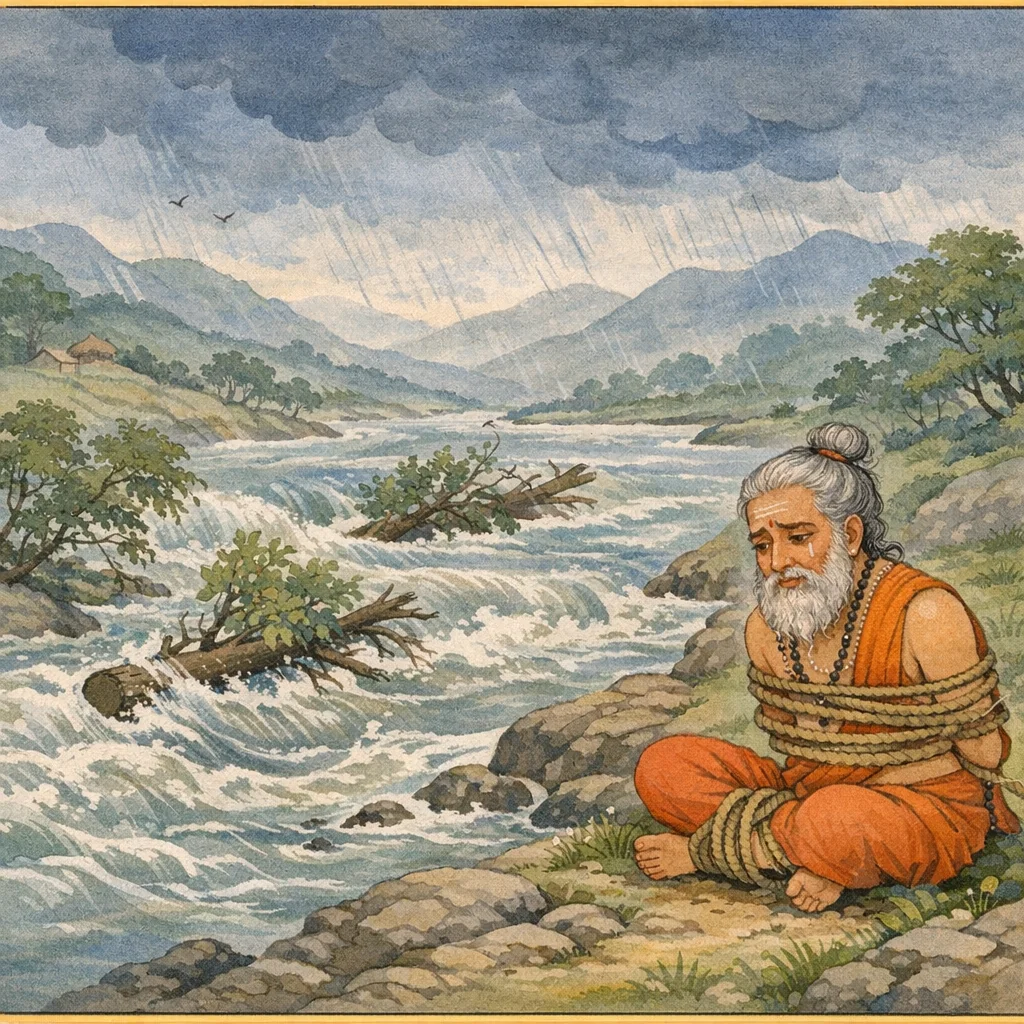
Chapter Arc: गन्धर्व-वक्ता वसिष्ठ के शोक-प्रसंग को आगे बढ़ाते हैं: कल्माषपाद (सौदास) के शाप-उद्धार और वंश-रक्षा की आशा एक साथ उठती है। → वसिष्ठ अपने भीतर असह्य दुःख का ज्वार अनुभव करते हैं। वर्षाकाल में उफनती नदी को वृक्षों और तटवर्ती वस्तुओं को बहाते देख वे आत्म-विनाश का विचार करते हैं—‘इसी जल में निमज्जन करूँ।’ → महामुनि वसिष्ठ अपने शरीर को पाशों से कसकर बाँधकर महानदी के जल में कूद पड़ते हैं—पर प्रकृति और दैवी विधान मानो उन्हें स्वीकार नहीं करते; उनका निश्चय टूटता है, जीवन लौट आता है और शोक का चरम बिंदु प्रकट होता है। → कल्माषपाद चेतना पाकर वसिष्ठ को प्रणाम करता है और उनके प्रति शरणागत-भाव व्यक्त करता है। आगे बारहवें वर्ष में वसिष्ठ के द्वारा राजा को ‘अश्मक’ नामक पुत्र की प्राप्ति होती है; अयोध्या की प्रजा अपने पापरहित नरेश के आगमन पर उत्सव-सा स्वागत करती है। → ‘त्वदृतेऽद्य…’—यह संकेत छोड़ता है कि अब आगे का भार वसिष्ठ पर ही है: शाप-बंधन, राजधर्म और वंश-परंपरा को स्थिर करने का निर्णायक उपाय क्या होगा?
Shlokas
Verse 1
अपर बछ। ] अत्णऑका: षट्सप्तरत्याधेकशततमो< ध्याय: कल्माषपादका शापसे उद्धार और वसिष्ठजीके द्वारा उन्हें अश्मक नामक पुत्रकी प्राप्ति गन्धर्व उवाच ततो दृष्टवा55श्रमपद॑ रहित तै: सुतैर्मुनि: । निर्जगाम सुदु:खार्त: पुनरप्याश्रमात् तत:,गन्धर्व कहता है--अर्जुन! तदनन्तर मुनिवर वसिष्ठ आश्रमको अपने पुत्रोंसे सूना देख अत्यन्त दुःखसे पीड़ित हो गये और पुन: आश्रम छोड़कर चल दिये
The Gandharva said: Then, seeing his hermitage-place left empty by those sons, the sage—overwhelmed by intense grief—departed once again from the āśrama. The verse underscores how unbearable loss can shake even a great ascetic, and it frames the ethical tension between personal sorrow and the steadiness expected of one established in dharma.
Verse 2
सो<पश्यत् सरितं पूर्णा प्रावृटूुकाले नवाम्भसा । वृक्षान् बहुविधान् पार्थ हरन्तीं तीरजान् बहून्,कुन्तीनन्दन! वर्षाका समय था; उन्होंने देखा, एक नदी नूतन जलसे लबालब भरी है और तटवर्ती बहुत-से वृक्षोंको (अपने जलकी धारामें) बहाये लिये जाती है
The Gandharva said: Then he saw a river, swollen full with fresh monsoon waters. O Partha, it was sweeping away many kinds of trees that had stood along its banks—O son of Kunti—carrying them off in its powerful current. The scene underscores how seasonal forces can suddenly overturn what seems stable, warning a prudent person to recognize danger and act with restraint and discernment.
Verse 3
अथ चिन्तां समापेदे पुन: कौरवनन्दन । अम्भस्यस्या निमज्जेयमिति दुःखसमन्वित:,कौरवनन्दन! (उसे देखकर) दुःखसे युक्त वसिष्ठजीके मनमें फिर यह विचार आया कि मैं इसी नदीके जलमें डूब जाऊँ
Then, O delight of the Kuru line, he again fell into anxious reflection. Overwhelmed by sorrow, he resolved: “I shall sink into the waters of this very river.” The verse highlights how grief can drive even the wise toward self-destructive impulses, setting the ethical tension between despair and steadfastness.
Verse 4
ततः पाशैस्तदा55त्मानं गाढं बद्ध्वा महामुनिः । तस्या जले महानद्या निममज्ज सुदु:ःखित:,तब अत्यन्त दुःखी हुए महामुनि वसिष्ठ अपने शरीरको पाशोंद्वारा अच्छी तरह बाँधकर उस महानदीके जलनमें कूद पड़े
Then, in utter despair, the great sage tightly bound his own body with nooses and plunged into the waters of that mighty river. The scene underscores how even the wise, when overwhelmed by grief, may be driven toward self-destruction—yet the narrative context in the Mahābhārata typically uses such moments to highlight the need for steadiness, restraint, and the upholding of dharma even amid suffering.
Verse 5
अथ छित्त्वा नदी पाशांस्तस्यारिबलसूदन । स्थलस्थं तमृषिं कृत्वा विपाशं समवासृजत्,शत्रुसेनाका संहार करनेवाले अर्जुन! उस नदीने वसिष्ठजीके बन्धन काटकर उन्हें स्थलमें पहुँचा दिया और उन्हें विपाश (बन्धनरहित) करके छोड़ दिया
Then the river cut the bonds that held that sage. O Arjuna, slayer of hostile forces, she brought the ṛṣi onto firm ground and released him as ‘Vipāśa’—free from fetters—thus turning deliverance itself into his new identity.
Verse 6
उत्ततार ततः पाशैरविमुक्त: स महानृषि: । विपाशेति च नामास्या नद्याक्षक्रे महानृषि:,तब पाशमुक्त हो महर्षि जलसे निकल आये और उन्होंने उस नदीका नाम “विपाशा' (व्यास) रख दिया
Then that great sage, no longer held fast by the nooses, came up out of the waters. In remembrance of being freed from the bonds, the great seer gave that river the name Vipāśā—‘the Unfettered’—so that its very name would preserve the moral meaning of release from constraint and the restoration of rightful freedom.
Verse 7
शोकबुद्धिं तदा चक्रे न चैकत्र व्यतिष्ठत । सो5गच्छत् पर्वतांश्नैव सरितश्न सरांसि च,उस समय (पुत्रवधुओंके संतोषके लिये) उन्होंने शोकबुद्धि कर ली थी, इसलिये वे किसी एक स्थानमें नहीं ठहरते थे; पर्वतों, नदियों और सरोवरोंके तटपर चक्कर लगाते रहते थे
Then he deliberately took on a mind of grief, and so he did not remain in any single place. Restless, he kept wandering—along the mountains, the rivers, and the lakes—moving from shore to shore, driven by sorrow and the need to appease those connected with his slain kin.
Verse 8
दृष्टवा स पुनरेवर्षिन्नदीं हैमवर्ती तदा । चण्डग्राहवतीं भीमां तस्या: स्रोतस्यपातयत्,(इस तरह घूमते-घूमते) महर्षिने पुन: हिमालय पर्वतसे निकली हुई एक भयंकर नदीको देखा, जिसमें बड़े प्रचण्ड ग्राह रहते थे। उन्होंने फिर उसीकी प्रखर धारामें अपने-आपको डाल दिया
Verse 9
सा तमग्निसमं विप्रमनुचिन्त्य सरिद्वरा । शतधा विद्रुता यस्माच्छतद्रुरिति विश्रुता,वह श्रेष्ठ नदी ब्रह्मर्षि वसिष्ठको अग्निके समान तेजस्वी जान सैकड़ों धाराओंमें फ़ूटकर इधर-उधर भाग चली। इसीलिये वह “शतद्र' नामसे विख्यात हुई
That foremost of rivers, reflecting upon the brahmin who blazed like fire, burst forth and fled in a hundred streams in every direction. Because she thus ran in a hundredfold course, she became renowned by the name Śatadrū. The episode underscores the awe inspired by ascetic radiance and the power of tapas, before which even nature responds with reverence and fear.
Verse 10
ततः स्थलगतं दृष्टवा तत्राप्यात्मानमात्मना । मर्तु न शक््यमित्युक्त्वा पुनरेवाश्रमं ययौ,वहाँ भी अपनेको स्वयं ही स्थलमें पड़ा देख “मैं मर नहीं सकता” यों कहकर वे फिर अपने आश्रमपर ही चले गये
Then, seeing himself lying there upon the ground—recognizing his own self by his own awareness—he declared, “It is not possible for me to die,” and returned once again to his hermitage. The moment underscores a conviction of inviolability that turns him away from fear and back toward the disciplined life of the āśrama.
Verse 11
स गत्वा विविधाज्छैलान देशान् बहुविधांस्तथा । अदृश्यन्त्याख्यया वध्वाथाश्रमेडनुसृतो5भवत्,इस तरह नाना प्रकारके पर्वतों और बहुसंख्यक देशोंमें भ्रमण करके वे पुन: जब अपने आश्रमके समीप आये, उस समय उनकी पुत्रवधू अदृश्यन्ती उनके पीछे हो ली
Having wandered through many kinds of mountains and through numerous regions, he later came back near his hermitage. At that time his daughter-in-law, named Adṛśyantī, followed close behind him—suggesting a return to the ordered life of the āśrama after restless roaming, and the quiet duty of family members to remain connected and attentive.
Verse 12
अथ शुश्राव संगत्या वेदाध्ययननि:स्वनम् । पृष्ठत: परिपूर्णार्थ षड़भिरज्जैरलंकृतम्,मुनिको पीछेकी ओरसे संगतिपूर्वक छहों अंगोंसे अलंकृत तथा स्फुट अर्थोसे युक्त वेदमन्त्रोंके अध्ययनका शब्द सुन पड़ा
Then he heard, coming from behind, the sound of Vedic recitation—chanted in measured cadence and joined with proper intonation—rich in clear meaning and adorned with the six auxiliaries of the Veda. The scene underscores reverence for sacred learning: true study is not mere sound, but disciplined recitation supported by the full tradition that safeguards meaning and dharma.
Verse 13
अनुव्रजति को न्वेष मामित्येवाथ सो<ब्रवीत् । अहमित्यदृश्यन्तीमं सा स्नुषा प्रत्यभाषत । शक्तेर्भार्या महाभाग तपोयुक्ता तपस्विनी,तब उन्होंने पूछा--'मेरे पीछे-पीछे कौन आ रहा है?” उक्त पुत्रवधूने उत्तर दिया, “'महाभाग! मैं तपमें ही संलग्न रहनेवाली महर्षि शक्तिकी अनाथ पत्नी अदृश्यन्ती हूँ!
The Gandharva said: “Who is it that follows behind me?” Then the daughter-in-law replied, “It is I—Adṛśyantī. O noble one, I am the wife of the sage Śakti, devoted to austerity, a woman living by tapas.” The exchange underscores truthful self-identification and the dignity of a chaste ascetic life even amid uncertainty and vulnerability.
Verse 14
वसिष्ठ उवाच पुत्रि कस्यैष साड्स्य वेदस्याध्ययनस्वन: । पुरा साड्स्य वेदस्य शक्तेरिव मया श्रुत:,वसिष्ठजीने पूछा--बेटी! पहले शक्तिके मुँहसे मैं अंगोंसहित वेदका जैसा पाठ सुना करता था, ठीक उसी प्रकार यह किसके द्वारा किये हुए सांग वेदके अध्ययनकी ध्वनि मेरे कानोंमें आ रही है?
Vasiṣṭha said: “Daughter, whose recitation is this—the sound of studying the Veda together with its ancillary disciplines? Long ago I used to hear the Veda recited with its limbs from Śakti himself; this sound reaching my ears now is just like that.”
Verse 15
अदृश्यन्त्युवाच अयं कुक्षौ समुत्पन्न: शक्तिर्गर्भ: सुतस्य ते । समा द्वादश तस्येह वेदानभ्यस्यतो मुने,अदृश्यन्ती बोली--भगवन्! यह मेरे उदरमें उत्पन्न हुआ आपके पुत्र शक्तिका बालक है। मुने! उसे मेरे गर्भमें ही वेदाभ्यास करते बारह वर्ष हो गये हैं
Adṛśyantī said: “Revered sir, this child who has arisen within my womb is the embryo of Śakti, your son. O sage, for twelve years now, while still in my womb, he has been studying the Vedas here.”
Verse 16
गन्धर्व उवाच एवमुक्तस्तया हृष्टो वसिष्ठ: श्रेष्ठ भागृषि: । अस्ति संतानमित्युक्त्वा मृत्यो: पार्थ न्यवर्तत,गन्धर्व कहता है--अर्जुन! अदृश्यन्तीके यों कहनेपर भगवान् पुरुषोत्तमका भजन करनेवाले महर्षि वसिष्ठ बड़े प्रसन्न हुए और “मेरी वंशपरम्पराका लोप नहीं हुआ है, यों कहकर मरनेके संकल्पसे विरत हो गये
The Gandharva said: Thus addressed by her, the great sage Vasiṣṭha—foremost among the Bhārgava seers—was filled with joy. Saying, “There is offspring; my lineage has not come to an end,” O Pārtha, he turned back from death, abandoning his resolve to die. The passage highlights how the assurance of continuity of one’s dharmic line can restore hope and restrain self-destructive intent.
Verse 17
ततः प्रतिनिवृत्त: स तया वध्वा सहानघ । कल्माषपादमासीनं ददर्श विजने वने,अनघ! तब वे अपनी पुत्रवधूके साथ आश्रमकी ओर लौटने लगे। इतनेमें ही मुनिने निर्जन वनमें बैठे हुए राजा कल्माषपादको देखा
Then, having turned back and proceeding together with that blameless daughter-in-law, he saw King Kalmāṣapāda seated in a lonely, deserted forest. The scene signals an impending moral encounter: a ruler, isolated in the wilderness, is about to be met by an ascetic household returning toward the āśrama—an intersection where restraint, duty, and the consequences of prior conduct are tested.
Verse 18
स तु दृष्टवैव तं राजा क्रुद्ध उत्थाय भारत । आवदविष्टो रक्षसोग्रेण इयेषात्तुं तदा मुनिम्,भारत! भयानक राक्षससे आविष्ट हुए राजा कल्माषपाद मुनिको देखते ही क्रोधमें भरकर उठे और उसी समय उन्हें खा जानेकी इच्छा करने लगे
Seeing that sage at once, the king—O descendant of Bharata—rose up in anger. Overpowered and possessed by a terrifying rākṣasa, he then desired to devour the muni, revealing how a ruler’s mind, when seized by violent impulses, can fall from restraint and dharma into predatory wrongdoing.
Verse 19
अदृश्यन्ती तु तं दृष्टवा क्रूरकर्माणमग्रत: । भयसंविग्नया वाचा वसिष्ठमिदमब्रवीत्,उस क्रूरकर्मी राक्षसको सामने देख अदृश्यन्तीने भयाकुल वाणीमें वसिष्ठजीसे यह कहा --
Seeing him before her—a being of cruel deeds—Adṛśyantī, shaken with fear, addressed Vasiṣṭha in a trembling voice. The scene underscores how the presence of violence and lawlessness provokes rightful alarm, and how one turns to a righteous guide for protection and counsel.
Verse 20
असौ मृत्युरिवोग्रेण दण्डेन भगवन्नित: । प्रगृहीतेन काछेन राक्षसो5भ्येति दारुण:,“भगवन्! वह भयंकर राक्षस एक बहुत बड़ा काठ लेकर इधर ही आ रहा है, मानो साक्षात् यमराज भयानक दण्ड लिये आ रहे हैं
“O revered one! That dreadful rākṣasa is coming straight this way, gripping a huge piece of wood as a weapon—like Death himself advancing with a fierce staff.”
Verse 21
“महाभाग! आप सम्पूर्ण वेदवेत्ताओंमें श्रेष्ठ हैं। (इस समय) इस भूतलपर आपके सिवा दूसरा कोई नहीं है, जो उस राक्षसका वेग रोक सके
The Gandharva said: “O most fortunate one, you are the foremost among all who know the Vedas. At this moment, on the face of the earth there is no one but you who can check the fury and force of that rākṣasa.”
Verse 22
पाहि मां भगवन् पापादस्माद् दारुणदर्शनात् । राक्षसो&्यमिहात्तुं वै नूनमावां समीहते,“भगवन्! देखनेमें अत्यन्त भयंकर इस पापीसे मेरी रक्षा कीजिये। निश्चय ही यह राक्षस यहाँ हम दोनोंको खा जानेकी घातमें लगा है”
The Gandharva said: “Protect me, O revered one, from this sinful being of dreadful appearance. Surely this rākṣasa is lying in wait here, intending to devour the two of us.”
Verse 23
वसिष्ठ उवाच मा भै: पुत्रि न भेतव्यं राक्षसात् तु कथंचन । नैतद् रक्षो भयं यस्मात् पश्यसि त्वमुपस्थितम्,वसिष्ठजीने कहा--बेटी! भयभीत न हो। इस राक्षससे तो किसी प्रकार न डरो। जिससे तुम्हें भय उपस्थित दिखायी देता है, यह वास्तवमें राक्षस नहीं है
Vasiṣṭha said: “Do not be afraid, my daughter. You must not fear this ‘rākṣasa’ in any way. For the frightening presence you see before you is not truly a rākṣasa at all.”
Verse 24
राजा कल्माषपादो<थयं वीर्यवान् प्रथितो भुवि | स एषो<5स्मिन् वनोद्देशे निवसत्यतिभीषण:,ये भूमण्डलमें विख्यात पराक्रमी राजा कल्माषपाद हैं। ये ही इस वनमें अत्यन्त भीषण रूप धारण करके रहते हैं
Vasiṣṭha said: “This is that renowned and valiant king Kalmāṣapāda, celebrated across the earth. He dwells in this very tract of forest, having assumed an exceedingly terrifying form.”
Verse 25
गन्धर्व उवाच तमापततन्तं सम्प्रेक्ष्य वसिष्ठो भगवानृषि: । वारयामास तेजस्वी हुंकारेणैव भारत,गन्धर्व कहता है--भारत! उस राक्षसको आते देख तेजस्वी भगवान् वसिष्ठ मुनिने हुंकारमात्रसे ही रोक दिया
The Gandharva said: “O Bhārata, seeing that demon rushing in, the radiant, venerable sage Vasiṣṭha checked him—by a mere roar (huṅkāra) alone.” The episode underscores the ethical idea that true spiritual power and self-mastery can restrain violence without weapons, and that aggression is halted by higher tapas and authority grounded in dharma.
Verse 26
मन्त्रपूतेन च पुन: स तमभ्युक्ष्य वारिणा । मोक्षयामास वै शापात् तस्माद् योगान्नराधिपम्,और मन्त्रपूत जलसे उसके छींटे देकर अपने योगके प्रभावसे राजाको उस शापसे मुक्त कर दिया
Then, sprinkling him again with water sanctified by mantras, the Gandharva—by the power of his yogic mastery—released the king from that curse. The act underscores that disciplined spiritual power, when guided by right intent, can undo harm and restore a person to rightful freedom.
Verse 27
स हि द्वादश वर्षाणि वासिष्ठस्यैव तेजसा । ग्रस्त आसीद् ग्रहेणेव पर्वकाले दिवाकर:,जैसे पर्वकालमें सूर्य राहुद्वारा ग्रस्त हो जाता है, उसी प्रकार राजा कल्माषपाद बारह वर्षोतक वसिष्ठजीके पुत्र शक्तिके ही तेज (शापके प्रभाव)-से ग्रस्त रहे
For twelve years indeed, by the very fiery power of Vasiṣṭha’s line, he remained seized—just as the sun is seized by the eclipsing planet at the time of an eclipse. The verse underscores how a sage’s spiritual potency (especially when expressed as a curse) can bind even a king, and how wrongdoing invites long, inescapable consequences until the force of that karmic restraint is exhausted.
Verse 28
रक्षसा विप्रमुक्तो5थ स नृपस्तद् वनं महत् | तेजसा रज्जयामास संध्याभ्रमिव भास्कर:,उस (मन्त्रपूत जलके प्रभावसे) राक्षसने भी राजाको छोड़ दिया। फिर तो भगवान् भास्कर जैसे संध्याकालीन बादलोंको अपनी (अरुण) किरणोंसे रँँग देते हैं, उसी प्रकार राजाने अपने (सहज) तेजसे उस महान् वनको अनुरंजित कर दिया
Released by the rākṣasa, the king then illuminated that vast forest with his own innate splendor—just as the Sun tinges the twilight clouds with his rays. The scene underscores the moral contrast between coercive violence and the steady, self-possessed radiance of rightful kingship.
Verse 29
प्रतिलभ्य तत: संज्ञामभिवाद्य कृताउ्जलि: । उवाच नृपति: काले वसिष्ठमृषिसत्तमम्,तदनन्तर सचेत होनेपर राजा कल्माषपादने तत्काल ही मुनिश्रेष्ठ वसिष्ठको प्रणाम किया और हाथ जोड़कर कहा--
Then, regaining consciousness, the king—having bowed in reverence and joined his palms—addressed the foremost of sages, Vasiṣṭha, at the proper moment. The scene underscores the ethical return to humility and respect for spiritual authority after a lapse or crisis.
Verse 30
सौदासो<हं महाभाग याज्यस्ते मुनिसत्तम । अस्मिन् काले यदि ते ब्रूहि किं करवाणि ते,“महाभाग मुनिश्रेष्ठ! मैं आपका यजमान सौदास हूँ। इस समय आपकी जो अभिलाषा हो, कहिये--मैं आपकी क्या सेवा करूँ?”
The Gandharva said: “O fortunate one, O best of sages, I am Saudāsa, your patron for the sacrifice. Tell me now, at this moment, what you desire—what service shall I render to you?”
Verse 31
वसिष्ठ उवाच वृत्तमेतद् यथाकालं गच्छ राज्यं प्रशाधि वै । ब्राह्माणं तु मनुष्येन्द्र मावमंस्था: कदाचन,वसिष्ठजीने कहा--नरेन्द्र! मेरी जो अभिलाषा थी, वह समयानुसार सिद्ध हो गयी। अब जाओ, अपना राज्य सँभालो। (आजसे फिर) कभी ब्राह्मणका अपमान न करना
Vasiṣṭha said: “This has come to pass in due time, just as it should. Now go—return and govern your kingdom well. But, O lord among men, never at any time treat a brāhmaṇa with contempt.”
Verse 32
राजोवाच नावमंस्ये महाभाग कदाचिद् ब्राह्मणानहम् । त्वन्निदेशे स्थित: सम्यक् पूजयिष्याम्यहं द्विजान्,राजा बोले--महाभाग! मैं कभी ब्राह्मणोंका अपमान नहीं करूँगा। आपकी आज्ञाके पालनमें संलग्न हो (सदा) ब्राह्मणोंकी भलीभाँति पूजा करूँगा
The king said: “O greatly fortunate one, I will never at any time dishonor the Brahmins. Abiding faithfully by your instruction, I shall duly honor and worship the twice-born.”
Verse 33
इक्ष्वाकूणां च येनाहमनृण: स्यां द्विजोत्तम । तत् त्वत्त: प्राप्तुमिच्छामि सर्ववेदविदां वर,समस्त वेदवेत्ताओंमें अग्रगण्य द्विजश्रेष्ठ) मैं आपसे एक पुत्र प्राप्त करना चाहता हूँ, जिसके द्वारा मैं अपने इक्ष्वाक॒ुवंशी पितरोंक ऋणसे उऋण हो सकूँ
Vasiṣṭha said: “O best of twice-born, I wish to obtain from you such a son by whom I may become free of debt to my Ikṣvāku-line forefathers. O foremost among all who know the Vedas, grant me this, so that my ancestral obligation may be fulfilled.”
Verse 34
अपत्यमीप्सितं महां दातुमरहसि सत्तम । शीलरूपगुणोपेतमिक्ष्वाकुकुलवृद्धये,साधुशिरोमणे।! इक्ष्वाकुवंशकी वृद्धिके लिये आप मुझे ऐसी अभीष्ट संतान दीजिये, जो उत्तम स्वभाव, सुन्दर रूप और श्रेष्ठ गुणोंसे सम्पन्न हो
Vasiṣṭha said: “O best of the virtuous, you ought to grant me the longed-for offspring—great in worth—endowed with noble conduct, pleasing form, and excellent qualities, for the increase and flourishing of the Ikṣvāku lineage, O crest-jewel among the righteous.”
Verse 35
गन्धर्व उवाच ददानीत्येव तं तत्र राजानं प्रत्युवाच ह । वसिष्ठ: परमेष्वासं सत्यसंधो द्विजोत्तम:,गन्धर्व कहता है--कुन्तीनन्दन! तब सत्यप्रतिज्ञ विप्रवर वसिष्ठने महान् धनुर्धर राजा कल्माषपादसे उत्तरमें कहा-- "मैं तुम्हें वैसा ही पुत्र दूँगा”
The Gandharva said: There, the brahmin Vasiṣṭha—foremost among the twice-born, steadfast in truth, and a supreme archer—replied to that king, saying, “I shall indeed give (you what you seek).” In ethical tenor, the verse highlights the binding force of a truthful vow: a righteous person’s word becomes an act, and a promise is treated as a moral obligation rather than mere speech.
Verse 36
ततः प्रतिययौ काले वसिष्ठ: सह तेन वै । ख्यातां पुरीमिमां लोकेष्वयोध्यां मनुजेश्वर,मनुजेश्वर! तदनन्तर यथासमय राजाके साथ वसिष्ठजी उनकी राजधानीमें गये, जो लोकोंमें अयोध्या पुरीके नामसे प्रसिद्ध है
Then, at the proper time, Vasiṣṭha set out together with him and went to this renowned city—Ayodhyā—famed among the worlds, O lord of men. The verse underscores timely action and the guidance of a venerable teacher as the party proceeds to the celebrated royal capital.
Verse 37
त॑ प्रजा: प्रतिमोदन्त्य: सर्वा: प्रत्युदूगतास्तदा । विपाप्मानं महात्मानं दिवौकस इवेश्वरम्,अपने पापरहित महात्मा नरेशका आगमन सुनकर अयोध्याकी सारी प्रजा अत्यन्त प्रसन्न हो उनकी अगवानीके लिये ठीक उसी तरह बाहर निकल आयी, जैसे देवतालोग अपने स्वामी इन्द्रका स्वागत करते हैं
Then all the citizens, filled with joy, came out to welcome him. Seeing the sinless, great-souled king, they went forth as the dwellers of heaven would go to greet their lord—like the gods welcoming Indra—thus expressing public reverence for a ruler whose moral purity and majesty inspire collective trust.
Verse 38
सुचिराय मनुष्येन्द्रो नगरीं पुण्यलक्षणाम् | विवेश सहितस्तेन वसिष्ठेन महर्षिणा,बहुत वर्षोंके बाद राजाने उस पुण्यमयी नगरीमें प्रसिद्ध महर्षि वसिष्ठके साथ प्रवेश किया। अयोध्या-वासी लोगोंने पुरोहितके साथ आये हुए राजा कल्माष-पादका उसी प्रकार दर्शन किया, जैसे (प्रातःकाल) प्रजा उदित हुए भगवान् सूर्यका दर्शन करती है
After a long time, the king among men entered that city marked by auspicious signs, accompanied by the great sage Vasiṣṭha. The scene underscores the ethical ideal of kingship returning to rightful order under the guidance of a venerable priest-sage, whose presence legitimizes and steadies royal authority for the welfare of the people.
Verse 39
ददृशुस्तं महीपालमयोध्यावासिनो जना: । पुरोहितेन सहितं दिवाकरमिवोदितम्,बहुत वर्षोंके बाद राजाने उस पुण्यमयी नगरीमें प्रसिद्ध महर्षि वसिष्ठके साथ प्रवेश किया। अयोध्या-वासी लोगोंने पुरोहितके साथ आये हुए राजा कल्माष-पादका उसी प्रकार दर्शन किया, जैसे (प्रातःकाल) प्रजा उदित हुए भगवान् सूर्यका दर्शन करती है
The people of Ayodhyā beheld that king, accompanied by his family priest, as one beholds the sun when it has risen. The image conveys the king’s restored visibility and authority after a long absence, and the priest’s presence underscores that royal power is meant to be aligned with sacred counsel and dharma.
Verse 40
सच तां पूरयामास लक्ष्म्या लक्ष्मीवतां वर: । अयोध्यां व्योम शीतांशु: शरत्काल इवोदित:,जैसे शीतल किरणोंवाले चन्द्रमा शरत्कालमें उदित हो आकाशको अपनी ज्योत्स्नासे जगमग कर देते हैं, उसी प्रकार लक्ष्मीवानोंमें श्रेष्ठ नरेशने उस अयोध्यापुरीको शोभासे परिपूर्ण कर दिया
Verse 41
संसिक्तमृष्टपन्थानं पताकाध्वजशोभितम् । मन: प्रह्लादयामास तस्य तत् पुरमुत्तमम्,नगरकी सड़कोंको झाड़-बुहारकर उनपर छिड़काव किया गया था। सब ओर लगी हुई ध्वजा-पताकाएँ उस पुरीकी शोभा बढ़ा रही थीं। इस प्रकार राजाकी वह उत्तम नगरी दर्शकोंके मनको उत्तम आह्वाद प्रदान कर रही थी
“Its streets had been swept clean and sprinkled with water, and it was adorned with banners and standards. That excellent city of his delighted the minds of those who beheld it.” The verse highlights a king’s duty to maintain public order and auspiciousness: civic cleanliness and ceremonial decor are presented as signs of good governance and a harmonious social life.
Verse 42
तुष्टपपुष्टजनाकीर्णा सा पुरी कुरुनन्दन । अशोभत तदा तेन शक्रेणेवामरावती,कुरुनन्दन! जैसे इन्द्रसे अमरावतीकी शोभा होती है, उसी प्रकार संतुष्ट एवं पुष्ट मनुष्योंसे भरी हुई अयोध्यापुरी उस समय महाराज कल्माषपादकी उपस्थितिसे बड़ी शोभा पा रही थी
O delight of the Kurus, that city—crowded with people who were contented and well-nourished—shone brilliantly at that time because of his presence, just as Amarāvatī shines with Indra.
Verse 43
ततः प्रविष्टे राजर्षो तस्मिंस्तत् पुरमुत्तमम् । राज्ञस्तस्याज्ञया देवी वसिष्ठमुपचक्रमे,राजर्षि कल्माषपादके उस उत्तम नगरीमें प्रवेश करनेके पश्चात् उक्त महाराजकी आज्ञाके अनुसार महारानी (मदयन्ती) महर्षि वसिष्ठजीके समीप गयीं
After the royal sage had entered that excellent city, the queen—acting on the command of that king—approached the great seer Vasiṣṭha. The episode underscores disciplined obedience to rightful authority and the recourse to a venerable teacher for guidance in a delicate moral situation.
Verse 44
ऋतावथ महर्षि: स सम्बभूव तया सह । देव्या दिव्येन विधिना वसिष्ठ: श्रेष्ठभागृषि:,तत्पश्चात् भगवद्धक्त महर्षि वसिष्ठने ऋतुकालमें शास्त्रकी अलौकिक विधिके अनुसार महारानीके साथ नियोग किया
Then, in the proper season, that great seer—Vasiṣṭha, foremost among the Bhārgava-like sages—was united with the queen by a divine and extraordinary ordinance. The passage frames the act as a regulated, time-bound rite rather than private desire, emphasizing sanctioned procedure and responsibility toward lineage and duty.
Verse 45
ततस्तस्यां समुत्पन्ने गर्भे स मुनिसत्तम: । राज्ञाभिवादितस्तेन जगाम मुनिराश्रमम्,तदनन्तर रानीकी कुक्षिमें गर्भ स्थापित हो जानेपर उक्त राजासे वन्दित हो (उनसे विदा लेकर) मुनिवर वसिष्ठ अपने आश्रमको लौट गये
Then, when a pregnancy had arisen in her womb, that foremost of sages—having been respectfully saluted by the king—departed and returned to his hermitage. The episode underscores the sanctity of lawful progeny and the proper etiquette of honoring spiritual authority after the rite has borne fruit.
Verse 46
दीर्घकालेन सा गर्भ सुषुवे न तु तं॑ यदा । तदा देव्यश्मना कुक्षिं निर्बिभेद यशस्विनी,जब बहुत समय बीतनेके बाद (भी) वह गर्भ बाहर न निकला, तब यशस्विनी रानी (मदयन्ती)-ने अश्म (पत्थर)-से अपने गर्भाशयपर प्रहार किया
When a long time had passed and yet she could not deliver the child, then the illustrious queen, driven by anguish and urgency, struck her own belly with a stone. The episode underscores how overwhelming suffering can push a person toward desperate, self-harming acts, and it frames the moment as a tragic turning point rather than a model to imitate.
Verse 47
ततोडपि द्वादशे वर्षे स जज्ञे पुरुषर्षभ: । अश्मको नाम राजर्षि: पौदन्यं यो न्यवेशयत्,तदनन्तर बारहवें वर्षमें बालकका जन्म हुआ। वही पुरुषश्रेष्ठ राजर्षि अश्मकके नामसे प्रसिद्ध हुआ, जिन्होंने पौदन्य नामका नगर बसाया था
Then, in the twelfth year, a child was born—an eminent man among men. He became renowned as the royal sage Aśmaka, the very one who founded and settled the city called Paudanya. The verse underscores the fruition of time and rightful lineage: a worthy ruler arises in due course and expresses kingship through constructive acts such as establishing a stable seat of governance.
Verse 175
इस प्रकार श्रीमहाभारत आदिपरवव॑के अन्तर्गत चैत्ररथपर्वमें वसिष्ठचरित्रके प्रसंगमें वसिष्ठशोकविषयक एक सौ पचह्तत्तरवाँ अध्याय पूरा हुआ
Thus ends the one hundred and seventy-fifth chapter of the Ādi Parva of the Śrī Mahābhārata, within the Caitraratha section, in the episode concerning the life of Vasiṣṭha—specifically dealing with Vasiṣṭha’s grief. The narrative here closes a reflective passage on sorrow and the moral weight borne even by the righteous.
Verse 176
इति श्रीमहाभारते आदिपर्वणि चैत्ररथपर्वणि वासिछ्े सौदाससुतोत्पत्तौ षट्सप्तत्यधिकशततमो<ध्याय:
Thus ends the one-hundred-and-seventy-sixth chapter of the Ādi Parva of the Śrī Mahābhārata, within the Caitraratha section, in the episode concerning Vasiṣṭha and the birth of the son of Saudāsa. The closing formula marks the completion of this narrative unit and signals a transition to what follows.
Verse 231
त॑ निवारयितुं शक्तो नान्यो5स्ति भुवि कश्नन । त्वदृतेडद्य महाभाग सर्ववेदविदां वर
“No one on this earth has the power to restrain him—none at all—except you today, O noble one, best among those who know all the Vedas. Therefore, it is you alone who can check him now.”
Frequently Asked Questions
The ethical tension is procedural legitimacy: selection is to be grounded in a publicly witnessed criterion (hitting the target) rather than mere rank, wealth, or coercive influence—testing how fairness is maintained amid powerful claimants.
Competence and legitimacy are socially constructed through transparent procedure and collective witnessing; in Kṣatriya contexts, public standards (lakṣya) mediate between personal ambition and communal acceptance.
No explicit phalaśruti appears here; the chapter’s meta-function is archival and structural—preserving a roster of actors and framing the contest mechanism that drives the immediate narrative decision.