Adhyaya 131
Vāraṇāvata-prasaṃsā and the Pāṇḍavas’ Departure (वरणावत-प्रशंसा तथा पाण्डव-प्रयाणम्)
Upa-parva: Vāraṇāvata-gamana (Pāṇḍava-pravāsa) Episode
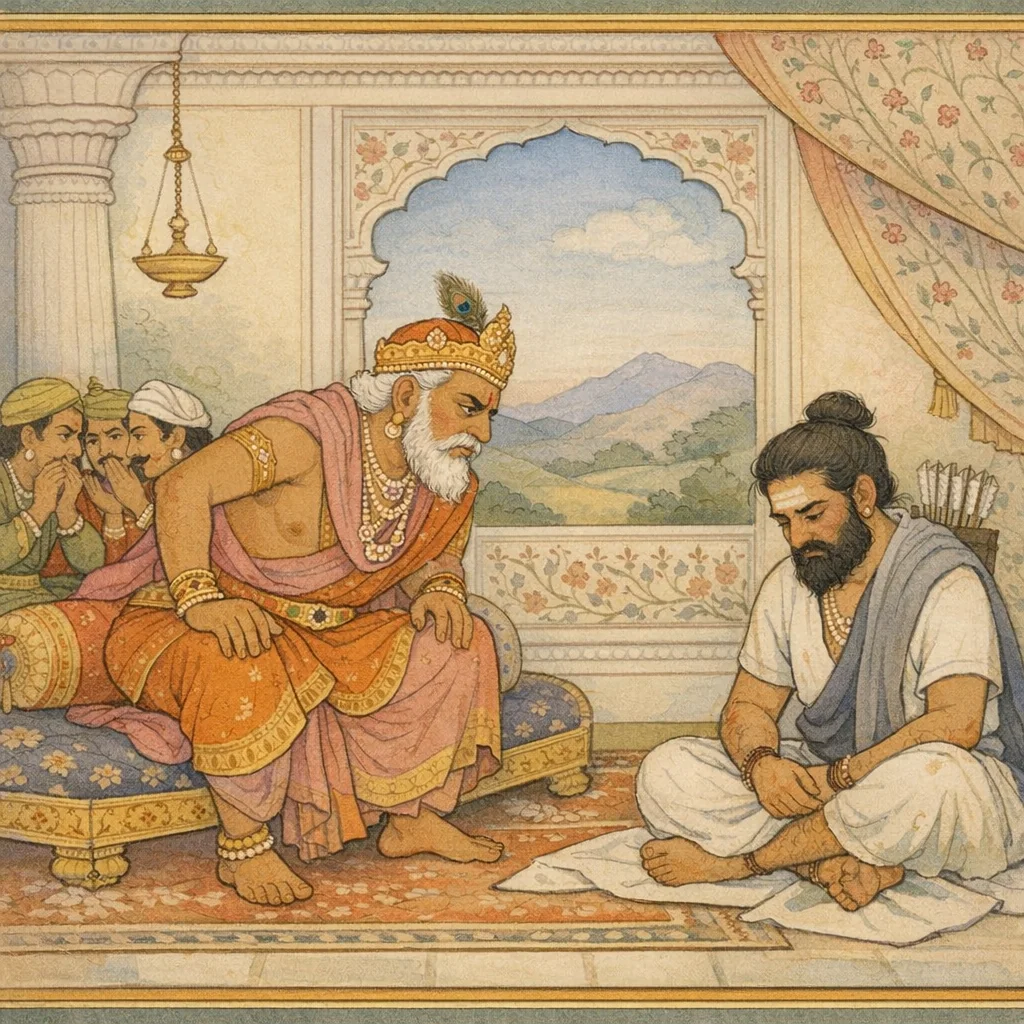
Vaiśaṃpāyana reports that Duryodhana gradually consolidates key constituencies through material incentives and honorific gestures. Skilled ministers, acting under Dhṛtarāṣṭra’s direction, repeatedly describe Vāraṇāvata as exceptionally delightful and prosperous, emphasizing its festivals, beauty, and abundance. As these reports circulate, a plan forms for the Pāṇḍavas’ travel to Vāraṇāvata. Dhṛtarāṣṭra addresses the Pāṇḍavas, presenting the journey as an opportunity to enjoy the festivities with attendants, distribute gifts to Brahmins and singers, and return happily to Hāstinapura afterward. Yudhiṣṭhira understands Dhṛtarāṣṭra’s intent and acknowledges his own lack of supportive power, yet replies with formal acceptance. He then informs senior figures—Bhīṣma, Vidura, Droṇa, Bāhlika, Somadatta, Kṛpa, and Gāndhārī—stating that they will reside in Vāraṇāvata by the king’s command. The elders respond with auspicious blessings for safe passage and protection from misfortune. After performing customary rites and completing preparations, the Pāṇḍavas depart for Vāraṇāvata, explicitly linked to the pursuit of political security and eventual restoration of status.
Chapter Arc: गौतमगोत्रीय शरद्वान के वंश-प्रसंग से कथा धनुर्वेद और ब्राह्मतेज की पृष्ठभूमि रचती है—और उसी धरातल पर द्रोण–द्रुपद की मित्रता का स्मरण उभरता है। → पंचालराज द्रुपद, द्रोण के प्रेमपूर्ण मित्र-वचनों को सुनकर भी ऐश्वर्य-मद में भर उठता है; क्रोध से भौंहें टेढ़ी, नेत्र रक्त—वह मित्रता की समानता पर प्रश्न उठाता है: ‘जो श्रोत्रिय नहीं, वह श्रोत्रिय का मित्र कैसे? जो राजा नहीं, वह राजा का मित्र कैसे?’ इस अपमान से द्रोण का मन्यु भीतर-भीतर जलने लगता है। → द्रुपद का कटु निषेध—मित्रता को पद-प्रतिष्ठा की कसौटी पर तोलना—द्रोण के भीतर प्रतिशोध का संकल्प पक्का कर देता है; वह समझ लेता है कि अब न्याय/प्रतिष्ठा की पुनर्स्थापना केवल शक्ति-साधना और राजाश्रय से होगी। → द्रोण अपने जीवन को नए लक्ष्य पर मोड़ता है: पुत्र अश्वत्थामा (कृपी से) की प्राप्ति और भविष्य की सिद्धि के लिए वह राजकीय संरक्षण खोजने लगता है; द्रुपद के राज्याभिषेक का समाचार सुनकर वह उसी ‘प्रिय सखा’ के पास जाने का निश्चय करता है, पर अब भाव मित्रता का नहीं—प्रतिज्ञा का है। → कुमारों से संवाद के बाद द्रोण उन्हें भीष्म के पास भेजने का संकेत देता है—अब प्रश्न यह है कि भीष्म द्रोण को किस रूप में स्वीकार करेंगे: आचार्य, शरणागत, या भविष्य के युद्ध-यंत्र के रूप में?
Shlokas
Verse 1
ऑपन--माज बक। चॉ-ज:ड: - गौतमगोत्रीय होनेके कारण शरद्वानूको भी गौतम कहा जाता था। - धर्नुर्वेदके चार भेद इस प्रकार हैं--मुक्त, अमुक्त, मुक्तामुक्त तथा मन्त्रमुक्त। छोड़े जानेवाले बाण आदिको "मुक्त! कहते हैं। जिन्हें हाथमें लेकर प्रहार किया जाय, उन खड़्ग आदिको “अमुक्त” कहते हैं। जिस अस्त्रको चलाने और समेटनेकी कला मालूम हो, वह अस्त्र 'मुक्तामुक्तर कहलाता है। जिसे मन्त्र पढ़कर चला तो दिया जाय किंतु उसके उपसंहारकी विधि मालूम न हो, वह अस्त्र 'मन्त्रमुक्त' कहा गया है, शस्त्र, अस्त्र, प्रत्यस्त्र और परमास्त्र--ये भी धरनुर्वेदके चार भेद हैं। इसी प्रकार आदान, संधान, विमोक्ष और संहार--इन चार क्रियाओंके भेदसे भी धनुर्वेदके चार भेद होते हैं। त्रिशर्दाधिकशततमो<्ध्याय: द्रोणका द्रुपदसे तिरस्कृत हो हस्तिनापुरमें आना, राजकुमारोंसे उनकी भेंट, उनकी बीटा* और अँगूठीको कुएँमेंसे निकालना एवं भीष्मका उन्हें अपने यहाँ सम्मानपूर्वक रखना वैशम्पायन उवाच ततो द्रुपदमासाद्य भारद्वाज: प्रतापवान् | अनब्रवीत् पार्थिवं राजन् सखायं विद्धि मामिह,वैशम्पायनजी कहते हैं--जनमेजय! प्रतापी द्रोण राजा ट्रपदके यहाँ जाकर उनसे इस प्रकार बोले--'राजन! तुम्हें ज्ञात होना चाहिये कि मैं तुम्हारा मित्र द्रोण यहाँ तुमसे मिलनेके लिये आया हूँ
Vaiśampāyana said: Then the valiant Bhāradvāja (Droṇa) approached King Drupada and addressed the ruler: “O King, know me here as your friend—I have come to meet you.” Narratively, this moment frames a moral tension: a bond of friendship is invoked at the very point where pride, past humiliation, and unmet expectations will soon test the duties of loyalty, gratitude, and righteous conduct between a Brahmin warrior-teacher and a king.
Verse 2
इत्येवमुक्त: सख्या स प्रीतिपूर्व जनेश्वर: । भारद्वाजेन पाज्चालो नामृष्यत वचो<5स्य तत्,मित्र द्रोणके द्वारा इस प्रकार प्रेमपूर्वक कहे जानेपर पंचालदेशके नरेश ट्रपद उनकी इस बातको सह न सके
Vaiśampāyana said: Thus addressed with friendly affection, that lord of men (Drupada of the Pāñcālas) could not endure those words spoken to him by Bhāradvāja’s son (Droṇa). The episode turns on wounded honor: even speech offered in the name of friendship can become ethically charged when it touches pride and status, sowing the seeds of later hostility.
Verse 3
सक्रोधामर्षजिद्दय भ्रू: कषघायीकृतलोचन: । ऐश्वर्यमदसम्पन्नो द्रोणं राजाब्रवीदिदम्,क्रोध और अमर्षसे उनकी भौंहें टेढ़ी हो गयीं, आँखोंमें लाली छा गयी; धन और ऐश्वर्यके मदसे उन्मत्त होकर वे राजा द्रोणसे यों बोले
Overcome by anger and wounded pride, his brows knit and his eyes reddened. Intoxicated by wealth and royal power, the king then addressed Droṇa in these words—signaling how arrogance and resentment can distort judgment and set the stage for unrighteous action.
Verse 4
हुपद उवाच अकृतेयं तव प्रज्ञा ब्रह्मनू नातिसमञ्जसा । यन्मां ब्रवीषि प्रसभं॑ सखा ते5हमिति द्विज,द्रपदने कहा--ब्रह्मन! तुम्हारी बुद्धि सर्वथा संस्कारशून्य--अपरिपक्व है। तुम्हारी यह बुद्धि यथार्थ नहीं है। तभी तो तुम धृष्टतापूर्वक मुझसे कह रहे हो कि “राजन! मैं तुम्हारा सखा हूँ
Hupada said: “O Brahmin, your understanding is unrefined and not properly aligned with what is fitting. That is why you speak to me so boldly, saying, ‘I am your friend,’ O twice-born.”
Verse 5
न हि रज्ञामुदीर्णानामेवम्भूतैर्नरै: क्वचित् । सख्यं भवति मन्दात्मन् श्रिया हीनैर्धनच्युतै:,ओ मूढ़! बड़े-बड़े राजाओंकी तुम्हारे-जैसे श्रीहीन और निर्धन मनुष्योंके साथ कभी मित्रता नहीं होती
For mighty, exalted kings do not, at any time, form friendship with men of such a kind as you—O dull-witted one—who are bereft of prosperity and fallen from wealth. The remark underscores a hard political ethic: alliances and friendships in royal circles are often governed by status, resources, and perceived power rather than personal goodwill.
Verse 6
सौह्दान्यपि जीर्यन्ते कालेन परिजीर्यत: । सौद्ददं मे त्वया हयासीत् पूर्व सामर्थ्यबन्धनम्,समयके अनुसार मनुष्य ज्यों-ज्यों बूढ़ा होता है, त्यों-ही-त्यों उसकी मैत्री भी क्षीण होती चली जाती है। पहले तुम्हारे साथ जो मेरी मित्रता थी, वह सामर्थ्यको लेकर थी--उस समय मैं और तुम दोनों समान शक्तिशाली थे
Even bonds of friendship wear away with time as one grows old. The friendship I once had with you was, in truth, tied to strength and capability—at that time you and I were equals in power, and that parity held our alliance together.
Verse 7
न सख्यमजरं लोके हृदि तिष्ठति कस्यचित् । कालो होन॑ विहरति क्रोधो वैनं हरत्युत,लोकमें किसी भी मनुष्यके हृदयमें मैत्री अमिट होकर नहीं रहती। समय एक मित्रको दूसरेसे विलग कर देता है अथवा क्रोध मनुष्यको मित्रतासे हटा देता है
In this world, no one’s heart holds friendship as something unaging and permanent. Time itself separates one friend from another; and anger too can carry a person away from friendship. The saying underscores the fragility of human bonds and warns that vigilance over one’s temper and conduct is essential if trust is to endure.
Verse 8
मैवं जीर्णमुपास्स्व त्वं सख्यं भवत्वपाकृधि । आसीत् सख्य॑ द्विजश्रेष्ठ त्वया मे5र्थनिबन्धनम्,इस प्रकार क्षीण होनेवाली मैत्रीका भरोसा न करो। हम दोनों एक-दूसरेके मित्र थे-- इस भावको हृदयसे निकाल दो। द्विजश्रेष्ठ! तुम्हारे साथ पहले जो मेरी मित्रता थी, वह साथ-साथ खेलने और अध्ययन करने आदि स्वार्थको लेकर हुई थी
Do not cling to a friendship that has grown old and worn out. Cast out from your heart the notion, ‘we are friends to one another.’ O best of Brahmins, the friendship I once had with you was bound to self-interest—formed for the sake of shared play, study, and similar advantages.
Verse 9
न दरिद्रो वसुमतो नाविद्वान् विदुष: सखा । न शूरस्य सखा क्लीब: सखिपूर्व किमिष्यते,सच्ची बात यह है कि दरिद्र मनुष्य धनवानका, मूर्ख विद्वान्का और कायर शूरवीरका सखा नहीं हो सकता; अतः पहलेकी मित्रताका क्या भरोसा करते हो
Hupada said: “A poor man cannot truly be the companion of a wealthy man; an ignorant man cannot be the companion of a learned man; and a coward cannot be the companion of a hero. Therefore, what reliance can be placed on a friendship that existed only in the past?”
Verse 10
ययोरेव सम॑ वित्तं ययोरेव सम॑ श्रुतम् । तयोरविवाह: सख्यं च न तु पुष्टविपुष्टयो:,जिनका धन समान है, जिनकी विद्या एक-सी है, उन्हींमें विवाह और मैत्रीका सम्बन्ध हो सकता है। हृष्ट-पुष्ट और दुर्बलमें (धनवान् और निर्धनमें) कभी मित्रता नहीं हो सकती
Hupada said: ‘Only between those whose wealth is equal and whose learning is equal can marriage and friendship properly arise. Between the well-nourished and the under-nourished—between the prosperous and the destitute—true friendship does not endure.’
Verse 11
नाश्रोत्रिय: श्रोत्रियस्थ नारथी रथिन: सखा । नाराजा पार्थिवस्यापि सखिपूर्व किमिष्यते,जो श्रोत्रिय नहीं है, वह श्रोत्रिय (वेदवेत्ता)-का मित्र नहीं हो सकता। जो रथी नहीं है, वह रथीका सखा नहीं हो सकता। इसी प्रकार जो राजा नहीं है, वह किसी राजाका मित्र कदापि नहीं हो सकता। फिर तुम पुरानी मित्रताका क्यों स्मरण करते हो?
Hūpada said: “One who is not a śrotriya cannot be a friend to a śrotriya; one who is not a charioteer cannot be the companion of a skilled chariot-warrior; likewise, one who is not a king cannot truly be the friend of a king. So why do you insist on recalling an old friendship?”
Verse 12
वैशग्पायन उवाच द्रुपदेनैवमुक्तस्तु भारद्वाज: प्रतापवान् | मुहूर्त चिन्तयित्वा तु मन्युनाभिपरिष्लुत:,वैशम्पायनजी कहते हैं--जनमेजय! राजा द्रुपदके यों कहनेपर प्रतापी द्रोण क्रोधसे जल उठे और दो घड़ीतक गहरी चिन्तामें डूबे रहे। वे बुद्धिमान् तो थे ही, पांचालनरेशसे बदला लेनेके विषयमें मन-ही-मन कुछ निश्चय करके कौरवोंकी राजधानी हस्तिनापुर नगरमें चले गये
Vaiśampāyana said: Thus addressed by King Drupada, the valiant son of Bhāradvāja (Droṇa) was overwhelmed by anger. After reflecting for a short while, his mind flooded with resentment, he inwardly formed a resolve for retribution against the lord of Pāñcāla and then set out toward Hastināpura, the capital of the Kauravas. The passage highlights how wounded pride and remembered insult can harden into a deliberate vow, setting in motion consequences that will shape the moral and political future of the epic.
Verse 13
स विनिश्ित्य मनसा पाज्चालं प्रति बुद्धिमान् जगाम कुरुमुख्यानां नगरं नागसाह्वयम्,वैशम्पायनजी कहते हैं--जनमेजय! राजा द्रुपदके यों कहनेपर प्रतापी द्रोण क्रोधसे जल उठे और दो घड़ीतक गहरी चिन्तामें डूबे रहे। वे बुद्धिमान् तो थे ही, पांचालनरेशसे बदला लेनेके विषयमें मन-ही-मन कुछ निश्चय करके कौरवोंकी राजधानी हस्तिनापुर नगरमें चले गये
Vaiśampāyana said: O Janamejaya, when King Drupada spoke thus, the mighty Droṇa flared up with anger and remained absorbed in deep thought for a while. Though wise, he inwardly resolved upon a course of action to exact retribution from the lord of the Pāñcālas, and then set out for Nāgasāhvaya—Hastināpura, the capital city of the foremost Kurus.
Verse 14
स नागपुरमागम्य गौतमस्य निवेशने । भारद्वाजो5वसत् तत्र प्रच्छन्नं द्विजसत्तम:,हस्तिनापुरमें पहुँचकर द्विजश्रेष्ठ द्रोण गौतमगोत्रीय कृपाचार्यके घरमें गुप्तरूपसे निवास करने लगे
Vaiśaṃpāyana said: Having arrived at Nāgapura (Hastināpura), the best of twice-born men, Bhāradvāja’s son (Droṇa), stayed there in the residence of Gautama’s descendant (Kṛpa), living in concealment. The episode underscores a prudent, self-restrained approach: a learned man, facing hardship, chooses discretion and strategic patience rather than rash display.
Verse 15
ततो<स्य तनुज: पार्थान् कृपस्यानन्तरं प्रभु: । अस्त्राणि शिक्षयामास नाबुध्यन्त च तं जना:,वहाँ उनके पुत्र शक्तिशाली अभश्व॒त्थामा कृपाचार्यके बाद पाण्डवोंको स्वयं ही अस्त्रविद्याकी शिक्षा देने लगे; किंतु लोग उन्हें पहचान न सके
Then his son—the powerful Aśvatthāmā—after Kṛpa, personally began instructing the Pārthas in the science of weapons; yet the people did not recognize who he truly was. The episode underscores how martial authority and lineage can remain concealed in public view, and how the transmission of military knowledge proceeds through trusted lineages even when identity is not openly disclosed.
Verse 16
एवं स तत्र गूढात्मा कंचित् कालमुवास ह । कुमारास्त्वथ निष्क्रम्प समेता गजसाह्दयात्,इस प्रकार द्रोणने वहाँ अपने आपको छिपाये रखकर कुछ कालतक निवास किया। तदनन्तर एक दिन कौरव-पाण्डव सभी वीर कुमार हस्तिनापुरसे बाहर निकलकर बड़ी प्रसन्नताके साथ मिलकर वहाँ गुल्ली-डंडा खेलने लगे। उस समय खेलमें लगे हुए उन कुमारोंकी वह बीटा कुएँमें गिर पड़ी
Vaiśaṃpāyana said: Thus, remaining concealed in spirit, he stayed there for some time. Then the princes, having gone out together from Gajasāhvaya (Hastināpura), assembled in high spirits. In the course of their play, an incident occurred that would soon draw attention to hidden circumstances and set in motion consequences for the royal youths—an early reminder that careless sport can become the seed of grave outcomes.
Verse 17
क्रीडन्तो वीटया तत्र वीरा: पर्यचरन् मुदा । पपात कूपे सा वीटा तेषां वै क्रीडतां तदा,इस प्रकार द्रोणने वहाँ अपने आपको छिपाये रखकर कुछ कालतक निवास किया। तदनन्तर एक दिन कौरव-पाण्डव सभी वीर कुमार हस्तिनापुरसे बाहर निकलकर बड़ी प्रसन्नताके साथ मिलकर वहाँ गुल्ली-डंडा खेलने लगे। उस समय खेलमें लगे हुए उन कुमारोंकी वह बीटा कुएँमें गिर पड़ी
Vaiśaṃpāyana said: There, the young heroes moved about joyfully, playing with a vīṭā (a play-stick/club used in the game). While they were absorbed in their sport, that vīṭā fell into a well. The incident, seemingly trivial, becomes the narrative hinge by which hidden circumstances are revealed and future destinies are set in motion—showing how heedless play can unexpectedly lead to grave consequences.
Verse 18
ततस्ते यत्नमातिष्ठन् वीटामुद्धर्तुमादृता: । नच ते प्रत्यपद्यन्त कर्म वीटोपलब्धये,तब वे उस बीटाको निकालनेके लिये बड़ी तत्परताके साथ प्रयत्नमें लग गये; परंतु उसे प्राप्त करनेका कोई भी उपाय उनके ध्यानमें नहीं आया
Then they earnestly set themselves to the task, striving with great diligence to extract the vīṭā. Yet no effective course of action occurred to them by which that vīṭā could be obtained—showing that mere effort, when unguided by right means and clear understanding, may fail to reach its intended end.
Verse 19
ततोडन्योन्यमवैक्षन्त व्रीडयावनतानना: । तस्या योगमविन्दन्तो भृशं चोत्कण्ठिताभवन्,इस कारण लज्जासे नतमस्तक होकर वे एक-दूसरेकी ओर देखने लगे। गुल्ली निकालनेका कोई उपाय न मिलनेके कारण वे अत्यन्त उत्कण्ठित हो गये
Then, with faces lowered in shame, they began to look at one another. Unable to find any means to accomplish that (intended act/plan), they became intensely anxious and restless.
Verse 20
ते5पश्यन् ब्राह्मणं श्याममापन्नं पलितं कृशम् । कृत्यवन्तमदूरस्थमग्निहोत्रपुरस्कृतम्,इसी समय उन्होंने एक श्याम वर्णके ब्राह्मणको थोड़ी ही दूरपर बैठे देखा, जो अग्निहोत्र करके किसी प्रयोजनसे वहाँ रुके हुए थे। वे आपत्तिग्रस्त जान पड़ते थे। उनके सिरके बाल सफेद हो गये थे और शरीर अत्यन्त दुर्बल था
They then noticed, not far away, a dark-complexioned brāhmaṇa seated there—one who had just performed the agnihotra and was staying on for some purpose. He appeared to be in distress: his hair had turned grey, and his body was exceedingly emaciated. The scene quietly foregrounds the ethical weight of encountering a suffering ritualist, inviting a response shaped by dharma and compassion.
Verse 21
उन महात्मा ब्राह्मगको देखकर वे सभी कुमार उनके पास गये और उन्हें घेरकर खड़े हो गये। उनका उत्साह भंग हो गया था। कोई काम करनेकी इच्छा नहीं होती थी। मनमें भारी निराशा भर गयी थी
Seeing that great-souled brāhmaṇa, all the young princes went up to him and stood surrounding him. Their spirit had been broken; they no longer felt any desire to act. A heavy hopelessness filled their minds—showing how inner resolve collapses when confidence and purpose are lost, and how guidance from the wise becomes necessary at such a moment.
Verse 22
अथ द्रोण: कुमारांस्तान् दृष्टवा कृत्यवतस्तदा । प्रहस्य मन्दं पैशल्यादभ्यभाषत वीर्यवान्,तदनन्तर पराक्रमी द्रोण यह देखकर कि इन कुमारोंका अभीष्ट कार्य पूर्ण नहीं हुआ है “-ये उसी प्रयोजनसे मेरे पास आये हैं, उस समय मन्द मुसकराहटके साथ बड़े कौशलसे बोले--
Verse 23
अहो वो धिग् बल क्षात्रं धिगेतां व: कृतास्त्राताम् । भरतस्यान्वये जाता ये वीटां नाधिगच्छत,“अहो! तुमलोगोंके क्षत्रिययलको धिक्कार है और तुमलोगोंकी इस अस्त्र-विद्या- विषयक निपुणताको भी धिक्कार है; क्योंकि तुमलोग भरतवंशमें जन्म लेकर भी कुएँमें गिरी हुई गुल्लीको नहीं निकाल पाते
Vaiśaṃpāyana said: “Shame on your Kṣatriya strength—shame even on your vaunted mastery of weapons! For though you are born in the lineage of Bharata, you cannot even retrieve a small ball that has fallen into a well.”
Verse 24
वीटां च मुद्रिकां चैव हाहमेतदपि द्वयम् । उद्धरेयमिषीकाभिशर्भोजन मे प्रदीयताम्,“देखो, मैं तुम्हारी गुल्ली और अपनी इस आअँगूठी दोनोंको सींकोंसे निकाल सकता हूँ। तुमलोग मेरी जीविकाकी व्यवस्था करो”
Vaiśaṃpāyana said: “Look! I can even extract both these—your pellet (for play) and this ring of mine—using only thin reeds. Arrange for my sustenance.” In context, the speaker demonstrates skill not for vanity but to secure basic livelihood, implying that ability should be matched with rightful support and that one may seek maintenance through honest means rather than deceit or harm.
Verse 25
एवमुक््त्वा कुमारांस्तान् द्रोण: स्वाडुलिवेष्टनम् । कूपे निरुदके तस्मिन्नपातयदरिंदम:,उन कुमारोंसे यों कहकर शत्रुओंका दमन करनेवाले द्रोणने उस निर्जल कुएँमें अपनी अँगूठी डाल दी
Having spoken thus to those young princes, Droṇa—subduer of foes—cast his own finger-ring into that waterless well. The act is a deliberate test: by creating a difficult task, he probes their resolve, ingenuity, and readiness to act under a teacher’s challenge, hinting that true capability is shown not by words but by effective response in adversity.
Verse 26
युधिछिर उवाच कृपस्यानुमते ब्रह्मन् भिक्षामाप्तुहि शाश्वतीम्
Yudhiṣṭhira said: “O Brahmin, with Kṛpa’s consent, I wish to obtain alms here as a lasting means of sustenance.”
Verse 27
द्रोण उवाच एषा मुष्टिरिषीकाणां मयास्त्रेणाभिमन्त्रिता,द्रोण बोले--ये मुदट्ठीभर सींकें हैं, जिन्हें मैंने अस्त्र-मन्त्रके द्वारा अभिमन्त्रित किया है
Droṇa said: “This handful of reed-shafts has been consecrated by me with a weapon-mantra. It is not mere grass, but a charged instrument of martial power—meant to demonstrate the potency of disciplined knowledge and the grave responsibility that accompanies the use of astras.”
Verse 28
अस्या वीर्य निरीक्षध्वं यदन्यस्य न विद्यते । भेत्स्यामीषीकया वीटां तामिषीकां तथान्यया,तुमलोग इसका बल देखो, जो दूसरेमें नहीं है। मैं पहले एक सींकसे उस गुल्लीको बींध दूँगा; फिर दूसरी सींकसे उस पहली सींकको बींधूँगा
Droṇa said: “Observe this one’s prowess—such as is not found in another. With a single reed I shall pierce the target; then, with another reed, I shall pierce that very first reed.”
Verse 29
वैशम्पायन उवाच ततो यथोक्तं द्रोणेन तत् सर्व कृतमज्जसा,वैशम्पायनजी कहते हैं--जनमेजय! तदनन्तर द्रोणने जैसा कहा था, वह सब कुछ अनायास ही कर दिखाया
Vaiśampāyana said: Then, exactly as Droṇa had instructed, everything was accomplished with ease and without delay. The narration underscores the efficacy of disciplined instruction and the swift execution that follows when a capable agent acts in accordance with a teacher’s word.
Verse 30
तददवेक्ष्य कुमारास्ते विस्मयोत्फुल्ललोचना: । आश्चर्यमिदमत्यन्तमिति मत्वा वचो<ब्रुवन्,यह अद्भुत कार्य देखकर उन कुमारोंके नेत्र आश्वर्यसे खिल उठे। इसे अत्यन्त आश्चर्य मानकर वे इस प्रकार बोले
Vaiśampāyana said: Seeing that extraordinary deed, the young princes’ eyes widened in astonishment. Judging it to be utterly wondrous, they began to speak—moved by amazement at what they had just witnessed.
Verse 31
कुमारा ऊचु. मुद्रिकामपि विप्रर्षे शीघ्रमेतां समुद्धर । कुमारोंने कहा--ब्रह्मर्ष! अब आप शीघ्र ही इस अँगूठीको भी निकाल दीजिये ।। ३० १ कल वैशम्पायन उवाच ततः शरं समादाय भरनुद्रोणो महायशा:,वैशम्पायनजी कहते हैं--तब महायशस्वी द्रोणने धनुष-बाण लेकर बाणसे उस अँगूठीको बींध दिया और उसे ऊपर निकाल लिया। शक्तिशाली द्रोणने इस प्रकार कुएँसे बाणसहित अँगूठी निकालकर उन आश्वर्यचकित कुमारोंके हाथमें दे दी; किंतु वे स्वयं तनिक भी विस्मित नहीं हुए। उस अँगूठीको कुएँसे निकाली हुई देखकर उन कुमारोंने द्रोणसे कहा
The boys said, “O brahmarṣi, quickly retrieve this ring as well.” Vaiśampāyana said: Then the illustrious Droṇa took up his bow and arrow, pierced the ring with the arrow, and drew it up. Having thus extracted the ring from the well along with the arrow, the powerful Droṇa placed it into the hands of the astonished boys; yet he himself showed no surprise. Seeing the ring brought out from the well, the boys addressed Droṇa again. The episode highlights disciplined skill and composure: true mastery is marked not only by success but by steadiness and the absence of self-display.
Verse 32
शरेण विद्ृध्वा मुद्रां तामूर्ध्वमावाहयत् प्रभु: । सशरं समुपादाय कूपादड्जुलिवेष्टनम्,वैशम्पायनजी कहते हैं--तब महायशस्वी द्रोणने धनुष-बाण लेकर बाणसे उस अँगूठीको बींध दिया और उसे ऊपर निकाल लिया। शक्तिशाली द्रोणने इस प्रकार कुएँसे बाणसहित अँगूठी निकालकर उन आश्वर्यचकित कुमारोंके हाथमें दे दी; किंतु वे स्वयं तनिक भी विस्मित नहीं हुए। उस अँगूठीको कुएँसे निकाली हुई देखकर उन कुमारोंने द्रोणसे कहा
Vaiśampāyana said: Then the mighty and renowned Droṇa, taking up bow and arrow, pierced that ring with an arrow and drew it up from the well. Having thus retrieved the finger-ring together with the arrow from the well, the powerful Droṇa placed it into the hands of the astonished princes—while he himself showed not the slightest surprise. Seeing the ring brought out from the well, the princes spoke to Droṇa.
Verse 33
ददौ तत: कुमाराणां विस्मितानामविस्मित: । मुद्रिकामुद्धूतां दृष्टवा तमाहुस्ते कुमारका:,वैशम्पायनजी कहते हैं--तब महायशस्वी द्रोणने धनुष-बाण लेकर बाणसे उस अँगूठीको बींध दिया और उसे ऊपर निकाल लिया। शक्तिशाली द्रोणने इस प्रकार कुएँसे बाणसहित अँगूठी निकालकर उन आश्वर्यचकित कुमारोंके हाथमें दे दी; किंतु वे स्वयं तनिक भी विस्मित नहीं हुए। उस अँगूठीको कुएँसे निकाली हुई देखकर उन कुमारोंने द्रोणसे कहा
Vaiśampāyana said: Then, though the princes stood astonished, he himself remained unastonished and handed it over to them. Seeing the signet-ring that had been drawn up (from the well), those young princes addressed him. The episode underscores the teacher’s composed mastery: true skill is shown not by display but by calm competence, which naturally evokes reverence and inquiry in students.
Verse 34
कुमारा ऊचु: अभिवादयामहे ब्रह्मन् नैतदन्येषु विद्यते । को5सि कस्यासि जानीमो वयं कि करवामहे,कुमार बोले--ब्रह्मन! हम आपको प्रणाम करते हैं। यह अस्त्र-कौशल दूसरे किसीमें नहीं है। आप कौन हैं, किसके पुत्र हैं--यह हम जानना हैं। बताइये, हमलोग आपकी कया सेवा करें?
The youths said: “Revered Brahmin, we bow to you. Such mastery is not found in others. Who are you, and whose son are you? We wish to know. Tell us—what service may we render to you?”
Verse 35
द्रोण उदाच आचक्षध्वं च भीष्माय रूपेण च गुणैश्व माम्
Droṇa said: “Describe me to Bhīṣma as well—both in my outward form and in my qualities.” In the narrative context, this is a request to be represented truthfully and fully before an elder authority, emphasizing that judgment and recognition should rest not merely on appearance but also on character and merit.
Verse 36
वैशम्पायन उवाच तथेत्युक्त्वा च गत्वा च भीष्ममूचु: कुमारका:,वैशम्पायनजी कहते हैं--“बहुत अच्छा” कहकर वे कुमार भीष्मजीके पास गये और ब्राह्यणकी सच्ची बातों तथा उनके उस अद्भुत पराक्रमको भी उन्होंने भीष्मजीसे कह सुनाया। कुमारोंकी बातें सुनकर भीष्मजी समझ गये कि वे आचार्य द्रोण हैं
Vaiśampāyana said: Having replied, “So be it,” the young boys went to Bhīṣma and reported to him the truthful words of the brāhmaṇa and the astonishing valor he had displayed. Hearing the boys’ account, Bhīṣma understood that the brāhmaṇa was none other than Ācārya Droṇa.
Verse 37
ब्राह्मणस्य वचस्तथ्यं तच्च कर्म तथाविधम् | भीष्म: श्रुत्वा कुमाराणां द्रोणं तं प्रत्यजानत,वैशम्पायनजी कहते हैं--“बहुत अच्छा” कहकर वे कुमार भीष्मजीके पास गये और ब्राह्यणकी सच्ची बातों तथा उनके उस अद्भुत पराक्रमको भी उन्होंने भीष्मजीसे कह सुनाया। कुमारोंकी बातें सुनकर भीष्मजी समझ गये कि वे आचार्य द्रोण हैं
Vaiśampāyana said: The Brahmin’s words were truthful, and his deed was of that very extraordinary kind. When Bhīṣma heard the princes’ report, he recognized that man as Droṇa. The episode underscores the ethical weight given to truthfulness in speech and the credibility earned when words are matched by fitting action.
Verse 38
युक्तरूप: स हि गुरुरित्येवमनुचिन्त्य च | अथैनमानीय तदा स्वयमेव सुसत्कृतम्,फिर यह सोचकर कि द्रोणाचार्य ही इन कुमारोंके उपयुक्त गुरु हो सकते हैं, भीष्मजी स्वयं ही आकर उन्हें सत्कारपूर्वक घर ले गये। वहाँ शस्त्रधारियोंमें श्रेष्ठ भीष्मने बड़ी बुद्धिमत्ताके साथ द्रोणाचार्यसे उनके आगमनका कारण पूछा और द्रोणने वह सब कारण इस प्रकार निवेदन किया
Reflecting, “He indeed is the most fitting teacher,” Bhīṣma then personally brought him and honored him with due respect. In that setting, Bhīṣma—foremost among warriors—wisely inquired of Droṇa the reason for his arrival, and Droṇa proceeded to state the entire cause as it was.
Verse 39
परिपप्रच्छ निपुणं भीष्म: शस्त्रभृतां वर: | हेतुमागमने तच्च द्रोण: सर्व न्यवेदयत्,फिर यह सोचकर कि द्रोणाचार्य ही इन कुमारोंके उपयुक्त गुरु हो सकते हैं, भीष्मजी स्वयं ही आकर उन्हें सत्कारपूर्वक घर ले गये। वहाँ शस्त्रधारियोंमें श्रेष्ठ भीष्मने बड़ी बुद्धिमत्ताके साथ द्रोणाचार्यसे उनके आगमनका कारण पूछा और द्रोणने वह सब कारण इस प्रकार निवेदन किया
Vaiśampāyana said: Bhīṣma, the foremost among weapon-bearers, questioned Droṇa with discerning intelligence about the reason for his arrival. Droṇa then disclosed to him the entire cause. The episode frames Bhīṣma’s responsible guardianship: he seeks a worthy teacher for the princes and, before acting, elicits the truth directly and respectfully—an ethical model of prudent inquiry and transparent counsel.
Verse 40
द्रोण उदाच महर्षेरग्निवेशस्य सकाशमहमच्युत । अन्त्रार्थमगमं पूर्व धनुर्वेदजिघृक्षया,द्रोणाचार्यने कहा--अपनी प्रतिज्ञासे कभी च्युत न होनेवाले भीष्मजी! पहलेकी बात है, मैं अस्त्र-शस्त्रोंकी शिक्षा तथा धरनुर्वेदका ज्ञान प्राप्त करनेके लिये महर्षि अग्निवेशके समीप गया था
Droṇa said: “O Bhīṣma, unfailing in your vow, once in former days I went to the presence of the great sage Agniveśa, seeking to obtain instruction in the science of archery and the knowledge of Dhanurveda.”
Verse 41
ब्रह्मचारी विनीतात्मा जटिलो बहुला: समा: । अवसं सुचिरं तत्र गुरुशुश्रूषणे रत:,वहाँ मैं विनीत हृदयसे ब्रह्मचर्यका पालन करते हुए सिरपर जटा धारण किये बहुत वर्षोतक रहा। गुरुकी सेवामें निरन्तर संलग्न रहकर मैंने दीर्घकालतक उनके आश्रममें निवास किया
Vaiśampāyana said: Living as a disciplined brahmacārin, humble in spirit and wearing matted locks, I stayed there for many years. Devoted to serving my teacher, I dwelt for a long time in his hermitage, steadfast in attendance and obedience.
Verse 42
पाज्चालो राजपुत्रश्न यज्ञसेनो महाबल: । इष्वस्त्रहेतोर्न्यवसत् तस्मिन्नेव गुरौ प्रभु:,उन दिनों पंचालराजकुमार महाबली यज्ञसेन ट्रुपद भी, जो बड़े शक्तिशाली थे, धनुर्वेदकी शिक्षा पानेके लिये उन्हीं गुरुदेव अग्निवेशके समीप रहते थे
Vaiśaṃpāyana said: The Pāñcāla prince Yajñasena (Drupada), a man of great strength and authority, also lived with that very same teacher, seeking instruction in archery and the science of weapons. The verse situates Drupada within the disciplined world of Vedic-royal education, where even powerful princes submit to a guru for mastery of arms—an ethical reminder that legitimate power is grounded in training, restraint, and proper tutelage.
Verse 43
स मे तत्र सखा चासीदुपकारी प्रियश्न मे । तेनाहं सह संगम्य वर्तयन् सुचिरं प्रभो,वे उस गुरुकुलमें मेरे बड़े ही उपकारी और प्रिय मित्र थे। प्रभो! उनके साथ मिल- जुलकर मैं बहुत दिनोंतक आश्रममें रहा
Vaiśaṃpāyana said: “There, he was my companion and friend—helpful to me and dear as well. Joining closely with him, O lord, I lived for a long time in that hermitage.”
Verse 44
बाल्यात् प्रभृति कौरव्य सहाध्ययनमेव च । स मे सखा सदा तत्र प्रियवादी प्रियंकर:,बचपनसे ही हम दोनोंका अध्ययन साथ-साथ चलता था। द्रुपद वहाँ मेरे घनिष्ठ मित्र थे। वे सदा मुझसे प्रिय वचन बोलते और मेरा प्रिय कार्य करते थे
From childhood onward, O scion of the Kurus, our study was carried on together. There, Drupada was always my close companion—ever speaking to me with affection and doing what was pleasing to me. The passage recalls the ethical force of early friendship: shared learning, kind speech, and helpful action as marks of genuine companionship.
Verse 45
अब्रवीदिति मां भीष्म वचन प्रीतिवर्धनम् अहं प्रियतमः पुत्र: पितुद्रोण महात्मन:,भीष्मजी! वे एक दिन मुझसे मेरी प्रसन्नताको बढ़ानेवाली यह बात बोले--'द्रोण! मैं अपने महात्मा पिताका अत्यन्त प्रिय पुत्र हूँ
Vaiśampāyana said: “O Bhīṣma, he once spoke to me words that increased my joy: ‘Droṇa, I am the most beloved son of my noble father.’” The line underscores how personal affection and family pride can shape self-understanding and later choices, even in narratives that will move toward larger questions of duty (dharma).
Verse 46
अभिषेक्ष्यति मां राज्ये स पाड्चालो यदा तदा । त्वद्धोग्यं भविता तात सखे सत्येन ते शपे,“तात! जब पांचालनरेश मुझे राज्यपर अभिषिक्त करेंगे, उस समय मेरा राज्य तुम्हारे उपभोगमें आयेगा। सखे! मैं सत्यकी सौगंध खाकर कहता हूँ--मेरे भोग, वैभव और सुख सब तुम्हारे अधीन होंगे।' यों कहकर वे अस्त्रविद्यामें निपुण हो मुझसे सम्मानित होकर अपने देशको लौट गये
Vaiśampāyana said: “Whenever the king of Pāñcāla consecrates me to the throne, my kingdom will then be for your enjoyment, dear one. Friend, I swear to you by truth itself—my pleasures, splendor, and happiness will all be under your command.” Having spoken thus, he—skilled in the science of weapons and honored by me—returned to his own country.
Verse 47
मम भोगाश्च वित्त च त्वदधीनं सुखानि च । एवमुक््त्वाथ वबच्राज कृतास्त्र: पूजितो मया,“तात! जब पांचालनरेश मुझे राज्यपर अभिषिक्त करेंगे, उस समय मेरा राज्य तुम्हारे उपभोगमें आयेगा। सखे! मैं सत्यकी सौगंध खाकर कहता हूँ--मेरे भोग, वैभव और सुख सब तुम्हारे अधीन होंगे।' यों कहकर वे अस्त्रविद्यामें निपुण हो मुझसे सम्मानित होकर अपने देशको लौट गये
Vaiśampāyana said: “My enjoyments and my wealth, and my comforts too, are under your control.” Having spoken thus, the prince—now fully trained in the use of weapons—was honoured by me, and then returned to his own country. The passage highlights a solemn pledge of gratitude: the disciple binds his future prosperity to his teacher, treating learning and power as obligations that must be repaid through loyalty and generosity.
Verse 48
तच्च वाक्यमहं नित्यं मनसा धारयंस्तदा । सो<हं पितृनियोगेन पुत्रलोभाद् यशस्विनीम्,उनकी उस समय कही हुई इस बातको मैं अपने मनमें सदा याद रखता था। कुछ दिनोंके बाद पितरोंकी प्रेरणासे मैंने पुत्र-प्राप्तिके लोभसे परम बुद्धिमती, महान् व्रतका पालन करनेवाली, अन्निहोत्र, सत्र तथा शम-दमके पालनमें मेरे साथ सदा संलग्न रहनेवाली शरद्वानकी पुत्री यशस्विनी कृपीसे, जिसके केश बहुत बड़े नहीं थे, विवाह किया
Vaiśampāyana said: “I kept those words always in my mind. Then, in obedience to the injunction of the ancestors—and moved by the desire to obtain a son—I married the illustrious Kṛpī, daughter of Śaradvat. Thus the act is framed not as mere personal passion, but as a duty shaped by ancestral command and the ethical aim of continuing the lineage.”
Verse 49
नातिकेशीं महाप्रज्ञामुपयेमे महाव्रताम् । अन्निहोत्रे च सत्रे च दमे च सततं रताम्,उनकी उस समय कही हुई इस बातको मैं अपने मनमें सदा याद रखता था। कुछ दिनोंके बाद पितरोंकी प्रेरणासे मैंने पुत्र-प्राप्तिके लोभसे परम बुद्धिमती, महान् व्रतका पालन करनेवाली, अन्निहोत्र, सत्र तथा शम-दमके पालनमें मेरे साथ सदा संलग्न रहनेवाली शरद्वानकी पुत्री यशस्विनी कृपीसे, जिसके केश बहुत बड़े नहीं थे, विवाह किया
Vaiśampāyana said: After some time, urged on by the Pitṛs and desiring a son, I married Kṛpī—Śaradvat’s daughter—whose hair was not long, who was supremely intelligent and steadfast in great vows, and who was continually devoted to the observances of the sacred fire-ritual, sacrificial sessions, and the disciplines of self-restraint. The passage frames marriage not merely as personal choice but as a dharmic act shaped by ancestral prompting and the ethical ideal of a spouse committed to ritual duty and inner control.
Verse 50
अलभद् गौतमी पुत्रमश्चत्थामानमौरसम् । भीमविक्रमकर्माणमादित्यसमतेजसम्,उस गौतमी कृपीने मुझसे मेरे औरस पुत्र अश्वत्थामाको प्राप्त किया, जो सूर्यके समान तेजस्वी तथा भयंकर पराक्रम एवं पुरुषार्थ करनेवाला है
Vaiśampāyana said: Gautamī (Kṛpī) obtained her own legitimate son, Aśvatthāmā—one whose deeds were marked by fearsome valor and whose radiance was equal to the Sun. The verse underscores the auspicious fulfillment of lineage and the formidable martial potency that such a birth portends within the Kuru-world’s ethical and dynastic concerns.
Verse 51
पुत्रेण तेन प्रीतो5हं भरद्वाजो मया यथा । गोक्षीरं पिबतो दृष्टवा धनिनस्तत्र पुत्रकान् अश्वत्थामारुदद् बालस्तन्मे संदेहयद् दिश:,उस पुत्रसे मुझे उतनी ही प्रसन्नता हुई, जितनी मुझसे मेरे पिता भरद्वाजको हुई थी। एक दिनकी बात है, गोधनके धनी ऋषिकुमार गायका दूध पी रहे थे। उन्हें देखकर मेरा छोटा बच्चा अश्वत्थामा भी बाल-स्वभावके कारण दूध पीनेके लिये मचल उठा और रोने लगा। इससे मेरी आँखोंके सामने अँधेरा छा गया--मुझे दिशाओंके पहचाननेमें भी संशय होने लगा
Vaiśaṃpāyana said: “Because of that son I was delighted—just as my father Bharadvāja had once been delighted with me. But one day, seeing the sons of wealthy men there drinking cow’s milk, my little child Aśvatthāmā, in the helplessness of childhood, began to cry, longing for milk. At that sight my mind was overwhelmed; it was as though darkness fell before my eyes, and I could scarcely discern the directions.”
Verse 52
न सनातको<5वसीदेत वर्तमान: स्वकर्मसु । इति संचिन्त्य मनसा तं॑ देशं बहुशो भ्रमन्,मैंने मन-ही-मन सोचा, यदि मैं किसी कम गायवाले ब्राह्मणसे गाय माँगता हूँ तो कहीं ऐसा न हो कि वह अपने अग्निहोत्र आदि कर्मोंमें लगा हुआ स्नातक गोदुग्धके बिना कष्टमें पड़ जाय; अतः जिसके पास बहुत-सी गौएँ हों, उसीसे धर्मानुकूल विशुद्ध दान लेनेकी इच्छा रखकर मैंने उस देशमें कई बार भ्रमण किया। गंगानन्दन! एक देशसे दूसरे देशमें घूमनेपर भी मुझे दूध देनेवाली कोई गाय न मिल सकी
Vaiśampāyana said: “A snātaka, engaged in his own prescribed rites, should not be brought to distress. Thinking thus within my mind, I wandered through that region again and again, wishing to accept a pure, dharma-conforming gift only from one who possessed many cows—lest, by asking a poor brāhmaṇa for a cow, he should suffer for want of milk while performing his agnihotra and other duties.”
Verse 53
विशुद्धमिच्छन् गाड़ेय धर्मोपेतं प्रतिग्रहम् अन्तादन्तं परिक्रम्य नाध्यगच्छ॑ पयस्विनीम्,मैंने मन-ही-मन सोचा, यदि मैं किसी कम गायवाले ब्राह्मणसे गाय माँगता हूँ तो कहीं ऐसा न हो कि वह अपने अग्निहोत्र आदि कर्मोंमें लगा हुआ स्नातक गोदुग्धके बिना कष्टमें पड़ जाय; अतः जिसके पास बहुत-सी गौएँ हों, उसीसे धर्मानुकूल विशुद्ध दान लेनेकी इच्छा रखकर मैंने उस देशमें कई बार भ्रमण किया। गंगानन्दन! एक देशसे दूसरे देशमें घूमनेपर भी मुझे दूध देनेवाली कोई गाय न मिल सकी
Vaiśampāyana said: Desiring a pure gift, O Gāḍeya, a lawful acceptance in keeping with dharma, I wandered from end to end (of the land), yet I did not find a milk-giving cow. For I reflected inwardly: if I were to ask a Brahmin of scant cattle for a cow, he might—being engaged in his agnihotra and other rites as a snātaka—suffer for want of milk. Therefore, wishing to receive an untainted, dharma-consistent gift only from one who possessed many cows, I roamed through that country again and again; but even going from one region to another, I could not obtain a cow that would yield milk.
Verse 54
अथ पिष्टोदकेनैनं लोभयन्ति कुमारका: । पीत्वा पिष्टरसं बाल: क्षीरं॑ पीत॑ मयापि च,मैं लौटकर आया तो देखता हूँ कि छोटे-छोटे बालक आटेके पानीसे अभश्वत्थामाको ललचा रहे हैं और वह अज्ञानमोहित बालक उस आटेके जलको ही पीकर मारे हर्षके फ़ूला नहीं समाता तथा यह कहता हुआ उठकर नाच रहा है कि "मैंने दूध पी लिया'। कुरुनन्दन! बालकोंसे घिरे हुए अपने पुत्रको इस प्रकार नाचते और उसकी हँसी उड़ायी जाती देख मेरे मनमें बड़ा क्षोभ हुआ। उस समय कुछ लोग इस प्रकार कह रहे थे, 'इस धनहीन द्रोणको धिक््कार है, जो धनका उपार्जन नहीं करता
Vaiśampāyana said: Then the boys tempted him with water mixed with flour. The child, after drinking that flour-water, swelled with delight and even danced about, declaring, “I too have drunk milk.” The scene underscores how poverty can expose the innocent to ridicule and how deprivation can distort a child’s understanding of dignity and sufficiency—stirring deep anguish in the parent who witnesses it.
Verse 55
ननर्तोत्थाय कौरव्य हृष्टो बाल्याद् विमोहित: । त॑ दृष्टवा नृत्यमानं तु बालै: परिवृतं सुतम्,मैं लौटकर आया तो देखता हूँ कि छोटे-छोटे बालक आटेके पानीसे अभश्वत्थामाको ललचा रहे हैं और वह अज्ञानमोहित बालक उस आटेके जलको ही पीकर मारे हर्षके फ़ूला नहीं समाता तथा यह कहता हुआ उठकर नाच रहा है कि "मैंने दूध पी लिया'। कुरुनन्दन! बालकोंसे घिरे हुए अपने पुत्रको इस प्रकार नाचते और उसकी हँसी उड़ायी जाती देख मेरे मनमें बड़ा क्षोभ हुआ। उस समय कुछ लोग इस प्रकार कह रहे थे, 'इस धनहीन द्रोणको धिक््कार है, जो धनका उपार्जन नहीं करता
Vaiśampāyana said: “O scion of the Kurus, deluded by childishness, he sprang up and danced in joy. Seeing that son, surrounded by boys, dancing about—made a spectacle of by them—my heart was filled with deep anguish.”
Verse 56
हास्यतामुपसम्प्राप्तं कश्मलं तत्र मे5भवत् । द्रोणं धिगस्त्वधनिनं यो धनं नाधिगच्छति,मैं लौटकर आया तो देखता हूँ कि छोटे-छोटे बालक आटेके पानीसे अभश्वत्थामाको ललचा रहे हैं और वह अज्ञानमोहित बालक उस आटेके जलको ही पीकर मारे हर्षके फ़ूला नहीं समाता तथा यह कहता हुआ उठकर नाच रहा है कि "मैंने दूध पी लिया'। कुरुनन्दन! बालकोंसे घिरे हुए अपने पुत्रको इस प्रकार नाचते और उसकी हँसी उड़ायी जाती देख मेरे मनमें बड़ा क्षोभ हुआ। उस समय कुछ लोग इस प्रकार कह रहे थे, 'इस धनहीन द्रोणको धिक््कार है, जो धनका उपार्जन नहीं करता
Vaiśampāyana said: “Then a grievous anguish came upon me, for I saw my son become an object of ridicule. Some people there were saying, ‘Shame on Droṇa, that penniless man—he who does not obtain wealth!’”
Verse 57
पिष्टोदक॑ सुतो यस्य पीत्वा क्षीरस्य तृष्णया । नृत्यति सम मुदाविष्ट: क्षीरं पीत॑ मयाप्युत
Vaiśampāyana said: “He whose son is (as it were) ‘born of pounded-water’—after drinking milk in his thirst—breaks into dancing, overcome with joy. So too, I have drunk the milk (of that delight).”
Verse 58
इति सम्भाषतां वाचं श्रुत्वा मे बुद्धिरच्यवत् । आत्मानं चात्मना गर्हन् मनसेदं व्यचिन्तयम्
Vaiśampāyana said: Hearing those words as they spoke together, my understanding wavered. Rebuking myself within my own mind, I reflected on this—torn between what I had heard and what I ought to do.
Verse 59
अपि चाह ं पुरा विप्रैर्वर्जितो गर्हितो वसे । परोपसेवां पापिष्ठां न च कुर्या धनेप्सया
And I too once lived, shunned and censured by the brahmins. For the sake of wealth, I would not commit the most sinful act of serving another (in a degrading, dependent way).
Verse 60
“जिसका बेटा दूधकी लालसासे आटा मिला हुआ जल पीकर आनन्दमग्न हो यह कहता हुआ नाच रहा है कि “मैंने भी दूध पी लिया।” इस प्रकारकी बातें करनेवाले लोगोंकी आवाज मेरे कानोंमें पड़ी तो मेरी बुद्धि स्थिर न रह सकी। मैं स्वयं ही अपने-आपकी निन्दा करता हुआ मन-ही-मन इस प्रकार सोचने लगा--“मुझे दरिद्र जानकर पहलेसे ही ब्राह्मणोंने मेरा साथ छोड़ दिया। मैं धनाभावके कारण निन्दित होकर उपवास भले ही कर लूँगा, परंतु धनके लोभसे दूसरोंकी सेवा, जो अत्यन्त पापपूर्ण कर्म है, कदापि नहीं कर सकता” || ५७ “7५९ || इति मत्वा प्रियं पुत्र भीष्मादाय ततो हाहम् । पूर्वस्नेहानुरागित्वात्ू सदार: सौमकि गत:,भीष्मजी! ऐसा निश्चय करके मैं अपने प्रिय पुत्र और पत्नीको साथ लेकर पहलेके स्नेह और अनुरागके कारण राजा ट्रुपदके यहाँ गया
Having reached this resolve, I took my dear son Bhīṣma with me; and then, driven by earlier affection and attachment, I went—together with my wife—to Saumaka (the realm/king associated with Drupada). The passage frames a moral crisis: poverty brings social contempt, yet the speaker refuses to seek wealth through servile dependence, judging such service to be sinful, and instead turns to an old relationship for support.
Verse 61
अभिफषिक्तं तु श्र॒ुत्वैव कृतार्थो5स्मीति चिन्तयन् । प्रियं सखायं सुप्रीतो राज्यस्थं समुपागमम्,मैंने सुन रखा था कि ट्रुपदका राज्याभिषेक हो चुका है, अतः मैं मन-ही-मन अपनेको कृतार्थ मानने लगा और बड़ी प्रसन्नताके साथ राज्यसिंहासनपर बैठे हुए अपने प्रिय सखाके समीप गया
Vaiśampāyana said: Hearing that he had indeed been consecrated (as king), I reflected, “I am fulfilled.” Then, delighted, I went to my dear friend, who was seated in his royal station (upon the throne).
Verse 62
संस्मरन् संगमं चैव वचन चैव तस्य तत् | ततो द्रुपदमागम्य सखिपूर्वमहं प्रभो,उस समय मुझे द्रुपदकी मैत्री और उनकी कही हुई पूर्वोक्त बातोंका बारंबार स्मरण हो आता था। तदनन्तर अपने पहलेके सखा द्रुपदके पास पहुँचकर मैंने कहा--“नरश्रेष्ठ! मुझ अपने मित्रको पहचानो तो सही।' प्रभो! मैं ट्रपदके पास पहुँचनेपर उनसे मित्रकी ही भाँति मिला
Remembering again and again both our earlier meeting and the words he had spoken then, I went to Drupada—my former friend. On reaching him I said, “O best of men, recognize me, your friend.” Thus, having come to Drupada, I approached him in the manner of a friend—seeking the renewal of an old bond and the moral claim that friendship creates.
Verse 63
अब्रुवं पुरुषव्यात्र सखायं विद्धि मामिति । उपस्थितस्तु द्रुपदं सखिवच्चास्मि संगत:,उस समय मुझे द्रुपदकी मैत्री और उनकी कही हुई पूर्वोक्त बातोंका बारंबार स्मरण हो आता था। तदनन्तर अपने पहलेके सखा द्रुपदके पास पहुँचकर मैंने कहा--“नरश्रेष्ठ! मुझ अपने मित्रको पहचानो तो सही।' प्रभो! मैं ट्रपदके पास पहुँचनेपर उनसे मित्रकी ही भाँति मिला
Vaiśampāyana said: “I said, ‘O tiger among men, recognize me as your friend.’ Then, having come into the presence of Drupada, I approached him and met him in the manner of a friend.” The verse highlights the moral tension between remembered friendship and the realities of status and changing circumstances.
Verse 64
स मां निराकारमिव प्रहसन्निदमब्रवीत् | अकृतेयं तव प्रज्ञा ब्रह्मनू नातिसमञज्जसा,परंतु द्रपदने मुझे नीच मनुष्यके समान समझकर उपहास करते हुए इस प्रकार कहा --ब्राह्मण! तुम्हारी बुद्धि अत्यन्त असंगत एवं अशुद्ध है
Smiling in derision, he addressed me as though I were a man of no standing and said: “O brāhmaṇa, your understanding is ill-formed—indeed, it is not at all coherent or fitting.” The line conveys contempt and the ethical fault of mocking a person by dismissing his discernment rather than engaging his words with respect.
Verse 65
यदात्थ मां त्वं प्रसभं सखा ते5हमिति द्विज । संगतानीह जीर्यन्ति कालेन परिजीर्यत:,“तभी तो तुम मुझसे यह कहनेकी धृष्टता कर रहे हो कि “राजन! मैं तुम्हारा सखा हूँ!” समयके अनुसार मनुष्य ज्यों-ज्यों बूढ़ा होता है, त्यों-त्यों उसकी मैत्री भी क्षीण होती चली जाती है
Verse 66
सौद्दं मे त्वया हयासीत् पूर्व सामर्थ्यबन्धनम् । नाक्रोत्रिय: श्रोत्रियस्थ नारथी रथिन: सखा,“पहले तुम्हारे साथ मेरी जो मित्रता थी, वह सामर्थ्यको लेकर थी--उस समय हम दोनोंकी शक्ति समान थी (किंतु अब वैसी बात नहीं है)। जो श्रोत्रिय नहीं है, वह श्रोत्रिय (वेदवेत्ता)-का, जो रथी नहीं है, वह रथीका सखा नहीं हो सकता
Vaiśampāyana said: “Formerly, the bond between you and me was a friendship grounded in equal capability—at that time our strength was comparable. But that is no longer so. One who is not a śrotriya cannot truly be the companion of a śrotriya; one who is not a charioteer cannot be the friend of a master chariot-warrior.”
Verse 67
साम्याद्धि सख्यं भवति वैषम्यात्रोपपद्यते | न सख्यमजरं लोके विद्यते जातु कस्यचित्,सब बातोंमें समानता होनेसे ही मित्रता होती है। विषमता होनेपर मैत्रीका होना असम्भव है। फिर लोकमें कभी किसीकी मैत्री अजर-अमर नहीं होती
Vaiśampāyana said: Friendship truly arises from equality; where there is disparity, it cannot properly take root. Indeed, in this world no one’s friendship is ever found to be ageless and imperishable.
Verse 68
कालो वैनं विहरति क्रोधो वैनं हरत्युत । मैवं जीर्णमुपास्स्व त्वं सत्यं भवत्वपाकृधि,“समय एक मित्रको दूसरेसे विलग कर देता है अथवा क्रोध मनुष्यको मित्रतासे हटा देता है। इस प्रकार क्षीण होनेवाली मैत्रीकी उपासना (भरोसा) न करो। हम दोनों एक- दूसरेके मित्र थे, इस भावको हृदयसे निकाल दो”
Vaiśampāyana said: “Time itself loosens this bond, and anger too can carry it away. Therefore do not cling to, or place trust in, a friendship that is already wearing thin. Cast out from your heart the thought, ‘we two were friends’—let that be the truth, and put it away.”
Verse 69
आसीत् सख्य॑ द्विजश्रेष्ठ त्वया मे5र्थनिबन्धनम् । न हानाढ्य: सखाढ्यस्य नाविद्वान् विदुष: सखा,द्विजश्रेष्ठ! तुम्हारे साथ पहले जो मेरी मित्रता थी, वह (साथ-साथ खेलने और अध्ययन करने आदि) स्वार्थको लेकर हुई थी। सच्ची बात यह है कि दरिद्र मनुष्य धनवान्का, मूर्ख विद्वान्कां और कायर शूरवीरका सखा नहीं हो सकता; अतः पहलेकी मित्रताका क्या भरोसा करते हो? मन्दमते! बड़े-बड़े राजाओंकी तुम्हारे-जैसे श्रीहीन और निर्धन मनुष्योंके साथ कभी मित्रता हो सकती है? जो श्रोत्रिय नहीं है, वह श्रोत्रियका; जो रथी नहीं है, वह रथीका तथा जो राजा नहीं है, वह राजाका मित्र नहीं हो सकता। फिर तुम मुझे जीर्ण-शीर्ण मित्रताका स्मरण क्यों दिलाते हो? मैंने अपने राज्यके लिये तुमसे कोई प्रतिज्ञा की थी, इसका मुझे कुछ भी स्मरण नहीं है
Vaiśampāyana said: “O best of twice-born, the friendship I once had with you was bound up with self-interest. For a poor man cannot truly be the friend of a wealthy man, nor an unlearned man the friend of a learned one.”
Verse 70
न शूरस्य सखा क्लीब: सखिपूर्व किमिष्यते । न हि राज्ञामुदीर्णानामेवम्भूतैर्नरै: क्वचित्,द्विजश्रेष्ठ! तुम्हारे साथ पहले जो मेरी मित्रता थी, वह (साथ-साथ खेलने और अध्ययन करने आदि) स्वार्थको लेकर हुई थी। सच्ची बात यह है कि दरिद्र मनुष्य धनवान्का, मूर्ख विद्वान्कां और कायर शूरवीरका सखा नहीं हो सकता; अतः पहलेकी मित्रताका क्या भरोसा करते हो? मन्दमते! बड़े-बड़े राजाओंकी तुम्हारे-जैसे श्रीहीन और निर्धन मनुष्योंके साथ कभी मित्रता हो सकती है? जो श्रोत्रिय नहीं है, वह श्रोत्रियका; जो रथी नहीं है, वह रथीका तथा जो राजा नहीं है, वह राजाका मित्र नहीं हो सकता। फिर तुम मुझे जीर्ण-शीर्ण मित्रताका स्मरण क्यों दिलाते हो? मैंने अपने राज्यके लिये तुमसे कोई प्रतिज्ञा की थी, इसका मुझे कुछ भी स्मरण नहीं है
Vaiśampāyana said: “A coward cannot truly be the friend of a hero—so what value is there in appealing to an old friendship? For mighty kings, once risen to power, do not anywhere form companionship with men of such a sort, O best of Brahmins. The bond you recall was only a former association of convenience; it cannot be relied upon as a moral claim upon the present. Social and ethical fitness must match: one who lacks learning cannot be the companion of the learned, one who is not a chariot-warrior cannot be the companion of a chariot-warrior, and one who is not a king cannot be the companion of a king. Therefore, why do you remind me of a worn-out friendship?”
Verse 71
सख्यं भवति मन्दात्मन् श्रियाहीनैर्धनच्युतै: । नाश्रोत्रिय: श्रोत्रियस्थ नारथी रथिन: सखा,द्विजश्रेष्ठ! तुम्हारे साथ पहले जो मेरी मित्रता थी, वह (साथ-साथ खेलने और अध्ययन करने आदि) स्वार्थको लेकर हुई थी। सच्ची बात यह है कि दरिद्र मनुष्य धनवान्का, मूर्ख विद्वान्कां और कायर शूरवीरका सखा नहीं हो सकता; अतः पहलेकी मित्रताका क्या भरोसा करते हो? मन्दमते! बड़े-बड़े राजाओंकी तुम्हारे-जैसे श्रीहीन और निर्धन मनुष्योंके साथ कभी मित्रता हो सकती है? जो श्रोत्रिय नहीं है, वह श्रोत्रियका; जो रथी नहीं है, वह रथीका तथा जो राजा नहीं है, वह राजाका मित्र नहीं हो सकता। फिर तुम मुझे जीर्ण-शीर्ण मित्रताका स्मरण क्यों दिलाते हो? मैंने अपने राज्यके लिये तुमसे कोई प्रतिज्ञा की थी, इसका मुझे कुछ भी स्मरण नहीं है
Vaiśampāyana said: “O dull-witted one, friendship does not truly hold with those who are bereft of prosperity and fallen from wealth. One who is not a śrotriya cannot be the companion of a śrotriya; one who is not a charioteer cannot be the friend of a chariot-warrior. O best of twice-born, do not press me with memories of an old, worn-out friendship—such bonds are not sustained across unequal standing.”
Verse 72
नाराजा पार्थिवस्यापि सखिपूर्व किमिष्यते । अहं त्वया न जानामि राज्यार्थे संविदं कृताम्,द्विजश्रेष्ठ! तुम्हारे साथ पहले जो मेरी मित्रता थी, वह (साथ-साथ खेलने और अध्ययन करने आदि) स्वार्थको लेकर हुई थी। सच्ची बात यह है कि दरिद्र मनुष्य धनवान्का, मूर्ख विद्वान्कां और कायर शूरवीरका सखा नहीं हो सकता; अतः पहलेकी मित्रताका क्या भरोसा करते हो? मन्दमते! बड़े-बड़े राजाओंकी तुम्हारे-जैसे श्रीहीन और निर्धन मनुष्योंके साथ कभी मित्रता हो सकती है? जो श्रोत्रिय नहीं है, वह श्रोत्रियका; जो रथी नहीं है, वह रथीका तथा जो राजा नहीं है, वह राजाका मित्र नहीं हो सकता। फिर तुम मुझे जीर्ण-शीर्ण मित्रताका स्मरण क्यों दिलाते हो? मैंने अपने राज्यके लिये तुमसे कोई प्रतिज्ञा की थी, इसका मुझे कुछ भी स्मरण नहीं है
Vaiśampāyana said: “Even for a king, what value is there in an old friendship with a mere earthly ruler? I do not know of any agreement made with you for the sake of a kingdom, O best of twice-born. Do not rely on worn-out friendship: a poor man cannot truly be the friend of the wealthy, the foolish of the learned, or the coward of the heroic. How could great kings ever have genuine friendship with men like you who are without splendor and without means? One who is not a śrotriya cannot be the friend of a śrotriya; one who is not a rathin cannot be the friend of a rathin; and one who is not a king cannot be the friend of a king. Why then do you remind me of a friendship that has grown old and tattered? I do not remember having pledged anything to you regarding my kingdom.”
Verse 73
एकरात्र तु ते ब्रह्मन् काम॑ दास्यामि भोजनम् | एवमुक्तस्त्वहं तेन सदार: प्रस्थितस्तदा,“ब्रह्मन! तुम्हारी इच्छा हो तो मैं तुम्हें एक रातके लिये अच्छी तरह भोजन दे सकता ' राजा ट्रुपदके यों कहनेपर मैं पत्नी और पुत्रके साथ वहाँसे चल दिया
Vaiśampāyana said: “O Brāhmaṇa, if you so desire, I will provide you with food for one night.” When King Drupada spoke to me in this way, I then set out from there together with my wife and son—accepting the offered hospitality in keeping with the mutual duties of host and guest.
Verse 74
तां प्रतिज्ञां प्रतिज्ञाय यां कर्तास्म्यचिरादिव । द्रुपदेनैवमुक्तो5हं मनन््युनाभिपरिप्लुत:,चलते समय मैंने एक प्रतिज्ञा की थी, जिसे शीघ्र पूर्ण करूँगा। ट्रुपदके द्वारा जो इस प्रकार तिरस्कारपूर्ण वचन मेरे प्रति कहा गया है, उसके कारण मैं क्षोभसे अत्यन्त व्याकुल हो रहा हूँ
Having made that vow—the one I intend to fulfill before long—I am now overwhelmed with burning resentment, for Drupada has addressed me with such words of contempt. The sting of insult drives me into agitation, and my pledged resolve hardens into a demand for recompense.
Verse 75
अभ्यागच्छ॑ कुरून् भीष्म शिष्यैरर्थी गुणान्वितै: । ततो<हं भवतः काम॑ संवर्धयितुमागत:
“Come to the Kurus, O Bhīṣma, accompanied by worthy disciples who seek instruction and are endowed with good qualities. Therefore I have come to fulfill and further your desire (purpose).”
Verse 76
हूँ वैशग्पायन उवाच एवमुक्तस्तदा भीष्मो भारद्वाजमभाषत,वैशम्पायनजी कहते हैं--द्रोणाचार्यके यों कहनेपर भीष्मने उनसे कहा
Vaiśampāyana said: When Bhāradvāja (Droṇa) had spoken thus, Bhīṣma then addressed him in reply, continuing the dialogue that shapes the moral and strategic course of the Kuru house.
Verse 77
भीष्म उवाच अपज्यं क्रियतां चापं साध्वस्त्रं प्रतिपादय । भुड्क्ष्य भोगान् भृशं प्रीत: पूज्यमान: कुरुक्षये,भीष्मजी बोले--विप्रवर! अब आप अपने धनुषकी डोरी उतार दीजिये और यहाँ रहकर राजकुमारोंको धरनुर्वेद एवं अस्त्र-शस्त्रोंकी अच्छी शिक्षा दीजिये। कौरवोंके घरमें सदा सम्मानित रहकर अत्यन्त प्रसन्नताके साथ मनोवांछित भोगोंका उपभोग कीजिये
Bhishma said: “O excellent brahmin, unstring your bow and set it aside. Stay here and properly impart the science of weapons and the use of fine missiles. Honoured in the Kuru household, you shall, with great contentment, enjoy the pleasures you desire.”
Verse 78
कुरूणामस्ति यद् वित्तं राज्यं चेद॑ सराष्ट्रकम् । त्वमेव परमो राजा सर्वे च कुरवस्तव,कौरवोंके पास जो धन, राज्य-वैभव तथा राष्ट्र है, उसके आप ही सबसे बड़े राजा हैं। समस्त कौरव आपके अधीन हैं
Bhīṣma said: “Whatever wealth the Kurus possess, and whatever kingdom they hold together with its realm and provinces—of all that you are the supreme king. All the Kurus stand under your authority.”
Verse 79
यच्च ते प्रार्थितं ब्रह्मन् कृतं तदिति चिन्त्यताम् । दिष्ट्या प्राप्तोडसि विप्रर्षे महान् मेडनुग्रह: कृत:,ब्रह्म! आपने जो माँग की है, उसे पूर्ण हुई समझिये। ब्रह्मर्ष] आप आये, यह हमारे लिये बड़े सौभाग्यकी बात है। आपने यहाँ पधारकर मुझपर महान् अनुग्रह किया है
Verse 129
इस प्रकार श्रीमह्याभारत आदिपव॑के अन्तर्गत सम्भवपर्वमें द्रोणको परशुरामजीसे अस्त्र- विद्याकी प्राप्तिविषयक एक सौ उन्तीसवाँ अध्याय पूरा हुआ
Thus ends the one-hundred-and-twenty-ninth chapter of the Sambhava section within the Ādi Parva of the sacred Mahābhārata, describing how Droṇa obtained the knowledge of divine weapons from Paraśurāma. The closing note underscores the ethical weight of martial learning: extraordinary power is transmitted through a teacher–disciple bond, and its acquisition carries responsibility that will shape the coming conflicts.
Verse 130
इति श्रीमहा भारते आदिपर्वणि सम्भवपर्वणि भीष्मद्रोणसमागमे त्रिंशयधिकशततमो< ध्याय:,इस प्रकार श्रीमहाभारत आदिपव॑के अन्तर्गत सम्भवपर्वमें भीष्य-द्रोण-समागमविषयक एक सौ तीसवाँ अध्याय पूरा हुआ
Thus, in the Śrī Mahābhārata, within the Ādi Parva and specifically the Sambhava Parva, the one-hundred-and-thirtieth chapter—describing the meeting of Bhīṣma and Droṇa—comes to its close. The colophon marks the completion of this narrative unit, framing the episode as part of the larger account of origins and the formation of the Kuru world that will later culminate in conflict and moral testing.
Verse 231
ते तं दृष्टवा महात्मानमुपगम्य कुमारका: । भग्नोत्साहक्रियात्मानो ब्राह्मुणं पर्यवारयन्
Seeing that great-souled man, the boys approached him; their confidence and initiative broken, they gathered around the brāhmaṇa, standing close in a ring—seeking protection and guidance in their distress.
Verse 253
ततोअब्रवीत् तदा द्रोणं कुन्तीपुत्रो युधिष्ठिर: । उस समय कुन्तीनन्दन युधिष्ठिरने द्रोणसे कहा
Then, at that moment, Kuntī’s son Yudhiṣṭhira addressed Droṇa. The narration marks a formal, respectful approach to a revered teacher, setting the ethical tone for whatever request, doubt, or instruction is about to follow.
Verse 263
एवमुक्त: प्रत्युवाच प्रहस्य भरतानिदम् | युधिष्ठिर बोले--ब्रह्मन! आप कृपाचार्यकी अनुमति ले सदा यहीं रहकर भिक्षा प्राप्त करें। उनके यों कहनेपर द्रोणने हँसकर उन भरतवंशी राजकुमारोंसे कहा
When Yudhiṣṭhira had spoken thus, Drona replied with a smile to those princes of the Bharata line. Yudhiṣṭhira had respectfully urged the Brahmin to seek Kṛpa’s permission and remain there, living on alms. The moment underscores the princes’ attempt to uphold propriety and hospitality toward a Brahmin-teacher, even as Drona’s amused response hints at a deeper intention and the unfolding of their martial education.
Verse 283
तामन्यया समायोगे वीटाया ग्रहणं मम । इसी प्रकार दूसरीको तीसरीसे बींधते हुए अनेक सींकोंका संयोग होनेपर मुझे गुल्ली मिल जायगी
Droṇa said: “By joining that one with another in proper combination, the pellet (vīṭā) will come into my grasp.” In context, he points to a method: through successive linking and correct arrangement, a desired object can be obtained—an ethical reminder that skill (yukti) and disciplined means, not mere force, lead to success.
Verse 753
इदं नागपुर रम्यं ब्रूहि किं करवाणि ते । भीष्मजी! मैं गुणवान् शिष्योंके द्वारा अपने अभीष्टकी सिद्धि चाहता हुआ आपके मनोरथको पूर्ण करनेके लिये पंचालदेशसे कुरुराज्यके भीतर इस रमणीय हस्तिनापुर नगरमें आया हूँ। बताइये, मैं आपका कौन-सा प्रिय कार्य करूँ?
Verse 3436
वैशम्पायन उवाच एवमुक्तस्ततो द्रोण: प्रत्युवाच कुमारकान् । वैशम्पायनजी कहते हैं--जनमेजय! कुमारोंके इस प्रकार पूछनेपर द्रोणने उनसे कहा
Vaiśampāyana said: Then Droṇa, thus addressed, replied to the young princes. (In context, the boys’ inquiry prompts Droṇa to respond, advancing the teacher–student dialogue and the ethical framing of instruction.)
Verse 3536
स एव सुमहातेजा: साम्प्रतं प्रतिपत्स्यते । द्रोण बोले--तुम सब लोग भीष्मजीके पास जाकर मेरे रूप और गुणोंका परिचय दो। वे महातेजस्वी भीष्मजी ही मुझे इस समय पहचान सकते हैं
Vaiśampāyana said: “That very man of exceedingly great splendor will now be recognized. Drona said, ‘All of you go to Bhīṣma and introduce me by describing my form and qualities; only the mighty Bhīṣma can identify me at this time.’”
Frequently Asked Questions
Yudhiṣṭhira faces the tension between obedience to the reigning authority and prudent self-protection; he recognizes strategic risk but chooses formal compliance due to limited institutional support.
The chapter illustrates dharma in governance as situational: ethical action may require restraint and procedural correctness even when motives around a directive appear ambiguous or politically charged.
No explicit phalaśruti is stated here; the passage functions as narrative causality, emphasizing how ritual propriety, public messaging, and courtly consent can advance consequential political outcomes.