Adhyaya 35
साम्ब-हरणम्, बलदेवस्य रोषः, हस्तिनापुर-आकर्षणम्
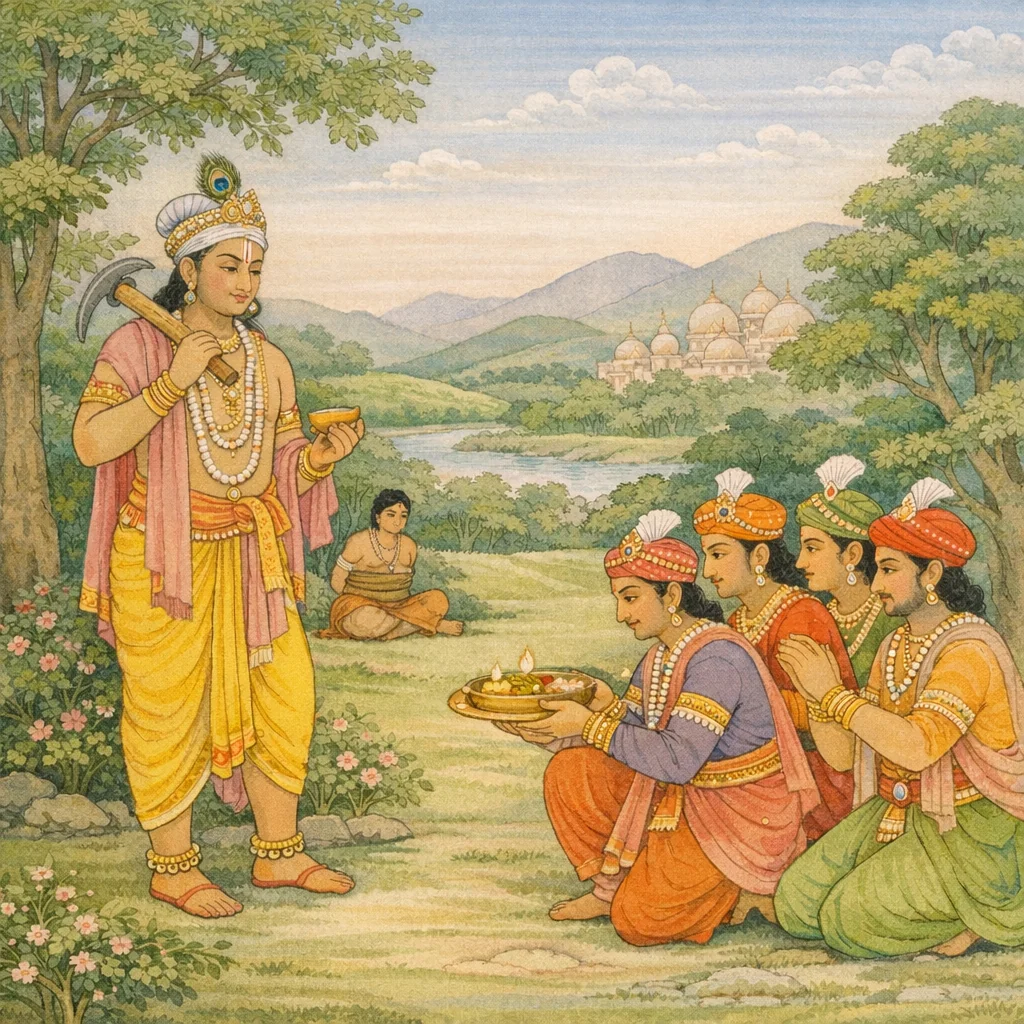
Maitreya asks about Balarama's feats. Parashara narrates how Samba abducted Duryodhana's daughter. The Kauravas captured Samba. The Yadavas wanted war, but Balarama went alone to Hastinapura to negotiate. The Kauravas insulted the Yadavas. Enraged, Balarama used his plow to drag the city toward the river. Terrified, the Kauravas surrendered Samba and his bride. Balarama forgave them.
Shlokas
Verse 1
भूय एवाहम् इच्छामि बलभद्रस्य धीमतः श्रोतुं पराक्रमं ब्रह्मन् तन् ममाख्यातुम् अर्हसि
Once again, O venerable sage, I wish to hear of the valorous deeds of the wise Balabhadra. Be pleased to relate them to me.
Verse 2
यमुनाकर्षणादीनि श्रुतानि भगवन् मया तत् कथ्यतां महाभाग यद् अन्यत् कृतवान् बलः
O revered one, I have heard of the drawing back of the Yamunā and other such deeds. Tell me, O greatly fortunate sage, what other feats Bala (Balarāma) performed.
Verse 3
मैत्रेय श्रूयतां कर्म यद् रामेणाभवत् कृतम् अनन्तेनाप्रमेयेन शेषेण धरणीभृता
O Maitreya, listen: I shall relate the deed accomplished by Rāma—brought to completion through Śeṣa, the Earth-bearer, that immeasurable Ananta.
Verse 4
दुर्योधनस्य तनयां स्वयंवरकृतक्षणाम् बलाद् आदत्तवान् वीरः साम्बो जाम्बवतीसुतः
At the very moment Duryodhana’s daughter began her svayaṃvara, the heroic Sāmba—son of Jāmbavatī—seized her by force and carried her away.
Verse 5
ततः क्रुद्धा महावीर्याः कर्णदुर्योधनादयः भीष्मद्रोणादयश् चैनं बबन्धुर् युधि निर्जितम्
Then, enraged, those heroes of mighty prowess—Karna, Duryodhana, and the rest—together with Bhīṣma, Droṇa, and their allies, bound him fast after overcoming him in battle.
Verse 6
तच् छ्रुत्वा यादवाः सर्वे क्रोधं दुर्योधनादिषु मैत्रेय चक्रुश् चक्रुश् च तान् निहन्तुं महोद्यमम्
Hearing this, O Maitreya, all the Yādavas blazed with wrath against Duryodhana and the rest; again and again they resolved upon a mighty undertaking—to slay them.
Verse 7
तान् निवार्य बलः प्राह मदलोलकलाक्षरम् मोक्ष्यन्ति ते मद्वचनाद् यास्याम्य् एको हि कौरवान्
Holding them back, Bala spoke—his eyes wavering with intoxication: “At my word they will release you. I alone shall go to the Kauravas.”
Verse 8
बलदेवस् ततो गत्वा नगरं नागसाह्वयम् बाह्योपवनमध्ये ऽभून् न विवेश च तत् पुरम्
Then Baladeva went to the city called Nāgasāhvaya; yet he did not enter that town, but remained amid the outer pleasure-groves.
Verse 9
बलम् आगतम् आज्ञाय भूपा दुर्योधनादयः गाम् अर्घ्यम् उदकं चैव रामाय प्रत्यवेदयन्
Learning that Bala had arrived, the kings—Duryodhana and the others—presented to Rāma the customary honors of welcome: a cow, arghya, and water.
Verse 10
गृहीत्वा विधिवत् सर्वं ततस् तान् आह कौरवान् आज्ञापयत्य् उग्रसेनः साम्बम् आशु विमुञ्चत
Having duly received everything in proper form, Ugrasena addressed the Kauravas and commanded: “Release Sāmba at once.”
Verse 11
ततस् ते तद्वचः श्रुत्वा भीष्मद्रोणादयो द्विज कर्णदुर्योधनाद्याश् च चुक्रुधुर् द्विजसत्तम
Then, O best of Brahmins, having heard those words, Bhīṣma, Droṇa, and the others—together with Karṇa and Duryodhana and their party—were stirred into anger.
Verse 12
ऊचुश् च कुपिताः सर्वे बाह्लिकाद्याश् च कौरवाः अराज्यार्हं यदोर् वंशम् अवेक्ष्य मुसलायुधम्
Then all the Kauravas—Bāhlika and the rest—spoke in anger. Seeing the Yadu line, unfit for sovereignty, bearing clubs as their weapons, they poured forth their wrath.
Verse 13
भो भोः किम् एतद् भवता बलभद्रेरितं वचः आज्ञां कुरुकुलोत्थानां यादवः कः प्रदास्यति
“Ho! Ho! What is this speech you utter—words set in motion by Balabhadra? What Yādava would ever submit to the command of those born of the Kuru line?”
Verse 14
उग्रसेनो ऽपि यद्य् आज्ञां कौरवाणां प्रदास्यति तद् अलं पाण्डुरैश् छत्रैर् नृपयोग्यैर् विडम्बितैः
If even Ugrasena were to submit to the Kauravas’ command, then let these pale royal umbrellas—fit only for true kings—be cast aside in mockery; for the marks of sovereignty do not befit one who bows to another.
Verse 15
तद् गच्छ बल मा वा त्वं साम्बम् अन्यायचेष्टितम् विमोक्ष्यामो न भवतो नोग्रसेनस्य शासनात्
Therefore, go back, O Bala; do not proceed. As for Sāmba, whose conduct is unlawful, we shall not release him at your request, nor shall we transgress the command of Ugrasena.
Verse 16
प्रणतिर् या कृतास्माकं मान्यानां कुकुरान्धकैः ननाम सा कृता केयम् आज्ञा स्वामिनि भृत्यतः
That reverent bow which the Kukuras and Andhakas once offered to us, their honored elders, has now been forced low. What command is this, O lord, that a servant dares to lay upon his master?
Verse 17
गर्वम् आरोपिता यूयं समानासनभोजनैः को दोषो भवतां नीतिर् यत् प्रीत्या नावलोकिता
You have been puffed up with pride because you were treated as equals, sharing the same seat and the same food. If you were not regarded with affection, what fault is there in your conduct—what rule of propriety has been broken?
Verse 18
अस्माभिर् अर्घो भवतो यो ऽयं बल निवेदितः प्रेम्णैतन् नैतद् अस्माकं कुलाद् युष्मत्कुलोचितम्
This arghya-offering that we have presented to you with affection is but a token of devotion. Yet in truth it does not befit our lineage to offer what is proper only to your noble house.
Verse 19
इत्य् उक्त्वा कुरवः सर्वे न मुञ्चामो हरेः सुतम् कृतैकनिश्चयास् तूर्णं विविशुर् गजसाह्वयम्
Having spoken thus, all the Kurus—firm in a single settled resolve—declared, “We will not release Hari’s son,” and in haste they entered Gajasāhvaya (Hastināpura).
Verse 20
मत्तः कोपेन चाघूर्णस् ततो ऽधिक्षेपजन्मना उत्थाय पार्ष्ण्या वसुधां जघान स हलायुधः
Then Halāyudha (Balarāma), reeling in drunken wrath and provoked by an insult, sprang up and struck the earth with his heel, as though the very ground itself trembled.
Verse 21
ततो विदारिता पृथ्वी पार्ष्णिघातान् महात्मनः आस्फोटयाम् आस तदा दिशः शब्देन पूरयन्
Then the earth split open beneath the heel-strikes of that great-souled one; he stamped again and again, and the thunder of that sound filled all the quarters.
Verse 22
उवाच चातिताम्राक्षो भृकुटीकुटिलाननः
Then he spoke—his eyes were fiercely reddened, and his face was twisted by a knotted, furrowed brow.
Verse 23
अहो मदावलेपो ऽयम् असाराणां दुरात्मनाम् कौरवाणाम् आधिपत्यम् अस्माकं किल कालजम् उग्रसेनस्य येनाज्ञां मन्यन्ते ऽद्यापि लङ्घनम्
Ah—what drunken pride possesses those hollow, wicked Kauravas! They imagine that, with time, sovereignty has ‘ripened’ into a right for them; and in that delusion they still deem it proper to overstep Ugrasena’s command.
Verse 25
धिङ् मनुष्यशतोच्छिष्टे तुष्टिर् एषां नृपासने पारिजाततरोः पुष्पमञ्जरीर् वनिताजनः बिभर्ति यस्य भृत्यानां सो ऽप्य् एषां न महीपतिः
Shame on their delight in a kingly seat that is but the leavings of a hundred men! Even if a ruler’s attendants are adorned by women with clusters of blossoms from the celestial pārijāta tree, one who lives by such vanity is not truly lord of the earth.
Verse 26
समस्तभूभृतां नाथ उग्रसेनः स तिष्ठतु अद्य निष्कौरवाम् उर्वीं कृत्वा यास्यामि तत्पुरीम्
Let Ugrasena—lord among all the rulers of the earth—stand established today. Having made the world free from the Kauravas, I shall now depart for his city (the capital).
Verse 27
कर्णं दुर्योधनं द्रोणम् अद्य भीष्मं सबाह्लिकम् दुःशासनादीन् भूरिं च भूरिश्रवसम् एव च
“Today I shall strike down Karṇa, Duryodhana, and Droṇa; Bhīṣma too, along with Bāhlika; and Duḥśāsana and the rest—Bhūri, and Bhūriśravas as well.”
Verse 28
सोमदत्तं शलं भीमम् अर्जुनं सयुधिष्ठिरम् यमजौ कौरवांश् चान्यान् हत्वा साश्वरथद्विपान्
Having slain Somadatta, Śala, Bhīma, Arjuna together with Yudhiṣṭhira, the twin sons Nakula and Sahadeva, and other Kauravas as well—along with their horses, chariots, and elephants—he brought the host to utter ruin.
Verse 29
वीरम् आदाय तं साम्बं सपत्नीकं ततः पुरीम् द्वारकाम् उग्रसेनादीन् गत्वा द्रक्ष्यामि बान्धवान्
Taking that valiant Sāmba—together with his wife—I shall then go to the city of Dvārakā, and there behold my kinsmen, beginning with Ugrasena.
Verse 31
इत्य् उक्त्वा मदरक्ताक्षः कर्षणाधोमुखं हलम् प्राकारवप्रे विन्यस्य चकर्ष मुसलायुधः
Having spoken thus, the strong one—his eyes reddened with intoxicated fury—set his plough with its blade turned downward upon the city’s rampart and, mace in hand, dragged it, tearing at the very fortifications.
Verse 32
आघूर्णितं तत् सहसा ततो वै हस्तिनापुरम् दृष्ट्वा संक्षुब्धहृदयाश् चुक्रुशुः सर्वकौरवाः
Then, all at once, Hastināpura was violently shaken; and when the Kauravas beheld it, their hearts thrown into turmoil, they cried out in alarm.
Verse 33
राम राम महाबाहो क्षम्यतां क्षम्यतां त्वया उपसंह्रियतां कोपः प्रसीद मुसलायुध
“Rāma—Rāma, mighty-armed one—please forgive, please forgive. Restrain your anger; be gracious, O bearer of the club.”
Verse 34
एष साम्बः सपत्नीकस् तव निर्यातितो बल अविज्ञातप्रभावाणां क्षम्यताम् अपराधिनाम्
O mighty one, here is Sāmba with his wife, now being sent forth from your presence. Forgive these offenders, for they did not know the true measure of your power.
Verse 35
ततो निर्यातयाम् आसुः साम्बं पत्न्या समन्वितम् निष्क्रम्य स्वपुरात् तूर्णं कौरवा मुनिपुंगव
Then the Kurus, O best of sages, promptly sent Sāmba away with his wife, and he swiftly departed from their city.
Verse 36
भीष्मद्रोणकृपादीनां प्रणम्य वदतां प्रियम् क्षान्तम् एव मयेत्य् आह बलो बलवतां वरः
Having bowed to Bhīṣma, Droṇa, Kṛpa and the other venerable elders, and hearing their kindly words, Balarāma—best among the strong—said, “Let it be forgiven by me alone; I deem it endured and absolved.”
Verse 37
अद्याप्य् आघूर्णिताकारं लक्ष्यते तत् पुरं द्विज एष प्रभावो रामस्य बलशौर्योपलक्षणः
Even today, O twice-born one, that city is seen bearing the marks of having been shaken into disarray; such is Rāma’s manifest power, a visible sign of his strength and heroic prowess.
Verse 38
ततस् तु कौरवाः साम्बं संपूज्य हलिना सह प्रेषयाम् आसुर् उद्वाहधनभार्यासमन्वितम्
Then the Kauravas, having duly honoured Sāmba, sent him back with Halin (Balarāma), endowed with wedding gifts and wealth, and accompanied by his wife.
Frequently Asked Questions
He restrains the Yādavas to prevent a total war and asserts dharma through measured royal demand (Ugrasena’s order). The episode highlights controlled power (bala under maryādā) before it escalates into cosmic threat when insult persists.
The hala functions as a symbol of Śeṣa-like foundation-power: he can ‘move the earth’ itself. The act dramatizes that political arrogance collapses before divine-empowered dharma, yet the resolution ends in forgiveness—restoring social order.
It critiques pride in sovereignty divorced from rightful conduct, emphasizes obedience to legitimate command, and shows that true authority is stabilized by humility and elder-guided reconciliation rather than mere force.