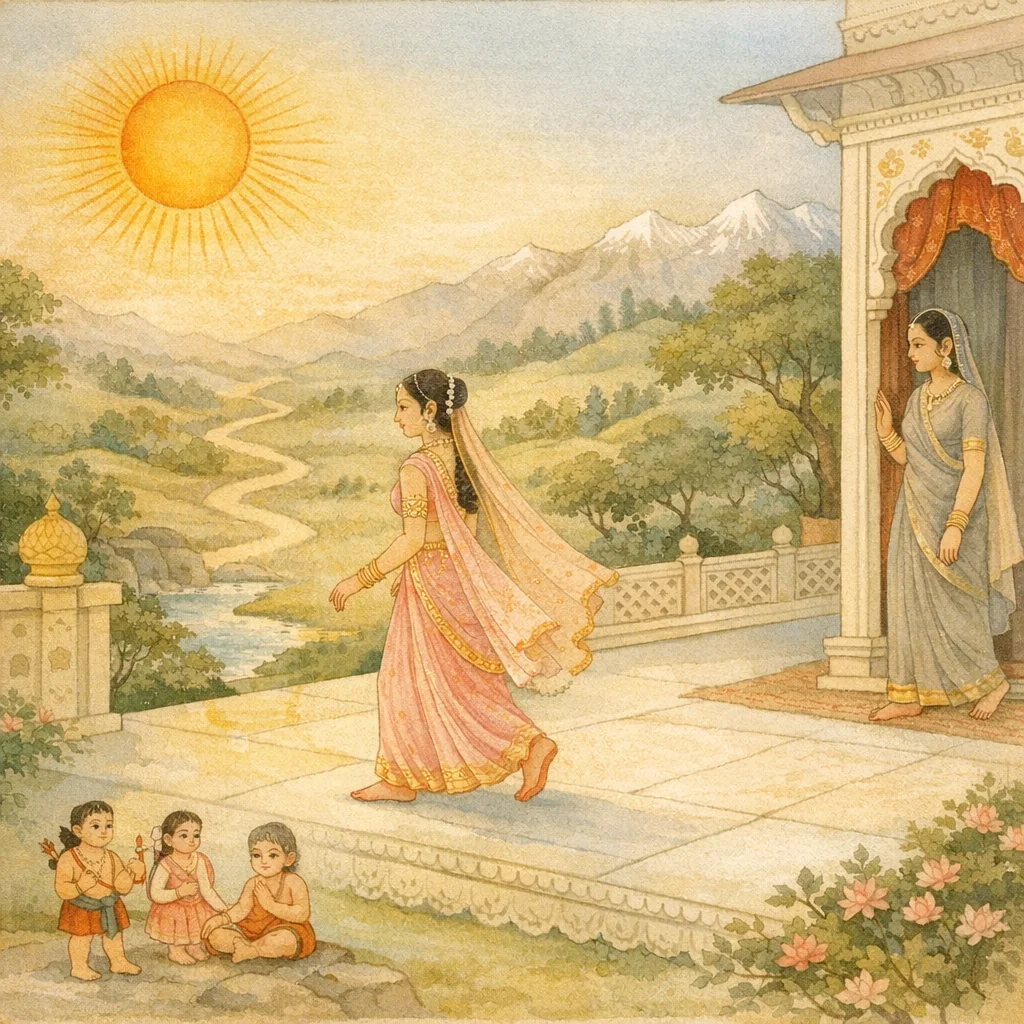
Saṃjñā–Chāyā Upākhyāna: Sūrya-tejas, Substitution, and the Birth of Manu, Yama, and Yamunā
This adhyāya, as narrated by Sūta, recounts a mythic etiological episode centered on Sūrya (Vivasvān) and his consort Saṃjñā (Tvāṣṭrī, also called Sureṇukā). Unable to endure the overwhelming tejas of her husband’s solar form, Saṃjñā suffers in mind and body. Before departing to her father’s house, she creates a substitute presence—Chāyā, a māyā-formed shadow-double—and commands her to remain in the household without deviation, caring for Saṃjñā’s children. The chapter lists Saṃjñā’s offspring by Sūrya—Manu Śrāddhadeva and the twins Yama and Yamunā—and highlights tensions between appearance and reality, duty and endurance, and the ethics of concealment. Esoterically, it invites contemplation of tejas as a divine attribute that can overwhelm embodied beings, and of chāyā as a liminal means of preserving dharma when direct presence cannot be sustained. It also anchors the genealogy of key cosmological figures: Manu as progenitor of human order, Yama as regulator of death and justice, and Yamunā as the sacred river in personal form.
Shlokas
Verse 1
सूत उवाच । विवस्वान्कश्यपाज्जज्ञे दाक्षायण्यां महाऋषेः । तस्य भार्याऽभवत्संज्ञा त्वाष्ट्री देवी सुरेणुका
Sūta said: From the great sage Kaśyapa, in Dākṣāyaṇī, the daughter of Dakṣa, Vivasvān was born. His wife was Saṃjñā, the divine daughter of Tvaṣṭṛ, also known as Sureṇukā.
Verse 2
मुनेऽसहिष्णुना तेन तेजसा दुस्सहेन च । भर्तृरूपेण नातुष्यद्रूप यौवनशालिनी
O sage, she—radiant with beauty and youth—could not endure that unbearable, overpowering tejas; and even when he appeared in the form of a husband, she found no contentment.
Verse 3
आदित्यस्य हि तद्रूपमसहिष्णुस्तु तेजसः । दह्यमाना तदोद्वेगमकरोद्वरवर्णिनी
Unable to endure the blazing radiance of the Sun in that form, the fair-complexioned lady—burned by its heat—became agitated and distressed.
Verse 4
ऋषेऽस्यां त्रीण्यपत्यानि जनयामास भास्करः । संज्ञायां तु मनुः पूर्वं श्राद्धदेवः प्रजापतिः
O Sage, in her the Sun-god Bhāskara begot three children. And from Saṃjñā, first of all, Manu—Śrāddhadeva, the Prajāpati—was born.
Verse 5
यमश्च यमुना चैव यमलौ संबभूवतुः । एवं हि त्रीण्यपत्यानि तस्यां जातानि सूर्य्यतः
Yama and Yamunā were born as a twin pair. Thus, from her (Saṃjñā), three children were indeed born of Sūrya.
Verse 6
संवर्तुलं तु तद्रूपं दृष्ट्वा संज्ञा विवस्वतः । असहंती ततश्छायामात्मनस्साऽ सृजच्छुभाम्
Seeing that overpowering, blazing form of Vivasvān, Saṃjñā could not endure it; therefore, from her own being she created an auspicious shadow-form (Chāyā).
Verse 7
मायामयी तु सा संज्ञामवोचद्भक्तितश्शुभे । किं करोमीह कार्य्यं ते कथयस्व शुचिस्मिते
Then that Māyā-formed one spoke with devotion: “O auspicious lady, tell me—what task shall I accomplish here for you? Speak, O you of the pure smile.”
Verse 8
संज्ञोवाच । अहं यास्यामि भद्रं ते ममैव भवनं पितुः । त्वयैतद्भवने सत्यं वस्तव्यं निर्विकारतः
Saṃjñā said: “I shall go—may auspiciousness be yours—to my father’s own house. But you, O Satya, must truly remain in this house, abiding without any change or agitation.”
Verse 9
इमौ मे बालकौ साधू कन्या चेयं सुमध्यमा । पालनीयाः सुखेनैव मम चेदिच्छसि प्रियम्
“These two boys of mine are good and well-behaved, and this maiden is slender-waisted. If you desire what is dear to me, then care for them gently and keep them in comfort.”
Verse 10
छायोवाच । आकेशग्रहणाद्देवि सहिष्येऽहं सुदुष्कृतम् । नाख्यास्यामि मतं तुभ्यं गच्छ देवि यथासुखम्
Chāyā said: “O Goddess, because you seized me by the hair, I shall endure this grievous wrongdoing. I will not disclose my opinion to you. Go, O Devi, as you please.”
Verse 11
सूत उवाच । इत्युक्ता साऽगमद्देवी व्रीडिता सन्निधौ पितुः । पित्रा निर्भर्त्सिता तत्र नियुक्ता सा पुनः पुनः
Sūta said: Thus addressed, the Goddess went—ashamed—into the presence of her father. There she was rebuked by her father and, again and again, pressed into the same course of action.
Verse 12
अगच्छद्वडवा भूत्वाऽऽच्छाद्यरूपं ततस्त्वकम् । कुरुंस्तदोत्तरान्प्राप्य नृणां मध्ये चचार ह
Then she went forth, assuming the form of a mare and concealing her true appearance with a covering. Reaching the lands of the Kurus and the northern regions, she moved about among men.
Verse 13
संज्ञां तां तु रविर्मत्वा छायायां सुसुतं तदा । जनयामास सावर्णिं मनुं वै सविता किल
But Sūrya, taking her to be Saṁjñā, then begot upon Chāyā a noble son—indeed, Savitṛ generated Sāvarṇi Manu.
Verse 14
संज्ञाऽनु प्रार्थिता छाया सा स्वपुत्रेऽपि नित्यशः । चकाराभ्यधिकं स्नेहं न तथा पूर्वजे सुते
Thus urged by Saṁjñā, Chāyā, day after day, showed greater affection toward her own son, but not so toward the elder-born son.
Verse 15
अनुजश्चाक्षमस्तत्तु यमस्तं नैव चक्षमे । स सरोषस्तु बाल्याच्च भाविनोऽर्थस्य गौरवात्
But his younger brother Yama could not endure that; he would not tolerate it. Still youthful, and giving great weight to what he believed would follow from it, he became filled with anger.
Verse 16
छायां संतर्जयामास यदा वैवस्वतो यमः । तं शशाप ततः क्रोधाच्छाया तु कलुषीकृता
When Vaivasvata Yama threatened Chāyā, she—stained by agitation—cursed him in anger.
Verse 17
चरणः पततामेष तवेति भृशरोषितः । यमस्ततः पितुस्सर्वं प्रांजलिः प्रत्यवेदयत्
Greatly enraged, Yama declared, “Let this foot fall upon you!” Thereafter, with folded hands, he reported the entire matter to his father.
Verse 18
भृशं शाप भयोद्विग्नस्संज्ञावाक्यैर्विचेष्टितः । मात्रा स्नेहेन सर्वेषु वर्तितव्यं सुतेषु वै
Greatly shaken by fear of a curse, he sought to manage the matter through hints and indirect words. Truly, a mother should act with loving affection toward all her children equally.
Verse 19
स्नेहमस्मास्वपाकृत्य कनीयांसं बिभर्ति सा । तस्मान्मयोद्यतः पादस्तद्भवान् क्षंतुमर्हति
Setting aside her affection for us, she supports the younger one. Therefore my foot has been raised in anger—may you please forgive this offense.
Verse 20
शप्तोहमस्मि देवेश जनन्या तपतांवर । तव प्रसादाच्चरणो न पतेन्मम गोपते
I have been cursed, O Lord of the gods, by my mother—the best among ascetics. Yet, by Your grace, O Protector and Lord, may my feet not slip; may I not fall from the path.
Verse 21
सवितोवाच । असंशयं पुत्र महद्भविष्यत्यत्र कारणम् । येन त्वामाविशत्क्रोधो धर्मज्ञं सत्यवादिनम्
Savita said: “Undoubtedly, my son, there is a great cause behind this. For what reason did anger enter you—one who knows dharma and speaks the truth?”
Verse 22
न शक्यते तन्मिथ्या वै कर्त्तुं मातृवचस्तव । कृमयो मांसमादाय गमिष्यंति महीतले
It is not possible to make your mother’s statement false. Worms will take away the flesh and move about upon the earth.
Verse 23
तद्वाक्यं भविता सत्यं त्वं च त्रातौ भविष्यसि । कुरु तात न संदेहं मनश्चाश्वास्य स्वं प्रभो
“That statement will indeed prove true, and you too will become a protector (a saviour). Do it, dear one—do not doubt. O Lord, first steady and reassure your own mind.”
Verse 24
सूत उवाच । इत्युक्त्वा तनयं सूर्यो यमसंज्ञं मुनीश्वर । आदित्यश्चाब्रवीत्तान्त्तु छायां क्रोधसमन्वितः
Sūta said: Having thus addressed his son—named Yama—O best of sages, the Sun-god (Āditya) then spoke to Chāyā, filled with anger.
Verse 25
सूर्य उवाच । हे प्रिये कुमते चंडि किं त्वयाऽऽचरितं किल । किं तु मेऽभ्यधिकः स्नेह एतदाख्यातुमर्हसि
Sūrya said: “O beloved one—O misguided-minded Caṇḍī—what indeed have you done? Yet because my affection for you is greater, you ought to disclose this to me.”
Verse 26
सूत उवाच । सा रवेर्वचनं श्रुत्वा यथा तथ्यं न्यवेदयत् । निर्दग्धा कामरविणा सांत्वयामास वै तदा
Sūta said: Having heard the words of Ravi (the Sun), she reported the matter exactly as it truly was. Then, scorched by the sun of Kāma—desire—she at that time sought indeed to console and soothe (him/her).
Verse 27
छायोवाच । तवातितेजसा दग्धा इदं रूपं न शोभते । असहंती च तत्संज्ञा वने वसति शाद्वले
Chāyā said: “Scorched by the overwhelming radiance of your splendor, this form no longer shines with beauty. Unable to bear that state, she—known by that very name—dwells in the forest, upon the grassy ground.”
Verse 28
श्लाघ्या योगबलोपेता योगमासाद्य गोपते । अनुकूलस्तु देवेश संदिश्यात्ममयं मतम्
O Gopati, Lord of beings, she—worthy of praise and endowed with the power of yoga—having attained yogic absorption, conveyed to Deveśa, the Lord of gods, graciously disposed, a teaching rooted in the Self.
Verse 29
रूपं निवर्तयाम्यद्य तव कांतं करोम्यहम् । सूत उवाच । तच्छ्रुत्वाऽपगतः क्रोधो मार्तण्डस्य विवस्वतः
“Today I shall restrain my form and make it pleasing to you.” Sūta said: Hearing this, the anger of Mārtaṇḍa—Vivasvān, the Sun—subsided.
Verse 30
भ्रमिमारोप्य तत्तेजः शातयामास वै मुनिः । ततो विभ्राजितं रूप तेजसा संवृतेन च
Placing that radiance upon the whirling disc, the sage indeed caused it to be cut down. Then a form, brilliantly manifest, appeared—yet it was veiled and enveloped by its own effulgence.
Verse 31
कृतं कांततरं रूपं त्वष्ट्रा तच्छुशुभे तदा । ततोभियोगमास्थाय स्वां भार्य्यां हि ददर्श ह
Then Tvaṣṭṛ fashioned a form of even greater beauty, and it shone splendidly. Thereupon, moved by intense longing, he beheld his own wife.
Verse 32
अधृष्यां सर्वभूतानां तेजसा नियमेन च । सोऽश्वरूपं समास्थाय गत्वा तां मैथुनेच्छया
Unassailable by all beings—by the force of his splendor and by the power of his disciplined resolve—he assumed the form of a horse and went to her, driven by desire for union.
Verse 33
मैथुनाय विचेष्टंतीं परपुंसोभिशंकया । मुखतो नासिकायां तु शुक्रं तत् व्यदधान्मुने
O sage, fearing that another man might approach her while she was making movements for union, he caused his semen to be discharged—passing from the mouth into the nostril.
Verse 34
देवौ ततः प्रजायेतामश्विनौ भिषजां वरौ । नासत्यौ तौ च दस्रौ च स्मृतौ द्वावश्विनावपि
Thereafter were born the two divine Aśvins, the foremost among healers. They are remembered as Nāsatya and Dasra—indeed, the pair known as the two Aśvins.
Verse 35
इति श्रीशिवमहापुराणे पञ्चम्यामुमासंहितायां मन्वन्तरकीर्तने वैवस्वतवर्णनं नाम पचत्रिंशोऽध्यायः
Thus, in the Śrī Śiva Mahāpurāṇa—within the fifth book, the Umāsaṃhitā, in the section recounting the Manvantaras—ends the thirty-fifth chapter, entitled “The Description of the Vaivasvata (Manvantara).”
Verse 36
पत्या तेन गृहं प्रायात्स्वं सती मुदितानना । मुमुदातेऽथ तौ प्रीत्या दंपतो पूर्वतोधिकम्
With her husband, Satī—her face radiant with joy—returned to her own home. Thereafter, that divine couple rejoiced together in mutual love, even more than before.
Verse 37
यमस्तु कर्मणा तेन भृशं पीडितमानसः । धर्मेण रंजयामास धर्मराज इमा प्रजाः
But Yama—his mind sorely afflicted by that deed—then gladdened these beings through righteousness, through dharma. Thus did Dharmarāja, the Lord of Justice, guide the people by the rule of dharma.
Verse 38
लेभे स कर्मणा तेन धर्मराजो महाद्युतिः । पितॄणामाधिपत्यं च लोकपालत्वमेव च
By that very deed, the greatly radiant Dharmarāja attained sovereignty over the Pitṛs (the ancestral realm) and also the status of a Lokapāla, a guardian of the worlds.
Verse 39
मनुः प्रजापतिस्त्वासीत्सावर्णिस्स तपोधनः । भाव्यः स कर्मणा तेन मनोस्सावर्णिकेंतरे
Sāvarṇi was indeed Manu, the Prajāpati, lord of progeny, a treasury of austerity. By the very merit of his deeds, he shall become Manu again in the Sāvarṇi Manvantara, following Vaivasvata Manu.
Verse 40
मेरुपृष्ठे तपो घोरमद्यापि चरते प्रभुः । यवीयसी तयोर्या तु यमी कन्या यशस्विनी
Even today the Lord continues to perform fierce austerities upon the back of Mount Meru. The younger daughter born to that pair was the illustrious maiden Yamī.
Verse 41
अभवत्सा सरिच्छ्रेष्ठा यमुना लोकपा वनी । मनुरित्युच्यते लोके सावर्णिरिति चोच्यते
Then Yamunā became the foremost among rivers, protectress of the worlds, the goddess of the forest. In the world she is spoken of as “Manu”, and she is also called “Sāvarṇi”.
Verse 42
य इदं जन्म देवानां शृणुयाद्धारयेत्तु वा । आपदं प्राप्य मुच्येत प्राप्नुयात्सुमहद्यशः
Whoever listens to this account of the gods’ origin—or even retains it in memory—when adversity arises is freed from that calamity and attains very great renown.
Frequently Asked Questions
The chapter narrates Saṃjñā’s inability to endure Sūrya’s intense tejas, her creation of Chāyā as a substitute to maintain household continuity, and the identification of her children with Sūrya—Manu (Śrāddhadeva), and the twins Yama and Yamunā.
Sūrya’s tejas symbolizes undiluted divine potency that can exceed embodied capacity; Chāyā functions as a liminal ‘mediating form’ (māyāmayī substitute) that preserves dharma and caregiving obligations when direct presence becomes existentially unsustainable.
No direct manifestation of Śiva or Umā/Gaurī is foregrounded in the sampled verses; instead, the adhyāya uses a solar-genealogical upākhyāna (Sūrya–Saṃjñā–Chāyā) as an instructive analog for themes relevant to Śaiva theology—power, mediation, and sustaining order.