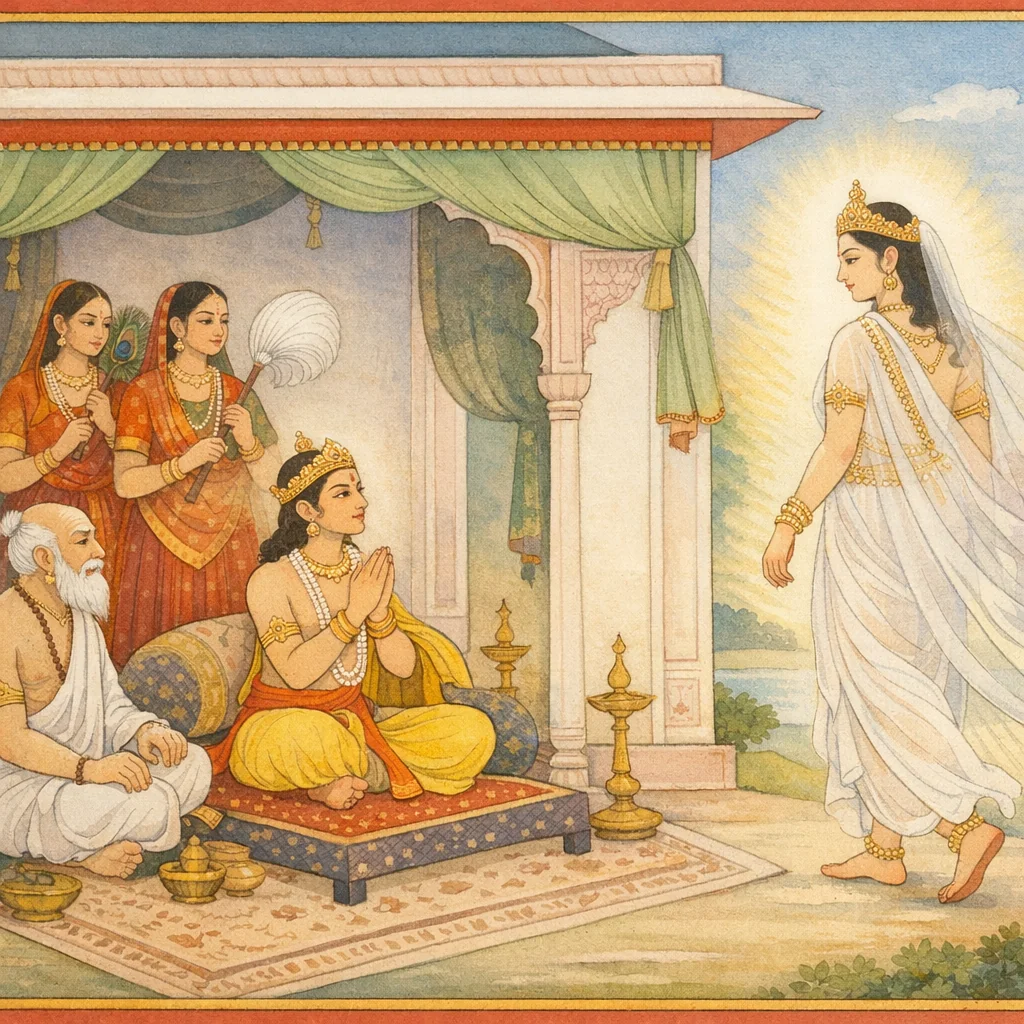
Adhyaya 125
Āśā-prabhava (आशाप्रभव) — On the Rise and Power of Hope/Expectation (Sumitra Itihāsa Begins)
Upa-parva: Rājadharmānuśāsana (राजधर्मानुशासन) — Discourse on the Duties of Kings
Yudhiṣṭhira addresses Bhīṣma, noting prior emphasis on śīla (character) and requesting clarification on the origin and nature of āśā (hope/expectation). He frames his doubt through personal experience: his strong expectation regarding Suyodhana (Duryodhana) and the subsequent collapse of that expectation, which he identifies as a profound source of suffering. Yudhiṣṭhira generalizes that hope arises powerfully in all persons and that when obstructed it yields intense distress, even a felt proximity to death. Bhīṣma responds by introducing an instructive itihāsa concerning King Sumitra of the Haihayas. The narrative begins with Sumitra pursuing a wounded deer through varied terrain into a great forest, where he arrives exhausted at an ascetics’ hermitage. Received with ritual hospitality, he explains his lineage and circumstance, then articulates that the keenest pain is not loss of royal markers but the frustration of hope. He asks the sages to resolve his inquiry: what in the world is greater than hope, and what is truly rare/difficult to obtain—requesting a careful, non-disruptive explanation suited to their ascetic discipline.
Chapter Arc: युधिष्ठिर (कुन्तीनन्दन) भीष्म से विनयपूर्वक पूछते हैं—‘शील’ क्या है, उसका लक्षण क्या है, और वह कैसे प्राप्त होता है; क्योंकि धर्म का सूक्ष्म सार उसी में छिपा है। → भीष्म इन्द्र–प्रह्लाद की कथा छेड़ते हैं: दैत्येन्द्र प्रह्लाद के भीतर शील, सत्य, सदाचार, बल और लक्ष्मी जैसे गुणों का वास है, पर समय-चक्र ऐसा आता है कि ये गुण देह से अलग होकर चलने लगते हैं। ब्राह्मण उपदेशक-रूप में प्रह्लाद के पास आते हैं; फिर एक ब्राह्मण वर माँगता है—‘राजन्, मुझे आपका शील चाहिए।’ वरदान की मर्यादा और गुण-त्याग का भय प्रह्लाद के मन में टकराता है। → प्रह्लाद के शरीर से एक-एक कर तेजस्वी पुरुषाकार गुण प्रकट होते हैं; अंततः ‘शील’ स्वयं विशालकाय पुरुष के रूप में सामने आता है। प्रह्लाद पूछते हैं—‘तुम कौन हो?’ उत्तर मिलता है—‘मैं शील हूँ; तुम्हारे द्वारा त्यक्त होकर जा रहा हूँ।’ → कथा का निष्कर्ष यह स्थापित करता है कि शील कोई बाहरी आभूषण नहीं, राजधर्म का मूलाधार है; उसके क्षीण होते ही सत्य, सदाचार, बल और लक्ष्मी भी टिकते नहीं। भीष्म इस उपदेश को युधिष्ठिर के आचरण-योग्य बताते हैं—जैसा धृतराष्ट्र ने अपने पुत्र को कहा था, वैसा ही तुम भी करो। → गुणों के देह-त्याग की यह प्रक्रिया आगे किन कारणों से होती है और शील की पुनः-प्राप्ति का उपाय क्या है—यह प्रश्न अगले प्रसंग की ओर संकेत करता है।
Shlokas
Verse 1
ऑपन-माजल छा जि: चतुर्विशर्त्याधेकशततमो< ध्याय: इन्द्र हि अप प्रह्नादकी कथा--शीलका प्रभाव, शीलके अ धर्म, सत्य, सदाचार, बल और लक्ष्मीके न रहनेका वर्णन युधिछिर उवाच इमे जना नरश्रेष्ठ प्रशंसन्ति सदा भुवि । धर्मस्य शीलमेवादौ ततो मे संशयो महान्,युधिष्ठिरने पूछा--नरश्रेष्ठ पितामह! भूमण्डलके ये सभी मनुष्य सर्वप्रथम धर्मके अनुरूप शीलकी ही अधिक प्रशंसा करते हैं; अतः इस विषयमें मुझे बड़ा भारी संदेह हो गया है
Yudhiṣṭhira said: “O best of men, venerable grandsire! People everywhere on this earth always praise, first and foremost, good conduct (śīla) as the very foundation of dharma. Because of this, a great doubt has arisen in my mind.”
Verse 2
यदि तच्छक्यमस्माभिर्ञातुं धर्मभूतां वर । श्रोतुमिच्छामि तत् सर्व यथैतदुपलभ्यते,धर्मात्माओंमें श्रेष्ठ! यदि मै उसे जान सकूँ तो जिस प्रकार शीलकी उपलब्धि होती है, वह सब सुनना चाहता हूँ
Yudhiṣṭhira said: “O best among the righteous, if it is possible for me to know what is truly of the nature of dharma, I wish to hear it all—how this right conduct, this virtue (śīla), is to be understood and attained.”
Verse 3
कथं तत् प्राप्पते शीलं श्रोतुमिच्छामि भारत । किंलक्षणं च तत् प्रोक्तं ब्रूहि मे वदतां वर,भारत! वह शील कैसे प्राप्त होता है? यह सुननेकी मेरी बड़ी इच्छा है। वक्ताओंमें श्रेष्ठ पितामह! उसका क्या लक्षण बताया गया है? यह मुझसे कहिये
Yudhiṣṭhira asked: “O Bhārata, I wish to hear how that noble conduct (śīla) is attained. And what marks define it, as it has been taught? O best of speakers, tell me—O Bhārata.”
Verse 4
भीष्म उवाच पुरा दुर्योधनेनेह धृतराष्ट्राय मानद । आखेयातं तप्यमानेन श्रियं दृष्टवा तथागताम्
Bhīṣma said: “Formerly, O bestower of honor, in this very matter Duryodhana related to Dhṛtarāṣṭra what he had witnessed—how, as he burned with inner torment, he saw prosperity and success come to the other side.”
Verse 5
इन्द्रप्रस्थे महाराज तव सभ्रातृकस्य ह । सभायां चाह वचन तत् सर्व शृणु भारत
Bhīṣma said: “O great king, in Indraprastha—when you were together with your brothers—there was a statement made in the royal assembly. O Bhārata, listen to that entire account.”
Verse 6
भवततस्तां सभां दृष्टवा समृद्धि चाप्यनुत्तमाम् । दुर्योधनस्तदा55सीन: सर्व पित्रे न्यवेदयत्
Bhīṣma said: Having seen that assembly-hall of yours, along with its unsurpassed splendor and prosperity, Duryodhana, seated there at that time, reported everything to his father.
Verse 7
भीष्मजीने कहा--दूसरोंको मान देनेवाले महाराज! भरतनन्दन! पहले इन्द्रप्रस्थमें (राजसूययज्ञके समय) भाइयोंसहित तुम्हारी वैसी अदभुत श्री-सम्पत्ति, वह परम उत्तम सभा और समृद्धि देखकर संतप्त हुए दुर्योधनने कौरवसभामें बैठकर पिता धृतराष्ट्रसे अपनी गहरी चिन्ता प्रकट की--सारी मनोव्यथा कह सुनायी। उसने सभामें जो बातें कही थीं, वह सब सुनो ।। श्र॒ुत्वा हि धृतराष्ट्रश्न दुर्योधनवचस्तदा । अब्रवीत् कर्णसहितं दुर्योधनमिदं वच:,उस समय धृतराष्ट्रने दुर्योधनकी बात सुनकर कर्णसहित उससे इस प्रकार कहा
Bhishma said: “O king who honors others, O joy of the Bharata line! Earlier, at Indraprastha during the Rajasuya sacrifice, Duryodhana was inwardly scorched when he saw your astonishing royal splendor with your brothers—your supremely excellent assembly hall and your prosperity. Sitting in the Kuru court, he revealed his deep anxiety to his father Dhritarashtra, laying bare the whole torment of his mind. Now hear everything he said in that assembly. For then Dhritarashtra, having heard Duryodhana’s words, addressed Duryodhana—along with Karna—in these terms.”
Verse 8
धृतराष्ट उवाच किमर्थ तप्यसे पुत्र श्रोतुमिच्छामि तत्त्वत: । श्र॒ुत्वा त्वामनुनेष्यामि यदि सम्यग् भविष्यति,धृतराष्ट्र बोले--बेटा! तुम किसलिये संतप्त हो रहे हो? यह मैं ठीक-ठीक सुनना चाहता हूँ, सुनकर यदि उचित होगा तो तुम्हें समझानेका प्रयत्न करूँगा
Dhṛtarāṣṭra said: “My son, for what reason are you burning with grief? I wish to hear the truth of it clearly. Having heard you, if it is proper, I will try to counsel and steady you.”
Verse 9
त्वया च महदैद्वर्य प्राप्त परपुरज्जय । किंकरा भ्रातर: सर्वे मित्रसम्बन्धिन: सदा
Dhṛtarāṣṭra said: “And through you, O conqueror of enemy cities, great sovereignty has been attained. All your brothers, together with friends and relations, remain ever as your attendants and dependents.”
Verse 10
शत्रुनगरीपर विजय पानेवाले वीर! तुमने भी तो महान् ऐश्वर्य प्राप्त किया है? तुम्हारे समस्त भाई, मित्र और सम्बन्धी सदा तुम्हारी सेवामें उपस्थित रहते हैं ।। आच्छादयसि प्रावारानश्नासि पिशितौदनम् | आजानेया वहन्त्यश्वा: केनासि हरिण: कृश:,तुम अच्छे-अच्छे वस्त्र ओढ़ते-पहनते हो, पिशितौदन खाते हो और “आजानेय' अश्व (अरबी घोड़े) तुम्हारा रथ खींचते हैं, फिर तुम क्यों सफेद और दुबले हुए जाते हो?
Dhṛtarāṣṭra asks: “You clothe yourself in fine garments and eat rich fare of meat and rice; thoroughbred horses draw your chariot. With such victory-won prosperity and with brothers, friends, and kinsmen ever attending you, why then do you grow pale and thin?”
Verse 11
दुर्योधन उवाच दश तानि सहस्राणि स्नातकानां महात्मनाम् | भुज्जते रुक्मपात्रीभिय्युधिष्ठिरनिवेशने,दुर्योधनने कहा--पिताजी! युधिष्ठिरके महलमें दस हजार महामनस्वी स्नातक ब्राह्मण प्रतिदिन सोनेकी थालियोंमें भोजन करते हैं
Duryodhana said: “Father, in Yudhiṣṭhira’s residence, ten thousand high-souled snātaka Brahmins partake of their meals, served in golden dishes each day.”
Verse 12
दृष्टवा च तां सभां दिव्यां दिव्यपुष्पफलान्विताम् । अश्वांस्तित्तिरकल्माषान् वस्त्राणि विविधानि च,भारत! दिव्य फल-फूलोंसे सुशोभित वह दिव्य सभा, वे तीतरके समान रंगवाले चितकबरे घोड़े और वे भाँति-भाँतिके दिव्य वस्त्र (अपने पास कहाँ हैं? वह सब) देखकर अपने शत्रु पाण्डवोंके उस कुबेरके समान शुभ एवं विशाल ऐश्वर्यका अवलोकन करके मैं निरन्तर शोकमें डूबा जा रहा हूँ
Duryodhana said: “When I beheld that wondrous hall, adorned with celestial flowers and fruits—those horses mottled like partridges, and garments of many splendid kinds—O Bhārata, and when I observed the vast, auspicious prosperity of my enemies the Pāṇḍavas, like that of Kubera himself, I have been sinking ever deeper into grief.”
Verse 13
दृष्टवा तां पाण्डवेयानामृद्धि वैश्रव्णी शुभाम् । अमित्राणां सुमहतीमनुशोचामि भारत,भारत! दिव्य फल-फूलोंसे सुशोभित वह दिव्य सभा, वे तीतरके समान रंगवाले चितकबरे घोड़े और वे भाँति-भाँतिके दिव्य वस्त्र (अपने पास कहाँ हैं? वह सब) देखकर अपने शत्रु पाण्डवोंके उस कुबेरके समान शुभ एवं विशाल ऐश्वर्यका अवलोकन करके मैं निरन्तर शोकमें डूबा जा रहा हूँ
Duryodhana said: “Having seen that auspicious, Vaiśravaṇa-like prosperity of the sons of Pāṇḍu—vast beyond measure even among enemies—I, O Bhārata, sink into unceasing grief. For when I behold their splendid, almost Kubera-like grandeur, my mind is consumed by envy and lamentation, and I cannot find peace.”
Verse 14
घतयादट्र उवाच यदीच्छसि श्रियं तात यादृशी सा युधिष्छिरे । विशिष्टां वा नरव्यात्र शीलवान् भव पुत्रक,धृतराष्ट्रने कहा--तात! पुरुषसिंह! बेटा! युधिष्ठिरके पास जैसी सम्पत्ति है, वैसी या उससे भी बढ़कर राजलक्ष्मीको यदि तुम पाना चाहते हो तो शीलवान् बनो
Dhṛtarāṣṭra said: “My son, if you desire prosperity like that which belongs to Yudhiṣṭhira—or even a more distinguished royal fortune—then, O tiger among men, become a person of good conduct.”
Verse 15
शीलेन हि त्रयो लोका: शक्या जेतुं न संशय: । न हि किंचिदसाध्यं वै लोके शीलवतां भवेत्,इसमें संशय नहीं है कि शीलके द्वारा तीनों लोकोंपर विजय पायी जा सकती है। शीलवानोंके लिये संसारमें कुछ भी असाध्य नहीं है
Through good conduct (śīla) the three worlds can indeed be conquered—of this there is no doubt. For those who are endowed with such character, nothing in the world remains impossible to accomplish.
Verse 16
एकरात्रेण मान्धाता >यहेण जनमेजय: । सप्तरात्रेण नाभाग: पृथिवीं प्रतिपेदिरे,मान्धाताने एक ही दिनमें, जनमेजयने तीन ही दिनोंमें और नाभागने सात दिनोंमें ही इस पृथ्वीका राज्य प्राप्त किया था
Ghṛtayāḍṛ said: “Māndhātṛ attained sovereignty over the earth in a single night; Janamejaya in three days; and Nābhāga in seven nights.”
Verse 17
एते हि पार्थिवा: सर्वे शीलवन्तो दयान्विता: । अतत्तेषां गुणक्रीता वसुधा स्वयमागता,ये सभी राजा शीलवान् और दयालु थे। अतः उनके द्वारा गुणोंके मोल खरीदी हुई यह पृथ्वी स्वयं ही उनके पास आयी थी
All those kings were truly virtuous in conduct and endowed with compassion. Therefore the earth—won, as it were, by the price of their merits—came to them of her own accord, acknowledging their worth rather than mere force.
Verse 18
दुर्योधन उवाच कथं तत् प्राप्पते शीलं श्रोतुमिच्छामि भारत । येन शीलेन तै: प्राप्ता क्षिप्रमेव वसुन्धरा,दुर्योधनने पूछा--भारत! जिसके द्वारा उन राजाओंने शीघ्र ही भूमण्डलका राज्य प्राप्त कर लिया, वह शील कैसे प्राप्त होता है? यह मैं सुनना चाहता हूँ
Duryodhana said: “O Bhārata, I wish to hear how that noble conduct (śīla) is attained—by which those kings quickly obtained sovereignty over the earth. By what kind of character and discipline does one win the world so swiftly?”
Verse 19
घतयाट्र उवाच अत्राप्युदाहरन्तीममितिहासं पुरातनम् । नारदेन पुरा प्रोक्ते शीलमाश्रित्य भारत,धृतराष्ट्र बोले--भरतनन्दन! इस विषयमें एक प्राचीन इतिहासका उदाहरण दिया जाता है, जिसे नारदजीने पहले शीलके प्रसंगमें कहा था
Dhṛtarāṣṭra said: “Here too, O Bhārata, they cite an ancient historical example—one that was formerly narrated by Nārada in connection with the theme of good conduct (śīla).”
Verse 20
प्रह्मादेन द्वतं राज्यं महेन्द्रस्य महात्मन: । शीलमाश्रित्य दैत्येन त्रैलोक्यं च वशे कृतम्,दैत्यराज प्रह्मादने शीलका ही आश्रय लेकर महामना महेन्द्रका राज्य हर लिया और तीनों लोकोंको भी अपने वशमें कर लिया
Ghaṭayāṭra said: ‘By relying upon his good conduct and disciplined character, the Daitya Prahlāda seized the sovereignty of the great-souled Mahendra (Indra) and brought the three worlds under his control.’
Verse 21
ततो बृहस्पति शक्र: प्राउजलि: समुपस्थित: । तमुवाच महाप्राज्ञ: श्रेय इच्छामि वेदितुम्,तब महाबुद्धिमान् इन्द्र हाथ जोड़कर बृहस्पतिजीकी सेवामें उपस्थित हुए और उनसे बोले--“भगवन्! मैं अपने कल्याणका उपाय जानना चाहता हूँ
Then Śakra (Indra), with hands joined in reverence, approached Bṛhaspati and said: “Blessed sir, I wish to know what is truly for my highest good.”
Verse 22
ततो बृहस्पतिस्तस्मै ज्ञान नैःश्रेयसं परम् । कथयामास भगवान् देवेन्द्राय कुरूद्गह,कुरुश्रेष्ठ तब भगवान् बृहस्पतिने उन देवेन्द्रको कल्याणकारी परम ज्ञानका उपदेश दिया
Thereupon the venerable Bṛhaspati expounded to him the supreme knowledge that leads to final beatitude. O best of the Kurus, that blessed Bṛhaspati instructed Devendra (Indra) in this welfare-bringing highest wisdom—framing liberation and right conduct as the true good beyond mere power or victory.
Verse 23
एतावच्छेय इत्येव बृहस्पतिरभाषत । इन्द्रस्तु भूय: पप्रच्छ को विशेषो भवेदिति,तत्पश्चात् इतना ही श्रेय (कल्याणका उपाय) है, ऐसा बृहस्पतिने कहा। तब इन्द्रने फिर पूछा--“इससे विशेष वस्तु क्या है?”
Bṛhaspati declared, “This much indeed is the good (the means to welfare).” But Indra questioned again, seeking something beyond it: “What further distinction—what higher good—could there be than this?”
Verse 24
ब॒हस्पतिर्वाच विशेषो<स्ति महांस्तात भार्गवस्य महात्मन: । अत्रागमय भद्र ते भूय एव सुरर्षभ,बृहस्पतिने कहा--तात! सुरश्रेष्ठी इससे भी विशेष महत्त्वपूर्ण वस्तुका ज्ञान महात्मा शुक्राचार्यको है। तुम्हारा कल्याण हो। तुम उन्हींके पास जाकर पुनः उस वस्तुका ज्ञान प्राप्त करो
Bṛhaspati said: “Dear child, the great-souled Bhārgava (Śukrācārya) possesses a far more exceptional and weighty understanding of this matter. May good befall you, O best of the gods. Go to him there, and once again obtain the knowledge of that truth.”
Verse 25
आत्मनस्तु ततः श्रेयो भार्गवात् सुमहातपा: । ज्ञानमागमयत् प्रीत्या पुन: स परमद्युति:,तब परम तेजस्वी महातपस्वी इन्द्रने प्रसन्नता-पूर्वक शुक्राचार्यसे पुन: अपने लिये श्रेयका ज्ञान प्राप्त किया
Then, for his own highest good, that great ascetic—radiant with supreme splendor—again, with pleased and respectful intent, sought and received from Bhārgava (Śukrācārya) the knowledge of what is truly beneficial. The verse underscores that even the powerful must repeatedly return to wise teachers to learn the path of welfare and right conduct.
Verse 26
तेनापि समनुज्ञातो भार्गवेण महात्मना | श्रेयोडस्तीति पुनर्भूय: शुक्रमाह शतक्रतु:,महात्मा भार्गवने जब उन्हें उपदेश दे दिया, तब इन्द्रने पुनः शुक्राचार्यसे पूछा--'क्या इससे भी विशेष श्रेय है"?
Having been granted permission (and duly instructed) by the great-souled Bhārgava, Indra—he of a hundred sacrifices—again addressed Śukra and asked: “Is there something even higher, something more truly beneficial than this?” The moment underscores Indra’s continued moral inquiry: even after receiving guidance, he seeks the supreme good (śreyas) rather than settling for a merely adequate instruction.
Verse 27
भार्गवस्त्वाह सर्वज्ञ: प्रह्मादस्य महात्मन: । ज्ञानमस्ति विशेषेणेत्युक्तो हृष्टश्न सो5भवत्,तब सर्वज्ञ शुक्राचार्यने कहा--“महात्मा प्रह्नादको इससे विशेष श्रेयका ज्ञान है।' यह सुनकर इन्द्र बड़े प्रसन्न हुए
The Bhārgava sage, famed as all-knowing, declared that the great-souled Prahlāda possesses a distinctive and superior knowledge. Hearing this assurance from Śukrācārya, Indra was greatly pleased—taking it as proof that true welfare rests in higher wisdom, not in power alone.
Verse 28
स ततो ब्राह्मुणो भूत्वा प्रहादं पाकशासन: । गत्वा प्रोवाच मेधावी श्रेय इच्छामि वेदितुम्,तदनन्तर बुद्धिमान् इन्द्र ब्राह्मणका रूप धारण करके प्रह्नादके पास गये और बोले --'राजन! मैं श्रेय जानना चाहता हूँ
Then Pākaśāsana (Indra), assuming the guise of a brāhmaṇa, went to Prahlāda. The wise one addressed him: “O King, I wish to know śreyas—the truly beneficial, the highest good.”
Verse 29
प्रह्मदस्त्वब्रवीद् विप्रं क्षणो नास्ति द्विजर्षभ । त्रैलोक्यराज्यसक्तस्य ततो नोपदिशामि ते,प्रह्नलादने ब्राह्मगसे कहा-- द्विजश्रेष्ठ! त्रिलोकीके राज्यकी व्यवस्थामें व्यस्त रहनेके कारण मेरे पास समय नहीं है, अतः मैं आपको उपदेश नहीं दे सकूँगा”
Prahlāda said to the brāhmaṇa: “O best of the twice-born, I do not have even a moment. Absorbed in administering sovereignty over the three worlds, I therefore cannot instruct you.”
Verse 30
ब्राह्मणस्त्वब्रवीद् राजन् यस्मिन् काले क्षणो भवेत् | तदोपादेष्टुमिच्छामि यदाचर्यमनुत्तमम्,यह सुनकर ब्राह्मणने कहा--'राजन! जब आपको अवसर मिले, उसी समय मैं आपसे सर्वोत्तम आचरणीय धर्मका उपदेश ग्रहण करना चाहता हूँ"
The brāhmaṇa said, “O King, whenever you find a suitable opportunity, then I wish to receive from you instruction in that unsurpassed rule of conduct—the highest dharma to be practiced.”
Verse 31
ततः प्रीतो5भवद् राजा प्रह्ादो ब्रह्मवादिन: । तथेत्युक्त्वा शुभे काले ज्ञानतत्त्वं ददौ तदा
Then King Prahlāda, pleased with the brahma-vādin (the speaker of sacred truth), replied, “So be it.” At an auspicious moment, he imparted the essential principle of true knowledge—affirming that instruction should be given with goodwill, at the right time, and in a spirit aligned with dharma.
Verse 32
ब्राह्मणकी इस बातसे राजा प्रह्नलादको बड़ी प्रसन्नता हुई। उन्होंने “तथास्तुट कहकर उसकी बात मान ली और शुभ समयमें उसे ज्ञानका तत्त्व प्रदान किया ।। ब्राह्मणो5पि यथान्यायं गुरुवृत्तिमनुत्तमाम् । चकार सर्वभावेन यदस्य मनसेप्सितम्,ब्राह्मणने भी उनके प्रति यथायोग्य परम उत्तम गुरु-भक्तिपूर्ण बर्ताव किया और उनके मनकी रुचिके अनुसार सब प्रकारसे उनकी सेवा की
Hearing the brāhmaṇa’s words, King Prahlāda was greatly delighted. Saying, “So be it,” he accepted the request and, at an auspicious time, imparted to him the essential principle of true knowledge. The brāhmaṇa too, in accordance with propriety, conducted himself toward the king with the finest, teacher-like devotion and, with wholehearted intent, served him in every way that pleased his mind.
Verse 33
पृष्टश्न तेन बहुशः प्राप्त कथमनुत्तमम् । त्रैलोक्यराज्यं धर्मज्ञ कारणं तद् ब्रवीहि मे । प्रह्दोडपि महाराज ब्राह्मणं वाक्यमब्रवीत्,ब्राह्मणने प्रह्लादसे बारंबार पूछा--'धर्मज्ञ! आपको यह त्रिलोकीका उत्तम राज्य कैसे प्राप्त हुआ? इसका कारण मुझे बताइये। महाराज! तब प्रह्नलाद भी ब्राह्मणसे इस प्रकार बोले--
Questioned by him again and again, (the king) said: “O knower of dharma, how did you obtain this unsurpassed sovereignty over the three worlds? Tell me the reason for it.” Then Prahlāda too, O great king, addressed the brāhmaṇa with these words.
Verse 34
प्रह्माद उवाच नासूयामि द्विजान् विप्र राजास्मीति कदाचन । काव्यानि वदतां तेषां संयच्छामि वहामि च,प्रह्नमादने कहा--विप्रवर! “मैं राजा हूँ” इस अभिमानमें आकर कभी ब्राह्मणोंकी निन्दा नहीं करता; बल्कि जब वे मुझे शुक्रनीतिका उपदेश करते हैं, तब मैं संयमपूर्वक उनकी बातें सुनता हूँ और उनकी आज्ञा शिरोधार्य करता हूँ
Prahlāda said: “O best of brāhmaṇas, I never disparage the twice-born out of the pride, ‘I am a king.’ Rather, when they speak counsel on polity and right conduct, I restrain myself, listen with discipline, and bear their commands upon my head—accepting them with reverence.”
Verse 35
ते विश्रब्धा: प्रभाषन्ते संयच्छन्ति च मां सदा । ते मां काव्यपथे युक्त शुश्रुषुमनसूयकम्,वे ब्राह्मण विश्वस्त होकर मुझे नीतिका उपदेश देते और सदा संयममें रखते हैं। मैं सदा ही यथाशक्ति शुक्राचार्यके बताये हुए नीतिमार्गपर चलता, ब्राह्मणोंकी सेवा करता, किसीके दोष नहीं देखता और धर्ममें मन लगाता हूँ। क्रोधको जीतकर मन और इन्द्रियोंको काबूमें किये रहता हूँ। अत: जैसे मधुकी मक्खियाँ शहदके छत्तेको फ़ूलोंके रससे सींचती रहती हैं, उसी प्रकार उपदेश देनेवाले ब्राह्मण मुझे शास्त्रके अमृतमय वचनोंसे सींचा करते हैं
Prahlāda said: “Those brahmins, trusting me, speak to me freely; and they continually keep me restrained in self-control. They see me devoted to the path of wise counsel, eager to serve, and free from fault-finding. Thus they keep instructing me—sprinkling me, as it were, with the nectar-like words of the śāstras—just as bees moisten a honeycomb with the juices of flowers.”
Verse 36
धर्मात्मानं जितक्रोधं॑ नियतं संयतेन्द्रियम् । समासिज्चन्ति शास्तार: क्षौद्रं मथ्विव मक्षिका:,वे ब्राह्मण विश्वस्त होकर मुझे नीतिका उपदेश देते और सदा संयममें रखते हैं। मैं सदा ही यथाशक्ति शुक्राचार्यके बताये हुए नीतिमार्गपर चलता, ब्राह्मणोंकी सेवा करता, किसीके दोष नहीं देखता और धर्ममें मन लगाता हूँ। क्रोधको जीतकर मन और इन्द्रियोंको काबूमें किये रहता हूँ। अत: जैसे मधुकी मक्खियाँ शहदके छत्तेको फ़ूलोंके रससे सींचती रहती हैं, उसी प्रकार उपदेश देनेवाले ब्राह्मण मुझे शास्त्रके अमृतमय वचनोंसे सींचा करते हैं
Prahlāda said: “The teachers continually ‘bathe’ a righteous man—one who has conquered anger, lives under discipline, and keeps his senses restrained—just as bees moisten and fill a honeycomb with sweet nectar. In the same way, the instructing brāhmaṇas keep me nourished with the ambrosial words of the śāstras, sustaining me in self-control and the path of dharma.”
Verse 37
सो5हं वागग्रविद्यानां रसानामवलेहिता । स्वजात्यानधितिष्ठामि नक्षत्राणीव चन्द्रमा:
Prahlāda said: “I stand at the forefront of the sciences of speech, tasting and drawing forth their essences (rasas). I preside over my own kind, as the moon presides over the stars.”
Verse 38
मैं उनकी नीति-विद्याओंके रसका आस्वादन करता हूँ और जैसे चन्द्रमा नक्षत्रोंपर शासन करते हैं, उसी प्रकार मैं भी अपनी जातिवालोंपर राज्य करता हूँ ।। एतत् पृथिव्याममृतमेतच्चक्षुरनुत्तमम् । यद् ब्राह्मणमुखे काव्यमेतच्छुत्वा प्रवर्तते,ब्राह्मणके मुखमें जो शुक्राचार्यका नीतिवाक्य है, यही इस भूतलपर अमृत है, यही सर्वोत्तम नेत्र है। राजा इसे सुनकर इसीके अनुसार बर्ताव करे
Prahlāda said: “This, upon the earth, is like nectar; this is the unsurpassed eye. The wise counsel—poetic and authoritative—spoken from the mouth of a brāhmaṇa: having heard it, a king should set himself in motion and act accordingly.”
Verse 39
एतावच्छेय इत्याह प्रह्मादो ब्रह्मवादिनम् । शुश्रूषितस्तेन तदा दैत्येन्द्रो वाक्यमब्रवीत्,इतना ही श्रेय है, यह बात प्रह्नादने उस ब्रह्मवादी ब्राह्मगसे कहा। इसके बाद भी उसके सेवा-शुश्रूषा करनेपर दैत्यराजने उससे यह बात कही--
Prahlāda said to that Brahman devoted to sacred discourse, “This much indeed is the highest good.” Yet even after being served and attended to by him, the lord of the Daityas then spoke these further words.
Verse 40
यथावद् गुरुवृत्त्या ते प्रीतो5स्मि द्विजसत्तम । वरं वृणीष्व भद्ठं ते प्रदातास्मि न संशय:,द्विजश्रेष्ठ! मैं तुम्हारे द्वारा की हुई यथोचित गुरुसेवासे बहुत प्रसन्न हूँ। तुम्हारा कल्याण हो। तुम कोई वर माँगो। मैं उसे दूँगा। इसमें संशय नहीं है”
“O best of twice-born ones, I am truly pleased with you for the proper conduct you have shown in serving your teacher. May good befall you. Choose a boon; I will grant it to you—of this there is no doubt.”
Verse 41
कृतमित्येव दैत्येन्द्रमुवाच स च वै द्विज: । प्रह्मादस्त्वब्रवीत् प्रीतो गृह्ुतां वर इत्युत,तब उस ब्राह्मणने दैत्ययाजसे कहा--“आपने मेरी सारी अभिलाषा पूर्ण कर दी'। यह सुनकर प्रह्नाद और भी प्रसन्न हुए और बोले--“कोई वर अवश्य माँगो'
The brāhmaṇa said to the lord of the Dānavas, “It is done indeed—you have fulfilled my wish.” Hearing this, Prahlāda became even more pleased and replied, “Then accept a boon—ask for one.”
Verse 42
ब्राह्मण उवाच यदि राजन प्रसन्नस्त्वं मम चेदिच्छसि प्रियम् । भवत: शीलमिच्छामि प्राप्तुमेष वरो मम,ब्राह्मण बोला--राजन्! यदि आप प्रसन्न हैं और मेरा प्रिय करना चाहते हैं तो मुझे आपका ही शील प्राप्त करनेकी इच्छा है, यही मेरा वर है
The Brahmin said: “O King, if you are pleased and wish to do what is dear to me, then I ask to attain your very śīla—your character and conduct. This is the boon I choose.”
Verse 43
ततः प्रीतस्तु दैत्येन्द्रो भयमस्या भवन्महत् | वरे प्रदिष्टे विप्रेण नाल्पतेजायमित्युत,यह सुनकर दैत्यराज प्रह्नाद प्रसन्न तो हुए; परंतु उनके मनमें बड़ा भारी भय समा गया। ब्राह्मणके वर माँगनेपर वे सोचने लगे कि यह कोई साधारण तेजवाला पुरुष नहीं है
Hearing this, the lord of the Daityas became pleased; yet a great fear arose within him. When the brāhmaṇa declared his wish for a boon, the Daitya-king reflected, “This is no man of ordinary spiritual power.”
Verse 44
एवमस्त्विति स प्राह प्रह्मादो विस्मितस्तदा । उपाकृत्य तु विप्राय वरं दुःखान्वितो5भवत्,फिर भी “एवमस्तु” कहकर प्रह्नादने वह वर दे दिया। उस समय उन्हें बड़ा विस्मय हो रहा था। ब्राह्मणको वह वर देकर वे बहुत दुखी हो गये
“So be it,” he said; Prahlāda, astonished at that moment, nevertheless granted the boon to the brāhmaṇa. Yet, after fulfilling the brāhmaṇa’s request, he became deeply distressed.
Verse 45
दत्ते वरे गते विप्रे चिन्ता55सीन्महती तदा । प्रह्ादस्य महाराज निश्चयं न च जग्मिवान्,महाराज! वर देनेके पश्चात् जब ब्राह्मण चला गया, तब प्रह्नादको बड़ी भारी चिन्ता हुई। वे सोचने लगे--क्या करना चाहिये? परंतु किसी निश्चयपर पहुँच न सके
After the boon had been granted and the Brahmin had departed, O King, a great anxiety arose in Prahlāda. He reflected on what ought to be done, yet he could not arrive at any firm resolve.
Verse 46
तस्य चिन्तयतस्तावच्छायाभूतं महाद्युति । तेजो विग्रहवत् तात शरीरमजहात् तदा,तात! वे चिन्ता कर ही रहे थे कि उनके शरीरसे परम कान्तिमान् छायामय तेज मूर्तिमान् होकर प्रकट हुआ। उसने उनके शरीरको त्याग दिया था
As he was still absorbed in thought, a supremely radiant presence—like a shadow yet made of splendor—took on a distinct form. That embodied radiance then separated from his physical body.
Verse 47
तमपृच्छन्महाकायं प्रह्ाद: को भवानिति । प्रत्याहतं तु शीलो$स्मि त्यक्तो गच्छाम्यहं त्वया,प्रह्नमादने उस विशालकाय पुरुषसे पूछा--'आप कौन हैं?” उसने उत्तर दिया--“मैं शील हूँ। तुमने मुझे त्याग दिया है, इसलिये मैं जा रहा हूँ”
Prahlāda questioned the huge-bodied being, “Who are you?” The other replied, “I am Śīla (good conduct). Since you have abandoned me, I am leaving you.”
Verse 48
तस्मिन् द्विजोत्तमे राजन् वत्स्याम्यहमनिन्दिते । यो5सौ शिष्यत्वमागम्य त्वयि नित्यं समाहित:,'राजन्! अब मैं उस अनिन्दित श्रेष्ठ ब्राह्मणके शरीरमें निवास करूँगा, जो प्रतिदिन तुम्हारा शिष्य बनकर यहाँ बड़ी सावधानीके साथ रहता था”
The Brahmin said: “O King, I shall dwell within that blameless, foremost Brahmin—he who, having taken up the status of your disciple, remained ever attentive and disciplined in his service to you.”
Verse 49
इत्युक्त्वान्तहितं तद् वै शक्रं चान्वाविशत् प्रभो | तस्मिंस्तेजसि याते तु तादृग्रूपस्ततो5पर:
Having spoken thus, that being vanished from sight and entered into Śakra (Indra), O lord. And when that radiance had passed into him, another then appeared, assuming a form just like the former—suggesting a mysterious succession of presences and the subtle, transformative power of divine energy.
Verse 50
शरीरान्नि:सृतस्तस्य को भवानिति चाब्रवीत् । धर्म प्रह्माद मां विद्धि यत्रासौ द्विजसत्तम:
Emerging from his body, he asked him, “Who are you?” Then he declared, “Know me to be Dharma, sprung from Brahmā—present here where that best of twice-born ones stands.”
Verse 51
तत्र यास्यामि दैत्येन्द्र यत: शीलं॑ ततो हाहम् । प्रभो! ऐसा कहकर शील अदृश्य हो गया और इन्द्रके शरीरमें समा गया। उस तेजके चले जानेपर प्रह्नादके शरीरसे दूसरा वैसा ही तेज प्रकट हुआ। प्रह्नादने पूछा--/आप कौन हैं? उसने उत्तर दिया--'प्रह्नमाद! मुझे धर्म समझो। जहाँ वह श्रेष्ठ ब्राह्मण है, वहीं जाऊँगा। दैत्यराज! जहाँ शील होता है, वहीं मैं भी रहता हूँ” || ४९-५० ई ।। ततो<5परो महाराज प्रज्वलन्निव तेजसा
The Brahmin said, “There I shall go, O lord of the Daityas—wherever good conduct (śīla) goes, there I too will go.” Having spoken thus, Śīla vanished and entered into Indra’s body. When that radiance departed, another radiance of the same kind manifested from Prahlāda’s body. Prahlāda asked, “Who are you?” It replied, “Prahlāda, know me as Dharma. Wherever that foremost Brahmin is, there I shall go. O king of the Daityas, where good conduct abides, there I also dwell.”
Verse 52
को भवानिति पृष्टश्न तमाह स महाद्युति:
When asked, “Who are you?”, that radiant one replied—carrying the inquiry forward so that identity is framed not as a mere name, but as an ethical and spiritual self-disclosure within the dialogue.
Verse 53
सत्यं विद्धयसुरेन्द्राद्य प्रयास्ये धर्ममन्वहम् । “आप कौन हैं?' यह प्रश्न होनेपर उस महातेजस्वीने उन्हें उत्तर दिया--“असुरेन्द्र! मुझे सत्य समझो! मैं अब धर्मके पीछे-पीछे जाऊँगा' ।। ५२ $ ।। तस्मिन्ननुगते सत्ये महान् वै पुरुषो5पर:,सत्यके चले जानेपर प्रह्नादके शरीरसे दूसरा महापुरुष प्रकट हुआ। परिचय पूछनेपर उस महाबलीने उत्तर दिया--प्रह्नाद! मुझे सदाचार समझो। जहाँ सत्य होता है, वहीं मैं भी रहता हूँ
The Brāhmaṇa said: “O lord of the Asuras, know me to be Truth (Satya). From this moment I shall follow after Dharma, day by day.” When they asked, “Who are you?”, that radiant being replied, “Asura-king, know me as Truth; now I will go behind Dharma.” When Truth had gone on in pursuit, another great Person manifested from Prahlāda’s body. Asked to identify himself, that mighty one answered, “Prahlāda, know me as Good Conduct (right practice). Wherever Truth abides, there I too remain.”
Verse 54
निश्चक्राम ततस्तस्मात् पृष्टश्चाह महाबल: । वृत्तं प्रह्द मां विद्धि यतः सत्यं ततो हाहम्,सत्यके चले जानेपर प्रह्नादके शरीरसे दूसरा महापुरुष प्रकट हुआ। परिचय पूछनेपर उस महाबलीने उत्तर दिया--प्रह्नाद! मुझे सदाचार समझो। जहाँ सत्य होता है, वहीं मैं भी रहता हूँ
Then he went forth from there; and when questioned, that mighty one said: “Prahlāda, know me as Good Conduct (right practice). Wherever Truth is, there I too am.”
Verse 55
तस्मिन् गते महाशब्द: शरीरात् तस्य निर्ययौ । पृष्टश्नाह बल॑ विद्धि यतो वृत्तमहं तत:,उसके चले जानेपर प्रह्नादके शरीरसे महान् शब्द करता हुआ पुनः एक पुरुष प्रकट हुआ। उसने पूछनेपर बताया--'मुझे बल समझो। जहाँ सदाचार होता है, वहीं मेरा भी स्थान है!
When he had departed, a great sound issued forth from his body, and again a person manifested. When questioned, he said: “Know me as Strength (Bala). Wherever righteous conduct prevails, there too is my abode.”
Verse 56
इत्युक्त्वा प्रययौ तत्र यतो वृत्तं नराधिप । ततः प्रभामयी देवी शरीरात् तस्य निर्यया,त्वया त्यक्ता गमिष्यामि बल॑ हानुगता हाहम् | नरेश्वर! ऐसा कहकर बल सदाचारके पीछे चला गया। तत्पश्चात् प्रह्नमादके शरीरसे एक प्रभामयी देवी प्रकट हुई। दैत्यराजने उससे पूछा--“आप कौन हैं?” वह बोली--'मैं लक्ष्मी हूँ। सत्यपराक्रमी वीर! मैं स्वयं ही आकर तुम्हारे शरीरमें निवास करती थी, परंतु अब तुमने मुझे त्याग दिया; इसलिये चली जाऊँगी; क्योंकि मैं बलकी अनुगामिनी हूँ”
Having said this, he departed for the place where the course of conduct had gone, O king. Then, from his body there emerged a radiant goddess. She declared, “Abandoned by you, I shall depart. Alas, I follow Strength (Bala).”
Verse 57
तामपृच्छत् स दैत्येन्द्र: सा श्रीरित्येनमब्रवीत् । उषितास्मि स्वयं वीर त्वयि सत्यपराक्रम,त्वया त्यक्ता गमिष्यामि बल॑ हानुगता हाहम् | नरेश्वर! ऐसा कहकर बल सदाचारके पीछे चला गया। तत्पश्चात् प्रह्नमादके शरीरसे एक प्रभामयी देवी प्रकट हुई। दैत्यराजने उससे पूछा--“आप कौन हैं?” वह बोली--'मैं लक्ष्मी हूँ। सत्यपराक्रमी वीर! मैं स्वयं ही आकर तुम्हारे शरीरमें निवास करती थी, परंतु अब तुमने मुझे त्याग दिया; इसलिये चली जाऊँगी; क्योंकि मैं बलकी अनुगामिनी हूँ”
The lord of the Daityas questioned the radiant goddess who had appeared. She replied, “I am Śrī (Lakṣmī). O hero of truthful prowess, I had of my own accord dwelt within you; but now you have abandoned me, and therefore I shall depart. For I follow Bala (Power/Strength), and when strength declines, I too withdraw.”
Verse 58
।। ततो भयं प्रादुरासीत् प्रहादस्य महात्मन:,तब महात्मा प्रह्नादको बड़ा भय हुआ। उन्होंने पुन: पूछा--“कमलालये! तुम कहाँ जा रही हो, तुम तो सत्यव्रता देवी और सम्पूर्ण जगत्की परमेश्वरी हो। वह श्रेष्ठ ब्राह्मण कौन था? यह मैं ठीक-ठीक जानना चाहता हूँ
Then great fear arose in the noble Prahlāda. Overcome by that fear, he questioned her again: “O Lotus-dwelling Lady, where are you going? You are the goddess devoted to truth, the supreme sovereign of the entire world. Who was that excellent brāhmaṇa? I wish to know this precisely.”
Verse 59
अपृच्छत् स ततो भूय: क्व यासि कमलालये । त्वं हि सत्यव्रता देवी लोकस्य परमेश्वरी । कश्चासौ ब्राह्मणश्रेष्ठस्तत्त्वमिच्छामि वेदितुम्,तब महात्मा प्रह्नादको बड़ा भय हुआ। उन्होंने पुन: पूछा--“कमलालये! तुम कहाँ जा रही हो, तुम तो सत्यव्रता देवी और सम्पूर्ण जगत्की परमेश्वरी हो। वह श्रेष्ठ ब्राह्मण कौन था? यह मैं ठीक-ठीक जानना चाहता हूँ
Then he questioned her again: “O Lotus-dwelling Lady, where are you going? You are the goddess devoted to truth, the supreme sovereign of the world. And who was that foremost of Brahmins? I wish to know the truth of it precisely.”
Verse 60
श्रीझ्वाच स शक्रो ब्रह्मचारी यस्त्वत्तश्नैवोपशिक्षित: । त्रैलोक्ये ते यदैश्वर्य तत् तेनापह्तं प्रभो,लक्ष्मीने कहा--प्रभो! तुमने जिसे उपदेश दिया है, उस ब्रह्मचारी ब्राह्मणके रूपमें साक्षात् इन्द्र थे। तीनों लोकोंमें जो तुम्हारा ऐश्वर्य फैला हुआ था, वह उन्होंने हर लिया
Śrī (Lakṣmī) said: “That celibate student whom you yourself instructed was in truth Śakra (Indra) in the guise of a brāhmaṇa. O Lord, the sovereignty and splendour that had spread through the three worlds as yours—he carried it away.”
Verse 61
शीलेन हि त्रयो लोकास्त्वया धर्मज्ञ निर्जिता: । तद्विज्ञाय सुरेन्द्रेण तव शीलं हतं प्रभो,धर्मज्! तुमने शीलके द्वारा ही तीनों लोकोंपर विजय पायी थी। प्रभो! यह जानकर ही सुरेन्द्रने तुम्हारे शीलका अपहरण कर लिया है
“Indeed, by your good conduct you had conquered the three worlds, O knower of dharma. Realizing this, Indra, lord of the gods, has struck down and taken away your good conduct, O noble one.”
Verse 62
धर्म: सत्यं तथा वृत्तं बल॑ं चैव तथाप्यहम् । शीलमूला महाप्राज्ञ सदा नास्त्यत्र संशय:,महाप्राज्ञ! धर्म, सत्य, सदाचार, बल और मैं (लक्ष्मी)--ये सब सदा शीलके ही आधारपर रहते हैं--शील ही इन सबकी जड़ है। इसमे संशय नहीं है
The Brahmin said: “Dharma, truthfulness, right conduct, strength—and even I (Lakṣmī, prosperity)—all of these always rest upon character. O great wise one, character is their very root; of this there is no doubt.”
Verse 63
भीष्म उवाच एवमुकक््त्वा गता श्रीस्तु ते च सर्वे युधिष्ठिर । दुर्योधनस्तु पितरं भूय एवाब्रवीद् वच:,भीष्मजी कहते हैं--'युधिष्ठिर! यों कहकर लक्ष्मी तथा वे शील आदि समस्त सदगुण इन्द्रके पास चले गये। इस कथाको सुनकर दुर्योधनने पुनः अपने पितासे कहा --'कौरवनन्दन! मैं शीलका तत्त्व जानना चाहता हूँ। शील जिस तरह प्राप्त हो सके, वह उपाय भी मुझे बताइये”
Bhishma said: “O Yudhiṣṭhira, having spoken thus, Śrī (Fortune) departed, and along with her all those virtues as well. After hearing this account, Duryodhana once again addressed his father, saying: ‘O scion of the Kuru line, I wish to understand the true nature of good conduct (śīla). Tell me also the means by which such conduct may be attained.’”
Verse 64
शीलस्य तत्त्वमिच्छामि वेत्तुं कौरवनन्दन । प्राप्पते च यथा शीलं त॑ं चोपायं वदस्व मे,भीष्मजी कहते हैं--'युधिष्ठिर! यों कहकर लक्ष्मी तथा वे शील आदि समस्त सदगुण इन्द्रके पास चले गये। इस कथाको सुनकर दुर्योधनने पुनः अपने पितासे कहा --'कौरवनन्दन! मैं शीलका तत्त्व जानना चाहता हूँ। शील जिस तरह प्राप्त हो सके, वह उपाय भी मुझे बताइये”
“O delight of the Kurus, I wish to understand the true essence of śīla (good conduct/character). Tell me also the means by which such śīla is attained.”
Verse 65
धृतराष्ट उवाच सोपायं पूर्वमुद्दिष्ट प्रहादेन महात्मना । संक्षेपेण तु शीलस्य शुणु प्राप्तिं नरेश्वर,धृतराष्ट्रने कहा--नरेश्वर! शीलका स्वरूप और उसे पानेका उपाय--ये दोनों बातें महात्मा प्रह्नादने पहले ही बतायी हैं। मैं संक्षेपसे शीलकी प्राप्तिका उपायमात्र बता रहा हूँ, ध्यान देकर सुनो
Dhṛtarāṣṭra said: “O king, the nature of good conduct (śīla) and the means to attain it were already explained earlier by the great-souled Prahrāda. Now, hear from me in brief the practical way by which such conduct is acquired.”
Verse 66
अद्रोह: सर्वभूतेषु कर्मणा मनसा गिरा । अनुग्रहश्च दानं च शीलमेतत् प्रशस्यते,मन, वाणी और क्रियाद्वारा किसी भी प्राणीसे द्रोह न करना, सबपर दया करना और यथाशक्ति दान देना--यह शील कहलाता है, जिसकी सब लोग प्रशंसा करते हैं
Dhṛtarāṣṭra said: “To bear no malice toward any living being—by deed, by thought, or by speech—and to show kindness, along with giving charity according to one’s capacity: this is called good conduct (śīla), and it is praised by all.”
Verse 67
यदन्येषां हितं न स्यादात्मन: कर्म पौरुषम् | अपन्रपेत वा येन न तत् कुर्यात् कथंचन,अपना जो भी पुरुषार्थ और कर्म दूसरोंके लिये हितकर न हो अथवा जिसे करनेमें संकोचका अनुभव होता हो, उसे किसी तरह नहीं करना चाहिये
Dhṛtarāṣṭra said: One should never undertake any personal exertion or deed that does not conduce to the welfare of others, or that would make one feel shame or moral hesitation. Such an act should not be done in any manner whatsoever.
Verse 68
तत्तु कर्म तथा कुर्याद् येन श्लाघ्येत संसदि । शीलं समासेनैतत् ते कथितं कुरुसत्तम,जो कर्म जिस प्रकार करनेसे भरी सभामें मनुष्यकी प्रशंसा हो, उसे उसी प्रकार करना चाहिये। कुरुश्रेष्ठ! यह तुम्हें थोड़ेमें शीलका स्वरूप बताया गया है
Therefore, one should perform actions in such a manner that one is praised in the full assembly. O best of the Kurus, this—briefly stated—is what I have told you as the essence of good conduct (śīla).
Verse 69
यद्यप्यशीला नृपते प्राप्रुवन्ति श्रियं क्वचित् । न भुज्जते चिरं तात समूलाश्च न सन्ति ते,तात! नरेश्वर! यद्यपि कहीं-कहीं शीलहीन मनुष्य भी राजलक्ष्मीको प्राप्त कर लेते हैं, तथापि वे चिरकालतक उसका उपभोग नहीं कर पाते और जड़मूलसहित नष्ट हो जाते हैं
Dhṛtarāṣṭra said: “O king, although men without good conduct may sometimes obtain royal prosperity, they do not enjoy it for long, dear one; they are uprooted and cease to be.”
Verse 70
एतदू विदित्वा तत्त्वेन शीलवान् भव पुत्रक । यदीच्छसि श्रियं तात सुविशिष्टां युधिष्ठिरात्,बेटा! यदि तुम युधिष्ठिरसे भी अच्छी सम्पत्ति प्राप्त करना चाहो तो इस उपदेशको यथार्थरूपसे समझकर शीलवान् बनो
Knowing this truly and in its real principle, become a person of good conduct, my son. If you wish, dear child, to attain a prosperity even more distinguished than Yudhiṣṭhira’s, then grasp this instruction as it is and shape your character accordingly.
Verse 71
भीष्म उवाच एतत् कथितवानू पुत्रे धृतराष्ट्रो नराधिप: । एतत् कुरुष्व कौन्तेय ततः प्राप्स्पसि तत् फलम्
Bhishma said: “This is what King Dhritarashtra declared to his son. Therefore, O Kaunteya, act in accordance with this; then you will attain the fruit of that course.”
Verse 123
इस प्रकार श्रीमह्याभारत शान्तिपर्वके अन्तर्गत राजधर्मानुशासनपर्वमें कामन्दक और आंगरिष्ठका संवादविषयक एक सौ तेईसवाँ अध्याय पूरा हुआ
Thus ends the one-hundred-and-twenty-third chapter of the Mahābhārata’s Śānti Parva, within the section on the instruction of royal duties (Rājadharmānuśāsana), concerning the dialogue between Kāmandaka and Āṅgariṣṭha.
Verse 124
भीष्मजी कहते हैं--कुन्तीनन्दन! राजा धृतराष्ट्रने अपने पुत्रको यह उपदेश दिया था। तुम भी इसका आचरण करो, इससे तुम्हें भी वही फल प्राप्त होगा ।। इति श्रीमहा भारते शान्तिपर्वणि राजधर्मानुशासनपर्वणि शीलवर्णनं नाम चतुर्विशत्यधिकशततमो<ध्याय:
Bhishma said: “O son of Kunti, King Dhritarashtra once gave this very counsel to his own son. You too should put it into practice; by doing so, you will obtain the same fruit.” Thus, in the Mahabharata, in the Shanti Parva, within the section on the instruction of royal dharma, ends the chapter called ‘Description of Conduct (Śīla)’, the one hundred and twenty-fourth.
Verse 513
शरीरान्नि:सृतस्तस्य प्रह्मदस्य महात्मन: । महाराज! तदनन्तर महात्मा प्रह्नादके शरीरसे एक तीसरा पुरुष प्रकट हुआ, जो अपने तेजसे प्रज्वलित-सा हो रहा था
The brāhmaṇa said: “From the body of that great-souled Prahlāda there emerged (another being). O great king, immediately thereafter, from Prahlāda’s body a third person manifested—appearing as though ablaze with his own radiance.”
Frequently Asked Questions
The dilemma concerns how a person—especially a ruler—should understand and regulate āśā (hope/expectation) when its frustration produces severe duḥkha, destabilizing judgment and self-evaluation.
The chapter initiates the thesis that inner states (hope and its collapse) can be more painful than external losses, implying that ethical governance requires disciplined management of expectation alongside outward policy.
No explicit phalaśruti appears in the provided passage; the chapter instead functions as a setup for a longer exemplum, where the interpretive resolution is expected to emerge through the sages’ forthcoming response and Bhīṣma’s continued exposition.