Adhyaya 3
अध्याय ३: कृपस्य दुर्योधनं प्रति नीत्युपदेशः (Kṛpa’s Counsel to Duryodhana)
Upa-parva: Kṛpa–Duryodhana Nīti-saṃvāda (Counsel after Karṇa’s fall)
Saṃjaya reports to Dhṛtarāṣṭra the scale of devastation after Karṇa’s fall: armies repeatedly scattered and reassembled, leaders and emblems disfigured, elephants and infantry slain, and the field likened to a terrifying, Rudra-like arena. The narrative then pivots to Arjuna’s battlefield dominance—his standard, bow-sound, and movement through formations—producing psychological collapse in Kaurava ranks. Kṛpa, moved by compassion and seniority, approaches Duryodhana and delivers a structured counsel on yuddha-dharma and rāja-nīti. He acknowledges the kṣatriya obligation to fight even kin, yet argues that flight is adharma while purposeless persistence amid strategic inferiority is also self-destructive. Citing the deaths of Bhīṣma, Droṇa, Karṇa, Jayadratha, and many allies, he frames the remaining situation as institutionally unsustainable. He advises safeguarding the ruler, seeking saṃdhi with the Pāṇḍavas, and leveraging the conciliatory capacity of Yudhiṣṭhira under Kṛṣṇa’s influence; he asserts that Kṛṣṇa and the Pāṇḍavas would respect Dhṛtarāṣṭra’s word. The chapter closes with Kṛpa’s emotional exhaustion—sighing, grieving, and fainting—marking counsel as both rational policy and human lament.
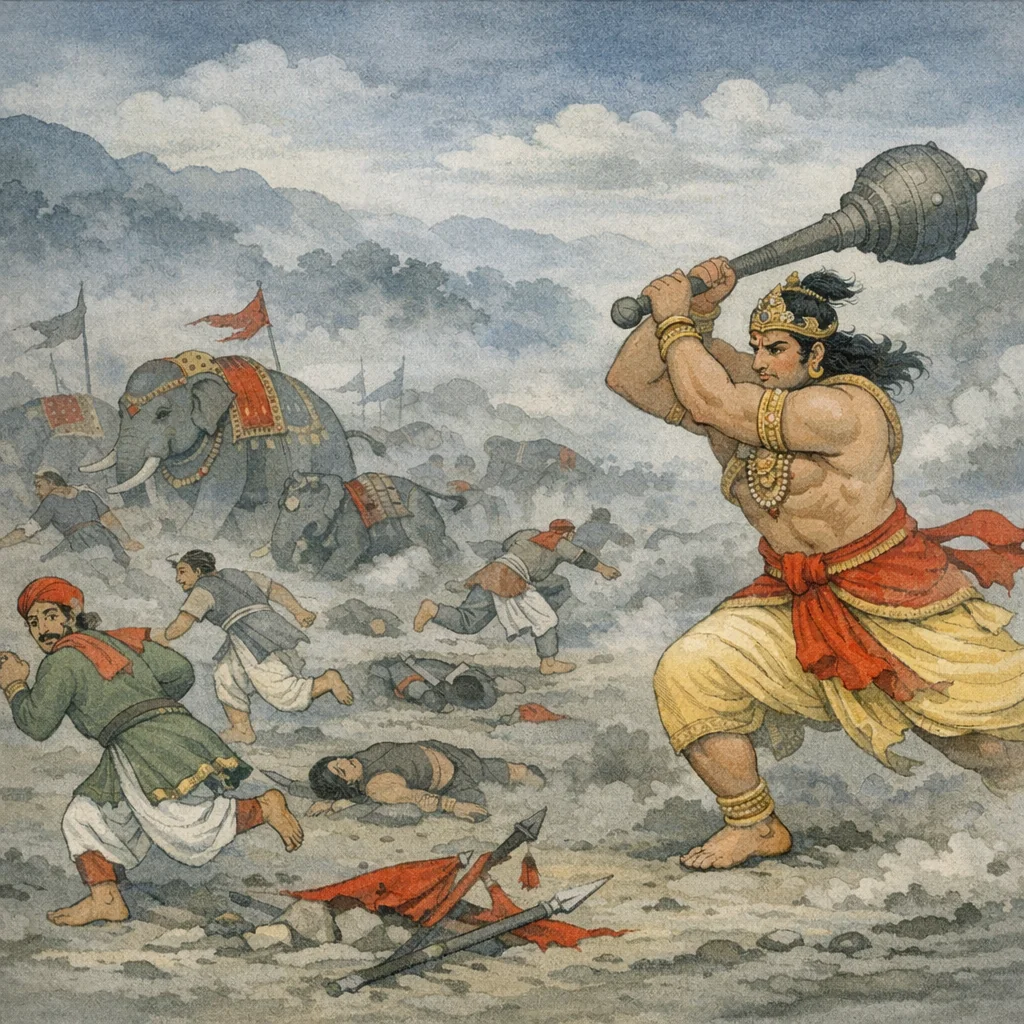
Chapter Arc: कर्ण-वध का समाचार फैलते ही कौरव-सेना पर भय का अंधकार उतर आता है; रणभूमि में दिशाएँ मानो बंद हो जाती हैं और सैनिकों के पाँव अपने-आप पीछे हटने लगते हैं। → पाण्डव-पक्ष के सिंहनाद और कौरव-पक्ष की भगदड़ साथ-साथ बढ़ते हैं। भयभीत हाथी-दल टूटता है, महावत गिरते हैं, गजराजों की सूँड़ें कटती हैं; ‘सर्वं पार्थमयं लोकम्’—हर ओर अर्जुन/पाण्डवों का ही प्रभुत्व दिखता है। जो थोड़े-से पैदल टिकते हैं, वे भीमसेन के सामने आ खड़े होते हैं—लगभग पचीस हजार का अंतिम अवरोध। → भीमसेन सुवर्णपत्र-जटित विशाल गदा उठाकर दण्डपाणि यमराज के समान कौरव-पैदल-सेना का संहार करते हैं; अंधकार-सा छा जाता है, दिशाएँ काँपती हैं, और कौरव-बल का यह शेष-आधार भी टूट जाता है। → पैदल-सेना के विनाश के बाद भीमसेन धृष्टद्युम्न को अग्रभाग में रखकर पुनः युद्ध-व्यवस्था बनाते हैं; कौरवों के लिए संदेश स्पष्ट है—भागना नहीं, अन्यथा शत्रु के वश में जाना है। → कौरव-पक्ष में पलायन बनाम प्रतिरोध का संकट तीव्र होता है—क्या दुर्योधन भय-ग्रस्त सेना को रोककर फिर से मोर्चा बाँध पाएगा, या यह भगदड़ अगले निर्णायक पतन का द्वार बनेगी?
Shlokas
Verse 1
ऑपन--माजल बछ। जि तृतीयो<थध्याय: कर्णके मारे जानेपर पाण्डवोंके भयसे कौरव-सेनाका पलायन, सामना करनेवाले पचीस हजार पैदलोंका भीमसेनद्वारा वध तथा दुर्योधनका अपने सैनिकोंको समझा-बुझाकर पुन: पाण्डवोंके साथ युद्धमें लगाना संजय उवाच शृणु राजन्नवहितो यथावृत्तो महान् क्षय: । कुरूणां पाण्डवानां च समासाद्य परस्परम्,संजय कहते हैं--राजन्! कौरवों और पाण्डवोंके आपसमें भिड़नेसे जिस प्रकार महान् जनसंहार हुआ है, वह सब सावधान होकर सुनिये
Sanjaya said: “O King, listen with full attention to how the great destruction occurred when the Kurus and the Pandavas closed upon one another in battle. I shall relate what happened as it truly unfolded.”
Verse 2
इस प्रकार श्रीमह्ााभारत शल्यपर्वमें धृतराष्ट्रका विलापविषयक दूसरा अध्याय पूरा हुआ,निहते सूतपुत्रे तु पाण्डवेन महात्मना । विद्रुतेषु च सैन्येषु समानीतेषु चासकृत्
Vaiśaṃpāyana said: When the charioteer’s son had been slain by the great-souled Pāṇḍava, and when the armies had fled in disorder yet were repeatedly rallied and brought back together, the war’s moral and emotional pressure intensified—victory and loss unfolding side by side amid the collapse and re-formation of collective resolve.
Verse 3
घोरे मनुष्यदेहानामाजौ नरवर क्षये । यत्तत् कर्णे हते पार्थ: सिंहनादमथाकरोत्,इति श्रीमहा भारते शल्यपर्वणि कौरवसैन्यापयाने तृतीयो5ध्याय:
Sañjaya said: In that dreadful battlefield, amid the slaughter of human bodies, O best of men, when Karṇa had been slain, Pārtha (Arjuna) then let out a lion-like roar—an exultant cry that signaled the fall of a formidable foe and the turning of the war’s moral and strategic tide.
Verse 4
तदा तव सुतान् राजन् प्राविशत् सुमहद् भयम् । नरश्रेष्ठ! महात्मा पाण्डुकुमार अर्जुनके द्वारा सूतपुत्र कर्णके मारे जानेपर जब आपकी सेनाएँ बार-बार भागने और लौटायी जाने लगीं एवं रणभूमिमें मानवशरीरोंका भयानक संहार होने लगा, उस समय कर्णवधके पश्चात् कुन्तीकुमार अर्जुनने बड़े जोरसे सिंहनाद किया। राजन्! उसे सुनकर आपके पुत्रोंके मनमें बड़ा भारी भय समा गया ।। २-३ $ || न संधातुमनीकानि न चैवाथ पराक्रमे
Sañjaya said: Then, O King, a very great fear entered the hearts of your sons. They could neither re-form their battle-divisions nor stand firm in valorous effort—overwhelmed by the shock and moral weight of the slaughter unfolding on the field after Karṇa’s fall.
Verse 5
वणिजो नावि भिन्नायामगाधे विप्लवा इव,राजन! जैसे अगाध महासागरमें नाव फट जानेपर नौकारहित व्यापारी उस अपार समुद्रसे पार जानेकी इच्छा रखते हुए घबरा उठते हैं, उसी प्रकार किरीटधारी अर्जुनके द्वारा द्वीपस्वरूप सूतपुत्रके मारे जानेपर बाणोंसे क्षत-विक्षत हो हम सब लोग भयभीत हो गये थे
Sañjaya said: “O King, just as merchants, when their ship is shattered in the unfathomable sea, are thrown into panic—though still longing to reach the far shore—so too were we terrified and shaken, our bodies torn by arrows, when the diadem-wearing Arjuna slew Karṇa, the charioteer’s son who had been like an island of support to our host.”
Verse 6
अपारे पारमिच्छन्तो हते द्वीपे किरीटिना । सूतपुत्रे हते राजन् वित्रस्ता: शरविक्षता:,राजन! जैसे अगाध महासागरमें नाव फट जानेपर नौकारहित व्यापारी उस अपार समुद्रसे पार जानेकी इच्छा रखते हुए घबरा उठते हैं, उसी प्रकार किरीटधारी अर्जुनके द्वारा द्वीपस्वरूप सूतपुत्रके मारे जानेपर बाणोंसे क्षत-विक्षत हो हम सब लोग भयभीत हो गये थे
Sañjaya said: “O King, like merchants left without a boat when it breaks in the boundless ocean—still longing to reach the far shore yet seized by panic—so too, when the charioteer’s son, who stood like an ‘island’ amid the battle, was slain by the diadem-wearing Arjuna, we were terrified, our bodies torn and mangled by arrows.”
Verse 7
अनाथा नाथमिच्छन्तो मृगा: सिंहार्दिता इव । भग्नशृड्भरा इव वृषा: शीर्णदंष्टा इवोरगा:,हम अनाथ होकर कोई रक्षक चाहते थे। हमारी दशा सिंहके सताये हुए मृगों, टूटे सींगवाले बैलों तथा जिनके दाँत तोड़ लिये गये हों उन सर्पोंकी तरह हो रही थी
Sañjaya said: “Bereft of protection, we longed for a protector. Our condition was like that of deer harried by a lion—like bulls whose horns are broken, like serpents whose fangs have been shattered.”
Verse 8
प्रत्युपायाम सायाद्वे निर्जिता: सव्यसाचिना । हतप्रवीरा विध्वस्ता निकृत्ता निशितै: शरै:,सायंकालमें सव्यसाची अर्जुनसे परास्त होकर हम सब लोग शिबिरकी ओर लौटे। हमारी सेनाके प्रमुख वीर मारे गये थे। हम सब लोग पैने बाणोंसे घायल होकर विध्वंसके निकट पहुँच गये थे
Sañjaya said: “At evening we turned back toward the camp, having been defeated by Arjuna, the ambidextrous archer. Our foremost heroes had been slain; we were shattered and cut down, struck by his sharp arrows—brought close to ruin.”
Verse 9
सूतपुत्रे हते राजन पुत्रास्ते प्राद्रवंस्तत: । विध्वस्तकवचा: सर्वे कांदिशीका विचेतस:,राजन! सूतपुत्र कर्णके मारे जानेपर आपके सब पुत्र अचेत हो वहाँसे भागने लगे। उन सबके कवच नष्ट हो गये थे। उन्हें इतनी भी सुध नहीं रह गयी थी कि हम कहाँ और किस दिशामें जायेँ
Sañjaya said: “O King, when Karṇa, the son of the charioteer, had been slain, your sons at once fled from that place. All of them had their armour shattered; bewildered and senseless, they ran about like men who have lost all direction.”
Verse 10
अन्योन्यमभिनिध्नन्तो वीक्षमाणा भयाद् दिश: । मामेव नूनं बीभत्सुममिव च वृकोदर:
Sañjaya said: “Striking one another down, and in fear glancing about in all directions, Bhīma—Vṛkodara—now surely seeks me alone, as if I were his chosen prey.”
Verse 12
कुण्जरै: स्यन्दना भग्ना: सादिनश्न महारथै:
Sañjaya said: “In that fierce clash, elephants smashed chariots to pieces, and the great chariot-warriors cut down the mounted horsemen—an image of war’s crushing force, where pride and prowess alike are reduced by overwhelming violence.”
Verse 13
पदातिसंघाश्षाश्वौधै: पलायद्विर्भुशं हता: । भागते हुए हाथियोंने बहुत-से रथ तोड़ डाले, बड़े-बड़े रथोंने घुड़सवारोंको कुचल दिया और दौड़ते हुए अश्वसमूहोंने पैदल सैनिकोंको अत्यन्त घायल कर दिया ।। व्यालतस्करसंकीर्णे सार्थहीना यथा वने
Sañjaya said: The masses of infantry were grievously struck down by the fleeing torrents of horses. The battlefield, thrown into confusion by panic and trampling, looked like a forest where a caravan, bereft of its guides and order, is scattered amid beasts and bandits—an image of war’s collapse into lawlessness and fear.
Verse 14
हतारोहास्तथा नागाश्छिन्नहस्तास्तथापरे
Sañjaya said: “There were elephants whose riders had been slain, and other elephants too were seen with their hands (trunks/forelimbs) cut off.”
Verse 15
सर्व पार्थमयं लोकमपश्यन् वै भयार्दिता: । कितने ही हाथियोंके सवार मारे गये, बहुत-से गजराजोंकी सूँड़ें काट डाली गयीं, सब लोग भयसे पीड़ित होकर सम्पूर्ण जगत्को अर्जुनमय देख रहे थे ।। तान् प्रेक्ष्य द्रवत: सर्वान् भीमसेनभयार्दितान्
Sañjaya said: Struck with terror, they seemed to see the whole world as nothing but Arjuna. Many elephant-riders had been slain; the trunks of many lordly elephants had been hewn away. Overwhelmed by fear, everyone perceived the entire field as filled with Arjuna alone. Seeing them all fleeing—afflicted by fear of Bhīmasena—(the narrative continues).
Verse 16
नातिक्रमिष्यते पार्थो धनुष्पाणिमवस्थितम्
Sañjaya said: “Pārtha (Arjuna) will not overstep or disregard the warrior who stands ready with bow in hand.”
Verse 17
समरे युद्धयमानं हि कौन्तेयो मां धनंजय:
Sañjaya said: “Indeed, in the thick of battle, as I was engaged in fighting, the son of Kuntī—Dhanañjaya (Arjuna)—[addressed/approached] me.”
Verse 18
नोत्सहेताप्यतिक्रान्तुं वेलामिव महार्णव: । “जैसे महासागर तटको नहीं लाँध सकता, उसी प्रकार कुन्तीकुमार अर्जुन समरांगणमें युद्ध करते हुए मुझ दुर्योधनको लाँधघकर आगे जानेकी हिम्मत नहीं कर सकते ।। अद्यार्जुनं सगोविन्दं मानिनं च वृकोदरम्
Sañjaya said: “Even if he wished, he could not overstep me—just as the great ocean cannot cross its own shoreline. So too Arjuna, Kuntī’s son, though fighting on the battlefield, cannot summon the courage to pass beyond me, Duryodhana, and go forward.”
Verse 19
निहत्य शिष्टान् शत्रूंश्व॒ कर्णस्यानृण्यमाप्रुयाम् । “आज मैं श्रीकृष्ण, अर्जुन, मानी भीमसेन तथा शेष बचे हुए अन्य शत्रुओंका संहार करके कर्णके ऋणसे उऋण हो जाऊँगा” || १८ $ || तच्छुत्वा कुरुराजस्य शूरार्यसदृशं वचः
“Having slain the enemies who remain, I shall discharge my debt to Karṇa. Today I will destroy Śrī Kṛṣṇa, Arjuna, the proud Bhīmasena, and whatever other foes still survive, and thus be free of what I owe to Karṇa.” Hearing these words of the Kuru king—words befitting a heroic noble—Sañjaya continued his account.
Verse 20
गजाश्वरथहीनास्तु पादाताश्चैव मारिष
Sañjaya said: “O venerable one, they were bereft of elephants, horses, and chariots, and were reduced to fighting on foot.”
Verse 21
तान् भीमसेन: संक्रुद्धों धृष्टद्युम्नश्व॒ पार्षत:
Sañjaya said: Enraged, Bhīmasena—along with Dhṛṣṭadyumna, the son of Pārṣata—turned upon them.
Verse 22
प्रत्ययुध्यंस्तु ते सर्वे भीमसेनं सपार्षतम्
Sañjaya said: Then all of them, rallying themselves, fought back against Bhīmasena together with his attendants.
Verse 23
अक्कुद्धयत रणे भीमस्तैर्म॑थे प्रत्यवस्थितै:
Sañjaya said: In the thick of battle, Bhīma did not yield to anger. Facing the warriors who stood in close formation, he held his ground with steady resolve—disciplined strength, courage governed by self-control amid the pressures of war.
Verse 24
न तान् रथस्थो भूमिष्ठान् धमपिक्षी वृकोदर:
Sañjaya said: Stationed upon his chariot, Vṛkodara did not blow his conch at those who were on the ground—an act of restraint amid the fury of battle, for he would not exult over the fallen or the helpless.
Verse 25
जातरूपपरिच्छन्नां प्रगृह्ा महतीं गदाम्
Sañjaya said: Taking up a massive mace sheathed in gold, he readied himself—royal splendor harnessed for the grim work of battle, where outward magnificence stands in stark contrast to the violence it serves.
Verse 26
पदातयो हि संरब्धास्त्यक्तजीवितबान्धवा:
Sañjaya said: The foot-soldiers, inflamed with fierce resolve, had cast aside concern for their own lives and for their kinsmen—driven into a desperate, all-or-nothing fury of battle.
Verse 27
आसाद्य भीमसेन ते संरब्धा युद्धदुर्मदा:
Sañjaya said: Closing in upon Bhīmasena, they—enraged and made reckless by the intoxication of battle—pressed forward to fight him.
Verse 28
श्येनवद् व्यचरद् भीम: खड्गेन गदया तथा
Sañjaya said: Bhīma moved about like a hawk—swift and predatory—wielding his sword and likewise his mace.
Verse 29
हत्वा तत् पुरुषानीक॑ भीम: सत्यपराक्रम:
Sañjaya said: Having slain that massed body of warriors, Bhīma—whose valor never fails—stood forth after breaking the enemy’s formation.
Verse 30
धनंजयो रथानीकमन्वपद्यत वीर्यवान्,दूसरी ओर पराक्रमी अर्जुनने रथसेनापर आक्रमण किया। माद्रीकुमार नकुल-सहदेव तथा महाबली सात्यकि दुर्योधनकी सेनाका विनाश करते हुए बड़े वेगसे शकुनिपर टूट पड़े
Sañjaya said: The mighty Dhanañjaya (Arjuna) pressed forward against the massed chariot-divisions. On the other side, Madri’s sons Nakula and Sahadeva, along with the great warrior Sātyaki, cutting down Duryodhana’s forces, surged with tremendous speed and fell upon Śakuni.
Verse 31
माद्रीपुत्रोी च शकुनिं सात्यकिश्न महाबल: । जवेनाभ्यपतन् ह्ृष्टा घ्नन्तो दौर्योधनं बलम्,दूसरी ओर पराक्रमी अर्जुनने रथसेनापर आक्रमण किया। माद्रीकुमार नकुल-सहदेव तथा महाबली सात्यकि दुर्योधनकी सेनाका विनाश करते हुए बड़े वेगसे शकुनिपर टूट पड़े
Sañjaya said: The two sons of Mādrī—Nakula and Sahadeva—and the mighty Sātyaki, exultant and swift, rushed upon Śakuni, even as they were cutting down the forces of Duryodhana.
Verse 32
तस्याश्ववाहान् सुबहूंस्ते निहत्य शितै: शरै: । तमन्वधावंस्त्वरितास्तत्र युद्धमवर्तत,उन सबने शकुनिके बहुत-से घुड़सवारोंको अपने पैने बाणोंसे मारकर बड़ी उतावलीके साथ वहाँ शकुनिपर धावा किया। फिर तो उनमें भारी युद्ध छिड़ गया
Sañjaya said: After cutting down many of his mounted horsemen with sharp arrows, they rushed swiftly upon Śakuni. There, the clash swelled into a fierce battle.
Verse 33
ततो धनंजयो राजन् रथानीकमगाहत । विश्रुतं त्रिषु लोकेषु गाण्डीवं व्याक्षिपन् धनु:,राजन! तदनन्तर अर्जुनने अपने त्रिभुवनविख्यात गाण्डीव धनुषकी टंकार करते हुए आपके रथियोंकी सेनामें प्रवेश किया
Sañjaya said: Then, O King, Dhanañjaya (Arjuna) plunged into the massed ranks of the chariot-warriors, brandishing his bow Gāṇḍīva—renowned throughout the three worlds—so that its resounding twang proclaimed his fearless resolve and the righteous intensity with which he entered the battle.
Verse 34
कृष्णसारथिमायान्तं दृष्टवा श्वेतहयं रथम् । अर्जुन चापि योद्धारं त्वदीया: प्राद्रवन् भयात्,श्रीकृष्ण जिसके सारथि हैं, उस श्वेत घोड़ोंसे जुते हुए रथको और रथी योद्धा अर्जुनको आते देखकर आपके सारे रथी भयसे भाग चले
Sañjaya said: Seeing the chariot drawn by white horses approaching—guided by Kṛṣṇa as charioteer—and seeing Arjuna, the warrior upon it, all your chariot-fighters fled in fear.
Verse 35
विप्रहीनरथाश्वाश्ष शरैश्व॒ परिवारिता: । पज्चविंशतिसाहस्रा: पार्थमार्च्डनू पदातय:,तब रथों और घोड़ोंसे रहित तथा बाणोंसे आच्छादित हुए पचीस हजार पैदल योद्धाओंने कुन्तीकुमार अर्जुनपर चढ़ाई की
Sañjaya said: Deprived of chariots and horses, and hemmed in on all sides by showers of arrows, twenty-five thousand infantry nevertheless advanced against Pārtha Arjuna.
Verse 36
हत्वा तत् पुरुषानीक॑ पञ्चालानां महारथः । भीमसेन पुरस्कृत्य नचिरात् प्रत्यदृश्यत,उस पैदल सेनाका वध करके पांचाल महारथी धृष्टद्युम्न भीमसेनको आगे किये शीघ्र ही वहाँ दृष्टिगोचर हुए
Sañjaya said: Having slain that body of foot-soldiers of the Pāñcālas, the great chariot-warrior (Dhṛṣṭadyumna) soon came back into view, advancing with Bhīmasena placed at the fore.
Verse 37
महाधनुर्धर: श्रीमानमित्रगणमर्दन: । पुत्र: पज्चालराजस्य धृष्टद्युम्नो महायशा:,पांचालराजके पुत्र धृष्टद्युम्न महाधनुर्धर, महायशस्वी, तेजस्वी तथा शत्रुसमूहका संहार करनेमें समर्थ थे
Sañjaya said: Dhrishtadyumna, the illustrious son of the king of the Pāñcālas, was a mighty archer—prosperous and renowned—fully capable of crushing the ranks of enemies.
Verse 38
पारावतसवर्णाश्वं कोविदारवरध्वजम् । धृष्टद्युम्नं रणे दृष्टवा त्वदीया: प्राद्रवन्ू भयात्,जिनके रथमें कबूतरके समान रंगवाले घोड़े जुते हुए थे तथा रथकी श्रेष्ठ ध्वजापर कचनारवृक्षका चिह्न बना हुआ था, उन धृष्टद्युम्नको रणभूमिमें उपस्थित देख आपके सैनिक भयसे भाग खड़े हुए
Sañjaya said: Seeing Dhṛṣṭadyumna on the battlefield—whose chariot was yoked with horses the color of doves and whose excellent banner bore the emblem of the kovidāra (kachanāra) tree—your warriors fled in fear.
Verse 39
गान्धारराजं शीघ्रास्त्रमनुसृत्य यशस्विनौ । अचिरात् प्रत्यदृश्येतां माद्रीपुत्रो ससात्यकी,सात्यकिसहित यशस्वी माद्रीकुमार नकुल और सहदेव शीघ्रतापूर्वक अस्त्र चलानेवाले गान्धारराज शकुनिका तुरंत पीछा करते हुए दिखायी दिये
Sañjaya said: Pursuing the king of Gāndhāra, Śakuni, who was swift in the use of weapons, the two illustrious sons of Mādrī—together with Sātyaki—soon came into view.
Verse 40
चेकितान: शिखण्डी च द्रौपदेयाश्ष मारिष । हत्वा त्वदीयं सुमहत् सैन्यं शड्खानथाधमन्
Sañjaya said: “O noble one, Cekītāna, Śikhaṇḍī, and the sons of Draupadī, having slain a very large portion of your army, then blew their conches.”
Verse 41
माननीय नरेश! चेकितान, शिखण्डी और द्रौपदीके पाँचों पुत्र--आपकी विशाल सेनाका संहार करके शंख बजाने लगे ।। ते सर्वे तावकान प्रेक्ष्य द्रवतो वै पराड्मुखान् | अभ्यधावन्त निष्नन्तो वृषाञ्जित्वा वृषा इव
Sañjaya said: “O revered king, Cekītāna, Śikhaṇḍī, and the five sons of Draupadī—having destroyed your vast army—began to blow their conches. Then, seeing your warriors fleeing with their backs turned, all of them charged forward, striking them down—like mighty bulls after overcoming rival bulls.”
Verse 42
जैसे साँड़ साँड्रोंको परास्त करके उन्हें बहुत दूरतक खदेड़ते रहते हैं, उसी प्रकार उन सब पाण्डववीरोंने आपके समस्त सैनिकोंको युद्धसे विमुख होकर भागते देख बाणोंका प्रहार करते हुए दूरतक उनका पीछा किया ।। सेनावशेषं तं दृष्टवा तव पुत्रस्य पाण्डव: । अवस्थितं सव्यसाची चुक्रोध बलवन्नूप,नरेश्वर! पाण्डुकुमार सव्यसाची अर्जुन आपके पुत्रकी सेनाके उस एक भागको अवशिष्ट एवं सामने उपस्थित देख अत्यन्त कुपित हो उठे
As a powerful bull, having defeated other bulls, drives them far away, so the Pandava heroes—seeing all your soldiers turn their backs and flee from battle—kept striking them with arrows and pursued them to a great distance. Then, O king, when Arjuna, the Pandu prince famed as Savyasachi, saw a remaining contingent of your son’s army still standing before him, he was seized by intense wrath.
Verse 43
तत एनं शरै राजन् सहसा समवाकिरत् | रजसा चोदगतेनाथ न सम किंचन दृश्यते,राजन! तदनन्तर उन्होंने सहसा बाणोंद्वारा उस सेनाको आच्छादित कर दिया। उस समय इतनी धूल ऊपर उठी कि कुछ भी दिखायी नहीं देता था
Sañjaya said: “Then, O King, he suddenly showered that host with arrows, blanketing it on all sides. And as the dust rose up, nothing at all could be seen clearly—so thick was the haze in the midst of battle.”
Verse 44
अन्धकारीकृते लोके शरीभूते महीतले । दिश: सर्वा महाराज तावका: प्राद्रवन् भयात्
Sañjaya said: “When the world was plunged into darkness and the very surface of the earth seemed to take on a dreadful, embodied form, O King, your warriors fled in fear in every direction.”
Verse 45
महाराज! जब जगत्में उस धूलसे अन्धकार छा गया और पृथ्वीपर बाण-ही-बाण बिछ गया, उस समय आपके सैनिक भयके मारे सम्पूर्ण दिशाओंमें भाग गये ।। भज्यमानेषु सर्वेषु कुरुराजो विशाम्पते । परेषामात्मनश्वैव सैन्ये ते समुपाद्रवत्
Sañjaya said: “O lord of men, when the dust had darkened the world and the earth was strewn with arrows, your soldiers fled in fear to every quarter. And as all the forces were breaking and scattering, the king of the Kurus—seeing both the enemy’s array and his own army in turmoil—pressed forward into your host.”
Verse 46
प्रजानाथ! उन सबके भाग जानेपर कुरुराज दुर्योधनने शत्रुपक्षकी और अपनी दोनों ही सेनाओंपर आक्रमण किया ।। ततो दुर्योधन: सर्वानाजुहावाथ पाण्डवान् | युद्धाय भरतश्रेष्ठ देवानिव पुरा बलि:,भरतश्रेष्ठ! जैसे पूर्वकालमें राजा बलिने देवताओंको युद्धके लिये ललकारा था, उसी प्रकार दुर्योधनने समस्त पाण्डवोंका आह्वान किया
Sañjaya said: “O lord of the people, when all had fled, the Kuru king Duryodhana assailed both the enemy’s side and his own. Then, O best of the Bharatas, Duryodhana challenged all the Pāṇḍavas to battle, as King Bali once summoned the gods to war in ancient times.”
Verse 47
त एनमभिगर्जन्तं सहिता: समुपाद्रवन् । नानाशस्त्रसृज: क्रुद्धा भर्त्सयन्तो मुहुर्मुहु:
Sañjaya said: “As he roared aloud, they—moving together as a united body—rushed upon him. Enraged, hurling many kinds of weapons, they repeatedly assailed him with harsh taunts.”
Verse 48
तब वे पाण्डवयोद्धा अत्यन्त कुपित हो गर्जना करनेवाले दुर्योधनको बारंबार फटकारते और क्रोधपूर्वक नाना प्रकारके अस्त्र-शस्त्रोंकी वर्षा करते हुए एक साथ ही उसपर टूट पड़े ॥। दुर्योधनो5प्यसम्भ्रान्तस्तानरीन् व्यधमच्छरै: । तत्राद्भुतमपश्याम तव पुत्रस्य पौरुषम्
Then the Pāṇḍava warriors, inflamed with fury and roaring aloud, rebuked Duryodhana again and again; and, in wrath, showering him with weapons of every kind, they all fell upon him at once. Yet Duryodhana, unshaken, struck down those foes with his arrows. There we beheld a wonder—the prowess of your son.
Verse 49
नातिदूरापयातं च कृतबुद्धि: पलायने
Sañjaya said: “He had not gone very far, for in his heart he had already resolved to flee.”
Verse 50
ततो<वस्थाप्य राजेन्द्र कृतबुद्धिस्तवात्मज:
Then, O king, your son took his stand; his resolve made firm, he moved forward—his mind already set on what must be done as the war unfolded.
Verse 51
हर्षयन्निव तान् योधांस्ततो वचनमत्रवीत् | राजेन्द्र! तब युद्धका ही दृढ़ निश्चय रखनेवाले आपके पुत्रने उन समस्त सैनिकोंको खड़ा करके उनका हर्ष बढ़ाते हुए कहा-- || ५० ई ।। नतं देशं प्रपश्यामि पृथिव्यां पर्वतेषु च
Sañjaya said: As if to gladden those warriors, he then spoke these words. “O best of kings! In that very hour of battle, your son—firm in resolve—made all the soldiers stand ready and, increasing their ardor, addressed them: ‘I see no place on earth, nor even among the mountains, where one may bow down and be safe…’”
Verse 52
स्वल्पं चैव बल॑ तेषां कृष्णा च भृशविक्षतौ
Sañjaya said: Their strength was indeed only slight, and Kṛṣṇā (Draupadī) too was grievously wounded.
Verse 53
यदि सर्वेजत्र तिष्ठामो ध्रुवं नो विजयो भवेत् | 'पाण्डवोंके पास थोड़ी-सी ही सेना शेष रह गयी है और श्रीकृष्ण तथा अर्जुन भी बहुत घायल हो चुके हैं। यदि हम सब लोग यहाँ डटे रहें तो निश्चय ही हमारी विजय होगी ।। ५२ कल || विप्रयातांस्तु वो भिन्नान् पाण्डवा: कृतकिल्बिषान्
“If we all stand firm here, our victory is certain. The Pāṇḍavas have only a small force left, and Śrī Kṛṣṇa and Arjuna too are grievously wounded. If we hold our ground here, triumph will surely be ours.”
Verse 54
अनुसृत्य हनिष्यन्ति श्रेयो न: समरे वध: । “यदि तुमलोग पृथक्-पृथक् होकर भागोगे तो पाण्डव तुम सभी अपराधियोंका पीछा करके तुम्हें मार डालेंगे, अतः युद्धमें ही मारा जाना हमारे लिये श्रेयस्कर होगा ।। ५३ ई ।। सुख: सांग्रामिको मृत्यु: क्षत्रधर्मेण युध्यताम्
Sañjaya said: “If we flee in scattered groups, the Pāṇḍavas will pursue us and kill us as offenders. Therefore, it is better for us to meet death on the battlefield. For those who fight in accordance with the kṣatriya’s duty, a warrior’s death in battle is a good and fitting end.”
Verse 55
शृण्वन्तु क्षत्रिया: सर्वे यावन्तो5त्र समागता:
Sañjaya said: “Let all the kṣatriyas who have assembled here listen.”
Verse 56
पितामहैराचरितं न धर्म हातुमरहथ
Sañjaya said: “You ought not abandon the dharma that has been practiced and upheld by the grandsires.”
Verse 57
न युद्धधर्माच्छेयान् हि पन्था: स्वर्गस्थ कौरवा:
Sañjaya said: “O Kauravas who have attained heaven, there is indeed no path superior to the dharma of battle.”
Verse 58
तस्य तदू वचन राज्ञ: पूजयित्वा महारथा:,राजा दुर्योधनकी उस बातका आदर करके वे महारथी क्षत्रिय पुनः युद्ध करनेके लिये पाण्डवोंके सामने आये। उन्हें पराजय असह्यु हो उठी थी; इसलिये उन्होंने पराक्रम करनेमें ही मन लगाया था
Sañjaya said: Honouring the king’s words, those great chariot-warriors once again advanced to face the Pāṇḍavas for battle. Defeat had become unbearable to them; therefore they fixed their minds solely on valour and renewed exertion in war.
Verse 59
पुनरेवाभ्यवर्तन्त क्षत्रिया: पाण्डवान् प्रति । पराजयममृष्यन्तः कृतचित्ताश्न विक्रमे,राजा दुर्योधनकी उस बातका आदर करके वे महारथी क्षत्रिय पुनः युद्ध करनेके लिये पाण्डवोंके सामने आये। उन्हें पराजय असह्यु हो उठी थी; इसलिये उन्होंने पराक्रम करनेमें ही मन लगाया था
The Kṣatriya warriors once again surged toward the Pāṇḍavas; unable to endure defeat, they steeled their hearts and set their minds on valour.
Verse 60
ततः प्रववृते युद्ध पुनरेव सुदारुणम् । तावकानां परेषां च देवासुररणोपमम्,तदनन्तर आपके और शत्रुपक्षके सैनिकोंमें पुनः देवासुर-संग्रामके समान अत्यन्त भयंकर युद्ध होने लगा
Sañjaya said: Thereafter, the battle began again—exceedingly dreadful—between your forces and the enemy, resembling the legendary clash of gods and demons.
Verse 61
युधिष्ठिरपुरोगांश्व॒ सर्वसैन्येन पाण्डवान् | अन्यधावन्महाराज पुत्रो दुर्योधनस्तव,महाराज! उस समय आपके पुत्र दुर्योधनने अपनी सारी सेनाके साथ युधिष्ठिर आदि सभी पाण्डवोंपर धावा किया था
Sañjaya said: O great king, your son Duryodhana, supported by his entire army, charged straight at the Pāṇḍavas with Yudhiṣṭhira at their head.
Verse 103
अभियातीति मन्वाना:ः पेतुर्मम्लुश्न भारत । वे सब लोग एक-दूसरेपर चोट करते और भयसे सम्पूर्ण दिशाओंकी ओर देखते हुए ऐसा समझते थे कि अर्जुन और भीमसेन मेरे ही पीछे लगे हुए हैं। भारत! ऐसा सोचकर वे हर्ष और उत्साह खो बैठते तथा लड़खड़ाकर गिर पड़ते थे
Sañjaya said: O Bharata, imagining that they were being charged at, those men collapsed in confusion. Striking one another and, in fear, casting their eyes toward every direction, they convinced themselves that Arjuna and Bhīmasena were pursuing close behind me. Thinking so, they lost their joy and fighting spirit, and, stumbling, fell to the ground.
Verse 116
आरुह्य जवसम्पन्ना: पादातान् प्रजहुर्भयात् । कुछ महारथी भयके मारे घोड़ोंपर, दूसरे लोग हाथियोंपर और कुछ लोग रथोंपर आरूढ़ हो पैदलोंको वहीं छोड़ बड़े वेगसे भागे
Sañjaya said: Struck by fear, some warriors—mounting swift steeds—abandoned the foot-soldiers on the spot and fled at great speed. The scene shows how panic can shatter discipline and loyalty in battle, as self-preservation overrules the duty to stand with one’s comrades.
Verse 131
अश्वानन्ये गजानन्ये रथानन्ये महारथा:
Sañjaya said: “Some struck down horses, others elephants, and others chariots—those great chariot-fighters, intent on disabling the enemy’s strength in every form.”
Verse 136
तथा त्वदीया निहते सूतपुत्रे तदाभवन् । जैसे सर्पों और लुटेरोंसे भरे हुए जंगलमें अपने साथियोंसे बिछुड़े हुए लोग अनाथके समान भटकते हैं, वही दशा उस समय सूतपुत्र कर्णके मारे जानेपर आपके सैनिकोंकी हुई
Sañjaya said: When the charioteer’s son (Karna) was slain, your troops became like people lost from their companions in a forest teeming with serpents and robbers—wandering helplessly as if without a protector. Thus, at the fall of Karna, your army’s condition turned to confusion, fear, and leaderless distress.
Verse 156
दुर्योधनो5थ स्वं सूतं हा हा कृत्वैवमब्रवीत् । भीमसेनके भयसे पीड़ित हुए समस्त सैनिकोंको भागते देख दुर्योधनने “हाय-हाय!! करके अपने सारथिसे इस प्रकार कहा--
Sañjaya said: Then Duryodhana, crying out “Alas, alas!”, addressed his own charioteer. Seeing the entire host of soldiers, shaken and tormented by fear of Bhīmasena, fleeing from the field, he spoke in anguish—his lament revealing how terror can unravel an army’s resolve and a leader’s composure amid the moral pressure of war.
Verse 163
जघने युद्धयमान मां तूर्णमश्चान् प्रचोदय । “जब मैं सेनाके पिछले भागमें खड़ा हो हाथमें धनुष ले युद्ध करूँगा, उस समय कुन्तीकुमार अर्जुन मुझे लाँधकर आगे नहीं बढ़ सकेंगे; अतः तुम घोड़ोंको आगे बढ़ाओ
Sañjaya said: “Drive the horses swiftly. When I stand in the rear of the army, bow in hand, fighting, Arjuna—the son of Kuntī—will not be able to overleap me and press forward; therefore urge the horses ahead.”
Verse 193
सूतो हेमपरिच्छन्नान् शनैरश्वानचोदयत् । कुरुराज दुर्योधनके इस श्रेष्ठ वीरोचित वचनको सुनकर सारथिने सोनेके साज-बाजसे ढके हुए अश्वोंको धीरेसे आगे बढ़ाया
Sañjaya said: Hearing those noble, warrior-like words of King Duryodhana, the charioteer gently urged forward the horses, whose harness and trappings were covered with gold, and made them advance slowly in disciplined obedience.
Verse 203
पज्चविंशतिसाहस्रा: प्राद्रवनू शनकैरिव । माननीय नरेश! उस समय हाथी, घोड़े और रथोंसे रहित पचीस हजार पैदल सैनिक धीरे-ही-धीरे पाण्डवोंपर चढ़ाई करने लगे
Sañjaya said: “O venerable king, at that time twenty-five thousand foot-soldiers—deprived of elephants, horses, and chariots—advanced against the Pāṇḍavas, moving as if slowly and steadily.”
Verse 216
बलेन चतुरजड्रेण परिक्षिप्पाहनच्छरै: । तब क्रोधमें भरे हुए भीमसेन और द्रुपदकुमार धृष्टद्युम्नने अपनी चतुरंगिणी सेनाके द्वारा उन्हें तितर-बितर करके बाणोंद्वारा अत्यन्त घायल कर दिया
Sañjaya said: With the strength of their fourfold army they surrounded the foe and struck him with arrows. Then Bhīmasena, and Dhṛṣṭadyumna—the son of Drupada—though filled with wrath, used their own fourfold host to scatter the opposing troops in all directions and grievously wound them with volleys of shafts.
Verse 226
पार्थपार्षतयो श्वान्ये जगृहुस्तत्र नामनी । वे समस्त सैनिक भी भीमसेन और धूृष्टद्युम्मका डटकर सामना करने लगे। दूसरे बहुत- से योद्धा वहाँ उन दोनोंके नाम ले-लेकर ललकारने लगे
Sañjaya said: There, warriors shouted aloud the names of Pārtha (Arjuna) and Pārṣata (Dhṛṣṭadyumna), challenging them directly. The whole host stood firm and pressed forward to confront Bhīmasena and Dhṛṣṭadyumna, while many others repeatedly called out those two by name, hurling taunts and summons in the heat of battle.
Verse 236
सो<वतीर्य रथात्तूर्ण गदापाणिरयुध्यत । युद्धस्थलमें सामने खड़े हुए उन योद्धाओंके साथ जूझते समय भीमसेनको बड़ा क्रोध हुआ। वे तुरंत ही रथसे उतरकर हाथमें गदा ले उन सबके साथ युद्ध करने लगे
Sañjaya said: Then, swiftly descending from his chariot, Bhīmasena—mace in hand—entered the fight. Even while grappling with the warriors standing before him on the battlefield, his wrath surged; choosing close combat, he took up his gada and battled them all face to face.
Verse 243
योधयामास कौन्तेयो भुजवीर्यमुपाश्रित: । युद्धधर्मके पालनकी इच्छा रखनेवाले कुन्तीकुमार भीमसेनने स्वयं रथपर बैठकर भूमिपर खड़े हुए पैदल सैनिकोंके साथ युद्ध करना उचित नहीं समझा। वे अपने बाहुबलका भरोसा करके उन सबके साथ पैदल ही जूझने लगे
Sañjaya said: Trusting in the strength of his own arms, the son of Kuntī fought on. Though devoted to the law of battle, Bhīmasena deemed it unseemly to remain upon a chariot while engaging foot-soldiers standing on the earth; therefore, relying on his bodily might, he dismounted and grappled with them on foot, acting as he judged fair in war.
Verse 256
न्यवधीत् तावकान् सर्वान् दण्डपाणिरिवान्तक: । उन्होंने दण्डपाणि यमराजके समान सुवर्णपत्रसे जटित विशाल गदा लेकर उसके द्वारा आपके समस्त सैनिकोंका संहार आरम्भ किया
Sañjaya said: He began to slay all your troops, like Antaka—Death himself—as though wielding the rod of punishment. Bearing a vast mace adorned with plates of gold, like Yama the Daṇḍapāṇi, he set about the destruction of your entire host.
Verse 263
भीममभ्यद्रवन् संख्ये पतजड़ा इव पावकम् । उस समय अपने प्राणों और बन्धु-बान्धवोंका मोह छोड़कर रोष और आवेशमें भरे हुए पैदल सैनिक युद्धस्थलमें भीमसेनकी ओर उसी प्रकार दौड़े, जैसे पतंग चलती हुई अतापर टूट पड़ते हैं
Sañjaya said: In the thick of battle they rushed at Bhīma, like moths that, driven by blind impulse, plunge into a blazing fire. Casting aside fear for their lives and even attachment to kinsmen, the foot-soldiers—filled with wrath and frenzy—charged toward Bhīmasena like insects breaking upon the flame.
Verse 273
विनेदु: सहसा दृष्टवा भूतग्रामा इवान्तकम् | क्रोधमें भरे हुए वे रणदुर्मद योद्धा भीमसेनसे भिड़कर सहसा उसी प्रकार आर्तनाद करने लगे, जैसे प्राणियोंके समुदाय यमराजको देखकर चीख उठते हैं
Sañjaya said: Seeing Bhīmasena all at once, those warriors—though swollen with battlefield pride and filled with anger—cried out in sudden distress, just as a multitude of creatures shriek upon beholding Antaka, the Lord of Death.
Verse 283
पजञ्चविंशतिसाहस्रांस्तावकानां व्यपोथयत् | उस समय भीमसेन रणभूमिमें बाजकी तरह विचर रहे थे। उन्होंने तलवार और गदाके द्वारा आपके उन पचीस हजार योद्धाओंको मार गिराया
Sañjaya said: Bhīmasena struck down twenty-five thousand of your warriors. Even then he ranged across the battlefield like a hawk, cutting and crushing with sword and mace—relentless prowess moving through the grim law of war, where valor and slaughter stand side by side.
Verse 293
धृष्टय्युम्नं पुरस्कृत्य पुनस्तस्थी महाबल: । सत्यपराक्रमी महाबली भीमसेन उस पैदल-सेनाका संहार करके धृष्टद्युम्मनको आगे किये पुनः युद्धके लिये डट गये
Sañjaya said: Placing Dhṛṣṭadyumna at the fore, the mighty Bhīmasena—whose valor never proved false—stood firm once more, ready for battle, after having destroyed that body of infantry. The verse highlights steadfast courage and strategic leadership amid the harsh demands of war.
Verse 436
आसीद् बुद्धि्ते कर्णे तव योधस्य कस्यचित् । कर्णके मारे जानेपर आपके किसी भी योद्धाके मनमें न तो सेनाओंको एकत्र संगठित रखनेका उत्साह रह गया और न पराक्रममें ही वे मन लगा सके
Sañjaya said: When Karṇa was slain, no warrior of yours retained the resolve to keep the armies gathered and disciplined; nor could they set their minds to valor. The fall of a foremost champion broke the cohesion of the host and drained its moral energy, showing how leadership and confidence sustain an army’s dharma in war.
Verse 486
यदेनं पाण्डवा: सर्वे न शेकुरतिवर्तितुम् । दुर्योधन भी बिना किसी घबराहटके अपने बाणोंद्वारा उन शत्रुओंको छिन्न-भिन्न करने लगा। वहाँ हमलोगोंने आपके पुत्रका अद्भुत पराक्रम देखा कि समस्त पाण्डव मिलकर भी उसे लाँधकर आगे न बढ़ सके
Sañjaya said: All the Pāṇḍavas together could not pass beyond him. Duryodhana, without the least fear, began to cut those enemies to pieces with his arrows. There we witnessed the astonishing prowess of your son: even the entire host of the Pāṇḍavas, united, could not overstep him and press forward.
Verse 493
दुर्योधन: स्वकं सैन्यमपश्यद् भृशविक्षतम् | दुर्योधनने देखा कि मेरी सेना अत्यन्त घायल हो रणभूमिसे पलायन करनेका विचार रखकर भाग रही है, परंतु अधिक दूर नहीं गयी है
Sañjaya said: Duryodhana saw his own army grievously wounded. Seeing them in distress and breaking formation, he understood that they were thinking of fleeing the battlefield—though they had not yet gone far. The scene underscores how adharma-driven ambition, when pressed by the consequences of war, turns even a vast host toward fear and retreat.
Verse 513
यत्र यातान्न वो हन्यु: पाण्डवा: कि सृतेन व: । “वीरो! मैं भूतलपर और पर्वतोंमें भी कोई ऐसा स्थान नहीं देखता, जहाँ चले जानेपर तुमलोगोंको पाण्डव मार न सकें; फिर तुम्हारे भागनेसे क्या लाभ है?
Sañjaya said: “I see no place—neither on the earth nor among the mountains—where, if you were to go, the Pāṇḍavas could not strike you down. What gain, then, is there in fleeing?”
Verse 546
मृतो दुःखं न जानीते प्रेत्य चानन्त्यम श्रुते । 'क्षत्रियधर्मके अनुसार युद्ध करनेवाले वीरोंके लिये संग्रामभूमिमें होनेवाली मृत्यु ही सुखद है; क्योंकि वहाँ मरा हुआ मनुष्य मृत्युके दुःखको नहीं जानता और मृत्युके पश्चात् अक्षय सुखका भागी होता है
Sañjaya said: “One who has died does not feel the pain of death; and when he has departed this world, he attains unending, imperishable bliss. Therefore, for a hero who fights in accordance with kṣatriya-dharma, death on the battlefield is deemed auspicious—even desirable—for it is bound to honor, duty fulfilled, and the promised reward after death.”
Verse 553
द्विषतो भीमसेनस्य वशमेष्यथ विद्रुता: । “जितने क्षत्रिय यहाँ आये हैं वे सब सुनें--“तुमलोग भागनेपर अपने शत्रु भीमसेनके अधीन हो जाओगे
Sañjaya said: “If you flee in panic, you will fall under the power of your enemy Bhīmasena.” It is a stern warning of war: cowardly retreat preserves neither freedom nor honor; it yields initiative and control to the foe, and thus becomes an ethical self-defeat for a kṣatriya in battle.
Verse 563
नान्यत् कर्मास्ति पापीय: क्षत्रियस्य पलायनात् | “इसलिये अपने बाप-दादोंके द्वारा आचरणमें लाये हुए धर्मका परित्याग न करो। क्षत्रियके लिये युद्ध छोड़कर भागनेसे बढ़कर दूसरा कोई अत्यन्त पापपूर्ण कर्म नहीं है
Sañjaya said: “For a kṣatriya there is no deed more sinful than fleeing from battle. Therefore, do not abandon the ancestral dharma practiced by your forefathers; to renounce the fight and run away is the gravest moral failure for one born to protect and uphold order.”
Verse 573
सुचिरेणार्जिताल्लोकान् सद्यो युद्धात् समश्षुते । “कौरवो! युद्धधर्मसे बढ़कर दूसरा कोई स्वर्गका श्रेष्ठ मार्ग नहीं है। दीर्घकालतक पुण्यकर्म करनेसे प्राप्त होनेवाले पुण्यलोकोंको वीर क्षत्रिय युद्धसे तत्काल प्राप्त कर लेता है!
Sañjaya said: “The merit-worlds that are won only after a long time through accumulated righteous deeds are attained at once by a warrior through battle. For a kṣatriya, there is no higher road to heaven than the dharma of fighting in a righteous war.”
Frequently Asked Questions
Whether a ruler should continue role-based kṣatra-engagement despite severe depletion, or prioritize polity-preservation through negotiated settlement when further conflict risks total institutional collapse.
Effective dharma in governance is contextual: courage is not identical with escalation; prudent restraint and safeguarding the social vessel (the ruler/polity) can be ethically superior under decline.
No formal phalaśruti is stated; the meta-commentary is implicit in Kṛpa’s framing that prior misconduct yields present strategic consequences, positioning the episode as a lesson in karmic-political causality.