Adhyaya 151
अलायुधस्य भीमवधसंकल्पः (Alāyudha’s Resolve to Confront Bhīma)
Upa-parva: Niśā-yuddha (Night-Engagement Episodes) — Alāyudha’s Advance
Saṃjaya reports that, amid ongoing combat, the rākṣasa-king Alāyudha advances with a large and fearsome host toward Duryodhana, explicitly motivated by remembered prior enmities. He recalls the deaths of his rākṣasa kin/associates—Hiḍimba, Baka, and Kirmīra—at Bhīma’s hands, and also references the earlier affront involving Hiḍimbā. Declaring intent to kill (and consume) the Pāṇḍavas with his followers, he requests that the Kaurava forces be held back while he engages them. Duryodhana responds with approval, stating that his troops, driven by vengeance, will rally with Alāyudha placed in the forefront. The chapter then provides a vivid martial description: Alāyudha’s radiant chariot likened to the sun, its banners and fittings, the sound of its movement, the extraordinary horses, and his formidable weaponry—imagery that parallels Ghaṭotkaca’s battlefield presence. The passage closes by noting the surrounding engagement as Pāṇḍava warriors fight vigorously on all sides, situating Alāyudha’s approach within a wider nocturnal escalation of hostilities.
Chapter Arc: युद्ध-धूलि के बीच श्रीकृष्ण युधिष्ठिर के पास विजय-संदेश लेकर आते हैं—जयद्रथ का वध हो चुका है और अर्जुन की प्रतिज्ञा पूर्ण हुई है। → युधिष्ठिर के मन में एक साथ दो धाराएँ उठती हैं—एक ओर अपार राहत कि सूर्यास्त से पहले प्रतिज्ञा निभ गई, दूसरी ओर यह आशंका कि इस विजय की कीमत कितनी भारी पड़ी होगी। श्रीकृष्ण अर्जुन के पराक्रम का वृत्तांत सुनाते हुए युद्ध-क्षय और शत्रु-सेना के संहार का संकेत देते हैं। → घोषणा अपने चरम पर पहुँचती है: अर्जुन ने रण में सैन्य-क्षय कर ‘सिन्धुराज’ (जयद्रथ) का शिर हर लिया—युधिष्ठिर के सामने प्रतिज्ञा-पूर्ति का निर्णायक प्रमाण रख दिया जाता है। → युधिष्ठिर श्रीकृष्ण और अर्जुन का कुशल-प्रश्न करते हुए उन्हें विजयी लौटता देख हर्ष व्यक्त करते हैं; पाण्डव-सेना प्रसन्न होकर पुनः युद्ध में उत्साह से लग जाती है। → विजय के उल्लास के साथ ही अगली घड़ी का संकेत छिपा है—जयद्रथ-वध के प्रतिशोध में कौरव-पक्ष का उग्र प्रत्याघात और द्रोण की अगली रणनीति अब अवश्य तीव्र होगी।
Shlokas
Verse 1
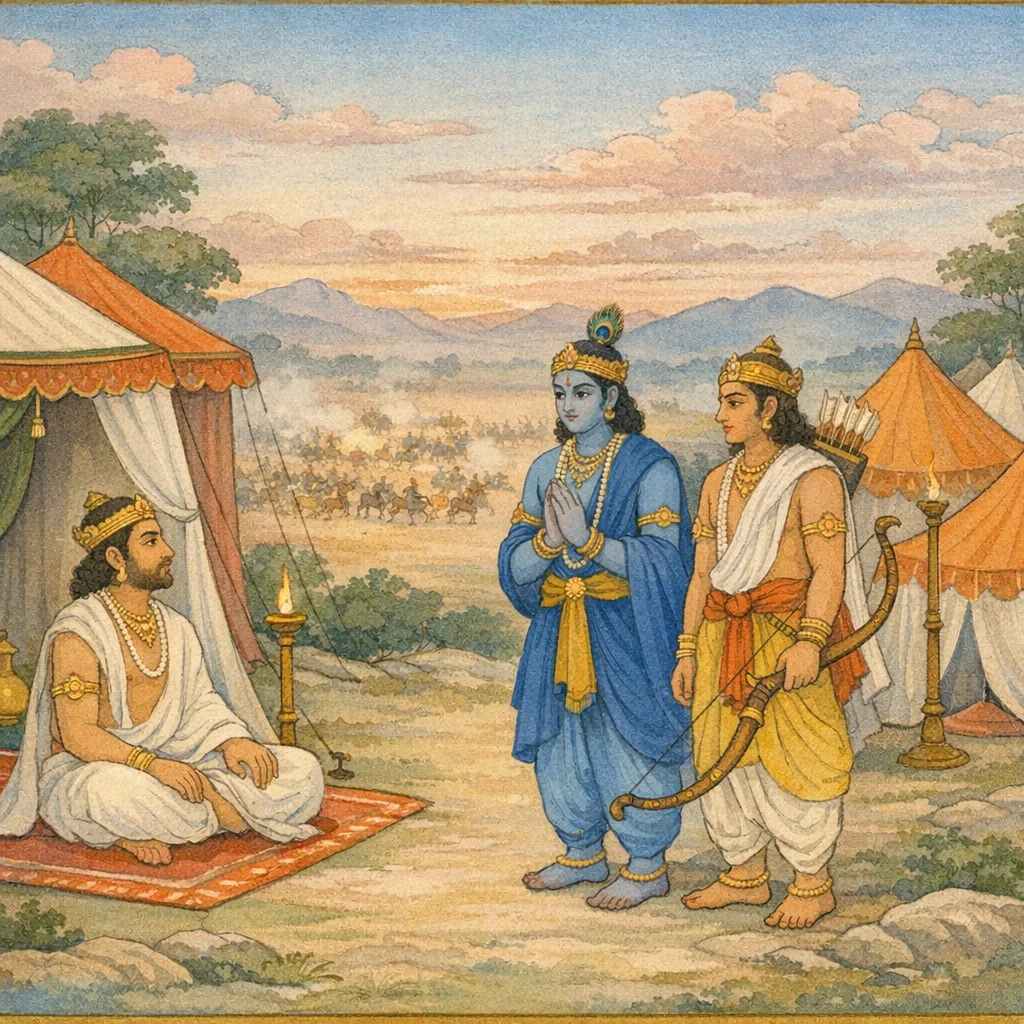
(दाक्षिणात्य अधिक पाठके ६ श्लोक मिलाकर कुल ६५ श्लोक हैं।) ऑपनआक्ात बा अर क्ाज एकोनपज्चाशर्दाधिकशततमो< ध्याय: श्रीकृष्णका युधिष्ठिससे विजयका समाचार सुनाना और युधिष्ठिरद्वारा श्रीकृष्णाकी स्तुति तथा अर्जुन, भीम एवं सात्यकिका अभिनन्दन संजय उवाच ततो राजानमभ्येत्य धर्मपुत्रं युधिष्ठिरम् । ववन्दे स प्रहृष्टात्मा हते पार्थेन सैन्धवे,संजय कहते हैं--राजन्! तदनन्तर अर्जुनद्वारा सिंधुराज जयद्रथके मारे जानेपर धर्मपुत्र राजा युधिष्ठिरके पास पहुँचकर भगवान् श्रीकृष्णने हर्षपूर्ण हृदयसे उन्हें प्रणाम किया और कहा--
Sañjaya said: Then, approaching King Yudhiṣṭhira, the son of Dharma, he (Śrī Kṛṣṇa) bowed to him with a heart filled with joy, for the lord of Sindhu (Jayadratha) had been slain by Pārtha (Arjuna).
Verse 2
दिष्टया वर्धसि राजेन्द्र हतशत्रुर्नरोत्तम | दिष्ट्या निस्तीर्णवांश्वैव प्रतिज्ञामनुजस्तव
Sañjaya said: “By good fortune you prosper, O lord of kings—O best of men—your enemy has been slain. And by that same good fortune, your younger brother too has fulfilled his vow and come through it successfully.”
Verse 3
'राजेन्द्र! सौभाग्यसे आपका अभ्युदय हो रहा है। नरश्रेष्ठ. आपका शत्रु मारा गया। आपके छोटे भाईने अपनी प्रतिज्ञा पूरी कर ली, यह महान् सौभाग्यकी बात है' ।। स त्वेवमुक्त: कृष्णेन हृष्ट: परपुरंजय: । ततो युधिष्ठिरो राजा रथादाप्लुत्य भारत
Sañjaya said: “O king, by good fortune your cause is rising. O best of men, your enemy has been slain. Your younger brother has fulfilled his vow—this is indeed a great stroke of fortune.” Thus addressed by Kṛṣṇa, the conqueror of enemy cities was filled with joy; then King Yudhiṣṭhira, O Bhārata, leapt down from his chariot.
Verse 4
प्रमृज्य वदनं शुभ्र॑ पुण्डरीकसमप्रभम्
Sañjaya said: Having wiped his face—bright and radiant like a white lotus—he composed himself.
Verse 5
प्रियमेतदुपश्रुत्य त्वत्त: पुष्करलोचन,“कमलनयन कृष्ण! जैसे तैरनेकी इच्छावाला पुरुष समुद्रका पार नहीं पाता, उसी प्रकार आपके मुखसे यह प्रिय समाचार सुनकर मेरे हर्षकी सीमा नहीं रह गयी है। बुद्धिमान् अर्जुनने यह अत्यन्त अद्भुत पराक्रम किया है
Sañjaya said: “O lotus-eyed one—O lotus-eyed Kṛṣṇa! Hearing this pleasing report from you, my joy knows no limit. Just as a man who longs to swim across cannot reach the far shore of the ocean, so too, on hearing this dear news from your own lips, I find no boundary to my exhilaration. The wise Arjuna has performed a truly astonishing feat of valor.”
Verse 6
नान््तं गच्छामि हर्षस्य तितीर्षुरुदधेरिव । अत्यद्भुतमिदं कृष्ण कृतं पार्थेन धीमता,“कमलनयन कृष्ण! जैसे तैरनेकी इच्छावाला पुरुष समुद्रका पार नहीं पाता, उसी प्रकार आपके मुखसे यह प्रिय समाचार सुनकर मेरे हर्षकी सीमा नहीं रह गयी है। बुद्धिमान् अर्जुनने यह अत्यन्त अद्भुत पराक्रम किया है
Sañjaya said: “O Kṛṣṇa, my joy knows no limit—like a man who yearns to cross the ocean and cannot find its far shore. What the wise Pārtha (Arjuna) has accomplished is truly astonishing.”
Verse 7
दिष्ट्या पश्यामि संग्रामे तीर्णभारी महारथौ । दिष्ट्या विनिहतः पाप: सैन्धव: पुरुषाधम:,“आज सौभाग्यवश संग्रामभूमिमें मैं आप दोनों महारथियोंको प्रतिज्ञाके भारसे मुक्त हुआ देखता हूँ। यह बड़े हर्षकी बात है कि पापी नराधम सिंधुराज जयद्रथ मारा गया
Sañjaya said: “By good fortune I behold, on the battlefield, you two great chariot-warriors freed from the burden of your vow. And by that same good fortune, the sinful Saindhava—Jayadratha, the basest of men—has been slain.”
Verse 8
कृष्ण दिष्ट्या मम प्रीतिर्महती प्रतिपादिता । त्वया गुप्तेन गोविन्द घ्नता पापं जयद्रथम्,“श्रीकृष्ण! गोविन्द! सौभाग्यवश आपके द्वारा सुरक्षित हुए अर्जुनने पापी जयद्रथको मारकर मुझे महान् हर्ष प्रदान किया है
Sañjaya said: “O Kṛṣṇa, O Govinda! By good fortune my joy has been made great—because Arjuna, protected by you, has slain the sinful Jayadratha. This deed has brought me profound gladness.”
Verse 9
किं तु नात्यद्धुतं तेषां येषां नस्त्वं समाश्रय: । न तेषां दुष्कृतं किंचित् त्रिषु लोकेषु विद्यते,'परंतु जिनके आप आश्रय हैं, उन हमलोगोंके लिये विजय और सौभाग्यकी प्राप्ति अत्यन्त अद्भुत बात नहीं है। मुधुसूदन! सम्पूर्ण जगतके गुरु आप जिनके रक्षक हैं, उनके लिये तीनों लोकोंमें कहीं कुछ भी दुष्कर नहीं है। गोविन्द! हम आपकी कृपासे शत्रुओंपर निश्चय ही विजय पायेंगे
Sañjaya said: “Yet it is not at all astonishing for those who have you as their refuge. For those whom you protect, nothing is truly impossible anywhere in the three worlds. By your grace, O Govinda, they will surely gain victory over their foes.”
Verse 10
सर्वलोकगुरुयेषां त्वं नाथो मधुसूदन । त्वत्प्रसादाद्धि गोविन्द वयं जेष्यामहे रिपून्,'परंतु जिनके आप आश्रय हैं, उन हमलोगोंके लिये विजय और सौभाग्यकी प्राप्ति अत्यन्त अद्भुत बात नहीं है। मुधुसूदन! सम्पूर्ण जगतके गुरु आप जिनके रक्षक हैं, उनके लिये तीनों लोकोंमें कहीं कुछ भी दुष्कर नहीं है। गोविन्द! हम आपकी कृपासे शत्रुओंपर निश्चय ही विजय पायेंगे
Sañjaya said: “O Madhusūdana, for those whose refuge and protector you are—the teacher of all the worlds—victory and good fortune are no marvel. O Govinda, by your grace we shall surely conquer our enemies. For those whom you guard, nothing anywhere in the three worlds is truly difficult.”
Verse 11
स्थित: सर्वात्मना नित्य॑ प्रियेषु च हितेषु च । त्वां चैवास्माभिराश्रित्य कृत: शस्त्रसमुद्यम:
Sañjaya said: “Ever steadfast with our whole being—constant in affection and in goodwill—relying upon you alone, we have taken up the exertion of arms.”
Verse 12
असम्भाव्यमिदं कर्म देवैरपि जनार्दन
Sañjaya said: “This deed is scarcely conceivable—even for the gods, O Janārdana.”
Verse 13
बाल्यात् प्रभृति ते कृष्ण कर्माणि श्रुतवानहम्,“श्रीकृष्ण! बाल्यावस्थासे ही आपने जो बहुत-से अलौकिक, दिव्य एवं महान् कर्म किये हैं, उन्हें जबसे मैंने सुना है, तभीसे यह निश्चितरूपसे जान लिया है कि मेरे शत्रु मारे गये और मैंने भूमण्डलका राज्य प्राप्त कर लिया
Sañjaya said: “O Śrī Kṛṣṇa! From your very childhood I have heard of your deeds.”
Verse 14
अमानुषाणि दिव्यानि महान्ति च बहूनि च तदैवाज्ञासिषं शत्रून् हतान् प्राप्तां च मेदिनीम्,“श्रीकृष्ण! बाल्यावस्थासे ही आपने जो बहुत-से अलौकिक, दिव्य एवं महान् कर्म किये हैं, उन्हें जबसे मैंने सुना है, तभीसे यह निश्चितरूपसे जान लिया है कि मेरे शत्रु मारे गये और मैंने भूमण्डलका राज्य प्राप्त कर लिया
Sañjaya said: “From the very moment I heard of the many superhuman, divine, and mighty deeds you performed, I became certain that my enemies were already slain and that the sovereignty of the earth had come into my hands.”
Verse 15
त्वत्प्रसादसमुत्थेन विक्रमेणारिसूदन । सुरेशत्वं गत: शक्रो हत्वा दैत्यानू सहस्रश:,'शत्रुसूदन! आपकी कृपासे प्राप्त हुए पराक्रमद्वारा इन्द्र सहस्रों दैत्योंका संहार करके देवराजके पदपर प्रतिष्ठित हुए हैं
Sañjaya said: “O Arisūdana, by the valor that arose from your grace, Śakra (Indra) slew the Dāityas by the thousand and thereby attained the sovereignty of the gods.”
Verse 16
त्वत्प्रसादाद्धुघीकेश जगत् स्थावरजज्भमम् । स्ववर्त्मनि स्थितं वीर जपहोमेषु वर्तते,“वीर हृषीकेश! आपके ही प्रसादसे यह स्थावर-जंगमरूप जगत् अपनी मर्यादामें स्थित रहकर जप और होम आदि सत्कर्मोमें संलग्न होता है
Sañjaya said: “O Hṛṣīkeśa, by your grace this entire world—both the immovable and the moving—remains established in its own proper course. Staying within its ordained bounds, it engages in righteous acts such as recitation and sacrificial offerings.”
Verse 17
एकार्णवमिदं पूर्व सर्वमासीत् तमोमयम् | त्वत्प्रसादान्महाबाहो जगत् प्राप्तं नरोत्तम,“महाबाहो! नरश्रेष्ठ] पहले यह सारा जगत् एकार्णवके जलमें निमग्न हो अन्धकारमें विलीन हो गया था। फिर आपकी ही कृपादृष्टिसे यह वर्तमान रूपमें उपलब्ध हुआ है
Sañjaya said: “In the beginning, all this was a single ocean, submerged and made of darkness. By your gracious favor, O mighty-armed one, O best of men, the world has attained its present, manifest form.”
Verse 18
स्रष्टारं सर्वलोकानां परमात्मानमव्ययम् । ये पश्यन्ति हृषीकेशं न ते मुहान्ति कहिचित्,“जो सम्पूर्ण जगत॒की सृष्टि करनेवाले आप अविनाशी परमात्मा हृषीकेशका दर्शन पा जाते हैं, वे कभी मोहके वशीभूत नहीं होते हैं
Sañjaya said: Those who behold Hṛṣīkeśa—the imperishable Supreme Self, the Creator of all worlds—are never overcome by delusion.
Verse 19
पुराणं परम देवं देवदेवं सनातनम् | ये प्रपन्ना: सुरगुरुं न ते मुहान्ति कर्िचित्,“आप पुराण पुरुष, परमदेव, देवताओंके भी देवता, देवगुरु एवं सनातन परमात्मा हैं। जो लोग आपकी शरणमें जाते हैं, वे कभी मोहमें नहीं पड़ते हैं
Sanjaya said: “You are the Primeval Person—supreme God, the God of gods, the eternal Lord and the preceptor of the celestials. Those who take refuge in you never fall into delusion at any time.”
Verse 20
अनादिनिधन देवं लोककर्तारमव्ययम् | ये भक्तास्त्वां हृषीकेश दुर्गाण्यतितरन्ति ते,“हृषीकेश! आप आदि-अन्तसे रहित विश्वविधाता और अविकारी देवता हैं। जो आपके भक्त हैं, वे बड़े-बड़े संकटोंसे पार हो जाते हैं
Sañjaya said: “O Hṛṣīkeśa, you are the deathless God without beginning or end—the unchanging Maker of the worlds. Those who are devoted to you cross over even the most formidable dangers.”
Verse 21
परं पुराणं पुरुषं पराणां परमं च यत् | प्रपद्यतस्तत् परमं परा भूतिर्विधीयते,“आप परम पुरातन पुरुष हैं। परसे भी पर हैं। आप परमेश्वरकी शरण लेनेवाले पुरुषको परम ऐश्वर्यकी प्राप्ति होती है
Sañjaya said: He is the supreme, primeval Person, transcending even the highest. For one who takes refuge in Him, the highest exaltation—supreme prosperity and fulfillment—is ordained.
Verse 22
गायन्ति चतुरो वेदा यश्च वेदेषु गीयते । त॑ प्रपद्य महात्मानं भूतिमश्षाम्यनुत्तमाम्,“चारों वेद जिनके यशका गान करते हैं, जो सम्पूर्ण वेदोंमें गाये जाते हैं, उस महात्मा श्रीकृष्णकी शरण लेकर मैं सर्वोत्तम ऐश्वर्य (कल्याण) प्राप्त करूँगा
Sañjaya said: “The four Vedas sing of him, and he is celebrated throughout the Vedas. Taking refuge in that great-souled one, I shall attain the unsurpassed good—true prosperity and well-being.”
Verse 23
परमेश परेशेश तिर्यगीश नरेश्वर । सर्वेश्वरेश्वरेशेश नमस्ते पुरुषोत्तम,“पुरुषोत्तम! आप परमेश्वर हैं। पशु, पक्षी तथा मनुष्योंके भी ईश्वर हैं। “परमेश्वर” कहे जानेवाले इन्द्रादि लोकपालोंके भी स्वामी हैं। सर्वेश्वर! जो सबके ईश्वर हैं, उनके भी आप ही ईश्वर हैं। आपको नमस्कार है
Sañjaya bows to the Supreme Person: “O Puruṣottama, you are the supreme Lord—the Lord of lords. You rule all beings, animals, birds, and humans; and you are sovereign even over those deities called ‘lords,’ such as Indra and the world-guardians. I bow to you.”
Verse 24
त्वमीशेशेश्वरेशान प्रभो वर्धस्व माधव । प्रभवाप्यय सर्वस्य सर्वात्मन् पृुथुलोचन,“विशाल नेत्रोंवाले माधव! आप ईश्वरोंके भी ईश्वर और शासक हैं। प्रभो! आपका अभ्युदय हो। सर्वात्मन्! आप ही सबके उत्पत्ति और प्रलयके कारण हैं
Sañjaya said: “O Mādhava of wide eyes, you are the Lord even of the lords, the supreme ruler. O Master, may your glory and ascendancy prevail. O Self of all, you alone are the source and the dissolution of the entire world.”
Verse 25
धनंजयसखा यश्चन धनंजयहितकश्षन यः । धनंजयस्य गोप्ता तं प्रपद्य सुखमेधते,“जो अर्जुनके मित्र, अर्जुनके हितैषी और अर्जुनके रक्षक हैं, उन भगवान् श्रीकृष्णकी शरण लेकर मनुष्य सुखी होता है
Sañjaya said: He who is Arjuna’s friend, who works for Arjuna’s welfare, and who is Arjuna’s protector—by taking refuge in that Lord Kṛṣṇa, a person grows in happiness and well-being.
Verse 26
मार्कण्डेय: पुराणर्षिश्नरितज्ञस्तवानघ । माहात्म्यमनुभावं च पुरा कीर्तितवान् मुनि:,“निष्पाप श्रीकृष्ण! प्राचीनकालके महर्षि मार्कण्डेय आपके चरित्रको जानते हैं। उन मुनिश्रेष्ठने पहले (वनवासके समय) आपके प्रभाव और माहात्म्यका मुझसे वर्णन किया था
Sañjaya said: “O sinless one, the ancient seer Mārkaṇḍeya—versed in sacred lore and mindful of what is remembered—knows you well. Long ago that sage proclaimed to me both your majesty and your wondrous power.”
Verse 27
असितो देवलश्लैव नारदश्न महातपा: । पितामहश्न मे व्यासस्त्वामाहुर्विधिमुत्तमम्,“असित, देवल, महातपस्वी नारद तथा मेरे पितामह व्यासने आपको ही सर्वोत्तम विधि बताया है
Sañjaya said: “Asita, Devala, the great ascetic Nārada, and my grandsire Vyāsa—all of them have declared you to be the highest authority on right procedure and proper conduct.”
Verse 28
त्वं तेजस्त्वं परं ब्रह्म त्वं सत्यं त्वं महत् तपः । त्वं श्रेयस्त्वं यशक्षाग्रयं कारणं जगतस्तथा,“आप ही तेज, आप ही परब्रह्म, आप ही सत्य, आप ही महान् तप, आप ही श्रेय, आप ही उत्तम यश और आप ही जगतके कारण हैं। आपने ही इस सम्पूर्ण स्थावर-जंगम जगत्की सृष्टि की है और प्रलयकाल आनेपर यह पुनः आपटहीमें लीन हो जाता है
Sañjaya said: “You are radiance; you are the Supreme Brahman. You are truth; you are great austerity. You are the highest good; you are fame worthy of praise; and you are the very cause of the world. From you this entire universe of the moving and the unmoving arises, and at the time of dissolution it returns and is absorbed into you alone.”
Verse 29
त्वया सृष्टमिदं सर्व जगत् स्थावरजड्भमम् । प्रलये समनुप्राप्ते त्वां वै निविशते पुन:,“आप ही तेज, आप ही परब्रह्म, आप ही सत्य, आप ही महान् तप, आप ही श्रेय, आप ही उत्तम यश और आप ही जगतके कारण हैं। आपने ही इस सम्पूर्ण स्थावर-जंगम जगत्की सृष्टि की है और प्रलयकाल आनेपर यह पुनः आपटहीमें लीन हो जाता है
Sañjaya said: “This entire universe of the immobile and the moving has been created by you. And when dissolution arrives in due course, it enters back into you again.”
Verse 30
अनादिनिधनं देवं विश्वस्येशं जगत्पते । धातारमजमव्यक्तमाहुर्वेदविदो जना:
Sañjaya said: Those who are learned in the Vedas describe Him as the divine Lord—without beginning or end—the ruler of the universe, the master of the world: the Creator and Sustainer, unborn and unmanifest.
Verse 31
अपि देवा न जानन्ति गुह्माद्यं जगत्पतिम्
Sañjaya said: Even the gods do not fully comprehend the Lord of the world, whose true nature is hidden and profound.
Verse 32
नारायणं परं देवं परमात्मानमी श्वरम् । ज्ञानयोनिं हरिं विष्णुं मुमुक्षूणां परायणम् । परं पुराणं पुरुष पुराणानां परं च यत्
Sañjaya said: “(I bow to) Nārāyaṇa—the supreme God, the highest Self, the sovereign Lord; the very source of true knowledge; Hari, Viṣṇu—the ultimate refuge of those who seek liberation; the primordial Supreme Person, and that Reality which stands above all that is ancient and sacred.”
Verse 33
“आपका रहस्य गूढ़ है। आप सबके आदि कारण और इस जगतके स्वामी हैं। आप ही परमदेव, नारायण, परमात्मा और ईश्वर हैं। ज्ञानस्वरूप श्रीहरि तथा मुमुक्षुओंके परम आश्रय भगवान् विष्णु भी आप ही हैं। आपके यथार्थ स्वरूपको देवता भी नहीं जानते हैं। आप ही परम पुराणपुरुष तथा पुराणोंसे भी परे हैं ।। एवमादिगुणानां ते कर्मणां दिवि चेह च | अतीतभूतभव्यानां संख्यातात्र न विद्यते,“आपके ऐसे-ऐसे गुणों तथा भूत, वर्तमान एवं भविष्यकालमें होनेवाले कर्मोकी गणना करनेवाला इस भूलोकमें या स्वर्गमें भी कोई नहीं है। जैसे इन्द्र देवताओंकी रक्षा करते हैं, उसी प्रकार हम सब लोग आपके द्वारा सर्वथा रक्षणीय हैं। हमें आप सर्वगुणसम्पन्न सुहृदके रूपमें प्राप्त हुए हैं"
Sanjaya said: “Your mystery is profound. You are the first cause of all and the Lord of this world. You alone are the supreme God—Nārāyaṇa, the Supreme Self, and the sovereign Lord. You are Śrī Hari, the very form of knowledge, and also Bhagavān Viṣṇu, the highest refuge of those who seek liberation. Even the gods do not truly know your real nature. You are the primordial Supreme Person, and yet beyond even the Purāṇas. There is no one—neither on earth nor in heaven—who can fully count or measure such qualities of yours, nor your deeds across past, present, and future. As Indra protects the gods, so are we all to be protected entirely by you. We have found you as a well-wishing friend, complete in every excellence.”
Verse 34
सर्वतो रक्षणीया: सम शक्रेणेव दिवौकस: । यैस्त्वं सर्वगुणोपेत: सुहृन्न उपपादित:,“आपके ऐसे-ऐसे गुणों तथा भूत, वर्तमान एवं भविष्यकालमें होनेवाले कर्मोकी गणना करनेवाला इस भूलोकमें या स्वर्गमें भी कोई नहीं है। जैसे इन्द्र देवताओंकी रक्षा करते हैं, उसी प्रकार हम सब लोग आपके द्वारा सर्वथा रक्षणीय हैं। हमें आप सर्वगुणसम्पन्न सुहृदके रूपमें प्राप्त हुए हैं"
Sañjaya said: “In every way we are to be protected by you, just as the gods are protected by Śakra (Indra). For by those very qualities of yours you have been granted to us as a well-wishing friend, endowed with every excellence.”
Verse 35
इत्येवं धर्मराजेन हरिरुक्तो महायशा: । अनुरूपमिदं वाक्यं प्रत्युवाच जनार्दन:,धर्मराज युधिष्ठिरके ऐसा कहनेपर महायशस्वी भगवान् जनार्दनने उनके कथनके अनुरूप इस प्रकार उत्तर दिया--
Sañjaya said: Thus addressed by Dharmarāja, the illustrious Hari—Janārdana—replied with words fitting to Yudhiṣṭhira’s statement, responding in a manner aligned with dharma and the gravity of the moment.
Verse 36
पर्यष्वजत् तदा कृष्णावानन्दाश्रुपरिप्लुत: । भारत! भगवान् श्रीकृष्णके ऐसा कहनेपर शत्रुओंकी राजधानीपर विजय पानेवाले राजा युधिष्ठिर हर्षमें भरकर अपने रथसे कूद पड़े और आनन्दके आँसू बहाते हुए उन्होंने उस समय श्रीकृष्ण और अर्जुनको हृदयसे लगा लिया,भवता तपसोग्रेण धर्मेण परमेण च । साधुत्वादार्जवाच्चैव हत: पापो जयद्रथ: “धर्मराज! आपकी उग्र तपस्या, परम धर्म, साधुता तथा सरलतासे ही पापी जयद्रथ मारा गया है
Sañjaya said: Then King Yudhiṣṭhira, overwhelmed with tears of joy, embraced Kṛṣṇa and Arjuna. “O descendant of Bharata! It is by your intense austerity, by your supreme commitment to dharma, and by your saintly goodness and straightforwardness that the sinful Jayadratha has been slain.” The moment frames victory not merely as martial success but as the moral fruit of steadfast righteousness.
Verse 37
अयं च पुरुषव्याप्र त्ववनुध्यानसंवृतः । हत्वा योधसहस््राणि न्यहन् जिष्णुर्जयद्रथम्,'पुरुषसिंह! आपने जो निरन्तर शुभ-चिन्तन किया है, उसीसे सुरक्षित हो अर्जुनने सहसीरों योद्धाओंका संहार करके जयद्रथका वध किया है
Sañjaya said: “O tiger among men, protected by your constant, auspicious contemplation, Jiṣṇu (Arjuna) slew thousands of warriors and then struck down Jayadratha. Thus, steadfast inner resolve and righteous support bore fruit amid the terrible press of war.”
Verse 38
कृतित्वे बाहुवीय्यें च तथैवासम्भ्रमेडपि च । शीघ्रतामोघबुद्धित्वे नास्ति पार्थसम: क्वचित्,“अस्त्रोंके ज्ञान, बाहुबल, स्थिरता, शीघ्रता और अमोघबुद्धिता आदि गुणोंमें कहीं कोई भी कुन्तीकुमार अर्जुनकी समता करनेवाला नहीं है
Sañjaya said: “In skill and accomplishment, in the might of his arms, and likewise in unshakable composure; in swiftness and in unfailing judgment—nowhere is there anyone equal to Pārtha (Arjuna).” In the moral frame of the war, this is not mere praise but a recognition that disciplined mastery and steady intelligence, when aligned to one’s duty, become decisive forces amid chaos.
Verse 39
तदयं भरतश्रेष्ठ भ्राता तेडद्य यदर्जुन: । सैन्यक्षयं रणे कृत्वा सिन्धुराजशिरो5हरत्,“भरतश्रेष्ठ) इसीलिये आज आपके इस छोटे भाई अर्जुनने संग्राममें शत्रुसेनाका संहार करके सिंधुराजका सिर काट लिया है”
Sañjaya said: “Therefore, O best of the Bharatas, your brother Arjuna—having wrought the destruction of the enemy host in battle—has today taken the head of the king of Sindhu. The deed is presented as the fulfilment of a vowed purpose amid the harsh demands of war, where personal resolve and martial duty converge.”
Verse 40
ततो धर्मसुतो जिष्णुं परिष्वज्य विशाम्पते । प्रमृज्य वदनं तस्य पर्याश्चवासयत प्रभु:,प्रजानाथ! तब धर्मपुत्र राजा युधिष्ठिरने अर्जुनको हृदयसे लगा लिया और उनका मुँह पोंछकर उन्हें आश्वासन देते हुए कहा--
Sañjaya said: Then Dharmasuta (Yudhiṣṭhira), O lord of the people, embraced Jiṣṇu (Arjuna). Wiping his face, that noble ruler soothed and reassured him—an act of fraternal care and dharmic leadership amid the strain of war.
Verse 41
अतीव सुमहत् कर्म कृतवानसि फाल्गुन । असहां चाविषहां च देवैरपि सवासवै:,'फाल्गुन! आज तुमने बड़ा भारी कर्म कर दिखाया। इसका सम्पादन करना अथवा इसके भारको सह लेना इन्द्रसहित सम्पूर्ण देवताओंके लिये भी असम्भव था
Sañjaya said: “O Phālguna (Arjuna), you have accomplished an exceedingly great deed today—one so weighty and formidable that even the gods, Indra included, could neither carry its burden nor bring it to completion.”
Verse 42
दिष्ट्या निस्तीर्णभारो5सि हतारिश्नासि शत्रुहन् । दिष्ट्या सत्या प्रतिज्ञेयं कृता हत्वा जयद्रथम्,'शत्रुसूदन! आज तुम अपने शत्रुको मारकर प्रतिज्ञाके भारसे मुक्त हो गये। यह सौभाग्यकी बात है। हर्षका विषय है कि तुमने जयद्रथको मारकर अपनी यह प्रतिज्ञा सत्य कर दिखायी”
Sañjaya said: “Fortune favors you—having slain your foes, you are now freed from the burden of your vow, O slayer of enemies. It is indeed auspicious that, by killing Jayadratha, you have made your solemn pledge come true.”
Verse 43
एवमुक्त्वा गुडाकेशं धर्मराजो महायशा: । पस्पर्श पुण्यगन्धेन पृष्ठे हस्तेन पार्थिव:,महायशस्वी धर्मराज राजा युधिष्ठिरने निद्राविजयी अर्जुनसे ऐसा कहकर उनकी पीठपर पवित्र सुगन्धसे युक्त अपना हाथ फेरा
Sañjaya said: Having spoken thus to Guḍākeśa (Arjuna), the illustrious Dharmarāja (Yudhiṣṭhira), the king of great renown, gently touched him on the back with his hand, fragrant with a sacred perfume—an affectionate, dharma-grounded gesture of reassurance amid the strain of war.
Verse 44
एवमुक्तौ महात्मानावुभौ केशवपाण्डवौ । तावब्रूतां तदा कृष्णौ राजानं पृथिवीपतिम्,उनके ऐसा कहनेपर महात्मा श्रीकृष्ण और अर्जुनने उस समय उन पृथ्वीपति नरेशसे इस प्रकार कहा--
Sañjaya said: When those words had been spoken, the two great-souled heroes—Keśava (Kṛṣṇa) and the Pāṇḍava (Arjuna)—then addressed the king, the lord of the earth, in this manner.
Verse 45
तव कोपाग्निना दग्ध: पापो राजा जयद्रथ: । उत्तीर्ण चापि सुमहद् धार्तराष्ट्रबलं रणे,“महाराज! पापी राजा जयद्रथ आपकी क्रोधाग्निसे दग्ध हो गया है तथा रणभूमिमें दुर्योधनकी विशाल सेनासे पार पाना भी आपकी कृपासे ही सम्भव हुआ है
Sañjaya said: “By the fire of your wrath, the sinful king Jayadratha has been consumed. And even the crossing through Duryodhana’s vast Kaurava host in the battle has been accomplished only by your grace.”
Verse 46
अब्रवीद् वासुदेवं च पाण्डवं च धनंजयम् | फिर उनके कमलके समान कान्तिमान् सुन्दर मुखपर हाथ फेरते हुए वे वसुदेवनन्दन श्रीकृष्ण और पाण्डुपुत्र अर्जुनसे इस प्रकार बोले--,हन्यन्ते निहताश्चैव विनड्क्ष्यन्ति च भारत । तव क्रोधहता होते कौरवा: शत्रुसूदन “भारत! शत्रुसूदन! ये सारे कौरव आपके क्रोधसे ही नष्ट होकर मारे गये हैं, मारे जाते हैं और भविष्यमें भी मारे जायँगे
Sañjaya said: Then he addressed Vāsudeva (Kṛṣṇa) and the Pāṇḍava Dhanañjaya (Arjuna): “O Bhārata! O slayer of foes! These Kauravas, struck down by your wrath, are being killed, have been killed, and will in time be utterly destroyed.”
Verse 47
त्वां हि चक्षुर्ठणं वीर॑ं कोपयित्वा सुयोधन: । समित्रबन्धु: समरे प्राणांस्त्यक्ष्यति दुर्मति:,'क्रोधपूर्ण दृष्टिपातमात्रसे विरोधीको दग्ध कर देनेवाले आप-जैसे वीरको कुपित करके दुर्बद्धि दुर्योधन अपने मित्रों और वन्धुओंके साथ समरभूमिमें प्राणोंका परित्याग कर देगा
“For by provoking the wrath of a hero like you—who can scorch an enemy with but a single, anger-filled glance—Suyodhana (Duryodhana), that misguided man, will cast away his life on the battlefield together with his friends and kinsmen.”
Verse 48
तव क्रोधहत: पूर्व देवैरपि सुदुर्जय: । शरतल्पगत: शेते भीष्म: कुरुपितामह:,“जिनपर विजय पाना पहले देवताओंके लिये भी अत्यन्त कठिन था, वे कुरुकुलके पितामह भीष्म आपके क्रोधसे ही दग्ध होकर इस समय बाणशब्यापर सो रहे हैं
Sañjaya said: “Bhīṣma, the grandsire of the Kurus—who in former days was exceedingly hard to conquer even for the gods—now lies upon a bed of arrows, struck down by your wrath.”
Verse 49
दुर्लभो विजयस्तेषां संग्रामे रिपुसूदन । याता मृत्युवशं ते वै येषां क्रुद्धो+सि पाण्डव,'शत्रुसूदन पाण्डुनन्दन! आप जिनपर कुपित हैं, उनके लिये युद्धमें विजय दुर्लभ है। वे निश्चय ही मृत्युके वशमें हो गये हैं
Sañjaya said: “O slayer of foes, victory in battle is hard to attain for those against whom you, O Pāṇḍava, are wrathful. Indeed, those upon whom your anger has fallen have already come under the dominion of Death.”
Verse 50
राज्यं प्राणा: श्रिय: पुत्रा: सौख्यानि विविधानि च | अचिरात् तस्य नश्यन्ति येषां क्रुद्धो+सि मानद,“दूसरोंको मान देनेवाले नरेश! जिनपर आपका क्रोध हुआ है, उनके राज्य, प्राण, सम्पत्ति, पुत्र तथा नाना प्रकारके सौख्य शीघ्र नष्ट हो जायँगे
Sañjaya said: “O king who honors others, for those against whom you have become wrathful, their kingdom, their very lives, their prosperity, their sons, and their many kinds of pleasures will soon be destroyed.”
Verse 51
विनष्टान् कौरवान् मन्ये सपुत्रपशुबान्धवान् | राजधर्मपरे नित्यं त्वयि क्रुद्धे परंतप,'शत्रुओंको संताप देनेवाले वीर! सदा राजधर्मके पालनमें तत्पर रहनेवाले आपके कुपित होनेपर मैं कौरवोंको पुत्र, पशु तथा बन्धु-बान्धवोंसहित नष्ट हुआ ही मानता हूँ!
Sañjaya said: “I deem the Kauravas already destroyed—together with their sons, their cattle, and their kinsmen—for when you, ever steadfast in rājadharma, are angered, O scorcher of foes, ruin inevitably follows them.”
Verse 52
ततो भीमो महाबाहु: सात्यकिश्न महारथः । अभिवाद्य गुरुं ज्येष्ठ॑ मार्गणै: क्षतविक्षतौ
Then Bhīma, the mighty-armed, and Sātyaki, the great chariot-warrior, having paid respectful salutation to their elder and revered teacher, stood—wounded and torn by arrows.
Verse 53
क्षितावास्तां महेष्वासौ पाञ्चाल्यै: परिवारितौ | तौ दृष्टवा मुदितौ वीरौ प्राञ्जली चाग्रत: स्थितौ
Sañjaya said: The two great archers lay upon the ground, surrounded by the Pāñcālas. Seeing them, two valiant warriors—gladdened—stood in front with joined palms in reverence.
Verse 54
अभ्यनन्दत कौन्तेयस्तावुभौ भीमसात्यकी । तदनन्तर, बाणोंसे क्षत-विक्षत हुए महाबाहु भीमसेन और महारथी सात्यकि अपने ज्येष्ठ गुरु युधिष्ठिरको प्रणाम करके भूमिपर खड़े हो गये। पांचालोंसे घिरे हुए उन दोनों महाथनुर्धर वीरोंको प्रसन्नतापूर्वक हाथ जोड़े सामने खड़े देख कुन्तीकुमार युधिष्ठिरने भीम और सात्यकि दोनोंका अभिनन्दन किया || ५२-५३ ह ।। दिष्ट्या पश्यामि वां शूरौ विमुक्तौ सैन्यसागरात्
Sañjaya said: Kuntī’s son (Yudhiṣṭhira) warmly welcomed both Bhīma and Sātyaki. He rejoiced to see those two heroes freed from the “ocean” of the enemy host—wounded and battle-worn, yet alive: “By good fortune I behold you, O heroes, released from the sea of armies.”
Verse 55
द्रोणग्राहदुराधर्षाद्धार्दिक्यमकरालयात् । वे बोले--'बड़े सौभाग्यकी बात है कि मैं तुम दोनों शूरवीरोंको शत्रुसेनाके समुद्रसे पार हुआ देख रहा हूँ। वह सैन्यसागर द्रोणाचार्यरूपी ग्राहके कारण दुर्धर्ष है और कृतवर्मा जैसे मगरोंका वासस्थान बना हुआ है || ५४ $ || दिष्ट्या विनिर्जिता: संख्ये पृथिव्यां सर्वपार्थिवा:
Sañjaya said: “By good fortune I behold you both, O heroes, having crossed beyond the sea of the enemy host. That ocean of armies is hard to pass, for Droṇācārya is there like a grāha, and it is the haunt of makaras such as Kṛtavarmā. And by good fortune, the kings upon the earth have been decisively overcome in battle.”
Verse 56
दिष्ट्या द्रोणोजित: संख्ये हार्दिक्यश्च महाबल:,“हमारे सौभाग्यसे ही आचार्य द्रोण और महाबली कृतवर्मा युद्धमें परास्त हो गये। भाग्यसे ही कर्ण भी तुम्हारे बाणोंद्वारा रणक्षेत्रमें पराभवको पहुँच गया। नरश्रेष्ठ वीरो! तुम दोनोंने राजा शल्यको भी युद्धसे विमुख कर दिया
Sañjaya said: “By good fortune, the preceptor Droṇa and the mighty Kṛtavarmā have been defeated in battle. By fate as well, Karṇa has been brought to ruin on the field by your arrows. O best of heroes among men! You two have even turned King Śalya away from the fight.”
Verse 57
दिष्ठ्या विकर्णिशभि: कर्णो रणे नीत: पराभवम् | विमुखश्न कृत: शल्यो युवाभ्यां पुरुषर्षभी,“हमारे सौभाग्यसे ही आचार्य द्रोण और महाबली कृतवर्मा युद्धमें परास्त हो गये। भाग्यसे ही कर्ण भी तुम्हारे बाणोंद्वारा रणक्षेत्रमें पराभवको पहुँच गया। नरश्रेष्ठ वीरो! तुम दोनोंने राजा शल्यको भी युद्धसे विमुख कर दिया
Sañjaya said: “By good fortune, Karṇa—along with Vikārṇi and Śabhi—has been driven to defeat on the battlefield. And you two, bull-like heroes among men, have also turned King Śalya away from the fight.”
Verse 58
दिष्ट्या युवां कुशलिनौ संग्रामात् पुनरागतौ । पश्यामि रथिनां श्रेष्ठावुभौ युद्धविशारदौ,'रथियोंमें श्रेष्ठ तथा युद्धमें कुशल तुम दोनों वीरोंको मैं पुन: रणभूमिसे सकुशल लौटा हुआ देख रहा हूँ--यह मेरे लिये बड़े आनन्दकी बात है
Sañjaya said: “By good fortune, you two have returned safely from the battle. I behold both of you—foremost among chariot-warriors and skilled in warfare—come back unharmed; this is a source of great relief and joy for me.”
Verse 59
मम वाक्यकरीौ वीरौ मम गौरवयन्त्रितौ । सैन्यार्णवं समुत्तीर्णो दिष्ट्या पश्यामि वामहम्,“मेरे प्रति गौरवसे बँधकर मेरी आज्ञाका पालन करनेवाले तुम दोनों वीरोंको मैं सैन्य- समुद्रसे पार हुआ देख रहा हूँ, यह सौभाग्यका विषय है
Sañjaya said: “Bound to me by a sense of honor and compelled by loyalty, you two heroes have carried out my command. By good fortune I now see you both having crossed beyond the ocean of the army—this is indeed a matter of blessing.”
Verse 60
समरश्लाघधिनौ वीरौ समरेष्वपराजितौ । मम वाक्यसमोौ चैव दिष्ट्या पश्यामि वामहम्,“तुम दोनों वीर मेरे कथनके अनुरूप ही युद्धकी श्लाघा रखनेवाले तथा समरांगणमें पराजित न होनेवाले हो। सौभाग्यसे मैं तुम दोनोंको यहाँ सकुशल देख रहा हूँ"
Sañjaya said: “You two heroes are, as my words described, men who take pride in battle and are not defeated in the clash of arms. By good fortune, I behold you both here—safe and unharmed.”
Verse 61
इत्युक्त्वा पाण्डवो राजन् युयुधानवृकोदरौ । सस्वजे पुरुषव्याप्रौ हर्षाद् वाष्पं मुमोच ह,राजन! पुरुषसिंह सात्यकि और भीमसेनसे ऐसा कहकर पाण्डुनन्दन युधिष्ठिरने उन दोनोंको हृदयसे लगा लिया और वे हर्षके आँसू बहाने लगे
Sañjaya said: “Having spoken thus, O King, the Pāṇḍava (Yudhiṣṭhira) embraced Yuyudhāna (Sātyaki) and Vṛkodara (Bhīmasena), those mighty champions among men; and, overcome with joy, he shed tears.”
Verse 62
ततः प्रमुदितं सर्व बलमासीद् विशाम्पते । पाण्डवानां रणे हृष्टं युद्धाय तु मनो दधे
Sañjaya said: “Then, O lord of the people, the entire host became gladdened. Delighting in the battle against the Pāṇḍavas, it set its mind firmly upon fighting.”
Verse 116
सुरैरिवासुरवधे शक्रं शक्रानुजाहवे । “उपेन्द्र! आप सदा सब प्रकारसे हमारे प्रिय और हितसाधनमें लगे हुए हैं। हमलोगोंने आपका ही आश्रय लेकर श्त्रोंद्वारा युद्धकी तैयारी की है। ठीक उसी तरह, जैसे देवता इन्द्रका आश्रय लेकर युद्धमें असुरोंके वधका उद्योग करते हैं
“O Upendra (Kṛṣṇa)! You are ever dear to us, ever intent in every way upon our welfare. Taking refuge in you, we have made ready for war with our weapons—just as the gods, taking refuge in Indra, strive in battle for the slaying of the Asuras.”
Verse 126
त्वद्बुद्धिबलवीर्येण कृतवानेष फाल्गुन: । “जनार्दन! आपकी ही बुद्धि, बल और पराक्रमसे इस अर्जुनने यह देवताओंके लिये भी असम्भव कर्म कर दिखाया है
Sañjaya said: “By your own intelligence, strength, and heroic power, this Phalguna (Arjuna) has accomplished a deed—one that would be impossible even for the gods.”
Verse 149
प्रजानाथ! तदनन्तर पाण्डवोंकी सारी सेनाने युद्धस्थलमें प्रसन्न एवं उत्साहित होकर संग्राममें ही मन लगाया ।। इति श्रीमहाभारते द्रोणपर्वणि जयद्रथवधपर्वणि युधिष्ठिरहर्षे एकोनपञ्चाशदधिकशततमो< ध्याय:,इस प्रकार श्रीमह्ाभारत द्रोणपर्वके अन्तर्गत जयद्रथवधपर्वमें युधिष्टिरका हर्षविषयक एक सौ उनचासवाँ अध्याय पूरा हुआ
Sañjaya said: “O lord of the people, thereafter the entire Pāṇḍava host—gladdened and newly heartened on the battlefield—fixed its mind wholly upon the fight.” Thus ends, in the Śrī Mahābhārata, within the Droṇa Parvan, in the section on the slaying of Jayadratha, the chapter concerning Yudhiṣṭhira’s joy—Chapter 149.
Verse 306
भूतात्मानं महात्मानमनन्तं विश्वतोमुखम् । “जगत्पते! वेदवेत्ता पुछ्णष आपको आदि-अन्तसे रहित, दिव्यस्वरूप, विश्वेश्वर, धाता, अजन्मा, अव्यक्त, भूतात्मा, महात्मा, अनन्त तथा विश्वतोमुख आदि नामोंसे पुकारते हैं
Sañjaya said: “O Lord of the universe! Those who know the Vedas address you by many names—without beginning or end, of divine form, the Lord of all, the Sustainer, unborn, unmanifest; the inner Self of beings, the Great Soul, infinite, and the One whose faces are everywhere.”
Verse 553
युवां विजयिनौ चापि दिष्ट्या पश्यामि संयुगे । 'युद्धमें सारे भूपाल पराजित हो गये और संग्राम-भूमिमें मैं तुम दोनोंको विजयी देख रहा हूँ--यह बड़े हर्षका विषय है
Sañjaya said: “By good fortune I behold you two as victors in the battle. All the kings have been overcome in the fighting, and to see you both standing victorious on the field is a matter of great joy.”
Frequently Asked Questions
The dilemma centers on retaliatory violence justified by prior wrongs: Alāyudha frames his campaign as vengeance for slain kin, while Duryodhana endorses escalation for advantage—raising the question of whether remembrance of injury can ethically authorize widening harm.
The chapter illustrates how vairāgni (the ‘fire’ of enmity) shapes perception and policy: grievance memory can become a strategic asset yet also a destabilizing force that narrows ethical deliberation and amplifies collective suffering.
No explicit phalaśruti appears in this adhyāya; its function is primarily historiographic and thematic—documenting motives, authorization, and battlefield spectacle to clarify causal chains within the war’s moral and tactical progression.