Adhyaya 67
Arjuna’s Advance toward Bhīṣma; The Gāṇḍīva’s Signal and the Armies’ Convergence (भीष्माभिमुखगमनम् — गाण्डीवनिर्घोष-ध्वजवर्णनम्)
Upa-parva: Bhīṣma-vadha / Kurukṣetra-raṇa-varṇana (War Engagements under Bhīṣma’s command)
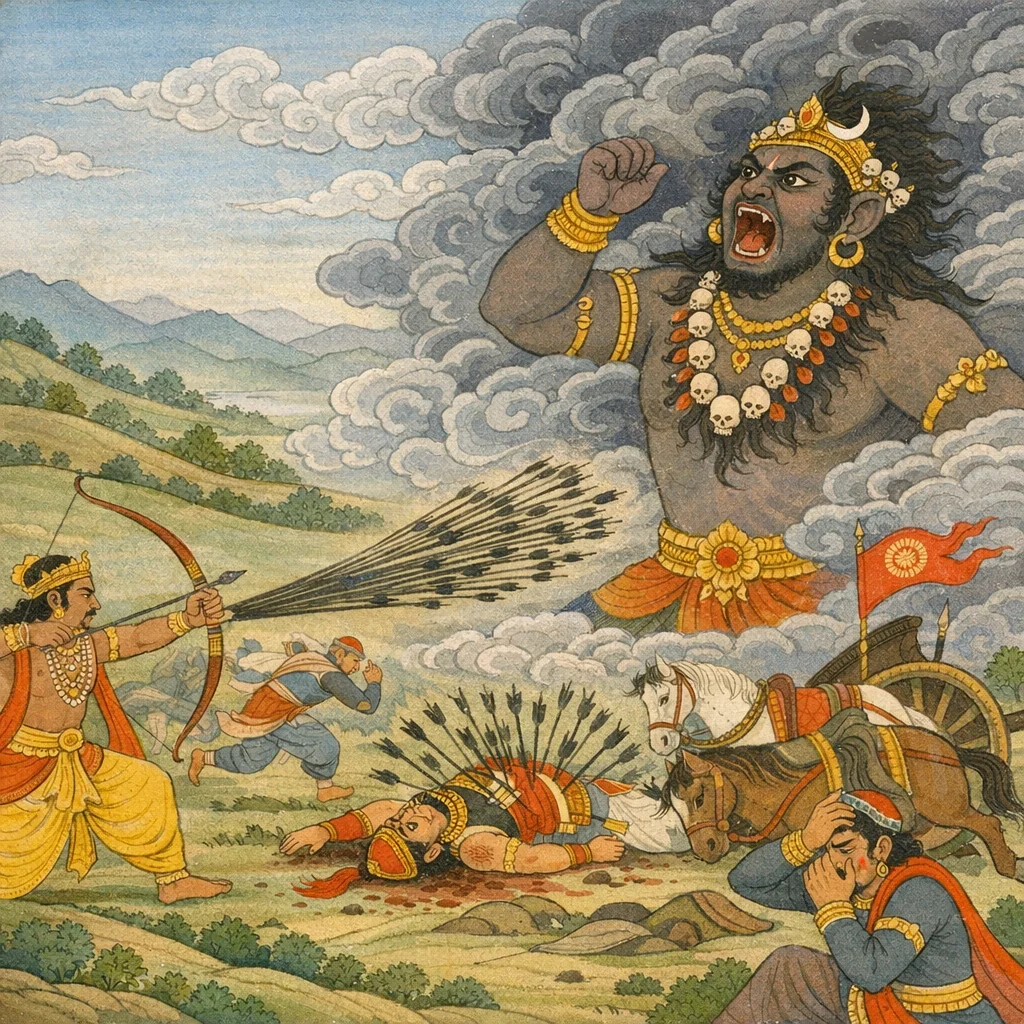
Sañjaya reports that Arjuna (Dhanaṃjaya), seeing Bhīṣma engaged with allied rulers and his own brothers, advances with weapon readied. The auditory and visual signatures of Arjuna’s presence—Pāñcajanya’s conch-blast, the Gāṇḍīva’s resonance, and the vānaralakṣaṇa banner—produce a marked morale effect, described as fear and disorientation among opposing ranks. The chapter then widens into a technical battlefield panorama: dust-clouds, intensified missile exchanges, and the pairing of major combatants and contingents (named regional allies and key leaders) as formations collide. Omens and environmental disturbances (wind, dust-rain, obscured sun, lightning-like flashes) are catalogued as phenomenological markers of crisis. The narrative closes with dense descriptions of mixed-arms chaos—damaged chariots, wounded horses, elephants disrupting lines—emphasizing the scale, sensory overload, and systemic volatility of mass engagement under Bhīṣma’s center of gravity.
Chapter Arc: संजय धृतराष्ट्र से कहता है—रणभूमि में सात्यकि की अजेय गति सबके देखते कौरव-सेना को झुके-गाँठ वाले बाणों से रोक देती है; उसी क्षण युद्ध का रंग बदलता दिखता है। → दुर्योधन भाइयों सहित भूरिश्रवा (सोमदत्त-पुत्र) को चारों ओर से घेर कर सात्यकि के विरुद्ध मोर्चा सँभालता है। उधर भीमसेन होश में आकर दुर्योधन को बार-बार बाणों से बेधता है; कौरव-पुत्र भीम के पराक्रम से भयभीत होकर डगमगाते हैं। इसी बीच घटोत्कच का आगमन और उसका प्रचण्ड नाद सेना में आतंक और विस्मय भर देता है। → घटोत्कच वज्र-फटने-सा सिंहनाद कर कौरव-सेना पर टूट पड़ता है; भीमसेन भीषण वेग से शत्रुओं को परलोक भेजता है (वीरबाहु का वध सहित), और दुर्योधन अपने भाइयों/सहायकों के क्षय से आँसू-शोक में डूबकर क्षणभर निर्णयहीन हो जाता है। → दिन के अंत तक कौरव-पक्ष पराजय-भाव में सिमटता है; पाण्डव-पक्ष का उत्साह बढ़ता है और चौथे दिन के युद्ध की समाप्ति होती है—पर शत्रु-सेना का क्रोध और प्रतिशोध भीतर-ही-भीतर पकता रहता है। → रात्रि के सन्नाटे में दुर्योधन का शोक और घटोत्कच-भीम की बढ़ती धाक संकेत देती है कि अगले दिन कौरव कोई कठोर उपाय खोजेंगे।
Shlokas
Verse 1
अपन करा बछ। अर 2 चतु:षष्टितमो<5 ध्याय: भीमसेन और घटोत्कचका पराक्रम, कौरवोंकी पराजय तथा चौथे दिनके युद्धकी समाप्ति संजय उवाच ततो भूरिश्रवा राजन् सात्यकिं नवशि: शरै: । प्राविध्यद् भृशसंक्रुद्धस्तोत्रैरिव महाद्विपम्,संजय कहते हैं--राजन्! तब भूरिश्रवाने अत्यन्त क़रुद्ध होकर सात्यकिको नौ बाणोंसे उसी प्रकार बींध डाला, जैसे महान् गजराजको अंकुशोंद्वारा पीड़ित किया जाता है
Sañjaya said: Then, O King, Bhūriśravas—seized by fierce anger—pierced Sātyaki with nine arrows, as a great elephant is goaded and driven by sharp elephant-hooks. The verse underscores how wrath on the battlefield turns skill into cruelty, intensifying the violence that war unleashes.
Verse 2
कौरवं सात्यकिश्नैव शरै: संनतपर्वभि: | अवारयदमेयात्मा सर्वलोकस्य पश्यत:,तब अमेय आत्मबलसम्पन्न सात्यकिने भी झुकी हुई गाँठवाले बाणोंसे सब लोगोंके देखते-देखते कुरुवंशी भूरिश्रवाको रोक दिया
Sañjaya said: Before the eyes of all the warriors, the immeasurable-souled Sātyaki checked the Kaurava hero with arrows whose joints were bent—restraining his advance in the open field of battle. The scene underscores how, amid the chaos of war, prowess is exercised not merely to kill but to halt an opponent’s momentum and protect one’s side through disciplined force.
Verse 3
ततो दुर्योधनो राजा सोदर्य: परिवारित: । सौमदत्तिं रणे यत्त: समन्तात् पर्यवारयत्,यह देख भाइयोंसहित राजा दुर्योधनने युद्धके लिये उद्यत होकर भूरिश्रवाको चारों ओरसे घेरकर उसकी रक्षामें तत्पर हो गये
Then King Duryodhana, surrounded by his own brothers, advanced in the battle and, from all sides, formed a protective ring around Saumadatti (Bhūriśravas), intent on guarding him. The scene underscores the fierce loyalties of war—kinship and factional duty compelling men to shield their own even amid a morally fraught conflict.
Verse 4
त॑ चैव पाण्डवा: सर्वे सात्यकिं रभसं रणे । परिवार्य स्थिता: संख्ये समनन््तात् सुमहौजस:,उधर महान् तेजस्वी समस्त पाण्डव भी युद्धमें वेगपूर्वक आगे बढ़नेवाले सात्यकिको सब ओरसे घेरकर समरभूमिमें डट गये
Sañjaya said: And all the Pāṇḍavas, surrounding Sātyaki—who was charging forward with impetuous speed in the battle—stood firm on the field of combat, encircling him on every side with their great might. The scene underscores a warrior-ethic of solidarity: in the chaos of war, the righteous course is not solitary bravado but coordinated protection of an ally, holding one’s ground together against danger.
Verse 5
भीमसेनस्तु संक्रुद्धों गदामुद्यम्प भारत । दुर्योधनमुखान् सर्वान् पुत्रांस्ते पर्यवारयत्
Sañjaya said: Enraged, Bhīmasena lifted his mace, O Bhārata, and confronted all your sons—Duryodhana at their head—encircling and hemming them in.
Verse 6
भारत! क्रोधमें भरे हुए भीमसेनने गदा उठाकर आपके दुर्योधन आदि सब पुत्रोंको अकेले ही रोक दिया ।। रथैरनेकसाहसरै: क्रोधामर्षसमन्वित: । नन्दकस्तव पुत्रस्तु भीमसेनं॑ महाबलम्
Sañjaya said: O descendant of Bharata, Bhīmasena, inflamed with wrath, lifted his mace and single-handedly checked all your sons, beginning with Duryodhana. Surrounded by many thousands of chariots and driven by anger and wounded pride, your son Nandaka confronted the mighty Bhīmasena.
Verse 7
विव्याध विशिखै: षड्भि: कड़कपत्रै: शिलाशितै: । तब क्रोध और अमर्षमें भरे हुए आपके पुत्र नन्दकने कई हजार रथियोंके साथ आकर शिलापर तेज किये हुए कंकपत्रयुक्त छः: बाणोंसे महाबली भीमसेनको बींध डाला || ६६ || दुर्योधनश्व॒ समरे भीमसेनं महारथम्
Sañjaya said: He pierced Bhīmasena with six arrows—shafts fletched with heron-feathers and sharpened on stone. Then your son Nandaka, swollen with anger and wounded pride, came forward amid thousands of chariot-warriors and struck the mighty Bhīma with six keen, stone-honed, heron-feathered shafts. Duryodhana too, in the battle, assailed Bhīmasena, that great chariot-fighter.
Verse 8
ततो भीमो महाबाहु: स्वरथं सुमहाबल:
Sañjaya said: Then Bhīma—mighty-armed and of tremendous strength—advanced with his own chariot.
Verse 9
आरुरोह रथश्रेष्ठ विशोक॑ चेदमब्रवीत् । तब महाबली महाबाहु भीमसेन अपने श्रेष्ठ रथपर आरूढ़ हो गये और सारथि विशोकसे इस प्रकार बोले-- ।। ८ ई ।। एते महारथा: शूरा धार्तराष्ट्राः: समागता:
Sañjaya said: Bhīmasena, the mighty-armed hero of great strength, mounted his excellent chariot and then addressed his charioteer Viśoka in these words: “Here have assembled the valiant great chariot-warriors of Dhṛtarāṣṭra’s party.”
Verse 10
मनोरथद्रुमो5स्माकं चिन्तितो बहुवार्षिक:
Sañjaya said: “For us, the wish-fulfilling tree—long contemplated through many years—has at last been envisioned as attainable.”
Verse 11
यत्राशोक समुत्क्षिप्ता रेणवो रथनेमिभि:,“विशोक! जहाँ रथके पहियोंसे ऊपर उड़ी हुई धूल बाणसमूहोंके साथ अन्तरिक्ष और दिगन्तमें फैल रही है, वहीं स्वयं राजा दुर्योधन कवच आदिसे सुसज्जित होकर युद्धके लिये खड़ा है
Sañjaya said: “O Aśoka (Dhṛtarāṣṭra), there—where the dust, flung up by the rims of chariot-wheels, rises and spreads through the sky and to the horizons, mingling with volleys of arrows—there King Duryodhana himself stands ready for battle, fully equipped with armor and war-gear.”
Verse 12
प्रयास्यन्त्यन्तरिक्षं हि शरवृन्दैर्दिगन्तरे । तत्र तिष्ठति संनद्धः स्वयं राजा सुयोधन:,“विशोक! जहाँ रथके पहियोंसे ऊपर उड़ी हुई धूल बाणसमूहोंके साथ अन्तरिक्ष और दिगन्तमें फैल रही है, वहीं स्वयं राजा दुर्योधन कवच आदिसे सुसज्जित होकर युद्धके लिये खड़ा है
“Indeed, volleys of arrows course through the sky in every direction; there stands King Suyodhana (Duryodhana) himself, fully armed and arrayed.”
Verse 13
भ्रातरश्चास्य संनद्धा: कुलपुत्रा मदोत्कटा: । एतानद्य हनिष्यामि पश्यतस्ते न संशय:
Sañjaya said: “His brothers too stand fully armed—noble-born warriors, fierce with pride. Today I shall slay them before your very eyes; of this there is no doubt.”
Verse 14
तस्मान्ममाश्चान् संग्रामे यत्त: संयच्छ सारथे । “उसके कुलीन और मदोन्मत्त भाई भी वहीं कवच बाँधकर खड़े हैं। आज तुम्हारे देखते-देखते मैं इन सबका विनाश करूँगा, इसमें संशय नहीं है। अतः सारथे! तुम सावधान होकर संग्राममें मेरे घोड़ोंको काबूमें रखो” || १३ ह ।। एवमुक्क्त्वा तत: पार्थस्तव पुत्र विशाम्पते,राजन्! ऐसा कहकर कुन्तीकुमार भीमने स्वर्णभूषित दस तीखे बाणोंद्वारा आपके पुत्र दुर्योधनको बींध डाला और नन््दककी छातीमें भी तीन बाणोंसे गहरी चोट पहुँचायी
Sañjaya said: “Therefore, O charioteer, be fully alert in the battle and keep my horses firmly under control.”
Verse 15
विव्याध दशभिस्ती क्षण: शरै: कनकभूषणै: । नन्दकं च त्रिभिबणिरभ्यविध्यत् स्तनान्तरे,राजन्! ऐसा कहकर कुन्तीकुमार भीमने स्वर्णभूषित दस तीखे बाणोंद्वारा आपके पुत्र दुर्योधनको बींध डाला और नन््दककी छातीमें भी तीन बाणोंसे गहरी चोट पहुँचायी
Sañjaya said: Having spoken thus, Kuntī’s son Bhīma pierced your son Duryodhana with ten sharp arrows adorned with gold; and he also struck Nandaka with three arrows, wounding him deep in the chest, O King.
Verse 16
त॑ तु दुर्योधन:षष्ट्या विद्ध्वा भीम॑ महाबलम् | त्रिभिरन्यै: सुनिशितैर्विशोकं प्रत्यविध्यत,यह देख दुर्योधनने साठ बाणोंसे महाबली भीमसेनको घायल करके अन्य तीन पैने बाणोंसे सारथि विशोकको भी घायल कर दिया
Sañjaya said: Duryodhana, having pierced the mighty Bhīma with sixty arrows, then struck the charioteer Viśoka as well with three other exceedingly sharp shafts.
Verse 17
भीमस्य च रणे राजन धरनुश्चिच्छेद भासुरम् । मुष्टिदेशे भृशं ती#णैस्त्रिभिर्भल्लैर्हसन्निव,राजन! इसके बाद दुर्योधनने युद्धस्थलमें तीन अत्यन्त तीखे भल्लोंद्वारा हँसते हुए-से भीमके तेजस्वी धनुषको भी बीचसे काट दिया
Sañjaya said: O King, in the midst of battle he severed Bhīma’s brilliant bow—cutting it at the very grip—with three exceedingly sharp bhalla arrows, as though smiling.
Verse 18
समरे प्रेक्ष्य यन्तारं विशोक॑ तु वृकोदर: । पीडित॑ विशिखैस्ती#्ष्णैस्तव पुत्रेण धन्विना,आपके धनुर्धर पुत्रद्वारा समरांगणमें अपने सारथि विशोकको तीखे बाणोंके आघातसे पीड़ित होता देख भीमसेन सह न सके। उन्होंने कुपित होकर अपना दिव्य धनुष हाथमें लिया। महाराज! भरतश्रेष्ठ] फिर आपके पुत्रके वधके लिये अत्यन्त कुपित होकर उन्होंने पंखयुक्त क्षुरप्रका संधान किया और उसके द्वारा राजा दुर्योधनके उत्तम धनुषको काट डाला
Sañjaya said: Seeing his charioteer Viśoka wounded on the battlefield by the sharp arrows shot by your son, the bowman, Vṛkodara (Bhīma) could not endure it. Overcome with wrath, he seized his divine bow, intent on slaying your son, and then—fitting a winged razor-headed shaft—he cut down King Duryodhana’s excellent bow.
Verse 19
अमृष्यमाण: संरब्धो भरनुर्दिव्यं परामृशत् । पुत्रस्य ते महाराज वधार्थ भरतर्षभ,आपके धनुर्धर पुत्रद्वारा समरांगणमें अपने सारथि विशोकको तीखे बाणोंके आघातसे पीड़ित होता देख भीमसेन सह न सके। उन्होंने कुपित होकर अपना दिव्य धनुष हाथमें लिया। महाराज! भरतश्रेष्ठ] फिर आपके पुत्रके वधके लिये अत्यन्त कुपित होकर उन्होंने पंखयुक्त क्षुरप्रका संधान किया और उसके द्वारा राजा दुर्योधनके उत्तम धनुषको काट डाला
Sañjaya said: Unable to endure what he saw and inflamed with wrath, he seized his celestial bow. O great king, O bull among the Bharatas, intent on the slaying of your son, he then fixed a winged, razor-edged arrow and with it cut down King Duryodhana’s excellent bow.
Verse 20
समाधत्त सुसंकुद्धः क्षुरप्रं लोमवाहिनम् । तेन चिच्छेद नृपतेर्भीम: कार्मुकमुत्तमम्,आपके धनुर्धर पुत्रद्वारा समरांगणमें अपने सारथि विशोकको तीखे बाणोंके आघातसे पीड़ित होता देख भीमसेन सह न सके। उन्होंने कुपित होकर अपना दिव्य धनुष हाथमें लिया। महाराज! भरतश्रेष्ठ] फिर आपके पुत्रके वधके लिये अत्यन्त कुपित होकर उन्होंने पंखयुक्त क्षुरप्रका संधान किया और उसके द्वारा राजा दुर्योधनके उत्तम धनुषको काट डाला
Sañjaya said: Enraged, Bhīma fitted a razor-edged arrow, swift as it sped with hair-like vanes. With it he cut down the king’s excellent bow—seeking to shatter Duryodhana’s fighting power and hasten his defeat amid the righteous fury of the battlefield.
Verse 21
सो<पविद्धय धनुश्किन्न॑ पुत्रस्ते क्रोधमूर्च्छित: । अन्यत् कार्मुकमादत्त सत्वरं वेगवत्तरम्,राजन्! धनुष कटनेपर आपका पुत्र क्रोधसे मूर्च्छित हो उठा। उसने उस कटे हुए धनुषको फेंककर तुरंत ही उससे भी अधिक वेगशाली दूसरा धनुष ले लिया
Sañjaya said: “O King, when his bow had been cut down, your son—overwhelmed and stupefied by anger—cast it aside and at once seized another bow, swifter and more forceful.”
Verse 22
संदधे विशिखं घोरं कालमृत्युसमप्रभम् । तेनाजघान संक्रुद्धों भीमसेनं स्तनान्तरे,फिर उसके ऊपर काल और मृत्युके समान तेजस्वी भयंकर बाण रखा और कुपित हो उसके द्वारा भीमसेनकी छातीमें गहरा आघात किया
Sañjaya said: He set a dreadful arrow upon his bow, blazing like Time and Death themselves; then, in wrath, he struck Bhīmasena in the region of the chest with it, dealing a deep and forceful blow.
Verse 23
स गाढविद्धो व्यथित: स्यन्दनोपस्थ आविशत् । स निषण्णो रथोपस्थे मूर्च्छामभभिजगाम ह,उस बाणसे अत्यन्त घायल हो भीमसेन व्यथाके मारे रथकी बैठकमें बैठ गये। वहाँ बैठते ही उन्हें मूर्च्छां आ गयी
Sañjaya said: Struck deeply and wracked with pain, he entered the chariot-seat. Having sat down upon the chariot’s platform, he at once fell into a swoon.
Verse 24
त॑ दृष्टवा व्यथितं भीममभिमन्युपुरोगमा: । नामृष्यन्त महेष्वासा: पाण्डवानां महारथा:,भीमसेनको प्रहारसे पीड़ित हुआ देख अभिमन्यु आदि महाथनुर्धर पाण्डव महारथी यह सहन न कर सके
Sañjaya said: Seeing Bhīma distressed and shaken by the blow, the great bowmen among the Pāṇḍavas—led by Abhimanyu—could not endure it.
Verse 25
ततस्तु तुमुलां वृष्टिं शस्त्राणां तिग्मतेजसाम् | पातयामासुरव्यग्रा: पुत्रस्य तव मूर्थनि,फिर तो सब लोगोंने आपके पुत्रके मस्तकपर निर्भय होकर तेजस्वी शस्त्रोंकी भयंकर वर्षा प्रारम्भ कर दी
Sanjaya said: Then, undismayed, they unleashed upon your son’s head a thunderous shower of keen, blazing weapons—intensifying the battle’s fury and the ruthless momentum of war.
Verse 26
प्रतिलभ्य तत: संज्ञां भीमसेनो महाबल: । दुर्योधन त्रिभिर्विद्ध्वा पुनर्विव्याध पञचभि:,तत्पश्चात् होशमें आनेपर महाबली भीमसेनने दुर्योधनको पहले तीन बाणोंसे बींधकर फिर पाँच बाणोंसे घायल किया
Sañjaya said: Regaining consciousness, the mighty Bhīmasena struck Duryodhana—piercing him first with three arrows and then wounding him again with five more.
Verse 27
शल्यं च पज्चविंशत्या शरैरविव्याध पाण्डव: । रुक्मपुड्खैर्महेष्वास: स विद्धो व्यपयाद् रणात्,फिर महाथनुर्धर पाण्डुपुत्र भीमने सुवर्णमय पंखसे युक्त पचीस बाणोंद्वारा राजा शल्यको बींध दिया। उन बाणोंसे घायल होकर वे रणभूमिसे भाग गये
Sañjaya said: The Pāṇḍava warrior pierced King Śalya with twenty-five arrows, their shafts fitted with golden feathers. Struck and wounded, Śalya withdrew from the battlefield.
Verse 28
प्रत्युद्ययुस्ततो भीम॑ तव पुत्राश्चतुर्दश । सेनापति: सुषेणश्र जलसंध: सुलोचन:
Sanjaya said: Then, O Bhima, fourteen of your sons marched forth in counter-advance—along with the commander Suṣeṇa, and also Jalasaṃdha and Sulocana.
Verse 29
उग्रो भीमरथो भीमो वीरबाहुरलोलुप: । दुर्मुखो दुष्प्रधर्षश्व॒ विवित्सुर्विकट: सम:
Sañjaya said: “There were also Ugra, Bhīmaratha, Bhīma, Vīrabāhu—free from greed—along with Durmukha, the hard-to-overpower Duṣpradharṣa, Vivitsu, and Vikaṭa, steadfast and even-minded.”
Verse 30
विसृजन्तो बहून् बाणान् क्रोधसंरक्तलोचना: । भीमसेनमभिद्रुत्य विव्यधु: सहिता भृूशम्
Sañjaya said: With eyes reddened by anger, they loosed many arrows. Rushing straight at Bhīmasena together, they struck him fiercely.
Verse 31
राजन्! तब आपके चौदह पुत्रोंने भीमसेनपर धावा किया। उनके नाम ये हैं--सेनापति, सुषेण, जलसंध, सुलोचन, उग्र, भीमरथ, भीम, वीरबाहु, अलोलुप, दुर्मुख, दुष्प्रधर्ष, विवित्सु, विकट और सम--ये सब क्रोधसे लाल आँखें करके बहुत-से बाणोंकी वर्षा करते हुए भीमसेनपर टूट पड़े और एक साथ होकर उन्हें अत्यन्त घायल करने लगे ।| २८-- ३० || पुत्रांस्तु तव सम्प्रेक्ष्य भीमसेनो महाबल: । सृक्किणी विलिहन् वीर: पशुमध्ये यथा वृकः,महाबली महाबाहु वीर भीमसेन आपके पुत्रोंको देखकर पशुओंके बीचमें खड़े हुए भेड़ियेके समान अपने मुहके दोनों कोनोंको चाटते हुए गरुड़के समान बड़े वेगसे उनके सामने गये। वहाँ पहुँचकर पाण्डुकुमारने क्षुरप्र नामक बाणसे सेनापतिका सिर काट लिया
Sañjaya said: O King, then your fourteen sons rushed upon Bhīmasena—Senāpati, Suṣeṇa, Jalasaṃdha, Sulocana, Ugra, Bhīmaratha, Bhīma, Vīrabāhu, Alolupa, Durmukha, Duṣpradharṣa, Vivitsu, Vikaṭa, and Sama. Their eyes reddened with anger, they rained arrows down and, joining together, wounded Bhīmasena grievously. Seeing your sons, the mighty Bhīmasena—like a wolf amid a herd—licked the corners of his mouth and, swift as Garuḍa, surged straight toward them. Reaching them, the son of Pāṇḍu cut off Senāpati’s head with a razor-edged arrow.
Verse 32
अभिपत्य महाबाहुर्गरुत्मानिव वेगित: । सेनापते: क्षुरप्रेण शिरश्षिच्छेद पाण्डव:,महाबली महाबाहु वीर भीमसेन आपके पुत्रोंको देखकर पशुओंके बीचमें खड़े हुए भेड़ियेके समान अपने मुहके दोनों कोनोंको चाटते हुए गरुड़के समान बड़े वेगसे उनके सामने गये। वहाँ पहुँचकर पाण्डुकुमारने क्षुरप्र नामक बाणसे सेनापतिका सिर काट लिया
Sañjaya said: The mighty-armed Pāṇḍava, swift as Garuḍa, charged forward and, with a razor-edged arrow, severed the commander’s head.
Verse 33
सम्प्रहस्य च हृष्टात्मा त्रिभिर्बाणैर्महाभुज: । जलसंध॑ विनिर्भिद्य सोइनयद् यमसादनम्,तत्पश्चात् प्रसन्नचित्त हो उन महाबाहुने हँसते-हँसते जलसंधको तीन बाणोंसे विदीर्ण करके यमलोक पहुँचा दिया
Sañjaya said: Laughing aloud and exultant in spirit, the mighty-armed warrior pierced Jalasandha with three arrows and sent him to the abode of Yama.
Verse 34
सुषेणं च ततो हत्वा प्रेषयामास मृत्यवे । उग्रस्य सशिरस्त्राणं शिरश्नन्द्रोपमं भुवि
Sañjaya said: Then, having slain Suṣeṇa, he consigned him to Death. And the head of Ugra—still bearing its helmet—fell upon the earth, shining like the moon.
Verse 35
पातयामास भल्लेन कुण्डलाभ्यां विभूषितम् | तदनन्तर सुषेणको मारकर मौतके घर भेज दिया और उग्रके कुण्डलमण्डित चन्द्रोपम मस्तकको एक भल््लके द्वारा शिरस्त्राणसहित काटकर पृथ्वीपर गिरा दिया || ३४ ह ।। वीरबाहुं च सप्तत्या साश्वकेतुं ससारथिम्
Sañjaya said: With a sharp bhalla-arrow he struck down the warrior adorned with a pair of earrings. He also felled Vīrabāhu—together with his standard, his horses, and his charioteer—showing how, in the fury of battle, martial prowess can swiftly sever the supports of a fighter’s pride and power.
Verse 36
भीमभीमरथौ चोभौ भीमसेनो हसन्निव
Sañjaya said: Both—Bhīma and the formidable chariot—appeared terrifying; and Bhīmasena, as if laughing, displayed a fearless confidence amid the battle’s dread, signaling resolve rather than cruelty.
Verse 37
ततः सुलोचनं भीम: क्षुरप्रेण महामृधे
Sañjaya said: Then, in that great and furious clash, Bhīma struck Sulocana with a razor-edged arrow—an act that underscores how, in war, even renowned warriors are swiftly brought under the harsh law of combat, where valor and duty are tested through decisive, often ruthless, action.
Verse 38
पुत्रास्तु तव तं दृष्टया भीमसेनपराक्रमम्,राजन्! आपके जो अन्य शेष पुत्र वहाँ मौजूद थे, वे भीमसेनका पराक्रम देखकर उनके भयसे पीड़ित हो उन महामना पाण्डुकुमारके बाणकी मार खाते हुए सम्पूर्ण दिशाओंमें भाग गये
Sanjaya said: O King, when your remaining sons there beheld the prowess of Bhimasena, they too—stricken with fear—could not withstand the volleys of arrows from the noble son of Pandu, and fled in all directions. The scene underscores how arrogance collapses before evident valor, and how fear can dissolve cohesion in an unrighteous cause.
Verse 39
शेषा येडन्ये5भवंस्तत्र ते भीमस्य भयार्दिता: । विप्रद्रुता दिशो राजन् वध्यमाना महात्मना,राजन्! आपके जो अन्य शेष पुत्र वहाँ मौजूद थे, वे भीमसेनका पराक्रम देखकर उनके भयसे पीड़ित हो उन महामना पाण्डुकुमारके बाणकी मार खाते हुए सम्पूर्ण दिशाओंमें भाग गये
Sañjaya said: “Those others who still remained there were stricken with fear at Bhīma’s might. Driven into flight, O King, they scattered toward every direction, even as they were being cut down by that great-souled warrior.”
Verse 40
ततोडब्रवीच्छान्तनव: सवनिव महारथान् | एष भीमो रणे क्रुद्धो धार्तराष्ट्रानू महारथान्,तदनन्तर शान्तनुनन्दन भीष्मने सभी महारथियोंसे कहा--'ये भयंकर धनुर्धर भीमसेन युद्धमें क़ुद्ध होकर सामने आये हुए श्रेष्ठ, ज्येष्ठ एवं शूर महारथी धृतराष्ट्रपुत्रोंकी मार गिराते हैं। अतः तुम सब लोग मिलकर इन्हें शीघ्र काबूमें करो”
Sañjaya said: Then Śāntanava (Bhīṣma) addressed the assembled great chariot-warriors: “Here is Bhīma, wrathful in battle, striking down the Dhārtarāṣṭra champions. Therefore, all of you together must quickly restrain him.”
Verse 41
यथा प्राग्र्यान् यथा ज्येष्ठान् यथा शूरांश्व संगतान् । निपातयत्युग्रधन्वा त॑ प्रगृूह्लीत माचिरम्,तदनन्तर शान्तनुनन्दन भीष्मने सभी महारथियोंसे कहा--'ये भयंकर धनुर्धर भीमसेन युद्धमें क़ुद्ध होकर सामने आये हुए श्रेष्ठ, ज्येष्ठ एवं शूर महारथी धृतराष्ट्रपुत्रोंकी मार गिराते हैं। अतः तुम सब लोग मिलकर इन्हें शीघ्र काबूमें करो”
Sañjaya said: “As that fierce archer strikes down the foremost, the elders, and the assembled heroes, restrain him at once without delay.” After this, Bhīṣma, the son of Śāntanu, addressed all the great chariot-warriors: “This Bhīmasena, enraged in battle, is felling the sons of Dhṛtarāṣṭra—those foremost, senior, and heroic fighters who have come to face him. Therefore, all of you together, quickly bring him under control.”
Verse 42
एवमुक्तास्तत: सर्वे धार्तराष्ट्रस्य सैनिका: । अभ्यद्रवन्त संक्रुद्धा भीमसेनं महाबलम्,उनके ऐसा कहनेपर दुर्योधनके सभी सैनिक कुपित हो महाबली भीमसेनकी ओर दौड़े
Sañjaya said: When those words had been spoken, all the soldiers of Dhṛtarāṣṭra’s side, inflamed with anger, rushed forward in a body toward Bhīmasena, the mighty one.
Verse 43
भगदत्त: प्रभिन्नेन कुड्जरेण विशाम्पते । अभ्ययात् सहसा तत्र यत्र भीमो व्यवस्थित:,प्रजानाथ! राजा भगदत्त मदवर्षी गजराजपर आरूढ़ हो सहसा उस स्थानपर आ पहुँचे, जहाँ भीमसेन खड़े थे
Sañjaya said: O lord of the people, King Bhagadatta, mounted on a rut-maddened elephant that had broken through the ranks, suddenly charged to the very spot where Bhīma stood ready.
Verse 44
आपततन्नेव च रणे भीमसेनं शिलीमुखै: । अदृश्यं समरे चक्रे जीमूत इव भास्करम्
Sañjaya said: Even as Bhīmasena was charging in the battle, he was struck with śilīmukha arrows; and in the midst of the fight the attacker made him vanish from sight—just as a mass of clouds obscures the sun.
Verse 45
युद्धमें आते ही उन्होंने अपने बाणोंसे भीमसेनको अदृश्य कर दिया, मानो सूर्य बादलोंसे ढक गये हों ।। अभिमन्युमुखास्तत् तु नामृष्यन्त महारथा: । भीमस्याच्छादनं संख्ये स्वबाहुबलमाश्रिता:,उस समय अभिमन्यु आदि महारथी भीमका इस प्रकार बाणोंसे आच्छादित हो जाना सहन न कर सके। वे अपने बाहुबलका आश्रय ले युद्धमें भगदत्तपर सब ओरसे बाणोंकी वर्षा करते हुए उन्हें रोकने लगे। उन्होंने अपने बाणोंकी वृष्टिसे भगदत्तके हाथीको भी सब ओरसे छेद डाला
Sañjaya said: But the great chariot-warriors led by Abhimanyu could not endure Bhīma being thus smothered by a storm of arrows in the thick of battle. Trusting in the strength of their own arms, they closed in and checked Bhagadatta by showering him from every side with arrows—so that even his elephant was pierced all over.
Verse 46
त एनं शरवर्षेण समन्तात् पर्यवारयन् | गजं च शरवृष्ट्या तु बिभिदुस्ते समन््तत:,उस समय अभिमन्यु आदि महारथी भीमका इस प्रकार बाणोंसे आच्छादित हो जाना सहन न कर सके। वे अपने बाहुबलका आश्रय ले युद्धमें भगदत्तपर सब ओरसे बाणोंकी वर्षा करते हुए उन्हें रोकने लगे। उन्होंने अपने बाणोंकी वृष्टिसे भगदत्तके हाथीको भी सब ओरसे छेद डाला
Sañjaya said: They hemmed him in from every side with a rain of arrows; and with that very shower of shafts they also pierced the elephant on all sides.
Verse 47
स शस्त्रवृष्ट्याभिहत: समस्तैस्तैर्महारथै: । प्राग्ज्योतिषगजो राजन् नानालिड्रैः सुतेजनै:
Sañjaya said: O King, the elephant from Prāgjyotiṣa was struck by a veritable rain of weapons, hurled together by all those great chariot-warriors, with many kinds of razor-edged, keenly sharpened missiles.
Verse 48
संजातरुधिरोत्पीड: प्रेक्षणीयो5भवदू रणे । गभस्तिभिरिवार्कस्य संस्यूतो जलदो महान्
Sañjaya said: On the battlefield, it became a striking sight—newly risen torrents of blood pressed forth, like a great cloud thickened and, as it were, stitched together by the sun’s rays.
Verse 49
राजन! जो नाना प्रकारके चिह्न धारण करनेवाले और अत्यन्त तेजस्वी थे, उन समस्त महारथियोंद्वारा की हुई अस्त्र-शस्त्रोंकी वर्षासे बहुत ही घायल होकर प्राग्ज्योतिषनरेश भगदत्तका वह हाथी मस्तकपर रक्तसे रंजित हो रणक्षेत्रमें देखने ही योग्य हो रहा था, मानो सूर्यकी अरुण किरणोंसे व्याप्त रँगा हुआ महामेघ हो ।। संचोदितो मदसत्रावी भगदत्तेन वारण: । अभ्यधावत तान् सर्वान् कालोत्सृष्ट इवान्तक:
Sañjaya said: Urged on by Bhagadatta, the rut-fluid-streaming elephant charged at them all, like Death itself released at the appointed hour.
Verse 50
तस्य तत् सुमहद् रूप॑ दृष्टवा सर्वे महारथा:
Sañjaya said: Seeing that exceedingly vast and awe-inspiring form of his, all the great chariot-warriors were struck with wonder and alarm—an encounter that momentarily suspends ordinary martial confidence and forces even seasoned fighters to confront a power beyond mere human prowess.
Verse 51
ततस्तु नृपतिः क्रुद्धों भीमसेनं स्तनान्तरे
Sañjaya said: Then the king, inflamed with anger, struck at Bhīmasena in the region of the chest—an act revealing how wrath on the battlefield drives even rulers toward direct, bodily violence rather than measured restraint.
Verse 52
आजघान महाराज शरेणानतपर्वणा | महाराज! तत्पश्चात् राजा भगदत्तने कुपित होकर झुकी हुई गाँठवाले बाणसे भीमसेनकी छातीमें गहरी चोट पहुँचायी ।। ५१ है ।। सो5तिविद्धो महेष्वासस्तेन राज्ञा महारथ:
Sañjaya said: O King, he struck with an arrow whose joints were bent. Thus, that great archer and mighty chariot-warrior, pierced through by that king, was grievously wounded—an episode that underscores how, in the heat of battle, wrath and prowess drive warriors to inflict decisive blows, even upon renowned heroes.
Verse 53
तांस्तु भीतान् समालक्ष्य भीमसेनं च मूर्च्छितम्
Sañjaya said: Seeing them struck with fear, and Bhīmasena too lying senseless, the scene revealed a sudden collapse of courage amid the turmoil of battle—an ethical reminder that even the mighty can be overwhelmed when violence and shock surge beyond human endurance.
Verse 54
ननाद बलवतन्नादं भगदत्त: प्रतापवान् | उन सब महारथियोंको भयभीत और भीमसेनको मूर्च्छित हुआ देख प्रतापी भगदत्तने बड़े जोरसे सिंहनाद किया ।। ५३ है ।। ततो घटोत्कचो राजन प्रेक्ष्य भीम॑ तथागतम्
Sañjaya said: The valiant Bhagadatta, seeing those great chariot-warriors struck with fear and Bhīmasena fallen into a swoon, let out a mighty lion-roar. Then, O King, Ghaṭotkaca, beholding Bhīma in that condition, moved to respond—his attention drawn to the peril of his kinsman amid the press of battle.
Verse 55
स कृत्वा दारुणां मायां भीरूणां भयवर्धिनीम्,(कैलासगिरिसंकाशं वज्रपाणिरिवा भ्ययात् ।) फिर उसने कायरोंका भय बढ़ानेवाली अत्यन्त दारुण माया प्रकट की। वह आधे निमेषमें ही भयंकर रूप धारण करके दृष्टिगोचर हुआ। घटोत्कच अपनी ही मायाद्वारा निर्मित कैलासपर्वतके समान श्वेत वर्णवाले ऐरावत हाथीपर बैठकर वज्रधारी इन्द्रके समान वहाँ आया था
Sañjaya said: Having conjured a dreadful illusion that heightened the fear of the timid, he appeared in a terrifying form in an instant. Mounted upon a white Airāvata-like elephant fashioned by his own magic, and resembling Indra bearing the thunderbolt, Ghaṭotkaca advanced onto the field—using spectacle and terror as weapons amid the moral chaos of war.
Verse 56
अदृश्यत निमेषार्धाद् घोररूपं समास्थित: । ऐरावणं समारूढ: स वै मायाकृतं स्वयम्,(कैलासगिरिसंकाशं वज्रपाणिरिवा भ्ययात् ।) फिर उसने कायरोंका भय बढ़ानेवाली अत्यन्त दारुण माया प्रकट की। वह आधे निमेषमें ही भयंकर रूप धारण करके दृष्टिगोचर हुआ। घटोत्कच अपनी ही मायाद्वारा निर्मित कैलासपर्वतके समान श्वेत वर्णवाले ऐरावत हाथीपर बैठकर वज्रधारी इन्द्रके समान वहाँ आया था
Sañjaya said: In less than half a blink, he became visible, having assumed a terrifying form. Mounted upon Airāvata—conjured by his own sorcery—he advanced like Indra, the wielder of the thunderbolt, appearing as vast and radiant as Mount Kailāsa. By this dreadful illusion he sought to magnify fear in the faint-hearted amid the chaos of war.
Verse 57
तस्य चान्येडपि दिड्नागा बभूवुरनुयायिन: । अज्जनो वामनश्वैव महापद्मश्न सुप्रभ:
Sañjaya said: “And other mighty elephants too became his followers—Ajjana, Vāmana, Mahāpadma, and Suprabha.”
Verse 58
त्रय एते महानागा राक्षस: समधिष्ठिता: । उसके पीछे अंजन, वामन और उत्तम कान्तिसे युक्त महापद्मय--से तीन दिग्गज और थे, जिनपर उसके साथी राक्षस सवार थे ।। ५७ ह ।। महाकायास्त्रिधा राजन् प्रस्रवन्तो मं बहु
Sañjaya said: “O King, behind him were three mighty elephants, each mounted by rākṣasas. They were named Añjana, Vāmana, and Mahāpadma—splendid in appearance and radiant with excellent luster—advancing as formidable war-elephants in the host.”
Verse 59
तेजोवीर्यबलोपेता महाबलपराक्रमा: । राजन! वे सभी विशालकाय दिग्गज तीन स्थानोंसे बहुत मद बहा रहे थे और तेज, वीर्य एवं बलसे सम्पन्न तथा महाबली और महापराक्रमी थे ।। ५८ है ।। घटोत्कचस्तु स्वं नागं चोदयामास तं तदा
Sañjaya said: O King, all those colossal, direction-roaming elephants were streaming abundant rut from three places. Endowed with radiance, martial vigor, and strength, they were mighty in power and great in prowess. Then Ghaṭotkaca urged on his own elephant at that moment.
Verse 60
ते चान्ये चोदिता नागा राक्षसैस्तैर्महाबलै:
Sañjaya said: Other Nāga warriors too, urged on by those mighty Rākṣasas, were driven into action—showing how, in the turmoil of war, powerful instigators can propel even formidable beings toward violence and escalation.
Verse 61
परिपेतु: सुसंरब्धाश्षतुर्वष्टा श्वतुर्दिशम् । महाबली राक्षसोंद्वारा प्रेरित अन्यान्य दिग्गज भी जिनके चार-चार दाँत थे, अत्यन्त कुपित हो चारों दिशाओंमें टूट पड़े |। ६० हू ।। भगदत्तस्य तं नागं विषाणैरभ्यपीडयन्,वे सब-के-सब भगदत्तके हाथीको अपने दाँतोंसे पीड़ा देने लगे। वह बाणोंसे बहुत घायल हो चुका था; अतः इन हाथियोंद्वारा पीड़ित होनेपर वेदनासे व्याकुल हो बड़े जोर- जोरसे चीत्कार करने लगा। उसकी आवाज इन्द्रके वज्रकी गड़गड़ाहटके समान जान पड़ती थी
Sañjaya said: Enraged and driven into a frenzy, the four-tusked elephants charged in all four directions, urged on by mighty rākṣasas. They pressed upon Bhagadatta’s elephant with their tusks and horns, tormenting it on every side. Already pierced by many arrows, the great beast, overwhelmed by pain under the assault of the other elephants, cried out with tremendous force—its roar seeming like the thunder of Indra’s vajra.
Verse 62
स पीड्यमानस्तैनगिर्वेदनार्त: शराहतः । अनदत् सुमहानादमिन्द्राशनिसमस्वनम्,वे सब-के-सब भगदत्तके हाथीको अपने दाँतोंसे पीड़ा देने लगे। वह बाणोंसे बहुत घायल हो चुका था; अतः इन हाथियोंद्वारा पीड़ित होनेपर वेदनासे व्याकुल हो बड़े जोर- जोरसे चीत्कार करने लगा। उसकी आवाज इन्द्रके वज्रकी गड़गड़ाहटके समान जान पड़ती थी
Sañjaya said: Tormented by those elephants and already grievously wounded by arrows, he cried out in intense pain with a tremendous roar, a sound like the thunder of Indra’s thunderbolt.
Verse 63
तस्य तं नदतो नादं सुघोरं भीमनि:स्वनम् | श्रुत्वा भीष्मो<ब्रवीद् द्रोणं राजानं च सुयोधनम्,भयंकर आवाजके साथ अत्यन्त घोर शब्द करनेवाले हाथीके उस चीत्कारको सुनकर भीष्मने द्रोणाचार्य तथा राजा दुर्योधनसे कहा--
Sañjaya said: Hearing that elephant’s terrifying bellow—an exceedingly dreadful roar with a mighty, fearsome resonance—Bhīṣma addressed Droṇa and King Suyodhana (Duryodhana).
Verse 64
एष युध्यति संग्रामे हैडिम्बेन दुरात्मना | भगदत्तो महेष्वास: कृच्छे च परिवर्तते,“ये महाधनुर्धर राजा भगदत्त युद्धमें दुरात्मा घटोत्कचके साथ जूझ रहे हैं और संकटमें पड़ गये हैं इति श्रीमहाभारते भीष्मपर्वणि भीष्मवधपर्वणि चतुर्थदिवसावहारे चतु:षष्टितमो5ध्याय:
Bhīṣma said: “Behold—Bhagadatta, the great archer, fights in this battle with the wicked Haidimba, and he has fallen into dire straits.”
Verse 65
राक्षसशक्ष महाकाय: स च राजातिकोपन: । एतौ समेतौ समरे कालमृत्युसमावुभौ,“वह राक्षस विशालकाय है और वे राजा भी अत्यन्त क्रोधमें भरे हुए हैं। वे दोनों समरमें काल और मृत्युके समान हैं
Sañjaya said: “That rākṣasa is of colossal form, and that king too is inflamed with extreme wrath. United together on the battlefield, the two of them are like Time and Death themselves—portents of inevitable destruction.”
Verse 66
श्रूयते चैव हृष्टानां पाण्डवानां महास्वनः । हस्तिनश्वैव सुमहान् भीतस्य रुदितध्वनि:,“देखो, हर्षमें भरे हुए पाण्डवोंका महान् सिंहनाद सुनायी पड़ता है और भगदत्तके डरे हुए हाथीके रोनेकी ध्वनि भी बड़े जोर-जोरसे कानोंमें आ रही है
Sañjaya said: “One can hear the mighty roar of the Pāṇḍavas, exultant with joy; and also, loud and clear, the crying sound of the frightened elephant (of Bhagadatta).”
Verse 67
तत्र गच्छाम भद्ठ॑ं वो राजानं परिरक्षितुम् । अरक्ष्यमाण: समरे क्षिप्रं प्राणान् विमोक्ष्यति,“तुम सब लोगोंका कल्याण हो। हम राजा भगदत्तकी रक्षा करनेके लिये वहाँ चलें; अन्यथा अरक्षित होनेपर वे समरभूमिमें शीघ्र ही प्राण त्याग देंगे
Sañjaya said: “May welfare attend you all. Let us go there to protect King Bhagadatta; for if he is left without protection in the thick of battle, he will quickly lose his life.”
Verse 68
ते त्वरध्वं महावीर्या: कि चिरेण प्रयामहे । महान हि वर्तते रौद्र: संग्रामो लोमहर्षण:,“महापराक्रमी वीरो! जल्दी करो। विलम्बसे क्या लाभ? हमें जल्दी चलना चाहिये; क्योंकि वह संग्राम अत्यन्त भयंकर तथा रोमांचकारी है
Sañjaya said: “Hurry on, O mighty heroes! Why should we go with delay? We must proceed at once, for a great battle is underway—fierce and terrifying, one that makes the hair stand on end.”
Verse 69
भक्तश्न कुलपुत्रश्न शूरश्न पृतनापति: । युक्त तस्य परित्राणं कर्तुमस्माभिरच्युत,“राजा भगदत्त कुलीन, शूरवीर, हमारे भक्त और सेनापति हैं। अतः अच्युत! हमें उनकी रक्षा अवश्य करनी चाहिये”
Sañjaya said: “King Bhagadatta is our devoted ally, a man of noble lineage, a proven hero, and a commander of armies. Therefore, O Acyuta, it is right and incumbent upon us to undertake his protection.”
Verse 70
भीष्मस्य तद् वच: श्रुत्वा सर्व एव महारथा: । द्रोणभीष्मौ पुरस्कृत्य भगदत्तपरीप्सया
Sañjaya said: Hearing Bhīṣma’s words, all the great chariot-warriors, placing Droṇa and Bhīṣma at their head, advanced with the intent to secure and protect Bhagadatta.
Verse 71
तान् प्रयातान् समालोक्य युधिष्ठिरपुरोगमा:
Sañjaya said: Seeing them set forth—led in front by Yudhiṣṭhira—(the scene turns to the Pāṇḍavas as they advance with deliberate purpose).
Verse 72
तान्यनीकान्यथालोक्य राक्षसेन्द्र: प्रतापवान्
Sañjaya said: Seeing those battle-formations, the mighty lord of the Rākṣasas—renowned for his prowess—took in the opposing array, poised for the violent duties of war.
Verse 73
तस्य तं॑ निनदं श्रुत्वा दृष्टवा नागांश्व युध्यत:
Sañjaya said: Hearing that thunderous roar and seeing the elephants locked in combat, the battle surged forward with renewed intensity—an ominous sign of the war’s escalating force and the warriors’ unyielding resolve.
Verse 74
भीष्म: शान्तनवो भूयो भारद्वाजमभाषत | घटोत्कचकी वह गर्जना सुनकर तथा जूझते हुए हाथियोंको देखकर शान्तनुनन्दन भीष्मने पुनः द्रोणाचार्ससे कहा-- || ७३ ई ।। न रोचते मे संग्रामो हैडिम्बेन दुरात्मना
Sañjaya said: Hearing the thunderous roar of Ghaṭotkaca and seeing the elephants locked in fierce combat, Bhīṣma—the son of Śāntanu—again addressed Droṇa. He said, “This battle does not please me when it is driven by the wicked Haiḍimba (Ghaṭotkaca).”
Verse 75
बलवीर्यसमाविष्ट: ससहायश्च साम्प्रतम् । “मुझे इस समय दुरात्मा घटोत्कचके साथ युद्ध करना अच्छा नहीं लगता; क्योंकि वह बल और पराक्रमसे सम्पन्न है और इस समय उसे प्रबल सहायक भी मिल गये हैं ।। ७४ # || नैष शक््यो युधा जेतुमपि वज्रभूता स्वयम्,'ऐसी दशामें साक्षात् वज्रधारी इन्द्र भी उसे युद्धमें पराजित नहीं कर सकते। यह प्रहार करनेमें कुशल तथा लक्ष्य भेदनेमें सफल है। इधर हमलोगोंके वाहन थक गये हैं। पाण्डवों और पांचालोंके द्वारा दिनभर क्षत-विक्षत होते रहे हैं
Sanjaya said: “He is now filled with great strength and valor, and at present he is supported by powerful allies.”
Verse 76
आजपघानोरससि क्रुद्धो मार्गणैर्नवभि: शितै: । कुपित हुए दुर्योधनने भी महारथी भीमसेनको उस युद्धमें उनकी छातीको लक्ष्य करके नौ तीखे बाण मारे,लब्धलक्ष्य: प्रहारी च वयं च श्रान्तवाहना: । पाज्चालै: पाण्डवेयैश्ल दिवसं क्षतविक्षता: 'ऐसी दशामें साक्षात् वज्रधारी इन्द्र भी उसे युद्धमें पराजित नहीं कर सकते। यह प्रहार करनेमें कुशल तथा लक्ष्य भेदनेमें सफल है। इधर हमलोगोंके वाहन थक गये हैं। पाण्डवों और पांचालोंके द्वारा दिनभर क्षत-विक्षत होते रहे हैं
Sanjaya said: Enraged, Duryodhana struck the broad chest of Bhimasena with nine sharp arrows, each well-aimed. He is a sure marksman and a skilled assailant; while our mounts are exhausted, and we have been torn and wounded all day by the Pandavas and the Panchalas.
Verse 77
तन्न मे रोचते युद्ध पाण्डवैर्जितकाशिभि: । घुष्यतामवहारोड्द्य श्वो योत्स्याम: परै:ः सह,“इसलिये विजयसे सुशोभित होनेवाले पाण्डवोंके साथ इस समय युद्ध करना मुझे पसंद नहीं आता। आज युद्धका विराम घोषित कर दिया जाय। कल सबेरे हमलोग शत्रुओंके साथ युद्ध करेंगे”
Sanjaya said: “Therefore this battle does not please me now—against the Pandavas who are radiant with victory. Let a cessation of fighting be proclaimed today; tomorrow morning we shall engage the enemy in war.”
Verse 78
पितामहवच: श्रुत्वा तथा चक्कु: सम कौरवा: | उपायेनापयानं ते घटोत्कचभयार्दिता:,पितामह भीष्मकी यह बात सुनकर कौरवोंने उपाय-पूर्वक युद्धसे हट जाना स्वीकार कर लिया; क्योंकि उस समय वे घटोत्कचके भयसे पीड़ित थे
Sanjaya said: Hearing the words of the Grandsire (Bhishma), the Kauravas—keeping a watchful eye on the situation—agreed to withdraw from the battle in a strategic manner, for at that time they were distressed and shaken by fear of Ghatotkaca.
Verse 79
कौरवेषु निवृत्तेषु पाण्डवा जितकाशिन: । सिंहनादान् भृशं चक्र: शड्खान् दश्मुश्न भारत,भारत! कौरवोंके निवृत्त हो जानेपर विजयसे उल्लसित होनेवाले पाण्डव बारंबार सिंहनाद करने और शंख बजाने लगे
Sanjaya said: When the Kauravas had withdrawn, the Pandavas—radiant with the joy of victory—raised repeated lion-roars and blew their conches loudly, O Bharata.
Verse 80
एवं तदभवद् युद्ध दिवसं भरतर्षभ । पाण्डवानां कुरूणां च पुरस्कृत्य घटोत्कचम्,भरतश्रेष्ठी] इस प्रकार उस दिन दिनभर घटोत्कचको आगे करके कौरवों और पाण्डवोंका युद्ध चलता रहा
Sanjaya said: “Thus passed that day of battle, O bull among the Bharatas—while the Pandavas and the Kurus fought on, placing Ghaṭotkaca at the forefront.”
Verse 81
कौरवास्तु ततो राजन् प्रययु: शिबिरं स्वकम् । ब्रीडमाना निशाकाले पाण्डवेयै: पराजिता:
Sañjaya said: “Then, O King, the Kauravas withdrew to their own camp. Defeated by the sons of Pāṇḍu, they went by night, ashamed.”
Verse 82
राजन! तदनन्तर निशाके प्रारम्भकालमें पाण्डवोंसे पराजित होकर कौरव लज्जित हो अपने शिबिरको गये ।। शरविक्षतगात्रास्तु पाण्डुपुत्रा महारथा: । युद्धे सुमनसो भूत्वा जग्मु: स्वशिबिरं प्रति,महारथी पाण्डवोंके शरीर भी युद्धमें बाणोंसे क्षत-विक्षत हो गये थे, तथापि वे प्रसन्नचित्त होकर अपने शिबिरको लौटे
Sañjaya said: “O King, thereafter, at the beginning of the night, the Kauravas—defeated by the Pāṇḍavas and filled with shame—returned to their own camp. The Pāṇḍava princes, great chariot-warriors though their bodies were torn and wounded by arrows in battle, nevertheless went back to their camp with uplifted hearts.”
Verse 83
पुरस्कृत्य महाराज भीमसेनघटोत्कचौ । पूजयन्तस्तदान्योन्यं मुदा परमया युता:,महाराज! भीमसेन और घटोत्कचको आगे करके परस्पर एक दूसरेकी प्रशंसा करते हुए पाण्डवसैनिक बड़ी प्रसन्नताके साथ नाना प्रकारके सिंहनाद करते हुए गये। उनकी उस गर्जनाके साथ विविध वाद्योंकी ध्वनि तथा शंखोंके शब्द भी मिले हुए थे
Sañjaya said: “O King, placing Bhīmasena and Ghaṭotkaca at the fore, the Pāṇḍava forces advanced, mutually honoring and praising one another, filled with the highest joy. Their lion-like roars rose together with the sounds of many instruments and the calls of conches.”
Verse 84
नदन्तो विविधान् नादांस्तूर्यस्वनविमिश्रितान् । सिंहनादांश्व कुर्वन्तो विमिश्रान् शड्खनि:स्वनै:,महाराज! भीमसेन और घटोत्कचको आगे करके परस्पर एक दूसरेकी प्रशंसा करते हुए पाण्डवसैनिक बड़ी प्रसन्नताके साथ नाना प्रकारके सिंहनाद करते हुए गये। उनकी उस गर्जनाके साथ विविध वाद्योंकी ध्वनि तथा शंखोंके शब्द भी मिले हुए थे
Sañjaya said: “Roaring out many kinds of cries, blended with the sounds of musical instruments, and raising lion-like shouts intermingled with the reverberation of conches, the warriors advanced in high spirits—mutually praising one another as they went.”
Verse 85
विनदन्तो महात्मान: कम्पयन्तश्न मेदिनीम् । घट्टयन्तश्न मर्माणि तव पुत्रस्य मारिष
Sañjaya said: “Those great warriors, roaring aloud, were making the earth tremble, and they were striking at the vital points of your son, O revered one.”
Verse 86
प्रयाता: शिबिरायैव निशाकाले परंतप । शत्रुओंको संताप देनेवाले श्रेष्ठ नरेश! महात्मा पाण्डव गर्जते, पृथ्वीको कँपाते और आपके पुत्रके मर्मस्थानोंपर चोट पहुँचाते हुए निशाकालमें शिबिरको ही लौट गये ।। ८५६ || दुर्योधनस्तु नृपतिर्दीनो भ्रातृवधेन च
Sañjaya said: “O scorcher of foes, in the night they withdrew back to the camp itself. O best of kings, those great-souled Pāṇḍavas—roaring aloud, making the earth tremble, and striking at the vulnerable vital points of your son—returned again to their camp under cover of night. And King Duryodhana, dejected because of the slaying of his brother…”
Verse 87
ततः कृत्वा विधिं सर्व शिबिरस्य यथाविधि । प्रदध्यौ शोकसंतप्तो भ्रातृव्यसनकर्शित:,वह शिबिरकी यथायोग्य सारी आवश्यक व्यवस्था करके भाइयोंके मारे जानेसे दुःखी एवं शोकसंतप्त हो चिन्तामें डूब गया
Sañjaya said: Then, having duly completed all the prescribed arrangements for the camp in the proper manner, he sank into anxious reflection—tormented by grief and worn down by the calamity that had befallen his brothers.
Verse 96
मामेव भृशसंक्रुद्धा हन्तुमभ्युद्यता युधि । “ये महारथी शूरवीर धृतराष्ट्रपुत्र अत्यन्त कुपित हो युद्धमें मुझे ही मारनेके लिये उद्यत हो यहाँ आये हैं
Sañjaya said: “Those warriors, inflamed with fierce anger, have advanced on the battlefield with the sole intent of killing me.”
Verse 106
सफल: सूत चाद्येह यो5हं पश्यामि सोदरान् | 'सूत! मेरे मनमें बहुत वर्षोसे जिसका चिन्तन हो रहा था, वह मनोरथरूपी वृक्ष आज सफल होना चाहता है; क्योंकि इस समय यहाँ मैं दुर्योधनके भाइयोंको एकत्र देख रहा हूँ
Sañjaya said: “O charioteer, today my long-cherished desire is coming to fruition, for here and now I behold Duryodhana’s brothers gathered together.”
Verse 366
पुत्री ते दुर्मदौ राजन्ननयद् यमसादनम् | राजन! तत्पश्चात् भीमसेनने हँसते हुए-से आपके दो पुत्र भीम और भीमरथको भी, जो युद्धमें उन््मत्त होकर लड़नेवाले थे, यमलोक भेज दिया
Sañjaya said: O King, your two arrogant sons were led to the abode of Yama. Then, O King, Bhimasena—almost as if laughing—sent your two sons, Bhima and Bhimaratha, to Yama’s realm as well, for they fought in battle in a frenzy of intoxicated pride.
Verse 376
मिषतां सर्वसैन्यानामनयद् यमसादनम् । इसके बाद उस महासमरमें भीमसेनने सम्पूर्ण सेनाओंके देखते-देखते श्षुरप्रसे मारकर सुलोचनको भी यमलोकका अतिथि बना दिया
Sañjaya said: Before the very eyes of all the assembled troops, he sent him to Yama’s abode—killing him openly in the midst of the great battle. Then, in that mighty clash, Bhimasena, as all the armies looked on, struck down Sulochana with a keen weapon and made him a guest of Yama’s world.
Verse 496
द्विगुणं जवमास्थाय कम्पयंश्नरणैर्महीम् । भगदत्तसे प्रेरित होकर कालके भेजे हुए यमराजकी भाँति वह मदसख्रावी गजराज दूने वेगका आश्रय ले अपने पैरोंकी धमकसे इस पृथ्वीको कँपाता हुआ उन सबकी ओर दौड़ा
Sañjaya said: Doubling its speed, the mighty elephant shook the earth with the pounding of its feet as it charged forward—like Death itself unleashed in battle, driven on by Bhagadatta’s command.
Verse 503
असहां मन्यमानाश्च नातिप्रमनसो5 भवन् । उसके उस विशाल रूपको देखकर सब महारथी अपने लिये असहा मानते हुए हतोत्साह हो गये
Sañjaya said: Seeing that vast and overwhelming form, all the great chariot-warriors, judging themselves unable to withstand it, lost their confidence and became dispirited.
Verse 526
मूर्च्याभिपरीतात्मा ध्वजरयष्टिं समाश्रयत् । राजा भगदत्तसे इस प्रकार अत्यन्त घायल किये गये महाधनुर्धर महारथी भीमसेनने मूच्छसे व्याप्त हो ध्वजका डंडा थाम लिया
Sañjaya said: Overcome by faintness, his consciousness clouded, he clung to the flagstaff for support. Even Bhimasena, a great bowman and foremost chariot-warrior, grievously wounded by King Bhagadatta in the press of battle, was seized by dizziness and had to grasp the flagstaff.
Verse 546
संक्रुद्धों राक्षसो घोरस्तत्रैवान्तरधीयत । राजन्! तदनन्तर भीमको वैसी अवस्थामें देखकर भयंकर राक्षस घटोत्कच अत्यन्त कुपित हो वहीं अदृश्य हो गया
Sañjaya said: Enraged, the dreadful rākṣasa vanished from that very spot. O King, immediately thereafter, seeing Bhīma in such a condition, the fearsome rākṣasa Ghaṭotkaca, inflamed with anger, likewise disappeared there.
Verse 596
सगजं भगदत्तं तु हन्तुकाम: परंतप: । शत्रुओंको संताप देनेवाले घटोत्कचने अपने हाथीको गजारूढ़ राजा भगदत्तकी ओर बढ़ाया। वह उन्हें हाथीसहित मार डालना चाहता था
Sañjaya said: Ghaṭotkaca, a fierce tormentor of enemies, drove his own elephant straight toward King Bhagadatta who was mounted on his elephant. He meant to slay Bhagadatta together with his war-elephant.
Verse 706
उत्तमं जवमास्थाय प्रययुर्यत्र सो5भवत् | भीष्मका यह वचन सुनकर सभी महारथी द्रोणाचार्य और भीष्मको आगे करके भगदत्तकी रक्षाके लिये बड़े वेगसे उस स्थानपर गये, जहाँ भगदत्त थे
Sañjaya said: Mustering their utmost speed, they rushed to the place where he was. Hearing Bhīṣmaka’s words, all the great chariot-warriors—placing Droṇācārya and Bhīṣma at the fore—hastened with great urgency to protect Bhagadatta, going to where he stood.
Verse 716
पज्चाला: पाण्डवै: सार्ध पृष्ठतोडनुययु: परान् । उन्हें जाते देख युधिष्ठिर आदि पाण्डवों तथा पांचालोंने भी शत्रुओंका पीछा किया
Sañjaya said: The Pañcālas, together with the Pāṇḍavas, pursued the enemy from behind. Seeing them depart, Yudhiṣṭhira and the other Pāṇḍavas, along with the Pañcālas, also gave chase.
Verse 726
ननाद सुमहानादं विस्फोटमशनेरिव । उन सेनाओंको आते देख प्रतापी राक्षसराज घटोत्कचने बड़े जोरसे सिंहनाद किया, मानो वज्र फट पड़ा हो
Sañjaya said: Seeing the two armies advancing, the mighty rākṣasa-king Ghaṭotkaca let out a tremendous roar—like the explosive crack of a thunderbolt.
Verse 866
मुहूर्त चिन्तयामास बाष्पशोकसमाकुल: । अपने भाइयोंके मारे जानेसे राजा दुर्योधन अत्यन्त दीन हो रहा था। वह नेत्रोंसे आँसू बहाता हुआ शोकसे व्याकुल हो दो घड़ीतक भारी चिन्तामें पड़ा रहा
Sañjaya said: Overwhelmed by tears and grief, he remained absorbed in thought for a while. King Duryodhana, crushed by the killing of his brothers, sank into deep dejection; his eyes streamed with tears, and, shaken by sorrow, he stayed for about two ghaṭikās in heavy, brooding anxiety.
Verse 3536
निनाय समरे वीर: परलोकाय पाण्डव: । इसके बाद पाण्डुनन्दन वीरवर भीमसेनने समरभूमिमें घोड़े, ध्वज और सारथिसहित वीरबाहुको सत्तर बाणोंसे मारकर परलोक पहुँचा दिया
Sañjaya said: In the thick of battle, the heroic Pāṇḍava sent his foe to the next world. Thereafter, the foremost of Pāṇḍu’s sons, the mighty Bhīmasena, struck down the warrior Vīrabāhu with seventy arrows—along with his horse, banner, and charioteer—thus dispatching him from the battlefield.
Frequently Asked Questions
The ethical pressure-point is the decision to engage a revered elder-commander (Bhīṣma) while protecting allied and familial ties on the field; duty to terminate a strategic threat competes with norms of reverence and relational obligation.
The chapter illustrates that perception-management—signals, symbols, and reputation—can materially alter outcomes; it also implies that disciplined action under svadharma must account for systemic effects (panic, confusion, cascading failures) beyond individual prowess.
No explicit phalaśruti is stated here; the meta-function is archival and analytic, using detailed phenomenology (omens, dust, sound, formations) to contextualize how large-scale conflict amplifies uncertainty and accelerates consequence.