Adhyaya 74
Phala of Vrata, Niyama, Svādhyāya, Dama, Satya, Brahmacarya, and Service (व्रत-नियम-स्वाध्याय-दम-सत्य-ब्रह्मचर्य-शुश्रूषा-फलप्रश्नः)
Upa-parva: Dharma-Phala Praśna–Uttara (Inquiry into the Fruits of Vows, Discipline, Truth, and Service)
Yudhiṣṭhira opens with a structured inquiry into comparative phala: the outcomes of vows, disciplines, self-study, restraint, Vedic memorization and teaching, giving without receiving, courageous adherence to one’s duty, truthfulness, celibate conduct, and service to parents and teachers. Bhīṣma replies in a sequence that blends pragmatic and soteriological registers. He states that properly undertaken vows yield enduring “worlds” (sanātanāḥ lokāḥ). Niyama bears visible results in the present life, implicitly validated by Yudhiṣṭhira’s own attainments. Svādhyāya yields benefit both here and beyond, culminating in joy in brahmaloka. Dama is elaborated as a superior preservative of merit: the self-controlled are content and effective, obtaining aims without the corrosive effects of anger; anger is said to destroy the value of giving, hence restraint surpasses gift-making when gifts are tainted by hostility. Teaching (adhyāpana) is described as producing imperishable fruit, aligned with correct ritual procedure. The chapter broadens to enumerate multiple modes of “heroism” (śaurya) including sacrifice, truth, discipline, giving, intellect, forgiveness, simplicity, tranquility, study, teaching, and service—each leading to elevated destinations through one’s own karmic fruit. A culminating valuation compares truth with large-scale ritual (aśvamedha), declaring truth superior and cosmically foundational: the sun, fire, wind, and social-religious satisfaction of gods, ancestors, and Brahmins are all grounded in satya. Finally, brahmacarya is praised as a purifier that burns sins, with exemplary ascetic potency; service to parents, guru, and ācārya is affirmed as leading to an excellent station in heaven and avoidance of naraka.
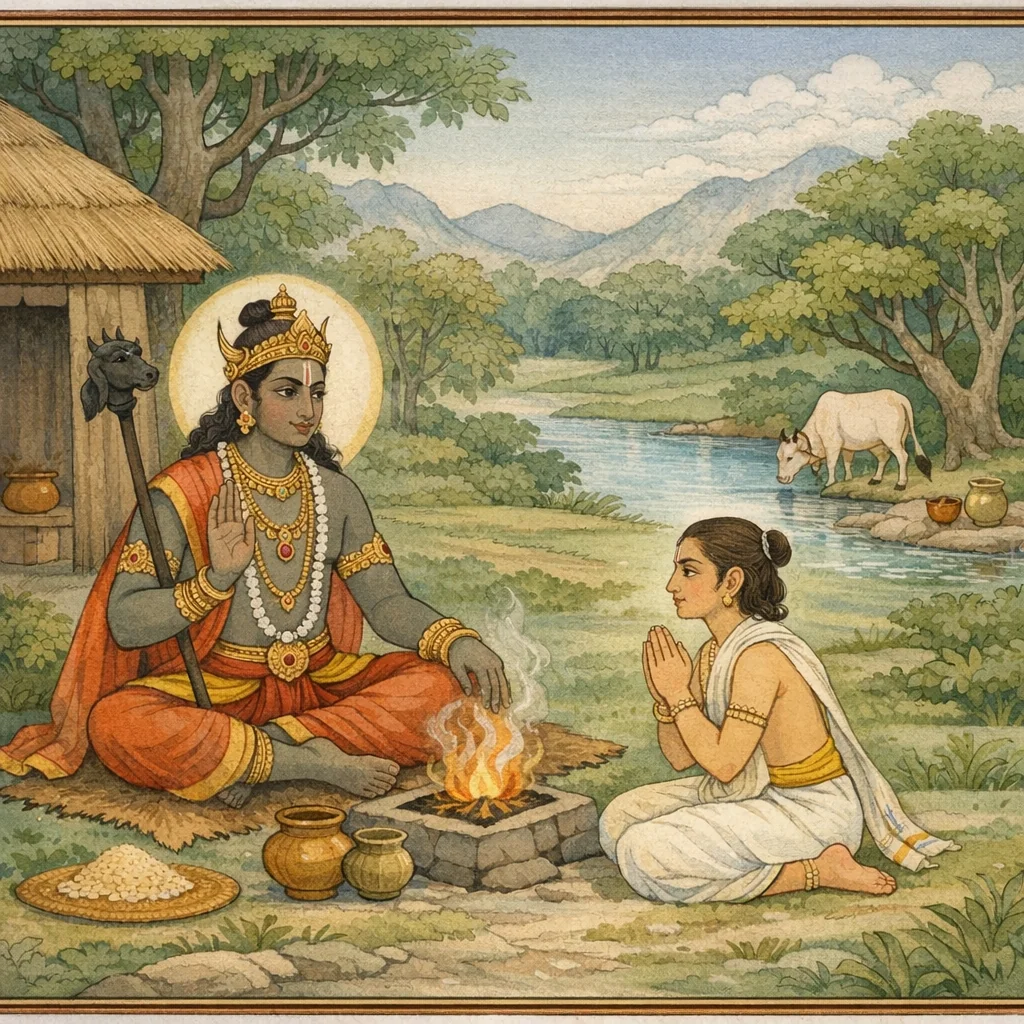
Chapter Arc: भीष्म युधिष्ठिर से कहते हैं—दानधर्म के विषय में एक प्राचीन इतिहास सुनो: उद्दालक ऋषि और उनके पुत्र नाचिकेत के प्रसंग में स्वयं धर्मराज (यम) के वचन हैं। → उद्दालक यज्ञ-दीक्षा लेकर पुत्र को सेवा-नियम, स्वाध्याय और शुद्ध आचरण में लगाते हैं। कथा का दबाव इस ओर बढ़ता है कि दान केवल ‘देना’ नहीं, बल्कि पात्र-देश-काल, शुद्धता और न्यायार्जित धन से जुड़ा कठोर अनुशासन है; अभाव की स्थिति में कौन-सा दान कैसे किया जाए—यह प्रश्न तीखा होता जाता है। → धर्मराज के निर्णायक उपदेश: ‘धर्म को तुच्छ न समझो; पात्र में, देश-काल के अनुरूप, शुद्ध और न्याय से प्राप्त वस्तु का दान करो; विशेषतः गौ-दान नित्य करो—इसमें संशय न रखो।’ साथ ही अभाव में विकल्प-दान (घृत न हो तो तिलधेनु, तिल न हो तो जलधेनु) का फल-श्रुति देकर दान-मार्ग को अडिग बनाते हैं। → उपदेश का निष्कर्ष स्पष्ट होता है—दान का मूल्य वस्तु की मात्रा से नहीं, शुद्धता, न्यायार्जन, नियमनिष्ठा और विवेकपूर्ण पात्र-चयन से है। वक्ता (कथानक का ‘मैं’) धर्मराज को प्रणाम कर उनकी अनुमति से लौटकर गुरु/भगवत्पाद के चरणों में उपस्थित होता है, और भीष्म इस उपाख्यान को युधिष्ठिर के लिए दानधर्म की कसौटी बना देते हैं।
Shlokas
Verse 1
इस प्रकार श्रीमह्याभारत अनुशासनपर्वके अन्तर्गत दानधर्मपर्वमें नृगका उपाख्यानविषयक सत्तरवाँ अध्याय पूरा हुआ ॥/ ७० ॥। अपन क्रात छा अर: एकसप्ततितमो<् ध्याय: पिताके शापसे नाचिकेतका यमराजके पास जाना और यमराजका नाचिकेतको गोदानकी महिमा बताना युधिछिर उवाच दत्तानां फलसम्प्राप्तिं गवां प्रब्रूहि मेडनघ । विस्तरेण महाबाहो न हि तृप्पामि कथ्यताम्,युधिष्ठिरने पूछा--निष्पाप महाबाहो! गौओंके दानसे जिस फलकी प्राप्ति होती है, वह मुझे विस्तारके साथ बताइये। मुझे आपके वचनामृतोंको सुनते-सुनते तृप्ति नहीं होती है, इसलिये अभी और कहिये
Yudhiṣṭhira said: “O sinless one, O mighty-armed, tell me in detail what reward is attained by the gifting of cows. I do not become satisfied by hearing of it; therefore, speak further.”
Verse 2
भीष्म उवाच अत्राप्युदाहरन्तीममितिहासं पुरातनम् । ऋषेरुद्दालकेर्वाक्यं नाचिकेतस्य चो भयो:,भीष्मजीने कहा--राजन्! इस विषयमें विज्ञ पुरुष उद्दालक ऋषि और नाचिकेत दोनोंके संवादरूप इस प्राचीन इतिहासका उदाहरण दिया करते हैं
Bhishma said: “Here too, the learned cite an ancient tradition as an illustration—namely, the dialogue between the sage Uddālaka and Nāciketas, preserving the words of them both.”
Verse 3
ऋषिरुद्दालकिर्दीक्षामुपगम्य तत: सुतम् । त्वं मामुपचरस्वेति नाचिकेतमभाषत,एक समय उद्दालक ऋषिने यज्ञकी दीक्षा लेकर अपने पुत्र नाचिकेतसे कहा--“तुम मेरी सेवामें रहो।”
Bhishma said: The sage Uddālaka, having undertaken the consecratory vow (dīkṣā) for a sacrifice, then addressed his son Nāciketa: “Attend upon me—remain in my service.”
Verse 4
समाप्ते नियमे तस्मिन् महर्षि: पुत्रमब्रवीत् | उपस्पर्शनसक्तस्य स्वाध्यायाभिरतस्य च,उस यज्ञका नियम पूरा हो जानेपर महर्षिने अपने पुत्रसे कहा--“बेटा! मैंने समिधा, कुशा, फूल, जलका घड़ा और प्रचुर भोजन-सामग्री (फल-फूल आदि)--इन सबका संग्रह करके नदीके किनारे रख दिया और स्नान तथा वेदपाठ करने लगा। फिर उन सब वस्तुओंको भूलकर मैं यहाँ चला आया। अब तुम जाकर नदीतटसे वह सब सामान यहाँ ले आओ'
Bhishma said: When that observance had been completed, the great sage addressed his son: “My child, while intent on ritual purification and absorbed in Vedic recitation (svādhyāya), I had gathered fuel-sticks, kuśa grass, flowers, a water-pot, and abundant provisions and placed them on the riverbank. Then, forgetting all those items, I came away here. Go now to the river’s edge and bring that entire collection here.”
Verse 5
इध्मा दर्भा: सुमनस: कलशश्लातिभोजनम् | विस्मृतं मे तदादाय नदीतीरादिहाव्रज,उस यज्ञका नियम पूरा हो जानेपर महर्षिने अपने पुत्रसे कहा--“बेटा! मैंने समिधा, कुशा, फूल, जलका घड़ा और प्रचुर भोजन-सामग्री (फल-फूल आदि)--इन सबका संग्रह करके नदीके किनारे रख दिया और स्नान तथा वेदपाठ करने लगा। फिर उन सब वस्तुओंको भूलकर मैं यहाँ चला आया। अब तुम जाकर नदीतटसे वह सब सामान यहाँ ले आओ'
Bhishma said: “Firewood for the rite, darbha grass, flowers, a water-pot, and abundant provisions—these I had gathered and left on the riverbank while I went to bathe and recite the Veda. Forgetting them, I came back here. Go now to the river’s edge, take those items, and bring them here.”
Verse 6
गत्वानवाप्य तत् सर्व नदीवेगसमाप्लुतम् | न पश्यामि तदित्येवं पितरं सोडब्रवीन्मुनि:,नाचिकेत जब वहाँ गया, तब उसे कुछ न मिला। सारा सामान नदीके वेगमें बह गया था। नाचिकेत मुनि लौट आया और पितासे बोला--'मुझे तो वहाँ वह सब सामान नहीं दिखायी दिया”
Having gone there, he found nothing at all; everything had been swept away by the river’s rushing current. The sage returned and said to his father, “I do not see that (property) there.”
Verse 7
क्षुत्पिपासाश्रमाविष्टो मुनिरुद्दा लकिस्तदा । यम॑ पश्येति त॑ पुत्रमशपत् स महातपा:,महातपस्वी उद्दालक मुनि उस समय भूख-प्याससे कष्ट पा रहे थे, अतः रुष्ट होकर बोले--'अरे वह सब तुम्हें क्यों दिखायी देगा? जाओ यमराजको देखो।” इस प्रकार उन्होंने उसे शाप दे दिया
Bhīṣma said: At that time the sage Uddālaka, afflicted by hunger, thirst, and exhaustion, became angered and cursed his son, saying, “Why should you see all that? Go and behold Yama.”
Verse 8
तथा स पित्राभिहतो वाग्वज्रेण कृताञज्जलि: । प्रसीदेति ब्रुवन्नेव गतसत्त्वोडपतद् भुवि,पिताके वाग्वज़्से पीड़ित हुआ नाचिकेत हाथ जोड़कर बोला--'प्रभो! प्रसन्न होइये।' इतना ही कहते-कहते वह निष्प्राण होकर पृथ्वीपर गिर पड़ा
Thus, struck by his father with the thunderbolt of speech, he folded his hands in reverence and pleaded, “Be gracious, O lord.” Even as he spoke these words, his vital strength failed, and he fell down upon the earth.
Verse 9
नाचिकेतं पिता दृष्टवा पतितं दुःखमूर्च्छित: । कि मया कृतमित्युक्त्वा निपषात महीतले,नाचिकेतको गिरा देख उसके पिता भी दु:खसे मूर्च्छित हो गये और “अरे, यह मैंने क्या कर डाला!” ऐसा कहकर पृथ्वीपर गिर पड़े
Bhishma said: Seeing Naciketas fallen, his father, overwhelmed and fainting from grief, cried, “What have I done?” and collapsed upon the ground.
Verse 10
तस्य दुःखपरीतस्य स्वं पुत्रमनुशोचत: । व्यतीतं तदहःशेषं सा चोग्रा तत्र शर्वरी,दुःखमें डूबे और बारंबार अपने पुत्रके लिये शोक करते हुए ही महर्षिका वह शेष दिन व्यतीत हो गया और भयानक रात्रि भी आकर समाप्त हो गयी
Bhishma said: Overwhelmed by grief and lamenting his own son again and again, the sage spent the remainder of that day in sorrow; and there, that dreadful night too came and passed.
Verse 11
पित्र्येणा श्रुप्रषातेन नाचिकेत: कुरूद्गवह । प्रास्पन्दच्छयने कौश्ये वृष्टया सस्यमिवाप्लुतम्,कुरुश्रेष्ठ! कुशकी चटाईपर पड़ा हुआ नाचिकेत पिताके आँसुओंकी धारासे भीगकर कुछ हिलने-डुलने लगा, मानो वर्षसे सिंचकर अनाजकी सूखी खेती हरी हो गयी हो
Bhishma said: O bull among the Kurus, Naciketas, lying upon a woolen bed, began to stir as he was drenched by the stream of his father’s tears—like a parched crop that, once flooded by rain, comes back to life.
Verse 12
स पर्यपृच्छत् त॑ पुत्र क्षीणं पर्यागतं पुन: । दिव्यैर्गन्धै: समादिग्ध॑ क्षीणस्वप्नमिवोत्थितम्,महर्षिका वह पुत्र मरकर पुन: लौट आया, मानो नींद टूट जानेसे जाग उठा हो। उसका शरीर दिव्य सुगन्धसे व्याप्त हो रहा था। उस समय उद्दालकने उससे पूछा--
Bhishma said: Then he questioned that son who had returned again, looking worn out, as though he had just awakened from a fading dream. His body was permeated with a divine fragrance. At that moment Uddalaka asked him—
Verse 13
अपि पुत्र जिता लोका: शुभास्ते स्वेन कर्मणा | दिष्ट्या चासि पुन: प्राप्तो न हि ते मानुषं वपु:,बेटा! क्या तुमने अपने कर्मसे शुभ लोकोंपर विजय पायी है? मेरे सौभाग्यसे ही तुम पुनः यहाँ चले आये हो। तुम्हारा यह शरीर मनुष्योंका-सा नहीं है--दिव्य भावको प्राप्त हो गया है”
“My son! Have you, by your own deeds, won the auspicious worlds? By my good fortune you have returned here again. This body of yours is not like that of mortals—it has taken on a divine nature.”
Verse 14
प्रत्यक्षदर्शी सर्वस्य पित्रा पृष्टो महात्मना । सतां वार्ता पितुर्मध्ये महर्षीणां न्यवेदयत्,अपने महात्मा पिताके इस प्रकार पूछनेपर परलोककी सब बातोंको प्रत्यक्ष देखनेवाला नाचिकेत महर्षियोंके बीचमें पितासे वहाँका सब वृत्तान्त निवेदन करने लगा--
Bhishma said: Thus questioned by his great-souled father, Naciketas—who had directly beheld all matters of the other world—began, in the midst of the great rishis, to relate to his father the full account of what had occurred there—
Verse 15
कुर्वन् भवच्छासनमाशु यातो हाहं विशालां रुचिरप्रभावाम् | वैवस्वतीं प्राप्प सभामपश्यं सहस्रशो योजनहेमभासम्,“पिताजी! मैं आपकी आज्ञाका पालन करनेके लिये यहाँसे तुरन्त प्रस्थित हुआ और मनोहर कान्ति एवं प्रभावसे युक्त विशाल यमपुरीमें पहुँचकर मैंने वहाँकी सभा देखी, जो सुवर्णके समान सुन्दर प्रभासे प्रकाशित हो रही थी। उसका तेज सहस्रों योजन दूरतक फैला हुआ था
Bhishma said: “Obeying your command, I set out at once. Reaching the vast city of Yama—beautiful in radiance and power—I beheld Vaivasvata’s assembly hall, shining with a golden splendor whose brilliance spread for thousands of yojanas.”
Verse 16
दृष्टवैव मामभिमुखमापततन्तं देहीति स ह्वासनमादिदेश । वैवस्वतोडर्घ्यादिभिरह णैश्ष भवत्कृते पूजयामास मां सः:,“मुझे सामनेसे आते देख विवस्वानके पुत्र यमने अपने सेवकोंको आज्ञा दी कि “इनके लिये आसन दो।” उन्होंने आपके नाते अर्घ्य आदि पूजनसम्बन्धी उपचारोंसे स्वयं ही मेरा पूजन किया
Bhishma said: “As soon as he saw me approaching him face to face, Vaivasvata (Yama), the son of Vivasvan, ordered his attendants, ‘Give him a seat.’ Then, out of regard for you, he himself honored me with the customary rites of welcome—offering arghya and other respectful services.”
Verse 17
ततस्त्वहं तं शनकैरवोचं वृतः सदस्यैरभिपूज्यमान: । प्राप्तो5स्मि ते विषयं धर्मराज लोकानहों यानहं तान् विधत्स्व,“तब सब सदस्योंसे घिरकर उनके द्वारा पूजित होते हुए मैंने वैवस्वत यमसे धीरेसे कहा --'धर्मराज! मैं आपके राज्यमें आया हूँ; मैं जिन लोकोंमें जानेके योग्य होऊँ, उनमें जानेके लिये मुझे आज्ञा दीजिये"
Then, surrounded by the assembled elders and honored by them, I spoke softly to Vaivasvata Yama: “O Dharmarāja, I have come into your domain. Please assign me to those worlds for which I am fit.”
Verse 18
यमोडब्रवीन्मां न मृतोडसि सौम्य यम॑ पश्येत्याह स त्वां तपस्वी । पिता प्रदीप्ताग्निसमानतेजा न तच्छक्यमनृतं विप्र कर्तुम्,“तब यमराजने मुझसे कहा--“सौम्य! तुम मरे नहीं हो। तुम्हारे तपस्वी पिताने इतना ही कहा था कि तुम यमराजको देखो। विप्रवर! वे तुम्हारे पिता प्रजजलित अग्निके समान तेजस्वी हैं। उनकी बात झूठी नहीं की जा सकती
Bhishma said: Yama spoke to me, “Gentle one, you are not dead. Your ascetic father only told you, ‘Go and see Yama.’ O brahmin, your father shines with the splendor of a blazing fire; it is not possible to make his word untrue.”
Verse 19
दृष्टस्ते5हं प्रतिगच्छस्व तात शोचत्यसौ तव देहस्य कर्ता । ददानि कि चापि मन:प्रणीत॑ प्रियातिथेस्तव कामान् वृणीष्व,“तात! तुमने मुझे देख लिया। अब तुम लौट जाओ। तुम्हारे शरीरका निर्माण करनेवाले वे तुम्हारे पिताजी शोकमग्न हो रहे हैं। वत्स! तुम मेरे प्रिय अतिथि हो। तुम्हारा कौन-सा मनोरथ मैं पूर्ण करूँ। तुम्हारी जिस-जिस वस्तुके लिये इच्छा हो, उसे माँग लो”
Bhishma said: “You have seen me; now return, dear child. Your father—the one who fashioned this body of yours—is grieving. You are my beloved guest; choose whatever desires your heart has conceived. Ask for whatever you wish, and I shall grant it.”
Verse 20
तेनैवमुक्तस्तमहं प्रत्यवोचं प्राप्तोडस्मि ते विषयं दुर्निवर्त्यम् । इच्छाम्यहं पुण्यकृतां समृद्धान् लोकान द्रष्ठ॑ यदि ते5हं वराह:,“उनके ऐसा कहनेपर मैंने इस प्रकार उत्तर दिया--“भगवन्! मैं आपके उस राज्यमें आ गया हूँ, जहाँसे लौटकर जाना अत्यन्त कठिन है। यदि मैं आपकी दृष्टिमें वर पानेके योग्य होऊँ तो पुण्यात्मा पुरुषोंको मिलनेवाले समृद्धिशाली लोकोंका मैं दर्शन करना चाहता हूँ!
When he spoke to me in this way, I replied: “Blessed Lord, I have entered your domain, from which return is exceedingly difficult. If, in your sight, I am worthy to receive a boon, I wish to behold the prosperous worlds attained by those who have performed meritorious deeds.”
Verse 21
यान॑ समारोप्य तु मां स देवो वाहैर्युक्त सुप्रभं भानुमत् तत् । संदर्शयामास तदात्मलोकान् सर्वास्तथा पुण्यकृतां द्विजेन्द्र,द्विजेन्द्र! तब यम देवताने वाहनोंसे जुते हुए उत्तम प्रकाशसे युक्त तेजस्वी रथपर मुझे बिठाकर पुण्यात्माओंको प्राप्त होनेवाले अपने यहाँके सभी लोकोंका मुझे दर्शन कराया
Bhīṣma said: “Having seated me upon that radiant, sun-bright chariot yoked with its steeds, the god Yama showed me all those worlds that belong to him—realms attained by those who have performed meritorious deeds, O best of the twice-born.”
Verse 22
अपश्यं तत्र वेश्मानि तैजसानि महात्मनाम् । नानासंस्थानरूपाणि सर्वरत्नमयानि च,“तब मैंने महामनस्वी पुरुषोंको प्राप्त होनेवाले वहाँके तेजोमय भवनोंका दर्शन किया। उनके रूप-रंग और आकार-प्रकार अनेक तरहके थे। उन भवनोंका सब प्रकारके रत्नोंद्वारा निर्माण किया गया था
There I beheld the radiant mansions of the great-souled—of many designs and forms—built wholly of every kind of jewel.
Verse 23
चन्द्रमण्डलशु भ्राणि किडुकिणीजालवन्ति च । अनेकशतभौमानि सान्तर्जलवनानि च,“कोई चन्द्रमण्डलके समान उज्ज्वल थे। किन्हींपर क्षुद्रघंटियोंसे युक्त झालरें लगी थीं। उनमें सैकड़ों कक्षाएँ और मंजिलें थीं। उनके भीतर जलाशय और वन-उपवन सुशोभित थे। कितनोंका प्रकाश नीलमणिमय सूर्यके समान था। कितने ही चाँदी और सोनेके बने हुए थे। दिन्हीं-किन्हीं भवनोंके रंग प्रातःकालीन सूर्यके समान लाल थे। उनमेंसे कुछ विमान या भवन तो स्थावर थे और कुछ इच्छानुसार विचरनेवाले थे
Bhīṣma said: “Some (mansions or aerial palaces) were dazzling white like the orb of the moon. Some were adorned with networks of fringes hung with tiny bells. Many had hundreds of storeys and terraces, and within them were beautiful reservoirs of water and groves—self-contained worlds of pleasure and abundance.”
Verse 24
वैदूर्यार्फप्रकाशानि रूप्यरुक्ममयानि च । तरुणादित्यवर्णानि स्थावराणि चराणि च,“कोई चन्द्रमण्डलके समान उज्ज्वल थे। किन्हींपर क्षुद्रघंटियोंसे युक्त झालरें लगी थीं। उनमें सैकड़ों कक्षाएँ और मंजिलें थीं। उनके भीतर जलाशय और वन-उपवन सुशोभित थे। कितनोंका प्रकाश नीलमणिमय सूर्यके समान था। कितने ही चाँदी और सोनेके बने हुए थे। दिन्हीं-किन्हीं भवनोंके रंग प्रातःकालीन सूर्यके समान लाल थे। उनमेंसे कुछ विमान या भवन तो स्थावर थे और कुछ इच्छानुसार विचरनेवाले थे
Bhīṣma said: “Some of those aerial mansions shone with the radiance of vaidūrya (cat’s-eye) and the sun; some were fashioned of silver and gold. Some glowed with the reddish hue of the young morning sun. Among them, certain vimānas were fixed in place, while others could move about at will.”
Verse 25
भक्ष्यभोज्यमयान् शैलान् वासांसि शयनानि च । सर्वकामफलांश्वैव वृक्षान् भवनसंस्थितान्,“उन भवनोंमें भक्ष्य और भोज्य पदार्थोंके पर्वत खड़े थे। वस्त्रों और शय्याओंके ढेर लगे थे तथा सम्पूर्ण मनोवांछित फलोंको देनेवाले बहुत-से वृक्ष उन गृहोंकी सीमाके भीतर लहलहा रहे थे
Bhishma said: “Within those mansions there stood mountain-like heaps of foods to be eaten and delicacies to be enjoyed; there were piles of garments and beds as well. And within the precincts of those dwellings flourished many trees that granted every fruit one could desire.”
Verse 26
नद्यो वीथ्य: सभा वाप्यो दीर्घिकाश्वैव सर्वश: । घोषवन्ति च यानानि युक्तान्यथ सहस्रश:,“उन दिव्य लोकोंमें बहुत-सी नदियाँ, गलियाँ, सभाभवन, बावड़ियाँ, तालाब और जोतकर तैयार खड़े हुए घोषयुक्त सहस्रों रथ मैंने सब ओर देखे थे
Bhīṣma said: “In those radiant worlds I beheld, on every side, rivers, broad streets, assembly-halls, wells and reservoirs, and long tanks; and I also saw thousands upon thousands of vehicles—harnessed and ready—resounding with auspicious noise. The scene proclaims an ordered, prosperous realm where merit bears visible fruit and where righteous living culminates in harmony, abundance, and dignified splendor.”
Verse 27
क्षीरस्रवा वै सरितो गिरीश्व सर्पिस्तथा विमलं चापि तोयम् । वैवस्वतस्यानुमतांश्न देशा- नदृष्टपूर्वान् सुबहूनपश्यम्,“मैंने दूध बहानेवाली नदियाँ, पर्वत, घी और निर्मल जल भी देखे तथा यमराजकी अनुमतिसे और भी बहुत-से पहलेके न देखे हुए प्रदेशोंका दर्शन किया
Bhishma said: “I beheld rivers flowing with milk, mountains, and also ghee, along with waters of spotless purity. And, with the permission of Vaivasvata (Yama), I saw many regions I had never seen before.”
Verse 28
सर्वान् दृष्टवा तदहं धर्मराज- मवोचं वै प्रभविष्णुं पुराणम् क्षीरस्यैता: सर्पिषश्नैव नद्य: शश्वत्सत्रोता: कस्य भोज्या: प्रदिष्टा:,“उन सबको देखकर मैंने प्रभावशाली पुरातन देवता धर्मराजसे कहा--'प्रभो! ये जो घी और दूधकी नदियाँ बहती रहती हैं, जिनका स्रोत कभी सूखता नहीं है, किनके उपभोगमें आती हैं--इन्हें किनका भोजन नियत किया गया है?”
Bhishma said: “Seeing all this, I addressed the ancient, mighty Lord of Dharma (Dharmaraja): ‘O Master, these rivers of milk and of ghee that flow unceasingly, whose source never runs dry—who has been appointed to enjoy them as food?’”
Verse 29
यमोअब्रवीद् विद्धि भोज्यास्त्वमेता ये दातार: साधवो गोरसानाम् | अन्ये लोका: शाश्वृता वीतशोकै: समाकीर्णा गोप्रदाने रतानाम्,“यमराजने कहा--“ब्रह्मन! तुम इन नदियोंको उन श्रेष्ठ पुरुषोंका भोजन समझो, जो गोरस दान करनेवाले हैं। जो गोदानमें तत्पर हैं, उन पुण्यात्माओंके लिये दूसरे भी सनातन लोक विद्यमान हैं, जिनमें दुःख-शोकसे रहित पुण्यात्मा भरे पड़े हैं
Yama said: “O Brahmin, know these (rivers) to be the very food of those virtuous men who are givers of the cow’s produce. For those devoted to the gift of cows, there exist other eternal worlds as well—realms free from sorrow and grief, filled with the righteous.”
Verse 30
न त्वेतासां दानमात्र प्रशस्तं पात्र कालो गोविशेषो विधिक्ष । ज्ञात्वा देयं विप्र गवान्तरं हि दुःखं ज्ञातुं पावकादित्यभूतम्,“विप्रवर! केवल इनका दानमात्र ही प्रशस्त नहीं है; सुपात्र ब्राह्मण, उत्तम समय, विशिष्ट गौ तथा दानकी सर्वोत्तम विधि--इन सब बातोंको जानकर ही गोदान करना चाहिये। गौओंका आपसमें जो तारतम्य है, उसे जानना बहुत कठिन काम है और अग्नि एवं सूर्यके समान तेजस्वी पात्रको पहचानना भी सरल नहीं है
Bhishma said: “O best of Brahmins, it is not merely the act of giving these cows that is praised. One should perform the gift of cows only after understanding the worthiness of the recipient, the proper time, the distinctive excellence of the cow, and the best procedure of giving. For the gradations among cows are indeed difficult to discern, and it is not easy to recognize a recipient who is radiant like Fire and the Sun.”
Verse 31
स्वाध्यायवान् यो5तिमात्र॑ तपस्वी वैतानस्थो ब्राह्मण: पात्रमासाम् | कृच्छोत्सृष्टा: पोषणाभ्यागताश्न द्वारैरेतैगोविशेषा: प्रशस्ता:,जो ब्राह्मण वेदोंके स्वाध्यायसे सम्पन्न, अत्यन्त तपस्वी तथा यज्ञके अनुष्ठानमें लगा हुआ हो, वही इन गौओंके दानका सर्वोत्तम पात्र है। इनके सिवा जो ब्राह्मण कृच्छुव्रतसे मुक्त हुए हों और परिवारकी पुष्टिके लिये गोदानके प्रार्थी होकर आये हों, वे भी दानके उत्तम पात्र हैं। इन सुयोग्य पात्रोंको निमित्त बनाकर दानमें दी गयी श्रेष्ठ गौएँ उत्तम मानी गयी हैं
Bhishma said: “A Brahmin who is devoted to Vedic self-study, exceedingly austere, and engaged in the performance of the Vedic sacrificial rites is the foremost recipient for the gift of these cows. Besides him, those Brahmins who have completed the difficult ‘kṛcchra’ observance and who come seeking support for the maintenance of their household are also worthy recipients. When such qualified recipients are made the occasion for the gift, the excellent cows given in charity are deemed truly commendable.”
Verse 32
तिस्त्रो रात्र्यस्त्वद्धिरुपोष्य भूमौ तृप्ता गावस्तर्पिति भ्य: प्रदेया: । वत्सै: प्रीता: सुप्रजा: सोपचारा- स्त्र्यहं दत्त्वा गोरसैर्वर्तितव्यम्,“तीन राततक उपवासपूर्वक केवल जल पीकर धरतीपर शयन करे। तत्पश्चात् खिला- पिलाकर तृप्त की हुई गौओंका भोजन आदिसे संतुष्ट किये हुए ब्राह्मणोंको दान करे। वे गौएँ बछड़ोंके साथ रहकर प्रसन्न हों, सुन्दर बच्चे देनेवाली हों तथा अन्यान्य आवश्यक सामग्रियोंसे युक्त हों। ऐसी गौओंका दान करके तीन दिनोंतक केवल गोरसका आहार करके रहना चाहिये
Bhishma said: “For three nights one should observe a fast, taking only water and sleeping on the ground. Thereafter, one should gift cows that have been well fed and made content, to Brahmins who have been duly satisfied with food and other attentions. The cows should be accompanied by their calves, be gentle and pleased, be capable of yielding fine offspring, and be provided with the necessary care and accessories. Having made such a gift, one should then live for three days taking only milk-products as one’s sustenance.”
Verse 33
दत्त्वा धेनुं सुव्रतां कांस्यदोहां कल्याणवत्सामपलायिनीं च । यावन्ति रोमाणि भवन्ति तस्या- स्तावद् वर्षाण्यश्रुते स्वर्गलोकम्,“उत्तम शील-स्वभाववाली, भले बछड़ेवाली और भागकर न जानेवाली दुधारू गायका कांस्यके दुग्धपात्रसहित दान करके उस गौके शरीरमें जितने रोएँ होते हैं, उतने वर्षोतक दाता स्वर्गलोकका सुख भोगता है
Bhishma said: Having gifted a milk-yielding cow of excellent conduct—together with a bronze milking vessel—endowed with a fine calf and not prone to run away, the donor enjoys the heavenly world for as many years as there are hairs on that cow’s body.
Verse 34
तथानड्वाहं ब्राह्मुणेभ्य: प्रदाय दान्तं धुर्य बलवन्तं युवानम् । कुलानुजीव्यं वीर्यवन्तं बृहन्तं भुड्क्ते लोकान् सम्मितान् थेनुदस्य,“इसी प्रकार जो शिक्षा देकर काबूमें किये हुए, बोझ ढोनेमें समर्थ, बलवान, जवान, कृषक-समुदायकी जीविका चलानेयोग्य, पराक्रमी और विशाल डील-डौलवाले बैलका ब्राह्मणोंको दान देता है, वह दुधारू गायका दान करनेवालेके तुल्य ही उत्तम लोकोंका उपभोग करता है
Bhishma said: “In the same way, one who gives to Brahmins a well-trained bull—docile, fit for the yoke, strong and youthful, capable of sustaining the livelihood of farming households, valorous and large-bodied—enjoys excellent worlds equal to those attained by a giver of a milch cow.”
Verse 35
गोषु क्षान्तं गोशरण्यं कृतज्ञं वृत्तिग्लानं तादृशं पात्रमाहु: । वद्धे ग्लाने सम्भ्रमे वा महार्थे कृष्यर्थ वा होम्यहेतो: प्रसूत्याम्
Bhishma said: “They declare as a truly worthy recipient one who is patient and gentle toward cattle, who gives refuge and protection to cows, who is grateful, and who is distressed for want of livelihood. Such a person is to be supported when he is bound or restrained, when he is weakened, when he is in sudden peril, when a great need has arisen, when resources are required for agriculture, when means are needed for sacrificial offerings, or at the time of childbirth.”
Verse 36
गुर्वर्थ वा बालपुष्ट्याभिषंगां गां वै दातुं देशकालो<विशिष्ट: । अन्तर्ज्ाता: सक्रयज्ञानलब्धा: प्राणक्रीता निर्जिता यौतकाश्ष
Bhīṣma said: ‘In matters concerning one’s teacher, or out of affectionate concern for the nourishment and welfare of children, the giving of a cow is especially appropriate when the right place and time are observed. Such cows may be those born within one’s own herd, those obtained through lawful purchase and proper knowledge of ownership, those acquired at the cost of one’s very life (through extreme hardship), those won by conquest, and those received as yautaka (a woman’s marriage-gift/dowry).’
Verse 37
जो गौओंके प्रति क्षमाशील, उनकी रक्षा करनेमें समर्थ, कृतज्ञ और आजीविकासे रहित है, ऐसे ब्राह्मणको गोदानका उत्तम पात्र बताया गया है। जो बूढ़ा हो, रोगी होनेके कारण पथ्य-भोजन चाहता हो, दुर्भिक्ष आदिके कारण घबराया हो, किसी महान् यज्ञका अनुष्ठान करनेवाला हो या जिसके लिये खेतीकी आवश्यकता आ पड़ी हो, होमके लिये हविष्य प्राप्त करनेकी इच्छा हो अथवा घरमें स्त्रीके बच्चा पैदा होनेवाला हो अथवा गुरुके लिये दक्षिणा देनी हो अथवा बालककी पुष्टिके लिये गोदुग्धकी आवश्यकता आ पड़ी हो, ऐसे व्यक्तियोंको ऐसे अवसरोंपर गोदानके लिये सामान्य देश-काल माना गया है (ऐसे समयमें देश-कालका विचार नहीं करना चाहिये)। जिन गौओंका विशेष भेद जाना हुआ हो, जो खरीदकर लायी गयी हों अथवा ज्ञानके पुरस्काररूपसे प्राप्त हुई हों अथवा प्राणियोंके अदला-बदलीसे खरीदी गयी हों या जीतकर लायी गयी हों अथवा दहेजमें मिली हों, ऐसी गौएँ दानके लिये उत्तम मानी गयी हैं” ।। नाचिकेत उवाच श्रुत्वा वैवस्वतवचस्तमहं पुनरब्रुवम् अभावे गोप्रदातृणां कथं लोकान् हि गच्छति
Naciketas said: “Having heard the words of Vaivasvata (Yama), I spoke again: ‘If there are no donors of cows, how indeed does one attain the worlds (of merit)?’”
Verse 38
नाचिकेत कहता है--वैवस्वत यमकी बात सुनकर मैंने पुनः उनसे पूछा--“भगवन्! यदि अभाववश गोदान न किया जा सके तो गोदान करनेवालोंको ही मिलनेवाले लोकोंमें मनुष्य कैसे जा सकता है?” ।। ततोडब्रवीद् यमो धीमान् गोप्रदानपरां गतिम् । गोप्रदानानुकल्पं तु गामृते सन्ति गोप्रदा:,तदनन्तर बुद्धिमान् यमराजने गोदानसम्बन्धी गति तथा गोदानके समान फल देनेवाले दानका वर्णन किया, जिसके अनुसार बिना गायके भी लोग गोदान करनेवाले हो सकते हैं?
Naciketa said: After hearing the words of Vaivasvata Yama, I questioned him again: “Revered Lord, if—due to lack of means—a person cannot perform the gift of a cow, how can he still reach those worlds that are attained by those who give cows?” Then the wise Yama explained the supreme course of merit connected with cow-gifting, and also described an equivalent form of giving—by which, even without an actual cow, people may become ‘givers of cows’ through a substitute gift that yields the same fruit.
Verse 39
अलाभे यो गवां दद्याद् घृतधेनुं यतव्रत: । तस्यैता घृतवाहिन्यः भरन्ते वत्सला इव,“जो गौओंके अभावमें संयम-नियमसे युक्त हो घृतधेनुका दान करता है, उसके लिये ये घृतवाहिनी नदियाँ वत्सला गौओंकी भाँति घृत बहाती हैं
Naciketas said: When a disciplined person, steadfast in vows, offers a ‘ghee-cow’ in charity even in a time when actual cows are unavailable, then for him these rivers that flow with ghee pour forth abundance—like affectionate mother-cows streaming milk for their calves. The verse underscores that sincere intent, self-restraint, and dharmic giving bear fruit beyond material limitations.
Verse 40
घृतालाभे तु यो दद्यात् तिलधेनुं यतव्रत: । स दुर्गात् तारितो थेन्वा क्षीरनद्यां प्रमोदते,'घीके अभावमें जो व्रत-नियमसे युक्त हो तिलमयी धेनुका दान करता है, वह उस धेनुके द्वारा संकटसे उद्धार पाकर दूधकी नदीमें आनन्दित होता है
But when ghee is unavailable, a person disciplined by vows who donates a cow fashioned from sesame is, by the merit of that cow-gift, rescued from peril and rejoices in the celestial river of milk.
Verse 41
तिलालाभे तु यो दद्याज्जलधेनुं यतव्रत: । स कामप्रवहां शीतां नदीमेतामुपाश्ुते,“तिलके अभावमें जो व्रतशील एवं नियमनिष्ठ होकर जलमयी धेनुका दान करता है, वह अभीष्ट वस्तुओंको बहानेवाली इस शीतल नदीके निकट रहकर सुख भोगता है!
But when sesame is unavailable, the disciplined and vow-observant person who donates a “water-cow” comes to enjoy this cool river that carries along desired objects, dwelling near it and reaping the auspicious fruit of that charity.
Verse 42
एवमेतानि मे तत्र धर्मराजो न्यदर्शयत् | दृष्टवा च परमं हर्षमवापमहमच्युत,धर्मसे कभी च्युत न होनेवाले पूज्य पिताजी! इस प्रकार धर्मराजने मुझे वहाँ ये सब स्थान दिखाये। वह सब देखकर मुझे बड़ा हर्ष प्राप्त हुआ
Naciketas said: “Thus, in that realm, King Dharma showed me all these abodes. Having seen them, I was filled with the highest joy—O revered one, who never swerves from dharma.”
Verse 43
निवेदये चाहमिमं प्रियं ते क्रतुर्महानल्पधनप्रचार: । प्राप्तो मया तात स मत्प्रसूत: प्रपत्स्थते वेदविधिप्रवृत्त:,तात! मैं आपके लिये यह प्रिय वृत्तान्त निवेदन करता हूँ कि मैंने वहाँ थोड़े-से ही धनसे सिद्ध होनेवाला यह गोदानरूप महान् यज्ञ प्राप्त किया है। वह यहाँ वेदविधिके अनुसार मुझसे प्रकट होकर सर्वत्र प्रचलित होगा
Dear father, I report to you this welcome news: I have obtained that great sacrificial rite—a great offering in the form of cow-gift—that can be accomplished with only modest wealth. Having arisen through my own agency, it will now proceed in accordance with Vedic ordinance and become established in practice.
Verse 44
शापो हायं भवतोअनुग्रहाय प्राप्तो मया यत्र दृष्टो यमो वै | दानव्युष्टिं तत्र दृष्टवा महात्मन् निःसंदिग्धान् दानधर्माश्चिरिष्ये,आपके द्वारा मुझे जो शाप मिला, वह वास्तवमें मुझपर अनुग्रहके लिये ही प्राप्त हुआ था, जिससे मैंने यमलोकमें जाकर वहाँ यमराजको देखा। महात्मन्! वहाँ दानके फलको प्रत्यक्ष देखकर मैं संदेहरहित दानधर्मोका अनुष्ठान करूँगा
This curse of yours came to me truly as a blessing, for through it I reached the realm where I beheld Yama himself. O great-souled one, having there seen with my own eyes the manifest outcome of giving, I shall henceforth practice the duties of charity without doubt or hesitation.
Verse 45
इदं च मामब्रवीद् धर्मराज: पुन: पुन: सम्प्रहृष्टो महर्षे । दानेन यः प्रयतो5भूत् सदैव विशेषतो गोप्रदानं च कुर्यात्,महर्षे! धर्मराजने बारंबार प्रसन्न होकर मुझसे यह भी कहा था कि “जो लोग दानसे सदा पवित्र होना चाहें" वे विशेषरूपसे गोदान करें
And again and again, O great sage, Dharmarāja—delighted at heart—said this to me: “Whoever wishes to remain continually purified through acts of giving should, above all, perform the gift of cows (go-dāna).”
Verse 46
शुद्धों हार्थो नावमन्यस्व धर्मान् पात्रे देयं देशकालोपपन्ने । तस्माद् गावस्ते नित्यमेव प्रदेया मा भूच्च ते संशय: कश्चिदत्र,“मुनिकुमार! धर्म निर्दोष विषय है। तुम धर्मकी अवहेलना न करना। उत्तम देश, काल प्राप्त होनेपर सुपात्रको दान देते रहना चाहिये। अतः तुम्हें सदा ही गोदान करना उचित है। इस विषयमें तुम्हारे भीतर कोई संदेह नहीं होना चाहिये
Naciketa said: “Wealth, when acquired and used rightly, is pure; therefore do not slight the claims of dharma. When the proper place and time present themselves, one should give in charity to a worthy recipient. Hence, you ought to give cows regularly and without fail. Let there be no doubt in your mind about this matter.”
Verse 47
एता: पुरा हाददन्नित्यमेव शान्तात्मानो दानपथे निविष्टा: तपांस्युग्राण्यप्रतिशड्कमाना- स्ते वै दान॑ प्रददुश्चैव शक्त्या,'पूर्वकालमें शान्तचित्तवाले पुरुषोंने दानके मार्ममें स्थित हो नित्य ही गौओंका दान किया था। वे अपनी उग्र तपस्याके विषयमें संदेह न रखते हुए भी यथाशक्ति दान देते ही रहते थे
In former times, men of tranquil mind, firmly established on the path of giving, would continually bestow these (cows) as gifts. Even while pursuing severe austerities without doubt or hesitation about their ascetic discipline, they still kept giving charity according to their capacity.
Verse 48
काले च शक््त्या मत्सरं वर्जयित्वा शुद्धात्मान: श्रद्धिन: पुण्यशीला: । दत्त्वा गा वै लोकममुं प्रपन्ना देदीप्यन्ते पुण्यशीलास्तु नाके,'कितने ही शुद्धचित्त, श्रद्धालु एवं पुण्यात्मा पुरुष ईर्ष्याका त्याग करके समयपर यथाशक्ति गोदान करके परलोकमें पहुँचकर अपने पुण्यमय शील-स्वभावके कारण स्वर्गलोकमें प्रकाशित होते हैं
Naciketa said: “Those who, at the proper time and according to their means, abandon envy, remain pure in heart, steadfast in faith, and established in virtuous conduct—having given cows in charity, they attain the other world. There, in heaven, they shine forth, made radiant by the merit and character born of their righteous way of life.”
Verse 49
एतद् दानं न्यायलब्धं द्विजेभ्य: पात्रे दत्त प्रापणीयं परीक्ष्य । काम्याष्टम्या वर्तितव्यं दशाहं रसैर्गवां शकृता प्रस्नवैर्वा,“न्यायपूर्वक उपार्जित किये हुए इस गोधनका ब्राह्मणोंको दान करना चाहिये तथा पात्रकी परीक्षा करके सुपात्रको दी हुई गाय उसके घर पहुँचा देना चाहिये और किसी भी शुभ अष्टमीसे आरम्भ करके दस दिनोंतक मनुष्यको गोरस, गोबर अथवा गोमूत्रका आहार करके रहना चाहिये
Naciketa said: “This gift—cattle acquired by rightful means—should be given to the twice-born (Brahmins). After examining the recipient’s worthiness, the cow given to a truly deserving person should be duly delivered to his home. Further, beginning from any auspicious eighth lunar day (Aṣṭamī) chosen for the rite, one should observe a ten-day discipline, sustaining oneself on the cow’s products—milk and related juices—or on cow-dung, or on cow-urine.”
Verse 50
देवव्रती स्याद् वृषभप्रदानै- वेंदावाप्तिगोयुगस्य प्रदाने । तीर्थावाप्तिगों प्रयुक्तप्रदाने पापोत्सर्ग: कपिलाया: प्रदाने,“एक बैलका दान करनेसे मनुष्य देवताओंका सेवक होता है। दो बैलोंका दान करनेपर उसे वेद-विद्याकी प्राप्ति होती है। उन बैलोंसे जुते हुए छकड़ेका दान करनेसे तीर्थसेवनका फल प्राप्त होता है और कपिला गायके दानसे समस्त पापोंका परित्याग हो जाता है
Naciketa said: “By gifting a bull, a person becomes devoted to the service of the gods. By gifting a pair of bulls, one gains access to Vedic knowledge. By gifting a cart yoked with those bulls, one attains the merit of visiting sacred pilgrimage-sites. And by gifting a tawny (kapilā) cow, one casts off sins.”
Verse 51
गामप्येकां कपिलां सम्प्रदाय न्यायोपेतां कलुषाद् विप्रमुच्येत् । गवां रसात् परम॑ नास्ति किंचिद् गवां प्रदानं सुमहद् वदन्ति,“मनुष्य न्यायतः प्राप्त हुई एक भी कपिला गायका दान करके सभी पापोंसे मुक्त हो जाता है। गोरससे बढ़कर दूसरी कोई वस्तु नहीं है; इसीलिये विद्वान् पुरुष गोदानको महादान बतलाते हैं
Naciketa said: “Even by gifting a single tawny cow—rightfully obtained and given in a just manner—one is released from defilement (sin). There is nothing superior to the cow’s produce (milk and its derivatives); therefore the wise declare the gifting of cows to be a very great gift.”
Verse 52
गावो लोकांस्तारयन्ति क्षरन्त्यो गावश्षान्नं संजनयन्ति लोके । यस्तं जानन्न गवां हार्दमेति स वै गन्ता निरयं पापचेता:,गौएँ दूध देकर सम्पूर्ण लोकोंका भूखके कष्टसे उद्धार करती हैं। ये लोकमें सबके लिये अन्न पैदा करती हैं। इस बातको जानकर भी जो गौओंके प्रति सौहार्दका भाव नहीं रखता, वह पापात्मा मनुष्य नरकमें पड़ता है
Cows, by yielding milk, deliver the worlds from the suffering of hunger; and in this world they also generate nourishment for all. Knowing this, whoever still does not cultivate a heart of goodwill toward cows—that person, of sinful mind, goes to hell.
Verse 53
यैस्तद् दत्तं गोसहस््रं शतं वा दशार्थ वा दश वा साधुवत्सम् | अप्येका वै साधवे ब्राह्म॒णाय सास्यामुष्मिन् पुण्यतीर्था नदी वै,“जो मनुष्य किसी श्रेष्ठ ब्राह्यणको सहस्र, शत, दस अथवा पाँच गौओंका उनके अच्छे बछड़ोंसहित दान करता है अथवा एक ही गाय देता है, उसके लिये वह गौ परलोकमें पवित्र तीर्थोवाली नदी बन जाती है
Naciketas said: “For the one by whom a thousand cows are given, or a hundred, or ten (according to one’s means), or even a single cow—each with a good calf—given to a worthy brāhmaṇa, that very cow becomes, in the next world, a river endowed with holy fords, a purifying place of passage.”
Verse 54
प्राप्त्या पुष्टया लोकसंरक्षणेन गावस्तुल्या: सूर्यपादै: पृथिव्याम् शब्दश्नैक: संततिश्नोपभोगा- स्तस्माद् गोद: सूर्य इवावभाति,'प्राप्ति, पुष्टि तथा लोकरक्षा करनेके द्वारा गौएँ इस पृथ्वीपर सूर्यकी किरणोंके समान मानी गयी हैं। एक ही “गो” शब्द धेनु और सूर्य-किरणोंका बोधक है। गौओंसे ही संतति और उपभोग प्राप्त होते हैं; अतः गोदान करनेवाला मनुष्य किरणोंका दान करनेवाले सूर्यके ही समान माना जाता है
By granting prosperity, nourishment, and the protection of the world, cows are regarded on this earth as comparable to the sun’s rays. The single word “go” denotes both a cow and a sunbeam. From cows arise lineage and the means of enjoyment and livelihood; therefore, one who gives cows in charity shines like the sun itself, as though bestowing rays.
Verse 55
गुरुं शिष्यो वरयेद् गोप्रदाने स वै गन्ता नियतं स्वर्गमेव । विधिज्ञानां सुमहान् धर्म एष विधिं ह्याद्यं विधय: संविशन्ति,“शिष्य जब गोदान करने लगे, तब उसे ग्रहण करनेके लिये गुरुको चुने। यदि गुरुने वह गोदान स्वीकार कर लिया तो शिष्य निश्चय ही स्वर्गलोकमें जाता है। विधिके जाननेवाले पुरुषोंके लिये यह गोदान महान् धर्म है। अन्य सब विधियाँ इस आदि विधिमें ही अन्तर्भूत हो जाती हैं
Naciketas said: “When a disciple is about to make the gift of a cow, he should choose a worthy teacher to receive it. If the teacher accepts that cow-gift, the disciple surely attains heaven. For those who understand the rules of sacred conduct, this cow-gift is a very great act of dharma; indeed, all other prescribed rites are gathered into this primal ordinance.”
Verse 56
इदं दान॑ न््यायलब्धं द्विजेभ्य: पात्रे दत्त्वा प्रापयेथा: परीक्ष्य । त्वय्याशंसन्त्यमरा मानवाश्नर वयं चापि प्रसृते पुण्यशीले,“तुम न््यायके अनुसार गोधन प्राप्त करके पात्रकी परीक्षा करनेके पश्चात् श्रेष्ठ ब्राह्मणोंको उनका दान कर देना और दी हुई वस्तुको ब्राह्मणके घर पहुँचा देना। तुम पुण्यात्मा और पुण्यकार्यमें प्रवृत्त रहनेवाले हो; अतः देवता, मनुष्य तथा हमलोग तुमसे धर्मकी ही आशा रखते हैं'
Naciketas said: “Acquire this gift in a rightful manner, then—after examining who is a worthy recipient—give it to the twice-born (brahmins), and ensure that what has been given is actually delivered to the brahmin’s home. You are of virtuous character and steadfast in meritorious action; therefore the gods, human beings, and we as well look to you for dharma alone.”
Verse 57
इत्युक्तोडहं धर्मराजं द्विजर्षे धर्मात्मानं शिरसाभिप्रणम्य । अनुज्ञातस्तेन वैवस्वतेन प्रत्यागमं भगवत्पादमूलम्,ब्रह्मर्ष! धर्मराजके ऐसा कहनेपर मैंने उन धर्मात्मा देवताको मस्तक झुकाकर प्रणाम किया और फिर उनकी आज्ञा लेकर मैं आपके चरणोंके समीप लौट आया
When Dharmarāja had spoken thus, I bowed my head and paid reverent homage to that righteous deity; then, having received leave from Vaivasvata (Yama), I returned again to the refuge of your feet, O Brahmarishi.
Verse 73
इति श्रीमहाभारते अनुशासनपर्वणि दानधर्मपर्वणि यमवाक््यं नाम एकसप्ततितमो<ध्याय:
Thus, in the Śrī Mahābhārata, within the Anuśāsana Parva—specifically in the section on the dharma of giving—ends the seventy-first chapter entitled “Yama’s Discourse.”
Frequently Asked Questions
Yudhiṣṭhira asks for a comparative account of the fruits of multiple disciplines—vows, rules, study, restraint, Vedic practice, giving, truthfulness, celibacy, and service—seeking a ranked understanding of merit and its outcomes.
Bhīṣma frames dama as merit-preserving and often superior to dāna when giving is compromised by anger; anger is described as destroying the value of the act, while self-control stabilizes both conduct and its results.
Yes: it explicitly elevates satya above even large-scale ritual comparison (aśvamedha), presenting truth as cosmically foundational and as a decisive basis for auspicious post-mortem states (svarga/brahmaloka).