Adhyaya 15
The Kingdom of God (Vaikuṇṭha) and the Curse of Jaya and Vijaya
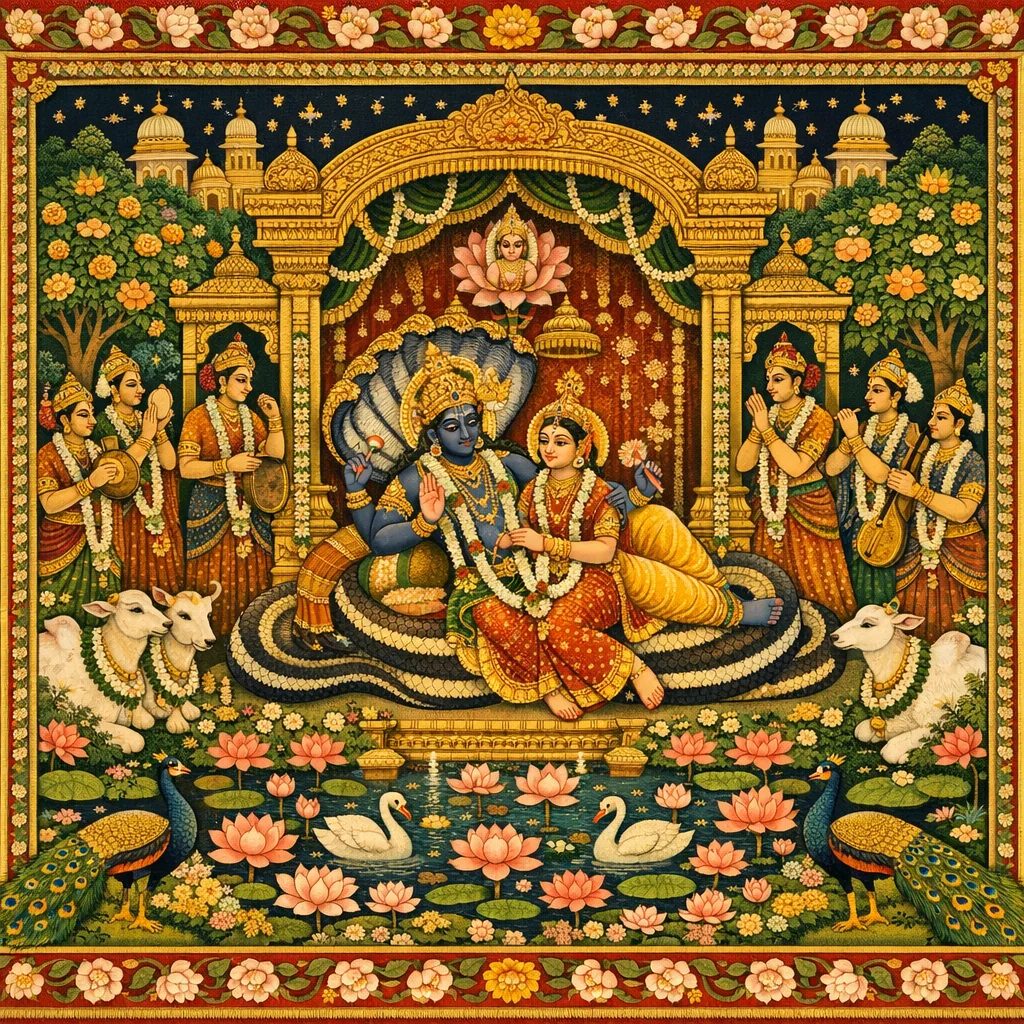
Maitreya tells Vidura that Diti’s unusually prolonged pregnancy, caused by Kaśyapa’s potent seed, upsets cosmic balance—sun and moon grow dim and the devas become alarmed. The demigods approach Brahmā, praising him as Veda-pravartaka and administrator of the universe, and Brahmā replies by recounting how his mind-born sons, the four Kumāras, journeyed to Vaikuṇṭha. He describes Vaikuṇṭha’s spiritual splendor: wish-fulfilling trees, fragrant blossoms, the supremacy of tulasī, jewel-like vimānas, and residents absorbed in kīrtana, free from lust and envy. The narrative then turns to a sharp tension: at the seventh gate, the doorkeepers Jaya and Vijaya bar the Kumāras, provoking the sages’ anger and a curse to descend to the material world. Repentant, the gatekeepers beg protection from forgetting the Lord, and Padmanābha/Nārāyaṇa, with Lakṣmī, personally appears. His darśana—along with tulasī’s scent and His beauty—awakens bhakti, transforming the Kumāras from impersonal realization toward personal devotion. The chapter thus prepares the descent of Jaya–Vijaya as the catalyst for the Lord’s līlā in the world, contrasting Vaikuṇṭha’s harmony with the seed of fear that leads to divine arrangement.
Shlokas
Verse 1
मैत्रेय उवाच प्रजापत्यं तु तत्तेज: परतेजोहनं दिति: । दधार वर्षाणि शतं शङ्कमाना सुरार्दनात् ॥ १ ॥
Śrī Maitreya said: My dear Vidura, Diti, the wife of sage Kaśyapa, understood that the sons in her womb would disturb the devas. Therefore, fearing the ruin of the demigods, she bore for one hundred years Kaśyapa’s potent seed, meant to trouble others.
Verse 2
लोके तेनाहतालोके लोकपाला हतौजस: । न्यवेदयन् विश्वसृजे ध्वान्तव्यतिकरं दिशाम् ॥ २ ॥
By the force of Diti’s pregnancy, the light of the sun and moon grew dim throughout the worlds. Disturbed, the planetary guardians reported to Brahmā, creator of the universe: “What is this spreading darkness in all directions?”
Verse 3
देवा ऊचु: तम एतद्विभो वेत्थ संविग्ना यद्वयं भृशम् । न ह्यव्यक्तं भगवत: कालेनास्पृष्टवर्त्मन: ॥ ३ ॥
The demigods said: “O mighty one, you know well this darkness, yet it greatly disturbs us. Since the power of time cannot touch you, nothing remains unmanifest before you.”
Verse 4
देवदेव जगद्धातर्लोकनाथशिखामणे । परेषामपरेषां त्वं भूतानामसि भाववित् ॥ ४ ॥
O god of the gods, sustainer of the universe, crest-jewel among the lords of the worlds: you know the intentions of all beings, in both the spiritual and the material realms.
Verse 5
नमो विज्ञानवीर्याय माययेदमुपेयुषे । गृहीतगुणभेदाय नमस्तेऽव्यक्तयोनये ॥ ५ ॥
Obeisances to you, the original source of strength and sacred knowledge. By māyā you enter the order of this universe; by the will of the Supreme Lord you accept the differentiated guṇas—especially rajas—and appear from the unmanifest source. I bow to you.
Verse 6
ये त्वानन्येन भावेन भावयन्त्यात्मभावनम् । आत्मनि प्रोतभुवनं परं सदसदात्मकम् ॥ ६ ॥
O Lord, all the worlds are contained within your own self, and all living beings arise from you. Therefore you are the cause of the universe; whoever meditates on you with undeviating devotion attains bhakti—loving devotional service.
Verse 7
तेषां सुपक्वयोगानां जितश्वासेन्द्रियात्मनाम् । लब्धयुष्मत्प्रसादानां न कुतश्चित्पराभव: ॥ ७ ॥
For the fully ripened yogīs who, by mastering the breath, have conquered mind and senses and attained Your mercy, there is no defeat anywhere in this world.
Verse 8
यस्य वाचा प्रजा: सर्वा गावस्तन्त्येव यन्त्रिता: । हरन्ति बलिमायत्तास्तस्मै मुख्याय ते नम: ॥ ८ ॥
As a bull is guided by the rope tied to its nose, so all beings are governed by the Vedic word and offer the due tribute; to that foremost Person, the giver of the Vedas, we bow in reverence.
Verse 9
स त्वं विधत्स्व शं भूमंस्तमसा लुप्तकर्मणाम् । अदभ्रदयया दृष्टया आपन्नानर्हसीक्षितुम् ॥ ९ ॥
O All-pervading Lord, because of darkness our works have been halted; ordain our welfare and look upon us, fallen into distress, with Your boundless compassionate gaze.
Verse 10
एष देव दितेर्गर्भ ओज: काश्यपमर्पितम् । दिशस्तिमिरयन् सर्वा वर्धतेऽग्निरिवैधसि ॥ १० ॥
O gods, this embryo in Diti’s womb, formed from the potent seed of Kaśyapa, is growing like fire fed by fuel, casting darkness over all directions.
Verse 11
मैत्रेय उवाच स प्रहस्य महाबाहो भगवान् शब्दगोचर: । प्रत्याचष्टात्मभूर्देवान् प्रीणन् रुचिरया गिरा ॥ ११ ॥
Śrī Maitreya said: O mighty-armed one, Lord Brahmā—known through transcendental sound—smiled, pleased by their prayers, and replied to the demigods with sweet, pleasing words to satisfy them.
Verse 12
ब्रह्मोवाच मानसा मे सुता युष्मत्पूर्वजा: सनकादय: । चेरुर्विहायसा लोकाल्लोकेषु विगतस्पृहा: ॥ १२ ॥
Lord Brahmā said: My four mind-born sons, Sanaka and the others, are your predecessors. Free from all hankering, they wander through the material and spiritual skies.
Verse 13
त एकदा भगवतो वैकुण्ठस्यामलात्मन: । ययुर्वैकुण्ठनिलयं सर्वलोकनमस्कृतम् ॥ १३ ॥
After traveling thus, they once went to the spotless realm of Bhagavān—His Vaikuṇṭha abode, revered by all the worlds.
Verse 14
वसन्ति यत्र पुरुषा: सर्वे वैकुण्ठमूर्तय: । येऽनिमित्तनिमित्तेन धर्मेणाराधयन् हरिम् ॥ १४ ॥
In the Vaikuṇṭha planets, all residents have forms like the Supreme Lord’s. Without any desire for sense enjoyment, they worship Hari through causeless, selfless devotion.
Verse 15
यत्र चाद्य: पुमानास्ते भगवान् शब्दगोचर: । सत्त्वं विष्टभ्य विरजं स्वानां नो मृडयन् वृष: ॥ १५ ॥
In Vaikuṇṭha dwells Bhagavān, the original Person, known through the Vedic word. He abides in pure, uncontaminated goodness, free from passion and ignorance, and grants dharmic progress to His devotees.
Verse 16
यत्र नै:श्रेयसं नाम वनं कामदुघैर्द्रुमै: । सर्वर्तुश्रीभिर्विभ्राजत्कैवल्यमिव मूर्तिमत् ॥ १६ ॥
In those Vaikuṇṭha planets is a forest called Naiḥśreyasa, filled with wish-fulfilling trees. It shines with the splendor of every season, as if liberation itself had taken a personal form.
Verse 17
वैमानिका: सललनाश्चरितानि शश्वद् गायन्ति यत्र शमलक्षपणानि भर्तु: । अन्तर्जलेऽनुविकसन्मधुमाधवीनां गन्धेन खण्डितधियोऽप्यनिलं क्षिपन्त: ॥ १७ ॥
On the Vaikuṇṭha planets, the vimāna-dwellers roam in their celestial airplanes with their wives and consorts, eternally singing the Lord’s spotless character and deeds, free from all inauspiciousness. Absorbed in Hari-kīrtana, they even slight the honey-laden fragrance of blooming mādhavī flowers, as if casting it away into the wind.
Verse 18
पारावतान्यभृतसारसचक्रवाक- दात्यूहहंसशुकतित्तिरिबर्हिणां य: । कोलाहलो विरमतेऽचिरमात्रमुच्चै र्भृङ्गाधिपे हरिकथामिव गायमाने ॥ १८ ॥
When the king of bees hums in a high pitch, as though singing Hari-kathā and the Lord’s glories, the clamor of pigeons, cuckoos, cranes, cakravākas, swans, parrots, partridges, and peacocks falls silent for a moment. Those transcendental birds pause their own songs simply to hear the Lord’s praise.
Verse 19
मन्दारकुन्दकुरबोत्पलचम्पकार्ण- पुन्नागनागबकुलाम्बुजपारिजाता: । गन्धेऽर्चिते तुलसिकाभरणेन तस्या यस्मिंस्तप: सुमनसो बहु मानयन्ति ॥ १९ ॥
Though flowers such as mandāra, kunda, kurabaka, utpala, campaka, arṇa, punnāga, nāgakeśara, bakula, lotus, and pārijāta are filled with transcendental fragrance, they still acknowledge the power of tulasī’s austerity. For the Lord Himself adorns His body with garlands of tulasī leaves; therefore all flowers greatly honor tulasī.
Verse 20
यत्संकुलं हरिपदानतिमात्रदृष्टै- र्वैदूर्यमारकतहेममयैर्विमानै: । येषां बृहत्कटितटा: स्मितशोभिमुख्य: कृष्णात्मनां न रज आदधुरुत्स्मयाद्यै: ॥ २० ॥
Vaikuṇṭha is crowded with vimānas made of lapis lazuli, emerald, and gold, as if gathered before eyes fixed only on Hari’s lotus feet. Yet its residents, whose very selves belong to Kṛṣṇa, though surrounded by beloved consorts with full hips and smiling, radiant faces, are never stirred to passion by their mirth and charms.
Verse 21
श्री रूपिणी क्वणयती चरणारविन्दं लीलाम्बुजेन हरिसद्मनि मुक्तदोषा । संलक्ष्यते स्फटिककुड्य उपेतहेम्नि सम्मार्जतीव यदनुग्रहणेऽन्ययत्न: ॥ २१ ॥
The women of Vaikuṇṭha are as beautiful as Goddess Śrī herself, and they are free from all fault. With lotuses playfully in hand and their anklets softly chiming, they shine within Hari’s abode. At times they are seen sweeping the crystal walls, marble-like and bordered here and there with gold, as a loving service meant to receive the grace of the Supreme Personality of Godhead.
Verse 22
वापीषु विद्रुमतटास्वमलामृताप्सु प्रेष्यान्विता निजवने तुलसीभिरीशम् । अभ्यर्चती स्वलकमुन्नसमीक्ष्य वक्त्र- मुच्छेषितं भगवतेत्यमताङ्ग यच्छ्री: ॥ २२ ॥
The goddesses of fortune worship the Lord in their own gardens, on the coral-paved banks of pure reservoirs filled with amṛta-like spiritual water, offering tulasī leaves along with their attendants. As they worship, they behold in the water the reflection of their beautiful faces with uplifted noses, and it seems their splendor has increased, as though the Bhagavān had kissed their faces.
Verse 23
यन्न व्रजन्त्यघभिदो रचनानुवादा- च्छृण्वन्ति येऽन्यविषया: कुकथा मतिघ्नी: । यास्तु श्रुता हतभगैर्नृभिरात्तसारा- स्तांस्तान् क्षिपन्त्यशरणेषु तम:सु हन्त ॥ २३ ॥
It is deeply lamentable that unfortunate people neither discuss nor hear the narrations of the Vaikuṇṭha realms of the Sin-destroying Lord, but instead take to base talk that bewilders the intelligence. Those who abandon Vaikuṇṭha-kathā and cling to worldly topics are cast into the darkest region of ignorance.
Verse 24
येऽभ्यर्थितामपि च तो नृगतिं प्रपन्ना ज्ञानं च तत्त्वविषयं सहधर्मं यत्र । नाराधनं भगवतो वितरन्त्यमुष्य सम्मोहिता विततया बत मायया ते ॥ २४ ॥
Lord Brahmā said: O demigods, the human form is supremely valuable; we too long for such a birth, for in human life one may attain perfect dharma and knowledge of the truth. But one who, even as a human being, does not understand the Bhagavān and His abode should be known as greatly deluded by the far-reaching power of external māyā.
Verse 25
यच्च व्रजन्त्यनिमिषामृषभानुवृत्त्या दूरेयमा ह्युपरि न: स्पृहणीयशीला: । भर्तुर्मिथ: सुयशस: कथनानुराग- वैक्लव्यबाष्पकलया पुलकीकृताङ्गा: ॥ २५ ॥
Those who, out of loving attachment to narrations of the Lord’s glorious fame, become overwhelmed—tears welling and their limbs thrilled with ecstasy—are promoted to the supreme kingdom of Vaikuṇṭha, even if they care nothing for meditation and austerities. That realm lies above the material universes and is desired even by Brahmā and the other demigods.
Verse 26
तद्विश्वगुर्वधिकृतं भुवनैकवन्द्यं दिव्यं विचित्रविबुधाग्र्यविमानशोचि: । आपु: परां मुदमपूर्वमुपेत्य योग- मायाबलेन मुनयस्तदथो विकुण्ठम् ॥ २६ ॥
Thus the great sages Sanaka, Sanātana, Sanandana, and Sanat-kumāra, by the power of their mystic yoga (yoga-māyā), reached that Vaikuṇṭha in the spiritual world and tasted unprecedented supreme joy. They beheld the spiritual sky—worshiped by all worlds—radiant with wondrous, richly adorned airplanes piloted by the foremost devotees of Vaikuṇṭha, and ruled by the Bhagavān, the Supreme Personality of Godhead.
Verse 27
तस्मिन्नतीत्य मुनय: षडसज्जमाना: कक्षा: समानवयसावथ सप्तमायाम् । देवावचक्षत गृहीतगदौ परार्ध्य- केयूरकुण्डलकिरीटविटङ्कवेषौ ॥ २७ ॥
Having passed through the six gateways of Vaikuṇṭha-purī without marveling at its adornments, the sages beheld at the seventh gate two radiant beings of the same age, bearing maces and adorned with priceless ornaments—armlets, earrings, crowns, garments, and the like.
Verse 28
मत्तद्विरेफवनमालिकया निवीतौ विन्यस्तयासितचतुष्टयबाहुमध्ये । वक्त्रं भ्रुवा कुटिलया स्फुटनिर्गमाभ्यां रक्तेक्षणेन च मनाग्रभसं दधानौ ॥ २८ ॥
The two gatekeepers wore garlands of fresh flowers that drew swarms of intoxicated bees, draped about their necks and resting between their four bluish arms. With arched brows, flaring nostrils, and reddish eyes, they appeared somewhat agitated.
Verse 29
द्वार्येतयोर्निविविशुर्मिषतोरपृष्ट्वा पूर्वा यथा पुरटवज्रकपाटिका या: । सर्वत्र तेऽविषमया मुनय: स्वदृष्टया ये सञ्चरन्त्यविहता विगताभिशङ्का: ॥ २९ ॥
While the two gatekeepers looked on, the sages entered without asking. Their vision was equal everywhere, free from notions of “ours” and “theirs.” Just as they had passed unhindered through the six earlier doors of gold and diamond, so by their own will they stepped through the seventh, without suspicion.
Verse 30
तान् वीक्ष्य वातारशनांश्चतुर: कुमारान् वृद्धान्दशार्धवयसो विदितात्मतत्त्वान् । वेत्रेण चास्खलयतामतदर्हणांस्तौ तेजो विहस्य भगवत्प्रतिकूलशीलौ ॥ ३० ॥
Seeing the four Kumāras, clothed only by the air—appearing five years old yet the most ancient of beings and knowers of the self’s truth—the two porters, whose disposition was displeasing to the Lord, blocked their way with staffs. They mocked and slighted the sages’ radiance, though such treatment was wholly undeserved.
Verse 31
ताभ्यां मिषत्स्वनिमिषेषु निषिध्यमाना: स्वर्हत्तमा ह्यपि हरे: प्रतिहारपाभ्याम् । ऊचु: सुहृत्तमदिदृक्षितभङ्ग ईष- त्कामानुजेन सहसा त उपप्लुताक्षा: ॥ ३१ ॥
As other divinities looked on, the two chief doorkeepers of Śrī Hari forbade the Kumāras entry, though they were most worthy. Their intense longing to behold their dearest Master, Śrī Hari, being thwarted, their eyes suddenly reddened with anger, and they spoke in a somewhat stern tone.
Verse 32
मुनय ऊचु: को वामिहैत्य भगवत्परिचर्ययोच्चै- स्तद्धर्मिणां निवसतां विषम: स्वभाव: । तस्मिन् प्रशान्तपुरुषे गतविग्रहे वां को वात्मवत्कुहकयो: परिशङ्कनीय: ॥ ३२ ॥
The sages said: Who are these two, that though stationed in the loftiest service of Bhagavān, have developed such a discordant nature? How do they dwell in Vaikuṇṭha? From where could an enemy enter the Lord’s kingdom? The Supreme Person has no foe—who could envy Him? Surely these two are imposters; therefore they suspect others to be like themselves.
Verse 33
न ह्यन्तरं भगवतीह समस्तकुक्षा- वात्मानमात्मनि नभो नभसीव धीरा: । पश्यन्ति यत्र युवयो: सुरलिङ्गिनो: किं व्युत्पादितं ह्युदरभेदि भयं यतोऽस्य ॥ ३३ ॥
In Vaikuṇṭha, the sober see no separation between Bhagavān and His residents, just as within space there is harmony between the vast and the small skies. Why, then, has a seed of fear arisen in this realm of concord? These two are dressed like Vaikuṇṭha-dwellers—whence could their disharmony have come?
Verse 34
तद्वाममुष्य परमस्य विकुण्ठभर्तु: कर्तुं प्रकृष्टमिह धीमहि मन्दधीभ्याम् । लोकानितो व्रजतमन्तरभावदृष्टया पापीयसस्त्रय इमे रिपवोऽस्य यत्र ॥ ३४ ॥
Therefore let us consider the fitting punishment for these two tainted, dull-minded persons, so that in the end a benefit may be bestowed upon them. Because they perceive duality within Vaikuṇṭha life, they are contaminated; thus they should be removed from here to the material world, where living beings have three kinds of enemies.
Verse 35
तेषामितीरितमुभाववधार्य घोरं तं ब्रह्मदण्डमनिवारणमस्त्रपूगै: । सद्यो हरेरनुचरावुरु बिभ्यतस्तत्- पादग्रहावपततामतिकातरेण ॥ ३५ ॥
When the gatekeepers of Vaikuṇṭhaloka—servants of Hari—understood that the sages had pronounced a dreadful brahminical curse, which no array of weapons can counteract, they at once became greatly afraid and, in intense anxiety, fell down to grasp the brāhmaṇas’ feet.
Verse 36
भूयादघोनि भगवद्भिरकारि दण्डो यो नौ हरेत सुरहेलनमप्यशेषम् । मा वोऽनुतापकलया भगवत्स्मृतिघ्नो मोहो भवेदिह तु नौ व्रजतोरधोऽध: ॥ ३६ ॥
The gatekeepers said: O sinless sages, the punishment you have given is indeed fitting, for we neglected due honor even to saintly ones like you, godly in nature. Yet, by your compassion upon our repentance, may the delusion that destroys remembrance of Bhagavān not come upon us, even as we descend lower and lower.
Verse 37
एवं तदैव भगवानरविन्दनाभ: स्वानां विबुध्य सदतिक्रममार्यहृद्य: । तस्मिन् ययौ परमहंसमहामुनीना- मन्वेषणीयचरणौ चलयन् सहश्री: ॥ ३७ ॥
At that very moment the Lord Padmanābha, delight of the noble-hearted, learned that His own attendants had offended the saints; and, accompanied by Śrī Lakṣmī, He went there—upon those feet sought by the paramahaṁsas and the great sages.
Verse 38
तं त्वागतं प्रतिहृतौपयिकं स्वपुम्भि- स्तेऽचक्षताक्षविषयं स्वसमाधिभाग्यम् । हंसश्रियोर्व्यजनयो: शिववायुलोल- च्छुभ्रातपत्रशशिकेसरशीकराम्बुम् ॥ ३८ ॥
The sages headed by Sanaka beheld Viṣṇu—formerly seen only within the heart in samādhi—now manifest to their very eyes. As He advanced with His attendants bearing the umbrella and cāmara fans, the white tufts swayed gently like a pair of swans, and the pearl strings upon the umbrella trembled in the auspicious breeze like drops of amṛta.
Verse 39
कृत्स्नप्रसादसुमुखं स्पृहणीयधाम स्नेहावलोककलया हृदि संस्पृशन्तम् । श्यामे पृथावुरसि शोभितया श्रिया स्व- श्चूडामणिं सुभगयन्तमिवात्मधिष्ण्यम् ॥ ३९ ॥
They beheld the Lord—the reservoir of all delight, with a gracious, auspicious face and a splendor worthy of longing—whose affectionate smile and glance touch the heart’s core. His form was śyāma, and His broad chest, adorned by Śrī, seemed to spread the beauty and good fortune of the spiritual realm itself.
Verse 40
पीतांशुके पृथुनितम्बिनि विस्फुरन्त्या काञ्च्यालिभिर्विरुतया वनमालया च । वल्गुप्रकोष्ठवलयं विनतासुतांसे विन्यस्तहस्तमितरेण धुनानमब्जम् ॥ ४० ॥
He was adorned with a radiant girdle upon the yellow cloth that covered His broad hips, and with a vanamālā of fresh flowers, alive with the humming of bees. Bracelets graced His lovely wrists; one hand rested on Garuḍa’s shoulder, and with the other He gently twirled a lotus.
Verse 41
विद्युत्क्षिपन्मकरकुण्डलमण्डनार्ह- गण्डस्थलोन्नसमुखं मणिमत्किरीटम् । दोर्दण्डषण्डविवरे हरता परार्ध्य- हारेण कन्धरगतेन च कौस्तुभेन ॥ ४१ ॥
His countenance was graced by cheeks that enhanced the beauty of His makara-shaped earrings, flashing brighter than lightning. His nose was noble and prominent, and His head bore a crown studded with gems. Between His mighty arms hung a most precious necklace, and upon His neck shone the jewel called Kaustubha.
Verse 42
अत्रोपसृष्टमिति चोत्स्मितमिन्दिराया: स्वानां धिया विरचितं बहुसौष्ठवाढ्यम् । मह्यं भवस्य भवतां च भजन्तमङ्गं नेमुर्निरीक्ष्य नवितृप्तदृशो मुदा कै: ॥ ४२ ॥
The exquisite beauty of Nārāyaṇa, many times enhanced by the discerning love of His devotees, eclipsed even Lakṣmī’s pride in beauty. O demigods, that Lord is worshipable to me, to Śiva, and to all of you. The sages gazed upon Him with eyes never satisfied and, in joy, bowed their heads at His lotus feet.
Verse 43
तस्यारविन्दनयनस्य पदारविन्द- किञ्जल्कमिश्रतुलसीमकरन्दवायु: । अन्तर्गत: स्वविवरेण चकार तेषां सङ्क्षोभमक्षरजुषामपि चित्ततन्वो: ॥ ४३ ॥
When the breeze, fragrant with tulasī nectar mixed with the pollen from the toes of the lotus feet of the lotus-eyed Lord, entered the sages’ nostrils, it stirred both their bodies and their minds—even though they were attached to the impersonal Brahman conception.
Verse 44
ते वा अमुष्य वदनासितपद्मकोश- मुद्वीक्ष्य सुन्दरतराधरकुन्दहासम् । लब्धाशिष: पुनरवेक्ष्य तदीयमङ्घ्रि- द्वन्द्वं नखारुणमणिश्रयणं निदध्यु: ॥ ४४ ॥
They beheld the Lord’s face like the inner hue of a blue lotus bud, and His smile upon His most beautiful lips like a jasmine blossom in bloom. Fully satisfied and blessed by that vision, yet longing to see more, they gazed upon the nails of His lotus feet, glowing like rubies. Thus, again and again they contemplated His transcendental body, and at last became absorbed in meditation on His personal form.
Verse 45
पुंसां गतिं मृगयतामिह योगमार्गै- र्ध्यानास्पदं बहु मतं नयनाभिरामम् । पौंस्नं वपुर्दर्शयानमनन्यसिद्धै- रौत्पत्तिकै: समगृणन् युतमष्टभोगै: ॥ ४५ ॥
This is the Lord’s form upon which seekers of the supreme goal meditate by the paths of yoga, a vision delightful to the eyes. It is not imagined but real, as confirmed by great perfected yogīs. The Lord is complete in the eight attainments (aṣṭa-siddhis), yet for others such perfections are not attainable in full.
Verse 46
कुमारा ऊचु: योऽन्तर्हितो हृदि गतोऽपि दुरात्मनां त्वं सोऽद्यैव नो नयनमूलमनन्त राद्ध: । यर्ह्येव कर्णविवरेण गुहां गतो न: पित्रानुवर्णितरहा भवदुद्भवेन ॥ ४६ ॥
The Kumāras said: O limitless Lord, to the wicked You remain unmanifest, though You dwell within everyone’s heart; yet today You stand revealed before our very eyes. What we had heard through our ears from our father, Brahmā, has now become directly realized by Your merciful appearance.
Verse 47
तं त्वां विदाम भगवन् परमात्मतत्त्वं सत्त्वेन सम्प्रति रतिं रचयन्तमेषाम् । यत्तेऽनुतापविदितैर्दृढभक्तियोगै- रुद्ग्रन्थयो हृदि विदुर्मुनयो विरागा: ॥ ४७ ॥
O Bhagavan, we know You as the Supreme Absolute Truth, the Paramatma, who reveals His transcendental form in pure, uncontaminated goodness. Only by Your mercy, through unwavering bhakti-yoga, do renounced sages with purified hearts realize that eternal form within.
Verse 48
नात्यन्तिकं विगणयन्त्यपि ते प्रसादं किम्वन्यदर्पितभयं भ्रुव उन्नयैस्ते । येऽङ्ग त्वदङ्घ्रि शरणा भवत: कथाया: कीर्तन्यतीर्थयशस: कुशला रसज्ञा: ॥ ४८ ॥
O Lord, those who take shelter of Your feet and are expert, tasteful hearers and chanters of the auspicious narrations of Your kirtana-worthy glories and pastimes do not care even for the highest material boon—liberation—what to speak of lesser blessings.
Verse 49
कामं भव: स्ववृजिनैर्निरयेषु न: स्ता- च्चेतोऽलिवद्यदि नु ते पदयो रमेत । वाचश्च नस्तुलसिवद्यदि तेऽङ्घ्रि शोभा: पूर्येत ते गुणगणैर्यदि कर्णरन्ध्र: ॥ ४९ ॥
O Lord, even if by our own sins we must be born in hellish conditions, let our minds, like bees, delight in Your lotus feet. Let our words beautify Your feet like tulasi leaves offered there, and let our ears be ever filled with the chanting of Your transcendental qualities.
Verse 50
प्रादुश्चकर्थ यदिदं पुरुहूत रूपं तेनेश निर्वृतिमवापुरलं दृशो न: । तस्मा इदं भगवते नम इद्विधेम योऽनात्मनां दुरुदयो भगवान् प्रतीत: ॥ ५० ॥
O Lord, by kindly manifesting this Puruhuta form before us, You have filled our eyes and minds with deep satisfaction. Therefore we offer obeisances to Your eternal form as Bhagavan, which the unfortunate and less intelligent cannot behold.
Frequently Asked Questions
The text frames the incident as an exceptional, divinely orchestrated tension: Vaikuṇṭha is intrinsically free from material envy, yet the doorkeepers’ momentary discord becomes the instrument for the Lord’s līlā in the material world. The sages interpret the gatekeepers’ suspicion as a trace of duality incompatible with Vaikuṇṭha’s harmony, hence the curse to descend where duality naturally operates. The Lord’s subsequent appearance confirms that the event is under His supervision and becomes spiritually fruitful—revealing His beauty, eliciting repentance, and intensifying devotional realization.
Although the Kumāras are self-realized, the sensory-spiritual impact of the Lord’s personal form—especially the tulasī aroma from His lotus feet—softens the heart and redirects attention from abstract Brahman to Bhagavān’s attributes (rūpa, guṇa, līlā). Their repeated gazing at His face and lotus feet culminates in personal meditation (saguṇa-bhajana), illustrating the Bhāgavata principle that the fullest realization of the Absolute is personal and awakened by mercy rather than by austerity alone.
Jaya and Vijaya are exalted attendants of the Lord stationed at Vaikuṇṭha’s gates, emblematic of intimate service and divine guardianship. Their temporary offense to great devotees becomes a narrative hinge: their descent (by curse) sets the stage for major incarnational conflicts in the material world, where the Lord repeatedly protects devotees and rectifies cosmic disorder. The episode also teaches that even high position demands humility toward bhāgavatas (devotees), and that repentance invokes the Lord’s direct intervention.