Adhyaya 1
Vidura Leaves Hastināpura and Meets Uddhava (Vidura’s Tīrtha-yātrā Begins)
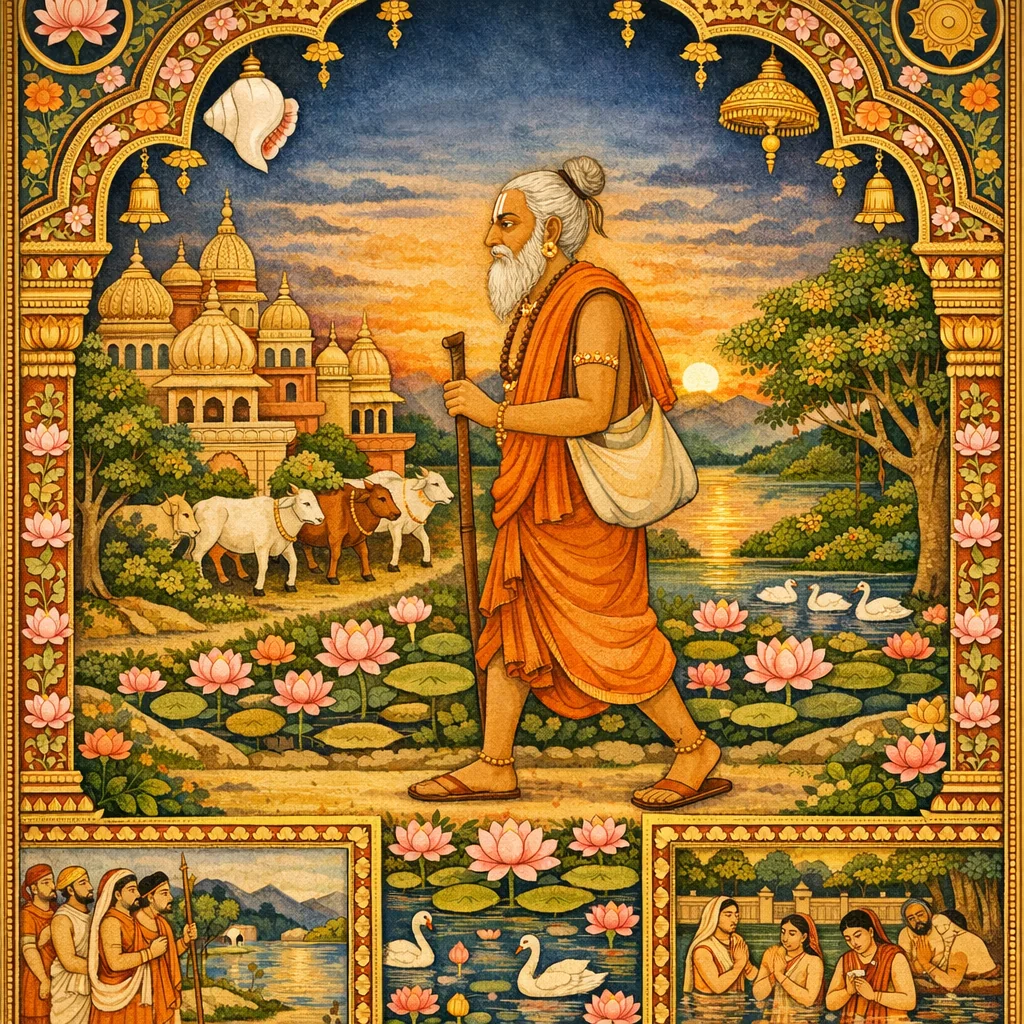
Prompted by the king’s question about Vidura’s meeting with Maitreya, Śukadeva portrays Vidura’s departure from Hastināpura as the moral fallout of Kuru adharma: Dhṛtarāṣṭra’s complicity in the lacquer-house plot, Draupadī’s humiliation, and the refusal to restore the Pāṇḍavas’ rightful share despite Śrī Kṛṣṇa’s counsel. Vidura offers sharp counsel in statecraft and dharma—return the kingdom and fear karmic and political backlash—but Duryodhana insults him as an outsider. Seeing the play of māyā, Vidura leaves the palace without resentment and begins a solitary tīrtha-yātrā, keeping purity through sacred bathing and Hari-sevā, largely unseen by his family. At Prabhāsa he hears of the destruction of the Yadu line, then travels along Sarasvatī’s tīrthas through western regions to the Yamunā. There the narrative turns: Vidura meets Uddhava, embraces him, and begins extended inquiries about Kṛṣṇa’s family and the Pāṇḍavas. Thus the chapter links the Kuru collapse to the coming teachings, with Uddhava as the living witness who can guide Vidura toward higher instruction (eventually through Maitreya) after Kṛṣṇa’s departure.
Shlokas
Verse 1
श्रीशुक उवाच एवमेतत्पुरा पृष्टो मैत्रेयो भगवान् किल । क्षत्त्रा वनं प्रविष्टेन त्यक्त्वा स्वगृहमृद्धिमत् ॥ १ ॥
Śukadeva Gosvāmī said: Formerly, Vidura—the great devotee—renounced his prosperous home, entered the forest, and asked this question of the venerable sage Maitreya.
Verse 2
यद्वा अयं मन्त्रकृद्वो भगवानखिलेश्वर: । पौरवेन्द्रगृहं हित्वा प्रविवेशात्मसात्कृतम् ॥ २ ॥
What more can be said of the Pāṇḍavas’ residence? Bhagavān Śrī Kṛṣṇa, Lord of all, served as their minister and entered that house as if it were His own; Duryodhana’s house He did not regard.
Verse 3
राजोवाच कुत्र क्षत्तुर्भगवता मैत्रेयेणास सङ्गम: । कदा वा सह संवाद एतद्वर्णय न: प्रभो ॥ ३ ॥
The King asked: Where did Vidura meet the venerable Maitreya, and when did their discussion take place? O master, kindly describe this to us.
Verse 4
न ह्यल्पार्थोदयस्तस्य विदुरस्यामलात्मन: । तस्मिन् वरीयसि प्रश्न: साधुवादोपबृंहित: ॥ ४ ॥
Vidura was pure in heart; his inquiry could not be for some petty end. Therefore his question to the exalted sage Maitreya was deeply purposeful, of the highest order, and affirmed by the praise of saintly and learned devotees.
Verse 5
सूत उवाच स एवमृषिवर्योऽयं पृष्टो राज्ञा परीक्षिता । प्रत्याह तं सुबहुवित्प्रीतात्मा श्रूयतामिति ॥ ५ ॥
Śrī Sūta Gosvāmī said: Thus questioned by King Parīkṣit, the foremost sage Śukadeva Gosvāmī—most learned and pleased at heart—replied, “Now hear with attentive devotion.”
Verse 6
श्रीशुक उवाच यदा तु राजा स्वसुतानसाधून् पुष्णन्नधर्मेण विनष्टदृष्टि: । भ्रातुर्यविष्ठस्य सुतान् विबन्धून् प्रवेश्य लाक्षाभवने ददाह ॥ ६ ॥
Śrī Śukadeva Gosvāmī said: Swayed by impious desire to nourish his dishonest sons, King Dhṛtarāṣṭra lost all righteous vision and set fire to the lacquer house, seeking to burn his fatherless nephews, the Pāṇḍavas.
Verse 7
यदा सभायां कुरुदेवदेव्या: केशाभिमर्शं सुतकर्म गर्ह्यम् । न वारयामास नृप: स्नुषाया: स्वास्रैर्हरन्त्या: कुचकुङ्कुमानि ॥ ७ ॥
When, in the royal assembly, his son Duḥśāsana committed the shameful deed of seizing the hair of Draupadī—the revered queen of the Kuru line and wife of the righteous King Yudhiṣṭhira—the king did not forbid it, though her tears washed away the red kumkuma upon her breast.
Verse 8
द्यूते त्वधर्मेण जितस्य साधो: सत्यावलम्बस्य वनं गतस्य । न याचतोऽदात्समयेन दायं तमोजुषाणो यदजातशत्रो: ॥ ८ ॥
Yudhiṣṭhira, the saintly Ajātaśatru, was unjustly defeated in gambling by adharma; steadfast in truth, he went to the forest. When, in due time, he returned and begged his rightful share, Dhṛtarāṣṭra—overwhelmed by delusion—refused to grant it.
Verse 9
यदा च पार्थप्रहित: सभायां जगद्गुरुर्यानि जगाद कृष्ण: । न तानि पुंसाममृतायनानि राजोरु मेने क्षतपुण्यलेश: ॥ ९ ॥
When Arjuna sent the Jagad-guru, Lord Śrī Kṛṣṇa, into the assembly, the words He spoke were to some (such as Bhīṣma) like nectar; yet the king, bereft of even the last remnant of past piety, did not take those words to heart.
Verse 10
यदोपहूतो भवनं प्रविष्टो मन्त्राय पृष्ट: किल पूर्वजेन । अथाह तन्मन्त्रदृशां वरीयान् यन्मन्त्रिणो वैदुरिकं वदन्ति ॥ १० ॥
When Vidura was summoned by his elder brother Dhṛtarāṣṭra for counsel, he entered the house and, questioned by the senior, spoke advice exact and to the point. Vidura’s instructions are renowned and are approved by expert ministers of state.
Verse 11
अजातशत्रो: प्रतियच्छ दायं तितिक्षतो दुर्विषहं तवाग: । सहानुजो यत्र वृकोदराहि: श्वसन् रुषा यत्त्वमलं बिभेषि ॥ ११ ॥
Return the rightful share to Yudhiṣṭhira, Ajātaśatru who has no enemies, for he has endured unbearable suffering because of your offenses. He waits with his younger brothers, and there Bhīma, bent on vengeance, breathes in wrath like a serpent—surely you fear him.
Verse 12
पार्थांस्तु देवो भगवान्मुकुन्दो गृहीतवान् सक्षितिदेवदेव: । आस्ते स्वपुर्यां यदुदेवदेवो विनिर्जिताशेषनृदेवदेव: ॥ १२ ॥
Lord Mukunda, Śrī Kṛṣṇa, the Supreme Personality of Godhead, has accepted the sons of Pṛthā as His own kinsmen; He is the God of kings. All rulers stand on Śrī Kṛṣṇa’s side. He abides in His city with His family and with the Yadu kings and princes who have conquered countless sovereigns, and He is their Lord.
Verse 13
स एष दोष: पुरुषद्विडास्ते गृहान् प्रविष्टो यमपत्यमत्या । पुष्णासि कृष्णाद्विमुखो गतश्री- स्त्यजाश्वशैवं कुलकौशलाय ॥ १३ ॥
This is fault embodied: Duryodhana, hater of the righteous, has entered your house as though a son of Yama. You maintain him as an unfailing son, yet he is envious and turned away from Lord Kṛṣṇa. By supporting one who is not devoted to Kṛṣṇa, you have lost all auspicious fortune and virtues. Cast off this ill luck at once and do good to the whole family!
Verse 14
इत्यूचिवांस्तत्र सुयोधनेन प्रवृद्धकोपस्फुरिताधरेण । असत्कृत: सत्स्पृहणीयशील: क्षत्ता सकर्णानुजसौबलेन ॥ १४ ॥
As Vidura, the kṣattā whose character was cherished by the honorable, spoke in this way, he was insulted by Suyodhana, swollen with anger and trembling at the lips. Suyodhana was then in the company of Karṇa, his younger brothers, and his maternal uncle Śakuni.
Verse 15
क एनमत्रोपजुहाव जिह्मं दास्या: सुतं यद्बलिनैव पुष्ट: । तस्मिन् प्रतीप: परकृत्य आस्ते निर्वास्यतामाशु पुराच्छ्वसान: ॥ १५ ॥
Who summoned him here—this crooked son of a kept woman? Though nourished by our support, he spies for the enemy against those who raised him. Cast him out of the palace at once; let him be left with nothing but breath.
Verse 16
स्वयं धनुर्द्वारि निधाय मायां र्भ्रातु: पुरो मर्मसु ताडितोऽपि । स इत्थमत्युल्बणकर्णबाणै- र्गतव्यथोऽयादुरु मानयान: ॥ १६ ॥
Though pierced by harsh arrows through his ears and wounded to the very core of his heart, Vidura set his bow at the doorway and left his brother’s palace. He did not lament, for he accepted the workings of māyā, the external energy, as the supreme dispensation.
Verse 17
स निर्गत: कौरवपुण्यलब्धो गजाह्वयात्तीर्थपद: पदानि । अन्वाक्रमत्पुण्यचिकीर्षयोर्व्यां अधिष्ठितो यानि सहस्रमूर्ति: ॥ १७ ॥
By the merit of his piety, Vidura gained the auspicious fruit found among the Kauravas. Leaving Gajāhvaya (Hastināpura), he took shelter of many holy tīrthas, which are as the Lord’s lotus feet. Longing for a higher life of sanctity, he journeyed to sacred places where the Lord, in thousands of transcendental forms, is enshrined.
Verse 18
पुरेषु पुण्योपवनाद्रिकुञ्जे- ष्वपङ्कतोयेषु सरित्सर:सु । अनन्तलिङ्गै: समलङ्कृतेषु चचार तीर्थायतनेष्वनन्य: ॥ १८ ॥
He traveled alone, with single-minded devotion, remembering only Kṛṣṇa, through sacred cities, holy groves and mountain retreats, along rivers and lakes whose waters were pure and unstained. In those pilgrimage sanctuaries, the many forms of the Unlimited Lord adorned the temples.
Verse 19
गां पर्यटन्मेध्यविविक्तवृत्ति: सदाप्लुतोऽध:शयनोऽवधूत: । अलक्षित: स्वैरवधूतवेषो व्रतानि चेरे हरितोषणानि ॥ १९ ॥
As he wandered the earth, Vidura lived in purity and solitude. He was ever sanctified by bathing at holy tīrthas, slept upon the ground, and moved about like an avadhūta, free from worldly ties. In the garb of a wandering mendicant, unseen by his relatives, he observed vows meant only to please Hari, the Supreme Lord.
Verse 20
इत्थं व्रजन् भारतमेव वर्षं कालेन यावद्गतवान् प्रभासम् । तावच्छशास क्षितिमेकचक्रा- मेकातपत्रामजितेन पार्थ: ॥ २० ॥
Thus, while traveling throughout Bhāratavarṣa on pilgrimage, he in due course reached Prabhāsa-kṣetra. At that time Mahārāja Yudhiṣṭhira, by invincible might, ruled the earth under one sovereignty and one flag.
Verse 21
तत्राथ शुश्राव सुहृद्विनष्टिं वनं यथा वेणुजवह्निसंश्रयम् । संस्पर्धया दग्धमथानुशोचन् सरस्वतीं प्रत्यगियाय तूष्णीम् ॥ २१ ॥
At the holy place of Prabhāsa he heard that all his kinsmen had perished through violent passion, as a whole forest is consumed by fire born of bamboo friction. Lamenting, he went in silence toward the west, to the river Sarasvatī.
Verse 22
तस्यां त्रितस्योशनसो मनोश्च पृथोरथाग्नेरसितस्य वायो: । तीर्थं सुदासस्य गवां गुहस्य यच्छ्राद्धदेवस्य स आसिषेवे ॥ २२ ॥
On the bank of the Sarasvatī were eleven holy places—Trita, Uśanā, Manu, Pṛthu, Agni, Asita, Vāyu, Sudāsa, Go, Guha, and Śrāddhadeva. Vidura visited them all and duly performed the prescribed rites.
Verse 23
अन्यानि चेह द्विजदेवदेवै: कृतानि नानायतनानि विष्णो: । प्रत्यङ्गमुख्याङ्कितमन्दिराणि यद्दर्शनात्कृष्णमनुस्मरन्ति ॥ २३ ॥
There were also many other temples of Viṣṇu in diverse forms, established by great sages and the devas. Marked with the Lord’s chief emblems, their very sight made one ever remember the original Supreme Person, Lord Kṛṣṇa.
Verse 24
ततस्त्वतिव्रज्य सुराष्ट्रमृद्धं सौवीरमत्स्यान् कुरुजाङ्गलांश्च । कालेन तावद्यमुनामुपेत्य तत्रोद्धवं भागवतं ददर्श ॥ २४ ॥
Thereafter he passed through the prosperous lands of Surāṣṭra, Sauvīra, Matsya, and the western region known as Kurujāṅgala. In time he reached the bank of the Yamunā, where he met Uddhava, the great devotee of Lord Kṛṣṇa.
Verse 25
स वासुदेवानुचरं प्रशान्तं बृहस्पते: प्राक् तनयं प्रतीतम् । आलिङ्ग्य गाढं प्रणयेन भद्रं स्वानामपृच्छद्भगवत्प्रजानाम् ॥ २५ ॥
Then Vidura, overcome with deep affection, embraced Uddhava—peaceful and ever the companion of Vāsudeva, Śrī Kṛṣṇa, and formerly renowned as a disciple of Bṛhaspati—and inquired about the welfare of the Lord’s own family.
Verse 26
कच्चित्पुराणौ पुरुषौ स्वनाभ्य- पाद्मानुवृत्त्येह किलावतीर्णौ । आसात उर्व्या: कुशलं विधाय कृतक्षणौ कुशलं शूरगेहे ॥ २६ ॥
Please tell me: are the two primeval Personalities of Godhead—who descended at the request of Brahmā, born from the lotus of the Lord’s navel, and who have brought welfare to the earth—now well in the house of Śūrasena?
Verse 27
कच्चित्कुरूणां परम: सुहृन्नो भाम: स आस्ते सुखमङ्ग शौरि: । यो वै स्वसृणां पितृवद्ददाति वरान् वदान्यो वरतर्पणेन ॥ २७ ॥
My friend, is Śauri Vasudeva—best well-wisher of the Kurus and our brother-in-law—doing well? He is most generous: like a father he grants boons to his sisters, and by his gifts he ever keeps his wives pleased.
Verse 28
कच्चिद्वरूथाधिपतिर्यदूनां प्रद्युम्न आस्ते सुखमङ्ग वीर: । यं रुक्मिणी भगवतोऽभिलेभे आराध्य विप्रान् स्मरमादिसर्गे ॥ २८ ॥
O Uddhava, please tell me: is heroic Pradyumna, commander of the Yadus, faring well? In the first creation he was Smara (Kāmadeva); Rukmiṇī, having pleased the brāhmaṇas by worship, received him as a son from Bhagavān Śrī Kṛṣṇa by their grace.
Verse 29
कच्चित्सुखं सात्वतवृष्णिभोज- दाशार्हकाणामधिप: स आस्ते । यमभ्यषिञ्चच्छतपत्रनेत्रो नृपासनाशां परिहृत्य दूरात् ॥ २९ ॥
My friend, is Ugrasena—the king of the Sātvatas, Vṛṣṇis, Bhojas, and Dāśārhas—now doing well? Though he had cast far away all hope of the royal throne, lotus-eyed Bhagavān Śrī Kṛṣṇa again installed him by sacred coronation.
Verse 30
कच्चिद्धरे: सौम्य सुत: सदृक्ष आस्तेऽग्रणी रथिनां साधु साम्ब: । असूत यं जाम्बवती व्रताढ्या देवं गुहं योऽम्बिकया धृतोऽग्रे ॥ ३० ॥
O gentle one, is noble Sāmba—foremost among the chariot-warriors and resembling the Lord’s own son—well? He who was once borne by Ambikā as Guha-deva (Kārttikeya) has now been born from the womb of Jāmbavatī, rich in sacred vows.
Verse 31
क्षेमं स कच्चिद्युयुधान आस्ते य: फाल्गुनाल्लब्धधनूरहस्य: । लेभेऽञ्जसाधोक्षजसेवयैव गतिं तदीयां यतिभिर्दुरापाम् ॥ ३१ ॥
O Uddhava, is Yuyudhāna well? From Phālguna (Arjuna) he learned the secret art of the bow, and by service to Adhokṣaja alone he attained His supreme destination—hard to reach even for great renouncers.
Verse 32
कच्चिद् बुध: स्वस्त्यनमीव आस्ते श्वफल्कपुत्रो भगवत्प्रपन्न: । य: कृष्णपादाङ्कितमार्गपांसु- ष्वचेष्टत प्रेमविभिन्नधैर्य: ॥ ३२ ॥
Please tell me—does Akrūra, son of Śvaphalka, that spotless sage surrendered to Bhagavān, remain healthy and well? He once, his composure shattered by ecstatic divine love, fell upon the dust of the road marked by Śrī Kṛṣṇa’s footprints.
Verse 33
कच्चिच्छिवं देवकभोजपुत्र्या विष्णुप्रजाया इव देवमातु: । या वै स्वगर्भेण दधार देवं त्रयी यथा यज्ञवितानमर्थम् ॥ ३३ ॥
Is Devakī—daughter of Devaka-bhoja, like the Mother of the gods and as the prajā of Viṣṇu—auspicious and well? She bore the Deva within her womb, as the three Vedas hold the meaning of sacrificial rites.
Verse 34
अपिस्विदास्ते भगवान् सुखं वो य: सात्वतां कामदुघोऽनिरुद्ध: । यमामनन्ति स्म हि शब्दयोनिं मनोमयं सत्त्वतुरीयतत्त्वम् ॥ ३४ ॥
May I ask—does Bhagavān Aniruddha dwell happily among you? He fulfills every desire of the pure Sātvata devotees. From ancient times he is revered as the source of sacred sound (the cause of the Ṛg Veda), the creator of the mind, and Viṣṇu’s fourth plenary expansion—the turīya-tattva beyond sattva.
Verse 35
अपिस्विदन्ये च निजात्मदैव- मनन्यवृत्त्या समनुव्रता ये । हृदीकसत्यात्मजचारुदेष्ण- गदादय: स्वस्ति चरन्ति सौम्य ॥ ३५ ॥
O sober one, are Hṛdīka, the son of Satyabhāmā, Cārudeṣṇa, Gada and the others—who accept Lord Śrī Kṛṣṇa as the very Deity of their own self and follow His path with undeviating devotion—safe and well?
Verse 36
अपि स्वदोर्भ्यां विजयाच्युताभ्यां धर्मेण धर्म: परिपाति सेतुम् । दुर्योधनोऽतप्यत यत्सभायां साम्राज्यलक्ष्म्या विजयानुवृत्त्या ॥ ३६ ॥
And may I ask: is Mahārāja Yudhiṣṭhira safeguarding the kingdom in accordance with dharma, honoring the very path of righteousness? Formerly, in the royal assembly, Duryodhana burned with envy, seeing Yudhiṣṭhira protected by the arms of Kṛṣṇa and Arjuna as though they were his own, attended by imperial fortune and victory.
Verse 37
किं वा कृताघेष्वघमत्यमर्षी भीमोऽहिवद्दीर्घतमं व्यमुञ्चत् । यस्याङ्घ्रि पातं रणभूर्न सेहे मार्गं गदायाश्चरतो विचित्रम् ॥ ३७ ॥
Please tell me: has unconquerable Bhīma—like a cobra—poured out his long-stored wrath upon the sinful? The battlefield itself could not endure the thunder of his steps, nor the wondrous play of his club as he strode his path.
Verse 38
कच्चिद्यशोधा रथयूथपानां गाण्डीवधन्वोपरतारिरास्ते । अलक्षितो यच्छरकूटगूढो मायाकिरातो गिरिशस्तुतोष ॥ ३८ ॥
Please tell me: is Arjuna—bearer of the bow named Gāṇḍīva, renowned among chariot-warriors for subduing his foes—doing well? Once he satisfied Girīśa (Lord Śiva) by veiling Him in a shower of arrows when the Lord appeared, unrecognized, as an illusory Kirāta hunter.
Verse 39
यमावुतस्वित्तनयौ पृथाया: पार्थैर्वृतौ पक्ष्मभिरक्षिणीव । रेमात उद्दाय मृधे स्वरिक्थं परात्सुपर्णाविव वज्रिवक्त्रात् ॥ ३९ ॥
Are the twin brothers (Nakula and Sahadeva) well—sheltered by the sons of Pṛthā as the eyelids guard the eyes? In battle they reclaimed their rightful kingdom from the hands of the foe Duryodhana, just as Suparṇa Garuḍa snatched amṛta from the mouth of Indra, bearer of the thunderbolt.
Verse 40
अहो पृथापि ध्रियतेऽर्भकार्थे राजर्षिवर्येण विनापि तेन । यस्त्वेकवीरोऽधिरथो विजिग्ये धनुर्द्वितीय: ककुभश्चतस्र: ॥ ४० ॥
O my lord, does Pṛthā (Kuntī) still live? She endures only for the sake of her fatherless children; otherwise she could not have lived without King Pāṇḍu, the foremost royal sage—an unrivaled hero and commander who, with only a second bow as his aid, conquered the four directions.
Verse 41
सौम्यानुशोचे तमध:पतन्तं भ्रात्रे परेताय विदुद्रुहे य: । निर्यापितो येन सुहृत्स्वपुर्या अहं स्वपुत्रान् समनुव्रतेन ॥ ४१ ॥
O gentle one, I lament for Dhṛtarāṣṭra, who is falling into ruin because he betrayed his brother even after his brother’s passing. Following the course taken by his own sons, he drove me—his sincere well-wisher—out from my own home and city.
Verse 42
सोऽहं हरेर्मर्त्यविडम्बनेन दृशो नृणां चालयतो विधातु: । नान्योपलक्ष्य: पदवीं प्रसादा- च्चरामि पश्यन् गतविस्मयोऽत्र ॥ ४२ ॥
I am not astonished. Hari, the supreme Ordainer, performs deeds that resemble those of a mortal, bewildering the vision of men. Yet by His grace I wander unseen by others, moving upon His path; seeing all this here, my wonder has vanished, and I am satisfied in every way.
Verse 43
नूनं नृपाणां त्रिमदोत्पथानां महीं मुहुश्चालयतां चमूभि: । वधात्प्रपन्नार्तिजिहीर्षयेशो- ऽप्युपैक्षताघं भगवान् कुरूणाम् ॥ ४३ ॥
Kings, led astray by three kinds of false pride, repeatedly shook the earth with the force of their armies. Yet Lord Śrī Kṛṣṇa—ever eager to remove the distress of those who surrender—restrained Himself from killing the Kurus, though He saw their many sins.
Verse 44
अजस्य जन्मोत्पथनाशनाय कर्माण्यकर्तुर्ग्रहणाय पुंसाम् । नन्वन्यथा कोऽर्हति देहयोगं परो गुणानामुत कर्मतन्त्रम् ॥ ४४ ॥
The Lord, Aja—the Unborn—appears to destroy the arrogant who stray onto the path of ruin, and though He is the non-doer, His transcendental deeds are enacted so that all may understand. Otherwise, what need would He—beyond the guṇas and beyond the web of karma—have to assume a body and descend to earth?
Verse 45
तस्य प्रपन्नाखिललोकपाना- मवस्थितानामनुशासने स्वे । अर्थाय जातस्य यदुष्वजस्य वार्तां सखे कीर्तय तीर्थकीर्ते: ॥ ४५ ॥
O friend, chant the glories of the Lord, whose fame is sung in the holy places. Though unborn, by His causeless mercy He manifests for the welfare of the surrendered rulers of all worlds, appearing in the Yadu dynasty of His pure devotees.
Frequently Asked Questions
Vidura leaves because dharma-counsel is rejected and adharma is institutionalized. After he advises Dhṛtarāṣṭra to restore Yudhiṣṭhira’s rightful share and to stop sustaining Duryodhana’s envy toward Kṛṣṇa and the Pāṇḍavas, Duryodhana publicly insults him. Vidura accepts this as the working of external energy (māyā) and chooses renunciation over complicity, demonstrating the Bhāgavata principle that a devotee prioritizes integrity, detachment, and Hari-smaraṇa over status and family power.
The chapter lists eleven pilgrimage sites on Sarasvatī’s bank—Trita, Uśanā, Manu, Pṛthu, Agni, Asita, Vāyu, Sudāsa, Go, Guha, and Śrāddhadeva—visited by Vidura with due ritual observance. Their importance is not merely geographic: they signify tīrtha as ‘the Lord’s lotus feet’—places where remembrance of Viṣṇu/Kṛṣṇa is intensified through worship, emblems, and saintly foundations. In Bhāgavata theology, tīrtha-yātrā becomes a disciplined environment for purification and for seeking elevated association leading to liberating instruction.