Adhyaya 23
The Brāhmaṇas’ Wives Blessed (Brāhmaṇa-patnī-prasāda) — Ritualism Humbled by Bhakti
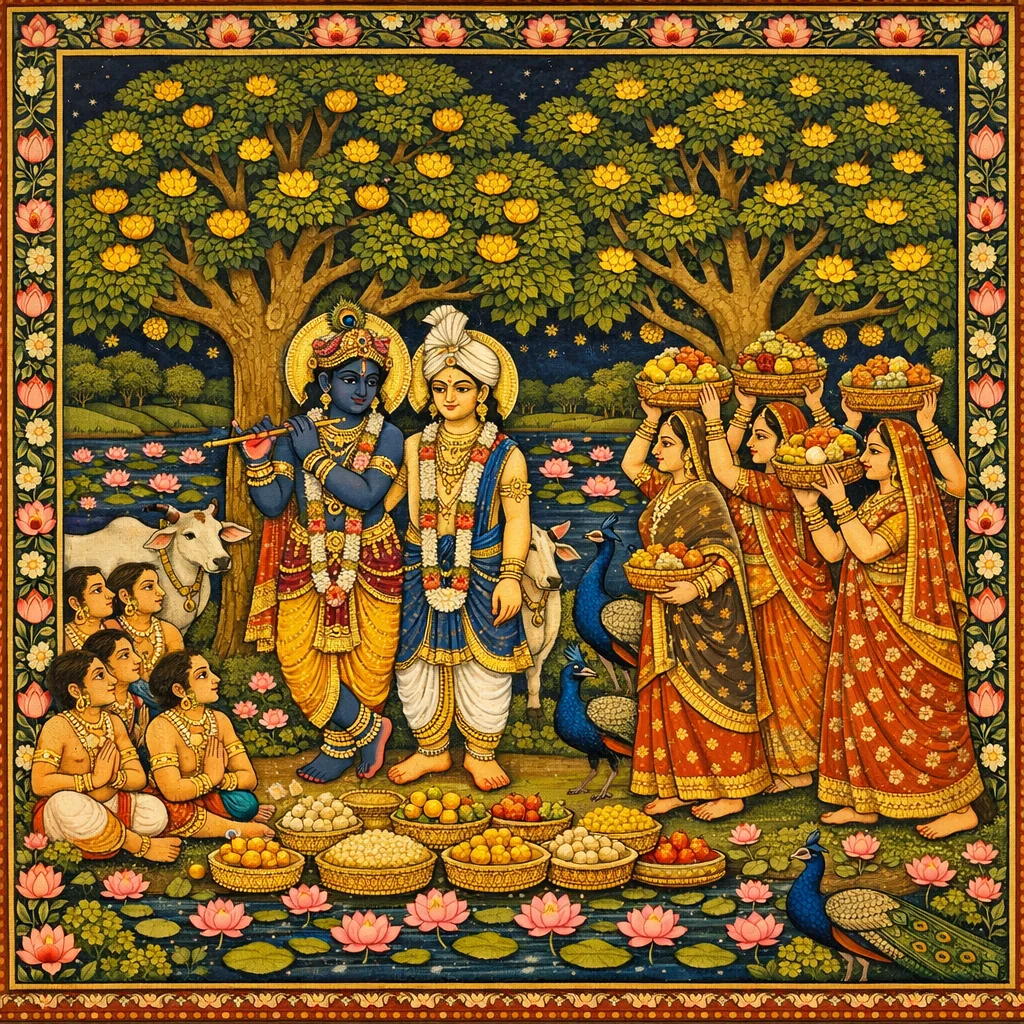
Continuing the Vraja cycle, Śrī Kṛṣṇa shows that bhakti surpasses mere social rank and ritualism. When the cowherd boys grow hungry while herding with Kṛṣṇa and Balarāma, they are sent to an Āṅgirasa yajña to beg for food. The officiating brāhmaṇas, absorbed in karma-kāṇḍa and heavenly ambition, ignore them despite hearing Kṛṣṇa’s names, failing to see that every element of sacrifice is Kṛṣṇa’s own opulence and that He is the directly manifest Absolute Truth. Kṛṣṇa then directs the boys to the brāhmaṇas’ wives, whose hearts—nourished by śravaṇa of Kṛṣṇa-kathā—overflow with devotion; they bring abundant fourfold foods and meet Him by the Yamunā. Though Kṛṣṇa warmly receives them, He instructs them to return, teaching that love grows through hearing, chanting, Deity-darśana, and meditation, not mere physical proximity. They obey; the sacrifice is completed; one wife attains liberation through an inner embrace, and the brāhmaṇas repent, recognizing their offense yet fearing Kaṁsa. The chapter bridges to further Vraja revelations where bhakti repeatedly overturns worldly hierarchy and ritual pride.
Shlokas
Verse 1
श्रीगोपा ऊचु: राम राम महाबाहो कृष्ण दुष्टनिबर्हण । एषा वै बाधते क्षुन्नस्तच्छान्तिं कर्तुमर्हथ: ॥ १ ॥
The cowherd boys said: “O Rāma, O mighty-armed Rāma! O Kṛṣṇa, chastiser of the wicked! Hunger is tormenting us—please relieve it.”
Verse 2
श्रीशुक उवाच इति विज्ञापितो गोपैर्भगवान् देवकीसुत: । भक्ताया विप्रभार्याया: प्रसीदन्निदमब्रवीत् ॥ २ ॥
Śukadeva Gosvāmī said: Thus petitioned by the cowherd boys, Bhagavān, the son of Devakī, wishing to please His devotees—the brāhmaṇas’ wives—replied as follows.
Verse 3
प्रयात देवयजनं ब्राह्मणा ब्रह्मवादिन: । सत्रमाङ्गिरसं नाम ह्यासते स्वर्गकाम्यया ॥ ३ ॥
[Lord Kṛṣṇa said:] Go to the sacrificial arena. There brāhmaṇas learned in Vedic injunctions are performing the Āṅgirasa satra, desiring promotion to heaven.
Verse 4
तत्र गत्वौदनं गोपा याचतास्मद्विसर्जिता: । कीर्तयन्तो भगवत आर्यस्य मम चाभिधाम् ॥ ४ ॥
When you go there, dear cowherd boys, ask them for some food as Our messengers. Proclaim the name of My elder brother, Bhagavān Balarāma, and also My name, and explain that you have been sent by Us.
Verse 5
इत्यादिष्टा भगवता गत्वायाचन्त ते तथा । कृताञ्जलिपुटा विप्रान्दण्डवत्पतिता भुवि ॥ ५ ॥
Thus instructed by the Supreme Lord, the cowherd boys went there and submitted their request. Standing before the brāhmaṇas with palms joined, they then fell flat upon the earth to offer reverence.
Verse 6
हे भूमिदेवा: शृणुत कृष्णस्यादेशकारिण: । प्राप्ताञ्जानीत भद्रं वो गोपान्नो रामचोदितान् ॥ ६ ॥
O earthly gods, please hear us. We cowherd boys are carrying out Kṛṣṇa’s order, and Balarāma has sent us here. May all auspiciousness be yours; kindly acknowledge our arrival.
Verse 7
गाश्चारयन्तावविदूर ओदनं रामाच्युतौ वो लषतो बुभुक्षितौ । तयोर्द्विजा ओदनमर्थिनोर्यदि श्रद्धा च वो यच्छत धर्मवित्तमा: ॥ ७ ॥
Not far from here, Rāma and Acyuta are herding the cows. They are hungry and desire some of your cooked food. Therefore, O brāhmaṇas, best knowers of dharma, if you have faith, please give Them some food.
Verse 8
दीक्षाया: पशुसंस्थाया: सौत्रामण्याश्च सत्तमा: । अन्यत्र दीक्षितस्यापि नान्नमश्नन् हि दुष्यति ॥ ८ ॥
O most pure brāhmaṇas, except during the interval between the sacrificer’s initiation and the actual animal offering—and in sacrifices other than the Sautrāmaṇi—even an initiated person is not contaminated by taking food.
Verse 9
इति ते भगवद्याच्ञां शृण्वन्तोऽपि न शुश्रुवु: । क्षुद्राशा भूरिकर्माणो बालिशा वृद्धमानिन: ॥ ९ ॥
Though they heard this supplication connected with the Supreme Lord, they did not heed it. Filled with petty desires and entangled in elaborate rituals, they imagined themselves advanced in Vedic learning, yet were in truth inexperienced fools.
Verse 10
देश: काल: पृथग्द्रव्यं मन्त्रतन्त्रर्त्विजोऽग्नय: । देवता यजमानश्च क्रतुर्धर्मश्च यन्मय: ॥ १० ॥ तं ब्रह्म परमं साक्षाद् भगवन्तमधोक्षजम् । मनुष्यदृष्ट्या दुष्प्रज्ञा मर्त्यात्मानो न मेनिरे ॥ ११ ॥
The place and time of sacrifice, its paraphernalia, mantras and rites, the priests and sacred fires, the presiding devas, the sponsor, the offering and the unseen fruit—all are but facets of His own opulence. Yet those brāhmaṇas, their intelligence distorted and their hearts bound to the mortal body, looked upon Lord Śrī Kṛṣṇa, the Adhokṣaja beyond material sense, as an ordinary man and failed to recognize Him as the Supreme Brahman, Bhagavān directly manifest.
Verse 11
देश: काल: पृथग्द्रव्यं मन्त्रतन्त्रर्त्विजोऽग्नय: । देवता यजमानश्च क्रतुर्धर्मश्च यन्मय: ॥ १० ॥ तं ब्रह्म परमं साक्षाद् भगवन्तमधोक्षजम् । मनुष्यदृष्ट्या दुष्प्रज्ञा मर्त्यात्मानो न मेनिरे ॥ ११ ॥
The place and time of sacrifice, its paraphernalia, mantras and rites, the priests and sacred fires, the presiding devas, the sponsor, the offering and the unseen fruit—all are but facets of His own opulence. Yet those brāhmaṇas, their intelligence distorted and their hearts bound to the mortal body, looked upon Lord Śrī Kṛṣṇa, the Adhokṣaja beyond material sense, as an ordinary man and failed to recognize Him as the Supreme Brahman, Bhagavān directly manifest.
Verse 12
न ते यदोमिति प्रोचुर्न नेति च परन्तप । गोपा निराशा: प्रत्येत्य तथोचु: कृष्णरामयो: ॥ १२ ॥
O chastiser of the enemy, when the brāhmaṇas would not reply even with a simple “yes” or “no,” the cowherd boys returned disappointed to Kṛṣṇa and Rāma and reported everything to Them.
Verse 13
तदुपाकर्ण्य भगवान् प्रहस्य जगदीश्वर: । व्याजहार पुनर्गोपान् दर्शयन्लौकिकीं गतिम् ॥ १३ ॥
Hearing this, Bhagavān, the Lord of the universe, simply laughed. Then He spoke again to the cowherd boys, showing them the worldly ways by which people commonly act.
Verse 14
मां ज्ञापयत पत्नीभ्य: ससङ्कर्षणमागतम् । दास्यन्ति काममन्नं व: स्निग्धा मय्युषिता धिया ॥ १४ ॥
[Lord Kṛṣṇa said:] Go and tell the brāhmaṇas’ wives that I have come here with Lord Saṅkarṣaṇa. They will surely give you as much food as you desire, for they are lovingly devoted to Me, and their minds dwell in Me alone.
Verse 15
गत्वाथ पत्नीशालायां दृष्ट्वासीना: स्वलङ्कृता: । नत्वा द्विजसतीर्गोपा: प्रश्रिता इदमब्रुवन् ॥ १५ ॥
The cowherd boys then went to the house where the brāhmaṇas’ wives were staying. There they saw those chaste ladies seated, beautifully adorned with fine ornaments. Bowing down to the brāhmaṇa wives, the boys spoke in all humility.
Verse 16
नमो वो विप्रपत्नीभ्यो निबोधत वचांसि न: । इतोऽविदूरे चरता कृष्णेनेहेषिता वयम् ॥ १६ ॥
Obeisances unto you, O wives of the learned brāhmaṇas. Kindly hear our words. We have been sent here by Lord Kṛṣṇa, who is passing by not far from here.
Verse 17
गाश्चारयन् स गोपालै: सरामो दूरमागत: । बुभुक्षितस्य तस्यान्नं सानुगस्य प्रदीयताम् ॥ १७ ॥
He has come a long way with the cowherd boys and Lord Balarāma, tending the cows. Now He is hungry, so please give food for Him and His companions.
Verse 18
श्रुत्वाच्युतमुपायातं नित्यं तद्दर्शनोत्सुका: । तत्कथाक्षिप्तमनसो बभूवुर्जातसम्भ्रमा: ॥ १८ ॥
The wives of the brāhmaṇas were always eager to see Kṛṣṇa, for their minds had been enchanted by descriptions of Him. Thus, as soon as they heard that Acyuta had come, they became greatly excited.
Verse 19
चतुर्विधं बहुगुणमन्नमादाय भाजनै: । अभिसस्रु: प्रियं सर्वा: समुद्रमिव निम्नगा: ॥ १९ ॥
Taking in large vessels the four kinds of foods, rich in fine tastes and aromas, all the ladies hurried forth to meet their beloved, just as rivers flow toward the sea.
Verse 20
निषिध्यमाना: पतिभिर्भ्रातृभिर्बन्धुभि: सुतै: । भगवत्युत्तमश्लोके दीर्घश्रुतधृताशया: ॥ २० ॥ यमुनोपवनेऽशोकनवपल्लवमण्डिते । विचरन्तं वृतं गोपै: साग्रजं ददृशु: स्त्रिय: ॥ २१ ॥
Though their husbands, brothers, sons, and other kin tried to forbid them, their hope to behold Lord Śrī Kṛṣṇa—steadied by long hearing of His transcendental glories—prevailed.
Verse 21
निषिध्यमाना: पतिभिर्भ्रातृभिर्बन्धुभि: सुतै: । भगवत्युत्तमश्लोके दीर्घश्रुतधृताशया: ॥ २० ॥ यमुनोपवनेऽशोकनवपल्लवमण्डिते । विचरन्तं वृतं गोपै: साग्रजं ददृशु: स्त्रिय: ॥ २१ ॥
Along the Yamunā, in a grove adorned with fresh aśoka buds, the women beheld Śrī Kṛṣṇa strolling, surrounded by the cowherd boys and accompanied by His elder brother, Balarāma.
Verse 22
श्यामं हिरण्यपरिधिं वनमाल्यबर्ह- धातुप्रवालनटवेषमनुव्रतांसे । विन्यस्तहस्तमितरेण धुनानमब्जं कर्णोत्पलालककपोलमुखाब्जहासम् ॥ २२ ॥
They saw Him dark blue in hue and clad in golden cloth, adorned with a forest garland, a peacock feather, colored minerals and tender buds—arrayed like a sacred dancer. One hand rested on a friend’s shoulder, and with the other He twirled a lotus; lilies graced His ears, curls fell upon His cheeks, and His lotus face smiled.
Verse 23
प्राय:श्रुतप्रियतमोदयकर्णपूरै- र्यस्मिन् निमग्नमनसस्तमथाक्षिरन्ध्रै: । अन्त: प्रवेश्य सुचिरं परिरभ्य तापं प्राज्ञं यथाभिमतयो विजहुर्नरेन्द्र ॥ २३ ॥
O ruler of men, those brāhmaṇa ladies had long heard of Kṛṣṇa, their Beloved; His glories had become the constant ornaments of their ears, and their minds were ever absorbed in Him. Now, through the openings of their eyes, they drew Him into their hearts and embraced Him within for a long time, casting off the pain of separation—just as sages relinquish the anxiety of false ego by embracing their innermost consciousness.
Verse 24
तास्तथा त्यक्तसर्वाशा: प्राप्ता आत्मदिदृक्षया । विज्ञायाखिलदृग्द्रष्टा प्राह प्रहसितानन: ॥ २४ ॥
Lord Śrī Kṛṣṇa, who witnesses the thoughts of all beings, understood that the women had abandoned every worldly hope and come solely to see Him. Smiling, He then spoke to them.
Verse 25
स्वागतं वो महाभागा आस्यतां करवाम किम् । यन्नो दिदृक्षया प्राप्ता उपपन्नमिदं हि व: ॥ २५ ॥
Lord Śrī Kṛṣṇa said: “Welcome, O most fortunate ladies. Please sit and be at ease. What may I do for you? That you have come here to see Me is indeed most fitting.”
Verse 26
नन्वद्धा मयि कुर्वन्ति कुशला: स्वार्थदर्शिन: । अहैतुक्यव्यवहितां भक्तिमात्मप्रिये यथा ॥ २६ ॥
Surely, those who are wise and see their true self-interest render to Me—who am most dear to the soul—devotional service that is without motive and without interruption, offered directly unto Me.
Verse 27
प्राणबुद्धिमन:स्वात्मदारापत्यधनादय: । यत्सम्पर्कात्प्रिया आसंस्तत: को न्वपर: प्रिय: ॥ २७ ॥
One’s life air, intelligence, mind, friends, body, wife, children, wealth and so on are dear only because of their connection with the self. Therefore what could possibly be more dear than one’s own self?
Verse 28
तद् यात देवयजनं पतयो वो द्विजातय: । स्वसत्रं पारयिष्यन्ति युष्माभिर्गृहमेधिन: ॥ २८ ॥
Therefore return to the sacrificial arena. Your husbands, the learned twice-born brāhmaṇas, are householders and require your help to complete their respective sacrifices.
Verse 29
श्रीपत्न्य ऊचु: मैवं विभोऽर्हति भवान् गदितुं नृशंसं सत्यं कुरुष्व निगमं तव पादमूलम् । प्राप्ता वयं तुलसिदाम पदावसृष्टं केशैर्निवोढुमतिलङ्घ्य समस्तबन्धून् ॥ २९ ॥
The wives of the brāhmaṇas replied: “O Almighty Lord, it does not befit You to speak such cruel words. Please make true Your sacred promise that You reciprocate with Your devotees according to their offering. We have attained the shelter of Your lotus feet; we wish to remain here in this forest, bearing upon our hair the tulasī garlands that fall from Your feet, having crossed beyond all worldly ties.”
Verse 30
गृह्णन्ति नो न पतय: पितरौ सुता वा न भ्रातृबन्धुसुहृद: कुत एव चान्ये । तस्माद् भवत्प्रपदयो: पतितात्मनां नो नान्या भवेद् गतिररिन्दम तद् विधेहि ॥ ३० ॥
Our husbands, fathers, sons, brothers, relatives and friends will no longer accept us—who else could give us shelter? Therefore we have fallen at Your lotus feet; O chastiser of enemies, we have no other refuge—please fulfill our prayer.
Verse 31
श्रीभगवानुवाच पतयो नाभ्यसूयेरन् पितृभ्रातृसुतादय: । लोकाश्च वो मयोपेता देवा अप्यनुमन्वते ॥ ३१ ॥
The Supreme Lord replied: Your husbands will not be hostile toward you, nor your fathers, brothers, sons, other relatives, or the people. I will personally inform them of this; even the devas will approve.
Verse 32
न प्रीतयेऽनुरागाय ह्यङ्गसङ्गो नृणामिह । तन्मनो मयि युञ्जाना अचिरान्मामवाप्स्यथ ॥ ३२ ॥
To remain in My bodily company would not please the people of this world, nor is it the best way to deepen your love for Me. Fix your minds on Me, and very soon you will attain Me.
Verse 33
श्रवणाद्दर्शनाद्ध्यानान्मयि भावोऽनुकीर्तनात् । न तथा सन्निकर्षेण प्रतियात ततो गृहान् ॥ ३३ ॥
Love for Me arises by hearing about Me, seeing My worshipable form, meditating on Me, and chanting My names and glories—not by mere physical closeness. Therefore, please return to your homes.
Verse 34
श्रीशुक उवाच इत्युक्ता द्विजपत्न्यस्ता यज्ञवाटं पुनर्गता: । ते चानसूयवस्ताभि: स्त्रीभि: सत्रमपारयन् ॥ ३४ ॥
Śrī Śukadeva Gosvāmī said: Thus instructed, the wives of the brāhmaṇas returned to the sacrificial arena. The brāhmaṇas found no fault in their wives, and together with them they completed the yajña.
Verse 35
तत्रैका विधृता भर्त्रा भगवन्तं यथाश्रुतम् । हृदोपगुह्य विजहौ देहं कर्मानुबन्धनम् ॥ ३५ ॥
There, one woman was forcibly held back by her husband. Hearing the others speak of the Supreme Lord Śrī Kṛṣṇa as they had heard of Him, she embraced Him within her heart and gave up the material body, the basis of bondage to karma.
Verse 36
भगवानपि गोविन्दस्तेनैवान्नेन गोपकान् । चतुर्विधेनाशयित्वा स्वयं च बुभुजे प्रभु: ॥ ३६ ॥
Bhagavān Govinda satisfied the cowherd boys with that food in four varieties. Then the all-powerful Lord Himself partook of the preparations.
Verse 37
एवं लीलानरवपुर्नृलोकमनुशीलयन् । रेमे गोगोपगोपीनां रमयन् रूपवाक्कृतै: ॥ ३७ ॥
Thus the Supreme Lord, assuming a humanlike form for His līlās, followed the ways of human society. With His beauty, words, and deeds He delighted the cows, His cowherd friends, and the gopīs, and He Himself enjoyed.
Verse 38
अथानुस्मृत्य विप्रास्ते अन्वतप्यन्कृतागस: । यद् विश्वेश्वरयोर्याच्ञामहन्म नृविडम्बयो: ॥ ३८ ॥
The brāhmaṇas then came to their senses and felt deep remorse for their offense. They thought, “We have sinned, for we denied the request of the two Lords of the universe, who appeared deceptively as ordinary human beings.”
Verse 39
दृष्ट्वा स्त्रीणां भगवति कृष्णे भक्तिमलौकिकीम् । आत्मानं च तया हीनमनुतप्ता व्यगर्हयन् ॥ ३९ ॥
Seeing their wives’ pure, otherworldly devotion to Bhagavān Śrī Kṛṣṇa, and recognizing their own lack of bhakti, the brāhmaṇas were overwhelmed with sorrow and began to condemn themselves.
Verse 40
धिग् जन्म नस्त्रिवृद् यत् तद् धिग्व्रतं धिग्बहुज्ञताम् । धिक्कुलं धिक् क्रियादाक्ष्यं विमुखा ये त्वधोक्षजे ॥ ४० ॥
To hell with our threefold birth, our brahmacarya vow, and our vast learning! To hell with noble lineage and skill in sacrificial rites—since we were hostile to the transcendental Lord, Adhokṣaja.
Verse 41
नूनं भगवतो माया योगिनामपि मोहिनी । यद् वयं गुरवो नृणां स्वार्थे मुह्यामहे द्विजा: ॥ ४१ ॥
Surely the Supreme Lord’s māyā bewilders even great yogīs—what then of us? Though as brāhmaṇas we are deemed the spiritual teachers of men, we have been confused about our own true welfare.
Verse 42
अहो पश्यत नारीणामपि कृष्णे जगद्गुरौ । दुरन्तभावं योऽविध्यन्मृत्युपाशान् गृहाभिधान् ॥ ४२ ॥
Just see the boundless love these women have awakened for Lord Śrī Kṛṣṇa, the spiritual master of the universe! That love has cut the very ropes of death—attachment to household life.
Verse 43
नासां द्विजातिसंस्कारो न निवासो गुरावपि । न तपो नात्ममीमांसा न शौचं न क्रिया: शुभा: ॥ ४३ ॥ तथापि ह्युत्तम:श्लोके कृष्णे योगेश्वरेश्वरे । भक्तिर्दृढा न चास्माकं संस्कारादिमतामपि ॥ ४४ ॥
These women never underwent the purificatory saṁskāras of the twice-born, nor lived as brahmacārīs in a guru’s āśrama; they performed no austerities, no inquiry into the self, no formal purifications, and no pious rituals.
Verse 44
नासां द्विजातिसंस्कारो न निवासो गुरावपि । न तपो नात्ममीमांसा न शौचं न क्रिया: शुभा: ॥ ४३ ॥ तथापि ह्युत्तम:श्लोके कृष्णे योगेश्वरेश्वरे । भक्तिर्दृढा न चास्माकं संस्कारादिमतामपि ॥ ४४ ॥
Yet they have steadfast bhakti for Lord Śrī Kṛṣṇa—Uttamaḥśloka, the supreme master of all masters of yoga—whereas we, though endowed with saṁskāras and all such practices, have no such devotion.
Verse 45
ननु स्वार्थविमूढानां प्रमत्तानां गृहेहया । अहो न: स्मारयामास गोपवाक्यै: सतां गति: ॥ ४५ ॥
Indeed, bewildered by self-interest and intoxicated with household concerns, we had wholly strayed from life’s true aim. But behold—through the words of these simple cowherd boys, the Lord has reminded us of the supreme destination of the saintly.
Verse 46
अन्यथा पूर्णकामस्य कैवल्याद्यशिषां पते: । ईशितव्यै: किमस्माभिरीशस्यैतद् विडम्बनम् ॥ ४६ ॥
Otherwise, why would the Supreme Controller—whose desires are ever fulfilled and who is the Lord of kaivalya and all transcendental boons—stage this pretense with us, who are always to be governed by Him?
Verse 47
हित्वान्यान् भजते यं श्री: पादस्पर्शाशयासकृत् । स्वात्मदोषापवर्गेण तद्याच्ञा जनमोहिनी ॥ ४७ ॥
Hoping to touch His lotus feet, even Śrī, the goddess of fortune, forever worships Him alone, abandoning all others and casting off her pride and fickleness. That He should beg is indeed astonishing and bewildering to all.
Verse 48
देश: काल: पृथग्द्रव्यं मन्त्रतन्त्रर्त्विजोऽग्नय: । देवता यजमानश्च क्रतुर्धर्मश्च यन्मय: ॥ ४८ ॥ स एव भगवान् साक्षाद् विष्णुर्योगेश्वरेश्वर: । जातो यदुष्वित्याशृण्म ह्यपि मूढा न विद्महे ॥ ४९ ॥
All the elements of sacrifice—the sacred place and time, the various paraphernalia, the Vedic hymns, the prescribed rites, the priests and sacrificial fires, the devas, the patron, the offering, and the dharmic fruits attained—are but manifestations of His opulences. Yet though we had heard that Viṣṇu Himself, the Lord of all masters of yoga, was born in the Yadu line, we were so foolish that we did not recognize Śrī Kṛṣṇa as none other than Him.
Verse 49
देश: काल: पृथग्द्रव्यं मन्त्रतन्त्रर्त्विजोऽग्नय: । देवता यजमानश्च क्रतुर्धर्मश्च यन्मय: ॥ ४८ ॥ स एव भगवान् साक्षाद् विष्णुर्योगेश्वरेश्वर: । जातो यदुष्वित्याशृण्म ह्यपि मूढा न विद्महे ॥ ४९ ॥
All the elements of sacrifice—the sacred place and time, the various paraphernalia, the Vedic hymns, the prescribed rites, the priests and sacrificial fires, the devas, the patron, the offering, and the dharmic fruits attained—are but manifestations of His opulences. Yet though we had heard that Viṣṇu Himself, the Lord of all masters of yoga, was born in the Yadu line, we were so foolish that we did not recognize Śrī Kṛṣṇa as none other than Him.
Verse 50
तस्मै नमो भगवते कृष्णायाकुण्ठमेधसे । यन्मायामोहितधियो भ्रमाम: कर्मवर्त्मसु ॥ ५० ॥
Our obeisances to Bhagavān Śrī Kṛṣṇa, whose intelligence is never bewildered. Bewitched by His māyā, we wander upon the paths of fruitive work.
Verse 51
स वै न आद्य: पुरुष: स्वमायामोहितात्मनाम् । अविज्ञतानुभावानां क्षन्तुमर्हत्यतिक्रमम् ॥ ५१ ॥
He is the Ādi-Puruṣa, the original Person; deluded by His own māyā, we failed to know His power. Now we pray He will mercifully forgive our offense.
Verse 52
इति स्वाघमनुस्मृत्य कृष्णे ते कृतहेलना: । दिदृक्षवो व्रजमथ कंसाद् भीता न चाचलन् ॥ ५२ ॥
Thus, remembering the sin of neglecting Kṛṣṇa, they longed to see Him; yet, fearing Kaṁsa, they did not dare go to Vraja.
Frequently Asked Questions
They were entangled in elaborate karma-kāṇḍa procedures and petty heavenly aims, identifying spiritual advancement with ritual completion rather than devotion. The text states their intelligence was perverted: although yajña’s place, time, mantras, fires, priests, demigods, offerings, and results are manifestations of Kṛṣṇa’s opulence, they saw Him as ordinary and thus ignored Him—an archetypal critique of ritualism without bhakti.
Their bhakti arose from extensive śravaṇa—hearing descriptions of Kṛṣṇa’s qualities and pastimes—so their minds ‘resided in Him alone.’ The chapter highlights that devotion is not monopolized by birth, saṁskāras, or scholasticism; rather, sincere hearing and heartfelt longing can awaken prema that breaks attachment to family identity and even fear of social censure.
Kṛṣṇa teaches that physical proximity is not the highest measure of bhakti and that public scandal would not serve their spiritual progress. He emphasizes bhakti-sādhana—hearing, chanting, deity-darśana, and meditation—as the means by which love matures quickly. Their return also completes the immediate dharma of assisting householders in sacrifice, while their minds remain fixed on Kṛṣṇa.
One brāhmaṇa wife was forcibly restrained from going. Hearing the others describe Kṛṣṇa, she embraced Him within her heart and gave up her material body. This illustrates internal union (mānasa-sevā/smaraṇa) as spiritually potent: direct remembrance of Kṛṣṇa can sever bondage even without external movement.
It asserts āśraya: Kṛṣṇa is the underlying reality of yajña—its agents, instruments, deities, mantras, and results. Sacrifice is not independent machinery for attaining heaven; it is meaningful only when recognized as His energy and offered to Him. The brāhmaṇas’ failure is thus not procedural but ontological: they missed the Lord who is the very substance of their ritual.