Adhyaya 181
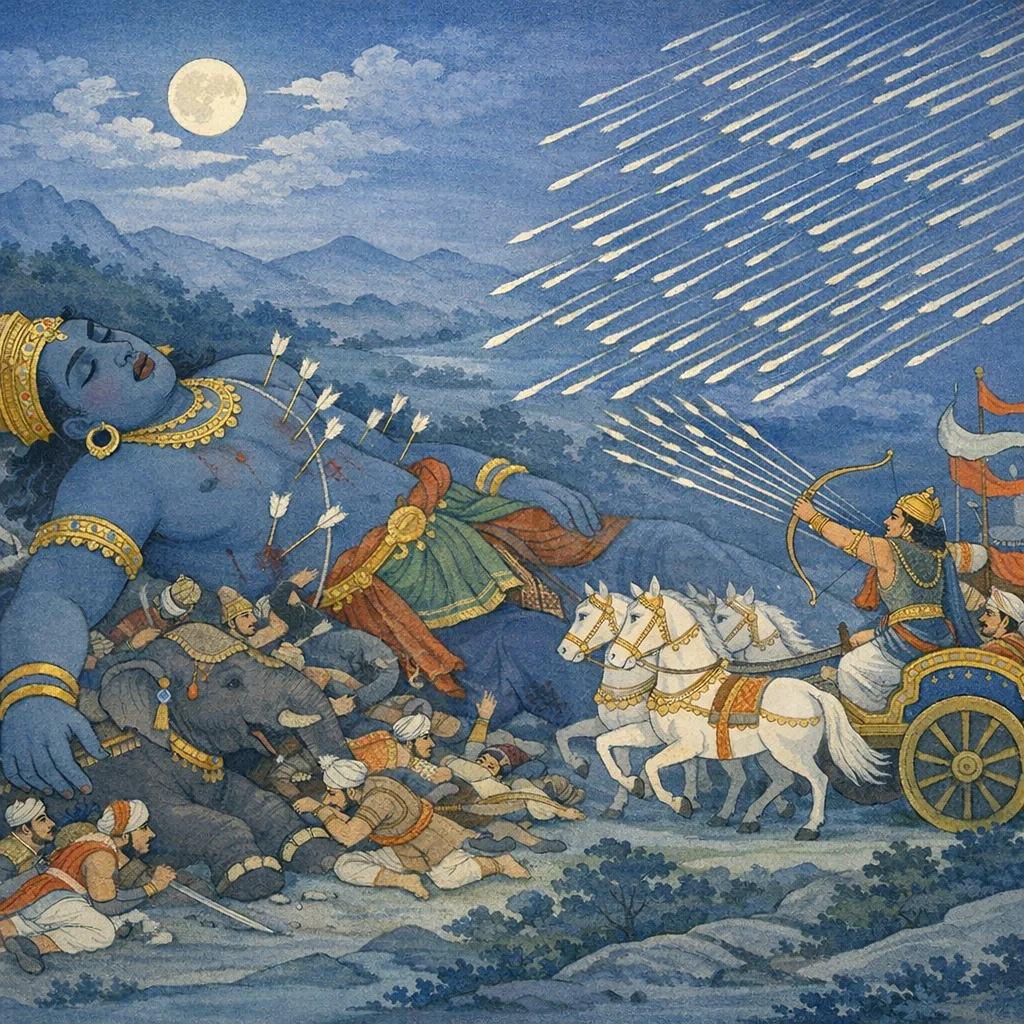
Chapter Arc: अलायुध का वध कर घटोत्कच सिंहनाद करता हुआ कौरव-सेना के सामने अडिग खड़ा होता है; उसकी गर्जना हाथियों तक को कंपा देती है और रात के रण में भय की पहली लहर दौड़ जाती है। → घटोत्कच की राक्षसी माया और प्रचंड वेग से कौरव-पंक्तियाँ डगमगाती हैं; उसी घड़ी कर्ण, घटोत्कच के अलायुध से उलझे होने का अवसर देखकर, पाञ्चालों और पाण्डव-पक्ष की ओर तीव्र आक्रमण करता है। बाण-वर्षा ‘संग्राम-मेघ’ की तरह घिर आती है—धनुष की गर्जना, तीरों की बिजली, और आकाश को ढँक देने वाली शर-धारा। → कर्ण की असाधारण लाघव-युक्त बाण-वृष्टि (न तो बाण लेते दिखना, न संधान करते दिखना—केवल आकाश को तीरों से छा देना) और घटोत्कच के विरुद्ध निर्णायक प्रहारों से रात्रि-युद्ध का चरम बिंदु आता है; भय, हाहाकार और सेना का बिखराव एक साथ फूट पड़ता है। → घटोत्कच का वध हो जाता है, पर वह प्राणशून्य होकर भी अपने अत्यन्त विशाल शरीर के गिरने से कौरवों की एक अक्षौहिणी को कुचलकर नष्ट कर देता है। इसके बाद कर्ण का कौरव-शिविर में शक्र-सम सम्मान के साथ प्रवेश होता है—विजय का गर्व और हानि का दंश साथ-साथ टिके रहते हैं। → रात्रि-युद्ध की धूल और रक्त के बीच दोनों सेनाएँ अपने-अपने विभाजन तक पहचान नहीं पातीं; अगली घड़ी में कौन-सा प्रतिशोध और कौन-सा नया व्यूह उठेगा, यह अनिश्चित रह जाता है।
Shlokas
Verse 1
संजय कहते हैं--राजन! राक्षस अलायुधका वध करके घटोत्कच मन-ही-मन बड़ा प्रसन्न हुआ और वह आपकी सेनाके सामने खड़ा हो नाना प्रकारसे सिंहनाद करने लगा
Sanjaya said: O King, after slaying the rākṣasa Alāyudha, Ghaṭotkaca became greatly pleased within himself. Standing before your army, he roared in many ways like a lion—exulting in victory and striking fear into the opposing ranks amid the moral chaos of war.
Verse 2
तस्य तं॑ तुमुलं शब्दं श्रुत्वा कुउजरकम्पनम् | तावकानां महाराज भयमासीत् सुदारुणम्,महाराज! उसकी वह भयंकर गर्जना हाथियोंको भी कँपा देनेवाली थी। उसे सुनकर आपके योद्धाओंके मनमें अत्यन्त दारुण भय समा गया
Sañjaya said: Hearing that tumultuous roar—so dreadful that it made even the elephants tremble—your warriors, O King, were seized by an exceedingly terrible fear. The sound itself becomes a moral sign in the battle: when courage collapses into panic, the army’s resolve and discernment are shaken, and the tide of war turns through the mind before it turns through weapons.
Verse 3
अलायुधविषफक्त तु भैमसेनिं महाबलम् । दृष्टवा कर्णो महाबाहु: पञज्चालान् समुपाद्रवत्,जिस समय महाबली घटोत्कच अलायुधके साथ उलझा हुआ था, उस समय उसे उस अवस्थामें देखकर महाबाहु कर्णने पांचालोंपर धावा किया
Sañjaya said: Seeing the mighty Bhīmasena’s son (Ghaṭotkaca) engaged in a perilous struggle with Alāyudha—wounded and affected by poison—Karna, the strong-armed warrior, seized the moment and charged upon the Pāñcālas. The verse highlights a battlefield ethic of exploiting tactical advantage, even as it underscores the grim opportunism that war can normalize.
Verse 4
दशभिर्दशभिर्बाणैर्धुश्द्युम्मशिखण्डिनौ । दृढै: पूर्णायतोत्सूष्टैबिंभेद नतपर्वभि:,उसने पूर्णतः खींचकर छोड़े गये झुकी हुई गाँठवाले दस-दस सुदृढ़ बाणोंद्वारा धृष्टद्युम्न और शिखण्डीको घायल कर दिया
Sañjaya said: With volleys of ten arrows at a time—hard, well-drawn, and released at full stretch, their joints bent—he struck and pierced both Dhṛṣṭadyumna and Śikhaṇḍin. The scene underscores the grim ethic of the battlefield: prowess and resolve are measured in disciplined force, even as such force inflicts suffering on renowned warriors.
Verse 5
ततः परमनाराचैर्युधामन्यूत्तमौजसौ । सात्यकिं च रथोदारं कम्पयामास मार्गणै:,तत्पश्चात् उसने अच्छे-अच्छे नाराचोंद्वारा युधामन्यु और उत्तमौजाको तथा अनेक बाणोंसे उदार महारथी सात्यकिको भी कम्पित कर दिया
Sañjaya said: Then, with supreme iron darts (nārācas), he shook Yudhāmanyu and Uttamaujā; and with volleys of arrows he also made the noble, great chariot-warrior Sātyaki reel. The scene underscores how, in the fury of battle, even renowned champions are tested by concentrated force and superior missile-skill.
Verse 6
तेषामप्यस्यतां संख्ये सर्वेषां सव्यदक्षिणम् । मण्डलान्येव चापानि व्यदृश्यन्त जनाधिप,नरेश्वर! वे सात्यकि आदि भी बायें-दायें बाण चला रहे थे। उस समय उन सबके धनुष भी मण्डलाकार ही दिखायी देते थे
Sañjaya said: “O lord of men, O king—while all of them were shooting in the thick of battle, their bows, working equally to the left and to the right, appeared like perfect circles.”
Verse 7
तेषां ज्यातलनिर्घोषो रथनेमिस्वनश्न ह । मेघानामिव घ॒र्मान्ति बभूव तुमुलो निशि,उस रात्रिके समय उनकी प्रत्यंचाकी टंकार तथा रथके पहियोंकी घर्घराहटका शब्द वर्षाकालके मेघोंकी गर्जनाके समान भयंकर जान पड़ता था
Sañjaya said: In that night, the twang of their bowstrings and the rumbling sound of the chariot-wheels rose into a tumult—terrible like the thunder of rain-clouds at the end of the hot season—signaling the relentless momentum of battle and the fear it casts upon all who hear it.
Verse 8
ज्यानेमिघोषस्तनयित्नुमान् वै धनुस्तडिन्मण्डलकेतुशृड्भ: । शरौघवर्षाकुलवृष्टि मां श्व संग्राममेघ: स बभूव राजन्,राजन! वह संग्राम वर्षाकालीन मेघके समान प्रतीत होता था। प्रत्यंचाकी टंकार और पहियोंकी घर्घराहटका शब्द ही उस मेघकी गर्जनाके समान था। धनुष ही विद्युन्मण्डलके समान प्रकाशित होता था और ध्वजाका अग्रभाग ही उस मेघका उच्चतम शिखर था तथा बाण-समूहोंकी वृष्टि ही उसके द्वारा की जानेवाली वर्षा थी
Sañjaya said: O King, he appeared like a monsoon cloud of battle. The roar of his bowstring and the rumbling of his chariot-wheels were like thunder; his bow flashed like a circle of lightning; the tip of his banner rose like the cloud’s highest peak; and the dense shower of his arrows was the rain it poured upon the field—an image of war’s overwhelming force, where prowess becomes a storm that engulfs all who stand before it.
Verse 9
तददभुतं शैल इवाप्रकम्पो वर्ष महाशैलसमानसार: । विध्वंसयामास रणे नरेन्द्र वैकर्तन: शत्रुगणावमर्दी,नरेन्द्र! महान् पर्वतके समान शक्तिशाली एवं अविचल रहनेवाले शत्रुदलसंहारक सूर्यपुत्र कर्णने रणभूमिमें उस अद्भुत बाणवर्षाको नष्ट कर दिया
Sañjaya said: O king, then Karṇa—called Vaikartana—unyielding like a mountain and possessing the force of a great peak, the crusher of enemy hosts, shattered in battle that wondrous shower of arrows. The verse highlights the terrifying efficiency of martial power: in the ethical tension of war, prowess becomes the means by which one side nullifies the other’s onslaught, even when the attack appears extraordinary and overwhelming.
Verse 10
ततोअतुलैर्वज़निपातकल्पै: शितै: शरै: काञ्चनचित्रपुड्खै: । शत्रून् व्यपोहत् समरे महात्मा वैकर्तन: पुत्रहिते रतस्ते,तत्पश्चात् आपके पुत्रके हितमें तत्पर रहनेवाले महामनस्वी वैकर्तन कर्णने समरांगणमें सोनेके विचित्र पंखोंसे युक्त एवं वज्रपातके तुल्य भयंकर, तुलनारहित तीखे बाणोंद्वारा शत्रुओंका संहार आरम्भ किया
Sañjaya said: Then the great-souled Karṇa, known as Vaikartana—intent on the welfare of your sons—drove back the enemies in the battle with incomparable, razor-sharp arrows, their golden, variegated fletchings gleaming, and their impact like a thunderbolt’s strike. Ethically, the verse underscores how personal loyalty and chosen allegiance can intensify martial resolve, even as the battlefield remains a realm of relentless violence.
Verse 11
संछिन्नभिन्नध्वजिनश्व केचित् केचिच्छरैरदितभिन्नदेहा: | केचिद् विसूता विहयाश्न केचिद् वैकर्तनेनाशु कृता बभूवु:,वैकर्तन कर्णने वहाँ शीघ्र ही किन्हींकी ध्वजाके टुकड़े-टुकड़े कर दिये, किन्हींके शरीरोंको बाणोंसे पीड़ित करके विदीर्ण कर डाला, किन्हींके सारथि नष्ट कर दिये और किन्हींके घोड़े मार डाले
Sañjaya said: Vaikartana (Karna) swiftly reduced some warriors’ standards and ensigns to fragments; others he tormented with volleys of arrows, splitting their bodies. Some he left without charioteers, and others he rendered horseless. The scene portrays the ruthless efficiency of a great archer in battle—where prowess becomes destruction, and the moral weight of war is felt in the sudden undoing of men, mounts, and the symbols of martial honor.
Verse 12
अविन्दमानास्त्वथ शर्म संख्ये यौधिष्ठिरं ते बलमभ्यपद्यन् । तान् प्रेक्ष्य भग्नान् विमुखीकृतांश्व घटोत्कचो रोषमतीव चक्रे
Sañjaya said: Finding no safety or respite in the press of battle, those warriors turned toward Yudhiṣṭhira’s army for refuge. Seeing them broken and driven to turn their backs, Ghaṭotkaca was seized with intense wrath—his anger rising at the sight of the enemy’s rout and the desperate flight it caused.
Verse 13
योद्धालोग युद्धमें किसी तरह चैन न पाकर युधिष्छिरकी सेनामें घुसने लगे। उन्हें तितर- बितर और युद्धसे विमुख हुआ देख घटोत्कचको बड़ा रोष हुआ ।। आस्थाय तं काउचनरत्नचित्रं रथोत्तमं सिंहवत् संननाद । वैकर्तनं कर्णमुपेत्य चापि विव्याध वज़प्रतिमै: पृषत्कै:,वह सुवर्ण एवं रत्नोंसे जटित होनेके कारण विचित्र शोभायुक्त उत्तम रथपर आरूढ़ हो सिंहके समान गर्जना करने लगा और वैकर्तन कर्णके पास जाकर उसे वच्ञतुल्य बाणोंद्वारा बींधने लगा
Sanjaya said: The warriors, finding no ease in the press of battle, began to force their way into Yudhiṣṭhira’s army. Seeing them scattered and turning away from the fight, Ghaṭotkaca was seized by fierce wrath. Mounting his splendid chariot, adorned with gold and gems, he roared like a lion; then, drawing near to Karṇa (Vaikartana), he pierced him with arrows as hard and dreadful as thunderbolts. The passage highlights how fear and disorder in war provoke retaliatory fury, and how martial prowess is portrayed as both a response to collapsing morale and a driver of escalating violence.
Verse 14
तौ कर्णिनाराचशिलीमुखैश्न नालीकदण्डासनवत्सदन्तै: । वराहकर्णै: सविपाठशच्ञैः क्षुयप्रवर्षश्न विनेदतु: खम्,वे दोनों कर्णी, नाराच, शिलीमुख, नालीक, दण्ड, असन, वत्सदन्त, वाराहकर्ण, विपाठ, सींग तथा क्षुरप्रोंकी वर्षा करते हुए अपनी गर्जनासे आकाशको गुँजाने लगे
Sañjaya said: The two warriors filled the sky with a storm of arrows—karṇin, nārāca, śilīmukha, nālīka, daṇḍa, āsana, vatsadanta, varāhakarṇa, vipāṭa, śṛṅga, and kṣura—so that, with their thunderous roar of bow and battle, the very heavens seemed to resound. The verse underscores the terrifying intensity of combat, where martial prowess and wrath eclipse restraint, reminding the listener how war magnifies human passions and the cost of adharma-driven violence.
Verse 15
तद् बाणधारावृतमन्तरिक्षं तिर्यग्गताभि: समरे रराज । सुवर्णपुडुखज्वलितप्र भाभि- विचित्रपुष्पाभिरिव स्रजाभि:,समरांगणमें बाणधाराओंसे भरा हुआ आकाश उन बाणोंके सुवर्णमय पंखोंकी तिरछी दिशामें फैलनेवाली देदीप्यमान प्रभाओंसे ऐसी शोभा पा रहा था, मानो वह विचित्र पुष्पोंवाली मनोहर मालाओंसे अलंकृत हो
Sañjaya said: In that battle, the sky, veiled by torrents of arrows, shone brilliantly. Lit by the blazing radiance cast sideways from the arrows’ golden fletchings, it looked as though the firmament had been adorned with garlands of many-colored flowers—an image that heightens the awe and dread of war’s spectacle even as it hints at the moral dissonance of beauty arising from violence.
Verse 16
समाहितावप्रतिमप्रभावा- वन्योन्यमाजघ्नतुरुत्तमास्त्रै: । तयोर्हि वीरोत्तमयोर्न कश्चिद् ददर्श तस्मिन् समरे विशेषम्,दोनोंके ही चित्त एकाग्र थे; दोनों ही अनुपम प्रभावशाली थे और उत्तम अस्त्रोंद्वारा एक-दूसरेको चोट पहुँचा रहे थे। उन दोनों वीरशिरोमणियोंमेंसे कोई भी युद्धमें अपनी विशेषता न दिखा सका
Sañjaya said: With minds fully composed and focused, both warriors—of incomparable splendor—struck each other with the finest missiles. Indeed, in that battle no one could discern any advantage or distinctive superiority between those two foremost heroes.
Verse 17
अतीव तच्चित्रमतुल्यरूपं बभूव युद्ध रविभीमसून्वो: । समाकुलं शस्त्रनिपातघोरं दिवीव राद्यंशुमतो: प्रमत्तम्,सूर्यपुत्र कर्ण और भीमकुमार घटोत्कचका वह अत्यन्त विचित्र एवं घमासान युद्ध आकाशमें राहु और सूर्यके उन्मत्त संग्राम-सा प्रतीत होता था। उसकी कहीं तुलना नहीं थी। शस्त्रोंके प्रहारसे वह बड़ा भयंकर जान पड़ता था
Sañjaya said: The battle between Karṇa, the son of the Sun, and Ghaṭotkaca, Bhīma’s son, became exceedingly strange and of incomparable form. Confused and tumultuous, made dreadful by the crashing descent of weapons, it seemed like the frenzied combat in the heavens between Rāhu and the radiant Sun—without any equal in intensity.
Verse 18
संजय उवाच घटोत्कचं यदा कर्णो न विशेषयते नृप । ततः प्रादुश्चकारोग्रमस्त्रमस्त्रविदां वर:,संजय कहते हैं--राजन्! जब अस्त्रवेत्ताओंमें श्रेष्ठ कर्ण घटोत्कवसे अपनी विशेषता न दिखा सका, तब उसने एक भयंकर अस्त्र प्रकट किया
Sanjaya said: O King, when Karna—foremost among those skilled in weapons—could no longer assert his superiority over Ghaṭotkaca, he then brought forth a dreadful weapon. The moment signals a turning point in the duel: pride and necessity converge, and the ethics of escalation in war come into sharp focus.
Verse 19
तेनास्त्रेणावधीत् तस्य रथं सहयसारथिम् । विरथश्षापि हैडिम्बि: क्षिप्रमन््तरधीयत,उस अस्त्रके द्वारा उसने घटोत्कचके रथको घोड़े और सारथिसहित नष्ट कर दिया। रथहीन होनेपर घटोत्कच शीघ्र ही वहाँसे अदृश्य हो गया
Sañjaya said: With that weapon he destroyed his chariot—together with its horses and charioteer. Bereft of his car, the Haiḍimba (Ghaṭotkaca) swiftly vanished from the battlefield, withdrawing by means of his power of disappearance.
Verse 20
ध्ृतराष्ट्र ववाच तस्मिन्नन्तहिते तूर्ण कूटयोधिनि राक्षसे । मामकै: प्रतिपन्नं यत् तन््ममाचक्ष्व संजय,धृतराष्ट्रने पूछा--संजय! बताओ, माया-युद्ध करनेवाले उस राक्षसके तत्काल अदृश्य हो जानेपर मेरे पुत्रोंने क्या सोचा और क्या किया?
Dhṛtarāṣṭra said: “When that rākṣasa—swiftly vanishing from sight and fighting by deceitful illusion—disappeared, tell me, Sañjaya, what my sons understood and resolved, and what they then did.”
Verse 21
संजय उवाच अन्तर्त्तितं राक्षसेन्द्रं विदित्वा सम्प्राक्रोशन् कुरव: सर्व एव । कं नायं राक्षस: कूटयोधी हन्यात् कर्ण समरे5दृश्यमान:,संजयने कहा--महाराज! राक्षसराज घटोत्कचको अदृश्य हुआ जानकर समस्त कौरवयोद्धा चिलला-चिल्लाकर कहने लगे "“मायाद्वारा युद्ध करनेवाला यह निशाचर जब रणभूमिमें स्वयं दिखायी ही नहीं देता है, तब कर्णको कैसे नहीं मार डालेगा?”
Sañjaya said: Knowing that the lord of the Rākṣasas had become invisible, all the Kuru warriors cried out together: “When this deceitful, illusion-wielding Rākṣasa is not even seen on the battlefield, whom would he not strike down? How could he fail to kill Karṇa?” The verse frames the Kauravas’ panic at an opponent who fights through concealment and māyā, implying an ethical unease: in war, fear intensifies when the enemy’s methods appear ‘unfair’ or beyond ordinary martial norms, and even a famed hero like Karṇa seems vulnerable.
Verse 22
ततः कर्णो लघुचित्रास्त्रयो धी सर्वा दिश: प्रावणोद् बाणजालै: । न वै किज्चित् प्रापतत् तत्र भूत॑ तमोभूते सायकैरन्तरिक्षे,तब शीतघ्रतापूर्वक विचित्र रीतिसे अस्त्रयुद्ध करनेवाले कर्णने अपने बाणोंके समूहसे सम्पूर्ण दिशाओंको ढक दिया। उस समय बाणोंसे आकाशमें अँधेरा छा गया था तो भी वहाँ कोई प्राणी ऊपरसे मरकर गिरा नहीं
Sañjaya said: Then Karṇa, swift and skilled in deploying varied and wondrous missiles, showered volleys of arrows so thick that they seemed to cover all directions. The sky, filled with those shafts, turned as if into darkness; yet in that arrow-darkened air no living being fell down from above. The scene underscores the terrifying spectacle of war—power displayed at scale—while also hinting that not every show of force immediately yields visible casualties.
Verse 23
नैवाददानो न च संदधानो न चेषुधी: स्पृश्यमान: कराग्रै: । अदृश्यद् वै लाघवात सूतपुत्र: सर्व बाणैश्छादयानो<न्तरिक्षम्,सूतपुत्र कर्ण जब शीघ्रतापूर्वक बाणोंद्वारा समूचे आकाशको आच्छादित कर रहा था, उस समय यह नहीं दिखायी देता था कि वह कब अपने हाथकी अंगुलियोंसे तरकसको छूता है, कब बाण निकालता है और कब उसे धनुषपर रखता है
Sañjaya said: As Karṇa, the charioteer’s son, swiftly covered the whole sky with his arrows, it could not be seen—so great was his speed—when he touched the quiver with his fingertips, when he drew forth the shafts, or when he set them upon the bow. The scene underscores how martial prowess, when driven by fierce resolve, can make even the steps of action vanish from sight, leaving only the overwhelming consequence in the field of war.
Verse 24
ततो मायां दारुणामन्तरिक्षे घोरां भीमां विहितां राक्षसेन । अपश्याम लोहिता भ्रप्रकाशां देदीप्यन्तीमग्निशिखामिवोग्राम्,तदनन्तर हमने अन्तरिक्षमें उस राक्षसद्वारा रची गयी घोर, दारुण एवं भयंकर माया देखी। पहले तो वह लाल रंगके बादलोंके रूपमें प्रकाशित हुई, फिर आगकी भयंकर लपटोंके समान प्रज्वलित हो उठी
Sañjaya said: “Then, in the sky, we beheld a dreadful and terrifying illusion contrived by a rākṣasa. At first it appeared as a red, cloud-like radiance; thereafter it blazed forth fiercely, like a raging tongue of fire.”
Verse 25
ततस्तस्यां विद्युत: प्रादुरास- न्नुल्काश्चापि ज्वलिता: कौरवेन्द्र । घोषश्नास्या: प्रादुरासीत् सुघोर: सहस्रशो नदतां दुन्दुभीनाम्,कौरवराज! तत्पश्चात् उससे बिजलियाँ प्रकट हुईं और जलती हुई उल्काएँ गिरने लगीं। साथ ही हजारों दुन्दुभियोंके बजनेके समान बड़ी भयानक आवाज होने लगी
Sañjaya said: Then, in that very moment, lightning suddenly flashed forth, and blazing meteors began to fall, O lord of the Kurus. And there arose a most dreadful, ominous roar—like the thunder of thousands of kettledrums sounding at once—O king of the Kauravas. The battlefield itself seemed to proclaim, through these portents, the moral weight of the slaughter about to unfold.
Verse 26
ततः: शरा: प्रापतन् रुक्मपुड्खा: शक््त्यृष्टिप्रासमुसलान्यायुधानि । परश्वधास्तैलधौताश्न खड््गा: प्रदीप्ताग्रास्तोमरा: पट्टिशाश्ष,फिर उससे सोनेके पंखवाले बाण गिरने लगे। शक्ति, ऋष्टि, प्रास, मुसल आदि आयुध, फरसे, तेलमें साफ किये गये खड्ग, चमचमाती हुई धारवाले तोमर, पट्टिश, तेजस्वी परिघ, लोहेसे बँधी हुई विचित्र गदा, तीखी धारवाले शूल, सोनेके पत्रसे मढ़ी गयी भारी गदाएँ और शतघ्नियाँ चारों ओर प्रकट होने लगीं
Sañjaya said: Then there rained down arrows with golden fletching. Weapons of every kind appeared and flew about—spears and lances, javelins and clubs; axes; swords polished bright with oil; and tomaras and paṭṭiśas with blazing points. The scene swelled into a storm of arms, showing how the warriors’ wrath had turned the battlefield into a whirl of lethal instruments, where courage and duty were tested amid uncontrolled violence.
Verse 27
मयूखिन: परिघा लोहबद्धा गदाश्षित्रा: शितधाराश्न शूला: | गुर्व्यों गदा हेमपट्टावनद्धा: शतचघ्न्यश्न प्रादुरासन् समन््तात्,फिर उससे सोनेके पंखवाले बाण गिरने लगे। शक्ति, ऋष्टि, प्रास, मुसल आदि आयुध, फरसे, तेलमें साफ किये गये खड्ग, चमचमाती हुई धारवाले तोमर, पट्टिश, तेजस्वी परिघ, लोहेसे बँधी हुई विचित्र गदा, तीखी धारवाले शूल, सोनेके पत्रसे मढ़ी गयी भारी गदाएँ और शतघ्नियाँ चारों ओर प्रकट होने लगीं
Sañjaya said: “Everywhere, weapons suddenly appeared in all directions—iron-bound clubs and maces with radiant points, strange and varied gadās, sharp-edged śūlas, heavy maces sheathed with bands of gold, and śataghnīs. The scene became a terrifying manifestation of war’s instruments, where force multiplies and the battlefield’s moral weight deepens: the abundance of weapons signals not heroism alone, but the swelling momentum of violence that tests restraint, duty, and discernment.”
Verse 28
महाशिलाश्षापतंस्तत्र तत्र सहस्रश: साशनयश्न वज्ा: | चक्राणि चानेकशतक्षुराणि प्रादुर्बभूवुज्वलनप्रभाणि,जहाँ-तहाँ हजारों बड़ी-बड़ी शिलाएँ गिरने लगीं, बिजलियोंसहित वज्र पड़ने लगे और अग्निके समान दीप्तिमान् कितने ही चक्रों तथा सैकड़ों छूुरोंका प्रादुर्भाव होने लगा
Sañjaya said: “In that place, and in many places all around, thousands of massive rocks began to fall; thunderbolts accompanied by lightning struck down; and there suddenly appeared many blazing discs and hundreds of razor-edged weapons, radiant like fire. The battlefield seemed to turn into a scene of cosmic terror, where violence multiplies beyond human measure and the moral order is tested amid overwhelming, unnatural portents.”
Verse 29
तां शक्तिपाषाणपर श्र धानां प्रासासिवज्ञाशनिमुद्गराणाम् । वृष्टिं विशालां ज्वलितां पतन््तीं कर्ण: शरौघैर्न शशाक हन्तुम्
Sañjaya said: That vast, blazing downpour of weapons—spears, stones, axes, lances, swords, thunderbolt-like missiles, lightning-like shafts, and maces—came hurtling down; yet Karṇa, even with torrents of arrows, could not destroy or check it. The scene underscores how, in the frenzy of war, sheer prowess may fail before an overwhelming, fate-driven onslaught, and how violence multiplies beyond any single warrior’s control.
Verse 30
शक्ति, प्रस्तर, फरसे, प्रास, खड्ग, वज्र, बिजली और मुदगरोंकी गिरती हुई उस ज्वालापूर्ण विशाल वर्षाको कर्ण अपने बाणसमूहोंद्वारा नष्ट न कर सका ।। शराहतानां पततां हयानां वज्जाहतानां च तथा गजानाम् | शिलाहतानां च महारथानां महान् निनाद: पततां बभूव,बाणोंसे घायल होकर गिरते हुए घोड़ों, वजसे आहत होकर धराशायी होते हुए हाथियों तथा शिलाओंकी मार खाकर गिरते हुए महारथियोंका महान् आर्तनाद वहाँ सुनायी देता था
Sañjaya said: Karṇa could not, with his volleys of arrows, destroy that blazing, massive downpour of weapons—spears, rocks, axes, javelins, swords, thunderbolt-like missiles, lightning-like shafts, and maces—falling upon him. There arose a great, dreadful roar: horses collapsing under arrow-wounds, elephants struck down as if by a thunderbolt, and mighty chariot-warriors felled by the impact of stones—all crashing to the ground amid cries of anguish. The passage underscores the war’s moral gravity: prowess is overwhelmed by the sheer machinery of violence, and the battlefield becomes a theatre of suffering rather than glory.
Verse 31
सुभीमनानाविधश्त्रपातै- घटोत्कचेनाभिहतं समन्तात् | दौर्योधनं वै बलमार्तरूप- मावर्तमानं ददृशे भ्रमत् तत्,घटोत्कचके द्वारा चलाये हुए अत्यन्त भयंकर एवं नाना प्रकारके अस्त्र-शस्त्रोंके प्रहारसे हताहत हुई दुर्योधनकी सेना आर्त होकर चारों ओर घूमती और चक्कर काटती दिखायी देने लगी
Sañjaya said: Struck on every side by the exceedingly dreadful, many kinds of weapon-showers hurled by Ghaṭotkaca, Duryodhana’s host appeared distressed—whirling about, turning back and circling in confusion. The scene reveals how fear and disarray can overtake even a mighty army when violence is unleashed without respite, and how leadership is tested when one’s forces lose steadiness of mind.
Verse 32
हाहाकृतं सम्परिवर्तमानं संलीयमानं च विषण्णरूपम् | ते त्वार्यभावात् पुरुषप्रवीरा: पराड्मुखा नो बभूवुस्तदानीम्,साधारण सैनिक विषादकी मूर्ति बनकर हाहाकार करते हुए सब ओर भाग-भागकर छिपने लगे; परंतु जो पुरुषोंमें श्रेष्ठ वीर थे, वे आर्यपुरुषोंके धर्मपर स्थित रहनेके कारण उस समय भी युद्धसे विमुख नहीं हुए
Sanjaya said: “The common soldiers, raising cries of ‘alas!’, ran about in confusion, hiding themselves and taking on the look of utter despair. But the foremost of men—the heroic champions—because they stood firm in the noble code of conduct (ārya-bhāva), did not at that time turn their faces away from the battle.”
Verse 33
तां राक्षसीं भीमरूपां सुघोरां वृष्टिं महाशस्त्रमयीं पतन्तीम् । दृष्टवा बलौघांश्व निपात्यमानान् महद् भयं तव पुत्रान् विवेश,राक्षसद्वारा की हुई बड़े-बड़े अस्त्र-शस्त्रोंकी वह अत्यन्त घोर एवं भयानक वर्षा तथा अपने सैन्य-समूहोंका विनाश देखकर आपके पुत्रोंक मनमें बड़ा भारी भय समा गया
Sañjaya said: Seeing that dreadful, terrifying ‘rakṣasa-like’ storm of mighty weapons pouring down, and seeing whole masses of troops being struck down, a great fear entered the hearts of your sons. The scene makes plain how, in war, the mind collapses when violence becomes indiscriminate and overwhelming—fear arises not from mere danger, but from witnessing destruction on a scale that seems beyond human control.
Verse 34
शिवाश्न वैश्वानरदीप्तजिदल्ना: सुभीमनादा: शतशो नदन्ती: । रक्षोगणान् नर्दतश्चापि वीक्ष्य नरेन्द्र योधा व्यथिता बभूवु:,नरेन्द्र! अग्निके समान जलती हुई जीभ और भयंकर शब्दवाली सैकड़ों गीदड़ियोंको चीत्कार करते तथा राक्षससमूहोंको गर्जते देखकर आपके सैनिक व्यथित हो उठे
Verse 35
ते दीप्तजिद्दानलतीकक्षणदंष्टा विभीषणा: शैलनिकाशकाया: । नभोगता: शक्तिविषक्तहस्ता मेघा व्यमुज्चन्निव वृष्टिमुग्राम्,पर्वतके समान विशाल शरीरवाले और प्रज्वलित जिह्_लासे आग उगलनेवाले तीखी दाढ़ोंसे युक्त भयानक राक्षस हाथोंमें शक्ति लिये आकाशमें पहुँचकर मेघोंके समान कौरवदलपर शश्त्रोंकी उग्र वर्षा करने लगे
Sañjaya said: Those terrifying rākṣasas—huge-bodied like mountains, with blazing tongues and fire, and with sharp fangs—rose into the sky with spears in their hands, and, like storm-clouds, began to pour a fierce rain of weapons upon the Kaurava host. The image underscores how war, once unleashed, turns men into instruments of overwhelming violence, where fear and force eclipse restraint.
Verse 36
तैराहतास्ते शरशक्तिशूलै- गदाभिरुग्रै: परिचैश्व दीप्तै: । वजै: पिनाकैरशनिप्रहारै: शतध्निचक्रैर्मथिताश्व पेतु:,उन निशाचरोंके बरसाये हुए बाण, शक्ति, शूल, गदा, उग्र प्रज्वलित परिघ, वद्र, पिनाक, बिजली, शतघ्नी और चक्र आदि अस्त्र-शस्त्रोंके प्रहारोंसे रौंदे गये कौरव-योद्धा मर-मरकर पृथ्वीपर गिरने लगे
Sañjaya said: Struck by those night-rangers with volleys of arrows, spears, tridents, fierce maces, and blazing iron clubs—smashed as well by thunderbolt-like weapons, pināka-arrows, lightning-like blows, śataghni missiles, and whirling discs—the Kaurava warriors, crushed by the onslaught, began to fall to the earth, dying one after another. The scene underscores the moral weight of war: when violence is unleashed without restraint, even the mighty are reduced to helpless mortality, and the battlefield becomes a stark mirror of impermanence and the cost of adharma-driven fury.
Verse 37
शूला भुशुण्ड्यो5श्मगुडा: शतघ्न्य: स्थूणाश्न कार्ष्णायसपट्टनद्धा: । तेडवाकिरंस्तव पुत्रस्य सैन्यं ततो रौद्रें कश्मलं प्रादुरासीत्,राजन! वे राक्षस आपके पुत्रकी सेनापर लगातार शूल, भुशुण्डी, पत्थरोंके गोले, शतघ्नी और लोहेके पत्रोंसे मढ़े गये स्थूणाकारः शस्त्र बरसाने लगे। इससे आपके सैनिकोंपर भयंकर मोह छा गया
Sañjaya said: They kept showering your son’s army with spears, bhuśuṇḍī missiles, stone-balls, śataghnī weapons, and pillar-like clubs bound with iron plates. Under that ruthless onslaught, O King, a dreadful bewilderment and panic seized your troops.
Verse 38
विकीर्णनन्त्रा विहतैरुत्तमाड्रै: सम्भग्नाड्ा: शिश्यिरे तत्र शूरा: छिन्ना हया: कुज्जराश्नापि भग्ना: संचूर्णिताश्वैव रथा: शिलाभि:,उस समय पत्थरोंकी मारसे आपके शूरवीरोंके मस्तक कुचल गये थे, अंग-भंग हो गये थे, उनकी आँतें बाहर निकलकर बिखर गयी थीं और इस अवस्थामें वे वहाँ पृथ्वीपर पड़े हुए थे। घोड़ोंके टुकड़े-टुकड़े हो गये थे, हाथियोंके सारे अंग कुचल गये थे और रथ चूर-चूर हो गये
Sañjaya said: Struck by massive boulders, the warriors lay there with their entrails spilled and scattered, their bodies shattered and broken. Horses were cut to pieces, elephants were crushed and maimed, and chariots were smashed into fragments by the stones. The scene exposes the brutal cost of battle, where valor is inseparable from suffering and the field becomes a testimony to the consequences of wrath and violence.
Verse 39
एवं महच्छस्त्रवर्ष सृजन्त- स्ते यातुधाना भुवि घोररूपा: । मायासृष्टास्तत्र घटोत्कचेन नामुज्चन् वै याचमानं न भीतम्,इस प्रकार बड़ी भारी शस्त्रवर्षा करते हुए वे निशाचर इस भूतलपर भयंकर रूप धारण करके प्रकट हुए थे। घटोत्कचकी मायासे उनकी सृष्टि हुई थी। वे डरे हुए तथा प्राणोंकी भिक्षा माँगते हुएको भी नहीं छोड़ते थे
Sañjaya said: “Thus, pouring down a great rain of weapons, those yātudhānas—taking on terrifying forms upon the earth—appeared. Conjured by Ghaṭotkaca’s magic, they would not spare even one who, frightened, begged for his life.”
Verse 40
तस्मिन् घोरे कुरुवीरावमर्दे कालोत्सूष्टे क्षत्रियाणामभावे । ते वै भग्ना: सहसा व्यद्रवन्त प्राक्रोशन्त: कौरवा: सर्व एव,कौरववीरोंका विनाश करनेवाला वह घोर संग्राम मानो क्षत्रियोंका अन्त करनेके लिये साक्षात् कालद्वारा उपस्थित किया गया था। उसमें विद्यमान सभी कौरवयोद्धा हतोत्साह हो निम्नांकित रूपसे चीखते-चिल्लाते हुए सहसा भाग चले
Sañjaya said: In that dreadful crushing of the Kuru heroes—an onslaught as though Time (Death) itself had been unleashed to bring the Kṣatriyas to their end—all the Kauravas, their courage broken, suddenly fled, crying out in panic. The scene underscores how war, once it turns into indiscriminate slaughter, strips warriors of pride and resolve, reducing even great houses to fear and disorder.
Verse 41
पलायबध्वं कुरवो नैतदस्ति सेन्द्रा देवा घ्नन्ति नः पाण्डवार्थे तथा तेषां मज्जतां भारतानां तस्मिन् द्वीप: सूतपुत्रो बभूव,“कौरवो! भागो, भागो, अब किसी तरह यह सेना बच नहीं सकती। पाण्डवोंके लिये इन्द्रसहित सम्पूर्ण देवता हमें आकर मार रहे हैं।” इस प्रकार उस समर-सागरमें डूूबते हुए कौरव-सैनिकोंके लिये सूतपुत्र कर्ण द्वीपके समान आश्रयदाता बन गया
Sañjaya said: “Flee, O Kurus—there is no other way; this army cannot be saved. For the sake of the Pāṇḍavas, the gods themselves, with Indra at their head, are striking us down.” Thus, for the Bhārata warriors who were sinking in that ocean of battle, Karṇa—the son of a charioteer—became like an island, a refuge and support amid destruction.
Verse 42
तस्मिन् संक्रन्दे तुमुले वर्तमाने सैन्ये भग्ने लीयमाने कुरूणाम् । अनीकानां प्रविभागे5प्रकाशे नाज्ञायन्त कुरवो नेतरे च,उस घमासान युद्धके आरम्भ होनेपर जब कौरव-सेना भागकर छिप गयी और सैनिकोंके विभाग लुप्त हो गये, उस समय कौरव अथवा पाण्डवयोद्धा पहचाने नहीं जाते थे
Verse 43
निर्मयदि विद्रवे घोररूपे सर्वा दिश: प्रेक्षमाणा: सम शून्या: । तां शस्त्रवृष्टिमुरसा गाहमानं कर्ण स्मैकं तत्र राजन्नपश्यन्
Sañjaya said: In that dreadful rout, as men looked about, all the directions seemed equally empty. Yet there, O King, they saw Karṇa alone—pressing forward with his chest bared, plunging into that rain of weapons, unshaken amid the storm of battle.
Verse 44
उस मर्यादारहित और भयंकर युद्धमें जब भगदड़ पड़ गयी, उस समय भागे हुए सैनिक सारी दिशाओंको सूनी देखते थे। राजन! वहाँ लोगोंको एकमात्र कर्ण ही उस शस्त्रवर्षको छातीपर झेलता हुआ दिखायी दिया ।। ततो बाणैरावृणोदन्तरिक्ष॑ दिव्यां मायां योधयन् राक्षसस्य । ह्वीमान् कुर्वन् दुष्करं चार्यकर्म नैवामुहात् संयुगे सूतपुत्र:,तदनन्तर राक्षसकी दिव्य मायाके साथ युद्ध करते हुए लज्जाशील सूतपुत्र कर्णने आकाशको अपने बाणोंसे ढक दिया और युद्धमें वह श्रेष्ठ वीरोचित दुष्कर कर्म करता हुआ भी मोहके वशीभूत नहीं हुआ
Sañjaya said: Then, as he fought against the rākṣasa’s wondrous, divine illusion, the charioteer’s son Karṇa—steadfast and self-possessed—covered the sky with his arrows. Performing in battle a difficult deed worthy of a noble warrior, he did not succumb to confusion even amid that terrifying shower of weapons, when others were breaking and fleeing. Ethically, the verse highlights composure and resolve under chaos: true valor is not mere violence, but clarity of mind and unwavering duty in the face of fear and deception.
Verse 45
ततो भीता: समुदैक्षन्त कर्ण राजन सर्वे सैन्धवा बाह्निकाश्न । असम्मोहं पूजयन्तो<स्य संख्ये सम्पश्यन्तो विजयं राक्षसस्य,राजन्! तब सिन्ध और बाह्लीकदेशके योद्धा युद्धस्थलमें राक्षणषकी विजय देखकर भी कर्णके मोहित न होनेकी भूरि-भूरि प्रशंसा करते हुए उसकी ओर भयभीत होकर देखने लगे
Sañjaya said: Then, O King, all the warriors of Sindhu and Bāhlīka, struck with fear, looked toward Karṇa. Even as they witnessed the rākṣasa’s victory on the battlefield, they praised Karṇa again and again for not falling into delusion—honoring his steadiness of mind amid the shock of war.
Verse 46
तेनोत्सृष्टा चक्रयुक्ता शतघ्नी सम॑ सर्वाश्वितुरो5श्चाञज्जघान । ते जानुभिर्जगतीमन्वपद्यन् गतासवो निर्दशनाक्षिजिह्वा:,इसी समय घटोत्कचने एक शतषघ्नी छोड़ी, जिसमें पहिये लगे हुए थे। उस शतघ्नीने कर्णके चारों घोड़ोंको एक साथ ही मार डाला। उन घोड़ोंने प्राणशून्य होकर धरतीपर घुटने टेक दिये। उनके दाँत, नेत्र और जीभें बाहर निकल आयी थीं
Sañjaya said: Then Ghaṭotkaca hurled a wheel-fitted śataghnī, and with it he struck down all of Karṇa’s swift horses at once. Bereft of life, they collapsed to the earth upon their knees, with teeth, eyes, and tongues protruding—an image of war’s ruthless force and the swift reversal of fortune on the battlefield.
Verse 47
ततो हताश्वादवरुह्म याना- दन्तर्मना: कुरुषु प्राद्रवत्सु । दिव्ये चास्त्रे मायया वध्यमाने नैवामुहाच्चिन्तयन् प्राप्तकालम्,तब कर्ण उस अश्वहीन रथसे उतरकर मनको एकाग्र करके कुछ सोचने लगा। उस समय सारे कौरव-सैनिक भाग रहे थे। उसके दिव्यास्त्र भी घटोत्कचकी मायासे नष्ट होते जा रहे थे, तो भी वह समयोचित कर्तव्यका चिन्तन करता हुआ मोहमें नहीं पड़ा
Then Karṇa, his horses slain, climbed down from his chariot. With his mind gathered inward, he reflected on what the moment demanded. Even as the Kuru troops were fleeing in disorder and his divine missiles were being neutralized by māyā, he did not fall into delusion; instead, he considered the timely course of action—steadfast in crisis and attentive to duty amid collapse.
Verse 48
ततोड<ब्रुवन् कुरव: सर्व एव कर्ण दृष्टवा घोररूपां च मायाम् | शकत्या रक्षो जहि कर्ण्य तूर्ण नश्यन्त्येते कुरवो धार्तराष्ट्रा:,तत्पश्चात् राक्षषकी उस भयंकर मायाको देखकर सभी कौरव कर्णसे इस प्रकार बोले --'कर्ण! तुम आज (इन्द्रकी दी हुई) शक्तिसे तुरंत इस राक्षसको मार डालो, नहीं तो ये धृतराष्ट्रके पुत्र और कौरव नष्ट होते जा रहे हैं
Sañjaya said: Then all the Kurus, seeing that terrifying, rakṣasa-like illusion, spoke to Karṇa: “O Karṇa, quickly strike down this demon with the Śakti (the divine spear). Otherwise these Dhṛtarāṣṭras and Kurus are being destroyed.” The verse highlights the panic of the Kaurava host and their urgent appeal to Karṇa to expend a decisive but costly weapon in order to avert immediate ruin.
Verse 49
करिष्यत: किज्च नो भीमपार्थो तपन्तमेनं जहि पाप॑ निशी्थे । यो नः संग्रामाद् घोररूपाद विमुच्येत् स नः पार्थान् सबलान् योधयेत,'भीमसेन और अर्जुन हमारा क्या कर लेंगे? आधी रातके समय संताप देनेवाले इस पापी राक्षसको मार डालो। हममेंसे जो भी इस भयानक संग्रामसे छुटकारा पायेगा वही सेनासहित पाण्डवोंके साथ युद्ध करेगा
Sañjaya said: “What can Bhīma and Arjuna really do to us? In the dead of night, strike down this sinful, tormenting rākṣasa. Whoever among us escapes this dreadful battle will then fight the Pāṇḍavas together with his forces.”
Verse 50
तस्मादेनं राक्षसं घोररूप॑ शक््त्या जहि त्वं दत्तया वासवेन । मा कौरवा: सर्व एवेन्द्रकल्पा रात्रियुद्धे कर्ण नेशु:ः सयोधा:,“इसलिये तुम इन्द्रकी दी हुई शक्तिसे इस घोर रूपधारी राक्षसको मार डालो। कर्ण! कहीं ऐसा न हो कि ये इन्द्रके समान पराक्रमी समस्त कौरव रात्रियुद्धमें अपने योद्धाओंके साथ नष्ट हो जाये
Sañjaya said: “Therefore, strike down this fearsome, monstrous Rākṣasa with the spear-weapon granted to you by Vāsava (Indra). O Karṇa, let it not come to pass that all the Kauravas—mighty as Indra—perish in the night-fighting, together with their warriors.”
Verse 51
स वध्यमानो रक्षसा वै निशी्थे दृष्टवा राजंस्त्रास्यमानं बल॑ं च | महच्छुत्वा निनदं कौरवाणां मतिं दश्ने शक्तिमोक्षाय कर्ण:,राजन्! निशीथकालमें राक्षसके प्रहारसे घायल होते हुए कर्णने अपनी सेनाको भयभीत देख कौरवोंका महान् आर्तनाद सुनकर घटोत्कचपर शक्ति छोड़नेका निश्चय कर लिया
Sañjaya said: Struck down by the rākṣasa in the depth of night, Karṇa saw, O King, the army thrown into panic; and hearing the great tumult and anguished cry of the Kauravas, he resolved, O King, to hurl his spear-weapon—deciding upon the discharge of the Śakti against Ghaṭotkaca. Ethically, the verse frames Karṇa’s choice as a crisis-response in war: a costly, decisive act taken to protect his side from terror and collapse, even at the price of expending a singular, fated weapon.
Verse 52
स वै क्रुद्ध: सिंह इवात्यमर्षी नामर्षयत् प्रतिघातं रणेडसौ । शक्ति श्रेष्ठां वैजयन्तीमसहांं समाददे तस्य वध चिकीर्षन्,क्रोधमें भरे हुए सिंहके समान अत्यन्त अमर्षशील कर्ण रणभूमिमें घटोत्कचद्वारा अपने अस्त्रोंका प्रतिघत न सह सका। उसने उस राक्षसका वध करनेकी इच्छासे श्रेष्ठ एवं असहाय वैजयन्ती नामक शक्तिको हाथमें लिया
Sañjaya said: Enraged and fiercely intolerant like a lion, Karṇa could not endure on the battlefield the counter-stroke dealt by Ghaṭotkaca against his weapons. Wishing to kill that rākṣasa, he took up in his hand the excellent and irresistible spear called Vaijayantī—an act driven by wrath and the urgent ethics of war, where a warrior’s pride and the need to neutralize a deadly foe collide.
Verse 53
यासौ राजजन्निहिता वर्षपूगान् वधायाजौ सत्कृता फाल्गुनस्य । यां वै प्रादात् सूतपुत्राय शक्रः शर्क्ति श्रेष्ठां कुण्डलाभ्यां निमाय,राजन! जिसे उसने युद्धमें अर्जुनका वध करनेके लिये कितने ही वर्षोंसे सत्कारपूर्वक रख छोड़ा था, जिस श्रेष्ठ शक्तिको इन्द्रने सूतपुत्र कर्णके हाथमें उसके दोनों कुण्डलोंके बदलेमें दिया था, जो सबको चाट जानेके लिये उद्यत हुई यमराजके जिह्वाके समान जान पड़ती थी तथा जो मृत्युकी सगी बहिन एवं जलती हुई उल्काके समान प्रतीत होती थी, उसी पाशोंसे युक्त, प्रज्वलित दिव्य शक्तिको सूर्यपुत्र कर्णने राक्षस घटोत्कचपर चला दिया
Sañjaya said: O King, that foremost divine missile—the śakti—which had been kept in readiness for many years with reverent care for the purpose of slaying Phālguna (Arjuna) in battle, and which Śakra (Indra) had bestowed upon the charioteer’s son Karṇa in exchange for his two earrings—was now brought to bear. The passage underscores the grave moral tension of war: a weapon acquired through sacrifice and divine bargaining, long reserved for a decisive act, is turned upon a formidable foe, revealing how vows, gifts, and strategic necessity can override personal intentions amid the pressures of dharma in conflict.
Verse 54
तां वै शक्ति लेलिहानां प्रदीप्तां पाशैर्युक्तामन्तकस्थेव जिह्दाम् । मृत्यो: स्वसारं ज्वलितामिवोल्कां वैकर्तनः: प्राहिणोद् राक्षमाय,राजन! जिसे उसने युद्धमें अर्जुनका वध करनेके लिये कितने ही वर्षोंसे सत्कारपूर्वक रख छोड़ा था, जिस श्रेष्ठ शक्तिको इन्द्रने सूतपुत्र कर्णके हाथमें उसके दोनों कुण्डलोंके बदलेमें दिया था, जो सबको चाट जानेके लिये उद्यत हुई यमराजके जिह्वाके समान जान पड़ती थी तथा जो मृत्युकी सगी बहिन एवं जलती हुई उल्काके समान प्रतीत होती थी, उसी पाशोंसे युक्त, प्रज्वलित दिव्य शक्तिको सूर्यपुत्र कर्णने राक्षस घटोत्कचपर चला दिया
Sañjaya said: Karṇa (Vaikartana) hurled that blazing Śakti—bound with noose-like bonds—at the rākṣasa Ghaṭotkaca. It seemed like the very tongue of Death, ready to lick up all beings; like Death’s own sister; like a flaming meteor. Ethically, the moment marks a grim escalation: a divinely empowered weapon, long preserved for the decisive slaying of Arjuna, is instead expended to stop an overwhelming, night-born terror on the battlefield—revealing how war forces even the strongest to trade long-term vows for immediate necessity.
Verse 55
तामुत्तमां परकायावहन्त्रीं दृष्टवा शक्ति बाहुसंस्थां ज्वलन्तीम् । भीतं रक्षो विप्रदुद्राव राजन् कृत्वा55त्मानं विन्ध्यतुल्यप्रमाणम्,राजन! दूसरेके शरीरको विदीर्ण कर डालनेवाली उस उत्तम एवं प्रज्वलित शक्तिको कर्णके हाथमें देखकर भयभीत हुआ राक्षस घटोत्कच अपने शरीरको विन्ध्यपर्वतके समान विशाल बनाकर भागा
Sañjaya said: O King, seeing that supreme, blazing spear—set in Karṇa’s arm and capable of rending another’s body—the rākṣasa (Ghaṭotkaca), struck with fear, fled in haste, enlarging his own form to the vast measure of the Vindhya mountains. The moment underscores how even formidable might yields before a weapon charged with decisive, body-destroying power, and how fear can overturn battlefield pride.
Verse 56
दृष्टवा शक्ति कर्णबाह्वन्तरस्थां नेदुर्भूतान्यन्तरिक्षे नरेन्द्र । ववुर्वातास्तुमुलाश्वापि राजन् सनिर्घाता चाशनिर्गा जगाम,नरेन्द्र! कर्णके हाथमें उस शक्तिको स्थित देख आकाशके प्राणी भयसे कोलाहल करने लगे। राजन! उस समय भयंकर आँधी चलने लगी और घोर गड़गड़ाहटके साथ पृथ्वीपर वज्रपात हुआ
Sañjaya said: Seeing the spear-weapon lodged within Karṇa’s arm, the beings in the sky cried out in fear, O king. Then, O ruler, violent winds began to blow, and with dreadful thunder a lightning-bolt struck the earth—an ominous sign that the war’s passions were drawing the world itself into terror and disorder.
Verse 57
सातां मायां भस्म कृत्वा ज्वलन्ती भित्त्वा गाढं हृदयं राक्षसस्य । ऊर्ध्व ययौ दीप्यमाना निशायां नक्षत्राणामन्तराण्याविवेश,वह प्रज्वलित शक्ति राक्षस घटोत्कचकी उस मायाको भस्म करके उसके वक्ष:स्थलको गहराईतक चीरकर रात्रिके समय प्रकाशित होती हुई ऊपरको चली गयी और नक्षत्रोंमें जाकर विलीन हो गयी
Sañjaya said: The blazing spear reduced that (rākṣasa’s) illusion to ashes; then, piercing deep into the rākṣasa’s heart, it rose upward, shining in the night, and vanished among the spaces between the stars. The scene underscores the grim finality of war: even formidable magical power is undone when fate and martial force converge, and a single weapon’s course can decide a life in an instant.
Verse 58
स निर्भिन्नो विविधैरस्त्रपूगै- दिव्यैनगिर्मानिषै राक्षसैश्व । नदन् नादान् विविधान् भैरवांश्व प्राणानिष्टांस्त्याजित: शक्रशक्त्या
Sañjaya said: Pierced through by volleys of many kinds of weapons—celestial, nāga-born, human, and rākṣasa—he roared out in diverse, terrifying cries; and, struck down by Indra’s spear, he relinquished the life he held dear. The verse underscores the grim impartiality of war: prowess and supernatural arms culminate not in glory but in the inevitable surrender of life when fate and force converge.
Verse 59
घटोत्कचका शरीर पहलेसे ही दिव्य नाग, मनुष्य और राक्षससम्बन्धी नाना प्रकारके अस्त्रसमूहोंद्वारा छिन्न-भिन्न हो गया था। वह विविध प्रकारसे भयंकर आर्तनाद करता हुआ इन्द्रशक्तिके प्रभावसे अपने प्यारे प्राणोंसे वंचित हो गया। इदं चान्यच्चित्रमाश्चर्यरूपं चकारासौ कर्म शत्रुक्षयाय । तस्मिन् काले शक्तिनिर्भिन्निमर्मा बभौ राजन् शैलमेघप्रकाश:,राजन! मरते समय उसने शत्रुओंका संहार करनेके लिये यह दूसरा विचित्र एवं आश्चर्ययुक्त कर्म किया। यद्यपि शक्तिके प्रहारसे उसके मर्मस्थल विदीर्ण हो चुके थे तो भी वह अपना शरीर बढ़ाकर पर्वत और मेघके समान लंबा-चौड़ा प्रतीत होने लगा
Sañjaya said: “And then, in yet another strange and wondrous way, he performed a deed meant to destroy the enemy. At that moment—though his vital points had been torn open by the spear—he appeared, O King, vast and towering like a mountain and a mass of cloud.”
Verse 60
ततोडन्तरिक्षादपतद् गतासु: सराक्षसेन्द्रो भुवि भिन्नदेह: । अवाक्शिरा: स्तब्धगात्रो विजिह्नो घटोत्कचो महदास्थाय रूपम्
Sañjaya said: Then, the lord of the Rākṣasas—Ghaṭotkaca—his life departed and his body shattered, fell down from the sky onto the earth. Headlong, his limbs rigid, and his form distorted, he lay there having assumed a vast and terrible shape. The scene underscores the grim law of war: even the mightiest, when struck down, become a warning of impermanence and the heavy cost of violence.
Verse 61
इस प्रकार विशाल रूप धारण करके विदीर्ण शरीरवाला राक्षसराज घटोत्कच नीचे सिर करके प्राणशून्य हो आकाशसे पृथ्वीपर गिर पड़ा। उस समय उसका अंग-अंग अकड़ गया था और जीभ बाहर निकल आयी थी ।। स तद् रूप॑ भैरवं भीमकर्मा भीम कृत्वा भैमसेनि: पपात । हतो&प्येवं तव सैन्यैकदेश- मपोथयत् स्वेन देहेन राजन्,महाराज! भयंकर कर्म करनेवाला भीमसेनपुत्र घटोत्कव अपना वह भीषण रूप बनाकर नीचे गिरा। इस प्रकार मरकर भी उसने अपने शरीरसे आपकी सेनाके एक भागको कुचलकर मार डाला
Sañjaya said: Having assumed that terrifying, formidable form, Ghaṭotkaca—the mighty son of Bhīmasena—fell headlong, his life gone. Even in death, O King, his huge body crashed down upon a portion of your army and crushed it, so that he continued to destroy the foe even after being slain. The scene underscores the grim ethic of war in which power and sacrifice are expended to protect one’s side, yet the cost is borne by countless soldiers caught beneath the violence of heroes.
Verse 62
पतद् रक्ष: स्वेन कायेन तूर्ण- मतिप्रमाणेन विवर्धता च । प्रियं कुर्वन् पाण्डवानां गतासु- रक्षीहिणीं तव तूर्ण जघान
Sañjaya said: The rākṣasa, hurling himself forward with his own body and swelling to an extraordinary, monstrous size, sought to do what was dear to the Pāṇḍavas. In that very rush he swiftly struck down your akṣauhiṇī host, leaving it as good as lifeless—an act of fierce loyalty that turned his own life into a weapon on the battlefield.
Verse 63
पाण्डवोंका प्रिय करनेवाले उस राक्षसने प्राणशून्य हो जानेपर भी अपने बढ़ते हुए अत्यन्त विशाल शरीरसे गिरकर आपकी एक अक्षौहिणी सेनाको तुरंत नष्ट कर दिया ।। ततो मिश्रा: प्राणदन् सिंहनादै- भेर्य: शड्खा मुरजाश्वानकाश्च । दग्धां मायां निहतं राक्षसं च दृष्टवा हृष्टा: प्राणदन् कौरवेया:,तदनन्तर सिंहनादोंके साथ-साथ भेरी, शंख, नगाड़े और आनक आदि बाजे बजने लगे। माया भस्म हुई और राक्षस मारा गया--यह देखकर हर्षमें भरे हुए कौरव-सैनिक जोर-जोरसे गर्जना करने लगे
Sañjaya said: Even after his life had departed, that rākṣasa—intent on doing what was dear to the Pāṇḍavas—fell with his ever-growing, immensely massive body and in an instant destroyed one entire akṣauhiṇī of your army. Then, amid lion-like roars, kettledrums, conches, mṛdaṅgas and ānaka-drums were sounded. Seeing that Māyā had been burned to ashes and that the rākṣasa had been slain, the Kaurava soldiers, filled with exhilaration, shouted loudly in triumph.
Verse 64
तत: कर्ण: कुरुभि: पूज्यमानो यथा शक्रो वृत्रवधे मरुद्धि: । अन्वारूढस्तव पुत्रस्य यान॑ दहृष्टश्नापि प्राविशत् तत् स्वसौन्यम्,तत्पश्चात् जैसे वृत्रासुरका वध होनेपर देवताओंने इन्द्रका सत्कार किया था, उसी प्रकार कौरवोंसे पूजित होते हुए कर्णने आपके पुत्रके रथपर आरूढ़ हो बड़े हर्षके साथ अपनी उस सेनामें प्रवेश किया
Sañjaya said: Then Karṇa, being honored by the Kurus—just as Indra was celebrated by the Maruts after the slaying of Vṛtra—mounted your son’s chariot and, filled with joy, entered his own division of the army. The verse underscores how public acclaim and martial glory can elevate a warrior’s resolve, even as the war’s moral weight continues to press upon all sides.
Verse 179
इति श्रीमहाभारते द्रोणपर्वणि घटोत्कचवधपर्वणि रात्रियुद्धे घटोत्कचवधे एकोनाशीत्यधिकशततमो< ध्याय:,इस प्रकार श्रीमह्ाभारत द्रोणपर्वके अन्तर्गत घटोत्कचवधपर्वमें रात्रियुद्धके समय घटोत्कचका वधविषयक एक सौ उन्यासीवाँ अध्याय पूरा हुआ
Sanjaya concludes: Thus, in the Śrī Mahābhārata, within the Droṇa Parva—under the sub-episode concerning the slaying of Ghaṭotkaca—this completes the one-hundred-and-seventy-ninth chapter, describing the night-battle and the killing of Ghaṭotkaca. The colophon marks the end of a grim nocturnal phase of war, where extraordinary weapons and desperate stratagems eclipse ordinary codes, underscoring the ethical strain that total warfare imposes upon dharma.