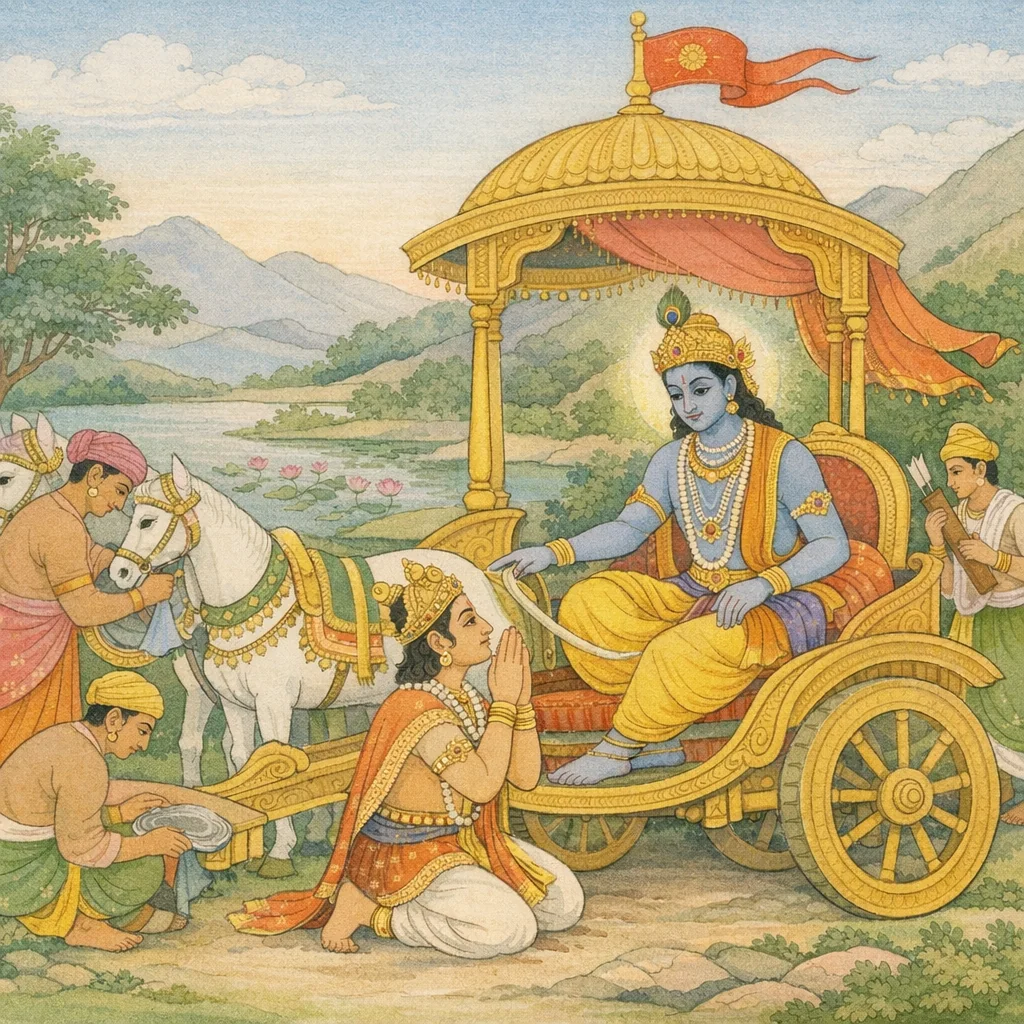
Adhyaya 52
Kṛṣṇa’s Departure, Auspicious Omens, and the Opening of the Uttaṅka Dialogue (कृष्णप्रयाण-निमित्त-उत्तङ्कसंवाद-प्रारम्भः)
Upa-parva: Uttaṅka–Kṛṣṇa Saṃvāda (Encounter with Ṛṣi Uttaṅka) — Āśvamedhika Parva episode
Vaiśaṃpāyana describes the farewell scene as the Pāṇḍavas and companions repeatedly embrace Kṛṣṇa (Vārṣṇeya, Madhusūdana) and watch him depart for Dvārakā, with Arjuna (Phalguna) struggling to withdraw his gaze. The narration then shifts to prodigious travel-omens: a strong wind clears the road of dust and obstacles, and Indra (Vāsava) sends pure, fragrant water and divine flowers before Kṛṣṇa’s chariot. In the Marudhanva plains Kṛṣṇa encounters the powerful sage Uttaṅka; mutual honors are exchanged and Uttaṅka begins a structured interrogation about whether Kṛṣṇa secured stable fraternity among Kuru and Pāṇḍava kin and ensured welfare for rulers in their realms. Kṛṣṇa replies that he exerted effort toward concord but those inclined to adharma could not be reconciled; the Kauravas disregarded counsel (including Bhīṣma and Vidura) and met destruction, leaving the five Pāṇḍavas alive amid grievous losses. Uttaṅka reacts with anger, threatening a curse on the grounds that Kṛṣṇa, though able, did not prevent the calamity. Kṛṣṇa requests careful hearing, offering an adhyātma-oriented explanation and urging the ascetic not to waste hard-won tapas, emphasizing both the sage’s spiritual capital and the limits of overcoming diṣṭa by force or intellect.
Chapter Arc: युद्धोत्तर शान्ति के बीच अर्जुन अपने सेवकों को रथ सज्जित करने की आज्ञा देता है—उद्देश्य है श्रीकृष्ण के साथ गजसाह्वय (हस्तिनापुर) पहुँचना और वहाँ सब बड़ों से मिलकर युधिष्ठिर की आज्ञा लेना। → मार्ग में और रथ पर बैठे-बैठे अर्जुन का मन कृतज्ञता और विस्मय से भर उठता है; वह वासुदेव से पुनः संवाद करता है और उन्हें समस्त जगत् का आधार, स्थावर-जंगम का नियन्ता, तथा चतुर्विध भूतसमूह का विकर्ता कहकर उनकी सर्वव्यापकता का स्तवन करता है—मानव-कर्तृत्व और दैवी-व्यवस्था के बीच का तनाव उभरता है। → हस्तिनापुर पहुँचकर माधव का अर्जुन-गृह में यथोचित पूजन होता है; फिर अर्जुन (कपिध्वज), सात्यकि, द्रौपदी के पुत्र, विदुर और भीम आदि उनके पीछे-पीछे चलते हुए राजसभा/अन्तःपुर के वरिष्ठों के सम्मुख उपस्थित होते हैं—और धृतराष्ट्र के चरण-स्पर्श द्वारा युद्ध के बाद भी मर्यादा का सर्वोच्च क्षण रचते हैं। → विदुर से कुशल-मंगल, वृद्ध नरेश के पास उपवेशन, और समस्त जनों से मिलन द्वारा यात्रा का उद्देश्य सिद्ध होता है; आगे द्वारका-प्रस्थान हेतु युधिष्ठिर की आज्ञा लेने की भूमिका बनती है। → युधिष्ठिर की आज्ञा और आगे की यात्रा (सुभद्रा सहित द्वारका-गमन) की औपचारिकता अभी शेष है—हस्तिनापुर में यह मिलन आगे किन निर्णयों में परिणत होगा?
Shlokas
Verse 1
ऑपन--माजल बछ। अकाल द्विपञज्चाशत्तमोड ध्याय: श्रीकृष्णका अर्जुनके साथ हस्तिनापुर जाना और वहाँ सबसे मिलकर युधिष्ठिरकी आज्ञा ले सुभद्राके साथ द्वारकाको प्रस्थान करना वैशम्पायन उवाच ततो<5भ्यनोदयत् कृष्णो युज्यतामिति दारुकम् | मुहूर्तादिव चाचष्ट युक्तमित्येव दारुक:,वैशम्पायनजी कहते हैं--राजन्! तदनन्तर भगवान् श्रीकृष्णने दारुकको आज्ञा दी कि “रथ जोतकर तैयार करो।” दारुकने दो ही घड़ीमें लौटकर सूचना दी कि 'रथ जुत गया”
Vaiśampāyana said: “Then Kṛṣṇa instructed Dāruka, ‘Have the chariot yoked and made ready.’ In what seemed like only a brief moment, Dāruka returned and reported, ‘It is yoked and ready.’” The scene underscores disciplined readiness and prompt service—an ethic of responsible action carried out without delay or display.
Verse 2
तथैव चानुयात्रादि चोदयामास पाण्डव: । सज्जयध्वं प्रयास्थामो नगरं गजसाह्वयम्,इसी प्रकार अर्जुनने भी अपने सेवकोंको आदेश दिया कि “सब लोग रथको सुसज्जित करो। अब हमें हस्तिनापुरकी यात्रा करनी है”
Vaiśampāyana said: In the same manner, the Pāṇḍava (Arjuna) also issued instructions for the arrangements of the onward journey and related preparations, saying, “Make everything ready; let us set out now for the city called Gajasāhvaya (Hastināpura).” The verse underscores orderly conduct and responsible leadership—ensuring proper preparation before travel and public action.
Verse 3
इत्युक्ता: सैनिकास्ते तु सज्जी भूता विशाम्पते । आचख्यु: सज्जमित्येवं पार्थायामिततेजसे
Vaiśampāyana said: Thus addressed, those soldiers, O lord of the people, having made themselves ready, reported to Pārtha of immeasurable splendor, saying, “We are prepared.”
Verse 4
प्रजानाथ! आज्ञा पाते ही सम्पूर्ण सैनिक तैयार हो गये और महान् तेजस्वी अर्जुनके पास जाकर बोले--'रथ सुसज्जित है और यात्राकी सारी तैयारी हो गयी” ।। ततस्तौ रथमास्थाय प्रयातौ कृष्णपाण्डवौ | विकुर्वाणौ कथाश्षित्रा: प्रीयमाणौ विशाम्पते,राजन! तदनन्तर भगवान् श्रीकृष्ण और अर्जुन रथपर बैठकर आपसमें तरह-तरहकी विचित्र बातें करते हुए प्रसन्नतापूर्वक वहाँसे चल दिये
Vaiśaṃpāyana said: Then Kṛṣṇa and the Pāṇḍava (Arjuna) mounted the chariot and set out, O lord of men. As they went, they spoke to one another in many varied and striking ways, delighting in their conversation. Thus, O King, after the preparations were complete, the blessed Śrī Kṛṣṇa and Arjuna departed joyfully from that place—an image of purposeful action guided by friendship, counsel, and disciplined readiness.
Verse 5
रथस्थं तु महातेजा वासुदेवं धनंजय: । पुनरेवाब्रवीद् वाक्यमिदं भरतसत्तम,भरतभूषण! रथपर बैठे हुए भगवान् श्रीकृष्णसे पुनः इस प्रकार महातेजस्वी अर्जुन बोले--
Then the radiant Arjuna (Dhanaṃjaya), seeing Vāsudeva seated upon the chariot, once again addressed him with these words—O best of the Bharatas, O ornament of the Bharata race. The narrative frames Arjuna’s renewed inquiry as respectful and ethically charged: he turns again to Kṛṣṇa as charioteer and guide, seeking clarity on right conduct after the great war.
Verse 6
त्वत्प्रसादाज्जय: प्राप्तो राज्ञा वृष्णिकुलोद्वह । नियताः शत्रवश्चापि प्राप्त राज्यमकण्टकम्,*वृष्णिकुलधुरन्धर श्रीकृष्ण! आपकी कृपासे ही राजा युधिष्ठिरको विजय प्राप्त हुई है। उनके शत्रुओंका दमन हो गया और उन्हें निष्कण्टक राज्य मिला
Vaiśampāyana said: “O foremost bearer of the Vṛṣṇi lineage! By your grace the king has attained victory. His enemies have been subdued, and he has obtained a kingdom free from thorns—untroubled by hostile obstruction.”
Verse 7
नाथवन्तश्न भवता पाण्डवा मधुसूदन । भवन्तं प्लवमासाद्य तीर्णा: सम कुरुसागरम्,“मधुसूदन! हम सभी पाण्डव आपसे सनाथ हैं, आपको ही नौकारूप पाकर हमलोग कौरवसेनारूपी समुद्रसे पार हुए हैं
Vaiśampāyana said: “O Madhusūdana, we Pāṇḍavas are not without refuge, for you are our protector. Having reached you as our ferry-boat, we have crossed the ocean of the Kurus.” The statement frames Kṛṣṇa not merely as an ally in war but as the sustaining guide whose counsel and presence enable the righteous to pass through overwhelming conflict and moral peril.
Verse 8
विश्वकर्मन् नमस्ते>स्तु विश्वात्मन् विश्वसत्तम । तथा त्वामभिजानामि यथा चाहं भवन्मत:,विश्वकर्मन! आपको नमस्कार है। विश्वात्मन! आप सम्पूर्ण विश्वमें सबसे श्रेष्ठ हैं। मैं आपको उसी तरह जानता हूँ, जिस तरह आप मुझे समझते हैं
Vaiśampāyana said: “O Viśvakarman, I bow to you. O Soul of the universe, best among all that exists— I recognize you truly, just as you, in your own understanding, know me.” The utterance frames a reverent recognition of a cosmic artisan-principle: knowledge is not merely intellectual but relational, grounded in humility and the acknowledgement of a higher, all-pervading order.
Verse 9
त्वत्तेज: सम्भवो नित्यं भूतात्मा मधुसूदन । रति: क्रीडामयी तुभ्यं माया ते रोदसी विभो,“मधुसूदन! आपके ही तेजसे सदा सम्पूर्ण भूतोंकी उत्पत्ति होती है। आप ही सब प्राणियोंके आत्मा हैं। प्रभो! नाना प्रकारकी लीलाएँ आपकी रति (मनोरंजन) हैं। आकाश और पृथिवी आपकी माया है
Verse 10
त्वयि सर्वमिदं विश्व यदिदं स्थाणु जड़मम् । त्वं हि सर्व विकुरुषे भूतग्रामं चतुर्विधम्,“यह जो स्थावर-जंगमरूप जगत् है, सब आपटीमें प्रतिष्ठित है। आप ही चार प्रकारके समस्त प्राणिसमुदायकी सृष्टि करते हैं
Vaiśampāyana said: “In you is established this entire universe—everything that is immovable and inert. Indeed, you alone fashion all of it, bringing forth the fourfold community of living beings.”
Verse 11
पृथिवीं चान्तरिक्षं च द्यां चैव मधुसूदन । हसित॑ ते5मला ज्योत्स्ना ऋतवश्चेन्द्रियाणि ते,“मधुसूदन! पृथ्वी, अन्तरिक्ष और आकाशकी सृष्टि भी आपने ही की है। निर्मल चाँदनी आपका हास्य है और ऋतुएँ आपकी इन्द्रियाँ हैं
Vaiśaṃpāyana said: “O Madhusūdana, you yourself have brought forth the earth, the mid-region, and the heavens. The stainless moonlight is your smile, and the seasons are your very senses.”
Verse 12
प्राणो वायु: सततग: क्रोधो मृत्यु: सनातन: । प्रसादे चापि पद्मा श्रीर्नित्यं त्वयि महामते,“सदा चलनेवाली वायु प्राण है, क्रोध सनातन मृत्यु है। महामते! आपके प्रसादमें लक्ष्मी विराजमान हैं। आपके वक्ष:स्थलमें सदा ही श्रीजीका निवास है
Vaiśampāyana said: “Prāṇa is the ever-moving wind; anger is death, eternal in its destructive power. O great-minded one, through your gracious favor Lakṣmī abides—Śrī, the lotus-born prosperity, dwells in you continually.”
Verse 13
रतिस्तुष्टिर्धृति: क्षान्तिर्मति: कान्तिश्चराचरम् | त्वमेवेह युगान्तेषु निधन प्रोच्यसेडनघ,“अनघ! आपमें ही रति, तुष्टि, धृति, क्षान्ति, मति, कान्ति और चराचर जगत् है। आप ही युगान्तकालमें प्रलय कहे जाते हैं
Vaiśampāyana said: “In you alone abide delight, contentment, steadfastness, forbearance, understanding, and radiance—indeed the whole moving and unmoving universe. And at the endings of the ages, you yourself are spoken of here as ‘dissolution’ (the power that brings all things to their end), O sinless one.”
Verse 14
सुदीर्घेणापि कालेन न ते शक््या गुणा मया । आत्मा च परमात्मा च नमस्ते नलिनेक्षण,“दीर्घकालतक गणना करनेपर भी आपके गुणोंका पार पाना असम्भव है। आप ही आत्मा और परमात्मा हैं। कमलनयन! आपको नमस्कार है
Even if I were to reckon for a very long time, I would still be unable to reach the end of your virtues. You are both the individual Self and the Supreme Self. O lotus-eyed one, I bow to you.
Verse 15
विदितो मे सुदुर्धर्ष नारदाद् देवलातू् तथा । कृष्णद्वैपायनाच्चैव तथा कुरुपितामहात्,“दुर्धर्ष परमेश्वर! मैंने देवर्षि नारद, देवल, श्रीकृष्णद्वैपायन तथा पितामह भीष्मके मुखसे आपके माहात्म्यका ज्ञान प्राप्त किया है
Vaiśampāyana said: “O invincible one, I have come to know your greatness from the divine sage Nārada, from Devala, from Kṛṣṇa Dvaipāyana (Vyāsa), and also from the grandsire of the Kurus (Bhīṣma).”
Verse 16
त्वयि सर्व समासक्तं त्वमेवैको जनेश्वर: । यच्चानुग्रहसंयुक्तमेतदुक्तं त्वयानघ
Vaiśampāyana said: “All things are wholly dependent upon you; you alone are the sovereign Lord of beings. And whatever has been spoken by you—O sinless one—has been uttered with gracious favor (for the good of others).”
Verse 17
इदं चाद्भुतमत्यन्तं कृतमस्मत्प्रियेप्सपा
And this, too, is an exceedingly wondrous deed—done by one intent on winning what is dear to us (our favor and affection).
Verse 18
त्वया दग्धं हि तत्सैन्यं मया विजितमाहवे
Vaiśampāyana said: “Indeed, that army was burned by you; and it was conquered by me in battle.” The line contrasts two modes of victory—destruction by fiery power and triumph through martial conquest—highlighting responsibility for the outcome of war and the moral weight carried by those who wield overwhelming force.
Verse 19
भवता तत्कृतं कर्म येनावाप्तो जयो मया । 'शत्रुकी सेनाको आपने ही अपने तेजसे दग्ध कर दिया था। तभी मैंने युद्धमें उसपर विजय पायी है। आपने ही ऐसे-ऐसे उपाय किये हैं, जिनसे मुझे विजय सुलभ हुई है ।। १८ हे || दुर्योधनस्य संग्रामे तव बुद्धिपराक्रमै:,'संग्राममें आपकी ही बुद्धि और पराक्रमसे दुर्योधन, कर्ण, पापी सिन्धुराज जयद्रथ तथा भूरिश्रवाके वधका उपाय मुझे यथावत् रूपसे दृष्टिगोचर हुआ
Vaiśampāyana said: “It was through what you accomplished that victory came to me. You yourself, by your own splendor, had as it were burned up the enemy’s host; therefore I won the battle over them. You devised such means that my triumph became easy. In the war against Duryodhana, it was by your intelligence and valor that the proper strategy for the slaying of Duryodhana, Karṇa, the sinful Sindhu-king Jayadratha, and Bhūriśravas became clearly evident to me.”
Verse 20
कर्णस्य च वधोपायो यथावत् सम्प्रदर्शित: । सैन्धवस्य च पापस्य भूरिश्रवस एव च,'संग्राममें आपकी ही बुद्धि और पराक्रमसे दुर्योधन, कर्ण, पापी सिन्धुराज जयद्रथ तथा भूरिश्रवाके वधका उपाय मुझे यथावत् रूपसे दृष्टिगोचर हुआ
Vaiśampāyana said: “The proper means for the slaying of Karṇa was clearly shown, and likewise (the means) for the destruction of the sinful Saindhava (Jayadratha) and of Bhūriśravas as well.”
Verse 21
अहं च प्रीयमाणेन त्वया देवकिनन्दन । यदुक्तस्तत् करिष्यामि न हि मे5त्र विचारणा,“देवकीनन्दन! आपने प्रेमपूर्वक प्रसन्नताके साथ मुझे जो कार्य करनेके लिये कहा है, उसे अवश्य करूँगा; इसमें मुझे कुछ भी विचार नहीं करना है
Vaiśampāyana said: “O son of Devakī, since you have addressed me with affectionate goodwill, I will certainly do exactly what you have asked. In this matter, I have no need to deliberate.”
Verse 22
राजानं च समासाद्य धर्मात्मानं युधिष्ठिरम् । चोदयिष्यामि धर्मज्ञ गमनार्थ तवानघ,बलदेवं च दुर्धर्ष तथान्यान् वृष्णिपुड़वान् | “धर्मज्ञ एवं निष्पाप भगवान् जनार्दन! मैं धर्मात्मा राजा युधिष्ठिके पास चलकर उनसे आपके जानेके लिये आज्ञा प्रदान करनेका अनुरोध करूँगा। इस समय आपका द्वारका जाना आवश्यक है, इसमें मेरी भी सम्मति है। अब आप शीघ्र ही मामाजीका दर्शन करेंगे और दुर्जय वीर बलदेवजी तथा अन्यान्य वृष्णिवंशी वीरोंसे मिल सकेंगे”
Vaiśampāyana said: “Approaching the righteous king Yudhiṣṭhira, I shall urge him—O knower of dharma, O sinless one—to grant permission for your departure. You will also meet the unconquerable Baladeva and the other heroes among the Vṛṣṇis and the Pāṇḍavas.” The passage frames the journey as one that must proceed in accordance with dharma: even a necessary departure is to be undertaken with proper consent and respect for rightful authority.
Verse 23
रुचितं हि ममैतत्ते द्वारकागमनं प्रभो | अचिरादेव द्रष्टा त्वं मातुलं मे जनार्दन
Vaiśampāyana said: “O Lord, this plan of yours—to go to Dvārakā—truly pleases me. Before long, O Janārdana, you will indeed see my maternal uncle.”
Verse 24
एवं सम्भाषमाणोौ तौ प्राप्ती वारणसाह्दयम्
Thus, as the two of them continued their conversation, they arrived at Vāraṇasāhṛdaya. The narration highlights a transition from dialogue to action, suggesting that counsel and mutual understanding are meant to culminate in purposeful movement along the path of duty.
Verse 25
तौ गत्वा धृतराष्ट्रस्य गृहं शक्रगूहोपमम्,महाराज! इन्द्रभवनके समान शोभा पानेवाले धृतराष्ट्रके महलमें उन दोनोंने राजा धृतराष्ट्र, महाबुद्धिमान् विदुर और राजा युधिष्ठिरका दर्शन किया
Vaiśampāyana said: O great king, those two went to Dhṛtarāṣṭra’s residence—splendid like Indra’s own abode. There, in that palace whose radiance rivaled the celestial mansion, they paid their respects and beheld King Dhṛtarāṣṭra, the profoundly wise Vidura, and King Yudhiṣṭhira. The scene underscores the ethic of honoring elders and counselors, and the restoration of orderly conduct after turmoil.
Verse 26
ददृशाते महाराज धृतराष्ट्रं जनेश्वरम् । विदुरं च महाबुद्धिं राजानं च युधिष्ठिरम्,महाराज! इन्द्रभवनके समान शोभा पानेवाले धृतराष्ट्रके महलमें उन दोनोंने राजा धृतराष्ट्र, महाबुद्धिमान् विदुर और राजा युधिष्ठिरका दर्शन किया
Vaiśampāyana said: O great king, the two of them beheld Dhṛtarāṣṭra, lord among men, and also Vidura of great intelligence, and King Yudhiṣṭhira. In Dhṛtarāṣṭra’s palace—resplendent like the mansion of Indra—they obtained an audience of King Dhṛtarāṣṭra, the wise Vidura, and King Yudhiṣṭhira. The scene underscores the restoration of order after conflict: rightful authority is approached with reverence, and wisdom (Vidura) stands beside power, guiding conduct in accordance with dharma.
Verse 27
भीमसेन च दुर्थर्ष माद्रीपुत्रो च पाण्डवौ । धृतराष्ट्रमुपासीनं युयुत्सुं चापराजितम्
Vaiśampāyana said: Bhīmasena, the formidable one, and the Pāṇḍava who was Mādrī’s son as well, were in attendance upon Dhṛtarāṣṭra; and Yuyutsu too—unconquered in spirit—was present. The scene underscores the post-war ethic of service and restraint: even after victory, the Pāṇḍavas maintain respectful attendance toward the elder of the Kuru house, sustaining social order and dharma through humility and care.
Verse 28
गान्धारीं च महाप्रज्ञां पृथां कृष्णां च भामिनीम् । सुभद्राद्याश्न ता: सर्वा भरतानां स्त्रियस्तथा
Vaiśampāyana said: He also addressed Gandhārī, the greatly wise; Pṛthā (Kuntī); and Kṛṣṇā (Draupadī), the noble lady. Likewise, Subhadrā and all the other women of the Bharata lineage were (also addressed/assembled) there—honoured together in that solemn context.
Verse 29
ददृशाते स्त्रिय: सर्वा गान्धारीपरिचारिका: । फिर क्रमश: दुर्जय वीर भीमसेन, माद्रीनन्दन पाण्डुपुत्र नकुल-सहदेव, धृतराष्ट्रकी सेवामें लगे रहनेवाले अपराजित वीर युयुत्सु, परम बुद्धिमती गान्धारी, कुन्ती, भार्या द्रौपदी तथा सुभद्रा आदि भरतवंशकी सभी स्त्रियोंसे मिले। गान्धारीकी सेवामें रहनेवाली उन सभी स्त्रियोंका उन दोनोंने दर्शन किया || २७-२८ $ ।। ततः समेत्य राजानं धृतराष्ट्रमरिंदमौ,भीमस्य च महात्मानौ तथा पादावगृह्नताम् । सबसे पहले उन शत्रुदमन वीरोंने राजा धृतराष्ट्रके पास जाकर अपने नाम बताते हुए उनके दोनों चरणोंका स्पर्श किया। उसके बाद उन महात्माओंने गान्धारी, कुन्ती, धर्मराज युधिष्ठिर और भीमसेनके पैर छूये
Vaiśampāyana said: The two heroes beheld all the women who attended upon Gāndhārī. Then, approaching King Dhṛtarāṣṭra, those two subduers of foes respectfully took hold of his feet; and likewise they paid reverence at the feet of the noble Bhīma as well. The scene underscores the post-war ethic of humility and proper conduct—honouring elders and guardians of the Kuru house even amid grief and the aftermath of conflict.
Verse 30
निवेद्य नामधेये स्वे तस्य पादावगृह्नताम् | गान्धार्याश्च पृथायाश्व धर्मराजस्य चैव हि
Having announced their own names, they proceeded to clasp his feet in reverence—those of Gāndhārī, of Pṛthā (Kuntī), and of Dharmarāja (Yudhiṣṭhira) as well. The scene underscores the ethical weight of humility and proper conduct: even amid the aftermath of conflict, one establishes right relationship through truthful self-identification and respectful salutation to elders and rightful authorities.
Verse 31
क्षत्तारं चापि संगृहा पृष्टत्वा कुशलमव्ययम्
Vaiśampāyana said: Having also taken hold of (approached) the chamberlain, he inquired after his enduring welfare—asking whether all was well and unharmed. The line reflects the dharmic courtesy of first ensuring another’s well-being before proceeding to one’s own business.
Verse 32
ततो निशि महाराजो धृतराष्ट्र: कुरूद्वहान्,रात हो जानेपर मेधावी महाराज धृतराष्ट्रने उन कुरुश्रेष्ठ वीरों तथा भगवान् श्रीकृष्णको अपने-अपने घरमें जानेके लिये विदा किया। राजाकी आज्ञा पाकर वे सब लोग अपने-अपने घरको गये
Then, in the night, King Dhṛtarāṣṭra dismissed the foremost of the Kurus. Having received the king’s leave, all of them—along with Bhagavān Śrī Kṛṣṇa—departed to their respective homes. The scene underscores royal propriety and restraint: even after great upheavals, social order is maintained through formal permission, respectful departure, and adherence to duty.
Verse 33
जनार्दनं च मेधावी व्यसर्जयत वै गृहान् । तेडनुज्ञाता नृपतिना ययु: स्वं स्वं निवेशनम्,रात हो जानेपर मेधावी महाराज धृतराष्ट्रने उन कुरुश्रेष्ठ वीरों तथा भगवान् श्रीकृष्णको अपने-अपने घरमें जानेके लिये विदा किया। राजाकी आज्ञा पाकर वे सब लोग अपने-अपने घरको गये
Vaiśampāyana said: The wise king dismissed Janārdana (Śrī Kṛṣṇa) and the others to their homes. Having received the king’s permission, they departed, each returning to his own residence—an act that underscores royal propriety, respect for guests, and the orderly restoration of life after great events.
Verse 34
धनंजयगृहानेव ययौ कृष्णस्तु वीर्यवान् । तत्रार्चितो यथान्यायं सर्वकामैरुपस्थित:,पराक्रमी भगवान् श्रीकृष्ण अर्जुनके ही घरमें गये। वहाँ उनकी यथोचित पूजा हुई और सम्पूर्ण अभीष्ट पदार्थ उनकी सेवामें उपस्थित किये गये
Vaiśaṃpāyana said: The mighty Kṛṣṇa went straight to Dhanañjaya’s (Arjuna’s) house. There he was honored in the proper manner, and every desired provision and service was duly placed at his disposal—an enactment of righteous hospitality and reverence toward the divine guest.
Verse 35
कृष्ण: सुष्वाप मेधावी धनंजयसहायवान् | प्रभातायां तु शर्वर्या कृत्वा पौर्वाह्निकीं क्रियाम्,भोजनके पश्चात् मेधावी श्रीकृष्ण अर्जुनके साथ सोये। जब रात बीती और प्रात:काल हुआ, तब पूर्वाह्लकालकी क्रिया--संध्या-वन्दन आदि करके वे दोनों परम पूजित मित्र धर्मराज युधिष्ठिरके महलमें गये। जहाँ महाबली धर्मराज अपने मन्त्रियोंक साथ रहते थे
Vaiśampāyana said: The wise Kṛṣṇa, accompanied by Dhanañjaya (Arjuna), slept. When the night had passed and morning came, after performing the prescribed morning rites and then taking food, the two revered friends proceeded to the palace of Dharmarāja Yudhiṣṭhira, where the mighty king dwelt together with his ministers. The passage underscores disciplined daily conduct—ritual duty, restraint, and respectful approach to rightful authority—even among the greatest heroes.
Verse 36
धर्मराजस्य भवनं जम्मतु: परमार्चितौ । यत्रास्ते स सहामात्यो धर्मराजो महाबल:,भोजनके पश्चात् मेधावी श्रीकृष्ण अर्जुनके साथ सोये। जब रात बीती और प्रात:काल हुआ, तब पूर्वाह्लकालकी क्रिया--संध्या-वन्दन आदि करके वे दोनों परम पूजित मित्र धर्मराज युधिष्ठिरके महलमें गये। जहाँ महाबली धर्मराज अपने मन्त्रियोंक साथ रहते थे
Vaiśampāyana said: The two highly honoured ones proceeded to the residence of King Dharma (Yudhiṣṭhira), where that mighty upholder of dharma dwelt together with his ministers. The scene underscores the courtly order of righteous kingship: honoured friends approach the king’s household in a setting marked by counsel, governance, and propriety.
Verse 37
तौ प्रविश्य महात्मानौ तद् गृहं परमार्चितम् । धर्मराजं ददृशतुर्देवराजमिवाश्चिनौ,उस परम सुन्दर एवं सुसज्जित भवनमें प्रवेश करके उन महात्माओंने धर्मराज युधिष्ठिरका दर्शन किया। मानो दोनों अश्विनीकुमार देवराज इन्द्रसे आकर मिले हों
Having entered that exquisitely honored and well-appointed residence, the two great-souled ones beheld Dharmarāja Yudhiṣṭhira—just as the twin Aśvins might come and meet the king of the gods, Indra. The scene underscores Yudhiṣṭhira’s restored royal dignity after the war and frames the visitors’ approach as reverent, auspicious, and ethically aligned with dharma.
Verse 38
समासाद्य तु राजानं वार्ष्णेयकुरुपुड़वी । निषीदतुरनुज्ञातौ प्रीयमाणेन तेन तौ,श्रीकृष्ण और अर्जुन जब राजाके पास पहुँचे, तब उन्हें देख उनको बड़ी प्रसन्नता हुई। फिर उनके आज्ञा देनेपर वे दोनों मित्र आसनपर विराजमान हुए
Vaiśaṃpāyana said: When the two foremost heroes—the Vārṣṇeya (Śrī Kṛṣṇa) and the bull among the Kurus (Arjuna)—reached the king, he was greatly delighted at the sight of them. With his permission, the two friends then sat down upon the seats offered, honoring royal etiquette and mutual affection.
Verse 39
ततः स राजा मेधावी विवक्षू प्रेक्ष्य तावुभौ । प्रोवाच वदतां श्रेष्ठो वचनं राजसत्तम:,तत्पश्चात् वक्ताओंमें श्रेष्ठ भूपालशिरोमणि मेधावी युधिष्ठिरने उन्हें कुछ कहनेके लिये इच्छुक देख उनसे इस प्रकार कहा--
Then that wise king, seeing the two of them eager to speak, addressed them. The foremost among speakers—Yudhiṣṭhira, best of kings—spoke words befitting a ruler, setting the tone for what was to follow.
Verse 40
युधिष्ठिर उदाच विवक्षू हि युवां मन््ये वीरौ यदुकुरूद्वहौ । ब्रूतं कर्तास्मि सर्व वां नचिरान्मा विचार्यताम्,युधिष्ठिर बोले--यदुकुल और कुरुकुलको अलंकृत करनेवाले वीरो! मालूम होता है, तुमलोग मुझसे कुछ कहना चाहते हो। जो भी कहना हो, कहो; मैं तुम्हारी सारी इच्छाओंको शीघ्र ही पूर्ण करूँगा। तुम मनमें कुछ अन्यथा विचार न करो
Yudhiṣṭhira said: “I believe you two heroic men—ornaments of the Yadu and Kuru lineages—wish to speak to me. Say whatever you wish to say; I shall accomplish all that you desire without delay. Do not let your minds hesitate or turn to other doubts.”
Verse 41
इत्युक्त: फाल्गुनस्तत्र धर्मराजानमब्रवीत् । विनीतवदुपागम्य वाक््यं वाक्यविशारद:,उनके इस प्रकार कहनेपर बातचीत करनेमें कुशल अर्जुनने धर्मराजके पास जाकर बड़े विनीत भावसे कहा--
Vaiśaṃpāyana said: Thus addressed, Phālguna (Arjuna), skilled in measured speech, approached Dharmarāja (Yudhiṣṭhira) there and, with humble restraint, spoke to him—framing his words in a manner befitting duty and respect.
Verse 42
अयं चिरोषितो राजन् वासुदेव: प्रतापवान् | भवन्तं समनुज्ञाप्य पितरं द्रष्टमिच्छति,“राजन! परम प्रतापी वसुदेवनन्दन भगवान् श्रीकृष्णको यहाँ रहते बहुत दिन हो गया। अब ये आपकी आज्ञा लेकर अपने पिताजीका दर्शन करना चाहते हैं। यदि आप स्वीकार करें और हर्षपूर्वक आज्ञा दे दें तभी ये वीरवर श्रीकृष्ण आनर्तनगरी द्वारकाको जायूँगे। अतः आप इन्हें जानेकी आज्ञा दे दें!
Vaiśampāyana said: “O King, the mighty Vāsudeva has stayed here for a long time. Having sought your permission, he now wishes to go and see his father. Grant him leave with goodwill, so that he may depart for his own city.”
Verse 43
स गच्छेदभ्यनुज्ञातो भवता यदि मन्यसे । आनर्तनगरीं वीरस्तदनुज्ञातुमहसि,“राजन! परम प्रतापी वसुदेवनन्दन भगवान् श्रीकृष्णको यहाँ रहते बहुत दिन हो गया। अब ये आपकी आज्ञा लेकर अपने पिताजीका दर्शन करना चाहते हैं। यदि आप स्वीकार करें और हर्षपूर्वक आज्ञा दे दें तभी ये वीरवर श्रीकृष्ण आनर्तनगरी द्वारकाको जायूँगे। अतः आप इन्हें जानेकी आज्ञा दे दें!
Vaiśaṃpāyana said: “If you deem it proper, let him depart with your permission. That heroic one wishes to go to the city of the Ānartas (Dvārakā); therefore, O king, you ought to grant him leave.” The passage underscores royal propriety: even the mighty seek consent, and a ruler’s gracious permission sustains order, gratitude, and right conduct.
Verse 44
युधिषछ्िर उवाच पुण्डरीकाक्ष भद्रें ते गच्छ त्वं मधुसूदन । पुरी द्वारवतीमद्य द्रष्टं शूरसुतं प्रभो,युधिष्ठिरने कहा--कमलनयन मधुसूदन! आपका कल्याण हो। प्रभो! आप शूरनन्दन वसुदेवजीका दर्शन करनेके लिये आज ही द्वारकाको प्रस्थान कीजिये
Yudhiṣṭhira said: “O lotus-eyed Madhusūdana, may auspiciousness be yours. O Lord, go today to the city of Dvāravatī to see Śūra’s son, Vāsudeva.”
Verse 45
रोचते मे महाबाहो गमनं तव केशव । मातुलश्रिरदृष्टो मे त्वया देवी च देवकी,महाबाहु केशव! मुझे आपका जाना इसलिये ठीक लगता है कि आपने मेरे मामाजी और मामी देवकी देवीको बहुत दिनोंसे नहीं देखा है
Yudhiṣṭhira said: “O mighty-armed Keśava, your departure seems right to me. For you have not seen my maternal uncle for a long time, nor the goddess Devakī.”
Verse 46
समेत्य मातुलं गत्वा बलदेवं च मानद । पूजयेथा महाप्राज्ञ मद्वाक्येन यथा्हत:,मानद! महाप्राज्ञ! आप मामाजी तथा भैया बलदेवजीके पास जाकर उनसे मिलिये और मेरी ओरसे उनका यथायोग्य सत्कार कीजिये
Yudhiṣṭhira said: “O respectful one, go and meet my maternal uncle Baladeva. O wise one, in my name honor him with the reverence that is fitting.”
Verse 47
स्मरेथाश्षापि मां नित्यं भीमं च बलिनां वरम् | फाल्गुनं सहदेवं च नकुलं चैव मानद,भक्तोंको मान देनेवाले श्रीकृष्ण! द्वारकामें पहुँचकर आप मुझको, बलवानोंमें श्रेष्ठ भीमसेनको, अर्जुन, सहदेव और नकुलको भी सदा याद रखियेगा
Yudhiṣṭhira said: “O Kṛṣṇa, bestower of honor upon your devotees—when you reach Dvārakā, please remember always me as well, and Bhīma, the foremost among the strong; and also Phālguna (Arjuna), Sahadeva, and Nakula.”
Verse 48
आनर्तानवलोक्य त्वं पितरं च महाभुज । वृष्णींश्ष॒ पुनरागच्छेहयमेधे ममानघ,महाबाहु निष्पाप श्रीकृष्ण! आनर्त देशकी प्रजा, अपने माता-पिता तथा वृष्णिवंशी बन्धु-बान्धवोंसे मिलकर पुनः मेरे अश्वमेध यज्ञमें पधारियेगा
Yudhiṣṭhira said: “O mighty-armed one, after you have visited the people of Ānarta, and seen your parents and the Vṛṣṇis, return here again, O sinless one, to my Aśvamedha sacrifice. O strong-armed, faultless Śrī Kṛṣṇa—having met the subjects of the Ānarta land, your mother and father, and your kinsmen of the Vṛṣṇi line, come back once more to my Aśvamedha rite.”
Verse 49
स गच्छ रत्नान्यादाय विविधानि वसूनि च । यच्चाप्यन्यन्मनोज्ञं ते तदप्यादत्स्व सात्वत,यदुनन्दन केशव! ये तरह-तरहके रत्न और धन प्रस्तुत हैं। इन्हें तथा दूसरी-दूसरी वस्तुएँ जो आपको पसंद हों लेकर यात्रा कीजिये। वीरवर! आपके प्रसादसे ही इस सम्पूर्ण भूमण्डलका राज्य हमारे हाथमें आया है और हमारे शत्रु भी मारे गये
Yudhiṣṭhira said: “Go forth, taking with you the many kinds of jewels and treasures. And whatever else is pleasing to you—take that as well, O Sātvata, O Keśava, delight of the Yadus. By your grace alone we have obtained sovereignty over this entire earth, and our enemies have been slain.”
Verse 50
इयं च वसुधा कृत्स्ना प्रसादात् तव केशव । अस्मानुपगता वीर निहताश्चापि शत्रव:,यदुनन्दन केशव! ये तरह-तरहके रत्न और धन प्रस्तुत हैं। इन्हें तथा दूसरी-दूसरी वस्तुएँ जो आपको पसंद हों लेकर यात्रा कीजिये। वीरवर! आपके प्रसादसे ही इस सम्पूर्ण भूमण्डलका राज्य हमारे हाथमें आया है और हमारे शत्रु भी मारे गये
Yudhiṣṭhira said: “O Keśava, by your gracious favor this entire earth has come under our rule, O hero; and our enemies too have been slain. Therefore, O Kṛṣṇa, delight of the Yadus—accept these many kinds of jewels and wealth that are being offered, and take also whatever other things you may desire as you proceed on your journey.”
Verse 51
इस प्रकार श्रीमह्याभारत आश्वमेधिकपर्वके अन्तर्गत अनुगीतापर्वमें गुरुशिष्यसंवादाविषयक इकक््यावनवाँ अध्याय पूरा हुआ,एवं ब्रुवति कौरव्ये धर्मराजे युधिष्छिरे । वासुदेवो वर: पुंसामिदं वचनमब्रवीत् कुरुनन्दन धर्मराज युधिष्ठिर जब इस प्रकार कह रहे थे, उसी समय पुरुषोत्तम वसुदेवनन्दन भगवान् श्रीकृष्णने उनसे यह बात कही--
As Dharmarāja Yudhiṣṭhira of the Kuru line was speaking in this manner, Vāsudeva—supreme among men—addressed him with these words. The narrative turns from the disciple’s discourse to the teacher’s reply, signaling a shift toward guidance grounded in dharma and right conduct.
Verse 52
तवैव रत्नानि धनं च केवलं धरा तु कृत्स्ना तु महाभुजाद्य वै | यदस्ति चान्यद् द्रविणं गृहे मम त्वमेव तस्येश्चर नित्यमी श्चर:,“महाबाहो! ये रत्न, धन और समूची पृथ्वी अब केवल आपकी ही है। इतना ही नहीं, मेरे घरमें भी जो कुछ धन-वैभव है, उसको भी आप अपना ही समझिये। नरेश्वर! आप ही सदा उसके भी स्वामी हैं! इति श्रीमहा भारते आश्वमेधिके पर्वणि अनुगीतापर्वणि कृष्णप्रयाणे द्विपज्चाशत्तमो<डध्याय:
Yudhiṣṭhira said: “All these jewels and this wealth are yours alone; indeed, the entire earth, O mighty-armed one, is yours. And whatever other riches there are in my house—consider them yours as well. O king, you are ever the rightful lord of that too.”
Verse 53
तथेत्यथोक्तः प्रतिपूजितस्तदा गदाग्रजो धर्मसुतेन वीर्यवान् । पितृष्वसारं त्ववदद् यथाविधि सम्पूजितश्नाप्यगमत् प्रदक्षिणम्,उनके ऐसा कहनेपर धर्मपुत्र युधिष्ठिने जो आज्ञा कहकर उनके वचनोंका आदर किया। उनसे सम्मानित हो पराक्रमी श्रीकृष्णने अपनी बुआ कुन्तीके पास जाकर बातचीत की और उनसे यथोचित सत्कार पाकर उनकी प्रदक्षिणा की
Thus addressed, the mighty elder brother of Gada (Śrī Kṛṣṇa) replied, “So be it,” and was duly honored by Dharmasuta Yudhiṣṭhira. Then, in the proper manner, he spoke with his paternal aunt Kuntī; having been respectfully received by her as well, he circumambulated her—an act that affirms reverence for elders and the ethical order of family and dharma.
Verse 54
तया स सम्यक् प्रतिनन्दितस्तत- स्तथैव सर्वर्विदुरादिभिस्तथा । विनिर्ययौ नागपुराद् गदाग्रजो रथेन दिव्येन चतुर्भुज: स्वयम्,कुन्तीसे भलीभाँति अभिनन्दित हो विदुर आदि सब लोगोंसे सत्कारपूर्वक विदा ले चार भुजाधारी भगवान् श्रीकृष्ण अपने दिव्य रथद्वारा हस्तिनापुरसे बाहर निकले
Thus duly honoured by her, and likewise respectfully welcomed by all—Vidura and the others—Gadāgraja, the four-armed Lord Kṛṣṇa himself, departed from Nāgapura (Hastināpura) in his divine chariot, taking formal leave with due courtesy. The scene underscores the ethic of gratitude and proper farewell: even the supreme Lord accepts honour with humility and departs in a manner that preserves harmony and dharma among kin and elders.
Verse 55
रथे सुभद्रामधिरोप्य भाविनीं युधिष्ठिरस्पानुमते जनार्दन: । पितृष्वसुश्चापि तथा महाभुजो विनिर्ययौ पौरजनाभिसंवृत:,बुआ कुन्ती तथा राजा युधिष्ठिरकी आज्ञासे भाविनी सुभद्राको भी रथपर बिठाकर महाबाहु जनार्दन पुरवासियोंसे घिरे हुए नगरसे बाहर निकले
Verse 56
तमन्वयाद् वानरवर्यकेतन: ससात्यकिर्माद्रवतीसुतावपि । अगाथबुद्धिर्विदुरश्च माधवं स्वयं च भीमो गजराजविक्रम:,उस समय उन माधवके पीछे कपिध्वज अर्जुन, सात्यकि, नकुल-सहदेव, अगाधबुद्धि विदुर और गजराजके समान पराक्रमी स्वयं भीमसेन भी कुछ दूरतक पहुँचानेके लिये गये
Yudhiṣṭhira said: Following Mādhava (Kṛṣṇa) as he departed, Arjuna—whose banner bears the foremost of monkeys—along with Sātyaki, the twin sons of Mādrī (Nakula and Sahadeva), Vidura of unfathomable counsel, and Bhīma himself, mighty as the lord of elephants, went some distance to escort him. The scene underscores the Pāṇḍavas’ reverence and gratitude toward Kṛṣṇa, expressed through the dharmic courtesy of accompanying an honored guest on his way.
Verse 57
निवर्तयित्वा कुरराष्ट्रवर्धनां- सतत: स सर्वान् विदुरं च वीर्यवान् । जनार्दनो दारुकमाह सत्वर: प्रचोदयाश्चवानिति सात्यकि तथा,तदनन्तर पराक्रमी श्रीकृष्णने कौरवराज्यकी वृद्धि करनेवाले उन समस्त पाण्डवों तथा विदुरजीको लौटाकर दारुक तथा सात्यकिसे कहा--“अब घोड़ोंको जोरसे हाँको'
Having turned back those who were increasing the prosperity of the Kuru realm—namely all the Pāṇḍavas along with Vidura—the mighty Janārdana (Kṛṣṇa) quickly addressed Dāruka, and likewise Sātyaki: “Urge the horses on; drive them swiftly.” The moment underscores Kṛṣṇa’s decisive leadership: after ensuring the return of the righteous guardians of the kingdom, he hastens the journey, prioritizing timely action in service of order and duty.
Verse 58
ततो ययौ शत्रुगणप्रमर्दनः शिनिप्रवीरानुगतो जनार्दन: । यथा निहत्यारिगणं शतक्रतु- दिव॑ तथा5<नर्त पुरी प्रतापवान्,तत्पश्चात् शिनिवीर सात्यकिको साथ लिये शत्रुदलमर्दन प्रतापी श्रीकृष्ण आनर्तपुरी द्वारकाकी ओर उसी प्रकार चल दिये, जैसे प्रतापी इन्द्र अपने शत्रुसमुदायका संहार करके स्वर्गमें जा रहे हों
Then Janārdana (Śrī Kṛṣṇa), the crusher of hostile hosts, set out accompanied by the foremost heroes of the Śini line. He proceeded toward Anarta’s city (Dvārakā) with radiant prowess—just as Śatakratu (Indra), having slain the ranks of his foes, goes up to heaven. The verse frames Kṛṣṇa’s return not as mere travel, but as the dignified completion of a righteous task after the subduing of adversaries.
Verse 163
एतत् सर्वमहं सम्यगाचरिष्ये जनार्दन । “सारा जगत् आपमें ही ओत-प्रोत है। एकमात्र आप ही मनुष्योंके अधीश्वर हैं। निष्पाप जनार्दन! आपने मुझपर कृपा करके जो यह उपदेश दिया है, उसका मैं यथावत् पालन करूँगा
“All this I shall carry out rightly, O Janārdana. The whole world is woven into you alone; you alone are the sovereign Lord of humankind. Sinless Janārdana, out of compassion you have given me this instruction; I will follow it exactly as taught.”
Verse 236
बलदेवं च दुर्धर्ष तथान्यान् वृष्णिपुड़वान् | “धर्मज्ञ एवं निष्पाप भगवान् जनार्दन! मैं धर्मात्मा राजा युधिष्ठिके पास चलकर उनसे आपके जानेके लिये आज्ञा प्रदान करनेका अनुरोध करूँगा। इस समय आपका द्वारका जाना आवश्यक है, इसमें मेरी भी सम्मति है। अब आप शीघ्र ही मामाजीका दर्शन करेंगे और दुर्जय वीर बलदेवजी तथा अन्यान्य वृष्णिवंशी वीरोंसे मिल सकेंगे”
Vaiśampāyana said: “O Janārdana—knower of dharma and free from sin— I shall go to the righteous King Yudhiṣṭhira and request his permission for your departure. At this time your going to Dvārakā is necessary; I too agree. Soon you will behold your maternal uncle and meet the unconquerable hero Baladeva, along with the other valiant men of the Vṛṣṇi line.”
Verse 246
तथा विविशतुश्चोभौ सम्प्रहृष्टनराकुलम् । इस प्रकार बातचीत करते हुए वे दोनों मित्र हस्तिनापुरमें जा पहुँचे। उन दोनोंने हृष्ट-पुष्ट मनुष्योंसे भरे हुए नगरमें प्रवेश किया
Thus, while conversing in this manner, the two of them—both companions—arrived at Hastināpura and entered the city, which was crowded with men who were joyful and thriving. The scene underscores a return to ordered civic life, where companionship and calm speech replace the tensions of conflict, and the well-being of the populace reflects restored stability under dharma.
Verse 306
भीमस्य च महात्मानौ तथा पादावगृह्नताम् । सबसे पहले उन शत्रुदमन वीरोंने राजा धृतराष्ट्रके पास जाकर अपने नाम बताते हुए उनके दोनों चरणोंका स्पर्श किया। उसके बाद उन महात्माओंने गान्धारी, कुन्ती, धर्मराज युधिष्ठिर और भीमसेनके पैर छूये
Vaiśampāyana said: Those noble heroes, subduers of foes, first approached King Dhṛtarāṣṭra, announced their names, and reverently touched both his feet. Thereafter, those great-souled men paid the same homage by touching the feet of Gāndhārī, Kuntī, Dharmarāja Yudhiṣṭhira, and Bhīmasena—affirming the ethical order of respect to elders and rightful authority after the devastations of war.
Verse 316
(परिष्वज्य महात्मान वैश्यापुत्रं महारथम् ।) तैः सार्थ नृपतिं वृद्ध ततस्तौ पर्युपासताम् । फिर विदुरजीसे मिलकर उनका कुशल-मंगल पूछा। इसके बाद वैश्यापुत्र महारथी महामना युयुत्सुको भी हृदयसे लगाया। तत्पश्चात् उन सबके साथ वे दोनों बूढ़े राजा धृतराष्ट्रके पास जा बैठे
Vaiśampāyana said: Having embraced the great-souled Yuyutsu—the mighty charioteer, son of a Vaiśya—those two then went together with the others to the aged king and sat near him in attendance. The scene underscores reconciliation and respectful service to elders after the devastations of war.
Verse 1736
यत्पापो निहत: संख्ये कौरव्यो धृतराष्ट्रज: । “हमलोगोंका प्रिय करनेकी इच्छासे आपने यह अत्यन्त अदभुत कार्य किया कि धृतराष्ट्रके पुत्र कुरुकुलकलंक पापी दुर्योधनको (भैया भीमके द्वारा) युद्धमें मरवा डाला
Vaiśaṃpāyana said: “That sinful Kaurava, the son of Dhṛtarāṣṭra, has been slain in battle. With the wish to do what was dear to us, you accomplished this most extraordinary deed—having the disgrace of the Kuru line, the wicked Duryodhana, killed in the war (by Bhīma).”
Frequently Asked Questions
Whether a powerful protector is ethically obligated to forcibly prevent a catastrophe among kin, or whether moral autonomy and diṣṭa constrain intervention when parties persistently reject counsel.
That effort toward dharma may be necessary yet insufficient when collective choices favor adharma, and that fate cannot be fully overridden by strength or strategy; spiritual power should be exercised with restraint and discernment.
No explicit phalaśruti appears here; instead, the chapter offers a meta-ethical framing by warning against the misuse or squandering of tapas through impulsive cursing, positioning understanding (adhyātma) as the corrective.