Adhyaya 21
Daitya–Dānava Vaṁśa, Kaśyapa’s Progeny, and the Birth of the Maruts
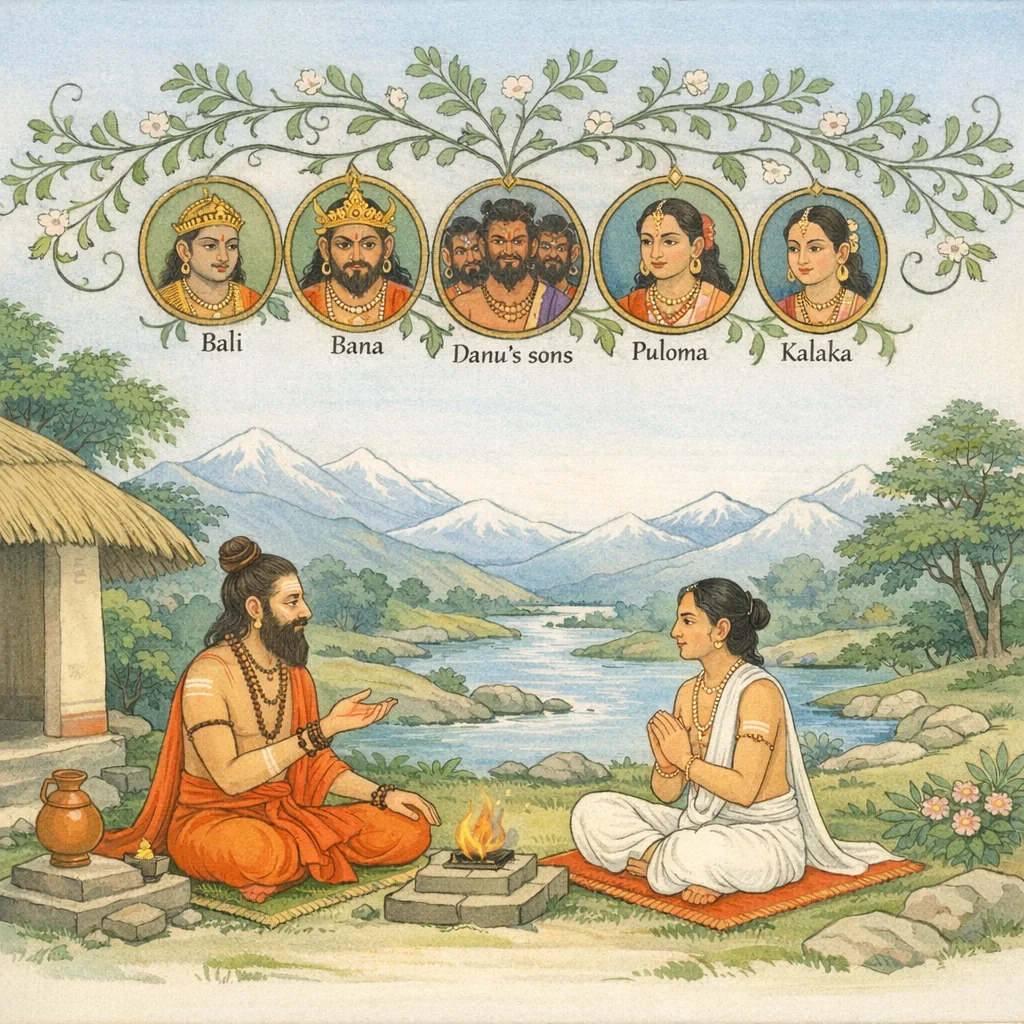
Parāśara continues teaching Maitreya by tracing Daitya and Dānava lineages: from Saṃhlāda come Āyuṣmān, Śibi, and Bāṣkala; from Prahlāda comes Virocana, and from Virocana, Bali, whose hundred sons are led by Bāṇa. He then names notable sons of Danu and other fierce beings, along with daughters and marriage ties—such as Pulomā and Kālakā as wives of Marīci—showing how the Paulomas and Kālakeyas multiplied. The account turns to Kaśyapa’s descendants through different mothers: Tāmrā’s bird and animal lines, Vinatā’s Garuḍa and Aruṇa, and Surasā and Kādrū’s serpent races with chief Nāgas like Śeṣa and Vāsuki, presented as ordered species-manifestations under cosmic dharma. Finally, Diti’s vow to obtain a son to slay Indra is told, as Indra serves her with strategy, enters her womb, and splits the foetus into forty-nine Maruts, who become Indra’s companions. The chapter situates this narrative in the Svārociṣa Manvantara and closes in the steady cadence of guru and disciple.
Shlokas
Verse 1
संह्लादपुत्र आयुष्माञ् शिबिर् बाष्कल एव च विरोचनस् तु प्राह्लादिर् बलिर् जज्ञे विरोचनात्
From Saṃhlāda were born the fortunate Āyuṣmān, along with Śibi and Bāṣkala. From Prahlāda came Virocana; from Virocana, Bali was born, the lineage continuing onward.
Verse 2
बलेः पुत्रशतं त्व् आसीद् बाणज्येष्ठं महामुने हिरण्याक्षसुताश् चासन् सर्व एव महाबलाः
O great sage, Bali had a hundred sons, and Bāṇa was the eldest among them; the sons of Hiraṇyākṣa also were all exceedingly mighty.
Verse 3
झर्झरः शकुनिश् चैव भूतसंतापनस् तथा महानाभो महाबाहुः कालनाभस् तथापरः
Jharjhara and Śakuni, Bhūta-saṃtāpana as well; then Mahānābha, Mahābāhu, and likewise Kālanābha—these too are named among them.
Verse 4
अभवन् दनुपुत्राश् च द्विमूर्धा शंकरस् तथा अयोमुखः शङ्कुशिराः कपिलः शम्बरस् तथा
Among the sons of Danu were born Dvimūrdhā and Śaṅkara; also Ayomukha, Śaṅkuśiras, Kapila, and Śambara.
Verse 5
एकचक्रो महाबाहुस् तारकश् च महाबलः स्वर्भानुर् वृषपर्वा च पुलोमा च महाबलः
Among them were Ekacakra, Mahābāhu, and Tāraka of immense might; also Svarbhānu, Vṛṣaparvan, and Pulomā—each renowned for formidable power.
Verse 6
एते दनोः सुताः ख्याता विप्रचित्तिश् च वीर्यवान्
These are proclaimed as the sons of Danu; and among them, too, Vipracitti is famed as a valiant one, endowed with great prowess.
Verse 7
स्वर्भानोस् तु प्रभा कन्या शर्मिष्ठा वार्षपर्वणी उपदानवी हयशिराः प्रख्याता वरकन्यकाः
From Svarbhānu was born a daughter named Prabhā; and there were also the renowned maidens—Śarmiṣṭhā, Vārṣaparvaṇī, Upadānavī, and Hayaśirā—celebrated as daughters of noble lineage.
Verse 8
वैश्वानरसुते चोभे पुलोमा कालका तथा उभे ते तु महाभागे मारीचेस् तु परिग्रहः
The two illustrious daughters of Vaiśvānara—Pulomā and Kālakā—both greatly blessed, became the wives of Marīci.
Verse 9
ताभ्यां पुत्रसहस्राणि षष्टिर् दानवसत्तमाः पौलोमाः कालकेयाश् च मारीचतनयाः स्मृताः
From those two were born thousands of sons; sixty of them were foremost among the Dānavas, remembered in tradition as the Paulomas and the Kālakeyas, descendants of Marīci’s line.
Verse 10
ततो ऽपरे महावीर्या दारुणास् त्व् अतिनिर्घृणाः सिंहिकायाम् अथोत्पन्ना विप्रचित्तेः सुतास् तथा
Then there arose others as well—mighty in prowess, fierce in nature, and utterly without compassion—born of Siṃhikā; and likewise there were the sons of Vipracitti.
Verse 11
त्र्यंशः शल्यश् च बलवान् नभश् चैव महाबलः वातापिर् नमुचिश् चैव इल्वलः खसृमस् तथा
Tryaṃśa, Śalya, the mighty Balavān, and Nabhas of great strength; likewise Vātāpi and Namuci, and also Ilvala—along with Khasṛma: these are the notable names enumerated here.
Verse 12
अन्धको नरकश् चैव कालनाभस् तथैव च स्वर्भानुश् च महावीर्यो वक्त्रयोधी महासुरः
Among them were Andhaka, Naraka, and likewise Kālanābha; and Svarbhānu too, of great heroism—Vaktrayodhī, that mighty Asura.
Verse 13
एते वै दानवश्रेष्ठा दनुवंशविवर्धनाः एतेषां पुत्रपौत्राश् च शतशो ऽथ सहस्रशः
These indeed were the foremost among the Dānavas, enlargers of Danu’s line; from them sons and grandsons arose in the hundreds, and then in the thousands.
Verse 14
प्रह्लादस्य तु दैत्यस्य निवातकवचाः कुले समुत्पन्नाः सुमहता तपसा भावितात्मनः
From the lineage of Prahlāda, the Daitya, were born the Nivātakavacas—souls refined and empowered through exceedingly great austerities.
Verse 15
षट् सुताः सुमहासत्त्वास् ताम्रायाः परिकीर्तिताः शुकी श्येनी च भासी च सुग्रीवी शुचिगृध्रिका
Parāśara said: Of Tāmrā, six offspring of great vitality are declared—Śukī, Śyenī, Bhāsī, Sugrīvī, and Śucigṛdhrikā.
Verse 16
शुकी शुकान् अजनयद् उलूकी प्रत्युलूककान् श्येनी श्येनांस् तथा भासी भासान् गृद्ध्रांश् च गृद्ध्र्य् अपि
Śukī gave birth to parrots; Ulūkī to the pratyulūkas (a class of owls); Śyenī to hawks; Bhāsī to bhāsas (raptor-kind); and Gṛddhrī to vultures.
Verse 17
शुच्य् औदकान् पक्षिगणान् सुग्रीवी तु व्यजायत अश्वान् उष्ट्रान् गर्दभांश् च ताम्रावंशाः प्रकीर्तिताः
From Śucī were born the hosts of birds that dwell in the waters; and from Sugrīvī came forth horses, camels, and asses. These are proclaimed as the lineages of Tāmra’s progeny—thus, within the sovereign order upheld by Viṣṇu, creation unfolds in due sequence.
Verse 18
विनतायास् तु द्वौ पुत्रौ विख्यातौ गरुडारुणौ सुपर्णः पततां श्रेष्ठो दारुणः पन्नगाशनः
Vinatā bore two renowned sons—Garuḍa and Aruṇa. Garuḍa, the Suparṇa, is foremost among all that fly, fierce in might and famed as the devourer of serpents.
Verse 19
सुरसायाः सहस्रं तु सर्पाणाम् अमितौजसाम् अनेकशिरसां ब्रह्मन् खेचराणां महात्मनाम्
O Brahmin, Surasā bore a thousand serpents—of immeasurable might—many-headed, ranging through the skies, and great-souled by nature.
Verse 20
काद्रवेयास् तु बलिनः सहस्रम् अमितौजसः सुपर्णवशगा ब्रह्मञ् जज्ञिरे नैकमस्तकाः
But, O Brahman, the mighty Kādraveyas—one thousand in number, of immeasurable power—were born under the dominion of Suparṇa (Garuḍa); and among them arose many who were not of a single head, but multi-headed.
Verse 21
तेषां प्रधानभूतास् ते शेषवासुकितक्षकाः शङ्खश्वेतो महापद्मः कम्बलाश्वतराव् उभौ
Among them, the foremost are these great Nāgas—Śeṣa, Vāsuki, and Takṣaka; and also Śaṅkha, Śveta, Mahāpadma, together with the two: Kambala and Aśvatara.
Verse 22
एलापुत्रस् तथा नागः कर्कोटकधनंजयौ एते चान्ये च बहवो दन्दशूका विषोल्बणाः
So too are Elāputra and Nāga, and Karkoṭaka and Dhanaṃjaya—these and many others besides are fierce, biting serpents, dreadful in their venom.
Verse 23
गणं क्रोधवशं विद्धि ते च सर्वे च दंष्ट्रिणः स्थलजाः पक्षिणो ऽब्जाश् च दारुणाः पिशिताशनाः
Know this class of beings to be ruled by wrath: all are fanged—whether they move upon the earth, fly as birds, or dwell in the waters—cruel and flesh-eating.
Verse 24
गास् तु वै जनयाम् आस सुरभिर् महिषीस् तथा इरावृक्षलतावल्लीस् तृणजातीश् च सर्वशः
Surabhi indeed brought forth the cattle, and likewise the buffalo-cows; and from Irā arose, in every manner, trees, creepers, climbing vines, and the whole multitude of grasses.
Verse 25
खषा तु यक्षरक्षांसि मुनिर् अप्सरसस् तथा अरिष्टा तु महासत्त्वान् गन्धर्वान् समजीजनत्
From Khaṣā were born the Yakṣas and the Rākṣasas; and from Muni came forth the Apsarases. But Ariṣṭā brought into being the mighty-souled Gandharvas.
Verse 26
एते कश्यपदायादाः कीर्तिताः स्थाणुजङ्गमाः तेषां पुत्राश् च पौत्राश् च शतशो ऽथ सहस्रशः
Thus have been recounted the descendants of Kaśyapa—those of the immovable and the moving. From them, in turn, arose sons and grandsons, not merely by tens, but by hundreds and indeed by thousands.
Verse 27
एष मन्वन्तरे सर्गो ब्रह्मन् स्वारोचिषे स्मृतः वैवस्वते च महति वारुणे वितते क्रतौ
O Brahman, this unfolding of creation is remembered as belonging to the Svārociṣa Manvantara; and it is again recounted in the great Vaivasvata age, within Varuṇa’s expansive rite, when the cosmic order is spread out in full measure.
Verse 28
जुह्वानस्य ब्रह्मणो वै प्रजासर्ग इहोच्यते पूर्वं यत्र तु सप्तर्षीन् उत्पन्नान् सप्त मानसान्
Here is described the begetting of beings by Brahmā as he offered oblations; and first in that account are spoken of the seven Ṛṣis—seven mind-born sages who arose from his thought.
Verse 29
पुत्रत्वे कल्पयाम् आस स्वयम् एव पितामहः गन्धर्वभोगिदेवानां दानवानां च सत्तम
O best of men, the Grandsire Pitāmaha (Brahmā) himself appointed them as sons—progenitors for the Gandharvas, the Bhogins (serpent races), the Devas, and the Dānavas.
Verse 30
दितिर् विनष्टपुत्रा वै तोषयाम् आस कश्यपम् तया चाराधितः सम्यक् कश्यपस् तपतां वरः
Diti, bereft of her sons, set herself to pleasing Kaśyapa. By her devoted service and earnest worship, Kaśyapa—the foremost among ascetics—was fully propitiated.
Verse 31
वरेण छन्दयाम् आस सा च वव्रे ततो वरम् पुत्रम् इन्द्रवधार्थाय समर्थम् अमितौजसम्
He sought her assent by offering a boon; and she chose as her boon a son of immeasurable splendor and irresistible power, fully capable of slaying Indra.
Verse 32
स च तस्यै वरं प्रादाद् भार्यायै मुनिसत्तमः दत्त्वा च वरम् अव्यग्रः कश्यपस् ताम् उवाच ह
Then the best of sages granted a boon to his wife. Having bestowed it, the unperturbed Kaśyapa spoke to her.
Verse 34
इत्य् एवम् उक्त्वा तां देवीं स गतः कश्यपो मुनिः दधार सा च तं गर्भं सम्यक् छौचसमन्विता
Having spoken thus to the radiant goddess, the sage Kaśyapa departed. And she, endowed with perfect purity and disciplined conduct, duly conceived and bore that sacred embryo.
Verse 35
गर्भम् आत्मवधार्थाय ज्ञात्वा तं मघवान् अपि शुश्रूषुस् ताम् अथागच्छद् विनयाद् अमराधिपः
Knowing that the child in her womb had been conceived for the very purpose of his own destruction, even Maghavan (Indra), lord of the immortals, approached her—humble and deferential—seeking to serve her.
Verse 36
तस्याश् चैवान्तरप्रेप्सुर् अतिष्ठत् पाकशासनः ऊने वर्षशते चास्या ददर्शान्तरम् आत्मवान्
Desiring to learn what lay within her heart, Pākaśāsana (Indra) remained there in concealment; and in less than a hundred years, that self-possessed one perceived her inner state.
Verse 37
अकृत्वा पादयोः शौचं दितिः शयनम् आविशत् निद्राम् आहारयाम् आस तस्याः कुक्षिं प्रविश्य सः
Without first cleansing her feet, Diti lay down upon her bed. Sleep then overtook her; and he (Indra), entering into her womb, brought that sleep upon her.
Verse 38
वज्रपाणिर् महागर्भं तं चिच्छेदाथ सप्तधा स पाट्यमानो वज्रेण प्ररुरोदातिदारुणम्
Then Vajrapāṇi (Indra), wielding the vajra, struck Mahāgarbha and cleft him into seven parts. Torn by the thunderbolt, he cried out with a dread beyond measure.
Verse 39
मा रोदीर् इति तं शक्रः पुनः पुनर् अभाषत सो ऽभवत् सप्तधा गर्भस् तम् इन्द्रः कुपितः पुनः
Again and again Śakra (Indra) said to him, “Do not weep.” Yet the foetus became divided into seven, and Indra, once more seized by anger, turned upon him again.
Verse 40
एकैकं सप्तधा चक्रे वज्रेणारिविदारिणा मरुतो नाम देवास् ते बभूवुर् अतिवेगिनः
With the foe-rending vajra he split each one again into seven; thus they became the gods called the Maruts, swift beyond measure.
Verse 41
यद् उक्तं वै मघवता तेनैव मरुतो ऽभवन् देवा एकोनपञ्चाशत् सहाया वज्रपाणिनः
Just as Maghavat (Indra) had declared, so the Maruts came into being; and those gods—forty-nine in number—became the companions and allies of Vajrapāṇi.
Frequently Asked Questions
Parāśara states that from Prahlāda came Virocana, and from Virocana was born Bali; Bali then had a hundred sons with Bāṇa as the eldest—presented as an unbroken Daitya succession (vaṁśa-pravāha).
The chapter names Śeṣa, Vāsuki, and Takṣaka as foremost, along with Śaṅkha, Śveta, Mahāpadma, and the pair Kambala and Aśvatara; further names include Elāputra, Nāga, Karkoṭaka, and Dhanaṃjaya.
Diti seeks a boon for a son capable of slaying Indra; Indra, fearing his death, serves her and exploits a lapse in purity to enter the womb, splitting the foetus into seven and then each part into seven again, producing forty-nine Maruts who become Indra’s allies.