ब्राह्मणीमरणवर्णनम् (Account of the Brahmin Woman’s Death) — within Nandikeśvara-māhātmya
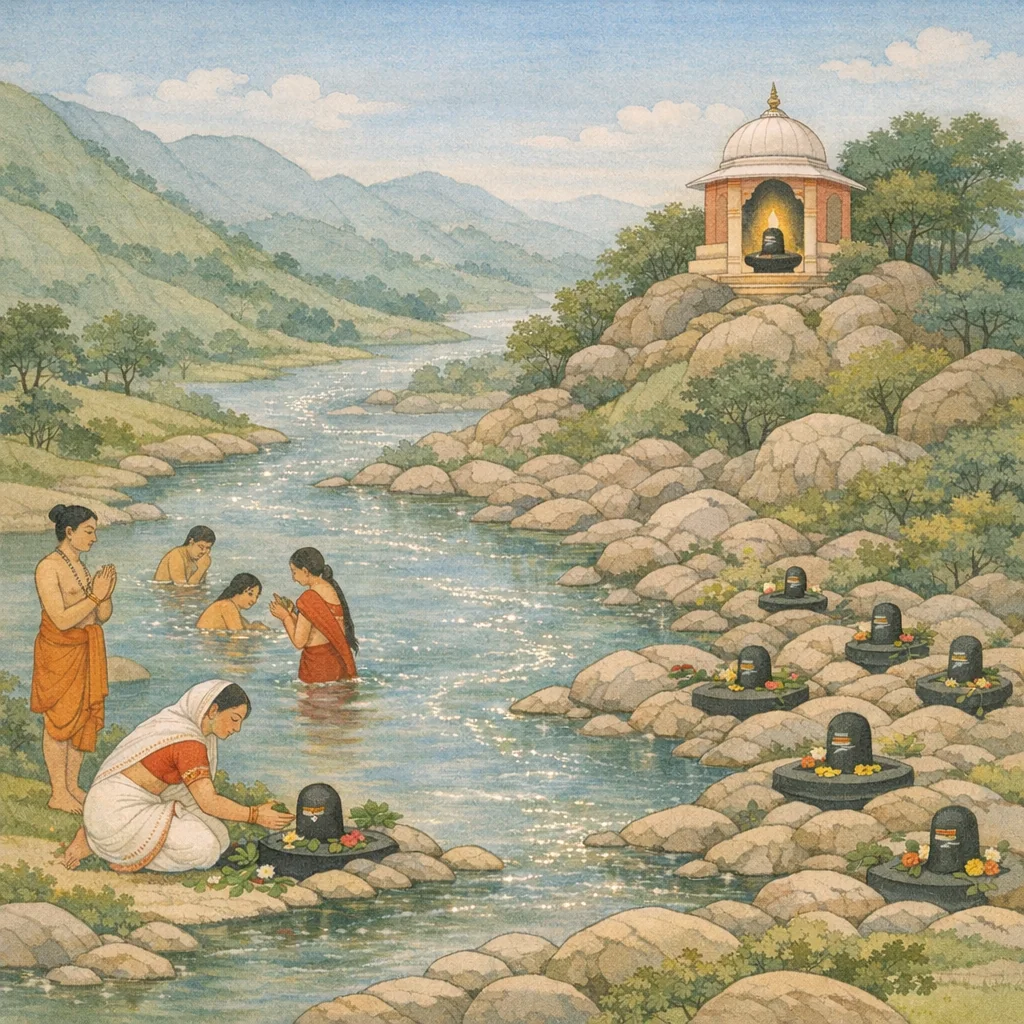
In this chapter, Sūta narrates in purāṇic style the ever-abiding liṅga-presence of Śiva on the divine Kālañjara mountain and extends the account into the tīrtha-landscape of the Revā/Narmadā region. Śiva is affirmed as Nīlakaṇṭha Maheśvara, eternally established in liṅga-form and continually granting ānanda to devotees; the site’s greatness is said to be proclaimed by Śruti and Smṛti, and tīrtha-snānā is taught as a means to destroy pāpa. The narrative then describes countless liṅgas along the Revā’s banks bestowing complete well-being, declares the river itself to be Rudra-svarūpā whose mere sight removes sin, and even regards the stones within its sphere as Śiva-forms. On this doctrinal basis, the chapter announces that it will name the “principal” liṅgas that grant bhukti and mukti, and it lists specific manifestations such as Ārteśvara/Parameśvara/Siṃheśvara, Śarmeśa, Kumāreśvara, Puṇḍarīkeśvara, Maṇḍapeśvara, Tīkṣṇeśa, Dhuṃdhureśvara, Śūleśvara, Kuṃbheśvara, Kubereśvara, and Someśvara.
Shlokas
Verse 1
सूत उवाच । कालंजरे गिरौ दिव्ये नीलकण्ठो महेश्वरः । लिंगरूपस्सदा चैव भक्तानन्दप्रदः सदा
Sūta said: On the divine mountain Kālañjara, the blue-throated Lord Mahādeva abides ever in the form of the Liṅga, and eternally bestows bliss upon His devotees.
Verse 2
महिमा तस्य दिव्योस्ति श्रुतिस्मृतिप्रकीतितः । तीर्थं तदाख्यया तत्र स्नानात्पातकनाशकृत्
Its glory is truly divine, proclaimed in the Śrutis and Smṛtis. In that very place is a sacred tīrtha bearing its name; by bathing there, sins are destroyed.
Verse 3
रेवातीरे यानि सन्ति शिवलिंगानि सुव्रताः । सर्वसौख्यकराणीह तेषां संख्या न विद्यते
O you of noble vows, the Shiva-lingas that stand upon the bank of the Revā are bestowers of every auspicious joy in this world; their number is not known—indeed, it cannot be counted.
Verse 4
सा च रुद्रस्वरूपा हि दर्शनात्पापहारिका । तस्यां स्थिताश्च ये केचित्पाषाणाः शिवरूपिणः
Indeed, she is of Rudra’s very form; by her mere sight sins are removed. And whatever stones abide there are also Śiva-formed—manifestations bearing the nature of Śiva.
Verse 5
तथापि च प्रवक्ष्यामि यथान्यानि मुनीश्वराः । प्रधानशिवलिंगानि भुक्तिमुक्तिप्रदानि च
Even so, O lords among sages, I shall now describe, in due order, the foremost Śiva-liṅgas—those that bestow both worldly enjoyment (bhukti) and liberation (mukti).
Verse 6
आर्तेश्वरसुनामा हि वर्तते पापहारकः । परमेश्वर इति ख्यातः सिंहेश्वर इति स्मृतः
He is indeed renowned by the auspicious name Ārteśvara, the remover of sins. He is celebrated as Parameśvara (the Supreme Lord) and is also remembered as Siṃheśvara.
Verse 7
शर्मेशश्च तथा चात्र कुमारेश्वर एव च । पुण्डरीकेश्वरः ख्यातो मण्डपेश्वर एव च
Here also are the holy forms: Śarmeśa, and likewise Kumāreśvara; Puṇḍarīkeśvara is renowned, and also Maṇḍapeśvara.
Verse 8
तीक्ष्णेशनामा तत्रासीद्दर्शनात्पापहारकः । धुंधुरेश्वरनामासीत्पापहा नर्मदातटे
There, a Liṅga named Tīkṣṇeśa was present; by its very sight it removes sin. On the bank of the Narmadā there was also a Liṅga named Dhuṃdhureśvara, likewise a destroyer of sins.
Verse 9
शूलेश्वर इति ख्यातस्तथा कुंभेश्वरः स्मृतः । कुबेरेश्वरनामापि तथा सोमेश्वरः स्मृतः
He is renowned as Śūleśvara, and is also remembered as Kumbheśvara. He is likewise known by the name Kubereśvara, and is also remembered as Someśvara.
Verse 10
नीलकण्ठो मंगलेशो मंगलायतनो महान् । महाकपीश्वरो देवः स्थापितो हि हनूमता
The great Lord—Nīlakaṇṭha, the Blue-throated; Maṅgaleśa, Lord of auspiciousness; the vast abode of all blessedness—was indeed installed by Hanumān as Mahākapīśvara.
Verse 11
ततश्च नंदिको देवो हत्याकोटिनिवारकः । सर्वकामार्थदश्चैव मोक्षदो हि प्रकीर्तित
Then Nandī, the divine one, is proclaimed as the remover of even crores of heinous sins; he bestows all desired aims and objects, and is indeed celebrated as the giver of mokṣa, liberation.
Verse 12
नन्दीकेशं च यश्चैव पूजयेत्परया मुदा । नित्यं तस्याखिला सिद्धिर्भविष्यति न संशयः
Whoever worships Nandīkeśa (Nandī) with supreme devotion and joyful reverence each day, for him all attainments (siddhis) will surely arise continually—of this there is no doubt.
Verse 13
तत्र तीरे च यः स्नाति रेवायां मुनिसत्तमाः । तस्य कामाश्च सिध्यन्ति सर्वं पापं विनश्यति
O best of sages, whoever bathes there upon the bank of the Revā (Narmadā) finds their rightful desires fulfilled, and all sin is destroyed.
Verse 14
ऋषय ऊचुः । एवं तस्य च माहात्म्यं कथं तत्र महामते । नन्दिकेशस्य कृपया कथ्यतां च त्वयाधुना
The sages said: “O great-minded one, how was the glory of that sacred manifestation established there in this manner? By the grace of Nandikeśa, please explain it to us now.”
Verse 15
सूत उवाच । सम्यक्पृष्टं भवद्भिश्च कथयामि यथाश्रुतम् । शौनकाद्याश्च मुनयः सर्वे हि शृणुतादरात्
Sūta said: “You have asked well; I shall relate it exactly as I have heard. O sages beginning with Śaunaka—indeed all of you—listen with reverent attention.”
Verse 16
पुरा युधिष्ठिरेणैव पृष्टश्च ऋषिसत्तमः । यथोवाच तथा वच्मि भवत्स्नेहानुसारतः
Formerly, the foremost of sages was questioned by Yudhiṣṭhira himself. Just as he spoke then, so do I speak now—moved by affection for you.
Verse 17
रेवायाः पश्चिमे तीरे कर्णिकी नाम वै पुरी । विराजते सुशोभाढ्या चतुर्वर्णसमाकुला
On the western bank of the Revā River stands a city named Karṇikī, resplendent with great beauty and filled with people of all four varṇas.
Verse 18
तत्र द्विजवरः कश्चिदुत्तस्य कुलसम्भवः । काश्यां गतश्च पुत्राभ्यामर्पयित्वा स्वपत्निकाम्
There, a certain excellent brāhmaṇa—born in the lineage of Utta—went to Kāśī, having entrusted his own wife to his two sons.
Verse 19
तत्रैव स मृतो विप्रः पुत्राभ्यां च श्रुतन्तदा । तदीयं चैव तत्कृत्यं चक्राते पुत्रकावुभौ
Right there, that brāhmaṇa died; and then his two sons heard of it. Those two sons thereupon performed his proper funeral rites.
Verse 20
पत्नी च पालयामास पुत्रौ पुत्रहितैषिणी । पुत्रौ च वर्जयित्वा च विभक्तं वै धनं तया
And the wife, devoted to her sons’ welfare, raised and protected the two sons. Yet, setting the sons aside (not involving them), she herself proceeded to apportion the wealth.
Verse 21
स्वीयं च रक्षितं किंचिद्धनं मरणहेतवे । ततश्च द्विजपत्नी हि कियत्कालं मृता च सा
And she kept back a little of her own wealth for the sake of death (as a reserve meant for her final rites). After that, the brāhmaṇa’s wife indeed remained dead for some time.
Verse 22
कदाचित्क्रियमाणा सा विविधं पुण्यमाचरत् । न मृता दैवयोगेन द्विजपत्नी च सा द्विजाः
Once, as circumstances unfolded, she engaged in many kinds of meritorious observances. By the workings of destiny she did not die; that brāhmaṇa’s wife remained alive, O brāhmaṇas.
Verse 23
यदा प्राणान्न मुमुचे माता दैवात्तयोश्च सा । तद्दृष्ट्वा जननीकष्टं पुत्रकावूचतुस्तदा
Then, by the force of destiny, their mother did not yet relinquish her life. Seeing their mother’s grievous suffering, the two sons spoke at that time.
Verse 24
पुत्रावूचतुः । किं न्यूनं विद्यते मातः कष्टं यद्विद्यते महत् । व्रियतां तदृतं प्रीत्या तदावां करवावहे
The sons said: “Mother, what lack is there for you? What great hardship has arisen? Tell us the truth with affection; that very duty or remedy we two shall gladly carry out.”
Verse 25
सूत उवाच । तच्छ्रुत्वोक्तं तया तत्र न्यूनं तु विद्यते बहु । तदेव क्रियते चेद्वै सुखेन मरणं भवेत्
Sūta said: Having heard what she said there, it was understood that much still remained incomplete. If that very instruction is truly carried out, then even death becomes peaceful and easeful.
Verse 26
ज्येष्ठपुत्रश्च यस्तस्यास्तेनोक्तं कथ्यतान्त्वया । करिष्यामि तदेतद्धि तया च कथितन्तदा
“And tell me what was spoken by her elder son. Indeed, I shall do exactly that, for she also related it at that time.”
Verse 27
द्विजपत्न्युवाच । शृणु पुत्र वचः प्रीत्या पुरासीन्मे मनः स्पृहा । काश्यां गंतुं तथा नासीदिदानीं म्रियते पुनः
The brahmin’s wife said: “Listen, my son, lovingly to my words. Long ago a yearning arose in my heart—to go to Kāśī—but it could not be fulfilled. Now that very longing returns again, as though it is dying and being reborn.”
Verse 28
ममास्थीनि त्वया पुत्र क्षेपणीयान्यतन्द्रितम् । गंगाजले शुभं तेद्य भविष्यति न संशयः
“My son, without delay you must immerse my bones in the waters of the Gaṅgā. By this, auspiciousness will surely come to you today—of this there is no doubt.”
Verse 29
सूत उवाच । इत्युक्ते च तया मात्रा स ज्येष्ठतनयोब्रवीत् । मातरं मातृभक्तिस्तु सुव्रतां मरणोन्मुखीम्
Sūta said: When his mother had spoken thus, the eldest son replied to his mother—devoted to her maternal duty, steadfast in her vows, and now facing death.
Verse 30
पुत्र उवाच । मातस्त्वया सुखेनैव प्राणास्त्याज्या न संशयः । तव कार्यं पुरा कृत्वा पश्चात्कार्यं मदीयकम्
The son said: “Mother, you should indeed relinquish your life in peace—there is no doubt. First fulfill your own duty; afterward, attend to what must be done for me.”
Verse 31
इति हस्ते जलं दत्त्वा यावत्पुत्रो गृहं गतः । तावत्सा च मृता तत्र हरस्मरणतत्परा
Thus, after placing water into his hand, and while the son was still on his way home, she passed away there—wholly intent on the remembrance of Hara (Lord Śiva).
Verse 32
तस्याश्चैव तु यत्कृत्यं तत्सर्वं संविधाय सः । मासिकं कर्म कृत्वा तु गमनाय प्रचक्रमे
Having duly arranged everything that was to be done for her, he performed the prescribed monthly rites; then he set about departing on his journey.
Verse 33
द्वयोः श्रेष्ठतमो यो वै सुवादो नाम विश्रुतः । तदस्थीनि समादाय निस्सृतस्तीर्थकाम्यया
Of those two, the most excellent was the one renowned by the name Suvāda. Taking up those bones, he set out, driven by the desire to seek sacred tīrthas (holy pilgrimage places).
Verse 34
संगृह्य सेवकं कंचित्तेनैव सहितस्तदा । आश्वास्य भार्य्यापुत्रांश्च मातुः प्रियचिकीर्षया
Then, taking along a certain attendant, he set out with him; and, wishing to do what was pleasing to his mother, he consoled his wife and children as well.
Verse 35
श्राद्धदानादिकं भोज्यं कृत्वा विधिमनुत्तमम् । मंगलस्मरणं कृत्वा निर्जगाम गृहाद्द्विजः
After arranging the food and offerings connected with śrāddha, charity, and related rites according to the excellent prescribed procedure, the twice-born brāhmaṇa, having invoked auspiciousness in sacred remembrance, departed from his home.
Verse 36
तद्दिने योजनं गत्वा विंशति ग्रामके शुभे । उवासास्तं गते भानौ गृहे विप्रस्य कस्यचित्
That very day, after traveling a yojana and passing through twenty auspicious villages, when the sun had set he stayed in the house of a certain brāhmaṇa.
Verse 37
चक्रे सन्ध्यादिसत्कर्म स द्विजो विधिपूर्वकम् । स्तवादि कृतवांस्तत्र शंभोरद्भुतकर्मणः
That twice-born man duly performed the righteous duties beginning with the Sandhyā rites according to proper procedure; and there he also offered hymns of praise and other acts of devotion to Śambhu, whose deeds are wondrous.
Verse 38
सेवकेन तदा युक्तो ब्राह्मणः संस्थितस्तदा । यामिनी च गता तत्र मुहूर्तद्वयसंमिता
Then the brāhmaṇa remained there, attended by a servant; and the night passed on at that place, amounting to two muhūrtas.
Verse 39
एतस्मिन्नंतरे तत्रैकमाश्चर्य्यमभूत्तदा । शृणुतादरतस्तच्च मुनयो वो वदाम्यहम्
Just then, in that very place, a wondrous event occurred. Listen with reverent attention, O sages—for I shall relate it to you.
Frequently Asked Questions
It advances a tīrtha-theology in which Śiva is perpetually established as liṅga at Kālañjara, while the Revā/Narmadā region is construed as intrinsically purificatory: snāna (bathing) and darśana (sight) are explicitly said to destroy sin, and the landscape itself (including stones) participates in Śiva-form.
The chapter encodes an ontology of sacral immanence: Śiva is not restricted to temple iconography but is readable in nature as liṅga-presence and rudra-svarūpa. This sacralization of geography legitimizes pilgrimage rites (snāna/darśana) as direct encounters with Śiva-tattva, making liberation-oriented practice accessible through embodied, place-based disciplines.
A series of named liṅgas is foregrounded—Ārteśvara/Parameśvara/Siṃheśvara, Śarmeśa, Kumāreśvara, Puṇḍarīkeśvara, Maṇḍapeśvara, Tīkṣṇeśa, Dhuṃdhureśvara, Śūleśvara, Kuṃbheśvara, Kubereśvara, Someśvara—serving as a navigational index for ritual engagement. The onomastics function as metadata for localized worship lineages, each name marking a distinct access-point to Śiva’s grace oriented toward bhukti and mukti.