Harīśvara-liṅga Mahimā and the Origin-Context of Viṣṇu’s Sudarśana (हरिश्वरलिङ्गमहिमा तथा सुदर्शनप्राप्तिकथा)
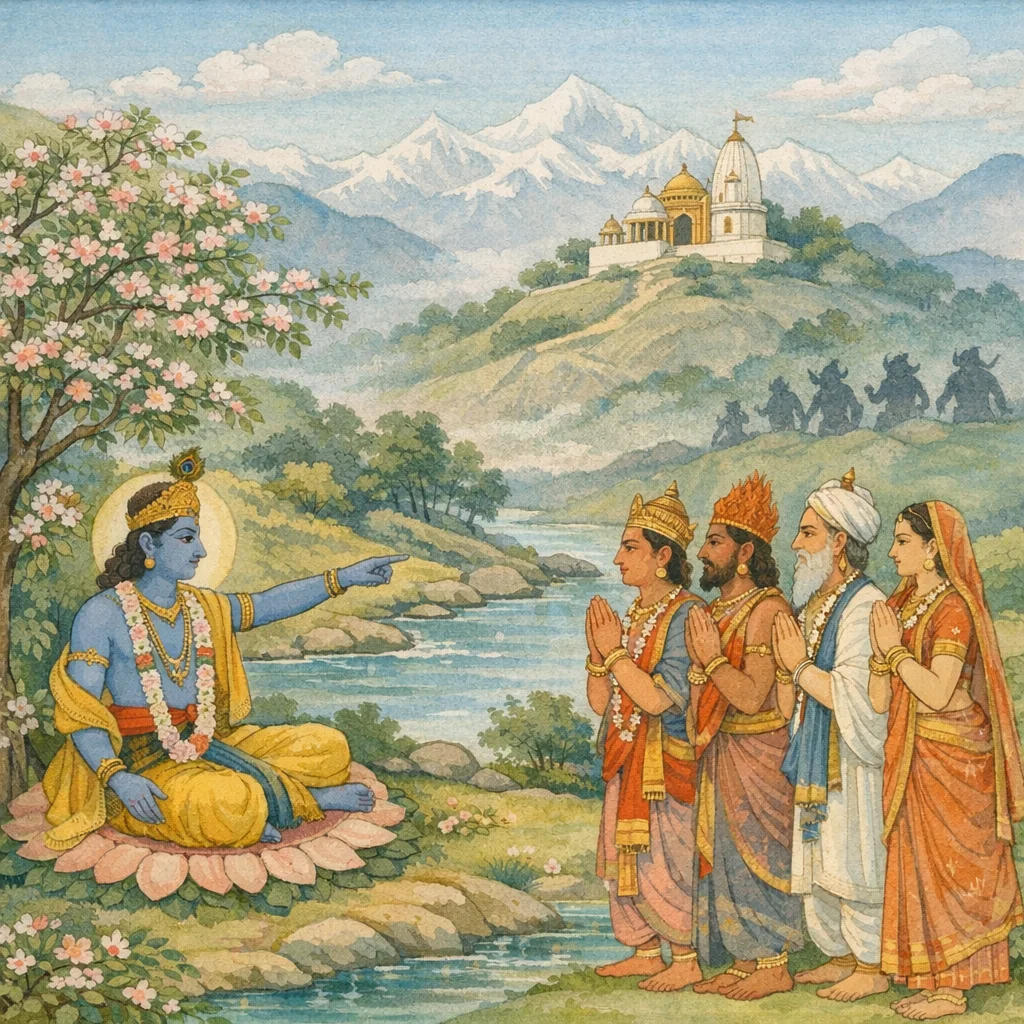
Adhyāya 34 unfolds as a purāṇic inquiry: the assembled sages ask Sūta to expound the mahimā (sacred greatness) of the Harīśvara-liṅga, and specifically how Viṣṇu obtained the Sudarśana-cakra and what worship enabled it. Sūta begins the “Harīśvara-kathā” with a crisis in which the daityas grow overmighty, oppress the worlds, and cause the decline of dharma. The afflicted Devas seek refuge and counsel from Viṣṇu as protector. Viṣṇu declares that he will secure their victory by first worshipping Śiva (Giriśa), teaching that decisive power and success arise from Śiva-ārādhana and liṅga-upāsanā, and thus affirming Śiva’s supreme efficacy within cosmic governance.
Shlokas
Verse 1
व्यास उवाच । इति श्रुत्वा वचस्तस्य सूतस्य च मुनीश्वराः । समूचुस्तं सुप्रशस्य लोकानां हितकाम्यया
Vyāsa said: Having thus heard the words of that Sūta, the lordly sages praised him greatly and addressed him again, desiring the welfare of all the worlds.
Verse 2
ऋषय ऊचुः । सूत सर्वं विजानासि ततः पृच्छामहे वयम् । हरीश्वरस्य लिंगस्य महिमानं वद प्रभो
The sages said: “O Sūta, you know all; therefore we ask you. O revered one, please describe the glory of the Liṅga of Harīśvara.”
Verse 3
चक्रं सुदर्शनं प्राप्तं विष्णुनेति श्रुतं पुरा । तदाराधनतस्तात तत्कथा च विशेषतः
From ancient times, dear one, it has been heard that Viṣṇu obtained the Sudarśana discus through worship. Therefore, O son, recount that account in particular—how that adoration was performed and how the boon was attained.
Verse 4
सूत उवाच । श्रूयतां च ऋषिश्रेष्ठा हरीश्वरकथा शुभा । यतस्सुदर्शनं लब्धं विष्णुना शंकरात्पुरा
Sūta said: “Listen, O best of sages, to this auspicious account of Hari and Īśvara—how, in former times, Viṣṇu obtained the Sudarśana (discus) from Śaṅkara.”
Verse 5
कस्मिंश्चित्समये दैत्याः संजाता बलवत्तराः । लोकांस्ते पीडयामासुर्धर्मलोपं च चक्रिरे
At a certain time, the Daityas became exceedingly powerful. They began to torment the worlds, and they brought about the decline of dharma.
Verse 6
ते देवाः पीडिता दैत्यैर्महाबलपराक्रमैः । स्वं दुखं कथयामासुर्विष्णुं निर्जररक्षकम्
Those gods, oppressed by the daityas of immense strength and prowess, went and related their own suffering to Vishnu, the protector of the deathless ones (the devas).
Verse 7
देवा ऊचुः । कृपां कुरु प्रभो त्वं च दैत्यैस्संपीडिता भृशम् । कुत्र यामश्च किं कुर्मश्शरण्यं त्वां समाश्रिताः
The Devas said: “O Lord, show compassion. We are grievously oppressed by the Daityas. Where shall we go, and what shall we do? O Refuge of all, we have taken shelter in You alone.”
Verse 8
सूत उवाच । इत्येवं वचनं श्रुत्वा देवानां दुःखितात्मनाम् । स्मृत्वा शिवपदांभोजं विष्णुर्वचनमब्रवीत
Sūta said: Thus hearing the words of the gods, whose hearts were stricken with sorrow, Viṣṇu—remembering the lotus-feet of Lord Śiva—spoke these words.
Verse 9
विष्णुरुवाच । करिष्यामि च वः कार्य्यमाराध्य गिरिशं सुराः । बलिष्ठाश्शत्रवो ह्येते विजेतव्याः प्रयत्नतः
Viṣṇu said: “O gods, I shall accomplish your purpose by worshipping Girīśa (Lord Śiva). For these enemies are exceedingly powerful; therefore they must be conquered with steadfast effort.”
Verse 10
सूत उवाच । इत्युक्तास्ते सुरास्सर्वे विष्णुना प्रभविष्णुना । मत्वा दैत्यान्हतान्दुष्टान्ययुर्धाम स्वकंस्वकम्
Sūta said: Thus instructed by mighty Viṣṇu, all the devas, believing that the wicked daityas had been slain, departed—each to his own celestial abode.
Verse 11
विष्णुरप्यमराणां तु जयार्थमभजच्छिवम् । सर्वामराणामधिपं सर्वसाक्षिणमव्ययम्
Even Viṣṇu, for the sake of victory for the gods, worshipped Śiva—the Lord of all the devas, the Witness of all, the imperishable One.
Verse 12
गत्वा कैलासनिकटे तपस्तेपे हरिस्स्वयम् । कृत्वा कुंडं च संस्थाप्य जातवेदसमग्रतः
Having gone near Mount Kailāsa, Hari (Viṣṇu) himself undertook austerities. After making a kuṇḍa, the sacred fire-pit, and duly establishing it, he stood before Jātavedas—the consecrated fire—and proceeded in worship.
Verse 13
पार्थिवेन विधानेन मंत्रैर्नानाविधैरपि । स्तोत्रैश्चैवाप्यनेकैश्च गिरिशं चाभजन्मुदा
By the prescribed Pārthiva rite of earthen worship, with mantras of many kinds and with numerous hymns, he joyfully adored Girīśa—Śiva, the Lord of the Mountain.
Verse 14
कमलैस्सरसो जातैर्मानसाख्यान्मुनीश्वराः । बद्ध्वा चैवासनं तत्र न चचाल हरिस्स्वयम्
O lordly sages, using lotus-flowers born from the lake called Mānas, he arranged a seat there; and Hari (Viṣṇu) himself did not move from that place, remaining steadily established.
Verse 15
प्रसादावधि चैवात्र स्थेयं वै सर्वथा मया । इत्येवं निश्चयं कृत्वा समानर्च शिवं हरिः
“Until Śiva’s grace (prasāda) is attained, I must remain here in every way.” Having thus made this firm resolve, Hari (Viṣṇu) continued to worship Lord Śiva with equal-minded devotion.
Verse 16
यदा नैव हरस्तुष्टो बभूव हरये द्विजाः । तदा स भगवान्विष्णुर्विचारे तत्परोऽभवत्
When Hara (Lord Śiva) was not at all pleased with Hari (Lord Viṣṇu), O twice-born sages, then the Blessed Lord Viṣṇu became wholly intent on deep reflection as to what should be done.
Verse 17
विचार्यैवं स्वमनसि सेवनं बहुधा कृतम् । तथापि न हरस्तुष्टो बभूवोतिकरः प्रभुः
Thus reflecting within his own mind, he performed many kinds of service and worship; yet even then Lord Hara was not pleased, and the sovereign Lord became exceedingly stern.
Verse 18
सहस्रैर्नामभिः प्रीत्या तुष्टाव परमेश्वरम्
With loving devotion, he praised the Supreme Lord (Śiva) through a thousand sacred names.
Verse 19
प्रत्येकं कमलं तस्मै नाममंत्रमुदीर्य च । पूजयामास वै शंभुं शरणागतवत्सलम्
With each lotus he offered, he uttered the Name-mantra for Him and indeed worshipped Śambhu—Lord Śiva, tenderly compassionate to those who take refuge in Him.
Verse 20
परीक्षार्थं विष्णुभक्तेस्तदा वै शंकरेण ह । कमलानां सहस्रात्तु हृतमेकं च नीरजम्
To test Viṣṇu’s devotion, Śaṅkara at that time removed one lotus from the thousand lotuses prepared for worship.
Verse 21
न ज्ञातं विष्णुना तच्च मायाकारणमद्भुतम् । न्यूनं तच्चापि सञ्ज्ञाय तदन्वेषणतत्परः
Viṣṇu did not understand that wondrous cause born of māyā. Yet, realizing the deficiency, he became wholly intent on searching for it.
Verse 22
बभ्राम सकलां पृथ्वीं तत्प्रीत्यै सुदृढव्रतः । तदप्राप्य विशुद्धात्मा नेत्रमेकमुदाहरत्
With an unshakable vow, he wandered over the whole earth to please Him (Lord Śiva). Yet, not attaining Him, that purified-souled one offered up one of his eyes.
Verse 23
तं दृष्ट्वा स प्रसन्नोऽभूच्छंकरस्सर्वदुःखहा । आविर्बभूव तत्रैव जगाद वचनं हरिम्
Seeing him, Śaṅkara—the remover of all sorrow—was pleased. Right there He manifested and spoke words to Hari (Viṣṇu).
Verse 24
शिव उवाच । प्रसन्नोऽस्मि हरे तुभ्यं वरं ब्रूहि यथेप्सितम् । मनोऽभिलषितं दद्मि नादेयं विद्यते तव
Śiva said: “O Hari, I am pleased with you. Speak the boon you desire, exactly as you wish. I shall grant what your heart longs for; for you, there is nothing that I would withhold.”
Verse 25
सूत उवाच । तच्छ्रुत्वा शंभुवचनं केशवः प्रीतमानसः । महाहर्षसमापन्नो ह्यब्रवीत्सांजलिश्शिवम्
Sūta said: Having heard the words of Śambhu (Lord Śiva), Keśava (Viṣṇu), his mind filled with delight and overcome with great joy, spoke to Śiva with folded hands.
Verse 26
विष्णुरुवाच । वाच्यं किं मे त्वदग्रे वै ह्यन्तर्यामी त्वमास्थितः । तथापि कथ्यते नाथ तव शासनगौरवात्
Viṣṇu said: “What can I possibly say before You, when You Yourself abide as the Inner Ruler within all? Yet, O Lord, I still speak—out of reverence for the majesty of Your command.”
Verse 27
दैत्यैश्च पीडितं विश्वं सुखं नो नस्सदा शिव । दैत्यान्हंतुं मम स्वामिन्स्वायुधं न प्रवर्त्तते
“O Shiva, the whole world is oppressed by the demons; for us there is no lasting peace. O my Lord, when I wish to destroy the demons, my own weapon does not proceed (to act).”
Verse 28
किं करोमि क्व गच्छामि नान्यो मे रक्षकः परः । अतोऽहं परमेशान शरणं त्वां समागतः
“What shall I do, and where shall I go? I have no other supreme protector. Therefore, O Parameśāna, I have come to You alone for refuge.”
Verse 29
सूत उवाच । इत्युक्त्वा च नमस्कृत्य शिवाय परमात्मने । स्थितश्चैवाग्रतश्शंभोः स्वयं च पुरुपीडितः
Sūta said: Having spoken thus, he bowed in reverence to Śiva, the Supreme Self; and, himself greatly afflicted, he stood before Śambhu (Lord Śiva).
Verse 30
सूत उवाच । इति श्रुत्वा वचो विष्णोर्देवदेवो महेश्वरः । ददौ तस्मै स्वकं चक्रं तेजोराशिं सुदर्शनम्
Sūta said: Having heard the words of Viṣṇu, Mahādeva—Lord of the gods, Mahēśvara—bestowed upon him His own discus, Sudarśana, a concentrated mass of divine radiance.
Verse 31
तत्प्राप्य भगवान्विष्णुर्दैत्यांस्तान्बलवत्तरान् । जघान तेन चक्रेण द्रुतं सर्वान्विना श्रमम्
Having reached that place, the blessed Lord Viṣṇu swiftly struck down all those powerful Dānavas with his discus, destroying them all without the least exertion.
Verse 32
जगत्स्वास्थ्यं परं लेभे बभूवुस्सुखिनस्सुराः । सुप्रीतः स्वायुधं प्राप्य हरिरासीन्महासुखी
The world attained excellent well-being, and the gods became happy. Hari (Viṣṇu), greatly delighted on receiving his own weapon, remained in supreme joy.
Verse 33
ऋषय ऊचुः । किं तन्नामसहस्रं वै कथय त्वं हि शांकरम् । येन तुष्टो ददौ चक्रं हरये स महेश्वरः
The sages said: “What, indeed, is that thousandfold Name of Śaṅkara? Tell it to us. Pleased by it, Mahādeva—Maheśvara—bestowed the discus (cakra) upon Hari (Viṣṇu).”
Verse 34
इति श्रीशिव महापुराणे चतुर्थ्यां कोटिरुद्रसंहितायां विष्णुसुदर्शनचक्रलाभवर्णनं नाम चतुस्त्रिंशोऽध्यायः
Thus, in the Śrī Śiva Mahāpurāṇa, in the Fourth Book of the Koṭirudrasaṃhitā, ends the Thirty-fourth Chapter entitled “The Account of Viṣṇu’s Attainment of the Sudarśana Discus.”
Verse 35
व्यास उवाच । इति तेषां वचश्श्रुत्वा मुनीनां भावितात्मनाम् । स्मृत्वा शिवपदांभोजं सूतो वचनमब्रवीत्
Vyāsa said: Having thus heard the words of those sages—whose selves were refined by contemplation—Sūta, remembering the lotus-feet of Śiva, spoke in reply.
Frequently Asked Questions
The chapter sets up the Harīśvara-liṅga narrative by linking it to the tradition that Viṣṇu obtained the Sudarśana-cakra; the theological argument is that Viṣṇu’s capacity to resolve the daitya threat is contingent upon worshipping Śiva (Giriśa/Śaṅkara).
The Sudarśana-cakra functions as a symbol of divinely sanctioned order-enforcement, while the Harīśvara-liṅga represents the ritual-theological axis through which such sanction is accessed—encoding the principle that ultimate authority is mediated through Śiva-tattva and Liṅga-upāsanā.
Śiva is highlighted under epithets emphasizing sovereign mountain-lordship and beneficence—Giriśa and Śaṅkara—and the chapter foregrounds Harīśvara as a Liṅga-centered theological locus that authorizes and empowers even Viṣṇu’s protective function.