गुरुत्व-परम्परा-शौचविधि-प्रश्नः (Questions on Guruhood, Lineage, and Purificatory Discipline)
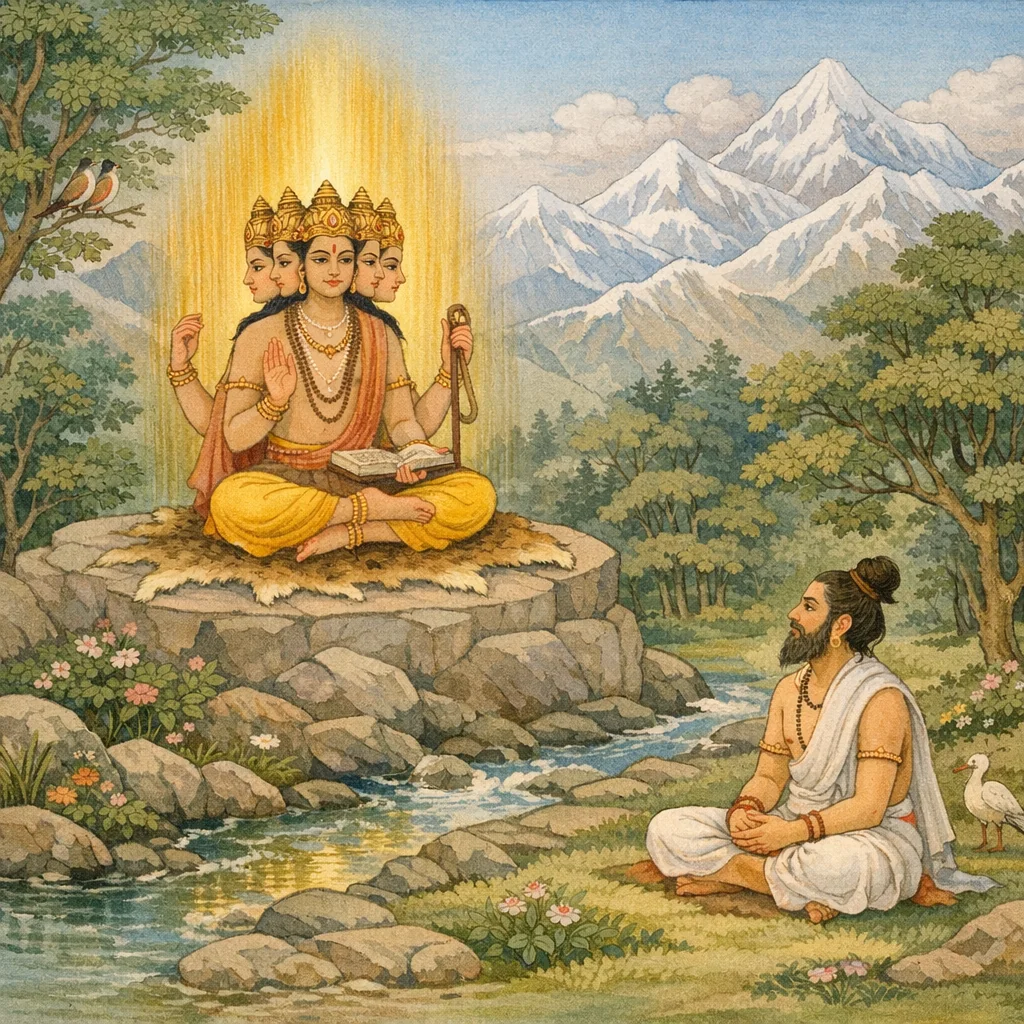
Adhyāya 18 resumes the instructional dialogue of the Kailāsa Saṃhitā. Prompted by Śaunaka, Sūta continues the account of the exchange between the sage Vāmadeva and Kārtikeya (Ṣaṇmukha), son of Mahādeva. Having heard Kārtikeya’s teaching that destroys duality (dvaita) and gives rise to non-dual knowledge (advaita-jñāna), Vāmadeva offers reverence and asks key technical questions of Shaiva authority: how “gurutva” (the status and efficacy of a spiritual preceptor) is established among disciplined renunciants, and why instruction without paramparā (lineage transmission) lacks full adhikāra (authorization/competence). He also seeks clarification on purificatory and preparatory observances such as kṣaura-karman (ritual shaving/tonsure acts) and snāna (ritual bathing) as prerequisites for higher teaching. Kārtikeya, inwardly recollecting Śiva and Śivā, begins to explain that ritual purity and lineage are not mere social convention but the epistemic and liberating foundation that supports receiving non-dual Shaiva wisdom.
Shlokas
Verse 1
शौनक उवाच । श्रुत्वा वेदान्तसारं तद्रहस्यम्परमाद्भुतम् । किम्पृष्टवान्वामदेवो महेश्वरसुतं तदा
Śaunaka said: “Having heard that essence of Vedānta—the supremely wondrous secret—what did Vāmadeva ask Mahēśvara’s (Mahādeva’s) son at that time?”
Verse 2
धन्यो योगी वामदेवः शिवज्ञानरतस्सदा । यत्स्सम्बन्धात्कथोत्पन्ना दिव्या परमपावनी
Blessed indeed is the yogin Vāmadeva, ever absorbed in the knowledge of Śiva; for through his connection this sacred narrative has arisen—divine in nature and supremely purifying.
Verse 3
इति श्रुत्वा मुनीनान्तद्वचनम्प्रेमगर्भितम् । सूतः प्राह प्रसन्नस्ताञ्छिवासक्तमना बुधः
Hearing the sages’ words, filled with loving devotion, Sūta—the wise one whose mind was absorbed in Śiva—replied to them with a serene and pleased heart.
Verse 4
सूत उवाच । धन्या यूयं महादेवभक्ता लोकोपकारकाः । शृणुध्वम्मुनयस्सर्वे संवादं च तयोः पुनः
Sūta said: “Blessed are you—devotees of Mahādeva—who labor for the welfare of the world. O sages all, listen once more to the dialogue between those two.”
Verse 5
श्रुत्वा महेशतनयवचनं द्वैतनाशकम् । अद्वैतज्ञानजनकं सन्तुष्टोऽभून्महान्मुनिः
Having heard the words of Mahesha’s son—words that destroy the sense of duality and give rise to the knowledge of non-duality—the great sage became wholly satisfied.
Verse 6
नत्वा स्तुत्वा च विविधं कार्तिकेयं शिवात्मजम् । पुनः पप्रच्छ तत्त्वं हि विनयेन महामुनिः
Having bowed down and offered manifold praises to Kārtikeya, the son of Śiva, the great sage again inquired—humbly and respectfully—about the tattva, the true principle.
Verse 7
वामदेव उवाच । भगवन्सर्वतत्त्वज्ञ षण्मुखामृतवारिधे । गुरुत्वं कथमेतेषां यतीनाम्भावितात्मनाम्
Vāmadeva said: “O Blessed One, knower of all tattvas, O ocean of amṛta with six streams (Ṣaṇmukha), how does true teacherhood (gurutva) arise in these ascetics whose inner selves have been purified and well cultivated?”
Verse 8
जीवानां भोगमोक्षादिसिद्धिस्सिध्यति यद्वशात् । पारम्पर्य्यं विना नैषा मुपदेशाधिकारिता
By whose power the accomplishments of embodied beings—such as worldly enjoyment and liberation—are attained: without that sacred lineage of transmission (guru–paramparā), there is no true authority to give spiritual instruction.
Verse 9
एवं च क्षौरकर्मांगं स्नानञ्च कथमीदृशम् । इति विज्ञापय स्वामिन्संशयं छेत्तुमर्हसि
“Thus, how exactly is the rite of shaving to be performed, and what should such a bath be like? Please explain this, O Lord, and be gracious to cut through my doubt.”
Verse 10
इति श्रुत्वा कार्तिकेयो वामदेववचः स्मरन् । शिवं शिवां च मनसा व्याचष्टुमुपचक्रमे
Hearing this, Kārtikeya—remembering the words of Vāmadeva—began, within his mind, to set forth the true purport concerning Śiva and Śivā.
Verse 11
श्रीसुब्रह्मण्य उवाच । योगपट्टम्प्रवक्ष्यामि गुरुत्वं येन जायते । तव स्नेहाद्वामदेव महद्गोप्यं विमुक्तिदम्
Śrī Subrahmaṇya said: “I shall explain the yoga-strap (yoga-paṭṭa) by which the state of true spiritual authority (gurubhāva) arises. Out of affection for you, O Vāmadeva, I reveal this great secret—one that bestows liberation.”
Verse 12
वैशाखे श्रावणेमासि तथाश्वयुजि कार्तिके । मार्गशीर्षे च माघे वा शुक्लपक्षे शुभे दिने
In the months of Vaiśākha and Śrāvaṇa, likewise in Āśvayuja and Kārtika, and also in Mārgaśīrṣa or Māgha—on an auspicious day in the bright fortnight (śukla-pakṣa)—this observance and worship should be performed.
Verse 13
पंचम्यां पौर्णमास्यां वा कृतप्राभातिकक्रियः । लब्धानुज्ञस्तु गुरुणा स्नात्वा नियतमानसः
On the fifth lunar day or on the full-moon day, having completed the prescribed morning observances and obtained the guru’s permission, he should bathe and, with a disciplined and steady mind, proceed in the rite of Śiva’s worship.
Verse 14
पर्य्यंकशौचं कृत्वा तद्वाससांगं प्रमृज्य च । द्विगुणं दोरमाबध्य वाससी परिधाय च
Having purified the seat (and resting place) and wiped the body with the prescribed cloth, one should tie a cord on the arm, doubled over, and then put on the two garments.
Verse 15
क्षालितांघ्रिर्द्विराचम्य भस्म सद्यादिम न्त्रतः । धारयेद्धि समादाय समुद्धूलनमार्गतः
Having washed the feet and performed ācamana twice, one should then take the sacred ash (bhasma) and, with the “Sadyojāta” and the other mantras, apply it properly according to the prescribed method of smearing (samuddhūlana).
Verse 16
गृहीतहस्तो गुरुणा सानुकूलेन वै मुने । सच्छिष्यः साञ्जलिस्स्वाभ्यां हस्ताभ्याम्प्राङ्मुखो यथा
O sage, the true disciple—his hand being kindly taken by the guru—stands facing east, with both his hands joined in reverence (añjali), in the proper manner.
Verse 17
तथोपवेष्टितस्तिष्ठेन्मंडपे समलंकृते । गुर्वासनवरे शुद्धे चैलाजिनकुशोत्तरे
Thus, having seated himself properly, he should remain in the well-adorned pavilion, upon a pure and excellent teacher’s seat, spread with cloth, deer-skin, and sacred kuśa grass—preparing the body and mind for disciplined worship of Śiva.
Verse 18
इति श्रीशिवमहापुराणे षष्ठ्यां कैलाससंहितायां संन्यासपद्धतौ शिष्यकरणविधिर्नामाष्टादशोऽध्यायः
Thus, in the Śrī Śiva Mahāpurāṇa—within the Sixth, the Kailāsa-saṃhitā—under the section on the discipline of sannyāsa (renunciation), ends the eighteenth chapter called “The Procedure for Initiating (Making) a Disciple.”
Verse 19
साधारं शङ्खमपि च सम्पूज्य कुसुमादिभिः । निःक्षिपेद स्त्रवर्मभ्यां शोधितं तत्र सज्जलम्
After duly worshipping the conch set upon its stand with flowers and the like, one should pour into it the water purified by the protective Śaiva mantras, keeping it ready for ritual use.
Verse 20
आपूर्य पूर्ववत्पूज्य षडंगोक्तक्रमेण च । प्रणवेन पुनस्तद्वै सप्तधैवाभिमन्त्रयेत्
Having filled it and worshipped as before, one should proceed in the sequence taught for the six-limbed rite (ṣaḍaṅga). Then, with the Pranava (Oṁ), one should again consecrate that very offering—by mantra-enlivening it—exactly seven times.
Verse 21
अभ्यर्च्य गन्धपुष्पाद्यैर्धूपदीपौ प्रदर्श्य च । संरक्षास्त्रेण तं शंखं वर्मणाथावगुण्ठयेत्
Having duly worshipped it with fragrances, flowers, and the like, and having offered incense and a lamp, one should protect that conch with the Mantra of Protection (saṃrakṣāstra) and veil it with the spiritual ‘armor’ (kavaca), so the rite remains guarded and fit for Śiva’s worship.
Verse 22
धेनुशंखाख्यमुद्रे च दर्शयेदथ देशिकः । पुनस्स्वपुरतश्शंखं दक्षिणे देश उत्तमे
Then the ācārya should demonstrate the mudrās called Dhenu and Śaṅkha. Thereafter, he should again place the sacred conch before himself, on the auspicious southern side.
Verse 23
अवगुंठ्य प्रदर्श्याथ धूपदीपौ च भक्तितः । धेनुयोन्याख्यमुद्रे च सम्यक्तत्र प्रदर्शयेत्
Having performed Avaguṇṭhana (the protective veiling gesture) and then revealing the worshipped emblem, the devotee should, with devotion, offer incense and a lamp; and there, in due order, properly display the mudrās called Dhenu and Yoni.
Verse 24
साधारं शोधितं शुद्धं घटन्तन्तुपरिष्कृतम् । धूपितं स्थापितं शुद्धवासितोदप्रपूरितम्
The vessel, furnished with a proper base, should be cleansed and made pure; the pot and its threads should be duly arranged and refined. It should be fumigated with incense, set in its place, and then filled with pure water made fragrant with sanctifying substances.
Verse 25
पञ्चत्वक्पञ्चपत्रैश्च मृत्तिकाभिश्च पञ्चभिः । मिलितं च सुगन्धेन लेपयेत्तम्मुनीश्वर
O lord among sages, one should anoint that sacred emblem—the liṅga of Śiva—with a mixture of five kinds of bark, five kinds of leaves, and five kinds of clay, blended together and perfumed with fragrance.
Verse 26
वस्त्राम्रदलदूर्वाग्रनारिकेलसुमैस्ततः । तं घटं वस्तुभिश्चान्यैस्संकुर्यात्समलंकृतम्
Then, with cloth, mango leaves, the tips of dūrvā grass, and coconut-flowers, one should arrange and decorate that water-pot; and with other suitable sacred items as well, one should prepare it fully adorned for Śiva’s worship.
Verse 27
विन्यसेत्पञ्चरत्नानि घटे तत्र मुनीश्वर । हिरण्यञ्चापि तेषां वाभावे भक्त्या प्रविन्यसेत्
O best of sages, one should place the five precious gems in the consecrated pot there. If those are not available, one should, with devotion, place gold instead.
Verse 28
नीलाख्यरत्नं च तथा रत्ने माणिक्यहेमनी । प्रवालगोमेदके च पञ्चरत्नमिदं स्मृतम्
The gem called nīla (sapphire) is also included; along with maṇikya (ruby) and gold, and likewise coral and gomeda. These are remembered as the “five gems” (pañcaratna) for sacred observances.
Verse 29
नृम्लस्कमिति सम्प्रोच्य ग्लूमित्यन्ते ऽथ देशिकः । सम्यग्विधानतः प्रीत्या सानुकूलः समर्चयेत्
Uttering the formula “nṛmlaska” and then, at the end, “glūm,” the preceptor (dēśika) should, with a pleased and benevolent mind, worship Śiva properly according to the prescribed rite.
Verse 30
आधारशक्तिमारभ्य यजनोक्तविधानतः । पञ्चावरणमार्गेण देवमावाह्य पूजयेत्
Beginning with Ādhāra-Śakti, the sustaining divine power, and following the ritual procedure enjoined for worship, one should invoke the Lord and adore Him by the method of the five enclosures (pañcāvaraṇa).
Verse 31
निवेद्य पायसान्नञ्च तांबूलादि यथा पुरा । नामाष्टकार्चनान्तं च कृत्वा तमभिमन्त्रयेत्
Having offered pāyasa (sweet rice) and other foods, and then betel and the like as prescribed earlier, and having completed the worship up to the eightfold offering of the Lord’s Names, one should thereafter consecrate it by reciting the appropriate mantra over it.
Verse 32
प्रणवाष्टोत्तरशतं ब्रह्मभिः पञ्चभिः क्रमात् । सद्यादीशान्तमप्यस्त्रं रक्षितं वर्मणा पुनः
Then, in due order, the one hundred and eight praṇavas (the sacred syllable Oṁ) were set forth through the five Brahma-mantras; and the divine weapon—beginning with Sadyojāta and extending up to Īśāna—was again safeguarded by the protective armour (varma) of mantra.
Verse 34
ततश्च देशिकस्तस्य दर्भैराच्छाद्य मस्तके । मण्डलस्थेशदिग्भागे चतुरस्रं प्रकल्पयेत्
Then the officiating teacher should cover his head with sacred darbha grass, and in the quarter of the maṇḍala presided over by Īśa (Śiva), he should arrange a square ritual space.
Verse 35
तदुपर्य्यासनं रम्यं कल्पयित्वा विधानतः । तत्र संस्थापयेच्छिष्यं शिशुं सानुकूलतः
Upon that prepared place, having duly arranged a beautiful seat according to the prescribed rule, one should then seat the disciple there—gently and in a manner suited to the child—so the rite may proceed in harmony.
Verse 36
ततः कुम्भं समुत्थाय स्वस्तिवाचनपूर्वकम् । अभिषिंचेद्गुरुः शिष्यं प्रादक्षिण्येन मस्तके
Then, lifting up the consecration-pot (kumbha), the Guru—after first reciting auspicious benedictions—should anoint the disciple, pouring the sanctified water upon the disciple’s head in a clockwise (pradakṣiṇa) manner.
Verse 37
प्रणवं पूर्वमुच्चार्य्य सप्तधा ब्रह्मभि स्ततः । पञ्चभिश्चाभिषेकान्ते शंखोदेनाभिवेष्टयेत्
Having first uttered the Praṇava (Oṃ) and then offered praise with the seven Brahma-mantras, at the close of the abhiṣeka one should again perform the rite with the five mantras, and finally encircle the Liṅga with water poured from a conch.
Verse 38
चारुदीपं प्रदर्श्याथ वाससा परिमृज्य च । नूतनं दोरकौपीनं वाससी परिधापयेत्
Then, having displayed an auspicious lamp and wiped the body with a cloth, one should don fresh garments—wearing a new shoulder-cloth and loincloth (kaupīna)—and thus become fit for the worship of Lord Śiva.
Verse 39
क्षालितांघ्रिर्द्विराचम्य धृतभस्मगुरुश्शिशुम् । हस्ताभ्यामवलंब्याथ हस्तौ मंडपमध्यतः
Having washed his feet and performed ācamana twice, the venerable preceptor—adorned with sacred ash (bhasma)—took the child by both hands and led him into the middle of the pavilion (maṇḍapa).
Verse 40
तदंगेषु समालिप्य तद्भस्म विधिना गुरुः । आसने संप्रवेश्याथ कल्पिते स्थापयेत्सुखम्
Having, in the prescribed manner, smeared that sacred ash upon his limbs, the Guru then leads him to the prepared seat and makes him sit there comfortably.
Verse 41
पूर्वाभिमुखमात्मीयतत्त्वज्ञानाभिलाषिणम् । स्वसनस्थो गुरुर्ब्रूयादमलात्मा भवेति तम्
Having the disciple face east, and seeing him eager for knowledge of the true principle of the Self, the Guru—seated steadily on his own seat—should instruct him: “Become of stainless soul, pure in essence.”
Verse 42
गुरुश्च परिपूर्णोऽस्मि शिव इत्यचलस्थितिः । समाधिमाचरेत्सम्यङ्मुहूर्त्तं गूढमानसः
Established unshakably in the conviction, “Śiva is the Guru, and I am fulfilled in Him,” the seeker—his mind held inward and concealed from outward distraction—should rightly practice samādhi for a muhūrta.
Verse 43
पश्चादुन्मील्य नयने सानुकूलेन चेतसा । सांजलिं संस्थितं शुद्धं पश्येच्छिष्यमनाकुलः
Then, opening his eyes again with a gracious and favorable mind, the (guru) should calmly behold the disciple—pure and steady—standing with hands joined in reverence.
Verse 44
स्वहस्तम्भसितालिप्तं विन्यस्य शिशुमस्तके । दक्षश्रुतावुपदिशेद्धंसस्सोहमिति स्फुटम्
Smearing his own hand with sacred ash (bhasma), he should place it upon the child’s head; then, clearly instructing into the child’s right ear, he should teach the mantra: “Haṁsa—So’ham” (“I am He,” the Supreme).
Verse 45
तत्राद्याहंपदस्यार्थः शक्तयात्मा स शिवस्स्वयम् । स एवाहं शिवोस्मीति स्वात्मानं संविभावय
Here, the primary meaning of the word “I” is Shiva Himself—whose very nature is Śakti. Contemplate your own Self as: “That very One is ‘I’; I am Shiva.”
Verse 46
य इत्यणोरर्थतत्त्वमुपदिश्य ततो वदेत् । अवांतराणां वाक्यानामर्थतात्पर्यमादरात्
Having first taught the true principle of meaning in its subtlest form, one should then speak; and with reverent care one should explain the intended purport of the subsidiary statements as well.
Verse 47
वाक्यानि वच्मि ते ब्रह्मन्सावधानमतिश्शृणु । तानि धारय चित्ते हि स ब्रूयादिति संस्फुटम्
O Brahman, I speak these words to you—listen with a fully attentive mind. Hold them firmly in your heart; then speak them back clearly and exactly as stated.
Frequently Asked Questions
The chapter treats the problem of spiritual authority: how a guru’s efficacy is established among renunciants, and why liberating instruction (upadeśa) is not considered fully valid or fruitful without paramparā—i.e., an authenticated chain of transmission that confers adhikāra and safeguards the teaching.
The implied rahasya is that non-dual realization is not framed as mere private speculation; it is a transmitted competence. Paramparā functions as a hermeneutic and disciplinary container that stabilizes meaning, method, and eligibility—so that ‘dvaita-nāśaka’ knowledge becomes transformative rather than conceptual.
Kārtikeya (Ṣaṇmukha), as Śiva’s son and a supreme instructor-figure, is foregrounded as the authoritative expounder of dvaita-dissolving knowledge. Shiva and Śivā are invoked as inner referents (smaraṇa) before teaching, signaling that instruction is anchored in the divine source rather than personal opinion.