Adhyaya 42: Yayāti and the Kings’ Dialogue on Heavenly Worlds, Gift-Ethics, and the Supremacy of Truth
ययाति-शिबि-वसुमान्-अष्टक-लोकसंवादः
Speaker: Vasumān, Yayāti, Śibi (Auśīnara), Aṣṭaka, Śaunaka (narrator)
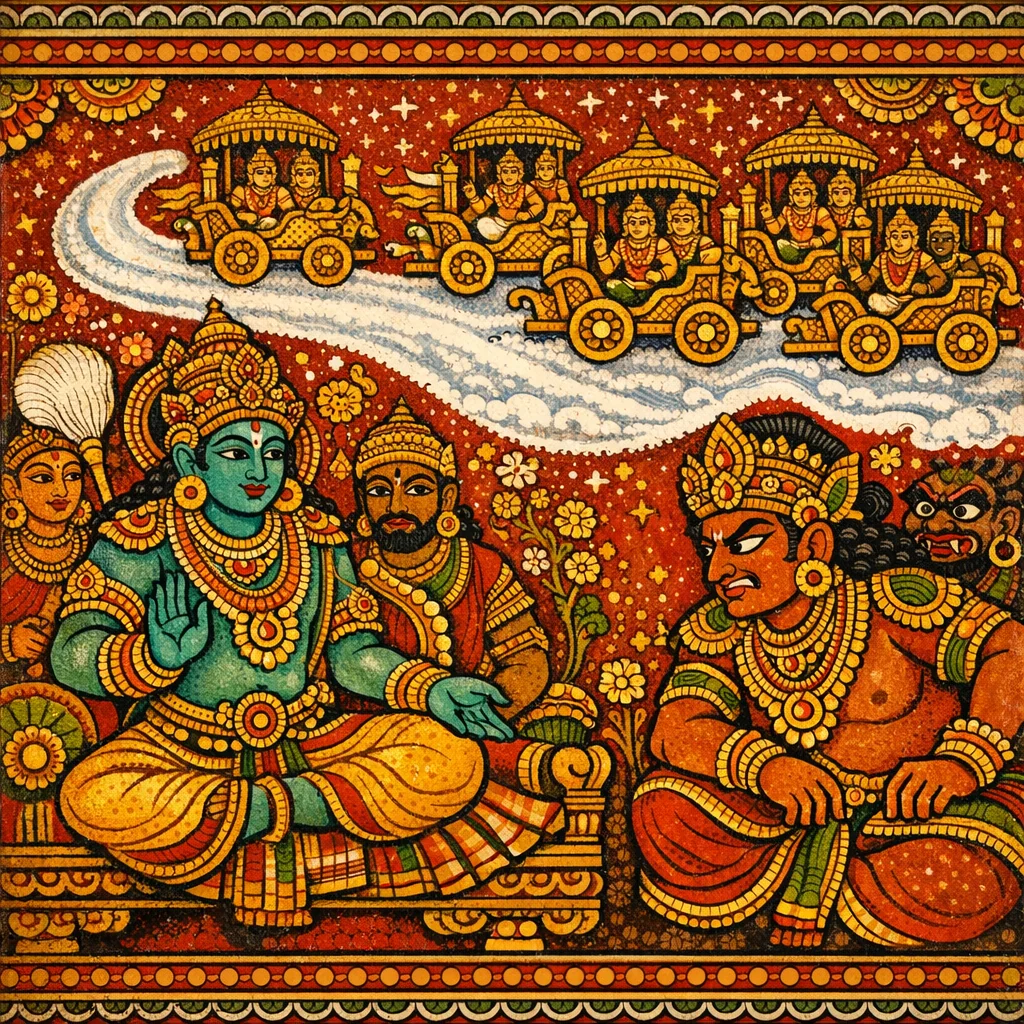
Vasumān asks Yayāti—revered as kṣetrajña and knower of dharma—about his heavenly destiny, and Yayāti blesses him with firmly established worlds. Vasumān offers his lokas to Yayāti and proposes a token “purchase” to reveal any taint in Yayāti’s pratigraha (acceptance of gifts); Yayāti refuses deceitful bargaining and rejects novelty rooted in greed. Śibi repeats the question and likewise offers his worlds; Yayāti warns against insulting tests and again declines to enjoy “another’s gift.” Aṣṭaka fears ruin if their gifts are not acknowledged; Yayāti asks the righteous to declare what is proper, holding that he cannot claim what he did not do. Five golden chariots appear, and Yayāti leads them on the stainless Virajā path to the gods’ abodes. When Aṣṭaka wonders why Śibi surpasses all, Yayāti explains Śibi’s unmatched generosity and virtues, teaching that satya upholds heaven and earth and that gods, sages, and worlds are honored through truth. Śaunaka concludes with Yayāti’s rescue by his grandsons and the completion of the Nahūṣa–Paurava lineage narration.
Key Concepts
Shlokas in Adhyaya 42
Verse 1
*वसुमानुवाच पृच्छाम्यहं वसुमानौषदश्विर् यद्यस्ति लोको दिवि मह्यं नरेन्द्र यद्यन्तरिक्षे प्रथितो महात्मन् क्षेत्रज्ञं त्वां तस्य धर्मस्य मन्ये //
Vasumān said: “I, Vasumān, ask you, O king, whether there exists for me a world in heaven, or whether my destiny is renowned in the mid-region (antarikṣa). O great-souled one, I regard you as kṣetrajña, the knower of the field, and therefore as one who knows the dharma that leads to that world.”
Verse 2
*ययातिरुवाच यदन्तरिक्षं पृथिवी दिशश्च यत्तेजसा तपते भानुमांश्च लोकास् तावन्तो दिवि संस्थिता वै ते त्वां भवन्तं प्रतिपालयन्ति //
Yayāti said: “The mid-region, the earth, and the quarters, and the Sun who blazes by his radiance—however many worlds are established in heaven, all of them, O venerable one, protect you and uphold your sovereignty.”
Verse 3
*वसुमानुवाच तांस् ते ददामि पत मां प्रपातं ये मे लोकास्तव ते वै भवन्तु क्रीणीष्वैनांस् तृणकेनापि राजन् प्रतिग्रहस्ते यदि सम्यक्प्रदुष्टः //
Vasumān said: “I give them all to you—may I fall headlong into a precipice! May the worlds (merits) that are mine truly become yours. O king, buy these gifts even with a mere blade of grass, if your acceptance of gifts (pratigraha) has indeed become thoroughly tainted.”
Verse 4
*ययातिरुवाच न मिथ्याहं विक्रयं वै स्मरामि मया कृतं शिशुभावे ऽपि राजन् कुर्यां न चैवाकृतपूर्वमन्यैर् विवित्समानो वसुमन्न साधु //
Yayāti said: “O king, I do not recall that I ever made a deceitful bargain, not even in childhood. Nor would I do, from a desire for wealth, what the noble have not done before, Vasumān; that is not righteous, that is not dharma.”
Verse 5
*वसुमानुवाच तांस् त्वं लोकान्प्रतिपद्यस्व राजन् मया दत्तान्यदि नेष्टः क्रयस्ते नाहं तान्वै प्रतिगन्ता नरेन्द्र सर्वे लोकास्तावका वै भवन्तु //
Vasumān said: “O King, accept those realms. If you do not approve of the ‘purchase-price’ (or bargain) for what I have given, I will not take them back, O lord of men. Let all those worlds indeed be yours.”
Verse 6
*शिबिरुवाच पृच्छामि त्वां शिबिरौशीनरो ऽहं ममापि लोका यदि सन्ति तात यद्यन्तरिक्षे यदि वा दिवि श्रिताः क्षेत्रज्ञं त्वां तस्य धर्मस्य मन्ये //
Śibi said: “I ask you—I am Śibi, the son of Uśīnara. Tell me, dear one, whether there are worlds (realms of attainment) for me as well—whether they abide in the mid-region (antarikṣa) or are established in heaven. I regard you as the knower of the field (kṣetrajña), and as one who understands that Dharma.”
Verse 7
*ययातिरुवाच न त्वं वाचा हृदयेनापि राजन् परीप्समानो मावमंस्था नरेन्द्र तेनानन्ता दिवि लोकाः स्थिता वै विद्युद्रूपाः स्वनवन्तो महान्तः //
Yayāti said: “O King—O lord of men—do not, whether in speech or even in your heart, insult me while seeking to test me. For because of that, countless worlds stand established in heaven—vast, resounding, and radiant like lightning.”
Verse 8
*शिबिरुवाच तांस् त्वं लोकान्प्रतिपद्यस्व राजन् मया दत्तान्यदि नेष्टः क्रयस्ते न चाहं तान्प्रतिपद्य दत्त्वा यत्र त्वं तात गन्तासि लोकान् //
Śibiru said: “O King, you should accept those worlds that have been granted by me. If this ‘purchase’ does not please you, then I too will not accept them after giving them away—for those are the very worlds to which you, dear one, are going.”
Verse 9
*ययातिरुवाच यथा त्वमिन्द्रप्रतिमप्रभावस् तेचाप्यनन्ता नरदेव लोकाः तथाद्य लोके न रमे ऽन्यदत्ते तस्माच्छिबे नाभिनन्दामि वाचम् //
Yayāti said: “Just as you possess splendor equal to Indra, and just as the realms of kings are indeed endless, so too I do not delight in this world in what is given by another. Therefore, O Śibi, I do not approve your proposal.”
Verse 10
*अष्टक उवाच न चेदेकैकशो राजंल् लोकान्नः प्रतिनन्दसि सर्वे प्रदाय तांल्लोकान् गन्तारो नरकं वयम् //
Aṣṭaka said: “O King, if you do not acknowledge and approve the worlds for us one by one, then, after granting those worlds away, we shall all go to hell.”
Verse 11
*ययातिरुवाच यदर्हास् तद्वदध्वं वः सन्तः सत्यादिदर्शिनः अहं तु नाभिगृह्णामि यत्कृतं न मया पुरा //
Yayāti said: “O virtuous ones, seers of truth and the like—declare to me what is proper. But I do not accept as mine that which was done earlier not by me.”
Verse 12
अलिप्समानस्य तु मे यदुक्तं न तत्तथास्तीह नरेन्द्रसिंह अस्य प्रदानस्य यदेव युक्तं तस्यैव चानन्तफलं भविष्यम् //
But what I said about one who gives without seeking anything in return does not apply here, O lion among kings. For this act of giving, whatever is truly appropriate and rightly fitted—of that alone will the reward be endless.
Verse 13
*अष्टक उवाच कस्यैते प्रतिदृश्यन्ते रथाः पञ्च हिरण्मयाः उच्चैः सन्तः प्रकाशन्ते ज्वलन्तो ऽग्निशिखा इव //
Aṣṭaka said: “Whose are these five golden chariots that are seen here? Lofty and radiant, they shine forth like blazing tongues of fire.”
Verse 14
*ययातिरुवाच भवतां मम चैवैते रथा भान्ति हिरण्मयाः आरुह्यैतेषु गन्तव्यं भवद्भिश्च मया सह //
Yayāti said: “For you and for me, these chariots are shining—made of gold. Mounting these, you must proceed, together with me.”
Verse 15
*अष्टक उवाच आतिष्ठस्व रथं राजन् विक्रमस्व विहायसा वयमप्यनुयास्यामो यदा कालो भविष्यति //
Aṣṭaka said: “Mount the chariot, O King; depart through the sky. We too shall follow after you, when the appointed time arrives.”
Verse 16
*ययातिरुवाच सर्वैरिदानीं गन्तव्यं सह स्वर्गो जितो यतः एष वो विरजाः पन्था दृश्यते देवसद्मगः //
Yayāti said: “Now all of you must proceed together, for heaven has been won. Behold—this is the stainless Virajā path that is seen, the road leading to the abodes of the gods.”
Verse 17
*शौनक उवाच ते ऽभिरुह्य रथान्सर्वे प्रयाता नृपते नृपाः आक्रामन्तो दिवं भान्ति धर्मेणावृत्य रोदसी //
Śaunaka said: O King, those kings—having all mounted their chariots and set forth—stride into heaven shining, as though they have covered the two worlds (earth and sky) with righteousness (dharma).
Verse 18
*अष्टक उवाच अहं मन्ये पूर्वमेको ऽभिगन्ता सखा चेन्द्रः सर्वथा मे महात्मा कस्मादेवं शिबिरौशीनरो ऽयम् एको ऽत्ययात् सर्वं वेगेन वाहान् //
Aṣṭaka said: “I used to think that Indra alone was my foremost friend—truly a great-souled ally to me in every way. Why, then, has this Śibi of the Auśīnara line, all by himself, outstripped everyone and carried away the prize with such speed?”
Verse 19
*ययातिरुवाच अददाद्देवयानाय यावद्वित्तमनिन्दितः उशीनरस्य पुत्रो ऽयं तस्माच्छ्रेष्ठो हि वः शिबिः //
Yayāti said: “This blameless one gave to Devayānī all the wealth he possessed. He is the son of Uśīnara; therefore, among you, Śibi is indeed the foremost.”
Verse 20
दानं शौचं सत्यमथो ह्य् अहिंसा ह्रीः श्रीस्तितिक्षा समतानृशंस्यम् राजन्त्येतान्यथ सर्वाणि राज्ञि शिबौ स्थितान्यप्रतिमे सुबुद्ध्या एवं वृत्तं ह्रीनिषेवी बिभर्ति तस्माच्छिबिर् अभिगन्ता रथेन //
Charity, purity, truthfulness, and indeed non-violence; modesty, prosperity, forbearance, even-mindedness, and compassion—these and all such virtues shone forth in King Śibi, peerless and wise. Living by such conduct, devoted to modesty, he upheld these qualities; therefore one should go to Śibi as an exemplar, even by chariot—that is, with earnest effort.
Verse 21
*शौनक उवाच अथाष्टकः पुनरेवान्वपृच्छन् मातामहं कौतुकादिन्द्रकल्पम् पृच्छामि त्वां नृपते ब्रूहि सत्यं कुतश्च कश्चासि कथं त्वमागाः कृतं त्वया यद्धि न तस्य कर्ता लोके त्वदन्यो ब्राह्मणः क्षत्रियो वा //
Śaunaka said: Then Aṣṭaka, out of curiosity, questioned again his maternal grandfather, Indrakalpa: “I ask you, O king—tell me the truth. From where have you come, who are you, and how did you arrive here? For what has been accomplished by you has no other doer in this world—neither any brāhmaṇa nor any kṣatriya besides you.”
Verse 22
*ययातिरुवाच ययातिरस्मि नहुषस्य पुत्रः पूरोः पिता सार्वभौमस्त्विहासम् गुह्यं मन्त्रं मामकेभ्यो ब्रवीमि मातामहो भवतां सुप्रकाशः //
Yayāti said: “I am Yayāti, the son of Nahuṣa, the father of Pūru, and a universal sovereign. Here I shall declare to my own people a secret counsel—for your maternal grandfather is illustrious and well-renowned.”
Verse 23
सर्वाम् इमां पृथिवीं निर्जिगाय ऋद्धां महीमददां ब्राह्मणेभ्यः मेध्यानश्वान्नैकशस् तान्सुरूपांस् तदा देवाः पुण्यभाजो भवन्ति //
Having conquered this entire earth—prosperous and abundant—he then gifted that land to the Brāhmaṇas; and by giving many well-formed, ritually fit horses, the gods become partakers of the merit arising from such pious acts.
Verse 24
अदामहं पृथिवीं ब्राह्मणेभ्यः पूर्णामिमामखिलान्नैः प्रशस्ताम् गोभिः सुवर्णैश्च धनैश्च मुख्यैर् अश्वाः सनागाः शतशस्त्वर्बुदानि //
“I gave this entire earth to the Brāhmaṇas—this land made complete and commendable, filled with every kind of food; along with cows, gold, and the finest forms of wealth—horses and even elephants, in hundreds and in tens of millions.”
Verse 25
सत्येन मे द्यौश्च वसुंधरा च तथैवाग्निर्ज्वलते मानुषेषु न मे वृथा व्याहृतमेव वाक्यं सत्यं हि सन्तः प्रतिपूजयन्ति //
By truth, heaven and earth stand firm for me; by truth, fire too burns among human beings. My spoken word is never uttered in vain—indeed, the virtuous honor and uphold truth.
Verse 26
साध्वष्टक प्रब्रवीमीह सत्यं प्रतर्दनं वसुमन्तं शिबिं च / सर्वे देवा मुनयश्च लोकाः सत्येन पूज्या इति मे मनोगतम् //
Truly, I declare here this noble teaching: remember Pratardana, Vasumant, and Śibi as models of truth. For it is my settled conviction that all—gods, sages, and the worlds—are to be honored through truthfulness.
Verse 27
यो नः सर्वजितं सर्वं यथावृत्तं निवेदयेत् अनसूयुर् द्विजाग्न्येभ्यः स भजेन्नः सलोकताम् //
Whoever, without malice, reports to us in full and exactly as it happened all that has been won and accomplished, and who is free from envy toward the twice-born and the sacred fires—he attains salokatā, communion with us, dwelling in our same world.
Verse 28
*शौनक उवाच एवं राजन्स महात्मा ययातिः स्वदौहित्रैस्तारितो मित्रवर्यैः त्यक्त्वा महीं परमोदारकर्मा स्वर्गं गतः कर्मभिर्व्याप्य पृथ्वीम् //
Śaunaka said: Thus, O King, the great-souled Yayāti—rescued by his own grandsons, those foremost of friends—having renounced the earth, that performer of supremely noble deeds, went to heaven, after filling the earth with the fruits and fame of his actions.
Verse 29
एवं सर्वं विस्तरतो यथावद् आख्यातं ते चरितं नाहुषस्य वंशो यस्य प्रथितं पौरवेयो यस्मिञ्जातस्त्वं मनुजेन्द्रकल्पः //
Thus, in full detail and exactly as it truly happened, the account of Nahusha has been narrated to you—the renowned line of the Pauravas, in which you yourself were born, O one who is like a lord among men.
Frequently Asked Questions
The chapter teaches that royal dharma is grounded in integrity: Yayāti refuses to profit from merit earned by others and rejects any ‘purchase’ or bargain that resembles deceit. It elevates satya (truthfulness) as the force that upholds cosmic order and human righteousness, and presents Śibi as a paradigmatic king whose virtues—dāna, purity, non-violence, forbearance, equanimity, and compassion—lead to the highest realms.
This adhyaya is primarily Rajadharma and ethics (dāna, pratigraha, satya, ahiṃsā) with a strong genealogical frame (Nahūṣa–Yayāti–Pūru; the Paurava line). It does not teach Vastu-śāstra or temple architecture here; instead it uses an itihāsa-like narrative to map ideal kingship and the moral logic of heavenly attainment (lokas) and the Virajā path.