Adhyaya 127
उद्योगपर्व — गान्धारी-उपदेशः (Udyoga Parva — Gandhārī’s Counsel to Duryodhana)
Upa-parva: Gāndhārī–Duryodhana Nīti-Upadeśa (Udyoga Parva, Adhyāya 127 context unit)
Vaiśaṃpāyana reports that Dhṛtarāṣṭra, after hearing Kṛṣṇa’s words, urgently addresses Vidura and asks him to bring Gāndhārī so that, together, they might restrain Duryodhana’s destructive resolve. Vidura brings the queen. Dhṛtarāṣṭra laments that Duryodhana, driven by desire for sovereignty, has violated counsel and decorum, risking both kingdom and life. Gāndhārī responds as an ethical diagnostician: she rebukes Dhṛtarāṣṭra for indulgent attachment to his son despite knowing the son’s wrongdoing, and she states that Duryodhana is presently difficult to turn by force because he is deluded by kāma and manyu (anger). Duryodhana is brought back into the assembly; Gāndhārī admonishes him with a structured nīti discourse: sovereignty cannot be attained, protected, or enjoyed through mere personal desire; uncontrolled senses destabilize rule; kāma and krodha are internal enemies that plunder discernment; mastery of self precedes mastery of ministers and rivals. She urges reconciliation with the Pāṇḍavas, equitable distribution, and restraint from war, warning that conflict with disciplined, valorous opponents will erode prosperity and endanger the populace. The chapter closes by rejecting greed as a source of true prosperity and calling for the pacification of lobha.
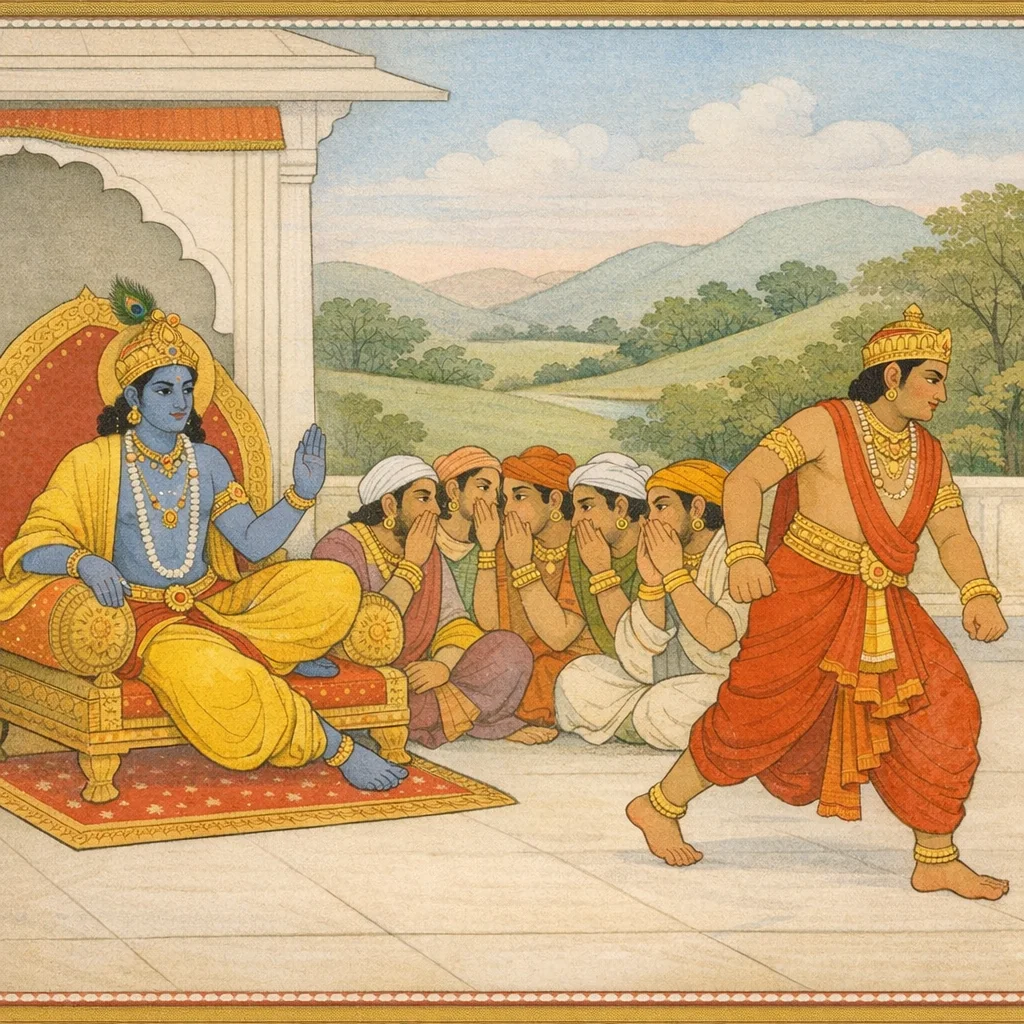
Chapter Arc: कौरवसभा में दुर्योधन के कठोर वचनों को सुनकर श्रीकृष्ण के नेत्र क्रोध से लाल हो उठते हैं; फिर भी वे क्षणभर विचार कर, राजसभा के बीचोंबीच उसे धर्म और नीति का दर्पण दिखाने को वाणी उठाते हैं। → श्रीकृष्ण दुर्योधन की ‘पाण्डवों पर मेरा कोई अतिक्रमण नहीं’ जैसी मूढ़ धारणा को तोड़ते हुए बताते हैं कि जुए ने सत्पुरुषों की बुद्धि तक का नाश किया और उसी से फूट, व्यसन और अधर्म का विस्तार हुआ। वे समझाते हैं कि शान्ति से दोनों पक्षों का महान लाभ है, पर दुर्योधन सुहृदों की सम्मति ठुकराकर अपयश और अधर्म का मार्ग चुन रहा है। सभा में उपदेश और दुर्योधन की हठ—दोनों की टकराहट तीव्र होती जाती है। → श्रीकृष्ण की कठोर फटकार के बीच दुर्योधन असह्य क्रोध से भरकर सभा से उठकर जाने लगता है; उसी क्षण यह विचार उभरता है कि यदि वह अभी पकड़ा जाए तो क्षत्रियों का विनाश टल सकता है—‘राजन्! दुर्योधन को बाँधकर पाण्डवों से संधि कर लें।’ → कृष्ण-वाणी का निष्कर्ष स्पष्ट हो जाता है: शान्ति ही श्रेयस्कर है, पर दुर्योधन हितवचन मानने को तैयार नहीं। सभा में दुर्योधन-पक्ष की प्रतिक्रिया (दुःशासन का बोल उठना) संकेत देती है कि कौरव-हठ अब नीति-उपदेश से नहीं पिघलेगा। → दुर्योधन के क्रुद्ध होकर निकलने के बाद उसे कैद करने की सलाह हवा में तैरती रह जाती है—क्या कौरवसभा में ही उसे बाँधा जाएगा, या यह अवसर भी हाथ से निकलकर युद्ध को अवश्यंभावी बना देगा?
Shlokas
Verse 1
अपना छा अर: 2 अष्टाविशर्त्याधेकशततमो< ध्याय: श्रीकृष्णका दुर्योधनको फटकारना और उसे कुपित होकर सभासे जाते देख उसे कैद करनेकी सलाह देना वैशम्पायन उवाच ततः प्रशम्य दाशार्ह: क्रोधपर्याकुलेक्षण: । दुर्योधनमिदं वाक्यमब्रवीत् कुरुसंसदि
Vaiśampāyana said: Then Dāśārha (Śrī Kṛṣṇa), having restrained himself though his eyes were still troubled by anger, spoke these words to Duryodhana in the assembly of the Kurus. The scene frames Kṛṣṇa’s ethical self-control: even when provoked, he chooses measured speech in a public forum where dharma and political responsibility are being tested.
Verse 2
वेशम्पायनजी कहते हैं--जनमेजय! दुर्योधनकी बातें सुनकर श्रीकृष्णके नेत्र क्रोधसे लाल हो गये। वे कुछ विचार करके कौरवसभामें दुर्योधनसे पुनः इस प्रकार बोले-- ।। लप्स्यसे वीरशयनं काममेतदवाप्स्यसि । स्थिरो भव सहामात्यो विमर्दो भविता महान्,“दुर्योधन! तुझे रणभूमिमें वीर-शय्या प्राप्त होगी। तेरी यह इच्छा पूर्ण होगी। तू मन्त्रियोंसहित धैर्यपूर्वक रह। अब बहुत बड़ा नरसंहार होनेवाला है
Vaiśampāyana said: “O Janamejaya, hearing Duryodhana’s words, Śrī Kṛṣṇa’s eyes turned red with anger. After reflecting for a moment, he spoke again to Duryodhana in the Kaurava assembly: ‘You will obtain a hero’s bed on the battlefield; this desire of yours will indeed be fulfilled. Stand firm together with your ministers—now a great and crushing slaughter is about to occur.’”
Verse 3
यच्चैवं मन्यसे मूढ न मे कश्रिद् व्यतिक्रम: । पाण्डवेष्विति तत् सर्व निबोधत नराधिपा:
Vaiśampāyana said: “If you think so, O deluded one, know that there is no transgression on my part. As for what concerns the Pāṇḍavas—understand all of that fully, O kings.”
Verse 4
'मूढ़! तू जो ऐसा मानता है कि पाण्डवोंके प्रति मेरा कोई अपराध ही नहीं है तो इसके सम्बन्धमें मैं सब बातें बताता हूँ। राजाओ! आपलोग भी ध्यान देकर सुनें ।। श्रिया संतप्यमानेन पाण्डवानां महात्मनाम् | त्वया दुर्मन्त्रितं द्यूत॑ सौबलेन च भारत,“भारत! महात्मा पाण्डवोंकी बढ़ती हुई समृद्धिसे संतप्त होकर तूने ही शकुनिके साथ यह खोटा विचार किया था कि पाण्डवोंके साथ जूआ खेला जाय
‘Fool! If you imagine that you have committed no offense against the Pāṇḍavas, then I will recount everything about it. And you kings as well—listen with close attention. O Bhārata (Dhṛtarāṣṭra), distressed by the growing prosperity of the great-souled Pāṇḍavas, you—together with Śakuni of Subala’s line—devised the wicked counsel of the dice-game: that the Pāṇḍavas should be drawn into play.’
Verse 5
कथं च ज्ञातयस्तात श्रेयांस: साधुसम्मता: । अथान्याय्यमुपस्थातुं जिहोनाजिदह्यचारिण:,“तात! अन्यथा सदा सरलतापूर्ण बर्ताव करनेवाले और साधु-सम्मानित तेरे श्रेष्ठ बन्धु पाण्डव यहाँ तुम-जैसे कपटीके साथ अन्याययुक्त द्यूतके लिये कैसे उपस्थित हो सकते थे?
My child, your kinsmen—the Pāṇḍavas, whom the righteous esteem as the best—are ever straightforward in conduct. How, then, could they have come to take part in an unjust game of dice with a deceitful man like you?
Verse 6
अक्षद्यूतं महाप्राज्ञ सतां मतिविनाशनम् | असतां तत्र जायन्ते भेदाक्ष॒ व्यसनानि च,“महामते! जूएका खेल तो सत्पुरुषोंकी बुद्धिको भी नाश करनेवाला है और यदि दुष्ट पुरुष उसमें प्रवृत्त हों तो उनमें बड़ा भारी कलह होता है तथा उन सबपर बहुत-से संकट छा जाते हैं
O great-minded one, the game of dice destroys the judgment even of the virtuous. And when wicked men engage in it, fierce discord arises among them, and many calamities descend upon them.
Verse 7
तदिदं व्यसन घोर त्वया द्यूतमुखं कृतम् असमीक्ष्य सदाचारान् सार्थ पापानुबन्धनै:,“तूने ही सदाचारकी ओर लक्ष्य न रखकर पापासक्त पुरुषोंके सहित भयंकर विपत्तिके कारणभूत ये द्यूतक्रीड़ा आदि कार्य किये हैं
This dreadful calamity—set in motion by the gambling match—has been brought about by you. With no regard for the standards of good conduct, you undertook these deeds in the company of men devoted to sin, acts that inevitably bind one to further wrongdoing and ruin.
Verse 8
कश्चान्यो भ्रातृभार्या वै विप्रकर्तु तथाहति । आनीय च सभा व्यक्त यथोक्ता द्रौपदी त्वया,“तेरे सिवा दूसरा कौन ऐसा अधम होगा, जो अपने बड़े भाईकी पत्नीको सभामें लाकर उसके साथ वैसा अनुचित बर्ताव करेगा। जैसा कि तूने द्रौपदीके प्रति स्पष्टरूपसे न कहने योग्य बातें कहकर दुर्व्यवहार किया है
Vaiśampāyana said: “Who else could be so vile as to bring his elder brother’s wife into the royal assembly and then outrage her with such impropriety, as you did to Draupadī—speaking openly to her words that should never be spoken?”
Verse 9
कुलीना शीलसम्पन्ना प्राणेभ्योडपि गरीयसी । महिषी पाण्डुपुत्राणां तथा विनिकृता त्वया,“द्रौपदी उत्तम कुलमें उत्पन्न, शील और सदाचारसे सम्पन्न तथा पाण्डवोंके लिये प्राणोंसे भी अधिक आदरणीय उन सबकी महारानी है। तथापि तूने उसके प्रति अत्याचार किया
Vaiśampāyana said: “Draupadī is of noble birth, endowed with virtue and good conduct; to the sons of Pāṇḍu she is dearer and more venerable even than life itself, being their chief queen. Yet you have wronged her and subjected her to humiliation.”
Verse 10
जानन्ति कुरव: सर्वे यथोक्ता: कुरुसंसदि । दुःशासनेन कौन्तेया: प्रव्रजन्त: परंतपा:,“जिस समय शत्रुओंको संताप देनेवाले कुन्तीकुमार पाण्डव वनको जा रहे थे, उस समय दुःशासनने कौरवसभामें उनके प्रति जैसी कठोर बातें कही थीं, उन्हें सभी कौरव जानते हैं
Vaiśampāyana said: All the Kurus know well what was spoken in the Kuru assembly—those harsh words uttered by Duḥśāsana—when the Kuntī-born Pāṇḍavas, scorched by injustice yet formidable to their foes, were departing into exile in the forest.
Verse 11
सम्यग्वृत्तेष्वलुब्धेषु सततं धर्मचारिषु । स्वेषु बन्धुषु कः साधुश्नरेदेवमसाम्प्रतम्,“सदा धर्ममें ही तत्पर रहनेवाले लोभरहित सदाचारी अपने बन्धुओंके प्रति कौन साधु पुरुष ऐसा अयोग्य बर्ताव करेगा?
Vaiśampāyana said: Among one’s own kinsmen—upright in conduct, free from greed, and ever devoted to dharma—what good man, at such a time, would behave so improperly and unworthily?
Verse 12
नृशंसानामनार्याणां पुरुषाणां च भाषणम् । कर्णदु:शासनाभ्यां च त्वया च बहुश: कृतम्,“दुर्योधन! तूने कर्ण और दुःशासनके साथ अनेक बार निर्दयी तथा अनार्य पुरुषोंकी-सी बातें कही हैं
Vaiśampāyana said: “You have repeatedly spoken the kind of words used by cruel and ignoble men—again and again—together with Karṇa and Duḥśāsana.”
Verse 13
सह मात्रा प्रदग्धुं तान् बालकान् वारणावते । आस्थित: परमं यत्नं न समृद्धं च तत् तव,“तूने वारणावत नगरमें बाल्यावस्थामें पाण्डवोंको उनकी मातासहित जला डालनेका महान् प्रयत्न किया था, परंतु तेरा वह उद्देश्य सफल न हो सका
Vaiśampāyana said: “At Vāraṇāvata you undertook the utmost effort to burn those boys—the Pāṇḍavas—together with their mother. Yet that design of yours did not succeed.”
Verse 14
ऊषुश्न सुचिरं काल प्रच्छन्ना: पाण्डवास्तदा | मात्रा सहैकचक्रायां ब्राह्मणस्य निवेशने,“उन दिनों पाण्डव अपनी माताके साथ सुदीर्घनकालतक एकचक्रा नगरीमें किसी ब्राह्मणके घरमें छिपे रहे
Vaiśampāyana said: At that time the Pāṇḍavas, keeping themselves concealed, lived for a long period together with their mother in the city of Ekacakrā, lodging in the house of a brāhmaṇa.
Verse 15
विषेण सर्पबन्धैशक्ष॒ यतिता: पाण्डवास्त्वया । सर्वोपायैर्विनाशाय न समृद्ध च तत् तव,'तूने (भीमसेनको) विष देकर, सर्पसे कटाकर और बाँधे हुए हाथ-पैरोंसहित जलमें डुबाकर इन सभी उपायोंद्वारा पाण्डवोंको नष्ट कर देनेका प्रयत्न किया है, परंतु तेरा यह प्रयास भी सफल न हो सका
Vaiśampāyana said: You attempted to destroy the Pāṇḍavas by every possible means—by poison, by having them bitten through serpent-contrivances, and by binding them and casting them into the water. Yet even that effort of yours did not succeed. The passage underscores the moral gravity of treachery and the futility of adharma-driven plots against the righteous.
Verse 16
एवंबुद्धि: पाण्डवेषु मिथ्यावृत्ति: सदा भवान् । कथं ते नापराधो<स्ति पाण्डवेषु महात्मसु,“ऐसे ही विचार रखकर तू पाण्डवोंके प्रति सदा कपटपूर्ण बर्ताव करता आया है, फिर कैसे मान लिया जाय कि महात्मा पाण्डवोंके प्रति तेरा कोई अपराध ही नहीं है
Vaiśampāyana said: “Holding such a mindset toward the Pāṇḍavas, you have always behaved with deceit toward them. How, then, can it be accepted that you bear no fault at all against those great-souled Pāṇḍavas?”
Verse 17
यच्चैभ्यो याचमानेभ्य: पित्र्यमंशं न दित्ससि । तच्च पाप प्रदातासि भ्रष्टैश्नर्यो निपातित:,'पापात्मन्! तू याचना करनेपर इन पाण्डवोंको जो पैतृक राज्य-भाग नहीं देना चाहता है, वही तुझे उस समय देना पड़ेगा, जब कि रणभूमिमें धराशायी होकर तू ऐश्वर्यसे भ्रष्ट हो जायगा
Vaiśampāyana said: O sinful-hearted one! When the Pāṇḍavas beg for it, you refuse to grant them their paternal share of the kingdom. Yet that very share you will be forced to yield when you lie fallen on the battlefield, stripped of sovereignty and splendor.
Verse 18
कृत्वा बहुन्यकार्याणि पाण्डवेषु नृशंसवत् | मिथ्यावृत्तिरनार्य: सन्नद्य विप्रतिपद्यसे
Vaiśaṃpāyana said: “Having committed many wrongful deeds against the Pāṇḍavas with ruthless cruelty, you—living by falsehood and behaving as one ignoble—now find yourself wavering and contradicting your own course.”
Verse 19
'क़्रकर्मी मनुष्योंकी भाँति तू पाण्डवोंके प्रति बहुत-से अयोग्य बर्ताव करके मिथ्याचारी और अनार्य होकर भी आज अपने उन अपराधोंके प्रति अनभिज्ञता प्रकट करता है ।। मातापितृभ्यां भीष्मेण द्रोणेन विदुरेण च । शाम्येति मुहुरुक्तोड्सि न च शाम्यसि पार्थिव,“माता-पिता, भीष्म, द्रोण और विदुर सबने तुझसे बार-बार कहा है कि तू संधि कर ले --शान्त हो जा, परंतु भूपाल! तू शान्त होनेका नाम ही नहीं लेता
Vaiśaṃpāyana said: Like a base-minded man, you have committed many unworthy acts against the Pāṇḍavas; though you are deceitful and ignoble, even today you pretend ignorance of your own offenses. Your mother and father, Bhīṣma, Droṇa, and Vidura have repeatedly told you, ‘Make peace—be calm’; yet, O king, you refuse to be pacified.
Verse 20
शमे हि सुमहॉल्लाभस्तव पार्थस्य चोभयो: । न च रोचयसे राजन् किमन्यद् बुद्धिलाघवात्,“राजन! शान्ति स्थापित होनेपर तेरा और युधिष्ठिरका दोनोंका ही महान् लाभ है, परंतु तुझे यह प्रस्ताव अच्छा नहीं लगता। इसे बुद्धिकी मन्दताके सिवा और क्या कहा जा सकता है?
O King, in peace there lies a very great gain for both you and Pārtha (Yudhiṣṭhira). Yet you do not approve this proposal—what else can it be called except lightness and deficiency of judgment?
Verse 21
न शर्म प्राप्स्यसे राजन्नुत्क्रम्य सुहृदां वच: । अधर्म्यमयशस्यं च क्रियते पार्थिव त्वया,राजन! तू हितैषी सुहृदोंकी आज्ञाका उल्लंघन करके कल्याणका भागी नहीं हो सकेगा। भूपाल! तू सदा अधर्म और अपयशका कार्य करता है'
O King, by transgressing the counsel of your well-wishing friends, you will not attain peace or true welfare. O ruler of the earth, what you are doing is unrighteous and will bring you disgrace.
Verse 22
वैशम्पायन उवाच एवं ब्रुवति दाशार्हें दुर्योधनममर्षणम् । दुःशासन इदं वाक्यमब्रवीत् कुरुसंसदि,वैशम्पायनजी कहते हैं--जिस समय भगवान् श्रीकृष्ण ये सब बातें कह रहे थे, उसी समय दुःशासनने बीचमें ही अमर्षशील दुर्योधनसे कौरवसभामें ही कहा--
Vaiśampāyana said: While Dāśārha (Śrī Kṛṣṇa) was speaking thus, Duḥśāsana, in the assembly of the Kurus, interrupted and addressed these words to the hot-tempered Duryodhana.
Verse 23
न चेत् संधास्यसे राजन् स्वेन कामेन पाण्डवै: । बद्ध्वा किल त्वां दास्यन्ति कुन्तीपुत्राय कौरवा:,'राजन्! यदि आप अपनी इच्छासे पाण्डवोंके साथ संधि नहीं करेंगे तो जान पड़ता है, कौरवलोग आपको बाँधकर कदुन्तीपुत्र युधिष्ठिरके हाथमें सौंप देंगे
Vaiśampāyana said: “O King, if you will not make peace with the Pāṇḍavas of your own will, then it seems the Kauravas will bind you and hand you over to Kuntī’s son (Yudhiṣṭhira).”
Verse 24
वैकर्तनं त्वां च मां च त्रीनेतान् मनुजर्षभ । पाण्डवेभ्य: प्रदास्यन्ति भीष्मो द्रोण: पिता च ते,“नरश्रेष्ठ पितामह भीष्म, आचार्य द्रोण और पिताजी--ये कर्णको, आपको और मुझे --इन तीनोंको ही पाण्डवोंके अधिकारमें दे देंगे
Vaiśampāyana said: “O bull among men, Bhīṣma, Droṇa, and your father will hand over these three—Vaikartana (Karna), you, and me—into the authority of the Pāṇḍavas.”
Verse 25
भ्रातुरेतद् वच: श्रुत्वा धार्तराष्ट्र: सुयोधन: । क्रुद्ध: प्रातिष्ठतोत्थाय महानाग इव श्वसन्,भाईकी यह बात सुनकर धृतराष्ट्रपुत्र दुर्योधन अत्यन्त कुपित हो फुफकारते हुए महान् सर्पकी भाँति लंबी साँसें खींचता हुआ वहाँसे उठकर चल दिया। वह दुर्बुद्धि, निर्लज्ज, अशिष्ट पुरुषोंकी भाँति मर्यादाशून्य, अभिमानी तथा माननीय पुरुषोंका अपमान करनेवाला था। वह विदुर, धृतराष्ट्र,, महाराज बाह्लीक, कृपाचार्य, सोमदत्त, भीष्म, द्रोणाचार्य और भगवान् श्रीकृष्ण--इन सबका अनादर करके वहाँसे चल पड़ा
Vaiśaṃpāyana said: Hearing these words of his brother, Dhṛtarāṣṭra’s son Suyodhana (Duryodhana) rose up in anger and set off, breathing hard and hissing like a great serpent. In his folly and shameless pride, he cast aside all restraint and, scorning those worthy of honor, departed after showing disrespect to Vidura, Dhṛtarāṣṭra, King Bāhlīka, Kṛpa, Somadatta, Bhīṣma, Droṇa, and even Śrī Kṛṣṇa.
Verse 26
विदुरं धृतराष्ट्र च महाराजं च बाह्विकम् । कृपं च सोमदत्तं च भीष्मं द्रोणं जनार्दनम्,भाईकी यह बात सुनकर धृतराष्ट्रपुत्र दुर्योधन अत्यन्त कुपित हो फुफकारते हुए महान् सर्पकी भाँति लंबी साँसें खींचता हुआ वहाँसे उठकर चल दिया। वह दुर्बुद्धि, निर्लज्ज, अशिष्ट पुरुषोंकी भाँति मर्यादाशून्य, अभिमानी तथा माननीय पुरुषोंका अपमान करनेवाला था। वह विदुर, धृतराष्ट्र,, महाराज बाह्लीक, कृपाचार्य, सोमदत्त, भीष्म, द्रोणाचार्य और भगवान् श्रीकृष्ण--इन सबका अनादर करके वहाँसे चल पड़ा
Vaiśaṃpāyana said: (Duryodhana) showed contempt for Vidura, for Dhṛtarāṣṭra, for the aged king Bāhlīka, for Kṛpa, for Somadatta, for Bhīṣma, for Droṇa, and even for Janārdana (Śrī Kṛṣṇa). In doing so, he violated the bounds of propriety—spurning venerable elders and wise counselors—thereby revealing the ethical blindness that hastens ruin and drives the conflict toward war.
Verse 27
सवनिताननादृत्य दुर्मतिर्निरिपत्रप: । अशिष्टवदमर्यादो मानी मान्यावमानिता,भाईकी यह बात सुनकर धृतराष्ट्रपुत्र दुर्योधन अत्यन्त कुपित हो फुफकारते हुए महान् सर्पकी भाँति लंबी साँसें खींचता हुआ वहाँसे उठकर चल दिया। वह दुर्बुद्धि, निर्लज्ज, अशिष्ट पुरुषोंकी भाँति मर्यादाशून्य, अभिमानी तथा माननीय पुरुषोंका अपमान करनेवाला था। वह विदुर, धृतराष्ट्र,, महाराज बाह्लीक, कृपाचार्य, सोमदत्त, भीष्म, द्रोणाचार्य और भगवान् श्रीकृष्ण--इन सबका अनादर करके वहाँसे चल पड़ा
Vaiśampāyana said: Disregarding those words, Duryodhana—evil-minded and shameless—rose up and departed. Lacking all decorum, speaking like an uncultured man, swollen with pride, and given to insulting those who deserved honor, he left after showing contempt for Vidura, Dhṛtarāṣṭra, King Bāhlīka, Kṛpa, Somadatta, Bhīṣma, Droṇa, and even Śrī Kṛṣṇa. The passage underscores how arrogance and disregard for elders and the wise hasten moral collapse and push events toward war.
Verse 28
त॑ प्रस्थितमभिप्रेक्ष्य भ्रातरो मनुजर्षभम् | अनुजग्मु: सहामात्या राजानश्वापि सर्वश:,नरश्रेष्ठ दुर्योधनको वहाँसे जाते देख उसके भाई, मन्त्री तथा सहयोगी नरेश सब-के- सब उठकर उसके साथ चल दिये
Vaiśampāyana said: Seeing that foremost of men set out, his brothers—together with their ministers—and all the allied kings as well rose and followed him.
Verse 29
सभायामुत्यथितं क्रुद्धं प्रस्थितं भ्रातृभि: सह । दुर्योधनमभिप्रेक्ष्य भीष्म: शान्तनवो<ब्रवीत्,इस प्रकार क्रोधमें भरे हुए दुर्योधनको भाइयों-सहित सभासे उठकर जाते देख शान्तनुनन्दन भीष्मने कहा--
Vaiśampāyana said: Seeing Duryodhana—seething with anger—rise in the assembly and depart together with his brothers, Bhīṣma, the son of Śāntanu, addressed him.
Verse 30
धर्मार्थावभिसंत्यज्य संरम्भं यो5नुमन्यते । हसन्ति व्यसने तस्य दुर्ह्वकी नचिरादिव,“जो धर्म और अर्थका परित्याग करके क्रोधका ही अनुसरण करता है, उसे शीघ्र ही विपत्तिमें पड़ा देख उसके शत्रुगण हँसी उड़ाते हैं
Vaiśampāyana said: “He who, casting aside both dharma and artha, chooses to follow only reckless anger—his enemies soon laugh at him when they see him fallen into calamity.”
Verse 31
दुरात्मा राजपुत्रो<यं धार्तराष्ट्रोडनुपायकृत् । मिथ्याभिमानी राज्यस्य क्रोधलोभवशानुग:,'राजा धृतराष्ट्रका यह दुरात्मा पुत्र दुर्योधन लक्ष्य-सिद्धिके उपायके विपरीत कार्य करनेवाला तथा क्रोध और लोभके वशीभूत रहनेवाला है। इसे राजा होनेका मिथ्या अभिमान है
Vaiśampāyana said: “This prince of Dhṛtarāṣṭra is wicked at heart, acting contrary to the means by which aims are achieved; he is ruled by anger and greed, and he bears the false pride of thinking himself a king.”
Verse 32
कालपक्वमिदं मन्ये सर्व क्षत्र॑ जनार्दन । सर्वे हानुसृता मोहात् पार्थिवा: सह मन्सत्रिभि:,'जनार्दन! मैं समझता हूँ कि ये समस्त क्षत्रियगण कालसे पके हुए फलकी भाँति मौतके मुँहमें जानेवाले हैं। तभी तो ये सब-के-सब मोहवश अपने मन्त्रियोंक साथ दुर्योधनका अनुसरण करते हैं"
Vaiśampāyana said: “O Janārdana, I deem this entire warrior order to be like fruit ripened by Time—ready to fall into death. For, deluded by confusion, all these kings, together with their ministers, are following the course set by Duryodhana.”
Verse 33
भीष्मस्याथ वच: श्रुत्वा दाशार्ह: पुष्करेक्षण: । भीष्मद्रोणमुखान् सर्वानिभ्यभाषत वीर्यवान्,भीष्मका यह कथन सुनकर महापराक्रमी दशार्हकुलनन्दन कमलनयन श्रीकृष्णने भीष्म और द्रोण आदि सब लोगोंसे इस प्रकार कहा--
Hearing Bhīṣma’s words, the mighty hero Kṛṣṇa—scion of the Dāśārha line and lotus-eyed—then addressed all those present, beginning with Bhīṣma and Droṇa.
Verse 34
सर्वेषां कुरुवृद्धानां महानयमतिक्रम: । प्रसहा मन्दमैश्वर्ये न नियच्छत यन्नूपम्,“कुरुकुलके सभी बड़े-बूढ़े लोगोंका यह बहुत बड़ा अन्याय है कि आपलोग इस मूर्ख दुर्योधनको राजाके पदपर बिठाकर अब इसका बलपूर्वक नियन्त्रण नहीं कर रहे हैं
Vaiśampāyana said: “This is a grave transgression on the part of all the elders of the Kuru house: having placed the foolish Duryodhana upon the throne, you do not now restrain that king by force.”
Verse 35
तत्र कार्यमहं मनन््ये कालप्राप्तमरिंदमा: । क्रियमाणे भवेच्छेयस्तत् सर्व शूणुतानघा:,'शत्रुओंका दमन करनेवाले निष्पाप कौरवो! इस विषयमें मैंने समयोचित कर्तव्यका निश्चय कर लिया है, जिसका पालन करनेपर सबका भला होगा। वह सब मैं बता रहा हूँ, आपलोग सुनें
O subduer of foes! In this matter I have reflected and determined the duty that has come in its proper time. If it is carried out, it will bring welfare to all. O sinless Kauravas, I shall tell it all—listen.
Verse 36
प्रत्यक्षमेतद् भवतां यद् वक्ष्यामि हित॑ं वच: । भवतामानुकूल्येन यदि रोचेत भारता:,“मैं तो हितकी बात बताने जा रहा हूँ। उसका आपलोगोंको भी प्रत्यक्ष अनुभव है। भरतवंशियो! यदि वह आपके अनुकूल होनेके कारण ठीक जान पड़े तो आप उसे काममें ला सकते हैं
What I am about to tell you is beneficial counsel, and it is something you yourselves can verify directly. O descendants of Bharata, if it seems acceptable to you—being in accord with your own disposition—then you may put it into practice.
Verse 37
भोजराजस्य वृद्धस्य दुराचारो हाुनात्मवान् । जीवत: पितुरैश्वर्य हृत्वा मृत्युवशं गत:
The wicked, self-destructive son of the aged king of the Bhojas, having seized the royal power while his father was still alive, fell under the dominion of death.
Verse 38
“बूढ़े भोजराज उग्रसेनका पुत्र कंस बड़ा दुराचारी एवं अजितेन्द्रिय था। वह अपने पिताके जीते-जी उनका सारा ऐश्वर्य लेकर स्वयं राजा बन बैठा था, जिसका परिणाम यह हुआ कि वह मृत्युके अधीन हो गया ।। उग्रसेनसुत: कंस: परित्यक्त: स बान्धवै: । ज्ञातीनां हितकामेन मया शस्तो महामृथे,“समस्त भाई-बन्धुओंने उसका त्याग कर दिया था, अतः सजातीय बन्धुओंके हितकी इच्छासे मैंने महान् युद्धमें उस उग्रसेनपुत्र कंसको मार डाला
Ugrasena’s son Kaṃsa—the aged Bhoja king’s offspring—was depraved and without self-mastery. While his father still lived, he seized all sovereignty and sat himself upon the throne; and thus he became subject to death. Abandoned by his own kinsmen, I slew Kaṃsa, Ugrasena’s son, in the great war, seeking the welfare of my relatives.
Verse 39
आहुक: पुनरस्माभिज्जातिभिश्चापि सत्कृत: । उग्रसेन: कृतो राजा भोजराजन्यवर्धन:,“तदनन्तर हम सब कुटुम्बीजनोंने मिलकर भोज-वंशी क्षत्रियोंकी उन्नति करनेवाले आहुक उग्रसेनको सत्कारपूर्वक पुनः राजा बना दिया
Thereafter, we—his own kinsmen—honoured him and, with due respect, restored Ugrasena of the line of Āhuka to the throne, thereby promoting the standing and prosperity of the Bhoja Kṣatriyas.
Verse 40
कंसमेकं परित्यज्य कुलार्थे सर्वयादवा: । सम्भूय सुखमेधन्ते भारतान्धकवृष्णय:,“भरतनन्दन! कुलकी रक्षाके लिये एकमात्र कंसका परित्याग करके अन्धक और वृष्णि आदि कुलोंके समस्त यादव परस्पर संगठित हो सुखसे रहते और उत्तरोत्तर उन्नति कर रहे हैं
Vaiśampāyana said: “For the welfare of their clan, they cast aside Kamsa alone; and all the Yādavas—Andhakas and Vṛṣṇis among them—gathered in unity, live at ease, and continue to prosper.”
Verse 41
अपि चाप्यवददू राजन् परमेष्ठी प्रजापति: । व्यूढे देवासुरे युद्धे5 भ्युद्यतेष्वायुधेषु च,'राजन्! इसके सिवा एक और उदाहरण लीजिये। एक समय प्रजापति ब्रह्माजीने जो बात कही थी, वही बता रहा हूँ। देवता और असुर युद्धके लिये मोर्चे बाँधकर खड़े थे। सबके अस्त्र-शस्त्र प्रहारके लिये ऊपर उठ गये थे। सारा संसार दो भागोंमें बँटकर विनाशके गर्तमें गिरना चाहता था। भारत! उस अवस्थामें सृष्टिकी रचना करनेवाले लोकभावन भगवान् ब्रह्माजीने स्पष्टरूपसे बता दिया कि इस युद्धमें दानवोंसहित दैत्यों तथा असुरोंकी पराजय होगी। आदित्य, वसु तथा रुद्र आदि देवता विजयी होंगे। देवता, असुर, मनुष्य, गन्धर्व, नाग तथा राक्षस--ये युद्धमें अत्यन्त कुपित होकर एक-दूसरेका वध करेंगे
Vaiśampāyana said: “And further, O King, I shall relate what Prajāpati Parameṣṭhin once declared. When the battle between the gods and the Asuras had been drawn up in full array, and when weapons were already raised to strike, he spoke…”
Verse 42
द्वैधीभूतेषु लोकेषु विनश्यत्सु च भारत । अब्रवीत् सृष्टिमान् देवो भगवॉल्लोकभावन:,'राजन्! इसके सिवा एक और उदाहरण लीजिये। एक समय प्रजापति ब्रह्माजीने जो बात कही थी, वही बता रहा हूँ। देवता और असुर युद्धके लिये मोर्चे बाँधकर खड़े थे। सबके अस्त्र-शस्त्र प्रहारके लिये ऊपर उठ गये थे। सारा संसार दो भागोंमें बँटकर विनाशके गर्तमें गिरना चाहता था। भारत! उस अवस्थामें सृष्टिकी रचना करनेवाले लोकभावन भगवान् ब्रह्माजीने स्पष्टरूपसे बता दिया कि इस युद्धमें दानवोंसहित दैत्यों तथा असुरोंकी पराजय होगी। आदित्य, वसु तथा रुद्र आदि देवता विजयी होंगे। देवता, असुर, मनुष्य, गन्धर्व, नाग तथा राक्षस--ये युद्धमें अत्यन्त कुपित होकर एक-दूसरेका वध करेंगे
Vaiśampāyana said: “O Bhārata, when the worlds had split into two opposing camps and were rushing toward destruction, the blessed god Brahmā—the creator and sustainer of the worlds—spoke out. In that crisis, he clearly declared the outcome of the impending war…”
Verse 43
पराभविष्यन्त्यसुरा दैतेया दानवै: सह । आदित्या वसवो रुद्रा भविष्यन्ति दिवौकस:,'राजन्! इसके सिवा एक और उदाहरण लीजिये। एक समय प्रजापति ब्रह्माजीने जो बात कही थी, वही बता रहा हूँ। देवता और असुर युद्धके लिये मोर्चे बाँधकर खड़े थे। सबके अस्त्र-शस्त्र प्रहारके लिये ऊपर उठ गये थे। सारा संसार दो भागोंमें बँटकर विनाशके गर्तमें गिरना चाहता था। भारत! उस अवस्थामें सृष्टिकी रचना करनेवाले लोकभावन भगवान् ब्रह्माजीने स्पष्टरूपसे बता दिया कि इस युद्धमें दानवोंसहित दैत्यों तथा असुरोंकी पराजय होगी। आदित्य, वसु तथा रुद्र आदि देवता विजयी होंगे। देवता, असुर, मनुष्य, गन्धर्व, नाग तथा राक्षस--ये युद्धमें अत्यन्त कुपित होकर एक-दूसरेका वध करेंगे
Vaiśaṃpāyana said: “The Asuras—together with the Daityas and the Dānavas—will be defeated. The Ādityas, the Vasus, and the Rudras, the dwellers in heaven, will be victorious.”
Verse 44
देवासुरमनुष्याश्न गन्धर्वोरगराक्षसा: । अस्मिन् युद्धे सुसंक्रुद्धा हनिष्यन्ति परस्परम्,'राजन्! इसके सिवा एक और उदाहरण लीजिये। एक समय प्रजापति ब्रह्माजीने जो बात कही थी, वही बता रहा हूँ। देवता और असुर युद्धके लिये मोर्चे बाँधकर खड़े थे। सबके अस्त्र-शस्त्र प्रहारके लिये ऊपर उठ गये थे। सारा संसार दो भागोंमें बँटकर विनाशके गर्तमें गिरना चाहता था। भारत! उस अवस्थामें सृष्टिकी रचना करनेवाले लोकभावन भगवान् ब्रह्माजीने स्पष्टरूपसे बता दिया कि इस युद्धमें दानवोंसहित दैत्यों तथा असुरोंकी पराजय होगी। आदित्य, वसु तथा रुद्र आदि देवता विजयी होंगे। देवता, असुर, मनुष्य, गन्धर्व, नाग तथा राक्षस--ये युद्धमें अत्यन्त कुपित होकर एक-दूसरेका वध करेंगे
Vaiśaṃpāyana said: “Gods, Asuras, human beings, Gandharvas, Nāgas, and Rākṣasas—enraged beyond measure—will, in this war, slay one another.”
Verse 45
इति मत्वाब्रवीद् धर्म परमेष्ठी प्रजापति: । वरुणाय प्रयच्छैतान् बद्ध्वा दैतेयदानवान्,“यह भावी परिणाम जानकर परमैष्ठी प्रजापति ब्रह्माने धर्मराजसे यह बात कही--“तुम इन दैत्यों और दानवोंको बाँधकर वरुणदेवको सौंप दो”
Foreseeing what the outcome would be, Prajāpati Brahmā, the Supreme Lord of beings, said to Dharma: “Bind these Daityas and Dānavas and hand them over to Varuṇa.”
Verse 46
एवमुक्तस्ततो धर्मो नियोगात् परमेष्ठिन: । वरुणाय ददौ सर्वान् बद्ध्वा दैतेयदानवान्,“उनके ऐसा कहनेपर धर्मने ब्रह्माजीकी आज्ञाके अनुसार सम्पूर्ण दैत्यों और दानवोंको बाँधकर वरुणको सौंप दिया
Thus addressed, Dharma—acting under the command of Parameṣṭhin (Brahmā)—bound all the Daiteyas and Dānavas and handed them over to Varuṇa.
Verse 47
तान् बद्ध्वा धर्मपाशैश्न स्वैश्व पाशैर्जलेश्वर: । वरुण: सागरे यत्तो नित्यं रक्षति दानवान्,“तबसे जलके स्वामी वरुण उन्हें धर्मपाश एवं वारुणपाशमें बाँधकर प्रतिदिन सावधान रहकर उन दानवोंको समुद्रकी सीमामें ही रखते हैं
Having bound them with the cords of Dharma and with his own Varuṇa-nooses, Varuṇa—the lord of the waters—keeps those Dānavas confined within the bounds of the ocean, ever vigilant, guarding them day after day.
Verse 48
तथा दुर्योधन कर्ण शकुनिं चापि सौबलम् | बद्ध्वा दुःशासनं चापि पाण्डवेभ्य: प्रयच्छथ,“भरतवंशियो! उसी प्रकार आपलोग दुर्योधन, कर्ण, सुबलपुत्र शकुनि तथा दुःशासनको बंदी बनाकर पाण्डवोंके हाथमें दे दें
Vaiśampāyana said: “In the same way, seize Duryodhana, Karṇa, and Śakuni the son of Subala, and also bind Duḥśāsana; then hand them over to the Pāṇḍavas.”
Verse 49
त्यजेत् कुलार्थे पुरुष ग्रामस्यार्थे कुलं त्यजेत् ग्रामं जनपदस्यार्थ आत्मार्थे पृथिवीं त्यजेत्,“समस्त कुलकी भलाईके लिये एक पुरुषको, एक गाँवके हितके लिये एक कुलको, जनपदके भलेके लिये एक गाँवको और आत्मकल्याणके लिये समस्त भूमण्डलको त्याग दें
Vaiśampāyana said: “For the welfare of a whole clan, one should relinquish a single person; for the welfare of a village, one should relinquish a clan; for the welfare of a country, one should relinquish a village; and for one’s own highest good, one should relinquish even the entire earth.”
Verse 50
राजन् दुर्योधन बद्ध्वा ततः संशाम्य पाण्डवै: । त्वत्कृते न विनश्येयु: क्षत्रिया: क्षत्रियर्षभ,“राजन्! आप दुर्योधनको कैद करके पाण्डवोंसे संधि कर लें। क्षत्रियशिरोमणे! ऐसा न हो कि आपके कारण समस्त क्षत्रियोंका विनाश हो जाय”
Vaiśampāyana said: “O King, seize Duryodhana and then make peace with the Pāṇḍavas. O bull among kṣatriyas, let it not come to pass that, because of you, the hosts of kṣatriyas are destroyed.”
Verse 127
इस प्रकार श्रीमह्ाभारत उद्योगपर्वके अन्तर्गत भगवद्यानपर्वमें दुर्योधनवाक्यविषयक एक सौ सत्ताईसवाँ अध्याय पूरा हुआ
Thus ends the one hundred and twenty-seventh chapter of the Udyoga Parva of the Śrī Mahābhārata, within the Bhagavad-yāna section, dealing with the words of Duryodhana. This closing formula marks the completion of a narrative unit in which Duryodhana’s stance and speech are foregrounded—signaling the hardening of positions that will drive the epic toward war and test the bounds of dharma, counsel, and restraint.
Verse 128
इति श्रीमहाभारते उद्योगपर्वणि भगवद्यानपर्वणि कृष्णवाक्ये अष्टाविंशत्यधिकशततमो<ध्याय:
Thus ends, in the Śrī Mahābhārata, within the Udyoga Parva, in the section on the Lord’s mission (Bhagavad-yāna), in the discourse of Kṛṣṇa, the one-hundred-and-twenty-eighth chapter. This is a formal colophon marking the close of a chapter, situating the narrative within Kṛṣṇa’s peace-embassy and counsel—an ethical turning point where diplomacy and dharma are weighed against the looming necessity of war.
Frequently Asked Questions
The dilemma is whether a ruler prioritizes familial attachment and unilateral ambition or follows counsel-based rājadharma—accepting equitable settlement and restraint to prevent systemic harm to kin, polity, and subjects.
Political authority is an extension of self-governance: conquering kāma and krodha, disciplining the senses, and listening to wise counsel are presented as prerequisites for stable rule and durable prosperity.
No explicit phalaśruti appears in this passage; the chapter functions as practical-ethical instruction (nīti-upadeśa) embedded in narrative, emphasizing consequences rather than ritualized merit statements.