Adhyaya 74
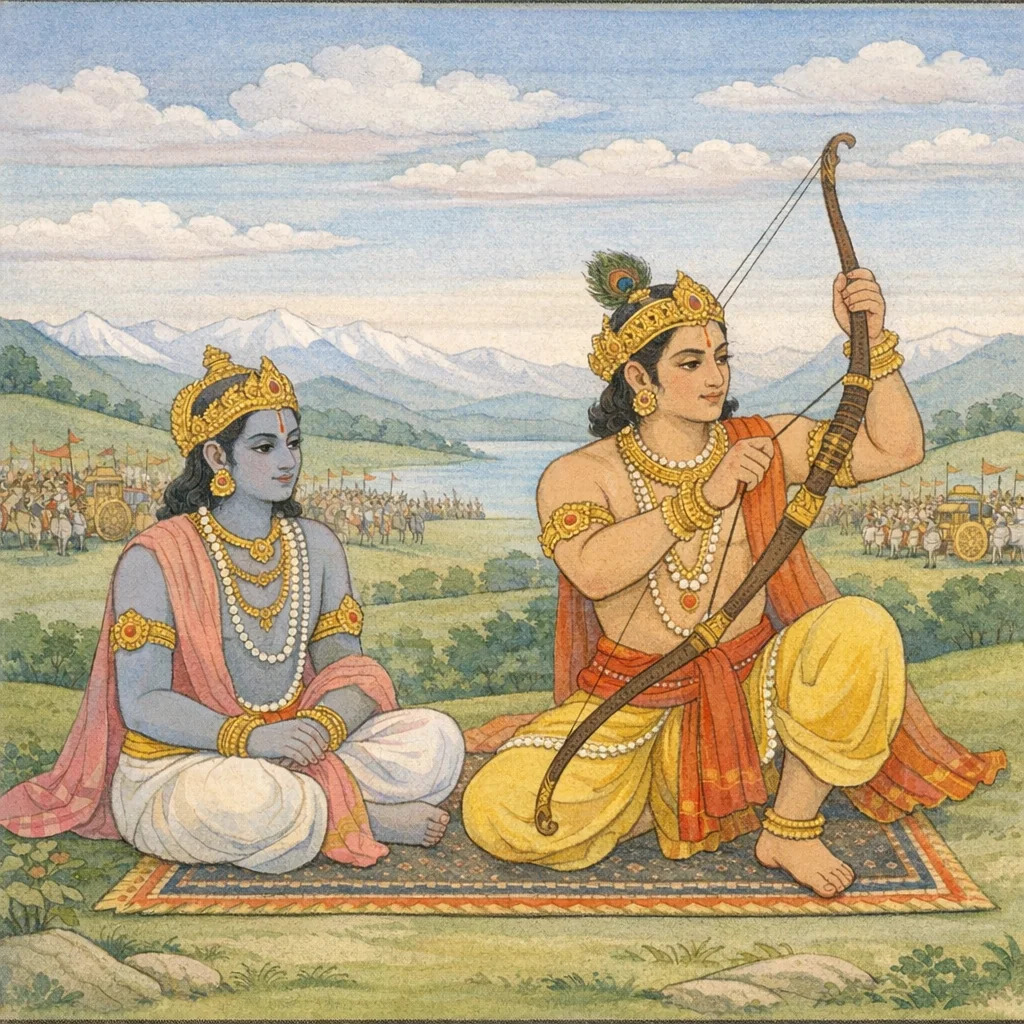
Chapter Arc: संजय धृतराष्ट्र को सुनाते हैं—केशव के वचन सुनते ही बीभत्सु अर्जुन का शोक क्षणभर में गल जाता है और वीर-उद्गार से उसका मन युद्ध के लिए प्रज्वलित हो उठता है। → अर्जुन गाण्डीव की प्रत्यंचा कसता है, धनुष को साधता है और केशव से कहता है कि तुम्हारे संरक्षण में विजय ध्रुव है। उधर कर्ण अपने गुणों की श्लाघा करते हुए धृतराष्ट्र-पुत्रों को आश्वासन देता है कि वह पाण्डवों को त्रस्त करेगा—दोनों पक्षों की वाणी ही रण का बिगुल बन जाती है। → अर्जुन का प्रतिज्ञा-घोष—‘आज मैं घोर, शक्तिसम्पन्न, रणदुर्मद कर्ण को अपने बाणों से सूदा दूँगा’—और साथ ही यह उद्घोष कि समस्त सेना देखे कि धनंजय कैसे कौरवों से युद्ध करता हुआ सूतपुत्र कर्ण का संहार करता है। → अध्याय का अंत प्रतिज्ञाओं और आत्मविश्वास के स्थिरीकरण में होता है—अर्जुन के लिए केशव-आश्रय विजय का आधार बनता है, और कर्ण के लिए अपनी कीर्ति-लालसा तथा दुर्योधन-समर्थन युद्ध-उन्माद को पुष्ट करते हैं। → दोनों महावीरों की वाणी से निर्णायक द्वंद्व की छाया गाढ़ी हो जाती है—अगले प्रसंग में वही प्रतिज्ञाएँ शस्त्रों में बदलने को तत्पर हैं।
Shlokas
Verse 1
अकाल चतु:ःसप्ततितमो< ध्याय: अर्जुनके वीरोचित उदगार संजय उवाच स केशवस्य बी भत्सु: श्रुत्वा भारत भाषितम् । विशोकः: सम्प्रहृष्टश्न क्षणेन समपद्यत,संजय कहते हैं--भरतनन्दन! भगवान् श्रीकृष्णका यह भाषण सुनकर अर्जुन एक ही क्षणमें शोकरहित एवं हर्ष और उत्साहसे सम्पन्न हो गये
Sañjaya said: “O scion of Bharata! Hearing Keśava’s words, Arjuna in a single moment became free of sorrow, filled with joy and ardor.”
Verse 2
ततो ज्यामभिमृज्याशु व्याक्षिपद् गाण्डिवं धनु: । दश्रे कर्णविनाशाय केशवं चाभ्यभाषत,तत्पश्चात् धनुषकी प्रत्यंचाको साफ करके उन्होंने शीघ्र ही गाण्डीवधनुषकी टंकार की और कर्णके विनाशका दृढ़ निश्चय कर लिया। फिर वे भगवान् श्रीकृष्णसे इस प्रकार बोले --[
Sañjaya said: Then, swiftly wiping the bowstring, he drew and twanged the Gāṇḍīva bow. Resolute about Karṇa’s destruction, he then addressed Keśava (Kṛṣṇa).
Verse 3
त्वया नाथेन गोविन्द ध्रुव एव जयो मम । प्रसन्नो यस्य मेडद्य त्वं लोके भूतभविष्यकृत्,“गोविन्द! जब आप मेरे स्वामी और संरक्षक हैं, तब युद्धमें मेरी विजय निश्चित ही है। संसारके भूत और भविष्यका निर्माण करनेवाले आप ही हैं। जिसके ऊपर आप प्रसन्न हैं, उसकी (अर्थात् मेरी) विजयमें आज क्या संदेह है
Sañjaya said: “O Govinda, with you as my lord and protector, my victory is assured. You are the maker of what has been and what will be in this world. If you are gracious to someone—indeed, to me today—what doubt can there be about victory?”
Verse 4
त्वत्सहायो हाहं कृष्ण त्रींललोकान् वै समागतान् | प्रापयेयं परं लोक॑ किमु कर्ण महाहवे,'श्रीकृष्णण आपकी सहायता मिलनेपर तो मैं युद्धके लिये सामने आये हुए तीनों लोकोंको भी परलोकका पथिक बना सकता हूँ, फिर इस महासमरमें कर्णको जीतना कौन बड़ी बात है?
Sañjaya said: “With you as my ally, O Kṛṣṇa, I could send even the three worlds—were they to assemble against me—on the road to the next world. How much more, then, in this great battle, is the conquest of Karṇa anything difficult?”
Verse 5
पश्यामि द्रवतीं सेनां पठ्चालानां जनार्दन । पश्यामि कर्ण समरे विचरन्तमभीतवत्,“जनार्दन! मैं समरभूमिमें निर्भय-से विचरते हुए कर्णको और भागती हुई पांचालोंकी सेनाको भी देख रहा हूँ
Sañjaya said: “O Janārdana, I see the army of the Pāñcālas fleeing. I also see Karṇa moving about on the battlefield without fear.”
Verse 6
भार्गवास्त्रं च पश्यामि ज्वलन्तं कृष्ण सर्वश: । सृष्टं कर्णेन वार्ष्णेय शक्रेणेव यथाशनिम्,“श्रीकृष्ण! वाष्णेय! सब ओरसे प्रज्वलित होनेवाले भार्गवास्त्रपर भी मेरी दृष्टि है, जिसे कर्णने उसी तरह प्रकट किया है, जैसे इन्द्र वज्ञका प्रयोग करते हैं
Sañjaya said: “O Kṛṣṇa, O Vārṣṇeya, I see the Bhārgava weapon blazing on every side—released by Karṇa, like Indra hurling his thunderbolt.”
Verse 7
अयं खलु स संग्रामो यत्र कर्ण मया हतम् | कथयिष्यन्ति भूतानि यावद् भूमिर्धरिष्यति,“निश्चय ही यह वह संग्राम है, जहाँ कर्ण मेरे हाथसे मारा जायगा और जबतक यह पृथ्वी विद्यमान रहेगी, तबतक समस्त प्राणी इसकी चर्चा करेंगे
Sañjaya said: “Indeed, this is that very battle in which Karṇa will be slain by my hand. As long as the earth endures, living beings will recount it.”
Verse 8
अद्य कृष्ण विकर्णा मे कर्ण नेष्यन्ति मृत्यवे । गाण्डीवमुक्ता: क्षिण्वन्तो मम हस्तप्रचोदिता:,“श्रीकृष्ण! आज मेरे हाथसे प्रेरित और गाण्डीव-धनुषसे मुक्त हुए विकर्ण नामक बाण कर्णको क्षत-विक्षत करते हुए उसे यमलोक पहुँचा देंगे
Sañjaya said: “O Krishna, today the Vikarna arrows—released from the Gandiva and driven by my own hand—will tear Karna with their blows and send him to Death.”
Verse 9
अद्य राजा धृतराष्ट्र: स्वां बुद्धिमवमंस्यते । दुर्योधनमराज्याहँ यया राज्ये5भ्यषेचयत्,“आज राजा धृतराष्ट्र अपनी उस बुद्धिका अनादर करेंगे, जिसके द्वारा उन्होंने राज्यके अनधिकारी दुर्योधनको राजाके पदपर अभिषिक्त कर दिया था
Sañjaya said: Today King Dhṛtarāṣṭra will come to despise his own judgment—the very counsel by which he had consecrated Duryodhana, who was not fit to rule, to the sovereignty.
Verse 10
अद्य राज्यात् सुखाच्चैव श्रियो राष्ट्रात् तथा पुरात् पुत्रेभ्यश्ष महाबाहो धृतराष्ट्रो विमोक्ष्यति
Sañjaya said: “Today, O mighty-armed one, Dhṛtarāṣṭra will be severed from his kingdom and its comforts, from prosperity, from the realm and the capital city, and even from his sons.”
Verse 11
“महाबाहो! आज धृतराष्ट्र अपने राज्यसे, सुखसे, लक्ष्मीसे, राष्ट्रसे, नगरसे और अपने पुत्रोंसे भी बिछड़ जायँगे ।। गुणवन्तं हि यो द्वेष्टि निर्गुणं कुरुते प्रभुम् । स शोचति नृप: कृष्ण क्षिप्रमेवागते क्षये,“श्रीकृष्ण! जो गुणवानसे द्वेष करता और गुणहीनको राजा बनाता है, वह नरेश विनाशकाल उपस्थित होनेपर शोकमग्न हो पश्चात्ताप करता है
Sañjaya said: “O mighty-armed one! Today Dhṛtarāṣṭra will be torn away from his kingdom, his comfort, his prosperity, his realm, his city, and even from his sons. For, O Krishna, the king who hates the virtuous and elevates the unworthy to sovereignty—when the hour of ruin arrives—quickly falls into grief and bitter remorse.”
Verse 12
यथा च पुरुष: कश्रिच्छित्त्वा चाम्रव्णं महत् । फल दृष्टवा भृशं दुःखी भविष्यति जनार्दन | सूतपुत्रे हते त्वद्य निराशो भविता प्रभु:,“जनार्दन! जैसे कोई पुरुष आमके विशाल वनको काटकर उसके दुष्परिणामको उपस्थित देख अत्यन्त दुःखी हो जाता है, उसी प्रकार आज सूतपुत्रके मारे जानेपर राजा दुर्योधन निराश हो जायगा
Sañjaya said: “Janārdana, just as a man, having cut down a vast mango-grove, becomes deeply distressed when he sees the resulting consequences, so too today—when the charioteer’s son is slain—King Duryodhana will fall into despair, O Lord.”
Verse 13
अद्य दुर्योधनो राज्याज्जीविताच्च निराशक: । भविष्यति हते कर्णे कृष्ण सत्यं ब्रवीमि ते,“श्रीकृष्ण! मैं आपसे सच्ची बात कहता हूँ। आज कर्णका वध हो जानेपर दुर्योधन अपने राज्य और जीवन दोनोंसे निराश हो जायगा
Sañjaya said: “O Krishna, I tell you the truth: today, when Karna is slain, Duryodhana will lose all hope—both of his kingdom and even of his life.”
Verse 14
अद्य दृष्टवा मया कर्ण शरैविशकलीकृतम् । स्मरतां तव वाक्यानि शमं प्रति जनेश्वर:,“आज मेरे बाणोंसे कर्णके शरीरको टूक-टूक हुआ देखकर राजा दुर्योधन सन्धिके लिये कहे हुए आपके वचनोंका स्मरण करे
Sañjaya said: “Today, having seen Karṇa cut to pieces by my arrows, may the lord of men (King Duryodhana) remember your words urging peace.”
Verse 15
अद्यासौ सौबल: कृष्ण ग्लहाञ्जानातु वै शरान् | दुरोदरं च गाण्डीवं मण्डलं च रथं प्रति,“श्रीकृष्ण! आज सुबलपुत्र जुआरी शकुनिको यह मालूम हो जाय कि मेरे बाण ही दाँव हैं, गाण्डीवधनुष ही पासा है और मेरा रथ ही मण्डल (चौपड़के खाने) है
Sañjaya said: “O Kṛṣṇa, let that Saubala—Śakuni the gambler—today truly come to know that my arrows are the stakes, the Gāṇḍīva is the dice, and my chariot is the gaming-board’s squares.”
Verse 16
अद्य कुन्तीसुतस्याहं दृढं राज्ञ: प्रजागरम् व्यपनेष्यामि गोविन्द हत्वा कर्ण शितै: शरै:,“गोविन्द! आज मैं अपने पैने बाणोंसे कर्णको मारकर कुन्तीपुत्र राजा युधिष्ठटिरके चिन्ताजनित जागरणके स्थायी रोगको दूर कर दूँगा
Sañjaya said: “Today, O Govinda, by slaying Karṇa with my keen arrows, I shall firmly remove the king—Kuntī’s son—of his tormenting wakefulness born of anxiety.”
Verse 17
अद्य कुन्तीसुतो राजा हते सूतसुते मया । सुप्रहृष्टमना: प्रीतश्चिरं सुखमवाप्स्यति,“आज दुन्तीपुत्र राजा युधिष्ठिर मेरे द्वारा सूतपुत्र कर्णके मारे जानेपर प्रसन्नचित्त हो दीर्घकालके लिये संतुष्ट एवं सुखी हो जायँगे
Sañjaya said: “Today, when the king—Kuntī’s son—has seen the charioteer’s son slain by me, he will become exceedingly glad at heart; satisfied and delighted, he will enjoy happiness for a long time.”
Verse 18
अद्य चाहमनाधुष्यं केशवाप्रतिमं शरम् । उत्स्रक्ष्यामीह यः कर्ण जीविताद् भ्रंशयिष्यति,“आज मैं ऐसा अनुपम और अजेय बाण छोड़ूँगा, जो कर्णको उसके प्राणोंसे वंचित कर देगा
Sañjaya said: “Today I shall release here an incomparable arrow, invincible and like Keśava himself in might—an arrow that will strip Karṇa of his very life.”
Verse 19
यस्य चैतद् व्रतं महां वधे किल दुरात्मन: । पादौ न धावये तावद् यावद्धन्यां न फाल्गुनम्,“मधुसूदन! जिस दुरात्माने मेरे वधके लिये यह व्रत लिया है कि जबतक अर्जुनको मार न लूंगा, तबतक दूसरोंसे पैर न धुलाऊँगा। उस पापीके इस व्रतको मिथ्या करके झुकी हुई गाँठवाले बाणोंद्वारा उसके इस शरीरको रथसे नीचे गिरा दूँगा
Sañjaya said: “That wicked man has, it seems, undertaken this great vow for my slaying: ‘I will not wash my feet until I have killed Phālguna (Arjuna).’ I shall render that sinner’s vow false and, with bent-knot arrows, cast his body down from the chariot.”
Verse 20
मृषा कृत्वा व्रतं तस्य पापस्य मधुसूदन । पातयिष्ये रथात् कायं शरै: संनतपर्वभि:,“मधुसूदन! जिस दुरात्माने मेरे वधके लिये यह व्रत लिया है कि जबतक अर्जुनको मार न लूंगा, तबतक दूसरोंसे पैर न धुलाऊँगा। उस पापीके इस व्रतको मिथ्या करके झुकी हुई गाँठवाले बाणोंद्वारा उसके इस शरीरको रथसे नीचे गिरा दूँगा
Sañjaya said: “O Madhusūdana, I shall render false the vow of that sinful man. With arrows whose joints are bent, I will strike down his body and cast him from his chariot.”
Verse 21
योडसौ रणे नर नान्यं पृथिव्यामनुमन्यते । तस्याद्य सूतपुत्रस्य भूमि: पास्यति शोणितम्,“जो भूमण्डलमें दूसरे किसी पुरुषको रणभूमिमें अपने समान नहीं मानता है, आज यह पृथ्वी उस सूतपुत्रके रक्तका पान करेगी
Sañjaya said: “That warrior who, on the battlefield, acknowledges no other man on earth as his equal—today the earth will drink the blood of that sūta’s son.”
Verse 22
अपतिह्ठ[सि कृष्णेति सूतपुत्रो यदब्रवीत् धृतराष्ट्रमते कर्ण: श्लाघमान: स्वकान् गुणान्,'सूतपुत्र कर्णने धृतराष्ट्रके मतमें होकर अपने गुणोंकी प्रशंसा करते हुए जो द्रौपदीसे यह कहा था कि “कृष्णे! तू पतिहीन है” उसके इस कथनको मेरे तीखे बाण असत्य कर दिखायेंगे और क्रोधमें भरे हुए विषधर सर्पोके समान उसके रक्तका पान करेंगे
Sañjaya said: “When Karṇa, the son of a charioteer—aligned with Dhṛtarāṣṭra’s party—boasted of his own qualities and once spoke to Draupadī, ‘O Kṛṣṇā, you are without a husband,’ my sharp arrows will prove that utterance false. Like venomous serpents swollen with wrath, they will drink his blood.”
Verse 23
अनृतं तत् करिष्यन्ति मामका निशिता: शरा: । आशीविषा इव क्रुद्धास्तस्य पास्यन्ति शोणितम्,'सूतपुत्र कर्णने धृतराष्ट्रके मतमें होकर अपने गुणोंकी प्रशंसा करते हुए जो द्रौपदीसे यह कहा था कि “कृष्णे! तू पतिहीन है” उसके इस कथनको मेरे तीखे बाण असत्य कर दिखायेंगे और क्रोधमें भरे हुए विषधर सर्पोके समान उसके रक्तका पान करेंगे
Sañjaya said: “My side’s sharp arrows will prove that claim false; like enraged venomous serpents, they will drink his blood.”
Verse 24
मया हस्तवता मुक्ता नाराचा वैद्युतत्विष: । गाण्डीवसृष्टा दास्यन्ति कर्णस्य परमां गतिम्,“मैं बाण चलानेमें सिद्धहस्त हूँ। मेरे द्वारा गाण्डीव धनुषसे छोड़े गये बिजलीके समान चमकते हुए नाराच कर्णको परम गति प्रदान करेंगे
Sañjaya said: “I am skilled and steady of hand in releasing arrows. The lightning-bright nārāca shafts that I loose from the Gāṇḍīva will grant Karṇa his final, supreme end.”
Verse 25
अद्य तप्स्यति राधेय: पाज्चालीं यत्तदाब्रवीत् सभामध्ये वच: क्रूरं कुत्सयन् पाण्डवान् प्रति,'राधापुत्र कर्णने भरी सभामें पाण्डवोंकी निन््दा करते हुए द्रौपदीसे जो क्रूरतापूर्ण वचन कहा था, उसके लिये उसे बड़ा पश्चात्ताप होगा
Sañjaya said: “Today Rādheya (Karna) will burn with remorse for the cruel words he once spoke to Pāñcālī in the royal assembly, words uttered while reviling the Pāṇḍavas.”
Verse 26
ये वै षण्ढतिलास्तत्र भवितारोडद्य ते तिला: | हते वैकर्तने कर्णे सूतपुत्रे दुरात्मनि,“जो पाण्डव वहाँ थोथे तिलोंके समान नपुंसक कहे गये थे, वे दुरात्मा सूतपुत्र वैकर्तन कर्णके मारे जानेपर आज अच्छे तिल और शूरवीर सिद्ध होंगे
Sañjaya said: “Those very Pāṇḍavas who were there derided as ‘impotent like empty sesame seeds’ will today prove to be true ‘sesame’—men of real substance and valor—now that Karṇa, the charioteer’s son Vaikartana, that wicked one, has been slain.”
Verse 27
अहं व: पाण्डुपुत्रेभ्यस्त्रास्यामीति यदब्रवीत् | धृतराष्ट्रसुतान् कर्ण: श्लाघमानो55त्मनो गुणान्,“अपने गुणोंकी प्रशंसा करते हुए सूतपुत्र कर्णने धृतराष्ट्रके पुत्रोंस जो यह कहा था कि 'मैं पाण्डवोंसे तुम्हारी रक्षा करूँगा" उसके इस कथनको मेरे तीखे बाण असत्य कर देंगे और पाण्डवोंका युद्धविषयक उद्योग समाप्त हो जायगा
Sañjaya said: “When Karṇa, praising his own prowess, declared to Dhṛtarāṣṭra’s sons, ‘I will protect you from the sons of Pāṇḍu,’ that boast will be made false by my sharp arrows.”
Verse 28
अनृतं तत् करिष्यन्ति मामका निशिता: शरा: । उद्योग: पाण्डुपुत्राणां समाप्तिमुपयास्यति,“अपने गुणोंकी प्रशंसा करते हुए सूतपुत्र कर्णने धृतराष्ट्रके पुत्रोंस जो यह कहा था कि 'मैं पाण्डवोंसे तुम्हारी रक्षा करूँगा" उसके इस कथनको मेरे तीखे बाण असत्य कर देंगे और पाण्डवोंका युद्धविषयक उद्योग समाप्त हो जायगा
Sañjaya said: “My sharp arrows will make that claim false; the warlike enterprise of the sons of Pāṇḍu will come to its end.”
Verse 29
हन्ताहं पाण्डवान् सर्वान् सपुत्रानिति योउब्रवीत् | तमद्य कर्ण हन्तास्मि मिषतां सर्वधन्विनाम्,“जिसने यह कहा था कि मैं *पुत्रोंसहित समस्त पाण्डवोंको मार डालूँगा” उस कर्णको आज समस्त धनुर्धरोंके देखते-देखते मैं नष्ट कर दूँगा
Sañjaya said: “He who once declared, ‘I shall slay all the Pāṇḍavas together with their sons’—that Karṇa, today, before the very eyes of all the bowmen, I shall destroy.”
Verse 30
यस्य वीर्य समाश्रित्य धार्तराष्ट्री महामना: । अवामन्यत दुर्बुद्धिर्नित्यमस्मान् दुरात्मवान्
Sañjaya said: “Relying on the prowess of that great-souled warrior, the son of Dhṛtarāṣṭra—of perverted understanding and wicked disposition—constantly held us in contempt.”
Verse 31
शरान् नानाविधान् मुक््त्वा त्रासयिष्यामि शात्रवान् | आकर्णममुक्तैरिषुभिययमराष्ट्रविवर्धनी:
Sañjaya said: “Discharging arrows of many kinds, I shall strike terror into the enemy host. With shafts drawn to the ear and released in rapid succession, the princess of the Yadu line (Satyabhāmā) spoke thus—her words swelling the resolve of her side.”
Verse 32
तत्राहं वै महासंख्ये सम्पन्न युद्धदुर्मदम्
Sañjaya said: “There, in that vast and tumultuous battle, I beheld one who had come fully into his own—intoxicated with the arrogance that war can breed.”
Verse 33
अद्य कर्ण हते कृष्ण धार्तराष्ट्र: सराजका:
Sañjaya said: “O Kṛṣṇa, today, with Karṇa slain, the sons of Dhṛtarāṣṭra—together with their kings—stand broken in spirit and power.”
Verse 34
अद्य दुर्योधनो राजा आत्मानं चानुशोचताम्
Sañjaya said: “Today King Duryodhana, lamenting, grieves even for his own self.”
Verse 35
हते कर्णे मया संख्ये सपुत्रे ससुहृज्जने । “आज युद्धस्थलमें पुत्रों और सुहृदोंसहित कर्णके मेरे द्वारा मारे जानेपर राजा दुर्योधन अपने लिये निरन्तर शोक करे ।। अद्य कर्ण हतं दृष्टवा धार्तराष्ट्रोत्यमर्षण:
Sañjaya said: “When Karṇa has been slain by me in battle—together with his sons, his friends, and his followers—today, upon seeing Karṇa fallen, Dhṛtarāṣṭra’s son (Duryodhana), unable to endure the blow, will be consumed by unceasing grief for himself.”
Verse 36
सपुत्रपौत्र॑ सामात्यं सभृत्यं च निराशिषम्
Sañjaya said: “(He/they were left) together with sons and grandsons, with ministers and attendants as well—bereft of hope and expectation.”
Verse 37
अद्य कर्णस्य चक्राज़: क्रव्यादाश्व॒ पृथग्विधा:
Sañjaya said: “Today, the disc-like weapons of Karṇa, and the flesh-eating creatures of many kinds, have become manifest on the battlefield.”
Verse 38
शरैश्छिन्नानि गात्राणि विहरिष्यन्ति केशव । “केशव! आज चक्रवाक तथा भिन्न-भिन्न मांसभोजी पक्षी बाणोंसे कटे हुए कर्णके अंगोंको उठा ले जायूँगे ।। अद्य राधासुतस्याहं संग्रामे मधुसूदन
Sañjaya said: “O Keśava, limbs severed by arrows will be strewn about. Today the cakravāka birds, and other flesh-eating birds of various kinds, will lift and carry away the arrow-cut limbs of Rādheya’s son (Karna) from the battlefield.”
Verse 39
शिरश्छेत्स्यामि कर्णस्य मिषतां सर्वधन्विनाम् “मधुसूदन! आज संग्राममें समस्त धनुर्धरोंके देखते-देखते मैं राधापुत्र कर्णका मस्तक काट डालूँगा ।। अद्य ती#णैविंपाठैश्न क्षुरैश्ष मधुसूदन
Sañjaya said: “Madhusūdana! Today, in the midst of battle, before the very eyes of all the bowmen, I shall sever Karṇa’s head—the son of Rādhā.”
Verse 40
अद्य राजा महत् कृच्छू संत्यक्ष्यति युधिष्ठिर:
Sañjaya said: “Today King Yudhiṣṭhira will cast off a great hardship.”
Verse 41
संतापं मानसं वीरश्विरसम्भूतमात्मन: । “आज वीर राजा युधिष्छठिर महान् कष्ट और अपने चिरसंचित मानसिक संतापसे छुटकारा पा जायूँगे ।। अद्य केशव राधेयमहं हत्वा सबान्धवम्
Sañjaya said: “Today the long-accumulated anguish in my own mind will be brought to an end. Today the heroic king Yudhiṣṭhira will be freed from great distress and from his long-stored inner torment. Today, having slain Keśava and Rādheya together with their allies and kinsmen, I shall secure that release.”
Verse 42
अद्याहमनुगान् कृष्ण कर्णस्य कृपणान् युधि
Sañjaya said: “Today, O Kṛṣṇa, I beheld in battle the wretched followers of Karṇa.”
Verse 43
अद्याहं हेमकवचैराबद्धमणिकुण्डलै:
Sañjaya said: “Today I shall stand forth clad in golden armor, with jeweled earrings fastened on.”
Verse 44
संस्तरिष्यामि गोविन्द वसुधां वसुधाधिपै: । “गोविन्द! आज मैं सुवर्णमय कवच और मणिमय कुण्डल धारण करनेवाले भूपतियोंकी लाशोंसे रणभूमिको पाट दूँगा | ४३ ई ।। अद्याभिमन्यो: शत्रूणां सर्वेषां मधुसूदन
Sañjaya said: “O Govinda, I shall carpet the earth with the bodies of kings. Today, O Madhusūdana, I will lay low all the enemies of Abhimanyu.”
Verse 45
अद्य निर्धान॑राष्ट्रां च भ्रात्रे दास्यामि मेदिनीम्
Sañjaya said: “Today I shall hand over this earth to my brother, and I shall also make the Dhārtarāṣṭras utterly destitute.”
Verse 46
अद्याहमनृण: कृष्ण भविष्यामि धनुर्भुताम्
Sañjaya said: “Today, O Kṛṣṇa, I shall be free of my debt to the bow-bearing warriors.”
Verse 47
कोपस्य च कुरूणां च शराणां गाण्डिवस्य च । “श्रीकृष्ण! आज मैं सम्पूर्ण धनुर्धरोंके, क्रोधके, कौरवोंके, बाणोंके तथा गाण्डीव धनुषके भी ऋणसे मुक्त हो जाऊँगा ।। अद्य दुःखमहं मोक्ष्ये त्रपोदशसमार्जितम्
Sañjaya said: “Of wrath, of the Kurus, of arrows, and even of the Gāṇḍīva bow—O Śrī Kṛṣṇa, today I shall be freed from the debt I owe to them all. Today I will cast off the sorrow that has been accumulated through shame and humiliation.”
Verse 48
हत्वा कर्ण रणे कृष्ण शम्बरं मघवानिव । “श्रीकृष्ण! जैसे इन्द्रने शम्बरासुरका वध किया था, उसी प्रकार मैं रणभूमिमें कर्णको मारकर आज तेरह वर्षोंसे संचित किये हुए दुःखका परित्याग कर दूँगा ।। अद्य कर्ण हते युद्धे सोमकानां महारथा:
Sañjaya said: “O Kṛṣṇa, just as Maghavān (Indra) slew the demon Śambara, so will I slay Karṇa on the battlefield today and cast off the sorrow that has been accumulating for thirteen years. Today, when Karṇa is slain in war, the great chariot-warriors of the Somakas…”
Verse 49
कृतं कार्य च मन्यन्तां मित्रकार्येप्सवो युधि । “आज युद्धमें कर्णके मारे जानेपर मित्रके कार्यकी सिद्धि चाहनेवाले सोमकवंशी महारथी अपनेको कृतकार्य समझ लें ।। न जाने च कथं प्रीति: शैनेयस्याद्य माधव
Sañjaya said: “Let those who, in this battle, longed to accomplish a friend’s cause consider their task fulfilled. Today, with Karṇa slain in the war, the Somaka-lineage great chariot-warriors who sought the success of their ally’s purpose may deem themselves to have achieved their aim. Yet I do not know, O Mādhava, how Śaineya’s heart will feel today.”
Verse 50
अहं हत्वा रणे कर्ण पुत्रं चास्य महारथम्
Sañjaya said: “Having slain Karṇa in battle, and also his son—himself a great chariot-warrior—(I …).” The line bears the grim moral weight of war: even the fall of famed heroes and their heirs becomes a matter of report, showing that victory in a dharma-conflict still exacts an irreversible human cost.
Verse 51
प्रीतिं दास्यामि भीमस्य यमयो: सात्यकस्य च । “मैं रणभूमिमें कर्ण और उसके महारथी पुत्रको मारकर भीमसेन, नकुल, सहदेव तथा सात्यकिको प्रसन्न करूँगा ।। धृष्टद्युम्नशिखण्डिभ्यां पजचालानां च माधव
Sañjaya said: “I shall win the goodwill of Bhīma, of the twin brothers (Nakula and Sahadeva), and of Sātyaki.” In the war’s moral atmosphere, the line frames battlefield action not merely as violence but as a calculated effort to secure allies’ satisfaction and confidence—showing how honor, loyalty, and morale become strategic aims alongside victory.
Verse 52
अद्यानृण्यं गमिष्यामि हत्वा कर्ण महाहवे । “माधव! आज महासमरमें कर्णका वध करके मैं धृष्टद्युम्न, शिखण्डी तथा पांचालोंके ऋणसे छुटकारा पा जाऊँगा ।। अद्य पश्यन्तु संग्रामे धनंजयममर्षणम्
Sañjaya said: “Today I shall be freed from my debt—by slaying Karṇa in the great battle. Let them see today, on the field of war, Dhanañjaya (Arjuna), the unenduring of insult.” The utterance frames Arjuna’s resolve as a moral settling of obligations owed to allies and to the cause of justice, expressed through the harsh currency of war.
Verse 53
भवत्सकाशे वक्ष्ये च पुनरेवात्मसंस्तवम्,“मैं आपके निकट पुनः अपनी प्रशंसासे भरी हुई बात कहता हूँ, धनुर्वेदमें मेरी समानता करनेवाला इस संसारमें दूसरा कोई नहीं है। फिर पराक्रममें मेरे-जैसा कौन है? मेरे समान क्षमाशील भी दूसरा कौन है तथा क्रोधमें भी मेरे-जैसा दूसरा कोई नहीं है
“And in your presence I shall once more speak words of self-praise: in Dhanurveda, the science of the bow, there is none in this world who can equal me. And in valor, who is like me? In forbearance too there is none like me; and even in wrath, there is none like me.”
Verse 54
धनुर्वेदे मत्समो नास्ति लोके पराक्रमे वा मम को<स्ति तुल्य: । को वाप्यन्यो मत्समो<स्ति क्षमावां- स्तथा क्रोधे सदृशोडन्यो न मे5स्ति,“मैं आपके निकट पुनः अपनी प्रशंसासे भरी हुई बात कहता हूँ, धनुर्वेदमें मेरी समानता करनेवाला इस संसारमें दूसरा कोई नहीं है। फिर पराक्रममें मेरे-जैसा कौन है? मेरे समान क्षमाशील भी दूसरा कौन है तथा क्रोधमें भी मेरे-जैसा दूसरा कोई नहीं है
Sañjaya said: “I say again, in words filled with self-praise, that in this world there is none equal to me in the science of archery. And in valor too—who is my match? Who else is as forbearing as I am? And in wrath as well, there is no other who resembles me.”
Verse 55
अहं धनुष्मान् ससुरासुरांश्न सर्वाणि भूतानि च सड़तानि । स्वबाहुवीर्याद् गमये पराभवं मत्पौरुषं विद्धि परं परेभ्य:,“मैं धनुष लेकर अपने बाहुबलसे एक साथ आये हुए देवताओं, असुरों तथा सम्पूर्ण प्राणियोंको परास्त कर सकता हूँ। मेरे पुरुषार्थको उत्कृष्टसे भी उत्कृष्ट समझो
Sañjaya said: “Armed with my bow, by the strength of my own arms I can drive even the gods and the asuras—indeed all beings gathered together—into defeat. Know my personal valor to be supreme, surpassing even the best.”
Verse 56
शरार्चिषा गाण्डिवेनाहमेक: सर्वान् कुरून् बाह्निकांश्चवाभिहत्य । हिमात्यये कक्षगतो यथाग्नि- स्तथा दहेयं सगणान् प्रसह,“मैं अकेला ही बाणोंकी ज्वालासे युक्त गाण्डीव धनुषके द्वारा समस्त कौरवों और बाह्लिकोंको दल-बलसहित मारकर ग्रीष्म-ऋतुमें सूखे काठमें लगी हुई आगके समान सबको भस्म कर डालूँगा
Sañjaya said: “I alone, with the Gāṇḍīva bow blazing with the fire of arrows, will strike down all the Kurus and the Bāhlikas together with their companies; and, like a fire that has caught in a thicket at the end of winter, I will forcibly burn them all to ashes.”
Verse 57
पाणौ पृषत्का लिखिता ममैते धनुश्न दिव्यं विततं सबाणम् | पादौ च मे सरथौ सध्वजौ च न मादृशं युद्धगतं जयन्ति,“मेरे एक हाथमें बाणके चिह्न हैं और दूसरेमें फैले हुए बाणसहित दिव्य धनुषकी रेखा है। इसी प्रकार मेरे पैरोंमें भी रथ और ध्वजाके चिह्न हैं। मेरे-जैसे लक्षणोंवाला योद्धा जब युद्धमें उपस्थित होता है, तब उसे शत्रु जीत नहीं सकते हैं”
Sañjaya said: “On my hands are inscribed the marks of arrows; and there is also the sign of a divine bow, stretched and ready with its arrows. Likewise, on my feet are the marks of a chariot and its banner. When a warrior bearing such auspicious signs enters the field of battle, enemies cannot overcome him.”
Verse 58
इत्येवमुक्त्वार्जुन एकवीर: क्षिप्रं रिपुघ्न: क्षतजोपमाक्ष: । भीम॑ मुमुक्षु: समरे प्रयातः कर्णस्य कायाच्च शिरो जिहीर्षु:,भगवानसे ऐसा कहकर अद्वितीय वीर शत्रुसूदन अर्जुन क्रोधसे लाल आँखें किये समरभूमिमें भीमसेनको संकटसे छुड़ाने और कर्णके मस्तकको धड़से अलग करनेके लिये शीघ्रतापूर्वक वहाँसे चल दिये
Sañjaya said: Having spoken thus, Arjuna—the peerless hero, swift to act, slayer of foes, his eyes reddened like blood with wrath—set out at once onto the battlefield, intent on rescuing Bhīma from peril and determined to sever Karṇa’s head from his body.
Verse 73
इस प्रकार श्रीमहाभारत कर्णपर्वमें श्रीकृष्णवाक्यविषयक तिह्ठत्तरवाँ अध्याय पूरा हुआ
Thus ends the seventy-fourth chapter of the Karṇa Parva of the sacred Mahābhārata, a chapter centered on the words of Śrī Kṛṣṇa.
Verse 74
इति श्रीमहाभारते कर्णपर्वणि अर्जुनवाक्ये चतु:ःसप्ततितमोडध्याय:
Thus, in the sacred Mahābhārata, within the Karṇa Parva, ends the seventy-fourth chapter, titled “Arjuna’s Speech.”
Verse 303
हत्वाहं कर्णमाजौ हि तोषयिष्यामि भ्रातरम् | “जिसके बल-पराक्रमका भरोसा करके महामनस्वी दुर्बुद्धि एवं दुरात्मा दुर्योधन सदा हमलोगोंका अपमान करता आया है, उस कर्णका आज युद्धसस््थलमें वध करके मैं अपने भाई युधिष्ठिरको संतुष्ट करूँगा
Sañjaya said: “Having slain Karṇa in the battle, I shall indeed satisfy my brother. For trusting in Karṇa’s strength and prowess, Duryodhana—great-souled yet misguided and wicked—has ever insulted us; today, on the field of war, I shall kill that Karṇa and content Yudhiṣṭhira.”
Verse 313
भूमिशोभां करिष्यामि पातितै रथकुज्जरै: । “नाना प्रकारके बाणोंका प्रहार करके मैं शत्रुसैनिकोंको भयभीत कर दूँगा। धनुषको कानतक खींचकर छोड़े गये यमराष्ट्रवर्धक बाणोंद्वारा धराशायी किये गये रथों और हाथियोंसे रणभूमिकी शोभा बढ़ाऊँगा
Sañjaya said: “I shall enhance the splendour of the battlefield by bringing down chariots and elephants. With volleys of many kinds of arrows I shall strike terror into the enemy host; and with death-dealing shafts loosed after drawing the bow to the ear—arrows that swell the realm of Yama—I shall cast down chariots and elephants, adorning the field of war.”
Verse 336
विद्रवन्तु दिशो भीता: सिंहत्रस्ता मृगा इव । “श्रीकृष्ण! आज कर्णके मारे जानेपर राजासहित धृतराष्ट्रके सभी पुत्र सिंहसे डरे हुए मृगोंके समान भयभीत हो सम्पूर्ण दिशाओंमें भाग जायूँ
Sañjaya said: “O Śrī Kṛṣṇa! When Karṇa is slain today, let all the sons of Dhṛtarāṣṭra, together with their king, flee in terror to every quarter—like deer frightened by a lion.”
Verse 363
अद्य राज्ये करिष्यामि धृतराष्ट्रं जनेश्वरम् “मैं आज ही पुत्र, पौत्र, मन््त्री और सेवकोंसहित राजा धृतराष्ट्रको राज्यकी ओरसे निराश कर दूँगा
Sañjaya said: “Today, in the matter of the kingdom, I shall render King Dhṛtarāṣṭra—lord of men—bereft of hope.” (The utterance conveys a decisive intent to strip the blind monarch of confidence and effective sovereignty, implying political and moral collapse amid the war’s crisis.)
Verse 396
रणे छेत्स्यामि गात्राणि राधेयस्य दुरात्मन: । “श्रीकृष्ण! आज तीखे विपाठों और क्षुरोंसे रणभूमिमें दुरात्मा राधापुत्रके अंगोंको काट डालूँगा
Sañjaya said: “On the battlefield I shall sever the limbs of Radheya, that wicked-souled one.” The line conveys the hardening of resolve in war, where righteous anger and personal enmity are voiced in violent intent, highlighting the Mahābhārata’s ethical tension between duty in battle and the corrosive pull of hatred.
Verse 413
नन्दयिष्यामि राजानं धर्मपुत्रं युधिष्ठिरम् । “केशव! आज मैं बन्धु-बान्धवोंसहित राधापुत्रको मारकर धर्मपुत्र राजा युधिष्ठिरको आनन्दित करूँगा
Sañjaya said: “I shall gladden King Yudhiṣṭhira, the son of Dharma. O Keśava, today, by slaying the son of Rādhā (Karna) along with his kinsmen and allies, I will bring joy to King Yudhiṣṭhira.” The utterance frames victory as a moral and political relief for the righteous king, while revealing the grim ethical tension of seeking ‘joy’ through bloodshed in a dharma-war.
Verse 426
हन्ता ज्वलनसंकाशै: शरै: सर्पविषोपमै: । “श्रीकृष्ण! आज मैं युद्धस्थलमें कर्णके पीछे चलनेवाले दीन-हीन सैनिकोंको सर्पविष और अग्निके समान बाणोंद्वारा भस्म कर डालूँगा
Sañjaya said: “I shall strike down—indeed, reduce to ashes—those wretched, dispirited soldiers who follow behind Karṇa on the battlefield, with arrows blazing like fire and deadly as serpent-venom.” The line conveys the ruthless escalation of martial resolve, where the speaker frames annihilation as a deliberate act within the brutal ethics of war.
Verse 443
प्रमथिष्यामि गात्राणि शिरांसि च शितै: शरै: । “मधुसूदन! आज पैने बाणोंसे मैं अभिमन्युके समस्त शत्रुओंके शरीरों और मस्तकोंको मथ डालूँगा
Sañjaya said: “With my razor-sharp arrows I shall crush the limbs and sever the heads.” The line conveys the escalating ferocity of the battlefield, where martial prowess is asserted through vows of destruction, highlighting the ethical tension in war between duty as a warrior and the dehumanizing momentum of violence.
Verse 453
निरर्जुनां वा पृथिवीं केशवानुचरिष्यसि । “केशव! या तो आज इस पृथ्वीको धृतराष्ट्रपुत्रोंसे सूनी करके अपने भाईके अधिकारमें दे दूँगा या आप अर्जुनरहित पृथ्वीपर विचरेंगे
Sañjaya said: “Or will you, O Keśava, wander upon a world bereft of Arjuna? Keśava! Today I shall either make this earth empty of Dhṛtarāṣṭra’s sons and place it under my brothers’ rightful claim, or you will move upon a land without Arjuna.”
Verse 456
जानातु मां रणे कृष्ण प्रवरं सर्वधन्विनाम् | “श्रीकृष्ण! अमर्षशील दुर्योधन आज कर्णको रणभूमिमें मारा गया देख मुझे सम्पूर्ण धनुर्धरोंमें श्रेष्ठ ममझ ले
Sañjaya said: “Let Kṛṣṇa know me, on the battlefield, as the foremost among all archers. O Śrī Kṛṣṇa! Today, when the hot-blooded Duryodhana sees Karṇa slain upon the field, let him deem me the best of all who bear the bow.”
Verse 493
भविष्यति हते कर्णे मयि चापि जयाधिके । “माधव! आज कर्णके मारे जाने और विजयके कारण मेरी प्रतिष्ठा बढ़ जानेपर न जाने शिनिपौत्र सात्यकिको कितनी प्रसन्नता होगी?
Sañjaya said: “When Karṇa is slain, and when my own standing rises because of victory—O Mādhava—who can say how greatly Śiniputra Sātyaki will rejoice today?”
Verse 523
युध्यन्तं कौरवान् संख्ये घातयन्तं च सूतजम् । “आज समस्त सैनिक देखें कि संग्रामभूमिमें अमर्षशील धनंजय किस प्रकार कौरवोंसे युद्ध करता और सूतपुत्र कर्णको मारता है
Sañjaya said: “Today let all the soldiers witness how the fierce and unyielding Dhanañjaya (Arjuna) fights the Kauravas on the battlefield, and how he strikes down Karṇa, the son of a charioteer.”
Verse 3236
अद्य कर्णमहं घोर सूदयिष्यामि सायकै: । “मैं महासमरमें शक्तिसम्पन्न रणदुर्मद एवं भयंकर कर्णको आज अपने बाणोंद्वारा मार डालूँगा
Sañjaya said: “Today, in the great battle, I shall strike down with my arrows the formidable Karṇa—mighty in power, war-maddened, and terrible to behold.”