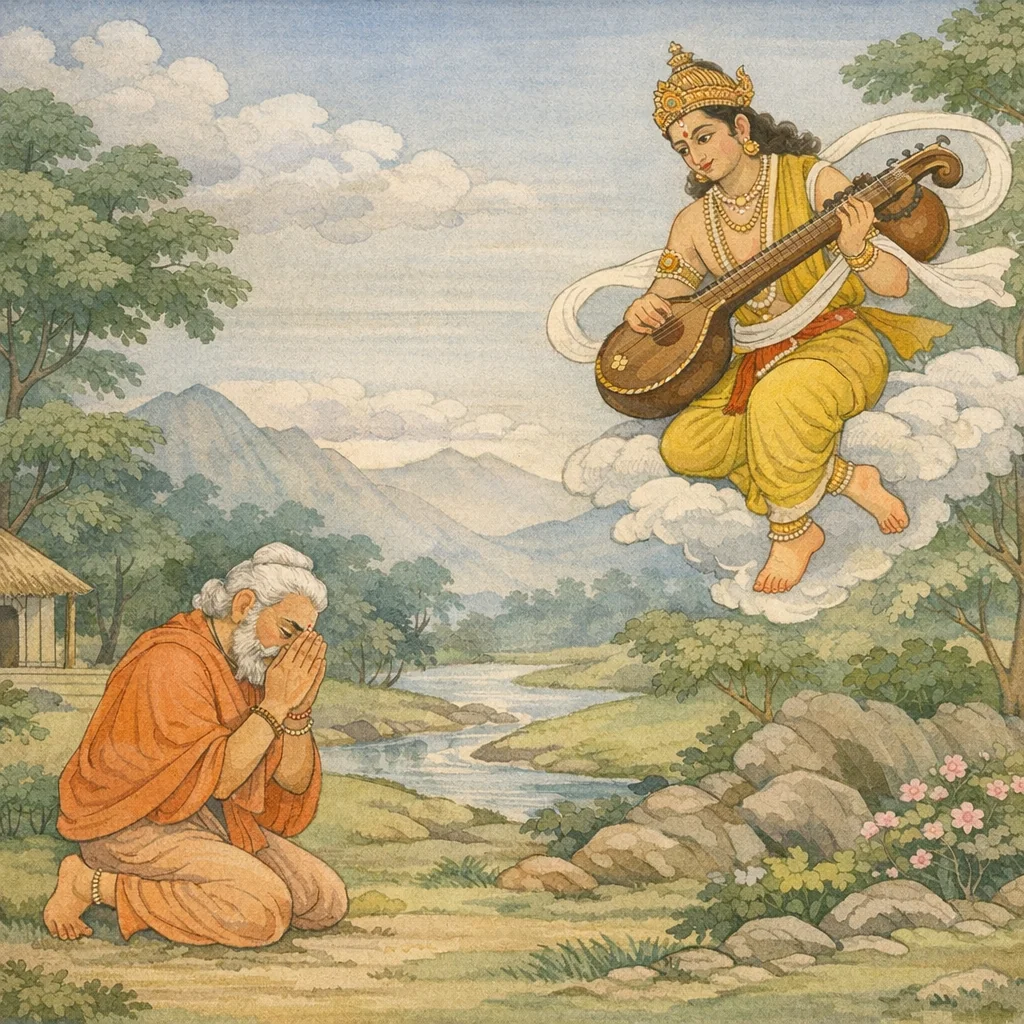
Adhyaya 55
Subhadrā-vilāpaḥ — Subhadrā’s Lament for Abhimanyu (Droṇa-parva 55)
Upa-parva: Abhimanyu-vadha-śoka (Lament and Consolation Episode)
Saṃjaya reports to Dhṛtarāṣṭra that, after hearing Keśava’s words, Subhadrā is overwhelmed by putra-śoka and laments Abhimanyu’s death. Her speech moves through (i) maternal address and disbelief, (ii) vivid corporeal imagery of the fallen hero—beauty obscured by battlefield dust and wounds—(iii) social reversal motifs (once praised by bards and attended by noble women, now surrounded by scavengers), and (iv) accusatory grief directed at allied powers for failing to protect him. The lament culminates in existential reflection on human impermanence (life as bubble-like and unstable) and concern for the young widow Uttarā. Subhadrā then turns to benedictive exhortation: she invokes a sequence of meritorious ‘gatis’—attained by donors, disciplined ascetics, truthful and restrained householders, compassionate and non-malicious persons—and prays that Abhimanyu attain the highest of these, especially the warrior’s renowned destination for the steadfast who fall in combat. Draupadī (Pāñcālī) arrives with the Vairāṭī women; the mourners weep and faint. Kṛṣṇa performs consolatory care (sprinkling water, speaking beneficial words), instructs Subhadrā to cease excessive grief, affirms Abhimanyu’s famed kṣatriya end, and directs attention toward supporting Uttarā and performing the necessary rites; the scene then closes with Kṛṣṇa withdrawing to the inner quarters while others depart.
Chapter Arc: युद्ध-धूलि के बीच युधिष्ठिर का प्रश्न उठता है—हे ब्रह्मन्, वे प्राचीन राजर्षि, जो इन्द्र-तुल्य पराक्रमी और सत्यवादी थे, उनके पुण्यकर्म और धैर्य की कथाएँ सुनाकर मेरे मन को स्थिर कीजिए। → ऋषि (वैशम्पायन/वक्ता-परम्परा) ‘षोडशराजकीय’ उपाख्यान का आरम्भ करते हैं और राजा सूंजय की कथा खोलते हैं—नारद की कृपा से पुत्र-प्राप्ति, फिर दस्युओं द्वारा उस पुत्र का वन में वध; सूंजय का शोक उफनता है, विवेक डगमगाता है, और विलाप राजधर्म को भी ढँकने लगता है। → पुत्र-वध का समाचार और शव-दर्शन के साथ सूंजय का करुण विलाप चरम पर पहुँचता है; उसी क्षण देवर्षि नारद प्रकट होकर शोक-ग्रस्त राजा को कठोर-कोमल वाणी में स्मरण कराते हैं कि जन्म-मरण का चक्र अटल है, और जिनके घर ब्रह्मवादी मुनि ठहरते हैं वे भी एक दिन भोगों से अतृप्त रहकर ही देह त्यागते हैं—अर्थात् शोक से परे दृष्टि ही राजर्षि की शोभा है। → नारद सूंजय को पूर्व-राजाओं (जैसे मरुत्त आदि) के उदाहरणों से समझाते हैं कि महान यश, दान, और ऐश्वर्य भी मृत्यु को नहीं रोकते; इसलिए शोक को धर्म-ज्ञान से बाँधो, पुत्र को ‘नष्ट’ नहीं, अपने कर्म-पथ पर गया मानो, और स्वयं सत्य-धर्म में स्थित रहो। → युधिष्ठिर के लिए यह उपाख्यान संकेत बनता है—यदि राजर्षि भी पुत्र-शोक से टूट सकते हैं, तो युद्ध में अपनों के विनाश के बीच वह स्वयं किस प्रकार स्थिर रहेगा? (आगे उपदेश-श्रृंखला का विस्तार अपेक्षित)।
Shlokas
Verse 1
अत-४-णक+ पञ्चपज्चाशत्तमो< ध्याय: षोडशराजकीयोपाख्यानका आरम्भ, नारदजीकी कृपासे राजा सूंजयको पुत्रकी प्राप्ति, दस्युओंद्वारा उसका वध तथा पुत्रशोकसंतप्त सृंजयको नारदजीका मरुत्तका चरित्र सुनाना सज्जय उवाच श्र॒त्वा मृत्युसमुत्पत्ति कर्माण्यनुपमानि च | धर्मराज: पुनर्वाक््यं प्रसाद्यनमथाब्रवीत्,संजय कहते हैं--राजन्! मृत्युकी उत्पत्ति और उसके अनुपम कर्म सुनकर धर्मराज युधिष्ठिरने पुनः व्यासजीको प्रसन्न करके उनसे यह बात कही
Sañjaya said: O King, having heard of the origin of Death and of Death’s incomparable deeds, Dharmarāja Yudhiṣṭhira once again, after pleasing Vyāsa with reverent obeisance, spoke these words.
Verse 2
युधिछिर उवाच गुरव: पुण्यकर्माण: शक्रप्रतिमविक्रमा: । स्थाने राजर्षयो ब्रद्मन्ननघा: सत्यवादिन:,युधिष्ठिर बोले--ब्रह्मन! इन्द्रके समान पराक्रमी, श्रेष्ठ, पुण्यकर्मा, निष्पाप तथा सत्यवादी राजर्षिगण अपने योग्य उत्तम स्थान (लोक)-में निवास करते हैं
Yudhiṣṭhira said: “O Brahman, those venerable royal seers—men of meritorious deeds, whose valor is like Indra’s—sinless and devoted to truth, dwell in the fitting and excellent realm that is their due.”
Verse 3
भूय एव तु मां तथ्यैर्वचोभिरभिबृंहय । राजर्षीणां पुराणानां समाश्वासय कर्मभि:,अतः आप पुनः उन प्राचीन राजर्षियोंके सत्कर्मोंका बोध करानेवाले अपने यथार्थ वचनोंद्वारा मेरा सौभाग्य बढ़ाइये और मुझे आश्वासन दीजिये
Yudhiṣṭhira said: “Once again, strengthen me with words that are true and well-grounded. Reassure me by recalling the deeds of the ancient royal sages—those venerable exemplars whose righteous actions can steady the mind in this time of trial.”
Verse 4
कियन्त्यो दक्षिणा दत्ता: कैश्व दत्ता महात्मभि: । राजर्षिशि: पुण्यकृद्धिस्तद् भवान् प्रत्रवीतु मे,पूर्वालके किन-किन महामनस्वी पुण्यात्मा राजर्षियोंने यज्ञोंमें कितनी-कितनी दक्षिणाएँ दी थीं। यह सब आप मुझे बताइये
Yudhiṣṭhira said: “How many gifts of sacrificial fee (dakṣiṇā) were given, and by whom were they given—by those great-souled royal sages, doers of merit? Please tell me. In the ancient world, what kinds of dakṣiṇās did the high-minded, virtuous rājarṣis bestow in their sacrifices?”
Verse 5
व्यास उवाच शैब्यस्य नृपते: पुत्र: सृूज्जया नाम नामतः । सखायौ तस्य चैवोभौ ऋषी पर्वतनारदौ,व्यासजीने कहा--राजन्! राजा शैब्यके सूंजय नामसे प्रसिद्ध एक पुत्र था। उसके पर्वत और नारद--ये दो ऋषि मित्र थे
Vyāsa said: “O King, there was a son of King Śaibya, renowned by the name Sūñjaya. Two sages—Parvata and Nārada—were both his friends.”
Verse 6
तौ कदाचिद् गृहं तस्य प्रविष्टौ तद्दिदृक्षया । विधिवच्चार्चितौ तेन प्रीतौ तत्रोषतु: सुखम्,एक दिन वे दोनों महर्षि सूंजयसे मिलनेके लिये उसके घर पधारे। उसने विधिपूर्वक उनकी पूजा की और वे दोनों वहाँ सुखपूर्वक रहने लगे
On one occasion, the two sages entered his house, wishing to see him. He welcomed and honored them according to proper rites; pleased by his respectful hospitality, the two stayed there comfortably.
Verse 7
त॑ कदाचित् सुखासीनं ताभ्यां सह शुचिस्मिता । दुहिताभ्यागमत् कन्या सृञ्जयं वरवर्णिनी,एक समय उन दोनों ऋषियोंके साथ राजा सूंजय सुखपूर्वक बैठे थे। उसी समय पवित्र मुसकानवाली परम सुन्दरी सूंजयकी कुमारी पुत्री वहाँ आयी
Vyāsa said: “Once, King Sṛñjaya was seated at ease together with those two sages. At that very time, his maiden daughter—radiant in complexion and marked by a pure, gentle smile—came to where they were.”
Verse 8
तयाभिवादित: कन्यामभ्यनन्दद् यथाविधि । तत्सलिज्ञाभिराशीर्भिरिष्टाभिरभित: स्थिताम्,आकर उसने राजाको प्रणाम किया। राजाने उसके अनुरूप अभीष्ट आशीर्वाद देकर अपने पार्श्रभागमें खड़ी हुई उस कन्याका विधिपूर्वक अभिनन्दन किया
Having been respectfully saluted by her, the king duly welcomed the maiden according to proper custom. He bestowed upon her the desired blessings with fitting words, as she stood close by his side.
Verse 9
तां निरीक्ष्याब्रवीद् वाक््यं पर्वत: प्रहसन्निव । कस्येयं चड्चलापाज़ी सर्वलक्षणसम्मता,तब महर्षि पर्वतने उस कन्याकी ओर देखकर हँसते हुए-से कहा--'राजन्! यह समस्त शुभ लक्षणोंसे सम्मानित चंचल कटाक्षवाली कन्या किसकी पुत्री है?
Seeing her, the sage Parvata spoke with a smile, as if amused: “O King, whose daughter is this maiden—approved by every auspicious mark—whose sidelong glances are so lively and restless?”
Verse 10
उताहो भा: स्विदर्कस्य ज्वलनस्य शिखा त्वियम् । श्रीह्ीी: कीर्तिर्धति: पुष्टि: सिद्धिश्नन्द्रमस: प्रभा,“अहो! यह सूर्यकी प्रभा है या अग्निदेवकी शिखा अथवा श्री, ही, कीर्ति, धृति, पुष्टि, सिद्धि या चन्द्रमाकी प्रभा है?”
Vyāsa said: “Is this perhaps the radiance of the Sun, or the flame-crest of Fire? Or is it Śrī (auspicious fortune), Hrī (modest restraint), Kīrti (renown), Dhṛti (steadfastness), Puṣṭi (nourishing prosperity), Siddhi (attainment), or the moon’s gentle light?”
Verse 11
एवं ब्रुवाणं देवर्षि नृपति: सृजजयोडब्रवीत् | ममेयं भगवन् कन्या मत्तो वरमभीप्सति,इस प्रकार पूछते हुए देवर्षि पर्वतसे राजा सृंजयने कहा--“भगवन्! यह मेरी कन्या है, जो मुझसे वर प्राप्त करना चाहती है”
As the divine seer spoke thus, King Sṛñjaya replied: “Revered one, this is my daughter; she seeks to obtain a boon from me.”
Verse 12
नारदस्त्वब्रवीदेनं देहि महमिमां नूप । भार्यार्थ सुमहच्छेय: प्राप्तुं चेदिच्छसे नूप,इसी समय नारदजी राजासे बोले--“नरेश्वर! यदि तुम परम कल्याण प्राप्त करना चाहते हो तो अपनी इस कन्याको धर्मपत्नी बनानेके लिये मुझे दे दो”
Nārada said to him, “O king, give me this maiden as a wife. If you desire to attain the highest good and great spiritual welfare, then grant her to me.”
Verse 13
ददानीत्येव संहृष्ट: सृज्जय: प्राह नारदम् । पर्वतस्तु सुसंक्रुद्धो नारदं वाक्यमब्रवीत्,तब सूंजयने अत्यन्त प्रसन्न होकर नारदजीसे कहा--'दे दूँगा"! यह सुनकर पर्वत अत्यन्त कुपित हो नारदजीसे बोले--
Overjoyed, Sṛñjaya said to Nārada, “I will give it.” Hearing this, Parvata—deeply angered—addressed Nārada with sharp words.
Verse 14
ह्ृदयेन मया पूर्व वृतां वै वृतवानसि । यस्माद् वृता त्वया विप्र मा गा: स्वर्ग यथेप्सया,“ब्रह्मन! मैंने मन-ही-मन पहले ही जिसका वरण कर लिया था, उसीका तुमने वरण किया है। अतः तुमने मेरी मनोनीत पत्नीको वर लिया है, इसलिये अब तुम इच्छानुसार स्वर्गमें नहीं जा सकते”
Parvata said: “In my heart I had already chosen her; yet you have chosen the very same woman. Since you, O brāhmaṇa, have taken the wife whom I had inwardly selected, you may not now depart to heaven according to your own wish.”
Verse 15
एवमुक्तो नारदस्तं प्रत्युवाचोत्तरं वच: । मनोवाग्बुद्धिसम्भाषा दत्ता चोदकपूर्वकम्,उनके ऐसा कहनेपर नारदजीने उन्हें यह उत्तर दिया--'मनसे संकल्प करके, वाणीद्वारा प्रतिज्ञा करके, बुद्धिके द्वारा पूर्ण निश्चयके साथ, परस्पर सम्भाषणपूर्वक तथा संकल्पका जल हाथमें लेकर जो कन्यादान किया जाता है, वरके द्वारा जो कनन््याका पाणिग्रहण होता है और वैदिक मन्त्रके पाठ किये जाते हैं, यही विधि-विधान कन्या- परिग्रहके साधकरूपसे प्रसिद्ध है; परंतु इतनेसे ही पाणिग्रहणकी पूर्णताका निश्चय नहीं होता है। उसकी पूर्ण निष्ठा तो सप्तपदी ही मानी गयी है
Vyāsa said: Thus addressed, Nārada replied to him: “When a maiden is given in marriage after a resolve in the mind, a pledge by speech, firm determination by the intellect, mutual formal assent, and the ritual offering with water in hand; when the groom takes the bride’s hand; and when Vedic mantras are recited—this is the recognized procedure that serves as the means of accepting a bride. Yet by these acts alone the marriage is not decisively complete; its full and binding completion is held to rest in the rite of the seven steps (saptapadī).”
Verse 16
पाणिग्रहणमन्त्राश्न प्रथितं वरलक्षणम् । न त्वेषा निश्चिता निष्ठा निष्ठा सप्तपदी स्मृता,उनके ऐसा कहनेपर नारदजीने उन्हें यह उत्तर दिया--'मनसे संकल्प करके, वाणीद्वारा प्रतिज्ञा करके, बुद्धिके द्वारा पूर्ण निश्चयके साथ, परस्पर सम्भाषणपूर्वक तथा संकल्पका जल हाथमें लेकर जो कन्यादान किया जाता है, वरके द्वारा जो कनन््याका पाणिग्रहण होता है और वैदिक मन्त्रके पाठ किये जाते हैं, यही विधि-विधान कन्या- परिग्रहके साधकरूपसे प्रसिद्ध है; परंतु इतनेसे ही पाणिग्रहणकी पूर्णताका निश्चय नहीं होता है। उसकी पूर्ण निष्ठा तो सप्तपदी ही मानी गयी है
The rites of taking the bride’s hand and the recitation of the marriage-mantras are well known as the defining marks of a groom and as the established procedure of marriage. Yet, by these alone the marriage is not held to be conclusively completed; its final and binding completion is remembered to lie in the ‘seven steps’ (saptapadī).
Verse 17
अनुत्पन्ने च कार्यार्थे मां त्वं व्याहृतवानसि । तस्मात् त्वमपि न स्वर्ग गमिष्यसि मया विना,“अतः इस कन्याके ऊपर पतिरूपसे तुम्हारा अधिकार नहीं हुआ है--ऐसी अवस्थामें भी तुमने मुझे शाप दे दिया है, इसलिये तुम भी मेरे बिना स्वर्ग नहीं जा सकोगे”
Vyāsa said: “When the intended purpose had not even arisen, you nevertheless uttered a curse against me. Therefore, you too will not be able to go to heaven without me.” The statement frames a moral counter-response: a premature, unjustified imprecation rebounds upon the speaker, binding his own spiritual outcome to the very person he wronged.
Verse 18
अन्योन्यमेवं शप्त्वा वै तस्थतुस्तत्र तौ तदा । अथ सोऊपि नृपो विप्रान् पानाच्छादनभोजनै:
Having thus cursed one another, the two of them stood there at that time. Then that king too attended upon the brāhmaṇas, providing them with drink, clothing, and food—an act reflecting the expected royal duty of honoring and sustaining the learned even amid tense circumstances.
Verse 19
तस्य प्रसन्ना विप्रेन्द्राः: कदाचित् पुत्रमीप्सव:,एक दिन राजापर प्रसन्न होकर उन्हें पुत्र देनेकी इच्छावाले सभी श्रेष्ठ ब्राह्मण, जो तपस्या और स्वाध्यायमें संलग्न रहनेवाले तथा वेद-वेदांगोंके पारंगत विद्वान् थे, एक साथ नारदजीसे बोले--'देवर्षी). आप इन राजा सृंजयको अभीष्ट पुत्र प्रदान कीजिये”
Vyasa said: Once, a group of eminent Brahmins—pleased and wishing to secure a son for the king—approached Narada together. Steadfast in austerity and Vedic study, and fully versed in the Vedas and their auxiliary sciences, they addressed the divine seer: “O Devarshi, grant King Sṛñjaya the son he desires.” The episode frames learned counsel and spiritual merit as instruments for fulfilling a ruler’s legitimate longing for progeny, through righteous means rather than coercion.
Verse 20
तपःस्वाध्यायनिरता वेदवेदाड्रपारगा: । सहिता नारदं प्राहुर्देहास्मै पुत्रमीप्सितम्,एक दिन राजापर प्रसन्न होकर उन्हें पुत्र देनेकी इच्छावाले सभी श्रेष्ठ ब्राह्मण, जो तपस्या और स्वाध्यायमें संलग्न रहनेवाले तथा वेद-वेदांगोंके पारंगत विद्वान् थे, एक साथ नारदजीसे बोले--'देवर्षी). आप इन राजा सृंजयको अभीष्ट पुत्र प्रदान कीजिये”
Vyāsa said: The foremost Brāhmaṇas—steadfast in austerity and Vedic study, and fully accomplished in the Vedas and their auxiliary disciplines—approached Nārada together and said, “O Devarṣi, grant this king the son he longs for.”
Verse 21
तथेत्युक्त्वा द्विजैरुक्त: सृञ्जयं नारदो<ब्रवीत् । तुभ्यं प्रसन्ना राजर्षे पुत्रमीप्सन्ति ब्राह्मणा:,ब्राह्मणोंके ऐसा कहनेपर नारदजीने “तथास्तु” कहकर उनका अनुरोध स्वीकार कर लिया। फिर वे सूंजयसे इस प्रकार बोले--'राजर्षे! ये ब्राह्मणलोग प्रसन्न होकर तुम्हारे लिये अभीष्ठ पुत्र प्राप्त करना चाहते हैं
Having heard the Brahmins’ words, Nārada replied, “So be it,” accepting their request. Then he addressed Sṛñjaya: “O royal seer, these Brahmins, being pleased, desire that you obtain the son you long for.”
Verse 22
वरं वृणीष्व भद्रं ते यादृशं पुत्रमीप्सितम् । तथीक्तः प्राञ्जली राजा पुत्र॑ वव्रे गुणान्वितम्,(सर्व भवेत् प्रसादाद् वै तादृशं तनयं वृणे । “तुम्हारा कल्याण हो। तुम्हें जैसा पुत्र अभीष्ट हो, उसके लिये वर माँगो”। नारदजीके ऐसा कहनेपर राजाने हाथ जोड़कर उनसे एक सदगुणसम्पन्न, यशस्वी, कीर्तिमान, तेजस्वी तथा शत्रुदमन पुत्र माँगा। वह बोला--'मुने! मैं ऐसे पुत्रकी याचना करता हूँ, जिसका मल, मूत्र, थूक और पसीना सब कुछ आपके कृपाप्रसादसे सुवर्णमय हो जाय”
“Choose a boon—may it be well with you—whatever kind of son you desire.” Thus addressed, the king, with palms joined in reverence, asked for a son endowed with virtues.
Verse 23
यशस्विनं कीर्तिमन्तं तेजस्विनमरिंदमम् । यस्य मूत्र पुरीषं च क्लेद: स्वेदश्न॒ काउचनम्
Vyāsa said: “He is glorious, renowned, radiant, and a subduer of foes—one in whom there is never any bodily impurity: neither urine nor feces, nor any dampness or sweat at any time.”
Verse 24
व्यास उवाच तथा भविष्यतीत्युक्ते जज्ञे तस्येप्सित: सुतः ।। काजञ्चनस्याकर: श्रीमान् प्रसादाच्च सुकाड्क्षित: । अपतत् तस्य नेत्रा भ्यां रुदतस्तस्य नेत्रजम् ।।) सुवर्णष्ठीविरित्येव॑ं तस्य नामाभवत् कृतम् | तस्मिन् वरप्रदानेन वर्धयत्यमितं धनम्,व्यासजी कहते हैं--राजन्! तब मुनिने कहा--'ऐसा ही होगा'। उनके ऐसा कहनेपर राजाको मनोवांछित पुत्र प्राप्त हुआ। मुनिके प्रसादसे वह शोभाशाली पुत्र सुवर्णकी खान निकला। राजा वैसा ही पुत्र चाहते थे। रोते समय उसके नेत्रोंसे सुवर्णमय आँसू गिरता था। इसीलिये उस पुत्रका नाम सुवर्णष्ठीवी प्रसिद्ध हो गया। वरदानके प्रभावसे वह अनन्त धनराशिकी वृद्धि करने लगा
Vyāsa said: When the sage declared, “So it shall be,” the king obtained the son he had long desired. By the sage’s grace, that splendid, much-wished-for child proved to be like a mine of gold. As the child cried, golden tears fell from his eyes; therefore he came to be known by the name Suvarṇaṣṭhīvin (“the one who lets fall gold”). Through the power of that boon, he continually increased immeasurable wealth.
Verse 25
कारयामास नृपति: सौवर्ण सर्वमीप्सितम् । गृहप्राकारदुर्गाणि ब्राह्मणावसथान्यपि,सर्व तत् काज्चनमयं कालेन परिवर्धितम् । राजाने घर, परकोटे, दुर्ग एवं ब्राह्मणोंके निवासस्थान सारी अभीष्ट वस्तुएँ सोनेकी बनवा लीं। शय्या, आसन, सवारी, बटलोई, थाली, अन्य बर्तन, उस राजाका महल तथा बाह्य उपकरण--ये सब कुछ सुवर्णमय बन गये थे, जो समयके अनुसार बढ़ रहे थे
Vyāsa said: The king caused everything he desired to be made of gold—his houses, surrounding ramparts, forts, and even the dwellings allotted to Brahmins. All of it became golden, and with time it kept increasing.
Verse 26
शय्यासनानि यानानि स्थाली पिठरभाजनम् | तस्य राज्ञोडपि यद् वेश्म बाह्मयाश्नोपस्कराश्व ये
Vyāsa said: “Beds and seats, vehicles, cooking vessels and storage jars—indeed, whatever household goods and equipment belonged to that king, including his outer establishments and horses, were taken account of.”
Verse 27
अथ दस्युगणा: श्रुत्वा दृष्टवा चैनं तथाविधम्
Then the band of dāsyus, having heard the report and also having seen him in that very condition, reacted in accordance with what they perceived—moved by the immediate evidence before them.
Verse 28
केचित् तत्राब्रुवन् राज्ञ: पुत्र गृहल्लीम वै स््वयम्
Vyāsa said: Some there declared that the king’s son himself had entered the inner household quarters.
Verse 29
ततस्ते दस्यवो लुब्धा: प्रविश्य नृपतेर्गृहम्
Then those greedy marauders, driven by covetousness, entered the king’s residence—an act that signals the collapse of restraint and the violation of royal sanctity, where desire overrides dharma and turns intrusion into moral transgression.
Verse 30
गृहौनमनुपायज्ञा नीत्वारण्यमचेतस:,योग्य उपायको न जाननेवाले उन विवेकशून्य डाकुओंने उसे वनमें ले जाकर मार डाला और उसके शरीरके टुकड़े-टुकड़े करके देखा, परंतु उन्हें थोड़ा-सा भी धन नहीं दिखायी दिया। उसके प्राणशून्य होते ही वह वरदायक वैभव नष्ट हो गया
Vyāsa said: The robbers—foolish men who did not know the proper means—took him into the forest and killed him. They even cut his body into pieces and searched, yet they did not see even a little wealth. As soon as he became lifeless, that boon-bestowing prosperity vanished. The episode underscores how greed and lack of discernment lead to cruelty, and how fortune that is not grounded in dharma proves unstable and perishes with the person who bears it.
Verse 31
हत्वा विशस्य चापश्यन् लुब्धा वसु न किउ्चन । तस्य प्राणैर्विमुक्तस्य नष्ट तद् वरदं वसु,योग्य उपायको न जाननेवाले उन विवेकशून्य डाकुओंने उसे वनमें ले जाकर मार डाला और उसके शरीरके टुकड़े-टुकड़े करके देखा, परंतु उन्हें थोड़ा-सा भी धन नहीं दिखायी दिया। उसके प्राणशून्य होते ही वह वरदायक वैभव नष्ट हो गया
Having killed him and even cutting his body apart, those greedy men saw no wealth at all. The moment he was bereft of life-breath, that boon-giving prosperity vanished—showing how ill-gotten violence, driven by delusion, destroys both the victim and the very object of the aggressor’s desire.
Verse 32
दस्यवश्व तदान्योन्यं जघ्नुर्मूर्ता विचेतस: । हत्वा परस्परं नष्टा: कुमार चाद्भुतं भुवि
Vyāsa said: Then those lawless men, deluded and bereft of discernment, began to strike down one another. Having slain each other in mutual violence, they perished—O prince—and this was a wondrous (and dreadful) spectacle upon the earth. The passage underscores how, when dharma and clear judgment are abandoned, violence turns inward and becomes self-destruction.
Verse 33
त॑ दृष्टवा निहतं पुत्र वरदत्तं महातपा:
Vyāsa said: Seeing that son—Varadatta—lying slain, the great ascetic was struck by the stark consequence of battle, where even the gifted and beloved are not spared, and grief follows violence as its inescapable moral shadow.
Verse 34
विलपन्तं निशम्याथ पुत्रशोकहतं नृपम्
Hearing the king lamenting—struck down by grief for his son—Vyāsa then addressed the situation, framing the scene in the moral weight of bereavement amid the calamities of war.
Verse 35
प्रत्यदृश्यत देवर्षिनरिदस्तस्य संनिधौ | पुत्रशोकसे पीड़ित हुए राजा सूंजय विलाप कर रहे हैं--यह सुनकर देवर्षि नारद उनके समीप दिखायी दिये ।। उवाच चैन दुःखार्त विलपन्तमचेतसम्
At that moment the divine seer Nārada appeared in his presence. King Sañjaya, tormented by grief for his son, was lamenting; hearing his cries, Nārada manifested nearby and addressed him—overwhelmed by sorrow, wailing, and no longer steady in mind.
Verse 36
(नारद उवाच त्यज शोकं॑ महाराज वैक्लव्यं त्यज बुद्धिमन् । न मृत: शोचतो जीवेन्मुह्मतो वा जनाधिप ।। नारदजी बोले--महाराज! शोकका त्याग करो! बुद्धिमान् नरेश! व्याकुलता छोड़ो! जनेश्वर! कोई कितना ही शोक क्यों न करे या दु:खसे मूर्च्छित क्यों न हो जाय, इससे मरा हुआ मनुष्य जीवित नहीं हो सकता। त्यज मोहं नृपश्रेष्ठ न हि मुहान्ति त्वद्विधा: । धीरो भव महाराज ज्ञानवृद्धोडसि मे मतः ।।) नृपश्रेष्ठ! मोह त्याग दो! तुम्हारे-जैसे पुरुष मोहित नहीं होते हैं। महाराज! धैर्य धारण करो! मैं तुम्हें ज्ञानमें बढ़ा-चढ़ा मानता हूँ। कामानामवितृप्तस्त्वं सृूजजयेह मरिष्यसि
Nārada said: “O great king, abandon grief; abandon this helpless agitation, O wise ruler. No dead man returns to life because someone laments, nor because one collapses in delusion, O lord of men. Give up bewilderment, best of kings; men like you are not meant to be overcome by confusion. Be steadfast, O king; in my judgment you are advanced in understanding. Yet, O Sṛñjaya, if you remain unsated in your desires, you will perish here.”
Verse 37
आविक्षितं मरुत्तं च मृतं सृज्जय शुश्रुम,श्रद्धधानो जिताँललोकान् गत: पुण्यदुहो$क्षयान् । सूंजय! अविक्षितके पुत्र राजा मरुत्त भी मर गये, ऐसा हमने सुना है। बृहस्पतिजीके साथ स्पर्धा रखनेके कारण उनके भाई संवर्तने जिन राजर्षि मरुत्तका यज्ञ कराया था, भाँति-भाँतिके यज्ञोंद्वारा भगवानका यजन करनेकी इच्छा होनेपर जिन्हें साक्षात् भगवान् शंकरने प्रचुर धनराशिके रूपमें हिमालयका एक सुवर्णमय शिखर प्रदान किया तथा प्रतिदिन यज्ञकार्यके अन्तमें जिनकी सभामें इन्द्र आदि देवता और बृहस्पति आदि समस्त प्रजापतिगण सभासदके रूपमें बैठा करते थे, जिनके यज्ञमण्डपकी सारी सामग्रियाँ सोनेकी बनी हुई थीं, जिनके यहाँ उन दिनों सब प्रकारका अन्न, मनकी इच्छाके अनुरूप और पवित्र रूपमें उपलब्ध होता था और सभी भोजनार्थी ब्राह्मण एवं द्विज जहाँ अपनी इच्छाके अनुसार दूध, दही, घी, मधु एवं सुन्दर भक्ष्य-भोज्य पदार्थ भोजन करते थे, जिनके सम्पूर्ण यज्ञोंमें प्रसन्नतासे भरे हुए वेदोंके पारंगत दिद्वान् ब्राह्यगोंको अपनी रुचिके अनुसार वस्त्र एवं आभूषण प्राप्त होते थे, जिन अविक्षितकुमार (राजर्षि मरुत्त)-के घरमें मरुद॒गण रसोई परोसनेका काम करते थे और विश्वेदेवणण सभासद् थे, जिन पराक्रमी नरेशके राज्यमें उत्तम वृष्टिके कारण खेतीकी उपज बहुत होती थी, जिन्होंने उत्तम विधिसे समर्पित किये हुए हविष्योंद्वारा देवताओंको तृप्त किया था, जो ब्रह्मचर्यपालन और वेदपाठ आदि सत्कर्मोंद्वारा तथा सब प्रकारके दानोंसे सदा ऋषियों, पितरों एवं सुखजीवी देवताओंको भी संतुष्ट करते थे तथा जिन्होंने इच्छानुसार ब्राह्मणोंको शय्या, आसन, सवारी और दुस्त्यज स्वर्णणशशि आदि वह सारा अपरिमित धन दान कर दिया था, देवराज इन्द्र जिनका सदा शुभ चिन्तन करते थे, वे श्रद्धालु नरेश मरुत्त अपनी प्रजाको नीरोग करके अपने सत्कर्मोंद्वारा जीते हुए पुण्यफलदायक अक्षय लोकोंमें चले गये
Nārada said: “O Sṛñjaya, we have heard that both Āvīkṣita and King Marutta have passed away. That faithful king—having conquered (by merit) the worlds attainable through righteousness—has gone to inexhaustible realms that yield the fruits of virtue.”
Verse 38
संवर्तो याजयामास स्पर्धया वै बृहस्पते: । यस्मै राजर्षये प्रादाद् धनं स भगवान् प्रभु:
Nārada said: “Saṁvarta, out of rivalry with Bṛhaspati, performed sacrificial rites as the officiating priest. To that royal sage he—Saṁvarta, the venerable and powerful one—bestowed wealth.”
Verse 39
हैमं हिमवतः पादं यियक्षोविविधै: स वै । यस्य सेन्द्राउईमरगणा बृहस्पतिपुरोगमा:
Nārada said: “He indeed sought to perform many kinds of sacrificial rites at the golden foot of the Himālaya—he whose assembly of divine lords, with Indra among them, was led by Bṛhaspati.”
Verse 40
देवा विश्वसृज: सर्वे यजनान्ते समासते । यज्ञवाटस्य सौवर्णा: सर्वे चासन् परिच्छदा:
Nārada said: When the sacrifice was completed, all the gods—those who fashion and sustain the world—assembled together. And all the furnishings and appurtenances of the sacrificial enclosure were of gold, befitting the sanctity and grandeur of the rite.
Verse 41
यस्य सर्व तदा हाुन्न॑ मनो5भिप्रायगं शुचि । कामतो बुभुजुर्विप्रा: सर्वे चान्नार्थिनो द्विजा:
Nārada said: “At that time, all the food belonging to him—pure and exactly in accord with his intention—was freely enjoyed at will by the brāhmaṇas; indeed, all the twice-born who sought food partook of it.”
Verse 42
पयो दधि घृत॑ क्षौद्रं भक्ष्य भोज्यं च शोभनम् । यस्य यज्ञेषु सर्वेषु वासांस्याभरणानि च
Nārada said: “Milk, curds, ghee, honey, and fine foods—both delicacies and full meals—along with garments and ornaments: all these are found in every sacrifice performed by that person.”
Verse 43
ईप्सितान्युपतिष्ठ न्ते प्रहृष्टान् वेदपारगान् । मरुतः परिवेष्टारो मरुत्तस्याभवन् गृहे
Whatever he desired would readily present itself—joyful sages, masters of the Vedas, would come to serve. In Marutta’s household, even the Maruts became attendants, standing around to wait upon him.
Verse 44
आविक्षितस्य राजर्षेविश्वेदेवाः: सभासद: । यस्य वीर्यवतो राज्ञ: सुवृष्ट्या सस्यसम्पद:
Nārada said: “In the assembly of the royal sage Āvikṣita sat the Viśvedevas as members. For that valiant king, timely and abundant rains brought prosperity of crops.”
Verse 45
हविर्भिस्तर्पिता येन सम्यक् क्लूप्तैर्दिवौकस: । ऋषीणां च पितृणां च देवानां सुखजीविनाम्
Nārada said: “By him the gods—dwellers of heaven—were properly satisfied with well-prepared oblations; and likewise the seers and the Pitṛs, those divine beings who live in well-being. Thus he fulfilled the sacred economy of giving, sustaining the unseen order through correct ritual offering.”
Verse 46
ब्रह्मचर्यश्रुतिमुखे: सर्वैदनिश्च सर्वदा । शयनासनयानानि स्वर्णराशीश्व दुस्त्यजा:
Nārada said: “Even those who stand at the forefront of brahmacarya and sacred learning—indeed, all people at all times—find it hard to renounce comforts such as beds, seats, and conveyances, and even heaps of gold.”
Verse 47
तत् सर्वममितं वित्तं दत्तं विप्रेभ्य इच्छया । सो<नुध्यातस्तु शक्रेण प्रजा: कृत्वा निरामया:
“All that immeasurable wealth was willingly given away to the Brahmins. Thereafter, being remembered with favor by Śakra (Indra), he made his subjects free from disease—establishing their welfare as the fruit of generous, dharma-aligned giving.”
Verse 48
सप्रज: सनृपामात्य: सदारापत्यबान्धव:
“Together with his subjects, along with the king’s ministers, and accompanied by his wife, children, and kinsmen.”
Verse 49
यौवनेन सहस्राब्दं मरुत्तो राज्यमन्वशात् । राजा मरुत्तने युवावस्थामें रहकर प्रजा, मन्त्री, धर्मपत्नी, पुत्र और भाइयोंके साथ एक हजार वर्षोतक राज्यशासन किया था ।। ४८ ई ।। स चेन्ममार सृज्जय चतुर्भद्रतरस्त्वया,वैत्य सुृंजय! धर्म, ज्ञान, वैराग्य तथा ऐश्वर्य--इन चारों बातोंमें राजा मरुत्त तुमसे बढ़कर थे और तुम्हारे पुत्रसे भी अधिक पुण्यात्मा थे। तुम्हारे पुत्रने न तो कोई यज्ञ किया था और न उसमें कोई उदारता ही थी। अत: उसको लक्ष्य करके तुम चिन्ता न करो-- नारदजीने राजा सूंजयसे यही बात कही
Nārada said: “Remaining in the vigor of youth, King Marutta governed his kingdom for a full thousand years—upholding order and welfare through steady rule.”
Verse 50
पुत्रात् पुण्यतरस्तुभ्यं मा पुत्रमनुतप्यथा: । अयज्वानमदाक्षिण्यमश्रि श्रैत्येत्युदाहरत्,वैत्य सुृंजय! धर्म, ज्ञान, वैराग्य तथा ऐश्वर्य--इन चारों बातोंमें राजा मरुत्त तुमसे बढ़कर थे और तुम्हारे पुत्रसे भी अधिक पुण्यात्मा थे। तुम्हारे पुत्रने न तो कोई यज्ञ किया था और न उसमें कोई उदारता ही थी। अत: उसको लक्ष्य करके तुम चिन्ता न करो-- नारदजीने राजा सूंजयसे यही बात कही
Nārada said: “There are men more meritorious than your son; therefore do not grieve for him. He performed no sacrifices and showed no generosity in giving dakṣiṇā—priestly fees—or gifts. Knowing this, O Sṛñjaya, do not let sorrow for such a son consume you.” Thus Nārada counseled King Sṛñjaya, placing ethical worth—sacrifice, charity, and virtue—above mere attachment to offspring.
Verse 54
इस प्रकार श्रीमहाभारत द्रोणपर्वके अन्तर्गत अभिमन्युवधपर्वमें यृत्युप्रजापतिसंवादाविषयक चौवनवाँ अध्याय पूरा हुआ
Thus, in the Śrī Mahābhārata, within the Droṇa Parva—specifically in the Abhimanyu-vadha section—the fifty-fourth chapter, dealing with the dialogue between Death (Mṛtyu) and Prajāpati, comes to its close. The colophon marks a pause in the war narrative to frame its violence within a moral and cosmic order, reminding the listener that even battlefield death is contemplated through dharma and the governance of life and mortality.
Verse 55
इति श्रीमहा भारते द्रोणपर्वणि अभिमन्युवधपर्वणि षोडशराजकीये पञ्चपज्चाशत्तमो<ध्याय:
Thus, in the revered Mahābhārata, within the Droṇa Parva—specifically in the sub-section concerning the slaying of Abhimanyu—ends the fifty-fifth chapter, belonging to the unit known as the ‘Sixteen Kings’ episode. This colophon marks the close of a narrative segment framed by the moral gravity of war and the tragic consequences of adharma in battle.
Verse 186
पुत्रकाम: परं शक््त्या यत्नाच्चोपाचरच्छुचि: । इस प्रकार एक-दूसरेको शाप देकर वे दोनों उस समय वहीं ठहर गये। इधर राजा सूंजयने पुत्रकी इच्छासे पवित्र हो पूरी शक्ति लगाकर बड़े यत्नसे भोजन, पीनेयोग्य पदार्थ तथा वस्त्र आदि देकर ब्राह्मणोंकी आराधना की
Vyāsa said: Desiring a son, the king—having purified himself—served the Brahmins with all his strength and with great effort. Thus, after cursing one another, the two remained there at that time; meanwhile King Sūñjaya, intent on obtaining a son, diligently honored the Brahmins by providing food, drinkable offerings, and garments.
Verse 233
(सर्व भवेत् प्रसादाद् वै तादृशं तनयं वृणे । “तुम्हारा कल्याण हो। तुम्हें जैसा पुत्र अभीष्ट हो, उसके लिये वर माँगो”। नारदजीके ऐसा कहनेपर राजाने हाथ जोड़कर उनसे एक सदगुणसम्पन्न, यशस्वी, कीर्तिमान, तेजस्वी तथा शत्रुदमन पुत्र माँगा। वह बोला--'मुने! मैं ऐसे पुत्रकी याचना करता हूँ, जिसका मल, मूत्र, थूक और पसीना सब कुछ आपके कृपाप्रसादसे सुवर्णमय हो जाय”
Vyāsa said: “Everything can come to be through grace; therefore I choose such a son.” When Nārada spoke thus—‘May you be well. Ask for the boon of the son you desire’—the king, with folded hands, requested a son endowed with virtue, fame, renown, brilliance, and the power to subdue enemies. Then he added: “Sage, I ask for a son whose excrement, urine, saliva, and sweat—everything—may, by your compassionate favor, become made of gold.”
Verse 266
सर्व तत् काज्चनमयं कालेन परिवर्धितम् । राजाने घर, परकोटे, दुर्ग एवं ब्राह्मणोंके निवासस्थान सारी अभीष्ट वस्तुएँ सोनेकी बनवा लीं। शय्या, आसन, सवारी, बटलोई, थाली, अन्य बर्तन, उस राजाका महल तथा बाह्य उपकरण--ये सब कुछ सुवर्णमय बन गये थे, जो समयके अनुसार बढ़ रहे थे
All of it became wrought of gold, and with the passage of time it kept increasing. The king had houses, the palace, the outer walls, the forts, and the dwellings of the Brahmins—indeed all desired things—made of gold. Beds, seats, conveyances, pots, trays, plates, and other vessels, as well as the king’s mansion and its outward appurtenances—everything had become golden, growing in measure with time.
Verse 273
सम्भूय तस्य नृपते: समारब्धारिचकीर्षितुम् । तदनन्तर लुटेरोंने राजाके वैभवकी बात सुनकर तथा उन्हें वैसा ही सम्पन्न देखकर संगठित हो उनके यहाँ लूटपाट आरम्भ कर दी
Then the plunderers gathered together and began to carry out their hostile design against that king. Hearing of his prosperity and seeing him endowed with such wealth, they organized themselves and commenced plundering his realm.
Verse 286
सो5स्याकर: काउचनस्य तस्य यत्नं चरामहे । उन डाकुओंमेंसे कोई-कोई इस प्रकार बोले--“हम सब लोग स्वयं इस राजाके पुत्रको अधिकारमें कर लें; क्योंकि वही इस सुवर्णकी खान है। अतः हम उसीको पकड़नेका यत्न करें!
Among those bandits, some spoke in this way: “Let all of us, by our own strength, bring the king’s son under our control, for he alone is the very mine of that gold. Therefore, let us strive to seize him!”
Verse 293
राजपुत्रं तथा जहु: सुवर्णष्ठीविनं बलात् । तब उन लोभी लुटेरोंने राजमहलमें प्रवेश करके राजकुमार सुवर्णष्ठीवीको बलपूर्वक हर लिया
Then those greedy plunderers entered the royal palace and forcibly carried off the prince Suvarṇaṣṭhīvin.
Verse 326
असम्भाव्यं गता घोरं नरकं दुष्टकारिण: । उस समय वे विचारशून्य मूर्ख एवं दुराचारी दस्यु भूमण्डलके उस अद्भुत और असम्भव कुमारका वध करके परस्पर एक-दूसरेको मारने लगे। इस प्रकार मार-पीट करके वे भी नष्ट हो गये और भयंकर नरकमें पड़ गये
Those evil-doers, having committed deeds that should never have been possible, went to a dreadful hell. Devoid of discernment—foolish, depraved, and violent like bandits—they slew that wondrous and seemingly invincible youth, and then turned upon one another, killing each other in mutual rage. Thus, through their own brutal infighting, they too were destroyed and fell into terrible hell.
Verse 333
विललाप सुदु:खार्तो बहुधा करुणं नृपः । मुनिके वरसे प्राप्त हुए उस पुत्रको मारा गया देख वे महातपस्वी नरेश अत्यन्त दुःखसे आतुर हो नाना प्रकारसे करूणाजनक विलाप करने लगे
Vyāsa said: Overwhelmed by intense grief, the king lamented again and again in a deeply pitiable manner. Seeing that son—obtained as a boon from a sage—slain, the great ascetic monarch, stricken with sorrow, broke into many kinds of heart-rending cries.
Verse 353
सृञ्जयं नारदो<शभ्येत्य तन्निबोध युधिष्िर । युधिष्ठिर! दुःखसे पीड़ित हो अचेत होकर विलाप करते हुए राजा सूंजयके निकट आकर नारदजीने जो कुछ कहा था, वह सुनो
Vyāsa said: “Listen carefully, O Yudhiṣṭhira, to what Nārada said after approaching King Sṛñjaya. Overwhelmed by sorrow, your mind clouded, and lamenting without restraint, you should hear that counsel—spoken in the presence of the king—meant to steady the grief-stricken and recall them to dharma amid the devastations of war.”
Verse 473
श्रद्धधानो जिताँललोकान् गत: पुण्यदुहो$क्षयान् । सूंजय! अविक्षितके पुत्र राजा मरुत्त भी मर गये, ऐसा हमने सुना है। बृहस्पतिजीके साथ स्पर्धा रखनेके कारण उनके भाई संवर्तने जिन राजर्षि मरुत्तका यज्ञ कराया था, भाँति-भाँतिके यज्ञोंद्वारा भगवानका यजन करनेकी इच्छा होनेपर जिन्हें साक्षात् भगवान् शंकरने प्रचुर धनराशिके रूपमें हिमालयका एक सुवर्णमय शिखर प्रदान किया तथा प्रतिदिन यज्ञकार्यके अन्तमें जिनकी सभामें इन्द्र आदि देवता और बृहस्पति आदि समस्त प्रजापतिगण सभासदके रूपमें बैठा करते थे, जिनके यज्ञमण्डपकी सारी सामग्रियाँ सोनेकी बनी हुई थीं, जिनके यहाँ उन दिनों सब प्रकारका अन्न, मनकी इच्छाके अनुरूप और पवित्र रूपमें उपलब्ध होता था और सभी भोजनार्थी ब्राह्मण एवं द्विज जहाँ अपनी इच्छाके अनुसार दूध, दही, घी, मधु एवं सुन्दर भक्ष्य-भोज्य पदार्थ भोजन करते थे, जिनके सम्पूर्ण यज्ञोंमें प्रसन्नतासे भरे हुए वेदोंके पारंगत दिद्वान् ब्राह्यगोंको अपनी रुचिके अनुसार वस्त्र एवं आभूषण प्राप्त होते थे, जिन अविक्षितकुमार (राजर्षि मरुत्त)-के घरमें मरुद॒गण रसोई परोसनेका काम करते थे और विश्वेदेवणण सभासद् थे, जिन पराक्रमी नरेशके राज्यमें उत्तम वृष्टिके कारण खेतीकी उपज बहुत होती थी, जिन्होंने उत्तम विधिसे समर्पित किये हुए हविष्योंद्वारा देवताओंको तृप्त किया था, जो ब्रह्मचर्यपालन और वेदपाठ आदि सत्कर्मोंद्वारा तथा सब प्रकारके दानोंसे सदा ऋषियों, पितरों एवं सुखजीवी देवताओंको भी संतुष्ट करते थे तथा जिन्होंने इच्छानुसार ब्राह्मणोंको शय्या, आसन, सवारी और दुस्त्यज स्वर्णणशशि आदि वह सारा अपरिमित धन दान कर दिया था, देवराज इन्द्र जिनका सदा शुभ चिन्तन करते थे, वे श्रद्धालु नरेश मरुत्त अपनी प्रजाको नीरोग करके अपने सत्कर्मोंद्वारा जीते हुए पुण्यफलदायक अक्षय लोकोंमें चले गये
Narada said: “O Sañjaya, we have heard that King Marutta, the son of Avikṣit, has also passed away. Yet, being full of faith, he departed to the imperishable worlds that yield the fruits of merit—worlds he had won by his righteous deeds. Because his brother Saṁvarta rivaled Bṛhaspati, it was Saṁvarta who conducted the royal sage Marutta’s sacrifice. When Marutta longed to worship the Lord through sacrifices of many kinds, Lord Śaṅkara himself granted him a golden peak of the Himalaya as an immense treasury. Each day, at the close of the sacrificial rites, Indra and the other gods, along with Bṛhaspati and all the Prajāpatis, sat in his assembly as honored members. The entire equipment of his sacrificial pavilion was made of gold. In those days, every kind of pure food was available in his house according to one’s wish; Brahmins and other twice-born guests ate as they pleased—milk, curds, ghee, honey, and fine foods and drinks. In all his sacrifices, learned Brahmins, masters of the Vedas, joyfully received garments and ornaments according to their taste. In Marutta’s household the Maruts themselves served the meals, and the Viśvedevas sat as courtiers. In his realm, thanks to excellent rains, agriculture yielded abundantly. By properly offered oblations he satisfied the gods; by celibate discipline, Vedic study, and other good works, and by every kind of gift, he continually satisfied sages, ancestors, and the gods. He bestowed on Brahmins—according to their desire—beds, seats, conveyances, and vast stores of hard-to-part-with gold and wealth. Indra ever thought of him with auspicious regard. Thus, having kept his people healthy and prospering, King Marutta went to the undecaying realms earned by his virtuous conduct.”
Verse 3636
यस्य चैते वयं गेहे उषिता ब्रह्म॒वादिन: । सूंजय! जिसके घरमें ये हम-जैसे ब्रह्मवादी मुनि निवास करते हैं, वह तुम भी यहाँ एक दिन भोगोंसे अतृप्त रहकर ही मर जाओगे
Nārada said: “O Sūñjaya! In whose house we—brahma-speaking ascetics—have stayed as guests, that person too, even you, will one day die here still unsated by pleasures. Know this: worldly enjoyments do not bring final fulfillment, and death comes regardless; therefore one should not cling to sense-pleasures as the goal of life.”
Frequently Asked Questions
The chapter stages a conflict between private maternal grief and public dharmic interpretation: Subhadrā’s human protest against preventable loss confronts the epic’s normative claim that a warrior’s death in duty can be ethically ‘meaningful’ and ritually assimilated.
Kṛṣṇa redirects the household from destabilizing sorrow toward regulated mourning, care for survivors (especially Uttarā), and performance of rites, while affirming a dharmic frame in which steadfast conduct and duty-oriented death are associated with a celebrated posthumous destination.
No formal phalāśruti is stated; instead, the chapter uses a catalog of exemplary life-patterns and their ‘gati’ as an implicit meta-commentary, instructing the listener on ethical ideals (restraint, generosity, compassion, truthfulness) and their soteriological valuation.