Adhyaya 23
द्रोणवध-प्रश्नः (Droṇa’s Fall: Dhṛtarāṣṭra’s Inquiry)
Upa-parva: Droṇa-vadha (Account of Droṇa’s fall) — Dhṛtarāṣṭra–Saṃjaya dialogue segment
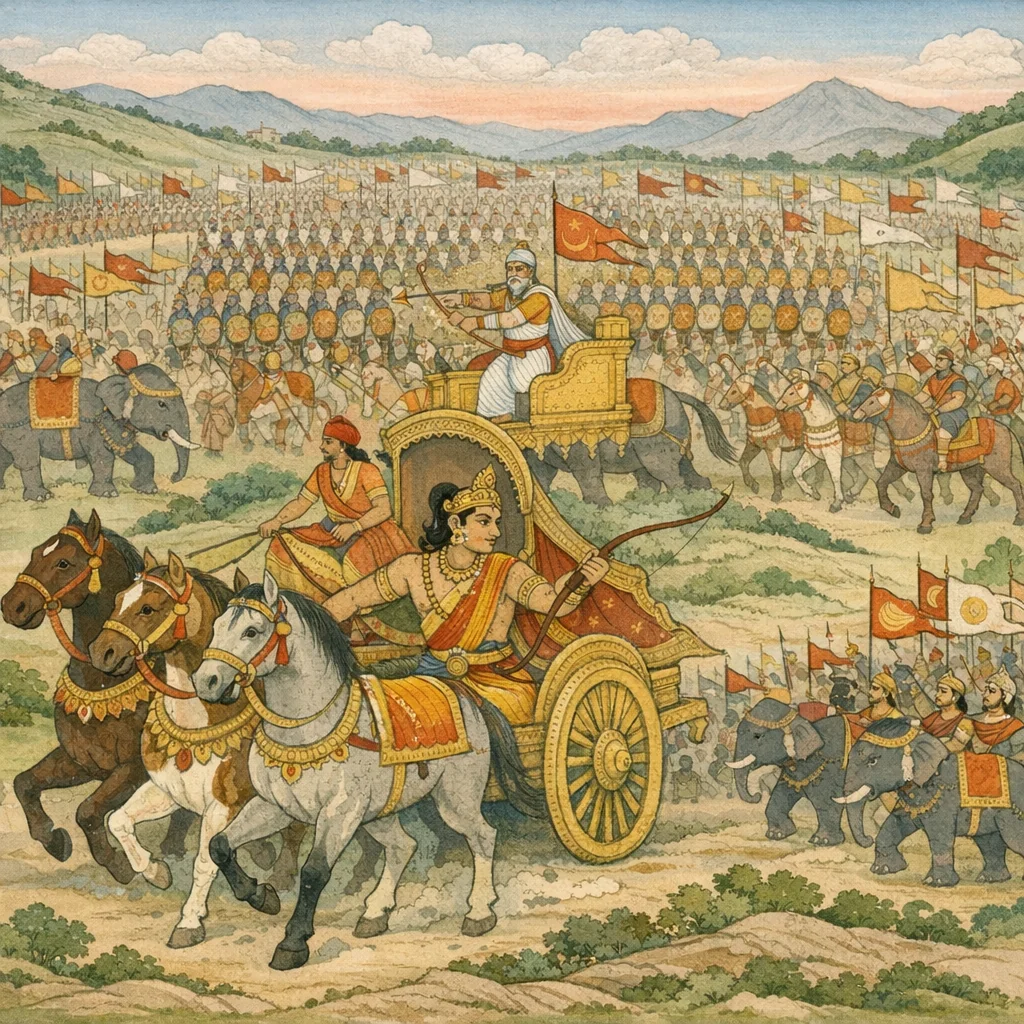
Chapter 23.0 presents Dhṛtarāṣṭra’s grief-stricken interrogation of Saṃjaya following the reported death of Droṇa. The king frames the war’s reversals through the lens of daiva/bhāgadhēya (fortune, destiny), asserting that outcomes can exceed even divine-scale expectations of battle and that human beings are ‘yoked’ to allotted fate. He juxtaposes Yudhiṣṭhira’s earlier forest exile and later capacity to mobilize forces, reading this transformation as evidence of contingent causality. Dhṛtarāṣṭra recalls Duryodhana’s earlier claims to territorial advantage and laments the crumbling of Kuru confidence after the losses of Bhīṣma and Droṇa. He asks for a clear operational account of how the engagement unfolded—who stood firm, who withdrew, who fled—and requests specific reporting on Arjuna’s actions, identifying him as a principal source of strategic anxiety. The chapter thus functions as a court-side hermeneutic: it does not merely record events but models how political actors interpret catastrophe via ethics, psychology, and theories of agency.
Chapter Arc: धृतराष्ट्र, भीतर-भीतर जलते भय और जिज्ञासा से, संजय से पूछते हैं—क्रोध में भरे भीमसेन आदि जो द्रोणाचार्य पर चढ़ाई कर रहे हैं, उनके रथों के ध्वज-चिह्न, घोड़े और पहचान क्या-क्या थे? → संजय युद्धभूमि को मानो चित्रपट की तरह खोलते हैं—एक-एक महारथी का रथ, घोड़ों के रंग, ध्वजों की छटा, और द्रोण-सेना की ध्वज-सम्बाध भीड़; शैनेय, युधामन्यु, धृष्टकेतु आदि द्रोणरथ की ओर मुड़ते हैं, और युधिष्ठिर पर सुवर्णवर्ण हय-श्रेष्ठों की रक्षा-परिक्रमा कसती जाती है। → अर्जुन के लिए ब्रह्मा-निर्मित, त्रैलोक्य-रक्षणार्थ सृष्ट दिव्य धनुष का स्मरण/उद्घोष युद्ध को लौकिक से दैवी स्तर पर उठा देता है; उसी क्षण द्रोणानीक ध्वजों से घना, वीरों से भरा, ‘पट पर अंकित चित्र’ सा स्थिर-भयानक दृश्य बन जाता है। → अध्याय का भार निर्णायक वध पर नहीं, ‘रण-व्यवस्था’ और ‘वीर-परिचय’ पर टिकता है—द्रोण के विरुद्ध बढ़ती पाण्डव-चढ़ाई, युधिष्ठिर की सुरक्षा-घेरा, और अनेक रथों का रणभूमि में पहुँचना स्पष्ट हो जाता है। → द्रोणानीक के उस चित्रवत् घनत्व के सामने पाण्डव-वीरों की टक्कर अब किस मोड़ पर टूटेगी—यह प्रश्न अगले प्रसंग के लिए युद्ध को अधर में छोड़ देता है।
Shlokas
Verse 1
धृतराष्ट्रने पूछा--संजय! क्रोधमें भरे हुए भीमसेन आदि जो योद्धा द्रोणाचार्यपर चढ़ाई कर रहे थे, उन सबके रथोंके (घोड़े-ध्वजा आदि) चिह्न कैसे थे? यह मुझे बताओ
Dhritarashtra said: “Sanjaya, as Bhimasena and the other warriors—filled with wrath—were charging against Acharya Drona, what were the identifying emblems on their chariots, such as their horses and banners? Tell me this.”
Verse 2
संजय उवाच ऋक्षवर्णहयैर्दष्टवा व्यायच्छन्तं वृकोदरम् । रजताश्चवस्तत: शूर: शैनेय: संन्यवर्तत,संजय कहते हैं--राजन्! रीछके समान रंगवाले घोड़ोंसे जुते हुए रथपर बैठकर भीमसेनको आते देख चाँदीके समान श्वेत घोड़ोंवाले शूरवीर सात्यकि भी लौट पड़े
Sañjaya said: O King, seeing Bhīmasena (Vṛkodara) advancing—mounted on a chariot yoked with horses of bear-like hue—the heroic Śaineya (Sātyaki), whose horses were silver-white, turned back.
Verse 3
सारज्जञश्वो युधामन्यु: स्वयं प्रत्वरयन् हयान् । पर्यवर्तत दुर्धर्ष: क्रुद्धों द्रोणरथं प्रति,सारंगके* समान (सफेद, नीले और लाल) रंगके घोड़ोंसे युक्त युधामन्यु, स्वयं ही अपने घोड़ोंको शीघ्रतापूर्वक हाँकता हुआ द्रोणाचार्यके रथकी ओर लौट पड़ा। वह दुर्जय वीर क्रोधमें भरा हुआ था
Sañjaya said: Yudhāmanyu—whose horses were sāraṅga-colored—personally urged his steeds on at speed and wheeled back toward Droṇa’s chariot. Hard to withstand, he was filled with wrath.
Verse 4
पारावतसवर्णस्तु हेमभाण्डैर्महाजवै: । पाज्चालराजस्य सुतो धृष्टब्युन्नो न्यवर्तत,पांचालराजकुमार धृष्टद्युम्न कबूतरके5ं समान (सफेद और नीले) रंगवाले सुवर्णभूषित एवं अत्यन्त वेगशाली घोड़ोंके द्वारा लौट आया
Sañjaya said: Dhṛṣṭadyumna, the son of the king of the Pāñcālas, whose appearance was like that of a pigeon, turned back—borne by exceedingly swift horses adorned with golden trappings.
Verse 5
पितरं तु परिप्रेप्सु: क्षत्रधर्मा यतव्रत: । सिद्धि चास्य परां काड्क्षन् शोणाश्व: संन्यवर्तत,नियमपूर्वक व्रतका पालन करनेवाला क्षत्रधर्मा अपने पिता धृष्टद्युम्नकी रक्षा और उनके अभीष्ट मनोरथकी उत्तम सिद्धि चाहता हुआ लाल रंगके घोड़ोंसे युक्त रथपर आरूढ़ हो लौट आया
Seeking to protect his father, steadfast in kṣatriya-dharma and disciplined in his vow, and desiring for him the highest success, Śoṇāśva turned back, mounted on a chariot yoked to red horses.
Verse 6
घा्मपत्रनिभांश्चाश्वान् मल्लिकाक्षान् स्वलंकृतान् | शैखण्डि: क्षत्रदेवस्तु स्वयं प्रत्वरयन् ययौ,शिखण्डीका पुत्र क्षत्रदेव, कमलपत्रके समान रंग तथा निर्मल नेत्रोंवाले सजे-सजाये घोड़ोंको स्वयं ही शीघ्रतापूर्वक हाँकता हुआ वहाँ आया
Sañjaya said: Shikhaṇḍī—also called Kṣatradeva—came there, himself urging on his well-adorned horses, lotus-leaf-hued in color and clear-eyed.
Verse 7
दर्शनीयास्तु काम्बोजा: शुकपत्रपरिच्छदा: । वहन्तो नकुलं शीघ्रं तावकानभिदुद्रुवु:,तोतेकी पाँखके समान रोमवाले दर्शनीय काम्बोजदेशीयः घोड़े नकुलको वहन करते हुए बड़ी शीघ्रताके साथ आपके सैनिकोंकी ओर दौड़े
Sañjaya said: The Kāmboja horses—striking to behold, as though clad in pale, leaf-like coverings—rushed swiftly toward your troops, bearing Nakula at speed.
Verse 8
कृष्णास्तु मेघसंकाशा अवहनुत्तमौजसम् | दुर्धर्षायाभिसंधाय क्रुद्धं युद्धाय भारत,भरतनन्दन! दुर्धर्ष युद्धका संकल्प लेकर क्रोधमें भरे हुए उत्तमौजाको मेघके समान श्यामवर्णवाले घोड़े युद्धस्थलकी ओर ले जा रहे थे
Sañjaya said: The dark, cloud-hued horses bore Uttamaujas forward. Having set their aim upon the hard-to-assail foe, and inflamed with wrath for battle, they carried him toward the field—O Bhārata, delight of the Bharatas.
Verse 9
तथा तित्तिरिकल्माषा हया वातसमा जवे | अवहंस्तुमुले युद्धे सहदेवमुदायुधम्,इस प्रकार अस्त्र-शस्त्रोंसे सम्पन्न सहदेवको तीतरके समान चितकबरे रंगवाले तथा वायुके समान वेगशाली घोड़े उस भयंकर युद्धमें ले गये
Sañjaya said: Then those horses, speckled like partridges and swift as the wind, bore Sahadeva—armed and ready—through the tumult of that dreadful battle.
Verse 10
दन्तवर्णस्तु राजानं कालवाला युधिष्ठटिरम् भीमवेगा नरव्याप्रमवहन् वातरंहस:,हाथीके दाँतके समान सफेद रंग, काली एूँछ तथा वायुके समान तीव्र एवं भयंकर वेगवाले घोड़े नरश्रेष्ठ राजा युधिष्ठिरको रणक्षेत्रमें ले गये
Sañjaya said: Horses white as ivory, with dark manes, swift as the wind and terrible in their speed, bore the tiger among men—King Yudhiṣṭhira—into the battlefield.
Verse 11
हेमोत्तमप्रतिच्छन्नैर्हयैर्वातसमैर्जवे । अभ्यवर्तन्त सैन्यानि सर्वाण्येव युधिष्ठिरम्,सोनेके उत्तम आवरणोंसे ढके हुए, वायुके समान वेगशाली घोड़ोंद्वारा सारी सेनाओंने महाराज युधिष्ठिरको सब ओरसे घेर रखा था
Sañjaya said: With horses covered in the finest golden trappings and swift as the wind, all the armies surged in and closed around King Yudhiṣṭhira from every side.
Verse 12
राज्ञस्त्वनन्तरो राजा पाज्चाल्यो द्रुपदो5भवत् | जातरूपमयच्छत्र: सर्वैस्तैरभिरक्षित:,राजा युधिष्ठिरके पीछे पांचालराज द्रुपद चल रहे थे। उनका छत्र सोनेका बना हुआ था। वे भी समस्त सैनिकोंद्वारा सुरक्षित थे
Sañjaya said: Close behind King Yudhiṣṭhira came King Drupada of the Pāñcālas. Over him was held a parasol fashioned of gold, and he too moved forward under the protection of all those troops.
Verse 13
ललामैहरिभिर्युक्त: सर्वशब्दक्षमैर्युधि । राज्ञां मध्ये महेष्वास: शान्तभीरभ्यवर्तत,वे “ललाम'* और “हरि संज्ञावाले घोड़ोंसे, जो सब प्रकारके शब्दोंको सुनकर उन्हें सहन करनेमें समर्थ थे, सुशोभित हो रहे थे। उस युद्धस्थलमें समस्त राजाओंके मध्यभागमें महाधनुर्थर राजा ट्रुपद निर्भय होकर द्रोणाचार्यका सामना करनेके लिये आये
Sañjaya said: Adorned with banners and yoked to tawny horses—trained to endure every kind of battlefield noise—the great archer advanced in the midst of the kings. Calm and fearless, he moved forward to confront Droṇācārya.
Verse 14
त॑ विराटो<न्वयाच्छीघ्रं सह सर्वर्महारथै: । केकयाश्र शिखण्डी च धृष्टकेतुस्तथैव च
Sañjaya said: Then Virāṭa swiftly advanced, accompanied by all the great chariot-warriors; the Kekayas too moved forward, and Śikhaṇḍī, and likewise Dhṛṣṭaketu.
Verse 15
त॑ तु पाटलिपुष्पाणां समवर्णा हयोत्तमा:
Sañjaya said: Those excellent horses were of the same hue as pāṭali blossoms.
Verse 16
हरिद्रासमवर्णास्तु जवना हेममालिन:
Sañjaya reports that the Yavanas appeared with a turmeric-golden complexion, adorned with garlands of gold.
Verse 17
इन्द्रगोपकवर्ण श्र भ्रातर: पठच केकया:
Sañjaya said: “And the five brothers of the Kekaya line—radiant with a hue like the indragopa insect—were there as well.”
Verse 18
जातरूपसमाभासा: सर्वे लोहितकध्वजा: । पाँच भाई केकयराजकुमार इन्द्रगोप (वीरबहूटी)-के समान रंगवाले घोड़ोंद्वारा रणभूमिमें लौट रहे थे। उन पाँचों भाइयोंकी कान्ति सुवर्णके समान थी तथा वे सब-के-सब लाल रंगकी ध्वजा-पताका धारण किये हुए थे ।। १७३६ || ते हेममालिन: शूरा: सर्वे युद्धविशारदा:
Sañjaya said: All of them shone with a radiance like refined gold, and each bore a crimson banner. Those heroic men, adorned with golden garlands, were all skilled in the arts of war.
Verse 19
आमपात्रनिकाशास्तु पांचाल्यममितौजसम्
Sañjaya said: Those weapons—shafts in appearance like unbaked earthen vessels—struck the mighty Pāñcāla prince, of immeasurable prowess, revealing the grim, impersonal force of war, where even the bravest are assailed by relentless missiles.
Verse 20
तथा द्वादश साहस्रा: पञ्चालानां महारथा:
Sañjaya said: Likewise, among the Pāñcālas there were twelve thousand great chariot-warriors—an immense host, counted and reported amid the carnage as the war unfolded.
Verse 21
पुत्र तु शिशुपालस्य नरसिंहस्य मारिष
Sañjaya said: “But the son of Śiśupāla—O revered one—was of lion-like prowess.”
Verse 22
धेष्टकेतुस्तु चेदीनामृषभो5तिबलोदित:
Sañjaya said: Dheṣṭaketu, the foremost bull among the Cedi warriors—of extraordinary strength and radiant prowess—stood out in that battle array, marked by his might and martial splendor.
Verse 23
बृहत्क्षत्रं तु कैकेयं सुकुमारं हयोत्तमा:,इति श्रीमहाभारते द्रोणपर्वणि संशप्तकवधपर्वणि हयध्वजादिकथने त्रयोविंशो 5 ध्याय: इस प्रकार श्रीमहाभारत द्रोणपर्वके अन्तर्गत संशप्तकवधपर्वमें अश्ष और ध्वज आदिका वर्णनविषयक तेईसवाँ अध्याय पूरा हुआ
Sañjaya said: “There was the Kaikeya prince, of mighty warrior-stock, yet youthful and tender; and there were excellent horses.” Thus, in the Śrī Mahābhārata, within the Droṇa Parva, in the section on the slaying of the Saṃśaptakas, the twenty-third chapter—describing horses, banners, and other martial insignia—concludes.
Verse 24
पलालधूमसंकाशा: सैन्धवा: शीघ्रमावहन् । केकयदेशके सुकुमार राजकुमार बृहत्क्षत्रकों पुआलके धूएँके समान उज्ज्वल-नील वर्णवाले सिन्धुदेशीय* अच्छी जातिके घोड़ोंने शीघ्रतापूर्वक रणभूमिमें पहुँचाया ।। मल्लिकाक्षा: पद्मवर्णा बाह्लिजाता: स्वलंकृता:
Sañjaya said: Horses from Sindhu-deśa, gleaming with a bluish lustre like the smoke of burning straw, swiftly bore (their rider/chariot) onto the battlefield. They were lotus-hued, bright-eyed, of Bāhlika stock, and richly adorned—signs of royal power being hurled into the urgency of war.
Verse 25
रुक्मभाण्डप्रतिच्छन्ना: कौशेयसदृशा हरा:
Sañjaya said: They were covered with golden fittings, and their tawny hue shone like fine silk—an image of martial splendor that heightens the grandeur of war even as it foreshadows the costly violence to come.
Verse 26
युवानमवहन् युद्धे क्रौज्चवर्णा हयोत्तमा:
Sañjaya said: In the midst of battle, excellent horses of krauñca-like hue bore the young warrior onward—an image that underscores how youthful valor is carried into the harsh machinery of war, where strength and speed serve a cause shaped by duty and conflict.
Verse 27
श्वेतास्तु प्रतिविन्ध्यं तं कृष्णग्रीवा मनोजवा: । यन्तुः प्रेष्यकरा राजन् राजपुत्रमुदावहन्,राजन्! मनके समान वेगशाली तथा काली गर्दनवाले श्वेतवर्णके घोड़े, जो सारथिकी आज्ञा माननेवाले थे, राजकुमार प्रतिविन्ध्यको रणमें ले गये
Sañjaya said: O King, those white horses—black-necked and swift as the mind—obedient to the charioteer’s command, bore Prince Prativindhya forward into the battle. The verse underscores how disciplined instruments and trained service enable a warrior’s intent to be carried into action, for good or ill, within the moral gravity of war.
Verse 28
सुतसोम॑ तु यः सौम्यं पार्थ: पुत्रमजीजनत् । माषपुष्पसवर्णास्तमवहन् वाजिनो रणे
Sañjaya said: O gentle one, the son whom Pārtha (Arjuna) begot—named Sutasoma—was borne through the battle by horses the color of māṣa-flowers. The verse underscores how, even amid the violence of war, lineage, identity, and the visible signs of a warrior’s chariot-team remain markers of duty and recognition on the battlefield.
Verse 29
कुन्तीकुमार भीमसेनने जिस सौम्यरूपवाले पुत्र सुतसोमको जन्म दिया था, उसे उड़दके फूलकी भाँति सफेद और पीले रंगवाले घोड़ोंने रणक्षेत्रमें पहुँचाया ।। सहस्रसोमप्रतिमो बभूव पुरे कुरूणामुदयेन्दुनाम्नि । तस्मिंजात: सोमसंक्रन्दम ध्ये यस्मात् तस्मात् सुतसोमो5भवत् सः,कौरवोंके उदयेन्दु नामक पुर (इन्द्रप्रस्थ) में सोमाभिषव (सोमरस निकालने) के दिन सहस्रों चन्द्रमाओंके समान कान्तिमान् वह बालक उत्पन्न हुआ था, इसलिये उसका नाम सुतसोम रखा गया थ
Sañjaya said: The gentle-looking son whom Bhīmasena, Kuntī’s son, had begotten—Sutasoma—was brought onto the battlefield by horses white and pale yellow, faint as the blossoms of the black gram. In the Kuru city called Udayendu (Indraprastha), on the day of the Soma-pressing rite, that child was born radiant like a thousand moons; therefore he came to be known as Sutasoma.
Verse 30
नाकुलिं तु शतानीकं शालपुष्पनिभा हया: । आदित्यतरुणप्रख्या: श्लाघनीयमुदावहन्,नकुलके स्पृहणीय पुत्र शतानीकको शालपुष्पके समान रक्त-पीतवर्णवाले और बालसूर्यके समान कान्तिमान् अश्व रणभूमिमें ले गये
Sañjaya said: Horses, lovely as śāla-flowers and radiant like the young sun, bore Nakula’s son Śatānīka—an admirable sight—into the battlefield.
Verse 31
काज्चनापिहितैरयोक्त्रैर्मयूरग्रीवसंनि भा: । द्रौपदेयं नरव्याप्र॑ श्रुतर्माणमाहवे,मोरकी गर्दनके समान नीले रंगवाले घोड़ोंने सुनहरी रस्सियोंसे आबद्ध हो द्रौपदीपुत्र सहदेवकुमार पुरुषसिंह श्रुतकर्माको युद्धभूमिमें पहुँचाया
Sañjaya said: Horses of a deep blue hue, like the neck of a peacock, harnessed with golden reins, bore Śrutakarmā—Draupadī’s son, a tiger among men—into the battlefield.
Verse 32
श्रुतकीर्ति श्रुतनिधिं द्रौपदेयं हयोत्तमा: । ऊहूुः पार्थसमं युद्धे चाषपत्रनिभा हया:,इसी प्रकार युद्धमें अर्जुनकी समानता करनेवाले, शास्त्रज्ञानके भण्डार द्रौपदीनन्दन अर्जुनकुमार श्रुतकीर्तिकों नीलकण्ठकी पाँखके समान रंगवाले उत्तम घोड़े रणक्षेत्रमें ले गये
Sañjaya said: Excellent horses, dark-hued like the feathers of a peacock, bore Śrutakīrti—the son of Draupadī, a treasury of sacred learning—into the battlefield, where he strove to match Pārtha (Arjuna) in combat.
Verse 33
यमाहुरध्यर्धगुणं कृष्णात् पार्थाच्च संयुगे । अभिमन्युं पिशज्ास्तं कुमारमवहन् रणे,जिसे युद्धमें श्रीकृष्ण और अर्जुनसे ड्योढ़ा बताया गया है, उस सुभद्राकुमार अभिमन्युको रणक्षेत्रमें कपिलवर्णवाले घोड़े ले गये
Sañjaya said: In battle, that young prince Abhimanyu—whom people declared to be a measure and a half superior even to Krishna and Arjuna—was borne across the field of war by horses of tawny (kapila) hue.
Verse 34
एकस्तु धार्तराष्ट्रेभ्य:ः पाण्डवान् य: समाश्रित: । त॑ बृहन्तो महाकाया युयुत्सुमवहन् रणे
Sañjaya said: Among the sons of Dhṛtarāṣṭra there was one—Yuyutsu—who had taken refuge with the Pāṇḍavas. In the thick of battle, towering warriors of great stature seized him and bore him away amid the fighting—showing how allegiance to dharma can isolate a man even among his own kin and make him a target in war’s confusion.
Verse 35
पलालकाण्डवर्णस्तु वार्थक्षेमिं तरस्विनम् । ऊहुः सुतुमुले युद्धे हया: कृष्णा: स्वलंकृता:
Sañjaya said: In that fiercely tumultuous battle, the well-adorned black horses—of the hue of pale straw-stalks—bore along the swift and powerful warrior, a protector of wealth and welfare (kṣema). The scene shows that even amid war’s moral chaos, strength and careful provision are marshalled to sustain a leader’s purpose and survival.
Verse 36
आपके पुत्रोंमेंसे जो एक युयुत्सु पाण्डवोंकी शरणमें जा चुके हैं, उन्हें पुआलके डंठलके समान रंगवाले, विशालकाय एवं बृहद् अश्रोंने युद्धभूमिमें पहुँचाया। उस भयंकर युद्धमें काले रंगके सजे-सजाये घोड़ोंने वृद्धक्षेमके वेगशाली पुत्रको युद्धभूमिमें पहुँचाया ।। कुमारं शितिपादास्तु रुक्मचित्रैरुरच्छदे: । सौचित्तिमवहन् युद्धे यन्तुः प्रेष्यकरा हया:,सुचित्तके प्रत्र कुमार सत्यधृतिको सुवर्णमय विचित्र कवचोंसे सुसज्जित और काले रंगके पैरोंवाले, सारथिकी इच्छाके अनुसार चलनेवाले उत्तम घोड़ोंने युद्धक्षेत्रमें उपस्थित किया
Sañjaya said: In that dreadful battle, excellent horses—black-footed and obedient to the charioteer’s rein—bore forth the young prince Saucitti, clad in splendid, gold-ornamented and variegated armour, and brought him onto the field. The verse shows that war advances not only by personal valor but by the disciplined coordination of steeds, driver, and equipment, drawing even the young into the machinery of conflict.
Verse 37
रुक्मपीठावकीण्स्तु कौशेयसदृशा हया: । सुवर्णमालिन: क्षान्ता: श्रेणिमन्तमुदावहन्,सुनहरी पीठसे युक्त, रेशमके समान रोमवाले, सुवर्णमालाधारी तथा सहनशक्तिसे सम्पन्न घोड़ोंने श्रेणिमान्को युद्धमें पहुँचाया
Sañjaya said: Horses adorned with golden-backed trappings, their coats gleaming like silk, wearing garlands of gold and endowed with great endurance, bore Śreṇimān forward into the battle. The verse shows that martial power is not only a matter of warriors but also of well-equipped, disciplined, and resilient supports that carry a fighter into the ethical crucible of war.
Verse 38
रुक्ममालाधरा: शूरा हेमपृष्ठा: स्वलंकृता: । काशिराजं नरश्रेष्ठ श्लाघनीयमुदावहन्,सुवर्णमाला धारण करनेवाले शूरवीर और सुवर्ण रंगके पृष्ठभागवाले सजे- सजाये घोड़े स्पृहणीय नरश्रेष्ठ काशिराजको रणभूमिमें ले गये
Sañjaya said: Brave, well-adorned horses, wearing golden garlands and having backs that gleamed like gold, bore the Kāśi king—an admirable best of men—onto the battlefield. The verse shows how royal honor and martial splendor accompany a warrior into peril, where reputation and duty are tested before all.
Verse 39
अस्त्राणां च धनुर्वेदे बाह्े वेदे च पारगम् । त॑ सत्यधृतिमायान्तमरुणा: समुदावहन्,अस्त्रोंके ज्ञानमें, धनुर्वेदमें तथा ब्राह्मवेदमें भी पारंगत पूर्वोक्त सत्यधृतिको अरुणवर्णके अश्रोंने युद्धक्षेत्रमें उपस्थित किया
Sañjaya said: They brought forth Satyadhṛti—one who had mastered the knowledge of weapons, the science of archery (Dhanur-veda), and the sacred lore of the Brāhma-veda—approaching the battlefield, borne along by reddish-hued steeds.
Verse 40
यः स पाञ्चालसेनानीद्रोणमंशमकल्पयत् । पारावतसवर्णस्त धृष्टद्युम्नमुदावहन्
Sañjaya said: “That commander of the Pāñcālas—who had resolved to treat Droṇa as his allotted share, his destined opponent—was then borne forward: Dhṛṣṭadyumna, of dove-like hue, advancing into the fray.”
Verse 41
जो पांचालोंके सेनापति हैं, जिन्होंने द्रोणाचार्यको अपना भाग निश्चित कर रखा था, उन धृष्टद्युम्नको कबूतरके समान रंगवाले घोड़ोंने युद्धभूमिमें पहुँचाया ।। तमन्वयात् सत्यधृतिः सौचित्तियुद्धदुर्मद: । श्रेणिमान् वसुदानश्च पुत्र: काश्यस्य चाभिभू:,उनके पीछे सुचित्तके पुत्र युद्धदुर्मद सत्यधृति, श्रेणिमान, वसुदान- और काशिराजके पुत्र अभिभू चल रहे थे
Sañjaya said: Dhrishtadyumna, the commander of the Panchalas—who had resolved that Drona would be his destined ‘share’—was borne onto the battlefield by horses of dove-like hue. Following behind him marched Satyadhriti, Yuddhadurmada the son of Suchitti, Shreniman, Vasudana, and Abhibhu, the son of the king of Kashi.
Verse 42
युक्तै: परमकाम्बोजैर्जवनैहेममालिभि: । भीषयन्तो द्विषत्सैन्यं यमवैश्रवणोपमा:,ये सब-के-सब यम और कुबेरके समान पराक्रमी योद्धा वेगशाली, सुवर्णमालाओंसे अलंकृत एवं सुशिक्षित, उत्तम काबुली घोड़ोंद्वारा शत्रुसेनाको भयभीत करते हुए धृष्टद्युम्मका अनुसरण कर रहे थे
Yoked to the finest Kāmboja horses—swift, well-trained, and adorned with garlands of gold—they were mighty as Yama and Kubera. Striking terror into the enemy host, they followed in the wake of Dhṛṣṭadyumna.
Verse 43
प्रभद्रकास्तु काम्बोजा: षट्सहस्राण्युदायुधा: । नानावर्णहयै: श्रेष्ठेहेमवर्णरथध्वजा:,इनके सिवा छ: हजार काम्बोजदेशीय प्रभद्रक नामवाले योद्धा हथियार उठाये, भाँति-भाँतिके श्रेष्ठ घोड़ोंसे जुते हुए सुनहरे रंगके रथ और ध्वजासे सम्पन्न हो धनुष फैलाये अपने बाणसमूहोंद्वारा शत्रुओंको भयसे कम्पित करते हुए सब समानरूपसे मृत्युको स्वीकार करनेके लिये उद्यत हो धृष्टद्युम्नके पीछे- पीछे जा रहे थे
Sañjaya said: Besides these, six thousand Kāmboja warriors known as the Prabhadrakas—fully armed—advanced. Yoked to excellent horses of many colors and bearing chariots and banners of golden hue, they moved in disciplined resolve, stretching their bows and, with volleys of arrows, shaking the enemy with fear as they followed close behind Dhṛṣṭadyumna, ready to accept death alike.
Verse 44
शरव्रातैर्विंधुन्वन्त: शत्रून् विततकार्मुका: । समानमृत्यवो भूत्वा धृष्टद्युम्न॑ समन्वयु:,इनके सिवा छ: हजार काम्बोजदेशीय प्रभद्रक नामवाले योद्धा हथियार उठाये, भाँति-भाँतिके श्रेष्ठ घोड़ोंसे जुते हुए सुनहरे रंगके रथ और ध्वजासे सम्पन्न हो धनुष फैलाये अपने बाणसमूहोंद्वारा शत्रुओंको भयसे कम्पित करते हुए सब समानरूपसे मृत्युको स्वीकार करनेके लिये उद्यत हो धृष्टद्युम्नके पीछे- पीछे जा रहे थे
Sañjaya said: With their bows fully strung, they shook and terrified the enemy with volleys of arrows. Alike resolved to meet death without turning back, they advanced in close order, following Dhṛṣṭadyumna.
Verse 45
बभ्रकौशेयवर्णसस्तु सुवर्णवरमालिन: । ऊहुरम्लानमनसश्रेकितानं हयोत्तमा:,नेवले तथा रेशमके समान रंगवाले (पिंगल-गौर-वर्णके) उत्तम अश्व, जो सुन्दर सुवर्णकी मालासे विभूषित तथा प्रसन्नचित्तवाले थे, चेकितानको युद्धस्थलमें ले गये
Sañjaya said: The finest horses—brownish, with a sheen like silk, adorned with excellent golden garlands, and spirited and unwearied in mind—carried Cekitāna onto the battlefield.
Verse 46
इन्द्रायुधसवर्णस्तु कुन्तिभोजो हयोत्तमै: । आयात् सदश्वै: पुरुजिन्मातुल: सव्यसाचिन:,अर्जुनके मामा पुरुजित् कुन्तिभोज इन्द्रधनुषके समान रंगवाले उत्तम श्रेणीके सुन्दर अश्वोंद्वारा उस युद्धभूमिमें आये
Sañjaya said: Purujit, the Kuntibhoja—maternal uncle of Arjuna—arrived on the battlefield with excellent horses, their hue resembling Indra’s rainbow.
Verse 47
अन्तरिक्षसवर्णस्तु तारकाचित्रिता इव | राजानं रोचमानं ते हया: संख्ये समावहन्,राजा रोचमानको ताराओंसे चित्रित अन्तरिक्षके समान चितकबरे घोड़ोंने युद्धभूमिमें पहुँचाया
Sañjaya said: Those horses, mottled like the very sky—seeming as if painted with stars—bore the radiant king Rocamāna into the thick of battle.
Verse 48
कर्बुरा: शितिपादास्तु स्वर्णजालपरिच्छदा: । जारासंधधि हया: श्रेष्ठा: सहदेवमुदावहन्,जरासंधके पुत्र सहदेवको काले पैरोंवाले चितकबरे श्रेष्ठ घोड़े, जो सोनेकी जालीसे विभूषित थे, रणभूमिमें ले गये
Sañjaya said: The finest horses of Jarāsandha’s lineage—dappled in color, with pale feet, and adorned with golden netting—bore Sahadeva, son of Jarāsandha, forth into the field.
Verse 49
ये तु पुष्करनालस्य समवर्णा हयोत्तमा: | जवे श्येनसमाश्रित्रा: सुदामानमुदावहन्,कमलके नालकी भाँति श्वेतवर्णवाले और श्येन पक्षीके समान वेगशाली उत्तम एवं विचित्र अश्व सुदामाको लेकर रणक्षेत्रमें उपस्थित हुए
Sañjaya said: Those excellent horses, white as the stalk of a lotus and swift as a hawk, bore Sudāmā and arrived upon the battlefield.
Verse 50
शशलोहितवर्णस्तु पाण्डुरोदूगतराजय: । पाज्चाल्यं गोपते: पुत्र सिंहसेनमुदावहन्,जिनके रंग खरगोशके समान और लोहित हैं तथा जिनके अंगोंमें श्वेत-पीत रोमावलियाँ सुशोभित होती हैं, वे घोड़े उन गोपतिपुत्र पांचालराजकुमार सिंहसेनको- युद्धस्थलमें ले गये थे
Sañjaya said: Horses of hare-like reddish hue, adorned with pale and tawny streaks, bore the Pāñcāla prince Siṃhasena—the son of Gopati—forward into the field of battle.
Verse 51
पज्चालानां नरव्याप्रो यः ख्यातो जनमेजय: । तस्य सर्षपपुष्पाणां तुल्यवर्णा हयोत्तमा:
Sañjaya said: “O Janamejaya, that tiger among the Pañcālas—renowned for his prowess—had excellent horses whose color matched the blossoms of mustard.”
Verse 52
पांचालोंमें विख्यात जो पुरुषसिंह जनमेजय हैं, उनके उत्तम घोड़े सरसोंके फूलोंके समान पीले रंगके थे ।। माषवर्णाश्व जवना बृहन्तो हेममालिन: । दधिपृष्ठाश्चित्रमुखा: पाज्चाल्यमवहन् द्रुतम्,उड़दके समान रंगवाले, स्वर्णमालाविभूषित, दधिके समान श्वेत पृष्ठभागसे युक्त और चितकबरे मुखवाले वेगशाली विशाल अश्व पांचालराजकुमारको संग्रामभूमिमें शीघ्रतापूर्वक ले गये
Sañjaya said: Janamejaya, famed among the Pañcālas, had excellent horses yellow as mustard blossoms. Great, swift horses—dark as black gram, adorned with golden garlands, with backs white like curd and faces mottled—quickly bore the Pañcāla prince onto the battlefield.
Verse 53
शुराश्व भद्रकाश्नैव शरकाण्डनिभा हया: । पद्मकिज्जल्कवर्णाभा दण्डधारमुदावहन्,शूर, सुन्दर मस्तकवाले, सरकण्डेके पोरुओंके समान श्वेत-गौर तथा कमलके केसरकी भाँति कान्तिमान् घोड़े दण्डधारको रणभूमिमें ले गये
Sañjaya said: Horses named Śurāśva and Bhadraka—white and pale like reeds, and radiant like the filaments of a lotus—bore Daṇḍadhāra across the battlefield.
Verse 54
रासभारुणवर्णाभा: पृष्ठतो मूषिकप्रभा: । वल्गन्त इव संयत्ता व्याप्रदत्तमुदावहन्,गदहेके समान मलिन एवं अरुणवर्णवाले, पृष्ठभागमें चूहेके समान श्याम- मलिन कान्ति धारण करनेवाले तथा विनीत घोड़े व्याप्रदत्तको युद्धमें उछलते- कूदते हुए-से ले गये
Sañjaya said: The well-trained horses—dusky-red like asses, yet with a mouse-dark sheen along their backs—seemed to leap and bound as they carried Vyāpradatta away amid the press of battle.
Verse 55
हरय: कालकाश्षित्राश्चित्रमाल्यविभूषिता: । सुधन्वानं नरव्यात्रं पाउचाल्यं समुदावहन्,काले मस्तकवाले, विचित्र वर्ण तथा विचित्र मालाओंसे विभूषित घोड़े पांचालदेशीय पुरुषसिंह सुधन््वाको लेकर रणभूमिमें उपस्थित हुए
Sañjaya said: Horses, dark-hued and adorned with variegated garlands, brought Sudhanvan—the Panchāla hero, a tiger among men—onto the battlefield.
Verse 56
इन्द्राशनिसमस्पर्शा इन्द्रगोपकसंनिभा: । काये चित्रान्तराश्रित्राश्षित्रायुधमुदावहन्
Sañjaya said: “They were as hard to the touch as Indra’s thunderbolt, and in hue they resembled the bright indragopa insect. Marked with variegated patterns upon the body, they bore aloft their weapons—terrible to behold—signaling the fierce, fate-driven momentum of battle.”
Verse 57
इन्द्रके वज़के समान जिनका स्पर्श अत्यन्त दुःसह है, जो वीरबहूटीके समान लाल रंगवाले हैं, जिनके शरीरमें विचित्र चिह्न शोभा पाते हैं तथा जो देखनेमें भी अद्धुत हैं, वे घोड़े चित्रायुधको युद्धभूमिमें ले गये ।। बिभ्रतो हेममालास्तु चक्रवाकोदरा हया: । कोसलाधिपते: पुत्र॑ सुक्षत्रे वाजिनो5वहन्,सुवर्णजी माला धारण किये चक्रवाकके उदरके समान कुछ-कुछ श्वैतवर्णवाले घोड़े कोसलनरेशके पुत्र सुक्षत्रको युद्धमें ले गये
Sañjaya said: Horses—hard to the touch like Indra’s thunderbolt, red as the indragopa insect, their bodies marked with strange variegated signs and wondrous to behold—carried Citrāyudha onto the battlefield. And wearing garlands of gold, horses whose bellies were like those of the cakravāka bird—pale and mottled in hue—bore Sukṣatra, the son of the lord of Kośala, into the fight.
Verse 58
शबलास्तु बृहन्तो<श्वा दान्ता जाम्बूनदस्रज: । युद्धे सत्यधृतिं क्षैमिमवहन् प्रांशव: शुभा:,चितकबरे, विशालकाय, वशगमें किये हुए, सुवर्णकी मालासे विभूषित तथा ऊँचे कदवाले सुन्दर अअभ्रोंने क्षेमकुमार सत्यधृतिको युद्धभूमिमें पहुँचाया
Sañjaya said: The tall, well-trained, dappled horses—adorned with garlands of Jāmbūnada gold—noble and high-stepping, bore Kṣemakumāra Satyadhṛti onto the battlefield.
Verse 59
एकवर्णेन सर्वेण ध्वजेन कवचेन च | अश्वैश्न धनुषा चैव शुक्लै: शुक्लो न्यवर्तत,जिनके ध्वज, कवच और धनुष--ये सब कुछ एक ही रंगके थे, वे राजा शुक्ल शुक्लवर्णके अअश्रोंद्वारा युद्धके मैदानमें लौट आये
Sañjaya said: With banner, armour, horses, and bow—all of a single hue—King Śukla, himself radiant in whiteness, turned back and returned upon the battlefield.
Verse 60
समुद्रसेनपुत्र॑ तु सामुद्रा रुद्रतेजसम् । अथवा: शशाड्कसदृशा श्वन्द्रसेनमुदावहन्,समुद्रसेनके पुत्र, भयानक तेजसे युक्त चन्द्रसेनको चन्द्रमाके समान सफेद रंगवाले समुद्री घोड़ोंने युद्धभूमिमें पहुँचाया
Sañjaya said: The sea-born horses then bore along Śvandrāsena—son of Samudrasena—who blazed with a fierce, Rudra-like splendor. Or again, those ocean-bred steeds, white like the moon, carried him swiftly onto the battlefield.
Verse 61
नीलोत्पलसवर्णस्तु तपनीयविभूषिता: । शैब्यं चित्ररथं संख्ये चित्रमाल्या3वहन् हया:,नील-कमलके समान रंगवाले, सुवर्णमय आभूषणोंसे विभूषित विचित्र मालाओंवाले अश्व विचित्र रथसे युक्त राजा शैब्यको युद्धस्थलमें ले गये
Sañjaya said: In the thick of battle, horses the color of blue lotuses, adorned with golden ornaments and bearing variegated garlands, carried King Śaibya—mounted on his splendid chariot—into the fray.
Verse 62
कलायपुष्पवर्णस्तु श्वेतलोहितराजय: । रथसेनं हयश्रेष्ठा: समूहुर्युद्धदुर्मदम्,जिनके रंग केरावके फ़ूलके समान हैं, जिनकी रोमराजि श्वेतलोहित वर्णकी है, ऐसे श्रेष्ठ घोड़ोंने रणदुर्मद रथसेनको संग्रामभूमिमें पहुँचाया
Sañjaya said: Horses of the finest breed—colored like the blossoms of the kālāya plant and marked with white-and-red streaks—carried Rathasena, intoxicated with the fury of battle, onto the field of war.
Verse 63
यं तु सर्वमनुष्येभ्य: प्राहु: शूरतरं नूपम् त॑ पटच्चरहन्तारं शुकवर्णाउवहन् हया:,जिन्हें सब मनुष्योंस अधिक शूरवीर नरेश कहा जाता है, जो चोरों और लुटेरोंका नाश करनेवाले हैं, उन समुद्रप्रान््नके अधिपतिको तोतेके समान रंगवाले घोड़े रणभूमिमें ले गये
Sañjaya said: That king whom all men proclaimed to be the most valiant—one who destroys thieves and plunderers—was borne by parrot-hued horses onto the battlefield.
Verse 64
चित्रायुधं चित्रमाल्यं चित्रवर्मायुधध्वजम् । ऊहु: किंशुकपुष्पाणां समवर्णा हयोत्तमा:,जिनके माला, कवच, अस्त्र-शस्त्र और ध्वज सब कुछ विचित्र हैं, उन राजा चित्रायुधको- पलाशके फूलोंके समान लाल रंगवाले उत्तम घोड़े संग्राममें ले गये
Sañjaya said: They led into battle King Citrāyudha—whose garlands were wondrous, whose armor was variegated, and whose weapons and banner were striking—drawn by excellent horses of a single hue, red like the blossoms of the kiṃśuka (palāśa).
Verse 65
एकवर्णेन सर्वेण ध्वजेन कवचेन च । धनुषा रथवाहैश्व नीलै्नीलो5भ्यवर्तत,जिनके ध्वज, कवच और धनुष सब एक रंगके थे, वे राजा नील अपने रथमें जुते हुए नील रंगके घोड़ोंद्वारा रणक्षेत्रमें उपस्थित हुए
Sañjaya said: With banner, armor, and bow all of a single hue, and with his chariot drawn by blue-colored steeds, King Nīla advanced onto the battlefield.
Verse 66
नानारूपै रत्नचिट्रैर्वरूथरथकार्मुकै: । वाजिध्वजपताक्शभिश्षिन्रैश्षित्रो5भ्यवर्तत
Sañjaya said: Then there advanced a wondrous, many-formed spectacle—armoured warriors with chariots and bows adorned with jewel-work, and with horses, banners, and standards torn and broken—moving forward in a confused yet striking mass.
Verse 67
जिनके रथका आवरण, रथ तथा धनुष नाना प्रकारके रत्नोंसे जटित एवं अनेक रूपवाले थे, जिनके घोड़े, ध्वजा और पताकाएँ भी विचित्र प्रकारकी थीं, वे राजा चित्र चितकबरे घोड़ोंद्वारा युद्धके मैदानमें आये ।। ये तु पुष्करपर्णस्य तुल्यवर्णा हयोत्तमा: । ते रोचमानस्यथ सुतं हेमवर्णमुदावहन्,जिनके रंग कमलपत्रके समान थे, वे उत्तम घोड़े रोचमानके पुत्र हेमवर्णको रणभूमिमें ले गये
Sañjaya said: Those excellent horses, whose hue matched the lotus-leaf, carried Hema-varṇa, the son of Rocamāna, onto the battlefield.
Verse 68
योधाश्व भद्रकाराश्न शरदण्डानुदण्डय: । श्वेताण्डा: कुक्कुटाण्डाभा दण्डकेतुं हया&वहन्,युद्ध करनेमें समर्थ, कल्याणमय कार्य करनेवाले, सरकण्डेके समान श्वैत- गौर पीठवाले, श्वेत अण्डकोशधारी तथा मुर्गीके अण्डेके समान सफेद घोड़े दण्डकेतुको युद्धस्थलमें ले गये
Sañjaya said: The war-trained horses—auspicious in their service—bearing backs pale-white like reeds and marked with bright, egg-white tones, some gleaming like the whiteness of a hen’s egg, carried Daṇḍaketu onto the battlefield.
Verse 69
केशवेन हते संख्ये पितर्यथ नराधिपे । भिन्ने कपाटे पाण्ड्यानां विद्रुतेषु च बन्धुषु,भगवान् श्रीकृष्णके हाथोंसे जब युद्धमें पाण्ड्यदेशके राजा तथा वर्तमान नरेशके पिता मारे गये, पाण्ड्यराजधानीका फाटक तोड़-फोड़ दिया गया और सारे बन्धु-बान्धव भाग गये, उस समय जिसने भीष्म, द्रोण, परशुराम तथा कृपाचार्यसे अस्त्रविद्या सीखकर उसमें रुकमी, कर्ण, अर्जुन और श्रीकृष्णकी समानता प्राप्त कर ली; फिर द्वारकाको नष्ट करने और सारी पृथ्वीपर विजय पानेका संकल्प किया; यह देख विद्वान् सुहृदोंने हितकी कामना रखकर जिसे वैसा दुःसाहस करनेसे रोक दिया और अब जो वैरभाव छोड़कर अपने राज्यका शासन कर रहा है और जिसके रथपर सागरके चिह्नसे युक्त ध्वजा फहराती है, पराक्रमरूपी धनका आश्रय लेनेवाले उस बलवान राजा पाण्ड्यने अपने दिव्य धनुषकी टंकार करते हुए वैदूर्यमणिकी जालीसे आच्छादित तथा चन्द्रकिरणोंके समान श्वेत घोड़ोंद्वारा द्रोणाचार्यपर धावा किया
Sañjaya said: When Keśava (Kṛṣṇa) had slain in battle the Pāṇḍya king—who was also the father of the reigning ruler—and when the gates of the Pāṇḍya stronghold had been shattered and their kinsmen had fled in panic, the Pāṇḍya ruler (later restrained by wise well-wishers from reckless vows of vengeance and conquest) now, having set aside hostility and governing his kingdom, advanced against Droṇa. With the twang of his divine bow, and with a chariot bearing a sea-emblem on its banner, covered with a lattice of vaidūrya-gems and drawn by moon-white horses, he charged the preceptor—his valor presented as disciplined power rather than blind rage.
Verse 70
भीष्मादवाप्य बास्त्राणि द्रोणाद् रामात् कृपात् तथा । अस्त्रै: समत्वं सम्प्राप्प रुक्मिकर्णार्जुनाच्युतै:,भगवान् श्रीकृष्णके हाथोंसे जब युद्धमें पाण्ड्यदेशके राजा तथा वर्तमान नरेशके पिता मारे गये, पाण्ड्यराजधानीका फाटक तोड़-फोड़ दिया गया और सारे बन्धु-बान्धव भाग गये, उस समय जिसने भीष्म, द्रोण, परशुराम तथा कृपाचार्यसे अस्त्रविद्या सीखकर उसमें रुकमी, कर्ण, अर्जुन और श्रीकृष्णकी समानता प्राप्त कर ली; फिर द्वारकाको नष्ट करने और सारी पृथ्वीपर विजय पानेका संकल्प किया; यह देख विद्वान् सुहृदोंने हितकी कामना रखकर जिसे वैसा दुःसाहस करनेसे रोक दिया और अब जो वैरभाव छोड़कर अपने राज्यका शासन कर रहा है और जिसके रथपर सागरके चिह्नसे युक्त ध्वजा फहराती है, पराक्रमरूपी धनका आश्रय लेनेवाले उस बलवान राजा पाण्ड्यने अपने दिव्य धनुषकी टंकार करते हुए वैदूर्यमणिकी जालीसे आच्छादित तथा चन्द्रकिरणोंके समान श्वेत घोड़ोंद्वारा द्रोणाचार्यपर धावा किया
Sañjaya said: Having obtained weapons and the science of missiles from Bhīṣma, Droṇa, Rāma (Paraśurāma), and likewise from Kṛpa, he attained equality in martial prowess—through his mastery of astras—with Rukmī, Karṇa, Arjuna, and Acyuta (Kṛṣṇa). (In the ensuing account, the Pāṇḍya king—once checked by wise well-wishers from reckless ambitions after earlier devastations—now ruling his realm with hostility set aside, advanced against Droṇācārya, sounding his divine bow and charging in a chariot marked by an ocean-emblem banner, covered with a vaidūrya-gem lattice and drawn by moon-white horses.)
Verse 71
इयेष द्वारकां हन्तुं कृत्स्नां जेतुं च मेदिनीम् निवारितस्तत: प्राजै: सुहृद्धिर्हितकाम्यया,भगवान् श्रीकृष्णके हाथोंसे जब युद्धमें पाण्ड्यदेशके राजा तथा वर्तमान नरेशके पिता मारे गये, पाण्ड्यराजधानीका फाटक तोड़-फोड़ दिया गया और सारे बन्धु-बान्धव भाग गये, उस समय जिसने भीष्म, द्रोण, परशुराम तथा कृपाचार्यसे अस्त्रविद्या सीखकर उसमें रुकमी, कर्ण, अर्जुन और श्रीकृष्णकी समानता प्राप्त कर ली; फिर द्वारकाको नष्ट करने और सारी पृथ्वीपर विजय पानेका संकल्प किया; यह देख विद्वान् सुहृदोंने हितकी कामना रखकर जिसे वैसा दुःसाहस करनेसे रोक दिया और अब जो वैरभाव छोड़कर अपने राज्यका शासन कर रहा है और जिसके रथपर सागरके चिह्नसे युक्त ध्वजा फहराती है, पराक्रमरूपी धनका आश्रय लेनेवाले उस बलवान राजा पाण्ड्यने अपने दिव्य धनुषकी टंकार करते हुए वैदूर्यमणिकी जालीसे आच्छादित तथा चन्द्रकिरणोंके समान श्वेत घोड़ोंद्वारा द्रोणाचार्यपर धावा किया
Sañjaya said: He resolved to destroy Dvārakā and to conquer the entire earth; but then, out of a desire for his welfare, wise well-wishers restrained him from that reckless course. (In the surrounding narrative, this is presented as a moral turning-point: ambition and vengeance are checked by counsel, and the king is brought back toward responsible rule even amid the pressures of war.)
Verse 72
वैरानुबन्धमुत्सज्य स्वराज्यमनुशास्ति यः । स सागरध्वज: पाण्ड्यश्रन्द्रश्नरश्मिनिभैर्ठयै:,भगवान् श्रीकृष्णके हाथोंसे जब युद्धमें पाण्ड्यदेशके राजा तथा वर्तमान नरेशके पिता मारे गये, पाण्ड्यराजधानीका फाटक तोड़-फोड़ दिया गया और सारे बन्धु-बान्धव भाग गये, उस समय जिसने भीष्म, द्रोण, परशुराम तथा कृपाचार्यसे अस्त्रविद्या सीखकर उसमें रुकमी, कर्ण, अर्जुन और श्रीकृष्णकी समानता प्राप्त कर ली; फिर द्वारकाको नष्ट करने और सारी पृथ्वीपर विजय पानेका संकल्प किया; यह देख विद्वान् सुहृदोंने हितकी कामना रखकर जिसे वैसा दुःसाहस करनेसे रोक दिया और अब जो वैरभाव छोड़कर अपने राज्यका शासन कर रहा है और जिसके रथपर सागरके चिह्नसे युक्त ध्वजा फहराती है, पराक्रमरूपी धनका आश्रय लेनेवाले उस बलवान राजा पाण्ड्यने अपने दिव्य धनुषकी टंकार करते हुए वैदूर्यमणिकी जालीसे आच्छादित तथा चन्द्रकिरणोंके समान श्वेत घोड़ोंद्वारा द्रोणाचार्यपर धावा किया
Sañjaya said: The mighty king of the Pāṇḍya land—who, having abandoned the pursuit of enmity, now governs his own realm, and whose chariot bears a banner marked with the emblem of the ocean—advanced against Droṇa. With his divine bow he sounded a thunderous twang, and, mounted on a chariot covered with a lattice of vaidūrya gems and drawn by horses white as moonbeams, he charged into the battle. The verse frames a moral contrast: after earlier impulses toward reckless vengeance and conquest, wise well-wishers restrained him, and he is now portrayed as choosing kingship with restraint rather than being bound to hatred, even while he fights with full martial vigor.
Verse 73
वैडूर्यजालसंछन्नैर्वीर्यद्रविणमाश्रित: । दिव्यं विस्फाययंश्चापं द्रोणमभ्यद्रवद् बली,भगवान् श्रीकृष्णके हाथोंसे जब युद्धमें पाण्ड्यदेशके राजा तथा वर्तमान नरेशके पिता मारे गये, पाण्ड्यराजधानीका फाटक तोड़-फोड़ दिया गया और सारे बन्धु-बान्धव भाग गये, उस समय जिसने भीष्म, द्रोण, परशुराम तथा कृपाचार्यसे अस्त्रविद्या सीखकर उसमें रुकमी, कर्ण, अर्जुन और श्रीकृष्णकी समानता प्राप्त कर ली; फिर द्वारकाको नष्ट करने और सारी पृथ्वीपर विजय पानेका संकल्प किया; यह देख विद्वान् सुहृदोंने हितकी कामना रखकर जिसे वैसा दुःसाहस करनेसे रोक दिया और अब जो वैरभाव छोड़कर अपने राज्यका शासन कर रहा है और जिसके रथपर सागरके चिह्नसे युक्त ध्वजा फहराती है, पराक्रमरूपी धनका आश्रय लेनेवाले उस बलवान राजा पाण्ड्यने अपने दिव्य धनुषकी टंकार करते हुए वैदूर्यमणिकी जालीसे आच्छादित तथा चन्द्रकिरणोंके समान श्वेत घोड़ोंद्वारा द्रोणाचार्यपर धावा किया
Sañjaya said: Taking refuge in the wealth of his own valor, the mighty warrior charged at Droṇa, his chariot covered with a lattice of vaiḍūrya-gems, while he made his divine bow resound with a thunderous twang. In the moral atmosphere of the war, the verse highlights how personal prowess and royal splendor are marshaled toward a single aim—assaulting a revered teacher on the battlefield—showing the tragic tension between martial duty and the reverence ordinarily owed to elders and preceptors.
Verse 74
आटरूषकवर्णाभा हया: पाण्ड्यानुयायिनाम् | अवहन् रथमुख्यानामयुतानि चतुर्दश,वासक-पुष्पोंके समान रंगवाले घोड़े राजा पाण्ड्यके पीछे चलनेवाले एक लाख चालीस हजार श्रेष्ठ रथोंका भार वहन कर रहे थे
Sanjaya said: Horses, gleaming with the hue of āṭarūṣaka blossoms, followed in the train of the Pāṇḍya king and bore the burden of fourteen ayutas of foremost chariots. The description underscores the vast scale and disciplined organization of the forces moving into battle.
Verse 75
नानावर्णेन रूपेण नानाकृतिमुखा हया: । रथचक्रध्वजं वीर॑ घटोत्कचमुदावहन्,अनेक प्रकारके रंग-रूपसे युक्त विभिन्न आकृति और मुखवाले घोड़े रथके पहियेके चिह्नसे युक्त ध्वजावाले वीर घटोत्कचको रणभूमिमें ले गये
Sañjaya said: Horses of many colors and forms, with faces of varied shapes, bore the heroic Ghaṭotkaca forward—his chariot marked by the emblem of a wheel upon its banner—carrying him into the thick of the battlefield. The scene underscores how martial splendor and force are marshalled in war, even as the moral weight of violence continues to press upon both sides.
Verse 76
भारतानां समेतानामुत्सूज्यैको मतानि यः । गतो युधिष्ठिरं भक्त्या त्यक्त्वा सर्वमभीप्सितम्,जो एकत्र हुए सम्पूर्ण भरतवंशियोंके मतोंका परित्याग करके अपने सम्पूर्ण मनोरथोंको छोड़कर केवल भक्तिभावसे युधिष्ठिरके पक्षमें चले गये, उन लाल नेत्र और विशाल भुजावाले राजा बृहन्तको, जो सुवर्णमय रथपर बैठे हुए थे, अरट्टदेशके महापराक्रमी, विशालकाय और सुनहरे रंगवाले घोड़े रणभूमिमें ले गये
Sañjaya said: He who, standing alone, set aside the opinions of the assembled Bharatas and, abandoning all that he had desired, went over to Yudhiṣṭhira’s side out of devotion—him, King Bṛhanta, red-eyed and broad-armed, seated upon a golden chariot—the mighty warriors of the Aratta country led into the battlefield with large-bodied, golden-hued horses.
Verse 77
लोहिताक्ष॑ महाबाहुं बृहन्तं तमरट्टजा: । महासत्त्वा महाकाया: सौवर्णस्यन्दने स्थितम्,जो एकत्र हुए सम्पूर्ण भरतवंशियोंके मतोंका परित्याग करके अपने सम्पूर्ण मनोरथोंको छोड़कर केवल भक्तिभावसे युधिष्ठिरके पक्षमें चले गये, उन लाल नेत्र और विशाल भुजावाले राजा बृहन्तको, जो सुवर्णमय रथपर बैठे हुए थे, अरट्टदेशके महापराक्रमी, विशालकाय और सुनहरे रंगवाले घोड़े रणभूमिमें ले गये
Sanjaya said: The men of the Aratta country—mighty in prowess, great in spirit, and huge of frame—bore along King Bṛhanta, red-eyed and broad-armed, as he stood upon a golden chariot. Having set aside the divided counsels of the Bharata clans and relinquished their private aims, they moved with single-minded devotion to the side of Yudhiṣṭhira, carrying their chosen leader into the press of battle.
Verse 78
सुवर्णवर्णा धर्मज्ञमनीकस्थं युधिष्ठिरम् राजश्रेष्ठ हयश्रेष्ठा: सर्वतः पृष्ठतो5न्वयु:,धर्मके ज्ञाता तथा सेनाके मध्यभागमें विद्यमान नृपश्रेष्ठ युधिष्ठिरको चारों ओरसे घेरकर सुवर्णके समान रंगवाले श्रेष्ठ घोड़े उनके साथ-साथ चल रहे थे
Sañjaya said: The finest horses, golden in hue, moved close behind and all around King Yudhiṣṭhira—foremost among rulers—who, steadfast in dharma and positioned amid the army’s main body, was being encircled in protective formation. The scene underscores how righteous leadership is guarded and supported even in the harsh ethics of war, where protection of the just becomes a strategic and moral imperative.
Verse 79
वर्णरुच्चावचैरन्यै: सदक्चानां प्रभद्रका: । संन्यवर्तन्त युद्धाय बहवो देवरूपिण:,अन्य भिन्न-भिन्न प्रकारके वर्णोसे युक्त सुन्दर अश्वोंका आश्रय ले प्रभद्रक नामवाले देवताओं-जैसे रूपवान् बहुसंख्यक प्रभद्रकगण युद्धके लिये लौट पड़े
Sañjaya said: Supported by fine horses of many hues and forms, numerous warriors known as the Prabhadrakas—radiant and godlike in appearance—turned back again, ready to re-enter the battle.
Verse 80
ते यत्ता भीमसेनेन सहिता: काउचनध्वजा: । प्रत्यदृश्यन्त राजेन्द्र सेन्द्रा इव दिवौकस:,राजेन्द्र! भीमसेनसहित पूरी सावधानीसे युद्धके लिये उद्यत हुए ये सुवर्णमय ध्वजवाले राजालोग इन्द्रसहित देवताओंके समान दृष्टिगोचर होते थे
Sañjaya said: “O king, those warriors—arrayed with Bhīmasena and fully alert for battle—bearing golden standards, appeared before the eyes like the gods of heaven, as if accompanied by Indra himself.”
Verse 81
अत्यरोचत तानू् सर्वान् धृष्टद्युम्न: समागतान् | सर्वाण्यति च सैन्यानि भारद्वाजो व्यरोचत,वहाँ एकत्र हुए उन सब राजाओंकी अपेक्षा धृष्टद्यम्मनकी अधिक शोभा हो रही थी और समस्त सेनाओंसे ऊपर उठकर भरद्वाजनन्दन द्रोणाचार्य सुशोभित हो रहे थे
Sañjaya said: Among all those kings who had assembled there, Dhṛṣṭadyumna shone with a brilliance surpassing them. Yet, rising above all the armies, Bhāradvāja’s son—Droṇācārya—stood out in splendor.
Verse 82
अतीव शुशुभे तस्य ध्वज: कृष्णाजिनोत्तर: | कमण्डलुर्महाराज जातरूपमय: शुभ:,महाराज! काले मृगचर्म और कमण्डलुके चिह्नसे युक्त उनका सुवर्णमय सुन्दर ध्वज अत्यन्त शोभा पा रहा था
Sañjaya said: O King, his banner shone exceedingly—crowned with the emblem of a black antelope-skin; and the auspicious water-pot (kamaṇḍalu), fashioned of gold, added to its splendour.
Verse 83
ध्वजं तु भीमसेनस्य वैदूर्यमणिलोचनम् । भ्राजमानं महासिंहं राजन्तं दृष्टटानहम्,वैदूर्यमणिमय नेत्रोंसे सुशोभित महासिंहके चिह्लसे युक्त भीमसेनकी चमकीली ध्वजा फहराती हुई बड़ी शोभा पा रही थी। उसे मैंने देखा था
Sañjaya said: “I saw Bhīmasena’s banner—its ‘eyes’ set with vaidūrya gems—shining brilliantly, bearing the emblem of a great lion, and standing out in splendor.”
Verse 84
ध्वजं तु कुरुराजस्य पाण्डवस्य महौजस: । दृष्टवानस्मि सौवर्ण सोम॑ ग्रहगणान्वितम्,महातेजस्वी कुरुराज पाण्डुनन्दन युधिष्ठिरकी सुवर्णमयी ध्वजाको मैंने चन्द्रमा तथा ग्रहगणोंके चिह्नसे सुशोभित देखा है
Sañjaya said: I beheld the banner of the Kuru king—the mighty Pāṇḍava—wrought of gold and adorned with the emblems of the Moon and the host of planets.
Verse 85
मृदज्जौ चात्र विपुलौ दिव्यौ नन्दोपनन्दकौ । यन्त्रेणाहन्यमानौ च सुस्वनौ हर्षवर्धनी,इस ध्वजामें नन््द-उपनन्द नामक दो विशाल एवं दिव्य मृदंग लगे हुए हैं। वे यन्त्रके द्वारा बिना बजाये बजते हैं और सुन्दर शब्दका विस्तार करके सबका हर्ष बढ़ाते हैं
Sañjaya said: “On that banner are fixed two large, divine kettle-drums named Nanda and Upananda. Set in motion by a mechanism, they resound without being struck, spreading a beautiful sound that heightens the warriors’ exhilaration.”
Verse 86
शरभं पृष्ठसौवर्ण नकुलस्य महाध्वजम् । अपश्याम रथे>त्युग्रं भीषयाणमवस्थितम्,नकुलकी विशाल ध्वजा शरभके चिह्नसे युक्त तथा पृष्ठभागमें सुवर्णमयी है। हमने देखा, वह अत्यन्त भयंकर रूपसे उनके रथपर फहराती और सबको भयभीत करती थी
Sañjaya said: “We beheld Nakula’s great banner—marked with the śarabha and adorned with gold upon its back—standing aloft on his chariot. Fierce in appearance, it fluttered there, striking fear into the opposing ranks.”
Verse 87
हंसस्तु राजत: श्रीमान् ध्वजे घण्टापताकवान् । सहदेवस्य दुर्धर्षो द्विषतां शोकवर्धन:,सहदेवकी ध्वजामें घंटा और पताकाके साथ चाँदीके बने सुन्दर हंसका चिह्न था। वह दुर्धर्ष ध्वज शत्रुओंका शोक बढ़ानेवाला था
Sañjaya said: Upon Sahadeva’s banner was a splendid silver swan, adorned with a bell and streamers. That formidable standard was hard for enemies to face, and it increased the sorrow of those who opposed him.
Verse 88
पज्चानां द्रौपदेयानां प्रतिमा ध्वजभूषणम् | धर्ममारुतशक्राणामश्रिनो श्ष महात्मनो:
Sañjaya said: “This noble warrior bore on his banner an emblem fashioned as the likeness of the five sons of Draupadī—an ornament to his standard—signifying the strength and protection associated with Dharma, the Wind-god, and Indra.”
Verse 89
क्रमश: धर्म, वायु, इन्द्र तथा महात्मा अश्विनीकुमारोंकी प्रतिमाएँ पाँचों द्रौपदीपुत्रोंके ध्वजोंकी शोभा बढ़ाती थीं ।। अभिमन्यो: कुमारस्य शार्ज्गपक्षी हिरण्मय: । रथे ध्वजवरो राजंस्तप्तचामीकरोज्ज्वल:
Sañjaya said: In due order, the emblems of Dharma, Vāyu, Indra, and the noble Aśvin twins enhanced the splendor of the five banners borne by Draupadī’s sons. And on the chariot of the young prince Abhimanyu, O King, there shone a foremost banner—golden, radiant like heated refined gold—bearing the figure of a bird with śārṅga-like wings.
Verse 90
राजन! कुमार अभिमन्युके रथका श्रेष्ठ ध्वज तपाये हुए सुवर्णसे निर्मित होनेके कारण अत्यन्त प्रकाशमान था। उसमें सुवर्णमय शार्हुपक्षीका चिह्न था।। घटोत्कचस्य राजेन्द्र ध्वजे गृश्रो व्यरोचत । अश्वाश्न॒ कामगास्तस्य रावणस्य पुरा यथा,राजेन्द्र! राक्षस घटोत्कचकी ध्वजामें गीध शोभा पाता था। पूर्वकालमें रावणके रथकी भाँति उसके रथमें भी इच्छानुसार चलनेवाले घोड़े जुते हुए थे
Sañjaya said: O King, the excellent banner on Prince Abhimanyu’s chariot blazed with radiance, for it was fashioned of heated, refined gold. Upon it was a golden emblem of the Śārṅga-bird. And, O best of kings, on the banner of the rākṣasa Ghaṭotkaca a vulture shone forth; and his chariot too was yoked with horses that moved at will—like those of Rāvaṇa in ancient times.
Verse 91
माहेन्द्रं च धरनुर्दिव्यं धर्मराजे युधिष्छिरे । वायव्यं भीमसेनस्य धर्नुर्दिव्यमभून्रप,राजन! धर्मराज युधिष्ठिरके पास महेन्द्रका दिया हुआ दिव्य धनुष शोभा पाता था। इसी प्रकार भीमसेनके पास वायु देवताका दिया हुआ दिव्य धनुष था
Sañjaya said: “O king, the divine bow bestowed by Mahendra (Indra) shone in the hands of Dharmarāja Yudhiṣṭhira. Likewise, Bhīmasena possessed a divine bow granted by Vāyu.”
Verse 92
त्रैलोक्यरक्षणार्थाय ब्रह्मणा सृष्टमायुधम् । तद् दिव्यमजरं चैव फाल्गुनार्थाय वै धनु:,तीनों लोकोंकी रक्षाके लिये ब्रह्माजीनी जिस आयुधकी सृष्टि की थी, वह कभी जीर्ण न होनेवाला दिव्य गाण्डीव धनुष अर्जुनको प्राप्त हुआ था
Sañjaya said: For the protection of the three worlds, Brahmā had brought forth that weapon; and that very divine bow—unaging and imperishable—was obtained for the sake of Phālguna (Arjuna).
Verse 93
वैष्णवं नकुलायाथ सहदेवाय चाश्विजम् । घटोत्कचाय पौलस्त्य॑ं धरनुर्दिव्यं भयानकम्,नकुलको वैष्णव तथा सहदेवको अश्विनीकुमार-सम्बन्धी धनुष प्राप्त था तथा घटोत्कचके पास पौलस्त्य नामक भयानक दिव्य धनुष विद्यमान था
Sañjaya said: To Nakula was given the Vaiṣṇava (weapon/bow) and to Sahadeva the Aśvija (connected with the Aśvin twins). And to Ghaṭotkaca there belonged the dreadful, divine bow named Paulastya.
Verse 94
रौद्रमाग्नेयकौबेरं याम्यं गिरिशमेव च । पज्चानां द्रौपदेयानां धनूरत्नानि भारत,भरतनन्दन! पाँचों द्रौपदीपुत्रोंके दिव्य धनुषरत्न क्रमश: रुद्र, अग्नि, कुबेर, यम तथा भगवान् शंकरसे सम्बन्ध रखनेवाले थे
Sañjaya said: “O Bhārata, O delight of the Bharatas! The five jewel-like divine bows belonging to Draupadī’s five sons were respectively connected with Rudra, Agni, Kubera, Yama, and Lord Śaṅkara. Thus, even the weapons borne by those youths bore the stamp of cosmic guardianship amid the war.”
Verse 95
रौद्रं धनुर्वरं श्रेष्ठ लेभे यद् रोहिणीसुत: । तत् तुष्ट: प्रददौ राम: सौभद्राय महात्मने,रोहिणीनन्दन बलरामने जो रुद्रसम्बन्धी श्रेष्ठ धनुष प्राप्त किया था, उसे उन्होंने संतुष्ट होकर महामना सुभद्राकुमार अभिमन्युको दे दिया था
Sañjaya said: The excellent, formidable bow—once obtained by Rohiṇī’s son—was, when Rāma was pleased, bestowed by him upon the great-souled son of Subhadrā (Abhimanyu).
Verse 96
एते चान्ये च बहवो ध्वजा हेमविभूषिता: । तत्रादृश्यन्त शूराणां द्विषतां शोकवर्धना:,ये तथा और भी बहुत-सी राजाओंकी सुवर्णभूषित ध्वजाएँ वहाँ दिखायी देती थीं, जो शत्रुओंका शोक बढ़ानेवाली थीं
Sañjaya said: “There, many other banners too were seen—standards adorned with gold—belonging to mighty warriors, and their very sight increased the sorrow of their foes.”
Verse 97
तदभूद् ध्वजसम्बाधमकापुरुषसेवितम् । द्रोणानीकं महाराज पटे चित्रमिवार्पितम्,महाराज! उस समय वीर पुरुषोंसे भरी हुई द्रोणाचार्यकी वह ध्वजविशिष्ट सेना पटमें अंकित किये हुए चित्रके समान प्रतीत होती थी
Sañjaya said: O King, at that time Droṇa’s battle-array, densely packed with banners and thronged by valiant warriors, appeared like a painted picture fixed upon a cloth—so compact and orderly did it seem amid the press of war.
Verse 98
शुश्रुवुर्नामगोत्राणि वीराणां संयुगे तदा । द्रोणमाद्रवतां राजन् स्वयंवर इवाहवे,राजन! उस समय युद्धस्थलमें ट्रोणाचार्यपर आक्रमण करनेवाले वीरोंके नाम और गोत्र उसी प्रकार सुनायी पड़ते थे, जैसे स्वयंवरमें सुने जाते हैं
Sañjaya said: “O King, at that time on the battlefield, the names and lineages of the heroes rushing upon Droṇa were heard being proclaimed—much as they are announced at a svayaṃvara. In the midst of war’s violence, the scene took on the strange formality of a public contest, where identity and honor are called out even as lives are staked.”
Verse 146
स्वै: स्वै: सैन्यै: परिवृता मत्स्यराजानमन्वयु: । द्रपदके पीछे सम्पूर्ण महारथियोंके साथ राजा विराट शीघ्रतापूर्वक चल रहे थे। केकयराजकुमार, शिखण्डी तथा धृष्टकेतु--ये अपनी-अपनी सेनाओंसे घिरकर मत्स्यराज विराटके पीछे चल रहे थे
Sañjaya said: Surrounded each by his own troops, they followed the king of the Matsyas. In the wake of Drupada, King Virāṭa moved swiftly with the full company of great chariot-warriors; the prince of Kekaya, Śikhaṇḍin, and Dhṛṣṭaketu—each encircled by his respective forces—advanced behind the Matsya king.
Verse 156
वहमाना व्यराजन्त मत्स्यस्यामित्रघातिन: । शत्रुसूदन मत्स्यराज विराटके रथको जो वहन करते हुए शोभा पा रहे थे, वे उत्तम घोड़े पाडरके फूलोंक समान लाल और सफेद रंगवाले थे
Sañjaya said: As they bore the chariot, the horses of Virāṭa, king of the Matsyas and a slayer of foes, shone brilliantly. O destroyer of enemies, those excellent steeds—red and white in hue—resembled the blossoms of the pāḍara tree, enhancing the martial splendor of the king’s advance.
Verse 163
पुत्र विराटराजस्य सत्वरं समुदावहन् । हल्दीके समान पीले रंगवाले तथा सुवर्णमय माला धारण करनेवाले वेगशाली घोड़े विराटराजके पुत्रको शीघ्रतापूर्वक रणभूमिकी ओर ले जा रहे थे
Sañjaya said: Swiftly bearing the son of King Virāṭa, the powerful horses—yellow like turmeric and adorned with golden garlands—hurriedly carried him toward the battlefield.
Verse 186
वर्षन्त इव जीमूता: प्रत्यदृश्यन्त दंशिता: । सुवर्णकी मालाओंसे विभूषित वे सभी युद्धविशारद शूरवीर मेघोंके समान बाण-वर्षा करते हुए कवच आदिसे सुसज्जित दिखायी देते थे
Sañjaya said: Armoured and fully equipped, those heroes—adorned with golden garlands and skilled in the arts of war—appeared like rain-laden clouds. Like clouds pouring down showers, they seemed to pour forth a rain of arrows, their martial splendour intensifying the fearful momentum of battle.
Verse 193
दत्तास्तुम्बुरुणा दिव्या: शिखण्डिनमुदावहन् । अमित तेजस्वी पांचालराजकुमार शिखण्डीको तुम्बुरुके दिये हुए मिट्टीके कच्चे बर्तनके समान रंगवाले दिव्य अश्व वहन करते थे
Sañjaya said: The celestial horses, bestowed by Tumburu, bore Śikhaṇḍin along. Thus the mighty Pāñcāla prince Śikhaṇḍin advanced in the battle, supported by a divine gift.
Verse 206
तेषां तु षट् सहस्राणि ये शिखण्डिनमन्वयु: । पांचालोंके जो बारह हजार महारथी युद्धमें लड़ रहे थे, उनमेंसे छः हजार इस समय शिखण्डीके पीछे चलते थे
Sañjaya said: Of those warriors, six thousand followed behind Śikhaṇḍin. In the press of battle, a substantial portion of the Pāñcāla host aligned itself with him, showing how formations and chosen leaders shaped both strategy and the moral weight of the fight.
Verse 216
आक्रीडन्तो वहन्ति सम सारड्रशबला हया: । आर्य! पुरुषसिंह शिशुपालके पुत्रके सारंगके समान चितकबरे अश्व खेल करते हुए-से वहन कर रहे थे
Sañjaya said: The horses, equal in strength and of similar appearance, seemed to carry their riders as if in play. O noble one, those lion-like men were borne along as though they were carefree youths—like child-herdsmen or deer-like boys—sporting upon their steeds. Even amid the grim movement of war, their mastery made the ride appear effortless, revealing how skill and confidence can mask the harshness of the battlefield.
Verse 223
काम्बोजै: शबलैरश्वेरभ्यवर्तत दुर्जय: । चेदिदेशका श्रेष्ठ राजा अत्यन्त बलवान दुर्जय वीर धृष्टकेतु काम्बोजदेशीय चितकबरे घोड़ोंद्वारा युद्धभूमिकी ओर लौट रहा था
Sañjaya said: The unconquerable hero Dhṛṣṭaketu—king and foremost among the rulers of the Cedi country, exceedingly mighty—turned back toward the battlefield, borne along by the Kāmboja-bred, dappled horses. The verse underscores the relentless momentum of war: even after setbacks, a kṣatriya leader returns to the fray, driven by duty, valor, and allegiance to his side.
Verse 243
शूरं शिखण्डिन: पुत्रम॒क्षदेवमुदावहन् । शिखण्डीके शूरवीर पुत्र ऋक्षदेवको पद्मकेः समान वर्ण और निर्मल नेत्रवाले बाह्विकः देशके सजे-सजाये घोड़ोंने रणभूमिमें पहुँचाया
Sañjaya said: The warriors brought forth Akṣadeva, the valiant son of Śikhaṇḍin, conveying him into the field of battle. In the moral atmosphere of the war, the verse highlights how lineage, personal valor, and the organized support of one’s side (chariot and horses) become instruments through which a fighter is placed into the arena where duty and destruction intertwine.
Verse 253
क्षमावन्तो5वहन् संख्ये सेनाबिन्दुमरिंदमम् । सोनेके आभूषणों तथा कवचोंसे सुशोभित रेशमके समान श्वैत-पीत रोमवाले सहनशील घोड़ोंने शत्रुओंका दमन करनेवाले सेनाबिन्दुको युद्धभूमिमें पहुँचाया
Sañjaya said: In the thick of battle, patient and enduring horses bore Senābindhu—the subduer of foes—forward. Adorned with many ornaments and protected by armor, those resilient steeds, with silk-like coats of whitish-yellow hue, carried the enemy-crushing warrior onto the field of war, underscoring how disciplined endurance and martial readiness sustain a commander amid the violence of righteous conflict.
Verse 263
काश्यस्याभिभुव: पुत्र सुकुमारं महारथम् । क्रौंचवर्णक< उत्तम घोड़ोंने काशिराज अभिभूके सुकुमार एवं युवा पुत्रको, जो महारथी वीर था, युद्धभूमिमें पहुँचाया
Sañjaya said: King Abhibhū of Kāśi, using excellent horses of pale, crane-like color, brought to the battlefield his son Sukumāra—young and delicate in years, yet a mighty chariot-warrior—thus sending him into the moral crucible of war, where lineage, duty, and courage are tested amid destruction.
Frequently Asked Questions
Dhṛtarāṣṭra oscillates between attributing responsibility to human choices (policy driven by attachment and artha) and deflecting causality to bhāgadhēya/daiva, raising the ethical problem of accountability under catastrophe.
The text underscores that political and martial outcomes emerge from a complex causality where skill and planning operate within uncertainty; leaders must therefore cultivate discernment and ethical steadiness rather than relying solely on power, lineage, or expertise.
No explicit phalaśruti appears in this passage; its meta-function is interpretive—positioning the court dialogue as a lens for understanding how grief and theories of fate shape historical narration within the epic.