Adhyaya 21
Pṛthu Mahārāja’s Homecoming, Sacrificial Assembly, and Instruction on Devotional Kingship
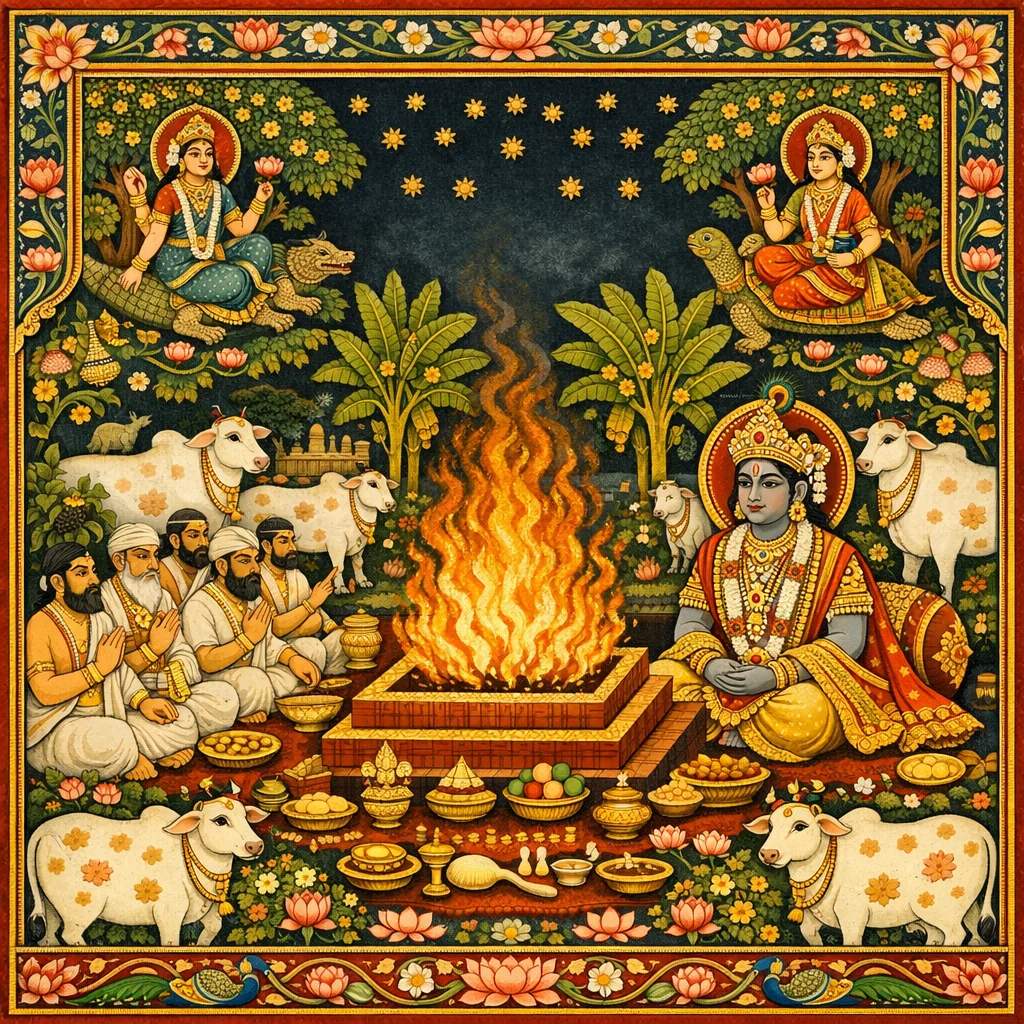
Maitreya tells Vidura how Pṛthu Mahārāja returns to his capital amid auspicious maṅgala decorations and a grand public welcome, yet remains inwardly untouched, showing detachment within opulence. Hearing of Pṛthu’s fame and the divine power granted by Viṣṇu, Vidura asks to hear more of his exemplary rule. Maitreya places Pṛthu’s realm between the Gaṅgā and Yamunā, describes his unrivaled sovereignty, and introduces a great sacrifice where sages, brāhmaṇas, demigods, and rājarṣis assemble. Pṛthu’s regal, auspicious form is portrayed as he receives dīkṣā and follows strict ritual discipline. He then delivers a foundational teaching: a king must guide citizens in varṇa–āśrama duties, for a ruler shares karmic results with those he directs and with those who support his governance. Pṛthu establishes theism as the rational, Vedic conclusion, teaches bhakti as the purifying process, and exalts service to brāhmaṇas and Vaiṣṇavas above mere fire-sacrifice. The assembly blesses him, noting that a virtuous son can deliver even sinful fathers, setting the stage for the next developments in Pṛthu’s sacrificial narrative and the ongoing model of ideal rājarṣi leadership.
Shlokas
Verse 1
मैत्रेय उवाच । मौक्तिकैः कुसुम-स्रग्भिर् दुकूलैः स्वर्ण-तोरणैः महासुरभिभिर् धूपैः मण्डितं तत्र तत्र वाइ ॥ १ ॥
Maitreya said: O Vidura, when the King entered his city, it was adorned everywhere with pearls, flower garlands, fine cloth, and golden gateways, and the whole city was made fragrant with richly scented incense.
Verse 2
चन्दनागुरुतोयार्द्ररथ्याचत्वरमार्गवत् । पुष्पाक्षतफलैस्तोक्मैर्लाजैरर्चिर्भिरर्चितम् ॥ २ ॥
Fragrant water infused with sandalwood and aguru was sprinkled throughout the city’s lanes, squares, and roads. Everywhere were auspicious adornments—flowers, akṣata grains, unbroken fruits, laja, various gems, and the radiance of lamps—set out as sacred paraphernalia.
Verse 3
सवृन्दै: कदलीस्तम्भै: पूगपोतै: परिष्कृतम् । तरुपल्लवमालाभि: सर्वत: समलङ्कृतम् ॥ ३ ॥
At the crossings, pillars of banana trees and branches of betel nut were set up, along with clusters of fruits and flowers. Garlands of fresh leaves adorned the city on every side, making it all exceedingly beautiful.
Verse 4
प्रजास्तं दीपबलिभि: सम्भृताशेषमङ्गलै: । अभीयुर्मृष्टकन्याश्च मृष्टकुण्डलमण्डिता: ॥ ४ ॥
As the King entered the city gate, the people came forth to receive him with auspicious offerings—lamps, flowers, and dadhi (yogurt), and every kind of good omen. Many lovely unmarried girls also approached, adorned with ornaments, especially jingling earrings that struck against one another.
Verse 5
शङ्खदुन्दुभिघोषेण ब्रह्मघोषेण चर्त्विजाम् । विवेश भवनं वीर: स्तूयमानो गतस्मय: ॥ ५ ॥
As the King entered the palace, conchshells and kettledrums resounded; the priests raised the brahma-ghoṣa by chanting Vedic mantras, and reciters such as the sūtas offered many praises. Yet amid all this welcome, the heroic King remained untouched, free from pride.
Verse 6
पूजित: पूजयामास तत्र तत्र महायशा: । पौराञ्जानपदांस्तांस्तान्प्रीत: प्रियवरप्रद: ॥ ६ ॥
Though he himself was being honored, the illustrious King honored others wherever he went. Pleased at heart, he bestowed upon the townspeople and the villagers the blessings and boons they most desired.
Verse 7
स एवमादीन्यनवद्यचेष्टित: कर्माणि भूयांसि महान्महत्तम: । कुर्वन् शशासावनिमण्डलं यश: स्फीतं निधायारुरुहे परं पदम् ॥ ७ ॥
King Pṛthu, greater than the greatest of souls, was worshipable to all. While ruling the earth he performed many faultless and glorious deeds, ever magnanimous. Having established a fame that spread throughout the universe, he finally attained the supreme abode—the lotus feet of the Supreme Personality of Godhead.
Verse 8
सूत उवाच तदादिराजस्य यशो विजृम्भितं गुणैरशेषैर्गुणवत्सभाजितम् । क्षत्ता महाभागवत: सदस्पते कौषारविं प्राह गृणन्तमर्चयन् ॥ ८ ॥
Sūta Gosvāmī said: O Śaunaka, leader of the great sages, after hearing from Maitreya of the original king Pṛthu’s fame—adorned with all virtues and praised throughout the world—Vidura, the great bhāgavata, humbly worshiped the Ṛṣi Kauṣāravi and then asked the following question.
Verse 9
विदुर उवाच सोऽभिषिक्त: पृथुर्विप्रैर्लब्धाशेषसुरार्हण: । बिभ्रत् स वैष्णवं तेजो बाह्वोर्याभ्यां दुदोह गाम् ॥ ९ ॥
Vidura said: O brāhmaṇa Maitreya, it is most illuminating to know that King Pṛthu was enthroned by the great sages and brāhmaṇas. All the demigods offered him innumerable gifts. And bearing in his arms the Vaiṣṇava splendor received from Lord Viṣṇu, he ‘milked’ the earth and made her greatly prosperous.
Verse 10
को न्वस्य कीर्तिं न शृणोत्यभिज्ञो यद्विक्रमोच्छिष्टमशेषभूपा: । लोका: सपाला उपजीवन्ति काम- मद्यापि तन्मे वद कर्म शुद्धम् ॥ १० ॥
Who among the wise would not wish to hear of Pṛthu Mahārāja’s fame? Even today, kings and the guardians of the worlds sustain their realms by following the remnants of his heroic footsteps. Therefore, tell me more of his pure, pious, and auspicious deeds, for I long to hear them again and again.
Verse 11
मैत्रेय उवाच गङ्गायमुनयोर्नद्योरन्तरा क्षेत्रमावसन् । आरब्धानेव बुभुजे भोगान् पुण्यजिहासया ॥ ११ ॥
Maitreya said: Dear Vidura, King Pṛthu dwelt in the land between the two great rivers, the Gaṅgā and the Yamunā. Though exceedingly opulent, it appeared that he was simply accepting his destined enjoyments in order to diminish the remaining fruits of his past pious deeds.
Verse 12
सर्वत्रास्खलितादेश: सप्तद्वीपैकदण्डधृक् । अन्यत्र ब्राह्मणकुलादन्यत्राच्युतगोत्रत: ॥ १२ ॥
Mahārāja Pṛthu was an unrivaled king, bearing the scepter of rule over the seven islands of the world. None could transgress his irrevocable command—save the saintly brāhmaṇas and the Vaiṣṇavas of Acyuta’s lineage.
Verse 13
एकदासीन्महासत्रदीक्षा तत्र दिवौकसाम् । समाजो ब्रह्मर्षीणां च राजर्षीणां च सत्तम ॥ १३ ॥
Once, King Pṛthu accepted initiation for a most magnificent sacrifice, a mahāsatra. There assembled the demigods of higher realms, brahmarṣis, exalted brāhmaṇas, and saintly kings renowned as rājarṣis.
Verse 14
तस्मिन्नर्हत्सु सर्वेषु स्वर्चितेषु यथार्हत: । उत्थित: सदसो मध्ये ताराणामुडुराडिव ॥ १४ ॥
In that great assembly, Mahārāja Pṛthu first worshiped all honored guests according to their rank. Then he rose in the midst of the gathering, shining like the full moon arisen among the stars.
Verse 15
प्रांशु: पीनायतभुजो गौर: कञ्जारुणेक्षण: । सुनास: सुमुख: सौम्य: पीनांस: सुद्विजस्मित: ॥ १५ ॥
King Pṛthu was tall and powerfully built, with a fair complexion. His arms were full and broad, and his lotus-reddened eyes shone like the rising sun. His nose was straight, his face exquisitely beautiful, his bearing grave; and his teeth appeared perfectly set within his gentle smile.
Verse 16
व्यूढवक्षा बृहच्छ्रोणिर्वलिवल्गुदलोदर: । आवर्तनाभिरोजस्वी काञ्चनोरुरुदग्रपात् ॥ १६ ॥
Mahārāja Pṛthu’s chest was broad, his waist thick, and his abdomen—lined with folds of skin—resembled a banyan leaf in form. His navel was deep and spiraled, his thighs shone with a golden hue, and his instep was nobly arched.
Verse 17
सूक्ष्मवक्रासितस्निग्धमूर्धज: कम्बुकन्धर: । महाधने दुकूलाग्र्ये परिधायोपवीय च ॥ १७ ॥
His hair was fine, black, glossy, and gently curled; his conchshell-like neck bore auspicious lines. He wore a most valuable dhotī and a pleasing upper wrap.
Verse 18
व्यञ्जिताशेषगात्रश्रीर्नियमे न्यस्तभूषण: । कृष्णाजिनधर: श्रीमान् कुशपाणि:कृतोचित: ॥ १८ ॥
At the time of sacrificial initiation he set aside his costly garments and ornaments, and thus the natural splendor of his limbs shone forth. Wearing a black deerskin and a ring of kuśa grass, he appeared all the more beautiful, having duly observed the prescribed rules.
Verse 19
शिशिरस्निग्धताराक्ष: समैक्षत समन्तत: । ऊचिवानिदमुर्वीश: सद: संहर्षयन्निव ॥ १९ ॥
To hearten the assembly and heighten their delight, King Pṛthu cast his gaze all around; his eyes shone like stars in a dew-moistened sky. Then he spoke in a mighty, resonant voice.
Verse 20
चारु चित्रपदं श्लक्ष्णं मृष्टं गूढमविक्लवम् । सर्वेषामुपकारार्थं तदा अनुवदन्निव ॥ २० ॥
His speech was charming—rich in poetic turns, clear in meaning, and delightful to hear—yet grave and unwavering. He spoke for the welfare of all present, as though voicing his own realized vision of the Absolute Truth.
Verse 21
राजोवाच सभ्या: शृणुत भद्रं व: साधवो य इहागता: । सत्सु जिज्ञासुभिर्धर्ममावेद्यं स्वमनीषितम् ॥ २१ ॥
King Pṛthu said: “O gentle members of this assembly, may auspiciousness be upon you all. O noble sādhus who have come here, please hear my petition with attentive hearts. One who truly seeks to know should place his resolve before a gathering of saintly souls.”
Verse 22
अहं दण्डधरो राजा प्रजानामिह योजित: । रक्षिता वृत्तिद: स्वेषु सेतुषु स्थापिता पृथक् ॥ २२ ॥
King Pṛthu said: I am the scepter-bearing king, appointed here for the citizens; I protect them and grant them their proper occupations, each within the boundaries of order established by Vedic law.
Verse 23
तस्य मे तदनुष्ठानाद्यानाहुर्ब्रह्मवादिन: । लोका: स्यु: कामसन्दोहा यस्य तुष्यति दिष्टदृक् ॥ २३ ॥
Mahārāja Pṛthu said: By duly performing my royal duty, I shall attain the cherished aims spoken of by the knowers of the Vedas, for that perfection is surely won when the Supreme Personality of Godhead—the seer of all destiny—is pleased.
Verse 24
य उद्धरेत्करं राजा प्रजा धर्मेष्वशिक्षयन् । प्रजानां शमलं भुङ्क्ते भगं च स्वं जहाति स: ॥ २४ ॥
Any king who fails to teach the citizens their duties of varṇa and āśrama and merely exacts taxes and tolls must suffer for the people’s impiety, and he also forfeits his own fortune.
Verse 25
तत् प्रजा भर्तृपिण्डार्थं स्वार्थमेवानसूयव: । कुरुताधोक्षजधियस्तर्हि मेऽनुग्रह: कृत: ॥ २५ ॥
Therefore, my dear citizens, free from envy, for your king’s welfare after death and for your own true good, perform your duties according to varṇa and āśrama, and always remember Adhokṣaja, the Supreme Lord, within your hearts; by this you will show mercy to me as well.
Verse 26
यूयं तदनुमोदध्वं पितृदेवर्षयोऽमला: । कर्तु: शास्तुरनुज्ञातुस्तुल्यं यत्प्रेत्य तत्फलम् ॥ २६ ॥
I ask the purehearted demigods, forefathers, and sages to endorse my proposal, for after death the fruit of an act is shared equally by its doer, its director, and its supporter.
Verse 27
अस्ति यज्ञपतिर्नाम केषाञ्चिदर्हसत्तमा: । इहामुत्र च लक्ष्यन्ते ज्योत्स्नावत्य: क्वचिद्भुव: ॥ २७ ॥
O respected ladies and gentlemen, by the authority of śāstra there must be a supreme ruler called Yajñapati, who awards the fitting fruits of our deeds; otherwise, why do some appear extraordinarily beautiful and powerful both in this life and in the life to come?
Verse 28
मनोरुत्तानपादस्य ध्रुवस्यापि महीपते: । प्रियव्रतस्य राजर्षेरङ्गस्यास्मत्पितु: पितु: ॥ २८ ॥ ईदृशानामथान्येषामजस्य च भवस्य च । प्रह्लादस्य बलेश्चापि कृत्यमस्ति गदाभृता ॥ २९ ॥
This is upheld not only by Vedic evidence but also by the conduct of great souls—Manu, Uttānapāda, King Dhruva, the rājarṣi Priyavrata, and Aṅga, my grandfather—whose lives themselves confirm it.
Verse 29
मनोरुत्तानपादस्य ध्रुवस्यापि महीपते: । प्रियव्रतस्य राजर्षेरङ्गस्यास्मत्पितु: पितु: ॥ २८ ॥ ईदृशानामथान्येषामजस्य च भवस्य च । प्रह्लादस्य बलेश्चापि कृत्यमस्ति गदाभृता ॥ २९ ॥
Likewise, Ajā, Bhava (Śiva), Prahlāda, Bali, and many others are firmly theistic, convinced of the Supreme Personality of Godhead who bears a club; therefore all duty is to be offered unto Him.
Verse 30
दौहित्रादीनृते मृत्यो: शोच्यान् धर्मविमोहितान् । वर्गस्वर्गापवर्गाणां प्रायेणैकात्म्यहेतुना ॥ ३० ॥
Though vile persons like my father Vena—grandson of Death personified—are deluded upon the path of dharma and are to be lamented, all great souls agree that the giver of dharma, artha, kāma, mokṣa, or ascent to heaven is, in truth, one alone: the Supreme Personality of Godhead.
Verse 31
यत्पादसेवाभिरुचिस्तपस्विना- मशेषजन्मोपचितं मलं धिय: । सद्य: क्षिणोत्यन्वहमेधती सती यथा पदाङ्गुष्ठविनि:सृता सरित् ॥ ३१ ॥
By developing a taste for serving the lotus feet of Bhagavān, the impurity of the mind amassed through countless births is at once destroyed. Just as the Gaṅgā flowing from the Lord’s toe purifies immediately, so this devotion cleanses the heart and causes Kṛṣṇa consciousness to grow day by day.
Verse 32
विनिर्धुताशेषमनोमल: पुमा- नसङ्गविज्ञानविशेषवीर्यवान् । यदङ्घ्रिमूले कृतकेतन: पुन- र्न संसृतिं क्लेशवहां प्रपद्यते ॥ ३२ ॥
When a devotee takes shelter at the root of the lotus feet of the Supreme Lord, Śrī Hari, all the mind’s impurity and mistaken speculation are completely washed away, and by the strength of bhakti-yoga true renunciation awakens. Having taken refuge at the Lord’s feet, he never returns to this material existence, filled with the threefold miseries.
Verse 33
तमेव यूयं भजतात्मवृत्तिभि- र्मनोवच:कायगुणै: स्वकर्मभि: । अमायिन: कामदुघाङ्घ्रिपङ्कजं यथाधिकारावसितार्थसिद्धय: ॥ ३३ ॥
All of you, with mind, speech, body, your qualities, and the fruits of your prescribed duties, free from duplicity, worship Śrī Hari alone. According to your capacity and station, serve the Lord’s lotus feet—the wish-fulfilling refuge—with full faith and without reservation; then the supreme goal of life will surely be attained.
Verse 34
असाविहानेकगुणोऽगुणोऽध्वर: पृथग्विधद्रव्यगुणक्रियोक्तिभि: । सम्पद्यतेऽर्थाशयलिङ्गनामभि- र्विशुद्धविज्ञानघन: स्वरूपत: ॥ ३४ ॥
The Supreme Lord is, in His own nature, a pure, undivided mass of spiritual knowledge, untouched by material qualities. Yet for the welfare of conditioned souls He accepts many kinds of sacrifices, performed with varied elements, rites, and mantras and offered under different names of the demigods according to the performers’ aims—though the true recipient and enjoyer is He alone, Bhagavān.
Verse 35
प्रधानकालाशयधर्मसङ्ग्रहे शरीर एष प्रतिपद्य चेतनाम् । क्रियाफलत्वेन विभुर्विभाव्यते यथानलो दारुषु तद्गुणात्मक: ॥ ३५ ॥
Though all-pervading, the Supreme Lord appears as consciousness within the many bodies born from the combination of material nature (pradhāna), time, desires, and duty. He is perceived according to action and its result, just as one fire, ever the same, blazes differently according to the shape and size of the firewood.
Verse 36
अहो ममामी वितरन्त्यनुग्रहं हरिं गुरुं यज्ञभुजामधीश्वरम् । स्वधर्मयोगेन यजन्ति मामका निरन्तरं क्षोणितले दृढव्रता: ॥ ३६ ॥
How wondrous! Śrī Hari is the supreme spiritual master, the Lord and enjoyer of the results of all sacrifices. O my citizens, upon this earth you steadfastly worship Him without interruption through the performance of your own prescribed duties; by this you bestow mercy upon me. Therefore I offer you my heartfelt thanks.
Verse 37
मा जातु तेज: प्रभवेन्महर्द्धिभि- स्तितिक्षया तपसा विद्यया च । देदीप्यमानेऽजितदेवतानां कुले स्वयं राजकुलाद् द्विजानाम् ॥ ३७ ॥
Brāhmaṇas and Vaiṣṇavas are themselves glorified by the power of tolerance, austerity, knowledge, and sacred learning. By these spiritual riches the Vaiṣṇava surpasses royal might; therefore the princely order should not parade material prowess before them, and must avoid offending them.
Verse 38
ब्रह्मण्यदेव: पुरुष: पुरातनो नित्यं हरिर्यच्चरणाभिवन्दनात् । अवाप लक्ष्मीमनपायिनीं यशो जगत्पवित्रं च महत्तमाग्रणी: ॥ ३८ ॥
Hari, the Brahmaṇya-deva—the ancient and eternal Lord, foremost among the great—attained unfailing Lakṣmī and a fame that purifies the whole universe by worshiping the lotus feet of the brāhmaṇas and Vaiṣṇavas.
Verse 39
यत्सेवयाशेषगुहाशय: स्वराड् विप्रप्रियस्तुष्यति काममीश्वर: । तदेव तद्धर्मपरैर्विनीतै: सर्वात्मना ब्रह्मकुलं निषेव्यताम् ॥ ३९ ॥
By serving them, the Supreme Lord—ever independent and dwelling in the heart’s deepest chamber—becomes fully pleased, for He is dear to the brāhmaṇas and Vaiṣṇavas. Therefore the humble, devoted to dharma, should with their whole being serve the brāhmaṇa and Vaiṣṇava lineages.
Verse 40
पुमाँल्लभेतानतिवेलमात्मन: प्रसीदतोऽत्यन्तशमं स्वत: स्वयम् । यन्नित्यसम्बन्धनिषेवया तत: परं किमत्रास्ति मुखं हविर्भुजाम् ॥ ४० ॥
By steady service to brāhmaṇas and Vaiṣṇavas, one cleanses the heart’s impurity and attains supreme peace, detachment, and liberation. In this world no act surpasses service to the brāhmaṇa class, for it even pleases the devas who partake of sacrificial offerings.
Verse 41
अश्नात्यनन्त: खलु तत्त्वकोविदै: श्रद्धाहुतं यन्मुख इज्यनामभि: । न वै तथा चेतनया बहिष्कृते हुताशने पारमहंस्यपर्यगु: ॥ ४१ ॥
Although Ananta, the Supreme Lord, accepts with faith the oblations offered into the sacrificial fire in the names of various devas, He does not delight as much as when He receives offerings through the mouths of truth-knowing sages and devotees—for then He does not leave the company of His bhaktas.
Verse 42
यद्ब्रह्म नित्यं विरजं सनातनं श्रद्धातपोमङ्गलमौनसंयमै: । समाधिना बिभ्रति हार्थदृष्टये यत्रेदमादर्श इवावभासते ॥ ४२ ॥
In brahminical culture, a brāhmaṇa’s transcendental station is preserved eternally, for he accepts the Vedic injunctions with faith, and by austerity, scriptural conclusion, control of mind and senses, sacred silence, and samādhi he sustains the vision of life’s true purpose. Thus the real goal shines forth, as a face is clearly reflected in a spotless mirror.
Verse 43
तेषामहं पादसरोजरेणु- मार्या वहेयाधिकिरीटमायु: । यं नित्यदा बिभ्रत आशु पापं नश्यत्यमुं सर्वगुणा भजन्ति ॥ ४३ ॥
O venerable souls assembled here, I beg your blessings that until the end of my life I may ever bear upon my crown the dust of the lotus feet of such brāhmaṇas and Vaiṣṇavas. One who carries that dust upon his head is swiftly freed from the reactions of sin, and in time all auspicious and desirable qualities awaken within him.
Verse 44
गुणायनं शीलधनं कृतज्ञं वृद्धाश्रयं संवृणतेऽनु सम्पद: । प्रसीदतां ब्रह्मकुलं गवां च जनार्दन: सानुचरश्च मह्यम् ॥ ४४ ॥
Whoever gains brahminical qualities—being a sanctuary of virtue, possessing good conduct as his only wealth, remaining grateful, and taking shelter of the wise and experienced—draws all opulence to himself. Therefore may the Supreme Lord Janārdana, together with His associates, be pleased with the brāhmaṇa class, with the cows, and with me.
Verse 45
मैत्रेय उवाच इति ब्रुवाणं नृपतिं पितृदेवद्विजातय: । तुष्टुवुर्हृष्टमनस: साधुवादेन साधव: ॥ ४५ ॥
The great sage Maitreya said: Hearing King Pṛthu speak with such grace, the demigods, the residents of Pitṛloka, the brāhmaṇas, and the saintly persons present in the assembly became joyful at heart and praised him, offering congratulations and goodwill.
Verse 46
पुत्रेण जयते लोकानिति सत्यवती श्रुति: । ब्रह्मदण्डहत: पापो यद्वेनोऽत्यतरत्तम: ॥ ४६ ॥
They all proclaimed that the Vedic conclusion—“by the deeds of a putra, a son, one conquers the worlds”—had been fulfilled. For Vena, most sinful and slain by the brahma-daṇḍa, the brāhmaṇas’ curse, had fallen into the darkest hellish condition, yet was now delivered from that gloom by his son, Mahārāja Pṛthu.
Verse 47
हिरण्यकशिपुश्चापि भगवन्निन्दया तम: । विविक्षुरत्यगात्सूनो: प्रह्लादस्यानुभावत: ॥ ४७ ॥
Hiraṇyakaśipu too, by blaspheming Bhagavān and living in sin, entered the darkest hellish state; yet by the grace and potency of his great son Prahlāda, he was also delivered and returned to the Lord’s own abode.
Verse 48
वीरवर्य पित: पृथ्व्या: समा: सञ्जीव शाश्वती: । यस्येदृश्यच्युते भक्ति: सर्वलोकैकभर्तरि ॥ ४८ ॥
O best of warriors, O father of the earth, may you be blessed with long life, for your steadfast bhakti is fixed upon Acyuta, the one Lord and maintainer of all worlds.
Verse 49
अहो वयं ह्यद्य पवित्रकीर्ते त्वयैव नाथेन मुकुन्दनाथा: । य उत्तमश्लोकतमस्य विष्णो- र्ब्रह्मण्यदेवस्य कथां व्यनक्ति ॥ ४९ ॥
Dear King Pṛthu, your fame is supremely pure, for you proclaim the sacred narrations of Viṣṇu—the Brahmaṇya-deva—most glorified by the highest hymns. By our good fortune, having you as our lord, we feel ourselves living directly under Mukunda’s shelter.
Verse 50
नात्यद्भुतमिदं नाथ तवाजीव्यानुशासनम् । प्रजानुरागो महतां प्रकृति: करुणात्मनाम् ॥ ५० ॥
Our lord, to rule your citizens is your dharma and rightful duty. For one as merciful and devoted to the people as you, this is no wonder at all, for compassion is the very nature of the great.
Verse 51
अद्य नस्तमस: पारस्त्वयोपासादित: प्रभो । भ्राम्यतां नष्टदृष्टीनां कर्मभिर्दैवसंज्ञितै: ॥ ५१ ॥
O Lord, today you have opened our eyes and shown the way to cross beyond the ocean of darkness. By our past deeds and by the arrangement of higher authority, we were caught in the net of fruitive action, lost sight of life’s true goal, and thus wandered throughout the universe.
Verse 52
नमो विवृद्धसत्त्वाय पुरुषाय महीयसे । यो ब्रह्म क्षत्रमाविश्य बिभर्तीदं स्वतेजसा ॥ ५२ ॥
O Lord, obeisance to the great Person established in pure goodness. You uphold brahminical culture and, as a kṣatriya in duty, protect all; by Your own splendor You sustain the entire world.
Frequently Asked Questions
It marks the rājarṣi standard: external opulence and honor do not disturb inner steadiness. The Bhāgavatam uses this to contrast dharmic kingship with ego-driven rule—showing that power and prosperity become spiritually safe only when grounded in detachment and devotion.
Pṛthu teaches that a ruler who merely taxes without educating citizens in dharma becomes liable for their impiety. Moreover, the post-death result is shared among the doer, the director (leader), and the supporter—therefore governance must include moral and devotional guidance, not only administration.
Because the Lord is especially pleased when offerings reach Him through the mouths and blessings of His devotees; He values association and service more than ritual mechanism alone. Thus, honoring brāhmaṇas and Vaiṣṇavas protects society from spiritual offense and turns sacrifice into bhakti rather than mere karma-kāṇḍa.
He appeals to śruti (Vedas) and sadācāra (conduct) of Manu, Uttānapāda, Dhruva, Priyavrata, Aṅga, and also points to the deliverance narratives associated with Prahlāda and Bali—demonstrating that devotion to the Supreme Lord is the consistent conclusion across authorities and histories.