Adhyaya 28
धृतराष्ट्र-संजय-संवादः — दुर्योधनस्य ह्रदप्रवेशः (Dhṛtarāṣṭra–Saṃjaya Dialogue: Duryodhana’s Entry into the Lake)
Upa-parva: Duryodhana-apayāna and Hrada-praveśa (Retreat and Entry into the Lake) Episode
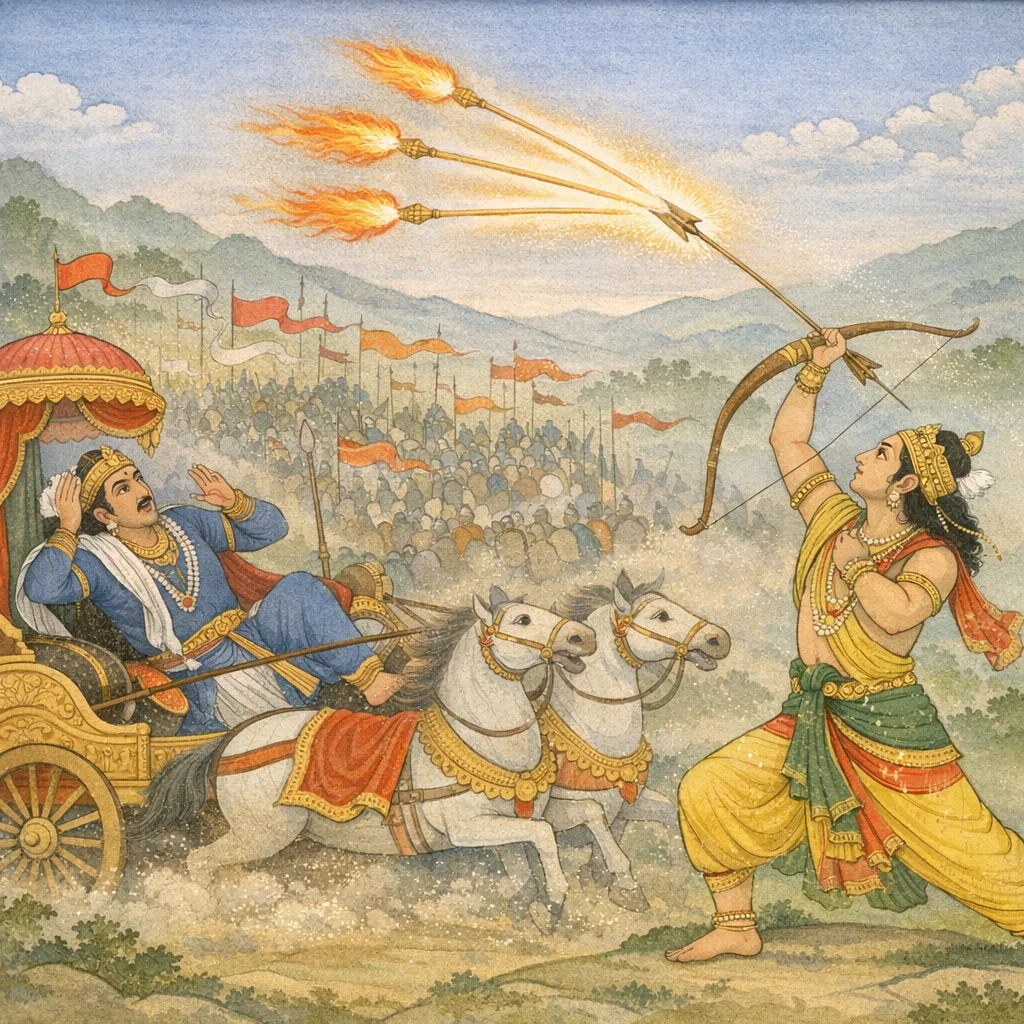
Saṃjaya reports that the followers of Śakuni (Saubala’s party) mount a furious assault, but Arjuna—supported by Bhīma and focused on protecting Sahadeva—shatters their charge with precise archery, severing arms, heads, and mounts. Duryodhana, witnessing the rapid depletion of his remaining forces, orders a final aggressive engagement against the Pāṇḍavas and their allies; the remnants are quickly dispersed and destroyed amid dust and confusion, with the text emphasizing the loss of orientation on the battlefield. Dhṛtarāṣṭra interrogates Saṃjaya regarding what strength remains for the Pāṇḍavas; Saṃjaya enumerates surviving resources (notably chariots, elephants, horses, and infantry) and notes Dhṛṣṭadyumna’s organizing role. Duryodhana is described as isolated, grievously wounded, and psychologically overwhelmed; he abandons his horse, proceeds on foot with a mace, recalls Vidura’s earlier foresight, and resolves to enter a lake. Meanwhile, Saṃjaya is captured; Dhṛṣṭadyumna derides the value of keeping him alive, but Vyāsa intervenes, ordering Saṃjaya’s release. Saṃjaya then encounters Duryodhana, conveys the annihilation of the Kaurava host and brothers, and is instructed to inform Dhṛtarāṣṭra that Duryodhana has entered the lake. Duryodhana enters and magically stills the water. Saṃjaya subsequently meets the three surviving rathins—Kṛpa, Aśvatthāman, and Kṛtavarman—who learn of the lake concealment and return to the camp. The chapter closes with the panic-driven evacuation of royal households, public lamentation, and Yuyutsu’s arrival in Hāstinapura to brief Vidura, who recognizes the report as timely and advises rest before approaching Yudhiṣṭhira.
Chapter Arc: शल्यपर्व के रण-कोलाहल में सहदेव का रथ बिजली-सा आगे बढ़ता है—शकुनि और उसके पुत्र उलूक की ओर, जहाँ छल का मस्तिष्क अब प्रत्यक्ष शस्त्र-युद्ध में उतर आया है। → उलूक और शकुनि भीम को बाणों से बेधते हैं; प्रत्युत्तर में सहदेव शकुनि पर तीव्र शरौघ छोड़ता है। धनुषों से छूटी बाण-वृष्टि दिशाओं को ढँक लेती है, सिंहनाद उठते हैं और सेना विक्षुब्ध सागर-सी उफनती है—मानो आज निर्णय का दिन हो। → शकुनि सहदेव पर खड्ग और फिर विशाल गदा चलाता है, पर वार निष्फल होता है; इसके बाद वह शक्ति (भाला/शक्ति-आयुध) फेंकता है—सहदेव स्वर्णभूषित बाणों से उसे मारकर हँसते-से तीन टुकड़ों में चीर देता है, और रणभूमि में उसका पराक्रम सर्वोच्च शिखर पर पहुँचता है। → सहदेव अनेक सहस्र बाणों की वर्षा कर शत्रु-पंक्तियों को युद्ध में बाँध देता है, उन्हें उदासीन/विचलित होने नहीं देता और शकुनि को ‘अवशिष्ट भाग’ मानकर स्वर्णांग रथ से उसका पीछा करता है—द्वंद्व को निर्णायक मोड़ पर ले आता है। → सहदेव का रथ शकुनि के पीछे धँसता चला जाता है—अगले क्षण यह पीछा वध में बदलेगा या शकुनि कोई नया कपट रचेगा?
Shlokas
Verse 1
इस प्रकार श्रीमह्याभारत शल्यपर्वमें सुशर्माका वधविषयक सत्ताईसवाँ अध्याय पूरा हुआ ॥/ २७ ॥ ऑपन- राज छा अकाल अष्टाविशोश् ध्याय: सहदेवके द्वारा उलूक और शकुनिका वध एवं बची हुई सेनासहित दुर्योधनका पलायन संजय उवाच तस्समिन् प्रवृत्ते संग्रामे गजवाजिनरक्षये | शकुनि: सौबलो राजन् सहदेवं समभ्ययात्,संजय कहते हैं--राजन्! हाथी-घोड़ों और मनुष्यों-का संहार करनेवाले उस युद्धका आरम्भ होनेपर सुबलपुत्र शकुनिने सहदेवपर धावा किया
Sanjaya said: “O King, when that battle—bringing destruction upon elephants, horses, and men—had begun in full force, Shakuni, the son of Subala, charged straight at Sahadeva.”
Verse 2
ततो<स्यापततस्तूर्ण सहदेव: प्रतापवान् । शरौघान् प्रेषयामास पतड्रानिव शीघ्रगान्,तब प्रतापी सहदेवने भी अपने ऊपर आक्रमण करनेवाले शकुनिपर तुरंत ही बहुत-से शीघ्रगामी बाणसमूहोंकी वर्षा आरम्भ कर दी, जो आकाशमें टिट्डीदलोंके समान छा रहे थे
Sañjaya said: Then, as he (Śakuni) rushed swiftly upon him, the valiant Sahadeva at once let fly a dense volley of arrows—swift as a swarm of locusts—spreading through the sky to check the oncoming assault.
Verse 3
उलूकश्च रणे भीम॑ विव्याध दशभि: शरै: । शकुनिश्च महाराज भीम॑ विदृध्वा त्रिभि: शरै:
Sañjaya said: In the thick of battle, Ulūka pierced Bhīma with ten arrows; and Śakuni too, O great king, struck Bhīma with three arrows. The scene underscores how, amid the moral collapse of war, even lesser warriors and strategists press their advantage against a foremost hero, seeking to weaken him through coordinated assault rather than open, equal contest.
Verse 4
ते शूरा: समरे राजन् समासाद्य परस्परम्,राजन! वे शूरवीर समरांगणमें एक-दूसरेसे टक्कर लेकर कंक और मोरके-से पंखवाले तीखे बाणोंद्वारा परस्पर आघात-प्रत्याघात करने लगे। उनके वे बाण सुनहरी पाँखोंसे सुशोभित, शिलापर साफ किये हुए और कानोंतक खींचकर छोड़े गये थे
Sañjaya said: O King, those valiant warriors met one another in battle and, colliding head-on, began to strike and counterstrike with sharp arrows fletched like the feathers of herons and peacocks. Their shafts—adorned with golden wings, honed clean upon stone, and released after being drawn back to the ear—flew with deadly precision. The scene underscores the grim discipline of war: skill and resolve are turned toward mutual harm, where prowess becomes an instrument of destruction rather than protection.
Verse 5
विव्यधुर्निशितैर्बाणै: कड़कबर्हिणवाजितै: । स्वर्णपुड्खै: शिलाधौतैराकर्णप्रहितैः शरै:,राजन! वे शूरवीर समरांगणमें एक-दूसरेसे टक्कर लेकर कंक और मोरके-से पंखवाले तीखे बाणोंद्वारा परस्पर आघात-प्रत्याघात करने लगे। उनके वे बाण सुनहरी पाँखोंसे सुशोभित, शिलापर साफ किये हुए और कानोंतक खींचकर छोड़े गये थे
Sañjaya said: O King, those heroic warriors, closing with one another on the battlefield, began to strike and counterstrike with sharp arrows—fletched with vulture-feathers and peacock-plumes, adorned with golden shafts, burnished on stone, and loosed with the bow drawn back to the ear. The verse underscores the relentless, reciprocal violence of war, where prowess and craftsmanship intensify destruction even as duty-bound fighters press on.
Verse 6
तेषां चापभुजोत्सृष्टा शरवृष्टिविशाम्पते । आच्छादयद् दिश: सर्वा धारा इव पयोमुच:,प्रजानाथ! उन वीरोंके धनुष और बाहुबलसे छोड़े गये बाणोंकी उस वर्षाने सम्पूर्ण दिशाओंको उसी प्रकार आच्छादित कर दिया, जैसे मेघकी जलधारा सारी दिशाओंको ढक देती है
Sañjaya said: O lord of men, O protector of the people— the rain of arrows released by those warriors through the power of their bows and arms covered all directions, just as streams of water from rain-clouds veil the whole sky on every side. The image underscores the overwhelming, inescapable force of battle, where martial prowess becomes as all-encompassing as nature’s own downpour.
Verse 7
ततः क्रुद्धो रणे भीम: सहदेवश्न भारत । चेरतु: कदनं संख्ये कुर्वन्ती सुमहाबलौ,भारत! तदनन्तर क्रोधमें भरे हुए भीमसेन और सहदेव दोनों महाबली वीर युद्धस्थलमें भीषण संहार मचाते हुए विचरने लगे
Sañjaya said: Then, O Bhārata, Bhīma—wrathful in the midst of battle—and Sahadeva as well, both warriors of immense strength, ranged about the field of combat, bringing about fierce slaughter. In the ethical frame of the epic, their anger becomes a driving force of kṣatriya warfare: a grim, duty-bound violence unleashed amid the collapse of restraint that war provokes.
Verse 8
ताभ्यां शरशतैश्छन्न॑ं तद् बलं तव भारत । सान्धकारमिवाकाशमभवत् तत्र तत्र ह,भरतनन्दन! उन दोनोंके सैकड़ों बाणोंसे ढकी हुई आपकी सेना जहाँ-तहाँ अन्धकारपूर्ण आकाशके समान प्रतीत होती थी
Sañjaya said: O Bhārata, your army, covered by hundreds of arrows shot by those two, appeared here and there like a sky thick with darkness, O joy of the Bharatas. The image underscores how the violence of battle can eclipse clarity and courage, as if righteousness itself is momentarily obscured by the storm of weapons.
Verse 9
अश्लैविपरिधावद्धि: शरच्छन्नैविंशाम्पते । तत्र तत्र वृतो मार्गों विकर्षद्धि्हतान् बहूनू
Sañjaya said: “O lord, it rushed about like a blazing fire; like the sun veiled by autumnal haze, it moved on. Here and there the path was choked, as it dragged along many slain men.”
Verse 10
प्रजानाथ! बाणोंसे ढके हुए भागते घोड़ोंने, जो बहुत-से मरे हुए वीरोंको अपने साथ इधर-उधर खींचे लिये जाते थे, यत्र-तत्र जानेका मार्ग अवरुद्ध कर दिया ।। निहतानां हयानां च सहैव हयसादिभि: । वर्मभिविनिकृत्तैश्न प्रासैश्छिन्नेश्न मारिष,मान्यवर नरेश! घुड़सवारोंसहित मारे गये घोड़ोंके शरीरों, कटे हुए कवचों, टूक-टूक हुए प्रासों, ऋष्टियों, शक्तियों, खड़गों, भालों और फरसोंसे ढकी हुई पृथ्वी बहुरंगी फलोंसे आच्छादित हो चितकबरी हुई-सी जान पड़ती थी
Sañjaya said: O lord of the people! Horses, covered with arrows and fleeing in panic, dragged along many fallen heroes, and in doing so they choked the paths in every direction. And, O revered king, the earth was strewn with the bodies of slain horses together with their riders, with severed coats of mail, and with broken spears—along with lances, javelins, swords, darts, and axes—so that the battlefield looked mottled and variegated, as though covered with many-colored fruits. The scene exposes the ethical cost of war: even the instruments meant for valor become debris, and the very ground bears witness to the ruin of life and order.
Verse 11
ऋषिभि: शक्तिभिश्रैव सासिप्रासपरश्रथै: । संछन्ना पृथिवी जज्ञे कुसुमै: शबला इव,मान्यवर नरेश! घुड़सवारोंसहित मारे गये घोड़ोंके शरीरों, कटे हुए कवचों, टूक-टूक हुए प्रासों, ऋष्टियों, शक्तियों, खड़गों, भालों और फरसोंसे ढकी हुई पृथ्वी बहुरंगी फलोंसे आच्छादित हो चितकबरी हुई-सी जान पड़ती थी
Sañjaya said: The earth appeared completely covered with spears and javelins, with swords, lances, and axes; it looked as though it had become mottled and variegated, like the ground strewn with many-colored flowers. The image underscores the moral horror of war: instruments meant for protection and valor now lie scattered as lifeless debris, turning the battlefield into a grim parody of natural beauty.
Verse 12
योधास्तत्र महाराज समासाद्य परस्परम् | व्यचरन्त रणे क्रुद्धा विनिघ्नन्त: परस्परम्
Sañjaya said: There, O King, the warriors closed in upon one another and, inflamed with wrath, ranged about the battlefield, striking each other down. The scene underscores how anger and mutual hostility, once unleashed in war, drive men into a cycle of reciprocal violence where the immediate aim becomes destruction rather than discernment of right conduct.
Verse 13
महाराज! वहाँ रणभूमिमें कुपित हुए योद्धा एक-दूसरेसे भिड़कर परस्पर चोट करते हुए घूम रहे थे ।। उद्वृत्तनयनै रोषात् संदष्टौष्ठ पुटैर्मुखै: । सकुण्डलैर्मही च्छन्ना पच्मकिज्जल्कसंनिभै:,कमलकेसरकी-सी कान्तिवाले कुण्डलमण्डित कटे हुए मस्तकोंसे यह पृथ्वी ढक गयी थी। उनकी आँखें घूर रही थीं और उन्होंने रोषके कारण अपने ओठोंको दाँतोंसे दबा रखा था
Sanjaya said: O King, there on the battlefield the enraged warriors closed with one another, wheeling about as they struck each other again and again. With eyes rolling in fury and faces biting down upon their lips, the earth became covered with severed heads still adorned with earrings—dark like the pollen-dust of lotuses, yet gleaming with the radiance of lotus-filaments. Their staring eyes and clenched mouths reveal how wrath, once unleashed in war, reduces human dignity to a grim spectacle and turns the field into a testimony of unchecked rage.
Verse 14
भुजैश्छिन्नैर्महाराज नागराजकरोपमै: । साड्दै: सतनुत्रैश्न सासिप्रासपरश्चधै:
Sañjaya said: “O King, the battlefield was strewn with severed arms—mighty like the forearms of the lord of serpents—along with swords and shields, and with weapons such as blades, spears, and axes. The scene proclaimed the terrible cost of wrath and rivalry, where valor and violence alike end in ruin.”
Verse 15
कबन्धैरुत्थितैश्किन्नै्न॑त्यद्धिश्चापरैर्युधि । क्रव्यादगणसंछन्ना घोरा भूत् पृथिवी विभो
Sañjaya said: “On the battlefield, the earth became dreadful—covered over by swarms of flesh-eating creatures—because of the severed and headless trunks that had risen up, and by other mangled bodies as well, O mighty one. The scene proclaimed the moral horror of war: when dharma collapses into slaughter, even the ground itself seems to bear the weight of adharma.”
Verse 16
महाराज! अंगद, कवच, खड़्ग, प्रास और फरसोंसहित कटी हुई हाथीकी सूड़के समान भुजाओं, छिन्न-भिन्न एवं खड़े होकर नाचते हुए कबन्धों तथा अन्य लोगोंसे भरी और मांसभक्षी जीव-जन्तुओंसे आच्छादित हुई यह पृथ्वी बड़ी भयंकर प्रतीत होती थी ।। अल्पावशिटष्टे सैन्ये तु कौरवेयान् महाहवे । प्रह्शा: पाण्डवा भूत्वा निन्यिरे यमसादनम्
Sañjaya said: “O King, the earth looked utterly dreadful—strewn with severed arms like elephant trunks, still bearing armlets, armor, swords, spears, and axes; crowded with headless torsos that seemed to dance as they stood; filled with other fallen men; and covered over by flesh-eating creatures. And when only a small remnant of the Kaurava host remained in that great battle, the Pāṇḍavas, exultant, drove the Kauravas to Yama’s abode (death).”
Verse 17
इस प्रकार उस महासमरमें जब कौरवोंके पास बहुत थोड़ी सेना शेष रह गयी, तब हर्ष और उत्साहमें भरकर पाण्डव वीर उन सबको यमलोक पहुँचाने लगे ।। एतस्मिन्नन्तरे शूर: सौवलेय: प्रतापवान् | प्रासेन सहदेवस्य शिरसि प्राहरद् भूशम्,इसी समय प्रतापी वीर सुबलपुत्र शकुनिने अपने प्राससे सहदेवके मस्तकपर गहरी चोट पहुँचायी
Sañjaya said: In that great battle, when only a very small remnant of the Kaurava army was left, the Pāṇḍava heroes—filled with joy and renewed ardour—set about sending them all to the realm of Yama. Just then, the valiant and mighty son of Subala, Śakuni (the Sauvāleya), struck Sahadeva hard on the head with his spear.
Verse 18
स विह्दलो महाराज रथोपस्थ उपाविशत् । सहदेवं तथा दृष्टवा भीमसेन: प्रतापवान्,महाराज! उस चोटसे व्याकुल होकर सहदेव रथकी बैठकमें धम्मसे बैठ गये। उनकी वैसी अवस्था देख प्रतापी भीमसेन अत्यन्त कुपित हो उठे। भारत! उन्होंने आपकी सारी सेनाओंको आगे बढ़नेसे रोक दिया तथा सैकड़ों और हजारों नाराचोंकी वर्षा करके उन सबको विदीर्ण कर डाला
Sañjaya said: Wounded and shaken by the blow, O King, Sahadeva sank down upon the seat of his chariot. Seeing Sahadeva in that condition, the mighty Bhīmasena flared up in fierce anger. In the surge of protective wrath, he checked the enemy’s advance and, by showering hundreds and thousands of nārāca arrows, tore through and shattered their ranks—an image of how, in war, loyalty to one’s kin can harden into relentless violence.
Verse 19
सर्वसैन्यानि संक्रुद्धो वारयामास भारत । निर्बिभेद च नाराचै: शतशो5थ सहस्रश:,महाराज! उस चोटसे व्याकुल होकर सहदेव रथकी बैठकमें धम्मसे बैठ गये। उनकी वैसी अवस्था देख प्रतापी भीमसेन अत्यन्त कुपित हो उठे। भारत! उन्होंने आपकी सारी सेनाओंको आगे बढ़नेसे रोक दिया तथा सैकड़ों और हजारों नाराचोंकी वर्षा करके उन सबको विदीर्ण कर डाला
Sañjaya said: O Bhārata, inflamed with wrath, he checked the advance of all your forces; and with hundreds—indeed thousands—of nārāca arrows he pierced and shattered them. The scene underscores how anger, once unleashed in battle, can become a sweeping force that restrains armies and multiplies harm, turning martial prowess into indiscriminate devastation.
Verse 20
विनिभिद्याकरोच्चैव सिंहनादमरिंदम: । तेन शब्देन वित्रस्ता: सर्वे सहयवारणा:
Sañjaya said: Having struck through and broken (the opposing ranks), the foe-subduer let out a mighty lion-roar. At that thunderous sound, all were thrown into panic—men along with their horses and elephants—showing how sheer martial prowess and psychological shock can unnerve an army in the midst of battle.
Verse 21
प्रभग्नानथ तान् दृष्टवा राजा दुर्योधनो<ब्रवीत्
Sañjaya said: Seeing those troops shattered and in disarray, King Duryodhana spoke—his words arising from the pressure of war and the moral strain of leadership amid collapse.
Verse 22
निवर्तध्यमधर्मज्ञा युध्यध्वं कि सृतेन व: । इह कीर्ति समाधाय प्रेत्य लोकान् समश्लुते
Sanjaya said: “Turn back, you who do not understand dharma. Fight on—what use is this retreat for you? By establishing your fame here, you will, after death, attain the worlds (won by valor).”
Verse 23
प्राणान् जहाति यो धीरो युद्धे पृष्ठमदर्शयन् । उन सबको भागते देख राजा दुर्योधनने इस प्रकार कहा--“अरे पापियो! लौट आओ और युद्ध करो। भागनेसे तुम्हें क्या लाभ होगा? जो धीर वीर रणभूमिमें पीठ न दिखाकर प्राणोंका परित्याग करता है, वह इस लोकमें अपनी कीर्ति स्थापित करके मृत्युके पश्चात् उत्तम लोकोंमें सुख भोगता है” || २१-२२ $ ।। एवमुक्तास्तु ते राज्ञा सौबलस्य पदानुगा:
Sañjaya said: “The steadfast man who gives up his life in battle without showing his back (i.e., without turning to flee) establishes his fame in this world and, after death, enjoys happiness in higher realms.” Thus addressed by the king, those who were following the lead of Śakuni (the son of Subala) …
Verse 24
पाण्डवानभ्यवर्तन्त मृत्युं कृत्वा निवर्तनम् । राजा दुर्योधनके ऐसा कहनेपर सुबलपुत्र शकुनिके पीछे चलनेवाले सैनिक “अब हमें मृत्यु ही युद्धसे लौटा सकती है” ऐसा संकल्प लेकर पुन: पाण्डवोंपर टूट पड़े ।। द्रवद्धिस्तत्र राजेन्द्र कृत: शब्दोडतिदारुण:
Sanjaya said: Spurred on by King Duryodhana’s words, the troops who followed Shakuni, son of Subala, turned again upon the Pandavas, resolved that only death could make them withdraw from the battle. There, O king, as men fled and surged in confusion, a most dreadful roar arose.
Verse 25
तांस्तथा पुरतो दृष्टवा सौबलस्य पदानुगान्
Sañjaya said: Seeing them there in front, just so—those who were following in the footsteps of Saubala—he took in the sight of that faction advancing under Śakuni’s lead, a reminder of how imitation of a crafty guide can draw warriors into ruinous choices amid war.
Verse 26
प्रत्याश्व॒स्य च दुर्धर्ष.: सहदेवो विशाम्पते,प्रजानाथ! इतनेहीमें स्वस्थ होकर दुर्धर्ष वीर सहदेवने हँसते हुए-से दस बाणोंसे शकुनिको बींध डाला और तीन बाणोंसे उसके घोड़ोंको मारकर हँसते हुए-से अनेक बाणोंद्वारा सुबलपुत्रके धनुषको भी टूक-टूक कर डाला
Sañjaya said: O lord of the people, after regaining his composure, the unassailable hero Sahadeva—almost as if smiling—pierced Śakuni with ten arrows. With three more arrows he slew Śakuni’s horses, and then, still as if smiling, he shattered the bow of Subala’s son into pieces with a shower of shafts. The scene underscores disciplined prowess: calm recovery, measured force, and the tactical disabling of an opponent’s mobility and weapon.
Verse 27
शकुनिं दशभिर्विद्ध्वा हयांश्षास्य त्रिभि: शरै: । ध्नुश्चिच्छेद च शरै: सौबलस्य हसन्निव,प्रजानाथ! इतनेहीमें स्वस्थ होकर दुर्धर्ष वीर सहदेवने हँसते हुए-से दस बाणोंसे शकुनिको बींध डाला और तीन बाणोंसे उसके घोड़ोंको मारकर हँसते हुए-से अनेक बाणोंद्वारा सुबलपुत्रके धनुषको भी टूक-टूक कर डाला
Sañjaya said: Sahadeva, now steady and unshaken, struck Śakuni with ten arrows. With three more shafts he brought down Śakuni’s horses, and then—almost as if smiling—he shattered the bow of the son of Subala with a volley of arrows. The scene underscores the warrior’s composure and precision in battle, where mastery over anger and fear becomes as decisive as strength itself.
Verse 28
अथान्यद् धनुरादाय शकुनिर्युद्धदुर्मद: । विव्याध नकुलं षष्ट्या भीमसेनं च सप्तभि:,तदनन्तर दूसरा धनुष हाथमें लेकर रणदुर्मद शकुनिने नकुलको साठ और भीमसेनको सात बाणोंसे घायल कर दिया सहदेवको देखकर युद्धक्षेत्रमें सब लोग उनकी पूजा (प्रशंसा) करते हुए इस प्रकार कहने लगे--“वीर! बड़े सौभाग्यकी बात है कि तुमने रणभूमिमें कपटटद्यूतके विधायक महामना शकुनिको पुत्रसहित मार डाला है” ।। इति श्रीमहाभारते शल्यपर्वणि शकुन्युलूकवधे5ष्टाविंशो ध्याय: इस प्रकार श्रीमह्याभारत शल्यपर्वमें शक्ुनि और उलूकका वधविषयक अदट्ठाईसवाँ अध्याय पूरा हुआ
Then Śakuni, intoxicated with the arrogance of battle, took up another bow and struck Nakula with sixty arrows and Bhīmasena with seven. The verse underscores the relentless momentum of warfare, where pride and martial fury drive repeated assaults, even as the wider episode contrasts such aggression with the moral reckoning that follows deceitful conduct.
Verse 29
उलूको5पि महाराज भीम॑ विव्याध सप्तभि: । सहदेवं च सप्तत्या परीप्सन् पितरं रणे,महाराज! रणभूमिमें पिताकी रक्षा करते हुए उलूकने भीमसेनको सात और सहदेवको सत्तर बाणोंसे क्षत-विक्षत कर दिया
Sanjaya said: O King, Ulūka too, intent on protecting his father in the battle, struck Bhīma with seven arrows and wounded Sahadeva with seventy, as he fought to guard his sire on the field of war.
Verse 30
त॑ भीमसेन: समरे विव्याध नवशभि: शरै: | शकुनिं च चतु:षष्ट्या पार्श्स्थांश्व त्रिभिस्त्रिभि:,तब भीमसेनने समरांगणमें नौ बाणोंसे उलूकको, चौसठ बाणोंसे शकुनिको और तीन- तीन बाणोंसे उसके पार्श्वरक्षकोंको भी घायल कर दिया
Sañjaya said: Then, in the thick of battle, Bhīmasena pierced Ulūka with nine arrows; Śakuni with sixty-four; and the attendants guarding Śakuni’s flanks with three arrows each—an act of forceful, targeted warfare meant to break the enemy’s support and protect his own side’s advance.
Verse 31
ते हन्यमाना भीमेन नाराचैस्तैलपायितै: । सहदेवं रणे क्रुद्धाश्छादयन् शरवृष्टिभि:
Sañjaya said: Though being struck down by Bhīma with oil-tempered nārāca arrows, they—angered in the midst of battle—covered Sahadeva with a shower of shafts. The scene underscores how wrath in war can drive fighters to retaliate blindly, shifting their aim from righteous contest to vengeful overwhelm.
Verse 32
पर्वतं वारिधाराभि: सविद्युत इवाम्बुदा: | भीमसेनके नाराचोंको तेल पिलाया गया था। उनके द्वारा भीमसेनके हाथसे मार खाये हुए शत्रु-सैनिकोंने रणभूमिमें कुपित होकर सहदेवको अपने बाणोंकी वर्षासे ढक दिया, मानो बिजलीसहित मेघोंने जलकी धाराओंसे पर्वतको आच्छादित कर दिया हो ।। ततो<5स्यापतत: शूर: सहदेव: प्रतापवान्
Sanjaya said: “As clouds, flashing with lightning, drench and veil a mountain with torrents of rain, so did the enemy warriors, enraged on the battlefield after being struck down by Bhimasena, cover Sahadeva with a dense shower of arrows. Then the valiant and mighty Sahadeva charged forward.”
Verse 33
सायकानां नवत्या वै सहदेवमवाकिरत् | महाराज! शकुनिके साथ उलूक भी था, उसने भीमसेनको दस बाणोंसे बींध डाला। फिर शकुनिने भी तीन बाणोंसे भीमको घायल करके नब्बे बाणोंसे सहदेवको ढक दिया,स जगाम रथाद् भूमिं सहदेवेन पातितः
Sañjaya said: “O King, with ninety arrows he showered Sahadeva. And, O great king, Ulūka too was there with Śakuni; he pierced Bhīmasena with ten arrows. Then Śakuni, after wounding Bhīma with three arrows, covered Sahadeva with a rain of ninety shafts. Struck down by Sahadeva, he fell from his chariot to the ground.”
Verse 34
रुधिराप्लुतसर्वाड्रो नन्दयन् पाण्डवान् युधि । सहदेवके हाथसे मारा गया उलूक युद्धमें पाण्डवोंको आनन्दित करता हुआ रथसे पृथ्वीपर गिर पड़ा। उस समय उसके सारे अंग खूनसे लथपथ हो गये थे ।। ३३ $ ।। पुत्र तु निहतं दृष्टवा शकुनिस्तत्र भारत,भारत! अपने पुत्रको मारा गया देख वहाँ शकुनिका गला भर आया। वह लंबी साँस खींचकर विदुरजीकी बातोंको याद करने लगा। अपनी आँखोंमें आँसू भरकर उच्छवास लेता हुआ दो घड़ीतक चिन्तामें डूबा रहा
Sañjaya said: His entire body drenched in blood, he fell from his chariot onto the earth—slain by Sahadeva—yet in that very moment his death brought joy to the Pāṇḍavas on the battlefield. Seeing his son killed there, Śakuni was overcome with grief; drawing a long breath, he recalled Vidura’s earlier counsel and, with tears filling his eyes, remained absorbed in anxious thought for a long while.
Verse 35
साश्रुकण्ठो विनि:श्वस्य क्षत्तुर्वाक्यमनुस्मरन् । चिन्तयित्वा मुहूर्त स बाष्पपूर्णेक्षण: श्वसन्,भारत! अपने पुत्रको मारा गया देख वहाँ शकुनिका गला भर आया। वह लंबी साँस खींचकर विदुरजीकी बातोंको याद करने लगा। अपनी आँखोंमें आँसू भरकर उच्छवास लेता हुआ दो घड़ीतक चिन्तामें डूबा रहा
Sañjaya said: With his throat choked by tears, he heaved a deep sigh, recalling the words of Vidura. Then, his eyes brimming with tears and breathing heavily, he remained absorbed in thought for a while—O Bhārata. The scene underscores how grief exposes the moral weight of earlier counsel: wise advice ignored in times of pride returns as remorse when consequences ripen.
Verse 36
सहदेवं समासाद्य त्रिभिरविव्याध सायकै: । तानपास्य शरान् मुक्तान् शरसंघै: प्रतापवान्
Sañjaya said: Closing in upon Sahadeva, the mighty warrior pierced him with three arrows. Then, brushing aside the shafts that had been released at him, he—full of martial ardour—answered with volleys of arrows, sustaining the fierce rhythm of battle where courage and duty are tested amid violence.
Verse 37
छिन्ने धनुषि राजेन्द्र शकुनि: सौबलस्तदा
Sañjaya said: “O king, when the bow had been cut, Śakuni, the son of Subala, at that moment…”
Verse 38
प्रगुह्दा विपुलं खड़॒गं सहदेवाय प्राहिणोत् । राजेन्द्र! धनुष कट जानेपर उस समय सुबलपुत्र शकुनिने एक विशाल खड़्ग लेकर उसे सहदेवपर दे मारा ।। तमापतन्तं सहसा घोररूप॑ विशाम्पते
Sañjaya said: O king, at that moment Śakuni, the son of Subala, having seized a large sword, hurled it at Sahadeva. The weapon, dreadful in form, came rushing down suddenly—an image of how, in war, cunning and sudden violence are used to strike even a righteous opponent, testing steadiness and discernment amid chaos.
Verse 39
असिं दृष्टवा तथा च्छिन्न॑ प्रगृह्ा महतीं गदाम्
Sañjaya said: Seeing his sword thus cut down, he seized a great mace. In the brutal ethics of battlefield duty, when one weapon fails, the warrior must swiftly take up another—steadfast in resolve amid the escalating violence of the encounter.
Verse 40
ततः शक्ति महाघोरां कालरात्रिमिवोद्यताम्
Sañjaya said: Then he raised a terribly fearsome spear, like Kālarātri herself lifted up—an image of impending doom that underscores how the war’s violence turns weapons into embodiments of death and moral peril.
Verse 41
तामापतन्ती सहसा शरै: कनकभूषणै:
Sañjaya said: “Then, all at once, she came rushing down—struck by arrows adorned with gold ornaments.”
Verse 42
सा पपात त्रिधा छच्छिन्ना भूमी कनकभूषणा
Sañjaya said: Adorned with golden ornaments, she fell to the ground—severed into three pieces. The line starkly underscores the brutal finality of battle, where even what is beautiful and honored is reduced to ruin by violence.
Verse 43
शीर्यमाणा यथा दीप्ता गगनाद् वै शतह्ददा । तीन टुकड़ोंमें कटी हुई वह सुवर्णभूषित शक्ति आकाशसे गिरनेवाली चमकीली बिजलीके समान पृथ्वीपर बिखर गयी ।। ४२ $ ।। शक्ति विनिहतां दृष्टवा सौबलं च भयार्दितम्
Sañjaya said: As a blazing meteor seems to split and fall from the sky, so that golden-ornamented spear—severed into three pieces—scattered upon the earth like a flashing bolt of lightning. Seeing the spear thus shattered, and Śakuni (son of Subala) stricken with fear, the warriors’ minds turned to the grim certainty that even famed weapons and proud stratagems collapse before the force of fate and the consequences of one’s chosen course in war.
Verse 44
दुद्रुवुस्तावका: सर्वे भये जाते ससौबला: । उस शक्तिको नष्ट हुई देख और सुबलपुत्र शकुनिको भी भयसे पीड़ित जान आपके सभी सैनिक भयभीत हो शकुनिसहित वहाँसे भाग खड़े हुए || ४३ $ || अथोक्क्रुष्टं महच्चासीत् पाण्डवैर्जितकाशिभि:
Sañjaya said: When fear arose, all your troops—together with the Saubalas—broke and fled. Seeing that Śakti had been slain, and knowing Śakuni, the son of Subala, to be stricken with fear as well, your soldiers, panic‑ridden, ran from that place with Śakuni. Then a great battle‑cry arose from the Pāṇḍavas, who had overcome the Kāśis.
Verse 45
धार्तराष्ट्रास्तत: सर्वे प्रायशो विमुखा भवन् । उस समय विजयसे उल्लसित होनेवाले पाण्डवोंने बड़े जोरसे सिंहनाद किया। इससे आपके सभी सैनिक प्राय: युद्धसे विमुख हो गये ।। ४४ $ ।। तान् वै विमनसो दृष्ट्वा माद्रीपुत्र: प्रतापवान्
Sañjaya said: Then the sons of Dhṛtarāṣṭra, almost all of them, turned away from the battle. Seeing them dispirited, the valiant son of Mādrī (Nakula) took note of their faltering—an ominous sign of collapsing resolve amid the moral and strategic pressure of the war.
Verse 46
ततो गान्धारकैर्गुप्तं पुष्ठैरश्वैर्जये धृतम्
Sañjaya said: Then, protected by the Gandhāra warriors, he was borne onward in the press of victory by swift horses from behind—shielded as the battle’s tide turned, a reminder that in war even the mighty depend on loyal guardians and disciplined support.
Verse 47
आससाद रणे यानन््तं सहदेवो5थ सौबलम् । इसके बाद गन्धारदेशके हृष्ट-पुष्ट घोड़ों और घुड़सवारोंसे सुरक्षित तथा विजयके लिये दृढ़संकल्प होकर रणभूमिमें जाते हुए सुबलपुत्र शकुनिपर सहदेवने आक्रमण किया ।। ४६ ई | स्वमंशमवशिष्टं तं संस्मृत्य शकुनिं नूप
Sañjaya said: Then Sahadeva closed in upon Śakuni, the son of Subala, as he advanced on the battlefield. With firm resolve for victory, Sahadeva launched his attack against the cunning Gandhāran commander, who was moving forward under the protection of well-bred, powerful horses and skilled riders—an encounter driven by remembered wrongs and the demands of war.
Verse 48
अधिज्यं बलवत् कृत्वा व्याक्षिपन् सुमहद् धनु:,उन्होंने एक विशाल धनुषपर बलपूर्वक प्रत्यंचा चढ़ाकर शिलापर तेज किये हुए गीधके पंखोंवाले बाणोंद्वारा शकुनिपर आक्रमण किया और जैसे किसी विशाल गजराजको अंकुशोंसे मारा जाय, उसी प्रकार कुपित हो उसको गहरी चोट पहुँचायी
Verse 49
स सौबलमभिद्र॒त्य गार्ध्रपत्रै: शिलाशितै: । भृशमभ्यहनत् क्रुद्धस्तोत्रेरिव महाद्विपम्,उन्होंने एक विशाल धनुषपर बलपूर्वक प्रत्यंचा चढ़ाकर शिलापर तेज किये हुए गीधके पंखोंवाले बाणोंद्वारा शकुनिपर आक्रमण किया और जैसे किसी विशाल गजराजको अंकुशोंसे मारा जाय, उसी प्रकार कुपित हो उसको गहरी चोट पहुँचायी
Sañjaya said: Rushing straight at Śakuni, he powerfully struck him again and again with stone-whetted arrows fletched with vulture-feathers. In wrath he wounded him deeply, as one would drive a great elephant with sharp goads—an image of battle-fury overriding restraint and turning skill into ruthless force.
Verse 50
उवाच चैनं मेधावी विगृहा स्मारयन्निव | क्षत्रधर्मे स्थिरो भूत्वा युध्यस्व पुरुषो भव,बुद्धिमान सहदेवने उसपर आक्रमण करके कुछ याद दिलाते हुए-से इस प्रकार कहा --ओ मूढ़! क्षत्रियधर्ममें स्थित होकर युद्ध कर और पुरुष बन। खोटी बुद्धिवाले शकुनि! तू सभामें पासे फेंककर जूआ खेलते समय जो उस दिन बहुत खुश हो रहा था, आज उस दुष्कर्मका महान् फल प्राप्त कर ले
Sañjaya said: Then the wise Sahadeva, as though reminding him of his own deeds while rebuking him, spoke: “Stand firm in the warrior’s duty; fight—be a man.” The thrust is moral as well as martial: the joy Shakuni once took in casting dice in the assembly now ripens into its grave consequence on the battlefield, where the fruit of that wrongdoing must be faced.
Verse 51
यत् तदा हााष्यसे मूढ ग्लहन्नक्षे: सभातले । फलमप्य प्रपश्यस्व कर्मणस्तस्य दुर्मते,बुद्धिमान सहदेवने उसपर आक्रमण करके कुछ याद दिलाते हुए-से इस प्रकार कहा --ओ मूढ़! क्षत्रियधर्ममें स्थित होकर युद्ध कर और पुरुष बन। खोटी बुद्धिवाले शकुनि! तू सभामें पासे फेंककर जूआ खेलते समय जो उस दिन बहुत खुश हो रहा था, आज उस दुष्कर्मका महान् फल प्राप्त कर ले
Sanjaya said: “O fool, you who laughed then while gambling with dice on the floor of the royal assembly—now, O evil-minded one, behold today the fruit of that very deed.” The verse frames the battlefield reckoning as the moral consequence of Shakuni’s earlier wrongdoing in the dice-hall, linking present violence to past adharma.
Verse 52
निहतास्ते दुरात्मानो येडस्मानवहसन् पुरा । दुर्योधन: कुलाड्रार: शिष्टस्त्वं चास्य मातुल:,“जिन दुरात्माओंने पूर्वकालमें हमलोगोंकी हँसी उड़ायी थी, वे सब मारे गये। अब केवल कुलांगार दुर्योधन और उसका मामा तू--ये दो ही बच गये हैं। जैसे मथ डालनेवाले डंडेसे मारकर पेड़से फल तोड़ लिया जाता है, उसी प्रकार आज मैं क्षुरके द्वारा तेरा मस्तक काटकर तुझे मौतके हवाले कर दूँगा”
Sañjaya said: “Those wicked men who once mocked us in former days have been slain. Now only Duryodhana—the disgrace of his lineage—remains, and you, his maternal uncle. Today I shall sever your head with a razor-sharp blade and deliver you to death, just as fruit is struck down from a tree with a beating stick.”
Verse 53
अद्य ते निहनिष्यामि क्षरेणोन्मथितं शिर: । वृक्षात् फलमिवाविद्धं लगुडेन प्रमाथिना,“जिन दुरात्माओंने पूर्वकालमें हमलोगोंकी हँसी उड़ायी थी, वे सब मारे गये। अब केवल कुलांगार दुर्योधन और उसका मामा तू--ये दो ही बच गये हैं। जैसे मथ डालनेवाले डंडेसे मारकर पेड़से फल तोड़ लिया जाता है, उसी प्रकार आज मैं क्षुरके द्वारा तेरा मस्तक काटकर तुझे मौतके हवाले कर दूँगा”
Sañjaya said: “Today I shall strike you down, severing your head with a razor-sharp blade—just as a fruit is knocked from a tree by a crushing club.” The utterance conveys the war’s grim moral collapse: victory is framed not as righteous restraint but as total annihilation of the remaining foe, with violent imagery meant to intimidate and to seal the end of a ruined lineage.
Verse 54
एवमुक्त्वा महाराज सहदेवो महाबल: । संक़्रुद्धो रणशार्दूलो वेगेनाभिजगाम तम्,महाराज! ऐसा कहकर रणक्षेत्रमें सिंहके समान पराक्रम दिखानेवाले महाबली सहदेवने अत्यन्त कुपित हो बड़े वेगसे उसपर आक्रमण किया
Sañjaya said: “Having spoken thus, O King, the mighty Sahadeva—like a tiger among warriors—became inflamed with anger and, with great speed, rushed to attack him.” The verse underscores the surge of martial resolve after a declaration, showing how words in war immediately translate into decisive action, with anger harnessed into battlefield momentum.
Verse 55
अभिगम्य सुदुर्धर्ष: सहदेवो युधां पति: । विकृष्य बलवच्चापं क्रोधेन प्रज्वलन्निव,योद्धाओंमें श्रेष्ठ सहदेव अत्यन्त दुर्जय वीर हैं। उन्होंने क्रोधसे चलते हुए-से पास जाकर अपने धनुषको बलपूर्वक खींचा और दस बाणोंसे शकुनिको घायल करके चार बाणोंसे उसके घोड़ोंको भी बींध डाला। तत्पश्चात् उसके छत्र, ध्वज और धनुषको भी काटकर सिंहके समान गर्जना की
Sañjaya said: Then Sahadeva—an exceedingly unassailable lord of battle—advanced toward his foe. Drawing his mighty bow with force, blazing as if with wrath, he prepared to strike. The scene underscores the warrior’s disciplined ferocity in combat: anger is present, yet it is harnessed into decisive action within the accepted code of battlefield engagement.
Verse 56
शकुनिं दशभिर्विद्धवा चतुर्भिश्वास्य वाजिन: । छत्र॑ ध्वजं धनुश्चास्य च्छित्त्वा सिंह इवानदत्,योद्धाओंमें श्रेष्ठ सहदेव अत्यन्त दुर्जय वीर हैं। उन्होंने क्रोधसे चलते हुए-से पास जाकर अपने धनुषको बलपूर्वक खींचा और दस बाणोंसे शकुनिको घायल करके चार बाणोंसे उसके घोड़ोंको भी बींध डाला। तत्पश्चात् उसके छत्र, ध्वज और धनुषको भी काटकर सिंहके समान गर्जना की
Sanjaya said: Sahadeva, foremost among warriors and exceedingly hard to overcome, advanced in wrath and, drawing his bow with force, pierced Shakuni with ten arrows and struck his horses with four more. Then, cutting down his parasol, banner, and bow, he roared like a lion—an act meant to break the enemy’s pride and fighting capacity in the midst of righteous battle.
Verse 57
छिन्नध्वजधनुश्छत्र: सहदेवेन सौबल: । कृतो विद्धश्न बहुभि: सर्वमर्मसु सायकै:,सहदेवने शकुनिके ध्वज, छत्र और धनुषको काट देनेके पश्चात् उसके सम्पूर्ण मर्मस्थानोंमें बाणोंद्वारा गहरी चोट पहुँचायी
Sanjaya said: Shakuni, the son of Subala, had his banner, bow, and parasol cut down by Sahadeva; and then Sahadeva pierced him with many arrows, striking deep at all his vital points. The scene underscores the relentless precision of battlefield duty, where martial skill is exercised without hesitation against a formidable and culpable adversary.
Verse 58
ततो भूयो महाराज सहदेव: प्रतापवान् । शकुने: प्रेषयामास शरवृष्टिं दुरासदाम्,महाराज! तत्पश्चात् प्रतापी सहदेवने पुनः शकुनिपर दुर्जय बाणोंकी वर्षा प्रारम्भ कर दी
Sanjaya said: Then again, O King, the valiant Sahadeva launched against Shakuni a relentless shower of arrows, difficult to withstand. In the fierce ethic of battle, he renewed his assault with undiminished resolve, pressing the foe without yielding ground.
Verse 59
ततस्तु क्रुद्ध: सुबलस्य पुत्रो माद्रीसुतं सहदेवं विमर्दे । प्रासेन जाम्बूनद भूषणेन जिघांसुरेको5भिपपात शीघ्रम्,इससे सुबलपुत्र शकुनिको बड़ा क्रोध हुआ। उसने उस संग्राममें माद्रीकुमार सहदेवको सुवर्णभूषित प्रासके द्वारा मार डालनेकी इच्छासे अकेले ही उनपर तीव्र गतिसे आक्रमण किया
Sañjaya said: Then Śakuni, the son of Subala, inflamed with anger, rushed swiftly—alone—into the thick of the fight against Sahadeva, the son of Mādrī, intent on killing him with a spear adorned with Jāmbūnada gold. The verse underscores how wrath in war narrows judgment into a single violent aim, turning combat into a personal vendetta rather than a restrained duty.
Verse 60
माद्रीसुतस्तस्य समुद्यतं त॑ प्रासं सुवृत्ती च भुजी रणाग्रे । भल्लैस्त्रिभिर्युगपत् संचकर्त ननाद चोच्चैस्तरसा55जिमध्ये,माद्रीकुमारने शकुनिके उस उठे हुए प्रासको और उसकी दोनों सुन्दर गोल-गोल भुजाओंको भी युद्धके मुहानेपर तीन भल्लोंद्वारा एक साथ ही काट डाला और युद्धस्थलमें उच्चस्वरसे वेगपूर्वक गर्जना की
Sañjaya said: On the battlefield, Mādrī’s son cut down at once with three sharp arrows the upraised spear of his opponent, and also severed his two well-rounded, powerful arms. Then, in the midst of the fight, he roared aloud with swift, fierce energy—an act that signals both martial dominance and the hardening of hearts that war demands.
Verse 61
तस्याशुकारी सुसमाहितेन सुवर्णपुड्खेन दृढायसेन । भल्लेन सर्वावरणातिगेन शिर: शरीरात् प्रममाथ भूय:,तत्पश्चात् शीघ्रता करनेवाले सहदेवने अच्छी तरह संधान करके छोड़े गये सुवर्णमय पंखवाले लोहेके बने हुए सुदृढ़ भल्लके द्वारा, जो समस्त आवरणोंको छेद डालनेवाला था, शकुनिके मस्तकको पुनः धड़से काट गिराया
Sañjaya said: Then Sahadeva, swift in action, having carefully taken aim, struck with a strong iron bhalla-arrow fitted with golden feathers—an arrow that could pierce through every kind of armor—and once again severed Śakuni’s head from his body. The verse underscores the grim finality of battlefield karma: skill and resolve culminate in irreversible consequences, and enmity pursued to its end yields a decisive, violent closure.
Verse 62
शरेण कार्तस्वरभूषितेन दिवाकराभेण सुसंहितेन । ह्ातोत्तमाड़ो युधि पाण्डवेन पपात भूमौ सुबलस्य पुत्र:,वह सुवर्णभूषित बाण सूर्यके समान तेजस्वी तथा अच्छी तरह संधान करके चलाया गया था। उसके द्वारा पाण्डुकुमार सहदेवने युद्धस्थलमें जब सुबलपुत्र शकुनिका मस्तक काट डाला, तब वह प्राणशून्य होकर पृथ्वीपर गिर पड़ा
Sañjaya said: With a well-aimed arrow, adorned with gold and blazing like the sun, the Pāṇḍava (Sahadeva) struck down Subala’s son. His head severed in the midst of battle, Śakuni fell lifeless upon the earth—an act of war that completes a long chain of enmity and consequence on the Kurukṣetra field.
Verse 63
स तच्छिरो वेगवता शरेण सुवर्णपुडुखेन शिलाशितेन । प्रावेरयत् कुपित: पाण्डुपुत्रो यत्तत् कुरूणामनयस्य मूलम्,क्रोधमें भरे हुए पाण्डुपुत्र सहदेवने शिलापर तेज किये हुए और सुवर्णमय पंखवाले वेगवान् बाणसे शकुनिके उस मस्तकको काट गिराया, जो कौरवोंके अन्यायका मूल कारण था
Sañjaya said: Enraged, the son of Pāṇḍu—Sahadeva—shot a swift arrow, stone-honed and fitted with golden feathers, and struck down that head—Śakuni’s—who had been the root cause of the Kurus’ ruin through injustice and deceit. The moment marks the moral reckoning of the war: the architect of adharma meets the consequence of the harm he set in motion.
Verse 64
भुजौ सुवृत्तौ प्रचकर्त वीर: पश्चात् कबन्धं रुधिरावसिक्तम् | विस्पन्दमानं निपपात घोरं रथोत्तमात् पार्थिव पार्थिवस्यथ,राजन्! वीर सहदेवने जब उसकी गोल-गोल सुन्दर दोनों भुजाएँ काट दीं, उसके पश्चात् राजा शकुनिका भयंकर धड़ लहूलुहान होकर श्रेष्ठ रथसे नीचे गिर पड़ा और छटपटाने लगा
Sañjaya said: The hero (Sahadeva) cut off the king’s well-rounded, handsome arms; thereafter the blood-drenched trunk, terrifying and still twitching, fell down from the excellent chariot of that king—O King. The scene underscores the grim inevitability of war’s consequences: even royal stature and kinship do not shield one from the fruits of hostile action on the battlefield.
Verse 65
हातोत्तमाड़ं शकुनिं समीक्ष्य भूमौ शयानं रुधिरार्द्रगात्रम् । योधास्त्वदीया भयनष्टसत्त्वा दिशः प्रजग्मुः प्रगृहीतशस्त्रा:,शकुनिको मस्तकसे रहित एवं खूनसे लथपथ होकर पृथ्वीपर पड़ा देख आपके योद्धा भयके कारण अपना धैर्य खो बैठे और हथियार लिये हुए सम्पूर्ण दिशाओंमें भाग गये
Sañjaya said: Seeing Śakuni—his head struck down—lying on the ground with limbs drenched in blood, your warriors, their courage shattered by fear, fled in every direction, still clutching their weapons. The scene marks the moral collapse that follows the fall of a chief instigator: when leadership rooted in deceit is cut down, the remaining force often loses cohesion, and fear overrides duty.
Verse 66
प्रविद्रुता: शुष्कमुखा विसंज्ञा गाण्डीवघोषेण समाहताश्र । भयार्दिता भग्नरथाश्चनागा: पदातयश्नैव सधार्तराष्ट्रा:,उनके मुख सूख गये थे। उनकी चेतना लुप्त-सी हो रही थी। वे गाण्डीवकी टंकारसे मृतप्राय हो रहे थे; उनके रथ, घोड़े और हाथी नष्ट हो गये थे; अतः वे भयसे पीड़ित हो आपके पुत्र दुर्योधनसहित पैदल ही भाग चले
Sañjaya said: Struck by the thunderous twang of Gāṇḍīva, they fled in panic—faces parched, senses failing, as though half-dead. Their chariots were shattered, their horses and elephants destroyed; tormented by fear, the Dhārtarāṣṭra troops, along with Duryodhana, ran away on foot.
Verse 67
ततो रथाच्छकुनिं पातयित्वा मुदान्विता भारत पाण्डवेया: । शड्खान् प्रदध्मु: समरे5तिहृष्टा: सकेशवा: सैनिकान् हर्षयन्त:
Sañjaya said: Then, having struck Śakuni down from his chariot, the sons of Pāṇḍu—filled with joy—blew their conches on the battlefield, exultant, and along with Keśava (Kṛṣṇa) they gladdened their troops. The moment marks the surge of morale that follows the fall of a key instigator of adharma, showing how victory in war is not only physical but also psychological and ethical in its impact on an army’s resolve.
Verse 68
भरतनन्दन! रथसे शकुनिको गिराकर समरांगणमें श्रीकृष्णसहित समस्त पाण्डव अत्यन्त हर्षमें भरकर सैनिकोंका हर्ष बढ़ाते हुए प्रसन्नतापूर्वक शंखनाद करने लगे ।। त॑ं चापि सर्वे प्रतिपूजयन्तो दृष्टवा ब्रवाणा: सहदेवमाजौ । दिष्ट्या हतो नैकृतिको महात्मा सहात्मजो वीर रणे त्वयेति
Sanjaya said: “O scion of Bharata! When Shakuni was brought down from his chariot on the battlefield, all the Pandavas—together with Sri Krishna—were filled with intense joy. Delighting the troops and heightening their morale, they sounded their conches in gladness. Seeing Sahadeva there in the fight, all honored him and spoke: ‘By good fortune that wicked-souled Shakuni, along with his son, has been slain by you, O hero, in battle.’”
Verse 203
प्राद्रवनू सहसा भीता: शकुनेश्व॒ पदानुगा: । शत्रुदमन भीमसेनने शत्रुसेनाको विदीर्ण करके बड़े जोरसे सिंहनाद किया। उनकी उस गर्जनासे भयभीत हो शकुनिके पीछे चलनेवाले सारे सैनिक घोड़े और हाथियोंसहित सहसा भाग खड़े हुए
Sañjaya said: Terrified, the troops who were following Śakuni suddenly fled. Bhīmasena, the subduer of foes, having shattered the enemy ranks, let out a mighty lion-roar. Struck with fear by that thunderous cry, all the soldiers moving behind Śakuni—along with their horses and elephants—broke and ran at once.
Verse 243
क्षुब्धसागरसंकाशा: क्षुभिता: सर्वतो5भवन् | राजेन्द्र! वहाँ धावा करते समय उन सैनिकोंने बड़ा भयंकर कोलाहल मचाया। वे विक्षुब्ध समुद्रके समान क्षोभमें भरकर सब ओर छा गये
Sañjaya said: “O best of kings, as those troops charged forward, they raised a dreadful uproar. Like a storm-tossed ocean, they surged in agitation and spread out on every side.” The verse underscores how collective fury and momentum in war can swell into an overwhelming force, drowning discernment and intensifying the violence of the battlefield.
Verse 253
प्रत्युद्ययुर्महाराज पाण्डवा विजयोद्यता: । महाराज! शकुनिके सेवकोंको इस प्रकार सामने आया देख विजयके लिये उद्यत हुए पाण्डव वीर आगे बढ़े
Sañjaya said: “O great king, the Pāṇḍavas—resolved upon victory—advanced to meet the challenge.” In the ethical frame of the epic, the line underscores steadfast resolve in a righteous struggle, where courage and readiness to face opposition are presented as necessary qualities of warriors acting within their chosen duty.
Verse 323
उलूकस्य महाराज भल्लेनापाहरच्छिर: । महाराज! तब प्रतापी शूरवीर सहदेवने एक भलल मारकर अपने ऊपर आक्रमण करनेवाले उलूकका मस्तक काट डाला
Sañjaya said: “O King, with a sharp bhalla-arrow he severed and carried off Ulūka’s head.” In the heat of battle, Sahadeva’s decisive strike ends the assault of the attacker, illustrating the grim kṣatriya-duty of meeting aggression with resolute force when war has become unavoidable.
Verse 363
सहदेवो महाराज भ्नुश्चिच्छेद संयुगे महाराज! इसके बाद सहदेवके पास जाकर उसने तीन बाणोंद्वारा उनपर प्रहार किया। उसके छोड़े हुए उन बाणोंका अपने शरसमूहोंसे निवारण करके प्रतापी सहदेवने युद्धस्थलमें उसका धनुष काट डाला
Sañjaya said: O King, in the thick of battle Sahadeva cut down his opponent’s bow. Then the warrior approached Sahadeva and struck at him with three arrows. Sahadeva, the valiant one, checked those shafts with volleys of his own and, standing firm on the field, again severed the enemy’s bow—showing disciplined skill rather than reckless fury amid the violence of war.
Verse 383
द्विधा चिच्छेद समरे सौबलस्य हसन्निव । प्रजानाथ! शकुनिके उस घोर खड्गको सहसा आते देख समरांगणमें सहदेवने हँसते हुए-से उसके दो टुकड़े कर डाले
Sañjaya said: In the thick of battle, Sahadeva—almost as if smiling—swiftly cut Shakuni’s sword, the weapon of the Saubala, into two pieces. The moment underscores Sahadeva’s composed resolve and disciplined skill amid the chaos of war, where mastery and restraint can decide life and death in an instant.
Verse 396
प्राहिणोत् सहदेवाय सा मोघा न््यपतद् भुवि | उस खड्गको कटा हुआ देख शकुनिने सहदेवपर एक विशाल गदा चलायी; परंतु वह विफल होकर पृथ्वीपर गिर पड़ी
Sañjaya said: Śakuni hurled a massive mace at Sahadeva, but the blow went in vain and fell harmlessly to the ground—an image of frustrated aggression in the chaos of battle, where skill and fate together decide the fruit of violent intent.
Verse 406
प्रेषयामास संक्रुद्ध: पाण्डवं प्रति सौबल: । यह देख सुबलपुत्र क्रोधभे जल उठा। अबकी बार उसने उठी हुई कालरात्रिके समान एक महाभयंकर शक्ति सहदेवको लक्ष्य करके चलायी
Sañjaya said: Enraged, the son of Subala (Śakuni) hurled his weapon toward the Pāṇḍava. The scene underscores how wrath, once unrestrained, drives a warrior to ever more dreadful acts—seeking victory not through discernment but through destructive escalation on the battlefield.
Verse 413
त्रिधा चिच्छेद समरे सहदेवो हसन्निव । अपने ऊपर आती हुई उस शक्तिको सुवर्णभूषित बाणोंद्वारा मारकर सहदेवने समरांगणमें हँसते हुए-से सहसा उसके तीन टुकड़े कर डाले
Sañjaya said: In the thick of battle, Sahadeva—almost as if smiling—struck down the onrushing spear aimed at him with gold-adorned arrows, and in an instant split it into three pieces. The scene underscores disciplined courage: even amid lethal violence, the warrior’s composure and precision serve the duty of protection and resistance within the grim ethics of war.
Verse 453
शरैरनेकसाहसैर्वारियामास संयुगे । उन सबको युद्धसे उदासीन देख प्रतापी माद्रीकुमार सहदेवने अनेक सहस्र बाणोंकी वर्षा करके उन्हें युद्धस्थलमें ही रोक दिया
Sañjaya said: In the thick of battle, he checked them with many thousands of arrows. Seeing those warriors turning indifferent to the fight, the valiant Sahadeva, son of Mādrī, poured forth a rain of countless shafts and held them fast upon the battlefield—compelling them to face their duty as combatants rather than lapse into disengagement amid war.
Verse 473
रथेन काज्चनाड्रेन सहदेव: समभ्ययात् । नरेश्वर! शकुनिको अपना अवशिष्ट भाग मानकर सहदेवने सुवर्णमय अंगोंवाले रथके द्वारा उसका पीछा किया
Sañjaya said: O king, Sahadeva advanced in a chariot richly adorned with gold. Taking Śakuni as his remaining share of the battle’s reckoning, Sahadeva pursued him closely in a chariot whose parts were wrought in gold—pressing the fight forward with deliberate resolve to bring a deceitful instigator to account amid the moral urgency of war.
Frequently Asked Questions
The text stages a restraint-versus-retribution dilemma around Saṃjaya: Dhṛṣṭadyumna questions the utility of sparing a captured reporter, while Vyāsa insists on non-killing, preserving the ethical boundary that messengers and narrators are not legitimate targets.
Power without sustaining counsel and legitimacy collapses rapidly; the chapter frames military defeat as simultaneously material (loss of formations) and cognitive (confusion, fear, loss of direction), reinforcing the epic’s theme that dharma and stable polity require more than force.
No explicit phalaśruti appears here; the meta-commentary functions narratively through Vyāsa’s intervention (authorial-ethical authority) and through the reporting chain (Saṃjaya → Dhṛtarāṣṭra; Yuyutsu → Vidura), emphasizing responsible transmission of truth during catastrophe.