Adhyaya 153
Post–Baka-vadha Residence and the Introduction of Yājñasenī’s Svayaṃvara (आदि पर्व, अध्याय १५३)
Upa-parva: Baka-vadha and the Prelude to Pāñcāla Narratives (Ekacakrā Episode Continuation)
Janamejaya inquires about the Pāṇḍavas’ actions after the rākṣasa Baka is eliminated. Vaiśaṃpāyana replies that they remain there, residing in a brāhmaṇa’s dwelling while engaging in study and disciplined living. After some days, a brāhmaṇa of firm vows arrives seeking shelter; he is duly honored by a learned host committed to hospitality. The Pāṇḍavas, with Kuntī, attend upon the visiting brāhmaṇa as he narrates accounts of regions, tīrthas, royal wonders, and varied purāṇic materials. Near the close of his discourse he reports an extraordinary event in Pāñcāla: Yājñasenī’s svayaṃvara, along with the remarkable origins of Dhṛṣṭadyumna, Śikhaṇḍin, and the non-womb birth of Kṛṣṇā (Draupadī) in Drupada’s great sacrifice. Struck by the report, the Pāṇḍavas request an expanded explanation—how these births occurred and how associated martial instruction and friendships developed—prompting the brāhmaṇa to begin a detailed account of Draupadī’s origin and its connected narratives.
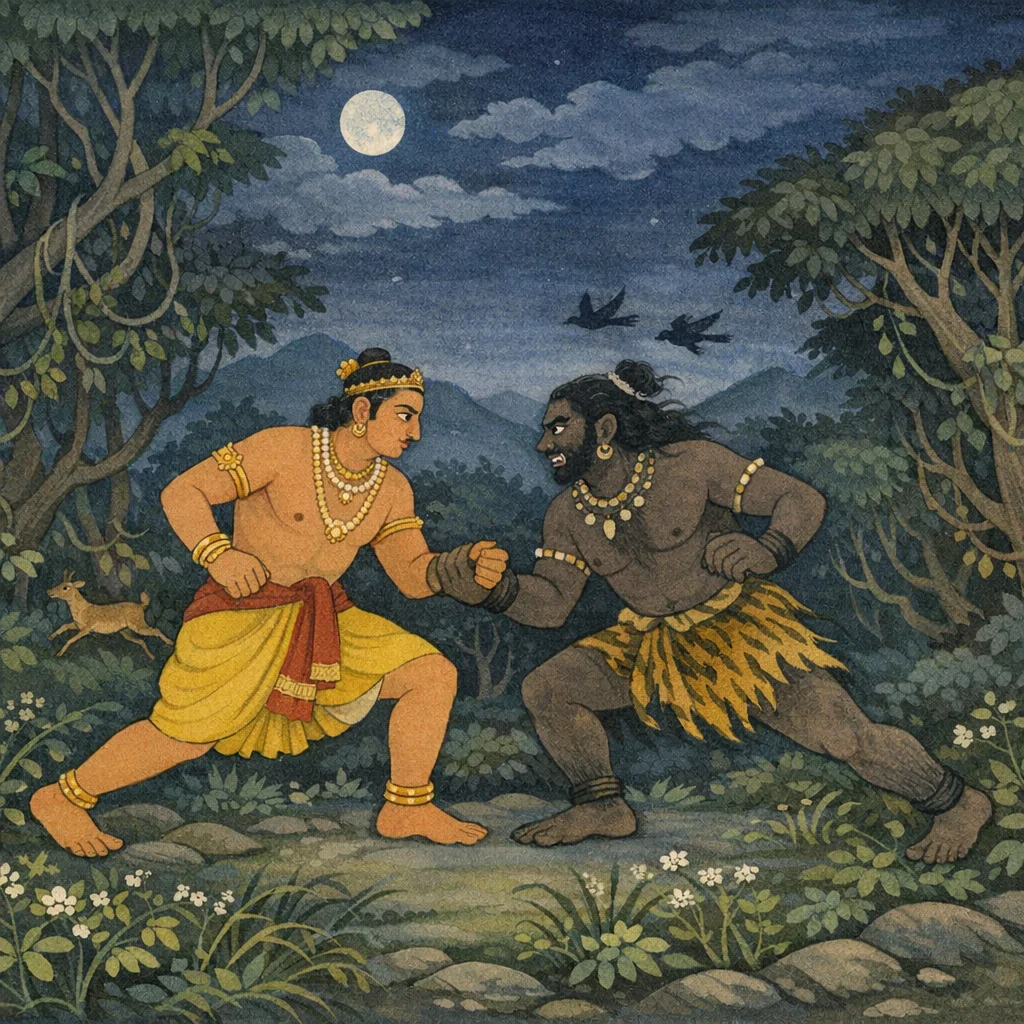
Chapter Arc: वन-निशा में राक्षस हिडिम्ब का विकराल रूप उभरता है—लोहित नेत्र, उर्ध्वकेश, मेघ-सम देह; भूख और क्रोध से वह अपने शिकार की ओर झपटता है। → हिडिम्बा भय से काँप उठती है और भीमसेन को सावधान करती है; उधर हिडिम्ब अपनी बहन पर ही क्रुद्ध होकर पूछता है कि ‘भोजन’ में विघ्न कौन डाल रहा है और धमकी देता है कि जिनके आश्रय में वह गई है, उन सबको वह उसी के साथ मार डालेगा। → हिडिम्ब वेग से भीम पर हाथ चलाता है, पर भीम हँसते-से उसके प्रहार को पकड़ लेता है; फिर सिंह की भाँति छोटे मृग को घसीटते हुए उसे बलपूर्वक खींचता है—और दोनों का घमासान वन को कंपा देता है। → भीम और हिडिम्ब का युद्ध उग्र होता जाता है—पेड़ों को उखाड़ना, लताओं को चीरना, शब्द से मृग-पक्षियों को आतंकित करना—और अध्याय युद्ध के निर्णायक मोड़ पर ठहरता है, जहाँ भीम की पकड़ और पराक्रम स्पष्ट रूप से भारी पड़ते हैं। → युद्ध अभी जारी है; राक्षस का अंत निकट दिखता है, पर अंतिम प्रहार अगले प्रसंग की ओर संकेत करता है।
Shlokas
Verse 1
(दाक्षिणात्य अधिक पाठके २ श्लोक मिलाकर कुल ३८ श्लोक हैं) ख्ञी की न कञन घना ऑन ३. तपाये हुए सोनेके समान वर्णवाली स्त्रीको 'श्यामा” कहा जाता है, जैसा कि इस वचनसे सिद्ध है --तप्तकाञज्चनवर्णाभा सा स्त्री श्यामेति कथ्यते ।” २. जो निर्दोष बड़े भाईके अविवाहित रहते हुए ही अपना विवाह कर लेता है, वह “परिवेत्ता” कहलाता है। शास्त्रोंमें वह निन्दनीय माना गया है। द्विपज्चाशर्दाधिकशततमो< ध्याय: हिडिम्बका आना, हिडिम्बाका उससे भयभीत होना और भीम तथा हिडिम्बासुरका युद्ध वैशम्पायन उवाच तां विदित्वा चिरगतां हिडिम्बो राक्षसेश्वर: । अवतीर्य द्रुमात् तस्मादाजगामाशु पाण्डवान्,वैशम्पायनजी कहते हैं-जनमेजय! तब यह सोचकर कि मेरी बहिनको गये बहुत देर हो गयी, राक्षसराज हिडिम्ब उस वृक्षसे उतरा और शीघ्र ही पाण्डवोंके पास आ गया
Vaiśampāyana said: Realizing that his sister had been gone for a long time, Hiḍimba, the lord of the rākṣasas, climbed down from that tree and hurried at once toward the Pāṇḍavas. The verse sets up the ethical tension between predatory rākṣasa power and the vulnerable yet dharma-aligned travelers, foreshadowing a confrontation in which protection of the innocent becomes paramount.
Verse 2
लोहिताक्षो महाबाहुरूर्ध्वकेशो महानन: । मेघसंघातवर्ष्मा च तीक्ष्णदंष्टो भयानक:,उसकी आँखें क्रोधसे लाल हो रही थीं, भुजाएँ बड़ी-बड़ी थीं, केश ऊपरको उठे हुए थे और विशाल मुख था। उसके शरीरका रंग ऐसा काला था, मानो मेघोंकी काली घटा छा रही हो। तीखे दाढ़ोंवाला वह राक्षस बड़ा भयंकर जान पड़ता था
Vaiśampāyana said: His eyes were reddened with fury; he was mighty-armed, with hair bristling upward and a vast, gaping face. His body was dark like a mass of rain-clouds, and with sharp fangs he appeared terrifying—an embodiment of violent, unruly force that threatens the moral order.
Verse 3
तमापततन्तं दृष्टवैव तथा विकृतदर्शनम् । हिडिम्बोवाच वित्रस्ता भीमसेनमिदं वच:,देखनेमें विकराल उस राक्षस हिडिम्बको आते देखकर ही हिडिम्बा भयसे थर्रा उठी और भीमसेनसे इस प्रकार बोली--
Vaiśampāyana said: Seeing the hideous-looking rākṣasa Hiḍimba rushing toward them, Hiḍimbā trembled in fear and spoke these words to Bhīmasena—setting in motion the encounter in which protection of the vulnerable and the duty to confront violent threat become central.
Verse 4
आपतत्येष दुष्टात्मा संक़रुद्ध: पुरुषादक: । साहं त्वां भ्रातृभि: सार्थ यद् ब्रवीमि तथा कुरु,'(देखिये,) यह दुष्टात्मा नरभक्षी राक्षस क्रोधमें भरा हुआ इधर ही आ रहा है, अतः मैं भाइयोंसहित आपसे जो कहती हूँ, वैसा कीजिये
“Look—this wicked-souled man-eating rākṣasa, inflamed with anger, is rushing straight here. Therefore, do exactly as I tell you, together with your brothers.”
Verse 5
अहं कामगमा वीर रक्षोबलसमन्विता । आरुहेमां मम श्रोणिं नेष्यामि त्वां विहायसा,“वीर! मैं इच्छानुसार चल सकती हूँ, मुझमें राक्षसोंका सम्पूर्ण बल है। आप मेरे इस कटिप्रदेश या पीठपर बैठ जाइये। मैं आपको आकाशमार्गसे ले चलूँगी
Vaiśampāyana said: “O hero, I can move at will, and I am endowed with the full strength of the rākṣasas. Mount me upon my hips/back; I shall carry you through the sky.”
Verse 6
प्रबोधयैतान् संसुप्तान् मातरं च परंतप । सवनिव गमिष्यामि गृहीत्वा वो विहायसा,“परंतप! आप इन सोये हुए भाइयों और माताजीको भी जगा दीजिये। मैं आप सब लोगोंको लेकर आकाशमार्गसे उड़ चलूँगी'
Vaiśampāyana said: “O scorcher of foes, wake these brothers who are fast asleep, and also your mother. I shall depart at once, carrying you all through the sky.” The moment underscores urgent protection of family and the resolve to remove them from imminent danger without delay.
Verse 7
भीम उवाच मा भैस्त्वं पृथुसुश्रोणि नैष कश्चिन्मयि स्थिते । अहमेनं हनिष्यामि प्रेक्षन्त्यास्ते सुमध्यमे,भीमसेन बोले--सुन्दरी! तुम डरो मत, मेरे सामने यह राक्षस कुछ भी नहीं है। सुमध्यमे! मैं तुम्हारे देखते-देखते इसे मार डालूँगा
Bhīma said: “Do not be afraid, O broad-hipped, fair-voiced lady. While I stand here, this rākṣasa is nothing. O slender-waisted one, I shall strike him down as you watch.”
Verse 8
नायं प्रतिबलो भीरु राक्षसआापसदो मम । सोढुं युधि परिस्पन्दमथवा सर्वराक्षसा:,भीरु! यह नीच राक्षस युद्धमें मेरे आक्रमणका वेग सह सके, ऐसा बलवान नहीं है। ये अथवा सम्पूर्ण राक्षस भी मेरा सामना नहीं कर सकते
Bhima said: “O timid one, this vile outcast among the Rakshasas has no strength to stand against me. He cannot endure the surge of my assault in battle—indeed, even all the Rakshasas together would not be able to face me.”
Verse 9
पश्य बाहू सुवृत्तौ मे हस्तिहस्तनिभाविमौ । ऊरू परिघसंकाशौ संहतं चाप्युरो महत्,हाथीकी सूँड़-जैसी मोटी और सुन्दर गोलाकार मेरी इन दोनों भुजाओंकी ओर देखो। मेरी ये जाँघें परिघके समान हैं और मेरा विशाल वक्ष:स्थल भी सुदृढ़ एवं सुगठित है
Bhīma said: “Look at my two arms—well-rounded and powerful, like an elephant’s trunk. My thighs are like iron bars, and my broad chest is compact and mighty.” In context, Bhīma is asserting his physical strength and readiness to act, using bodily imagery to justify confidence and to intimidate opponents; ethically, the verse reflects the kṣatriya ideal of valor, though it also carries the risk of pride when strength is foregrounded over restraint.
Verse 10
विक्रमं मे यथेन्द्रस्य साद्य द्रक्ष्यसि शोभने । मावमंस्था: पृथुश्रोणि मत्वा मामिह मानुषम्,शोभने! मेरा पराक्रम (भी) इन्द्रके समान है, जिसे तुम अभी देखोगी। विशाल नितम्बोंवाली राक्षसी! तुम मुझे मनुष्य समझकर यहाँ मेरा तिरस्कार न करो
Bhima declares that his valor equals Indra’s and warns the woman before him that she will witness it at once. He rebukes her for looking down on him as merely human, asserting his true strength and demanding that she abandon contempt and recognize the power that upholds his honor in this encounter.
Verse 11
हिडिग्बोवाच नावमन्ये नरव्याप्र त्वामहं देवरूपिणम् | दृष्टप्रभावस्तु मया मानुषेष्वेव राक्षस:,हिडिम्बाने कहा--नरश्रेष्ठी आपका स्वरूप तो देवताओंके समान है ही। मैं आपका तिरस्कार नहीं करती। मैं तो इसलिये कहती थी कि मनुष्योंपर ही इस राक्षसका प्रभाव मैं (कई बार) देख चुकी हूँ
Hiḍimbā said: “O tiger among men, I do not slight you, for your form is truly like that of a god. I spoke only because I have repeatedly seen this rākṣasa’s power take effect upon human beings.”
Verse 12
वैशग्पायन उवाच तथा संजल्पतस्तस्य भीमसेनस्य भारत । वाच: शुश्राव ता: क्रुद्धो राक्षस: पुरुषादक:,वैशम्पायनजी कहते हैं--जनमेजय! उस नरभक्षी राक्षस हिडिम्बने क्रोधमें भरकर भीमसेनकी कही हुई उपर्युक्त बातें सुनीं
Vaiśampāyana said: O Bhārata (Janamejaya), as Bhīmasena spoke in that manner, the man-eating rākṣasa, inflamed with anger, heard those words. The scene turns toward imminent confrontation, as violent appetite and wrath are provoked by fearless speech.
Verse 13
अवेक्षमाणस्तस्याश्न हिडिम्बो मानुषं वपु: । स्रग्दामपूरितशिखं समग्रेन्दुनिभाननम्,(तत्पश्चात) उसने अपनी बहिनके मनुष्योचित रूपकी ओर दृष्टिपात किया। उसने अपनी चोटीमें फ़ूलोंके गजरे लगा रखे थे। उसका मुख पूर्ण चन्द्रमाके समान मनोहर जान पड़ता था। उसकी भौंहें, नासिका, नेत्र और केशान्तभाग--सभी सुन्दर थे। नख और त्वचा बहुत ही सुकुमार थी। उसने अपने अंगोंको समस्त आभूषणोंसे विभूषित कर रखा था तथा शरीरपर अत्यन्त सुन्दर महीन साड़ी शोभा पा रही थी
Vaiśampāyana said: Hidimba, looking closely at his sister, saw that she had assumed a human form. Her hair-knot was filled with garlands of flowers, and her face shone with the beauty of the full moon. Thus adorned and made pleasing in appearance, she presented herself in a manner fit to approach humans—an outward transformation undertaken to further her intent in the unfolding encounter.
Verse 14
सुभ्रूनासाक्षिकेशान्तं सुकुमारनखत्वचम् । सर्वाभरणसंयुक्त सुसूक्ष्माम्बरवाससम्,(तत्पश्चात) उसने अपनी बहिनके मनुष्योचित रूपकी ओर दृष्टिपात किया। उसने अपनी चोटीमें फ़ूलोंके गजरे लगा रखे थे। उसका मुख पूर्ण चन्द्रमाके समान मनोहर जान पड़ता था। उसकी भौंहें, नासिका, नेत्र और केशान्तभाग--सभी सुन्दर थे। नख और त्वचा बहुत ही सुकुमार थी। उसने अपने अंगोंको समस्त आभूषणोंसे विभूषित कर रखा था तथा शरीरपर अत्यन्त सुन्दर महीन साड़ी शोभा पा रही थी
Vaiśaṃpāyana said: She appeared with beautiful eyebrows, nose, eyes, and the ends of her hair all exquisitely lovely; her nails and skin were exceedingly delicate. Adorned with every kind of ornament and clothed in very fine garments, she stood in a fully human, dignified form—an image of refined beauty that draws the observer’s attention and signals her readiness to be seen and approached within social and moral decorum.
Verse 15
तां तथा मानुषं रूपं बिभ्रतीं सुमनोहरम् । पुंस्कामां शड्कमानश्नव चुक्रोध पुरुषादक:,उसे इस प्रकार सुन्दर एवं मनोहर मानव-रूप धारण किये देख राक्षसके मनमें यह संदेह हुआ कि हो-न-हो यह पतिरूपमें किसी पुरुषका वरण करना चाहती है। यह विचार मनमें आते ही वह कुपित हो उठा
Verse 16
संक़रुद्धो राक्षसस्तस्या भगिन्या: कुरुसत्तम । उत्फाल्य विपुले नेत्रे ततस्तामिदमब्रवीत्,कुरुश्रेष्ठ अपनी बहिनपर उस राक्षसका क्रोध बहुत बढ़ गया था। फिर तो उसने बड़ी- बड़ी आँखें फाड़-फाड़कर उसकी ओर देखते हुए कहा--
Vaiśaṃpāyana said: O best of the Kurus, the rākṣasa, enraged on account of his sister, stared with wide, glaring eyes and then addressed her with these words. The scene underscores how uncontrolled anger—especially when tied to family attachment—can drive one toward harsh speech and further wrongdoing.
Verse 17
को हि मे भोक्तुकामस्य विघ्नं चरति दुर्मति: । न बिभेषि हिडिम्बे कि मत्कोपाद् विप्रमोहिता,'हिडिम्बे! मैं (भूखा हूँ और) भोजन चाहता हूँ। कौन दुर्बुद्धि मानव मेरे इस अभीष्टकी सिद्धिमें विघ्न डाल रहा है। तू अत्यन्त मोहके वशीभूत होकर क्या मेरे क्रोधसे नहीं डरती है?
Verse 18
धिक् त्वामसति पुंस्कामे मम विप्रियकारिणि । पूर्वेषां राक्षसेन्द्राणां सर्वेषामयशस्करि,“मनुष्यको पति बनानेकी इच्छा रखकर मेरा अप्रिय करनेवाली दुराचारिणी! तुझे धिक्कार है। तू पूर्ववर्ती सम्पूर्ण राक्षसराजोंके कुलमें कलंक लगानेवाली है
“Shame on you, wicked woman—driven by lust for a man—who has acted against my wishes! You bring disgrace upon the entire line of the former lords of the Rākṣasas.”
Verse 19
यानिमानश्रिताकार्षीविंप्रियं सुमहन्मम । एष तानद्य वै सर्वान् हनिष्यामि त्ववा सह,“जिन लोगोंका आश्रय लेकर तूने मेरा महान् अप्रिय कार्य किया है, यह देख, मैं उन सबको आज तेरे साथ ही मार डालता हूँ"
Vaiśaṃpāyana said: “Relying on these people, you have done me a grievous wrong—an act deeply displeasing to me. Look now: today I shall kill all of them, together with you.”
Verse 20
एवमुकक््त्वा हिडिम्बां स हिडिम्बो लोहितेक्षण: । वधायाभिपपातैनान् दन्तैर्दन्तानुपस्पृशन्,हिडिम्बासे यों कहकर लाल-लाल आँखें किये हिडिम्ब दाँतों-से-दाँत पीसता हुआ हिडिम्बा और पाण्डवोंका वध करनेकी इच्छासे उनकी ओर झपटा
Vaiśaṃpāyana said: Having spoken thus to Hiḍimbā, Hiḍimba—his eyes red with fury—ground his teeth and sprang toward them, intent on killing her and the Pāṇḍavas. The scene underscores how uncontrolled rage and predatory impulse drive one to adharmic violence, setting the stage for resistance in defense of the vulnerable.
Verse 21
तमापततन्तं सम्प्रेक्ष्य भीम: प्रहरतां वर: । भर्त्सयामास तेजस्वी तिष्ठ तिछेति चाब्रवीत्,योद्धाओंमें श्रेष्ठ तेजस्वी भीम उसे इस प्रकार हिडिम्बापर टूटते देख उसकी भर्त्सना करते हुए बोले--“अरे खड़ा रह, खड़ा रह”
Seeing him rushing in, Bhīma—radiant and foremost among those who strike—rebuked the attacker and cried out, “Stand! Stand your ground!” In this moment the narrative highlights fearless resistance to violent aggression and the warrior’s duty to confront a threat directly rather than yield to intimidation.
Verse 22
वैशग्पायन उवाच भीमसेनस्तु त॑ दृष्ट्वा राक्षसं प्रहसन्निव । भगिनीं प्रति संक्रुद्धमिदं वचनमब्रवीत्,वैशम्पायनजी कहते हैं--जनमेजय! अपनी बहिनपर अत्यन्त क्रुद्ध हुए उस राक्षणषकी ओर देखकर भीमसेन हँसते हुए-से इस प्रकार बोले--
Vaiśampāyana said: Seeing that rākṣasa, Bhīmasena—almost as if laughing—spoke these words, enraged on account of his sister. The scene frames Bhīma’s anger as protective and morally charged: his wrath is directed not toward cruelty for its own sake, but toward defending a violated familial and ethical boundary.
Verse 23
कि ते हिडिम्ब एतैर्वा सुखसुप्तै: प्रबोधितै: । मामासादय दुर्बुद्धे तरसा त्वं नराशन,“हिडिम्ब! सुखपूर्वक सोये हुए मेरे इन भाइयोंको जगानेसे तेरा कया प्रयोजन सिद्ध होगा। खोटी बुद्धिवाले नरभक्षी राक्षस! तू पूरे वेगसे आकर मुझसे भिड़
‘Hidimba, what purpose will you gain by waking these my brothers who are sleeping in comfort? You wicked-minded, man-eating rākṣasa—come at me instead, and do so with all your speed!’
Verse 24
मय्येव प्रहरेहि त्वं न स्त्रियं हन्तुमरहसि । विशेषतो5नपकृते परेणापकृते सति,'“आ, मुझपर ही प्रहार कर। हिडिम्बा स्त्री है, इसे मारना उचित नहीं है--विशेषतः इस दशामें, जबकि इसने कोई अपराध नहीं किया है। तेरा अपराध तो दूसरेके द्वारा हुआ है
“Strike only at me. You ought not to kill a woman—especially in this situation, when she has done you no wrong. The offense against you was committed by another.”
Verse 25
न हीय॑ स्ववशा बाला कामयत्यद्य मामिह । चोदितैषा हुनज्रेन शरीरान्तरचारिणा,“यह भोली-भाली स्त्री अपने वशमें नहीं है। शरीरके भीतर विचरनेवाले कामदेवसे प्रेरित होकर आज यह मुझे अपना पति बनाना चाहती है
Vaiśaṃpāyana said: “This innocent young woman is not acting under her own control. Urged on by the passion that moves within the body, she now desires me here and wishes to take me as her husband.”
Verse 26
भगिनी तव दुर्वत्त रक्षसां वै यशोहर । त्वन्नियोगेन चैवेयं रूपं मम समीक्ष्य च,'राक्षसोंकी कीर्तिको नष्ट करनेवाले दुराचारी हिडिम्ब! तेरी यह बहिन तेरी आज्ञासे ही यहाँ आयी है; परंतु मेरा रूप देखकर यह बेचारी अब मुझे चाहने लगी है, अतः तेरा कोई अपराध नहीं कर रही है। कामदेवके द्वारा किये हुए अपराधके कारण तुझे इसकी निन्दा नहीं करनी चाहिये
Vaiśaṃpāyana said: “O wicked one, destroyer of the Rakṣasas’ renown! This sister of yours came here only at your command; but after seeing my form, the poor woman has now become drawn to me. Therefore she is not committing any offense against you. You should not censure her for a fault brought about by Kāma (desire).”
Verse 27
कामयत्यद्य मां भीरुस्तव नैषापराध्यति । अनड्रेन कृते दोषे नेमां गर्हितुमहसि,'राक्षसोंकी कीर्तिको नष्ट करनेवाले दुराचारी हिडिम्ब! तेरी यह बहिन तेरी आज्ञासे ही यहाँ आयी है; परंतु मेरा रूप देखकर यह बेचारी अब मुझे चाहने लगी है, अतः तेरा कोई अपराध नहीं कर रही है। कामदेवके द्वारा किये हुए अपराधके कारण तुझे इसकी निन्दा नहीं करनी चाहिये
Vaiśaṃpāyana said: “O timid one, she desires me today; she is not at fault in this. Since the fault has been wrought by Anaṅga (Kāma, the god of desire), you ought not to censure her.”
Verse 28
मयि तिष्ठति दुष्टात्मन् न स्त्रियं हन्तुमरहसि । संगच्छस्व मया सार्धमेकेनैको नराशन,“दुष्टात्मन! तू मेरे रहते इस स्त्रीको नहीं मार सकता। नरभक्षी राक्षस! तू मुझ अकेलेके साथ अकेला ही भिड़ जा
Vaiśaṃpāyana said: “Wicked one, while I stand here you are not fit to kill this woman. Man-eating fiend, come—face me alone, in single combat.”
Verse 29
अहमेको नयिष्यामि त्वामद्य यमसादनम् । अद्य मद्धलनिष्पिष्टं शिरो राक्षस दीर्यताम् कुञ्जरस्येव पादेन विनिष्पिष्टं बलीयस:,“आज मैं अकेला ही तुझे यमलोक भेज दूँगा। निशाचर! जैसे अत्यन्त बलवान् हाथीके पैरसे दबकर किसीका भी मस्तक पिस जाता है, उसी प्रकार मेरे बलपूर्वक आघातसे कुचला जाकर तेरा सिर फट जायगा
Vaiśaṃpāyana said: “Today I alone shall send you to Yama’s abode. O Rākṣasa, may your head be crushed by my force and split apart—just as anyone’s skull is pulverized when pressed beneath the foot of a mighty elephant.”
Verse 30
अद्य गात्राणि ते कड्का: श्येना गोमायवस्तथा । कर्षन्तु भुवि संहृष्टा निहतस्य मया मृथे,“आज मेरे द्वारा युद्धमें तेरा वध हो जानेपर हर्षमें भरे हुए गीध, बाज और गीदड़ धरतीपर पड़े हुए तेरे अंगोंको इधर-उधर घसीटेंगे
“Today, when I have slain you in battle, let herons, hawks, and jackals—exultant—drag your limbs about upon the ground.” The utterance frames the battlefield as a place where violent triumph is sealed not only by death but by the indignity that follows, underscoring the harsh, dehumanizing rhetoric that often accompanies kṣatriya conflict.
Verse 31
क्षणेनाद्य करिष्येडहमिदं वनमराक्षसम् । पुरा यद् दूषितं नित्यं त्वया भक्षयता नरान्,“आजसे पहले सदा मनुष्योंको खा-खाकर तूने जिसे अपवित्र कर दिया है, उसी वनको आज मैं क्षणभरमें राक्षसोंसे सूना कर दूँगा
“This very day, in a single moment, I shall make this forest free of rākṣasas. For long ago—and continually—you defiled it by preying upon human beings; today I will cleanse it of that terror.”
Verse 32
अद्य त्वां भगिनी रक्ष: कृष्पमाणं मयासकृत् | द्रक्ष्यत्यद्रिप्रतिकाशं सिंहेनेव महाद्विपम्,'राक्षस! जैसे सिंह पर्ववाकार महान् गजराजको घसीट ले जाता है, उसी प्रकार आज मेरे द्वारा बार-बार घसीटे जानेवाले तुझको तेरी बहिन अपनी आँखों देखेगी
Vaiśaṃpāyana said: “Today, O rākṣasa, as I drag you again and again, your sister will behold you with her own eyes—like a lion hauling a great elephant that looks like a mountain.” The line underscores the moral force of just retribution: violent wrongdoing draws an inevitable, public reckoning, and the aggressor is made to face humiliation and consequence before those bound to him by kinship.
Verse 33
निराबाधास्त्वयि हते मया राक्षसपांसन | वनमेतच्चरिष्यन्ति पुरुषा वनचारिण:,'राक्षसकुलांगार! मेरे द्वारा तेरे मारे जानेपर वनवासी मनुष्य बिना किसी विधघ्न-बाधाके इस वनमें विचरण करेंगे”
Vaiśaṃpāyana said: “Now that you have been slain by me, O vilest of rākṣasas, the forest-dwelling men will be able to roam in this very forest without obstruction or harm.” The line frames the killing as the removal of a predatory threat, restoring safety for those who live by dharma in the wilderness.
Verse 34
हिडिग्ब उवाच गर्जितेन वृथा कि ते कत्थितेन च मानुष । कृत्वैतत् कर्मणा सर्व कत्थेथा मा चिरं कृथा:,हिडिम्ब बोला--अरे ओ मनुष्य! व्यर्थ गर्जने तथा बढ़-बढ़कर बातें बनानेसे क्या लाभ? यह सब कुछ पहले करके दिखा, फिर डींग हाँकना; अब देर न कर
Hiḍigba said: “O man, what use is your pointless roaring and boastful talk? First accomplish all this by your deeds, and then you may boast—do not delay.”
Verse 35
बलिनं मन्यसे यच्चाप्यात्मानं सपराक्रमम् | ज्ञास्यस्यद्य समागम्य मया55त्मानं बलाधिकम्
Hidimba said: “Since you consider yourself strong and full of prowess, today—when you come face to face with me—you will learn that I am stronger than you.”
Verse 36
न तावदेतान् हिंसिष्ये स्वपन्त्वेते यथासुखम् । एष त्वामेव दुर्बुद्धे निहन्म्यद्याप्रियंवदम्
Hidimba said: “Not yet will I harm these men; let them sleep in comfort as they please. But you—foolish one, who speaks what is displeasing—I will kill you today.”
Verse 37
पीत्वा तवासूग् गात्रेभ्यस्तत: पश्चादिमानपि । हनिष्यामि ततः पश्चादिमां विप्रियकारिणीम्
Hiḍimba said: “After drinking the life-breath from your limbs, I shall then kill these others as well; and after that, I shall kill this woman who has caused me displeasure.”
Verse 38
तू अपने-आपको जो बड़ा बलवान् और पराक्रमी समझ रहा है, उसकी सच्चाईका पता तो तब लगेगा, जब आज मेरे साथ भिड़ेगा। तभी तू जान सकेगा कि मुझसे तुझमें कितना अधिक बल है। दुर्बुद्धे! मैं पहले इन सबकी हिंसा नहीं करूँगा। ये थोड़ी देरतक सुखपूर्वक सो लें। तू मुझे बड़ी कड़वी बातें सुना रहा है, अतः सबसे पहले तुझे ही अभी मारे देता हूँ। पहले तेरे अंगोंका ताजा खून पीकर उसके बाद तेरे इन भाइयोंका भी वध करूँगा। तदनन्तर अपना अप्रिय करनेवाली इस हिडिम्बाको भी मार डालूँगा || ३५-- ३७ ।। वैशम्पायन उवाच एवमुकक््त्वा ततो बाहूं प्रगृह् पुरुषादक: । अभ्यद्रवत संक़्रुद्धो भीमसेनमरिंदमम्,वैशम्पायनजी कहते हैं--राजन्! यों कहकर क्रोधमें भरा हुआ वह नरभक्षी राक्षस अपनी एक बाँह ऊपर उठाये शत्रुदमन भीमसेनपर टूट पड़ा
Vaiśampāyana said: Having spoken thus, the man-eating rākṣasa lifted up his arms and, inflamed with rage, rushed straight at Bhīmasena, the subduer of foes. The scene frames a stark moral contrast: unrestrained violence and predatory intent confronting a protector-warrior who must answer aggression with force, not for cruelty, but to check adharma.
Verse 39
तस्याभिद्रवतस्तूर्ण भीमो भीमपराक्रम: । वेगेन प्रहितं बाहुं निजग्राह हसन्निव,झपटते ही बड़े वेगसे उसने भीमसेनपर हाथ चलाया। तब तो भयंकर पराक्रमी भीमसेनने तुरंत ही उसके हाथको हँसते हुए-से पकड़ लिया
As he rushed forward, Bhīma—of dreadful prowess—swiftly seized the arm that had been hurled at him with force, as though laughing. The scene underscores Bhīma’s controlled strength: he meets sudden aggression not with panic, but with confident restraint, turning an attack into a moment of dominance without immediately escalating to lethal retaliation.
Verse 40
निगृहा तं बलाद् भीमो विस्फुरन्तं चकर्ष ह । तस्माद् देशाद् धरनूष्यष्टौ सिंह: क्षुद्रमृगं यथा,वह राक्षस उनके हाथसे छूटनेके लिये छटपटाने और उछल-कूद मचाने लगा; परंतु भीमसेन उसे पकड़े हुए ही बलपूर्वक उस स्थानसे आठ धनुष (बत्तीस हाथ) दूर घसीट ले गये--उसी प्रकार जैसे सिंह किसी छोटे मृगको घसीटकर ले जाय
Vaiśampāyana said: Bhīma, gripping him with sheer force, dragged the struggling one—who writhed and thrashed to break free—away from that spot for a distance of eight bow-lengths, just as a lion drags off a small deer. The scene underscores Bhīma’s protective resolve and the decisive use of strength to restrain a violent threat.
Verse 41
ततः स राक्षस: क्रुद्ध: पाण्डवेन बलार्दित: । भीमसेनं समालिड्ग्य व्यनदद् भैरवं रवम्,पाण्डुनन्दन भीमके द्वारा बलपूर्वक पीड़ित होनेपर वह राक्षस क्रोधमें भर गया और भीमसेनको भुजाओंसे कसकर भयंकर गर्जना करने लगा
Then that rākṣasa, enraged at being forcibly overpowered by the Pāṇḍava, clasped Bhīmasena tightly in his arms and let out a terrifying roar—an outward surge of wrath and brute force when checked by a stronger, righteous opponent.
Verse 42
पुनर्भीमो बलादेनं विचकर्ष महाबल: । मा शब्द: सुखसुप्तानां भ्रातृणां मे भवेदिति,तब महाबली भीमसेन यह सोचकर पुनः उसे बलपूर्वक कुछ दूर खींच ले गये कि सुखपूर्वक सोये हुए भाइयोंके कानोंमें शब्द न पहुँचे
Vaiśaṃpāyana said: Then mighty Bhīma again dragged him away by sheer force, thinking, “Let no sound reach the ears of my brothers who are sleeping peacefully.” The act shows Bhīma’s strength restrained by care—he uses power not for display, but to protect his brothers’ rest and to avoid needless alarm.
Verse 43
अन्योन्यं तौ समासाद्य विचकर्षतुरोजसा । हिडिम्बो भीमसेनश्न विक्रमं चक्रनु: परम्,फिर तो दोनों एक-दूसरेसे गुथ गये और बलपूर्वक अपनी-अपनी ओर खींचने लगे। हिडिम्ब और भीमसेन दोनोंने बड़ा भारी पराक्रम प्रकट किया
Meeting each other head-on, the two grappled and, with sheer force, dragged one another in opposite directions. Hidimba and Bhimasena alike displayed extraordinary valor, turning their contest into a stark trial of strength where courage and protection of one’s own become the immediate moral stakes.
Verse 44
बभज्जतुस्तदा वृक्षॉल्लताश्चाकर्षतुस्तदा । मत्ताविव च संरब्धौ वारणौ षष्टिहायनौ,जैसे साठ वर्षकी अवस्थावाले दो मतवाले गजराज कुपित हो परस्पर युद्ध करते हों, उसी प्रकार वे दोनों एक-दूसरेसे भिड़कर वृक्षोंको तोड़ने और लताओंको खींच-खींचकर उजाड़ने लगे
Vaiśampāyana said: Then the two of them began to break the trees and to drag down the creepers, ravaging the grove. Like two sixty-year-old bull elephants—intoxicated and enraged—locked in combat, they crashed into one another and laid waste to the vegetation, showing how uncontrolled fury turns strength into destruction.
Verse 45
(पादपानुद्गहन्तौ ताबुरुवेगेन वेगितौ । स्फोटयन्तौ लताजालान्यूरुभ्यां प्राप्प सर्वतः ।। वित्रासयन्तौ शब्देन सर्वतो मृगपक्षिण: । बलेन बलिनौ मत्तावन्योन्यवधकाड्क्षिणौ ।। भीमराक्षसयोर्युद्धे तदावर्तत दारुणम् ।। ऊरुबाहुपरिक्लेशात् कर्षन्तावितरेतरम् । ततः शब्देन महता गर्जन्तौ तौ परस्परम् ।। पाषाणसंघट्टनि भै: प्रहारैरभिजध्नतुः । अन्योन्यं तौ समालिड्ग्य विकर्षन्तौ परस्परम् ।।) वे दोनों वृक्ष उठाये बड़े वेगसे एक-दूसरेकी ओर दौड़ते थे, अपनी जाँघोंकी टक््करसे चारों ओरकी लताओंको छित्न-भिन्न किये देते थे तथा गर्जन-तर्जनके द्वारा सब ओर पशु- पक्षियोंको आतंकित कर देते थे। बलसे उन्मत्त हुए वे दोनों महाबली योद्धा एक-दूसरेको मार डालना चाहते थे। उस समय भीमसेन और हिडिम्बासुरमें बड़ा भयंकर युद्ध चल रहा था। वे दोनों एक-दूसरेकी भुजाओंको मरोड़ते और जाँघोंको घुटनोंसे दबाते हुए दोनों एक- दूसरेको अपनी ओर खींचते थे। तदनन्तर वे बड़े जोरसे गर्जते हुए परस्पर इस प्रकार प्रहार करने लगे, मानो दो चट्टानें आपसमें टकरा रही हों। तत्पश्चात् वे एक-दूसरेसे गुथ गये और दोनों दोनोंको भुजाओंमें कसकर इधर-उधर खींच ले जानेकी चेष्टा करने लगे। तयो: शब्देन महता विबुद्धास्ते नरर्षभा: । सह मात्रा च ददृशुहिडिम्बामग्रत: स्थिताम्,उन दोनोंकी भारी गर्जनासे वे नरश्रेष्ठ पाण्डव मातासहित जाग उठे और उन्होंने अपने सामने खड़ी हुई हिडिम्बाको देखा
Vaiśampāyana said: The two, having uprooted trees, rushed at one another with tremendous speed. With the clash and thrust of their thighs they tore apart the tangled creepers all around, and by their roaring they terrified beasts and birds in every direction. Drunk with strength, those two mighty fighters, each longing to slay the other, fought a most dreadful battle—Bhīma and the rākṣasa Hiḍimba—grappling and wrenching one another with arms and thighs, dragging each other to and fro. Then, bellowing loudly at each other, they struck blows that sounded like the collision of rocks. Next they locked in a tight embrace and tried to haul one another away by sheer force. Awakened by that great din, the bull-like Pāṇḍavas, together with their mother, rose and saw Hiḍimbā standing before them.
Verse 151
इस प्रकार श्रीमहाभारत आदिपर्वके अन्तगत हिडिम्बवधपर्वमें भीम-हिडिग्बा- संवादविषयक एक सौ इक्यावनवाँ अध्याय पूरा हुआ
Thus ends the one-hundred-and-fifty-first chapter of the Ādi Parva of the Śrī Mahābhārata, within the episode of the slaying of Hiḍimba, dealing with the dialogue between Bhīma and Hiḍimbā. The colophon marks the completion of this section, framing the narrative as a moral encounter where strength is exercised in protection and the conflict is resolved through decisive action against a threat.
Verse 152
इति श्रीमहाभारते आदिपर्वणि हिडिम्बवधपर्वणि हिडिम्बयुद्धे द्विपज्चाशदधिकशततमो<्ध्याय:
Thus, in the Śrī Mahābhārata, within the Ādi Parva, in the section concerning the slaying of Hiḍimba, in the account of the battle with Hiḍimba, ends the one-hundred-and-fifty-second chapter. This closing colophon marks the completion of the episode, framing the conflict as a decisive act that removes a violent threat and restores safety for the vulnerable.
Frequently Asked Questions
The chapter presents a practical dharma-choice rather than a binary crisis: how to live responsibly after a decisive act (Baka’s elimination) by maintaining restraint, study, and social propriety—especially through correct hospitality and measured inquiry while remaining politically cautious.
Knowledge, ethics, and strategy are interlinked: disciplined reception of guests, attentive listening, and precise questioning are portrayed as legitimate means of acquiring guidance and situational awareness without abandoning dharmic conduct.
No explicit phalaśruti appears in this passage; its meta-function is structural—marking a transition from local survival narratives to the Pāñcāla-centered sequence, using inquiry and narration as the epic’s method of unfolding causality.