शिवस्तुतिवर्णनम् (Śiva-stuti-varṇanam) — “Description of Hymns in Praise of Śiva”
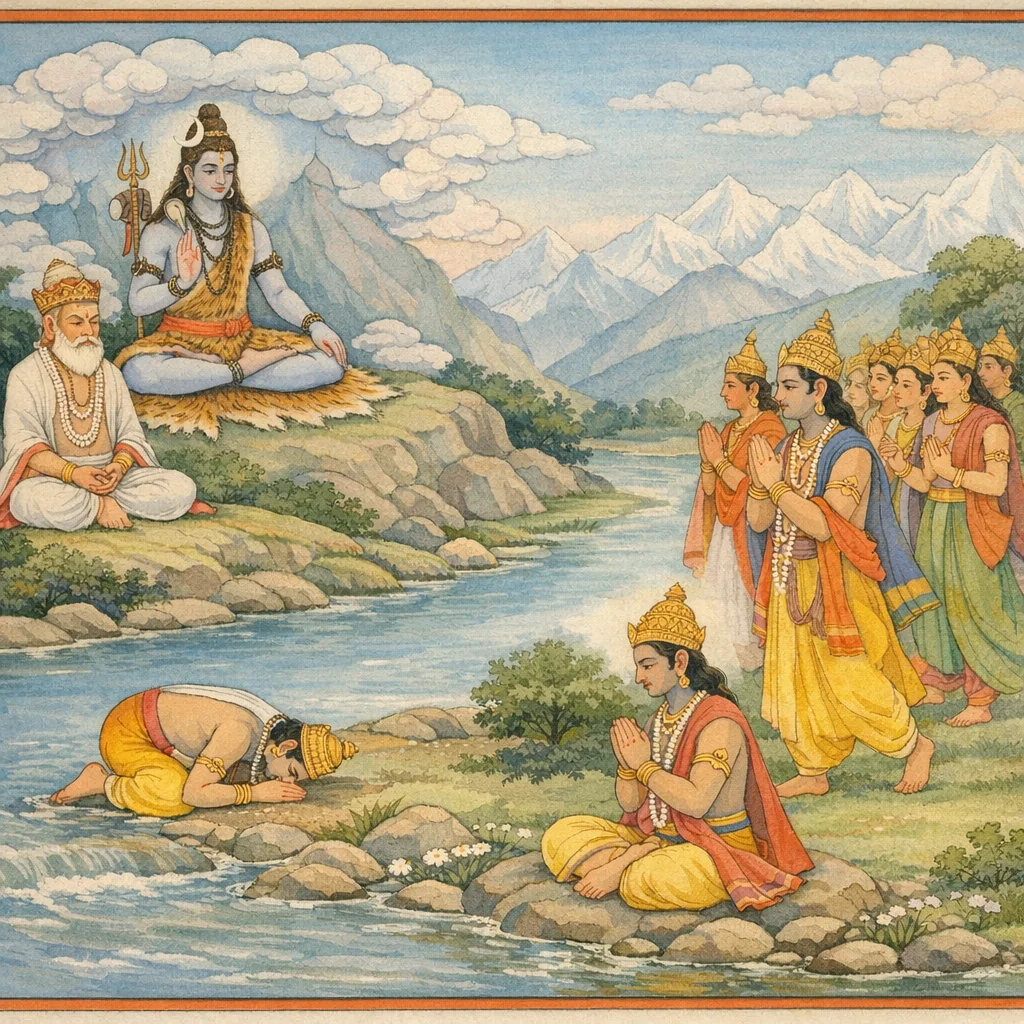
Adhyāya 6 begins with Vyāsa asking Sanatkumāra what happened when the Tripura demon leaders fell into delusion, abandoned Śiva-worship, and the social-religious order (including strī-dharma as framed by the text) collapsed into durācāra. Sanatkumāra relates that Hari (Viṣṇu), appearing “as if successful,” goes with the devas to Kailāsa to report the situation to Umāpati (Śiva). Near Śiva, Brahmā is shown absorbed in deep samādhi; Viṣṇu mentally approaches the omniscient Brahmā and then offers Śaṅkara a direct stuti, praising Śiva as Maheśvara, Paramātman, Rudra, Nārāyaṇa, and Brahman, compressing a theological synthesis into liturgical praise. Afterward, Viṣṇu performs full prostration (daṇḍavat-praṇipāta) and undertakes japa of a Rudra-mantra linked with Dakṣiṇāmūrti, standing in water and meditating on Śambhu/Parameśvara; the devas likewise fix their minds on Maheśvara. The chapter thus serves as a narrative-liturgical pivot, presenting devotion and mantra discipline as the effective means that elicit divine response and enable the ensuing resolution within the Tripura war-cycle.
Shlokas
Verse 1
व्यास उवाच । तस्मिन् दैत्याधिपे पौरे सभ्रातरि विमोहिते । सनत्कुमार किं वासीत्तदाचक्ष्वाखिलं विभो
Vyāsa said: “When that lord of the Daityas, the city-ruler, together with his brother, had fallen into delusion—O Sanatkumāra, what happened then? O all-pervading one, tell me everything in full.”
Verse 2
सनत्कुमार उवाच । त्रिपुरे च तथाभूते दैत्ये त्यक्तशिवार्चने । स्त्रीधर्मे निखिले नष्टे दुराचारे व्यवस्थिते
Sanatkumāra said: When Tripura had become such—when the demons had abandoned the worship of Śiva—when the entire code of womanly virtue had perished, and when they were firmly established in evil conduct,
Verse 3
कृतार्थ इव लक्ष्मीशो देवैस्सार्द्धमुमापतिम् । निवेदितुं तच्चरित्रं कैलासमगमद्धरिः
Then Hari—Viṣṇu, Lord of Lakṣmī—feeling as though his purpose had been fulfilled, went with the gods to Kailāsa to report that entire episode to Śiva, the Lord of Umā.
Verse 4
तस्योपकंठं स्थित्वाऽसौ देवैस्सह रमापतिः । ततो भूरि स च ब्रह्मा परमेण समाधिना
Standing close by him, Viṣṇu—the consort of Ramā—remained there together with the gods. Then Brahmā entered the supreme samādhi and contemplated deeply in many ways, intent on the highest truth.
Verse 5
मनसा प्राप्य सर्वज्ञं ब्रह्मणा स हरिस्तदा । तुष्टाव वाग्भिरिष्ट्वाभिश्शंकरं पुरुषोत्तमः
Then Hari—Puruṣottama—having inwardly approached Śaṅkara, the all-knowing Lord, along with Brahmā, praised Him with cherished hymns and words of adoration.
Verse 6
इति श्रीशिवमहापुराणे द्वितीयायां रुद्रसंहितायां पञ्चमे युद्धखण्डे शिवस्तुतिवर्णनं नाम षष्ठोऽध्यायः
Thus ends the sixth chapter, called “The Description of the Hymn to Lord Śiva,” in the fifth section, the Yuddha-khaṇḍa, of the second part (Rudra-saṃhitā) of the glorious Śrī Śiva Mahāpurāṇa.
Verse 7
एवं कृत्वा महादेवं दंडवत्प्रणिपत्य ह । जजाप रुद्रमंत्रं च दक्षिणामूर्तिसंभवम्
Having done so, he bowed to Mahādeva with full prostration (daṇḍavat) and then recited the Rudra-mantra—revealed through Dakṣiṇāmūrti—taking refuge in Śiva’s grace-bestowing instruction.
Verse 8
जले स्थित्वा सार्द्धकोटिप्रमितं तन्मनाः प्रभुः । संस्मरन् मनसा शंभुं स्वप्रभुं परमेश्वरम्
Remaining immersed in the water for a span measured as a crore and a half, that lord—his mind wholly fixed—kept inwardly remembering Śambhu, his own Supreme Lord, Parameśvara.
Verse 9
तावद्देवास्तदा सर्वे तन्मनस्का महेश्वरम्
Then, at that time, all the gods—fixing their minds wholly on Maheshvara—remained intent upon Him alone.
Verse 10
देवा ऊचुः । नमस्सर्वात्मने तुभ्यं शंकरायार्तिहारिणे । रुद्राय नीलकंठाय चिद्रूपाय प्रचेतसे
The Devas said: Salutations to You, the Self of all, to Śaṅkara who removes affliction. Salutations to Rudra, the Blue-throated Lord, to You whose very nature is Consciousness, the all-knowing One.
Verse 11
गतिर्नस्सर्वदा त्वं हि सर्वापद्विनिवारकः । त्वमेव सर्वदात्माभिर्वंद्यो देवारिसूदन
You alone are ever our refuge and true course. You are the remover of every calamity. Indeed, you alone are, at all times, worthy of reverence by all beings—O slayer of the enemies of the gods.
Verse 12
त्वमादिस्त्वमनादिश्च स्वानंदश्चाक्षयः प्रभुः । प्रकृतेः पुरुषस्यापि साक्षात्स्रष्टा जगत्प्रभुः
You are the beginning, and yet beginningless; You are self-bliss itself, the imperishable Lord. You are directly the Creator—even of Prakṛti and Puruṣa—and the sovereign Lord of the universe.
Verse 13
त्वमेव जगतां कर्ता भर्ता हर्ता त्वमेव हि । ब्रह्मा विष्णुर्हरो भूत्वा रजस्सत्त्वतमोगुणैः
You alone are truly the creator, the sustainer, and the withdrawer of the worlds. Indeed, becoming Brahmā, Viṣṇu, and Hara through the guṇas—rajas, sattva, and tamas—you carry out these cosmic functions.
Verse 14
तारकोसि जगत्यस्मिन्सर्वेषामधिपोऽव्ययः । वरदो वाङ्मयो वाच्यो वाच्यवाचकवर्जितः
In this world You are the savior who enables beings to cross over. You are the imperishable overlord of all. You are the bestower of boons; You are of the nature of sacred sound and speech. You are that Reality to be indicated by words, yet You are beyond both the expressible and the expresser—free from the duality of what is denoted and what denotes.
Verse 15
याच्यो मुक्त्यर्थमीशानो योगिभिर्योगवित्तमैः । हृत्पुंडरीकविवरे योगिनां त्वं हि संस्थितः
O Īśāna (Lord Śiva), sought and invoked for the sake of liberation by the most accomplished knowers of yoga—indeed, You abide for the yogins within the inner hollow of the heart-lotus.
Verse 16
वदंति वेदास्त्वां संतः परब्रह्मस्वरूपिणम् । भवंतं तत्त्वमित्यद्य तेजोराशिं परात्परम्
The Vedas and the realized saints declare You to be the very embodiment of the Supreme Brahman. Even today they proclaim You as the ultimate Reality—the transcendent, unsurpassed mass of divine Light beyond all else.
Verse 17
परमात्मानमित्याहुररस्मिन् जगति यद्विभो । त्वमेव शर्व सर्वात्मन् त्रिलोकाधिपते भव
In this world, O all-pervading Lord, they declare You alone to be the Supreme Self (Paramātman). You indeed are Śarva—the indwelling Self of all—and the sovereign Lord of the three worlds; be graciously present as our refuge.
Verse 18
दृष्टं श्रुतं स्तुतं सर्वं ज्ञायमानं जगद्गुरो । अणोरल्पतरं प्राहुर्महतोपि महत्तरम्
O Jagadguru, all that is seen, heard, praised, and even known is but a small measure of You. The sages declare You subtler than the subtlest atom, and greater than even the greatest—transcending all limits of thought and speech.
Verse 19
सर्वतः पाणिपादांतं सर्वतोक्षिशिरोमुखम् । सर्वतश्श्रवणघ्राणं त्वां नमामि च सर्वतः
Everywhere I bow to You—You whose hands and feet extend in all directions; whose eyes, head, and faces are on every side; whose hearing and sense of smell pervade all. To You, present in all places and all ways, I offer my reverence.
Verse 20
सर्वज्ञं सर्वतो व्यापिन् सर्वेश्वरमनावृतम् । विश्वरूपं विरूपाक्षं त्वां नमामि च सर्वतः
I bow to You—omniscient, all-pervading, the Lord of all—unveiled and unobstructed; the One whose form is the whole universe, O Virūpākṣa. From every side, in every way, I offer my salutations to You.
Verse 21
सर्वेश्वरं भवाध्यक्षं सत्यं शिवमनुत्तमम् । कोटि भास्करसंकाशं त्वां नमामि च सर्वतः
In every way I bow to You—O Lord of all, overseer of bhava (worldly becoming), the True One, Śiva the unsurpassed—whose radiance is like that of ten million suns.
Verse 22
विश्वदेवमनाद्यंतं षट्त्रिंशत्कमनीश्वरम् । प्रवर्तकं च सर्वेषां त्वां नमामि च सर्वतः
I bow to You—God of the universe—without beginning and without end; the Lord who manifests as the host of the thirty-six tattvas, yet who has no higher ruler above Himself. You are the impeller and the initiator of all; from every side and in every way I offer You my obeisance.
Verse 23
प्रवर्तकं च प्रकृतेस्सर्वस्य प्रपितामहम् । सर्वविग्रहमीशं हि त्वां नमामि च सर्वतः
I bow to You, who sets Prakṛti into motion, the primordial Grandsire of all. You are the Lord who assumes every form; therefore, from every side and in every way I offer You my obeisance.
Verse 24
एवं वदंति वरदं सर्वावासं स्वयम्भुवम् । श्रुतयः श्रुतिसारज्ञं श्रुतिसारविदश्च ये
Thus do the Śrutis (the Vedas) declare the Self-born Lord—bestower of boons, the indwelling refuge of all—Him who knows the essence of the Vedas; and so too do those who are themselves knowers of the Vedic essence.
Verse 25
अदृश्यमस्माभिरनेकभूतं त्वया कृतं यद्भवताथ लोके । त्वामेव देवासुरभूसुराश्च अन्ये च वै स्थावरजंगमाश्च
That which, though manifold in beings, remained unseen by us—you have made it manifest in this world. Indeed, it is You alone whom the gods, the asuras, the earthly sages, and all other beings—both immobile and moving—ultimately behold and acknowledge.
Verse 26
पाह्यनन्यगतीञ्शंभो सुरान्नो देववल्लभ । नष्टप्रायांस्त्रिपुरतो विनिहत्यासुरान्क्षणात्
O Śambhu, refuge of those who have no other shelter—O beloved of the gods—protect our Devas. Having in an instant slain the Asuras, deliver us from Tripura, for we are almost destroyed.
Verse 27
मायया मोहितास्तेऽद्य भवतः परमेश्वर । विष्णुना प्रोक्तयुक्त्या त उज्झिता धर्मतः प्रभो
O Parameśvara, today they have been deluded by Your Māyā. O Lord, by the reasoning spoken by Viṣṇu, they have turned away from dharma and abandoned the righteous path.
Verse 28
संत्यक्तसर्वधर्मांश्च बोद्धागमसमाश्रिताः । अस्मद्भाग्यवशाज्जाता दैत्यास्ते भक्तवत्सल
“Having abandoned all (Vedic) duties and taking refuge in the doctrines of the Buddhists, those Daityas were born through the force of our own ill fortune—O you who are ever affectionate to your devotees.”
Verse 29
सदा त्वं कार्यकर्त्ताहि देवानां शरणप्रद । वयं ते शरणापन्ना यथेच्छसि तथा कुरु
You alone ever accomplish the gods’ purposes and bestow refuge. We have taken shelter in You; act in whatever way You deem fit.
Verse 30
सनत्कुमार उवाच । इति स्तुत्वा महेशानं देवास्तु पुरतः स्थिताः । कृतांजलिपुटा दीना आसन् संनतमूर्तयः
Sanatkumāra said: Thus, having praised Maheśāna, the gods stood before Him. With palms joined in reverent supplication, they remained humbled and distressed, their forms bowed in submission.
Verse 31
स्तुतश्चैवं सुरेन्द्राद्यैर्विष्णोर्जाप्येन चेश्वरः । अगच्छत्तत्र सर्वेशो वृषमारुह्य हर्षितः
Thus praised by Indra and the other gods, and also by Viṣṇu’s reverent mantra‑japa, the Lord—Īśvara, the Supreme Ruler of all—joyfully mounted the Bull and proceeded to that place.
Verse 32
विष्णुमालिंग्य नंदिशादवरुह्य प्रसन्नधीः । ददर्श सुदृशा तत्र नन्दीदत्तकरोऽखिलान्
Embracing Viṣṇu and descending from Nandīśa (Nandī), with a serene and delighted mind, the fair‑eyed Lord beheld there all of them—each having received Nandī’s aid.
Verse 33
अथ देवान् समालोक्य कृपादृष्ट्या हरिं हरः । प्राह गंभीरया वाचा प्रसन्नः पार्वतीपतिः
Then Hara (Śiva), the consort of Pārvatī, looked upon the gods and, casting a compassionate glance toward Hari (Viṣṇu), spoke in a deep voice, serene and gracious in mind.
Verse 34
शिव उवाच । ज्ञातं मयेदमधुना देवकार्यं सुरेश्वर । विष्णोर्मायाबलं चैव नारदस्य च धीमतः
Śiva said: O Lord of the gods, I now understand this divine task—along with the power of Viṣṇu’s māyā, and the discerning intention of the wise Nārada as well.
Verse 35
तेषामधर्मनिष्ठानां दैत्यानां देवसत्तम । पुरत्रयविनाशं च करिष्येऽहं न संशयः
“O best of the gods, of those Dāityas who are steadfast in adharma, I shall bring about the destruction of the Triple City (Pura-traya) as well—of this there is no doubt.”
Verse 36
परन्तु ते महादैत्या मद्भक्ता दृढमानसाः । अथ वध्या मयैव स्युर्व्याजत्यक्तवृषोत्तमाः
“However, those mighty Dāityas are My devotees, steadfast in mind. Therefore they are to be slain by Me alone—O best of the righteous—for, under a pretext, they have abandoned the path of dharma.”
Verse 37
विष्णुर्हन्यात्परो वाथ यत्त्याजितवृषाः कृताः । दैत्या मद्भक्तिरहितास्सर्वे त्रिपुरवासिनः
Whether Viṣṇu strikes them down, or some other power does—these residents of Tripura, all of them Daityas, have been made forsakers of dharma; they are wholly devoid of devotion to Me (Śiva).
Verse 38
इति शंभोस्तु वचनं श्रुत्वा सर्वे दिवौकसः । विमनस्का बभूवुस्ते हरिश्चापि मुनीश्वर
Thus, on hearing the words of Śaṃbhu (Lord Śiva), all the dwellers of heaven became downcast; and Hari (Viṣṇu) too, O great sage, was filled with sorrow.
Verse 39
देवान् विष्णुमुदासीनान् दृष्ट्वा च भवकृद्विधिः । कृतांजलिपुरश्शंभुं ब्रह्मा वचनमब्रवीत्
Seeing the gods—and Vishnu as well—standing indifferent, Brahma, the ordainer who brings forth the worlds, approached Shambhu with folded hands and spoke these words.
Verse 40
ब्रह्मोवाच । न किंचिद्विद्यते पापं यस्मात्त्वं योगवित्तमः । परमेशः परब्रह्म सदा देवर्षिरक्षकः
Brahmā said: “No sin can exist in relation to You, for You are the supreme knower of Yoga. You are Parameśvara, the Supreme Brahman, ever the protector of the gods and the seers.”
Verse 41
तवैव शासनात्ते वै मोहिताः प्रेरको भवान् । त्यक्तस्वधर्मत्वत्पूजाः परवध्यास्तथापि न
Indeed, by Your command alone they have been deluded—You Yourself are the impelling power. Though they have abandoned their own dharma and have become worthy of being slain by others, still they are not (to be slain).
Verse 42
अतस्त्वया महादेव सुरर्षिप्राणरक्षक । साधूनां रक्षणार्थाय हंतव्या म्लेच्छजातयः
Therefore, O Mahādeva—protector of the very life of the gods and the ṛṣis—for the safeguarding of the righteous, the mleccha hordes, who uphold adharma and oppress the good, must be slain.
Verse 43
राज्ञस्तस्य न तत्पापं विद्यते धर्मतस्तव । तस्माद्रक्षेद्द्विजान् साधून्कंटकाद्वै विशोधयेत्
For that king, no such sin arises so long as he acts in accordance with dharma. Therefore he should protect the twice-born and the saintly, and cleanse the realm of “thorns”—the harmful, obstructive forces that harass the good.
Verse 44
एवमिच्छेदिहान्यत्र राजा चेद्राज्यमात्मनः । प्रभुत्वं सर्वलोकानां तस्माद्रक्षस्व मा चिरम्
If a king in this world wishes to preserve his own kingdom and maintain sovereign authority over all his realms, then he should protect it at once; he must not delay.
Verse 45
मुनीन्द्रेशास्तथा यज्ञा वेदाश्शास्त्रादयोखिलाः । प्रजास्ते देवदेवेश ह्ययं विष्णुरपि ध्रुवम्
O Devadeveśa, Lord of the gods: all the foremost sages, the sacrifices (yajña), the Vedas, and the entire body of sacred treatises—and all beings—are truly Yours. Indeed, even this Viṣṇu is certainly dependent upon You.
Verse 46
देवता सार्वभौमस्त्वं सम्राट्सर्वेश्वरः प्रभो । परिवारस्तवैवैष हर्यादि सकलं जगत्
O Lord, You are the universal Sovereign, the supreme Emperor, the Lord of all rulers. Indeed, this entire universe—beginning with Hari (Viṣṇu) and the other gods—exists as Your own retinue, for all are upheld within Your lordship.
Verse 47
युवराजो हरिस्तेज ब्रह्माहं ते पुरोहितः । राजकार्यकरः शक्रस्त्वदाज्ञापरि पालकः
“O radiant Hari, you shall be the crown prince. I, Brahmā, shall be your family priest (purohita). Śakra (Indra) shall carry out the affairs of the kingdom, faithfully guarding and executing your commands.”
Verse 48
देवा अन्येपि सर्वेश तव शासनयन्त्रिताः । स्वस्वकार्यकरा नित्यं सत्यं सत्यं न संशयः
O Lord of all, even the other gods are governed by the mechanism of Your command. They ever perform their respective duties—this is truth, truth indeed; there is no doubt.
Verse 49
सनत्कुमार उवाच । एतच्छ्रुत्वा वचस्तस्य ब्रह्मणः परमेश्वरः । प्रत्युवाच प्रसन्नात्मा शंकरस्सुरपो विधिम्
Sanatkumāra said: Having heard those words of Brahmā, the Supreme Lord—Śaṅkara—serene in spirit, replied to that lord of the gods, the Ordainer (Brahmā).
Verse 50
शिव उवाच । हे ब्रह्मन् यद्यहं देवराजस्सम्राट् प्रकीर्त्तितः । तत्प्रकारो न मे कश्चिद्गृह्णीयां यमिह प्रभुः
Śiva said: “O Brahmā, even if I am praised as the sovereign emperor above the lord of the gods, here I do not accept such a mode of lordship; nor, in this matter, do I assume any dominion as a ruler.”
Verse 51
रथो नास्ति महादिव्यस्तादृक् सारथिना सह । धनुर्बाणादिकं चापि संग्रामे जयकारकम्
There is no chariot so supremely divine, nor any charioteer to match it; and no bow, arrows, or the like can truly guarantee victory in battle.
Verse 52
यमास्थाय धनुर्बाणान् गृहीत्वा योज्य व मनः । निहनिष्याम्यहं दैत्यान् प्रबलानपि संगरे
Mounting Yama and taking up bow and arrows, steadying my mind, I shall strike down the Daityas in battle—even though they are mighty.
Verse 53
सनत्कुमार उवाच । अद्य सब्रह्मका देवास्सेन्द्रोपेन्द्राः प्रहर्षिताः । श्रुत्वा प्रभोस्तदा वाक्यं नत्वा प्रोचुर्महेश्वरम्
Sanatkumāra said: “Today, all the gods—together with Brahmā, and with Indra and Upendra—became exceedingly delighted. Having heard the Lord’s words at that time, they bowed down and then addressed Maheśvara.”
Verse 54
देवा ऊचुः वयं भवाम देवेश तत्प्रकारा महेश्वर । रथादिका तव स्वा मिन्संनद्धास्संगराय हि
The Devas said: “O Lord of the gods, O Maheśvara, we are of that very resolve—ready as you command. Our chariots and all war-gear are prepared, O Master, truly for battle.”
Verse 55
इत्युक्त्वा संहतास्सर्वे शिवेच्छामधिगम्य ह । पृथगूचुः प्रसन्नास्ते कृताञ्जलिपुटास्सुराः
Having spoken thus, all the gods assembled together and, understanding Śiva’s intention, rejoiced and addressed Him in turn with palms joined in reverence.
Frequently Asked Questions
The devas, led by Viṣṇu, approach Kailāsa to address Śiva amid the Tripura crisis, offering Śiva-stuti and engaging in Rudra-mantra practice as the immediate narrative action.
The hymn collapses divine titles into Śiva—calling him Paramātman, Brahman, and also Rudra/Nārāyaṇa—thereby asserting Śiva’s ultimate status while presenting devotion as the medium of inter-divine recognition.
Śiva is highlighted as Maheśvara/Parameśvara/Śaṅkara/Umāpati and linked to Dakṣiṇāmūrti via the Rudra-mantra context; Viṣṇu appears as Hari/Ramāpati/Nārāyaṇa as the principal devotee-speaker.