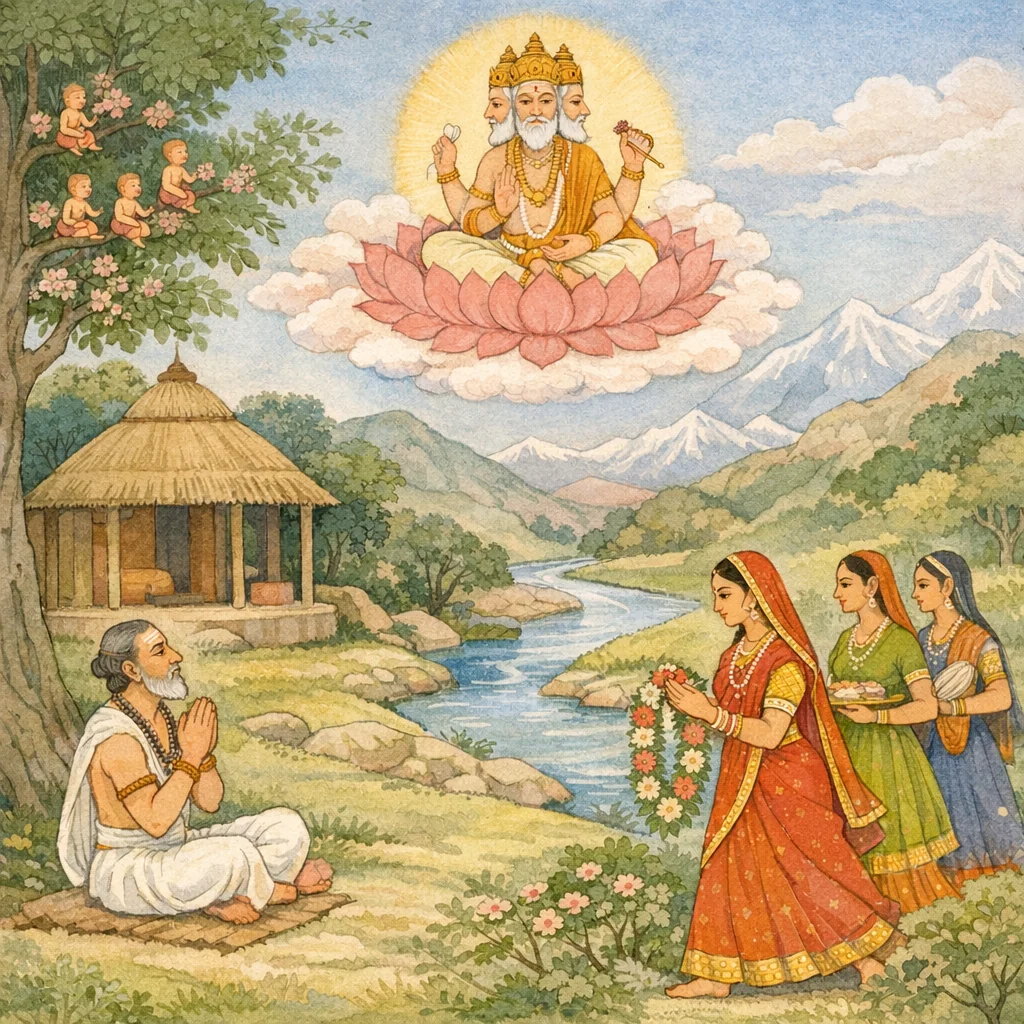
दक्षस्य प्रजावृद्ध्युपायः — Dakṣa’s Means for Increasing Progeny
Adhyāya 13 begins with Nārada asking Brahmā what happened after Dakṣa returned joyfully to his hermitage. Brahmā explains that, following his instruction, Dakṣa undertook manifold creation, especially creation by mental intention. Yet on examining the created beings, Dakṣa finds they do not increase and remain as first produced, so he requests a practical upāya to expand progeny. Brahmā gives authoritative counsel: Dakṣa should take a suitable wife—Asiknī, the beautiful daughter associated with Pañcajana—so that creation may proceed through maithuna-dharma, the law of procreative union. Brahmā stresses that obedience will be auspicious and that Śiva will grant well-being. Dakṣa then marries and begins begetting sons, introducing the Haryaśva lineage as an early phase of prajā-sarga. The chapter presents procreation as a sanctioned mechanism of cosmic administration, while affirming Śiva as the ultimate guarantor of auspicious outcome.
Shlokas
Verse 1
नारद उवाच । ब्रह्मन्विधे महा प्राज्ञ वद नो वदतां वर । दक्षे गृहं गते प्रीत्या किमभूत्तदनंतरम्
Narada said: “O Brahmā, O Ordainer and Creator, O greatly wise one—best among speakers—tell us: when you went with affection to Dakṣa’s house, what happened immediately thereafter?”
Verse 2
ब्रह्मोवाच । दक्षः प्रजापतिर्गत्वा स्वाश्रमं हृष्टमानसः । सर्गं चकार बहुधा मानसं मम चाज्ञया
Brahmā said: “Dakṣa, the Prajāpati, returned to his own hermitage with a delighted mind; and by my command he brought forth creation in many ways—through mental (subtle) emanation.”
Verse 3
तमबृंहितमालोक्य प्रजासर्गं प्रजापतिः । दक्षो निवेदयामास ब्रह्मणे जनकाय मे
Seeing that multiplication and expansion of creation, the Prajāpati Dakṣa reported it to Brahmā—my progenitor and father.
Verse 4
दक्ष उवाच । ब्रह्मंस्तात प्रजानाथ वर्द्धन्ते न प्रजाः प्रभो । मया विरचितास्सर्वास्तावत्यो हि स्थिताः खलु
Dakṣa said: “O Brahmā—dear father, O Lord of creatures! The beings are not increasing, O Lord. All those created by me remain just as they are, indeed, without growth.”
Verse 5
किं करोमि प्रजानाथ वर्द्धेयुः कथमात्मना । तदुपायं समाचक्ष्व प्रजाः कुर्यां न संशयः
“O Lord of creatures, what should I do? How can beings multiply through my own agency? Teach me the means for it, so that I may bring forth progeny—of this there is no doubt.”
Verse 6
ब्रह्मोवाच । दक्ष प्रजापते तात शृणु मे परमं वचः । तत्कुरुष्व सुरश्रेष्ठ शिवस्ते शं करिष्यति
Brahmā said: “O Dakṣa, Prajāpati—dear one—hear my supreme counsel. O best among the gods, do as I say; Śiva will surely grant you auspicious well-being.”
Verse 7
या च पञ्चजनस्यांग सुता रम्या प्रजापतेः । असिक्नी नाम पत्नीत्वे प्रजेश प्रतिगृह्यताम्
And that lovely daughter of Prajāpati—dear one—born of Pañcajana, named Asiknī: accept her, O Lord of creatures, as your wife.
Verse 8
वामव्यवायधर्मस्त्वं प्रजासर्गमिमं पुनः । तद्विधायां च कामिन्यां भूरिशो भावयिष्यसि
You are indeed the Lord whose dharma includes the leftward course of conjugal union; therefore you will again bring forth this creation of progeny. And having ordained that beloved woman, you will cause her to conceive abundantly, again and again.
Verse 9
ब्रह्मोवाच । ततस्समुत्पादयितुं प्रजा मैथुनधर्मतः । उपयेमे वीरणस्य निदेशान्मे सुतां ततः
Brahmā said: “Thereafter, to bring forth progeny according to the law of conjugal union, I gave my daughter in marriage, acting in accordance with Vīraṇa’s instruction.”
Verse 10
अथ तस्यां स्वपत्न्यां च वीरिण्यां स प्रजापतिः । हर्यश्वसंज्ञानयुतं दक्षः पुत्रानजीजनत्
Then, in his very wife Vīriṇī, Prajāpati Dakṣa begot sons who were known by the name “Haryaśva.”
Verse 11
अपृथग्धर्मशीलास्ते सर्व आसन् सुता मुने । पितृभक्तिरता नित्यं वेदमार्गपरायणाः
O sage, all those daughters were alike in their virtuous conduct. Ever devoted to service of their father and firmly established in the Vedic path, they lived in unwavering righteousness.
Verse 12
पितृप्रोक्ताः प्रजासर्गकरणार्थं ययुर्दिशम् । प्रतीचीं तपसे तात सर्वे दाक्षायणास्सुताः
Urged on by their father for the sake of bringing forth creation through progeny, all the sons of Dakṣa set out—dear one—toward the western quarter to perform austerities (tapas).
Verse 13
इति श्रीशिव महापुराणे द्वितीयायां रुद्रसंहितायां द्वि० सतीखंडे दक्षसृष्टौ नारदशापो नाम त्रयोदशोऽध्यायः
Thus ends the thirteenth chapter, called “Nārada’s Curse,” in the Satī-khaṇḍa of the second (Rudra) Saṃhitā of the glorious Śiva Mahāpurāṇa, within the account of Dakṣa’s creation.
Verse 14
तदुपस्पर्शनादेव प्रोत्पन्नमतयोऽ भवन् । धर्मे पारमहंसे च विनिर्द्धूतमलाशयाः
By His mere touch, their understanding awakened at once. Their inner impurities were washed away, and they became firmly established both in dharma and in the supreme renunciate path of the paramahaṃsa—directed solely toward Śiva, the Lord who grants liberation.
Verse 15
प्रजाविवृद्धये ते वै तेपिर तत्र सत्तमाः । दाक्षायणा दृढात्मानः पित्रादेश सुयंत्रिताः
For the increase of progeny, those excellent ones performed austerities there. The sons of Dakṣa—steady-minded and firm in resolve—were well disciplined, restrained by their father’s command.
Verse 16
त्वं च तान् नारद ज्ञात्वा तपतस्सृष्टि हेतवे । अगमस्तत्र भूरीणि हार्दमाज्ञाय मापतेः
And you too, O Nārada—having understood those matters and wishing to undertake austerity for the sake of creation—went there and performed many disciplines, having inwardly grasped the heartfelt command of the Lord (Śiva), the measurer and ruler of all.
Verse 17
अदृष्ट्वा तं भुवस्सृष्टि कथं कर्तुं समुद्यताः । हर्यश्वा दक्षतनया इत्यवोचस्तमादरात्
Without beholding Him (the Supreme Lord, Śiva), how could you be ready to undertake the creation of the worlds?—Thus the Haryaśvas, the sons of Dakṣa, respectfully spoke to him.
Verse 18
ब्रह्मोवाच । तन्निशम्याथ हर्यश्वास्ते त्वदुक्तमतंद्रिताः । औत्पत्तिकधियस्सर्वे स्वयं विममृशुर्भृशम्
Brahmā said: Hearing that, the Haryaśvas—unwearied and intent on what you had spoken—being all endowed with innate discernment, reflected deeply among themselves.
Verse 19
सुशास्त्रजनकादेशं यो न वेद निवर्तकम् । स कथं गुणविश्रंभी कर्तुं सर्गमुपक्रमेत्
He who does not know the restraining command of the Primordial Progenitor—given through the true Śāstras—how could he, relying upon the guṇas, even begin the act of creation?
Verse 20
इति निश्चित्य ते पुत्रास्सुधियश्चैकचेतसः । प्रणम्य तं परिक्रम्यायुर्मार्गमनिवर्तकम्
Having thus resolved, those sons—wise and of one-pointed mind—bowed to him and circumambulated him, setting their course upon the unfailing path that turns one back from the way of worldly life and leads toward lasting auspiciousness.
Verse 21
नारद त्वं मनश्शंभोर्लोंकानन्यचरो मुने । निर्विकारो महेशानमनोवृत्तिकरस्तदा
O Nārada, O sage, you are the very mind of Śambhu (Śiva), moving through the worlds without attachment. Free from all change, you then become the one who brings forth and conveys the intention and movement of the mind of Mahēśāna (Śiva).
Verse 22
काले गते बहुतरे मम पुत्रः प्रजापतिः । नाशं निशम्य पुत्राणां नारदादन्वतप्यत
After a long time had passed, my son—the Prajāpati—on hearing from Nārada of the destruction of his sons, was overcome with grief and repentance.
Verse 23
मुहुर्मुहुरुवाचेति सुप्रजात्वं शुचां पदम् । शुशोच बहुशो दक्षश्शिवमायाविमोहितः
Again and again Dakṣa spoke of “excellent progeny,” yet he only entered deeper into sorrow. Deluded by Śiva’s māyā, Dakṣa lamented repeatedly.
Verse 24
अहमागत्य सुप्रीत्या सांत्वयं दक्षमात्मजम् । शांतिभावं प्रदर्श्यैव देवं प्रबलमित्युत
“I went there with genuine affection and tried to console Dakṣa’s daughter. Showing a mood of peace, I also spoke of the Deva (Śiva) as the mighty, all-prevailing Lord.”
Verse 25
अथ दक्षः पंचजन्या मया स परिसांत्वितः । सबलाश्वाभिधान्् पुत्रान् सहस्रं चाप्यजीजनत्
Then Dakṣa—having been consoled by me through Pañcajanyā—begot a thousand sons who were known by the name “Sabalāśva.”
Verse 26
तेपि जग्मुस्तत्र सुताः पित्रादिष्टा दृढव्रताः । प्रजासर्गे अत्र सिद्धास्स्वपूर्वभ्रातरो ययुः
Those sons too—steadfast in their vows and acting under their father’s command—went to that very place. There, in the work of bringing forth progeny, those perfected ones proceeded along the same course their elder brothers had earlier taken.
Verse 27
तदुपस्पर्शनादेव नष्टाघा विमलाशयाः । तेपुर्महत्तपस्तत्र जपन्तो ब्रह्म सुव्रताः
By merely touching that sacred Śaiva locus, their sins were destroyed and their hearts became pure. There, those disciplined keepers of vows performed great austerity, continually offering japa to the Supreme Brahman—Śiva.
Verse 28
प्रजासर्गोद्यतांस्तान् वै ज्ञात्वा गत्वेति नारद । पूर्ववच्चागदो वाक्यं संस्मरन्नैश्वरीं गतिम्
Knowing that they were intent on creating progeny, he said, “Go, O Nārada.” Then, remembering the earlier instruction and abiding in the Lord’s divine course, he departed as before.
Verse 29
भ्रातृपंथानमादिश्य त्वं मुने मोघदर्शनः । अयाश्चोर्द्ध्वगतिं तेऽपि भ्रातृमार्गं ययुस्सुताः
O sage, your counsel proved fruitless: though directed to the “brother’s path,” those sons too did not attain the upward course. They went the way of their brother, failing to rise to the higher spiritual state.
Verse 30
उत्पातान् बहुशोऽपश्यत्तदैव स प्रजापतिः । विस्मितोभूत्स मे पुत्रो दक्षो मनसि दुःखितः
At that very time the Prajāpati beheld many ominous portents again and again. My son Dakṣa was astonished, and in his heart he became sorrowful.
Verse 31
पूर्ववत्त्वत्कृतं दक्षश्शुश्राव चकितो भृशम् । पुत्रनाशं शुशोचाति पुत्रशोक विमूर्छितः
Dakṣa, hearing once more the same report as before, was greatly alarmed. Overwhelmed and fainting beneath the grief of his son’s death, he lamented the loss of his child.
Verse 32
चुक्रोध तुभ्यं दक्षोसौ दुष्टोयमिति चाब्रवीत् । आगतस्तत्र दैवात्त्वमनुग्रहकरस्तदा
Dakṣa grew angry with you and even declared, “This one is wicked.” Yet by divine ordinance you arrived there at that time as a bestower of grace.
Verse 33
शोकाविष्टस्स दक्षो हि रोषविस्फुरिताधरः । उपलभ्य तमाहत्य धिग्धिक् प्रोच्य विगर्हयन्
Overwhelmed with grief, Dakṣa—his lips quivering with rage—seized him and struck him, crying “Fie!” and censuring him. From the Śaiva standpoint, this is the outward surge of ego-born anger that blinds discernment and turns one away from reverence toward Śiva and His devotees.
Verse 34
दक्ष उवाच । किं कृतं तेऽधमश्रेष्ठ साधूनां साधुलिंगतः । भिक्षोमार्गोऽर्भकानां वै दर्शितस्साधुकारि नो
Dakṣa said: “O lowest yet foremost (among offenders), what have you done—taking on the outward marks of holy men? You have shown our young ones the path of begging, though you pose as a doer of righteousness.”
Verse 35
ऋणैस्त्रिभिरमुक्तानां लोकयोरुभयोः कृतः । विघातश्श्रेयसोऽमीषां निर्दयेन शठेन ते
For those who are not freed from the three debts, their welfare in both worlds is obstructed—ruined by that merciless, deceitful one, who becomes the cause of the destruction of their true good.
Verse 36
ऋणानि त्रीण्यपाकृत्य यो गृहात्प्रव्रजेत्पुमान् । मातरं पितरं त्यक्त्वा मोक्षमिच्छन्व्रजत्यधः
A man who abandons the householder’s path without first discharging the three sacred debts, and who forsakes his mother and father—though claiming to seek moksha—falls downward into spiritual demerit.
Verse 37
निर्दयस्त्वं सुनिर्लज्जश्शिशुधीभिद्यशोऽपहा । हरेः पार्षदमध्ये हि वृथा चरसि मूढधीः
“You are cruel and utterly shameless—one who harms the innocent and steals others’ good name. Even while moving among Hari’s attendants, you wander in vain, your understanding deluded.”
Verse 38
मुहुर्मुहुरभद्रं त्वमचरो मेऽधमा ऽधम । विभवेद्भ्रमतस्तेऽतः पदं लोकेषु स्थिरम्
Again and again, O Abhadra, you wander without rest—base woman, most fallen. Therefore, through your roaming amid prosperity and display, your standing in the worlds will not be stable.
Verse 39
शशापेति शुचा दक्षस्त्वां तदा साधुसंमतम् । बुबोध नेश्वरेच्छां स शिवमायाविमोहितः
Then Dakṣa, overcome with grief, cursed you—though you were approved by the righteous. Deluded by Śiva’s māyā, he did not comprehend the will of the Lord.
Verse 40
शापं प्रत्यग्रहीश्च त्वं स मुने निर्विकारधीः । एष एव ब्रह्मसाधो सहते सोपि च स्वयम्
O sage, you too accepted the curse with an unperturbed mind. This very one—O holy one devoted to Brahman—endures it, and he himself bears it as well.
Frequently Asked Questions
Dakṣa reports that his created beings do not multiply, seeks Brahmā’s guidance, is instructed to marry Asiknī, and begins generating progeny (including the Haryaśvas) through maithuna-dharma.
It formalizes procreation as a dharmic technology for cosmic expansion: mental creation alone is insufficient for increase, so embodied relationality (marriage/maithuna) becomes the sanctioned instrument of multiplication.
Śiva’s role as the source of auspicious fruition is underscored ("Śiva will bring you well-being"), even though the immediate action is administered through Brahmā and Dakṣa.