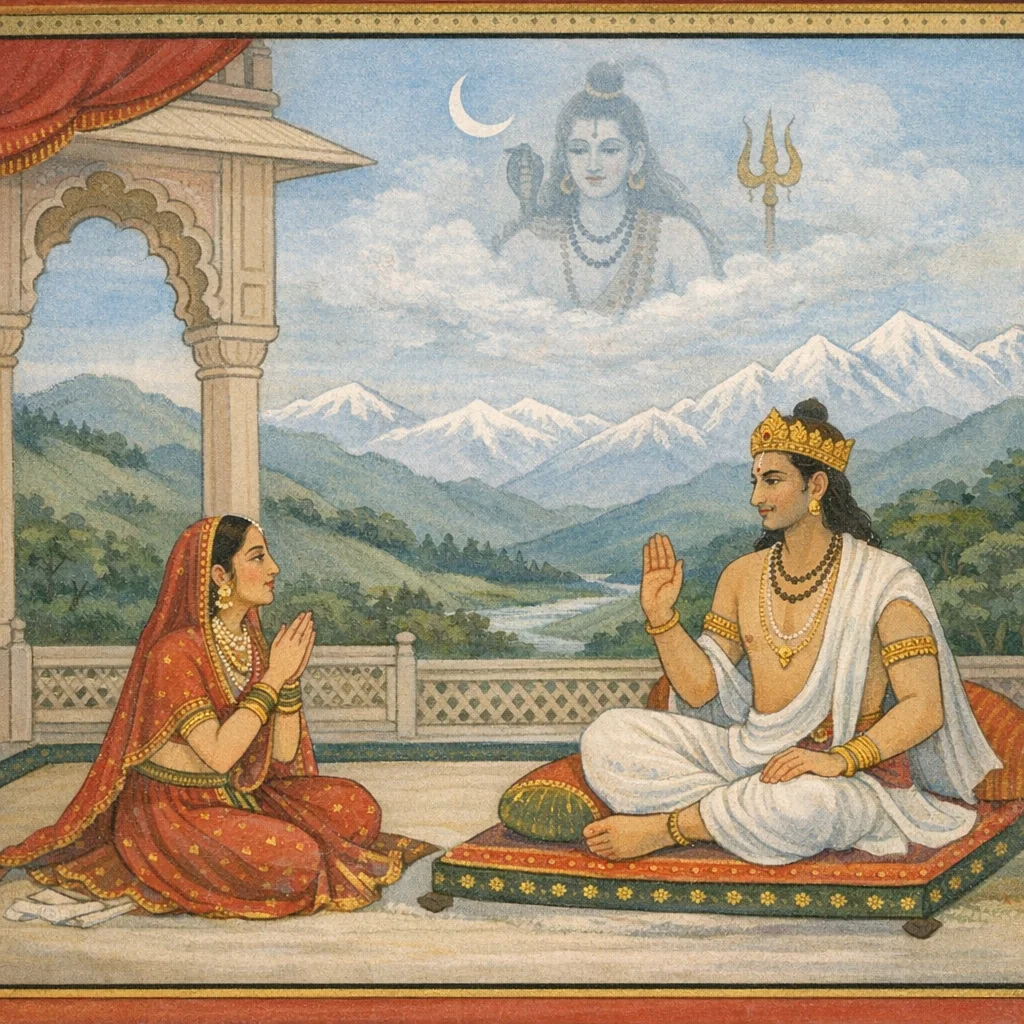
स्वप्नवर्णनपूर्वकं संक्षेपशिवचरितवर्णनम् / Dream-Portents and a Concise Account of Śiva’s Career
Adhyāya 9 unfolds as a framed dialogue between Nārada and Brahmā. Having heard an earlier Śaiva account from Brahmā, Nārada asks what happened afterward. Brahmā relates how Menā respectfully approaches Himālaya and petitions him to arrange Girijā’s marriage according to worldly expectations—seeking a handsome, well-born groom with auspicious marks who will secure their daughter’s happiness. Her plea highlights maternal feeling and “nārīsvabhāva” (a feminine, emotive standpoint) as a narrative device. Himālaya corrects her doubt, affirming that a muni’s word is never false and urging her to abandon suspicion. True to the chapter’s title, dreams and omens function as validating signs, and the dialogue culminates in a compressed summary of Śiva’s essential profile (śivacarita), explaining why the foretold match transcends ordinary criteria. The adhyāya thus bridges domestic negotiation and theological clarification, guiding consent toward the destined Śiva–Pārvatī union.
Shlokas
Verse 1
नारद उवाच । विधे तात त्वया शैववर प्राज्ञाद्भुता कथा । वर्णिता करुणां कृत्वा प्रीतिर्मे वर्द्धिताधिकम्
Nārada said: “O Vidhātā (Brahmā), dear father—out of compassion you have recounted to me this most excellent and wondrous tale, filled with Śaiva wisdom. By hearing it, my devotion and loving reverence have increased all the more.”
Verse 2
विधे गते स्वकं धाम मयि वै दिव्यदर्शगे । ततः किमभवत्तात कृपया तद्वदाधुना
When the Creator (Brahmā) had departed to his own abode, and I had attained divine vision, what happened thereafter, dear father? Out of compassion, tell me that now.
Verse 3
ब्रह्मोवाच । गते त्वयि मुने स्वर्गे कियत्काले गते सति । मेना प्राप्येकदा शैलनिकटं प्रणनाम सा
Brahmā said: “After you, O sage, had departed to heaven and some time had passed, Menā once came near the mountain and bowed down in reverence.”},{
Verse 4
स्थित्वा सविनयम्प्राह स्वनाथं गिरिकामिनी । तत्र शैलाधिनाथं सा प्राणप्रियसुता सती
Standing there with humility, the mountain-born lady spoke to her own Lord. There, Satī—the beloved daughter, dear as life—addressed the sovereign of the mountains.
Verse 5
मेनोवाच । मुनिवाक्यं न बुद्धं मे सम्यङ् नारीस्वभावतः । विवाहं कुरु कन्यायास्सुन्दरेण वरेण ह
Menā said: “Owing to my womanly nature, I did not rightly understand the sage’s words. Please arrange the marriage of my daughter with a handsome and worthy bridegroom.”
Verse 6
सर्वथा हि भवेत्तत्रोद्वाहोऽपूर्वसुखावहः । वरश्च गिरिजायास्तु सुलक्षणकुलोद्भवः
In every way, that marriage will indeed become a source of unprecedented joy; and Girijā’s bridegroom will be born of a noble lineage and endowed with auspicious marks.
Verse 7
प्राणप्रिया सुता मे हि सुखिता स्याद्यथा प्रिय । सद्वरं प्राप्य सुप्रीता तथा कुरु नमोऽस्तु ते
O Beloved, act in such a way that my life-dear daughter may be happy; having obtained a noble bridegroom, may she become fully content. I bow to you.
Verse 8
ब्रह्मोवाच । इत्युक्ताश्रुमुखी मेना पत्यंघ्र्योः पतिता तदा । तामुत्थाप्य गिरिः प्राह यथावत्प्रज्ञसत्तमः
Brahmā said: Thus addressed, Menā—her face wet with tears—fell at her husband’s feet. The Mountain-king (Himālaya), best among the wise, lifted her up and spoke to her rightly, with due understanding.
Verse 9
हिमालय उवाच । शृणु त्वं मेनके देवि यथार्थं वच्मि तत्त्वतः । भ्रमं त्यज मुनेर्वाक्यं वितथं न कदाचन
Himālaya said: “O divine Menakā, listen. I speak to you truthfully, in accord with reality and the highest principle. Abandon doubt—never is a sage’s statement false.”
Verse 10
यदि स्नेहः सुतायास्ते सुतां शिक्षय सादरम् । तपः कुर्याच्छंकरस्य सा भक्त्या स्थिरचेतसा
If you truly have affection for your daughter, then instruct her with due care: let her undertake austerities and worship of Śaṅkara with steadfast mind and devotion.
Verse 11
चेत्प्रसन्नः शिवः काल्याः पाणिं गृह्णाति मेनके । सर्वं भूयाच्छुभं नश्येन्नारदोक्तममंगलम्
O Menakā, if Lord Śiva becomes pleased and accepts Kālī’s hand in marriage, then everything will turn auspicious, and the inauspiciousness spoken of by Nārada will be destroyed.
Verse 12
अमंगलानि सर्वाणि मंगलानि सदाशिवे । तस्मात्सुतां शिवप्राप्त्यै तपसे शिक्षय द्रुतम्
All inauspiciousness is dispelled, and all auspiciousness abides in Sadāśiva. Therefore, quickly train your daughter in austerity (tapas), so that she may attain Śiva.
Verse 13
ब्रह्मोवाच । इत्याकर्ण्य गिरेर्वाक्यं मेना प्रीततराऽभवत् । सुतोपकंठमगमदुपदेष्टुं तदोरुचिम्
Brahmā said: Hearing thus the words of Himālaya, Menā became even more delighted. Then she went close to her daughter to counsel her regarding that excellent resolve.
Verse 14
सुताङ्गं सुकुमारं हि दृष्ट्वातीवाथ मेनका । विव्यथे नेत्रयुग्मे चाश्रुपूर्णेऽभवतां द्रुतम्
Seeing her daughter’s delicate, tender form, Menakā was shaken to the depths; her two eyes ached at once and swiftly brimmed with tears.
Verse 15
अथ सा कालिका देवी सर्वज्ञा परमेश्वरी । उवाच जननीं सद्यः समाश्वास्य पुनः पुनः
Then the Goddess Kālikā—omniscient, the supreme Sovereign—at once consoled the Mother again and again, and spoke to her.
Verse 17
पार्वत्युवाच । मातश्शृणु महाप्राज्ञेऽद्यतने ऽजमुहूर्तके । रात्रौ दृष्टो मया स्वप्नस्तं वदामि कृपां कुरु
Pārvatī said: “Mother, listen. O greatly wise one—today, at the sacred dawn-moment called ajamuhūrta, in the night I saw a dream. I shall tell it; please show me your compassion.”
Verse 18
विप्रश्चैव तपस्वी मां सदयः प्रीतिपूर्वकम् । उपादिदेश सुतपः कर्तुं मातश्शिवस्य वै
That compassionate brāhmaṇa-sage, an austere ascetic, with affectionate goodwill instructed me, O Mother, to undertake severe penance so that I might truly attain Śiva.
Verse 19
ब्रह्मोवाच । तच्छ्रुत्वा मेनका शीघ्रं पतिमाहूय तत्र च । तत्स्वप्नं कथयामास सुता दृष्टमशेषतः
Brahmā said: Hearing this, Menakā quickly summoned her husband there and then related to him in full the entire dream their daughter had seen.
Verse 20
सुतास्वप्नमथाकर्ण्य मेनकातो गिरीश्वरः । उवाच परमप्रीतः प्रियां सम्बोधयन्गिरा
Hearing from Menakā of his daughter’s dream, the lord of the mountains (Himālaya) was exceedingly delighted and, addressing his beloved wife with affectionate words, spoke.
Verse 21
गिरीश्वर उवाच । हे प्रियेऽपररात्रान्ते स्वप्नो दृष्टो मयापि हि । तं शृणु त्वं महाप्रीत्या वच्म्यहं तं समादरात्
Girīśvara said: “O beloved, toward the end of the night I too indeed beheld a dream. Listen with great joy; with due reverence I shall tell it to you.”
Verse 22
एकस्तपस्वी परमो नारदोक्तवरां गधृक् । पुरोपकंठं सुप्रीत्या तपः कर्तुं समागतः
A certain supreme ascetic—one who had obtained the boon spoken of by Nārada—arrived with great joy at the outskirts of the city, intending to undertake austerities (tapas).
Verse 23
गृहीत्वा स्वसुतां तत्रागमं प्रीततरोप्यहम् । मया ज्ञातस्स वै शम्भुर्नारदो क्तवरः प्रभुः
Taking my own daughter from there, I returned, filled with still greater joy. Then I understood that Lord Śambhu is indeed the Supreme Master, for Nārada had spoken the truth.
Verse 24
सेवार्थं तस्य तनयामुपदिश्य तपस्विनः तं । वै प्रार्थितवांस्तस्यां न तदांगीचकार सः
For the sake of service, the ascetic recommended to him the sage’s daughter. He indeed sought her hand, but at that time she did not accept him.
Verse 25
अभूद्विवादस्तुमहान्सांख्यवेदान्तसंमतः । ततस्तदाज्ञया तत्र संस्थितासीत्सुता मम
A great debate then arose, acceptable to both Sāṅkhya and Vedānta in its reasoning. Thereafter, by his command, my daughter remained established there.
Verse 26
निधाय हृदि तं कामं सिषेवे भक्तितश्च सा । इति दृष्टं मया स्वप्नं प्रोक्तवांस्ते वरानने
Placing that longing within her heart, she devotedly served and worshiped with bhakti. “Thus, O fair-faced one, I have told you the dream that I myself beheld.”
Verse 27
ततो मेने कियत्कालं परीक्ष्यं तत्फलं प्रिये । योग्यमस्तीदमेवेह बुध्यस्व त्वं मम ध्रुवम्
Then, O beloved, after considering for some time and examining its outcome, I concluded: ‘This alone is truly fitting here. Understand this as my firm and unwavering decision.’
Verse 28
ब्रह्मोवाच । इत्युक्त्वा गिरिराजश्च मेनका वै मुनीश्वर । सन्तस्थतुः परीक्षन्तीं तत्फलं शुद्धचेतसौ
Brahmā said: “Thus having spoken, O best of sages, Himavān, king of mountains, and Menakā, their minds made pure, remained there—watching for the fruit of Pārvatī’s test of resolve and austerity.”
Verse 29
इत्थम्व्यतीतेऽल्पदिने परमेशः सतां गतिः । सतीविरहसुव्यग्रो भ्रमन्सर्वत्र सूतिकृत्
Thus, after only a short time had passed, the Supreme Lord—Śiva, the refuge and final resort of the righteous—was intensely distressed by separation from Satī, and wandered everywhere, causing all beings to lament and suffer.
Verse 30
तत्राजगाम सुप्रीत्या कियद्गुणयुतः प्रभुः । तपः कर्तुं सतीप्रेमविरहाकुलमानसः
Then the Lord—endowed with fitting divine qualities—arrived there with deep goodwill, his mind agitated by separation from his love for Satī, in order to undertake austerities (tapas).
Verse 31
तपश्चकार स्वं तत्र पार्वती सेवने रता । सखीभ्यां सहिता नित्यं प्रसन्नार्थमभूत्तदा
There, Pārvatī undertook her own austerities, absorbed in devoted service. Ever accompanied by her friends, she then acted solely for the sake of winning Śiva’s gracious favor.
Verse 32
विद्धोऽऽपि मार्गणैश्शम्भुर्विकृतिं नाप स प्रभुः । प्रेषितेन सुरैस्स्वात्ममोहनार्थं स्मरेण वै
Though struck by the arrows, Śambhu—the Supreme Lord—underwent no change at all. For Kāma had been dispatched by the gods only to delude His own Self; yet Śiva remained utterly unmoved.
Verse 33
दग्ध्वा स्मरं च तत्रैव स्ववह्निनयनेन सः । स्मृत्वा मम वचः क्रुद्धो मह्यमन्तर्दधे ततः
There itself, he burned Kāma (Smara) with the fire of his own eye. Then, remembering my words and becoming wrathful, he vanished from before me.
Verse 34
ततः कालेन कियता विनाश्य गिरिजामदम् । प्रसादितस्सुतपसा प्रसन्नोऽभून्महेश्वरः
Then, after some time had passed, Mahādeva removed the pride of Girijā (Pārvatī). Pleased and propitiated by her noble austerities, Maheśvara became gracious and favorable toward her.
Verse 35
लौकिकाचारमाश्रित्य रुद्रो विष्णुप्रसादितः । कालीं विवाहयामास ततोऽभूद्बहुमंगलम्
Following the accepted worldly rites, Rudra—gratified through Viṣṇu’s goodwill—married Kālī; and from that, abundant auspiciousness arose.
Verse 36
इत्येतत्कथितं तात समासाच्चरितं विभोः । शंकरस्य परं दिव्यं किं भूयः श्रोतुमि च्छसि
Thus, dear child, I have briefly related the supreme, divine account of the all-powerful Śaṅkara. What more do you wish to hear?
Frequently Asked Questions
The domestic deliberation preceding Pārvatī (Girijā)’s marriage: Menā urges a conventional, auspicious match, while Himālaya insists the sage’s prophecy is true and that doubt should be abandoned—setting the stage for Śiva as the destined groom.
Dream/omen and sage-authority operate as Purāṇic epistemology: they legitimate a trans-social destiny (Śiva as groom) by presenting it as revealed knowledge rather than merely familial preference.
Śiva is framed not only as a personal bridegroom figure but as a cosmic principle whose ‘carita’ must be summarized to reconcile worldly expectations with the supreme ascetic’s transcendence; this underscores Śiva–Śakti destiny as cosmological order.