Adhyaya 205
मातापितृपूजन-प्रधानधर्मः (Primacy of Filial Service) — Mārkaṇḍeya’s Account of the Vyādha’s Instruction
Upa-parva: Mārkaṇḍeya–Vyādha–Brāhmaṇa Dharmopadeśa (Embedded Didactic Episode)
Mārkaṇḍeya recounts how the dharmātmā vyādha addresses a brāhmaṇa, affirming that the earlier counsel attributed to a devoted wife was correctly perceived and then redirecting the brāhmaṇa toward immediate ethical repair: he had left home without parental consent for Vedic recitation, causing his aged parents distress and blindness. The vyādha insists that the brāhmaṇa promptly propitiate and serve his parents, presenting this as the highest dharma. The brāhmaṇa acknowledges the truth of the rebuke, praises the vyādha’s virtue, and commits to filial service. He then questions the vyādha’s social condition, stating he does not regard him as intrinsically ‘śūdra’ and asks for the causal account. The vyādha begins a prior-life narrative: formerly a learned brāhmaṇa skilled in Veda and Vedāṅgas, he associated with a king adept in archery; during a hunt he shot an arrow that struck an ascetic ṛṣi by mistake. The enraged sage cursed him to be born as a cruel vyādha in a śūdra womb, establishing the karmic backstory that will continue beyond this chapter.
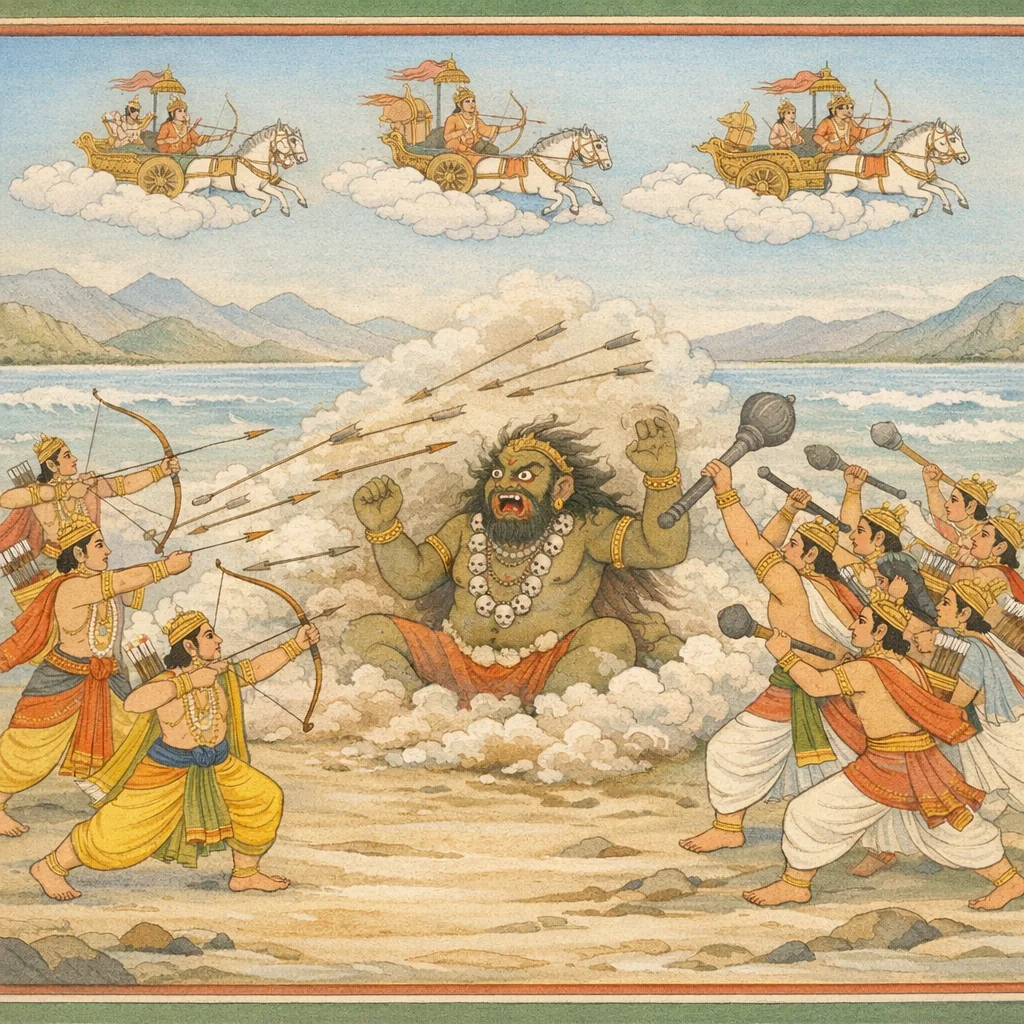
Chapter Arc: मार्कण्डेय युधिष्ठिर से कहते हैं—एक समय धुन्धु नामक महान असुर ने लोकों को भयभीत कर रखा था; उसी प्रसंग में धुन्धुकी की कठोर तपस्या और वर-प्राप्ति का वृत्तान्त आरम्भ होता है। → धुन्धुकी एक पाँव पर दीर्घकाल तक तप करती है; शरीर कृश होकर नसों का जाल-सा दिखने लगता है। ब्रह्मा प्रसन्न होकर वर देते हैं, और वह ऐसा वर माँगती है कि देव, दानव, यक्ष, सर्प, गन्धर्व और राक्षस—किसी के हाथों वह अवध्य रहे। इस वर से धुन्धु (असुर) का आतंक और भी अजेय-सा प्रतीत होने लगता है; देवताओं के विमान-समूह उस क्षेत्र में दिखाई देने लगते हैं, मानो आकाश स्वयं संकट का साक्षी हो। → राजर्षि कुवलाश्व अपने असंख्य पुत्रों सहित बालुका-समुद्र (रेत के महासागर) में धुन्धु से युद्ध करते हैं; पुत्र चारों ओर से शर, गदा, मुसल, पट्टिश, परिघ, प्रास और तीक्ष्ण खड्गों से घेरकर प्रहार करते हैं। लोक-कल्याण हेतु कुवलाश्व ब्रह्मास्त्र का प्रयोग कर निर्णायक आघात करते हैं और धुन्धु का वध होता है। → धुन्धु-वध के कारण कुवलाश्व ‘धुन्धुमार’ नाम से विख्यात होते हैं; उनकी कीर्ति भूमण्डल में फैलती है। मार्कण्डेय इस उपाख्यान को विष्णु-कीर्तनरूप पवित्र कथा बताकर उसका श्रवण-फल कहते हैं—धर्म, पुत्र-प्राप्ति, दीर्घायु और ऐश्वर्य की वृद्धि।
Shlokas
Verse 1
हू... “<(>9)) #::.3 25.२ चतुर्राधिकद्विशततमो< ध्याय: धुन्धुकी तपस्या और वरप्राप्ति, कुवलाश्चद्वारा धुन्धुका वध और देवताओंका कुवलाश्वचको वर देना मार्कण्डेय उदाच धुन्धुर्नाम महाराज तयो: पुत्रो महाद्युति: | स तपो5तप्यत महन्महावीर्यपराक्रम:,मार्कण्डेयजी कहते हैं--महाराज! उन्हीं दोनों मधु और कैटभका पुत्र धुन्धु है जो बड़ा तेजस्वी और महान् बल-पराक्रमसे सम्पन्न है। उसने बड़ी भारी तपस्या की
Mārkaṇḍeya said: “O great king, there was one named Dhundhu—son of those two (Madhu and Kaiṭabha)—radiant with great splendor. Endowed with mighty strength and heroic prowess, he undertook an immense austerity.”
Verse 2
अतिष्ठदेकपादेन कृशो धमनिसंततः । तस्मै ब्रह्मा ददौ प्रीतो वरं वव्रे स च प्रभुम्,वह दीर्घकालतक एक पैरसे खड़ा रहा। उसका शरीर इतना दुर्बल हो गया कि नस- नाड़ियोंका जाल दिखायी देने लगा। ब्रह्माजीने उसकी तपस्यासे संतुष्ट होकर उसे वर दिया। धुन्धुने भगवान् ब्रह्मासे इस प्रकार वर माँगा--
Mārkaṇḍeya said: He stood on a single foot for a long time, growing so emaciated that the network of his veins became visible. Pleased with that austerity, Brahmā granted him a boon; and he, approaching the Lord, chose a boon to ask.
Verse 3
देवदानवयक्षाणां सर्पगन्धर्वरक्षसाम् । अवध्यो5हं भवेयं वै वर एष वृतो मया,“'भगवन्! मैं देवता, दानव, यक्ष, सर्प, गन्धर्व और राक्षस किसीके हाथसे न मारा जाऊँ। मैंने आपसे यही वर माँगा है”
Mārkaṇḍeya said: “O Blessed Lord, I have chosen this boon: that I should be invulnerable—never to be slain by devas, dānavas, yakṣas, serpents, gandharvas, or rākṣasas.”
Verse 4
एवं भवतु गच्छेति तमुवाच पितामह: । स एवमुक्तस्तत्पादौ मूर्ध्ना स्पृश्य जगाम ह,तब ब्रह्माजीने उससे कहा--'ऐसा ही होगा। जाओ।” उनके ऐसा कहनेपर धुन्धुने मस्तक झुकाकर उनके चरणोंका स्पर्श किया और वहाँसे चला गया
Markandeya said: The Grandsire (Brahmā) told him, “So be it; go.” Thus addressed, Dhundhu bowed his head, touched Brahmā’s feet in reverence, and departed.
Verse 5
सतु धुन्धुर्वरं लब्ध्वा महावीर्यपराक्रम: । अनुस्मरन् पितृवधं द्रुतं विष्णुमुपागमत्,जब धुन्धु वर पाकर महान् बल और पराक्रमसे सम्पन्न हो गया, तब उसे अपने पिता मधु और कैटभके वधका स्मरण हो आया और वह शीघ्रतापूर्वक भगवान् विष्णुके पास गया
Having obtained the boon, Dhundhu became endowed with great strength and heroic prowess. Remembering the slaying of his father, he hastened to approach Lord Viṣṇu.
Verse 6
स तु देवान् सगन्धर्वान् जित्वा धुन्धुरमर्षण: । बबाध सर्वानसकृद् विष्णु देवांश्व वै भूशम्,धुन्धु अमर्षमें भरा हुआ था। उसने गन्धर्व-सहित सम्पूर्ण देवताओंको जीतकर भगवान् विष्णु तथा अन्य देवताओंको बार-बार महान वष्ट देना प्रारम्भ किया
Markandeya said: “Filled with fierce wrath, Dhundhu first conquered the gods together with the Gandharvas; then, again and again, he violently oppressed them all—assailing even Vishnu and the other deities.”
Verse 7
समुद्रे बालुकापूर्ण उज्जालक इति स्मृते । आगम्य च स वुष्टात्मा तं देशं भरतर्षभ,भरतश्रेष्ठ! वह दुष्टात्मा बालुकामय प्रसिद्ध उच्चालक समुद्रमें आकर रहने और उस देशके निवासियोंकों सताने लगा। राजन! वह अपनी पूरी शक्ति लगाकर धरतीके भीतर बालूमें छिपकर वहाँ उत्तंकके आश्रममें भी उपद्रव करने लगा
Markandeya said: “In the sea there was a sandy expanse known as Ujjālaka. Coming there, that wicked-souled being began to dwell in that region and to harass its inhabitants, O bull among the Bharatas. With all his might he would even hide beneath the sand in the earth and create disturbances, reaching as far as Uttanka’s hermitage.”
Verse 8
बाधते सम परं शक््त्या तमुत्तड़काश्रमं विभो । अन्तर्भूमिगतस्तत्र बालुकान्तहितस्तथा,भरतश्रेष्ठ! वह दुष्टात्मा बालुकामय प्रसिद्ध उच्चालक समुद्रमें आकर रहने और उस देशके निवासियोंकों सताने लगा। राजन! वह अपनी पूरी शक्ति लगाकर धरतीके भीतर बालूमें छिपकर वहाँ उत्तंकके आश्रममें भी उपद्रव करने लगा
Mārkaṇḍeya said: “O mighty one, that wicked being harassed Uttaṅka’s hermitage with all his power. There, having gone beneath the earth and concealed himself within the sand, he continued to cause disturbance—tormenting the residents of that region as well.”
Verse 9
मधुकैटभयो: पुत्रो धुन्धुर्भीमपराक्रम: । शेते लोकविनाशाय तपोबलमुपाश्रित:
Markandeya said: “The mighty Dhundhu, son of Madhu and Kaiṭabha, lies there—his terrible valor sustained by the power of austerities—intent upon the destruction of the worlds.”
Verse 10
एतस्मिन्नेव काले तु राजा सबलवाहन:,भरतश्रेष्ठ] इसी समय राजा कुवलाश्वने अपनी सेना, सवारी तथा पुत्रोंके साथ प्रस्थान किया। उनके साथ विप्रवर उत्तंक भी थे
Markandeya said: “Just at that very time, the king—equipped with his forces and mounts—set out on his journey.”
Verse 11
उत्तड़कविप्रसहित: कुवलाश्वो महीपति: । पुत्रै: सह महीपाल: प्रययौ भरतर्षभ,भरतश्रेष्ठ] इसी समय राजा कुवलाश्वने अपनी सेना, सवारी तथा पुत्रोंके साथ प्रस्थान किया। उनके साथ विप्रवर उत्तंक भी थे
Mārkaṇḍeya said: Then King Kuvalāśva, lord of the earth, set out with the brāhmaṇa Uttanka and with his sons. Thus the protector of the realm departed—O bull among the Bharatas—showing a righteous king’s readiness to act in harmony with spiritual counsel.
Verse 12
सहसौरेकविंशत्या पुत्राणामरिमर्दन: । कुवलाश्वो नरपतिरन्वितो बलशालिनाम्,शत्रुमर्दन महाराज कुवलाश्व अपने इकक््कीस हजार बलवान पुत्रोंकी साथ लेकर (सेनासहित) चले थे
Markandeya said: O crusher of foes, King Kuvalāśva, accompanied by his mighty sons—twenty-one thousand in number—set forth with the strength of a powerful host, intent on subduing enemies. The passage highlights royal responsibility: power and progeny are to be directed toward the protection of order and the restraint of hostile forces, not toward reckless aggression.
Verse 13
तमाविशत् ततो विष्णुर्भगवांस्तेजसा प्रभु: । उत्तड़कस्य नियोगेन लोकानां हितकाम्यया,तदनन्तर उत्तंकके अनुरोधसे सम्पूर्ण जगत्का हित करनेके लिये सर्वसमर्थ भगवान् विष्णुने अपने तेजोमय स्वरूपसे कुवलाश्वमें प्रवेश किया
Then the Lord Viṣṇu, the sovereign Bhagavān, entered him with His radiant power—doing so at the behest of Uttāḍaka, out of a desire to secure the welfare of the worlds. The episode underscores that divine power is invoked not for private gain but for the protection and benefit of all beings.
Verse 14
तस्मिन् प्रयाते दुर्धर्षे देवि शब्दों महान भूत् । एष श्रीमानवध्योउ्द्य धुन्धुमारो भविष्यति,उन दुर्धर्षवीर कुवलाश्वके यात्रा करनेपर देवलोकमें अत्यन्त हर्षपूर्ण कोलाहल होने लगा। देवता कहने लगे--'ये श्रीमान् नरेश अवध्य हैं, आज धुन्धुको मारकर ये” “धुन्धुमार' नाम धारण करेंगे
O Goddess, when that unconquerable hero set out, a great cry of jubilation arose in the world of the gods. The deities proclaimed, “This illustrious king is invincible; today, having slain Dhundhu, he will bear the name ‘Dhundhumāra.’” The verse highlights how righteous resolve and fearless action undertaken for the protection of the world are celebrated as dharmic heroism, and how a deed can confer an enduring epithet that memorializes the ethical purpose of the act.
Verse 15
दिव्यैश्व पुष्पैस्तं देवा: समन्तात् पर्यवारयन् । देवदुन्दुभयश्चापि नेदु: स्वयमनीरिता:,देवतालोग चारों ओरसे उनपर दिव्य फूलोंकी वर्षा करने लगे। देवताओंकी दुन्दुभियाँ स्वयं बिना किसी प्रेरणाके बज उठीं
Mārkaṇḍeya said: The gods, from all sides, showered him with celestial flowers. And the divine kettledrums of the gods resounded of their own accord, without anyone setting them in motion—an auspicious sign of heavenly approval and the moral grandeur of the moment.
Verse 16
शीतश्च वायु: प्रववी प्रयाणे तस्य धीमत: । विपांसुलां महीं कुर्वन् ववर्ष च सुरेश्वर:,उन बुद्धिमान् राजा कुवलाश्वचके यात्राकालमें शीतल वायु चलने लगी। देवराज इन्द्र धरतीकी धूल शान्त करनेके लिये वर्षा करने लगे
Mārkaṇḍeya said: As that wise king set out on his journey, a cool wind began to blow. And the lord of the gods, Indra, sent rain, laying the dust of the earth and making the ground free from drifting dust—an auspicious, protective response that supports righteous endeavor and eases the hardship of travel.
Verse 17
अन्तरिक्षे विमानादि देवतानां युधिष्ठिर । तत्रैव समदृश्यन्त धुन्धुर्यत्र महासुर:
Mārkaṇḍeya said: “O Yudhiṣṭhira, in the mid-sky the gods’ aerial cars and the like were seen right there—at the very place where the great Asura Dhundhu was.”
Verse 18
युधिष्ठिर! जहाँ महान् असुर *धुन्धु” रहता था, वहीं आकाशमें देवताओंके विमान आदि दिखायी देने लगे ।। कुवलाश्चस्य धुन्धोश्व युद्धकौतूहलान्विता: । देवगन्धर्वसहिता: समवैक्षन् महर्षय:,कुवलाश्व और धुन्धुका युद्ध देखनेके लिये उत्सुक हो देवताओं और गन्धर्वोंके साथ महर्षि भी आकर डट गये और वहाँकी सारी बातोंपर दृष्टिपात करने लगे
Mārkaṇḍeya said: “O Yudhiṣṭhira, at the very spot where the mighty demon Dhundhu dwelt, celestial chariots of the gods became visible in the sky. Eager to witness the combat between King Kuvalāśva and Dhundhu, great seers arrived there together with the gods and Gandharvas, and they stood watching closely all that was to unfold.”
Verse 19
नारायणेन कौरव्य तेजसा55प्यायितस्तदा । स गतो नृपतिः: क्षिप्र॑ पुत्रैस्तै: सर्वतो दिशम्
Mārkaṇḍeya said: “O scion of the Kurus, then that king, invigorated and strengthened by Nārāyaṇa’s divine radiance, quickly set forth—together with those sons—spreading out in all directions.”
Verse 20
कुवलाश्चस्य पुत्रैश्न तस्मिन् वै बालुकार्णवे
Mārkaṇḍeya said: “And Kuvalāśva, together with his sons, was there in that very ocean-like expanse of sand.”
Verse 21
आसीदू घोर वपुस्तस्य बालुकान्तर्हितं महत्
Mārkaṇḍeya said: “There appeared a vast and terrifying form of his, concealed within the sand.”
Verse 22
ततो धुन्धुर्महाराज दिशमावृत्य पश्चिमाम्
Then Dhundhu, O great king, spread out and enveloped the western quarter.
Verse 23
कुवलाश्रचस्य पुत्रैस्तु सर्वतः परिवारित:,उस समय राजा कुवलाश्चके पुत्रोंने सब ओरसे घेरकर उसपर आक्रमण किया। तीखे बाण, गदा, मुसल, पट्टिश, परिघ, प्रास और चमचमाते हुए तेज धारवाले खड़ग--इन सबके द्वारा चोट खाकर महाबली धुन्धु क्रोधित हो गया और उनके चलाये हुए नाना प्रकारके अस्त्र-शस्त्रोंको वह क्रोधी असुर खा गया
Mārkaṇḍeya said: Then Kuvalāśva’s sons surrounded him on every side and launched their assault. Struck by sharp arrows and by blows from clubs, maces, mallets, axes, iron bars, spears, and glittering swords with keen edges, the mighty Dhundhu flared up in wrath. In his fury, that asura swallowed up the many kinds of weapons—missiles and hand-arms alike—that they hurled at him.
Verse 24
अभिद्रुत: शरैस्ती#णैर्गदाभिमुसलैरपि । पट्टिशै: परिचै: प्रासै: खड्गैश्न विमलै: शितै:,उस समय राजा कुवलाश्चके पुत्रोंने सब ओरसे घेरकर उसपर आक्रमण किया। तीखे बाण, गदा, मुसल, पट्टिश, परिघ, प्रास और चमचमाते हुए तेज धारवाले खड़ग--इन सबके द्वारा चोट खाकर महाबली धुन्धु क्रोधित हो गया और उनके चलाये हुए नाना प्रकारके अस्त्र-शस्त्रोंको वह क्रोधी असुर खा गया
Mārkaṇḍeya said: Then the sons of King Kuvalāśva surrounded him on every side and rushed to strike. With sharp arrows, maces, clubs, battle-axes, iron bars, spears, and bright, keen-edged swords they assailed him. Wounded by these many weapons, the mighty Dhundhu flared up in wrath; yet, in his fury, he swallowed up the various missiles and weapons they hurled.
Verse 25
स वध्यमान: संक्रुद्ध: समुत्तस्थौ महाबल: । कुद्धश्चा भक्षयत् तेषां शस्त्राणि विविधानि च,उस समय राजा कुवलाश्चके पुत्रोंने सब ओरसे घेरकर उसपर आक्रमण किया। तीखे बाण, गदा, मुसल, पट्टिश, परिघ, प्रास और चमचमाते हुए तेज धारवाले खड़ग--इन सबके द्वारा चोट खाकर महाबली धुन्धु क्रोधित हो गया और उनके चलाये हुए नाना प्रकारके अस्त्र-शस्त्रोंको वह क्रोधी असुर खा गया
Struck again and again, the mighty one rose up in fury. Enraged, he even consumed the various weapons hurled by them.
Verse 26
आस्याद् वमन् पावकं स संवर्तकसमं तदा । तान् सर्वान् नृपते: पुत्रानदहत् स्वेन तेजसा,तत्पश्चात् उसने अपने मुँहसे प्रलयकालीन अग्निके समान आगकी चिनगारियाँ उगलना आरम्भ किया और उन समस्त राजकुमारोंको अपने तेजसे जलाकर भस्म कर दिया
Mārkaṇḍeya said: Then he began to vomit forth from his mouth sparks of fire, like the world-ending blaze at the time of dissolution; and with his own fiery energy he burned to ashes all those princes—the king’s sons.
Verse 27
मुखजेनाग्निना क्रुद्धों लोकानुद्)र्तयन्निव । क्षणेन राजशार्दूल पुरेव कपिल: प्रभु:
Mārkaṇḍeya said: “Enraged, he seemed to be scorching the worlds with the fire issuing from his mouth; in a single moment, O tiger among kings, the mighty one became like Kapila of old.”
Verse 28
तेषु क्रोधाग्निदग्धेषु तदा भरतसत्तम,भरतश्रेष्ठी] जब सभी राजकुमार धुन्धुकी क्रोधाग्निसे दग्ध हो गये, तब महातेजस्वी राजा कुवलाश्वने दूसरे कुम्भकर्णके- समान जगे हुए उस महाकाय दानवपर आक्रमण किया
Mārkaṇḍeya said: “When those princes had been consumed by the fire of wrath, O best of the Bharatas, the mighty King Kuvalāśva then launched his assault upon that colossal demon—awake like a second Kumbhakarṇa.”
Verse 29
त॑ प्रबुद्धं महात्मानं कुम्भकर्णमिवापरम् | आससाद महातेजा: कुवलाश्वो महीपति:,भरतश्रेष्ठी] जब सभी राजकुमार धुन्धुकी क्रोधाग्निसे दग्ध हो गये, तब महातेजस्वी राजा कुवलाश्वने दूसरे कुम्भकर्णके- समान जगे हुए उस महाकाय दानवपर आक्रमण किया
Mārkaṇḍeya said: Then the mighty king Kuvalāśva, blazing with valor, advanced to confront that awakened, great-souled foe—like another Kumbhakarṇa risen from sleep.
Verse 30
तस्य वारि महाराज सुस््राव बहु देहतः । तदापीय ततस्तेजो राजा वारिमयं नृूप
Mārkaṇḍeya said: “O great king, abundant water streamed forth from his body. After drinking that water, the king’s vital radiance and strength were restored, and he became, as it were, suffused with water—revived and renewed.”
Verse 31
ब्रह्मास्त्रेण च राजेन्द्र दैत्यं क्रूरपराक्रमम्,सुरशत्रुममित्रघ्न॑ त्रैलोक्येश इवापर: । राजेन्द्र! भरतश्रेष्ठ! तत्पश्चात् सम्पूर्ण लोकोंके कल्याणके लिये राजर्षि कुवलाश्वने ब्रह्मास्त्रका प्रयोग करके उस क्रूर पराक्रमी दैत्य धुन्धुको दग्ध कर दिया। इस प्रकार ब्रह्मास्त्रद्वारा शत्रुनाशक, देववैरी महान् असुर धुन्धुको दग्ध करके राजा कुवलाश्च दूसरे इन्द्रकी भाँति शोभा पाने लगे
Mārkaṇḍeya said: “O king, with the Brahmā-weapon (Brahmāstra) he struck down that demon of ruthless might—an enemy of the gods and a destroyer of foes. Having burned him up for the complete welfare of the worlds, King Kuvalāśva shone like a second lord of the three worlds.”
Verse 32
ददाह भरतश्रेष्ठ सर्वलोकभवाय वै | सो<स्त्रेण दग्ध्वा राजर्षि: कुवलाश्वञो महासुरम्
Mārkaṇḍeya said: “O best of the Bharatas, for the welfare of all the worlds, the royal sage Kuvalāśva burned that great Asura; having scorched him with his weapon, he removed the menace that threatened the common good.”
Verse 33
धुन्धोर्वधात् तदा राजा कुवलाश्वो महामना:
Mārkaṇḍeya said: “After the slaying of Dhundhu, the noble-minded king Kuvalāśva was celebrated and honored; his fame rose in accordance with his righteous deed of protecting the world from a destructive menace.”
Verse 34
प्रीतैश्न त्रिदशै: सर्वेर्महर्षिसहितैस्तदा,तदनन्तर महर्षियोंसहित सम्पूर्ण देवता प्रसन्न होकर वहाँ आये और राजासे वर माँगनेका अनुरोध करने लगे। राजन्! उनकी बात सुनकर कुवलाश्व अत्यन्त प्रसन्न हुए और हाथ जोड़ मस्तक झुकाकर इस प्रकार बोले--
Mārkaṇḍeya said: “Then all the gods, the Thirty-three, pleased in heart and accompanied by great sages, came there. After arriving, they urged the king to ask for a boon. O King, hearing their words, Kuvalāśva became exceedingly glad; joining his hands and bowing his head, he spoke in this manner.”
Verse 35
वरं वृणीष्वेत्युक्त: स प्राउ्जलि: प्रणतस्तदा । अतीव मुदितो राजन्निदं वचनमब्रवीत्,तदनन्तर महर्षियोंसहित सम्पूर्ण देवता प्रसन्न होकर वहाँ आये और राजासे वर माँगनेका अनुरोध करने लगे। राजन्! उनकी बात सुनकर कुवलाश्व अत्यन्त प्रसन्न हुए और हाथ जोड़ मस्तक झुकाकर इस प्रकार बोले--
Mārkaṇḍeya said: “When he was told, ‘Choose a boon,’ the king—hands joined in reverence and bowing low—became exceedingly delighted and spoke these words.”
Verse 36
दद्यां वित्तं द्विजाग्रयेभ्य: शत्रूणां चापि दुर्जय: । सख्यं च विष्णुना मे स्याद् भूतेष्वद्रोह एव च,“देवताओं! मैं श्रेष्ठ ब्राह्मणोंको धन दान करूँ, शत्रुओंके लिये दुर्जय बना रहूँ, भगवान् विष्णुके साथ सख्य भावसे मेरा प्रेम हो और किसी भी प्राणीके प्रति मेरे मनमें द्रोह न रह जाय
Mārkaṇḍeya said: “May I give wealth in charity to the foremost of the twice-born; may I remain unconquerable to my enemies; may I have friendship and loving intimacy with Lord Viṣṇu; and may there be in me only non-malice toward all living beings.”
Verse 37
धर्मे रतिशक्ष सततं॑ स्वर्गे वासस्तथाक्षय: । तथास्त्विति ततो देवै: प्रीतैरुक्त: स पार्थिव:,“धर्ममें मेरा सदा अनुराग हो और अन्तमें मेरा स्वर्गलोकमें नित्य निवास हो।” यह सुनकर देवताओंने बड़ी प्रसन्नताके साथ राजा कुवलाश्वसे कहा--“महाराज! ऐसा ही होगा”
Mārkaṇḍeya said: “May I be ever devoted to dharma, and may there be for me an imperishable dwelling in heaven at the end.” Hearing this, the gods—well pleased—replied to that king: “So be it, O ruler; it shall be exactly as you have asked.”
Verse 38
ऋषिभि श्ष॒ सगन्धर्वैरुत्तड़केन च धीमता । सम्भाष्य चैनं विविधैराशीवदिस्ततो नूप,राजन्! तदनन्तर ऋषियों, गन्धर्वों और बुद्धिमान् महर्षि उत्तंकने भी नाना प्रकारके आशीर्वाद देते हुए राजासे वार्तालाप किया
Mārkaṇḍeya said: After conversing with him, the sages—together with the Gandharvas—and the wise Ṛṣi Uttaṅka then bestowed upon the king many kinds of blessings.
Verse 39
देवा महर्षयश्लापि स्वानि स्थानानि भेजिरे | तस्य पुत्रास्त्रय: शिष्टा युधिष्ठिर तदाभवन्,युधिष्ठिर! इसके बाद देवता और महर्षि अपने-अपने स्थानको चले गये। उस युद्धमें राजा कुवलाश्चके तीन ही पुत्र शेष रह गये थे
Mārkaṇḍeya said: “Then the gods and the great seers returned to their respective abodes. O Yudhiṣṭhira, in that battle only three sons of that king remained alive.”
Verse 40
दृढाश्वः कपिलाश्वश्न चन्द्राश्वश्वैव भारत । तेभ्य: परम्परा राजन्निक्ष्वाकूणां महात्मनाम्
Mārkaṇḍeya said: “O Bhārata, Dṛḍhāśva, Kapilāśva, and likewise Candrāśva—through them, O king, the noble Ikṣvāku line continued in unbroken succession.”
Verse 41
वंशस्य सुमहाभाग राज्ञाममिततेजसाम् । भारत! उनके नाम थे-दृढाश्वच, कपिलाश्व और चन्द्राश्बव। राजन! महाभाग! उन्हींसे अमित तेजस्वी इक्ष्वाकुवंशी महामना नरेशोंकी वंश-परम्परा चालू हुई ।। एवं स निहतस्तेन कुवलाश्वेन सत्तम,सज्जनशिरोमणे! इस प्रकार मधुकैटभ-कुमार महादैत्य धुन्धु कुवलाश्वके हाथसे मारा गया और राजा कुवलाश्चकी धुन्धुमार नामसे प्रसिद्धि हुई
Mārkaṇḍeya said: “O most fortunate one, O Bhārata! In that illustrious line of kings of immeasurable splendour, the names were Dṛḍhāśva, Kapilāśva, and Candrāśva. O king, noble one! From them onward the succession of great-souled rulers of the Ikṣvāku dynasty, radiant with boundless energy, continued. Thus, O best of men, foremost among the virtuous, the mighty demon Dhundhu—born of Madhu and Kaiṭabha—was slain by Kuvalāśva. Because he destroyed Dhundhu, King Kuvalāśva became renowned by the name Dhundhumāra.”
Verse 42
धुन्धुर्नाम महादैत्यो मधुकैटभयो: सुतः । कुवलाश्चश्व नृपतिर्धुन्धुमार इति स्मृत:,सज्जनशिरोमणे! इस प्रकार मधुकैटभ-कुमार महादैत्य धुन्धु कुवलाश्वके हाथसे मारा गया और राजा कुवलाश्चकी धुन्धुमार नामसे प्रसिद्धि हुई
Mārkaṇḍeya said: “There was a mighty demon named Dhundhu, the son of Madhu and Kaiṭabha. King Kuvalāśva is remembered by the name ‘Dhundhumāra’ because he slew that Dhundhu.” The episode highlights how a ruler’s fame is ethically grounded in the protection of the world and the destruction of forces that threaten order.
Verse 43
नाम्ना च गुणसंयुक्तस्तदाप्रभूृति सो5भवत् | एतत् ते सर्वमाख्यातं यन्मां त्वं परिपृच्छसि
Mārkaṇḍeya said: “And he became one whose very name was joined with his qualities from that time onward. Thus I have told you everything you asked me about.”
Verse 44
इदं तु पुण्यमाख्यानं विष्णो: समनुकीर्तनम्
Markandeya said: “This, indeed, is a sacred narrative—an unbroken praise and recounting of Viṣṇu. By hearing and repeating it, one is drawn toward purity of mind and steadfast devotion, for it keeps the listener aligned with dharma through remembrance of the Divine.”
Verse 45
शृणुयाद् यः स धर्मात्मा पुत्रवांश्व भवेन्नर: । आयुष्मान् भूतिमांश्वैव श्रुत्वा भवति पर्वसु । न च व्याधिभयं किंचित् प्राप्रोति विगतज्वर:
Markandeya said: Whoever listens to this becomes a righteous-souled person; that man is blessed with sons, long life, and prosperity. Having heard it at sacred occasions and festival times, he gains well-being, and no fear of disease comes upon him—his fever is dispelled.
Verse 96
उत्तड़कस्याश्रमाभ्याशे नि:श्वसन् पावकार्चिष: । मधु और कैटभका वह भयंकर पराक्रमी पुत्र धुन्धु तपोबलका आश्रय ले सम्पूर्ण लोकोंका विनाश करनेके लिये वहाँ मरुप्रदेशमें शयन करता था। उत्तड़कके आश्रमके पास साँस ले-लेकर वह आगकी चिनगारियाँ फैलाता था
Mārkaṇḍeya said: Near Uttaṅka’s hermitage, that dreadful, mighty being—Dhundhu, the son of Madhu and Kaiṭabha—lay in a tract of desert, relying on the power of his austerities and intent on the destruction of all the worlds. Lying close to Uttaṅka’s āśrama, he breathed in and out, scattering fiery sparks with every breath.
Verse 193
अर्णवं खानयामास कुवलाश्वो महीपति: । कुरुनन्दन! उस समय भगवान् नारायणके तेजसे परिपुष्ट हो राजा कुवलाश्व अपने उन पुत्रोंके साथ वहाँ जा पहुँचे और शीघ्र ही चारों ओरसे उस बालुकामय समुद्रको खुदवाने लगे
Markandeya said: “O delight of the Kurus, King Kuvalāśva, strengthened by the splendor of Lord Nārāyaṇa, arrived there together with his sons. Without delay, they set to work from every side, digging out that sea made of sand.”
Verse 204
जो मनुष्य भगवान् विष्णुके कीर्तनरूप इस पवित्र उपाख्यानको सुनता है वह धर्मात्मा और पुत्रवान् होता है। जो पर्वोपर इस कथाको सुनता है वह दीर्घायु तथा ऐश्वर्यशाली होता है। उसे रोग आदिका कुछ भी भय नहीं होता। उसकी सारी चिन्ताएँ दूर हो जाती हैं ।। इति श्रीमहा भारते वनपर्वणि मार्कण्डेयसमास्यापर्वणि धुन्धुमारोपाख्याने चतुरधिकद्विशततमो<ध्याय:
Markandeya said: Whoever hears this sacred tale—constituted as the praise of Lord Vishnu—becomes righteous in character and is blessed with sons. Whoever listens to this account at each parva attains long life and prosperity. For him there is no fear from disease and the like, and all his anxieties are dispelled. Thus ends, in the Mahabharata, in the Vana Parva, within the Markandeya-Samasya sub-section, the Dhundhumara episode, Chapter 204.
Verse 206
सप्तभिर्दिवसै: खात्वा दृष्टो धुन्धुर्महाबल: । कुवलाश्वके पुत्रोंने सात दिनोंतक खुदाई करनेके बाद उस बालुकामय समुद्रमें (छिपे हुए) महाबली धुन्धुको देखा
Mārkaṇḍeya said: After digging for seven days, Kuvalāśva’s sons finally beheld the mighty Dhundhu, hidden within that sea of sand.
Verse 213
दीप्यमानं यथा सूर्यस्तेजसा भरतर्षभ । बालूके भीतर छिपा हुआ उसका शरीर विशाल एवं भयंकर था। भरतश्रेष्ठ) वह अपने तेजसे सूर्यके समान उद्दीप्त हो रहा था
Mārkaṇḍeya said: “O bull among the Bharatas, he blazed with radiance like the sun. Hidden within the sand, his body was vast and terrifying; and, O best of the Bharatas, by his own innate splendor he shone forth, sun-like.”
Verse 226
सुप्तो5भूद् राजशार्टूल कालानलसमझ्ुति: । महाराज! तदनन्तर धुन्धु पश्चिम दिशाको घेरकर सो गया। नृपश्रेष्ठ) उसकी कान्ति प्रलयकालीन अग्निके समान जान पड़ती थी
Mārkaṇḍeya said: “O tiger among kings, he fell asleep, his radiance like the fire of Time. O great king, thereafter Dhundhu went away, having encompassed the western quarter. O best of rulers, his splendor appeared like the conflagration at the end of an age.”
Verse 276
सगरस्यात्मजान् क्रुद्धस्तदद्भुतमिवाभवत् । नृपश्रेष्ठ! जैसे पूर्वकालमें भगवान् कपिलने कुपित होकर राजा सगरके सभी पुत्रोंको क्षणभरमें दग्ध कर दिया था, उसी प्रकार क्रोधमें भरे हुए धुन्धुने, मानो वह सम्पूर्ण लोकोंको नष्ट कर देना चाहता हो, अपने मुखसे आग प्रकट करके कुवलाश्वके पुत्रोंको जला दिया। यह एक अद्भुत-सी घटना घटित हुई
Mārkaṇḍeya said: “O best of kings, it was as astonishing as that ancient event when the blessed sage Kapila, angered, reduced all of King Sagara’s sons to ashes in an instant. In the same way, the demon Dhundhu, swollen with wrath—as though he wished to destroy the whole world—made fire burst forth from his mouth and burned the sons of Kuvalāśva. Thus an extraordinary and fearful occurrence took place.”
Verse 306
योगी योगेन वह्लिंच शमयामास वारिणा | महाराज! उस समय धुन्धुके शरीरसे बहुत-सा जल प्रवाहित होने लगा, किंतु राजा कुवलाश्वने योगी होनेके कारण योगबलसे उस जलमय तेजको पी लिया और जल प्रकट करके धुन्धुकी मुखाग्निको बुझा दिया
Markandeya said: “By the power of yoga, the yogin quenched the fire with water. O great king, at that time a great torrent of water began to pour forth from Dhundhu’s body; yet King Kuvalashva, being a master of yoga, drank in that watery energy through yogic force and then manifested water to extinguish Dhundhu’s blazing fire from his mouth. Thus disciplined inner power was used not for display, but to restrain destructive force and protect the world from harm.”
Verse 326
सुरशत्रुममित्रघ्न॑ त्रैलोक्येश इवापर: । राजेन्द्र! भरतश्रेष्ठ! तत्पश्चात् सम्पूर्ण लोकोंके कल्याणके लिये राजर्षि कुवलाश्वने ब्रह्मास्त्रका प्रयोग करके उस क्रूर पराक्रमी दैत्य धुन्धुको दग्ध कर दिया। इस प्रकार ब्रह्मास्त्रद्वारा शत्रुनाशक, देववैरी महान् असुर धुन्धुको दग्ध करके राजा कुवलाश्च दूसरे इन्द्रकी भाँति शोभा पाने लगे
Mārkaṇḍeya said: “O slayer of foes, enemy of the gods, like another lord of the three worlds! O king of kings, best of the Bharatas—thereafter, for the welfare of all the worlds, the royal sage Kuvalāśva employed the Brahmāstra and burned that cruel, mighty demon Dhundhuka. Having thus consumed Dhundhuka—the great asura, hostile to the gods and a destroyer of enemies—by the Brahmāstra, King Kuvalāśva shone with splendor like a second Indra.”
Verse 336
धुन्धुमार इति ख्यातो नाम्नाप्रतिरथो5भवत् | उस समय महामना राजा कुवलाश्व धुन्धुको मारनेके कारण “धुन्धुमार” नामसे विख्यात हो गये। उनका सामना करनेवाला वीर कोई नहीं रह गया था
Mārkaṇḍeya said: He became renowned by the name “Dhundhumāra,” and he proved to be a warrior without an equal—so formidable that none could stand against him. The epithet reflects the ethical ideal of a king who removes a destructive threat (Dhundhu) and thereby protects the world through righteous valor.
Verse 436
धौन्धुमारमुपाख्यानं॑ प्रथितं यस्य कर्मणा । तभीसे वे नरेश अपने नामके अनुसार वीरता आदि गुणोंसे युक्त हो भूमण्डलमें विख्यात हो गये। युधिष्ठिर! तुमने मुझसे जो पूछा था, वह सारा धुन्धुमारोपाख्यान मैंने तुमसे कह सुनाया। जिनके पराक्रमसे इस उपाख्यानकी प्रसिद्धि हुई है उन नरेशका भी परिचय दे दिया
Mārkaṇḍeya said: “This is the celebrated tale of Dhaundhumāra, made renowned by the deeds of that king. O Yudhiṣṭhira, what you asked of me—I have now fully related to you: the entire Dhaundhumāra episode. And I have also introduced those kings whose valor caused this narrative to become famous.”
Frequently Asked Questions
A learned brāhmaṇa prioritizes Vedic recitation over immediate filial obligations, leaving without parental consent; the chapter frames this as misordered duty requiring restitution through service and reconciliation.
Dharma is validated by right conduct and proper ordering of obligations: honoring parents is presented as a paramount, actionable dharma that can supersede self-directed religious performance when the latter harms dependents.
No formal phalaśruti is stated here; the chapter’s meta-lesson operates implicitly by linking ethical repair (filial propitiation) and karmic causality (the curse narrative) to the broader soteriological aim of aligning action with dharma.