Adhyaya 161
अर्जुनागमनम् (Arjuna’s Arrival and Reunion on the Sacred Mountain)
Upa-parva: Arjunābhigamana / Indraloka-saṃbandha Episode (Arjuna’s return to the Pāṇḍavas)
Vaiśaṃpāyana describes the Pāṇḍavas residing on a श्रेष्ठ पर्वत (nagottama), maintaining vows and ascetic discipline while longing for Arjuna’s return. The mountain is depicted as ritually and aesthetically charged—flowering trees, bird-calls, lotus-filled lakes attributed to Kubera’s domain, jeweled recreation grounds, and potent herbs—producing an elevated mental clarity. The chapter notes an altered phenomenology of time: day and night appear undifferentiated due to the mountain’s radiance and the heroes’ concentrated waiting. Arjuna’s earlier departure, undertaken with Dhaumya’s consent at Yudhiṣṭhira’s instruction, is recalled as a source of collective sorrow. A sudden celestial approach follows: Indra’s chariot arrives with Mātali; Arjuna is seen adorned and radiant, dismounts, and performs formal salutations—first to Dhaumya, then to Yudhiṣṭhira, then to Bhīma and the Mādrī-suta brothers—before consoling Draupadī. The group honors Mātali; he departs back to the divine realm. Arjuna then gifts luminous ornaments (divākarābhā) received from Indra to his beloved (Draupadī), and finally summarizes his divine entry and instruction in astras from Indra, Vāyu, and Śiva, before resting.
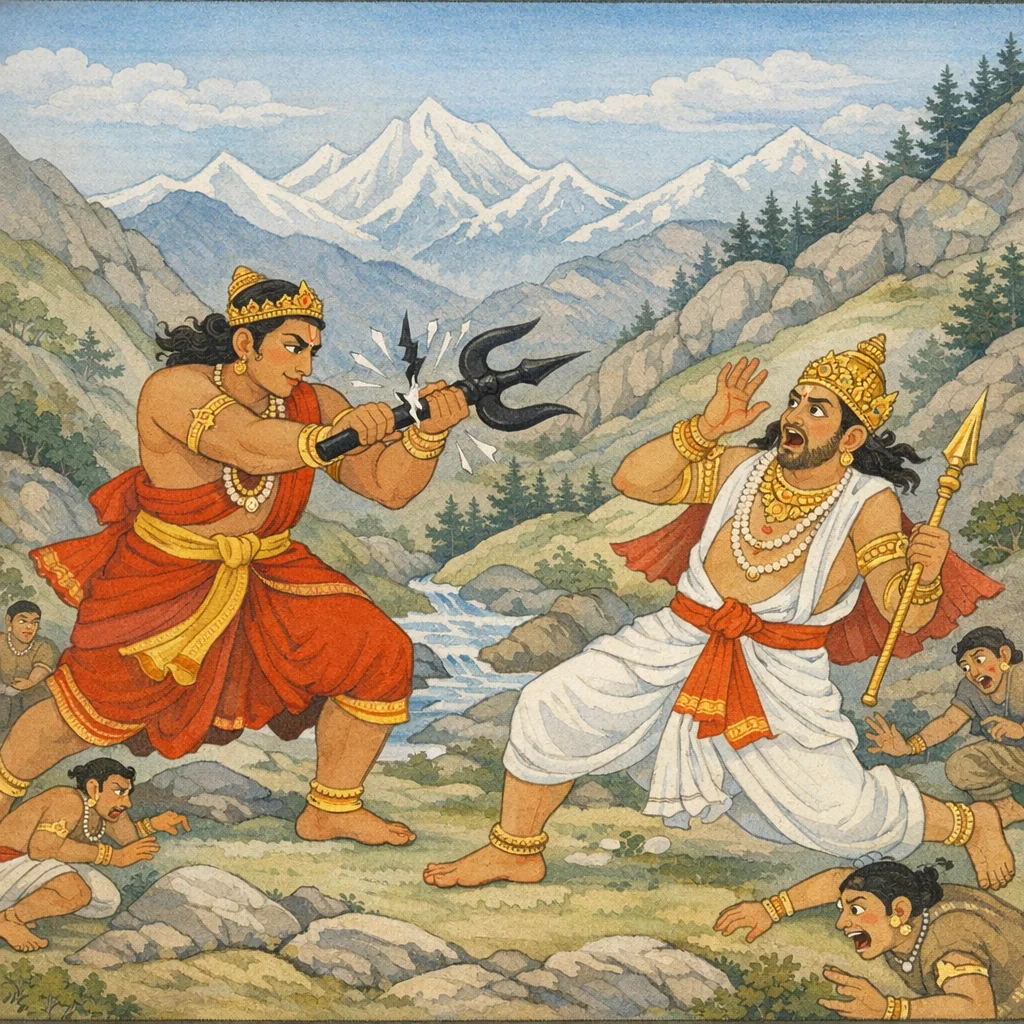
Chapter Arc: Janamejaya asks Vaishampayana how long the Pandavas stayed on Gandhamadana at the ashrama of Arṣṭiṣeṇa, and what those world-renowned heroes did and lived upon in that lofty wilderness. → At Draupadi’s urging, Bhima ascends toward the mountain’s heights—his form described like an intoxicated lion and a rutting elephant—until fear ripples through the grotesque-bodied Yakshas who scatter their weapons and cry out in alarm. → A fierce Rakshasa/Yaksha champion, Maṇimān, hurls a terrible iron śakti with a golden shaft and then rushes in roaring with a blazing trident; Bhima, eyes aflame with wrath, shatters the trident with the head of his mace and charges to finish the duel. → Bhima’s overwhelming might breaks the enemy’s momentum and routs the Yaksha host; the mountain-peak encounter ends with Bhima standing dominant, the supernatural guardians forced into retreat and disarray. → The confrontation escalates toward Maṇimān’s fate and the consequences of Bhima’s violence in a sacred, guarded region—inviting the next chapter to declare the final outcome and its moral-spiritual repercussions.
Shlokas
Verse 1
#::3:.8 #::3-..:7 () हि २ 7 षष्टर्याधिकशततमो< ध्याय: पाण्डवोंका आर्टशिषेणके आश्रमपर निवास, द्रौपदीके अनुरोधसे भीमसेनका पर्वतके शिखरपर जाना और यक्षों तथा राक्षसोंसे युद्ध करके मणिमान्का वध करना जनमेजय उवाच आर्डिषेणाश्रमे तस्मिन् मम पूर्वपितामहा: । पाण्डो: पुत्रा महात्मान: सर्वे दिव्यपराक्रमा:,जनमेजयने पूछा--ब्रह्मन! गन्धमादन पर्वतपर आर्टिषेणके आश्रममें मेरे समस्त पूर्वपितामह दिव्य पराक्रमी महामना पाण्डव कितने समयतक रहे? वे सभी महान् पराक्रमी और अत्यन्त बल-पौरुषसे सम्पन्न थे। वहाँ रहकर उन्होंने क्या किया?
Janamejaya said: “O Brahmin, when my forefathers—the sons of Pāṇḍu, all high-souled and endowed with divine prowess—were staying in that hermitage of Ārtiṣeṇa, what length of time did they remain there? And what did they do while dwelling in that place?”
Verse 2
कियन्तं कालमवसन् पर्वते गन्धमादने । कि च चक्रुर्महावीर्या: सर्वेडतिबलपौरुषा:,जनमेजयने पूछा--ब्रह्मन! गन्धमादन पर्वतपर आर्टिषेणके आश्रममें मेरे समस्त पूर्वपितामह दिव्य पराक्रमी महामना पाण्डव कितने समयतक रहे? वे सभी महान् पराक्रमी और अत्यन्त बल-पौरुषसे सम्पन्न थे। वहाँ रहकर उन्होंने क्या किया?
Janamejaya said: “For how long did they dwell on Mount Gandhamādana? And what did those great heroes—each endowed with extraordinary strength and manly prowess—do while living there?”
Verse 3
कानि चाभ्यवहार्याणि तत्र तेषां महात्मनाम् । वसतां लोकवीराणामासंस्तद् ब्रूहि सत्तम,साधुशिरोमणे! वहाँ निवास करते समय विश्वविख्यात वीर महामना पाण्डवोंके भोज्य पदार्थ क्या थे? यह बतानेकी कृपा करें
Janamejaya said: “Tell me, O best of men: while those great-souled Pāṇḍavas—heroes renowned among the people—were living there, what foods were available to them and what did they partake of? Please explain this to me.”
Verse 4
विस्तरेण च मे शंस भीमसेनपराक्रमम् । यत् यच्चक्रे महाबाहुस्तस्मिन् हैमवते गिरौ,आप मुझसे भीमसेनका पराक्रम विस्तारपूर्वक बतावें। उन महाबाहुने हिमालय पर्वतके शिखरपर रहते समय कौन-कौन-सा कार्य किया था?
Janamejaya said: “Tell me in full detail of Bhīmasena’s valor—what deeds that mighty-armed hero performed while he was there on the Himavat mountain.”
Verse 5
न खल्वासीतू पुनर्युद्धं तस्य यक्षैर््धिजोत्तम । कच्चित् समागमस्तेषामासीद् वैश्रवणस्य च,द्विजश्रेष्ठ! उनका यक्षोंके साथ फिर कोई युद्ध हुआ था या नहीं। क्या कुबेरके साथ कभी उनकी भेंट हुई थी?
Janamejaya said: “O best of twice-born sages, did he truly have no further battle with the Yakṣas? And did he ever come into a meeting with Vaiśravaṇa (Kubera)?”
Verse 6
तत्र ह्वायाति धनद आर्टिषेणो यथाब्रवीत् । एतदिच्छाम्यहं श्रोतुं विस््तरेण तपोधन
Janamejaya said: “There, how did Dhanada (Kubera) summon Ārtiṣeṇa, and what exactly did he say? I wish to hear this in full detail, O treasure of ascetic power.”
Verse 7
वैशम्पायन उवाच एतदात्महितं श्रुत्वा तस्याप्रतिमतेजस:
Vaiśampāyana said: Having heard those words—beneficial to one’s own true welfare—he of incomparable splendor responded/acted accordingly.
Verse 8
भुज्जाना मुनिभोज्यानि रसवन्ति फलानि च,वे हिमालयके शिखरपर निवास करते हुए मुनियोंके खानेयोग्य सरस फलोंका और नाना प्रकारके पवित्र (बिना हिंसाके प्राप्त) मधुका भी भोजन करते थे। इस प्रकार भरतश्रेष्ठ पाण्डव वहाँ निवास करते थे
Vaiśampāyana said: Dwelling upon the peaks of the Himalaya, they sustained themselves on juicy fruits fit for sages to eat, and on various kinds of pure honey obtained without violence. Thus the Pāṇḍavas, foremost among the Bharatas, lived there—maintaining a disciplined, non-injurious way of life even in exile.
Verse 9
मेध्यानि हिमवत्पृछ्ठे मधूनि विविधानि च । एवं ते न्यवसंस्तत्र पाण्डवा भरतर्षभा:,वे हिमालयके शिखरपर निवास करते हुए मुनियोंके खानेयोग्य सरस फलोंका और नाना प्रकारके पवित्र (बिना हिंसाके प्राप्त) मधुका भी भोजन करते थे। इस प्रकार भरतश्रेष्ठ पाण्डव वहाँ निवास करते थे
Vaiśampāyana said: On the back-slopes of the Himavat, the Pāṇḍavas lived there, O bull among the Bharatas, sustaining themselves on pure, fit-to-be-offered forest fare—wholesome fruits and various kinds of honey obtained without violence. Thus the best of the Bharatas dwelt in that Himalayan region, maintaining a restrained and dharmic mode of life in exile.
Verse 10
तथा निवसतां तेषां पञ्चमं वर्षमभ्यगात् । शृण्वतां लोमशोक्तानि वाक््यानि विविधान्युत,वहाँ निवास करते हुए उनका पाँचवाँ वर्ष बीत गया। उन दिनों वे लोमशजीकी कही हुई नाना प्रकारकी कथाएँ सुना करते थे
As they continued dwelling there, their fifth year passed. During that time, they listened to the many and varied accounts and sayings spoken by the sage Lomaśa—narratives that sustained them through exile and reinforced the discipline of endurance.
Verse 11
कृत्यकाल उपस्थास्य इति चोक््त्वा घटोत्कच: । राक्षसै: सह सर्वश्च पूर्वमेव गत: प्रभो,राजन! घटोत्कच यह कहकर कि “मैं आवश्यकताके समय स्वयं उपस्थित हो जाऊँगा' सब राक्षसोंके साथ पहले ही चला गया था
Vaiśampāyana said: Having declared, “At the time of need I shall present myself,” Ghaṭotkaca—along with all the rākṣasas—had already departed earlier, O lord, O king. The statement underscores a pledge of timely aid: strength is not merely possessed but ethically bound to appear when duty calls.
Verse 12
आर्डिषेणाश्रमे तेषां वसतां वै महात्मनाम् | अगच्छन् बहवो मासा: पश्यतां महदद्भुतम्,आर्टिषेणके आश्रममें रहकर अत्यन्त अद्भुत दृश्योंका अवलोकन करते हुए महामना पाण्डवोंके अनेक मास व्यतीत हो गये
Vaiśampāyana said: While those great-souled men—the Pāṇḍavas—dwelt in the hermitage of Ārḍiṣeṇa, many months passed as they beheld wondrous and extraordinary sights.
Verse 13
तैस्तत्र विहरद्धिश्च रममाणैश्न पाण्डवै: । प्रीतिमन्तो महाभागा मुनयश्लारणास्तथा,वहाँ रहकर क्रीडा-विहार करते हुए उन पाण्डवोंसे महाभाग मुनि और चारण बहुत प्रसन्न थे
As the Pāṇḍavas stayed there, sporting and roaming about in recreation, the great and fortunate sages—and likewise the Cāraṇas—were filled with joy and goodwill.
Verse 14
आज म्मु: पाण्डवान द्रष्ू शुद्धात्मानो यतव्रता: । ते तैः सह कथां चक्रुर्दिव्यां भरतसत्तमा:,उनका अन्तःकरण शुद्ध था और वे संयम-नियमके साथ उत्तम व्रतका पालन करनेवाले थे। एक दिन वे सभी पाण्डवोंसे मिलनेके लिये आये। भरतशिरोमणि पाण्डवोंने उनके साथ दिव्य चर्चाएँ की
Their hearts were pure, and they were self-restrained, observing excellent vows. One day they came to see all the Pāṇḍavas, and the Pāṇḍavas—the foremost among the Bharatas—held with them discourse of a divine kind.
Verse 15
ततः कतिपयाहस्य महाह्दनिवासिनम् । ऋद्धिमन्तं महानागं सुपर्ण: सहसा55हरत्,तदनन्तर कुछ दिनोंके बाद एक महान् जलाशयमें निवास करनेवाले महानाग ऋद्धिमान्को गरुडने सहसा झपाटा मारकर पकड़ लिया
Then, after a few days had passed, Garuḍa suddenly swooped down and carried off a mighty serpent—prosperous and powerful—who dwelt in a great lake.
Verse 16
प्राकम्पत महाशैल: प्रामृद्यन्त महाद्रुमा: । ददृशु: सर्वभूतानि पाण्डवाश्व तदद्भुतम्,उस समय वह महान् पर्वत हिलने लगा। बड़े-बड़े वृक्ष मिट्टीमें मिल गये। वहाँके समस्त प्राणियों तथा पाण्डवोंने उस अद्भुत घटनाको प्रत्यक्ष देखा
Vaiśampāyana said: The great mountain began to quake, and mighty trees were crushed down into the earth. All living beings there, and the Pāṇḍavas as well, witnessed that astonishing event with their own eyes.
Verse 17
ततः शैलोत्तमस्याग्रात् पाण्डवान् प्रति मारुत: । अवहत् सर्वमाल्यानि गन्धवन्ति शुभानि च,तत्पश्चात् उस उत्तम पर्वतके शिखरसे पाण्डवोंकी ओर हवाका एक झोंका आया, जिसने वहाँ सब प्रकारके सुगन्धित पुष्पोंकी बनी हुई बहुत-सी सुन्दर मालाएँ लाकर बिखेर दीं
Then, from the summit of that excellent mountain, a gust of wind blew toward the Pāṇḍavas, carrying and scattering many auspicious, fragrant garlands.
Verse 18
तत्र पुष्पाणि दिव्यानि सुहृद्धि:ः सह पाण्डवा: । ददृशु: पञ्चवर्णानि द्रौपदी च यशस्विनी,पाण्डवोंने अपने सुहृदोंके साथ जाकर उन मालाओंमें गूँथे हुए दिव्य पुष्प देखे, जो पाँच रंगके थे। यशस्विनी द्रौपदीने भी उन फ़ूलोंको देखा था
There, the Pāṇḍavas, accompanied by their well-wishers, beheld celestial flowers of five hues, woven into those garlands; the illustrious Draupadī too saw those blossoms.
Verse 19
भीमसेनं ततः कृष्णा काले वचनमत्रवीत् | विविक्ते पर्वतोद्देशे सुखासीनं महाभुजम्,तदनन्तर उसने समय पाकर पर्वतके एकान्त प्रदेशमें सुखपूर्वक बैठे हुए महाबाहु भीमसेनसे कहाप--
Then Kṛṣṇā (Draupadī), finding the right moment, addressed Bhīmasena. In a secluded part of the mountain, she spoke to the mighty-armed hero as he sat at ease.
Verse 20
सुपर्णानिलवेगेन श्वसनेन महाचलात् | पज्चवर्णानि पात्यन्ते पुष्पाणि भरतर्षभ,“भरतश्रेष्ठ! गरुडके पंखसे उठी हुई वायुके वेगसे उस दिन उस महान् पर्वतसे जो पाँच रंगके फूल अश्वरथा नदीके तटपर गिराये गये थे, उन्हें सब प्राणियोंने प्रत्यक्ष देखा। मुझे याद है, खाण्डव वनमें तुम्हारे महामना भाई सत्यप्रतिज्ञ अर्जुनने गन्धर्वों, नागों, राक्षसों तथा देवराज इन्द्रको भी युद्धमें आगे बढ़नेसे रोक दिया था। बहुत-से भयंकर मायावी राक्षस उनके हाथों मारे गये और उन्होंने गाण्डीव नामक धनुष भी प्राप्त कर लिया
Vaiśampāyana said: “O bull among the Bharatas, by the rush of wind stirred by Suparṇa (Garuḍa)—as though the mountain itself were breathing—five-coloured blossoms were shaken down from that great peak. Falling upon the bank of the Aśvarathā river, they were seen directly by all beings.”
Verse 21
“भरतश्रेष्ठ! गरुडके पंखसे उठी हुई वायुके वेगसे उस दिन उस महान् पर्वतसे जो पाँच रंगके फूल अश्वरथा नदीके तटपर गिराये गये थे, उन्हें सब प्राणियोंने प्रत्यक्ष देखा। मुझे याद है, खाण्डव वनमें तुम्हारे महामना भाई सत्यप्रतिज्ञ अर्जुनने गन्धर्वों, नागों, राक्षसों तथा देवराज इन्द्रको भी युद्धमें आगे बढ़नेसे रोक दिया था। बहुत-से भयंकर मायावी राक्षस उनके हाथों मारे गये और उन्होंने गाण्डीव नामक धनुष भी प्राप्त कर लिया
Vaiśampāyana said: “O best of the Bharatas! On that day, driven by the gust raised from Garuḍa’s wings, five-colored flowers were blown down from that great mountain and fell upon the bank of the Aśvarathā River—seen plainly by all living beings. I remember as well: in the Khāṇḍava forest your noble, truth-vowed brother Arjuna held back even Gandharvas, Nāgas, Rākṣasas, and Indra, king of the gods, from advancing in battle. Many dreadful, illusion-wielding Rākṣasas were slain by his hand, and he also obtained the bow named Gāṇḍīva.”
Verse 22
गन्धर्वोरगरक्षांसि वासवश्नल निवारित: । हता मायाविनश्षोग्रा धनु: प्राप्तं च गाण्डिवम्,“भरतश्रेष्ठ! गरुडके पंखसे उठी हुई वायुके वेगसे उस दिन उस महान् पर्वतसे जो पाँच रंगके फूल अश्वरथा नदीके तटपर गिराये गये थे, उन्हें सब प्राणियोंने प्रत्यक्ष देखा। मुझे याद है, खाण्डव वनमें तुम्हारे महामना भाई सत्यप्रतिज्ञ अर्जुनने गन्धर्वों, नागों, राक्षसों तथा देवराज इन्द्रको भी युद्धमें आगे बढ़नेसे रोक दिया था। बहुत-से भयंकर मायावी राक्षस उनके हाथों मारे गये और उन्होंने गाण्डीव नामक धनुष भी प्राप्त कर लिया
Vaiśampāyana said: Gandharvas, Nāgas, and Rākṣasas—along with Vāsava (Indra) and even Agni—were held back and prevented from advancing. Many fierce, illusion-wielding beings were slain, and the bow named Gāṇḍīva was obtained. The passage recalls Arjuna’s steadfast prowess in the Khāṇḍava episode: his vow-bound resolve restrains even divine forces, yet the narrative also frames this power within the larger moral tension of warlike necessity, divine opposition, and the acquisition of a weapon that will later shape the fate of many.
Verse 23
प्रत्यक्ष॑ सर्वभूतानां नदीमश्चरथां प्रति । खाण्डवे सत्यसंधेन भ्रात्रा तव महात्मना,तवापि सुमहत् तेजो महद् बाहुबलं च ते । अविषदहामनाधृुष्यं शक्रतुल्यपराक्रम “आर्यपुत्र! तुम्हारा पराक्रम भी इन्द्रके ही समान है। तुम्हारा तेज और बाहुबल भी महान् है। वह दूसरोंके लिये दुःसह एवं दुर्धर्ष है
Vaiśampāyana said: “Before the very eyes of all beings, you went toward the river. In the Khāṇḍava forest, your great-souled brother—true to his vow—made your prowess manifest. Your own splendor is exceedingly great, and so is the strength of your arms. It is unbearable to others, unassailable, and your valor is equal to Indra’s.”
Verse 24
त्वद्वाहुबलवेगेन त्रासिता: सर्वराक्षसा: । हित्वा शैलं प्रपद्यन्तां भीमसेन दिशो दश,'भीमसेन! मैं चाहती हूँ कि तुम्हारे बाहुबलके वेगसे थर्राकर सम्पूर्ण राक्षस इस पर्वतको छोड़ दें और दसों दिशाओंकी शरण लें
Vaiśampāyana said: “May all the rākṣasas, terrified by the surge of strength in your arms, abandon this mountain and flee for refuge to the ten directions, O Bhīmasena.” The line underscores the ethical use of power as protective force—strength employed to drive away predatory violence and restore safety rather than to indulge cruelty.
Verse 25
ततः शैलोत्तमस्याग्रं चित्रमाल्यधरं शिवम् | व्यपेतभयसम्मोहा: पश्यन्तु सुहृदस्तव,“तत्पश्चात् विचित्र मालाधारी एवं शिवस्वरूप इस उत्तम शैल-शिखरको तुम्हारे सब सुहृद् भय और मोहसे रहित होकर देखें। भीम! दीर्धकालसे मैं अपने मनमें यही सोच ही रही हूँ। मैं तुम्हारे बाहुबलसे सुरक्षित हो इस शैल-शिखरका दर्शन करना चाहती हूँ!
Then (she said), “Let your well-wishing companions, freed from fear and confusion, behold the summit of this excellent mountain—auspicious and beautiful, adorned as if with variegated garlands.” The line frames the mountain-peak as a sacred, heart-steadying sight: when protected by a trusted guardian, one may approach what is lofty and holy without being shaken by dread or delusion.
Verse 26
एवं प्रणिहितं भीम चिरात् प्रभृति मे मन: । द्रष्टमिच्छामि शैलाग्रं त्वद्वाहुबलपालिता,“तत्पश्चात् विचित्र मालाधारी एवं शिवस्वरूप इस उत्तम शैल-शिखरको तुम्हारे सब सुहृद् भय और मोहसे रहित होकर देखें। भीम! दीर्धकालसे मैं अपने मनमें यही सोच ही रही हूँ। मैं तुम्हारे बाहुबलसे सुरक्षित हो इस शैल-शिखरका दर्शन करना चाहती हूँ!
Vaiśampāyana said: “O Bhīma, for a long time my mind has been fixed on this resolve: I wish to behold the mountain’s summit—protected by the strength of your arms.”
Verse 27
ततः क्षिप्तमिवात्मान द्रौपद्या स परंतप: । नामृष्यत महाबाहु: प्रहारमिव सद्भव:
Then that scorcher of foes, feeling as though Draupadī had cast him aside, could not endure it—like a noble man who cannot bear a blow. The moment stung him as an affront to honor, and his self-respect rose in protest.
Verse 28
द्रौपदीकी यह बात सुनकर परंतप महाबाहु भीमसेनने इसे अपने ऊपर आक्षेप हुआ-- सा समझा। जैसे अच्छा बैल अपने ऊपर चाबुककी मार नहीं सह सकता, उसी प्रकार यह आक्षेप उनसे नहीं सहा गया ।। सिंहर्षभगति: श्रीमानुदार: कनकप्रभ: । मनस्वी बलवान दृप्तो मानी शूरश्व॒ पाण्डव:,उनकी चाल श्रेष्ठ सिंहके समान थी। वे सुन्दर, उदार और कनकके समान कान्तिमान् थे। पाण्डुनन्दन भीम मनस्वी, बलवान, अभिमानी, मानी और शूरवीर थे
Vaiśampāyana said: Hearing these words of Draupadī, the mighty-armed Bhīmasena—scorcher of foes—took them as a reproach directed at himself and could not endure it. Just as a fine bull cannot bear the lash striking his own body, so too he could not bear that insinuation. With a gait like a lion’s, he was splendid, generous, and radiant like gold; that Pāṇḍava Bhīma was high-spirited, strong, proud, self-respecting, and heroic.
Verse 29
लोहिताक्ष: पृथुव्यंसो मत्तवारणविक्रम: । सिंहदंष्टो बृहत्स्कन्ध: शालपोत इवोद्भतः,उनकी आँखें लाल थीं। दोनों कंधे हृष्ट-पुष्ट थे। उनका पराक्रम मतवाले गजराजके समान था। दाँत सिंहकी दाढ़ोंकी समानता करते थे। कंधे विशाल थे। वे शालवृक्षकी भाँति ऊँचे जान पड़ते थे
His eyes were red, his chest broad, his prowess like that of a rut-maddened lord of elephants; his teeth like a lion’s fangs, his shoulders massive; and he seemed to tower aloft like a sāla tree.
Verse 30
महात्मा चारुसर्वाज्ध: कम्बुग्रीवो महाभुज: । रुक्मपृष्ठं धनु: खडगं तूर्णाश्चनापि परामृशत्,उनका हृदय महान् था, सभी अंग मनोहर जान पड़ते थे, ग्रीवा शंखके समान थी और भुजाएँ बड़ी-बड़ी थीं। वे सुवर्णकी पीठवाले धुनष, खड्ग तथा तरकसपर बार-बार हाथ फेरते थे
Vaiśampāyana said: He was a great-souled man, handsome in every limb, with a conch-like neck and mighty arms. Again and again he touched and handled his bow with a golden back, his sword, and his quivers—an outward sign of readiness and resolve as the narrative moves toward action.
Verse 31
स केसरीव चोत्सिक्त: प्रभिन्न इव वारण: । व्यपेतभयसम्मोह: शैलमभ्यपतद् बली,बलवान् भीमसेन मदोन्मत्त सिंह और मदकी धारा बहानेवाले गजराजकी भाँति भय और मोहसे रहित हो उस पर्वतपर चढ़ने लगे
Vaiśaṃpāyana said: Like an exultant lion, like a rut-maddened elephant in full charge, mighty Bhīmasena—free from fear and delusion—rushed toward the mountain and began to climb it.
Verse 32
त॑ मृगेन्द्रमिवायान्तं प्रभिन्नमिव वारणम् | ददृशु: सर्वभूतानि बाणकार्मुकधारिणम्,मदवर्षी कुंजर और मृगराजकी भाँति आते हुए धनुष-बाणधारी भीमसेनको उस समय सब भूतोंने देखा
Vaiśampāyana said: Then all beings beheld Bhīmasena approaching—like a lordly lion, like a rut-maddened elephant—bearing bow and arrows. The scene shows how righteous strength, when turned toward a just end, becomes awe-inspiring to the whole world.
Verse 33
द्रौपद्या वर्धयन् हर्ष गदामादाय पाण्डव: । व्यपेतभयसम्मोह: शैलराज॑ समाश्रित:,पाण्डुनन्दन भीम गदा हाथमें लेकर द्रौपदीका हर्ष बढ़ाते हुए भय और घबराहट छोड़कर उस पर्वतराजपर चढ़ गये
Vaiśaṃpāyana said: Taking up his mace, the Pāṇḍava (Bhīma) increased Draupadī’s joy; casting off fear and confusion, he climbed up and took refuge upon the king of mountains. The moment highlights steadfast courage—strength guided by reassurance and protection of the distressed, not by panic.
Verse 34
न ग्लानिर्न च कातर्य न वैक्लव्यं न मत्सर: । कदाचिज्जुषते पार्थमात्मजं मातरिश्वन:,वायु-पुत्र कुन्तीकुमार भीमसेनको कभी ग्लानि, कातरता, व्याकुलता और मत्सरता आदि भाव नहीं छूते थे
Vaiśaṃpāyana said: In Pārtha’s son—Bhīma, born of Mātariśvan (Vāyu)—there was never any trace of dejection, cowardice, faint-hearted wavering, or envy. Such weakening emotions did not at any time take hold of him, marking him as steadfast in spirit and unshaken in resolve.
Verse 35
तदेकायनमासाद्य विषमं भीमदर्शनम् | बहुतालोच्छूयं शूद्धमारुरोह महाबल:,वह पर्वत ऊँची-नीची भूमियोंसे युक्त और देखनेमें भयंकर था। उसकी ऊँचाई कई ताड़ोंके बराबर थी और उसपर चढ़नेके लिये एक ही मार्ग था, तो भी महाबली भीमसेन उसके शिखरपर चढ़ गये
Reaching that single, narrow approach, Bhīma—mighty in strength—climbed the steep, formidable height, dreadful to behold. The mountain’s ascent was uneven and terrifying, rising to the measure of many palm-trees; yet, though it offered only one difficult path upward, Bhīmasena still mounted to its summit, embodying resolute courage in the face of peril.
Verse 36
सकिजन्नरमहानागमुनिगन्धर्वराक्षसान् | हर्षयन् पर्वतस्याग्रमारुह्वु स महाबल:,पर्ववके शिखरपर आरूढ़ हो महाबली भीम किन्नर, महानाग, मुनि, गन्धर्व तथा राक्षसोंका हर्ष बढ़ाने लगे
Vaiśampāyana said: The mighty one, having climbed to the mountain’s summit, delighted the Kinnaras, great Nāgas, sages, Gandharvas, and Rākṣasas—stirring joy among all those beings who dwelt in that lofty region. The scene underscores how true strength, when guided by self-control, can bring uplift rather than fear.
Verse 37
ततो वैश्रवणावासं ददर्श भरतर्षभ: । काज्चनै: स्फाटिकैश्वैव वेश्मभि: समलंकृतम्,तदनन्तर भरतश्रेष्ठ भीमसेनने कुबेरका निवासस्थान देखा, जो सुवर्ण और स्फटिकमणिके बने हुए भवनोंसे विभूषित था
Then Bhīmasena, the bull among the Bharatas, beheld the dwelling of Vaiśravaṇa (Kubera). It was adorned with mansions fashioned of gold and crystal, displaying the splendor of righteous prosperity and the majesty that attends divine guardianship.
Verse 38
प्राकारेण परिक्षिप्तं सौवर्णेन समन्ततः । सर्वरत्नद्युतिमता सर्वोद्यानवता तथा,उसके चारों ओर सोनेकी चहारदीवारी बनी थी। उसमें सब प्रकारके रत्न जड़े होनेसे उनकी प्रभा फैलती रहती थी। चहारदीवारीके सब ओर सुन्दर बगीचे थे। उस चहारदीवारीकी ऊँचाई पर्वतसे भी अधिक थी। बहुतसे भवनों और अट्टालिकाओंसे उसकी बड़ी शोभा हो रही थी। द्वार, तोरण (गोपुर), बुर्ज और ध्वजसमुदाय उसकी शोभा बढ़ा रहे थे
Vaiśampāyana said: It was enclosed by a rampart, entirely overlaid with gold. It shone with the radiance of every kind of jewel, and it was likewise surrounded by gardens on all sides. The description underscores royal prosperity and careful protection—outer splendor paired with strong boundaries—setting a scene where worldly magnificence can both inspire awe and test one’s discernment about what is truly enduring.
Verse 39
शैलादश्युच्छुयवता चयाट्टालकशोभिना । द्वारतोरणनिर्व्यूहध्वजसंवाहशोभिना,उसके चारों ओर सोनेकी चहारदीवारी बनी थी। उसमें सब प्रकारके रत्न जड़े होनेसे उनकी प्रभा फैलती रहती थी। चहारदीवारीके सब ओर सुन्दर बगीचे थे। उस चहारदीवारीकी ऊँचाई पर्वतसे भी अधिक थी। बहुतसे भवनों और अट्टालिकाओंसे उसकी बड़ी शोभा हो रही थी। द्वार, तोरण (गोपुर), बुर्ज और ध्वजसमुदाय उसकी शोभा बढ़ा रहे थे
Vaiśaṃpāyana said: “It was adorned with lofty ramparts rising like a mountain, and beautified by many mansions and tall towers. Its splendor was further enhanced by its gates, ceremonial archways, bastions, and clustered standards—signs of ordered prosperity and royal security.”
Verse 40
विलासिनीभिरत्यर्थ नृत्यन्तीभि: समन्ततः । वायुना धूयमानाभि: पताकाभिरलंकृतम्,उस भवनमें सब ओर कितनी ही विलासिनी अप्सराएँ नृत्य कर रही थीं और हवासे फहराती हुई पताकाएँ उस भवनका अलंकार बनी हुई थीं
Vaiśaṃpāyana said: The mansion was adorned on every side by graceful courtesan-like apsarases dancing with great exuberance, while banners, shaken and made to flutter by the wind, served as its ornaments—an image of dazzling splendor that highlights the seductive, sense-entangling atmosphere surrounding the scene.
Verse 41
धनुष्कोटिमवष्टभ्य वक्रभावेन बाहुना । पश्यमान: स खेदेन द्रविणाधिपते: पुरम्,अपनी तिरछी की हुई बाहुसे धनुषकी नोकको स्थिर करके भीमसेन उस धनाध्यक्ष कुबेरके नगरको बड़े खेदके साथ देख रहे थे
Vaiśampāyana said: Bracing the tip of his bow with his arm bent at an angle, Bhīmasena looked upon the city of the Lord of Wealth, Kubera—yet he did so with a heavy heart, as if the sight itself pressed upon him with strain and foreboding.
Verse 42
मोदयन् सर्वभूतानि गन्धमादनसम्भव: । सर्वगन्धवहस्तत्र मारुत: सुसुखो ववौ,गन्धमादनसे उठी हुई वायु सम्पूर्ण सुगन्धकी राशि लेकर समस्त प्राणियोंको आनन्दित करती हुई सुखद मन्द गतिसे बह रही थी
Vaiśampāyana said: A gentle, pleasant breeze, born from Gandhamādana and laden with every kind of fragrance, blew there, delighting all living beings. The scene marks a moment of natural harmony and auspiciousness, as though the very air quietly upheld well-being and right living.
Verse 43
चित्रा विविधवर्णाभ श्षित्रमञज्जरिधारिण: । अचिन्त्या विविधास्तत्र ट्रमा: परमशोभिन:,वहाँके अत्यन्त शोभाशाली विविध वृक्ष नाना प्रकारकी कान्तिसे प्रकाशित हो रहे थे। उनकी मज्जरियाँ विचित्र दिखायी देती थीं। वे सब-के-सब और अकथनीय जान पड़ते थे। भरतश्रेष्ठ भीमने राक्षसराज कुबेरके उस स्थानको नाक समुदायसे सुशोभित तथा विचित्र मालाओंसे विभूषित देखा
Vaiśampāyana said: There, trees of many kinds, exceedingly beautiful, shone in varied hues. Their clusters of blossoms and fruits appeared wondrous and striking, beyond the reach of ordinary speech. Thus Bhīma, best of the Bhāratas, beheld the region of Kubera, lord of the Yakṣas—adorned by hosts of Nāgas and embellished with marvelous garlands—radiant with an otherworldly splendor that humbles human words and calls for reverent restraint before the divine order of the world.
Verse 44
रत्नजालपरिक्षिप्तं चित्रमाल्यविभूषितम् | राक्षसाधिपते: स्थानं ददृशे भरतर्षभ:,वहाँके अत्यन्त शोभाशाली विविध वृक्ष नाना प्रकारकी कान्तिसे प्रकाशित हो रहे थे। उनकी मज्जरियाँ विचित्र दिखायी देती थीं। वे सब-के-सब और अकथनीय जान पड़ते थे। भरतश्रेष्ठ भीमने राक्षसराज कुबेरके उस स्थानको नाक समुदायसे सुशोभित तथा विचित्र मालाओंसे विभूषित देखा
Vaiśampāyana said: Bhīma, the bull among the Bhāratas, beheld the abode of the lord of the rākṣasas—encircled by a net-like array of jewels and adorned with wondrous garlands. The scene sets dazzling outward splendor against the inward discipline demanded of the Pāṇḍavas as they pass through perilous, morally testing places in exile.
Verse 45
गदाखड््गधनुष्पाणि: समभित्यक्तजीवित: । भीमसेनो महाबाहुस्तस्थौ गिरिरिवाचल:,उनके हाथमें गदा, खड़ग और धनुष शोभा पा रहे थे। उन्होंने अपने जीवनका मोह सर्वथा छोड़ दिया था। वे माहबाहु भीमसेन वहाँ पर्वतकी भाँति अविचल-भावसे कुछ देर खड़े रहे। तत्पश्चात् उन्होंने बड़े जोरसे शंख बजाया, जिसकी आवाज शशत्रुओंके रोंगटे खड़े कर देनेवाली थी। फिर धनुषकी टंकार करके समस्त प्राणियोंकों मोहित कर दिया
Vaiśampāyana said: With mace, sword, and bow in hand, having wholly cast aside attachment to life, the mighty-armed Bhīmasena stood firm—motionless like an unshakable mountain. The verse frames his resolve as an ethical stance of fearless duty: before peril, he abandons self-preserving hesitation and steadies himself for the action his role demands.
Verse 46
तत:ः शड्खमुपाध्मासीद् द्विषतां लोमहर्षणम् । ज्याघोषतलशब्दं च कृत्वा भूतान्यमोहयत्,उनके हाथमें गदा, खड़ग और धनुष शोभा पा रहे थे। उन्होंने अपने जीवनका मोह सर्वथा छोड़ दिया था। वे माहबाहु भीमसेन वहाँ पर्वतकी भाँति अविचल-भावसे कुछ देर खड़े रहे। तत्पश्चात् उन्होंने बड़े जोरसे शंख बजाया, जिसकी आवाज शशत्रुओंके रोंगटे खड़े कर देनेवाली थी। फिर धनुषकी टंकार करके समस्त प्राणियोंकों मोहित कर दिया
Then he blew his conch with a force that made the enemies’ hair stand on end. And, producing the sharp reverberation of the bowstring’s twang, he stunned and overawed all living beings. The scene underscores a warrior’s deliberate resolve: having cast off personal attachment, he signals readiness for righteous action through disciplined, fear-inducing martial sound.
Verse 47
ततः प्रहृष्टरोेमाणस्तं शब्दमभिदुद्रुवु: । यक्षराक्षसगन्धर्वा: पाण्डवस्य समीपत:,तब यक्ष, राक्षस और गन्धर्व रोमाज्वित होकर उस शब्दको लक्ष्य करके पाण्डुनन्दन भीमसेनके समीप दौड़े आये
Then, thrilled and with their hair bristling, the Yakṣas, Rākṣasas, and Gandharvas rushed toward that sound, converging upon the vicinity of the son of Pāṇḍu—Bhīmasena.
Verse 48
गदापरिघनिस्त्रिंशशूलशक्तिपरश्वधा: । प्रगूहीता व्यरोचन्त यक्षराक्षसबाहुभि:,उस समय गदा, परिघ, खड्ग, शूल, शक्ति और फरसे आदि अस्त्र-शस्त्र उन यक्षों तथा राक्षसोंके हाथोंमें आकर बड़ी चमक पैदा कर रहे थे
At that time, maces, iron clubs, swords, spears, javelins, and axes—seized and held aloft—flashed brilliantly in the arms of the Yakṣas and Rākṣasas.
Verse 49
ततः प्रववृते युद्ध तेषां तस्य च भारत । तैः प्रयुक्तान् महामायै: शूलशक्तिपरश्वधान्,भारत! तदनन्तर उन यक्षों और गन्धवोंका भीमसेनके साथ युद्ध प्रारम्भ हो गया। वे यक्ष और राक्षस बड़े मायावी थे। उनके चलाये हुए शूल, शक्ति और फरसोंको भीमसेनने भयानक वेगशाली भल्ल नामक बाणोंद्वारा काट गिराया। वे राक्षस आकाशमें उड़कर तथा भूतलपर खड़े होकर जोर-जोरसे गर्जना कर रहे थे। महाबली भीमने बाणोंकी झड़ी लगाकर उनके शरीरोंको अच्छी प्रकार छेद डाला। गदा और परिघ हाथमें लिये हुए राक्षसोंके शरीरसे महाबली भीमपर खूनकी बड़ी भारी वर्षा होने लगी तथा चारों ओर राक्षसोंके शरीरसे रक्तकी कितनी ही धाराएँ बह चलीं
Then, O Bhārata, battle commenced between them and him. Those great wielders of māyā hurled spears, javelins, and axes; yet the conflict became a trial of steadfast valor against deceptive force, as the hero’s resolve met their illusion with unwavering martial discipline.
Verse 50
भल््लैर्भीम: प्रचिच्छेद भीमवेगतरैस्तत: । अन्तरिक्षगतानां च भूमिष्टानां च गर्जताम्,भारत! तदनन्तर उन यक्षों और गन्धवोंका भीमसेनके साथ युद्ध प्रारम्भ हो गया। वे यक्ष और राक्षस बड़े मायावी थे। उनके चलाये हुए शूल, शक्ति और फरसोंको भीमसेनने भयानक वेगशाली भल्ल नामक बाणोंद्वारा काट गिराया। वे राक्षस आकाशमें उड़कर तथा भूतलपर खड़े होकर जोर-जोरसे गर्जना कर रहे थे। महाबली भीमने बाणोंकी झड़ी लगाकर उनके शरीरोंको अच्छी प्रकार छेद डाला। गदा और परिघ हाथमें लिये हुए राक्षसोंके शरीरसे महाबली भीमपर खूनकी बड़ी भारी वर्षा होने लगी तथा चारों ओर राक्षसोंके शरीरसे रक्तकी कितनी ही धाराएँ बह चलीं
Then Bhīma, with bhalla arrows of even greater and more terrible speed, cut down the weapons and assaults of those roaring foes—some stationed on the ground and others moving through the sky.
Verse 51
शरैरविंव्याध गात्राणि राक्षसानां महाबल: । सा लोहितमहावृष्टिर भ्यवर्षन्महाबलम्,भारत! तदनन्तर उन यक्षों और गन्धवोंका भीमसेनके साथ युद्ध प्रारम्भ हो गया। वे यक्ष और राक्षस बड़े मायावी थे। उनके चलाये हुए शूल, शक्ति और फरसोंको भीमसेनने भयानक वेगशाली भल्ल नामक बाणोंद्वारा काट गिराया। वे राक्षस आकाशमें उड़कर तथा भूतलपर खड़े होकर जोर-जोरसे गर्जना कर रहे थे। महाबली भीमने बाणोंकी झड़ी लगाकर उनके शरीरोंको अच्छी प्रकार छेद डाला। गदा और परिघ हाथमें लिये हुए राक्षसोंके शरीरसे महाबली भीमपर खूनकी बड़ी भारी वर्षा होने लगी तथा चारों ओर राक्षसोंके शरीरसे रक्तकी कितनी ही धाराएँ बह चलीं
The mighty Bhīma pierced the limbs of the Rākṣasas with his arrows. Then, O Bhārata, a great rain of blood poured down upon that powerful hero—so profuse that streams of gore flowed in every direction from the bodies of the stricken demons.
Verse 52
गदापरिघपाणीनां रक्षसां कायसम्भवा: । कार्येभ्य: प्रच्युता धारा राक्षसानां समन््तत:,भारत! तदनन्तर उन यक्षों और गन्धवोंका भीमसेनके साथ युद्ध प्रारम्भ हो गया। वे यक्ष और राक्षस बड़े मायावी थे। उनके चलाये हुए शूल, शक्ति और फरसोंको भीमसेनने भयानक वेगशाली भल्ल नामक बाणोंद्वारा काट गिराया। वे राक्षस आकाशमें उड़कर तथा भूतलपर खड़े होकर जोर-जोरसे गर्जना कर रहे थे। महाबली भीमने बाणोंकी झड़ी लगाकर उनके शरीरोंको अच्छी प्रकार छेद डाला। गदा और परिघ हाथमें लिये हुए राक्षसोंके शरीरसे महाबली भीमपर खूनकी बड़ी भारी वर्षा होने लगी तथा चारों ओर राक्षसोंके शरीरसे रक्तकी कितनी ही धाराएँ बह चलीं
Vaiśampāyana said: From the bodies of the rākṣasas—who bore maces and iron clubs in their hands—streams of blood, driven out by the blows dealt in battle, poured forth on every side. The scene underscores the grim consequence of violent aggression: when beings choose the path of hostility and illusion, the battlefield answers with suffering and the visible unraveling of their strength.
Verse 53
भीमबाहुबलो त्सूष्टैरायुधैर्यक्षरक्षसाम् । विनिकृत्तानि दृश्यन्ते शरीराणि शिरांसि च
Vaiśampāyana said: With the sheer strength of his arms, Bhīma—wielding well-honed weapons—left the Yakṣas and Rākṣasas visibly cut down: their bodies and even their severed heads lay in sight. The scene underscores how unrestrained violence, even when directed against hostile beings, carries a grim moral weight and reveals the fearful cost of force when dharma is defended through battle.
Verse 54
भीमके बाहुबलसे छूटे हुए अस्त्र-शस्त्रोंद्वारा यक्षों तथा राक्षसोंके शरीर और सिर कटे दिखायी दे रहे थे ।। प्रच्छाद्यमानं रक्षोभि: पाण्डवं प्रियदर्शनम् । ददृशु: सर्वभूतानि सूर्यमभ्रगणैरिव,जैसे बादल सूर्यको ढक लेते हैं, उसी प्रकार प्रियदर्शन पाण्डुपुत्र भीमको राक्षस ढक लेते हैं, यह सब प्राणियोंने प्रत्यक्ष देखा
Vaiśampāyana said: By the sheer strength of Bhīma’s arms, the missiles and weapons he had unleashed were seen to have severed the bodies and heads of the Yakṣas and Rākṣasas. As clouds veil the sun, so did the Rākṣasas swarm and cover the handsome Pāṇḍava Bhīma—this was plainly witnessed by all beings. The scene underscores both the ferocity of battle and the moral contrast between protective valor and predatory assault.
Verse 55
स रश्मिभिरिवादित्य: शरैररिनिघातिभि: । सर्वानार्च्छन्महाबाहुर्बलवान् सत्यविक्रम:,तब सत्यपराक्रमी बलवान् महाबाहु भीमसेनने अपने शत्रुनाशक बाणोंद्वारा समस्त शत्रुओंको उसी प्रकार ढक लिया, जैसे सूर्य अपनी किरणोंसे संसारको ढक लेते हैं
Vaiśampāyana said: Mighty and true in valor, the strong-armed hero covered all his foes with arrows that struck down enemies—just as the sun, with its rays, spreads over and covers the world. The image underscores disciplined power used decisively in battle, where strength is measured by steadfast courage and effective protection of one’s cause.
Verse 56
अभितर्जयमानाश्न रुवन्तश्न महारवान् | न मोहं भीमसेनस्य ददृशु: सर्वराक्षसा:,सब ओरसे गर्जन-तर्जन करते हुए तथा बड़ी भयानक आवाजसे चिग्घाड़ते हुए सब राक्षसोंने भीमसेनके चित्तमें तनिक भी घबराहट नहीं देखी
Vaiśampāyana said: Though the rākṣasas roared with dreadful cries and hurled threats from every side, they could not perceive even the slightest confusion or fear in Bhīmasena’s mind. The scene underscores steadfast courage: mere noise, intimidation, and terror tactics cannot shake one whose resolve is firm.
Verse 57
यक्षा विकृतसर्वाज्जा भीमसेनभयार्दिता: | भीममार्तस्वरं चक्रुर्विप्रकीर्णमहायुधा:,जिनके सारे अंग विकृत एवं विकराल थे, वे यक्ष भीमसेनके भयसे पीड़ित हो अपने बड़े-बड़े आयुधोंको इधर-उधर फेंककर भयंकर आर्तनाद करने लगे
Vaiśampāyana said: The Yakṣas, their bodies grotesquely deformed, were tormented by fear of Bhīmasena. Casting their massive weapons away in all directions, they raised a dreadful cry of anguish.
Verse 58
उत्सृज्य ते गदाशूलानसिशक्तिपरश्वधान् । दक्षिणां दिशमाजम्मुस्त्रसिता दृढद्धन्चना,सुदृढ़ धनुषवाले भीमसेनसे आतंकित हो वे यक्ष-राक्षस आदि योद्धा गदा, शूल, खड्ग, शक्ति तथा परशु आदि अस्त्रोंको वहीं छोड़कर दक्षिणदिशाकी ओर भाग गये
Vaiśampāyana said: Terrified by Bhīmasena, the mighty archer, those warriors—Yakṣas, Rākṣasas, and the like—abandoned their maces, spears, swords, javelins, and axes on the spot and fled toward the southern direction.
Verse 59
तत्र शूलगदापाणिवव्यूढोरस्को महाभुज: । सखा वैश्रवणस्यासीन्मणिमाज्नाम राक्षस:,वहाँ कुबेरके सखा राक्षसप्रवर मणिमान् भी मौजूद थे। उनके हाथोंमें त्रिशूल और गदा शोभा पा रही थी उनकी छाती चौड़ी और बाँहें विशाल थीं
There, the rākṣasa named Maṇimān was also present—broad-chested, mighty-armed, and bearing a trident and a mace in his hands. He was a close companion of Vaiśravaṇa (Kubera), standing among the foremost of the rākṣasas.
Verse 60
अदर्शयदधीकारं पौरुषं च महाबल: । स तान् दृष्टवा परावृत्तान् स्मयमान इवाब्रवीत्,उन महाबली वीरने वहाँ अपने अधिकार और पौरुष दोनोंको प्रकट किया। उस समय अपने सैनिकोंको रणसे विमुख होते देख वे मुसकराते हुए उनसे बोले--
Vaiśampāyana said: The mighty warrior displayed both his rightful authority and his manly valor. Seeing his troops turning back from the battlefield, he spoke to them with a faint, almost smiling composure.
Verse 61
एकेन बहव: सड्ख्ये मानुषेण पराजिता: । प्राप्प वैश्रवणावासं कि वक्ष्यथ धनेश्वरम्,“अरे! तुम बहुत बड़ी संख्यामें होकर भी आज एक मनुष्यद्वारा युद्धमें पराजित हो गये।” कुबेरभवनमें धनाध्यक्षके पास जाकर क्या कहोगे?”
Vaiśampāyana said: “Though you were many in number, you have been defeated in battle by a single human. When you reach the abode of Vaiśravaṇa (Kubera), what will you say to the Lord of Wealth?”
Verse 62
एवमाभाष्य तान् सर्वनिभ्यवर्तत राक्षस: | शक्तिशूलगदापाणिरभ्यधावत् स पाण्डवम्,ऐसा कहकर राक्षस मणिमानने उन सबको लौटाया और हाथोंमें शक्ति, शूल तथा गदा लेकर भीमसेनपर धावा किया
Vaiśampāyana said: Having spoken thus to them all, the rākṣasa turned back. With a śakti (javelin), a śūla (trident/spear), and a gadā (mace) in his hands, he charged at the Pāṇḍava—Bhīmasena—intent on violent confrontation.
Verse 63
तमापतत्तं वेगेन प्रभिन्नमिव वारणम् | वत्सदन्तैस्त्रिभि: पाश्वे भीमसेन: समार्दयत्,मदकी धारा बहानेवाले गजराजकी भाँति मणिमानको बड़े वेगसे आता देख भीमसेनने वत्सदन्त नामक तीन बाणोंद्वारा उनकी पसलीमें प्रहार किया
Vaiśampāyana said: Seeing Maṇimān rushing toward him at great speed—like a mighty elephant in musth—Bhīmasena struck him in the flank with three arrows called Vatsadanta, checking his onslaught in the heat of combat.
Verse 64
मणिमानपि संक्रुद्ध: प्रगृह्ा महतीं गदाम् । प्राहिणोद् भीमसेनाय परिगृह्म महाबल:,यह देख महाबली मणिमान् भी रोषसे आगबबूला हो उठे और बहुत बड़ी गदा लेकर उन्होंने भीमसेनपर चलायी
Vaiśampāyana said: Even Maṇimān, inflamed with anger, seized a massive mace; the mighty one then hurled it at Bhīmasena.
Verse 65
विद्युद्रूपां महाघोरामाकाशे महतीं गदाम् । शरैरबहुभिरभ्यार्च्छद् भीमसेन: शिलाशितै:,वह विशाल एवं महा भयंकर गदा आकाशमें विद्युतकी भाँति चमक उठी। यह देख भीमसेनने पत्थर पर रगड़कर तेज किये हुए बहुत-से बाणोंद्वारा उसपर आघात किया
Vaiśampāyana said: A huge and exceedingly dreadful mace, flashing in the sky like lightning, blazed forth. Seeing it, Bhīmasena struck at it with many arrows, their points honed on stone.
Verse 66
न हि मे शृण्वतस्तृप्तिरस्ति तेषां विचेष्टितम् । क्योंकि आ्षिणने जैसा बताया था, उसके अनुसार वहाँ कुबेर अवश्य आते रहे होंगे। तपोधन! मैं यह सब विस्तारके साथ सुनना चाहता हूँ; क्योंकि पाण्डवोंका चरित्र सुननेसे मुझे तृप्ति नहीं होती,प्रत्यहन्यन्त ते सर्वे गदामासाद्य सायका: । न वेग॑ धारयामासुर्गदावेगस्य वेगिता: परंतु वे सभी बाण मणिमान्की गदासे टकराकर नष्ट हो गये। यद्यपि वे बड़े वेगसे छूटे थे, तथापि गदा चलानेके अभ्यासी मणिमान्की गदाके वेगको न सह सके
Janamejaya said: “As I listen, I find no satiety in hearing of their deeds. Tell me more in detail. For all those arrows, though launched with great speed, struck Maṇimān’s mace and were shattered; the swift-flying shafts could not withstand the momentum of the mace wielded by one practiced in its use.”
Verse 67
गदायुद्धसमाचारं बुद्धयमान: स वीर्यवान् । व्यंसयामास तं तस्य प्रहारं भीमविक्रम:,भयंकर पराक्रमी महाबली भीमसेन गदायुद्धकी कलको जानते थे। अतः उन्होंने शत्रुके उस प्रहारको व्यर्थ कर दिया
Vaiśampāyana said: The mighty hero, understanding the tactics and rhythm of mace-fighting, rendered his opponent’s blow ineffective. Thus Bhīma—terrible in prowess and great in strength—turned aside the strike with trained discernment rather than yielding to it.
Verse 68
ततः शक्ति महाघोरां रुक्मदण्डामयस्मयीम् । तस्मिन्नेवान्तरे धीमान् प्रजहाराथ राक्षस:,तदनन्तर बुद्धिमान् राक्षसने उसी समय स्वर्णमय दण्डसे विभूषित एवं लोहेकी बनी हुई बड़ी भयानक शक्तिका प्रहार किया
Then the rākṣasa, being quick-witted, seized the moment and hurled a terribly fearsome śakti-weapon—its shaft adorned with gold, yet forged of iron—to strike.
Verse 69
सा भुजं भीमनिर्हादा भित्वा भीमस्य दक्षिणम् | साग्निज्वाला महारौद्रा पपात सहसा भुवि,वह अग्निकी ज्वालाके समान अत्यन्त भयंकर शक्ति भयानक गड़गड़ाहटके साथ भीमकी दाहिनी भुजाको छेदकर सहसा पृथ्वीपर गिर पड़ी
Vaiśampāyana said: With a thunderous, terrifying roar, that blazing, fire-tongued śakti pierced Bhīma’s right arm and, in an instant, fell to the ground.
Verse 70
सो5तिविद्धो महेष्वास: शक्त्यामितपराक्रम: । गदां जग्राह कौन्तेय: क्रोधपर्याकुलेक्षण:,तरसा चाभिदुद्राव मणिमन्तं महाबलम् | शक्तिकी गहरी चोट लगनेसे महान धनुर्धर एवं अत्यन्त पराक्रमी कुन्तीकुमार भीमके नेत्र क्रोधसे व्याकूल हो उठे और उन्होंने एक ऐसी गदा हाथमें ली जो शत्रुओंका भय बढ़ानेवाली थी। उसके ऊपर सोनेके पत्र जड़े थे। वह सारी-की-सारी लोहेकी बनी हुई और शत्रुओंको नष्ट करनेमें समर्थ थी। उसे लेकर भीमसेन विकट गर्जना करते हुए बड़े वेगसे महाबली मणिमान्की ओर दौड़े
Vaiśampāyana said: Though grievously pierced by the spear, the great archer—of boundless prowess—Kuntī’s son (Bhīma) seized a mace, his eyes clouded and agitated with wrath. Then, with sudden force, he rushed straight at the mighty Maṇimān.
Verse 71
रुक्मपट्टपिनद्धां तां शत्रूणां भयवर्धिनीम् । प्रगृह्या थ नदन् भीम: शैक्यां सर्वायसीं गदाम्
Vaiśampāyana said: Then Bhīma, roaring aloud, seized that iron mace—bound with a golden band and a terror that swelled the fear of enemies—taking it up as a weapon fit for decisive combat.
Verse 72
दीप्यमानं महाशूलं प्रगृह्ा मणिमानपि
Vaiśampāyana said: Seizing a great spear blazing with radiance—adorned with jewels as well—he readied himself for decisive action, the weapon’s brilliance proclaiming the moment’s gravity and his resolve to meet force with force.
Verse 73
भड़क्त्वा शूलं गदाग्रेण गदायुद्धविशारद:
Vaiśampāyana said: Skilled in the art of mace-combat, he struck and shattered the spear with the very tip of his mace—showing how disciplined training and presence of mind can overcome even a deadly weapon in the heat of battle.
Verse 74
सो<न्तरिक्षमवप्लुत्य विधूय सहसा गदाम्,महाबाहु भीमने युद्धके मुहानेपर गर्जना करते हुए सहसा आकाशमें उछलकर गदा घुमायी और उसे वायुके समान वेगसे मणिमानपर दे मारा, मानो देवराज इन्द्रने किसी दैत्यपर वज्रका प्रहार किया हो
Vaiśampāyana said: Then mighty-armed Bhīmasena, roaring at the very front of the battle, suddenly sprang up into the sky. Whirling his mace, he hurled it at Maṇimān with the speed of the wind—like Indra, king of the gods, striking a demon with his thunderbolt. The scene underscores Bhīma’s fierce resolve in righteous combat and the epic’s recurring image of divine justice mirrored in human warfare.
Verse 75
प्रचिक्षेप महाबाहुर्विनद्य रणमूर्धनि । सेन्द्राशनिरिवेन्द्रेण विसृष्टा वातरंहसा,महाबाहु भीमने युद्धके मुहानेपर गर्जना करते हुए सहसा आकाशमें उछलकर गदा घुमायी और उसे वायुके समान वेगसे मणिमानपर दे मारा, मानो देवराज इन्द्रने किसी दैत्यपर वज्रका प्रहार किया हो
Vaiśampāyana said: The mighty-armed Bhīma, roaring at the very height of the battle, hurled his mace with the speed of the wind and struck Maṇimān—like Indra casting his thunderbolt upon a foe. The verse underscores the fierce momentum of righteous combat, where strength and resolve are directed toward the defeat of an adversary in the ordained struggle.
Verse 76
शासन सतत चक्रुस्तथैव भरतर्षभा: । वैशम्पायनजीने कहा--राजन्! अप्रतिम तेजस्वी आर्डिषिणका यह अपने लिये हितकर वचन सुनकर भरतकुल-भूषण पाण्डवोंने सदा उनके आदेशका उसी प्रकार पालन किया,हत्वा रक्ष: क्षितिं प्राप्प कृत्येव निपषात ह | त॑ राक्षसं भीमबलं भीमसेनेन पातितम् वह गदा उस राक्षसके प्राण लेकर भूमिपर मूर्तिमती कृत्याके समान गिर पड़ी। भीमसेनके द्वारा मारे गये उस भयानक शक्तिशाली राक्षसको सब प्राणियोंने प्रत्यक्ष देखा, मानो सिंहने किसी साँड़को मार गिराया हो। उसे मरकर पृथ्वीपर गिरा देख मरनेसे बचे हुए निशाचर भयंकर आर्तनाद करते हुए पूर्व दिशाकी ओर भाग चले
Vaiśampāyana said: O bull-like heroes of the Bharata line, the Pāṇḍavas continually carried out his command just as instructed. Having slain the rākṣasa, they regained safety on the earth; and that demon, struck down by Bhīmasena, fell to the ground like a manifested Kṛtyā (a conjured destructive force). All beings saw that dreadful, immensely powerful rākṣasa felled by Bhīma, as though a lion had brought down a bull. Seeing him dead upon the earth, the surviving night-roamers raised a terrifying cry and fled toward the eastern quarter.
Verse 77
ददृशु: सर्वभूतानि सिंहेनेव गवां पतिम् । त॑ प्रेक्ष्य निहत॑ भूमौ हतशेषा निशाचरा: । भीममार्तस्वरं कृत्वा जम्मु: प्राचीं दिशं॑ प्रति,वह गदा उस राक्षसके प्राण लेकर भूमिपर मूर्तिमती कृत्याके समान गिर पड़ी। भीमसेनके द्वारा मारे गये उस भयानक शक्तिशाली राक्षसको सब प्राणियोंने प्रत्यक्ष देखा, मानो सिंहने किसी साँड़को मार गिराया हो। उसे मरकर पृथ्वीपर गिरा देख मरनेसे बचे हुए निशाचर भयंकर आर्तनाद करते हुए पूर्व दिशाकी ओर भाग चले
Vaiśampāyana said: All beings beheld that lord of the cattle struck down, as if a lion had felled a bull. Seeing him slain and lying upon the earth, the surviving night-roamers raised a dreadful cry and fled toward the eastern quarter.
Verse 159
इस प्रकार श्रीमहाभारत वनपर्वके अन्तर्गत यक्षयुद्धपर्वमें आर्दिषेण-युधिष्ठिरसंवादविषयक एक सौ उनसठवाँ अध्याय पूरा हुआ
Thus concludes the one hundred and fifty-ninth chapter of the Vana Parva of the Śrī Mahābhārata, within the Yakṣa-yuddha section, dealing with the dialogue between Ārdiṣeṇa and Yudhiṣṭhira.
Verse 160
॥#£ #ब ८ (< है २ | ॥ 26, अहिश/ 06 -- 8: ॥220 ८/* “7905. [३,-..<_*.... ९. इति श्रीमहाभारते वनपर्वणि यक्षयुद्धपर्वणि मणिमद्वथे षष्ट्यधिकशततमो< ध्याय:,इस प्रकार श्रीमहाभारत वनपव॑के अन्तर्गत यक्षयुद्धपर्वमें माणियान्ू-वधसे सम्बन रखनेवाला एक सौ साठवाँ अध्याय पूरा हुआ
Thus ends the one-hundred-and-sixtieth chapter of the Vana Parva of the Śrī Mahābhārata, within the Yakṣa-yuddha section, in the episode concerning the slaying of Maṇimat.
Verse 713
तरसा चाभिदुद्राव मणिमन्तं महाबलम् | शक्तिकी गहरी चोट लगनेसे महान धनुर्धर एवं अत्यन्त पराक्रमी कुन्तीकुमार भीमके नेत्र क्रोधसे व्याकूल हो उठे और उन्होंने एक ऐसी गदा हाथमें ली जो शत्रुओंका भय बढ़ानेवाली थी। उसके ऊपर सोनेके पत्र जड़े थे। वह सारी-की-सारी लोहेकी बनी हुई और शत्रुओंको नष्ट करनेमें समर्थ थी। उसे लेकर भीमसेन विकट गर्जना करते हुए बड़े वेगसे महाबली मणिमान्की ओर दौड़े
Vaiśampāyana said: With sudden speed he rushed straight at Maṇimān, the mighty one. Struck hard by the śakti, Bhīma—Kuntī’s son, a great archer and supremely valorous—had his eyes inflamed with wrath. Seizing a fearsome mace, plated with gold, wholly of iron and fit to destroy foes, Bhīmasena roared terribly and charged at the powerful Maṇimān with great force.
Verse 723
प्राहिणोद् भीमसेनाय वेगेन महता नदन् । उधर मणिमानने भी सिंहनाद करते हुए एक चमचमाता हुआ महान त्रिशूल हाथमें लिया और बड़े वेगसे भीमसेनपर चलाया
Vaiśampāyana said: Roaring loudly and gathering tremendous speed, he hurled it toward Bhīmasena. Then Maṇimān, also giving a lion-like roar, seized a gleaming great trident and with great force cast it at Bhīmasena.
Verse 733
अभिदुद्राव तं हन्तुं गरुत्मानिव पन्नगम् । परंतु गदा-युद्धमें कुशल भीमने गदाके अग्रभागसे उस त्रिशूलके टुकड़े-टुकड़े करके मणिमानको मारनेके लिये उसी प्रकार धावा किया, जैसे किसी सर्पके प्राण लेनेके लिये गरुड उसपर टूट पड़ते हैं
Vaiśaṃpāyana said: Rushing to kill him like Garuḍa swooping upon a serpent, Bhīma—skilled in mace-fighting—shattered the trident into fragments with the forepart of his mace and then charged to strike down Maṇimān, just as Garuḍa falls upon a snake to take its life.
Frequently Asked Questions
The tension lies between kṣatriya preparedness for future political confrontation and the present obligation to live by ascetic restraint and truthful discipline during exile.
Sustained practice—svādhyāya, ritual regularity, and respectful conduct—preserves communal coherence and readiness, even when outcomes depend on delayed return and uncertain timing.
No explicit phalaśruti formula is presented here; the chapter functions as narrative integration, emphasizing ethical comportment, sanctioned power-acquisition, and reunion order within the exile arc.