Adhyaya 9
इन्द्रस्य दुःखप्राप्तिः—त्रिशिरोवधः, वृत्रोत्पत्तिः, जृम्भिकाजननम् (Indra’s Distress: Slaying of Triśiras, Birth of Vṛtra, and the Origin of Yawning)
Upa-parva: Indra–Triśiras–Vṛtra Itihāsa (embedded exemplum)
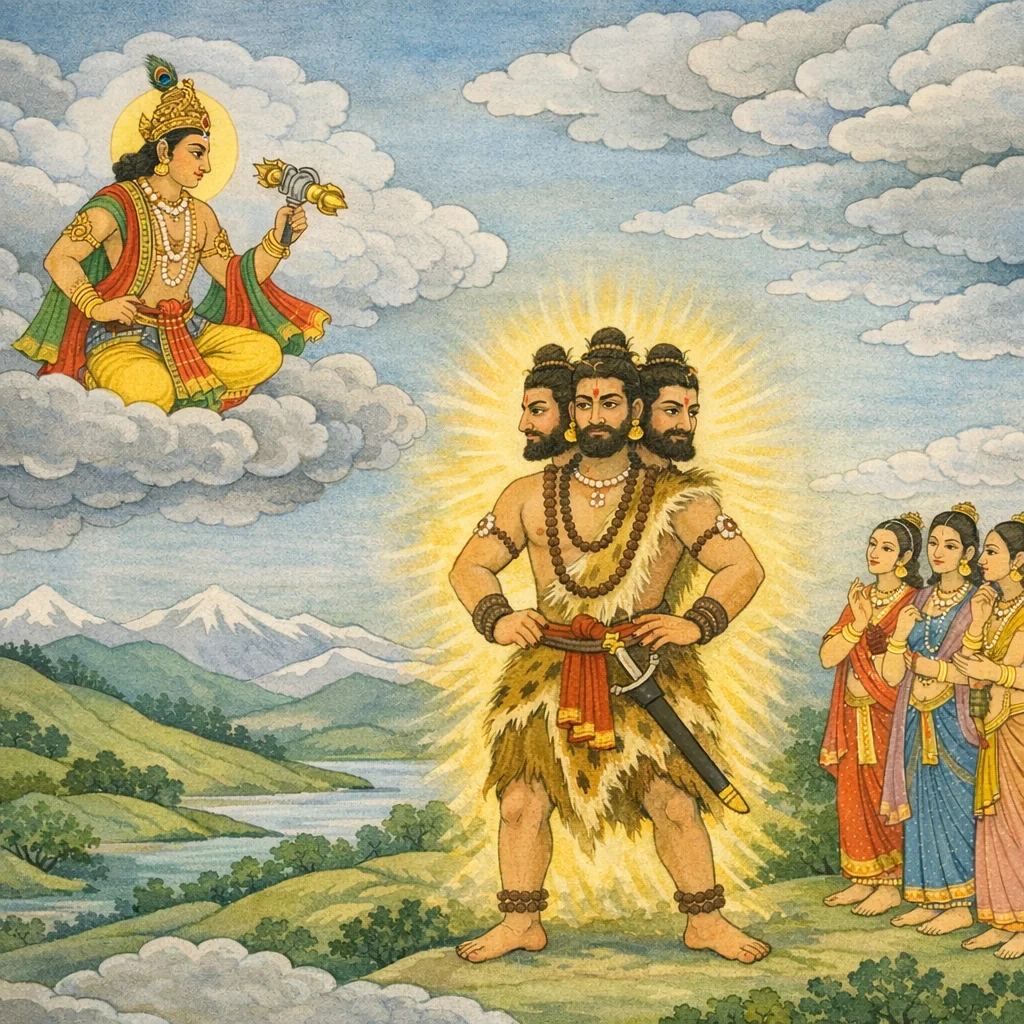
Yudhiṣṭhira asks how Indra, despite being a great sovereign accompanied by his consort, encountered intense distress. Śalya replies with an ancient itihāsa: Tvaṣṭṛ creates his son Triśiras (Viśvarūpa), an ascetic of formidable tapas and unusual three-faced form. Triśiras combines Vedic study, sensory discipline, and extraordinary perception; observing this, Indra becomes anxious that Triśiras may eclipse him. Indra first orders apsarases to lure Triśiras into kāmabhoga, but they fail because Triśiras retains self-control. Indra then resolves on lethal action, hurling the vajra to strike Triśiras down, yet remains unsettled by the fallen ascetic’s radiance. Indra commands Takṣā to sever Triśiras’s heads; Takṣā hesitates on ethical grounds (fear of blame and brahmahatyā), but complies after Indra asserts authority and promises ritual privilege. From the severed heads emerge birds (kapiñjala, tittiri, kalaviṅka) corresponding to Triśiras’s distinct mouths and practices. Learning of his son’s death, Tvaṣṭṛ, enraged, performs a rite to produce Vṛtra for Indra’s destruction, instructing him as “indraśatru.” Vṛtra grows to cosmic scale and battles Indra, even swallowing him; the gods create jṛmbhikā, enabling Indra’s escape when Vṛtra yawns, establishing yawning as a creaturely condition. The struggle continues as the devas seek counsel, moving toward Viṣṇu for a solution to Vṛtra’s defeat.
Chapter Arc: युधिष्ठिर शल्य से पूछते हैं—इन्द्र जैसे देवश्रेष्ठ ने किस प्रकार त्रिशिरा (विश्वरूप) का वध किया, वृत्रासुर कैसे उत्पन्न हुआ, और उस संग्राम में देवता कैसे पराजित हुए। → शल्य पुरातन आख्यान सुनाते हैं: प्रजापति त्वष्टा के तेजस्वी पुत्र विश्वरूप/त्रिशिरा का उदय, उसकी त्रिमुखी भयानक दीप्ति, इन्द्र का बढ़ता संदेह और भय, तथा ‘दुर्बल दिखने वाला भी शत्रु बढ़ जाए तो उपेक्षणीय नहीं’—इस नीति से प्रेरित होकर इन्द्र का वध-निश्चय। अप्सराओं को त्रिशिरा के समीप भेजकर उसे विचलित करने और अवसर साधने की योजना बनती है। → इन्द्र निर्णायक होकर वज्र-प्रहार का संकल्प करता है और त्रिशिरा-वध की ओर बढ़ता है; त्रिशिरा के मुखों/तेज से दिशाएँ मानो पीती हुई देखी जाती हैं—और उसी भयावह क्षण में देव-दानव संघर्ष का भाग्य पलटने लगता है। → त्रिशिरा-वध के परिणामस्वरूप त्वष्टा का क्रोध भड़कता है और उसी प्रतिशोध से वृत्रासुर की उत्पत्ति तथा इन्द्र-वृत्र युद्ध की भूमिका बनती है; संग्राम की उग्रता के बाद इन्द्र पीछे हटता है और देवताओं में गहरा विषाद छा जाता है—देवपक्ष की पराजय का संकेत स्पष्ट हो उठता है। → वृत्रासुर के उदय के साथ प्रश्न लटकता है—क्या इन्द्र अपने ही कर्म-फल (ब्रह्महत्या/अधर्म-आश्रित उपाय) के भार से मुक्त होकर विजय पा सकेगा, या देवता और अधिक पतन की ओर जाएंगे?
Shlokas
Verse 1
अपन हू< बछ। है २ >> नवमो<्ध्याय: इन्द्रके द्वारा त्रिेशिराका वध, वृत्रासुरकी उत्पत्ति, उसके साथ इन्द्रका युद्ध तथा देवताओंकी पराजय युधिछिर उवाच कथमिन्द्रेण राजेन्द्र सभार्येण महात्मना । दुःखं प्राप्तं परं घोरमेतदिच्छामि वेदितुम्,युधिष्ठिरने पूछा--राजेन्द्र! पत्नीसहित महामना इन्द्रने कैसे अत्यन्त भयंकर दुःख प्राप्त किया था? यह मैं जानना चाहता हूँ
Yudhiṣṭhira said: “O king of kings, how did the great-souled Indra—together with his consort—come to suffer such supremely dreadful sorrow? This I wish to understand.”
Verse 2
शल्य उवाच शृणु राजन् पुरावृत्तमितिहासं पुरातनम् । सभार्येण यथा प्राप्तं दु:खमिन्द्रेण भारत,शल्यने कहा--भरतवंशी नरेश! यह पूर्वकालमें घटित पुरातन इतिहास है। पत्नीसहित इन्द्रने जिस प्रकार महान् दुःख प्राप्त किया था, वह बताता हूँ, सुनो
Śalya said: “O King, listen to an ancient legend from former times. O Bhārata, I shall recount how Indra, together with his wife, came to suffer great sorrow—hear it from me.”
Verse 3
त्वष्टा प्रजापतिहासीद् देवश्रेष्ठोी महातपा: । स पुत्र वै त्रिशिरसमिन्द्रद्रोहात् किलासृजत्,त्वष्टा नामसे प्रसिद्ध एक प्रजापति थे, जो देवताओमें श्रेष्ठ और महान् तपस्वी माने जाते थे। कहते हैं, उन्होंने इन्द्रके प्रति द्रोहबुद्धि हो जानेके कारण ही एक तीन सिरवाला पुत्र उत्पन्न किया
Śalya said: “There once was Tvaṣṭṛ, a Prajāpati—foremost among the gods and a great ascetic. It is said that, having conceived hostility toward Indra, he brought forth a son named Triśiras, the three-headed one.”
Verse 4
ऐन्द्रं स प्रार्थयत् स्थान विश्वरूपो महाद्युति: । तैस्त्रिभिवदनैघोरि: सूर्येन्दुज्वलनोपमै:,उस महातेजस्वी बालकका नाम था विश्वरूप। वह सूर्य, चन्द्रमा तथा अग्निके समान तेजस्वी एवं भयंकर अपने उन तीनों मुखोंद्वारा इन्द्रका स्थान पानेकी प्रार्थना करता था
Śalya said: The radiant boy named Viśvarūpa sought to obtain Indra’s sovereign station. With his three fearsome faces—shining like the sun, the moon, and fire—he petitioned for that supreme power, showing how fierce brilliance and ambition can press against the rightful order of authority.
Verse 5
वेदानेकेन सो5धीते सुरामेकेन चापिबत् । एकेन च दिश: सर्वा: पिबन्निव निरीक्षते,वह अपने एक मुखसे वेदोंका स्वाध्याय करता, दूसरेसे सुरा पीता और तीसरेसे सम्पूर्ण दिशाओंकी ओर इस प्रकार देखता था, मानो उन्हें पी जायगा
Śalya said: “With one mouth he recited the Vedas; with another he drank liquor; and with yet another he stared toward all the directions as though he would drink them in.” The line paints a morally jarring portrait—an outward show of sacred learning set beside indulgence and predatory appetite—suggesting hypocrisy and uncontrolled desire rather than true discipline.
Verse 6
स तपस्वी मृदुर्दान्तो धर्मे तपसि चोद्यत: । तपस्तस्य महत् तीव्र सुदुश्चवरमरिंदम,शत्रुदमन! त्वष्टाका वह पुत्र कोमल स्वभाववाला, तपस्वी, जितेन्द्रिय तथा धर्म और तपस्याके लिये सदा उद्यत रहनेवाला था। उसका बड़ा भारी तीव्र तप दूसरोंके लिये अत्यन्त दुष्कर था
Śalya said: “He was an ascetic—gentle and self-restrained—ever intent on dharma and on austerity. His penance was vast and intense, exceedingly difficult for others to undertake, O subduer of foes, O tamer of enemies.”
Verse 7
तस्य दृष्टवा तपोवीर्य सत्यं चामिततेजस: । विषादमगमच्छक्र इन्द्रोडयं मा भवेदिति,उस अमिततेजस्वी बालकका तपोबल तथा सत्य देखकर इन्द्रको बड़ा दुःख हुआ। वे सोचने लगे, “कहीं यह इन्द्र न हो जाय
Seeing the ascetic power and truthfulness of that boy of immeasurable radiance, Śakra (Indra) was seized by deep anxiety. He began to think, “May this one not become Indra (and displace me).”
Verse 8
इस प्रकार श्रीमह्या भारत उद्योगपवकि अन्तर्गत सेनोट्रोगपर्वमें शल्यवाक्यविषयक आठवाँ अध्याय पूरा हुआ,कथं सज्जेच्च भोगेषु न च तप्येन्महत् तपः । विवर्धमानस्त्रिशिरा: सर्व हि भुवनं ग्रसेत् “क्या उपाय किया जाय, जिससे यह भोगोंमें आसक्त हो जाय और भारी तपस्यामें प्रवृत्त न हो? क्योंकि यह वृद्धिको प्राप्त हुआ त्रिशिरा तीनों लोकोंको अपना ग्रास बना लेगा'
Indra thought: “What means should be adopted so that he becomes attached to pleasures and does not undertake severe austerity? For if Triśiras continues to grow in power, he will indeed swallow up the whole world.”
Verse 9
इति संचिन्त्य बहुधा बुद्धिमान् भरतर्षभ । आज्ञापयत् सो5प्सरसस्त्वष्टपुत्रप्रलो भने,भरतश्रेष्ठ इस तरह बहुत सोच-विचार करके बुद्धिमान् इन्द्रने त्वष्टाके पुत्रको लुभानेके लिये अप्सराओं-को आज्ञा दी-- इति श्रीमहा भारते उद्योगपर्वणि सेनोद्योगपर्वणि इन्द्रविजये नवमो5ध्याय:
Having reflected on the matter in many ways, O bull among the Bharatas, the wise Indra issued a command: he directed the Apsarases to go and entice the son of Tvaṣṭṛ. The episode underscores a morally fraught strategy—using seduction and deception as political expedients—raising questions about the limits of righteous conduct when power and victory are at stake.
Verse 10
यथा स सज्जेत् त्रिशिरा: कामभोगेषु वै भृशम् । क्षिप्रं कुरुत गच्छध्वं प्रलोभयत मा चिरम्,“अप्सराओ! जिस प्रकार त्रिशिरा कामभोगोंमें अत्यन्त आसक्त हो जाय, शीघ्र वैसा ही यत्न करो। जाओ, उसे लुभाओ, विलम्ब न करो
Śalya said: “Make swift efforts so that Triśirā becomes intensely attached to sensual pleasures. Go at once—entice him, and do not delay.”
Verse 11
शुज्भारवेषा: सुश्रोण्यो हारैर्युक्ता मनोहरै: । हावभावसमायुक्ता: सर्वा: सौन्दर्यशोभिता:,'सुन्दरियो! तुम सब शृंगारके अनुरूप वेष धारण करके मनोहर हारोंसे विभूषित, हाव- भावसे संयुक्त तथा सौन्दर्यसे सुशोभित हो विश्वरूपको लुभाओ। तुम्हारा कल्याण हो, मेरे भयको शान्त करो। वरांगनाओ! मैं अपने आपको अस्वस्थचित्त देख रहा हूँ, अतः अबलाओ! तुम मेरे इस अत्यन्त घोर भयका शीघ्र निवारण करो”
Śalya said: “O fair-hipped women, adorned in auspicious ornaments and dressed in fitting finery, wearing charming necklaces, and skilled in graceful gestures and expressions—each of you radiant with beauty—go and entice Viśvarūpa. May you be well. Calm my fear. Courtesans, I find my mind unsettled; therefore, O women, quickly remove this exceedingly dreadful fear of mine.”
Verse 12
प्रलोभयत भद्ठे व: शमयध्वं भयं मम । अस्वस्थं हात्मना55त्मानं लक्षयामि वराड़ना: । भयं तन्मे महाघोरें क्षिप्रं नाशयताबला:,'सुन्दरियो! तुम सब शृंगारके अनुरूप वेष धारण करके मनोहर हारोंसे विभूषित, हाव- भावसे संयुक्त तथा सौन्दर्यसे सुशोभित हो विश्वरूपको लुभाओ। तुम्हारा कल्याण हो, मेरे भयको शान्त करो। वरांगनाओ! मैं अपने आपको अस्वस्थचित्त देख रहा हूँ, अतः अबलाओ! तुम मेरे इस अत्यन्त घोर भयका शीघ्र निवारण करो”
Śalya said: “O auspicious ladies, entice him; calm my fear. I perceive my own mind to be unsettled within myself, O fair women. Therefore, O delicate ones, quickly remove this exceedingly dreadful fear of mine.”
Verse 13
अप्सरस ऊचु: तथा यत्नं करिष्याम: शक्र तस्य प्रलोभने । यथा नावाप्स्यसि भयं तस्माद् बलनिषूदन,अप्सराएँ बोलीं--शक्र! बलनिषूदन! हमलोग विश्वरूपको लुभानेके लिये ऐसा यत्न करेंगी, जिससे उनकी ओरसे आपको कोई भय नहीं प्राप्त होगा
The Apsarases said: “So shall we strive, O Śakra, slayer of hostile might: we will make such efforts to entice Viśvarūpa that no fear will come to you from him.”
Verse 14
निर्दहन्निव चक्षु्भ्या योडसावास्ते तपोनिधि: । त॑ प्रलोभयितुं देव गच्छाम: सहिता वयम्
Śalya said: “That treasure-house of austerity who sits there seems, as it were, to burn with his very eyes. O lord, let us go together to tempt him from his resolve.”
Verse 15
यतिष्यामो वशे कर्तु व्यपनेतुं च ते भयम् । देव! जो तपोनिधि विश्वरूप अपने दोनों नेत्रोंसे सबको दग्ध करते हुए-से विराज रहे हैं, उन्हें प्रलोभनमें डालनेके लिये हम सब अप्सराएँ एक साथ जा रही हैं। वहाँ उन्हें वशमें करने तथा आपके भयको दूर हटानेके लिये हम पूर्ण प्रयत्न करेंगी ।। १४ ह ।। शल्य उवाच इन्द्रेण तास्त्वनुज्ञाता जम्मुस्त्रेशिरसो5न्तिकम् । तत्र ता विविधैभविलों भयन्त्यो वराड़्नना:,इन्द्रियाणि वशे कृत्वा पूर्वसागरसंनिभ: । शल्य बोले--राजन्! इन्द्रकी आज्ञा पाकर वे सब अप्सराएँ त्रिशिराके समीप गयीं। वहाँ उन सुन्दरियोंने भाँति-भाँतिके हाव-भावोंद्वारा उन्हें लुभानेका प्रयत्न किया तथा प्रतिदिन विश्वरूपको अपने अंगोंके सौन्दर्यका दर्शन कराया। तथापि वे महातपस्वी महर्षि उन सबको देखते हुए हर्ष आदि विकारोंको नहीं प्राप्त हुए; अपितु वे इन्द्रियोंको वशमें करके पूर्वसागरके समान शान्तभावसे बैठे रहे
Śalya said: “O King, permitted by Indra, those apsarases went to Triśiras. There the beautiful women tried to entice him with many kinds of gestures and expressions. Yet that great ascetic, having brought his senses under control, remained calm and unmoved—like the tranquil eastern ocean.”
Verse 16
नित्यं संदर्शयामासुस्तथैवाड्रेषु सौष्ठवम् । नाभ्यगच्छत् प्रहर्ष ता: स पश्यन् सुमहातपा:
They would continually display the same excellence even amid hardships; yet no thrill of delight arose. Though he watched them, that mighty ascetic—of great austerity—did not attain exhilaration, remaining inwardly unmoved.
Verse 17
तास्तु यत्नं परं कृत्वा पुन: शक्रमुपस्थिता:
But they, having exerted their utmost effort, once again approached Śakra (Indra), presenting themselves before him.
Verse 18
कृताञ्जलिपुटा: सर्वा देवराजमथाब्रुवन् न स शक्य: सुदुर्थर्षो चैर्याच्चालयितुं प्रभो
With hands joined in reverence, they all addressed the king of the gods: “O Lord, he cannot be moved from his course. He is unassailable and exceedingly hard to overcome; by mere stratagem or ordinary effort he cannot be shaken.”
Verse 19
यत् ते कार्य महाभाग क्रियतां तदनन्तरम् । वे सब अप्सराएँ (त्रेशिराको विचलित करनेका) पूरा प्रयत्न करके पुनः देवराज इन्द्रकी सेवामें उपस्थित हुईं और हाथ जोड़कर बोलीं--'प्रभो! वे त्रिशिरा बड़े दुर्धर्ष तपस्वी हैं, उन्हें धैर्यसे विचलित नहीं किया जा सकता। महाभाग! अब आपको जो कुछ करना हो, उसे कीजिये” || १७-१८ ह ।। सम्पूज्याप्सरस: शक्रो विसृज्य च महामति:
“O greatly fortunate one, whatever task you have in mind—let it be done immediately thereafter.” Having duly honored the Apsarases and then dismissed them, Śakra (Indra), the great-minded one, proceeded to act. (The Apsarases, after striving with all their might to unsettle Triśiras, returned to Indra’s service and, with hands joined, said: “Lord! Triśiras is a formidable ascetic; his steadfastness cannot be shaken by temptation. O noble one, now do whatever must be done.”)
Verse 20
स तूष्णीं चिन्तयन् वीरो देवराज: प्रतापवान्
Then the mighty hero, the lord of the gods, sat in silence, absorbed in thought.
Verse 21
विनिश्चितमतिर्धीमान् वधे त्रेशिरसो5भवत् | प्रतापी वीर बुद्धिमान् देवराज इन्द्र चुपचाप सोचते हुए त्रिशिराके वधके विषयमें एक निश्चयपर पहुँच गये ।। वज्रमस्य क्षिपाम्यद्य स क्षिप्रं न भविष्यति
Śalya said: The wise and resolute lord of the gods, Indra—valiant, powerful, and clear in judgment—silently reflected and came to a firm decision regarding the slaying of Triśiras. “Today I shall hurl my thunderbolt (vajra) at him; he will not survive for long.”
Verse 22
शास्त्रबुद्ध्या विनिश्ित्य कृत्वा बुद्धि वधे दृढाम्ू,शास्त्रयुक्त बुद्धिसे त्रिशिराके वधका दृढ़ निश्चय करके क्रोधमें भरे हुए इन्द्रने अग्निके समान तेजस्वी, घोर एवं भयंकर वज्रको त्रेशिराकी ओर चला दिया। उस वज्रकी गहरी चोट खाकर त्रिशिरा मरकर पृथ्वीपर गिर पड़े, मानो वज्जके आघातसे टूटा हुआ पर्वतका शिखर भूतलपर पड़ा हो
Having examined the matter with scriptural reasoning and forming an unshakable resolve to slay Triśiras, Indra—his mind inflamed with anger—hurled a dreadful, fearsome thunderbolt (vajra), blazing like fire, straight at Triśiras. Struck by the deep impact of that vajra, Triśiras died and fell upon the earth, like a mountain peak shattered by a thunderbolt and cast down onto the ground.
Verse 23
अथ वैश्वानरनिभं घोररूपं भयावहम् । मुमोच वज् संक्रुद्ध: शक्रस्त्रिशिरसं प्रति,शास्त्रयुक्त बुद्धिसे त्रिशिराके वधका दृढ़ निश्चय करके क्रोधमें भरे हुए इन्द्रने अग्निके समान तेजस्वी, घोर एवं भयंकर वज्रको त्रेशिराकी ओर चला दिया। उस वज्रकी गहरी चोट खाकर त्रिशिरा मरकर पृथ्वीपर गिर पड़े, मानो वज्जके आघातसे टूटा हुआ पर्वतका शिखर भूतलपर पड़ा हो
Then, enraged, Śakra (Indra) hurled his thunderbolt (vajra)—blazing like Vaiśvānara (fire), terrible in form and fearsome—straight at Triśiras. Struck by that crushing blow, Triśiras fell dead upon the earth, like a mountain-peak shattered by a thunderbolt and cast down to the ground.
Verse 24
स पपात हतस्तेन वज्नेण दृढ्माहत:ः । पर्वतस्येव शिखर प्रणुन्नं मेदिनीतले,शास्त्रयुक्त बुद्धिसे त्रिशिराके वधका दृढ़ निश्चय करके क्रोधमें भरे हुए इन्द्रने अग्निके समान तेजस्वी, घोर एवं भयंकर वज्रको त्रेशिराकी ओर चला दिया। उस वज्रकी गहरी चोट खाकर त्रिशिरा मरकर पृथ्वीपर गिर पड़े, मानो वज्जके आघातसे टूटा हुआ पर्वतका शिखर भूतलपर पड़ा हो
Struck down by that thunderbolt and grievously wounded, he fell dead upon the earth—like a mountain peak shattered by a lightning-like blow and hurled down onto the ground. The episode underscores how overwhelming force, when driven by wrath and firm resolve, can annihilate even the mighty, turning power into a morally charged instrument of retribution.
Verse 25
त॑ तु वजहतं दृष्टया शयानमचलोपमम् । न शर्म लेभे देवेन्द्रो दीपितस्तस्य तेजसा,त्रिशिराको वज्रके प्रहारसे प्राणशून्य होकर पर्वतकी भाँति पृथ्वीपर पड़ा देखकर भी देवराज इन्द्रको शान्ति नहीं मिली। वे उनके तेजसे संतप्त हो रहे थे
But when Devendra (Indra) saw him lying there—struck down by the thunderbolt and motionless like a mountain—he still found no peace. Indra remained inwardly unsettled, as if scorched by the fallen one’s blazing spiritual power, showing that mere victory in battle does not automatically grant serenity when one confronts the residue of fear, guilt, or the awe inspired by another’s tapas and tejas.
Verse 26
हतो<पि दीप्ततेजा: स जीवन्निव हि दृश्यते । घातितस्य शिरांस्थाजौ जीवन्तीवाद्भुतानि वै
Even though he has been slain, that man of blazing energy is seen as if still alive. In the body of the killed one, the vital channels and the life-breath seem to persist—marvels indeed—so striking is the lingering appearance of vitality after a violent death.
Verse 27
क्योंकि वे मारे जानेपर भी अपने तेजसे उद्दीप्त होकर जीवित-से दिखायी देते थे। युद्धमें मारे हुए त्रिशिराके तीनों सिर जीते-जागते-से अद्भुत प्रतीत हो रहे थे ।। ततो5तिभीततगात्रस्तु शक्र आस्ते विचारयन् । अथाजगाम परशुं स्कन्धेनादाय वर्धकि:,इससे अत्यन्त भयभीत हो इन्द्र भारी सोच-विचारमें पड़ गये। इसी समय एक बढ़ई कंधेपर कुल्हाड़ी लिये उधर आ निकला
Seeing that even when slain they seemed to blaze with their own splendor and appear as if still alive—so that Triśiras’s three severed heads looked wondrously living on the battlefield—Indra (Śakra) was seized by intense fear and sat absorbed in anxious deliberation. At that very moment, a carpenter arrived there, carrying an axe upon his shoulder.
Verse 28
तदरण्यं महाराज यत्रास्तेडसौ निपातितः । स भीततस्तत्र तक्षाणं घटमानं शचीपति:,महाराज! वह बढ़ई उसी वनमें आया, जहाँ त्रिशिराको मार गिराया गया था। डरे हुए शचीपति इन्द्रने वहाँ अपना काम करते हुए बढ़ईको देखा। देखते ही पाकशासन इन्द्रने तुरंत उससे कहा--“बढ़ई! तू शीघ्र इस शवके तीनों मस्तकोंके टुकड़े-टुकड़े कर दे। मेरी इस आज्ञाका पालन कर'
Śalya said: “O great king, in that very forest where he lay slain, the lord of Śacī (Indra), gripped by fear, saw a carpenter there engaged in his work.” The line sets the scene for Indra’s anxious intervention at the place where the fallen body lies, hinting at a moral tension: even a powerful deity, when threatened by consequences, seeks immediate practical measures through human agency.
Verse 29
अपश्यदब्रवीच्चैनं सत्वरं पाकशासन: । क्षिप्रं छिन्धि शिरांस्यस्य कुरुष्व वचनं मम,महाराज! वह बढ़ई उसी वनमें आया, जहाँ त्रिशिराको मार गिराया गया था। डरे हुए शचीपति इन्द्रने वहाँ अपना काम करते हुए बढ़ईको देखा। देखते ही पाकशासन इन्द्रने तुरंत उससे कहा--“बढ़ई! तू शीघ्र इस शवके तीनों मस्तकोंके टुकड़े-टुकड़े कर दे। मेरी इस आज्ञाका पालन कर'
Seeing him there, Pākaśāsana (Indra) in great haste addressed the man at once: “Quickly cut off this one’s heads—sever them without delay. Carry out my command, O king.”
Verse 30
तक्षोवाच महास्कन्धो भृशं होष परशुर्न भविष्यति । कर्तु चाहं न शक्ष्यामि कर्म सद्धिर्विगर्हितम्,बढ़ईने कहा--इसके कंधे तो बड़े भारी और विशाल हैं। मेरी यह कुल्हाड़ी इसपर काम नहीं देगी और इस प्रकार किसी प्राणीकी हत्या करना तो साधु पुरुषों द्वारा निन्दित पापकर्म है, अतः मैं इसे नहीं कर सकूँगा
The carpenter said, “Its trunk is massive, with very large and heavy branches; my axe will not be able to do the work on it. Moreover, to kill a living being in this manner is a sinful act condemned by the virtuous. Therefore, I cannot do it.”
Verse 31
इन्द्र वाच मा भैस्त्वं शीघ्रमेतद् वै कुरुष्व वचनं मम । मत्प्रसादाद्धि ते शस्त्र वजकल्पं भविष्यति,इन्द्रने कहा--बढ़ई! तू भय न कर। शीघ्र मेरी इस आज्ञाका पालन कर। मेरे प्रसादसे तेरी यह कुल्हाड़ी वज़के समान हो जायगी
Indra said: “Do not be afraid, O carpenter. Quickly carry out this command of mine. By my favor, your weapon—this axe—will become like the thunderbolt itself.”
Verse 32
तक्षोवाच क॑ भवन्तमहं विद्यां घोरकर्माणमद्य वै । एतदिच्छाम्यहं श्रोतुं तत्वेन कथयस्व मे
Takṣa said: “Whom should I recognize today as the possessor of that dread, destructive power? I wish to hear this in truth—tell it to me exactly as it is.”
Verse 33
बढ़ईने पूछा--आज इस प्रकार भयानक कर्म करनेवाले आप कौन हैं, यह मैं कैसे समझूँ? मैं आपका परिचय सुनना चाहता हूँ। यह यथार्थरूपसे बताइये ।। इन्द्र रवाच अहमिन्द्रो देवराजस्तक्षन् विदितमस्तु ते । कुरुष्वैतद् यथोक्तं मे तक्षन् मात्र विचारय,इन्द्रने कहा--बढ़ई! तुझे मालूम होना चाहिये कि मैं देवराज इन्द्र हूँ। मैंने जो कुछ कहा है, उसे शीघ्र पूरा कर। इस विषयमें कुछ विचार न कर
The carpenter asked: “How am I to understand who you are, committing such a terrifying deed today? I wish to hear your identity. Tell me the truth exactly as it is.” Indra replied: “I am Indra, king of the gods, O carpenter—know this. Carry out at once what I have instructed you; do not waste time in deliberation.”
Verse 34
तक्षोवाच क्रूरेण नापत्रपसे कथं शक्रेह कर्मणा । ऋष्िपुत्रमिमं हत्वा ब्रह्म॒हत्याभयं न ते,बढ़ईने कहा--देवराज! इस क्रूर कर्मसे आपको यहाँ लज्जा कैसे नहीं आती है? इस ऋषिकुमारकी हत्या करनेसे जो ब्रह्महत्याका पाप लगेगा, क्या उसका भय आपको नहीं है?
Takṣa said: “O Śakra (Indra), how do you feel no shame here for this cruel deed? Having slain this son of a ṛṣi, do you not fear the dread of brahmahatyā—the sin incurred by killing a brahmin?”
Verse 35
शक्र उवाच पश्चाद् धर्म चरिष्यामि पावनार्थ सुदुश्चरम् । शत्रुरेष महावीरयों वज्ेण निहतो मया,इन्द्रने कहा--यह मेरा महान् शक्तिशाली शत्रु था, जिसे मैंने वज़्से मार डाला है। इसके बाद ब्रह्महत्यासे अपनी शुद्धि करनेके लिये मैं किसी ऐसे धर्मका अनुष्ठान करूँगा, जो दूसरोंके लिये अत्यन्त दुष्कर हो
Śakra (Indra) said: “After this, for the sake of purification, I shall undertake a dharma-observance that is exceedingly difficult. This was my mighty and powerful enemy, whom I have slain with the thunderbolt.”
Verse 36
अद्यापि चाहमुद्विग्नस्तक्षन्नस्माद् बिभेमि वै । क्षिप्रं छिन्धि शिरांसि त्वं करिष्येडनुग्रहं तव
Even now I remain deeply agitated; I truly fear this Takṣaka. Quickly cut off his heads—then I shall grant you my favor (as a boon).
Verse 37
बढ़ई! यद्यपि यह मारा गया है, तो भी अभीतक मुझे इसका भय बना हुआ है। तू शीघ्र इसके मस्तकोंके टुकड़े-टुकड़े कर दे। मैं तेरे ऊपर अनुग्रह करूँगा ।। शिर: पशोस्ते दास्यन्ति भागं यज्ञेषु मानवा: । एष ते&नुग्रहस्तक्षन् क्षिप्रं कुरुमम प्रियम्,मनुष्य हिंसाप्रधान तामस यज्ञोंमें पशुका सिर तेरे भागके रूपमें देंगे। बढ़ई! यह तेरे ऊपर मेरा अनुग्रह है। अब तू जल्दी मेरा प्रिय कार्य कर
Śakra said: “Carpenter, although this one has been slain, I still feel fear of him even now. Quickly cut his heads into pieces; I will show you favor. In the dark, violence-centered sacrifices performed by men, they will give you the head of the sacrificial animal as your share. This is my boon to you, carpenter—now swiftly do what pleases me.”
Verse 38
शल्य उवाच एतच्छुत्वा तु तक्षा स महेन्द्रवचनात् तदा । शिरांस्यथ त्रिशिरस: कुठारेणाच्छिनत् तदा,शल्य कहते हैं--राजन्! यह सुनकर बढ़ईने उस समय महेन्द्रकी आज्ञाके अनुसार कुठारसे त्रिशिराके तीनों सिरोंके टुकड़े-टुकड़े कर दिये
Śalya said: “O King, having heard this, the carpenter then, in accordance with Mahendra’s command, struck with an axe and cut off the heads of Triśiras—splitting them apart.”
Verse 39
निकृत्तेषु ततस्तेषु निष्क्रामन्नण्डजास्त्वथ । कपिज्जलास्तित्तिराश्न कलविड्काश्न सर्वश:,कट जानेपर उनके अंदरसे तीन प्रकारके पक्षी बाहर निकले, कपिंजल, तीतर और गौरैये
When those (eggs) had been broken open, then the egg-born birds came out—everywhere: kapiñjalas, partridges, and sparrows.
Verse 40
येन वेदानधीते सम पिबते सोममेव च । तस्माद् वक्त्राद् विनिश्वेरु: क्षिप्रं तस्प कपिञज्जला:,जिस मुखसे वे वेदोंका पाठ करते तथा केवल सोमरस पीते थे, उससे शीघ्रतापूर्वक कपिंजल पक्षी बाहर निकले थे
From the very mouth by which he recites the Vedas and drinks only Soma, kapiñjala birds suddenly and swiftly flew out.
Verse 41
येन सर्वा दिशो राजन् पिबन्निव निरीक्षते | तस्माद् वकक्त्राद विनिश्रेरुस्तित्तिरास्तस्य पाण्डव,युधिष्ठिर! जिसके द्वारा वे सम्पूर्ण दिशाओंको इस प्रकार देखते थे, मानो पी जायूँगे, उस मुखसे तीतर पक्षी निकले
Śalya said: “O King, with that gaze by which he seemed to drink in all the directions as he looked about, from that very mouth there burst forth partridges—O Pāṇḍava Yudhiṣṭhira.”
Verse 42
यत् सुरापं तु तस्यासीद् वक्त्र॑ त्रेशिरसस्तदा । कलविड्का: समुत्पेतु: श्येनाश्न भरतर्षभ,भरतश्रेष्ठ! त्रेशिराका जो मुख सुरापान करनेवाला था, उससे गौरैये तथा बाज नामक पक्षी प्रकट हुए
Śalya said: “From the mouth of Treśiras—which at that time was given to drinking intoxicating liquor—there arose birds such as sparrows and hawks, O bull among the Bharatas.”
Verse 43
ततस्तेषु निकृत्तेषु विज्वरो मघवानथ । जगाम त्रिदिवं हृष्टस्तक्षापि स्वगृहान् ययौ,उन तीनों सिरोंके कट जानेपर इन्द्रकी मानसिक चिन्ता दूर हो गयी। वे प्रसन्न होकर स्वर्गको लौट गये तथा बढ़ई भी अपने घर चला गया
When those three heads had been cut off, Maghavan (Indra) was freed from his mental distress. Delighted, he returned to the heavenly world, and the carpenter too went back to his own home.
Verse 44
(तक्षापि स्वगृहं गत्वा नैव शंसति कस्यचित् | अथैनं नाभिजानन्ति वर्षमेक॑ तथागतम् ।। अथ संवत्सरे पूर्णे भूता: पशुपते: प्रभो । समाक्रोशन्त मघवान् नः प्रभुर्ब्रह्महा इति ।। तत इन्द्रो ब्रतं घोरमाचरत् पाकशासन: । तपसा च स संयुक्त: सह देवैर्मरुद्गणै: ।। समुद्रेषु पृथिव्यां च वनस्पतिषु स्त्रीषु च । विभज्य ब्रह्महत्यां च तान् वरैरप्पयपोजयत् ।। वरदस्तु वरं दत्त्वा पृथिव्यै सागराय च । वनस्पतिभ्य: स्त्रीभ्यश्न ब्रह्महत्यां नुनोद ताम् ।। ततस्तु शुद्धों भगवान् देवैलोंकैश्व पूजित: । इन्द्रस्थानमुपातिष्ठत् पूज्यमानो महर्षिभि: ।। ) उस बढ़ईने भी अपने घर जाकर किसीसे कुछ नहीं कहा। तदनन्तर इन्द्रने ऐसा काम किया है, यह एक वर्षतक किसीको मालूम नहीं हुआ। युधिष्ठिर! वर्ष पूर्ण होनेपर भगवान् पशुपतिके भूतगण यह हल्ला मचाने लगे कि हमारे स्वामी इन्द्र ब्रह्महत्यारे हैं। तब पाकशासन इन्द्रने ब्रह्महत्यासे मुक्ति पानेके लिये कठिन व्रतका आचरण किया। वे देवताओं तथा मरुद्गणोंके साथ तपस्यामें संलग्न हो गये। उन्होंने समुद्र, पृथ्वी, वृक्ष तथा स्त्रीसमुदायको अपनी ब्रह्महत्या बाँकर उन सबको अभीष्ट वरदान दिया। इस प्रकार वरदायक इन्द्रने पृथ्वी, समुद्र, वनस्पति तथा स्त्रियोंको वर देकर उस ब्रह्महत्याको दूर किया। तदनन्तर शुद्ध होकर भगवान् इन्द्र देवताओं, मनुष्यों तथा महर्षियोंसे पूजित होते हुए अपने इन्द्रपदपर आसीन हुए। मेने कृतार्थमात्मानं हत्वा शत्रुं सुरारिहा । त्वष्टा प्रजापति: श्रुत्वा शक्रेणाथ हतं सुतम्
Śalya said: “The carpenter too went back to his own house and told no one anything. For a full year, no one came to know that Indra had done this deed. When the year was completed, the Bhūta-hosts of Lord Paśupati raised a cry: ‘Maghavan—our lord—is a slayer of a brāhmaṇa!’ Then Indra, the chastiser of Pāka, undertook a severe vow to be freed from the sin of brahma-hatyā. Joined in austerity with the gods and the Marut hosts, he apportioned that brahma-hatyā among the ocean, the earth, the trees, and the community of women, and he satisfied them by granting desired boons. Thus, the boon-giving Indra, having given boons to the earth, the sea, the plants, and women, cast off that brahma-hatyā. Thereafter, purified, the blessed Indra—honored by the gods and revered by the great seers—resumed his station as Indra.”
Verse 45
क्रोधसंरक्तनयन इदं वचनमत्रवीत् | दैत्योंका संहार करनेवाले इन्द्रने शत्रुको मारकर अपने आपको कृतार्थ माना। इधर त्वष्टा प्रजापतिने जब यह सुना कि इन्द्रने मेरे पुत्रको मार डाला है, तब उनकी आँखें क्रोधसे लाल हो गयीं और वे इस प्रकार बोले || ४४ ह |। त्वष्टोवाच तप्यमानं तपो नित्य क्षान्तं दान्तं जितेन्द्रियम् । विनापराधेन यतः: पुत्र हिंसितवान् मम,त्वष्टाने कहा--मेरा पुत्र सदा क्षमाशील, संयमी और जितेन्द्रिय रहकर तपस्यामें लगा हुआ था, तो भी इन्द्रने बिना किसी अपराधके उसकी हत्या की है
Tvaṣṭā said: “My son was ever engaged in austere practice—enduring hardship, patient, self-restrained, and master of his senses. Yet Indra has slain my son without any offence on his part.”
Verse 46
तस्माच्छक्रविनाशाय वृत्रमुत्पादयाम्यहम् । लोकाः पश्यन्तु मे वीर्य तपसश्न॒ बल॑ महत्,अतः मैं भी देवेन्द्रके विनाशके लिये वृत्रासुरको उत्पन्न करूँगा। आज संसारके लोग मेरा पराक्रम तथा मेरी तपस्याका महान् बल देखें
“Therefore, for the destruction of Śakra (Indra), I shall bring forth Vṛtra. Let the worlds witness my valor and the great power of my austerities.”
Verse 47
सच पश्यतु देवेन्द्रो दुरात्मा पापचेतन: । उपस्पृश्य ततः क्रुद्धस्तपस्वी सुमहायशा:,साथ ही वह पापात्मा और दुरात्मा देवेन्द्र भी मेरा महान् तपोबल देख ले। ऐसा कहकर क्रोधमें भरे हुए तपस्वी एवं महायशस्वी त्वष्टाने आचमन करके अग्निमें आहुति दे घोर रूपवाले वृत्रासुरको उत्पन्न करके उससे कहा--*इन्द्रशत्रो! तू मेरी तपस्याके प्रभावसे खूब बढ़ जा'
“Let even Indra, lord of the gods—wicked and sinful-minded—behold my mighty ascetic power.” Having spoken thus, the great and renowned ascetic Tvaṣṭṛ, inflamed with anger, performed ācamana (ritual sipping of water), then poured oblations into the fire. From that rite he brought forth the fearsome Vṛtrāsura and addressed him: “O Indra’s-slayer, by the force of my austerity, grow strong and flourish.”
Verse 48
अग्नौ हुत्वा समुत्पाद्य घोर वृत्रमुवाच ह । इन्द्रशत्रो विवर्धस्व प्रभावात् तपसो मम,साथ ही वह पापात्मा और दुरात्मा देवेन्द्र भी मेरा महान् तपोबल देख ले। ऐसा कहकर क्रोधमें भरे हुए तपस्वी एवं महायशस्वी त्वष्टाने आचमन करके अग्निमें आहुति दे घोर रूपवाले वृत्रासुरको उत्पन्न करके उससे कहा--*इन्द्रशत्रो! तू मेरी तपस्याके प्रभावसे खूब बढ़ जा'
Śalya said: “Having offered oblations into the fire, he brought forth the dreadful Vṛtra and addressed him: ‘O slayer of Indra, grow mightily by the power of my austerity.’”
Verse 49
सो<वर्धत दिवं स्तब्ध्वा सूर्यवैश्वानरोपम: । कि करोमीति चोवाच कालसूर्य इवोदित:,उनके इतना कहते ही सूर्य और अग्निके समान तेजस्वी वृत्रासुर सारे आकाशको आक्रान्त करके बहुत बड़ा हो गया। वह ऐसा जान पड़ता था, मानो प्रलयकालका सूर्य उदित हुआ हो। उसने पूछा--'पिताजी! मैं क्या करूँ?”
As soon as those words were spoken, Vṛtrāsura—radiant like the sun and the sacred fire—expanded mightily, as though propping up the sky and filling the whole firmament. He appeared like the sun risen at the end of time. Then he asked, “Father, what shall I do?”
Verse 50
] ॥। फि ॥// ।॑ !!/ | / |, है शक्रं जहीति चाप्युक्तो जगाम त्रिदिवं ततः | ततो युद्धं समभवद् वृत्रवासवयो्महत्,तब त्वष्टाने कहा--“इन्द्रको मार डालो।” उनके ऐसा कहनेपर वृत्रासुर स्वर्गलोकमें गया। तदनन्तर वृत्रासुर तथा इन्द्रमें बड़ा भारी युद्ध छिड़ गया
Śalya said: Then Tvaṣṭṛ instructed him, “Slay Śakra (Indra).” Urged thus, Vṛtra went up to the heavenly world. Thereafter a mighty battle broke out between Vṛtra and Vāsava (Indra).
Verse 51
संक़रुद्धयोर्महाघोरं प्रसक्ते कुरुसत्तम । ततो जग्राह देवेन्द्र वत्रो वीर: शतक्रतुम्,कुरुश्रष्ठ! वे दोनों क्रोधमें भरे हुए थे। उनमें अत्यन्त घोर संग्राम होने लगा। तदनन्तर कुपित हुए वीर वृत्रासुरने शतक्रतु इन्द्रको पकड़ लिया और मुँह बाकर उन्हें उसके भीतर डाल लिया। वृत्रासुरके द्वारा इन्द्रके ग्रस लिये जानेपर सम्पूर्ण श्रेष्ठ देवता घबरा गये
Śalya said: “O best of the Kurus, when both had been inflamed with wrath and a most dreadful combat was fully engaged, then the heroic Vṛtra seized Devendra—Indra of a hundred sacrifices.”
Verse 52
अपावृत्याक्षिपद् वकत्रे शक्रं कोपसमन्वित: । ग्रस्ते वृत्रेण शक्रे तु सम्भ्रान्तास्त्रिदिवेश्वरा:,कुरुश्रष्ठ! वे दोनों क्रोधमें भरे हुए थे। उनमें अत्यन्त घोर संग्राम होने लगा। तदनन्तर कुपित हुए वीर वृत्रासुरने शतक्रतु इन्द्रको पकड़ लिया और मुँह बाकर उन्हें उसके भीतर डाल लिया। वृत्रासुरके द्वारा इन्द्रके ग्रस लिये जानेपर सम्पूर्ण श्रेष्ठ देवता घबरा गये
Śalya said: “Inflamed with anger, Vṛtra opened his mouth wide and seized Śakra (Indra), casting him into his jaws. When Indra was thus swallowed by Vṛtra, the lords of heaven were thrown into panic.”
Verse 53
असृजंस्ते महासत्त्वा जृम्भिकां वृत्रनाशिनीम् । विजृम्भमाणस्य ततो वृत्रस्यास्थादपावृतात्,तब उन महासत्त्वशाली देवताओंने जँभाईकी सृष्टि की, जो वृत्रासुरका नाश करनेवाली थी। जँभाई लेते समय जब वृत्रासुरने अपना मुख फैलाया, तब बलनाशक इन्द्र अपने अंगोंको समेटकर बाहर निकल आये। तभीसे सब लोगोंके प्राणोंमें जुम्भाशक्तिका निवास हो गया
Then those mighty gods brought forth the power of yawning (jṛmbhikā), destined to destroy Vṛtra. As Vṛtra yawned and stretched his mouth wide, Indra—slayer of Bala—drew in his limbs and slipped out from the opened mouth. From that event onward, the force that causes yawning came to dwell in the breaths of all living beings.
Verse 54
स्वान्यड्रान्यभिसंक्षिप्य निष्क्रान्तो बलनाशन: । ततः प्रभूृति लोकस्य जृम्भिका प्राणसंश्रिता,तब उन महासत्त्वशाली देवताओंने जँभाईकी सृष्टि की, जो वृत्रासुरका नाश करनेवाली थी। जँभाई लेते समय जब वृत्रासुरने अपना मुख फैलाया, तब बलनाशक इन्द्र अपने अंगोंको समेटकर बाहर निकल आये। तभीसे सब लोगोंके प्राणोंमें जुम्भाशक्तिका निवास हो गया
Śalya said: “Drawing in his own limbs and contracting himself, Indra—the destroyer of hostile might—slipped out. From that time onward, the power of yawning (jṛmbhikā) came to dwell in the life-breaths (prāṇa) of all beings.”
Verse 55
जद्वषुश्न सुरा: सर्वे शक्रं दृष्टवा विनि:सृतम् । ततः प्रववृते युद्ध वृत्रवासवयो: पुन:,इन्द्रको उसके मुखसे निकला हुआ देख सब देवता बड़े प्रसन्न हुए। तदनन्तर वृत्रासुर तथा इन्द्रमें पुनः युद्ध होने लगा
When all the gods—together with Śuṣṇa—saw Śakra (Indra) emerge, they were filled with joy. Thereafter, the battle between Vṛtra and Vāsava (Indra) began again.
Verse 56
संरब्धयोस्तदा घोर सुचिरं भरतर्षभ । यदा व्यवर्धत रणे वृत्रो बलसमन्वित:,भरतश्रेष्ठ! क्रोधमें भरे हुए उन दोनों वीरोंका वह भयानक संग्राम बहुत देरतक चलता रहा। वृत्रासुर त्वष्टाेके तेज और बलसे व्याप्त हो जब युद्धमें अधिक बलशाली हो बढ़ने लगा, तब इन्द्र युद्धसे विमुख हो गये। इन्द्रके विमुख होनेपर सब देवताओंको बड़ा दुःख हुआ
Śalya said: “O bull among the Bharatas, the dreadful combat between those two enraged warriors continued for a long time. When Vṛtra, endowed with might, began to grow stronger in the battle, Indra turned away from the fight. Seeing Indra withdraw, all the gods were overcome with grief.”
Verse 57
त्वष्टस्तेजोबलाविद्धस्तदा शक्रो न्यवर्तत । निवृत्ते च तदा देवा विषादमगमन् परम्,भरतश्रेष्ठ! क्रोधमें भरे हुए उन दोनों वीरोंका वह भयानक संग्राम बहुत देरतक चलता रहा। वृत्रासुर त्वष्टाेके तेज और बलसे व्याप्त हो जब युद्धमें अधिक बलशाली हो बढ़ने लगा, तब इन्द्र युद्धसे विमुख हो गये। इन्द्रके विमुख होनेपर सब देवताओंको बड़ा दुःख हुआ
Śalya said: “Then Śakra (Indra), struck and overpowered by the fiery energy and strength bestowed by Tvaṣṭṛ, turned back from the battle. And when he withdrew, the gods fell into profound despondency, O best of the Bharatas.”
Verse 58
समेत्य सह शक्रेण त्वष्टस्तेजोविमोहिता: । आमन्त्रयन्त ते सर्वे मुनिभि: सह भारत,भारत! त्वष्टाके तेजसे मोहित हुए सब देवता देवराज इन्द्र तथा ऋषियोंसे मिलकर सलाह करने लगे कि अब हमें क्या करना चाहिये? राजन्! भयसे मोहित हुए सब देवता बहुत देरतक सोच-विचार करके मन-ही-मन अविनाशी परमात्मा भगवान् विष्णुकी शरणमें गये और वे वृत्रासुरके वधकी इच्छासे मन्दराचलके शिखरपर ध्यानस्थ होकर बैठ गये
Śalya said: “O Bhārata, all the gods—bewildered by Tvaṣṭṛ’s formidable power—assembled together with Śakra (Indra) and, along with the sages, began to deliberate: ‘What should we do now?’”
Verse 59
कि कार्यमिति वै राजन् विचिन्त्य भयमोहिता: । जग्मु: सर्वे महात्मानं मनोभिर्विष्णुमव्ययम् । उपविष्टा मन्दराग्रये सर्वे वृत्रवधेप्सव:,भारत! त्वष्टाके तेजसे मोहित हुए सब देवता देवराज इन्द्र तथा ऋषियोंसे मिलकर सलाह करने लगे कि अब हमें क्या करना चाहिये? राजन्! भयसे मोहित हुए सब देवता बहुत देरतक सोच-विचार करके मन-ही-मन अविनाशी परमात्मा भगवान् विष्णुकी शरणमें गये और वे वृत्रासुरके वधकी इच्छासे मन्दराचलके शिखरपर ध्यानस्थ होकर बैठ गये
“What is to be done now, O King?”—thus, bewildered by fear, they deliberated. Then all of them, in their hearts, sought refuge in the great, imperishable Viṣṇu. Desiring the slaying of Vṛtra, they sat in concentrated resolve upon the summit of Mount Mandara.
Verse 166
इन्द्रियाणि वशे कृत्वा पूर्वसागरसंनिभ: । शल्य बोले--राजन्! इन्द्रकी आज्ञा पाकर वे सब अप्सराएँ त्रिशिराके समीप गयीं। वहाँ उन सुन्दरियोंने भाँति-भाँतिके हाव-भावोंद्वारा उन्हें लुभानेका प्रयत्न किया तथा प्रतिदिन विश्वरूपको अपने अंगोंके सौन्दर्यका दर्शन कराया। तथापि वे महातपस्वी महर्षि उन सबको देखते हुए हर्ष आदि विकारोंको नहीं प्राप्त हुए; अपितु वे इन्द्रियोंको वशमें करके पूर्वसागरके समान शान्तभावसे बैठे रहे
Śalya said: Having brought his senses under control, he remained calm like the Eastern Ocean. Even when, by Indra’s command, the apsarases approached Triśiras and tried in many alluring ways—daily displaying to Viśvarūpa the beauty of their limbs—the great ascetic seer, though seeing them, did not fall into excitement or other emotional disturbances. Instead, mastering the senses, he sat in unshaken tranquility.
Verse 196
चिन्तयामास तस्यैव वधोपायं युधिष्ठिर । युधिष्ठिर! तब परम बुद्धिमान् इन्द्रने अप्सराओंका आदर-सत्कार करके उन्हें विदा कर दिया और वे त्रिशिराके वधका उपाय सोचने लगे
Śalya said: “O Yudhiṣṭhira, he began to ponder the very means by which that one might be slain.” Then Indra, supremely intelligent, honored the apsarases and dismissed them, and began to think upon a stratagem for the slaying of Triśiras.
Verse 216
शत्रुः प्रवृद्धो नोपेक्ष्यो दुर्बलोडपि बलीयसा। (उन्होंने सोचा--) “आज मैं त्रिशिरापर वज्रका प्रहार करूँगा, जिससे वह तत्काल नष्ट हो जायगा। बलवान पुरुषको दुर्बल होनेपर भी बढ़ते हुए अपने शत्रुकी उपेक्षा नहीं करनी चाहिये'
Śalya said: “Even if an enemy is presently weak, when he is growing in strength he must not be ignored by one who is stronger.” (He thought:) “Today I shall strike Triśiras with the vajra, so that he is destroyed at once.”
Frequently Asked Questions
The central dilemma is whether perceived future risk justifies preemptive harm against a disciplined ascetic who is not shown committing an immediate offense; the narrative juxtaposes security logic with the moral and ritual liabilities of unjust violence.
Fear-driven governance that substitutes coercion for ethical deliberation can amplify instability: attempts to control power through seduction and then force create moral debt and retaliation, turning private anxiety into systemic crisis.
No explicit phalaśruti is stated in the provided passage; the chapter’s meta-function is exemplum-based—using etiological and moral causality to frame later political counsel within Udyoga-parva’s broader discourse on decision-making and consequence.